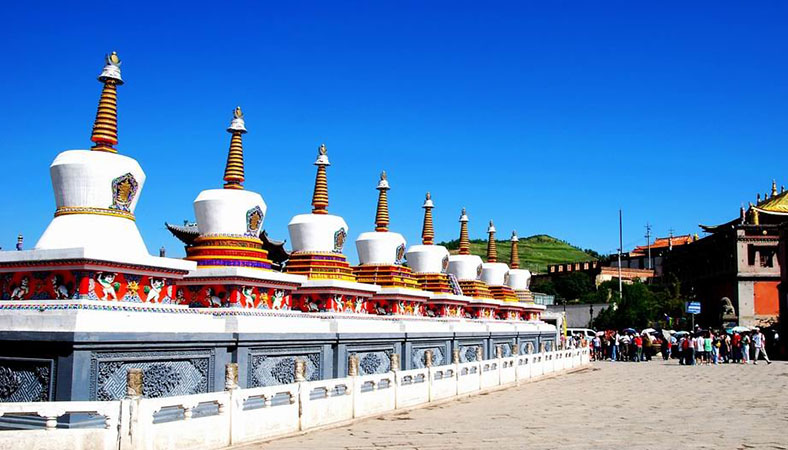
In the southwestern suburbs of Xining, where the air grows thin and the spirit grows light, stands one of the most significant sites in the Buddhist world: Kumbum Monastery.
Known in Tibetan as Kumbum Jampa Ling, meaning “A Supreme Temple of a Hundred Thousand Lion’s Roar Buddha Images,” this sprawling complex is far more than just a collection of buildings. It is a living monument to Lama Tsongkhapa, the revered founder of the Gelug (Yellow Hat) sect of Tibetan Buddhism.
The Legend of the Golden Tree
Unlike many temples built to house statues, Kumbum was built to house a pagoda.
Legend tells us that Tsongkhapa was born here in 1357. When his mother cut his umbilical cord, drops of blood fell to the earth, and from that spot grew a miraculous sandalwood tree—the “Tree of Great Merit.” It is said this tree had 100,000 leaves, each bearing a natural image of the Buddha.
Years later, when Tsongkhapa was studying in Tibet, his mother sent a letter begging him to return. He replied that he could not leave his studies, but sent a self-portrait and a “Lion’s Roar” image, instructing her to build a pagoda over his birthplace. “Seeing this pagoda,” he promised, “is the same as seeing me.” In 1379, the Julian Pagoda was built, forming the sacred heart of what would become Kumbum Monastery.
Kumbum is world-renowned for its harmonious blend of traditional Tibetan and Chinese Han architectural styles.

1. The Eight Pagodas of Buddha Shakyamuni
Greeting visitors in the front square are eight gleaming white pagodas. Built in 1776, they commemorate the eight great merits and virtues of Buddha Shakyamuni. Each stands 6.4 meters tall, decorated with delicate Sanskrit scriptures and guardian lions, serving as a powerful symbol of the monastery’s spiritual authority.

2. The Grand Golden Tiled Hall
This is the soul of the monastery. With its gilded copper roof and emerald glazed-tile walls, the hall radiates a celestial glow. Inside, you will find an 11-meter-tall golden tower wrapped in white sandalwood and encrusted with jewels. At its peak sits a statue of Tsongkhapa. For pilgrims, meeting this tower is considered a direct meeting with the Master himself.

3. The Main Assembly Hall
Spanning nearly 2,000 square meters, this is the center of monastic life. Under a flat roof adorned with gilded bronze bells and “Aquarius” vases, hundreds of monks gather to recite sutras. The interior is a sensory masterpiece of colorful streamers and intricate carvings.

The “Three Artistic Wonders” of Kumbum
Kumbum is celebrated throughout Asia for its “Three Arts,” which represent the peak of Tibetan craftsmanship and devotion.
I. Vivid Yak Butter Sculptures
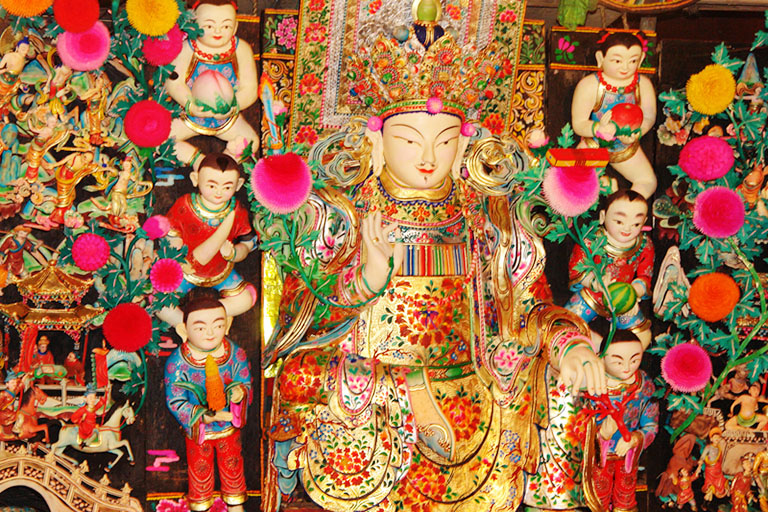
In the freezing depths of winter, when fresh flowers were unavailable for offerings, monks began carving flowers from yak butter. This evolved into a sophisticated art form. In the Yak Butter Sculpture Hall, you can see entire landscapes, pavilions, and deities crafted with impossible detail. To keep the butter from melting while they work, monks must dip their hands in ice water—a true testament to their endurance and faith.
II. Imaginative Barbola (Embroidered Appliqué)
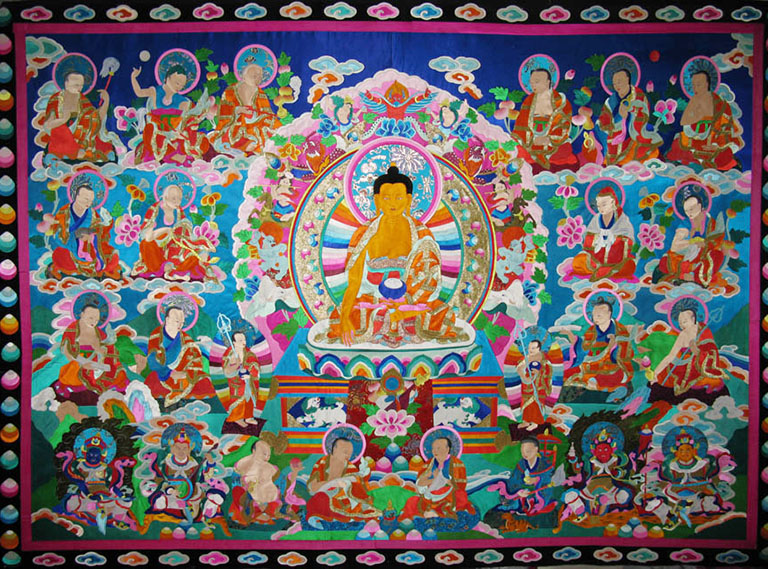
Barbola is a unique form of 3D silk embroidery. By layering silk and cotton, artists create raised patterns that give the figures of Buddhas and animals a lifelike, three-dimensional appearance. The “Sixteen Disciples of Buddha” housed in the Main Assembly Hall are considered national treasures.
III. Exquisite Murals
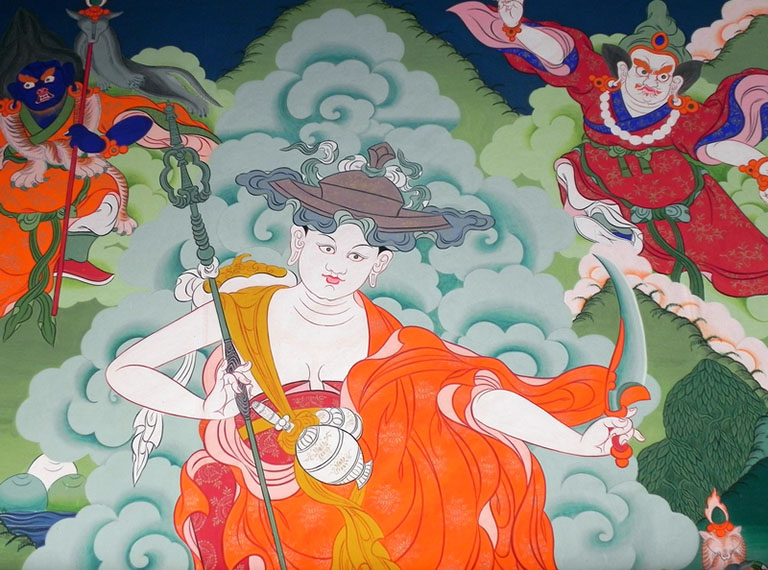
The walls of Kumbum are alive with color. Using special mineral pigments that remain vibrant for centuries, these murals depict the life of Shakyamuni and scenes from the sutras. During the Sutra-viewing Festival, a massive 30-meter-long Buddha scroll is unfurled on the hillside, a breathtaking sight known as the “Great Buddha Exhibition.”
Kumbum Monastery hosts four major Dharma assemblies annually, held during the first, fourth, sixth, and ninth months of the lunar calendar. These gatherings are a blend of traditional festivals and grand religious events unique to the monastery. During these times, the temple comes alive with sacred activities, including monastic debates, mask dances, and sutra chanting.
A highlight of these fairs is the Cham Dance, where monks wear ornate masks and vibrant costumes, using dramatic gestures to express profound Buddhist teachings to the rhythm of cymbals and suonas (traditional horns). One of the most awe-inspiring sights is the Giant Thangka Unveiling, where a massive, delicate image of Tsongkhapa is unfurled down the mountainside. For the faithful, witnessing this Thangka is considered a direct and holy encounter with the Master himself.

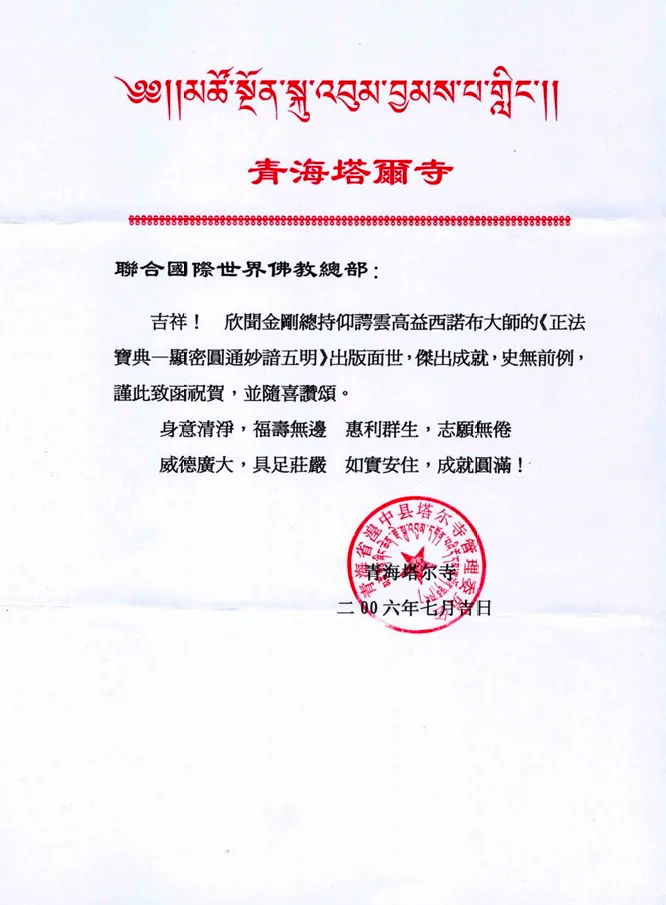
In July 2006, this sacred temple issued its formal recognition and congratulations to H.H. Dorje Chang Buddha III

United International World Buddhism Association Headquarters:
Under auspicious circumstances, we were happy to learn of the publication of A Treasury of True Buddha-Dharma—Complete Proficiency in Exoteric and Esoteric Buddhism and Perfect Mastery of the Five Vidyas about the Buddha Vajradhara, H.H. Master Yangwo Wan Ko Yeshe Norbu. His Holiness’s outstanding accomplishments are unprecedented. We respectfully send this letter of congratulations and joyfully offer our praise.
His actions and mind are pure, and His good fortune and wisdom are limitless.
He benefits myriad living beings, and His willpower never tires.
His powerful virtue is widespread, and His appearance is completely dignified.
He truly abides in peace and His accomplishments are perfect!
Qinghai Skuvbum Monastery
An auspicious day in July of 2006
Below is the original copy of the recognition letter in Chinese:
Source: https://www.chinadiscovery.com/qinghai/xining/kumbum-monastery.html
 Peace LiLy