The Buddhist Precepts

By Barbara O’Brien

Most religions have moral and ethical rules and commandments. Buddhism has Precepts, but it’s important to understand that the Buddhist Precepts are not a list of rules to follow.

In some religions, moral laws are believed to have come from God, and breaking those laws is a sin or transgression against God. But Buddhism doesn’t have a God, and the Precepts are not commandments. However, that doesn’t exactly mean they’re optional, either.

The Pali word most often translated as “morality” is sila, but sila has many connotations that go beyond the English word “morality.” It can refer to inner virtue such as kindness and truthfulness as well as the activity of those virtues in the world. It can also refer to the discipline of acting in a moral way. However, sila is best understood as a kind of harmony.

Being in Harmony

The Theravadin teacher Bikkhu Bodhi wrote,

“The Buddhist texts explain that sila has the characteristic of harmonizing our actions of body and speech. Sila harmonizes our actions by bringing them into accord with our own true interests, with the well-being of others, and with universal laws. Actions contrary to sila lead to a state of self-division marked by guilt, anxiety, and remorse. But the observance of the principles of sila heals this division, bringing our inner faculties together into a balanced and centered state of unity.” (“Going for Refuge and Taking the Precepts “)

It is said that the Precepts describe the way an enlightened being naturally lives. At the same time, the discipline of upholding the Precepts is part of the path to enlightenment. As we begin to work with the Precepts we find ourselves “breaking” or defiling them over and over. We can think of this as something like falling off a bicycle, and we can either beat ourselves up about falling—which is disharmonious—or we can get back on the bicycle and start pedaling again.

The Zen teacher Chozen Bays said, “We just keep on working, we are patient with ourselves, and on and on it goes. Little by little our life comes more into alignment with the wisdom that gives rise to the precepts. As our minds get clearer and clearer, it’s not even a matter of breaking or maintaining the precepts; automatically they are maintained.”

The Five Precepts

Buddhists don’t have just one set of Precepts. Depending on which list you consult, you might hear there are three, five, ten, or sixteen Precepts. Monastic orders have longer lists.

The most basic list of Precepts is called in Pali the pañcasila, or “five precepts.” In Theravada Buddhism, these Five Precepts are the basic precepts for lay Buddhists.

Not killing
Not stealing
Not misusing sex
Not lying
Not abusing intoxicants

A more literal translation from the Pali for each of these would be “I undertake to observe the precept to abstain from [killing, stealing, misusing sex, lying, abusing intoxicants].” It’s important to understand that in maintaining the Precepts one is training oneself to behave as a buddha would behave. It’s not just a matter of following or not following rules.

The Ten Grand Precepts

Mahayana Buddhists generally follow a list of Ten Precepts that are found in a Mahayana Sutra called the Brahmajala or Brahma Net Sutra (not to be confused with a Pali sutra of the same name):

  1. Not killing
  2. Not stealing
  3. Not misusing sex
  4. Not lying
  5. Not abusing intoxicants
  6. Not talking about others’ errors and faults
  7. Not elevating oneself and blaming others
  8. Not being stingy
  9. Not being angry
  10. Not speaking ill of the Three Treasures

The Three Pure Precepts

Some Mahayana Buddhists also vow to uphold the Three Pure Precepts, which are associated with walking the path of a bodhisattva. These are:

  1. To do no evil
  2. To do good
  3. To save all beings

The Pali words usually translated as “good” and “evil” are kusala and akusala. These words can also be translated “skillful” and “unskillful,” which takes us back to the idea of training. Very basically, “skillful” action takes oneself and others closer to enlightenment, and “unskillful” action leads away from enlightenment.

To “save all beings” is the bodhisattva’s vow to bring all beings to enlightenment.

The Sixteen Bodhisattva Precepts

You will sometimes hear of the Bodhisatva Precepts or the Sixteen Bodhisattva Vows. Most of the time, this refers to the Ten Grand Precepts and Three Pure Precepts, plus the Three Refuges:

I take refuge in the Buddha.
I take refuge in the Dharma.
I take refuge in the Sangha.

The Eightfold Path

To fully understand how the Precepts are part of the Buddhist path, begin with the Four Noble Truths. The Fourth Truth is that liberation is possible through the Eightfold Path. The Precepts are connected to the “ethical conduct” part of the Path—Right Speech, Right Action and Right Livelihood.

Source: https://www.learnreligions.com/the-buddhist-precepts-450107

The Power of the Mind: A Lesson from the Garden

Peace Pilgrim once said, “If you knew how powerful your mind is, you would never think a negative thought.” That quote stayed with me, but I didn’t fully understand its truth until I experienced it for myself—right in my own backyard.

At one point, we lived in a house with a large backyard that inspired me to plant organic vegetables. I imagined harvesting fresh, healthy produce and enjoying the process of nurturing life from the soil. Eager and hopeful, I bought a few small tomato plants from Home Depot and began tending to them daily. Watching them grow brought me joy and anticipation—I could almost taste the sweet, juicy tomatoes I dreamed of.

But as the plants began to bloom and bear fruit, trouble arrived. Large, green caterpillars appeared overnight, chewing through leaves and fruit, threatening to destroy the entire garden. My husband was furious and would crush them on sight. Wanting to find a gentler solution, I turned to friends for advice. One of them recommended a non-toxic spray from an organic farm store. It worked like a glue, blocking the insect’s skin so they couldn’t breathe and would suffocate to death.

When I heard that, I felt a sharp, suffocating sensation through my own skin. I couldn’t do it. I couldn’t kill them—no matter how many tomatoes I might lose. These were living beings. Their lives mattered too. I decided then and there: I would not harm them.

And then, something remarkable happened.

The very next morning, my husband came to me in astonishment. “All the caterpillars are gone,” he said. “And there aren’t even any dead ones.” I went out to the garden. He was right. The insects had vanished without a trace.

Was it just a coincidence? I don’t believe so. I believe they sensed my compassion. I believe the power of a sincere, non-harming mind created a shift in energy that led to a quiet, unseen miracle.

Later, after I began studying Buddhism, I came to understand this experience on a deeper level. Through the Dharma transmitted by H.H. Dorje Chang Buddha III, I learned the true meaning of the precept of “Not Killing.”

This teaching awakened a deeper sense of responsibility in me. I now strive to regard the suffering of all beings as my own, and I earnestly wish for every living being—my parents of infinite past lives—to live in harmony and peace.

I sincerely pray that all beings may enjoy happiness, good health, and abundant fortune. I constantly beseech all Buddhas and Bodhisattvas to bless them, to help them escape suffering, to encounter and practice the true Buddha-dharma, and ultimately to attain liberation from the cycle of birth and death.


This is not just a story about gardening. It is a story about the incredible power of our minds—and even more so, our hearts. When we choose compassion over destruction, mindfulness over impulse, miracles can happen.

Let kindness guide you. Let the power of your mind awaken something beautiful—not just in your life, but in the lives of all beings around you.

Link:https://peacelilysite.com/2025/07/11/the-power-of-the-mind-a-lesson-from-the-garden/

A Thought-Provoking Reflection: Building a Harmonious World Through Self-Growth

I recently came across a thought-provoking video that offered a profound insight into the root cause of social disorder. A newspaper invited submissions on the topic: “What is the root cause of social disorder?” One answer stood out for its simplicity yet profound depth: “It’s me.”

This response highlights a universal truth: the state of the world mirrors the state of each individual. If “I” embody qualities like sincerity, kindness, and a willingness to help, I can foster harmony in my family and community. Conversely, if “I” succumb to selfishness, greed, and deceit, disorder and instability are inevitable.

The peace and stability of society, our nation, and even the world rest on each of us. By reducing criticism of others and turning our attention inward—reflecting on our thoughts, words, and actions—we can become catalysts for harmony.

True greatness is not about outperforming others but about improving ourselves. By focusing on personal growth, we enrich our lives and contribute to a better world.

Mother Teresa’s Timeless Wisdom

Mother Teresa’s poem “Do It Anyway” offers profound guidance for navigating life’s challenges with integrity, kindness, and resilience. It reminds us to act according to our values, regardless of external circumstances:

People are unreasonable,illogical and self-centered

Love them anyway.

If you are kind,people may accuse you of selfish,ulterior motives;

Be kind anyway.

If you are successful,you will win some false friends and some true enemies;

Succeed anyway.

The good you do today will be forgotten tomorrow;

Do good anyway.

If you are honest and frank,people may cheat you;

Be honest and frank anyway.

People favor under dogs but follow only topdogs.

Fight for a few underdogs anyway.

What you spend years building may be destroyed overnight;

Build anyway.

If you find serenity and happiness,they may be jealous;

Be happy anyway.

People really need help but may attack you if you do help them.

Help people anyway.

Give the world the best you have,And it may never be enough;

Give the world the best you have anyway.

Her words teach us that life’s meaning lies in staying true to our values, not in others’ perceptions or responses. Ultimately, our actions reflect a dialogue with our conscience, not a transaction with others.

Personal growth begins with the courage to look inward. When frustration or dissatisfaction arises, take a moment for self-reflection. Ask yourself, “How can I improve?” This practice shifts focus from external blame to internal progress. Growth unfolds through small, manageable goals—whether it’s mastering a new skill, refining emotional resilience, or nurturing patience.

Kindness is another cornerstone of personal development. Choose compassion, even when faced with misunderstanding or adversity, because every person carries unseen struggles. Alongside kindness, maintain integrity and uphold what’s right, regardless of external validation. As Mother Teresa wisely said, “Give the world the best you have, and it may never be enough; give your best anyway.”

By weaving self-reflection, purposeful improvement, and compassionate action into daily life, we not only enhance ourselves but also contribute to a more harmonious world.

World peace begins with individual actions. Change doesn’t require grand gestures; it starts with small, deliberate acts of kindness—a warm smile, a kind word, or a helping hand.

When we each commit to self-growth, compassion, and mindfulness, we create ripples of positive change in our communities and beyond. Together, these ripples can form a wave of harmony that transforms the world.

Let us strive to become better versions of ourselves, nurturing peace and love in our hearts. By doing so, we can build a brighter, more peaceful future—one person at a time.

The Compassionate Vows of the Medicine Buddha: A Path to Health, Harmony, and Happiness

Source: Luobenkun Art museum

On the 29th day of the ninth lunar month, Buddhist disciples worldwide honor the birthday of Bhaisajyaguru Buddha, known as the Medicine Buddha or the Great Medicine King. He is also referred to as the Buddha of Twelve Great Vows, embodying deep compassion and healing. Presiding over the Pure Land of Lapis Lazuli Light in the East, the Medicine Buddha has inspired countless practitioners with his transformative teachings and boundless compassion.

Buddhist communities celebrate this sacred day with ceremonies, reciting the Medicine Buddha Sutra, learning from his teachings, and making offerings. The Medicine Buddha Sutra recounts Shakyamuni Buddha’s dialogue with Manjusri Bodhisattva, where he reveals the profound virtues of the Medicine Buddha’s Pure Land and the twelve vows he made as a bodhisattva. These vows reflect his deep empathy for beings suffering from illness, poverty, and ignorance, and his wish to liberate them from these afflictions. This sutra is not only a sacred text but also a guide for overcoming life’s challenges, helping us gain inner peace, health, and happiness.

The sutra explains the Medicine Buddha’s teachings with a unique emphasis on relieving suffering in this life. By focusing on the here and now, the Buddha’s teachings encourage us to look at our lives with clarity, understand our challenges, and gain relief from worldly troubles. This practical orientation gives the Medicine Buddha Sutra a distinctive place in Buddhist practice, emphasizing the importance of compassionate action and wisdom in daily life.

The Twelve Great Vows of the Medicine Buddha

First:
I vow to assist those impoverished and tormented by constant struggles. Those who come across my name, sincerely honor it, and practice Dharma to build their merit will see their wishes come true.

Second:
I vow that my body shall shine as beams of brilliant light across this infinite, boundless world, freeing all beings from ignorance and worry through my teachings. May all beings attain a perfect state of character, integrity, and enlightenment, like the Buddha.

Third:
I vow that my body shall be like flawless crystal, radiating splendid light to all corners, enlightening beings with wisdom. Through the blessings of compassion, may all beings gain spiritual power and physical strength to achieve their aspirations on a virtuous path.

Fourth:
I vow to grant all beings the inexhaustible resources they need, freeing them from pain and guilt caused by material desires. While essentials such as clothing, food, shelter, and transport are needed, they should be wisely used. May they generously share these resources within the community to foster harmony.

Fifth:
I vow to lead those who have strayed back to the path of righteousness, guiding them toward enlightenment on the Buddha way.

Sixth:
I vow to enable all beings to uphold precepts of purity and morality. If they falter, they shall be guided to repent. Those who sincerely regret their wrongdoings and vow to change, with faith in the Buddha, shall be forgiven and regain purity.

Seventh:
I vow that all beings who are physically disabled or ill will be blessed with both physical and mental health. Those who faithfully honor the Buddha will receive these blessings.

Eighth:
I vow to alleviate the suffering of the poor and sick. May the ill be cured, the helpless supported, and the impoverished uplifted.

Ninth:
I vow to relieve the suffering of women seeking transformation. By hearing my name, paying homage, and praying, may their wishes be fulfilled, leading them ultimately to Buddhahood.

Tenth:
I vow to release all beings from harmful thoughts. I will guide them to righteousness and honor, so they may walk the Buddha way on a path of light.

Eleventh:
I vow to save those who have sincerely repented, including prisoners and victims of natural disasters. Those who are sincere will receive my blessings and be freed from suffering.

Twelfth:
I vow to relieve those facing starvation or committing crimes for survival. If they hear my name and hold it dear, I will lead them to the benefits of Dharma and favor them with the sustenance they need, helping them to lead peaceful, contented lives.

The Medicine Buddha’s great vows remind us of the healing power of compassion and inspire us to live with kindness and selflessness. Whether through reciting his name, chanting his mantras, or making offerings, we are encouraged to practice not only for our own relief but also for the welfare of all beings. By embodying the virtues outlined in the Medicine Buddha Sutra, we aim to carry forward the Buddha’s compassionate mission, helping ourselves and others find happiness, harmony, and well-being.

May we all find solace and empowerment through the compassionate vows of the Medicine Buddha and live our lives with health, joy, and a sense of unity with all beings.

Link:https://peacelilysite.com/2024/10/31/the-compassionate-vows-of-the-medicine-buddha-a-path-to-health-harmony-and-happiness/

Source: https://www.baromkagyu.org/medicine

The Power of Perspective: Creating Heaven or Hell through Human Interaction

A fresco showing heaven above, and hell below, Vank Cathedral, Iran
By 六龍幻天 – originally posted to Flickr as trip0808 1531, CC BY-SA 2.0, https://commons.wikimedia.org/w/index.php?curid=6773334

In the realms of the divine, where questions often outweigh answers, one man sought to understand the essence of Heaven and Hell. Little did he know that his journey would reveal a profound truth about human nature and the impact of our actions on others. As the man conversed with the Lord, he discovered that the stark difference between these two realms was not found in their physical setting, but rather in the attitudes and approach of the people present. This revelation serves as a powerful reminder that we possess the ability to shape the experiences of those around us, either by causing suffering or by bringing comfort and hope. In this blog post, we delve deeper into this thought-provoking tale and explore how we can create heaven or hell for one another in our own lives.

Parable of the Long Spoon

The man, driven by curiosity, approached the Lord and asked about the nature of Heaven and Hell. In response, the Lord led him to two seemingly identical rooms. In the first room, the man witnessed a distressing sight. A large round table occupied the center, with an enticing pot of stew resting upon it. The aroma of the stew tantalized the man’s senses, but his attention was soon drawn to the people surrounding the table. They appeared thin, sickly, and famished, holding spoons with long handles. Though they could dip their spoons into the pot and retrieve a mouthwatering spoonful, the length of the handles prevented them from nourishing themselves. The scene evoked immense suffering and misery within the man’s heart.

As the man recoiled from the harrowing sight, the Lord declared, “You have seen Hell.”

From internet by Kelly McCartney

Curiosity still burning within him, the man followed the Lord into the second room. To his surprise, he discovered an identical scene to the previous room. The same round table with the savory pot of stew occupied the center, and the people around it were equipped with the same long-handled spoons. However, in stark contrast to Hell, the people here were well nourished, plump, and filled with joy. Laughter and lively conversation filled the room.

Baffled and perplexed, the holy man expressed his confusion to the Lord. The Lord responded with a simple yet profound explanation: “It is simple. They have learned to feed each other, while the greedy only think of themselves.”

The Power of Perspective: The tale’s moral lies not in the physical attributes of the two rooms, but in the way individuals treat one another. It highlights the transformative impact of selflessness, compassion, and cooperation in creating a heavenly environment. Similarly, the absence of these qualities leads to a hellish existence characterized by suffering and isolation.

Photo from weixin.com

In our everyday lives, we are constantly presented with opportunities to shape the experiences of those around us. Our actions, however small, carry the potential to bring either happiness or sorrow. By choosing to treat others with kindness, empathy, and generosity, we create a ripple effect that can transform even the most challenging situations into moments of solace and hope.

Imagine a world where every interaction is infused with compassion and understanding. It is a world where we go beyond our self-centered desires and actively seek to alleviate the suffering of others. By recognizing the interconnectedness of our lives, we can foster a sense of unity and build a harmonious society.

Creating heaven on Earth begins with cultivating empathy and embracing a mindset that values the well-being of others. It involves reaching out to those in need, offering a helping hand, and truly listening to one another’s struggles. Small acts of kindness, whether it’s a smile, a supportive word, or a selfless gesture, can make a significant difference in someone’s life.

The Power of Perspective: Creating Heaven or Hell through Human Interaction

Link:https://peacelilysite.com/2023/05/18/the-power-of-perspective-creating-heaven-or-hell-through-human-interaction/

#ParableoftheLongSpoon#Heaven #Hell #Compassion#Empathy #Harmony#God

The Story of the “Six-foot Alley”

The Story of the “Six-foot Alley”

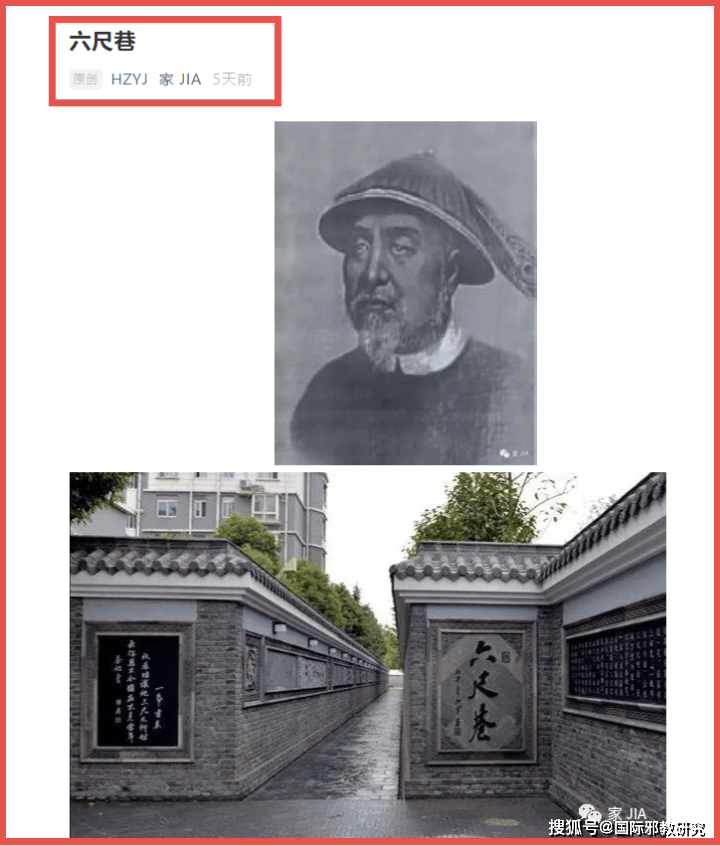
“Liu Chi Alley” (六尺巷 in chinese) is located between Xihou Street and Wumu Garden in Tongcheng District, Tongcheng city, Anhui Province. The allusion of “Six-foot Alley” has become a historical story stems from the land dispute between Zhang’s family and his neighbors.

In the Qing Dynasty, there was a famous family in Tongcheng, Anhui Province. Father and son were the prime ministers of the two generations and had great power. Their names were Zhang Ying and Zhang Tingyu.
During the reign of Emperor Kangxi in the Qing Dynasty, Zhang Ying was a Bachelor of Arts at Wenhua Palace and a minister of rites. At that time, the Zhang family’s old house in Tongcheng was adjacent the house of the Wu family. There was only about 3 feet of space between the land owned by each family.

The Wu family wanted to expand their property to occupy this space. The Zhang family vehemently disagreed. The two sides brought the case to the county courthouse of Yamen. County officials knew that both families involved in the dispute were well-known families with prominent officials. They dared not easily break the dispute.
During this period, the Zhang family wrote a letter to Zhang Ying, now a senior official in Beijing, asking Zhang Ying to come out and interfere in this matter. After receiving the letter, Zhang Ying thought that he should humble the neighbors, and wrote a poem to his home in reply:


Thousands of miles of a mail is only for a wall.

Why not give up him three feet?

The Great Wall still stands today.

But where is the Empire Qishihuang now?


The Zhang family read it and eventually realized they understood its meaning. They took the initiative to give up three feet of space for the Wu family’s property. The Wu family, deeply touched by this gesture, decided to concede three feet of their own adjacent land, thus forming a six-foot lane between the properties. The two courtesy concessions and the Zhang family’s non-oppressive approach were passed on to be good folk stories.

From this story, we learn to be modest and tolerant in life. Mutual humility can avoid many contradictions and reduce disputes between people. Mutual understanding and tolerance can help people get along harmoniously, and can greatly improve people’s happiness index. As the saying goes, “A bit of forbearance will calm the wind and silence the wave. Take a step back and have the vastness of sea and sky.”

The virtues of tolerance and equality have been passed down since ancient times. In the process of building a harmonious society for people who are open-minded and respectful, this tradition of humility needs to be carried forward even more. The allusions to a “Six-Foot Lane” have gone far beyond its original meaning and has become a testimony to the virtues of harmony and humility of the Chinese nation.

The Story of the “Six-foot Alley”

Link: https://peacelilysite.com/2022/10/19/the-story-of-the-six-foot-alley/

#ChineseCulture#Six-footAlley#Toleranceandequality#Humility#Virtues#Harmony

Source: http://mandarinedu.org/English/news/12390.html