The Wisdom of Humility: A Tale of Zuo Zongtang

Zuo Zongtang, a prominent official of the late Qing dynasty, was renowned not only for his military prowess but also for his skill in the game of Go. His expertise was so exceptional that none of his subordinates could match him.

One day, while traveling incognito, Zuo Zongtang stumbled upon a thatched cottage with a plaque reading “The Best Go Player in the World.” Skeptical, he decided to challenge the owner to a series of games. To his surprise, he won all three matches. With a smile, Zuo Zongtang remarked, “You can take down that plaque now!” Satisfied, he continued on his journey.

However, after a successful military campaign, Zuo Zongtang returned to the same area. Curious to see if the plaque had been removed, he visited the cottage once more. To his astonishment, the plaque was still there. Determined to test his luck again, he challenged the owner to another three games—and this time, he lost all three. Perplexed, he asked the owner how this was possible.

The owner explained, “The last time you visited, you were on a mission to lead troops into battle. I didn’t want to affect your spirit negatively. But now that you’ve returned victorious, I felt free to play at my best.”

This story highlights a profound lesson: True mastery often involves knowing when to yield. A master may win, but true greatness lies in the ability to be gracious. Similarly, wisdom involves understanding the feelings of others and knowing when to let go of one’s own ambitions.

Life often mirrors this dynamic. While the clever may fixate on gains and losses, the truly wise are those who bravely release their attachments. Wisdom is not merely about cleverness but about humility and compassion.

In Buddhism, true wisdom arises from great compassion. When one transcends self-interest and embraces deep compassion, the door to true wisdom opens. H.H. Dorje Chang Buddha III emphasizes in his teachings that genuine cultivation involves prioritizing the well-being of others. In his Dharma discourses, His Holiness has repeatedly highlighted the importance of:

“Establishing great compassion as your foundation. Avoid all evil deeds. Commit to all that is good. Set aside personal interests to benefit others. Patiently endure humiliation and adversity. Practice humility. Purify your mind. When encountering beings, regardless of their condition—be they handicapped, deficient, sick, or healthy—treat them all as family. Understand that all phenomena are governed by causality.”

The Buddha’s life exemplified this principle perfectly. He never sought to be revered from a lofty pedestal but instead viewed himself as a humble servant to all beings. Every action he took was dedicated to promoting peace, liberation, and happiness for all.

As a true Buddha living in the world at this time, H.H. Dorje Chang Buddha III has never been concerned about damaging His own honor, status, or image, for He has effaced Himself in order to benefit living beings by saying that He is an ordinary person like everyone else. In reality, the facts prove that in the few-thousand-year history of Buddhism, H.H. Dorje Chang Buddha III is truly one who has actually manifested the pinnacle of attainment in both Exoteric and Esoteric Buddhism and perfection in the Five Vidyas! His Holiness the Buddha is also the only one in the history of Buddhism who has made it His practice to benefit and serve living beings without accepting any offerings.

Link: https://peacelilysite.com/2024/08/09/the-wisdom-of-humility-a-tale-of-zuo-zongtang/

Source: https://www.sohu.com/a/113788534_456094

Benjamin Franklin’s 13 Virtues: A Blueprint for Personal Development

A Path to Personal Excellence

George Washington may rightly be known as the “Father of his Country,” but for the two decades before the American Revolution, Benjamin Franklin held the title of the world’s most famous American.

Franklin, a celebrated scientist and inventor, earned recognition for his groundbreaking electrical experiments, winning the Royal Society’s Copley Medal—a prestigious 18th-century equivalent of the Nobel Prize. His notable inventions included the lightning conductor, the first map of the Gulf Stream, and a unique musical instrument, the glass armonica. Renowned composers like Gluck, Mozart, and Beethoven created concertos for this instrument. Franklin’s genius received international acclaim, with Immanuel Kant describing him as “The Prometheus of Modern Times,” and David Hume hailing him as America’s “first great man of letters.”

Benjamin Franklin, a polymath and one of the Founding Fathers of the United States, left an enduring legacy not only for his political contributions but also for his philosophy of personal development. In his autobiography, Franklin outlined 13 virtues that he believed were crucial for leading a virtuous and successful life. This blog post will explore each of these virtues and delve into how Franklin practiced them in his own life.

  1. Temperance: Franklin advised moderation in eating and drinking, emphasizing the importance of avoiding excess. By maintaining temperance, individuals could achieve a clear and focused mind. Franklin recognized that a balanced lifestyle laid the foundation for success in cultivating other virtues.
  2. Silence: The virtue of silence urged individuals to speak only when their words could benefit others or themselves, discouraging trifling conversation. Franklin realized the power of listening and the importance of thoughtful communication for personal and intellectual growth.
  3. Order: To bring order to one’s life, Franklin recommended organizing belongings and allocating time efficiently. By assigning specific places for possessions and dedicating time to each aspect of one’s business, an individual could enhance productivity and reduce chaos.
  4. Resolution: Resolution involved the commitment to fulfill one’s duties and promises without fail. Franklin understood that steadfast determination was crucial for personal and professional success, encouraging individuals to set goals and work relentlessly towards achieving them.
  5. Frugality: Franklin advocated for mindful spending, emphasizing that expenses should serve a purpose, either benefiting oneself or others. This virtue highlighted the importance of avoiding wastefulness and making financial decisions with a long-term perspective.
  6. Industry: Losing no time and being consistently engaged in useful activities formed the basis of the virtue of industry. Franklin valued hard work and believed that avoiding unnecessary actions was essential for personal progress and achievement.
  7. Sincerity: Sincerity required the avoidance of deceit and the cultivation of honest and just thoughts and speech. Franklin believed that sincerity contributed to building trust in personal and professional relationships.
  8. Justice: The virtue of justice focused on treating others fairly and fulfilling one’s duty to both prevent harm and provide benefits. Franklin emphasized the importance of not wronging others through actions or neglect.
  9. Moderation: Avoiding extremes in emotions and reactions, particularly in response to injuries, was crucial for maintaining composure and cultivating the virtue of moderation. Franklin recognized the value of forbearance in dealing with challenges.
  10. Cleanliness: Tolerating no uncleanliness in body, clothes, or habitation reflected Franklin’s belief in the importance of personal hygiene and a clean environment for overall well-being.
  11. Tranquility: Tranquility involved maintaining a calm and composed demeanor, especially in the face of trifles and common accidents. Franklin valued the ability to remain undisturbed and focused on long-term goals.
  12. Chastity: Chastity, as outlined by Franklin, suggested a responsible approach to intimate relationships, emphasizing health and the well-being of oneself and others.
  13. Humility: Imitating the virtues of Jesus and Socrates, humility was the capstone of Franklin’s 13 virtues. Humility involved recognizing one’s strengths and weaknesses, learning from others, and continually striving for self-improvement.

Franklin’s approach to acquiring these virtues was systematic. He advised focusing on one virtue at a time, mastering it before moving on to the next. By prioritizing temperance, Franklin believed that a clear and focused mind would make subsequent virtues easier to acquire. This deliberate and methodical approach allowed him to build a foundation for a virtuous life.

Benjamin Franklin’s 13 virtues remain a timeless guide to personal development and success. By understanding and incorporating these principles into our lives, we can strive towards a more virtuous and fulfilling existence, following in the footsteps of one of history’s most influential thinkers and statesmen.

Benjamin Franklin’s 13 Virtues: A Blueprint for Personal Development

Link:https://peacelilysite.com/2024/01/12/benjamin-franklins-13-virtues-a-blueprint-for-personal-development/

#BenjaminFranklin #Virtues #PersonalDevelopment #Thinkers #Statesmen#Temperance#Humility

Source: https://www.mountvernon.org/library/digitalhistory/digital-encyclopedia/article/benjamin-franklin/

The Story of the “Six-foot Alley”

The Story of the “Six-foot Alley”

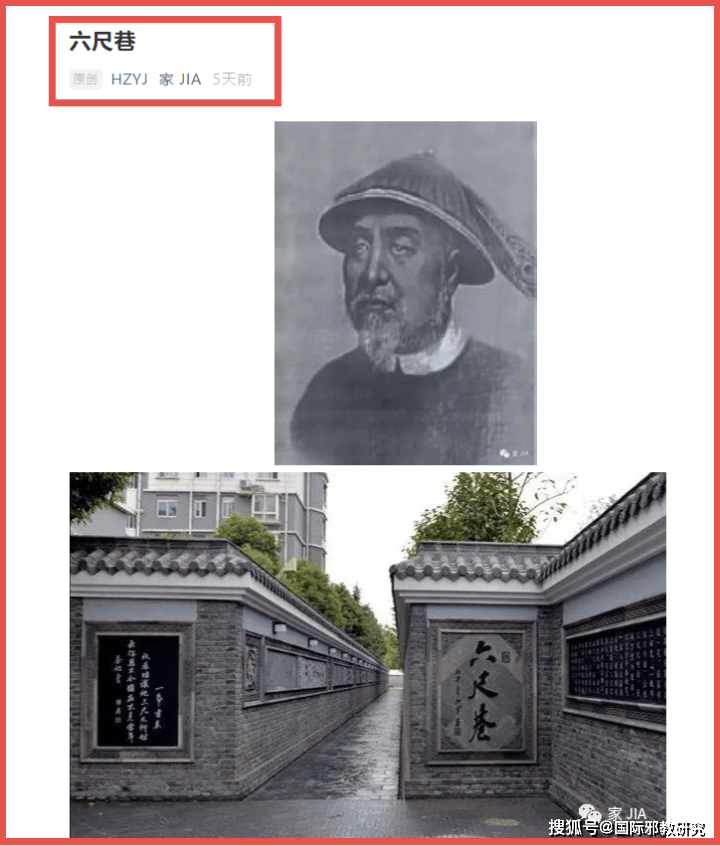
“Liu Chi Alley” (六尺巷 in chinese) is located between Xihou Street and Wumu Garden in Tongcheng District, Tongcheng city, Anhui Province. The allusion of “Six-foot Alley” has become a historical story stems from the land dispute between Zhang’s family and his neighbors.

In the Qing Dynasty, there was a famous family in Tongcheng, Anhui Province. Father and son were the prime ministers of the two generations and had great power. Their names were Zhang Ying and Zhang Tingyu.
During the reign of Emperor Kangxi in the Qing Dynasty, Zhang Ying was a Bachelor of Arts at Wenhua Palace and a minister of rites. At that time, the Zhang family’s old house in Tongcheng was adjacent the house of the Wu family. There was only about 3 feet of space between the land owned by each family.

The Wu family wanted to expand their property to occupy this space. The Zhang family vehemently disagreed. The two sides brought the case to the county courthouse of Yamen. County officials knew that both families involved in the dispute were well-known families with prominent officials. They dared not easily break the dispute.
During this period, the Zhang family wrote a letter to Zhang Ying, now a senior official in Beijing, asking Zhang Ying to come out and interfere in this matter. After receiving the letter, Zhang Ying thought that he should humble the neighbors, and wrote a poem to his home in reply:


Thousands of miles of a mail is only for a wall.

Why not give up him three feet?

The Great Wall still stands today.

But where is the Empire Qishihuang now?


The Zhang family read it and eventually realized they understood its meaning. They took the initiative to give up three feet of space for the Wu family’s property. The Wu family, deeply touched by this gesture, decided to concede three feet of their own adjacent land, thus forming a six-foot lane between the properties. The two courtesy concessions and the Zhang family’s non-oppressive approach were passed on to be good folk stories.

From this story, we learn to be modest and tolerant in life. Mutual humility can avoid many contradictions and reduce disputes between people. Mutual understanding and tolerance can help people get along harmoniously, and can greatly improve people’s happiness index. As the saying goes, “A bit of forbearance will calm the wind and silence the wave. Take a step back and have the vastness of sea and sky.”

The virtues of tolerance and equality have been passed down since ancient times. In the process of building a harmonious society for people who are open-minded and respectful, this tradition of humility needs to be carried forward even more. The allusions to a “Six-Foot Lane” have gone far beyond its original meaning and has become a testimony to the virtues of harmony and humility of the Chinese nation.

The Story of the “Six-foot Alley”

Link: https://peacelilysite.com/2022/10/19/the-story-of-the-six-foot-alley/

#ChineseCulture#Six-footAlley#Toleranceandequality#Humility#Virtues#Harmony

Source: http://mandarinedu.org/English/news/12390.html

How To Practice Humility

How To Practice Humility

Most of the Buddhist disciples know that: “Among the highest unconditioned Dharmas imparted by the Buddha, patience under humiliation and adversity is the foremost Dharma “. In the Six Paramitas1, Buddha request all disciples to endure insults, to overcome hate and anger.

So many ancient virtuous ones made use of slander, verbal abuse, and harm directed at
them from other people, transforming such experiences into enlightenment and great
compassion. In the end, they became holy ones. Zen Master Yongjia said, “If there were
no slander and praise that create enemies and friends, how would you show the power of lovingkindness and patience that stems from no-birth?” Here are some stories, that could inspire us to practice humility.

(一)

Hanshan and Shide — Song of Endurance

Master Hanshan and Shide were legendary monks lived in China about one thousand years ago. People said that Hanshan and Shide were the incarnation of Manjushri and Puxian Bodhisattva.

Once Master Hanshan asked Master Shide:” What shall I do if someone mistreats me, slanders me, bullies me, insults me, ridicules me, disparages me, belittles me, offends me, or deceives me?”

Shide answered: You just tolerate him, let him be, avoid him, respect him, ignore him, be kind to him, and wait for a few years to see what becomes of him.

(二)

Is That So!?

Photo by Pixabay on Pexels.com

Japnese Zen Master Hakuin was greatly respected and had many disciples. At one time in his life, he lived in a village hermitage, close to a food shop run by a couple and their beautiful, young daughter. One day the parents discovered that their daughter was pregnant. Angry and distraught, they demanded to know the name of the father. At first, the girl would not confess but after much harassment, she named Hakuin. The furious parents confronted Hakuin, berating him in front of all of his students. He simply replied, “Is that so?”

When the baby was born, the family gave it to Hakuin.  By this time, he had lost his reputation and his disciples. But Hakuin was not disturbed. He took delight in caring for the infant child; he was able to obtain milk and other essentials from the villagers. A year later, the young mother of the child was troubled by great remorse. She confessed the truth to her parents – the real father was not Hakuin but rather a young man who worked at the local fish market. The mortified parents went to Hakuin, apologizing, asking his forgiveness for the wrong they did him. They asked Hakuin to return the baby. Although he loved the child as his own, Hakuin was willing to give him up without complaint. All he said was: “Is that so?”

(三)

Only a Buddha is the King of Compassion, Free of Any Anger or Hatred, Who Benefits Living Beings Without Any Consideration of Personal Honor or Disgrace

H. H.  Dorje Chang Buddha III set the greatest example of Patiently endure humiliation and adversity for all the Buddhist disciples in the world. He never minds and never appeals or complains about any framing, persecution, or slandering against Him.

In the past decade, H.H.  Dorje Chang Buddha III has suffered greatly for withstanding long-term persecution for his religious activities. A member country of the Interpol has once requested the Interpol to issue a warrant for His arrest. The request was subsequently withdrawn voluntarily by this member country after some years. Upon thorough investigation, in October of 2008, the 72nd session of the Commission for the Control of Interpol’s Files withdrew the arrest warrant and the entire case against H.H.  Dorje Chang Buddha III. Interpol also issued a document stating in definite terms that the arrest warrant against H.H.  Dorje Chang Buddha III has been cancelled and all of its member countries have been notified of the cancellation.

Although H.H.  Dorje Chang Buddha III long ago received official notification of the withdrawal of the arrest warrant and the removal of the entire case, He has never shown such documents to prove His innocence.

H.H.  Dorje Chang Buddha III, recieved 2010 World Peace Prize as Top Honor Prize recipient. When people of the “World Peace Prize Awarding Council” asked Him, after learning the facts, why He had not published INTERPOL’s conclusion from investigation to refute the rumors, H. H. Dorje Chang Buddha III said, “I will bear all negative karmas and sins of living beings, and I will give all my good karmas and merit to you. These are the things I will do. If I show stuff to exonerate me, then the people who slandered me would be tarnished. Who will bear their sins and negative karmas in that case?”

The video below is of buddhist disciple Hongxi Fazang’s sincere repent. He did so many defamations to H.H.  Dorje Chang Buddha III, yet the greatly loving and greatly compassionate Buddha still accepted him as a disciple and teaches him as same as before.

Note1: Six Paramitas — 1 Be generous, overcome greed, 2 Keep precepts, overcome violations, 3 Endure insults, overcome hate and anger, 4 Be energetic, overcome laziness, 5 Be Concentrated, overcome disorder, 6 Develop prajna, overcome ignorance.

How To Practice Humility

Link: https://peacelilysite.com/2022/04/07/how-to-practice-humility/

Source: https://kannondo.org/is-that-so/,

Statement From the World Peace Prize Awarding Council,

Truth Revealed: Zhou Yongkang and Chen Shaoji Jointly Framed H.H. Dorje Chang Buddha III

#DorjeChangBuddhaIII #HHDorjeChangBuddhaIII#DorjeChangBuddha#HanshanandShide#Zen MasterHakuin#Endureinsults#Humiliation#WorldPeacePrize#TopHonorPrize#Humility