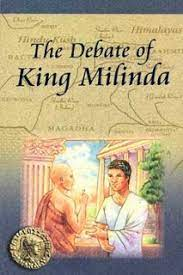
The Debate of King Milinda – Nagasena Bhikkhu Sutra

The twelfth among the Eighteen Arhats is recognized as Nagasena in Sanskrit, meaning “Dragon Army.” Often referred to as “Bhikshu Nagasena,” he was a Buddhist theoretical philosopher who received full ordination at the age of twenty and eventually attained the state of Arhat. Bhikshu Nagasena journeyed to the ancient kingdom of Shakyadesha in northwestern India to engage with King Milinda. Responding to the king’s inquiries, Nagasena eloquently expounded on the impermanence of life, the law of karma, and various facets of Buddhist practice, employing metaphors to convey profound insights. This discourse is encapsulated in the “Nagasena Bhikshu Sutra,” representing a comprehensive exposition of fundamental Buddhist teachings.

Below are excerpts from conversations between Nagasena and King Milinda, where the king poses questions and Nagasena responds with profound wisdom and intelligence.

First Question

Once, King Milinda intentionally sought to challenge Bhikkhu Nagasena and questioned him, saying, “You did not live in the same era as the Buddha, and you never met Siddhartha Gautama. How can you be sure that the Buddha actually existed?”

Wise Bhikkhu Nagasena responded by asking, “Great King, how did you inherit your throne?”

“It was passed down to me by my father,” replied the king.

“And from whom did your father receive the throne?” Nagasena inquired.

“From his father, my grandfather.”

“And your grandfather’s throne, from whom did he receive it?”

“From his forefather, my great-grandfather!”

Nagasena continued, “If we trace this lineage generation by generation, do you believe that there was an original founder of your kingdom?”

King Milinda replied with certainty, “Certainly, I believe so!”

“Have you ever seen this founder?” Nagasena asked.

“No, I haven’t.”

“How can you believe in someone you haven’t seen?” Nagasena questioned further.

The king explained, “Our founding monarch established laws, systems, and regulations, all of which are recorded in history. Though I haven’t seen him, I believe in his existence because there are historical records.”

Smiling, Bhikshu Nagasena nodded and said, “In the same way, we believe that the Buddha indeed existed. In Buddhism, there is the Triple Gem of Buddha, Dharma, and Sangha, along with scriptures, Vinaya (monastic rules), and Abhidharma (philosophical teachings). The Buddha’s ethical guidelines and historical events are not fabrications; they are as real as your founding monarch in historical terms!”

Second Question:

Unable to find fault with Bhikkhu Nagasena in the first question, King Milinda, using his wit, posed another challenging query. He asked, “Buddhists often speak of the ultimate happiness being the realization of Nirvana, attaining a state beyond birth, death, and cessation. Bhikshu Nagasena, have you attained Nirvana?”

Bhikshu Nagasena humbly replied, “I’m ashamed to admit that I haven’t.”

King Milinda, feeling triumphant, questioned, “If you haven’t experienced it yourself, how do you know about the state of Nirvana?”

If this question were posed to you, how would you respond?

Rather than directly answering, Bhikshu Nagasena turned the question back to King Milinda, asking, “Great King, if I were to take a large knife and cut off your arm right now, would it be painful?”

King Milinda’s expression changed, and he said, “Certainly, it would be painful! How could having one’s arm cut off not be painful?”

Nagasena pressed on, “But your arm has never been cut off before, so how do you know it would be painful?”

The king replied, “I have seen others experience the pain of having their arms cut off, so I know it would be painful!”

Smiling, Bhikshu Nagasena respectfully remarked, “Great King, just as you can understand the pain of losing an arm by witnessing others, I, too, have seen the joy of those who have realized Nirvana. Hence, I am certain about the sublime nature of the Nirvana state!”

Third Question:

King Milinda, persisting in his skepticism, attempted a third inquiry, asking, “Monastics are supposed to embrace compassion. How do you forgive your enemies?”

Bhikshu Nagasena smiled and replied, “Great King, if you had a festering wound on your leg, would you chop off your entire leg?”

“No, I wouldn’t,” answered the king.

Nagasena continued, “So, what would you do?”

“I would carefully clean it, apply medication, and with time, the wound would heal,” explained the king.

Bhikshu Nagasena stated, “Exactly! Enemies and wrongdoers are like festering wounds. If not taken care of and treated, they will spread and worsen. Therefore, one must use the water of dharma to cleanse them, encouraging them to abandon wrongdoing and turn towards righteousness. This principle is similar to how you, Great King, nurture and care for the wound on your leg!”

Fourth Question:

King Milinda nodded in acknowledgment but remained unconvinced. After contemplating, he posed another question, “You often advise people to accumulate merits for the next life. Since you haven’t experienced death, how do you know there is life after death?”
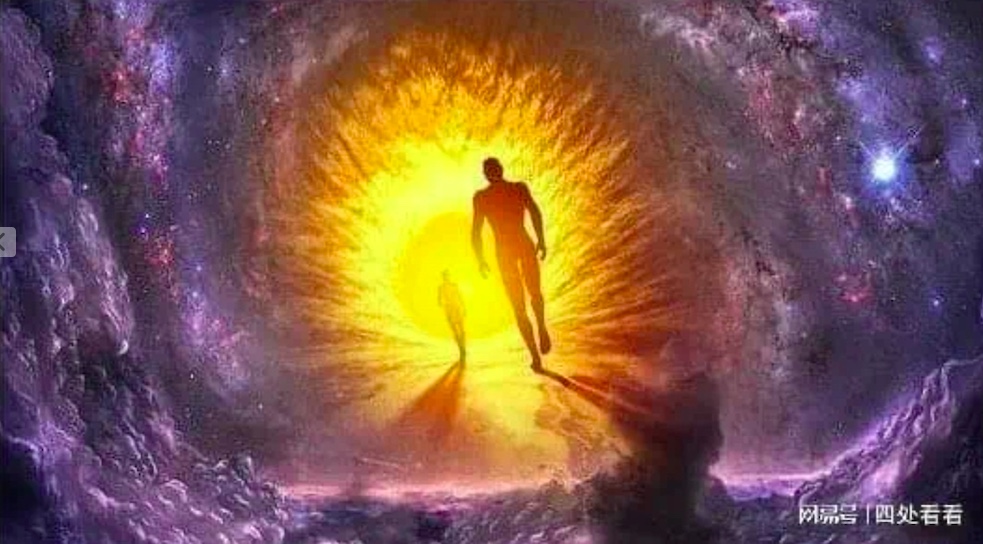
Bhikshu Nagasena responded with a simile, “It’s similar to a mandarin orange. When the fruit ripens and falls to the ground, the flesh rots away. However, the seed remains buried in the soil. When the time is right, it sprouts, grows, and becomes a robust mandarin orange tree. The human body is just a temporary aggregation of the four elements. When the illusion shatters, the body dies. Yet, the karmic consciousness continues the cycle of birth and death. It is like the seed of the mandarin orange, persistently reincarnating in the six realms, not just once but countless times, with an endless cycle of rebirths.”

Fifth Question:

Despite King Milinda’s lingering dissatisfaction, he presented a fifth question, each one more challenging than the last. However, Bhikshu Nagasena, wise and composed, continued to respond with a smile.

King Milinda asked, “Do monastics love their own bodies?”

Bhikshu Nagasena replied, “The body is merely a temporary confluence of the four elements and five aggregates. Monastics do not have attachment to it.”

King Milinda, feeling confident, cleverly countered, “Oh! You claim not to love your body, but monastics still dress, eat, and sleep. Isn’t that a way of protecting the physical form? If you say you don’t love it, isn’t that a contradiction?”

Bhikshu Nagasena smiled and offered a different perspective, “Great King, if you had a boil on your body, would you love it?”

“A boil? Such a dirty and unpleasant thing! Who would like it?” exclaimed the king.

“If you dislike it, why bother cleaning it, applying medication, and taking constant care to prevent it from worsening? Checking on it every day to see if it’s improving. If you claim not to like the boil, isn’t that contradictory behavior?” Nagasena questioned.

King Milinda, somewhat defiantly, argued, “I do it for the health of my body!”

Bhikshu Nagasena chuckled and said, “Exactly! Monastics may not love this body, but for the purpose of cultivating the spiritual path, they still have to care for this illusory form.”

Sixth Question:

King Milinda, undeterred by previous responses, continued with his inquiries, asking, “Can Siddhartha Gautama, the Buddha, know the causes and effects of the past, present, and future?”

“Buddha possesses great supernatural powers, and indeed, he can know the past, present, and future!” answered Nagasena.
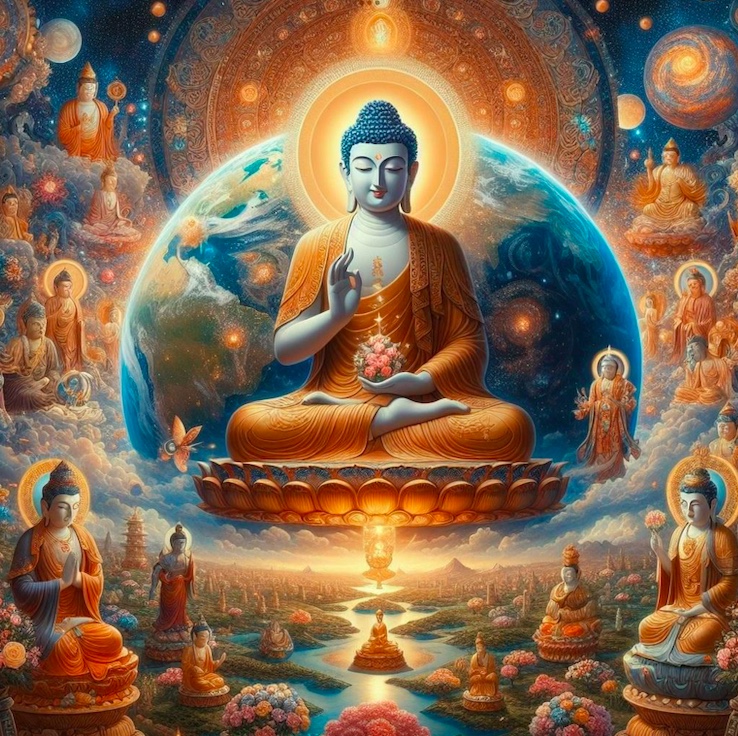
“If that’s the case, why doesn’t he teach all of you those supernatural powers? Then, disciples could instantly know the past, present, and future karmic obstacles, and everyone would attain enlightenment quickly. Why go through gradual training?” questioned the king.

The clever Nagasena, handling the question with ease, asked in return, “Great King, if you were a physician, wouldn’t you know about various medicinal herbs?”

“Of course! A physician needs to know the properties of different herbs and their healing abilities,” replied the king.

“Since a physician knows about numerous medicinal herbs, can he prescribe all of them to a single patient?” Nagasena asked.

King Milinda, dismissing the idea, responded, “Certainly not! Treating an illness requires targeted medications, gradual adjustments, and specific remedies tailored to the patient’s condition. Haphazard prescriptions won’t cure the patient; it needs careful consideration!”

Seizing the opportunity, Nagasena continued, “Likewise, the Buddha imparts the Dharma based on individual capacities, tailoring the teachings to each disciple’s unique qualities. Gradual instruction is necessary, adapting to the disciples’ diverse capacities, to guide them step by step on the path to enlightenment. Otherwise, trying to rush the process might lead to unintended consequences!”

The Debate of King Milinda – Nagasena Bhikkhu Sutra

Link:https://peacelilysite.com/2024/01/11/the-debate-of-king-milinda-nagasena-bhikkhu-sutra/

Source: https://hk.aboluowang.com/2020/0519/1453067.html

Li Shutong: From Prodigy to Monk – A Journey Beyond Wealth and Artistry

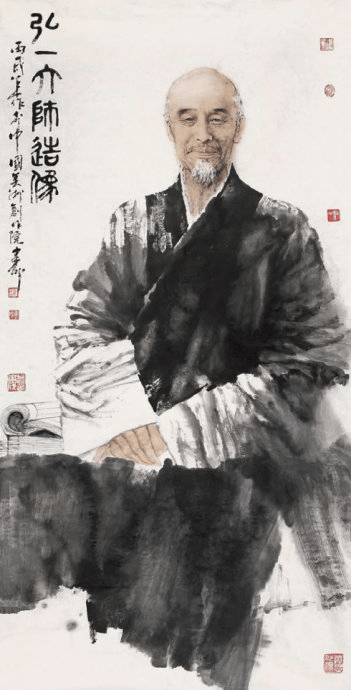
Master Hongyi (弘一大师, October 23, 1880 – October 13, 1942) was originally named Li Shutong (李叔同) and was born into a prosperous family in the bustling northern city of Tianjin on October 23, 1880. The family, originally hailing from Hongdong County, Shanxi, had relocated to Tianjin during the Ming Dynasty.

Li Shutong’s grandfather, a prosperous banker and salt merchant, and his father, Li Shizhen (李世珍), a scholar deeply immersed in Chan Buddhism and the teachings of Ming Neo-Confucian philosopher Wang Yangming (1472-1529), reflected the family’s intellectual and financial standing.

In contrast, Li Shutong’s mother had a modest upbringing as the daughter of a farmer in Pinghu, Zhejiang Province. She became Li Shizhen’s fourth wife in their multi-courtyard household, marrying him at the age of 20 when he was 68.

Tragically, Master Hongyi’s father passed away when he was just four years old. Subsequently, his mother faced challenges in maintaining her position within the complex dynamics of the household while residing under her eldest son’s roof. Fortunately, Li Shutong found support from two of his elder half-brothers during his early years, allowing him to access a quality education and a firm foundation in the Confucian classics.

The young Li Shutong mastered the art of calligraphy and after his ordination as Master Hongyi, he continued to engage in this artistic tradition. This calligraphy, produced during the period of his life when he was known as Master Hongyi, reads from right to left “Zijing Qixin” (自净其意). It means “to cleanse one’s mind” and is an extract from a famous verse

Influenced by his formative experiences, Li Shutong eloquently expressed a profound perspective on life through poetry at the tender age of 15, capturing the fleeting nature of wealth and honor: “Life is truly like the setting sun on the western hills; wealth and nobility are as transient as frost on the grass.” His personal life, marked by an unconventional marriage, served as a poignant reflection of the internal conflict between societal expectations and his genuine affections.

Li Shutong’s participation in the Hundred Days’ Reform and subsequent rumors prompted his relocation to Shanghai, where he thrived in the dynamic literary scene. Becoming a prominent figure in Shanghai’s cosmopolitan lifestyle, he joined the Chengnan Wenshe and co-founded the “Five Friends of Tianya.”

His impact extended beyond literature. Collaborating with the painter Ren Bonian, he established the Shanghai Calligraphy and Painting Association, marking a pivotal moment in Chinese art history. Li Shutong’s engagement in Liyuan activities showcased his versatility as a performer in plays such as “Bai Shuitan” and “Huang Tianba.”

Li Shutong’s literary repertoire included numerous poems and songs, among them the renowned poem “Farewell” (《送别》, Song Bie), which later inspired the widely sung “The Farewell Song” (《送别歌》, Song Bie Ge).

The Farewell Song

Outside the long pavilion, along the ancient route, fragrant green grass joins the sky,
The evening wind caressing willow trees, the sound of the flute piercing the heart, sunset over mountains beyond mountains.

          At the brink of the sky, at the corners of the earth,                 my familiar friends wander in loneliness and far from home,
          One more ladle of wine to conclude the little happiness that remains;      don’t have any sad dreams tonight.

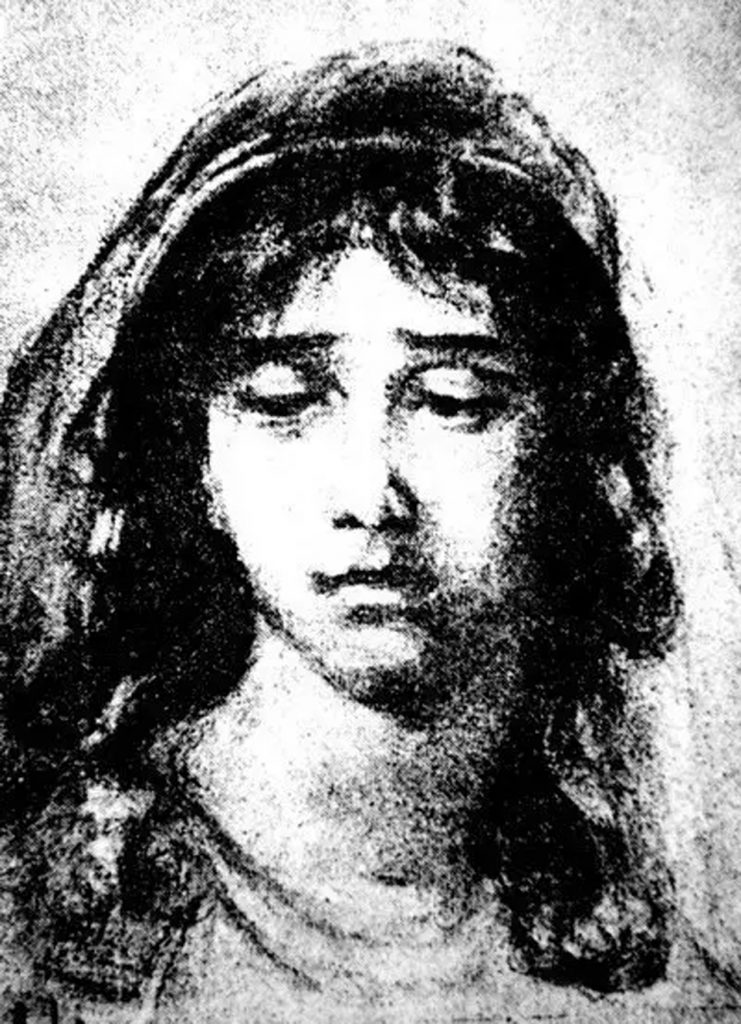
Li Shutong’s charcoal drawing titled ‘Maiden’
“A Half-naked Woman” by Li Shutong, collected by CAFA Art Museum, China

However, Li Shutong’s life underwent a profound transformation. Confronted with personal and financial challenges, he voluntarily entered a self-imposed exile in Japan. The success of the Xinhai Revolution in 1911 further complicated his circumstances, resulting in financial ruin. Undeterred by these setbacks, Li Shutong maintained composure and supported his family by teaching in Tianjin and Shanghai.

His teaching career, notably at Zhejiang First Teachers’ College, left an indelible mark. Li Shutong played a pivotal role in introducing Western painting to China, earning him the title of the forefather of Chinese oil painting. As the first Chinese art educator to incorporate nude models in his painting classes and introduce Western music to China, his influence was far-reaching. Some of his personally groomed students, including contemporary Chinese artist, educator, and musician Feng Zikai (丰子恺), and Singaporean artist Chen Wenxi (陳文希), went on to become accomplished artists in their own right. His impact on students, such as the renowned painters Pan Tianshou and Shen Benqian, underscored his lasting influence.

During this period, Li Shutong delved deeper into Buddhism. In 1916, he embarked on a 21-day fast at a temple in Hangzhou to experience aspects of the spiritual path. This experience prompted his decision to embrace the ordained life, leading to his monastic vows at Hupao Temple. His disciplined lifestyle, which included fasting therapy for deeper insights, marked a significant spiritual transformation.

Li Shutong’s transition from a worldly existence to a monk, detailed in a letter to his second wife, Yu, reflected his detachment from transient fame and wealth. His decision to leave behind a worldly life for monastic vows occurred only a month after joining the Order. He was known by the monastic names Yanyin (演音) and Hongyi (弘一) after undergoing full ordination rites at Lingyinsi, the largest monastery in Hangzhou.

His departure, though painful for those close to him, exemplified Master Hongyi’s profound understanding of Buddhism. In a conversation with his second wife, he elucidated the nature of love, defining it as compassion, aligned with Buddhist teachings that emphasize letting go of attachment and cultivating compassion.

Master Hongyi’s transformation from the proud and arrogant Li Shutong to a humble and receptive teacher was evident in his approach to teaching Dharma. Contrary to expectations of flawless mastery, Master Hongyi sought feedback from student monks and welcomed constructive criticism without defending himself.

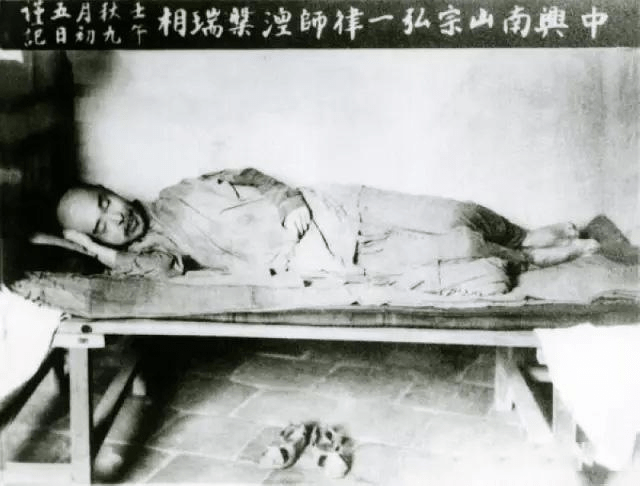
By early 1942, the toll of austerities and fasts began affecting Master Hongyi’s health, and by mid-May, his condition deteriorated rapidly.

The paranirvana of Master Hongyi

Three days before his passing at Busi Temple in Quanzhou, Fujian Province, on October 13, 1942, Master Hongyi inscribed his final calligraphic strokes, creating the work known as “Sorrow and Joy Comingle,” “Worldly Sorrows and Joy Are Intertwined,” or “Sorrow or Joy Are Inextricably Bound to Each Other” (《悲欣交集》, Beixin jiaoji).

Master Hongyi’s philosophical framework posited three distinct stages in human life: material, intellectual, and spiritual. The material phase pertains to mundane existence, the intellectual phase characterizes the life of ordinary intellectuals, while the spiritual phase encompasses the religious realm.

Material, intellectual, spiritual; beauty, profundity, deity. These concepts are intricately tied to the principles of abstinence, composure, and wisdom in Buddhism.

Abstinence, in this context, denotes the renunciation of materialistic pursuits. Composure signifies the practice of deep meditation—tranquil and remote—a path that ultimately leads to the attainment of wisdom. The imagery of Venerable Hongyi experiencing both sorrow and joy (欣) symbolizes the dynamic interplay between these various dimensions of life.

Li Shutong: From Prodigy to Monk – A Journey Beyond Wealth and Artistry

Link:Li Shutong: From Prodigy to Monk – A Journey Beyond Wealth and Artistry

Source: https://www.tsemrinpoche.com/tsem-tulku-rinpoche/great-lamas-masters/master-hongyi-the-maverick-patriarch-of-the-chinese-buddhism.html

Embracing the Spirit of Christmas

A Reflection on the 1914 Christmas Truce

In the midst of the First World War, a remarkable event occurred that transcended the boundaries of conflict and highlighted the true essence of Christmas – the Christmas Truce of 1914. As we celebrate this joyous season, it’s essential to reflect on the lessons of compassion, love, and humanity that emerged during that extraordinary moment in history.

“It will be over by Christmas.” This false assurance echoed among the 60 million soldiers sent to the battlefront, exposing the grim reality that war does not adhere to predetermined timelines. The soldiers found themselves entrenched along the Western Front, living in harsh conditions, mere meters away from their adversaries.

Despite the hostility of war, the spirit of Christmas prevailed on that fateful Christmas Eve. German troops, unwrapping gifts from home and lighting lanterns along their trenches, initiated a surprising turn of events. Carol singing broke out, and soon British and French troops joined in, bridging the gap between enemies.

As Christmas morning dawned, a temporary ceasefire was proposed, and soldiers from both sides cautiously ventured into no man’s land. Greetings, well wishes, and even gifts were exchanged. Spontaneous football matches broke out, demonstrating a shared humanity that transcended the barriers of war.

The Truce of 1914 was not an isolated incident; it was a series of truces involving over 100,000 soldiers across the British-held area of the Western Front. The scale of these impromptu ceasefires is a testament to the universal longing for peace, even in the midst of one of the deadliest conflicts in history. Spontaneous football matches broke out, transforming caps and jackets into makeshift goal posts. Corporal John Ferguson vividly described the scene: “What a sight – little groups of Germans and British extending almost the length of our front! Out of the darkness we could hear laughter and see lighted matches, a German lighting a Scotchman’s cigarette and vice versa, exchanging cigarettes and souvenirs.”

Reflecting on the teachings of Jesus, who implored his disciples to love their neighbors, it becomes apparent that the message transcends religious boundaries. In times of war fueled by religious differences, it is crucial to remember that faith should serve as a source of inspiration for compassion, love, and kindness, irrespective of one’s beliefs.

Similarly, the teachings of Shakyamuni Buddha echo through time, emphasizing the compatibility and mutual respect among religions. The contemporary Buddha, H.H. Dorje Chang Buddha III, extends this ethos by acknowledging figures like Jesus Christ as great holy beings. In his Dharma discourses, His Holiness emphasizes the imperative for all Buddhist disciples: “When encountering living beings, regardless of whether they are handicapped, deficient, sick, or healthy, treat them all equally as family members…” His Holiness further calls for global cooperation, transcending religious, cultural, and national boundaries. He underscores the importance of treating each other as dear relatives, emphasizing a collective effort necessary for the peace and auspiciousness of the world.

As we celebrate Christmas today, let us draw inspiration from the Christmas Truce of 1914. In a world where conflicts persist, particularly in places like Gaza, may we strive for peace, understanding, and empathy. Let the spirit of Christmas be a beacon of hope, guiding us towards a future where love triumphs over hatred, and unity prevails over division.

The Christmas Truce of 1914 serves as a timeless reminder that even in the darkest of times, the light of humanity can shine through. As we gather with loved ones during this festive season, may we carry the spirit of Christmas within our hearts and work towards a world where the message of love and peace prevails.

Embracing the Spirit of Christmas: A Reflection on the 1914 Christmas Truce

Link:https://peacelilysite.com/2023/12/20/embracing-the-spirit-of-christmas/

#SpiritofChristmas #Christmas #ChristmasTruce #WorldWarI #Peace#Compassion #Religion #History

Source: https://www.visionofhumanity.org/the-christmas-truce/#:~:text=As%20the%20German%20soldiers%20lit,were%20communicated%20between%20the%20trenches.

XuanKongSi – The most Dangerous Monastery

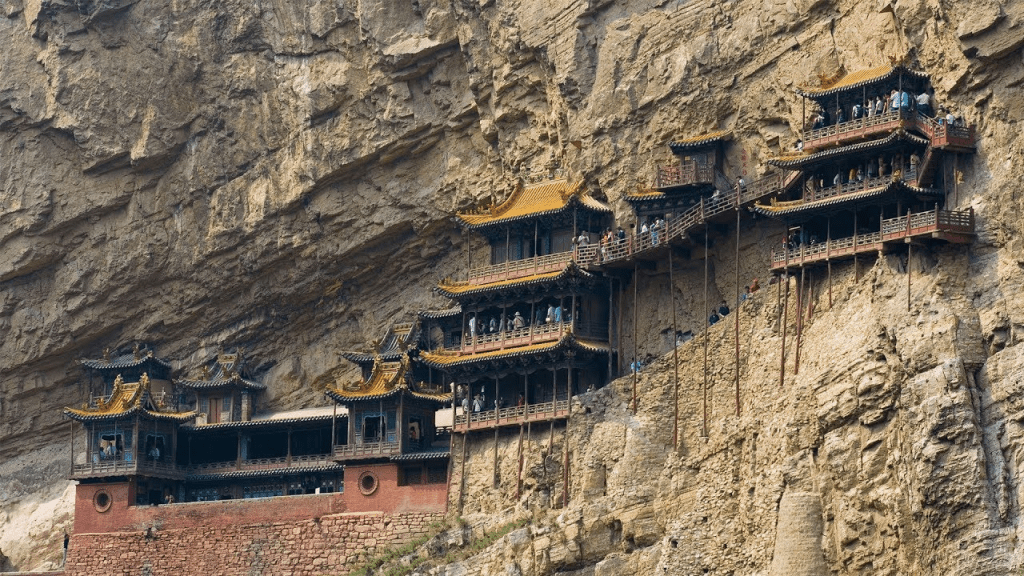
Hanging Temple, China [huanqiu.com]

Some ancient structures were purposely and skillfully constructed at the riskiest of locations or sometimes just had their appearance altered to reflect a sense of danger and awe. These ancient buildings are so remarkable that even modern scientists are amazed and astounded by them.

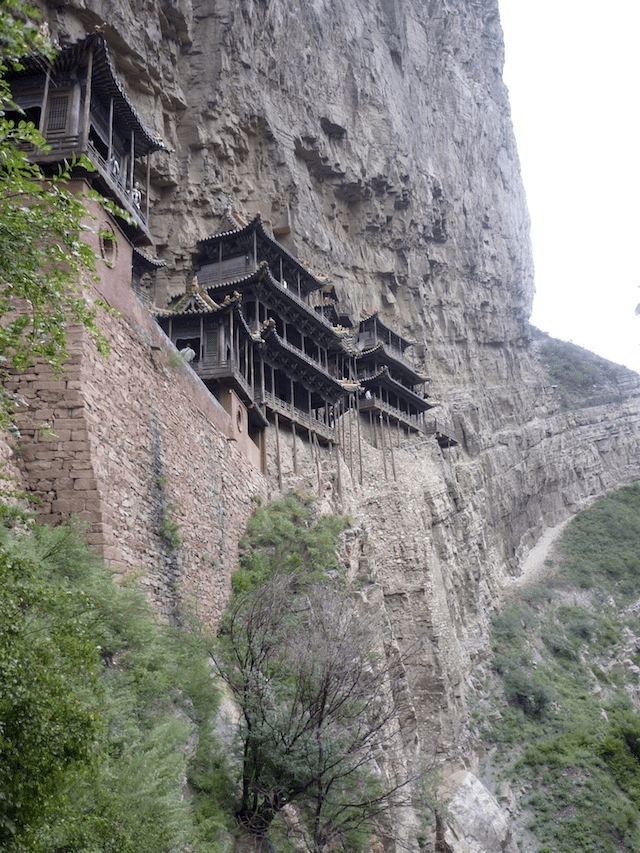
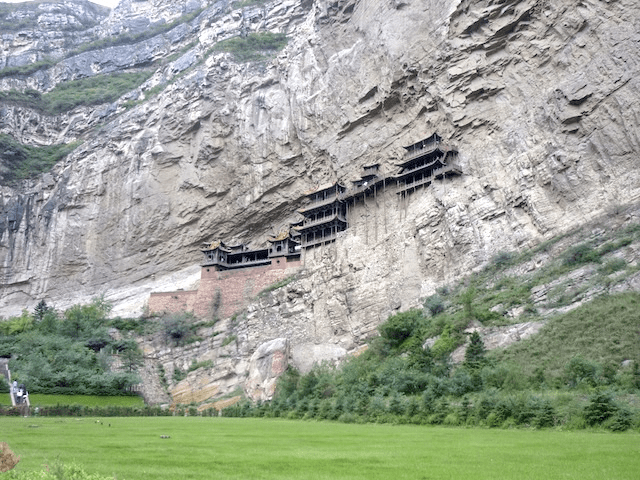
There are 10 most dangerous structures in the world, XuanKongSi Temple in China is one of them. Temples and monasteries were usually built on the ground, and if there was no money or it was necessary to hide from someone, then under the ground in caves. It seems impossible to think of anything else, but the temple tells us otherwise. It turns out that in one of the northern provinces of China, there is a so-called Hanging Temple which seems to be attached to the Rock at a height of 75 meters. It was built almost 1500 years ago in 491 during the northern Wei Dynasty. The Chinese call this Temple complex XuanKongSi.

The temple is located in Shanxi Province, 65 kilometers southeast of the city of Datang, it looks as if the entire Temple is held up on a steep Cliff by the power of Prayer. Perhaps prayers help because the temple is unique; it is the only Temple of three religions in China. It combines Buddhist, Taoist, and Confucian altars. It has everything that other temples have: the main gate, the bells, and drum Towers, the main and side Halls. The largest structure of the monastery is called sangana, and it stands on a stone ledge. There are also 40 halls in Pavilions, but they are smaller than the sangana. They are built on pallets that lie on beams hammered into the Rocks. The rock is used as the back wall of the rooms, and niches are made in it for statues. The larger the niches, the more statues they contain, and the larger they are.

Upon first glance, the temple’s buildings seem to have been partially swallowed by an expanding mountain rather than built onto and into it. Some of the pathways that connect the separate buildings are hewn into the mountain. Others feature the same design as the buildings themselves – parked atop seemingly impossibly-thin wooden poles.

It is composed of three main sections:

North Pavilion

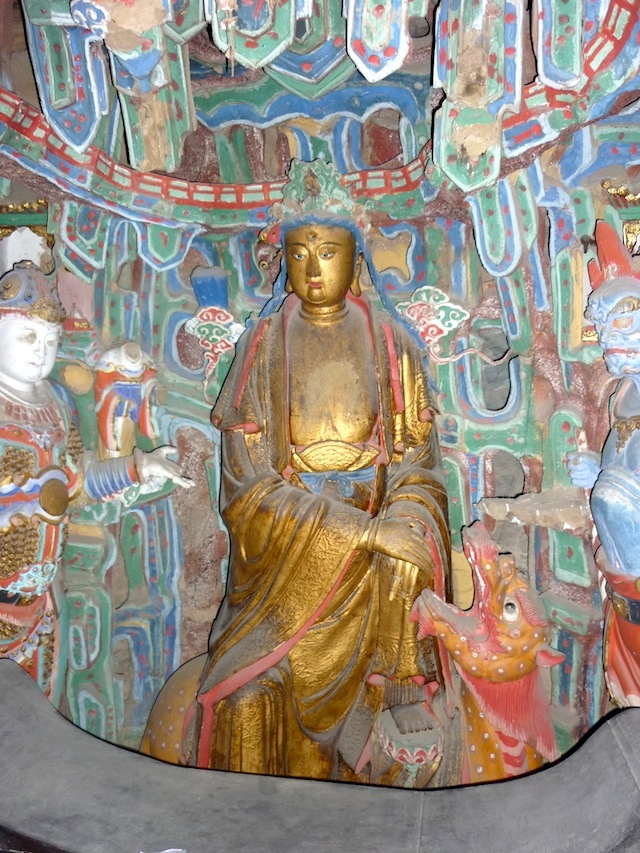
This pavilion is three storeys tall, 4 metres (13 feet) wide and 7 metres (23 feet) in length. Wufo Hall, which is located on the lowest floor is dedicated to the Five Dhyani Buddhas. Above it is Guanyin Hall and on the top storey is Sanjiao Hall. Sanjiao Hall, or the Hall of the Three Religions is widely regarded as the most important room in the Hanging Temple, at least in terms of symbology. It contains large statues of Buddha Shakyamuni, Lao-Tze and Confucius standing together.

SanJiao Hall

Given that the Hanging Temple is the only surviving example of the concept of the Three Teachings Harmonious as One, the Hall of Three Religions is perhaps the most important of these chambers. The idea of Three Teachings Harmonious as One, which emphasises the complementary nature and unifying ideas of Buddhism, Taoism and Confucianism, flourished during the Ming and Qing Dynasties.

Accordingly, the hall features sculptures of deities of all three religions. Three large statues take centre stage here: Buddha Shakyamuni in the middle, flanked by Lao-Tze on his left and Confucius on his right.

GuanYin Hall

South Pavilion

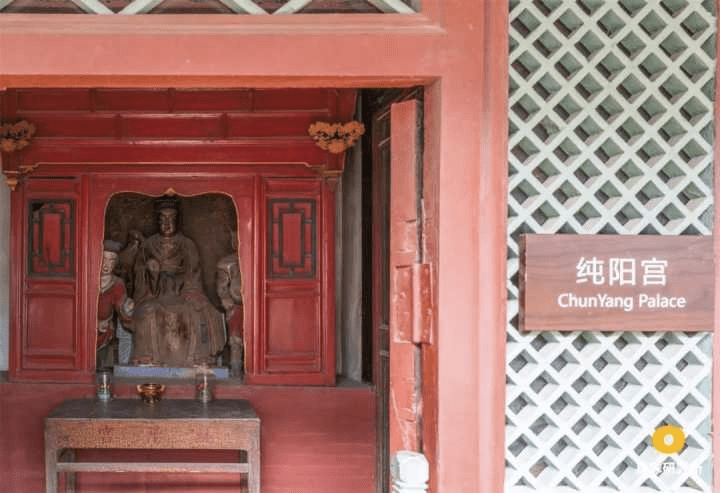
Slightly larger than the North Pavilion, it is also three storeys tall and 4 metres wide but longer at 8 meters (26 feet). The North Pavilion contains Sanguan Hall. It is the biggest hall of the Hanging Temple and is home to a 2-metre tall clay sculpture, the largest in the complex. On the middle storey is Chunyang Palace, which is dedicated to Lü Dongbin, one of the Eight Immortals of Taoism. He is the most popular Taoist character in Chinese culture. Leiyin Hall, which is dedicated to Buddhist deities is on the top storey.

The Long Bridge

The top storeys of the two pavilions are linked by a 10-metre (30 feet) bridge (a stairway has been cut into the mountainside to link the lowest storeys). A small balcony for worshipping sits above the bridge.

XuanKongSi007

However, as impressive as the Hanging Temple appears from the outside, the bulk of the builders’ efforts went into the portion of the complex that is ensconced within the rock. 40 halls and pavilions lie inside, covering an area of 125 m2.

The biggest and most prominent halls are the Hall of Three Religions, Guanyin (Avalokiteshvara) Hall, Hall of Shakyamuni, Qielan Hall (Hall of Sangharama), Sanguan Hall (Hall of the Three Officials) and Chunyang Hall.

Spread throughout the other halls are 78 sculptures made from stone, terracotta, copper and iron. They are remarkable for their vivid and detailed depiction of facial features and clothing.

Construction

Despite its precarious location and the logistical challenges construction must have presented, no design feature that is seen in other temples of the period has been spared. The two main buildings sport traditional multiple-roof designs, eaves and balconies with images of auspicious creatures like dragons common to Chinese holy structures.

Today, the part of the temple that extends beyond the face of the cliff is supported by poles made of oak. These poles have been inserted into holes chiselled out of the rock. From a distance, the brown oaken poles meld into the background, making the temple appear to float in the air.

Amazingly, the real support framework for the temple complex is hidden within the mountain and the structure itself. If these external vertical poles were removed, the hanging temple would continue to hang!

While it’s impossible to overlook the fact that the architecture disrupts the natural rock wall formation, a closer examination reveals something quite astounding. The way the roof, walls, and other structures seamlessly integrate with the rock pattern suggests that significant care and effort were put into minimizing any unnecessary destruction.

A unique mechanical theory guided the construction of the framework. Crossbeams were partially inserted into the rock as the foundation, while the rock in the back provided support. The Hanging Monastery seems to defy gravity, appearing to float in midair.

At certain points, a roof will abruptly end at an outcrop, only to resume on the other side, leaving the stone intact. This not only benefits the structural integrity of the building but also signifies a harmony with nature, a state to which all Buddhists aspire.

Construction experts from countries including Britain, Germany, and Italy have visited the monastery. In their opinion, the Hanging Monastery, which melds mechanics, aesthetics, and Buddhism, is a rarity. The monastery and everything it represents is a significant cultural achievement of the Chinese people.

Source: https://www.tsemrinpoche.com/tsem-tulku-rinpoche/art-architecture/the-hanging-temple.html, https://7wonders.org/asia/china/datong/hanging-temple/

What Science Can Learn From Religion

by David DeSteno Feb. 2, 2019

Hostility toward spiritual traditions may be hampering empirical inquiry. Science and religion seem to be getting ever more tribal in their mutual recriminations, at least among hard-line advocates. While fundamentalist faiths cast science as a misguided or even malicious source of information, polemicizing scientists argue that religion isn’t just wrong or meaningless but also dangerous.

I am no apologist for religion. As a psychologist, I believe that the scientific method provides the best tools with which to unlock the secrets of human nature. But after decades spent trying to understand how our minds work, I’ve begun to worry that the divide between religious and scientific communities might not only be stoking needless hostility; it might also be slowing the process of scientific discovery itself.

Religious traditions offer a rich store of ideas about what human beings are like and how they can satisfy their deepest moral and social needs. For thousands of years, people have turned to spiritual leaders and religious communities for guidance about how to conduct themselves, how to coexist with other people, how to live meaningful and fulfilled lives — and how to accomplish this in the face of the many obstacles to doing so. The biologist Richard Dawkins, a vocal critic of religion, has said that in listening to and debating theologians, he has “never heard them say anything of the smallest use.” Yet it is hubristic to assume that religious thinkers who have grappled for centuries with the workings of the human mind have never discovered anything of interest to scientists studying human behavior.

Just as ancient doesn’t always mean wise, it doesn’t always mean foolish. The only way to determine which is the case is to put an idea — a hypothesis — to an empirical test. In my own work, I have repeatedly done so. I have found that religious ideas about human behavior and how to influence it, though never worthy of blind embrace, are sometimes vindicated by scientific examination.

Consider the challenge of getting people to act in virtuous ways. Every religion has its tools for doing this. Meditation, for example, is a Buddhist technique created to reduce suffering and enhance ethical behavior. Research from my own and others’ labs confirms that it does just that, even when meditation is taught and performed in a completely secular context, leading research participants to exhibit greater compassion in the face of suffering and to forgo vengeance in the face of insult.

Another religious tool is ritual, often characterized by the rigid following of repetitive actions or by engagement with others in synchronous movement or song. Here, too, an emerging body of research shows that ritualistic actions, even when stripped from a religious context, produce effects on the mind ranging from increased self-control to greater feelings of affiliation and empathy.

Ritual can also play a part in strengthening beliefs. Research on cognitive dissonance has shown that publicly stating beliefs that we don’t initially endorse leads to a psychological tension that is often remedied by altering our beliefs and behaviors to match our public pronouncements. Thus the religious practice of repeatedly stating beliefs as part of prayers — as in the Catholic Mass — may enhance devotion to a creed.

What findings like these suggest is that religions offer techniques — or “spiritual technologies,” in the words of Krista Tippett, the host of the radio show “On Being” — that help people endure difficulties, change their views or move them toward action. These techniques seem to work by nudging our behavior subconsciously. Ms. Tippett stresses that the specific religious traditions from which such techniques are borrowed should be understood and honored on their own terms. But when I spoke with her recently, she also agreed that the techniques might work even when separated from their religious trappings, as meditation and elements of ritual have been shown to do.

If this view is right, religion can offer tools to bolster secular interventions of many types, such as combating addiction, increasing exercise, saving money and encouraging people to help those in need. This possibility dovetails with a parallel body of research showing that by cultivating traditional religious virtues such as gratitude and kindness, people can also improve their ability to reach personal goals like financial and educational success.

When I broached this body of research with the cognitive scientist and religious skeptic Steven Pinker, he emphasized that it was by no means a vindication of religion as a whole. He made a point to differentiate between what he called religious practices and cultural practices, with religious ones being those more likely to have doubtful supernatural rationales (like using prayer to contact a deity for favors) and cultural ones having more practical justifications (like using ritual to foster connection and self-control).

While I can see Professor Pinker’s point — and I agree with him that religion as a whole must be judged by its full set of positive and negative effects — the dividing line between cultural and religious can be blurry. The Jewish practice of Shabbat, for instance, stems from a divine command for a day of rest and includes ritualistic actions and prayers. But it’s also a cultural practice in which people take time out from the daily grind to focus on family, friends and other things that matter more than work.

My purpose here isn’t to argue that religion is inherently good or bad. As with most social institutions, its value depends on the intentions of those using it. But even in cases where religion has been used to foment intergroup conflict, to justify invidious social hierarchies or to encourage the maintenance of false beliefs, studying how it manages to leverage the mechanisms of the mind to accomplish those nefarious goals can offer insights about ourselves — insights that could be used to understand and then combat such abuses in the future, whether perpetrated by religious or secular powers.

Science and religion do not need each other to function, but that doesn’t imply that they can’t benefit from each other. Rabbi Geoffrey Mitelman, the founding director of Sinai and Synapses, an organization that seeks to bridge the scientific and religious worlds, told me recently that science can help clergy better aid those they counsel by showing which types of social and behavioral practices are empirically most likely to foster their emotional, moral and spiritual goals.

A yearning for a science-religion synergy is growing in some circles. Ms. Tippett cites as an example the Formation Project, an initiative designed by a group of millennials who are looking to cultivate their inner lives and form a community by combining ideas from psychology and neuroscience with practices from ancient spiritual traditions.

In doing this, she points out, these young people are not blindly accepting any doctrine. They are asking questions and choosing what works based on evidence. In short, they are doing exactly what I think the communities of scientists and clergy need to do in a more rigorous way and on a much larger scale.

Will it work? That’s an empirical question. But if we choose not to investigate it, we’ll never know. And I suspect we’ll be the poorer for it.

What Science Can Learn From Religion

Link: https://peacelilysite.com/2023/06/23/what-science-can-learn-from-religion/

#SpiritualTechnologies #Ritual# Religion#Empathy #Self-control #Science #Meditation #Doctrine #clergy

Nun’s body intact four years after death in A Missouri monastery

This May, Gower, a small rural town in Missouri, has unexpectedly gained recognition as a pilgrimage destination following an extraordinary occurrence related to the exhumation of a nun’s body. Sister Wilhelmina Lancaster, the founder of the Benedictine Sisters of Mary, Queen of the Apostles, was buried at the age of 95 in May 2019. Remarkably, when her body was exhumed four years later, it displayed no visible signs of decomposition, leading to a surge of visitors to the town, approximately 40 miles north of Kansas City.

The preservation of Sister Wilhelmina Lancaster’s body has captivated the attention of hundreds of people, who have deemed it a “miracle in Missouri.” Despite expectations that only bones would remain due to her burial in a simple, unembalmed wooden coffin, the exhumation revealed her fully intact body, along with her religious habit impeccably preserved. Initially, the discovery was intended to remain private, but the news spread rapidly after a private email was mistakenly shared with the public.

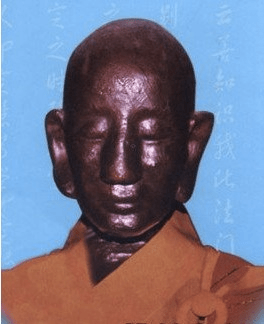
While as a Buddhist disciple, I find this occurrence surprising, it is not unprecedented in Chinese Buddhist history. Throughout the annals of Chinese Buddhism, there have been quite a few revered masters and patriarchs who have left behind fully intact relics of their bodies after passing away. Notably, Nanhua Temple in Shaoguan, Guangdong Province, houses three such relics: Master Huineng, the Sixth Patriarch of Zen; Master Hanshang; and Master Dantian. These examples from Buddhist history further highlight the profound reverence and awe associated with the preservation of such relics.

Master Huineng the Sixth Patriarch of Chan Buddhism

Huineng, widely recognized as the Sixth Patriarch or Sixth Ancestor of Chan (Zen) Buddhism, holds a significant place in the early history of Chinese Chan Buddhism. He is both a semi-legendary and a central figure in the development of this tradition. Huineng is renowned as the author of the influential Sixth Platform Sutra and is revered as the sixth patriarch of Chan Buddhism.

To this day, Huineng’s physical body remains preserved in the Nanhua Monastery in Shaoguan, Guangdong Province. Clad in a yellow robe and a red shawl, his corpse serves as a revered symbol within the monastery where he once taught. According to the Biography of the Great Master of Caoxi (Caoxi Dashi Zhuan, circa 781), Huineng’s body was removed from an urn on September 8, 714. After being desiccated for over a year, it was carefully covered with glue and lacquer before being enshrined in a stupa, where it has remained since.

This preservation of Huineng’s body and its continued veneration serve as a testament to his profound impact on the development of Zen Buddhism and his lasting influence on generations of practitioners. The presence of his preserved corpse stands as a tangible reminder of his teachings and spiritual legacy within the Nanhua Monastery.

Master HanShan (1546-1623)
Master Dantian (1535 – 1614)

Mount Jiuhua, located in China, has a significant historical and religious importance as a Buddhist Holy Land, boasting a rich heritage that spans over 1600 years. Its origins can be traced back to the year 401 AD during the Eastern Jin Dynasty, when the esteemed monk known as “Beidu” journeyed from ancient India to Mount Jiuhua with the intention of constructing temples and spreading the teachings of Buddhism.

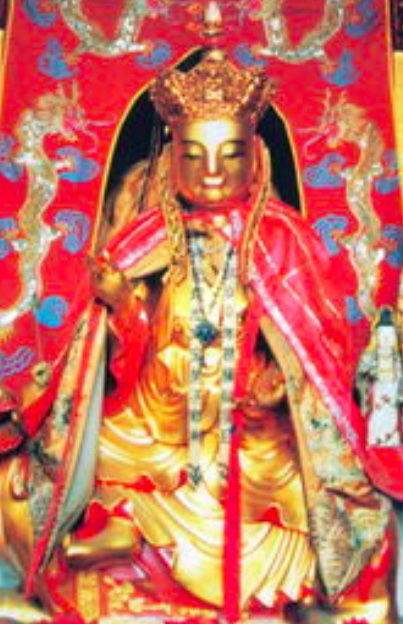
In 719 AD, when Kim Qiaoque, a prince hailing from Silla (present-day South Korea), arrived at Jiuhua Mountain. Kim Qiaoque dedicated himself to self-cultivation in this sacred place for an impressive span of 75 years. His life came to an end at the remarkable age of 99, and astonishingly, his physical body remained intact even after death. Due to the striking resemblance between Kim Qiaoque and Ksitigarbha Bodhisattva, the revered monks residing in Mount Jiuhua firmly believed that the spirit of Ksitigarbha Bodhisattva had reincarnated within him. Consequently, Mount Jiuhua evolved into a significant site for conducting rites and rituals dedicated to Ksitigarbha Bodhisattva.

Throughout history, Mount Jiuhua has served as a dwelling place for countless enlightened masters. Historical records reveal an astounding tally of sixteen masters who achieved the extraordinary feat of leaving behind relics of their physical bodies, fully intact. To safeguard these precious remains, most of the relics were delicately adorned with a layer of gold, serving as a symbol of veneration from the people. These sacred relics not only stand as a testament to the spiritual accomplishments of these masters but also continue to evoke deep reverence and inspiration among devotees to this very day.

Mount Jiuhua Incarnation Grand Hall Enshrines Flesh Body of Ksitigarbha covered by a layer of gold

Master Mingjing (1928 – 1992)

Renyi Nun 仁义师太(1911—1995)enshrined at Mount Jiuhua Tonghui Zen temple
慈航法师 Master CiHang (1893—1954)Now enshrined in Taiwan Metriya Temple

Just a few years ago, the esteemed holy monk Yinhai, a devoted disciple of H.H. Dorje Chang Buddha III, departed this earthly realm, leaving behind a profound and awe-inspiring spiritual legacy. On January 15, 2017, Elder Monk Yinhai completed his earthly journey through impeccable spiritual practices. What followed after his passing was an extraordinary phenomenon that surpassed anything witnessed in Buddhist history.

Even after his physical demise, the holy monk’s body underwent a truly extraordinary and divine metamorphosis. In a stunning departure from the natural order of things, his fingers and nails continued to grow, presenting an unprecedented occurrence in the annals of Buddhist history. This majestic and wondrous manifestation set a remarkable new record that reverberated throughout the Buddhist community. Commencing on the tenth day following his passing, an awe-inspiring process of complete transformation unfolded within his flesh and bones. In a mere twenty days, his body underwent a magnificent metamorphosis, assuming a form that transcended all comparisons, resembling a sacred dharma image.

The astounding and sacred phenomenon demonstrated by the revered monk Yinhai stands as a powerful testament to the profound Buddha Dharma transmitted by H.H. Dorje Chang Buddha III in the annals of Buddhist history.

Photo on the left was taken 11 hours after the Holy Monk entered nirvana, on the right was taken after 24 days

Across various religions, there have been instances of inexplicable miracles that defy the understanding and explanations provided by current scientific knowledge. These miracles, although beyond the grasp of science, undeniably exist. It is my sincere hope that individuals refrain from hastily dismissing them as mere superstition and avoid judging them solely based on their personal knowledge and beliefs.

The realm of spirituality and faith often transcends the limitations of scientific understanding. It encompasses dimensions and experiences that extend beyond empirical observations and logical reasoning. Just because something cannot be readily explained by scientific means does not diminish its significance or validity. Rather, it calls for a humble recognition of the vast mysteries that exist beyond the boundaries of human comprehension.

By approaching these miracles with an open mind and a willingness to explore the depths of the unknown, we can cultivate a greater appreciation for the diverse expressions of spirituality across different belief systems. It is through this mindset that we can foster respect and understanding, recognizing that our individual perspectives may not encompass the entirety of the world’s wonders.

Nun’s body intact four years after death in A Missouri monastery

Link:https://peacelilysite.com/2023/06/16/nuns-body-intact-four-years-after-death-in-a-missouri-monastery/

Source: https://nypost.com/2023/05/25/nuns-body-exhumed-years-after-death-shows-no-signs-of-decay/

#DorjeChangBuddhaIII #HHDorjeChangBuddhaIII#BuddhaDharma#HolyMonkYinhai#ChanBuddhism#MasterHuineng # #YinhaiShengzun#Holyfeat#SixthPatriarchofChanBuddhism #ZenBuddhism #MountJiuhua #KsitigarbhaBodhisattva #NanhuaTemple #Relics #MasterHanshan

Yungang Grottoes

The Yungang Buddhist grottoes, a massive complex comprising 252 caves and niches with 51,000 statues carved into an area of 18,000 square meters, are a remarkable achievement of Buddhist cave art in China. Constructed from the mid-5th to early-6th century AD, the grottoes were influenced by Buddhist cave art from South and Central Asia but also incorporated distinct Chinese elements and local spirit. They played a crucial role among early Oriental Buddhist grottoes and had a far-reaching impact on Buddhist cave art in China and East Asia.

The five caves of Tanyao and their imperial patronage 

The construction of Yungang began with five cave-temples, known today as caves 16 to 20, at the west end of the cliff. These caves were imperial commissions of the Northern Wei dynasty in around 460 C.E. The Northern Wei rulers, who belonged to the Tuoba clan from northern China, had recently unified northern China after centuries of political turmoil and established Buddhism as the state religion. The dynasty’s capital, Pingcheng, became a significant center for Buddhist religious and artistic expression.

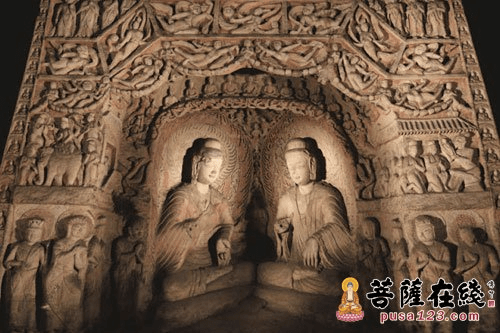
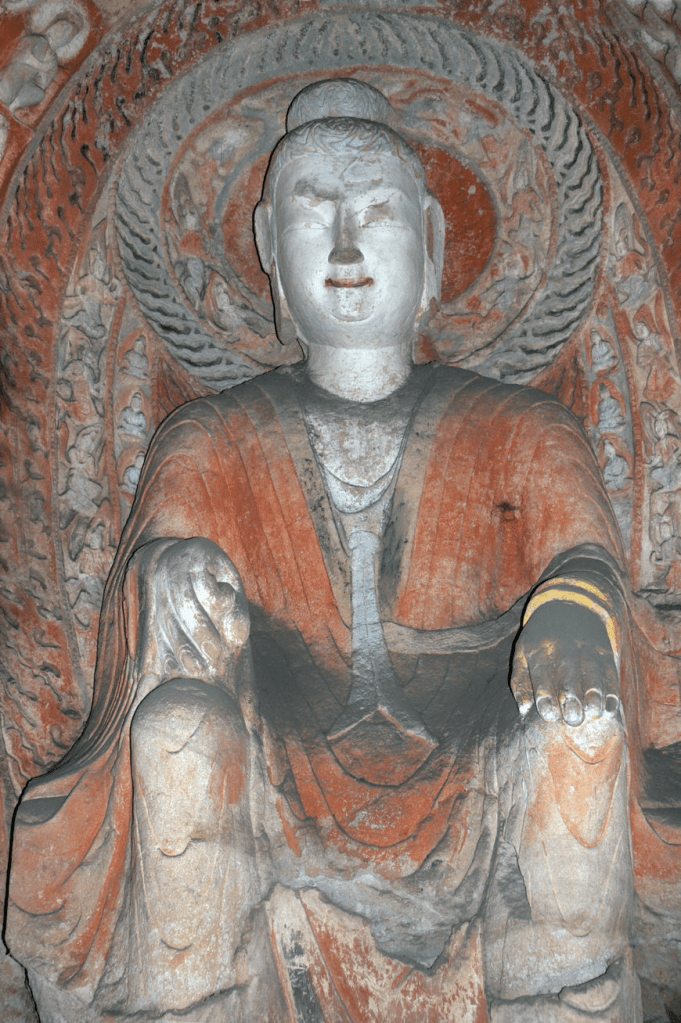
The five caves of Tanyao, created by Tan Yao, are classical masterpieces of the first peak of Chinese art, displaying a strict unity of layout and design. These caves each contain a colossal Buddha as the central icon, with Cave 20 housing a gigantic seated Buddha in a meditation posture and a standing attendant Buddha on one side. Another attendant Buddha likely existed on the other side, but it has been lost along with the cave’s exterior wall. The imperial patronage of these caves reflects the Northern Wei dynasty’s fusion of state power and religious devotion.

Buddha, Cave 20 at Yungang, Datong, China (photo: xiquinhosilva, CC BY 2.0)

The main Buddha measures roughly 13 meters in height. He has plump cheeks, a thick neck, elongated eyes, a sharply cut nose, slightly smiling lips, and broad shoulders, all of which produce a solemn appearance.

The well-preserved halo behind the main Buddha is composed of an outer band of flame patterns and two inner bands decorated with seven seated Buddhas of miniature size. The robe features zigzag patterns on the edge. The right shoulder of the main Buddha is left exposed, whereas the standing attendant Buddha on the east wall wears a robe that covers both shoulders with a high neckline. 

Historical records recount that Tanyao, a renowned monk cleric with official ranks, advised Emperor Wencheng to undertake construction of five cave-temples (Caves 16–20) to commemorate the five founding emperors of the Northern Wei dynasty. Claiming that the emperor of Northern Wei was the living Buddha, this project declared the emperor’s political and spiritual legitimacy, and strengthened the rule of the imperial family.

Buddha (left) and attendant Buddha (right), Cave 20 at Yungang (photo: xiquinhosilva, CC BY 2.0)

The statues housed in the caves and niches are in good condition and all of the caves and statues have not suffered major damage from vandalism and/or natural disasters. Restoration and repair had been made on deficient parts of some statues in the past. All the necessary attributes demonstrating the Outstanding Universal Value of Yungang Grottoes are contained within the boundary of the property area. The buffer zone provides a necessary safe area for the conservation of the Grottoes, the setting and the historic environment. These measures have enabled the Yungang Grottoes to serve as one of the greatest ancient stone carving art treasure houses in the world.

The location, caves and statues of the Yungang Grottoes have retained their historic appearance. The eaves of wooden pavilions of the caves and the related historical remains have kept the distinctive character of the times when they were constructed. The daily maintenance and conservation intervention have been conducted following the conservation principle of minimal intervention in design, materials, methodology, techniques and craftsmanship.

The cross-legged Bodhisattva Maitreya, on the east wall of the antechamber of Cave 9, phase II, Yungang Grottoes, Datong, China (photo: G41rn8, CC BY-SA 4.0)

The paired caves and the major development at Yungang

Beginning roughly a decade after the initial commission, the imperial projects at Yungang advanced to a second phase that lasted from c. 470s until 494 C.E. In contrast to the monumental Buddha found in Cave 20, the interior of the second-phase cave-temples are decorated with reliefs that depict Buddhas, bodhisattvas, and other divine figures in various scales and configurations.

One of the most distinctive features developed in the second phase of construction are paired caves—two adjacent caves featuring a similar architectural plan and pictorial program. The paired cave-temple layout is understood to symbolically represent the reign of two coincident rulers: Emperor Xiaowen (471–499 C.E.) and Empress Dowager Wenming (442–490 C.E.). The use of paired cave-temples became another means to demonstrate the dynasty’s imperial power.  

The paired Caves 5 and 6 are among the most lavishly decorated cave-temples at Yungang. Cave 6 has an antechamber and a square main chamber supported by a central pillar (see the full cave 6 in 3D). A square clerestory (window) is opened right above the passageway to the main chamber to let in light (although it is hard to see in photos or the 3D image).

In the main chamber of Cave 6, the east, south, and west walls are divided vertically into three main registers that include complex pictorial programs (the north wall features a large niche housing a trinity of Buddhas that are later repairs). We find seated Buddha figures and scenes from the Buddha’s life throughout the chamber. Depictions of the historical Buddha, who was believed to live in the Ganges River basin during the 6th century B.C.E., derived largely from Buddhist texts. The Buddha’s biography details the course of his life from birth to enlightenment, and eventually to nirvana, the final extinction. The life of the Buddha was among the most popular themes for artistic representation throughout the Buddhist world. 

The First Sermon of the Buddha at Deer Park, Cave 6, Yungang, Datong, China

One scene from the Buddha’s life (at the southern end of the east wall) shows the First Sermon of the Buddha at Deer Park, identifiable by the depiction of a pair of deer on the Buddha’s throne. We see a canopied standing Buddha flanked by two standing bodhisattvas and a myriad of worshippers in the background. Just below the standing Buddha niche, a seated Buddha with his right hand raised (the fearless gesture) can be seen in a trapezoidal-shaped niche flanked by two five-story pagodas (just visible at the edges of the scene in the photograph). Worshippers either kneel in front of the throne or stand facing the Buddha on his two sides.   

Rock-cut cave-temples

Rock-cut cave-temples first appeared in western India in the 1st century B.C.E. There are two basic types: apsidal-shaped (semicircular) chaitya (sanctuary, temple, or prayer hall in Indian religions) and vihāra caves where monks resided—both of which we find at places like the caves of Ajanta, India. Both types were transmitted eastwards to Central Asia up to the 5th century with modifications of the structures. At Yungang, the sanctuary type was further adapted into a square shape that houses a central pillar in the middle, as we find in Cave 6. At the same time, a number of architectural features find their precedents in Goguryeo tombs from present-day northeastern China and North Korea. 

But what facilitated these different traditions coming together at Yungang?

Ajanta, Cave 26, (photo: Arian Zwegers, CC: BY 2.0)

Transmissions and transformations of artistic styles

Yungang was a hub where multiple artistic traditions of South Asia, Central Asia, and pre-Buddhist China synthesized into something new. This was made possible by the Silk Road, a network of ancient trade routes linking East Asia with the rest of Eurasia. Goods and ideas have been exchanged along the Silk Road since at least the second century B.C.E. Central to the economic, cultural, and religious interactions between different parts of Eurasia, the Silk Road tied the Northern Wei territory to the sacred heartland of Buddhism in South Asia, and to Central Asian kingdoms that promoted Buddhist teachings. 

A primary factor facilitating the encounter of these varied traditions was the gathering of human resources and materials from different regions. In the 430s and 440s, the Northern Wei court issued decrees that relocated artisans and monks from its conquered lands to the capital city of Pingcheng. The concentration of people and craftsmanship in the capital led to the artistic flourishing of well-executed Buddhist monasteries, cave-temples, sculptures, and murals. Eminent monks who were active in Pingcheng had also engaged with religious activities in other urban centers such as Chang’an and Wuwei, and maintained close ties with Central Asian Buddhist communities.

Just as the form of the rock-cut cave-temples was adapted from earlier traditions in South Asia, statues and reliefs at Yungang exhibit strong stylistic and iconographic affinities with earlier Buddhist art traditions from northwestern India and Central Asia. For instance, the main colossal Buddha images in Caves 16 to 20 feature a round face, with a gentle, calm expression that creates an impression of sanctity, and a robe style that clings tightly to the body yet is rendered with schematic patterns. All of these features echo the aesthetics found in previous traditions, especially the Buddhist sculptures in Gandhara, a Buddhist center located in present-day northwest India and Pakistan. 

Yungang art exerted influence, in turn, on Central Asian cave-temples starting in the later 6th century, such as Dunhuang, indicating that a dynamic exchange took place among the major cultural centers along the Silk Road. 

An iconic form of the Buddha, 2nd–3rd century C.E., Kushan period, Gandhara, schist, 19.76 x 16.49 x 4.56 inches (The British Museum)

Sinicization reforms under the reign of Emperor Xiaowen

One of the new developments shown at Yungang that would have a long-lasting effect on Chinese Buddhist art was Sinicization, a process of adapting non-Chinese traditions into Han Chinese culture. In Cave 1, between the canopy of the central pillar and the ceiling we find intertwined dragons surrounding mountains that represent Mount Meru (the sacred mountain considered to be the center of the universe in Buddhist cosmology). The design shows strong influence of the pre-Buddhist Chinese tradition in two aspects. First, the dragons are depicted with typical Chinese conventions—a snake-like curving body with four legs. Mount Meru was not related to dragons in pre-Chinese Buddhist art traditions. The incorporation of dragons in the design reveals an integration of the motif’s symbolic reference to a spiritual life force in traditional Chinese beliefs.

Central pillar in Cave 1, c. 480s, Northern Wei, Yungang (photo: Zhangzhugang, CC BY-SA 3.0)

In Cave 6, we also see Sinicized traits in a new style of the Buddha’s monastic robe, which features loose drapery that falls around the body and clothes the Buddha entirely instead of the earlier style that clings closely to a partly exposed body. The new style finds parallel in the contemporary dress of court officials.

Overall, these new styles and motifs were a response to the political reform of Sinicization promoted by Emperor Xiaowen and Dowager Wenming during their reign in the Taihe era (477–499 C.E.). The reform aimed at legitimizing the Northern Wei regime, built by non-Chinese nomadic groups, as an imperial Chinese dynasty, and promoting a greater sense of conformity throughout the empire.

Buddha with Sinicized traits, Cave 6, Yungang, China (photo: Gisling, CC BY-SA 3.0)

The legacy of Yungang 

Despite the move of the capital to Luoyang in 494 C.E., constructions at Yungang continued for another three decades. Cave-temples of this phase are much smaller in size than at the earlier western end of the complex. Over half a millennium later in the 13th century when Yungang was the capital of the Liao Dynasty, Yungang witnessed another era of glory, with restorations of the caves and installation of wooden structures attached to their façades. Yet it was only a temporary phenomenon. The site later stayed silent for centuries until its early 20th-century rediscovery along with other major cave-temples by foreigners on expeditions.

Modern scholarship about the history and the art of Yungang Cave-temples has continued to provide new information about the site. The most recent archaeological excavations at Yungang unearthed the remains of a monastery dated to the Northern Wei dynasty above the western section of the cliff. The well-preserved foundations of courtyards, the central stupa (a sepulchral monument that refers to the Buddha), residential cells for monks, and objects continue to enrich our understanding of the site as a significant religious center from the 5th century. 

Yungang Grottoes

Link: https://peacelilysite.com/2023/03/31/yungang-grottoes/

#BuddhistArt #YungangGrottoes #BuddhaStatus #Buddhist #SilkRoad #TravelChina #BuddhistHistory #Cave-Temples #Religion

Source: smarthistory.org/yungang-grottoes

Facing the Truth: Life is Difficult

Facing the Truth: Life is Difficult

Recently, my two college-aged sons have been expressing that they find life to be difficult. In an effort to provide them with guidance and support, I have been offering them spiritual advice and emotional support. While searching for resources to assist in this endeavor, I stumbled upon the profound and enlightening book, The Road Less Traveled, by Scott Peck. The insights and philosophy presented within the book have been incredibly inspiring and beneficial in helping me to support my sons in their journey.

The Road Less Traveled is a self-help book by American psychiatrist and author Scott Peck, first published in 1978. The book has had a significant impact, selling millions of copies and remaining on the New York Times bestseller list for more than ten years. One of the main themes of the book is the concept of the four disciplines: psychiatry, psychology, religion, and philosophy. Each discipline offers unique perspectives on how to navigate the challenges of life and achieve personal growth.

The book’s central message is that life is difficult, but that this difficulty can be transcended by understanding and accepting it. Peck argues that discipline is the basic tool we need to solve life’s problems, and that with enough discipline we can solve all problems. Additionally, the book explores themes of love, relationships, parenting, and self-discovery, as well as teaching about distinguishing dependency from love and how to become one’s true self.

Life is a series of problems. It is something that we all must face and deal with on a daily basis. Some of these problems may be small and easily solved, while others may be more complex and difficult to overcome. The question we must ask ourselves is: do we want to moan about these problems or do we want to solve them?

As adults, we have the power to choose how we react to life’s problems. We can choose to bemoan our difficulties and wallow in our troubles, or we can choose to take action and find solutions. The latter approach is far more productive and will ultimately lead to greater satisfaction and fulfillment in life.

In addition to making this choice for ourselves, it is also important to teach our children to solve problems in a similar manner. As parents, we have a responsibility to guide and teach our children, helping them to develop the skills and mindset needed to overcome the challenges that life will inevitably present to them.

One of the most important tools we have for solving life’s problems is discipline. Without discipline, we will not be able to effectively tackle the issues that we face. With only some discipline, we may be able to solve only some problems, but with total discipline, we can solve all problems. Discipline is the key to success in any endeavor. It allows us to focus our minds and efforts, to set goals and make plans, and to persist in the face of adversity.

It is important to note that problems do not go away on their own. They must be worked through and dealt with, otherwise they will remain forever, acting as a barrier to the growth and development of the spirit. It is essential that we learn to face and overcome problems, rather than avoiding or ignoring them.

One way to do this is by learning to Delay Gratification. By scheduling the pain and pleasure of life in a way that we deal with pain first and get it over with, it allows us to enhance the pleasure we gain from it. This is the only decent way to live. With discipline, we can solve most of the problems, and delay gratification is a process that can help us to get through the most difficult moments.

Peck also emphasizes the importance of Love and Community in personal growth. He argues that true love is not just an emotional state, but also an action, and that it requires a commitment to growth and self-discipline. He also stresses the importance of community, stating that “the love of community is the only true love.”

I have also found out in Buddhism, love has a deeper meaning that goes beyond romantic or familial feelings. It encompasses compassion and the belief in treating all beings as if they were our own relatives or parents. In What is Cultivation by H.H. Dorje Chang Buddha III, says: “Loving-kindness: At all times, through the actions of my three karmas, I am loving and kind toward all living beings, who have been my parents. I wish them a long life without illness, good fortune, good luck, and a happy life. ” This means that at all times, through all our actions, thoughts, and words, we should strive to be loving and kind towards all living beings, recognizing that they have been our parents in past lives. This belief is expressed through the wish for all beings to have a long life free from illness, good fortune, good luck, and happiness. This unconditional love can have a positive impact on individuals who are facing challenges and difficulties in their lives.

Everyone must face and deal with the challenges and difficulties in life. Moaning about them or solving them, it’s a choice we make, and the latter can lead to greater satisfaction and fulfillment in life. Teaching our children to solve problems in a similar manner and helping them to develop the discipline and tools needed, that could be in religions or philosophy or psychology, to succeed in life is an essential responsibility of parenthood.

Facing the Truth: Life is Difficult

Link: http://What is Cultivation by H.H.Dorje Chang Buddha III

#TheRoadLessTraveled#ScottPeck#Discipline#Love#Compassion#Philosophy#DelayGratification#Religions#Phsycology#Truth#Discipline#WhatisCultivation #H.H.DorjeChangBuddhaIII

The Power of Miracles (Full Episode in National Geographic)

The Story of God with Morgan Freeman

In the National Geographic channel’s “The Power of Miracles” episode of “The Story of God with Morgan Freeman,” Freeman delves into the concept of miracles and the role they play in different cultures and religions around the world. Throughout the episode, Freeman explores the various stories and accounts of miracles that have been passed down through traditional cultures and religions. These stories often involve healing, protection, and other seemingly miraculous events.

One of the main focuses of the episode is the stories of miracle in Christianity. Freeman visits the site of a Catholic pilgrimage in Lourdes, France, where thousands of people travel each year to pray for healing. Freeman also visits the site of a Marian apparition in Medjugorje, Bosnia, where six children reported seeing the Virgin Mary in 1981. Freeman also meets with people who believe they were healed as a result of the apparition, which is still ongoing. Freeman also explores other religion’s records of miracles like the Jewish Kabbalah, and the Islamic Hadith.

While some people may be skeptical of these stories, Freeman makes it clear that they hold great significance for the people who believe in them. For many, these stories of miracles provide hope, inspiration, and a sense of connection to something greater than themselves. Freeman ultimately concludes that miracles are about the power of belief, and that the belief in something larger than ourselves can have a profound impact on our lives.

Watching this episode is a miracle for me. I explored so many beautiful places, cultures and religions. It’s a must watch for people with an interest in the intersection of faith and science, and in the power of belief to shape our lives.

The Story of God with Morgan Freeman

Link: https://peacelilysite.com/2023/01/11/the-power-of-miracles-full-episode-in-national-geographic/

#Miracle#MorganFreeman#NationalGeographicchannel#PowerofMiracles#Religions#Cultures#Christianity#Church#JewishKabbalah#Islamic Hadith #Healing#Belief

Buddhist Beliefs

Buddhist Beliefs

What are Buddhist Beliefs? All living beings have the same basic wish to be happy and avoid suffering, but very few people understand the real causes of happiness and suffering.

We generally believe that external conditions such as food, friends, cars, and money are the real causes of happiness, and as a result we devote nearly all our time and energy to acquiring these. Superficially it seems that these things can make us happy, but if we look more deeply we shall see that they also bring us a lot of suffering and problems.

Happiness and suffering are opposites, so if something is a real cause of happiness it cannot give rise to suffering. If food, money, and so forth really are causes of happiness, they can never be causes of suffering; yet we know from our own experience that they often do cause suffering. For example, one of our main interests is food, but the food we eat is also the principal cause of most of our ill health and sickness.

In the process of producing the things we feel will make us happy, we have polluted our environment to such an extent that the very air we breathe and the water we drink now threaten our health and well-being. We love the freedom and independence a car can give us, but the cost in accidents and environmental destruction is enormous.

Photo by Delia Dwi on Pexels.com

We feel that money is essential for us to enjoy life, but the pursuit of money also causes immense problems and anxiety. Even our family and friends, with whom we enjoy so many happy moments, can also bring us a lot of worry and heartache.

In recent years our understanding and control of the external world have increased considerably, and as a result, we have witnessed remarkable material progress; but there has not been a corresponding increase in human happiness.

There is no less suffering in the world today, and there are no fewer problems. Indeed, it could be said that there are now more problems and greater unhappiness than ever before. This shows that the solution to our problems, and to those of society as a whole, does not lie in knowledge or control of the external world.

Why is this? Happiness and suffering are states of mind, and so their main causes cannot be found outside the mind. The real source of happiness is inner peace. If our mind is peaceful, we shall be happy all the time, regardless of external conditions, but if it is disturbed or troubled in any way, we shall never be happy, no matter how good our external conditions may be.

External conditions can only make us happy if our mind is peaceful. We can understand this through our own experience. For instance, even if we are in the most beautiful surroundings and have everything we need, the moment we get angry any happiness we may have disappears. This is because anger has destroyed our inner peace.

We can see from this that if we want true, lasting happiness we need to develop and maintain a special experience of inner peace. The only way to do this is by training our mind through spiritual practice – gradually reducing and eliminating our negative, disturbed states of mind and replacing them with positive, peaceful states.

Eventually, through continuing to improve our inner peace we shall experience permanent inner peace, or “nirvana.” Once we have attained nirvana we shall be happy throughout our life, and in life after life. We shall have solved all our problems and accomplished the true meaning of our human life.

Link: https://wisdomtea.org/2022/01/05/buddhist-beliefs/

https://www.kadampanewyork.org/buddhistbeliefs