When we think of iconic sculptures, the Discobolus, Michelangelo’s Moses, and the Laocoon and his Sons likely come to mind—captivating masterpieces that freeze moments in time with gripping intensity. However, the realm of Buddhist sculptures in ancient China offers a different narrative, one of profound serenity and peace that sets it apart from Western art.
CGTN’s latest film, Eternal Smiles, invites you to embark on a mesmerizing 60-minute exploration of China’s Buddhist sculptures. As you delve into the most renowned grottoes, you’ll witness a unique facet of statuary art that transcends time and space, offering a glimpse into a continuous eternity. The film provides a rare opportunity to experience the tranquility and harmony exuded by Buddhas and Bodhisattvas in these ancient works.
Guiding you along the Silk Road, Eternal Smiles unravels the fascinating journey of Buddhism to China. The film takes you to famous grottoes, temples, and historical sites, immersing you in a rich tapestry of stories that satisfy your curiosity about history, art, natural scenery, culture, and more.
Unlike the dramatic and intense narratives often found in Western sculptures, China’s Buddhist sculptures are a testament to serenity and peace. The film beautifully captures the essence of these timeless works of art, inviting viewers to appreciate the subtleties and spiritual depth embodied by Buddhas and Bodhisattvas.
Eternal Smiles is not merely a documentary; it’s a cinematic symphony that seamlessly weaves together history, art, and culture. Through stunning visuals and insightful narratives, the film offers a holistic experience that transcends the screen, transporting viewers to the heart of China’s Buddhist legacy.
Whether you’re a history buff, an art enthusiast, or someone seeking a peaceful escape, Eternal Smiles promises to be a visual feast for the curious soul. Join us on this cinematic journey to discover the beauty, serenity, and eternal smiles hidden within China’s Buddhist sculptures.
The Explanation of the Buddha’s Title – “H.H. Dorje Chang Buddha III
On April 3, 2008, a solemn and dignified first-publishing ceremony of a fact-recording book entitled H.H. Dorje Chang Buddha III, which published jointly by the World Buddhism Publishing LLC and the World Dharma Voice, Inc., was held at the Library of the Congress of the United States. The book was also formally accepted into the collection of the Library of the Congress of the United States. Only since that time, did people in the world know that Master Wan Ko Yee, who had been broadly respected by the great masses and who had also been known as Great Dharma King Yangwo Yeshe Norbu, had been recognized by the world’s leaders, regent dharma kings, and great rinpoches of Buddhism through official documents as the third incarnation of Dorje Chang Buddha, who is the primordial Sambhogakaya Buddha of the universe. The Buddha’s name is H.H. Dorje Chang Buddha III. Since then, people began to address His Holiness the Buddha by “Namo[1] Dorje Chang Buddha III.” This is similar to the situation that Sakyamuni Buddha’s name was Prince Siddhartha Gotama before attaining Buddhahood. However, after Sakyamuni Buddha had attained Buddhahood, His title changed to “Namo Sakyamuni Buddha.” That is why we now address His Holiness the Buddha as “H.H. Dorje Chang Buddha III.” In particular, on December 12, 2012, the Senate Resolution No. 614 of the United States Congress officially used “His Holiness” in the name addressing Dorje Chang Buddha III (That is to say, “H.H. Dorje Chang Buddha III.”) Since then, the title and status of H.H. Dorje Chang Buddha III has been definitive by nature. And, as a matter of fact, “Dorje Chang Buddha III” is a name used legally in governmental and official legislative documents. Therefore, the previously used respected name and titles such as “Wan Ko Yee,” Great Master, and Great Dharma King no longer exist. However, the news below was published before the Buddha’s title of H.H. Dorje Chang Buddha III was publicly announced. At that time, people did not know about the true status of His Holiness the Buddha. Therefore, to respect the true history, we still kept the names used before the title of H.H. Dorje Chang Buddha III was legitimately determined in republishing this news. However, all must clearly know that the only legitimate name of His Holiness the Buddha is H.H. Dorje Chang Buddha III and all other names used before the legitimate determination no longer exist.
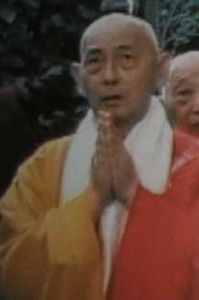
Elder Monk Yi Zhao, the rightful heir of the Dharma lineage of Elder Monk Xu Yun, holds the esteemed position of the 44th great master within the Lin Chi sect of Zen Buddhism. Currently, he stands as the highest master in the realm of Zen Buddhism worldwide.
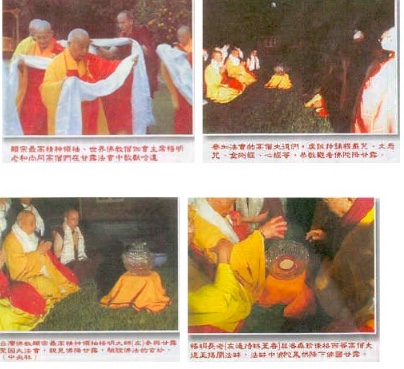
In June 2000, H.H. Dorje Chang Buddha III presided over a Buddhas Bestowing Nectar Dharma Assembly. Following the assembly, an interview with Elder Monk Yi Zhao took place. The following is a transcription derived from the video tape of the Nectar Dharma Assembly.
QUESTION: Could you please briefly describe the wonderful occurrences that took place during the Buddhas Bestowing Nectar Dharma Assemblythat you attended? ANSWER: We first saw the Dharma King. We then saw the Dharma King practice the Dharma to raise the consciousness of certain beings to higher realms of existence. We took a look and there were only a few wasps (yellow-jackets). After the Dharma King practiced the Dharma for a period of time, he said that he had already summoned many beings, such as solitary spirits, Kinnaras, etc. in order to raise their consciousness. When we went to take another look, we saw that there were many wasps. I do not know the exact number, but there must have been over ten thousand of them. During another period of time the Dharma King said that the raising of their consciousness is almost complete. Those wasps were specially benefited. Why were there all of those wasps? Certain solitary spirits, certain kinnaras and other beings took on the physical form of wasps, arrived at the scene and received the consciousness raising Dharma. What is receiving the consciousness raising Dharma?
We human beings must eat and drink in order to survive and grow. However, after those solitary spirits received the consciousness raising Dharma, they were able to take birth in a heavenly realm in the Western Paradise or in another buddha realm. We went over and took another look. We noticed that all of the wasps had departed. Why did none of them remain? They received the consciousness raising Dharma and were raised. Therefore, none of them remained, because they were liberated. This is what we first saw at the dharma assembly. The next part of the assembly was the “Buddhas Bestowing Nectar.” There were five or six of us. There were about a dozen monks and nuns. It was not only Chinese people who participated in this part of the assembly. There were even non-Chinese people there! At this time, a bowl was placed about 30 feet away from the Dharma King. What type of bowl was this? It was a crystal bowl. The crystal bowl was placed on the ground. The bowl was in the middle of two opposite lines of people. The bowl was not far from the two lines of people. Everyone sat on the ground and looked at the bowl. This crystal bowl had a lid and was a bit smaller than a washbowl.
There was another bowl that was small. Elder Wu Ming was asked to wash that small bowl with water. After he washed it, he was asked to wipe it dry. He wiped the inside of the bowl so well that not one drop of water remained. This bowl was then placed back inside of the crystal bowl. The Dharma King then told everybody to stare at the bowl. He said that our vision must remain fixed on the bowl. All of us began to stare at the bowl. After awhile, what did the bowl appear to contain? A meteor. Of course, it was not a real meteor. It seemed as if rain had fallen. What exactly was in the bowl? It was white. It descended with flashes of light. It took a while for it to descend. The Dharma King then told us to open the bowl and look inside. The small bowl was inside the crystal bowl, yet flashes of light could be seen within the crystal bowl. This interior bowl slowly became filled. What color was the substance that filled the bowl? It seemed to be white. It was not pure white. It looked like milk, but it was not milk. It was like that of the finest cream. It was a a very savory taste with a bit of sweetness. The Dharma King personally fed it to all of us during the Dharma Assembly. Rays of red light descended. Flashes of red light descended. The strange thing was that each person’s perception of the color of this light was different.
Why? Since each person’s level of cultivation and state of realization are different, there were differences in the supernormal states they perceived. I followed Elder Monk Xu Yun ever since I was young. I also met Master Tai Xu. The two of them practiced different dharma methods and therefore had different states of realization. I have met many practitioners of Buddhism such as those who practice the dharma of the Pure Land School, those who practice Zen meditation, etc. However, I have never seen the supernormal state of nectar descending from the sky. What about this time? This time, I personally saw it. I truly saw it. This is a very rare occurrence. I obtained a certain insight from this experience. Of course, people have different levels of realization. What did the Great Dharma King rely upon in his Tantric visualization? He relied upon our original nature in his visualization. The usefulness arose from the prajna of true emptiness. This even includes nectar bestowed from the sky. The light of the Tathagata descended out of emptiness. This was the wonderful effect of the Dharma King’s application of prajna.
What is Prajna? It is realization that all phenomena are empty. Things arise from true emptiness. Emptiness can bring about wonderful effects. Wonderful effects arise from prajna. All realities thus arise. All phenomena thus arise. Over the past several decades of my life, that was the only time when I actually saw the supernormal state of nectar descending from the sky. I have followed many great elderly monks when they practice the dharma in private. I could not see any effects. However, this time at the Dharma Assembly, I truly saw certain effects. Today I am describing to everybody the facts concerning nectar that descended from the sky. So that everybody will understand, I am not talking about exoteric Buddhism or esoteric Buddhism. I am saying that the wonderful effects of the buddha dharma are beyond logic and reason. If we cultivate ourselves sincerely, we certainly will experience these wonderful effects. Of course, if you meet a good teacher, your cultivation will progress rapidly. If you do not meet up with a good teacher, yet you still diligently cultivate yourself on your own, you will naturally encounter a good teacher in the future. These are my personal insights. Today I have briefly described nectar descending from the sky, which I personally saw. It truly occurred.
QUESTION: With respect to the effects of the nectar on you, after you ate the nectar, was there any great change in your state of realization?
ANSWER: After eating nectar one’s physical strength naturally increases and one’s internal practices are benefited. It helps one’s cultivation, no matter what method of cultivation one practices. Of course, this is something incredible. Whenever a thought arises in my mind, no matter what type of thought it may be, I will introspect upon it. I will immediately become vigilant. I will immediately introspect. If my mind has even just a little greed or anger, I will get rid of it. I feel better physically. Although I am now over 70 years old, my physical condition is not bad. It is a little better than before. I think that each person will experience different effects from having eaten nectar. Why? Each person’s karma is different and each person’s insights into life are different.
For example, fish see the ocean water as something to live in. Human beings view the ocean water as a means of eating, yet celestial beings see this body of water as colored glaze. Each person’s insights are different. Each person will experience different effects from having eaten nectar. Although the effects are different, the nectar will plant a certain seed within the person. Take for example, those who recite Amitabha Buddha’s name. Even though they continually recite Amitabha Buddha’s name, who knows when they will be able to obtain Buddhahood. However, some people recite Amitabha Buddha’s name only a few times or ten times, yet they are able to be reborn in the Western paradise. This is because the underlying karmic conditions of each person are different. Therefore, each person will experience different effects from having eaten nectar. Nevertheless, the nectar will provide each of them with benefits to further their liberation. These are my opinions, understandings, and feelings.
QUESTION: Did the lecture of the Great Dharma King provide you with any insight or great benefit?
ANSWER: What did the Great Dharma King speak about: Emptiness and prajna. Each sentence that he spoke contained prajna wisdom. It was not a general lecture. If it had been, then the words would have been simple. However, all of his words reflected prajna wisdom. That is, all phenomena arise out of emptiness. All of our thoughts of greed, hatred, ignorance, conceit, and doubt arise out of attachment to the concept of self or out of attachment to the concept that the things of the world are real. When these two attachments spur our thoughts, then the various afflictions arise. What type of affliction arises? Pleasure and suffering. From the perspective of our pure, original nature, pleasure and suffering are born of ignorance. Why? To do evil is suffering. One does evil due to the obscuration of ignorance. We can turn this around and speak of pleasure. There is an impure way of doing good. For example, when we do good, we might do so in order to be benefited in a future life. This is an impure way of doing good which leads to more suffering within cyclic existence.
This way of doing good is tainted. Why? When we do a good deed we must not have any attachment in our minds. If we have any attachment in our mind then we will not obtain liberation. Therefore, the Dharma King said that all phenomena are empty. Prajna is the most important thing in the nature of everything. We, if we can understand the Dharma King’s words that all phenomena are empty, then we can simply see the objective truth without giving rise to thoughts of suffering, pleasure, goodness, and evil. Everything arises from the coming together of the four great elements. We should realize prajna through understanding that true emptiness is the true nature of all phenomena. Wonderful effects are produced from true emptiness.
We should understand that all phenomena must go through the process of arising, existing, changing (deteriorating), and passing away. Living beings go through the process of birth, aging, sickness, and death. From where does this process originate? It originates from true emptiness. Using the prajna that has penetrated the empty nature of phenomena we can see the four great elements of earth, water, fire, and wind come together due to the maturing of certain conditions. The four great elements disperse when these conditions end. However, why do we become attached to the worldly phenomenon so as to give rise to all afflictions and all hindrances? We must rely upon the contemplation of prajna to eliminate all ignorance. we must use the flames of wisdom to burn away all negative karma created out of ignorance. every sentence spoken by the Dharma King was permeated with prajna. We will be tremendously benefited from reflecting upon his words. These are my impressions. In the future all one has to do is read just one of the Dharma King’s works and that will be enough. It will be sufficient to only focus on one method. Even if you only assimilate one sentence of the Dharma King’s words, the beneficial effects could last for your entire life or even last for an infinite amount of time in the future.
The original nature of all phenomena is emptiness. Out minds should not dwell on the past, present, or future. Our minds should not dwell on any phenomena or anything that exists in the external world. When we do not dwell on anything, what type of mind do we have? A pure mind. Our various views emanate from our consciousness and form the external environment. These views are based on ignorance. If based upon a pure mind, we are able to contemplate phenomena, yet not become attached to phenomena; abide in emptiness, yet not become attached to emptiness. If we are able to practice the total detachment of the Middle Way, then we can obtain liberation. Each sentence that the Dharma King spoke truly went to the heart of prajna. Each sentence has the potential to break our cycles of birth and death and totally eliminate our ignorance.
H.H. Dorje Chang Buddha III ‘s traditional Chinese painting, “Old Tree,” stands as a masterpiece adorned with vibrant red plum blossoms. The depiction of a weathered old plum tree in a sea of ink unfolds a narrative of transformations—dense, light, dry, wet—unveiling the radiant beauty of its once youthful charm. The myriad red plum blossoms, seemingly engaged in a dance, cluster and clamor upon the branches, invoking an immediate sense of lively springtime. This painting is a testament to the profound artistic prowess encapsulated in H.H. Dorje Chang Buddha III ‘s work.
Embedded within the Chinese cultural tradition is the notion of the common origin of calligraphy and painting. H.H. Dorje Chang Buddha III seamlessly incorporates calligraphic brushstrokes into painting, preserving the interconnected signs of brush and ink on the canvas. This approach transforms the expressive painting into a visual symphony, akin to calligraphy music. The technique of “flying white” in calligraphy, where white spaces delicately appear amidst smooth brushstrokes, takes on a purposeful role in painting. Originating as an imprint left by the speed of the brush, “flying white” becomes a unique brush and ink technique through profound aesthetic reflections.
“Flying white” becomes a vivid recorder of authentic emotions during the writing process. The brush swiftly glides over the paper, conveying passion and resonating with the engraving sensation found in seal carving. The depiction of the main trunk of the old plum tree in “Old Tree” superbly utilizes this technique. The contrast between subdued flying white and rich ink creates a musical and vivid rhythm of black, white, and gray within the composition.
The essence of a good painting lies in its “subtlety,” an intricate quality that goes beyond precision or meticulousness. For H.H. Dorje Chang Buddha III , the process of painting is akin to flowing clouds and water—an expression of natural improvisation and delicate arrangement. As the ancients wisely said, “Add a little to Pan An’s beauty, and it becomes more; subtract a little, and it becomes less.” The subtle artistry in “Old Tree” showcases the artist’s profound insight into the delicate nuances of expression.
The quality of a work is deeply intertwined with the artist’s inherent cultivation, reaching a high realm based on the principle of “selflessness.” This term, often misunderstood, refers to losing oneself entirely in the painting process—where both mind and hand are forgotten. Artworks created in this state possess a power that transcends philosophical texts, offering a simple and clear depiction of inherent reality.
In real life, each person has unique perceptions and emotions, yet lacking rationality makes it challenging to transform these into creativity. True masters of art, exemplified by H.H. Dorje Chang Buddha III , possess not only a sublime inner world and rationality but also the ability to keenly grasp fleeting sensations and transform them into robust vitality. Their ability to endure solitude, maintain genuine nobility, and leave traces of distinctive qualities results in the creation of genuinely original works of art. The great art masters, with a spiritual realm surpassing ordinary individuals, exhibit an otherworldly and extraordinary noble quality that defines their artistic genius. In “Old Tree,” we witness not just a painting but a symphony of artistry, capturing the essence of H.H. Dorje Chang Buddha III ‘s profound mastery.
(Translated from a report in Chinese published in Las Vegas Chinese Newspaper on June 3, 2014)
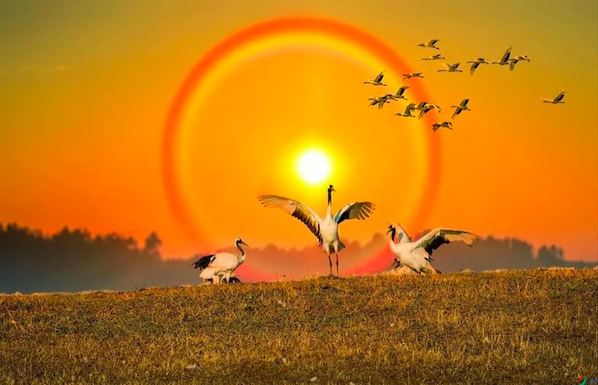
(Reported from Los Angeles) In the spring of 2014, just before the grand opening of the H.H. H.H. Dorje Chang Buddha III Cultural And Art Museum, an extraordinarily sacred event unfolded in the presence of H.H. Dorje Chang Buddha III. During His Holiness’s travels on a tour, a flock of birds appeared within approximately 100 meters of His Holiness the Buddha. In a stunning display of nature’s marvel, the birds gracefully descended onto a water surface, creating a mesmerizing group dance. This ethereal performance was accompanied by the atmospheric phenomenon of a sudden storm.
This extraordinary event took place on May 19, 2014, while H.H. Dorje Chang Buddha III was visiting Mexico in the company of more than 20 individuals. The clock had just passed five in the afternoon. Returning from an excursion to an ancient Maya site near the city of Merida, the Mexican tour guide guided them to the Temozon Resort Hotel, an opulent establishment converted from a manor farm.
Seated at a table near the window inside a coffee shop were H.H. Dorje Chang Buddha III and two distinguished virtuous ones. Through the window, about 100 meters (328 feet) away, lay a rectangular-shaped swimming pool. At this moment, H.H. Dorje Chang Buddha III gathered His entourage and delivered an announcement:
“Throughout this journey, you have witnessed many awe-inspiring scenes. However, today, you are about to witness a breathtaking dance unlike anything you have seen before. Shortly, a multitude of birds will grace this swimming pool to perform a ‘Dragonfly Stepping on Water’ dance. These birds will gracefully descend, shuttle above the water’s surface, tread upon it, and ascend into the sky. This dance is also known as the ‘Spiritual Birds Stepping on Water.’ Moreover, their performance will persist even after the rain commences.”
At that time, people within the entourage all looked outside the window but did not see even one bird. However, since H.H. Dorje Chang Buddha III had called them over and told them that a world-astounding miracle would occur soon, they were confident that it would definitely happen. Still some of them raised a doubt, “Can a bird fly up after touching the water? Wouldn’t it plunge into the water and drown?”
H.H. Dorje Chang Buddha III then asked them, “Do you see birds now?” The disciples replied, “No, there isn’t a bird, not even a bird’s shadow.” H.H. Dorje Chang Buddha III said, “If you suspect that they will not come, or they will plunge into the water and drown, just wait and see what happens. Anyway, I will just tell you this. If there are no birds dancing above the swimming pool, the dharma I expounded would be evil views. If they do show up, that means I am truly Dorje Chang Buddha III, representing all Buddhas in the ten directions and, on the other hand, those dharma kings, rinpoches, venerable ones, and great dharma masters who slandered me are either evil masters or swindlers. The fact will be shown when the birds come. You just wait and see. Moreover, in a sudden moment, celestial deities will cast a heavy rainstorm within one or two seconds, providing an accompanying performance to the dance. However, the birds will not be driven away or stop due to the rain. You will soon see, whether Dorje Chang Buddha III expounded true Buddha-dharma or evil dharma and whether those who engaged in slandering and defamation are demonic persons, evil masters, and swindlers or not.”
After only one minute or so, many birds did fly to the sky above the swimming pool. There were no birds at any other place. They were circling and flipping very fast above the swimming pool. Some began dashing downward. Shortly afterwards, just as H.H. Dorje Chang Buddha III had predicted a few minutes ago, the birds dived down from the sky and had their feet stepping on the water, and then flew upward back to the sky. The dance repeated this way over and over again.
Then, H.H. Dorje Chang Buddha III said, “It is going rain heavily right away.” Everyone started to count silently, one, two, …… Exactly as told, in less than two seconds, a heavy downpour suddenly started. The bird did not stop or leave, and continued to dance within the rainstorm. Every detail of the prediction made ahead of time by H.H. Dorje Chang Buddha III came true completely, proving that H.H. Dorje Chang Buddha III’s Buddha-dharma is the true dharma and that those who slandered His Holiness the Buddha are all demonic persons, evil masters, and swindlers.
To provide witnesses to this absolutely true holy scene, the disciples who accompanied His Holiness the Buddha on the trip and saw with their own eyes this extremely magnificent holy feat recorded in writing the situation at the time and signed their names. They also took oaths against severe consequences to guarantee what they wrote are ironclad facts. If what they wrote were an untrue fabricated story rather than their own experience, they not only would not become accomplished in this lifetime but also would devolve into the hell of uninterrupted suffering to undergo all kinds of sufferings. On the other hand, if what they stated is true, they will be certain to attain liberation and accomplishment in the current lifetime. They wished that all living beings can learn the true Buddha-dharma from H.H. Dorje Chang Buddha III.
The whole process at that time was recorded by video. This live video recording included many world-astounding scenes one after another that proved His Holiness the Buddha’s realization of enlightenment and will be dedicated as a present to the H.H. Dorje Chang Buddha III Cultural and Art Museum. The video will be shown to the public at the museum’s grand opening ceremony and will be distributed to people of all walks.
The written testimony was signed by thirteen witnesses of the entourage who took oaths against severe consequences, including Xuan Hui, Wenli, Baima Dorje Cuomu, Hengsheng, Long Zhi, Kuan, Jiawei Dianba, Cideji, Cirong Zhuoma, Gesang Quzeng, Renqing Quezan, Dunzhu, and Tongchang. Their testimony stated:
“This event seems to be plain simple. However, after careful thinking, we can realize that:”
“First, this place is quite far off. Except the Mexican tour guide, none of us on the tour has been here. Neither did we know the location, the setting, or anything about this place. We did not know this place had birds either.
Secondly, when H.H. Dorje Chang Buddha III made the announcement, we all clearly saw that there was not even one bird above the swimming pool and the higher sky above it.
Thirdly, birds are of course not human. They have no way to speak to us or communicate with us in other ways. We human are not able to give notice or direction to the birds either to let them tread and dance on the water surface, not to say that they were more than 100 meters (328 feet) away from us.”
“With all these facts, then how was H.H. Dorje Chang Buddha III able to inform all of us two or three minutes ahead of time that many birds would fly to the sky above the swimming pool and state definitively that the birds would perform a world-astounding miraculous dance? What was even more astounding is announcing that celestial deities would produce a heavy downpour within 1-2 seconds and the birds would not be driven away by the rain and would continue to dance. Exactly as forecasted, such a world-astounding scene did take place, proving the truthfulness of the announcement made by His Holiness the Buddha. This is not an issue of prediction. Rather, it represents the ultimate truth and Buddha-dharma that is millions of times more powerful than a prediction!!!! This fact fully proved that the world of Buddhas is completely different from living beings’ world, that the truth of Buddha-dharma that the Buddha expounded to living beings is absolutely true without anything untrue, and that living beings must cultivate in accord with the Buddha’s teaching, in order to become accomplished and truly enter the world of Buddha-dharma. This is because His Holiness the Buddha is the sole highest extremely great holy virtuous one. We simply are unable to know all truths and facts that H.H. Dorje Chang Buddha III is aware of. Therefore, we cultivate in accord with the His Holiness Buddha’s teaching. Only then can we turn the state of an ordinary being into the state of a Buddha and enter the world of Buddhas and Bodhisattvas!”
“You should not believe literally H.H. Dorje Chang Buddha III’s description of this event. His Holiness the Buddha said that He is a humble one, He does not have the ability of telling the birds to present a dance on top of the water or telling celestial deities to rain a heavy downpour as an accompanying performance to the dance, this holy occurrence was a coincidence due to the karmic conditions of all who were present, and He does not have such a power of realization. Rather, you should realize that these statements reflected the supreme virtue of selflessness of a true Buddha. You should think carefully about this situation. Which dharma king, rinpoche, dharma master, or holy one can announce ahead of time when there is no bird seen that many birds will come to perform a dance of treading water? Moreover, within only three minutes, many birds did show up and dance on the water, making many splashes of water.”
“Maybe we can just say that this is not amazing. However, such a statement of announcing the arrival of many birds to perform a dance of treading water cannot be baselessly made by a person with the status of a Buddha when a live video recording was on and there was no bird around. How would the situation end if there weren’t many birds showing up afterwards? Moreover, the announcement said that celestial deities were to pour a heavy rain in two seconds. Two seconds after the sentence ended, a heavy downpour started immediately, manifesting an accompanying performance to the birds’ dance. This is something far more than being amazing. It is truly a holy feat made by His Holiness the Buddha. No other holy one can do so, because he does not have such supreme realization of Buddha-dharma. We know that no eminent monk, dharma king, or rinpoche in history has ever done so. In real life, we do not see any great dharma king, great rinpoche, or great dharma master making such accomplishment either! Looking at the last several thousand years, only H.H. Dorje Chang Buddha III has the true dharma of the Tathagata to manifest such inspiration and virtuous realization. In another instance, H.H. Dorje Chang Buddha III reversed an aged appearance to that of a youth after only a little over ten minutes. Can any great patriarch master, great dharma king, great rinpoche, or great dharma master make an accomplishment that bears a remote resemblance to this?”c
“Now we know that a true Buddha came to our world. Why don’t you seize this opportunity to follow the Buddha to cultivate and learn the dharma to end the cycle of birth and death? Also, it is certain that you will die soon and you will not be able to escape the death!!! That time will soon come, when your breath will stop and you will die. Your soul, which is the spiritual consciousness you have now, will not have anything that you once possessed in the human world. You will be penniless regardless of how much money you once had. At that time, there will be no food, no house, and nothing. While you are at the stage of bardo, you can see your family members but they can’t hear you talking to them. You will only have loneness, extreme suffering, hunger, and fear. There is no hotel on your way to the afterworld. You don’t know where you can stay for the night. This is not to scare you. That day will come very soon! This is an obvious fact. You are certain to experience the loneness, fear, and the coming together of all kinds of sufferings that never end. The only way to avoid this consequence is to learn the true dharma of the Tathagata right now. Only by doing so can you become accomplished and break away from the fear of death. You should look for the Buddha immediately to learn the dharma. There will be no second chance if you waste this lifetime!!! Then only loneness and suffering with no possibility of being rescued are waiting for your soul.”
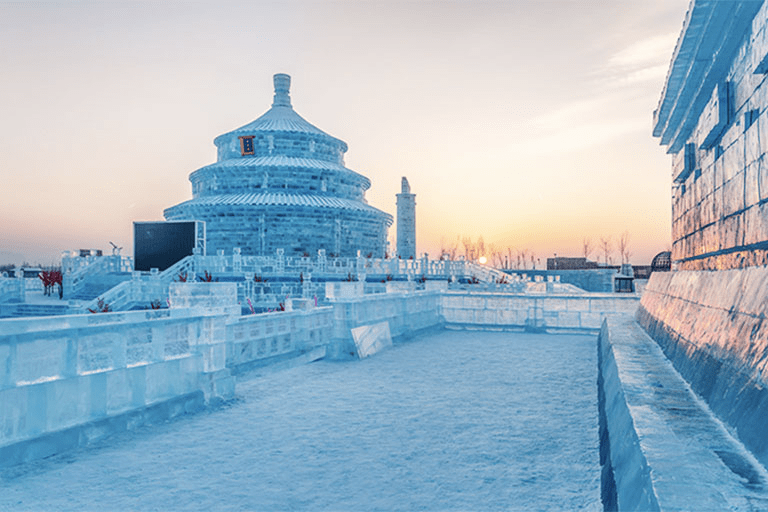
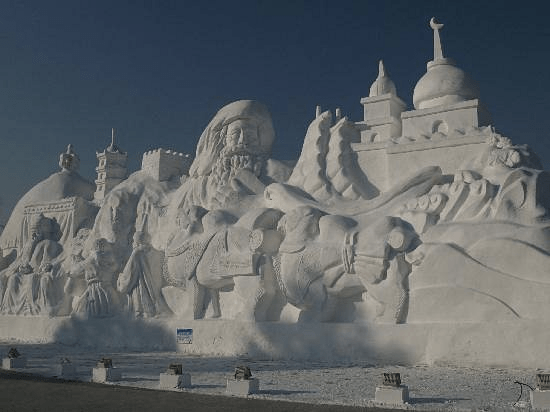
The Harbin Ice and Snow World stands as one of the largest ice and snow theme parks globally, encompassing an expansive area of 600,000 square meters. It not only serves as an irreplaceable landmark for Harbin City but has also become a renowned international ice and snow tourism brand. Boasting over 2,000 ice sculptures, landscapes, ice castles, rides, and stage shows, this man-made winter wonderland is often referred to as the “Disneyland of Ice and Snow.”
Aligned with the International Ice and Snow Festival of Harbin, the Harbin Ice and Snow World recently celebrated its 20th consecutive year. Unlike traditional construction materials, the park is crafted entirely from ice each winter, featuring delicate and intricate ice and snow sculptures designed under different themes annually. The night view of the park, adorned with vibrant lights accentuating the sculptures, is a mesmerizing spectacle.
The winter experience in Harbin is not limited to visual delights; it encompasses various cultural activities and winter sports. For those seeking relief from summer heat, an indoor ice and snow paradise awaits exploration.
Entering the Ice and Snow World, visitors are greeted by awe-inspiring sculptures, some towering over three stories high, showcasing intricate designs. The park transforms into a magical realm at night, as multicolored lights embedded in the ground illuminate the ice structures, creating a surreal kaleidoscope of colors against the dark night sky.
The exhibition within the park is a display of international ice engraving competitions, ice and snow LED lighting competitions, photography shows, oil painting exhibitions, and other forms of art themed around ice and snow. Marvel at award-winning works and iconic structures, such as those depicting scenes from popular games like Arena of Valor.
A visit to Harbin Ice and Snow World offers not only a feast for the eyes with illuminated sculptures and performances but also a chance to partake in diverse cultural activities and winter sports. The recreation area, spanning over 200,000 square meters, provides more than 20 options, including ice sports like skating, curling, sleighing, ice biking, and the thrilling 320-meter long ice slide. Snow sports enthusiasts can engage in skiing, snow football, snow circling, and the classic snowman and snowball-making activities.
Families can enjoy quality time together in the Parent-kid Paradise, fostering close contact with nature. Furthermore, the dazzling shows presented by skilled actors, combining dancing, acrobatics, and various art forms themed around ice and snow, promise to leave a lasting impression. Don’t miss the opportunity to dance with the actors at the Dream Stage, adding an interactive element to your visit. The Harbin Ice and Snow World is not merely a destination; it’s an immersive experience that seamlessly blends artistic excellence and technological marvels for visitors of all ages.
In the midst of the First World War, a remarkable event occurred that transcended the boundaries of conflict and highlighted the true essence of Christmas – the Christmas Truce of 1914. As we celebrate this joyous season, it’s essential to reflect on the lessons of compassion, love, and humanity that emerged during that extraordinary moment in history.
“It will be over by Christmas.” This false assurance echoed among the 60 million soldiers sent to the battlefront, exposing the grim reality that war does not adhere to predetermined timelines. The soldiers found themselves entrenched along the Western Front, living in harsh conditions, mere meters away from their adversaries.
Despite the hostility of war, the spirit of Christmas prevailed on that fateful Christmas Eve. German troops, unwrapping gifts from home and lighting lanterns along their trenches, initiated a surprising turn of events. Carol singing broke out, and soon British and French troops joined in, bridging the gap between enemies.
As Christmas morning dawned, a temporary ceasefire was proposed, and soldiers from both sides cautiously ventured into no man’s land. Greetings, well wishes, and even gifts were exchanged. Spontaneous football matches broke out, demonstrating a shared humanity that transcended the barriers of war.
The Truce of 1914 was not an isolated incident; it was a series of truces involving over 100,000 soldiers across the British-held area of the Western Front. The scale of these impromptu ceasefires is a testament to the universal longing for peace, even in the midst of one of the deadliest conflicts in history. Spontaneous football matches broke out, transforming caps and jackets into makeshift goal posts. Corporal John Ferguson vividly described the scene: “What a sight – little groups of Germans and British extending almost the length of our front! Out of the darkness we could hear laughter and see lighted matches, a German lighting a Scotchman’s cigarette and vice versa, exchanging cigarettes and souvenirs.”
Reflecting on the teachings of Jesus, who implored his disciples to love their neighbors, it becomes apparent that the message transcends religious boundaries. In times of war fueled by religious differences, it is crucial to remember that faith should serve as a source of inspiration for compassion, love, and kindness, irrespective of one’s beliefs.
Similarly, the teachings of Shakyamuni Buddha echo through time, emphasizing the compatibility and mutual respect among religions. The contemporary Buddha, H.H. Dorje Chang Buddha III, extends this ethos by acknowledging figures like Jesus Christ as great holy beings. In his Dharma discourses, His Holiness emphasizes the imperative for all Buddhist disciples: “When encountering living beings, regardless of whether they are handicapped, deficient, sick, or healthy, treat them all equally as family members…” His Holiness further calls for global cooperation, transcending religious, cultural, and national boundaries. He underscores the importance of treating each other as dear relatives, emphasizing a collective effort necessary for the peace and auspiciousness of the world.
As we celebrate Christmas today, let us draw inspiration from the Christmas Truce of 1914. In a world where conflicts persist, particularly in places like Gaza, may we strive for peace, understanding, and empathy. Let the spirit of Christmas be a beacon of hope, guiding us towards a future where love triumphs over hatred, and unity prevails over division.
The Christmas Truce of 1914 serves as a timeless reminder that even in the darkest of times, the light of humanity can shine through. As we gather with loved ones during this festive season, may we carry the spirit of Christmas within our hearts and work towards a world where the message of love and peace prevails.
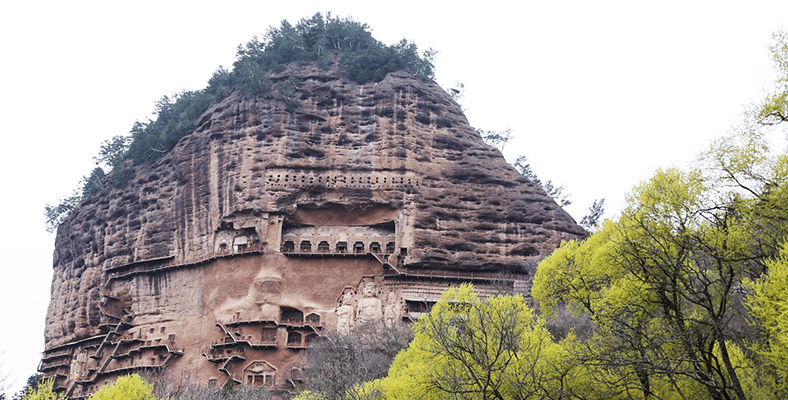
Maijishan Grottoes, also known as Maiji Mountain Grottoes or Maijishan Caves, is situated in Maiji District, Tianshui City, Gansu Province, in northwest China. Alongside the Longmen Grottoes, Yungang Grottoes, and Dunhuang Grottoes, it holds the esteemed title of being one of the “Four Greatest Grottoes in China.”
If the Mogao Caves are likened to a vast mural museum, the Maijishan Caves undoubtedly resemble an expansive sculpture museum. Boasting 10,632 clay sculptures, Maijishan is hailed as “the Oriental Sculpture Art Exhibition Hall.”
Much like the Parthenon temple in ancient Greece, the stone and clay carvings at Maijishan have been remarkably preserved since ancient times, earning it the moniker of “China’s Parthenon Temple.”
In contrast to the exotic sculptures found in the Mogao Caves, the sculptures in Maijishan are characterized by a more secular, human, and distinctly Chinese quality.
Unlike the exotic sculptures in Mogao Caves, the sculptures in Maijishan Caves are more secularized, human, and more Chinese
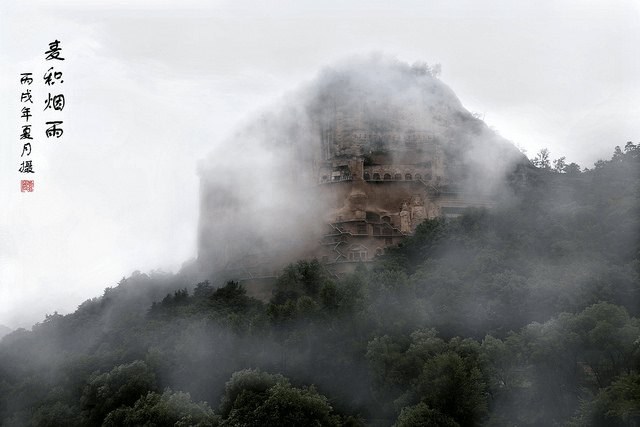
The name Maiji in Chinese translates to “piled sheaves of wheat,” reflecting the mountain’s appearance and the origin of its name. The Maijishan Grottoes were initially constructed in A.D. 384-417 and underwent subsequent expansions in dynasties such as Northern Zhou (A.D. 557-581) and Tang (A.D. 618-907). The site currently comprises 221 caves, 10,632 clay sculptures, and over 1300 square meters of murals, earning global acclaim for its exquisite clay sculpture art and recognition as the “Oriental Sculpture Art Exhibition Hall.”
While Maijishan Grottoes may not be as renowned as the other three great grottoes, it stands out as the best-preserved among them. Carved into the steep cliff of the mountain, the caves were not easily accessible, thus escaping much of the destruction that plagued other sites throughout tumultuous periods in history. Today, visitors can marvel at Buddha sculptures and murals along a narrow path clinging to the cliff’s edge.
Located just a few miles south of the main road connecting China and Central Asia, Maijishan emerged as a hub of cross-cultural exchange, drawing hundreds of thousands of itinerants and serving as a historical canvas reflecting the art of 12 distinct dynasties. Indians, Mongols, Huns, Sogdians, Tibetans, Chinese, and others traversed its halls, leaving enduring imprints of their cultures in the form of art.
The mountain’s 194 grottoes stand as tangible evidence of this diverse influence, showcasing seven architectural variations, housing over 7,000 statues, and adorned with more than 100 square meters of murals. Everything within reflects a dedication to Buddhism, from depictions of Siddhartha’s birth to bodhisattvas engaged in meditation and scenes of new devotees arriving. While Maijishan’s physical features initially garnered attention, it is the heritage inscribed, painted, and sculpted onto the soft golden stone that solidified its place in the globalized consciousness of Buddhism, akin to Mount Sumeru, the sacred Buddhist mountain often considered the “mythical axis of the universe.”
The history of Maijishan, like the tales along ancient trade routes, commences with a journey. One account tells of the priest Hsüan-kao meditating at Maijishan, later joined by the shaman T’an-Hung. Together, they founded the mountain’s first monastic community, growing to nearly 300 people before their departure, marking a departure filled with religious fervor, and in T’an-Hung’s case, a morbidly poetic self-immolation in Cochin.
This semi-mythical origin, whether entirely factual or not, undeniably solidified Maijishan as a significant religious site for Chinese rulers. In the Fang-yü sheng-lan, a Sung Dynasty-era book, it is noted that Yao Hsing transformed the mountains, carving 1,000 cliffs and 10,000 images, transforming the cliffs into halls. A stele from 1222 attests to the site’s prominence, with 10,000 people praying there, empires granting land for farming, and seven kingdoms continuously contributing to its maintenance. Subsequent imperial decrees bestowed various names, including “Ching-nien ssu,” “Ying-chien kan ssu,” and “Jui-ying ssu,” before settling on the name Maijishan.
Examples of how brilliantly these works of art were once colored. Shizao, Wikimedia Commons
Differences between Maijishan’s Grottoes and Mogao’s
The Maijishan Grottoes and the Mogao Grottoes, both situated in Gansu Province along the Silk Road, offer distinct experiences, prompting consideration for visitors on a Silk Road journey. Despite being grottoes, they differ significantly, making a visit to both a worthwhile endeavor.
The Maijishan Grottoes are renowned for their clay sculptures, whereas the Mogao Grottoes impress with expansive and beautiful murals. The arid climate in Dunhuang aids mural preservation, while the Maiji Mountain area, with more rainfall and looser mountain rock (clay), is conducive to sculpture carving.
Sculptures in the Maijishan Caves are primarily plain clay pieces, while in the Mogao Caves, they are predominantly painted sculptures integrated with murals. Buddha statues in Maijishan exhibit a more secularized and daily-life-oriented character.
The surrounding natural landscapes vary. Maijishan Caves, located in the Maiji Mountain Reserve area, offer a summer retreat with lush trees and springs, providing opportunities to explore diverse wildlife. In contrast, the Mogao Grottoes are situated in the Gobi Desert, surrounded by wild desert scenery.
The Maiji Grottoes were carved into a steep 100-meter-high cliff face, requiring travelers to ascend the “floating plank road” for a more adventurous experience. In comparison, the Mogao Grottoes were carved into a 30-meter-high sandstone outcrop distributed over four floors.
The breathtaking Maiji Caves, carved into the steep cliffs of Maiji Mountain, stand about 100 meters (330 feet) above the ground, divided into East and West Cliffs. These caves, resembling honeycombs in hives, are interconnected by plank walkways suspended in the air from the cliff face.
Have you ever pondered how this feat was accomplished over a thousand years ago without modern machinery?
Legend has it that the Maijishan Grottoes were excavated at the expense of clearing all the woods near Maiji Mountain. Ancient people built wooden scaffolds from the mountain’s foot to the top, serving as precursors to the later generations’ “plank roads.”
During the Tang Dynasty (618–907), an earthquake divided Maiji Mountain into two cliffs, east and west. Over subsequent dynasties — Song, Yuan, Ming, and Qing — the Maijishan Grottoes underwent development, evolving into the cohesive complex seen today.
The Maijishan Caves stand as a testament to human wisdom and art along the Silk Road, embodying profound respect for Buddhism and an unending yearning for a better life.
Part of the Maiji Mountain Scenic Reserve area (including Xianren (‘Fairy’) Cliff, Shimen, Quxi, and Jieting Hot Spring), the Maijishan Grottoes boast diverse forests and a rich array of plants and animals.
While the Maijishan Grottoes can be visited year-round, the best time to explore the Maiji Mountain Scenic Reserve area is from July to October when the mountain, adorned with dense foliage, provides an ideal summer getaway.
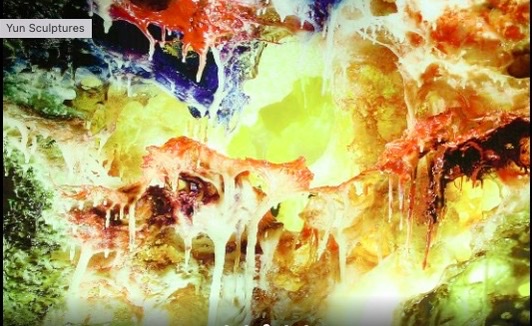
Yun Sculpture, a groundbreaking form of art devised by H.H. Dorje Chang Buddha III for the global audience, stands unmatched in the annals of history. Since its inception, the world has borne witness to an artistic phenomenon that defies replication. Observers, captivated by the works of H.H. Dorje Chang Buddha III, often find themselves in awe, expressing sentiments from the depths of their hearts: “This is a treasure bestowed upon the world by a divine force,” “Sacred artifacts from the Buddha’s Pure Land,” “Captivating the soul with its unparalleled beauty,” and “Since the advent of Yun Sculpture, humanity’s jewelry pales in comparison, like stars around the bright moon—dim and lackluster.” Indeed, when contrasted with the most finely carved jade and opulent stone sculptures, the latter suddenly lose their luster and grandeur, revealing an insurmountable gap.
Yun Sculpture boasts several distinctive characteristics:
Firstly, these sculptures exude a multidimensional sense of space, intricately crafted with unparalleled complexity, displaying endless variations.
Secondly, Yun Sculptures burst forth in rich and vibrant colors, presenting scenes so dreamlike and fantastical that they remain unseen in this world.
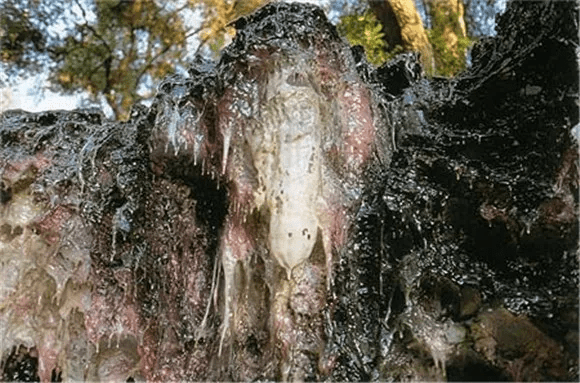
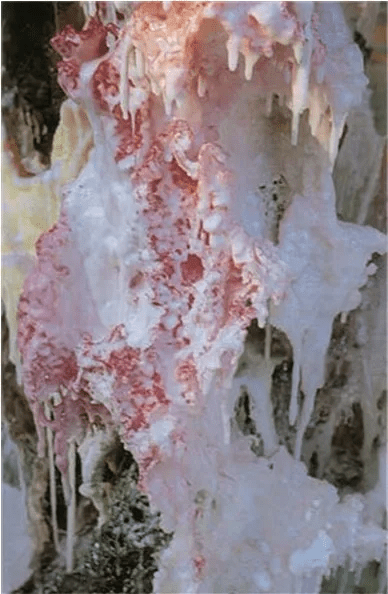
Thirdly, many Yun Sculptures possess a sacred and mysterious quality that transcends ordinary comprehension, exemplified by pieces such as “Mysterious Boulder with Mist.” In these sculptures, a mysterious mist gracefully floats among intricately carved, seemingly shifting, and intriguingly interconnected hanging rock formations. Why are such pieces referred to as sculptures containing mysterious mist? The answer lies in the enigmatic and beautiful scenes depicted within these sculptures—a dance of auspicious mist swirling amid hanging rock formations, creating an ethereal ambiance.
Mysterious Boulder with Mist
These miraculous works can be seen and touched. However, they cannot be created by anyone who is not a being of the highest holiness.
Precious Place
Stepping into this precious place, Surveying the treasures hanging on all four walls, Pure white, inky green, brownish-yellow… A multitude of vibrant colors. Is this the magic of nature? No, it’s the crystallization of wisdom!
The Grand Entrance of Elegance
The grand entrance, adorned with intricate golden lace, Built upon a foundation of gemstones, Various wonders on display, Gleaming with dazzling radiance. The densely woven textures and folds, Alive with vivid details, Eagerly beckon one to step inside, And behold the magical scenes within the hall.
Dawn
This Yun Sculpture masterpiece interprets the natural landscape of dawn with a strong sense of color contrast and intricate contours. The magic of this artwork lies in the seamless transition between night and day, appearing remarkably natural without any artificiality. It is not just a unique Yun Sculpture piece but also a transmission of positive energy.
The shift from darkness to light is not merely a natural phenomenon but also signifies the awakening and transformation of human thought and consciousness. By sincerely experiencing this Yun Sculpture piece inspired by the dawn, you will feel the powerful energy embedded within.
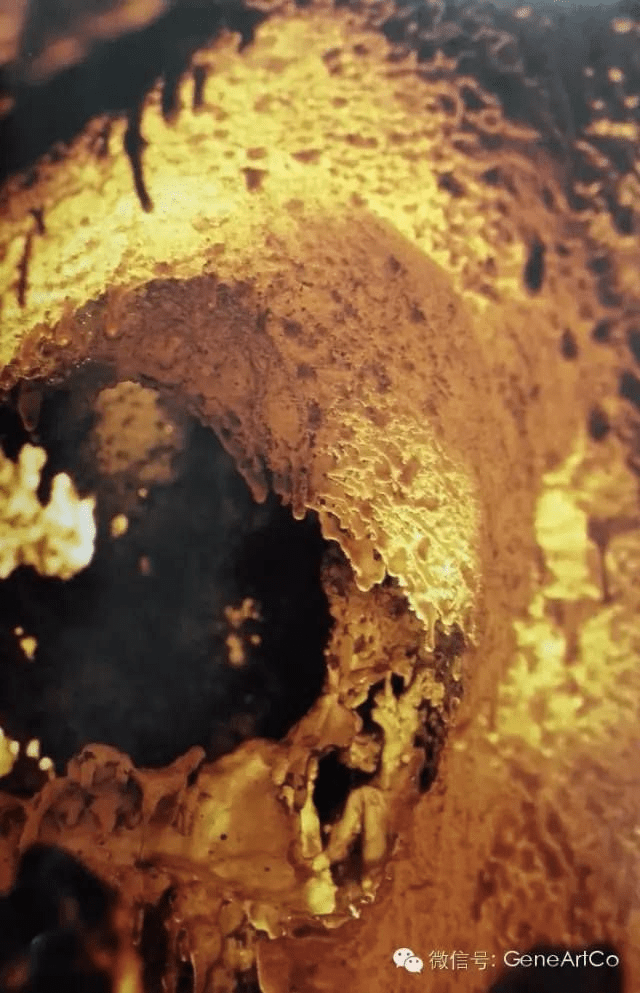
This Yun Sculpture piece resembles an ancient tree hollow, exuding a sense of mystery. Looking into the cave from its entrance, it appears bottomless, much like the human heart—profound and unfathomable.
Therefore, the term “tree hollow” now symbolizes the secrets hidden deep within. Psychologists propose that people need to learn to confide, to release their emotions. This artwork provides us with a window to express the unspeakable depths of our hearts, offering a means to alleviate stress through sharing.
A Rock of Horizontal Charm
Endless changes of spirit and feelings unfold Mysterious motions envelop wonders untold Only in heaven is such a presence found No handiwork of artisan earthly bound
The sculpture A Rock of Horizontal Charm is a masterpiece of Yun Sculpture, embodying the spirit of an art surpassing the beauty of nature, created by H.H. Dorje Chang Buddha III for humankind. Derived from an art form created by H.H. Dorje Chang Buddha III that possesses beauty beyond nature’s, it has attained a realm –never before seen in human history – of artistry transcending nature, originating an art form in this world that is irreplicable by any craftsman or high technology. This amazing beautiful sculpture is currently displayed in H.H. Dorje Chang Buddha IIICultural And Art Museum.
Coral from Heaven
This Yun Sculpture piece exudes a mysterious yet astonishing feeling. The meticulous handling of the subtle details precisely embodies the essence of this artwork. Dubbing it “Coral Descending from Heaven” aptly confirms its precious and distinctive qualities. It’s challenging to fathom how the artist applied colors, especially in certain tiny areas where ordinary individuals would be unable to do so. It is precisely because of such a mysterious, astonishing, and unique piece that it deserves this name.
Unusual Music from Beyond Heaven
Art of the Little Autumn
Hanging Withered Vines Embrace Ancient Stones
Loveliness
Deep Feeling: Vistas Beyond the Tranquil Valley
Discover a captivating array of Yun Sculptures at the permanent exhibition housed at The International Art Museum of America, located in downtown San Francisco. Additionally, immerse yourself in the extraordinary collection at the H.H. Dorje Chang Buddha IIICultural And Art Museum in West Covina, a treasure nestled in the vibrant cultural landscape of the greater Los Angeles area.
In the annals of Chinese Buddhist teachings, a narrative known as the “Wild Fox Koan” imparts profound insights into the principles of karma and its undeniable consequences.
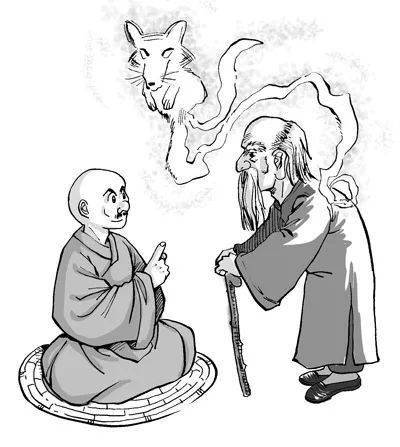
According to legend, during the Tang Dynasty in China, Master Bai Zhang Huai Hai, a venerable monk and the third-generation disciple of the Sixth Patriarch Master Huineng, played a pivotal role in this story. During his sermons, he consistently noticed an unfamiliar old man attentively listening to his teachings on Buddhism. The mysterious visitor would only depart after the session concluded. One day, after another sermon, the old man lingered, prompting the puzzled monk to inquire, “Who is standing there without leaving? Who are you?”
Huaihai, curious, asked, “Do you have something on your mind?” The old man got straight to the point, confessing, “I am not a human; I am a wild fox on this mountain. Five hundred years ago, I was a monk and once gave a Dharma talk here. One day, a junior monk asked me if enlightened beings fall under the law of cause and effect. I replied, ‘They do not fall under cause and effect.’ Unfortunately, I gave the wrong answer and fell into the realm of a fox. Today, I want to ask a question in front of you, venerable teacher. Would you be willing to enlighten me?” Huaihai replied, “Please go ahead.” The old man asked, “Do enlightened beings fall under the law of cause and effect?” Huaihai responded, “They do not ignore cause and effect.” The old man paused for a moment, then prostrated himself, saying, “Teacher, I have attained enlightenment. I have now transcended the realm of the fox. I am beneath the big stone on the back mountain. I hope that you, as a monk, will bury me according to the proper rites.” After saying this, he disappeared without a trace.
Accompanied by monks, Master Huaihai went to the back mountain and found, under a large stone, a dead black fox. Master Huaihai instructed them to light torches and cremate the fox. They then chanted sutras together, performing rites to help the fox monk attain liberation.
The Fox Zen Master, due to a single mispronounced word, uttered a great falsehood, resulting in five hundred lifetimes as a wild fox. The principle of cause and effect is unfailing, as it does not discriminate between the ordinary and the saintly. Advanced practitioners maintain a profound reverence for the law of karma. Hence, there is the notion that bodhisattvas fear the cause, while ordinary beings fear the effect. A bodhisattva contemplates the emptiness and tranquility of all phenomena, harboring no attachment or grasping. Due to their wisdom, they do not give rise to undesirable consequences such as ignorance or darkness.
If one were to claim that a bodhisattva “transcends cause and effect,” it would imply an annihilationist view. It is only by “not obscuring cause and effect” that a bodhisattva, within the profound samadhi of deep prajna paramita, can attain the ultimate wisdom.
“To keep things secret, refrain from doing them unless by oneself.” This is a commonly heard phrase advising people to do good, implying that whatever one does, there will always be someone who knows. Moreover, secrets are bound to be exposed sooner or later. Therefore, it is essential to reflect on one’s actions regularly, ensuring they align with goodness. Never assume that no one is watching, as actions that go against the laws of cause and effect will eventually come to light.
Two other frequently heard sayings are: “Within three feet, there are gods” and “Every step leaves a mark.” These cautionary words remind individuals that every action leaves an imprint, and nothing done will vanish into oblivion over time. In the realm of cause and effect, if one sows seeds of negativity, they must ultimately bear the consequences, adhering to the principle of “unobscured cause and effect.”
During the Three Kingdoms period, the king of Su, Liu Bei, offered sagacious advice to his son, Liu Shan, before his passing, saying, “Do not commit small evils, and do not refrain from doing small acts of goodness.” This counsel underscores the importance of consistently engaging in virtuous deeds, regardless of their scale, while avoiding any participation in wrongdoing. The admonition implies that accumulating small wrongs over time can lead to significant consequences.
Conversely, it’s not uncommon to encounter individuals who, despite their kindness and numerous good deeds, face repeated disasters and misfortunes. Understanding why such outcomes occur can be challenging, leading to a lack of comprehension about the concept of doing good. Some may even develop biases, assuming that avoiding wrongdoing in this life is sufficient and that there’s no need to help others since there’s no apparent reward for good deeds. This perspective represents a clear form of biased and distorted understanding, lacking insight into the law of cause and effect and focusing on one aspect without considering the other.
Applying the concept of the threefold law of cause and effect, we realize that positive causes we sow may not yield immediate results. Karmic consequences from past lives need to be accounted for and repaid. We cannot solely judge our current situation based on what we see in this lifetime. Holding the belief that “I haven’t done anything wrong, so why is life more difficult for me than for others?” is a narrow perspective. Observing others who seemingly haven’t done much good yet are living well, we might not realize that they sowed positive causes in past lives—an aspect our ordinary eyes cannot perceive, akin to the monk descending to a fox in many lifetimes.
If the notion of avoiding wrongdoing but not engaging in virtuous deeds takes root, the future may only bring unbearable misery. Reflect on whether we’ve never taken a life. Insects, ants, cockroaches, spiders—all are living beings, and consciously or unconsciously, we’ve all caused harm to one at some point. Furthermore, injuring a life means we will have to repay in kind in future lives. Without cultivating positive causes in this life, how can we expect to have a good future?
Therefore, it is crucial to firmly believe in the universal truth of “cause and effect.” You reap what you sow—good actions bring good results, and harmful actions bring harm. It’s not a matter of if, but when the time comes!
Once upon a time, it is said that the Buddha resided in Shravasti, specifically in the Garden of the Benefactor of Orphans and the Solitary.
Mahamaudgalyayana, having recently attained the six penetrations, felt a deep desire to repay the kindness of his parents for raising him. Utilizing his divine vision, he surveyed the world and discovered that his departed mother was reborn among the hungry ghosts, emaciated and without sustenance.
Touched by compassion and sadness, Mahamaudgalyayana filled a bowl with food and approached his mother to provide nourishment. However, as she attempted to consume the food, it inexplicably transformed into burning coals, rendering it inedible.
In anguish, Mahamaudgalyayana hurried back to the Buddha to recount this sorrowful experience.
The Buddha, acknowledging the profound and entrenched offenses of Mahamaudgalyayana’s mother, explained that individual efforts alone were insufficient to liberate her. Even though filial sentiments could move heaven and earth, the combined spiritual power of the Sangha from the ten directions was necessary for her liberation.
The Buddha proceeded to impart a salvific teaching, a method to alleviate the suffering and remove obstacles from accumulated offenses. He instructed Mahamaudgalyayana to make offerings to the assembled Sangha on the fifteenth day of the seventh month, known as Pravarana day. These offerings included clean basins filled with diverse flavors, the five fruits, incense, oil, lamps, candles, beds, and bedding – the best of worldly offerings. The entire virtuous Sangha, regardless of their location or spiritual accomplishments, was to gather on that day and partake in the pravarana food.
By making such offerings, Mahamaudgalyayana’s parents, as well as ancestors of seven generations, could escape the paths of suffering and attain liberation. The Buddha directed the assembled Sangha to recite mantras and vows for the benefit of the donor’s family.
Delighted by this guidance, Mahamaudgalyayana and the great Bodhisattvas followed the Buddha’s instructions. As a result, Mahamaudgalyayana’s mother found liberation from the prolonged suffering of the hungry ghosts.
Expressing gratitude, Mahamaudgalyayana inquired if future disciples, by offering Ullambana basins, could similarly assist their present and past parents. The Buddha affirmed this, emphasizing the importance of practicing compassionate filial conduct on the fifteenth day of the seventh month.
He urged disciples to place diverse foods in Ullambana basins and offer them to the Pravarana Sangha of the ten directions. The practitioners should vow to ensure their parents’ longevity and happiness, as well as the liberation of seven generations of ancestors from the realm of hungry ghosts.
In conclusion, the Buddha encouraged all disciples to consistently recall their parents and ancestors, offering Ullambana basins on the fifteenth day of the seventh month as a gesture of filial compassion. This practice, he emphasized, was a respectful way to repay the boundless kindness bestowed by one’s parents. The bhikshu Maudgalyayana and the entire assembly, inspired by the Buddha’s teachings, joyfully embraced this compassionate practice. And thus, the Buddha spoke of the Ullambana Sutra, providing a timeless guide for repaying the kindness of parents.


















 Peace LiLy