A walkway in Enshi Canyon, China’s Grand Canyon. Jean Spoljaric photos.
A Visit to the Chinese Grand Canyon in Enshi
By Jean Miller Spoljaric
My trip to the Hubei (Hu-bay) Province of Central China proved to be a real eye-opener. It was a culture shock for me, but life as they know it for them. I traveled from Beijing to Wuhan, China, and on to Enshi, the home to China’s Grand Canyon.
Enshi city was vibrant and alive, but nothing could have prepared me for the China I was about to see in the mountainous areas of Enshi Canyon. Several times during the trip, I reminded myself that, sometimes, ‘Less is More.’
Location
The view from the top of Enshi Canyon is breathtaking.
Enshi is the capital city of Hubei Province and is located inland, in the southwest region of Hubei. It’s an area of immense natural beauty with soaring mountains, deep canyons, meandering rivers, and great waterfalls. The mountain village is a two and a half-hour car ride from the bustling city.
The mountaintops are high above the skyline and the thousand-zhang waterfalls that tumble to the canyon floor below, feeding the underground rivers that flow through the Qungjiang River Valley of virgin forests and ancient villages.
Enshi proudly displays the peaks and valleys of what is known today as China’s Grand Canyon.
Enshi Grand Canyon
The Enshi Grand Canyon is located in Tunbao Village in the Town of Banqiao, high above the clouds. I climbed my way to the summit and experienced the views of a lifetime. Altogether, I hiked three of the five precipices in Enshi Canyon.
I was in awe as I gazed out toward the mystical land. The puffy clouds seemed close enough for me to touch and the precipices were like giant stalagmite stone fingers reaching toward the heavens.
Free from the hustle and bustle of the rest of China, there were no beeping horns, no crazy mopeds; just the serene stillness and beauty of nature.
A 67-Mile Canyon
The Enshi Canyon has a total length of 108 km (67 miles) and the total area is more than 300 sq. km (about 74,000 acres, or 115.8 sq. miles). As it’s only 1.7 miles wide, it makes the canyon long and narrow.
By comparison, the American Grand Canyon (1,218,560 acres/ 1,904 sq. miles) could hold sixteen Enshi Grand Canyons.
The significant difference between the two is that Enshi Grand Canyon is lush as opposed to the barren desert-like topography of America’s Grand Canyon.
Still, all the splendor and physical features that one would find in America’s Grand Canyon are contained within this smaller area, so it makes it a great place to visit for a day trip or longer.
All hard work and smiles, always, in Enshi.
The Magic
As I climbed the steep ridges of the mountains, at each turn, I came across villagers selling cold drinks, cooked potatoes, and hard-boiled eggs soaking in tea. Not an easy day’s work!
I was amazed at how the elders set up camps every day, hiking up and down these mountains with large sacks strapped on their backs. Great exercise keeps them fit.
As I paused to drink my water and catch my breath, a woman twice my age, with a gentle smile on her face, passed me. I used the universal sign for a photo to ask if I could take a picture. Her look of concern was followed by a big smile.
Moments after snapping the image, I shared it with her and several others who had stopped to watch. They seemed amazed at seeing themselves in the viewfinder. It was magic and they wanted more pictures.
This pretty little girl hiked the Enshi Grand Canyon with her family. I was proud of her as she kept up with everyone!
Then, a little boy stopped and pointed to my iPod. I let him listen to a song and his face beamed with amazement! More magic!
And, just like that, any concerns were replaced with trusting smiles. As we smiled and laughed together, the language barrier seemed to disappear.
Giant Golden Panda
As a tall, blond, westerner, I felt the introspective eyes of the locals on me in the more urban areas, but nothing prepared me for my reception in the isolated mountain settlements.
For many of the mountain people of Enshi, it appeared to me that I was the first American they had ever seen.
The children surrounded me, seemingly mesmerized by my blonde hair and green eyes. Mothers shooed their children closer to get a better look; the shy little ones hid behind their mother’s skirt, peeking out just enough to fill their curiosity.
My tall stature and lightly colored hair had the men following my every move with their eyes. Women would gather around just to hear me speak.
I felt like a giant golden panda. I laughed to myself as I thought that I haven’t turned this many heads since I was nineteen!
They wanted to know everything about me: who I was, where I came from, why I was there! I’m happy to say, I think I left a lasting positive impression.
Large statues oversee the grounds at Tusi Castle in Enshi, China.
The People Of Enshi’s Mountains
The people of rural Enshi are kind, hard-working, self-sufficient, and very isolated from the world. They live a hard life off the land, but their big smiles never seem to fade.
They are farmers of vegetables and tea and are proud of their daily life with each other. There is no running water for most and squat toilets for all.
I saw children with no shoes or with one worn pair, and I thought about my children with too many shoes. I saw all the diseased and sick dogs lying in the comfortable shade of old, tired trees and wanted to rescue them all.
I guess it’s all relative. My daily life of iPods, cell phones, and laptops is a world away from the mountain people of Enshi. They are surrounded every day by trees, lakes, rivers, waterfalls, and beautiful lush green mountains. Maybe, they have it right!
The Other Enshi
There is another world below the mountains in the city of Enshi. By day, I would recommend a visit to Tusi Castle. It dates back to 700 AD and is a lesson in the culture of the area.
This Chieftain castle was destroyed by a fire in 2004 and perfectly restored soon after.
It is home to the largest archaized Pagoda style buildings in China.
As I wandered through the exhibits of architectural and decorative arts, I felt like I was walking through a living book. It tells the story of the Tujia folk cultures through sculptures, gardens, artwork, and furnishings.
Afterward, there is a must-see play that features the primitive reenactment of the local Chinese culture. It will make you feel as if you’ve been transported back in time.
Enshi City is alive and beautiful in the evening.
Lunch in Dingshihui
Make sure you head to Dingshihui for lunch! During a long hot day, I was looking forward to lunch and a drink, but I could never have imagined the surprise that Dingshihui had in store for me.
As I followed my guide up the stairs, my eyes became wide with amazement.
This fish dish is just one of the specialties at Dingshihui in Enshi City.
Dingshihui was like walking through a boutique-style hotel in Manhattan, and the food was incredible! I couldn’t believe that a luxurious oasis such as this existed in this city.
The city came alive in the evening. Neon lights lined the buildings and bridges in the Central Square and reflected off the river below.
There were men gathered in groups playing Mahjong and residents participating in a huge outdoor aerobics class.
The Lesson
The people of Enshi are an extended community where divisions of labor know no age and responsibilities are learned.
And who would have thought that the highlight of my trip to China would be the Grand Canyon of Enshi and the people who live there?
Enshi City
For all I thought I knew about China, it was all that I discovered I didn’t know that has added to the quality of my life. I want to return to this great experience and, if you’re as fortunate as I was, you’ll find a new world to discover.
Useful Information about Enshi China
Dried snake anyone?
For more information on travel in this area of China contact the CNTO- China National Tourist Office. They were extremely helpful and knowledgeable about all things China.
List of China tourism offices
While in Enshi I used Enshi Railway Travel Service Co., Ltd. They do not have a website so it makes it difficult to book anything in advance, but I assure you if you contact them directly upon your arrival in China they will make sure you have the time of your life.
They are located at No. 64 Hangkong Road, Enshi City. the phone number you can reach them at is (0086-718-) 8236262. Ask for Lucy to be your trusted guide; she will take wonderful care of you from start to finish.
To and From
I flew Air China from JFK Airport in NYC into Beijing Airport. I also flew China Southern throughout Hubei Province, Wuhan, and Enshi. Both airlines went out of their way to make me comfortable, the staff was friendly and the seating spacious.
The Enshi Dingshihui Dining Management Company, Ltd. Restaurant has no website. It remains a bit of a mystery. Ask your guide or taxi driver to bring you to the fanciest place to eat in Enshi City; I promise they will know. I do have phone numbers. Once you arrive in Enshi you can try your luck: 0718-8411717 or 0718-8495282.
While in Wuhan I was lucky to stay at the beautiful Shangri-La Hotel. The Shangri-La is located in the Hankou business area and is only 25 minutes from the Tianhe International Airport and only 15 minutes from the Yangtze River Pier.
In the Mountain Tree chapter of the ancient Taoist classic Zhuangzi, there’s a simple yet profound story:
A man was crossing a river in a small boat when he noticed another boat drifting straight toward him. He shouted several times to warn the oncoming boat, but received no reply. Furious, he began cursing the other “reckless” person. But when the boats collided, he realized the other vessel was completely empty. In that moment, his anger vanished into thin air.
This story reveals a timeless truth: Often, what triggers our anger isn’t real harm but our judgment about the intention behind an event—our belief that someone shouldn’t have acted a certain way, or that people like that shouldn’t exist.
Imagine the same situation, but this time with a person steering the other boat. Most of us would react with outrage: “What’s wrong with you? Watch where you’re going!” A conflict would likely erupt. But when we know the boat is empty, we simply steer around it and move on.
This is beautifully explained in psychology by the ABC model:
A stands for the Activating event
B is our Belief about the event
C is the Consequence—our emotional response
It’s not the event itself that causes our reaction, but how we interpret it. Change your mindset, and your entire emotional response changes with it.
“The weak blame, the strong adjust, the wise let go.” How you choose to interpret the world shapes the emotional and spiritual life you live.
Zhuangzi’s parable invites us to practice a mental shift: what if we saw others as “empty boats”? When a coworker unintentionally bumps into you, instead of assuming hostility, think, “Maybe they were just distracted.” When a friend speaks harshly, perhaps they’re struggling with something you don’t know. Instead of reacting with pain or revenge, consider that it may not have been personal.
Seeing others as “empty boats” helps us release resentment, practice compassion, and expand our emotional resilience. It allows us to heal ourselves faster, without getting trapped in cycles of blame and victimhood.
German philosopher Arthur Schopenhauer once said:
“To be angry at someone’s behavior is as foolish as being angry at a rock blocking your path.” True wisdom lies in seeing through the illusion of control, and responding with tolerance rather than judgment.
When life doesn’t go our way, it’s easy to fall into the trap of self-pity: “Why is this happening to me?” But such thoughts only darken our mood and invite more misery.
The real shift happens when we stop blaming others and start examining our own mindset. By applying the “Empty Boat” perspective, we reduce conflict, soothe emotional storms, and gain a wider, calmer view of life. This isn’t just emotional regulation—it’s a deeper level of personal growth.
Zhuangzi also wrote:
“If a person can empty themselves and move through the world with humility, who can harm them?”
When we’re too attached to ego—too quick to feel offended, too focused on saving face—we inevitably clash with others. But if we release pride, prejudice, and the need to control, we become unshakable. No one can truly hurt us when we no longer take things personally.
Our mindset is the foundation of how we face adversity. Approach life with a peaceful, open heart, and life will respond in kind. Let go of the need for constant validation. Don’t let others’ words disturb your inner calm.
The journey of life is like sailing through mist—we never know what lies ahead. Complaining or getting angry doesn’t change reality; it only slows us down. But when we practice acceptance and face life with serenity, we go farther, and with greater ease.
Imagine all the unpleasant people or events in your life as “empty boats.” Let go of resentment and emotional baggage. You’ll find that forgiveness is not weakness, but a deep, penetrating wisdom. No longer a slave to your emotions, you become the true master of your mind.
May you carry an empty and serene heart, navigating life’s storms with grace, and holding on to peace amid the noise of the world.
As the saying goes, “Don’t be afraid of not knowing the quality of something—be afraid of comparing one thing with another.” Comparison is a double-edged sword. Without it, there is no disappointment. But once we begin measuring ourselves against others, dissatisfaction creeps in. Comparison is one of the root causes of suffering, and often the very reason happiness eludes us. Much of our pain in life arises not from reality itself, but from our attachments and the distinctions we draw in our minds.
I recently came across a thought-provoking story: A king once posed a question to a wise man—“If I draw a line on a piece of paper and you’re not allowed to shorten it, how can you make it appear shorter?” The wise man calmly stepped forward and drew a longer line next to it. Suddenly, the original line seemed shorter, not because it changed, but because of the comparison.
This simple parable reveals a profound truth: dissatisfaction often comes not from our actual circumstances, but from comparing them to someone else’s.
Take a look at real life. I weigh 170 pounds and carry a round belly. But if I constantly compare myself to someone who weighs 140 pounds and is lean and fit, I’ll label myself as “fat.” If I live on $2,000 a month and compare my lifestyle to someone spending $20,000, I’ll think I’m “poor.” But what if I didn’t compare? What if I simply appreciated what I had?
Survival is only part of life’s weight. The heavier burden is comparison. Many people spend their whole lives chasing after what others were born with, only to realize too late that what they’ve always had was someone else’s lifelong dream.
In the classic novel Demi-Gods and Semi-Devils, the character Murong Fu dedicates his entire life to a goal that Duan Yu was born into. Ironically, the woman Duan Yu longs for is someone Murong Fu already had from the beginning. And Ding Chunqiu, who went to great lengths and harmed countless people to get what he wanted, lost in the end to Xuzhu—who gained it all effortlessly, through virtue and sincerity.
We come into this world busying ourselves, striving, chasing after happiness. Yet we become trapped in appearances, constantly looking outward for fulfillment. We complain about stress and pressure, but when we pause to reflect, we often find that we’ve created most of that pressure ourselves—through endless comparison and unrealistic expectations.
It’s unwise—and even harmful—to judge the value of your own life by someone else’s standards. In life, not everything goes our way. If we spend all day comparing ourselves to others, we’ll always feel like something’s missing. But what if we started each day with gratitude instead?
Try this: When you wake up, take three minutes to feel content. Say to yourself with sincerity: “I am grateful for what I have right now. I am content. I am thankful.” It’s a small act, but it can change your entire mindset.
Comparison doesn’t have to be harmful. It can also be a mirror for growth—if we use it wisely. Rather than feeling inferior and falling into envy or resentment, we can choose to let comparison inspire self-improvement. Let it motivate us to become a better version of ourselves.
And most importantly, compare yourself to your past self. As a Buddhist disciple, I ask myself daily:
Have I improved my spiritual practice compared to yesterday?
Have I reduced negative thoughts and actions?
Have I done more good today than I did yesterday?
Over time, these small reflections add up. Bit by bit, we grow in virtue, in clarity, in compassion. And when we live this way—progressing each day, anchored in gratitude—we naturally find peace. We naturally move toward liberation and fulfillment.
Be thankful for what you have, right here, right now. Don’t compare. Don’t compete. Contentment is the true path to lasting happiness.
Fill your life with kindness and righteousness. Strengthen your heart and spirit. In a world full of comparisons, choose instead to grow, to give, and to be deeply, joyfully alive.
Photo Courtesy: Catherine Song | Hua Zang Si temple‘s serene atmosphere fostered reverence as attendees honored Shakyamuni Buddha’s Holy Birthday.
San Francisco, CA – On Sunday, May 4, 2025 (Sunday) – Hua Zang Si, a renowned Buddhist temple in San Francisco, solemnly hosted the Bathing the Buddha Dharma Assembly, welcoming local residents and visitors from diverse cultural and religious backgrounds. This sacred gathering commemorated the Holy Birthday of Shakyamuni Buddha, the World-Honored One, offering attendees a profound spiritual experience.
Organized by the World Buddhism Association Headquarters (W.B.A.H.), Hua Zang Si, and Sanger Mission, the event offered profound spiritual enrichment and served as a harmonious celebration that united the community in shared reverence and joy.
Under the guidance of Abbess of Hua Zang Si Temple, Ruzun Ruohui, the ceremony commenced in the temple’s majestic Grand Hall, where attendees chanted “The Heart Sutra” and the “Bathing the Buddha Verse” in unison, seeking blessings, wisdom, and spiritual purification. At the Bathing the Buddha Pavilion, participants held ritual ladles and poured fragrant water over the statue of the infant Prince Siddharta Gautama — later known as Shakyamuni Buddha —accompanied by heartfelt prayers:
“Today, I bathe the Buddha with a wholeheartedly pious, seeking blessings and wisdom from the Buddha. May I and all sentient beings be free from obstacles and together attain the realization of the Pure Land.”
The rituals serve as a reminder of Buddha’s profound teachings on mindfulness and self-cultivation, inspiring all individuals—regardless of their beliefs—to cultivate compassion, reflect on their actions, and strive for a harmonious and meaningful life. Blessings were offered for all sentient beings to be freed from defilements and burdens, fostering a compassionate force to bring harmony and stability to society. The merit of this ceremony was dedicated to alleviating global disasters and pandemics, ending conflicts, bringing happiness to all living beings, and a prosperous and peaceful nation.
Photo Courtesy: Catherine Song | Attendees poured fragrant water over the infant Prince Siddhartha Gautama statue with ritual ladles, seeking blessings and wisdom from the Buddha.
According to Buddhist scriptures, following the birth of Prince Siddhartha Gautama, nine dragons poured streams of fragrant water to bathe Him—which later became a tradition upheld globally in commemoration of His holy birth. The “Sutra on the Merits Accrued from Bathing the Buddha” details the blessings associated with this sacred practice, including health, longevity, spiritual fulfillment, and familial harmony. The ceremony concluded with the distribution of fragrant water to devotees, filling them with immense joy and spiritual bliss.
Founded on December 26, 2004, in San Francisco’s Mission District, Hua Zang Si has become a prominent center for authentic Buddhist teachings, guided by the teachings of H.H. Dorje Chang Buddha III and Shakyamuni Buddha. Throughout the year, the temple hosts Blessing Dharma Assemblies, providing a welcoming and inclusive space for individuals to engage with the profound teachings of Buddhism.
In addition to its spiritual mission, Hua Zang Si remains deeply committed to humanitarian efforts. Over the years, the temple has organized Lunar New Year celebrations at nursing homes, assisted with hospital relocations, provided meals to those affected by disasters, and conducted charity sales to support underserved populations. Recent initiatives have included fundraising for animal rescue centers, assisting low-income families, donating to local food banks, and delivering essential supplies to wildfire-affected areas. Hua Zang Si continues to embody the principles of compassion, unity, and service, fostering hope and harmony throughout the community.
The world is vast and full of wonders—astonishing and rare phenomena that defy the imagination. One such marvel lies in Brazil: a desert with white sand dunes, turquoise and blue-green lagoons so clear you can see the bottom, filled with fish and shrimp, and set against the backdrop of breathtaking sunsets. This place seems like a paradise on Earth. It’s called Lençóis Maranhenses National Park, often hailed as “the most beautiful desert in the world.”
Unlike typical deserts, this one is dotted with thousands of lagoons formed during the rainy season, creating an extraordinary landscape of white dunes and vivid blue lakes—a natural masterpiece that amazes all who see it. You may have been lucky enough to visit, or perhaps not, and maybe you’ll never get the chance to go. But today, I’m bringing this distant beauty to you. Even if you never travel 80,000 miles around the globe, you can still enjoy the most spectacular visual experience.
A Celestial Land on Earth — The Desert of a Thousand Lakes
When people think of deserts, they often picture vast, lifeless stretches of yellow sand under a scorching sun. Water is scarce in deserts, and the sight of numerous lakes teeming with aquatic life is almost unheard of. Yet, such a magical place does exist on Earth—a place where endless deserts and crystal-clear water coexist. In this desolate land, fish and shrimp thrive. Aptly named the “Desert of a Thousand Lakes,” it is the wettest desert in the world and will completely change your perception of what a desert can be.
Located in Maranhão state in northern Brazil, just east of São José Bay and bordering the Atlantic Ocean, this desert spans 1,500 square kilometers. Despite its abundant rainfall, it has little vegetation, making it a rare desert landscape in northern South America. Scattered across the white sea of sand are countless lagoons of various sizes and colors. Fish and crabs can be seen swimming in the water, and the location is perfect for watching the sunset. Immersed in this surreal landscape, one visitor said: “So eerily beautiful, it’s breathtaking.”
How the Desert Lakes Are Formed
During the rainy season, valleys between dunes fill with rainwater, creating temporary lagoons that can reach depths of up to 3 meters. Every year, thousands of tourists from around the world flock here to witness this rare phenomenon. The white dunes and turquoise lagoons interlace like a massive piece of emerald from afar. Sparkling fish swim in the clear waters, while shepherds lead flocks over tall dunes and fishermen head out to sea under star-filled skies.
As the rainy season ends, the equatorial heat begins to evaporate the water. The lagoons can lose up to a meter of water per month, and during the dry season, they vanish completely, leaving only dry sand. Yet the dry season has its own unique beauty, with shimmering white waves of sand stretching to the horizon. From above, the crescent-shaped dunes resemble giant, sun-bleached linen sheets—hence the name “Lençóis Maranhenses,” meaning “sheets of Maranhão” in Portuguese.
This unique landscape is the result of geography and weather. With an annual rainfall of 1,600 mm—300 times more than the Sahara—rainwater is trapped beneath the sand by an impermeable rock layer, forming lagoons in shades of blue, green, and black. Nearby rivers carry heavy sediment, which is deposited at their mouths. In the dry season, strong coastal winds blow the dry sand inland, gradually creating this desert over time.
Situated along Brazil’s northeastern coast, Lençóis Maranhenses benefits from the country’s high rainfall, thanks to the world’s largest tropical rainforest. This abundance of water gives rise to the unique scenery that makes it the most beautiful desert on Earth.
Originally called Lençóis Maranhenses, the desert is now more popularly known as the “Desert of a Thousand Lakes” and has been designated as a national park. Covering over 1,500 square kilometers, it stretches 50 kilometers inland from the dunes to the beach. The landscape is so striking that it captivates every visitor. In this place, where you would expect lifeless sand, there is water, fish, and thriving life. It’s a dream for photographers—every snapshot is like a cinematic masterpiece. You can hike with a backpack, camp, and swim in the lake that catches your eye. As the sun sets, the colorful clouds create a scene of pure magic.
A popular way to explore is by helicopter, which offers a 35-minute aerial tour across the desert. However, this misses the chance for a close-up experience. The best way is still to go in person.
From the state capital São Luís, it takes about 5 hours by car to reach Barreirinhas, the town closest to the desert. There are four daily bus services despite the high number of tourists. Barreirinhas is the main gateway into the heart of the desert.
We chose to enter the desert by water and exit by land. Riding a speedboat, we stopped at various scenic spots along the way. At a small town dock, we sampled a local fruit wine made from simply fermented mixed fruits—refreshing and unique, only $2 per glass.
At the desert’s edge, mangroves thrive, home to crabs, clams, and birds. The white sand dunes and blue lagoons make this place seem like paradise. It’s perhaps the world’s most surreal desert—where extremes meet: desert and lake, dry and wet. From afar, the landscape looks like a massive jade in white and green.
Nature’s Secrets of the Desert
From January to June, heavy rainstorms occur almost daily. Instead of soaking into the sand, the rainwater collects in valleys between the dunes. These clear, sky-colored lagoons can appear bright blue, turquoise, or even golden at sunset. Teeming with fish and shrimp, people come here to fish, swim, or just enjoy the view.
Vegetation is sparse, as the sand has buried most of it over millennia. Under intense sun, surface temperatures can reach 80°C. The local name “Lençóis Maranhenses” captures the look of the dunes—like stretched, sun-dried linen sheets.
A Paradise of Adventure and Beauty
Thousands of lakes with different shapes and depths dot the desert, each reflecting a different color—deep blue, light green, or even reddish-brown when covered in algae. Locals give the lakes poetic names like Blue Lake, Love Lake, and Lake of Hope, reflecting their dreams and sentiments.
The most popular lakes, Blue Lake and Green Lake, are near Barreirinhas. Known locally as the “big sheet” and “small sheet,” Blue Lake is the largest, deepest, and most vibrant—and full of fish and crabs. Swimming here is not only refreshing but also offers a playful interaction with the aquatic life.
By day, the desert becomes a massive water park. You can pose for stunning photos, go on desert hikes, ride off-road jeeps with guides, or climb a dune and race down for thrills. You can even enjoy natural water slides and rafting in lake channels.
At peak water levels, adrenaline-seekers come here for kite surfing—an extreme sport powered by large kites that’s challenging but exhilarating. As dusk falls, the desert becomes a living oil painting.
Aerial Views and Jungle Adventures
For a different perspective, take a helicopter tour (about $130 USD per person) to see the lunar landscape of crescent dunes from the sky. It truly looks like linen sheets blowing in the wind.
Besides the lakes and dunes, you can explore nearby rainforests by boat, visit playful monkeys, climb lighthouses for panoramic views, or ride ATVs across the dunes, sip fresh coconuts, and savor uniquely flavored Brazilian grilled shrimp.
Final Thoughts
The Desert of a Thousand Lakes is a once-in-a-lifetime experience. During the rainy season, it transforms into an otherworldly wonder, where desert and water form a surreal harmony. But this miracle lasts only a few months each year—June and July are the best times to visit, as the lagoons are at their fullest before they begin to evaporate with the arrival of the dry season.
This desert defies logic and reshapes your understanding of the Earth. If you ever have the chance to go, don’t hesitate. It’s not just a journey—it’s a revelation.
I have always heard certain quotes attributed to Albert Einstein concerning what he believed about Buddhism including one that implied that if he were a religious man he would be a Buddhist. There does not seem to be any evidence that he said that, but I found the following to be useful. The first part is an article by Kang Na, Assistant Professor of Religion at Westminister College that provides context for the essay and additional quotes by Einstein.
Certainly no one in 1879 in Ulm, Germany, could have guessed that one of their own born that year would someday receive global praise for his undisputed genius, meriting recently the coveted title “person of the century” (Time magazine). Likewise, international fame was probably not what Albert Einstein himself anticipated in 1895 when he failed the entrance exam for the Federal Polytechnical Institute in Zurich, Switzerland. Even as he worked and was being promoted at the Swiss Patent Office in Bern, Switzerland (1902–08), Einstein was far from becoming a household name, let alone the most renowned Nobel Prize winner in physics, which he received in 1921 not for his special theory of relativity (of E=MC2 fame) that inaugurated the atomic age in 1905, but for his discovery of the photoelectric effect (the hypothesis he proposed also in 1905 that electromagnetic radiation interacts with matter as if the radiation had a granular structure or particles).
Shortly thereafter, when Einstein’s reputation in academia waxed toward worldwide celebrity, no one could have presaged that in 1952 the newly established state of Israel would offer him the presidency, which he declined. That invitation, however, points out that he was not only perpetually engaged in the subtle mysteries of the universe but also as outspoken in the political arena as a Zionist who detested the Nazis’ rise to power, as a prophet who insisted that Jews make peace with Arabs, and as a pacifist, who, in his famous letter to President Roosevelt (1939), warned against the potential abuses of atomic energy, despite his support for the development of the A-bomb. Even days before his death on April 18, 1955, he wrote his last signed letter to the philosopher Bertrand Russell expressing his intention to sign a joint manifesto insisting that all nations renounce nuclear weapons. By then his brilliant mark on human history was as unquestionable as his unkempt hair was uniquely recognizable.
It is this larger-than-life Einstein who wrote the following essay on the proper relationship between science and religion, part one in 1939 and part two in 1941. It is also here in the latter part of the essay that we find his often quoted dictum, “Science without religion is lame, religion without science is blind.” He wrote “Science and Religion” as a contribution to a symposium held in New York in 1941 on what roles science, philosophy, and religion played in the cause of American democracy. Thus, the essay recommends itself to the multi-disciplinary approach that Inquiry takes within the liberal arts program at Westminster.
Although Einstein read the Bible often, spoke quite freely about God, and was unapologetically religious, the essay discloses a religious disposition not quite like that of an ordinary religious person. He believed “in Spinoza’s God who reveals himself in the harmony of all that exists, but not in a God who concerns himself with the fate and actions of human beings” (Einstein Archive 33-272). Hence Einstein declared, “My religion consists of a humble admiration of the illimitable superior spirit who reveals himself in the slight details we are able to perceive with our frail and feeble minds. That deeply emotional conviction of the presence of a superior reasoning power, which is revealed in the incomprehensible universe, forms my idea of God” (quoted in the New York Times obituary, April 19, 1955). Furthermore, as the essay makes clear, Einstein’s emphasis on the moral and altruistic dimensions of religion was unequivocal: “Humanity has every reason to place the proclaimers of high moral standards and values above the discoverers of objective truth. What humanity owes to personalities like Buddha, Moses, and Jesus ranks for me higher than all the achievements of the inquiring constructive mind” (Dukas and Hoffmann, Albert Einstein, the Human Side, 70). Perhaps it is only ironically fitting that it is precisely the inquiring constructive mind of Einstein that destined him for the cover of Time and for an honored place among those rare spirits whose extraordinary genius and creativity punctuated and graced the progression of human history.
(Biographical information taken from Alice Calaprice’s The Quotable Einstein, 1996)
Essay on Science and Religion
Albert Einstein
PART I (1939)
During the last century, and part of the one before, it was widely held that there was an unreconcilable conflict between knowledge and belief. The opinion prevailed among advanced minds that it was time that belief should be replaced increasingly by knowledge; belief that did not itself rest on knowledge was superstition, and as such had to be opposed. According to this conception, the sole function of education was to open the way to thinking and knowing, and the school, as the outstanding organ for the people’s education, must serve that end exclusively.
One will probably find but rarely, if at all, the rationalistic standpoint expressed in such crass form; for any sensible man would see at once how one-sided is such a statement of the position. But it is just as well to state a thesis starkly and nakedly, if one wants to clear up one’s mind as to its nature.
It is true that convictions can best be supported with experience and clear thinking. On this point one must agree unreservedly with the extreme rationalist. The weak point of his conception is, however, this, that those convictions which are necessary and determinant for our conduct and judgments, cannot be found solely along this solid scientific way.
For the scientific method can teach us nothing else beyond how facts are related to, and conditioned by, each other. The aspiration toward such objective knowledge belongs to the highest of which man is capable, and you will certainly not suspect me of wishing to belittle the achievements and the heroic efforts of man in this sphere. Yet it is equally clear that knowledge of what is does not open the door directly to what should be. One can have the clearest and most complete knowledge of what is, and yet not be able to deduct from that what should be the goal of our human aspirations. Objective knowledge provides us with powerful instruments for the achievements of certain ends, but the ultimate goal itself and the longing to reach it must come from another source. And it is hardly necessary to argue for the view that our existence and our activity acquire meaning only by the setting up of such a goal and of corresponding values. The knowledge of truth as such is wonderful, but it is so little capable of acting as a guide that it cannot prove even the justification and the value of the aspiration towards that very knowledge of truth. Here we face, therefore, the limits of the purely rational conception of our existence.
But it must not be assumed that intelligent thinking can play no part in the formation of the goal and of ethical judgments. When someone realizes that for the achievement of an end certain means would be useful, the means itself becomes thereby an end. Intelligence makes clear to us the interrelation of means and ends. But mere thinking cannot give us a sense of the ultimate and fundamental ends. To make clear these fundamental ends and valuations, and to set them fast in the emotional life of the individual, seems to me precisely the most important function which religion has to perform in the social life of man. And if one asks whence derives the authority of such fundamental ends, since they cannot be stated and justified merely by reason, one can only answer: they exist in a healthy society as powerful traditions, which act upon the conduct and aspirations and judgments of the individuals; they are there, that is, as something living, without its being necessary to find justification for their existence. They come into being not through demonstration but through revelation, through the medium of powerful personalities. One must not attempt to justify them, but rather to sense their nature simply and clearly.
The highest principles for our aspirations and judgments are given to us in the Jewish- Christian religious tradition. It is a very high goal which, with our weak powers, we can reach only very inadequately, but which gives a sure foundation to our aspirations and valuations. If one were to take that goal out of its religious form and look merely at its purely human side, one might state it perhaps thus: free and responsible development of the individual, so that he may place his powers freely and gladly in the service of all mankind.
There is no room in this for the divinization of a nation, of a class, let alone of an individual. Are we not all children of one father, as it is said in religious language? Indeed, even the divinization of humanity, as an abstract totality, would not be in the spirit of that ideal. It is only to the individual that a soul is given. And the high destiny of the individual is to serve rather than to rule, or to impose himself in any other way.
If one looks at the substance rather than at the form, then one can take these words as expressing also the fundamental democratic position. The true democrat can worship his nation as little as can the man who is religious, in our sense of the term.
What, then, in all this, is the function of education and of the school? They should help the young person to grow up in such a spirit that these fundamental principles should be to him as the air which he breathes. Teaching alone cannot do that.
If one holds these high principles clearly before one’s eyes, and compares them with the life and spirit of our times, then it appears glaringly that civilized mankind finds itself at present in grave danger. In the totalitarian states it is the rulers themselves who strive actually to destroy that spirit of humanity. In less threatened parts it is nationalism and intolerance, as well as the oppression of the individuals by economic means, which threaten to choke these most precious traditions.
A realization of how great is the danger is spreading, however, among thinking people, and there is much search for means with which to meet the danger—means in the field of national and international politics, of legislation, of organization in general. Such efforts are, no doubt, greatly needed. Yet the ancients knew something which we seem to have forgotten. All means prove but a blunt instrument, if they have not behind them a living spirit. But if the longing for the achievement of the goal is powerfully alive within us, then shall we not lack the strength to find the means for reaching the goal and for translating it into deeds.
PART II (1941)
It would not be difficult to come to an agreement as to what we understand by science. Science is the century-old endeavor to bring together by means of systematic thought the perceptible phenomena of this world into as thorough-going an association as possible. To put it boldly, it is the attempt at the posterior reconstruction of existence by the process of conceptualization. But when asking myself what religion is I cannot think of the answer so easily. And even after finding an answer which may satisfy me at this particular moment I still remain convinced that I can never under any circumstances bring together, even to a slight extent, all those who have given this question serious consideration.
At first, then, instead of asking what religion is I should prefer to ask what characterizes the aspirations of a person who gives me the impression of being religious: A person who is religiously enlightened appears, to the best of his ability, liberated himself from the fetters of his selfish desires and is preoccupied with thoughts, feelings, and aspirations to which he clings because of their super-personal value. It seems to me that what is important is the force of this super-personal content and the depth of the conviction concerning its overpowering meaningfulness, regardless of whether any attempt is made to unite this content with a divine Being, for otherwise it would not be possible to count Buddha and Spinoza as religious personalities. Accordingly, a religious person is devout in the sense that he has no doubt of the significance and loftiness of those super-personal objects and goals which neither require nor are capable of rational foundation. They exist with the same necessity and matter-of- factness as he himself. In this sense religion is the age-old endeavor of mankind to become clearly and completely conscious of these values and goals and constantly to strengthen and extend their effect. If one conceives of religion and science according to these definitions then a conflict between them appears impossible. For science can only ascertain what is, but not what should be, and outside of its domain value judgments of all kinds remain necessary. Religion, on the other hand, deals only with evaluations of human thought and action: it cannot justifiably speak of facts and relationships between facts. According to this interpretation the well-known conflicts between religion and science in the past must all be ascribed to a misapprehension of the situation which has been described.
For example, a conflict arises when a religious community insists on the absolute truthfulness of all statements recorded in the Bible. This means an intervention on the part of religion into the sphere of science; this is where the struggle of the Church against the doctrines of Galileo and Darwin belongs. On the other hand, representatives of science have often made an attempt to arrive at fundamental judgments with respect to values and ends on the basis of scientific method, and in this way have set themselves in opposition to religion. These conflicts have all sprung from fatal errors.
Now, even though the realms of religion and science in themselves are clearly marked off from each other, nevertheless there exist between the two strong reciprocal relationships and dependencies. Though religion may be that which determines the goal, it has, nevertheless, learned from science, in the broadest sense, what means will contribute to the attainment of the goals it has set up. But science can only be created by those who are thoroughly imbued with the aspiration towards truth and understanding. This source of feeling, however, springs from the sphere of religion. To this there also belongs the faith in the possibility that the regulations valid for the world of existence are rational, that is, comprehensible to reason. I cannot conceive of a genuine scientist without that profound faith. The situation may be expressed by an image: Science without religion is lame, religion without science is blind.
Though I have asserted above that in truth a legitimate conflict between religion and science cannot exist I must nevertheless qualify this assertion once again on an essential point, with reference to the actual content of historical religions. This qualification has to do with the concept of God. During the youthful period of mankind’s spiritual evolution human fantasy created gods in man’s own image, who, by the operations of their will were supposed to determine, or at any rate to influence the phenomenal world. Man sought to alter the disposition of these gods in his own favor by means of magic and prayer. The idea of God in the religions taught at present is a sublimation of that old conception of the gods. Its anthropomorphic character is shown, for instance, by the fact that men appeal to the Divine Being in prayers and plead for the fulfillment of their wishes.
Nobody, certainly, will deny that the idea of the existence of an omnipotent, just and omnibeneficent personal God is able to accord man solace, help, and guidance; also, by virtue of its simplicity it is accessible to the most undeveloped mind. But, on the other hand, there are decisive weaknesses attached to this idea in itself, which have been painfully felt since the beginning of history. That is, if this being is omnipotent then every occurrence, including every human action, every human thought, and every human feeling and aspiration is also His work; how is it possible to think of holding men responsible for their deeds and thoughts before such an almighty Being? In giving out punishment and rewards He would to a certain extent be passing judgment on Himself. How can this be combined with the goodness and righteousness ascribed to Him?
The main source of the present-day conflicts between the spheres of religion and of science lies in this concept of a personal God. It is the aim of science to establish general rules which determine the reciprocal connection of objects and events in time and space. For these rules, or laws of nature, absolutely general validity is required—not proven. It is mainly a program, and faith in the possibility of its accomplishment in principle is only founded on partial successes. But hardly anyone could be found who would deny these partial successes and ascribe them to human self-deception. The fact that on the basis of such laws we are able to predict the temporal behavior of phenomena in certain domains with great precision and certainty is deeply embedded in the consciousness of the modern man, even though he may have grasped very little of the contents of those laws. He need only consider that planetary courses within the solar system may be calculated in advance with great exactitude on the basis of a limited number of simple laws. In a similar way, though not with the same precision, it is possible to calculate in advance the mode of operation of an electric motor, a transmission system, or of a wireless apparatus, even when dealing with a novel development.
To be sure, when the number of factors coming into play in a phenomenological complex is too large scientific method in most cases fails us. One need only think of the weather, in which case prediction even for a few days ahead is impossible. Nevertheless no one doubts that we are confronted with a causal connection whose causal components are in the main known to us. Occurrences in this domain are beyond the reach of exact prediction because of the variety of factors in operation, not because of any lack of order in nature.
We have penetrated far less deeply into the regularities obtaining within the realm of living things, but deeply enough nevertheless to sense at least the rule of fixed necessity. One need only think of the systematic order in heredity, and in the effect of poisons, as for instance alcohol, on the behavior of organic beings. What is still lacking here is a grasp of connections of profound generality, but not a knowledge of order in itself.
The more a man is imbued with the ordered regularity of all events the firmer becomes his conviction that there is no room left by the side of this ordered regularity for causes of a different nature. For him neither the rule of human nor the rule of divine will exists as an independent cause of natural events. To be sure, the doctrine of a personal God interfering with natural events could never be refuted, in the real sense, by science, for this doctrine can always take refuge in those domains in which scientific knowledge has not yet been able to set foot.
But I am persuaded that such behavior on the part of the representatives of religion would not only be unworthy but also fatal. For a doctrine which is able to maintain itself not in clear light but only in the dark, will of necessity lose its effect on mankind, with incalculable harm to human progress. In their struggle for the ethical good, teachers of religion must have the stature to give up the doctrine of a personal God, that is, give up that source of fear and hope which in the past placed such vast power in the hands of priests. In their labors they will have to avail themselves of those forces which are capable of cultivating the Good, the True, and the Beautiful in humanity itself. This is, to be sure, a more difficult but an incomparably more worthy task. After religious teachers accomplish the refining process indicated they will surely recognize with joy that true religion has been ennobled and made more profound by scientific knowledge.
If it is one of the goals of religion to liberate mankind as far as possible from the bondage of egocentric cravings, desires, and fears, scientific reasoning can aid religion in yet another sense. Although it is true that it is the goal of science to discover rules which permit the association and foretelling of facts, this is not its only aim. It also seeks to reduce the connections discovered to the smallest possible number of mutually independent conceptual elements. It is in this striving after the rational unification of the manifold that it encounters its greatest successes, even though it is precisely this attempt which causes it to run the greatest risk of falling a prey to illusions. But whoever has undergone the intense experience of successful advances made in this domain, is moved by profound reverence for the rationality made manifest in existence. By way of the understanding he achieves a far-reaching emancipation from the shackles of personal hopes and desires, and thereby attains that humble attitude of mind towards the grandeur of reason incarnate in existence, and which, in its profoundest depths, is inaccessible to man. This attitude, however, appears to me to be religious, in the highest sense of the word. And so it seems to me that science not only purifies the religious impulse of the dross of its anthropomorphism but also contributes to a religious spiritualization of our understanding of life.
The further the spiritual evolution of mankind advances, the more certain it seems to me that the path to genuine religiosity does not lie through the fear of life, and the fear of death, and blind faith, but through striving after rational knowledge. In this sense I believe that the priest must become a teacher if he wishes to do justice to his lofty educational mission.
During the time of Namo Shakyamuni Buddha, there was an old man who heard that by renouncing the worldly life and practicing cultivation, one could be free from suffering, attain happiness, and achieve liberation and ease. Filled with joy, he went to the monastic dwelling, hoping to take refuge under the Buddha.
When the old man arrived at the monastery, he learned that the Buddha had already gone out to teach and transform beings. He thought to himself, “Although the World-Honored One is not here, I’ve heard that Venerable Shariputra is foremost in wisdom—why not ask him to allow me to become a monk?”
Shariputra silently observed the old man to see whether he had the necessary virtuous roots. After careful contemplation, he discovered that this person, in this life and even through countless past kalpas, lacked sufficient virtuous roots and blessings.
When the other monks heard that even the most wise Venerable Shariputra had declined him, they said, “If even Venerable Shariputra will not accept you, you must have some grave shortcomings. How can we possibly let you enter monastic life? You’d better leave.”
The old man felt deeply ashamed and heartbroken. Through tear-filled eyes, he suddenly felt an incredibly gentle hand caressing his head, as tenderly as a loving parent would touch their child. The figure before him radiated a pure and gentle light—it was none other than the Buddha, beloved and revered by all.
The Buddha compassionately asked the old man why he was crying. The old man replied, “I wish to renounce the worldly life, learn the Buddha’s teachings, and cultivate the path, but the monks all refused my request. They said my causes and conditions are not yet sufficient, so I feel very sad.”
“Who said that you lack the causes and conditions to become a monk?” the Buddha asked.
The old man replied, “It was Venerable Shariputra, who is foremost in wisdom.”
The Buddha then turned to ask Venerable Shariputra. Shariputra answered, “World-Honored One, I observed his past life causes and conditions and found that he truly does not have even the slightest virtuous root.”
The Buddha said to Shariputra, “You must not think this way. This person’s virtuous roots are extremely subtle. A long, long time ago, in an eon far in the past, there was a poor man who went into the deep mountains to gather firewood. He encountered a tiger, and in his panic and terror, he cried out, ‘Namo Buddha!’ That one utterance of the Buddha’s name planted the seed for his future aspiration to learn the Dharma and attain liberation. That poor man is the old man in this life. Because the seed of his virtuous root has now matured, he has the conditions to renounce the world and cultivate the path.”
So the old man was ordained under the Buddha’s guidance and received personal instruction from the Buddha himself. Through continuous diligence and effort in his cultivation, he ultimately attained corresponding realization and achievement.
In the Dharma discourses of Namo Dorje Chang Buddha III, there is also a story (a gong’an, or spiritual case) that was told. Once, while Namo Shakyamuni Buddha was expounding the Dharma, seven tall beings suddenly appeared. These were exceptionally tall figures who entered and immediately prostrated before the Buddha, saying:
“Oh Buddha! Great Holy One! You have liberated us—we are deeply, deeply grateful!”
At that moment, Maitreya Bodhisattva saw them and thought: “How could these people be disciples of the Buddha? They’re clearly not!” Maitreya Bodhisattva, known for his incredible abilities to see into countless past and future kalpas, believed they were lying and said:
“Why are you speaking falsehoods? You must not lie! You are clearly not disciples of the Buddha!”
Hearing this, the seven tall beings had no choice but to explain: “We became his disciples in past lifetimes. We are disciples of the World-Honored One. If you don’t believe us, ask the Buddha.”
So Maitreya Bodhisattva turned to the Buddha and said: “Rare and wondrous World-Honored One, can you tell us—are these people truly your disciples?”
The Buddha replied: “They have not spoken falsely.”
From this story, we can understand that even a Bodhisattva of equal enlightenment like Maitreya could not perceive the subtle karmic causes and conditions of these seven beings. This shows just how profoundly deep and inconceivably subtle the true nature of karma is—only a Buddha of unsurpassed, perfect enlightenment can fully understand it.
In fact, there are many similar gong’an (spiritual cases). On one occasion, Namo Shakyamuni Buddha was transmitting the Dharma to a tall person who had been that way since beginningless kalpas. When the Buddha designated a particular yidam (personal deity) to guide him, the yidam refused. The Buddha asked, “Why won’t you teach him?”
The yidam replied, “This person has serious problems. He lacks virtuous roots.”
The Buddha asked, “How do you know?”
The yidam said, “As soon as you pointed to him, I immediately observed his karmic history over many kalpas. He has no virtuous roots and is incapable of learning the Dharma—he’ll only turn into a bad person.”
The Buddha said, “Let’s ask Manjushri Bodhisattva.”
Manjushri then said, “This person does have virtuous roots. In the previous kalpa known as the Worthy Eon (Xian Jie), he was a crab. At that time, he committed many evil acts—catching and eating shrimp and other crabs. But later, he encountered the Dharma in the Dragon Palace and repented his sins. From that moment, he vowed to become vegetarian and made a great aspiration: from that moment until beginningless time, he would never again harm any living being. Gradually, through the force of that vow, he was reborn as a human in this lifetime. So, he does indeed possess wholesome karma.”
At that point, Namo Shakyamuni Buddha said to Manjushri Bodhisattva, “You should take the yidam to witness that past life.”
The yidam then said to the Buddha, “There’s no need. Since a Bodhisattva has verified it, and what the Buddha says is to be followed without question, I’ll abide by it. I simply didn’t see that part before—my cultivation is still shallow, and I feel deeply ashamed.”
Thereafter, the yidam vowed to accept the person as a disciple.
From this, we can see that only the enlightened state of a Buddha can, in a single thought, fully perceive the true reality of all beings’ karmic causes and effects. Therefore, to cultivate and learn the Buddha’s teachings, one must begin with understanding karma—cause and effect—as it is the very root and essence of the Dharma.
As Namo Dorje Chang Buddha III has taught: “One must know that all phenomena are governed by causality. With good causes, you receive good retributions. Good retributions yield good fruits. Good fruits enable you to receive the true Dharma. Relying on the Dharma, you can achieve perfect good fortune and wisdom. Then you can step into the state of accomplishment, break away from the sufferings that living beings experience, cease transmigrating in the cycle of birth and death, and accomplish the perfect enlightenment of a Buddha!“
We should uphold the precepts of Buddhism, develop firm faith in karma, and never err in understanding cause and effect. Only through proper and lawful cultivation can we transform our karma, perfect our blessings and wisdom, ultimately see through and fully realize karma, and attain the sacred path of bodhi enlightenment.
During this Dharma-Ending Age, H.H. Dorje Chang Buddha III descended to the human realm, demonstrating perfect mastery of both Exoteric and Esoteric Buddhism, as well as unsurpassed accomplishment in the Five Vidyas—the disciplines through which Buddhas and Bodhisattvas benefit sentient beings.
Over the past 2,000 years, the teachings of the Buddha have been distorted through mistranslation and misinterpretation by patriarchs, eminent monastics, and scholars. Recognizing these errors, H.H. Dorje Chang Buddha III corrected the deviations that had crept into the Dharma, restoring its original purity, wisdom, and power.
Having come to the saha world during this degenerate age, Namo Dorje Chang Buddha III left behind irrefutable, supreme examples of omniscient realization in the Exoteric and Esoteric teachings, as well as in the Five Vidyas. He also provided incisive, complete sutras and audio recordings of the Dharma He expounded. These supreme Dharma treasures are essential for all Buddhist practitioners to study and put into practice in order to attain realization and liberation.
In short, anyone who wishes to achieve true accomplishment and liberation must earnestly study the “Namo Dorje Chang Buddha III Complete Sutra Collection.
“Namo Dorje Chang Buddha III Complete Sutra Collection“ primarily consists of the transcriptions of the Dharma discourses by Namo Dorje Chang Buddha, and also includes all of the Buddha’s sutras, poems, writings, and other works. Given the urgent needs of those studying the teachings and the vast quantity and length of the Buddha’s discourses, Namo Dorje Chang Buddha III Complete Sutra Collection is being published in volumes over time (up to now, six volumes have been published).
Volume I: Dharma Expounded During a Trip to the East
On November 13, 2008, the United States Congress held an art exhibition for the Buddha Mother (Professor Yuhua Shouzhi Wang) inside the Capitol Building in Washington, D.C. To ensure the safe transportation of the artworks, it was decided to rent a recreational vehicle (RV), forming a convoy with the truck carrying the artworks. Namo Dorje Chang Buddha III, the Buddha Mother, and accompanying disciples all traveled and lived in the RV during the journey.
The convoy led by Namo Dorje Chang Buddha III departed from Los Angeles on October 25, 2008, and arrived in Washington, D.C. on November 10. Following the successful completion of the Buddha Mother Professor Yuhua Shouzhi Wang’s art exhibition at the Capitol on November 13, the group returned on November 26. The journey lasted 33 days, traversing more than 20 states from the western to the eastern United States. Except for the time spent in D.C., where they were occupied with preparing the exhibition, Namo Dorje Chang Buddha III gave Dharma discourses to His disciples almost every evening during the trip. These teachings were compiled into the Dharma Expounded During a Trip to the East, totaling 19 volumes.
Throughout the journey, many holy manifestations occurred wherever Namo Dorje Chang Buddha III went, some of which were mentioned by the Buddha during the teachings. On the day before the journey concluded, Namo Dorje Chang Buddha III even performed a Dharma rite to eliminate obstacles for His disciples. Moreover, after returning to Los Angeles, at the Buddha’s Vajra Mandala in Pasadena, holy nectar descended from the Buddha, confirming that the Dharma Teaching Journey to the East is a pure and supreme Tathagata Dharma of the Buddha.
Volume II: Dharma Expounded During a Trip in Response to the Needs of Disciples
In October 2021, after the government lifted the restrictions on public gatherings and travel due to the Covid-19 pandemic, Namo Dorje Chang Buddha III, the Buddha Mother, and accompanying disciples set out by car along the coastal Highway 1, traveling from Los Angeles to San Francisco. Along the way and during their stay in San Francisco, Namo Dorje Chang Buddha III gave Dharma discourses daily, addressing questions raised by His disciples.
After returning to Los Angeles, Namo Dorje Chang Buddha III made a special trip to Las Vegas because Rocket, the guardian dog of the Las Vegas Dharma center, had dashed out the gate and was fatally hit by a car. The Buddha performed a transcendental liberation ceremony for Rocket and also gave daily Dharma teachings to His disciples.
From these two trips, a total of fifteen volumes of Dharma discourses were compiled.
Volume III: Expounding the Absolute Truth through the Heart Sutra
H.H. Dorje Chang Buddha III expounds the Dharma using the words and profound meanings of the Heart Sutra, illuminating the relationship between the mind, the Buddha, and sentient beings. This can also be described as an explanation of the impermanence and permanence of all things—both sentient and insentient—in the universe, as well as the principles of formation, existence, decay, and emptiness versus the truth of no formation, existence, decay, or emptiness. What is a Buddha? What is the relationship between sentient beings and the Buddha? What does it mean to attain liberation from the cycle of birth and death? H.H. Dorje Chang Buddha III clearly explains the true essence of Buddhism and the meaning of liberation.
The Dharma teachings of H.H. Dorje Chang Buddha III are profoundly insightful, precise, and easy to understand. One can only say that, in the thousands of years of Buddhist history, this is the first time such a supreme, precious Buddhist text and highest-level classic has appeared.
Volume IV: Fundamental Dharma Expounded in the East
“Fundamental Dharma Expounded in the East“ is the first publicly released series of Dharma discourses given by Namo Dorje Chang Buddha III to all disciples in 1995. It is a compilation of selected teachings and instructions delivered between 1992 and 1994, during a time when people were not yet aware of His true identity as a Buddha and only knew Him as Master Yi Yungao.
Namo Dorje Chang Buddha III titled this set of teachings “Foundational Dharma Teachings” to emphasize that the principles explained within are essential for every Buddhist practitioner—they are truths that must be clearly understood and applied in actual cultivation on the path of learning Buddhism and practicing the Dharma.
Through direct discourses, answers to disciples’ questions, empowerment during Dharma practices, and reports of disciples’ personal experiences, Namo Dorje Chang Buddha III helps people deeply comprehend the Dharma, gain thorough insight, and apply it concretely in their lives. At the same time, by respectfully listening to these Dharma discourses, we can truly come to recognize that the “supreme greatness” of Namo Dorje Chang Buddha is fully deserved and genuinely manifested.
Volume V: Dharma Expounded During a Trip to Taiwan
Dharma Expounded During a Trip to Taiwan is a compilation of selected Dharma discourses given by Namo Dorje Chang Buddha III between 1995 and 1996. The complete set consists of 18 volumes, organized into the following sections:
Volume 1: The Supreme and Incomparable Dharma This volume presents a profound and rare teaching of the highest order.
Volumes 2 to 6: The True and Unimaginable Deeds of Namo Dorje Chang Buddha III These five volumes document the holy manifestations and teachings of Namo Dorje Chang Buddha III during His visits to the United States, Japan, Hong Kong, and Taiwan from April to May 1995.
Volume 7: This volume contains the teachings given by Namo Dorje Chang Buddha III in early July 1995 when He received a group of Taiwanese Buddhist disciples.
Volumes 8 to 10: These volumes recount the events surrounding the disciple Peng Chubin, who in a previous life violated the vows he had solemnly made before Buddhas and Bodhisattvas, resulting in karmic retribution that destined him to die a violent death in each lifetime. In this life, upon encountering Namo Dorje Chang Buddha III, the Buddha not only foretold Peng Chubin’s impending tragic situation in advance, but also performed a great Dharma to empower and save him, ultimately freeing him from his karmic death sentence. These volumes also include teachings from September 1995 and reports from disciples Peng Chubin and Yu Lihua.
Volumes 11 to 14: These volumes contain Dharma discourses given by Namo Dorje Chang Buddha III in Guangdong and Hainan in January 1996.
Volume 15: This volume records two disciples reporting their Dharma practice progress to Namo Dorje Chang Buddha III.
Volume 16: This volume includes teachings given by Namo Dorje Chang Buddha III during the summer of 1996 at His residence on Yinsi Street in Chengdu.
Volumes 17 to 18: These final two volumes feature discourses given by Namo Dorje Chang Buddha III during His travels to Wulingyuan in Zhangjiajie, Hunan, in the summer of 1996.
Volume VI: Dharma Expounded During a Trip to the United States
At the end of September 1998, due to a significant karmic cause related to the Dharma, H.H. Dorje Chang Buddha III came to the United States alone in a simple and unassuming manner. During His 40-day stay on the West Coast of the U.S., in addition to visiting many cities in Southern California, He also led His disciples along the coastal Highway 1 northward to San Francisco and visited the world-famous casino city, Las Vegas.
To ensure His disciples received the greatest benefit, H.H. Dorje Chang Buddha III upheld the consistent practice of Buddhas throughout history—whenever He arrived at a place, He would do His best to make time to expound the Dharma for the public, offering teachings anytime and anywhere. He diligently nurtured His disciples’ correct understanding and views. The “Dharma Expounded During a Trip to the United States” is a compilation of the Dharma discourses delivered by H.H. Dorje Chang Buddha III during this visit. From the titles of these discourses, one can see that He gave teachings in Los Angeles, Las Vegas, at the then headquarters of the “Yi Yungao Master International Cultural Foundation,” and other locations. Out of great compassion, H.H. Dorje Chang Buddha III began by addressing even the most basic questions posed by the disciples at the time. Step by step, He guided their growth, encouraging them not only to cultivate themselves in the Buddha-Dharma, but also to give rise to bodhicitta and compassion, to widely propagate the radiant and magnificent Dharma, and to help more kind-hearted beings learn the conduct of the Buddhas and walk the path of liberation.
In October 1998, H.H. Dorje Chang Buddha III led fourteen disciples from Los Angeles on a road trip along Highway 1 to San Francisco. The evil demons, knowing that this journey marked an important karmic event for the entire Dharma realm—whereby the true Buddha-Dharma would begin to flourish in America and the Western world, leading countless sentient beings of the Saha world to attain accomplishment and liberation—launched an assault. The Demon King Mara specifically sent many demon generals with their minions, attempting to destroy this great Dharma propagation event by taking the lives of the Buddha’s disciples.
As a result, various demons and evil spirits continuously created disturbances along the route, attacking and sabotaging H.H. Dorje Chang Buddha III and His entourage. What was originally planned as a one-day trip took five days to complete. Yet, the demons could not ultimately prevent the Buddha’s mission of spreading the Dharma and saving sentient beings. H.H. Dorje Chang Buddha III subdued each demon one by one. Under His guidance, all the disciples safely arrived in San Francisco, symbolizing that the authentic Buddha-Dharma of H.H. Dorje Chang Buddha III would indeed blossom and bear fruit in the United States and throughout the Western world, bringing auspiciousness and liberation to the sentient beings of the Saha world.
Feng shui has long held a mysterious allure in Chinese traditional culture. For centuries, it has been highly respected and followed by many. Even in today’s modern society, interest in feng shui remains strong. From choosing a home to arranging furniture, people often seek out feng shui masters to predict their fortune or improve their luck. This enthusiasm has even spread beyond China, gaining popularity in many countries as a fashionable practice.
But have you ever wondered what kind of feng shui truly brings good fortune? The following story offers a fresh and enlightening perspective.
A wealthy man once bought a piece of land and built a luxurious villa. Because his wife loved lychees, he planted many lychee trees in the backyard. During the renovation, a friend suggested that he consult a feng shui master to ensure there were no negative formations. Though skeptical of feng shui, the wealthy man decided to give it a try and traveled to Hong Kong to invite a renowned master with over thirty years of experience.
After meeting the master at the train station and sharing lunch, they drove to the man’s home. Along the way, whenever another car tried to overtake them, the master noticed that the wealthy man would gently slow down and give way. “You’re a steady driver,” the master remarked.
The man smiled and replied, “Most of the people overtaking are probably in a hurry. I don’t want to hold them up.”
As they approached the town, the streets grew narrower, and the man slowed the car even more. Suddenly, a laughing child darted out from an alley. The man quickly hit the brakes. Instead of accelerating again, he kept watching the alley. Moments later, another child ran out, chasing the first.
“How did you know there was another child coming?” the master asked, surprised.
The man explained, “Kids always run in groups when playing. One laughing child usually means others are nearby.”
The master gave him a thumbs-up and said with a smile, “You’re very thoughtful.”
When they arrived at the villa, just as the man was about to unlock the door, several birds suddenly flew up from the backyard. He turned to the master and said, “Please wait a moment.”
“Is something wrong?” the master asked.
“There are probably children in the yard stealing lychees. If we go in now, they’ll panic. If they fall while trying to run, they might get hurt. Let’s give them a bit more time. We can wait here and let them enjoy the fruit.”
The master stood in silence for a while, then said, “Take me back to the train station. There’s no need to examine the feng shui of your house.”
The man was puzzled. “Why, Master?”
The master looked at him and said sincerely, “Wherever you are, that place already has the best feng shui.”
This story opens our eyes to a deeper truth: the most powerful feng shui isn’t found in the placement of objects or the direction of a door — it’s found within us. Our behavior, compassion, and moral integrity shape the energy we bring into the world.
Everyone desires good fortune and happiness, but many look for it in the wrong places. Some rely solely on feng shui arrangements or fortune tellers, hoping for shortcuts to a better life. But these are often just psychological comforts, lacking true substance.
The law of cause and effect governs all things: “Plant good causes to reap good results; avoid bad causes to prevent misfortune.” Only by performing good deeds and cultivating a kind heart can we attract blessings and peace. Relying purely on external feng shui while ignoring inner morality goes against this fundamental principle.
In truth, our actions and intentions are our personal feng shui. Kindness is the most powerful feng shui one can have.
As the saying goes: “A fortunate person lives in a fortunate place, and a fortunate place is inhabited by a fortunate person.” Here, “fortunate person” means someone with a kind and upright heart. A person’s energy — their “magnetic field” — reflects their character. Even the best feng shui cannot save someone with selfish or harmful intent, while a good-hearted person can transform even a less-than-ideal environment into a space of warmth and harmony.
When we live with compassion and integrity, we naturally draw good karma, success, and joy into our lives. At that point, we no longer need to search for feng shui — we are the feng shui.
Kindness is the best feng shui. May we all cultivate it from within.
Photo Courtesy: Joyce Lee (The Holy Miracles Temple in Pasadena, Southern California, conducted a series of noteworthy Buddhist prayer ceremonies.)
In a heartfelt endeavor to bring solace and hope to those suffering worldwide, the Holy Miracles Temple in Pasadena, Southern California, conducted a series of noteworthy Buddhist prayer ceremonies.
Organized by the World Buddhism Association Headquarters, Holy Miracles Temple, and Jen Chen Buddhism Sanger Mission, these gatherings saw a substantial turnout of local community members. Together, they chanted “The Lotus Sutra’s Universal Gate Chapter on Avalokitesvara Bodhisattva” and “The Buddha Speaks of Amitabha Sutra” with a shared intention for peace and relief for all life forms enduring hardships globally. Participants expressed reverence and sought the blessings of all Buddhas and Bodhisattvas, hoping to ease suffering, support peaceful conditions, reduce conflicts, and encourage global harmony.
In recent years, the world has faced numerous challenges: ongoing conflicts, earthquakes in Japan’s Noto Peninsula and Myanmar, frequent wildfires in California and Australia, floods in southern China and Indonesia due to heavy rains, and outbreaks of dengue fever and new viral diseases in Africa and Central and South America. These events have heightened a sense of shared adversity globally. Holy Miracles Temple endeavors, through these Buddhist rituals, to offer spiritual support for the departed souls’ ascension to the Pure Land, encourage the swift reconstruction of disaster-affected areas, and provide a space for those in distress to find emotional relief, courage, and renewed hope.
Photo Courtesy: Joyce Lee
The Holy Miracles Temple upholds the teachings of H.H. Dorje Chang Buddha III, highlighting the core Buddhist values of striving for the liberation and well-being of sentient beings.
The ceremonies were both solemn and heartwarming, with the collective expressions of goodwill and chanting symbolically extending beyond geographical boundaries. This gathering served as a meaningful demonstration of community unity, generating a sense of positive intention and a shared commitment to facing difficulties through compassion. Participants noted that attending the prayer ceremony at Holy Miracles Temple allowed them to engage in prayerful reflection for victims, emphasizing Buddhism’s contributions to fostering inner peace and societal harmony.
This initiative reinforces Holy Miracles Temple’s commitment to the teachings of H.H. Dorje Chang Buddha III, highlighting the core Buddhist values of striving for the liberation and well-being of sentient beings. It underscores the essential qualities of cultivators: the Four Immeasurable States of Mind—kindness, compassion, joy, and almsgiving. In addition to regularly donating essential goods to local welfare organizations, the World Buddhism Association Headquarters has called for continued compassion and material support for Myanmar’s earthquake victims, combining humanitarian concern with religious practice and encouraging public participation in relief and blessing efforts.
To address the dire situation in Myanmar following the earthquake, where numerous families have been displaced amid ongoing civil strife and infrastructure damage, a donation appeal has been issued. The residents in the devastated areas urgently need humanitarian aid. The World Buddhism Association Headquarters encourages everyone to contribute to organizations like the United Nations World Food Programme, International Committee of the Red Cross, International Rescue Committee, Médecins Sans Frontières, and United Nations High Commissioner for Refugees. These organizations are actively involved in relief efforts. It is recommended that everyone conduct due diligence before donation to ensure appropriate contributions.
Photo Courtesy: Joyce Lee
A substantial turnout of local community members participated in the gatherings organized by the World Buddhism Association Headquarters, Holy Miracles Temple, and Jen Chen Buddhism Sanger Mission.
The Holy Miracles Temple emphasizes that everyone can contribute to a better world by cultivating goodwill. In the face of impermanence and disaster, even a single act of kindness—be it a blessing, a chant, or a good deed—can help uplift others and serve as a beacon of hope. The temple plans to continue organizing similar sutra chanting and prayer events, encouraging broader public participation to help inspire a more peaceful and stable world through collective compassion and mindful action. The series of prayer ceremonies also serves as a reminder to the world that fortune and misfortune are ever-changing, and life is fragile. Only through the purification of the mind guided by the principles of the Buddha’s teachings, along with actual practice, can one’s misfortune truly be transformed. In this ever-changing and impermanent world, it is a way to find genuine peace and light, and to move toward a future of harmony and sustainability.


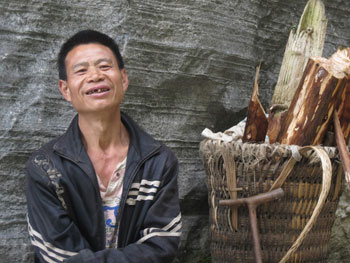

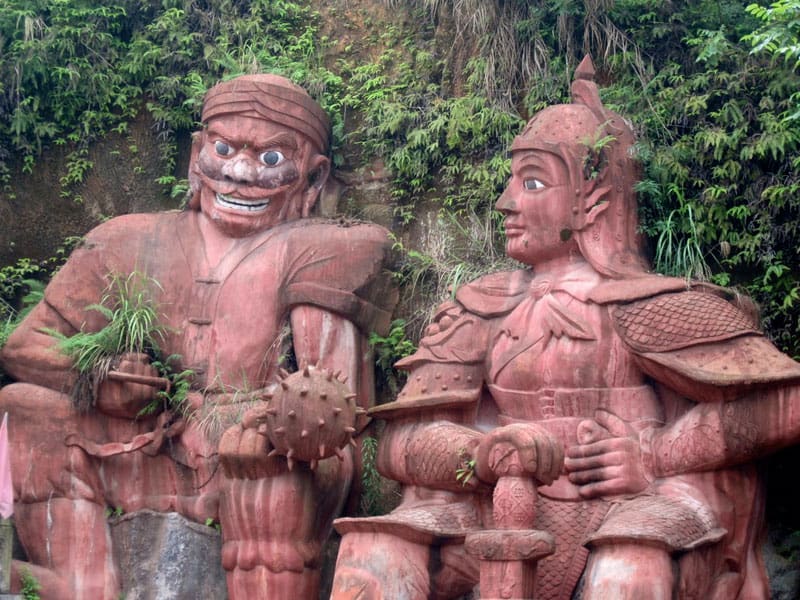
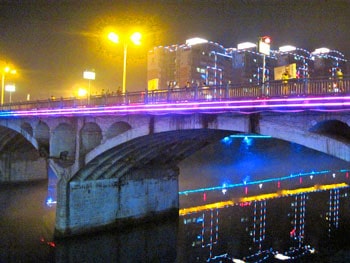



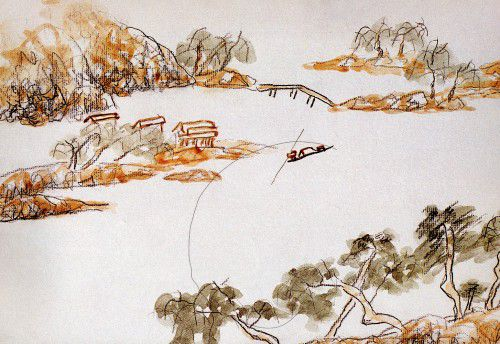





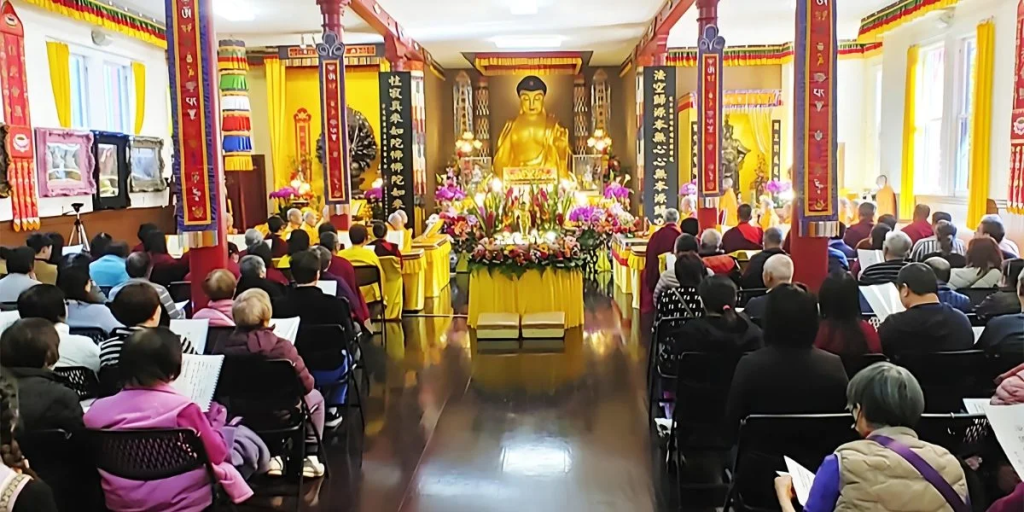








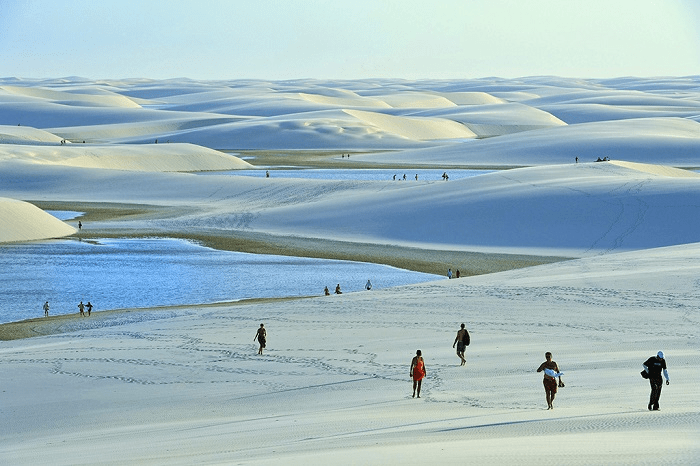
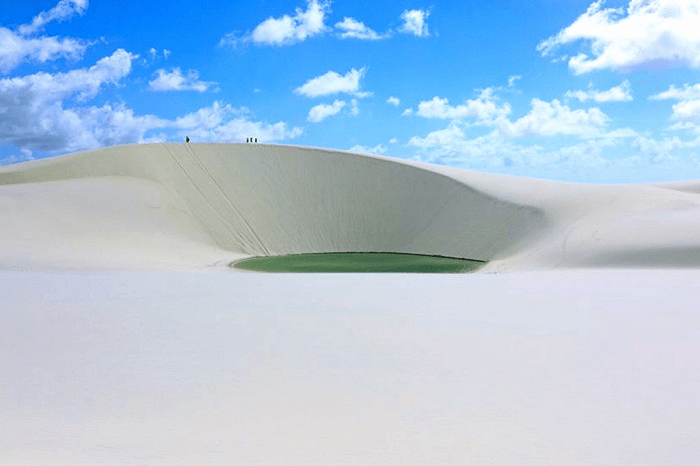









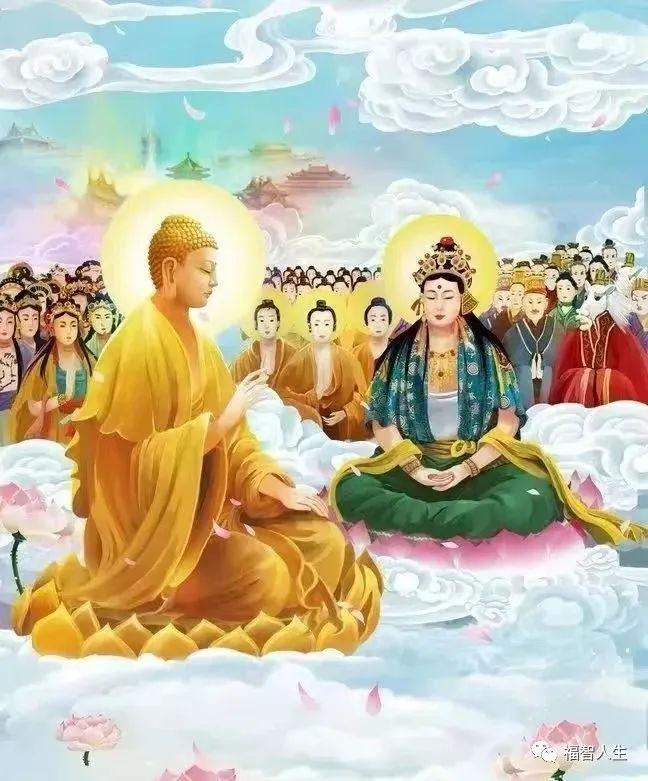


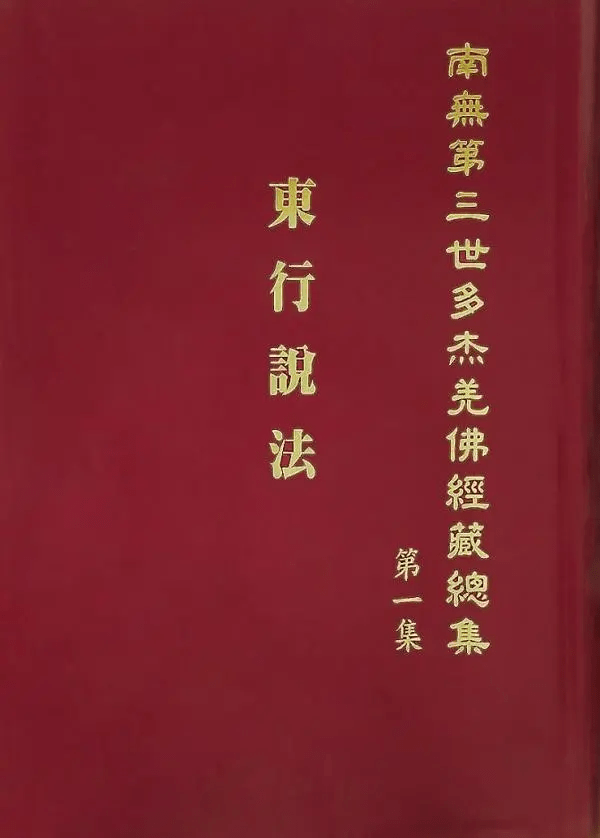
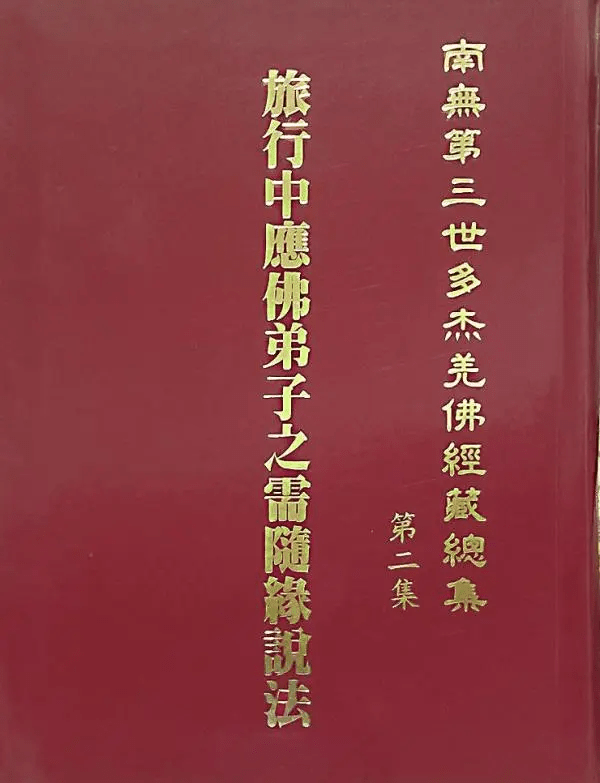
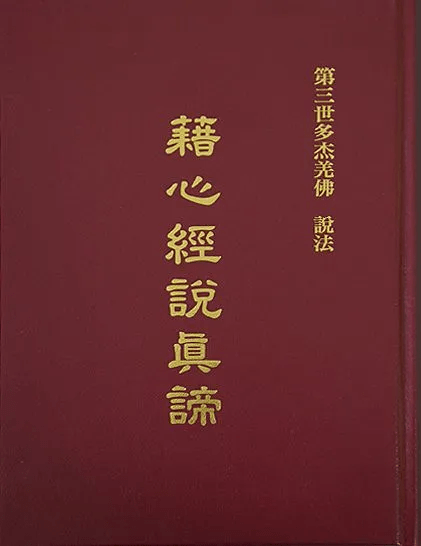




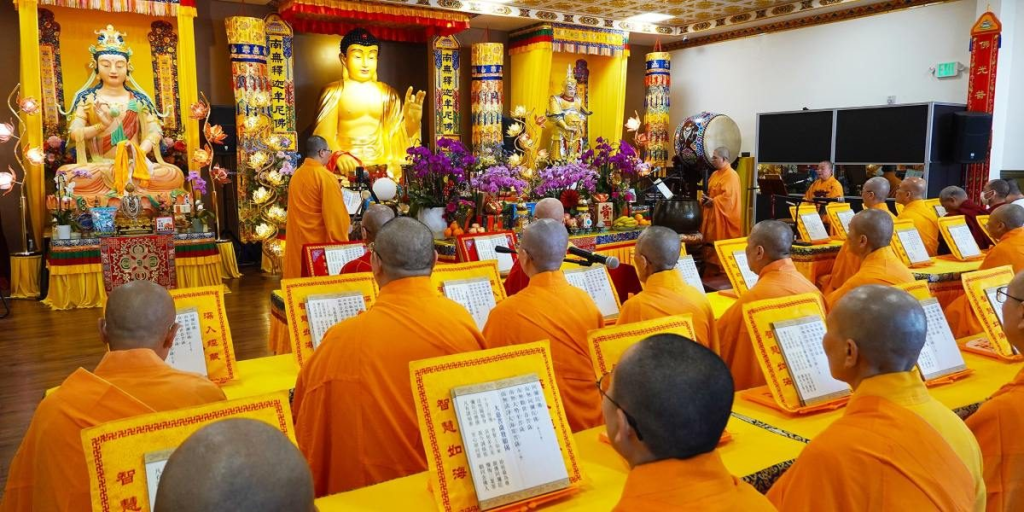
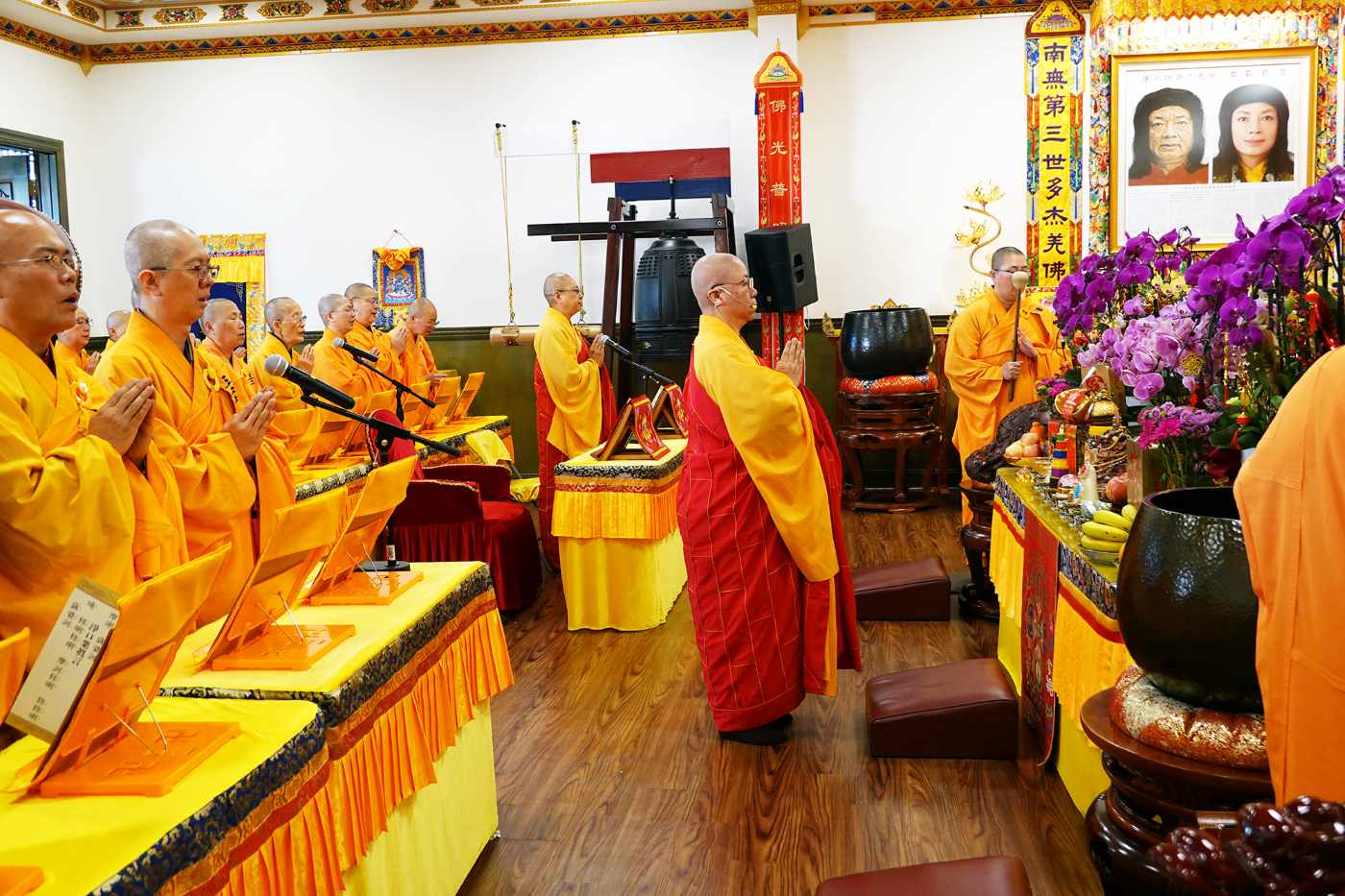
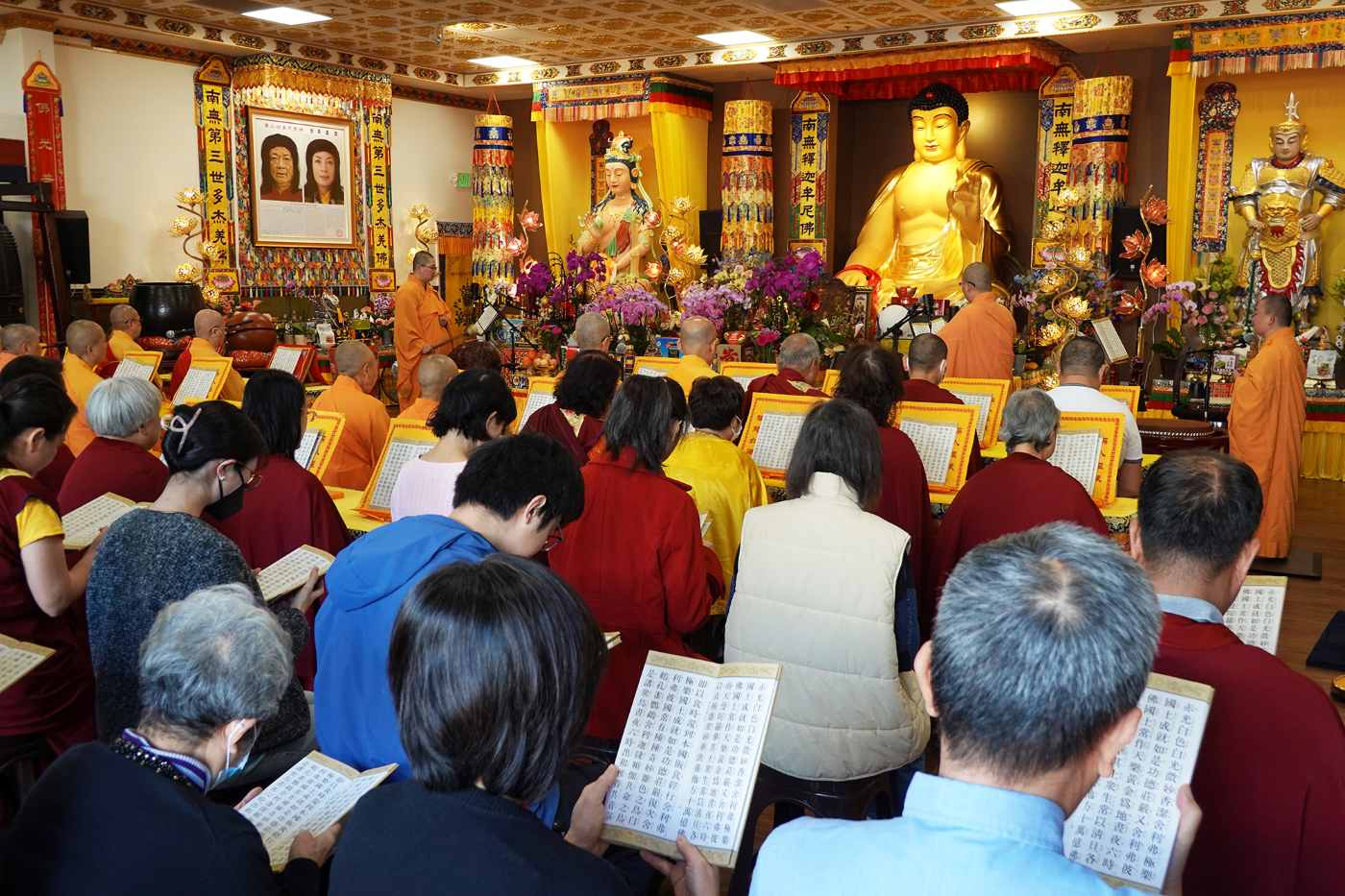
 Peace LiLy