The Seven Treasures of True Wealth

In this world, which sentient being does not desire great wealth? Which of us does not seek blessings and fortune? But what truly defines wealth? Most people measure it by the amount of money they have, the assets they own—be it real estate, cars, or stocks. These tangible things may seem like wealth, but they are easy to lose.

Money and jewels cannot provide lasting security—they can be stolen by thieves.
Reputation and status cannot guarantee stability—enemies can destroy them.
Family and friends are not unshakable—they can change as people’s hearts do.
Illness, aging, and death remind us that the body itself is fragile and impermanent.
Fate and fortune cannot be relied upon—karma follows us, shaping our circumstances.

So, what is the true wealth that we can hold onto in this fleeting lifetime?

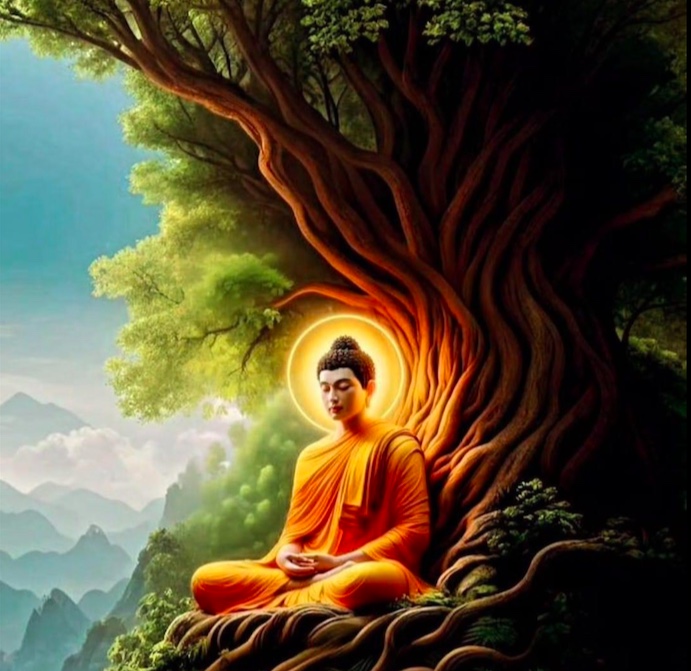
Over 2,500 years ago, Shakyamuni Buddha illuminated the path to real wealth—wealth that transcends the material and leads to lasting peace and wisdom. He shared the Seven Treasures of Life, invaluable treasures that guide us to inner fulfillment and enlightenment. These treasures cannot be stored in vaults or spent like gold and jewels. They are the true treasures that nurture the soul.

The Seven Treasures:

  1. The Treasure of Faith
    This is the deep trust a disciple places in the Buddha’s awakening. It is unwavering confidence in the truth of the Buddha’s enlightenment and teachings. Faith is the compass that keeps a person on the path of liberation, a guiding light through life’s trials.
  2. The Treasure of Integrity
    Integrity means living in alignment with one’s highest principles. It manifests as abstaining from harmful actions—whether through speech, thought, or deed. A person with integrity refrains from violence, stealing, falsehood, and indulgence in intoxicants. Integrity is the treasure of a life well-lived with honesty, respect, and compassion for all beings.
  3. The Treasure of Self-Respect
    This treasure is found in the heart of those who uphold their dignity and honor. Self-respect means feeling shame at the thought of misconduct and avoiding actions that degrade one’s character. A person who treasures self-respect lives with a deep sense of morality and avoids causing suffering.
  4. The Treasure of Responsibility
    This treasure reflects an understanding of the consequences of one’s actions. It is a profound sense of accountability for one’s choices, knowing that every action—whether good or bad—impacts oneself and others. Responsibility is driven by a genuine concern for well-being, not out of fear, but from love and care.
  5. The Treasure of Learning
    Learning is the treasure of an eager and inquisitive mind. It is the pursuit of wisdom through listening, reflecting, and studying the teachings. A disciple who treasures learning delves into the Dharma, growing in understanding, and cultivating insight that transforms their perception of life.
  6. The Treasure of Generosity
    This treasure resides in an open and giving heart. It is the joy of sharing wealth, time, and kindness without clinging to material things. A generous person delights in helping others and is always ready to support those in need. Generosity brings happiness both to the giver and the receiver, and it enriches the soul beyond measure.
  7. The Treasure of Wisdom
    Wisdom is the crown jewel of all treasures. It is the deep understanding of life’s impermanence and the realization that clinging to fleeting things leads only to suffering. With wisdom, one sees the world as it truly is, cultivating peace, detachment, and the ability to make decisions that lead to lasting happiness.

True Wealth Beyond Material Possessions

Shakyamuni Buddha shared these seven treasures with his disciples, emphasizing that true wealth is not measured by material abundance but by these inner riches. Whether man or woman, young or old, those who possess these treasures are truly wealthy. Their lives are meaningful, filled with purpose, and unshaken by the ups and downs of worldly fortunes.

So, what can we learn from these timeless teachings?

Cultivate faith and integrity,
Grow in generosity and wisdom,
Walk the path with responsibility and learning,
Always remembering the teachings of the Buddhas,
for they are the guideposts to inner peace, fulfillment, and the truest wealth.

Link:https://peacelilysite.com/2024/09/26/the-seven-treasures-of-true-wealth/

Source: https://wisdomtea.org/2024/09/13/treasure/

The Old Boat and the Journey Within: Lessons from the Buddha on Cultivation and Liberation

During the Buddha’s lifetime, there was a time when he was teaching on the far side of a river. Eager to hear his wisdom, many monks wished to cross the river, but there was only one boat available. The boatman warned them, “My boat is very old, and with so many of you on board, it could be dangerous!” Yet, in their eagerness to reach the Buddha, the monks ignored the boatman’s caution and all climbed aboard. Reluctantly, the boatman set sail.

As they reached the middle of the river, the monks noticed water seeping into the bottom of the boat, and panic began to spread. The boatman calmly said, “I told you this boat is old, but you didn’t listen. Now, if you can’t stay calm, the boat will sink even faster.”

Upon hearing this, the monks stilled themselves and did not dare move. Thankfully, the boatman’s experience guided them safely to the other shore.

When the monks arrived and recounted the incident to the Buddha, he offered this teaching: “When you were in the boat, you feared for your safety. But in daily life, you fail to realize that danger is ever-present. Many people worry about the uncertainty of the future, yet neglect the most important thing — being mindful of the present moment. Focus on this life, this moment. Pay attention to your thoughts and purify your mind of the five poisons: greed, anger, ignorance, pride, and doubt.”

The Buddha continued, “Our bodies are like that old, leaky boat. We must reduce its burden, and the heaviest load is the weight of greed, anger, ignorance, pride, and doubt. Just like in the boat, if we don’t repair our minds and lighten our burdens, we risk sinking. Only by addressing these burdens can we safely reach the other shore.”

“Do not be preoccupied with the thought of being reborn in the Western Pure Land in your next life. Instead, focus on your present condition. Are you free from afflictions in this very moment? Do you act with an open heart? Can you humble yourself in the eyes of others? These are the true questions we must face in life.”

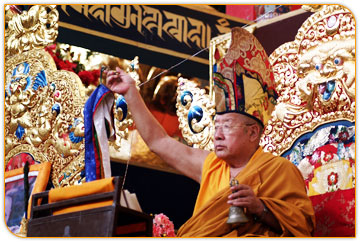
The contemporary Buddha H.H. Dorje Chang Buddha III  has also imparted timeless wisdom on cultivation. His Holiness teaches that true cultivation stems from the depths of your heart, from your bodhicitta — the awakened mind of compassion. Be genuinely friendly and loving to your spouse, your brothers, and your sisters. Foster harmony with your friends, act cooperatively with others, and extend care and help to all sentient beings. Apply the Four Limitless States of Mind — loving-kindness, compassion, joy, and equanimity — and cultivate bodhicitta in every action. Constantly reflect on yourself: How do you treat others with your words? With your thoughts? With your actions?

The conduct of Buddhas and great Bodhisattvas is marked by complete disregard for personal gain. When interests conflict, they give way to others, willingly taking fewer benefits or even none. You must remind yourself, “When others harm or slander me, I will not be disturbed. Even to those who harm me, I will wish them well, sincerely hoping for their happiness. Furthermore, I will take practical steps to help them, even offering financial aid — without letting them know that I am doing so.”

By living in accordance with these teachings, we become holy ones at the causal stage. Without a doubt, such cultivation leads to the perfection of wisdom and virtue. Achieving liberation and accomplishment becomes as simple as turning over one’s hand!

Link:https://peacelilysite.com/2024/09/19/the-old-boat-and-the-journey-within-lessons-from-the-buddha-on-cultivation-and-liberation/

#HHDorjeChangBuddhaIII #DorjeChangBuddhaIII #DorjeChangBuddha #ShakymuniBuddha

#WhatisCultivation #Compassion #Kindness #Liberation

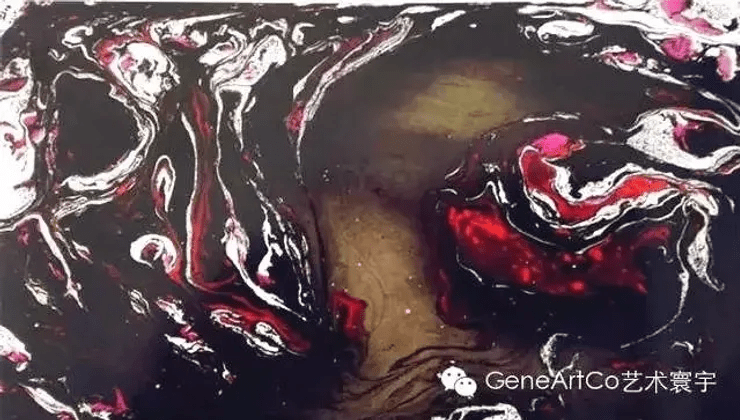
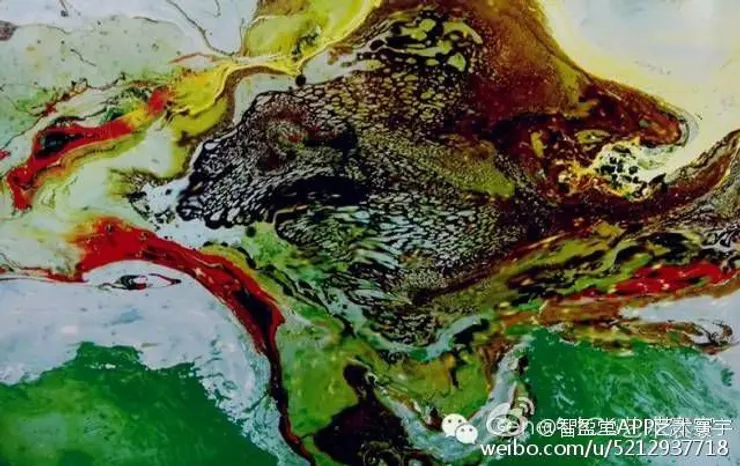
Western Paintings From H.H. Dorje Chang Buddha III

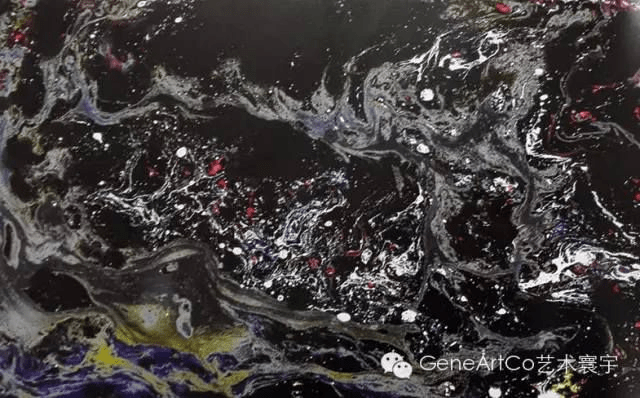
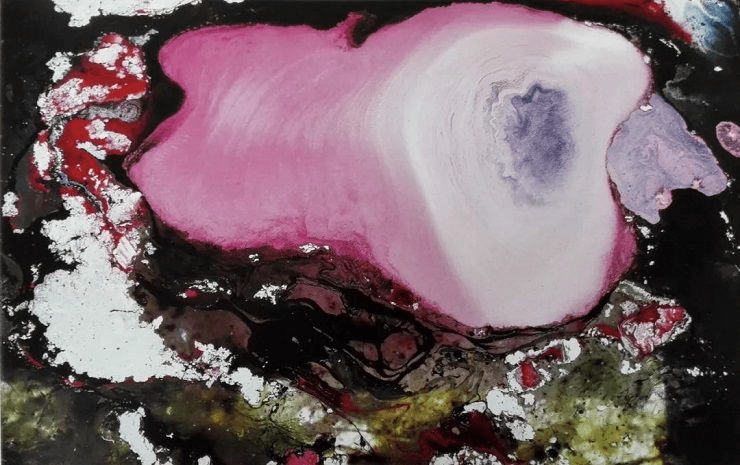
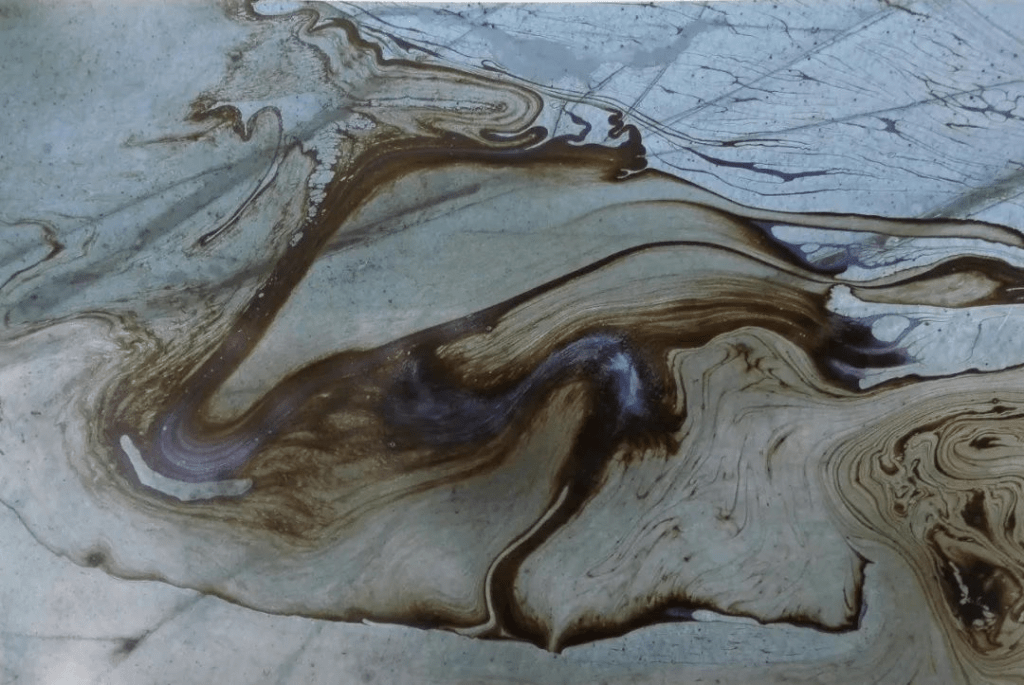
H.H. Dorje Chang Buddha III employs his ‘supernatural abstract colors’ to introduce us once more to a new world of art that is beautiful, mysterious, and soul-inspiring.

Hearing this, some may be puzzled: Western oil paintings are abstract paintings are found everywhere, yet which one among them ever fits the description “soul-inspiring”? But this truly is not just some fancy talk. As soon as you set your eyes onH.H. Dorje Chang Buddha III’s “supernatural abstract colors,” you will find the bright and dazzling red, yellow, blue, white and black colors leaping and dancing, vigorous like billows sluicing over thousands of miles, yet stored up into wonders at the fine tip of a brush. Gentle yet resolute, they freely transcend worldliness. Various colors are mixed ingeniously and beautifully, distilling beauty from their mutual nourishment. One could say they present a state of superb craftsmanship excelling nature, and of form becoming flexible and elusive. Words cannot describe such harmonious, refined, and soothing artistic enjoyment.

Vigorous Colors and Spirit Trees
Beautiful Nugget of Few Colors

Everlasting Wondrous Appeal

“Supernatural abstract color” is a perfect world composed of colors. It does not have any concrete worldly form but uses only colors to form shapes and express feelings. Color is its shape and theme, and it blends into touching charm. These colors, under the Buddha’s hand, suddenly converge into unparalleled, marvelous and bright magic, expressing the vivid spirit of a flowery scene or the vigor of the roaring sea. Yet, they can be ever so exact when their meaning is revealed through the tip of a brush. Their fine details are often revealed among rough strokes, and their charm is naturally displayed.

Autumn Fragrance Floating Like Colored Gauze

Link:https://peacelilysite.com/2024/09/13/western-paintings-from-h-h-dorje-chang-buddha-iii/

#DorjeChangBuddhaIII #HHDorjeChangBuddhaIII#DorjeChangBuddha#IAMA#InternationalArtMuseumofAmerica #WesternPainting #Supernaturalabstractcolor#OilandAcrylicPaintings

A True Friend

Once, in a quiet monastery nestled in the hills, the Buddha sat before his disciples. The evening sun painted the sky in hues of gold and crimson, and the air was filled with a profound stillness, broken only by the occasional rustling of leaves in the gentle breeze. The monks, eager for wisdom, sat in reverence as the Buddha began to speak.

“Monks,” the Buddha said, “in this world, there are many who come and go in our lives. Some pass by like the wind, leaving no trace, while others remain, their presence felt deeply in our hearts. Among those who remain, there is a rare kind of person, a true friend, who is like a shelter from life’s storms, a beacon of light in the darkest of times. Such a friend is endowed with seven precious qualities, and these qualities are worth cultivating, for a friend like this is rare indeed.”

The monks listened attentively as the Buddha continued, “Which seven qualities are these? First, a true friend gives what is hard to give. He does not withhold generosity, even when it is difficult. Whether it be his time, his effort, or his possessions, he offers them freely, without hesitation. This kind of giving is rare, for many are willing to give when it is convenient, but few give when it costs them something.”

The Buddha paused, letting his words sink in, then added, “Second, he does what is hard to do. A true friend will go beyond his comfort zone for the sake of his companion. He will stand by you when others shy away, face challenges with you, and make sacrifices when needed, not for his own gain, but for the sake of friendship.”

The monks reflected on this as the Buddha continued, “Third, he endures what is hard to endure. Life is not always easy. There are times of joy, but also times of suffering and hardship. A true friend remains steadfast during the difficult times. He does not flee when the winds of adversity blow; instead, he endures alongside you, bearing the weight of the struggle as if it were his own.”

Then, the Buddha smiled softly and said, “Fourth, he reveals his secrets to you. Trust is the foundation of true friendship. A true friend does not hide behind a mask or shield himself with falsehoods. He shares his heart with you, revealing his vulnerabilities, knowing that in doing so, the bond of trust between you will grow ever stronger.”

“Fifth,” the Buddha continued, “he keeps your secrets. Just as he trusts you with his, so too does he honor your trust. He safeguards what you confide in him, never betraying your confidence, never allowing the winds of gossip to carry away what you have entrusted to him.”

The Buddha’s voice softened as he spoke of the sixth quality. “When misfortunes strike, he doesn’t abandon you. Life is unpredictable, and at times, suffering may come upon you like a sudden storm. A true friend does not turn his back on you in these moments. He stands beside you, offering support, comfort, and strength. He is like a tree with deep roots, unshaken by the winds of fate.”

Finally, the Buddha said, “The seventh quality is this: When you’re down and out, he doesn’t look down on you. In times of failure or disgrace, when the world seems to turn its back on you, a true friend remains by your side, never judging, never scorning. He sees you not for your misfortune, but for who you truly are. His respect for you does not waver, even when you are at your lowest.”

The monks, inspired by these words, bowed their heads in gratitude as the Buddha’s voice grew gentle. “Such a friend, endowed with these seven qualities, is a rare and precious gift. He gives what is beautiful yet hard to give, does what is hard to do, and endures the bitter words that life may bring. His heart is open to you, and he protects your heart in turn. In the darkest of times, he will not leave you, and even when you falter, his love for you does not falter.”

The Buddha paused for a moment, letting the weight of his words fill the air before continuing, “To cultivate such a friendship is a blessing for both parties. A friend like this is not just a companion but a guide, a mirror that reflects your virtues and helps you grow. Such a bond nurtures the spirit and brings peace to the heart. Therefore, monks, seek to be such a friend. Cultivate these seven qualities within yourself, and you will draw others of similar virtue to your side.”

The monks looked at one another with renewed purpose, understanding now that friendship was not a simple matter of convenience or shared interests but a profound practice of giving, endurance, and trust. The Buddha’s words had opened their hearts to the deeper meaning of companionship, and they resolved to embody the qualities of a true friend in their own lives.

And so, as the evening deepened and the stars began to appear in the sky, the monks rose, filled with a sense of peace. They knew that in cultivating these seven qualities, they would not only find true friends but would become true friends themselves—vessels of compassion and wisdom in a world often marked by fleeting connections.

The Buddha smiled as he watched them depart, knowing that the seeds of his teaching had taken root in their hearts, and that in time, they would bear the fruits of deep and enduring friendships, blessed with the seven qualities of a true friend.

Link: https://wisdomtea.org/2024/09/05/a-friend/

The Life and Legacy of His Holiness Penor Rinpoche

Within the six major Nyingma monasteries, the Palyul lineage stands as the largest, with over 400 branch monasteries and Buddhist centers spread across the globe. One of its most revered figures is His Holiness the Third Drubwang Pema Norbu Rinpoche, also known as Penor Rinpoche, who is recognized as the reincarnation of the Indian Mahapandita Vimalamitra. Born in December 1932, during the Water Monkey Year of the Tibetan calendar, he came into this world in Powo, Eastern Tibet, in the historical region of Kham (also known as Pome or Powo). Remarkably, despite the cold and dry winter that usually stifles any growth, fragrant flowers bloomed when Rinpoche was born, an auspicious sign that heralded his extraordinary life. His reincarnation was prophesied and recognized by the Fifth Dzogchen Rinpoche and Kathok Khenchen Yagga Rinpoche.

At just five years old, Penor Rinpoche was brought to the Palyul mother monastery in Kham, where he was officially enthroned as the 11th throne holder of the Palyul lineage. This ceremony, conducted by his previous incarnation’s spiritual teacher, Tulku Tuktendawa, and the 10th Karma Kuchen Rinpoche, Karma Thekchok Nyingpo, marked the beginning of a life dedicated to preserving and spreading the Dharma.

Palyul Temple at Ganzhi, SiChuan, China. Photo from: http://www.palyul-center.org.tw/palyul_d1.asp

Penor Rinpoche’s early years were spent in the monasteries of Palyul and Dakhor, where he received teachings and guidance from the 10th throne holder, Karma Thekchok Nyingpo, and other precious masters. These teachings laid the foundation for his future role as a lineage holder.

Even as a child, Penor Rinpoche exhibited extraordinary signs. On one occasion, while playing with a precious vajra, he accidentally dropped it, breaking it into two. With childlike innocence, he used his saliva to mend it, and astonishingly, the vajra became stronger than before. In another instance, during a ritual, he accidentally dropped a vajra bell on a stone floor. To everyone’s amazement, the bell remained intact and sounded even clearer than before.

As a young boy, Rinpoche’s spiritual prowess became evident when an elderly man approached him, requesting the Phowa (transference of consciousness) ritual. Innocently, Rinpoche performed the ritual, and the man peacefully passed away. However, realizing the man had died, Rinpoche performed another ritual to revive him. When the man regained consciousness, he exclaimed, “Oh my! Why did you bring me back, Rinpoche? I was already in Amitabha’s Pure Land!”

Throughout his life, Penor Rinpoche received numerous profound teachings and empowerments from great masters. These included the Namcho lineage’s Great Perfection teachings, the Eight Herukas, the Great Treasury of Terma, and many more. With unwavering dedication, he practiced these teachings and achieved realization. Penor Rinpoche also engaged in long retreats with his teacher Tulku Tuktendawa, delving deeply into the Great Perfection practices and realizing his true nature.

Despite his high status, few Rinpoches endured the hardships that Penor Rinpoche faced. During the construction of Namdroling Monastery in Mysore, South India, Rinpoche worked tirelessly alongside monks and workers, carrying stones and mud under the scorching sun. His hands bled and ached, yet he persevered. The absence of running water and paved roads made construction even more challenging, but Rinpoche personally fetched water from distant locations.

One day, while working under the blazing sun, a man approached Rinpoche, expressing his desire to meet him. Unaware that the person he was speaking to was Penor Rinpoche himself, the man asked if he could see the great master. Rinpoche humbly replied, “Oh, of course! No problem,” and led him to his simple room. The man was both surprised and embarrassed to realize that the great Rinpoche was not the grand figure he had imagined, but a humble, down-to-earth monk. Indeed, Penor Rinpoche was a true wish-fulfilling jewel, tirelessly working to benefit others.

Year after year, Penor Rinpoche’s unwavering dedication, energy, and great aspiration propelled him forward despite countless obstacles. His efforts bore fruit, and today, Namdroling Monastery in Mysore, South India, stands as the largest Nyingma monastery in the world, home to over 3,000 monks. He re-established the monastic discipline, reinstated the traditional summer retreat, and instituted annual pujas, including the One Thousand Offerings to the Hundred Peaceful and Wrathful Deities, the Vajrakilaya Puja, and the Medicine Buddha Puja. These ceremonies were often accompanied by auspicious signs, such as rainbows and the overflowing of amrita from skull cups.

Penor Rinpoche’s compassion extended far beyond his monasteries. He built bridges, roads, and a comprehensive hospital offering both Western and Tibetan medicine. In Tibet and India, he became renowned for his prayers that brought timely rain during droughts, earning him the affectionate nickname “Rain Lama” from the local Indian people.

As a fully ordained monk, Penor Rinpoche ordained over 2,500 monks. Day after day, from morning until night, he selflessly benefited the living, the dying, and the deceased.

In 1993, during the Nyingma Monlam Chenmo for World Peace held at the Vajra Seat in Bodh Gaya, India, Nyingma lamas and monks from around the world unanimously appointed Penor Rinpoche as the Supreme Head of the Nyingma lineage.

This honor was well-deserved, as Rinpoche embodied the wisdom of Manjushri, the compassion of Avalokiteshvara, and the strength of Vajrapani in his tireless efforts to benefit the Dharma and all sentient beings.

In August 2007, when Penor Rinpoche encountered the A Treasury True Buddha Dharma by the H.H. Dorje Chang Buddha III, he was deeply moved, believing the book would greatly benefit all beings. In response, he sent a congratulatory letter to the Rinpoches:

Honorable Rinpoches,

The True Dharma Treasures, a text recognized by many great masters and high lamas as the work of the Third Dorje Chang Buddha, Yongey Mingyur Dorje, has been published at the request of Buddhist followers across the nation.

This publication ensures that the Buddha Dharma will remain in the world forever, serving as a cause for sentient beings to attain immediate happiness, freedom from worldly suffering, and ultimately, the supreme enlightenment.

Palyul Rinpoche Pema Norbu
August 11, 2007

Link:https://peacelilysite.com/2024/09/06/the-life-and-legacy-of-his-holiness-penor-rinpoche/

Source: http://www.palyul-center.org.tw/palyul_d1.asp, http://www.palyultp.org/tp02.html

Illuminate Others, Illuminate Yourself

On a pitch-black night, a wandering ascetic on a journey to seek the Buddha arrived in a remote village. The dark streets were bustling with villagers coming and going.

The ascetic walked into a narrow alley and noticed a faint yellow light shining from deep within the quiet alleyway. A villager remarked, “The blind man is coming.”

“Blind man?” The ascetic was puzzled. He asked another villager beside him, “Is the person carrying the lamp really blind?”

The answer was affirmative. The ascetic couldn’t understand.

A blind man, who has no concept of day and night, who cannot see mountains or rivers, or the vibrant world of peach blossoms and green willows—he doesn’t even know what light looks like. Isn’t it ridiculous for him to carry a lamp?

The lamp gradually drew closer, and the faint yellow light moved slowly from the depths of the alley to the ascetic’s feet.

Still perplexed, the ascetic asked, “May I ask, are you truly blind?”

The blind man carrying the lamp replied, “Yes, I have lived in darkness ever since I entered this world.”

The ascetic asked, “Since you can’t see anything, why are you carrying a lamp?”

The blind man said, “Is it night now? I heard that in the dark, without the light of a lamp, no one can see anything, just like me. So I lit a lamp.”

The ascetic, beginning to understand, said, “Oh, so you are carrying the lamp to light the way for others?”

But the blind man replied, “No, it’s for myself.”

“For yourself?” The ascetic was stunned.

The blind man slowly explained, “Have you ever been bumped into by other travelers because of the darkness?”

The ascetic said, “Yes, just a moment ago, I wasn’t paying attention and was bumped by two people.”

The blind man then said thoughtfully, “But I haven’t been. Though I am blind and cannot see anything, by carrying this lamp, I not only light the way for others but also allow them to see me. This way, they won’t bump into me because they can’t see.”

Hearing this, the ascetic suddenly realized.

He looked up and sighed, “I’ve been traveling far and wide to find the Buddha, but little did I know that the Buddha was right beside me all along.”

It turns out that Buddha nature is like a lamp. As long as I light it, even if I cannot see the Buddha, the Buddha will be able to see me.

The story is simple, yet it seems to ignite a light within the darkest corners of our hearts.

The Merchant’s Compassion: A Tale of Kindness and Divine Protection

In the past, there was a merchant from Anhui Province named Wang Zhiren. He was over forty years old and, though successful in business with some savings, his only regret was that he had no son.

One day, while out on a business trip, he was walking alone by the riverside when he suddenly saw a young woman, dressed as a village wife, holding a baby and jumping into the river. He was shocked and wanted to jump in to rescue them, but he lamented that he couldn’t swim and was unable to save them. In that critical moment, he looked up and saw several fishing boats in the distance on the river. He raised his hand and shouted for help, but when his first few calls went unanswered, he ran and shouted that he would offer twenty taels of gold to anyone who saved them.

Only then did the fishermen rush over, and they finally pulled the young woman and the baby out of the water. Wang Zhiren handed over the twenty taels of gold to the fishermen and then asked the young woman why she had jumped into the river with the baby. The woman tearfully explained, “My husband works as a laborer elsewhere, and we kept a pig at home, planning to sell it to pay the rent. Yesterday, a pig trader came by, and I sold the pig, but after he left, I discovered that the money I received was all counterfeit. My husband has a very violent temper. If he finds out, he’ll certainly beat me severely. We are so poor that we can barely survive, so I decided to drown myself and my baby in the river.”

Hearing this, Wang Zhiren was filled with compassion. He asked how much the pig had been worth and gave her twice that amount in real silver. The young woman, encountering such a kind and compassionate person, was overwhelmed with indescribable joy and gratitude. She expressed her heartfelt thanks and blessings to Wang Zhiren and, to ensure she could repay his kindness in the future, she carefully asked for his name, birthplace, and residence. She then returned home with her baby, feeling consoled.

When she arrived home, her husband had already returned. The young woman recounted in detail how she had received counterfeit money for the pig, her fear of being beaten, her attempted suicide with the baby, and how a kind man had saved them and given her real silver.

Her husband was deeply moved upon hearing about Wang Zhiren’s compassion and decided to accompany his wife to Wang’s lodging to express their gratitude.

When Wang Zhiren, still in bed, heard them knocking at the door, he got up and went outside. As he stepped out, there was a sudden loud crash from inside the room, startling all three of them. They turned to see that the wall of the room had collapsed due to damage from several days of heavy rain, and the bricks, tiles, and beams had fallen, crushing the bed where Wang had been sleeping.

Wang Zhiren exclaimed, “Oh my! That was so dangerous! If you two hadn’t knocked on my door and called me out, I would have been crushed to death by the falling wall and bricks!”

The couple replied in unison, “This is the will of Heaven. A kind-hearted person like you, Mr. Wang, should not suffer such a calamity.”

Later, Wang Zhiren’s wife gave birth to several sons, and Wang Zhiren lived to the ripe old age of ninety-six, passing away peacefully without illness.


Link:https://peacelilysite.com/2024/08/30/illuminate-others-illuminate-yourself/

Source: https://www.fsm.gov.mo/cht/healthcare/ContextDetail.aspx?Context=91, http://www.muni-buddha.com.tw/buddhism/book/yahoo/0364.htm#a01

H.H. Dodrupchen Rinpoche: The Pillar of Longchen Nyingthig Dharma and Compassionate Wisdom

THE WORLD’S SOLE HOLDER OF THE HIGHEST RAINBOW BODY ACCOMPLISHMENT DHARMA: H.H. DHARMA KING DODRUPCHEN

H.H. Dodrupchen Rinpoche stands as the supreme leader and sole lineage holder of the complete Great Perfection Longchen Nyingthig Dharma across the world. Every Longchen Nyingthig lineage practiced in the major monasteries worldwide traces its origins to the initiations and teachings of H.H. Great Dharma King Dodrupchen. Without his guidance, the highest esoteric dharma, Longchen Nyingthig Great Perfection, would not exist.

The Longchen Nyingthig transmissions of the Nyingma tradition, including those practiced in renowned monasteries like Kathok and Dzogchen, all flow from the empowerment of H.H. Dodrupchen Rinpoche.

The title “Dodrupchen” translates to “the great accomplished one from the Dokham Valley,” a name rooted in the legacy of the First Dodrupchen Rinpoche, who was born in the Upper Dokham Valley of the Golok region in eastern Tibet. When the First Dodrupchen Rinpoche met the great master Jigme Lingpa, he received the complete transmissions of the “Buddha’s Words” and the “Treasured Teachings.” Jigme Lingpa also recognized him as the sole root lineage holder of Longchen Nyingthig. Remarkably, when Dodrupchen Jigme Trinle Ozer, the reincarnation of Jigme Lingpa, encountered Dodrupchen Rinpoche, he saw him as Guru Padmasambhava. Over generations, the Dodrupchen Rinpoches have demonstrated profound wisdom and miraculous abilities, while also tirelessly transmitting Longchen Nyingthig teachings to those with the right karmic connections, nurturing many accomplished masters.

The Fourth Dodrupchen Rinpoche, Thubten Thrinle Lhawang Sangpo, was born in 1927 in the Tse village of the Serta Valley, Golok. Even before his birth, auspicious signs appeared, such as rainbows gracing the skies above his village almost daily and the protector deity Rahula being seen atop his rooftop nightly. A rare flower bloomed on his rooftop, similar to those cherished by the Third Dodrupchen during his retreat, even though it had never been seen in the region. His mother experienced miraculous phenomena throughout her pregnancy, such as the unborn child momentarily disappearing and a mysterious light accompanying her, enabling her to see in the dark without any need for illumination.

After Rinpoche was born, many miraculous events occurred. On one occasion, a Mani stone fell from a rock and struck Rinpoche, shattering many of his bones. However, just a few hours later, all signs of injury miraculously disappeared. Sometimes, young Rinpoche would be on the ground one moment, and in the blink of an eye, he would be on the rooftop or a mountain rock wall. Before the monks from Dodrupchen Monastery came to visit and identify the reincarnated lama, Rinpoche’s parents were unaware of their visit. Yet, Rinpoche told his parents, “Guests are coming today,” and joyfully began to sing.

When the search team presented items previously used by the previous Dodrupchen, such as books and prayer beads, mixed with items from other people, Rinpoche accurately selected his past life’s belongings, saying, “These are mine.” The Fifth Dzogchen Rinpoche personally recognized the young boy as the Fourth Dodrupchen Rinpoche.

As Rinpoche grew older, he rarely displayed miraculous powers, except in rare circumstances. Despite not needing to purify his mind or accumulate merit like ordinary practitioners, he sought teachings from various human masters and completed many years of retreat to set a true example of practice for all beings. By age fifteen, Rinpoche had already mastered mandala painting, calligraphy, pottery, architecture, and numerous other skills, as well as profound teachings like the supreme methods of seed syllables and karmic selection. Throughout his life, he interacted with others with unwavering peace, humility, and simplicity, without any pretense. His compassionate actions, in every moment and place, served as a guiding light for all beings.

The Fourth Dodrupchen Rinpoche’s status was elevated above many great Dharma kings, and his disciples spanned across all major lineages, many of whom became renowned masters, celebrated worldwide. Among them are illustrious lineage holders such as the Seventh Dzogchen Rinpoche, Sogyal Rinpoche, Rinchen Nyingma Rinpoche, H.H. Jigme Phuntsok Rinpoche, and H.H. Togdan Rinpoche, among others.

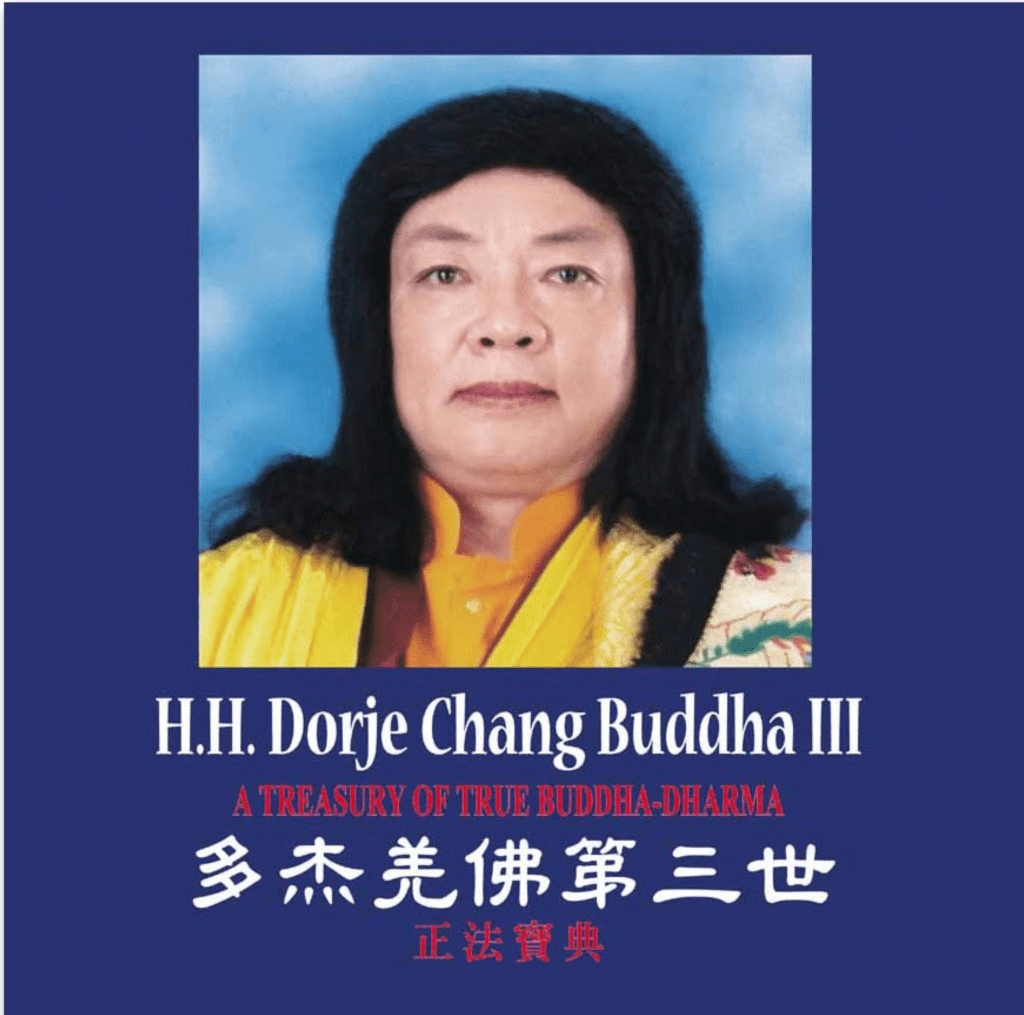
In December 2006, after reading A Treasury of True Buddha-Dharma, H.H. Dodrupchen Rinpoche was deeply moved by the accomplishments of H.H. Dorje Chang Buddha III Wan Ko Yeshe Norbu. In response, he promptly wrote a congratulatory letter, stating that the accomplishments of H.H. Dorje Chang Buddha III are miraculous and clearly demonstrate the absolute truth of Buddha-dharma.

Link: https://peacelilysite.com/2024/08/29/h-h-dodrupchen-rinpoche-the-pillar-of-longchen-nyingthig-dharma-and-compassionate-wisdom/

#DorjeChangBuddhaIII #HHDorjeChangBuddhaIII  #MasterWanKoYee #Buddha #HuaZangSi #InternationalBuddhismSanghaAssociation #IBSA #DodrupchenRinpoche #Nyingmatradition #LongchenNyingthig

The Power of Compassion: Lessons from Mother Teresa and Buddha Shakyamuni on Achieving Peace

In a world often torn apart by conflict and suffering, the power of sincere and selfless faith can become a beacon of hope. This was powerfully demonstrated by two of the greatest spiritual figures in history: Mother Teresa and Buddha Shakyamuni. Their lives and actions remind us that peace is not just the absence of conflict but the presence of compassion, wisdom, and unwavering commitment to doing good.

Mother Teresa’s deep compassion and faith brought peace to countless lives. Her work wasn’t just about charity; it was about embodying love and compassion in a way that transcended cultural boundaries. One of the most remarkable examples of her spiritual power occurred during the Kosovo War in Yugoslavia. In the midst of intense fighting, women and children were trapped in the conflict zone. Determined to help, Mother Teresa approached the war commander, pleading for a ceasefire. Though sympathetic, the commander explained that he couldn’t stop the fighting because the opposing side refused to halt their attacks.

Mother Teresa’s response was simple and profound: “Well, then I’ll go.”

She walked directly into the war zone. Word quickly spread that Sister Teresa was present, and miraculously, both sides ceased fire. It wasn’t diplomacy or force that halted the violence but the sheer power of her presence. After she safely escorted the women and children out of danger, the fighting resumed. This extraordinary event eventually reached the United Nations, where Secretary-General Kofi Annan expressed his amazement. “Even I couldn’t achieve that,” he remarked. Despite numerous attempts by the UN to mediate peace, the civil war had raged on—until Mother Teresa stepped in.

Similarly, in Buddhist scriptures, we find the story of Buddha Shakyamuni using wisdom and compassion to prevent bloodshed. After King Virudhaka of the Kosala Kingdom ascended to the throne, he led an army to attack Buddha’s homeland, the Kingdom of Kapilavastu. Although Buddha knew that this was the collective karma of the people of Kapilavastu ripening, he still wanted to do his utmost to protect them. He sat in meditation under a withered tree by the roadside where King Virudhaka’s army would pass.

When King Virudhaka saw Buddha from afar, despite his reluctance, he got out of his carriage and paid his respects. He asked, “Buddha! There is a lush tree not far ahead that could provide you with shade from the sun. Why did you choose to meditate under this withered tree?” Buddha replied, “What you say is true, but the shade of one’s own kin is greater than any other shade.” Moved by Buddha’s words, King Virudhaka led his army back to his kingdom, choosing peace over conflict.

These stories remind us that true peace requires more than just the cessation of violence. It requires the inner strength to let go of hatred and prejudice, to see others not as enemies but as fellow human beings deserving of compassion. In today’s world, people of all different religious beliefs and backgrounds should take inspiration from these examples. Let us all do our part to uphold peace, so that we can live in harmony and happiness.

The path to peace begins with each of us, in our hearts and in our actions. As we work towards a more peaceful world, may we carry the lessons of Mother Teresa and Buddha Shakyamuni with us, allowing their examples to guide us toward a future filled with love, compassion, and understanding.

Link:https://peacelilysite.com/2024/08/23/the-power-of-compassion-lessons-from-mother-teresa-and-buddha-shakyamuni-on-achieving-peace/

https://www.neptune-it.com/practice-practice/8580278

A Sacred Bodhi Leaf

The Spiritual Journey of Chiang Wei-Kuo

Chiang Wei-Kuo(蔣偉國), the son of the former Kuomintang Chairman Chiang Kai-Shek (蒋介石), is often remembered as a prominent political figure. However, many may not know that he was also a deeply devout Buddhist, with a profound understanding of Buddhist teachings. His dedication to Buddhism led him to engage in meaningful discussions and exchanges with Western religious figures, leaving a lasting impact. In fact, the president of a league of eighty-three American universities once said that Chiang Wei-Kuo was his godfather. But beyond his public life, Chiang Wei-Kuo’s spiritual journey was one of deep significance.

In his early years, Chiang Wei-Kuo made a special pilgrimage to India, seeking to connect with the sacred sites of the Buddha and attain enlightenment.

While standing beneath the Bodhi Tree, where Shakyamuni Buddha himself attained supreme enlightenment, Chiang Wei-Kuo made a solemn vow to benefit all living beings. At that very moment, a large leaf suddenly fell from the tree. This leaf, unusually large compared to the others, seemed to be a sign. Deeply moved, Chiang Wei-Kuo took the leaf back home and showed it to his father, Chiang Kai-Shek. Touched by the story, Chiang Kai-Shek instructed his son to enshrine the leaf in the family’s ancestral hall. Since that day, the Bodhi leaf became a revered object of worship in the Chiang family’s ancestral hall.

Years later, in May 1995, Master Yi Yungao (H.H. Dorje Chang Buddha III) led a delegation of eight individuals to visit Taiwan. During this visit, Chiang Wei-Kuo, with deep reverence and devotion, requested to become a disciple of Master Yi Yungao. As part of his request, he presented the sacred Bodhi leaf as an offering. In a heartfelt gesture, Chiang Wei-Kuo personally inscribed the story of how he obtained the leaf in Bodhgaya, its significance to his family, and the profound spiritual connection it held. This offering symbolized his deep respect for the Buddha and his unwavering commitment to his spiritual path.

On November 13, 2008, the U.S. Congress hosted a special art exhibition featuring the works of Buddha Mother (Professor Yuhua Shou Zhiwang) at the Capitol Building in Washington, D.C. To ensure the safe transport of these precious artworks, a decision was made to rent an RV (Recreational Vehicle) and form a convoy with trucks carrying the pieces. Namo H.H. Dorje Chang Buddha III, along with Buddha Mother and their disciples, stayed in the RV throughout the journey, embarking on a spiritual pilgrimage across America.

The convoy, led by Namo H.H. Dorje Chang Buddha III and accompanied by several dozen disciples, departed from Los Angeles on October 25, 2008. Over the course of 33 days, they journeyed across more than 20 states, traveling from the west coast to the east coast. Despite the busy preparations for an exhibition in Washington, D.C., Namo H.H. Dorje Chang Buddha III delivered teachings to his disciples almost every evening. These teachings were later compiled into a 19-volume collection titled Teachings from the Eastward Journey.

Throughout the journey, numerous sacred signs appeared wherever Namo H.H. Dorje Chang Buddha III visited. One such miraculous event occurred when the Buddha and his disciples were resting under a Western Bodhi tree. As the Buddha was speaking to Venerable Tsemang and other disciples about Chiang Wei-Kuo’s offering of a Bodhi leaf years ago, a rustling sound suddenly came from above. With a distinct “thud,” a Western Bodhi leaf fell from the tree, astonishing everyone present.

Western Bodhi leaves typically have white veins with light pinkish veins on the back. However, this particular leaf was different. While it shared the same shape as other Bodhi leaves, its veins were strikingly red on both sides, without any trace of white veins.

Moreover, it was extraordinarily large, much larger than any other leaf on the tree. The timing of this event was miraculous, coinciding precisely with the Buddha’s recounting of how Chiang Wei-Kuo had obtained a large Bodhi leaf in India. This unique leaf falling from the Western Bodhi tree signified that wherever the true Dharma of the Tathagatas is spoken, profound responses occur.

Additionally, after the Eastward Journey ended and they returned to Los Angeles, Namo H.H. Dorje Chang Buddha III manifested amrita (nectar) at the Vajra Mandala in Pasadena. This further confirmed that the “Teachings from the Eastward Journey” are the pure and supreme authentic Dharma of the Buddha, a testament to the spiritual power and significance of the journey.

Link:https://peacelilysite.com/2024/08/22/the-sacred-bodhi-leaf/

A Han Chinese Scholar’s Quest for the True Tibetan Dharma

The Extraordinary Journey of Losang Phuntsok Rinpoche

Losang Phuntsok Geshe, known by his Chinese name Xing Suzhi, was born in 1916 in Nanjing into a family deeply rooted in the Buddhist tradition. His spiritual journey began early; he embraced Buddhism at the age of nine and, by sixteen, had enrolled in the Sino-Tibetan Buddhist Institute in Chongqing, Sichuan. Here, he studied Tibetan, laying the foundation for his future studies in Tibet. That same year, he became the secretary to Master Taixu, one of the most prominent modern Buddhist scholars, who bestowed upon him the Dharma name Bison.

During his time at the Sino-Tibetan Buddhist Institute, Losang Phuntsok studied under Master Taixu and Master Fazun. His studies were deep and rigorous, focusing on key scriptures such as the Śūraṅgama Sūtra and Cheng Weishi Lun. He also diligently organized and recorded Master Taixu’s lectures. Both Master Taixu and Master Fazun held Tibetan esoteric Buddhism in high regard, especially the Amrita Dharma, a teaching said to have been revealed by the Buddha himself. This Dharma, they believed, was immensely powerful and rare, capable of revealing the true nature of reality, bestowing the six spiritual powers, and leading to liberation from the cycle of life and death. The Amrita blessing was also said to grant longevity, health, and the accumulation of merit and wisdom.

Inspired by these teachings, Losang Phuntsok embarked on a journey to Tibet in 1937, determined to seek the highest Vajrayana teachings, including the elusive Amrita Dharma. His journey was fraught with challenges, but he was resolute in his quest. He sought out eminent monks and scholars across the Kham and Tibetan regions, studying over 300 different Sakya teachings. His goal was to become a modern-day Tang Sanzang, the legendary monk who brought Buddhist teachings from India to China, and to bring the esoteric teachings of Tibet back to his homeland.

After seven years of intense study and practice, Losang Phuntsok Rinpoche achieved a historic milestone. In the first month of 1945, he passed the ten-thousand-person debate examination hosted by the Regent of Tibet at Drepung Monastery in Lhasa, becoming the first Han Chinese to obtain the highest degree in Tibetan Buddhism, the Lharampa Geshe. This degree, equivalent to a doctorate in Buddhist studies, is highly respected within Tibetan Buddhism and is recognized by both the government and the people.

Losang Phuntsok Rinpoche spent many years in Tibet, receiving over 600 empowerments and learning from many great masters. However, the Amrita Dharma, the teaching he had long sought, remained elusive. Many masters told him that this profound teaching was extremely difficult to find and that it might take many years for a great holy being to appear who could transmit it. Despite this, Losang Phuntsok Rinpoche remained undeterred. Over the decades, he traveled to Hong Kong, the United States, and other places around the world, translating and lecturing on scriptures, teaching disciples, and continuing his search for enlightened masters. He once served as the President of the American Vajrayana Buddhist Association.

In 1997, after years of searching, Losang Phuntsok Rinpoche’s efforts bore fruit. He formally became a disciple of H.H.  Dorje Chang Buddha III in Chengdu, recognizing Him as his root guru. H.H.  Dorje Chang Buddha III performed empowerments and transmitted teachings to him, manifesting the mandalas of the deities each time He transmitted a Dharma. Losang Phuntsok Rinpoche witnessed these sacred phenomena firsthand, which deeply moved him.

During an interview in Chengdu, he expressed his profound realization: “I have been practicing Buddhism for 60 years and have met over a hundred so-called great masters of Tibetan Buddhism. I also spent a long time with Chinese Buddhist masters like Master Taixu. I have received more than 600 empowerments from great masters like Fazun, but none of these empowerments have had the impact and blessing power on me like the ones I received today. The teachings and empowerments from the Master (H.H.  Dorje Chang Buddha III) are so effective that I can’t help but think: my 60 years of Buddhist practice are not as valuable as this one day. Sixty years have passed in vain, not as meaningful as today!”

In June 2000, during an extraordinarily auspicious moment that occurs only once in countless eons, Losang Phuntsok Rinpoche, the only living Han Chinese Lharampa Geshe celebrated worldwide and the President of the American Vajrayana Buddhist Association, participated in a highly significant Dharma assembly. He attended this event along with other world-renowned high monks and elders, including Elder Master Wuming, the President of the World Buddhist Sangha Council, and Elder Master Yizhao, the Dharma heir of the Venerable Xu Yun. This Dharma assembly was personally presided over by H.H.  Dorje Chang Buddha III, the highest Buddhist leader in the world today.

During the event, Losang Phuntsok Rinpoche not only witnessed the sacred phenomenon of the Amrita descending but also personally tasted the Amrita. He felt an unparalleled sense of comfort throughout his entire body. Deeply moved and excited, he expressed that at the age of 85, after spending more than a decade in Tibet and having taken many great masters as teachers, he had never been able to receive the Amrita. He never expected that his wish would finally be fulfilled upon meeting H.H.  Dorje Chang Buddha III. He personally witnessed two rays of red light entering the bowl and transforming into Amrita, fulfilling a wish that had eluded him during his many years of seeking in Tibet.

In February 2001, at the request of his Buddhist disciples, Losang Phuntsok Rinpoche once again taught the Lamrim (Stages of the Path to Enlightenment) by the great master Tsongkhapa of the Gelug school of Tibetan Buddhism and organized his lecture notes for future publication. When he completed the translation of the Lamrim and submitted it to H.H.  Dorje Chang Buddha III for review, H.H.  Dorje Chang Buddha III performed a Dharma practice on the spot, inviting the Dharma-protecting Bodhisattvas to the mandala. Losang Phuntsok Rinpoche personally requested guidance from the Dharma protectors, who responded that it would indeed be best for H.H.  Dorje Chang Buddha III to revise the text. Losang Phuntsok Rinpoche remarked that Dorje Chang Buddha III’s Dharma practice was so powerful that the Dharma-protecting Bodhisattvas appeared immediately, allowing him to seek their guidance directly with his own eyes. He acknowledged that no one else in the world possesses such remarkable spiritual realization.

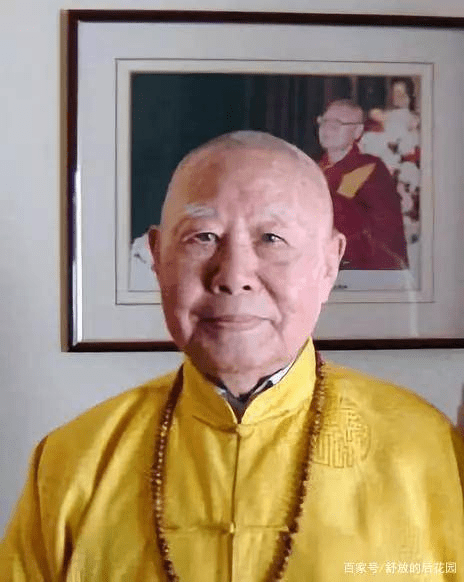
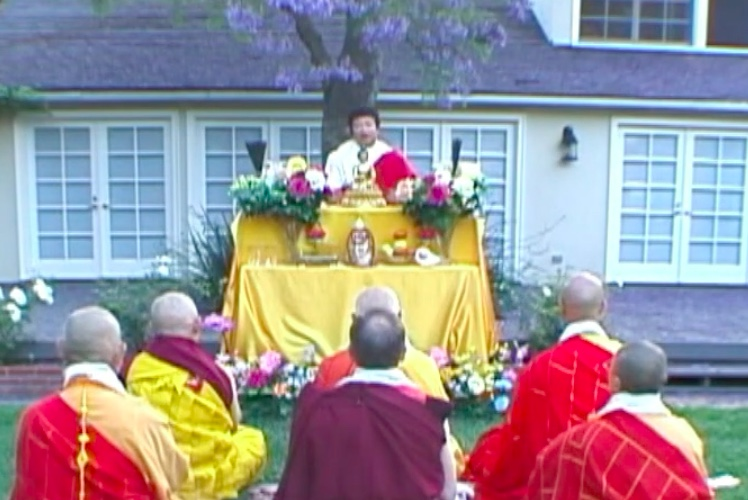
The photo above shows Losang Phuntsok Geshe in Chengdu, Sichuan, taking refuge in H.H.Dorje Chang Buddha III as his master. The photo below shows H.H.Dorje Chang Buddha III performing an empowerment for Losang Phuntsok Geshe in the United States.
Master QinDing taking refuge in H.H.Dorje Chang Buddha III as his master

Great monks and virtuous masters do not wish to let their lives pass in vain. They understand the rarity of human life, the difficulty of pursuing the Dharma, and the challenge of attaining the path to liberation. For these great monks and virtuous masters, the Dharma is not merely empty Buddhist theory or superficial titles of lineage. They deeply understand that whoever can truly demonstrate supreme realization, manifesting responses across the three realms, mastering both the exoteric and esoteric teachings, and thoroughly comprehending the Five Vidyas, represents the true Dharma of the Tathagata. Therefore, they willingly bow down and take refuge in the true incarnation of the primordial Buddha, Vajradhara H.H. Dorje Chang Buddha III.

Link:https://peacelilysite.com/2024/08/09/a-han-chinese-scholars-quest-for-the-true-tibetan-dharma/

Source: https://www.sohu.com/a/680523900_121687414