Maijishan Grottoes – Buddhist Treasure Well-preserved on Maiji Mountain Cliff

Maijishan Grottoes, also known as Maiji Mountain Grottoes or Maijishan Caves, is situated in Maiji District, Tianshui City, Gansu Province, in northwest China. Alongside the Longmen Grottoes, Yungang Grottoes, and Dunhuang Grottoes, it holds the esteemed title of being one of the “Four Greatest Grottoes in China.”

If the Mogao Caves are likened to a vast mural museum, the Maijishan Caves undoubtedly resemble an expansive sculpture museum. Boasting 10,632 clay sculptures, Maijishan is hailed as “the Oriental Sculpture Art Exhibition Hall.”

Much like the Parthenon temple in ancient Greece, the stone and clay carvings at Maijishan have been remarkably preserved since ancient times, earning it the moniker of “China’s Parthenon Temple.”

In contrast to the exotic sculptures found in the Mogao Caves, the sculptures in Maijishan are characterized by a more secular, human, and distinctly Chinese quality.

Unlike the exotic sculptures in Mogao Caves, the sculptures in Maijishan Caves are more secularized, human, and more Chinese

The name Maiji in Chinese translates to “piled sheaves of wheat,” reflecting the mountain’s appearance and the origin of its name. The Maijishan Grottoes were initially constructed in A.D. 384-417 and underwent subsequent expansions in dynasties such as Northern Zhou (A.D. 557-581) and Tang (A.D. 618-907). The site currently comprises 221 caves, 10,632 clay sculptures, and over 1300 square meters of murals, earning global acclaim for its exquisite clay sculpture art and recognition as the “Oriental Sculpture Art Exhibition Hall.”

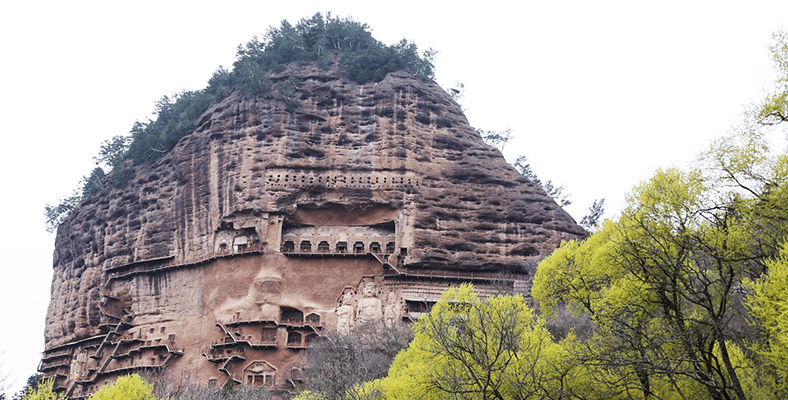
While Maijishan Grottoes may not be as renowned as the other three great grottoes, it stands out as the best-preserved among them. Carved into the steep cliff of the mountain, the caves were not easily accessible, thus escaping much of the destruction that plagued other sites throughout tumultuous periods in history. Today, visitors can marvel at Buddha sculptures and murals along a narrow path clinging to the cliff’s edge.

Marsman Rom, Wikimediia Commons

Shizao, Wikimedia Commons

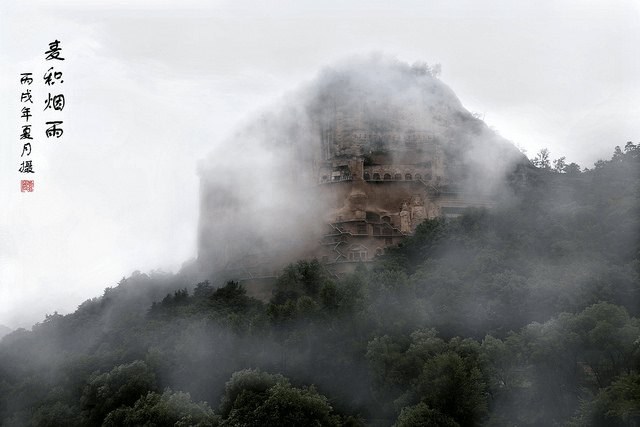
Maijishan in a sea of fog. ©Maijishan Grotto Art Institute and Global Heritage Fund

Located just a few miles south of the main road connecting China and Central Asia, Maijishan emerged as a hub of cross-cultural exchange, drawing hundreds of thousands of itinerants and serving as a historical canvas reflecting the art of 12 distinct dynasties. Indians, Mongols, Huns, Sogdians, Tibetans, Chinese, and others traversed its halls, leaving enduring imprints of their cultures in the form of art.

The mountain’s 194 grottoes stand as tangible evidence of this diverse influence, showcasing seven architectural variations, housing over 7,000 statues, and adorned with more than 100 square meters of murals. Everything within reflects a dedication to Buddhism, from depictions of Siddhartha’s birth to bodhisattvas engaged in meditation and scenes of new devotees arriving. While Maijishan’s physical features initially garnered attention, it is the heritage inscribed, painted, and sculpted onto the soft golden stone that solidified its place in the globalized consciousness of Buddhism, akin to Mount Sumeru, the sacred Buddhist mountain often considered the “mythical axis of the universe.”

The history of Maijishan, like the tales along ancient trade routes, commences with a journey. One account tells of the priest Hsüan-kao meditating at Maijishan, later joined by the shaman T’an-Hung. Together, they founded the mountain’s first monastic community, growing to nearly 300 people before their departure, marking a departure filled with religious fervor, and in T’an-Hung’s case, a morbidly poetic self-immolation in Cochin.

This semi-mythical origin, whether entirely factual or not, undeniably solidified Maijishan as a significant religious site for Chinese rulers. In the Fang-yü sheng-lan, a Sung Dynasty-era book, it is noted that Yao Hsing transformed the mountains, carving 1,000 cliffs and 10,000 images, transforming the cliffs into halls. A stele from 1222 attests to the site’s prominence, with 10,000 people praying there, empires granting land for farming, and seven kingdoms continuously contributing to its maintenance. Subsequent imperial decrees bestowed various names, including “Ching-nien ssu,” “Ying-chien kan ssu,” and “Jui-ying ssu,” before settling on the name Maijishan.

Examples of how brilliantly these works of art were once colored. Shizao, Wikimedia Commons

Differences between Maijishan’s Grottoes and Mogao’s

The Maijishan Grottoes and the Mogao Grottoes, both situated in Gansu Province along the Silk Road, offer distinct experiences, prompting consideration for visitors on a Silk Road journey. Despite being grottoes, they differ significantly, making a visit to both a worthwhile endeavor.

  1. The Maijishan Grottoes are renowned for their clay sculptures, whereas the Mogao Grottoes impress with expansive and beautiful murals. The arid climate in Dunhuang aids mural preservation, while the Maiji Mountain area, with more rainfall and looser mountain rock (clay), is conducive to sculpture carving.
  2. Sculptures in the Maijishan Caves are primarily plain clay pieces, while in the Mogao Caves, they are predominantly painted sculptures integrated with murals. Buddha statues in Maijishan exhibit a more secularized and daily-life-oriented character.
  3. The surrounding natural landscapes vary. Maijishan Caves, located in the Maiji Mountain Reserve area, offer a summer retreat with lush trees and springs, providing opportunities to explore diverse wildlife. In contrast, the Mogao Grottoes are situated in the Gobi Desert, surrounded by wild desert scenery.
  4. The Maiji Grottoes were carved into a steep 100-meter-high cliff face, requiring travelers to ascend the “floating plank road” for a more adventurous experience. In comparison, the Mogao Grottoes were carved into a 30-meter-high sandstone outcrop distributed over four floors.

The breathtaking Maiji Caves, carved into the steep cliffs of Maiji Mountain, stand about 100 meters (330 feet) above the ground, divided into East and West Cliffs. These caves, resembling honeycombs in hives, are interconnected by plank walkways suspended in the air from the cliff face.

Have you ever pondered how this feat was accomplished over a thousand years ago without modern machinery?

Legend has it that the Maijishan Grottoes were excavated at the expense of clearing all the woods near Maiji Mountain. Ancient people built wooden scaffolds from the mountain’s foot to the top, serving as precursors to the later generations’ “plank roads.”

During the Tang Dynasty (618–907), an earthquake divided Maiji Mountain into two cliffs, east and west. Over subsequent dynasties — Song, Yuan, Ming, and Qing — the Maijishan Grottoes underwent development, evolving into the cohesive complex seen today.

The Maijishan Caves stand as a testament to human wisdom and art along the Silk Road, embodying profound respect for Buddhism and an unending yearning for a better life.

Part of the Maiji Mountain Scenic Reserve area (including Xianren (‘Fairy’) Cliff, Shimen, Quxi, and Jieting Hot Spring), the Maijishan Grottoes boast diverse forests and a rich array of plants and animals.

While the Maijishan Grottoes can be visited year-round, the best time to explore the Maiji Mountain Scenic Reserve area is from July to October when the mountain, adorned with dense foliage, provides an ideal summer getaway.

Maijishan Grottoes – Buddhist Treasure Well-preserved on Maiji Mountain Cliff

Link:https://peacelilysite.com/2023/12/15/maijishan-grottoes-buddhist-treasure-well-preserved-on-maiji-mountain-cliff/

#MaijishanGrottoes #BuddhistTreasure #MaijiMountainCliff #Travel #China#Art#TravelChina

Source: https://globalheritagefund.org/2018/02/13/inside-the-lost-grottoes-of-maijishan/, https://www.chinadiscovery.com/gansu/maijishan-grottoes.html, https://www.chinahighlights.com/tianshui/attraction/mount-maiji-grottoes.htm

Yun Sculpture: Unparalleled Craftsmanship in Human History

Yun Sculpture, a groundbreaking form of art devised by H.H. Dorje Chang Buddha III for the global audience, stands unmatched in the annals of history. Since its inception, the world has borne witness to an artistic phenomenon that defies replication. Observers, captivated by the works of H.H. Dorje Chang Buddha III, often find themselves in awe, expressing sentiments from the depths of their hearts: “This is a treasure bestowed upon the world by a divine force,” “Sacred artifacts from the Buddha’s Pure Land,” “Captivating the soul with its unparalleled beauty,” and “Since the advent of Yun Sculpture, humanity’s jewelry pales in comparison, like stars around the bright moon—dim and lackluster.” Indeed, when contrasted with the most finely carved jade and opulent stone sculptures, the latter suddenly lose their luster and grandeur, revealing an insurmountable gap.

Yun Sculpture boasts several distinctive characteristics:

Firstly, these sculptures exude a multidimensional sense of space, intricately crafted with unparalleled complexity, displaying endless variations.

Secondly, Yun Sculptures burst forth in rich and vibrant colors, presenting scenes so dreamlike and fantastical that they remain unseen in this world.

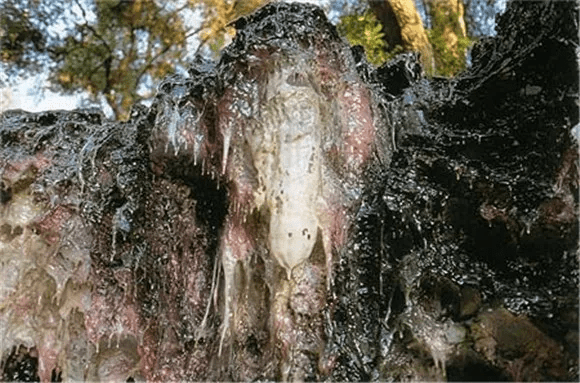
Thirdly, many Yun Sculptures possess a sacred and mysterious quality that transcends ordinary comprehension, exemplified by pieces such as “Mysterious Boulder with Mist.” In these sculptures, a mysterious mist gracefully floats among intricately carved, seemingly shifting, and intriguingly interconnected hanging rock formations. Why are such pieces referred to as sculptures containing mysterious mist? The answer lies in the enigmatic and beautiful scenes depicted within these sculptures—a dance of auspicious mist swirling amid hanging rock formations, creating an ethereal ambiance.

Mysterious Boulder with Mist

These miraculous works can be seen and touched. However, they cannot be created by anyone who is not a being of the highest holiness.

Precious Place

Stepping into this precious place, Surveying the treasures hanging on all four walls, Pure white, inky green, brownish-yellow… A multitude of vibrant colors. Is this the magic of nature? No, it’s the crystallization of wisdom!

The Grand Entrance of Elegance

The grand entrance, adorned with intricate golden lace, Built upon a foundation of gemstones, Various wonders on display, Gleaming with dazzling radiance. The densely woven textures and folds, Alive with vivid details, Eagerly beckon one to step inside, And behold the magical scenes within the hall.

Dawn

This Yun Sculpture masterpiece interprets the natural landscape of dawn with a strong sense of color contrast and intricate contours. The magic of this artwork lies in the seamless transition between night and day, appearing remarkably natural without any artificiality. It is not just a unique Yun Sculpture piece but also a transmission of positive energy.

The shift from darkness to light is not merely a natural phenomenon but also signifies the awakening and transformation of human thought and consciousness. By sincerely experiencing this Yun Sculpture piece inspired by the dawn, you will feel the powerful energy embedded within.

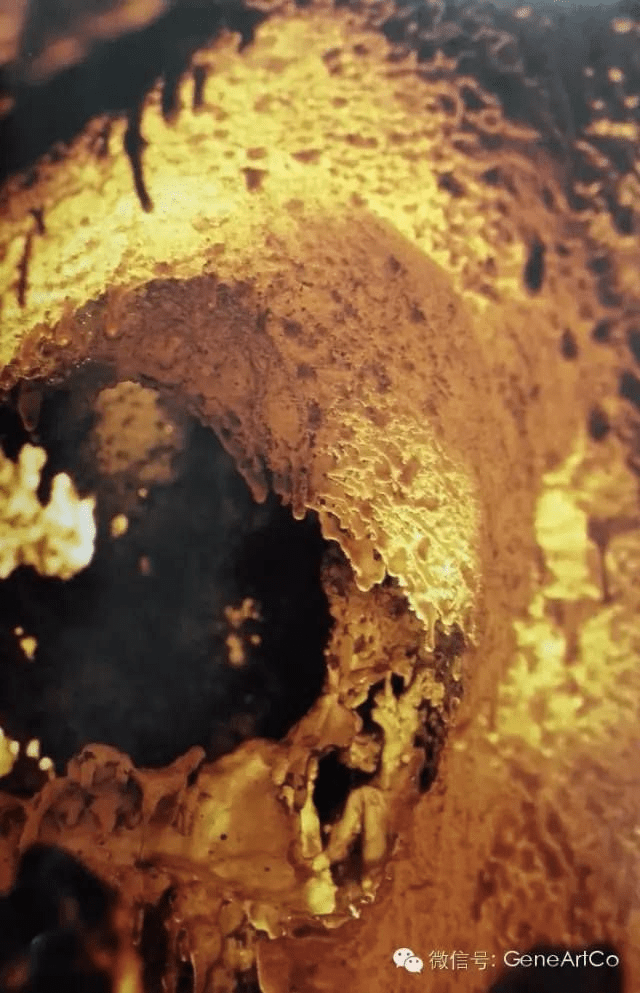
This Yun Sculpture piece resembles an ancient tree hollow, exuding a sense of mystery. Looking into the cave from its entrance, it appears bottomless, much like the human heart—profound and unfathomable.

Therefore, the term “tree hollow” now symbolizes the secrets hidden deep within. Psychologists propose that people need to learn to confide, to release their emotions. This artwork provides us with a window to express the unspeakable depths of our hearts, offering a means to alleviate stress through sharing.

A Rock of Horizontal Charm

Endless changes of spirit and feelings unfold
Mysterious motions envelop wonders untold
Only in heaven is such a presence found
No handiwork of artisan earthly bound

The sculpture A Rock of Horizontal Charm is a masterpiece of Yun Sculpture, embodying the spirit of an art surpassing the beauty of nature, created by H.H. Dorje Chang Buddha III for humankind. Derived from an art form created by H.H. Dorje Chang Buddha III that possesses beauty beyond nature’s, it has attained a realm –never before seen in human history – of artistry transcending nature, originating an art form in this world that is irreplicable by any craftsman or high technology. This amazing beautiful sculpture is currently displayed in H.H. Dorje Chang Buddha III Cultural And Art Museum.

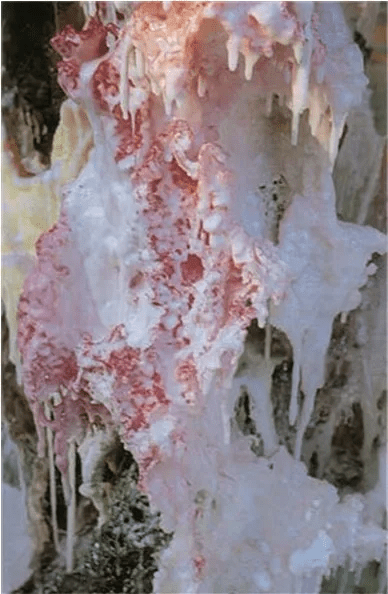
Coral from Heaven

This Yun Sculpture piece exudes a mysterious yet astonishing feeling. The meticulous handling of the subtle details precisely embodies the essence of this artwork. Dubbing it “Coral Descending from Heaven” aptly confirms its precious and distinctive qualities. It’s challenging to fathom how the artist applied colors, especially in certain tiny areas where ordinary individuals would be unable to do so. It is precisely because of such a mysterious, astonishing, and unique piece that it deserves this name.

Unusual Music from Beyond Heaven

Art of the Little Autumn
Hanging Withered Vines Embrace Ancient Stones
Loveliness
Deep Feeling: Vistas Beyond the Tranquil Valley

Discover a captivating array of Yun Sculptures at the permanent exhibition housed at The International Art Museum of America, located in downtown San Francisco. Additionally, immerse yourself in the extraordinary collection at the H.H. Dorje Chang Buddha III Cultural And Art Museum in West Covina, a treasure nestled in the vibrant cultural landscape of the greater Los Angeles area.

Link: https://peacelilysite.com/2023/12/15/yun-sculpture-unparalleled-craftsmanship-in-human-history/

#DorjeChangBuddhaIII #HHDorjeChangBuddhaIII#DorjeChangBuddha#IAMA#InternationalArtMuseumofAmerica#H.H.DorjeChangBuddhaIIICulturalAndArtMuseum#YunSculpture #Craftsmanship

Throughout Countless Eons, Encountering the Profound and Supreme Buddha Dharma is a rare Opportunity

Throughout Countless Eons, Encountering the Profound and Supreme Buddha Dharma is a rare Opportunity

The teachings transmitted by Lord Kashyapa Buddha or possibly even more ancient Buddhas are beyond our reach today. Although the discourses of Shakyamuni Buddha are considered supremely perfect, the Tripitaka that we study now can be said to not entirely capture the original intent of the Buddha’s words. This is because during the Buddha’s lifetime, his teachings were not promptly recorded. All the scriptures were compiled after the Buddha’s parinirvana by a gathering of five hundred arhats. Despite the arhats having transcended the cycle of birth and death and possessing vast supernatural abilities, their own levels of spiritual realization were limited, and there existed a significant gap between their understanding and the Buddha’s complete enlightenment. As a result, there were certain aspects of the Buddha’s teachings that they might not have fully comprehended, leading to misunderstandings or omissions in the interpretation of certain doctrines during the compilation process.

Over the past 2,000 years, Buddhist teachings have encountered distortions and alterations due to mistranslation and misinterpretation of Buddha-dharma by Buddhist patriarchs, eminent monastics, and Buddhist scholars.

During this Age of Dharma Degeneration, H.H. Dorje Chang Buddha III descended to the earthly realm, exhibiting perfect mastery of Exoteric and Esoteric Buddhism, along with unparalleled expertise in the Five Vidyas. The Five Vidyas are what Buddhas and Bodhisattvas do to help living beings. Recognizing the distortions and errors that had infiltrated Buddhist teachings, H.H. Dorje Chang Buddha III corrected the mistakes present in the Buddhist teachings, restoring the authenticity, power, and purity of Buddha’s wisdom and views. 

H.H. Dorje Chang Buddha III has bequeathed over two thousand audio recordings of imparted Dharmas and published invaluable Buddhist books, including “A Monk Expounds the Absolute Truth to a Layperson,” “Commentary on the Prajnaparamita Heart Sutra,” “The Essence of Buddha Dharma,” “Correcting the Treatises of Patriarch Bodhidharma,” “What Is Cultivation?,” “The Supreme and Unsurpassable Mahamudra of Liberation,” and “Learning From Buddha.” H.H. Dorje Chang Buddha III imparted the subtleties of Dharmas in colloquial language so that people living in the 21st century could easily comprehend. They serve as supreme treasures and indispensable resources for Buddhist disciples seeking to escape the sufferings of this world and attain enlightenment. 

The dharma discourses encompasses the essence of the Tripitaka and the esoteric Buddhist scriptures. It covers Buddhist precepts, views, cultivation, and Dharma practices. It covers the whole spectrum of Buddhism regardless of whether it is Hinayana, Mahayana, or Vajrayana.

The audio recordings of dharma discourses given by H.H. Dorje Chang Buddha III begin with the strict progressive levels of cultivation. These discourses contain extremely incisive teachings that concisely incorporate the twelve divisions of the Tripitaka and the ten divisions of the esoteric scriptures without losing the true meaning of the Tripitaka and esoteric scriptures. The topics covered are extremely broad. They vary from analyses of the dharma regarding the Trikaya (Three Bodies) and the Four Wisdoms of a Buddha to teachings on the vajra dharma of the Supreme Division. There are explanations of the true realization and manifestation of the Great Perfection of Ultimate Wisdom. H.H. Dorje Chang Buddha III also possesses the Xian Liang Buddha Wisdom Great Perfection Dharma whereby the disciple experiences and sees the rainbow-body dharma realm state the very day that dharma is transmitted. Nothing is lacking either in theory or practice. Those recordings truly show that H.H. Dorje Chang Buddha III has complete proficiency in exoteric and esoteric Buddhism and perfect
mastery of the Five Vidyas. They also manifest His Holiness’s supreme enlightenment, wonderful prajna wisdom, and holy state of the Buddhas and Bodhisattvas, all which are part of the inner realization vidya. All of the recorded discourses are directed at Buddhas, Bodhisattvas, Arhats, and all practitioners.

The H.H. Dorje Chang Buddha III’s teachings were directly spoken and recorded without any external contamination. Moreover, with the superiority of modern technology, the Buddha’s complete teachings can resound globally in real-time, a phenomenon that was not possible during the Shakyamuni Buddha’s time. This is not a blessing originally destined for beings in the degenerate age, but rather, it is an augmentation of the merit and resources of sentient beings through the immeasurable merit of the original primordial Buddha and the compassionate power of Bodhi. It allows the Buddha’s teachings to echo in this dark and heavily burdened era. How rare and precious it is!

Throughout Countless Eons, Encountering the Profound and Supreme Buddha Dharma is a rare Opportunity

Link:https://peacelilysite.com/2023/12/08/throughout-countless-eons-encountering-the-profound-and-supreme-buddha-dharma-is-a-rare-opportunity/

#DorjeChangBuddhaIII #HHDorjeChangBuddhaIII#DharmaDiscourse

Bridging Realms: Dr. Jim B. Tucker Explores Reincarnation

Bridging Realms: Dr. Jim B. Tucker Explores Reincarnation

In the intricate tapestry of human beliefs, the concept of reincarnation has woven itself through the fabric of traditional Asian cultures for centuries. However, this idea finds little resonance in Western cultures and often faces skepticism from the scientific community. Amidst this cultural and scientific dichotomy, a pioneering exploration is unfolding at the prestigious University of Virginia School of Medicine, led by Dr. Jim B. Tucker, a child psychiatrist with a unique perspective on life after death.

Born and raised in the southern United States, Dr. Tucker’s early life was immersed in the traditional beliefs of the American South. As he embarked on his academic journey, obtaining an undergraduate degree in psychology and specializing in child psychiatry, he encountered the notion of reincarnation with a healthy dose of skepticism. The clash between cultural beliefs, scientific inquiry, and personal skepticism set the stage for Dr. Tucker’s intriguing exploration into the mysteries of existence.

The documentary, highlighted on the Discovery Channel, explores the extensive and worldwide research conducted by Dr. Tucker. The film encapsulates the core of his studies, presenting interviews, case studies, and the profound implications of his findings. Through this visual medium, viewers are welcomed to observe the intersection of traditional beliefs, modern skepticism, and scientific exploration—all in the quest to unravel the mysteries of human existence.

Buddhism holds that life undergoes reincarnation through the six realms. After a person dies, if the karmic conditions accumulated in their past life mature, they may be reborn into the heavenly realm as a deity, or into the realm of asuras, or they may be reincarnated in the human realm. If negative karma, such as killing, deception, or greed, comes to fruition, the individual will inevitably fall into the hell realm and suffer, or they may be reborn in the realms of hungry ghosts or animals to endure suffering.

As for which realm one will be reborn into among the six, it depends on the karmic conditions of their virtuous and non-virtuous actions. Why does reincarnation occur? The fundamental reason lies in the attachment of sentient beings. Attachment gives rise to the confusion of karma, and from this confusion arises ignorance. Due to the endless causes and effects generated by ignorance, various positive and negative karmic forces are produced. It is these karmic forces that determine which realm of existence one will be reborn into.

Bridging Realms: Dr. Jim B. Tucker Explores Reincarnation

Link: https://peacelilysite.com/2023/12/08/bridging-realms-dr-jim-b-tucker-explores-reincarnation/

#Buddhism #KarmicCondition #SixRealm#Reincarnation

Buddha Speaks of Amitabha

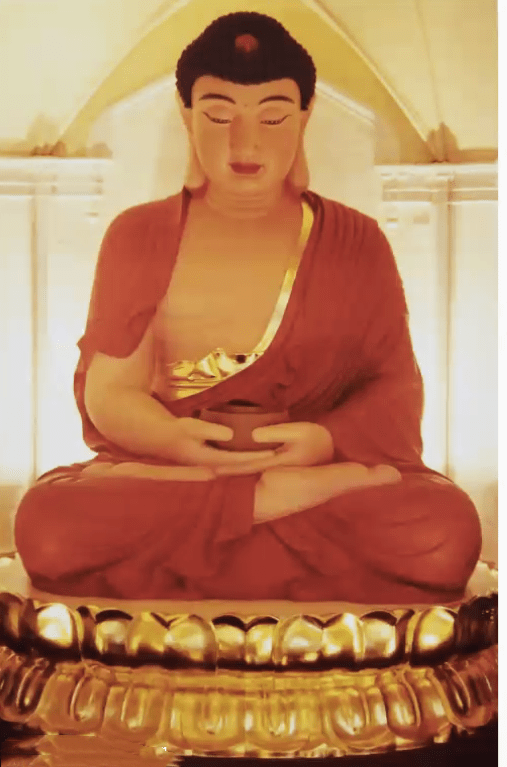
Solemn Amitabha Statue in Hua Zang Si Temple at San Francisco

Buddha Speaks of Amitabha

Once upon a time, it is said that the Buddha resided in Shravasti, within the Jeta Grove, situated in the garden of the Benefactor of Orphans and the Solitary. Accompanying him were a congregation of twelve hundred fifty great Bhiksus, all esteemed arhats whom the assembly recognized, including Elders Sariputra, Mahamaudgalyayana, Mahakasyapa, Hahakatyayana, Mahakaushtila, Revata, Suddhipanthaka, Nanda, Ananda, Rahula, Gavampati, Pindolabharadvaja, Kalodayin, Mahakaphina, Vaddujla, Aniruddha, and others. Additionally, numerous Bodhisattvas and celestial beings, including Ajita Bodhisattva, Gandhastin Bodhisattva, Nityodyukta Bodhisattva, and the chief of gods, Shakra, were present, along with countless beings from various heavens.

During that time, the Buddha addressed Elder Sariputra, saying, “Travel westward across hundreds of thousands of millions of Buddhalands, and you will reach a realm known as Ultimate Bliss. In this land, a Buddha named Amitabha currently imparts the teachings.”

“Sariputra, why is it called Ultimate Bliss? Because every being in this country is free from suffering and enjoys unbounded bliss, hence the name Ultimate Bliss.”

Furthermore, Sariputra, the land of Ultimate Bliss is enclosed by seven tiers of railing, crafted from the four treasures, thus earning its name. Pools of the seven jewels, filled with the eight waters of merit and virtue, grace this land. The pools boast pure bottoms covered in golden sand, with stairs of gold, silver, lapis lazuli, and crystal on each side. Raised pavilions, adorned with precious materials like gold, silver, lapis lazuli, crystal, mother-of-pearl, red pearls, and carnelian, grace the surroundings. Within these pools, lotuses with hues resembling carriage wheels bloom, emitting subtle, wonderfully fragrant, and pure scents.

“The realization of the land of Ultimate Bliss is thus adorned with merit,” Sariputra, the Buddha continued.

Moreover, in this Buddhaland, harmonious heavenly music perpetually resonates, and the ground is composed of yellow gold. During the six periods of day and night, a rain of mandarava flowers descends, and each morning, the inhabitants of this land offer myriad wonderful flowers to countless Buddhas in all directions. After their meals, they leisurely stroll through their homeland.

Sariputra, the land of Ultimate Bliss is abundantly adorned in this way.

Furthermore, rare and exquisite varicolored birds, including white cranes, peacocks, parrots, egrets, kalavinkas, and two-headed birds, inhabit this land. In the six periods of the day and night, these flocks produce melodious and elegant sounds, proclaiming profound teachings such as the five roots, the five powers, the seven Bodhi shares, and the eight sagely way shares. When the inhabitants hear these sounds, they become mindful of the Buddha, the Dharma, and the Sangha.“Sariputra, do not assume these birds are karmic retribution. In this Buddhaland, there are no three evil ways of rebirth; in fact, not even the names of these ways exist. Amitabha Buddha, desiring to widely spread the Dharma sound, created this multitude of birds through transformation.”

The Buddha continued to describe the enchanting features of the land of Ultimate Bliss, its jeweled trees producing subtle and wonderful sounds when the soft wind blows. As these descriptions unfolded, Sariputra listened attentively, absorbing the profound beauty of this Buddhaland.

After detailing the splendors of the land, the Buddha turned to Sariputra and asked, “Why do you think this Buddha is called Amitabha?”

“The brilliance of Amitabha Buddha’s light is immeasurable, illuminating the lands of the ten directions without hindrance. He is called Amitabha for this reason. Furthermore, the lifespan of Amitabha Buddha and his people extends for countless kalpas, making him worthy of the name ‘Amitabha.’ Ten kalpas have passed since Amitabha attained Buddhahood.”

As the Buddha spoke, Sariputra gained deeper insights into the infinite virtues of Amitabha Buddha and the extraordinary qualities of the land of Ultimate Bliss.

The text continues to explore the presence and teachings of other Buddhas in different directions, emphasizing their encouragement for all living beings to believe, praise, and hold in reverence the inconceivable merit and virtue of the sutra.

Finally, the Buddha urged Sariputra and all present to have faith and make the vow to be born in Amitabha’s country, emphasizing the profound benefits and the irreversible attainment of anuttara-samyak-sambodhi for those who make this vow.

Upon concluding his teachings, the Buddha witnessed Sariputra, the bhiksus, gods, humans, and other celestial beings joyously receiving his words. The assembly, filled with reverence, bowed and withdrew, having absorbed the wisdom imparted by the Buddha.

Buddha Speaks of Amitabha

Link: https://peacelilysite.com/2023/12/06/buddha-speaks-of-amitabha/

#Amitabha

Source: wisdomtea.org/2023/11/30/buddha-speaks-of-amitabha/

The Abbess of Hua Zang Si– Venerable Ruo Hui RuZun

The abbess of Hua Zang Si is Venerable Ruo Hui RuZun (Golden Button Stage I). She is a disciple of H.H. Dorje Chang Buddha III. She is deeply and broadly proficient in the sutras, abides by the precepts with pure cultivation, upholds correct views, and possesses high and profound virtue and conduct.

Driven by her endowed wisdom and firm aspiration, Venerable Ruo Hui RuZun started learning Buddhism since her childhood. While she was a young person facing a splendid future, Venerable Ruo Hui RuZun decided without hesitation to abandon worldly life to become a monastic practitioner. She respectfully quested for the practice of Buddhism, studied the sutras deeply, and cherished the goal of benefiting living beings in her cultivation and practice. Additionally, she demonstrated outstanding virtue and talent in her diligent study and research in the academic arena and received a Master’s degree from the Department of Philosophy of Taiwan University. She made a vow to dedicate her life to grandly propagating Buddha-dharma and broadly saving living beings. She served as the dean of the Chien Fo Shan Girl Buddhist College in Taiwan in her early years and have been continuously making contributions to the education of Buddhist monastics. However, Venerable Ruo Hui RuZun was deeply aware of the widely prevalent chaotic phenomena in the current Buddhist world, such as confusing views, non-unified sects and schools advocating their own tenets, miscellaneous teachings that are complex but incomplete, and promoting false doctrines as authentic Buddhism. Consequently, pious Buddhist disciples are searching and questing in vain and still unable to learn the true dharma of the Tathagata. Their lifetimes are thus wasted! Therefore, Venerable Ruo Hui RuZun was continuously concerned about this situation day and night and eagerly beseeched to find the genuine lineage from the Buddha that transmits the true teachings of the Tathagata.

In 1996, Ruo Hui RuZun had the good fortune to listen respectfully to the recorded dharma discourses expounded by H.H. Dorje Chang Buddha III. At that time, she sensed strongly and received the bright manifestation of the supremely and perfectly enlightening Buddha-dharma from His Holiness the Buddha! Later, guided by the karmic affinity to true Buddha-dharma, she fulfilled her wish to become a disciple of H.H. Dorje Chang Buddha III. Since then, she eagerly and respectfully listened to the recorded dharma discourses expounded by His Holiness the Buddha day and night. Through studying deeply with reference to the sutras, she eventually became enlightened by the teaching! She also received a holy inner-tantric initiation from the Buddha Master, which enabled her to personally realize the absolute truth of Buddha-dharma as if seeing the blue sky after pushing the blocking dark clouds aside. Since then, Ruo Hui RuZun abided by the teachings to benefit living beings with loving compassion in cultivation and practice. Shortly after that, she was delighted to learn that the Buddha Master was grandly publicizing and propagating the true dharma of the Tathagata in the Western world. After deep thinking and careful pondering, Ruo Hui RuZun decided to resign from the duty of the Dean of the Buddhist College to take up the mission to serve living beings. She traveled across the ocean to the United States to follow her Buddha Master, H.H. Dorje Chang Buddha III. She piously and deeply cultivated in the authentic lineage of Buddhism and engaged in the undertaking of propagating the true dharma of the Tathagata to benefit living beings.

Through the many years, Ruo Hui RuZun received true Buddha-dharma transmitted by H.H. Dorje Chang Buddha III in person and realized the key attainment of the dharma. In the dharma mandala, she manifested deeply cultivated power and superior state of realization. Once, she fortunately attended a grand and magnificent Vajra obstruction-removing dharma assembly. At that time, dharma masters and abbots of many monasteries and rinpoches were present. When stepping forward to receive empowerment, almost all of them were subdued by the power of the Buddha-dharma to show a suffering appearance and unable to support themselves by their power of concentration. Only Ruo Hui RuZun remained firmly unperturbed and successfully went through the holy power of Samadhi. She handled the situation magnificently and perfectly by calm without even any change in her facial expression. For that, she was praised by H.H. Dorje Chang Buddha III! Additionally, Ruo Hui RuZun also received a dharma of state practice transmitted by the Buddha Master in person and attained the accomplishment of crown-opening within two hours.

Since the grand opening of Hua Zang Si in December 2004 to now, Ruo Hui RuZun has served at the positions of prior (warden), deputy abbess, and abbess at this temple, which is the first temple of true dharma of Buddhism established in the Western world by H.H. Dorje Chang Buddha III. Since the temple’s establishment, her responsibilities cover a wide range of the temple’s dharma affairs and operations including various dharma assemblies, training and education of the monastic personnel, defining the system and rules to manage the temple, and so on.

With her abundant and solid knowledge in the theory of Buddhism and the teaching of practicing in silence, experience in managing and operating a temple, as well as deeply cultivated power in meditative concentration, she continuously serves since the beginning as the karma monastic master in awarding the complete set of grand precepts through three dharma assemblies and the professor/teacher of various courses in precepts, rituals, meditation, group practice, education of monastics and others at the Academy of Exoteric Buddhism of Hua Zang Si. She also conducted teaching and training at Buddhist institutions in the United States and overseas. Many of the disciples she taught have now become dharma masters or monastic practitioners. Actually, quite a number of them have even become excellent managerial personnel at some temples in different countries.

Ruo Hui RuZun consistently maintains a low-key demeanor in her cultivation and practice, exemplifying patience in the pursuit of her significant mission. She remains humble and modest, avoiding self-promotion or publicity. Through her words and actions, she serves as an exemplary teacher for Buddhist disciples, embodying the principles of loving compassion. Devoting herself quietly to the welfare and joy of sentient beings, she seeks enlightenment for both herself and others.

Adhering to the teachings and true dharma of H.H. Dorje Chang Buddha III, Ruo Hui RuZun upholds principles, follows rules rigorously, and engages in concrete cultivation to guide disciples on the path of accomplishment and liberation. She is an accomplished and eminent Buddhist monk whose example we should emulate and learn from.

Since September 2015, Ruo Hui RuZun has officially served as the abbess of Hua Zang Si. Recognizing the immense responsibility entrusted to her, especially given that Hua Zang Si is not an ordinary temple but a true dharma temple established in the Western world by H.H. Dorje Chang Buddha III, her Buddha Master, she is acutely aware of the need for unwavering commitment. Determined to lead the monastics and lay followers, she strives to transform Hua Zang Si into a temple faithfully practicing the teachings of H.H. Dorje Chang Buddha III and Sakyamuni Buddha, benefitting and nurturing sentient beings. In pursuing this mission, Hua Zang Si aims to contribute tangibly to compassion, happiness, peace, and joy in America and worldwide, fostering the perfect good fortune and wisdom, liberation, and accomplishment of living beings. The temple is committed to meeting the high expectations of Buddhas, Bodhisattvas, and sentient beings alike.

The Abbess of Hua Zang Si– Venerable Ruo Hui RuZun

Link:https://peacelilysite.com/2023/12/01/the-abbess-of-hua-zang-si-venerable-ruo-hui-ruzun/

#DorjeChangBuddhaIII #HHDorjeChangBuddhaIII#HuaZangSi#HolyManifestation #RuoHuiRuZun

#Abbess #Temple

Experience and Lessons from the Buddha by Zhaxi Zhuoma Rinpoche

I have followed this Buddha – H.H. Dorje Chang Buddha III, before I even knew He was a Buddha, because I wanted to learn the Buddha-dharma of Shakyamuni Buddha; the dharma that can enlighten and enable one to attain liberation from samsara. I am grateful to all the other teachers who helped me on this path, but I have come to know that H.H. Dorje Chang Buddha III is truly a holy being and has the Buddha-dharma that can enable us to become Bodhisattvas and eventually Buddhas. I don’t see that anywhere else, but I do see a lot of erroneous and even evil practices that do not provide the power of the dharma that Shakyamuni Buddha brought to this world. I am alarmed at the secularization of Buddhism that has occurred in the West. It would seem that much of what is presented as Buddhism today is mainly a form of mindfulness that is a method to develop concentration, reduce stress, and achieve serenity. These are all worthy by-products and useful, but fall far short of the wonders and marvelous existence taught by Shakyamuni Buddha. People do not believe in the power of the Buddha-dharma, because they have never experienced or seen it.

 I would like to share two true stories about my wonderful Buddha Master, H.H. Dorje Chang Buddha III:

Some time ago my Buddha Master, asked me to practice the Modesty and Patience Dharma taught by Shakyamuni Buddha. The Buddha Master taught me how to respect persons lower than myself and told me to prostrate to those who were lower than me in their cultivation. To tell you the truth this bothered me. How could I possibly prostrate to them? The Buddha Master told me that in His past lives Shakyamuni Buddha prostrated to everyone. Shakyamuni Buddha practiced in this way to cut off self-attachment and practice forbearance.

One night at Hua Zang Si, a rinpoche attempted the Hidden Mani Stone Selection Dharma. After finding the first stone, he tried for a long time and was never able to locate the second stone  that we had hidden. However, I was able at that time to see them. Because he found one of the mani stones, the temple arranged for me to prostrate to him at the end of the Dharma Assembly. To tell you the truth, my first reaction was resentment—I was almost even angry. Based on my own practice, how could I prostrate to this person who had not been able to successfully complete the test, when I could have easily done so?  When this thought just appeared, I saw my Buddha Master teaching me forbearance again and I was very ashamed. However, several days passed, but I was still bothered by this, so I went to see my Buddha Master and asked: “How can I prostrate to a person who doesn’t have my vajra power in front of so many people?” My Buddha Master asked me, “Did you forget the true story I told you about Shakyamuni Buddha? Putting yourself as low as possible is the true way to true cultivation.” At the same time I saw that my Buddha Master had the best understanding in all of esoteric and exoteric Buddhism and had complete mastery of all five of the vidyas. My Buddha Master is a great Dharma King. At that time His identity as a Buddha had not yet been announced to the public, but we already knew that He was a great Dharma King. How could I not listen to His teachings?

I thought for some time, just which great Bodhisattva is my Buddha Master? Then I had a shocking experience that I have not shared publicly before. I actually saw my Dharma King Master drastically change His appearance in a very short period of time. Even though my Buddha Master had predicted that He would on such and such a day take on the negative karma of others and would not be available to meet the public, I was not prepared for what I saw. He appeared on the predicted day looking very ugly and old—His face was bloodied as if He had just been severely beaten. His eyes were swollen and half closed! There were many people standing around, but they seemed to be accepting of this condition. I had been thinking that,  because of His accomplishments in both exoteric Buddhism and esoteric Buddhism and the Five Vidyas, my Master must be a Buddha, but how could this be true when He looks so old and decrepit? I could barely stand looking at my beloved Dharma King Master when He was like this. Remember, at that time we did not know that our Dharma King Master was a Buddha. In less than an hour, I looked again, and my Buddha Master had changed to a beautiful young man. I was shocked. Oh, my God. How could this be? My Master is a Buddha! What I was thinking is true! He is not just a Bodhisattva, but a Buddha. I looked around, but no one else was shocked or showing any reaction at all to what had just happened. I looked again at my Master and He just smiled. He put His finger to His mouth and quietly said “shhh” and I realized that no one else had seen this transformation, but I knew this fact about the Buddha. 

These photos were true records of the holy miracle Buddha Dharma, they are now displayed at Hua Zang Si, at San Francisco

Another disciple of H.H. Dorje Chang Buddha III, bhiksuni Shi Zheng Hui, has documented a genuine personal account of a sacred transformative experience in the book titled “Revealing The Truth: What Is the Truth about Reversing An Old Age Back to Youth?

Experience and Lessons from the Buddha by Zhaxi Zhuoma Rinpoche

Link:https://peacelilysite.com/2023/12/01/experience-and-lessons-from-the-buddha-by-zhaxi-zhuoma-rinpoche/

#DorjeChangBuddhaIII #HHDorjeChangBuddhaIII#HuaZangSi#HolyManifestation#ReversingAn OldAgeBacktoYouth#RevealingTheTruth#Tripitaka#BuddhaDharma#Zhaxi Zhuoma Rinpoche

Religions should be Tolerant, Compassionate, and Loving

When Shakyamuni Buddha first propagated the true teachings of Buddhism, there were already numerous religions in India and its neighboring countries. Shakyamuni Buddha, with his unparalleled wisdom, tolerance, and compassion, inspired many followers of other religions to convert to Buddhism. Venerable Upali was one such devotee who, deeply moved by the Buddha’s wisdom, became an exemplary disciple of Shakyamuni Buddha.

Upāli, residing in North Magadha, was a wealthy and talented young man and a major supporter of the Jains under the leadership of Mahāvīra. The Jain ascetics lived a very austere life, even going without clothes, a lifestyle admired by many.

In the spring of that year, the Buddha visited Upāli’s mango grove in Nālandā, where he was received by the ascetic Upavāṇa, a faithful follower of Mahāvīra. In the conversation with Upavāṇa, the Buddha learned that Jain followers never mentioned mental defilements, focusing only on actions constituting offenses.

In a dialogue with the Buddha, Upavāṇa revealed that Jain practitioners discussed three types of offenses: bodily, verbal, and mental. When asked which was considered the gravest, Upavāṇa asserted that bodily offenses held the highest severity.

The Buddha countered this view, asserting that, according to the path of awakening, unwholesome thoughts are the most severe since they are more fundamental than actions. This principle, though stated by the Buddha, had to be reiterated thrice before Upavāṇa accepted it.

Following this, Upavāṇa left and conveyed the Buddha’s words to Mahāvīra, who found the Buddha’s perspective erroneous, emphasizing the seriousness of bodily actions.

During this discussion, several disciples, including Upāli, were present. Upāli, having brought a friend from Vājī, expressed his desire to visit the Buddha, intending to challenge the Buddha’s stance.

Although Upavāṇa endorsed Upāli’s initiative, Mahāvīra was hesitant, fearing Upāli might be swayed. Nevertheless, Upāli was determined to meet the Buddha.

Upon meeting the Buddha, Upāli was captivated by his articulate discourse. The Buddha used seven analogies to elucidate why unwholesome thoughts are fundamentally more significant than unwholesome actions.

Aware of the Jains’ strict observance of the non-killing precept, the Buddha asked Upāli if accidentally killing insects constituted an offense. Upāli, echoing Mahāvīra’s teaching, responded that unintentional killing is not an offense.

The Buddha then questioned Upāli’s certainty in the Jain stance. Upāli confidently replied, referring to Mahāvīra’s teachings. The Buddha, smiling, acknowledged that his initial analogy should have sufficed.

Impressed by the Buddha’s wisdom, Upāli expressed his admiration and sought to become a disciple. The Buddha, advising him to contemplate thoroughly, accepted Upāli only after his sincere conviction.

Upon Upāli’s decision to join the Buddha’s order, the Buddha emphasized that while Upāli had shifted allegiance, he should continue supporting the Jains.

As more people in Magadha and Kosala embraced the path of enlightenment, monks visiting Śrāvastī reported this joyful news to the Buddha. In response, the Buddha reminded them that the crucial factor was the diligent practice of the monks, not merely the growth or decline in the number of followers. He encouraged an equanimous outlook towards success and failure, happiness and unhappiness.

The teachings of Shakyamuni Buddha echo through time, emphasizing the compatibility and mutual respect of religions. The contemporary Buddha, H.H.  Dorje Chang Buddha III , extends this ethos by praising figures like Jesus Christ as great holy beings. In Dharma discourses, His Holiness calls for global cooperation, transcending religious, cultural, and national boundaries. He underscores the importance of treating each other as dear relatives, a collective effort necessary for the peace and auspiciousness of the world.

Religions should be Tolerant, Compassionate, and Loving

Link: https://peacelilysite.com/2023/11/24/religions-should-be-tolerant-compassionate-and-loving/

#DorjeChangBuddhaIII #HHDorjeChangBuddhaIII #ShakyamuniBuddha #VenerableUpali

On Right View

On Right View

Translated from the Pali by Thanissaro Bhikkhu

Residing in Savatthi, Ven. Kaccayana Gotta approached the Blessed One and, upon arrival, respectfully bowed and took a seat to the side. While seated, he inquired of the Blessed One, “Lord, it is often spoken of as ‘Right view, right view.’ To what extent does right view prevail?”

The Blessed One replied, “In general, Kaccayana, the world is understood through the dichotomy of existence and non-existence. However, when one comprehends the world’s origin with accurate discernment, the concept of ‘non-existence’ in relation to the world does not arise. Similarly, when one perceives the cessation of the world as it truly is, the notion of ‘existence’ in reference to the world does not manifest.

“By and large, this world is ensnared in attachments, clingings, and biases. Yet, an individual such as this does not entangle themselves in these attachments, clingings, fixations of awareness, biases, or obsessions. Neither do they identify with a self. They harbor no uncertainty or doubt, recognizing stress simply as arising when it does and passing away when it must. In this, their understanding stands independent of others. It is to this extent, Kaccayana, that right view exists.

“The belief in ‘Everything exists’ represents one extreme, while the stance of ‘Everything doesn’t exist’ constitutes another extreme. The Tathagata, avoiding these two extremes, imparts the Dhamma through the middle path: Ignorance serves as a condition for fabrications. Fabrications, in turn, condition consciousness. From consciousness arises name-and-form, leading to the development of the six sense faculties. The six sense faculties then give rise to contact, which begets feeling. Feeling, as a requisite condition, sparks craving, and craving leads to clinging and sustenance. From clinging and sustenance arises becoming, culminating in birth. Birth, as a requisite condition, sets in motion the cycle of aging and death, along with sorrow, lamentation, pain, distress, and despair. Such is the origination of this entire conglomerate of stress and suffering.

“Now, with the complete fading and cessation of that very ignorance, the cessation of fabrications follows. The cessation of fabrications results in the cessation of consciousness, leading to the cessation of name-and-form, and so on. This domino effect leads to the cessation of the entire process, bringing an end to aging and death, sorrow, lamentation, pain, distress, and despair. Such is the cessation of this entire mass of stress and suffering.”

Link: https://wisdomtea.org/2023/11/09/on-right-view/

Intoxicatingly Beautiful Abstract Color Paintings

Flying Toward a Buddha Paradise
Artist: H.H. Dorje Chang Buddha III

Art Works are Fused with the Essence of the Universe, Nature, and the Earth

When you first set your eyes upon these supernatural abstract color paintings, the vibrant and radiant hues of red, yellow, blue, white, and black burst forth, dancing like the tumultuous waves of a river stretching for thousands of miles. Captured in the delicate tips of the brush, their brilliance transcends the ordinary, possessing a gentleness yet resolute quality. The diverse and exquisite colors mutually nourish and elevate each other, creating a masterpiece that can only be described as ingenious, reaching a realm where colors take on an ethereal quality. The experience is beyond description—elegant and comforting.

These impressionist paintings have attained a level of mastery where even a small fragment isolated from the complete artwork stands as an exquisite impressionist painting on its own. They convey a dreamy, illusory state, and each tiny section has the potential to be enlarged, creating a distinct and aesthetically pleasing painting.

Gazing Upon a World Beyond the Stars

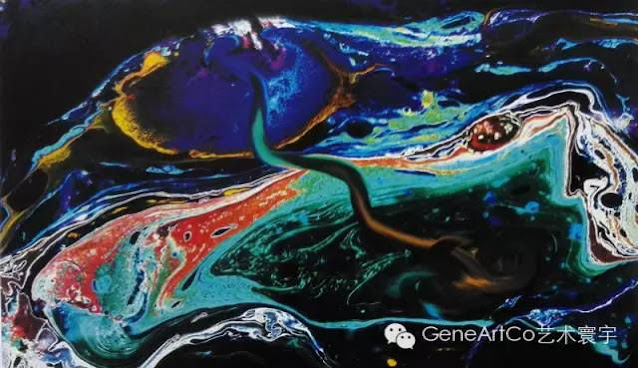
This piece has a sci-fi movie special effects vibe, it doesn’t look like a scene that exists on Earth; rather, it resembles the appearance of an extraterrestrial planet observed through high-tech instruments. The entire artwork is filled with a mysterious atmosphere, offering limitless imagination and excitement.

Marvelous Spectacle of a Mystical and Illusory Island

This artwork is vibrant and three-dimensional. When appreciated from a diagonal perspective, the pattern in the upper right corner resembles a series of color-changing snakes, coiling in the air, creating a dazzling and visually delightful experience. The pattern in the lower left corner appears like slowly flowing mud, transparent and sparkling under the sunlight. The dividing line in the middle adds a fantastical element, resembling a peculiar light that seems as though it could disappear in the next second, defying verbal description.

The fantastical imagery of this artwork brings a sense of joy and, simultaneously, fills one with fantasies and aspirations for the future. It is a lively and dynamic masterpiece that exudes a peculiar power.

Long Green Wall

Magnificent and grand, that was my first impression upon seeing this artwork. Despite its modest size, this piece is brimming with the profound culture and history of China’s five thousand years. Resembling the Great Wall, this artwork is a marvel, showcasing the artistry and craftsmanship of the H.H. Dorje Chang Buddha III from an artistic perspective.

Elegant Purity of Beautiful Stone

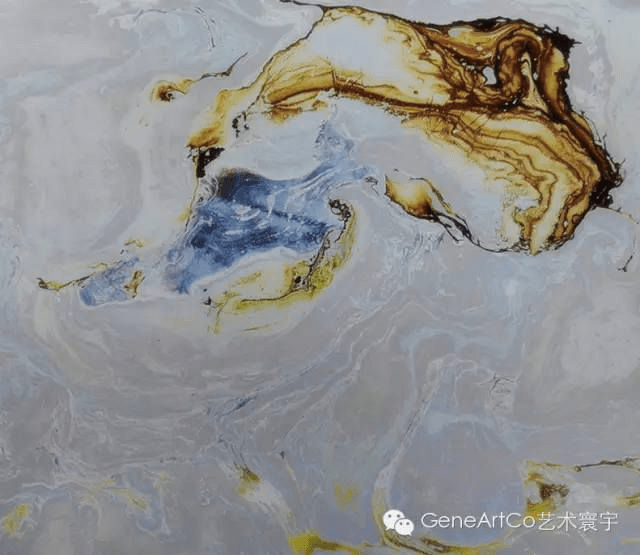
The highlight of this artwork lies in H.H. Dorje Chang Buddha III‘s skillful combination of intricate colors, avoiding any hint of vulgarity and instead exuding a sense of pure elegance and nobility. The arrangement of patterns and textures in the artwork, seemingly casual brushstrokes, actually reflects H.H. Dorje Chang Buddha III‘s ingenious conceptualization and profound artistic foundation, presenting a harmonious order within apparent chaos.

The Nobility of Petrified Red Trees

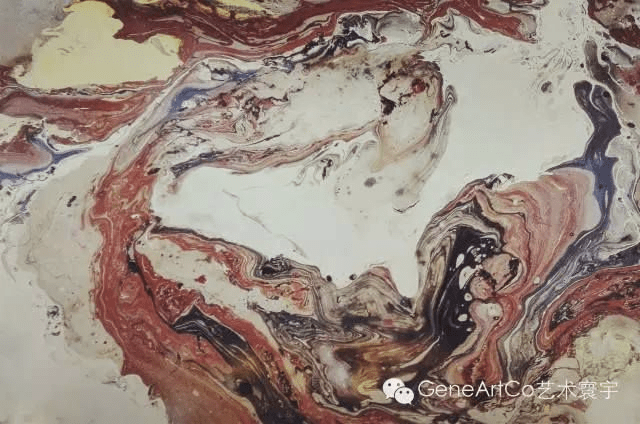
At first glance, this artwork appears to be an oil painting. Upon closer observation, it evokes astonishment. It is not merely a flat painting but more akin to a lifelike redwood fossil.

Every texture is distinctly visible, and every detail is vividly realistic. H.H. Dorje Chang Buddha III, with the stroke of a brush, captures the original form of the redwood in the guise of a fossil, rendering this piece of art even more mysterious and noble.

This artwork employs strong color contrasts, making bright colors even more vibrant and dark colors even deeper. The enchanting purple patterns, at times intensified and at times subdued, infuse the composition with a sense of magic. It is as if a colossal dragon is about to break free from the shackles of darkness, re-emerging into a brilliant radiance.

Splash-Color Embroidery of Moutains and Rivers

This is a splash-ink painting that combines elements of oil painting style. The innovative approach and exquisite brushwork truly captivate the viewer. Looking at this piece, one can almost hear the echoes in the mountains, see the surging river waves, smell the freshness of nature, taste the sweetness of mountain springs, and feel the harmony between humans and nature.

Boundless Land as Beautiful as Colorful Embroidery

The artwork, dominated by blue tones, incorporates elements of Western and abstract painting. At first glance, it resembles a vast ocean spanning the globe. It delivers a visual impact and a spiritual resonance. Take a moment to immerse yourself in this majestic and awe-inspiring scenery.

These intoxicatingly beautiful Supernatural Abstract Color Paintings form a perfect world constructed by colors. Devoid of concrete worldly forms, it is a realm purely defined by color—shaping, expressing, and embodying itself through hues. Color is both its form and its essence, permeating with a captivating aura. These colors, guided by the hand of the H.H. Dorje Chang Buddha III, seamlessly converge into a marvelously enchanting spectrum. The atmosphere is lively, the scenes blossom like flowers, bold and fierce as the roaring sea, yet upon closer inspection, they reveal nuanced expressions, refined in the minute details. In discussing the extraordinary skill of the H.H. Dorje Chang Buddha III in Western painting, it’s almost an understatement to compare it to the Buddha.

You can discover a selection of the exceptionally charming paintings in the permanent exhibition at The International Art Museum of America, situated in downtown San Francisco.

Intoxicatingly Beautiful Abstract Color Paintings

Link:https://peacelilysite.com/2023/11/16/intoxicatingly-beautiful-abstract-color-paintings/

 #DorjeChangBuddhaIII #HHDorjeChangBuddhaIII#DorjeChangBuddha#IAMA#InternationalArtMuseumofAmerica#Supernaturalabstractcolor#OilandAcrylicPaintings