Many Forms unlimited Blessings From Guan Shi Yin (Avalokitesvara) Bodhisattva

Guan Shi Yin (Avalokitesvara) Bodhisattva is a revered figure in Buddhism who has achieved the level of marvelous enlightenment, possessing the same qualities as a Buddha. According to sutras, Guan Shi Yin Bodhisattva is believed to be the manifestation of an ancient Buddha called True Dharma Brightness Tathagata and is considered the king of great compassion. The Bodhisattva tirelessly works day and night to help all beings in the Three Spheres, accumulating boundless merit.

Guan Yin is one of the most widely depicted figures in Chinese temples, with thousands of different incarnations or manifestations. Typically portrayed as a graceful woman dressed in flowing white robes and a hood, carrying a small vase of holy dew, she stands tall and slender, emanating selflessness and compassion. She may be depicted in various forms, such as seated on an elephant, standing on a fish, nursing a baby, holding a basket, or with multiple arms and heads. Her main goal is to alleviate the suffering of all beings.

Guan Yin is often portrayed riding a mythological animal known as the Hou, similar to a Buddhist lion, symbolizing her divine power over nature. She is usually depicted barefoot, while on public altars, she is flanked by two acolytes: a barefoot, shirtless youth known as Shan-ts’ai (Golden Youth) on her right, and a demure maid known as Lung-nü (Jade Maiden) on her left, holding her hands together inside her sleeves.

Guan Yin’s birthday is celebrated on the nineteenth day of the second lunar month, which falls on March 10th this year. She is considered a model of Chinese beauty, and being referred to as a “Guan Yin” is the highest compliment for grace and loveliness.

There are many legendary stories and folk tales about Guan Yin, which have been collected and passed down through generations.

Willow Guan Yin, left hand has a jar containing pure water, and the right holds a willow branch.

According to legend, during a period of severe drought and corruption in the Zhongzhou area of China, Guanyin Bodhisattva came to enlighten the people and show them the path to righteousness. With her compassion for all living beings, she took out willow branches from a jade bottle and poured nectar into the fields. Suddenly, it rained heavily, relieving the drought and bringing new life to the parched land.

The Willow Guan Yin’s willow branch represents her ability to heal and soothe, while the jar of pure water symbolizes her power to purify and cleanse. Her actions during the drought represent her willingness to help those in need and her desire to alleviate suffering. Her message is clear: no matter how dire the circumstances, there is always hope and a chance for redemption.

Guan Yin on a Dragon

According to legend, a fearsome monster with the head of a dragon and the body of a turtle that dwelled in the East China Sea. This monster was known to cause great havoc and destruction, leaving the people in constant fear and anxiety.

The people’s prayers were answered when Guanyin Bodhisattva heard of their plight. Being the embodiment of compassion, Guanyin Bodhisattva arrived in the East China Sea, he rode on the back of the dragon-headed monster, showing no fear, and subdued it with his magic power. From that day on, the people lived in peace and safety, free from the monster’s threat.

In honor of Guanyin Bodhisattva’s courageous act, the people erected a statue of him standing on the dragon-headed monster, enshrining it as a symbol of his boundless magic power and compassion for all living beings.

YouXi GuanYin

According to legend, Guanyin Bodhisattva traveled to Luoyang City and took out a precious mirror. She claimed that as long as people paid three Wen coins, they could see their past and future lives from the mirror. The people eagerly lined up and took turns looking into the mirror. They were all surprised to see their past and future lives reflected back at them.

However, when Guanyin Bodhisattva revealed her true form, the people saw different expressions on her face. Some saw an angry face, some saw a fierce face, and some saw a joyful face. The people were confused by these different expressions.

Guanyin Bodhisattva warned all living beings not to think that their evil deeds would go unnoticed. She urged them to do more good deeds instead. It is absolutely true that one cannot escape karma. Evil will be rewarded with evil, and good will be rewarded with good.

Guan Yin with Fish Bucket

According to legend, there was a time when people living on the coast of the East China Sea lacked manners and etiquette. Guanyin Bodhisattva, being the compassionate deity that she is, decided to intervene and provide enlightenment to these people.

In order to do so, Guanyin Bodhisattva transformed herself into a beautiful fisherwoman and began to teach the people about the importance of etiquette and manners. She also promised to marry whoever could recite the Buddhist scriptures that she taught them.

A young fisherman named Ma Lang was determined to gain the Bodhisattva’s favor and started to diligently study the scriptures. Eventually, his hard work paid off, and he was able to recite the scriptures flawlessly. Impressed by his dedication, the Bodhisattva decided to imparted him with further enlightenment. At the wedding night, the Bodhisattva left the house with sudden death.

Ma Lang realized the fishwoman was actually Guanyin Bodhisattva, he carved a statue of Bodhisattva looking like a fisherwoman and enshrined the statue in his house.

Guan Yin on One leaf

According to the legend, Dogen, a Japanese monk who had just returned from studying in China, found himself in the middle of a terrible storm while sailing near the coast of Nanming. Fearing for his life, he prayed silently to Avalokitesvara, the Bodhisattva of compassion, to protect him from the storm.

Suddenly, he saw a miraculous sight. A beautiful and serene figure of Avalokitesvara appeared riding on a lotus leaf, floating on the sea. The Bodhisattva’s presence calmed the storm, and the wind and waves stopped. Dogen was filled with wonder and gratitude, and he knew that he had witnessed a great miracle.

After he landed safely, Dogen decided to commemorate this miraculous experience by creating a statue of Guanyin as he had seen her on the lotus leaf. He had the statue enshrined in the Nanming Guanyin Temple, where it became an object of veneration for countless devotees.

one thousand-armed and one thousand-eyed Guan Yin

Avalokitasvara, Guan Shi Yin in Chinese, means the Perceiver of World’s Sounds. The Lotus Sutra says: “Perceiver of the World’s Sounds, heavenly voice, the voice of the sea’s tide—magnificent, rich and harmonious surpassing all worldly sounds.” The bodhisattva always help all beings in danger and distress and is willing to bear the pain of all beings. If we hold the bodhisattva in our hearts and call on her sincerely, she will always respond.

May the greatly loving and compassionate Namo Guan Shi Yin Bodhisattva bless all beings!!!

Namo Guan Shi Yin Bodhisattva!!!

Many Forms unlimited Blessings From Guan Shi Yin (Avalokitesvara) Bodhisattva

LInk: https://peacelilysite.com/2023/03/08/many-forms-unlimited-blessings-from-guan-shi-yin-avalokitesvara-bodhisattva/

#GuanShiYinBodhisattva#Buddhism#Buddha#BuddhaAmitabha#Onethousand-armedandone thousand-eyed#legend#Samsara#Mercy#Compassion

https://k.sina.com.cn/article_1645770313_62187649019010qtk.html?from=cul, https://www.holymtn.com/homepage/gods-goddesses/quan-yin-goddess-mercy/
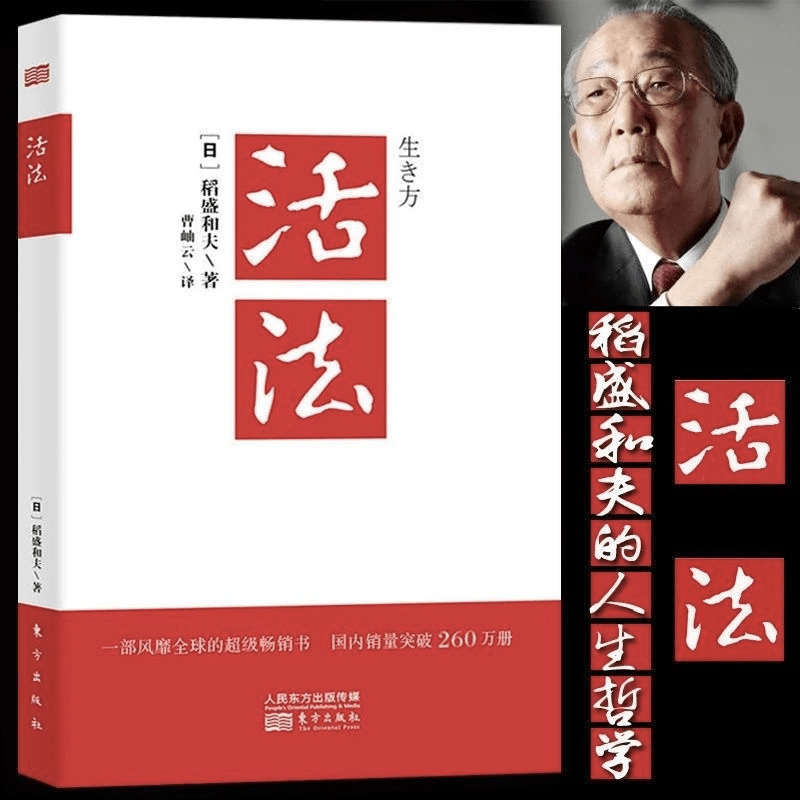
Live Act: Philosophy of Life of Kazuo Inamori “Respect the Divine and Love People”

Kazuo Inamori, born in 1932 in Kagoshima, Japan, was one of seven children. During his elementary school years, he showed a strong interest in science and machines, particularly those in his father’s printing shop. However, in the sixth grade, he contracted tuberculosis, which led him to read a book by a Buddhist monk, sparking his interest in religion. When Inamori was young, his father took him to see a monk who advised him to recite “Namo Amitabha Buddha” every day. He has been chanting it every day since then without interruption.

According to Inamori, the initial 20 years of life should be dedicated to learning, growing, and preparing for entry into society, while the following 40 years from age 20 to 60 should be focused on working hard and contributing to society. He also maintains that at least 20 years of preparation are necessary to face death.

At the age of 65, Inamori decided to shave his head and embrace Buddhism. His intention was to rediscover the meaning of life and prepare for death.

The philosophy of Dr. Kazuo Inamori, who founded Kyocera, centers around the mission “to do what is right as a human being.” This concept is included in all decision making, emphasizing the importance of fairness and diligent effort.

When Inamori’s start-up business faced dissatisfied employees who demanded regular salary increases and guaranteed bonuses, he spent several days and nights negotiating with them. This incident made him realize the importance of securing the future of his employees. He adjusted the company’s business philosophy to be “a place to protect employees’ self and their family’s material and spiritual life.”

In Buddhism, there is a saying called “self-interest and altruism.” It emphasizes that if one wishes to benefit oneself, they must also benefit others. This philosophy encourages individuals to not only focus on their own interests but also consider the well-being of others. As a leader, I often encourage my employees to lend a helping hand to others during business operations.

In Japan, there is a saying that goes, “Human affection is not for others,” implying that treating others kindly will ultimately bring rewards. However, Mr. Inamori disagree with the notion that Buddhism is incompatible with capitalism and corporate profits. In fact, he believe that conducting business operations based on Buddhist principles is far more admirable than conducting business solely for profit.

Inamori founded KDDI with the lofty spirit of devoting himself to society and the world, leading to its success as the second-largest communication company in Japan after NTT.

In 1985, Kazuo Inamori founded The Kyoto Prize, which is considered Japan’s most prestigious private award for lifetime achievement in the arts and sciences. The prize is bestowed upon individuals who have not only excelled in their respective fields but also contributed significantly to the advancement of human knowledge, culture, and spirituality.

In 2010, at the age of 77 and with no prior experience in the industry, Inamori became chief executive of Japan Airlines. The following year, he returned the carrier to profit and led it out of bankruptcy. He relisted it on the Tokyo stock exchange in 2012. Inamori changed employees’ mentality by printing a small book for each staff member outlining his philosophies, emphasizing the company’s dedication to their growth, explaining the social significance of their work, and outlining Buddhist-inspired principles for how employees should live.

Kazuo Inamori holds the belief that the universe has an expectation for us when we are brought into the world. While it may be a question beyond human wisdom on how we should live in accordance with this expectation, he firmly believes that the only answer lies in “enhancing the mind”.

He has often expressed his desire to depart from this world with a heart that is kinder and more beautiful than when he was born.

When asked about his future goals in a 2002 interview with the New Sun, Inamori answered, “As long as I live, I would like to continue to contribute to the material and spiritual happiness of humanity and society.”

Live Act: Philosophy of Life of Kazuo Inamori “Respect the Divine and Love People”

Link: https://peacelilysite.com/2023/03/03/live-act-philosophy-of-life-of-kazuo-inamori-respect-the-divine-and-love-people/

Source: https://economictimes.indiatimes.com/magazines/panache/kazuo-inamori-buddhist-priest-who-became-a-billionaire-snubbing-investors/articleshow/49680260.cms

When Taoist Immortal Met Buddhist Master

Photo by Delia Dwi on Pexels.com

When Taoist Immortal Met Buddhist Master

Taoism is an ancient Chinese philosophy that emphasizes living in harmony with the natural world and embracing simplicity. Its teachings have had a significant impact on both Eastern and Western cultures, including the field of psychology. One prominent figure in psychology who was influenced by Taoism is Carl Jung, a Swiss psychiatrist and psychoanalyst who founded analytical psychology.

Jung’s complex concept of “the Self” is one of his most significant contributions to psychology. The Self represents the totality of an individual’s psyche, including both conscious and unconscious elements. According to Jung, the Self is the goal of the individuation process, a lifelong journey of self-discovery and personal growth.

In ancient China, there were eight prominent figures in Taoism, and Lu Dongbin was the most popular one. Besides being a renowned Taoist, he was also a skilled poet and scholar. Throughout history, many legendary stories and folk tales have been told about him.

One interesting story was recorded in a Buddhist book called JiaTai Pu Deng Lu (嘉泰普灯录), which has also been documented in several other books, including XinShi Heng Yan (醒世恒言). Although there are some variations, the main points of the story remain the same. H.H. Dorje Chang Buddha III also told this story in his dharma discourse: Expounding the Absolute Truth through the Heart Sutra.

Once, Lu Dongbin asked his master, “Master, why did you only save me for a thousand years?”

His master replied, “It’s difficult to teach all living beings. People’s habits are deeply ingrained, and they constantly change. Most living beings find it challenging to learn our Taoism.”

Lu Dongbin countered, “Master, I disagree. We are powerful beings. Are we afraid it will be difficult to liberate them? Let me go down and liberate people for you. I will free a thousand souls every year.”

His master warned, “You may go down to Earth, but be careful not to provoke the monks. Some cannot be trifled with.”

Lu Dongbin descended from the South Gate of Heaven on an auspicious cloud and saw the golden light of Huanglong Temple in Shanghai, China. Zen Master Huanglong was teaching the Heart Sutra and explaining Prajna principles. Lu Dongbin decided to listen in and transformed himself into a fly, sticking to the door.

However, Zen Master Huanglong was a powerful monk who knew Lu Dongbin was eavesdropping. He stopped teaching and instructed his attendant to remove the “person who stole our Dharma.”

Enraged, Lu Dongbin revealed his true form, brandishing his Qingfeng sword and accusing Zen Master Huanglong of insulting him. Lu Dongbin told Zen Master: “I am the great Taoist Immortal LU Dongbin.” Huanglong found it amusing and called Lu Dongbin a “ghoul guard” who would eventually die in vain.

Lu Dongbin drew his sword, but Zen Master Huanglong remained unperturbed, blocking the sword with his sleeve. Lu Dongbin knelt before the Zen master, feeling ashamed.

Huanglong proceeded to teach Lu Dongbin sudden enlightenment dharma, explaining that “speech is cut off, and mind is silenced.” As a god, Lu Dongbin was able to grasp the teaching quickly and had an epiphany.

After his enlightenment, Lu Dongbin wrote a gatha containing the line, “Since I met Huanglong, I realized that I mistakenly used my mind in the past.”

In Buddhist teachings, it is said that even the highest Taoist practitioner can reach heaven, but still remain in the realm of the birth and death cycle. However, if one can realize and abide in the original nature, then they can break through this cycle and achieve liberation. The original nature refers to the pure dharma body of all sentient beings within the three spheres of existence (triloka), which is united with the universe. It has no form, shape, physical body, or appearance. All living beings possess this original nature equally, which is the same as the dharma body of the Tathagata or dharmakaya. It neither comes nor goes, and is neither excessive nor lacking. It is immaculate, free from any notion of cleanliness or dirtiness.

When Taoist Immortal Met Buddhist Master

Link:https://peacelilysite.com/2023/02/24/when-taoist-immortal-met-buddhist-master/

#Buddhist #BuddhistMaster#HuanglongTemple #Taoist #Immorta #Ludongbin #Buddhism #DorjeChangBuddhaIII # HHDorjeChangBuddhaIII 

Su Dongpo and Zen Master Foyin

Su Dongpo and Zen Master Foyin

Su Shi was a prominent figure during the Song Dynasty, renowned for his literary, artistic, calligraphic, pharmaceutical, and political contributions. He was also one of the most notable poets of his era and was known by his courtesy name, Zizhan, and his pseudonym, Dongpo Jushi (東坡居士 “Resident of Dongpo”). Su Dong Po is the commonly used name to refer to him.

In the realm of Chinese literature, Su Shi is widely recognized as a highly accomplished figure, having produced some of the most well-known poems, lyrics, prose, and essays.

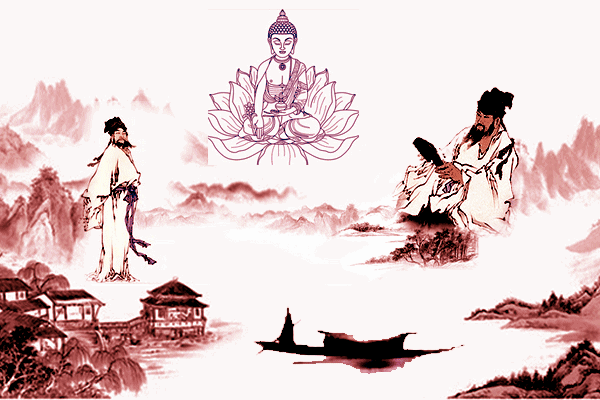
Su Dongpo was a close friend of an esteemed monk named Foyin, and the two often practiced Zen meditation together. There were many stories about the two.

Buddha and Cow Dung

One day, Su Shi decided to play a prank on his good friend Foyin. He asked him, “What do I look like in your eyes?”

Foyin replied, “In my eyes, you look like a Buddha.”

Su Shi then asked, “Do you know what you look like in my eyes?” Foyin replied that he did not know.

Su Shi gleefully exclaimed, “In my eyes, you look like a pile of cow dung!”

Upon returning home, Su Shi shared his victory with his younger sister, Su Xiaomei. However, she frowned upon hearing this and told her brother that he had lost the exchange. She explained that if a person has Buddha in their heart, they will see the Buddha’s qualities in everything around them. Conversely, if a person has impure thoughts and feelings, they will see everything as dirty and unpleasant. She pointed out that Foyin’s heart was pure, while Su Shi’s was not.

Eight winds and a Fart

Su Dongpo was not only a renowned literary figure but also a Buddhist disciple who regularly practiced meditation.

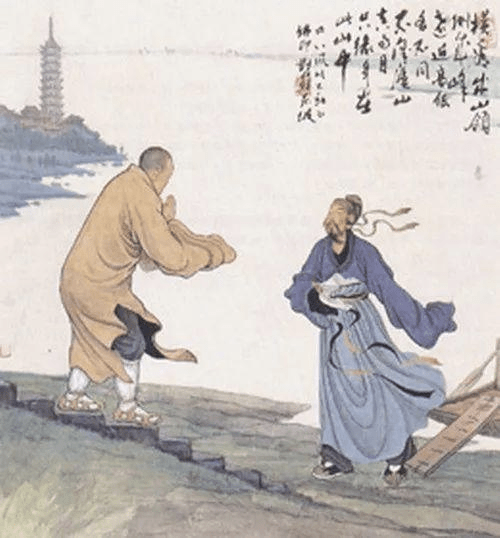
One day, after a particularly serene meditation session, Su Shi felt that he had made a significant realization. He decided to capture his experience in a poem, which read, “Sitting still on the lotus platform, even the eight winds cannot move me.”

Curious about the authenticity of his realization, Su Shi asked his servant to deliver the poem to Zen Master Foyin, who resided in the Jinshang Temple across the river.

Upon receiving the poem, the Zen Master smiled and wrote two large characters on a piece of paper, which he instructed the servant to take back to Su Dongpo.

Excited to receive feedback from the Zen Master, Su Dongpo eagerly unfolded the paper, hoping to see praise for his state of practice.

However, instead of receiving the expected validation, Su Dongpo was infuriated to see the two characters “fart” written on the paper. Without hesitation, he boarded a boat and crossed the river to confront Zen Master Foyin.

When Su Dongpo arrived at the Jinshan Temple, he found the Zen Master waiting for him on the shore. In a loud and accusatory tone, Su Dongpo asked, “Great monk! You and I are best friends. If you don’t appreciate my poems and my practice, it’s fine. How can you slander me?”

The Zen Master remained unperturbed and asked, “How did I slander you?”

Su Dongpo then showed him the word “fart” written in the poem.

The Zen Master burst into laughter and exclaimed, “Ah! Didn’t you say ‘Eight winds cannot move you’? How come just one fart was enough to blow you over the river?”

The “Eight Winds” refer to the eight worldly concerns: gain and loss, honor (fame) and disgrace (dishonor or infamy), praise and ridicule (censure, blame or criticism), pleasure and suffering (pain). Eight situations that normally preoccupy and sway unrealized people. To be unmoved by these Eight winds is a mark of a true buddhist practitioner.

Su Dongpo and Zen Master Foyin

Link:https://peacelilysite.com/2023/02/24/su-dongpo-and-zen-master-foyin/

#SuShi#SuDongpo#ZenBuddhism #ZenMasterFoyin #Eightwinds #Buddha

Leshan Giant Buddha

Leshan Giant Buddha

Around a 2-hour drive from downtown Chengdu lies one of the most marvelous ancient wonders of China, the Leshan Giant Buddha, also known as Lingyun Giant Buddha. Carved into a cliff-face along a peaceful river, this imposing figure, at 71 meters (over 200 feet) in height, dates back over a thousand years and is the largest and tallest stone Buddha statue in the world.

Carved in the 8th century during the Tang Dynasty, the Leshan Giant Buddha was built during a peak period of Buddhist culture in ancient China. The sculpture depicts Maitreya, a very popular Buddha in the Tang Dynasty. The sutras say that when Maitreya comes into world, the world will be at peace. The female Chinese female sovereign Wu Zetian even proclaimed she was the reincarnation of Maitreya and was a strong advocate of Maitreya sculptures being built as a way to maintain her rule. People liked to carve Maitreya sculptures and believed that Maitreya would bring light and happiness into their lives in the future.

This remarkable historic site was listed as a UNESCO World Heritage Site since 1996. It is an amazing and immense religious relic that was built over a period of 90 years from 713 to 803 AD. The statue was constructed at the confluence of three rivers notorious for their turbulent waters; it was hoped that the Buddha’s presence would help calm the rivers’ waters.

Hai Tong’s Legacy

The Buddhist monk Hai Tong was concerned about the safety of the local people who earned their living around the three rivers. Many people traveling by boat in the area were killed by the turbulent waters each year before the Leshan Giant Buddha was created. Hai Tong decided to carve a statue of Buddha beside the river and believed that this sculpture would appease the river gods and keep the locals safe.

He had begged for over 20 years to accumulate enough money needed to build this statue. During this hard period in his life, he refused official help because the parties who offered it didn’t just want to help him but wanted to gain personal profits from the project. He even gouged out his eyeball in protest against the local authorities. These officials backed off after this behavior. Fortunately, Hai Tong’s disciples continued his work after he passed away and finally completed the sculpture in 803 AD after 90 years of hard work.

There is a cleverly designed drainage system behind the Buddha’s head and between his two ears. This important design aspect is the reason why the great Buddha of Leshan has not eroded despite having existed for thousands of years. The “spectacle”

Interestingly, there haven’t been any shipwrecks since the Buddha was built. Many stones were actually removed from the cliff and transferred to the rivers during construction, which made the waters calmer and safer than before. The project didn’t end after the Leshan Giant Buddha was finished.

Buddhism had been one of the most important religions in ancient China and many other people built statues around the giant Buddha to thank the gods . Numerous small Buddhas were carved around this huge statue. People even excavated the cliff tombs of the Han Dynasty around the Leshan Giant Buddha. Multiple historic sites make the Leshan Giant Buddha particularly important for archaeologists and researching people’s lifestyles in ancient times.

With the most sunny days and beautiful scenery, April and October are the best months of the year to travel to see the Leshan Giant Buddha.

There are two ways for visitors to see the Giant Buddha. One is to walk down from the top near the head and end at its feet. This involves some waiting in line, sometimes for hours on particularly busy days, and larger crowds, as well as many narrow and steep stairs, but offers you a more intimate perspective of the Buddha. This up-close view will allow you to appreciate the statue’s enormity; its shoulders spread over a width of 28 meters (as long as a basketball court!) and its pinky toe is large enough for a person to sit on.

The other option is to view the statue from a boat on the river immediately in front of it. The boat trip allows you to get the best and fullest front-facing view of the Buddha from a distance and is ideal for those who prefer not to wait in line and climb the stairs. The cruise takes around 30 minutes there and back, stopping for several minutes in front of the Buddha for visitors to appreciate the statue and take pictures. It’s best to sit on the right side of the boat, as the Buddha will end up being on that side once you arrive.

Leshan Giant Buddha

Link:https://peacelilysite.com/2023/02/23/leshan-giant-buddha/

#Travel#China#LeshanGiantBuddha#Buddhism#MarvelousAncientWonder

Source: https://www.trippest.com/chengdu-travel-guide/leshan-giant-buddha/ https://www.thechinaguide.com/sight/leshan-giant-buddha#:~:text=It’s%20best%20to%20sit%20on,worth%20seeing%20from%20both%20angles.

Celebrating the Chinese New Year in San Francisco’s Chinatown

Celebrating the Chinese New Year in San Francisco’s Chinatown

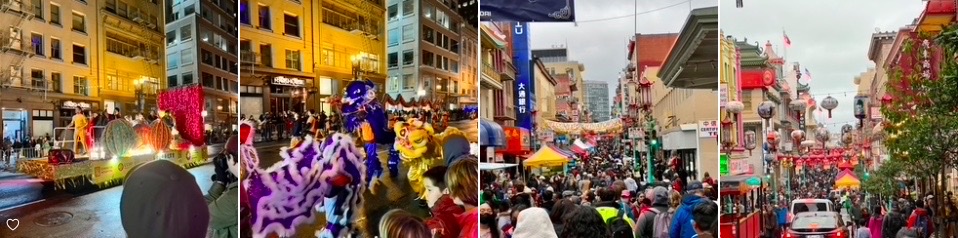
On Saturday, February 4th, the streets of San Francisco’s Chinatown were filled with the sounds and sights of the Chinese New Year parade. Thousands of people gathered to celebrate and enjoy the festivities.

The entire Chinatown was decorated in traditional Chinese style, adding to the already lively atmosphere. Street markets sold traditional Chinese goods and food, and the sounds of live music filled the air.

The parade, which started at 5 PM, was a highlight of the celebration. Floats, marching bands, and performers made their way through the crowded streets, bringing the excitement and energy to a whole new level. However, rain, showers and winds also joined the parade. That brought little bit uncomfortable to the crowds.

One of the highlights of the parade was the traditional lion and dragon dances, performed by skilled dancers dressed in colorful costumes. These dances are believed to bring good luck and prosperity for the new year, and the crowds were enthralled by the displays.

In addition to local performers, marching bands from Southern California and Oregon also made the journey to San Francisco to participate in the parade. The diversity of performers added to the already rich cultural atmosphere, and showcased the strong connection between the different Chinese communities across the United States. Despite the rain and showers, the spirit of the event was not dampened, and it was a beautiful tribute to the start of a new year.

As a proud Chinese, I was thrilled to participate in the Chinese New Year parade in San Francisco’s Chinatown. Living in the United States is a privilege, as this great nation has an open heart that accepts and embraces diverse cultures. I hope to see the US play a leading role in promoting peace and harmony globally.

Celebrating the Chinese New Year in San Francisco’s Chinatown

Link: https://peacelilysite.com/2023/02/08/celebrating-the-chinese-new-year-in-san-franciscos-chinatown/

#ChineseNewYear#ChineseCulture#SanFrancisco #ChinaTown#Parade

Ode to The Plum Blossom

Ode to The Plum Blossom

Recently, I stumbled upon breathtaking plum blossoms while taking a walk. These delicate flowers evoked feelings of warmth and joy, reminding me of the arrival of spring. In Chinese culture, plum blossoms, beyond just being a physical flower, have become a symbol of perseverance and resilience in the face of harsh winter conditions. This significance was achieved through the extensive descriptions, sublimations, and chanting by literati and scholars over the ages. In ancient China, plum blossoms were considered a lucky symbol and were welcomed as a sign of the arrival of spring during the New Year.

When I was a child, my father taught me to recite the poem “Ode to the Plum Blossom” by Zedong Mao, reminding me to be fearless and strong like the plum blossom that blooms amidst harsh winter conditions. I really like the poem, and can still remember it.

Ode to the Plum Blossom

—to the tune of Bu Suan Zi

By Zedong Mao, December 1961

Wind and rain escorted Spring’s departure, 

Flying snow welcomes Spring’s return. 

On the ice-clad rock rising high and sheer 

A flower blooms sweet and fair. 

Sweet and fair, she craves not Spring for herself alone, 

To be the harbinger of Spring she is content. 

When the mountain flowers are in full bloom 

She will smile mingling in their midst.

But after many years of struggles, I realized that bravery and strength aren’t always enough, especially in managing relationships and family. As a wife and mother, I learned the importance of being magnanimous, compassionate, forbearing, and not rigid. I have since embraced the peaceful and compassionate philosophy of Buddhism.

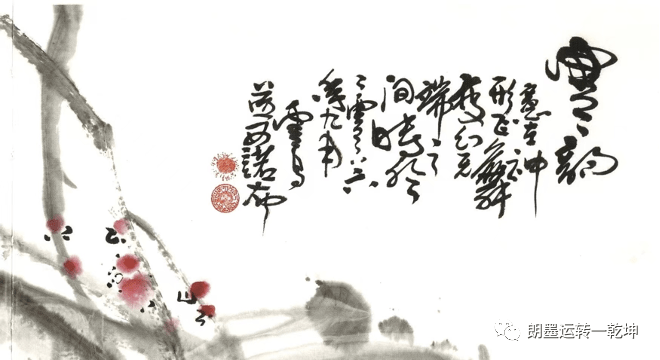
H.H. Dorje Chang Buddha III, the contemporary Buddha, wrote a poem “Plum Fragrance in the Holy Land.” He broke from traditional poetry styles, instead opting for surreal techniques to directly convey spiritual essence.

To the Tune of “Jiang Jun Song”

Plum Fragrance in the Holy Realm

Reveal her icy bearing and proud bones,

See how plum blossom commands the scene,

The crowd of beauties suddenly lacks color,

Seductive peach has lost its looks.

A few casual strokes,

So many eons of wind and dust.

The smoke and fire of the human world all disappears,

Leaving only a pure fragrance from the paper,

It wafts over me, awakening my mind.

The smile of the enchanted dream still remains,

Buddha Vajradhara has come

Three times to this world.

To this Buddha Land of merciful compassion

That great one has brought purity,

Feelings of the brush,

Traces of the brush,

One smile in the wind and dust,

Now the wind and dust,

So many eons of wind and dust.

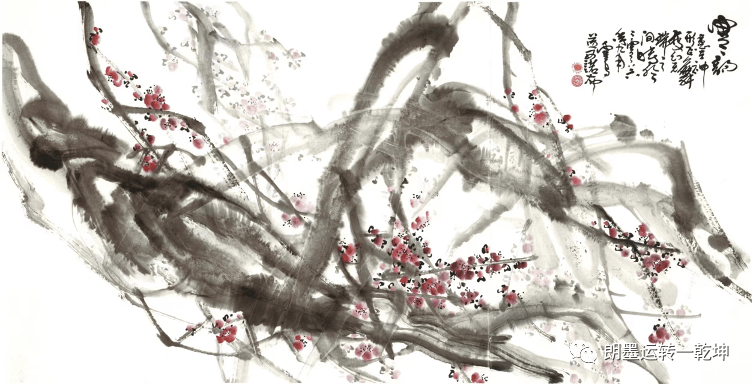
The Buddha also created an ink painting to accompany the poem. The poem delves deeper into the artist’s thoughts, while the painting provides a visual representation.

The plum blossoms depicted in the paintings symbolize the artist’s state of mind, embodying inner beauty refined from impurities. The brushwork, casually applied, was accomplished with an unfettered hand and detached mind, free of the slightest artificiality. It is a seemingly ever-changing work. Its charm, tone, transitions, and depictions represent the highest level of Eastern ink-and-wash paintings. A transparent layer of lighter ink on top of darker ink is clearly visible, imbuing the painting with a pure and fragrant air and providing the viewer with a feeling of comfort and ease.

The plum blossoms created by these skilled pens are eternal. While natural blooms may come and go, Buddha’s compassion remains steadfast.

Ode to The Plum Blossom

Link: https://peacelilysite.com/2023/02/02/ode-to-the-plum-blossom/

#DorjeChangBuddhaIII #HHDorjeChangBuddhaIII#DorjeChangBuddha#IAMA#InternationalArtMuseumofAmerica#ChinesePaintings#PlumBlossom#Paintings#

Source: https://www.oktranslation.com/LiteraryTranslation/lt_info32200.html

Dharma Assembly at Hua Zang Si — Holy Birthday of Maitreya Bodhisattva

Dharma Assembly at Hua Zang Si — Holy Birthday of Maitreya Bodhisattva

January 1st in the Chinese lunar calendar, is chinese Spring festival, it is the biggest holiday in china. It is also the holy birthday of Maitreya Bodhisattva – the next Buddha in the saha world. This is a special and joyful holiday that is celebrated by many. Hua Zang Si in San Francisco held a Dharma Assembly to celebrate this important occasion. It was the first Dharma Assembly of the year and it was held on a beautiful sunny day. Many laypersons participated in the event.

At the entrance of the temple is an oversize marvelous statue representation of a jolly, laughing Buddha: Maitreya Bodhisattva (the next Buddha in this Saha world). It is such a warm welcoming sign. The big belly not only means jolly, it also means tolerating the intolerable things in the world. So when you look at the statue, you will start to feel that learning Buddhism is happy and kind.

The Dharma Assembly was an opportunity for people to come together and celebrate the teachings of Maitreya Bodhisattva. It was a time for reflection and meditation, as well as a chance to learn more about the teachings of Buddhism. The atmosphere was filled with positivity and joy, as people came together to celebrate this important holiday.

In Chinese culture, Maitreya Bodhisattva is seen as a symbol of joy and tolerance. As practitioners of Buddhism, we are encouraged to strive to be like the Buddhas and Bodhisattvas by cultivating a broad mind, open heart, and great tolerance.

One of the key principles of Buddhism is patience and forbearance, particularly under insult. This is seen as a key aspect of self-cultivation and it is important to remember that everything in the dharma realms can change from ordinary to holy. This means that even difficult situations can be transformed and overcome through the practice of patience and tolerance.

Patience and tolerance are not just passive qualities, but rather active ones that require effort and practice. We must actively cultivate them in our daily lives and strive to maintain them even in difficult situations. Through this practice, we can transform our own minds and hearts, becoming more like the Buddhas and Bodhisattvas that we strive to emulate.

At the Dharma Assembly, we chanted the Eighty-eight holy Buddha name jeweled repentance sutra, in hopes that the Buddhas will wash away all of our sins and negative karmas. After the chanting, we offered a meal to the Buddhas and Bodhisattvas. The event concluded with a dharma talk given by Dharma Master Ruohui.

During her talk, Dharma Master Ruohui emphasized the importance of faith, vows, and actions for disciples of Buddhism. She explained that faith is the foundation of our practice, and that with strong faith, we will have the determination to follow the Buddha’s teachings and put them into action in our lives.

The Dharma Assembly was a meaningful event where participants not only had the opportunity to reflect on their own spiritual growth but also to make an impact on the world around them. During the assembly, the participants returned the merit to all living beings, holding the hope that they shall be rid of suffering, obtain happiness, and have the opportunity to listen to authentic Buddha Dharma.

The act of returning merit is an important aspect of Buddhist practice as it is believed that by dedicating the positive energy generated through our spiritual practice to the benefit of others, we can help bring about peace and prosperity in the world. By returning merit to all living beings, participants were able to contribute to the collective well-being of the world and make a positive impact on the lives of others.

Furthermore, the participants also held the hope that by listening to authentic Buddha Dharma, they will be able to perfect their fortune and wisdom, leading to a more prosperous and peaceful world for all. This is the ultimate goal of Buddhism, to help all beings to find inner peace, happiness and liberation from suffering.

Dharma Assembly at Hua Zang Si — Holy Birthday of Maitreya Bodhisattva

Link: https://peacelilysite.com/2023/01/26/dharma-assembly-at-hua-zang-si-holy-birthday-of-maitreya-bodhisattva/

#Buddha#Buddhism#BuddhistDisciple#MaitreyaBodhisattva#HuaZangSi#Tolerance#Cultivation#Assembly#ChineseLunarCalendar#ChineseNewYear

Slow down and Look Around

Slow down and Look Around

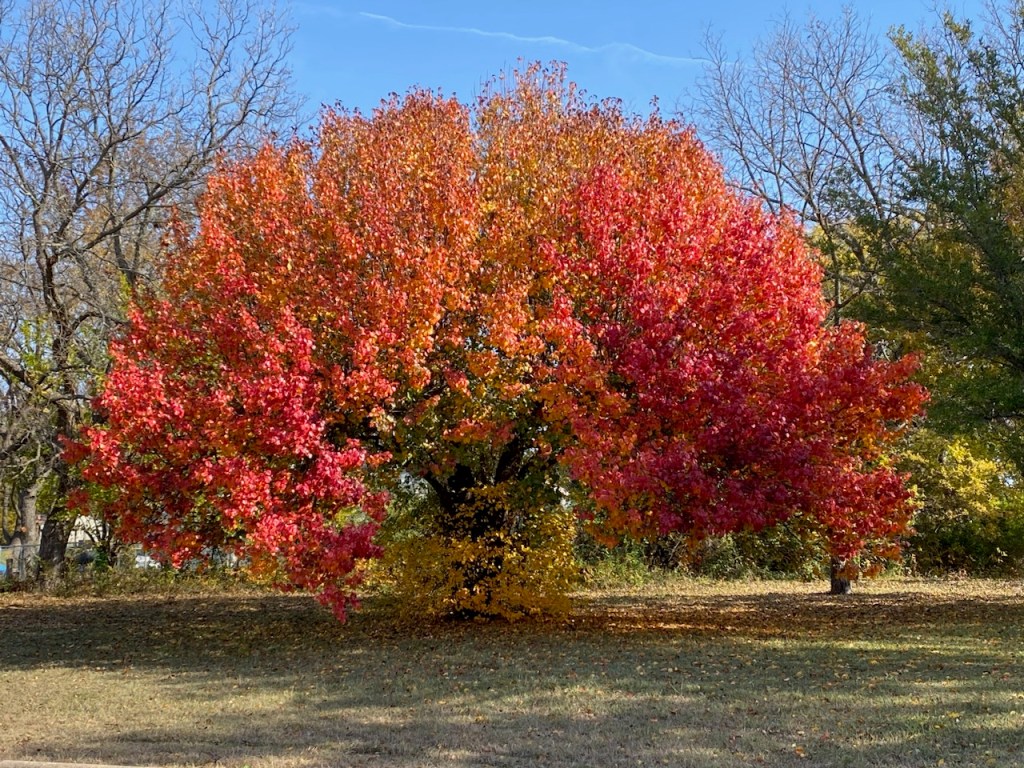
On weekday mornings, I hurriedly drive my son to school. Trying to beat the traffic and catch as many green lights as possible, the drive is usually a blur. One particular morning’s drive changed my perspective. While rushing down a wide arterial road, my son exclaimed to me that the trees on the sidewalk looked very beautiful.

Glancing over to the trees, I suddenly noticed the vibrant reds and yellows of the leaves clinging onto branches or drifting onto the sidewalk as the wind blew. Despite driving down this street every morning, in my hurry I had not noticed the changing colors of the trees until now, nearly the end of fall. The bright hues of the fall foliage was absolutely beautiful. This nature beauty made me slowing down my daily past pace. I feel the healing power of nature relaxing my tense nerves, and filled my heart with joy, peace, and harmony.

As I admired the scenery on the commute, I felt how wonderful it was to be present in the moment. I realized that oftentimes we lose sight of the little elements of natural beauty that are all around us. Life can be hectic, but we must make a conscious effort to enjoy the omnipresent beauty of our world.

A poem by a ancient Zen Master came to my mind:

Blossoms in Spring, Breezes in Summer,
Glorious moons in Fall, and Snow in Winter.
When one is not held back by nothing,
Every moment can be wonderful.

Egg Shells and Patience

Photo by Pixabay on Pexels.com

Eggs are an essential part of a good breakfast. There are countless ways to prepare them, but not all recipes are made equal. I used to cook omelettes for the family, but recently I learned that hard boiled eggs are actually a better choice. Hard boiled egg can keep more nutrients from the egg and avoid extra oil.

The only problem is, peeling a hard boiled egg is a rather arduous task. The shell and egg white absolutely refuse to be parted. Usually, the peeled egg ends up looking kind of like the moon, full of craters and lumps and whatnot. This morning, I got very frustrated trying to peel my hard boiled egg. It felt like the shell and egg white were superglued together. Even my mother’s old trick of placing the boiled eggs into cold water didn’t seem to work. After my first peeled egg ended up looking like a misshapen golf ball, I was ready to throw them all onto the floor.

Fortunately, I am a Buddhist disciple, and I remembered one of the most important things I’d learned: patience. I told myself, as a student of the Buddha who cultivates myself everyday, why am I still so easily distressed by outside events?

So I decided to let myself calm down for a while. I left the eggs in the cold water and went off to relax. After maybe fifteen minutes, I returned to give making breakfast another shot. Surprisingly, the shell peeled off easily this time. I realized that by being patient and giving the eggs more time to cool down, it was now much easier to complete my task. So when annoying things happen, we must first be patient. Let it all cool down, and things will be much easier to deal with.

Patient means embracing  yourself and all things around you with gentleness and kindness, and doing so will get happy and more productive results.

Slow down and Look Around

Link: https://peacelilysite.com/2022/12/08/slow-down-and-look-around/

Source: http://atranslatorsfarm.blogspot.com/2013/09/blog-post_2.html

#Slowdown#LookAround#NaturalBeauty#Patients#Eggshell#Buddhism#BuddhistDisciple

I have more prosperous business and happy family after learning Buddhism

I have more prosperous business and happy family after learning Buddhism

The lucky door in life is always inadvertently opened. Maybe it’s the blessings from the Buddha and Boddhisatva.

I remember that day, a critical turning point in my life. I was exercising in the community that day, a surnamed Meng dharma sister asked me to worship the Buddha in the Buddhist Hall nearby. I agreed with her as soon as I heard the invitation. The dharma brothers and sisters made me feel at home. It’s totally different from the people I met in my life, most of whom treated me courteously but without sincerity. So I decided to chant sutras and listen to the recorded discourses expounded by H.H. Dorje Chang Buddha III with dharma brothers and sisters. I felt like it’s the place that I should come. Then I couldn’t help crying when chanting sutras, and I would repent. Every time after listening the recorded Buddha dharma discourses, I was filled with endless power.

To my shame, I never settle down to study, but hurry to come and leave the Buddhist Hall owing to busy work. With my diligence for listening the dharma discourses, I make progress and schedule time for study in the Buddhist Hall. Undoubtedly, we want to lead a good life, but learning Buddhism is more important, we can and we have to plan enough time for study.

On the National Day in 2016, I gave up travelling with my family but took part in the Avalokiteshvara Bodhisattva Great Compassion Empowerment Dharma Assembly, from which, I truly knew the great Buddha Dharma is true and real. The next day I converted to Buddhism. I was earnest and pious in studying Buddhism after conversion.

The Buddha taught us to conduct cultivation and introspection, to conduct three introspections in the course of a day. I found myself did many things that I should not do in the past, including killing other living beings. When I realized the retribution of killing, I decided not to kill, while turned to vegan at dinner, and on the first day and the fifteenth day of the lunar calendar.

I’ve been doing prostrations since the dharma assembly. Now I have a fit body and my wine tummy is gone. My blood pressure used to be a little bit high, but now it’s stable. I don’t feel panic or worried if travelling by plane or driving. I sleep well all night after chanting H.H. Dorje Chang Buddha III.

Some people think that it takes time to learn Buddhism and it will affect the business and work. However, my business is more prosperous since I’ve taken Buddhism. Numerous long-term orders come for me. Several days ago, the municipal government called me for delivery. I was surprised, because I didn’t have the resource superiority. I focused on social engagement and seldom stayed at home in the past. Now I cherish and care about my family. My son usually asks me to spend time with him. Taking Buddhism makes me healthier and my family relationships more harmonious.

I truly know that Buddhism brings me happiness, so I am determined to do my best to make offerings to Buddha Halls. With the help from dharma brothers and sisters, I set up a Buddha Hall at home. My family also join me to study Buddhism.

All above is my own experience. I hope everyone has the karmic affinity to study the true Dharma of Tathagata. We all eager for a happy life, but making money is only a part of it. The health and happiness we have on this side is temporary, while attaining the accomplishment and liberation on the other side is the truth.

I have more prosperous business and happy family after learning Buddhism

Link: https://peacelilysite.com/2022/11/25/i-have-more-prosperous-business-and-happy-family-after-learning-buddhism/

#DorjeChangBuddhaIII # HHDorjeChangBuddhaIII  #Cultivation #Buddhism#Buddhist # Causality

#Dharma Assembly#KarmicAffinity

Source: http://www.hzbi.us/?p=915