When Taoist Immortal Met Buddhist Master

Photo by Delia Dwi on Pexels.com

When Taoist Immortal Met Buddhist Master

Taoism is an ancient Chinese philosophy that emphasizes living in harmony with the natural world and embracing simplicity. Its teachings have had a significant impact on both Eastern and Western cultures, including the field of psychology. One prominent figure in psychology who was influenced by Taoism is Carl Jung, a Swiss psychiatrist and psychoanalyst who founded analytical psychology.

Jung’s complex concept of “the Self” is one of his most significant contributions to psychology. The Self represents the totality of an individual’s psyche, including both conscious and unconscious elements. According to Jung, the Self is the goal of the individuation process, a lifelong journey of self-discovery and personal growth.

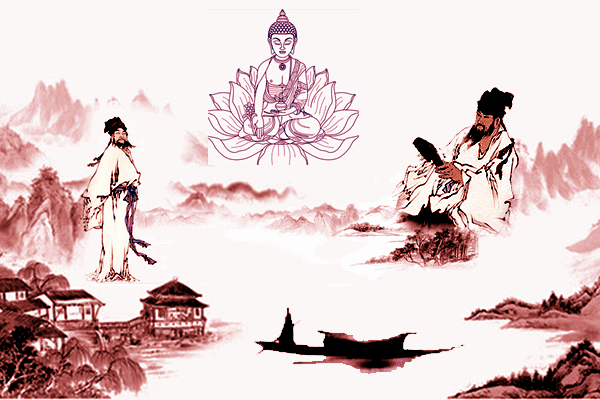
In ancient China, there were eight prominent figures in Taoism, and Lu Dongbin was the most popular one. Besides being a renowned Taoist, he was also a skilled poet and scholar. Throughout history, many legendary stories and folk tales have been told about him.

One interesting story was recorded in a Buddhist book called JiaTai Pu Deng Lu (嘉泰普灯录), which has also been documented in several other books, including XinShi Heng Yan (醒世恒言). Although there are some variations, the main points of the story remain the same. H.H. Dorje Chang Buddha III also told this story in his dharma discourse: Expounding the Absolute Truth through the Heart Sutra.

Once, Lu Dongbin asked his master, “Master, why did you only save me for a thousand years?”

His master replied, “It’s difficult to teach all living beings. People’s habits are deeply ingrained, and they constantly change. Most living beings find it challenging to learn our Taoism.”

Lu Dongbin countered, “Master, I disagree. We are powerful beings. Are we afraid it will be difficult to liberate them? Let me go down and liberate people for you. I will free a thousand souls every year.”

His master warned, “You may go down to Earth, but be careful not to provoke the monks. Some cannot be trifled with.”

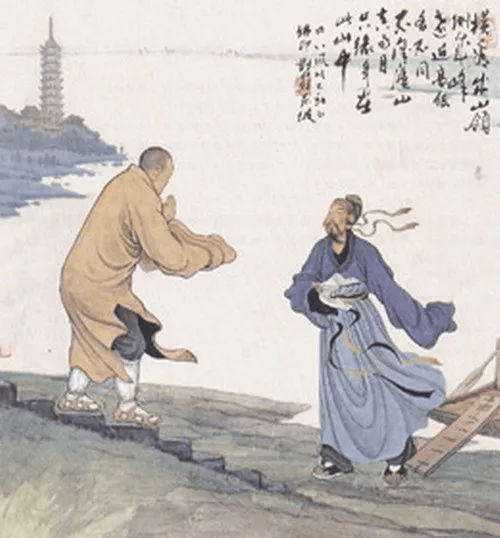
Lu Dongbin descended from the South Gate of Heaven on an auspicious cloud and saw the golden light of Huanglong Temple in Shanghai, China. Zen Master Huanglong was teaching the Heart Sutra and explaining Prajna principles. Lu Dongbin decided to listen in and transformed himself into a fly, sticking to the door.

However, Zen Master Huanglong was a powerful monk who knew Lu Dongbin was eavesdropping. He stopped teaching and instructed his attendant to remove the “person who stole our Dharma.”

Enraged, Lu Dongbin revealed his true form, brandishing his Qingfeng sword and accusing Zen Master Huanglong of insulting him. Lu Dongbin told Zen Master: “I am the great Taoist Immortal LU Dongbin.” Huanglong found it amusing and called Lu Dongbin a “ghoul guard” who would eventually die in vain.

Lu Dongbin drew his sword, but Zen Master Huanglong remained unperturbed, blocking the sword with his sleeve. Lu Dongbin knelt before the Zen master, feeling ashamed.

Huanglong proceeded to teach Lu Dongbin sudden enlightenment dharma, explaining that “speech is cut off, and mind is silenced.” As a god, Lu Dongbin was able to grasp the teaching quickly and had an epiphany.

After his enlightenment, Lu Dongbin wrote a gatha containing the line, “Since I met Huanglong, I realized that I mistakenly used my mind in the past.”

In Buddhist teachings, it is said that even the highest Taoist practitioner can reach heaven, but still remain in the realm of the birth and death cycle. However, if one can realize and abide in the original nature, then they can break through this cycle and achieve liberation. The original nature refers to the pure dharma body of all sentient beings within the three spheres of existence (triloka), which is united with the universe. It has no form, shape, physical body, or appearance. All living beings possess this original nature equally, which is the same as the dharma body of the Tathagata or dharmakaya. It neither comes nor goes, and is neither excessive nor lacking. It is immaculate, free from any notion of cleanliness or dirtiness.

When Taoist Immortal Met Buddhist Master

Link:https://peacelilysite.com/2023/02/24/when-taoist-immortal-met-buddhist-master/

#Buddhist #BuddhistMaster#HuanglongTemple #Taoist #Immorta #Ludongbin #Buddhism #DorjeChangBuddhaIII # HHDorjeChangBuddhaIII 
Su Dongpo and Zen Master Foyin

Su Dongpo and Zen Master Foyin

Su Shi was a prominent figure during the Song Dynasty, renowned for his literary, artistic, calligraphic, pharmaceutical, and political contributions. He was also one of the most notable poets of his era and was known by his courtesy name, Zizhan, and his pseudonym, Dongpo Jushi (東坡居士 “Resident of Dongpo”). Su Dong Po is the commonly used name to refer to him.

In the realm of Chinese literature, Su Shi is widely recognized as a highly accomplished figure, having produced some of the most well-known poems, lyrics, prose, and essays.

Su Dongpo was a close friend of an esteemed monk named Foyin, and the two often practiced Zen meditation together. There were many stories about the two.

Buddha and Cow Dung

One day, Su Shi decided to play a prank on his good friend Foyin. He asked him, “What do I look like in your eyes?”

Foyin replied, “In my eyes, you look like a Buddha.”

Su Shi then asked, “Do you know what you look like in my eyes?” Foyin replied that he did not know.

Su Shi gleefully exclaimed, “In my eyes, you look like a pile of cow dung!”

Upon returning home, Su Shi shared his victory with his younger sister, Su Xiaomei. However, she frowned upon hearing this and told her brother that he had lost the exchange. She explained that if a person has Buddha in their heart, they will see the Buddha’s qualities in everything around them. Conversely, if a person has impure thoughts and feelings, they will see everything as dirty and unpleasant. She pointed out that Foyin’s heart was pure, while Su Shi’s was not.

Eight winds and a Fart

Su Dongpo was not only a renowned literary figure but also a Buddhist disciple who regularly practiced meditation.

One day, after a particularly serene meditation session, Su Shi felt that he had made a significant realization. He decided to capture his experience in a poem, which read, “Sitting still on the lotus platform, even the eight winds cannot move me.”

Curious about the authenticity of his realization, Su Shi asked his servant to deliver the poem to Zen Master Foyin, who resided in the Jinshang Temple across the river.

Upon receiving the poem, the Zen Master smiled and wrote two large characters on a piece of paper, which he instructed the servant to take back to Su Dongpo.

Excited to receive feedback from the Zen Master, Su Dongpo eagerly unfolded the paper, hoping to see praise for his state of practice.

However, instead of receiving the expected validation, Su Dongpo was infuriated to see the two characters “fart” written on the paper. Without hesitation, he boarded a boat and crossed the river to confront Zen Master Foyin.

When Su Dongpo arrived at the Jinshan Temple, he found the Zen Master waiting for him on the shore. In a loud and accusatory tone, Su Dongpo asked, “Great monk! You and I are best friends. If you don’t appreciate my poems and my practice, it’s fine. How can you slander me?”

The Zen Master remained unperturbed and asked, “How did I slander you?”

Su Dongpo then showed him the word “fart” written in the poem.

The Zen Master burst into laughter and exclaimed, “Ah! Didn’t you say ‘Eight winds cannot move you’? How come just one fart was enough to blow you over the river?”

The “Eight Winds” refer to the eight worldly concerns: gain and loss, honor (fame) and disgrace (dishonor or infamy), praise and ridicule (censure, blame or criticism), pleasure and suffering (pain). Eight situations that normally preoccupy and sway unrealized people. To be unmoved by these Eight winds is a mark of a true buddhist practitioner.

Su Dongpo and Zen Master Foyin

Link:https://peacelilysite.com/2023/02/24/su-dongpo-and-zen-master-foyin/

#SuShi#SuDongpo#ZenBuddhism #ZenMasterFoyin #Eightwinds #Buddha

Leshan Giant Buddha

Leshan Giant Buddha

Around a 2-hour drive from downtown Chengdu lies one of the most marvelous ancient wonders of China, the Leshan Giant Buddha, also known as Lingyun Giant Buddha. Carved into a cliff-face along a peaceful river, this imposing figure, at 71 meters (over 200 feet) in height, dates back over a thousand years and is the largest and tallest stone Buddha statue in the world.

Carved in the 8th century during the Tang Dynasty, the Leshan Giant Buddha was built during a peak period of Buddhist culture in ancient China. The sculpture depicts Maitreya, a very popular Buddha in the Tang Dynasty. The sutras say that when Maitreya comes into world, the world will be at peace. The female Chinese female sovereign Wu Zetian even proclaimed she was the reincarnation of Maitreya and was a strong advocate of Maitreya sculptures being built as a way to maintain her rule. People liked to carve Maitreya sculptures and believed that Maitreya would bring light and happiness into their lives in the future.

This remarkable historic site was listed as a UNESCO World Heritage Site since 1996. It is an amazing and immense religious relic that was built over a period of 90 years from 713 to 803 AD. The statue was constructed at the confluence of three rivers notorious for their turbulent waters; it was hoped that the Buddha’s presence would help calm the rivers’ waters.

Hai Tong’s Legacy

The Buddhist monk Hai Tong was concerned about the safety of the local people who earned their living around the three rivers. Many people traveling by boat in the area were killed by the turbulent waters each year before the Leshan Giant Buddha was created. Hai Tong decided to carve a statue of Buddha beside the river and believed that this sculpture would appease the river gods and keep the locals safe.

He had begged for over 20 years to accumulate enough money needed to build this statue. During this hard period in his life, he refused official help because the parties who offered it didn’t just want to help him but wanted to gain personal profits from the project. He even gouged out his eyeball in protest against the local authorities. These officials backed off after this behavior. Fortunately, Hai Tong’s disciples continued his work after he passed away and finally completed the sculpture in 803 AD after 90 years of hard work.

There is a cleverly designed drainage system behind the Buddha’s head and between his two ears. This important design aspect is the reason why the great Buddha of Leshan has not eroded despite having existed for thousands of years. The “spectacle”

Interestingly, there haven’t been any shipwrecks since the Buddha was built. Many stones were actually removed from the cliff and transferred to the rivers during construction, which made the waters calmer and safer than before. The project didn’t end after the Leshan Giant Buddha was finished.

Buddhism had been one of the most important religions in ancient China and many other people built statues around the giant Buddha to thank the gods . Numerous small Buddhas were carved around this huge statue. People even excavated the cliff tombs of the Han Dynasty around the Leshan Giant Buddha. Multiple historic sites make the Leshan Giant Buddha particularly important for archaeologists and researching people’s lifestyles in ancient times.

With the most sunny days and beautiful scenery, April and October are the best months of the year to travel to see the Leshan Giant Buddha.

There are two ways for visitors to see the Giant Buddha. One is to walk down from the top near the head and end at its feet. This involves some waiting in line, sometimes for hours on particularly busy days, and larger crowds, as well as many narrow and steep stairs, but offers you a more intimate perspective of the Buddha. This up-close view will allow you to appreciate the statue’s enormity; its shoulders spread over a width of 28 meters (as long as a basketball court!) and its pinky toe is large enough for a person to sit on.

The other option is to view the statue from a boat on the river immediately in front of it. The boat trip allows you to get the best and fullest front-facing view of the Buddha from a distance and is ideal for those who prefer not to wait in line and climb the stairs. The cruise takes around 30 minutes there and back, stopping for several minutes in front of the Buddha for visitors to appreciate the statue and take pictures. It’s best to sit on the right side of the boat, as the Buddha will end up being on that side once you arrive.

Leshan Giant Buddha

Link:https://peacelilysite.com/2023/02/23/leshan-giant-buddha/

#Travel#China#LeshanGiantBuddha#Buddhism#MarvelousAncientWonder

Source: https://www.trippest.com/chengdu-travel-guide/leshan-giant-buddha/ https://www.thechinaguide.com/sight/leshan-giant-buddha#:~:text=It’s%20best%20to%20sit%20on,worth%20seeing%20from%20both%20angles.

Inamori Kazuo : The Working Method

Fundamental significance of work for individuals is that It can help to develop their personality, sharpen their minds, and elevate their souls to become more noble and better.

Inamori Kazuo : The Working Method

Kazuo Inamori’s “Working Method” is an incredibly inspiring book that has completely transformed my perspective on my job and career. I used to view my job solely as a means to make money, which often left me feeling frustrated whenever I encountered obstacles in a project. I believed that I could only start enjoying life after I retired and had enough savings. However, the reality is that I spend one-third of my time at work, and if I’m not happy there, how can I be happy in my life?

Why we need to work?

Kazuo Inamori observed that many people have lost the correct understanding of the goals and meaning of their work, leading to more and more confused lives, especially among young people. He believed that the fundamental significance of work for individuals is to help develop their personality, sharpen their minds, and elevate their souls to become more noble and better.

Inamori’s life achievements have attracted worldwide attention. He started his own business at 27, establishing two Fortune 500 companies, Kyocera and KDDI, with his bare hands over 40 years. At the age of 65, he retired, only to be repeatedly asked by the Japanese government to serve as chairman of Japan Airlines for bankruptcy and reconstruction. Within a year, he brought JAL back to life, achieving the highest profit in its 60-year history, which is still the highest among aviation companies worldwide. With his background as a scientist, entrepreneur, and philosopher, Kazuo Inamori has become a global marvel, juggling three roles at once.

Inamori’s success did not come easily. When he entered the workforce at age 23, he lamented his fate, wondering, “Why do misfortune and suffering come to me again and again, and what will my life be like in the future?” Fortunately, he found a solution: to face up to the “view on labor” and “view on work,” and to treat work as a “good medicine for curing all diseases.” Inamori believed that work could also help overcome the hardships of life and turn fate around.

The “Working Method” is a work methodology based on Inamori’s life experiences, which seems to describe how to work effectively. However, Inamori’s focus is on a more profound question: why do people work, and what is the purpose of labor? He used his own experiences to deeply interpret the “concept of labor” and the “concept of work” that one should stick to. He firmly believed that if one could understand the profound meaning of “labor” and “work,” their mentality towards work would change, and the god of fate may favor them.

Inamori emphasized that the purpose of work is to improve one’s own aspirations, not just to earn money. Life is not always smooth, and the same goes for work. Only by working hard and persevering in adversity can one develop a strong character, remain steady, and not falter in life. When a person has the tenacity to work hard and persevere, even in the face of setbacks, those difficulties will eventually accumulate into experience, which may become the greatest “lucky” moment in life.

Working earnestly

Diligence and a sincere attitude towards work are key elements of a successful career. Kazuo Inamori believes that we can derive true happiness from work itself, rather than just from hobbies or recreation. Neglecting work may provide temporary pleasure, but it won’t bring lasting satisfaction. We spend most of our lives working, so finding a sense of fulfillment in our work is crucial.

According to Kazuo Inamori, there are only two ways to have a fulfilling life: either “do what you like” or “make yourself like work.” However, the chances of finding a job that one truly likes are slim. Instead of constantly searching for a job that one loves, it’s better to give up this fantasy and fall in love with the work in front of them.

By changing their mindset, the world around them will also change. Despite countless days and nights spent in the research room, and countless failures, Inamori found that he started to enjoy his work. From infatuation to love, he fully embraced his work, and success followed as he persisted.

When we focus on our work with diligence and earnestness, we can experience unfettered happiness from accomplishing something meaningful. The best way to motivate ourselves is to love our work and put in all our effort to do it well. With each success, we gain a sense of achievement, confidence, and the desire to take on new challenges. Repeating this process reinforces our fondness for our work and helps us to achieve wonderful results.

Only when we reach this state of mind can we accomplish truly outstanding work. So, let’s strive to love our work, be diligent and sincere in our efforts, and find true happiness in our careers.

From “ordinary” to “extraordinary

When it comes to electrical products, Japanese manufacturing often overwhelms us with its sophistication. Behind each of these products lies the operator’s attitude towards achieving excellence. This is the fundamental reason for their transformation from “ordinary” to “extraordinary”.

But how much effort does it take for a person to make this transformation? Inamori Kazuo has two mantras that answer this: “Run at the speed of a 100-meter race” and “Pay no less than anyone’s efforts”. He demands these from himself and every Kyocera employee.

Kyocera’s corporate goal, according to Inamori Kazuo, is “There is never a product that Kyocera cannot develop.” This is not because of their advanced technology and equipment, but because as the last company to enter the race, their only chance to survive is by accepting products that their competitors cannot make.

Therefore, only through efforts that are no less than anyone’s, and by running at the speed of a 100-meter race, can Kyocera overcome technical difficulties and ultimately produce perfect, high-quality products to meet their customers’ demanding requirements.

Inamori Kazuo believes that success is very difficult to achieve with the same effort as ordinary people. Only through extraordinary “efforts no less than anyone else” can we achieve outstanding results in fierce competition.

According to Kazuo Inamori, it is essential to adhere to correct values and moral principles, whether in work or life. Doing so is critical to achieving success and making progress in both personal and professional endeavors. By upholding these values, one can navigate challenges more smoothly and reach greater heights in their career and life. Inamori believes that a commitment to ethical principles and values is key to building a fulfilling and meaningful life, both personally and professionally.

Have you ever wondered why some people succeed in both their work and personal lives while others struggle? Is there a set of rules to follow? In his studies of successful work and life, Kazuo Inamori uses an equation to express the results:

Results of life and work = way of thinking x passion x ability

By using the correct way of thinking and being filled with enthusiasm, you can do your best work, and the happy life you desire may not be too far away.

I wish I had read this book earlier, as it would have given me a different experience in my profession. It could have improved my performance and relationships with my co-workers.

Inamori Kazuo : The Working Method

Link: https://peacelilysite.com/2023/02/16/inamori-kazuo-the-working-method/

#TheWorkingMethod#KazuoInamori#Culture#Japan#Japanese

Source: https://inf.news/en/career/6ce2ee7bb7a22cb836b87bf5e8130c44.html

The Fourth Stop of Our Family Trip: Horseshoe Bend

The Fourth Stop of Our Family Trip: Horseshoe Bend

During our family trip, one of the most stunningly beautiful places we visited was Horseshoe Bend. As we approached the overlook, I was immediately impressed by the diamond blue water and the strange-shaped cliffs that surrounded the bend in the Colorado River. We stepped near the edge of the cliffs, and it was stunning how large the canyon was. The river was far below the towering cliff-sides, and I felt almost dizzy being so small and so high above the canyon floor.

We walked around the overlook area, which was full of visitors admiring the landscape. Despite the large crowd, everyone seemed to be happy, enjoying the beauty of nature and forgetting about the unhappiness in their lives. It was as if they were all experiencing the healing power of nature.

People were busy taking photos and posing for pictures, trying to preserve their memories of this awe-inspiring landscape that was formed over millennia of the river carving through the rock. And it made me realize how important it is to protect and preserve our planet, our beautiful home Earth.

The river, although beautiful, was much below its usual water height, due to the ongoing drought and unsustainable water use in this area. As a society, we need to focus on preventing global climate change, cleaning up pollution, and taking care of our planet for future generations. Instead of spending resources on trying to inhabit other planets, which are currently devoid of life, we need to work together to save our own planet.

If we don’t take action, our future generations might not have the same opportunities to experience and appreciate the beauty of nature that we have today. Earth is our only place for food, shelter, and energy for at least the next thousand years. So let’s join hands and work together to protect and preserve our beautiful home planet, so that our future generations can enjoy the same wonders of nature that we do today.

Our visit to Horseshoe Bend was more than just a family vacation. It was a powerful reminder that we all have a responsibility to protect and preserve our planet. As a result, I have made a personal commitment to reduce my consumption of unnecessary goods, and to practice the principles of “reduce, reuse, and recycle.” Additionally, I pray for an end to man-made disasters, such as war, and for the regeneration of healing powers from everyone’s heart.

In reflecting on this experience, I was reminded of the words of Peace Pilgrim, who said, “Remember the power of thought, and think only about the best that could happen. Dwell only upon the good things you want to see happen. Remember, through thought you create your inner conditions and help to create the conditions around you. We are all helping to make a great decision.” These words inspire me to focus on positivity and to believe that my thoughts and actions can create positive change in the world.


The Fourth Stop of Our Family Trip: Horseshoe Bend

Link: https://peacelilysite.com/2023/02/16/the-fourth-stop-of-our-family-trip-horseshoe-bend/

#Travel #ColoradoRiver #HorseShoeBend #Earth #FamilyTrip#Vacation

Winter Break Family Trip — Ligai Canyon

Winter Break Family Trip — Ligai Canyon

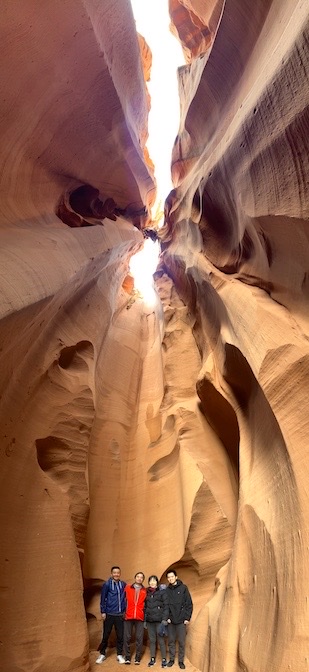
The third stop of our family winter break trip was the Ligai Canyon, and what an incredible experience it turned out to be. We had initially planned to visit Antelope Canyon, but all the tour tickets were sold out. Instead, the agent suggested we visit Ligai Canyon, a similar but lesser-known destination, the ticket is $70 per person, and we were pleasantly surprised by what we found.

Ligai Canyon is located on Navajo private property, and all the tour guides are from the same family. Our tour guide was knowledgeable and friendly, he shared a wealth of information about the Navajo culture and way of life. He told us about the significance of blue as a protective color and showed us his beautiful turquoise bracelet. He also shared details about the four sacred mountains, the use of native herbs for medicine, and the Navajo’s life on their huge ranch, which is 6 miles by 6 miles.

We had very small group, just 6 people, and the tour place was not crowded at all. The tour guide shared that when he was a child, the canyons were his playground, and he and his friends had parties in the upper Antelope Canyon during their high school years. He never imagined that people would pay theme park prices to visit these places that were once their playgrounds.

The Canyon truly captures the beauty and power of nature. It’s awe-inspiring to think about how the canyon was formed over millions of years by the forces of water and wind. The intricate patterns and shapes carved into the stone walls of the canyon are a testament to the sheer force of nature.

As you explore the canyon, you’ll be struck by the diversity of its features. From the heart-shaped carvings on the walls to the narrow pathways and towering cliffs, each aspect of the canyon offers something unique and breathtaking. The dynamic spiral shapes that wind their way up the walls are particularly mesmerizing, and add to the overall sense of movement and energy that permeates the canyon.

Another striking feature of the Ligai Canyon is its reddish hue. This rich, vibrant color is the result of the iron oxide in the rock, and adds an extra layer of beauty to an already stunning landscape. Whether you’re gazing up at the towering cliffs or admiring the intricate patterns on the walls, you’ll be awed by the sheer magnificence of this natural wonder.

At the end of the tour, our guide imparted some wise words to my two sons. He told them to learn from their grandparents and parents, and to hold onto their native language, as there is a wealth of wisdom and knowledge contained within it. My sons were deeply moved by his words, and I could see that they had taken his message to heart.

I hope that they will continue to pass down the Chinese culture to future generations, preserving its rich history and traditions. This was truly the highlight of the tour for me, and I am grateful for the guide’s insights and encouragement. By imparting these valuable lessons to my sons, he has given them a gift that they will carry with them for the rest of their lives.

Winter Break Family Trip — Ligai Canyon

Link:https://peacelilysite.com/2023/02/10/winter-break-family-trip-ligai-canyon/

#Travel#AntelopeCanyonValley#Trails#Hiking#LagaiCanyon #Navajo#LigaiCanyon#NativeAmerica

Heart: Lifetime Advice from Kazuo Inamori

Heart: Lifetime Advice from Kazuo Inamori

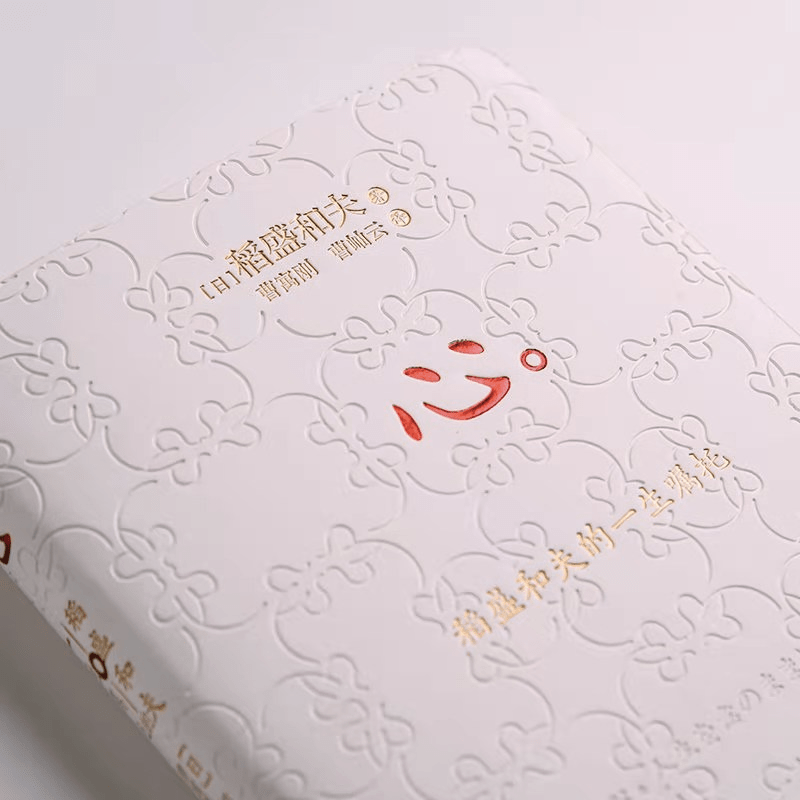
The book Heart: Lifetime Advice from Kazuo Inamori is a concise guide to practical philosophy that draws from Kazuo Inamori’s extensive experience and wisdom accumulated over 80 years. This timeless work offers insight into the elusive concept of the “heart”. Kazuo Inamori, as an entrepreneur, also shares his unique approach to business management in it. The book also serves as a valuable educational resource for children and families. Its teachings provide a strong foundation for personal and familial growth.

This book, Heart: Lifetime Advice from Kazuo Inamori, is the final literary masterpiece by Mr. Kazuo Inamori. Despite being close to 90 years of age at the time of writing, he still managed to create a valuable piece of work. His journey from being a rural boy to becoming a business icon is truly remarkable. The book provides an insightful perspective on his life and success, which is an inspiration to many. Everyone, regardless of their starting point, can relate to the book and use it as a guide to find their own path in life.

Mr. Kazuo Inamori had a humble background and his early life was marked by numerous setbacks and disappointments. In his book, he recounts his experiences, including failing the elementary school entrance exam twice, a bout of tuberculosis, and being unable to gain admission to college. Despite these obstacles, he went on to have a successful career.

Through reading this book, I came to understand the hierarchical wisdom it contains. The book speaks to readers on different levels and allows us to find our own place within its pages and be moved by the stories and lessons it shares.

Its message is inspiring, encouraging us to reach for the stars, even if we fall short, and reminding us that we can never be covered in mud while reaching for our dreams. This is why I never tire of reading “Heart” and find it so valuable.

One of my favorite experiences mentioned in the book about Mr. Kazuo Inamori is how his personal experiences have contributed to his successes. He has repeatedly used these experiences as inspiration and motivation for his continued success. This recurring theme is frequently mentioned throughout the book.

After graduating from college, when the job market was bleak, Mr. Kazuo Inamori struggled to find employment. Eventually, his teacher introduced him to a company where he could work, but the company was in dire straits, with partners quitting one by one until he was the only one left.

Most people would have been discouraged and defeated in such circumstances, but Mr. Kazuo Inamori made a different choice. He decided to completely change his mentality and work harder than ever. He was determined to give his best effort, no matter how challenging the environment was, and even went as far as to move into the laboratory to be closer to his work.

As he immersed himself in his work, he found that distractions such as the unfavorable social environment, company situation, and negative coworkers, faded away. Good ideas and new ways of thinking came to him naturally. Eventually, he developed a revolutionary new material that was ahead of its time.

The story of Mr. Kazuo Inamori and his company is truly remarkable, and he attributes his success not to improved abilities or favorable conditions, but to a change in his mindset. He realized that everything in life is a reflection of one’s heart, and that by changing his heart, he was able to change his life for the better. Through his experience, I learned that following one’s heart is not enough, but that it is important to continually refine and polish one’s heart, in order to live a happier and more fulfilling life.

Heart: Lifetime Advice from Kazuo Inamori

Link: https://peacelilysite.com/2023/02/08/heart-lifetime-advice-from-kazuo-inamori/

#Heart #Kazuo Inamori#Entrepreneur #lifetimeAdvice

Source: https://inf.news/en/culture/6fd795901e9fca6d356cff3c14c2566b.html, https://min.news/en/culture/c547e5e782fd8dc5224685327a340668.html

Celebrating the Chinese New Year in San Francisco’s Chinatown

Celebrating the Chinese New Year in San Francisco’s Chinatown

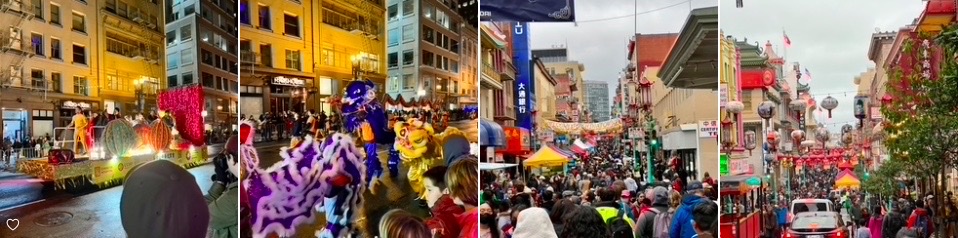
On Saturday, February 4th, the streets of San Francisco’s Chinatown were filled with the sounds and sights of the Chinese New Year parade. Thousands of people gathered to celebrate and enjoy the festivities.

The entire Chinatown was decorated in traditional Chinese style, adding to the already lively atmosphere. Street markets sold traditional Chinese goods and food, and the sounds of live music filled the air.

The parade, which started at 5 PM, was a highlight of the celebration. Floats, marching bands, and performers made their way through the crowded streets, bringing the excitement and energy to a whole new level. However, rain, showers and winds also joined the parade. That brought little bit uncomfortable to the crowds.

One of the highlights of the parade was the traditional lion and dragon dances, performed by skilled dancers dressed in colorful costumes. These dances are believed to bring good luck and prosperity for the new year, and the crowds were enthralled by the displays.

In addition to local performers, marching bands from Southern California and Oregon also made the journey to San Francisco to participate in the parade. The diversity of performers added to the already rich cultural atmosphere, and showcased the strong connection between the different Chinese communities across the United States. Despite the rain and showers, the spirit of the event was not dampened, and it was a beautiful tribute to the start of a new year.

As a proud Chinese, I was thrilled to participate in the Chinese New Year parade in San Francisco’s Chinatown. Living in the United States is a privilege, as this great nation has an open heart that accepts and embraces diverse cultures. I hope to see the US play a leading role in promoting peace and harmony globally.

Celebrating the Chinese New Year in San Francisco’s Chinatown

Link: https://peacelilysite.com/2023/02/08/celebrating-the-chinese-new-year-in-san-franciscos-chinatown/

#ChineseNewYear#ChineseCulture#SanFrancisco #ChinaTown#Parade

Ode to The Plum Blossom

Ode to The Plum Blossom

Recently, I stumbled upon breathtaking plum blossoms while taking a walk. These delicate flowers evoked feelings of warmth and joy, reminding me of the arrival of spring. In Chinese culture, plum blossoms, beyond just being a physical flower, have become a symbol of perseverance and resilience in the face of harsh winter conditions. This significance was achieved through the extensive descriptions, sublimations, and chanting by literati and scholars over the ages. In ancient China, plum blossoms were considered a lucky symbol and were welcomed as a sign of the arrival of spring during the New Year.

When I was a child, my father taught me to recite the poem “Ode to the Plum Blossom” by Zedong Mao, reminding me to be fearless and strong like the plum blossom that blooms amidst harsh winter conditions. I really like the poem, and can still remember it.

Ode to the Plum Blossom

—to the tune of Bu Suan Zi

By Zedong Mao, December 1961

Wind and rain escorted Spring’s departure, 

Flying snow welcomes Spring’s return. 

On the ice-clad rock rising high and sheer 

A flower blooms sweet and fair. 

Sweet and fair, she craves not Spring for herself alone, 

To be the harbinger of Spring she is content. 

When the mountain flowers are in full bloom 

She will smile mingling in their midst.

But after many years of struggles, I realized that bravery and strength aren’t always enough, especially in managing relationships and family. As a wife and mother, I learned the importance of being magnanimous, compassionate, forbearing, and not rigid. I have since embraced the peaceful and compassionate philosophy of Buddhism.

H.H. Dorje Chang Buddha III, the contemporary Buddha, wrote a poem “Plum Fragrance in the Holy Land.” He broke from traditional poetry styles, instead opting for surreal techniques to directly convey spiritual essence.

To the Tune of “Jiang Jun Song”

Plum Fragrance in the Holy Realm

Reveal her icy bearing and proud bones,

See how plum blossom commands the scene,

The crowd of beauties suddenly lacks color,

Seductive peach has lost its looks.

A few casual strokes,

So many eons of wind and dust.

The smoke and fire of the human world all disappears,

Leaving only a pure fragrance from the paper,

It wafts over me, awakening my mind.

The smile of the enchanted dream still remains,

Buddha Vajradhara has come

Three times to this world.

To this Buddha Land of merciful compassion

That great one has brought purity,

Feelings of the brush,

Traces of the brush,

One smile in the wind and dust,

Now the wind and dust,

So many eons of wind and dust.

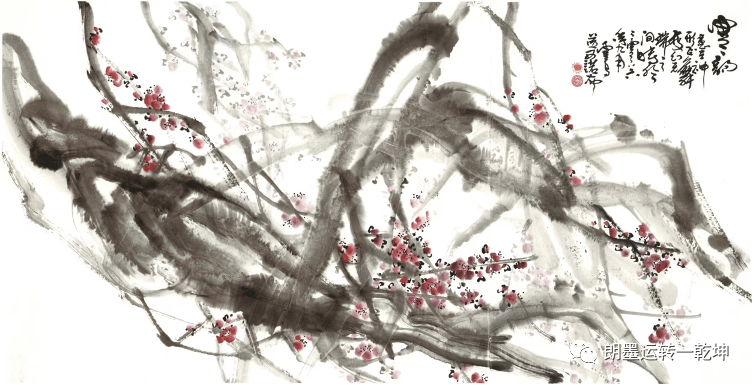
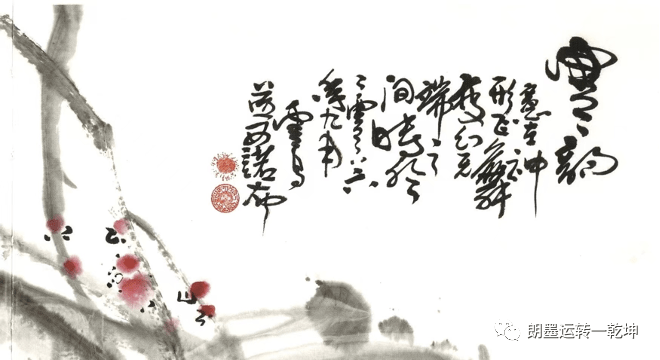
The Buddha also created an ink painting to accompany the poem. The poem delves deeper into the artist’s thoughts, while the painting provides a visual representation.

The plum blossoms depicted in the paintings symbolize the artist’s state of mind, embodying inner beauty refined from impurities. The brushwork, casually applied, was accomplished with an unfettered hand and detached mind, free of the slightest artificiality. It is a seemingly ever-changing work. Its charm, tone, transitions, and depictions represent the highest level of Eastern ink-and-wash paintings. A transparent layer of lighter ink on top of darker ink is clearly visible, imbuing the painting with a pure and fragrant air and providing the viewer with a feeling of comfort and ease.

The plum blossoms created by these skilled pens are eternal. While natural blooms may come and go, Buddha’s compassion remains steadfast.

Ode to The Plum Blossom

Link: https://peacelilysite.com/2023/02/02/ode-to-the-plum-blossom/

#DorjeChangBuddhaIII #HHDorjeChangBuddhaIII#DorjeChangBuddha#IAMA#InternationalArtMuseumofAmerica#ChinesePaintings#PlumBlossom#Paintings#

Source: https://www.oktranslation.com/LiteraryTranslation/lt_info32200.html

Dharma Assembly at Hua Zang Si — Holy Birthday of Maitreya Bodhisattva

Dharma Assembly at Hua Zang Si — Holy Birthday of Maitreya Bodhisattva

January 1st in the Chinese lunar calendar, is chinese Spring festival, it is the biggest holiday in china. It is also the holy birthday of Maitreya Bodhisattva – the next Buddha in the saha world. This is a special and joyful holiday that is celebrated by many. Hua Zang Si in San Francisco held a Dharma Assembly to celebrate this important occasion. It was the first Dharma Assembly of the year and it was held on a beautiful sunny day. Many laypersons participated in the event.

At the entrance of the temple is an oversize marvelous statue representation of a jolly, laughing Buddha: Maitreya Bodhisattva (the next Buddha in this Saha world). It is such a warm welcoming sign. The big belly not only means jolly, it also means tolerating the intolerable things in the world. So when you look at the statue, you will start to feel that learning Buddhism is happy and kind.

The Dharma Assembly was an opportunity for people to come together and celebrate the teachings of Maitreya Bodhisattva. It was a time for reflection and meditation, as well as a chance to learn more about the teachings of Buddhism. The atmosphere was filled with positivity and joy, as people came together to celebrate this important holiday.

In Chinese culture, Maitreya Bodhisattva is seen as a symbol of joy and tolerance. As practitioners of Buddhism, we are encouraged to strive to be like the Buddhas and Bodhisattvas by cultivating a broad mind, open heart, and great tolerance.

One of the key principles of Buddhism is patience and forbearance, particularly under insult. This is seen as a key aspect of self-cultivation and it is important to remember that everything in the dharma realms can change from ordinary to holy. This means that even difficult situations can be transformed and overcome through the practice of patience and tolerance.

Patience and tolerance are not just passive qualities, but rather active ones that require effort and practice. We must actively cultivate them in our daily lives and strive to maintain them even in difficult situations. Through this practice, we can transform our own minds and hearts, becoming more like the Buddhas and Bodhisattvas that we strive to emulate.

At the Dharma Assembly, we chanted the Eighty-eight holy Buddha name jeweled repentance sutra, in hopes that the Buddhas will wash away all of our sins and negative karmas. After the chanting, we offered a meal to the Buddhas and Bodhisattvas. The event concluded with a dharma talk given by Dharma Master Ruohui.

During her talk, Dharma Master Ruohui emphasized the importance of faith, vows, and actions for disciples of Buddhism. She explained that faith is the foundation of our practice, and that with strong faith, we will have the determination to follow the Buddha’s teachings and put them into action in our lives.

The Dharma Assembly was a meaningful event where participants not only had the opportunity to reflect on their own spiritual growth but also to make an impact on the world around them. During the assembly, the participants returned the merit to all living beings, holding the hope that they shall be rid of suffering, obtain happiness, and have the opportunity to listen to authentic Buddha Dharma.

The act of returning merit is an important aspect of Buddhist practice as it is believed that by dedicating the positive energy generated through our spiritual practice to the benefit of others, we can help bring about peace and prosperity in the world. By returning merit to all living beings, participants were able to contribute to the collective well-being of the world and make a positive impact on the lives of others.

Furthermore, the participants also held the hope that by listening to authentic Buddha Dharma, they will be able to perfect their fortune and wisdom, leading to a more prosperous and peaceful world for all. This is the ultimate goal of Buddhism, to help all beings to find inner peace, happiness and liberation from suffering.

Dharma Assembly at Hua Zang Si — Holy Birthday of Maitreya Bodhisattva

Link: https://peacelilysite.com/2023/01/26/dharma-assembly-at-hua-zang-si-holy-birthday-of-maitreya-bodhisattva/

#Buddha#Buddhism#BuddhistDisciple#MaitreyaBodhisattva#HuaZangSi#Tolerance#Cultivation#Assembly#ChineseLunarCalendar#ChineseNewYear