The lucky door in life is always inadvertently opened. Maybe it’s the blessings from the Buddha and Boddhisatva.
I remember that day, a critical turning pointin my life.I was exercising in the community that day, a surnamed Meng dharma sister asked me to worship the Buddha in the Buddhist Hall nearby. I agreed with her as soon as I heard the invitation. The dharma brothers and sisters made me feel at home. It’s totally different from the people I met in my life, most of whom treated me courteously but without sincerity. So I decided to chant sutras and listen to the recorded discourses expounded by H.H. Dorje Chang Buddha III with dharma brothers and sisters. I felt like it’s the place that I should come. Then I couldn’t help crying when chanting sutras, and I would repent. Every time after listening the recorded Buddha dharma discourses, I was filled with endless power.
To my shame, I never settle down to study, but hurry to come and leave the Buddhist Hall owing to busy work. With my diligence for listening the dharma discourses, I make progress and schedule time for study in the Buddhist Hall. Undoubtedly, we want to lead a good life, but learning Buddhism is more important, we can and we have to plan enough time for study.
On the National Day in 2016, I gave up travelling with my family but took part in the Avalokiteshvara Bodhisattva Great Compassion Empowerment Dharma Assembly, from which, I truly knew the great Buddha Dharma is true and real. The next day I converted to Buddhism. I was earnest and pious in studying Buddhism after conversion.
The Buddha taught us to conduct cultivation and introspection, to conduct three introspections in the course of a day. I found myself did many things that I should not do in the past, including killing other living beings. When I realized the retribution of killing, I decided not to kill, while turned to vegan at dinner, and on the first day and the fifteenth day of the lunar calendar.
I’ve been doing prostrations since the dharma assembly. Now I have a fit body and my wine tummy is gone. My blood pressure used to be a little bit high, but now it’s stable. I don’t feel panic or worried if travelling by plane or driving. I sleep well all night after chanting H.H. Dorje Chang Buddha III.
Some people think that it takes time to learn Buddhism and it will affect the business and work. However, my business is more prosperous since I’ve taken Buddhism. Numerous long-term orders come for me. Several days ago, the municipal government called me for delivery. I was surprised, because I didn’t have the resource superiority. I focused on social engagement and seldom stayed at home in the past. Now I cherish and care about my family. My son usually asks me to spend time with him. Taking Buddhism makes me healthier and my family relationships more harmonious.
I truly know that Buddhism brings me happiness, so I am determined to do my best to make offerings to Buddha Halls. With the help from dharma brothers and sisters, I set up a Buddha Hall at home. My family also join me to study Buddhism.
All above is my own experience. I hope everyone has the karmic affinity to study the true Dharma of Tathagata. We all eager for a happy life, but making money is only a part of it. The health and happiness we have on this side is temporary, while attaining the accomplishment and liberation on the other side is the truth.
My husband and I have a son and a daughter. My daughter was employed in a bank and my son ran a chemical business in the bonded area. Although the competition was fierce, my son was smart and flexible, he made his career. Soon the children grew to the age for marriage, we bought a car and a big suite at the lake scenic area. Then we had a daughter-in-law, married our daughter. We became grandparents the second year. My husband and I learned Buddhism and cultivation while taking care of our grandchildren. We lived a full life and enjoyed the happiness of our family. After two years’happy life, my son wanted to switch to project contraction because of the hard competition and low profit in the chemistry business. No matter how we discouraged him, he didn’t change his mind. Finally, we urged him not to gamble or turn to high-risk lenders, he should think twice and keep wits on dealing matters. My son flew to different cities to struggle for business. The assets could reach to ten million at most. At the peak of his career, he undertook hundreds of millions of decoration projects and led hundreds of workers. We often asked him about the business, he always understated the situation and told us not to worry, he said what we need to do was learning Buddhism and taking good care of the grandchild. Later, my son came back home more and more frequently, and he avoided answering phones in front of us. We became nervous. It was after different people came for millions of debts that we knew what was a bolt from the blue. I used to hear that Jack was bankrupt, Tom was cheated and John had an accident, but I didn’t expect that it was our turn. It turned out that my son put a lot of money into the project, and he also borrowed millions of money for emergency. The first party has to pay some money after the project passed the acceptance checks, but it withheld the money and didn’t fulfill the contract. My son sued the first party after he failed to get the money back in several months. However, the creditors were demanding to be paid every day. It is compulsory to pay what you owe. We deeply knew that we couldn’t err on the causality, so we tried our best to help our son to settle debts, but the money we had was still far from enough. We borrowed money from all people we knew without caring about losing faces. However, people usually busily embroidering more flowers on the brocade rather than sending charcoal to the needy on a snowy winter day. In this situation, we sold the house and car to repay most of the debts.
During the process, I remembered what H.H Dorje Chang Buddha III taught us: everyone knows to cultivate themselves in prosperity, the problem is how to deal with it in adversity? When you rise with money and power, or when you’re down and out with pain, can you remain the inner peace no matter how the circumstances change? This is a litmus test for me and my family. Taking Buddhism makes me realize that the process of impermanence is the truth. Our body will go bad, the wealth we have will dwindle, so are the house and car, now they’re just gone in advance. It’s all about causality. As long as we can make ends meet, nothing weighs more than life and death. No matter how rough life is, you must move forward, to make choices between the gain and loss and be strong in the experience. We will experience all kinds of hardships in the way of practice. Only if you want to extricate yourself from suffering do you truly cultivate yourself. To establish a mind determined to leave the cycle of reincarnation helps us leave suffering and obtain happiness in the end.
Though we are difficult in material condition, we have a rich spiritual life. We are lucky to have H.H Dorje Chang Buddha III imparting Buddha dharma in this world, we happily took refuge to the Buddha, Dharma and Sangha, and we listen and learn from the recorded Buddha dharma discourses with great joy. These can’t be bought with gold and silver. Anyway the wind blows, doesn’t really matter to me. With the light of Buddhism, my family and I will walk down the path firmly. My son becomes mature after this setback. I believe the lesson is a supporting condition for his life. If we don’t study Buddhism and believe in causality, this disaster may push my family into a doomed vortex. Crying our eyes out, holding grudges, be in a violent rage, collapsed after the straits and trying to commit suicide? No, we don’t behave like that. We settle our debts in causality, and demand unpaid money from the first party through legal methods. Buddhism gives us wisdom and power to deal with everything reasonably and calmly. All negative karmic conditions and sufferings make me and my family to cherish Buddhism and the chance for incarnating as a human being, guiding us to the path of bodhi. I believe every struggle after the hardship is the chance to change fate.
In the famous words of Ferris Bueller, “Life moves pretty fast. If you don’t stop and look around once in a while, you could miss it.” Put simply, gratitude is the intentional practice of noticing the good in your life. It relates to anything that makes you feel grateful, fortunate, or blessed.
It can be easy to get swept away in the fast lane and forget to stop and show your appreciation for what you do have. A life well lived is one of gratitude and thankfulness. Gratitude is the intentional practice of noticing the good in your life. It relates to anything that makes you feel grateful, fortunate, blessed. At this Thanksgiving holidays, we should think more and more about the things we are most grateful for in life.
To help you on your gratitude journey, here are 8 ways to have more gratitude in your daily life not just on Thanksgiving.
1. Don’t be picky: appreciate everything
Gratitude doesn’t have to be saved for the “big” things in life. The habit of being grateful starts with appreciating every good thing in life and recognizing that there is nothing too small for you to be thankful for.
Even if it is as simple as appreciating the clear weather or how quickly your mailman delivered your mail last Friday, don’t leave anything out when practicing your gratitude.
2. Find gratitude in your challenges
Gratitude is not only about being thankful for positive experiences. In fact, sometimes thinking about negative or difficult situations can help to really nail down what you have to be thankful for.
Western Buddhist master Jack Kornfield remembers an exercise he did with a man who was caring for his grandson while his son and daughter-in-law battled a drug addiction. Despite all that he had been through, the man was still able to find gratitude for the amount of compassion he had learned to show and the impact he was able to have on other people.
Dig a little deeper into some of your own past experiences and try to figure out how they have helped shape you into the person you are today.
3. Practice mindfulness
Sit down daily and think through five to ten things you are grateful for. The trick is that you need to picture it in your mind and sit with that feeling of gratitude in your body. Doing this every day will rewire your brain to be naturally more grateful, and you’ll start feeling happier after every session.
It only takes eight weeks of gratitude practice for people to start showing changed brain patterns that lead to greater empathy and happiness.
Your brain is a powerful tool, and training it towards gratitude is all part of ensuring that the gratitude comes more easily as you practice, so what are you waiting for?
4. Keep a gratitude journal
After your mindfulness session, write down your positive thoughts! Keeping a journal of all of the things you are thankful for can help you keep track of and refer back to the positives in your life.
Write down your positive thoughts to further focus your attention on the subject. While you are putting the pen to paper, you have no choice but to consciously think about the words you are writing without other distracting, ungrateful thoughts.
You can journal every day after your gratitude practice, or you can come back to the journal on a regular schedule weekly or monthly.
5. Volunteer
For many people, the key to having more gratitude is to give back to others in their local community. Not only will it make you more grateful for the things that you may take for granted, but studies have shown that volunteering for the purpose of helping others increases our own well-being, and thus our ability to have more gratitude.
University of Pennsylvania professor, Martin Seligman, supports this theory with his research in Flourish: A Visionary New Understanding of Happiness and Well-Being. After testing all kinds of variables that help improve our well-being, he found that volunteering is the single most reliable way to momentarily increase your well-being.
In other words: helping others helps you!
6. Express yourself
Sometimes it’s not enough to simply keep your gratitude to yourself. You can increase your feelings of gratitude by expressing that same gratitude to the people you care about.
Soul Pancake, a group that works to discover the “science of happiness,” ran an experiment where they encouraged people to write a letter to a person they were grateful for. By itself, this exercise increased their levels of happiness from 2 to 4%. However, when the same people made a phone call to the person they were thankful for to express their gratitude directly, happiness levels jumped from 4% to 19%.
Not only does expressing your gratitude for someone make their day a little brighter, but it can do wonders for increasing your own levels of gratitude and happiness in the long run
7. Spend time with loved ones
If you’re struggling with feeling the gratitude in the moment, go spend time with your friends and family. Of course it will help you grow closer to them and strengthen your relationship, but it will also give you a chance to practice your acts of gratitude on people that you care about.
Start small if they’re having trouble finding ways to support your friends and family. For instance, why don’t you make sure you’re listening intently the next time someone shares a story with you instead of waiting for your own chance to speak? Or start a conversation with a difficult member of the family by complimenting their new shoes or hair-cut.
8. Improve your happiness in other areas of your life
Being grateful can make you happy, but being happy can also make you grateful. There are plenty of other ways to get your mood up, including exercising or participating in a hobby you enjoy.
Once you are feeling the endorphins flow, showing gratitude will become even easier and you’ll start to be able to make list after list of all of the things in your life you’re thankful for.
How would you define a “spiritual entrepreneur?” Would you cite yoga teachers or therapists as examples? Well, spiritual entrepreneurs are not any different from other entrepreneurs in terms of the services they provide. What makes a regular entrepreneur a spiritual one is their sense of purpose. These are the business people driven by their desire to help, not by a love for money.
How does one maximize business success as a spiritual entrepreneur?
Law of Attraction and Divine Transmission expert Divina Caballo introduces a new way of spiritual entrepreneurship – where profits meet the purpose. Wanting both financial gains and spiritual entrepreneurship might seem counterintuitive, but they are not. Caballo lists three ways by which every spiritual entrepreneur can enjoy a wealth of both – profits and purpose.
Clearly Define Your Measures of Success
Business success means different things to different people. So what does it mean to you? Before you begin working on ways to maximize something, Caballo recommends spending some time defining the metrics of measurement.
She says, “Running blindly, goalless like a headless chicken, will not do you any good. Sit down. Take a minute. Think. And note down the end goal.”
From the number of clients you need to the brand image you have in mind, make a note of all the vital cornerstones of your business. Making concrete financial plans, along with cementing other actionable goals, goes a long way.
Be A ‘Work in Progress’
The shift to a spiritual entrepreneur begins with a mindset change. Every day will be a new learning experience, but as long as your mind remains closed off to them, no experience could succeed in teaching you something new.
Divina Caballo advises, “Before you commence your journey of being of service to others, make a commitment to yourself to embrace learning for a lifetime. Discovering self-expression is where it all begins, and you build from there on.”
This might seem not very clear at first. You might be wondering what your innermost self has got anything to do with helping other people. And according to Caballo, you do not need to look too far for the answer. “There are many different types of spiritual entrepreneurs, and each type differs greatly from the next. But there is one thing that they all have in common: they are all working towards a goal that lies closest to their hearts.”
Find People Who Click with You
Business is all about community, and that rings truer than ever when it comes to spiritual business. So find your community and build your audience.
“Realistically speaking, one can use social media as a reliable medium to gather like-minded individuals united by a shared cause greater than any one of them that binds them together in service for eternity,” says Caballo.
Not unlike most other businesses today, social media also proves to be an excellent channel to promote one’s business. As an entrepreneur, you can not only attract potential clients there, but you can also find inspiration and ideas from other people.
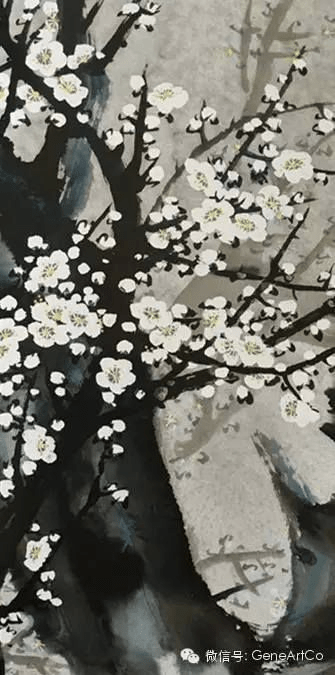
One of the most beloved flowers in China, the plum blossoms (méi-huā, 梅花) have been frequently depicted in Chinese painting and poetry for centuries. The Chinese see its blossoms as both a symbol of winter as well as a harbinger of spring. It is precisely for this reason that the blossoms are so beloved, as they bloom most vibrantly amidst the winter snow, after most other plants have shed their leaves, and before other flowers appear. They are seen as an example of resilience and perseverance in the face of adversity. Though neither the plum tree nor its blossoms are very striking, they manage to exude an otherworldly exquisiteness and beautiful elegance. The demeanor and character of the plum tree thereby serves as a metaphor for inner beauty and humble display under adverse conditions. Because they blossom in winter, the plum blossom is a member of the “Three Friends of Winter (歲寒三友)”, along with the pine and the bamboo. The plum blossom is also a member of the “Four Gentlemen (四君子)” in Chinese art (the others being orchid, bamboo, and chrysanthemum), symbolizing nobility. In China, there are over 300 recorded cultivars of mei, which can be broadly divided by color into white, pink, red, purple, and light green types.
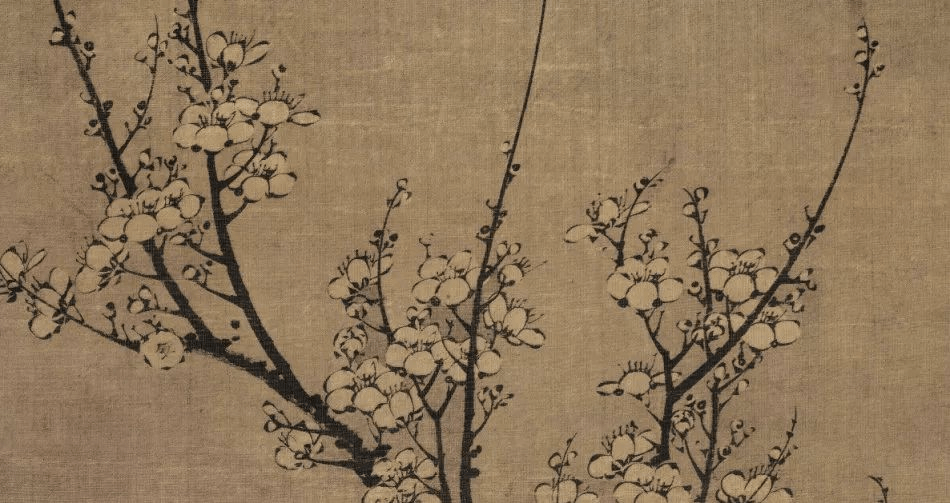
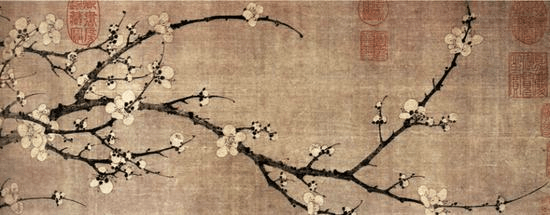
When we look through all of the ancient and modern books on plum blossom paintings, it is not difficult to discover that all of the famous master plum blossom painters had extensive knowledge, deep understanding of ancient and their own contemporary times, and immense talents. No artist in history can be found who lacked virtue and learning and still was capable of painting highly exquisite plum blossom paintings. The plum blossom paintings of ancient artists such as Mian Wang and Dongxin Jin and the modern artist Changshuo Wu are splendid works based upon the profound knowledge and virtue of their creators.
Mian Wang ( 1287-1359 ) : Early Spring at South Corner of Garden
Artist: Dongxin Jin (1687 – 1764)
Artist: Changshuo Wu (1844 – 1927)
As a contemporary artist, the Pop of Buddhist, H.H. Dorje Chang Buddha III has also painted dozens of masterpieces of plum blossom compositions. All in the book entitled Collected Plum Blossom Paintings, Calligraphy, Poems, and Songs. Wielding the brush with great facility, His Holiness creates paintings that are completely devoid of mundane garishness, have the exquisite look of ancient bronze and stone inscriptions, and are imbued with a scholarly air. His Holiness’s painting skills have surpassed the ordinary and reached the consummate mastery of a holy being. Below are several art works from the book. Some of the paintings are in the exhibition of The International Art Museum of America.
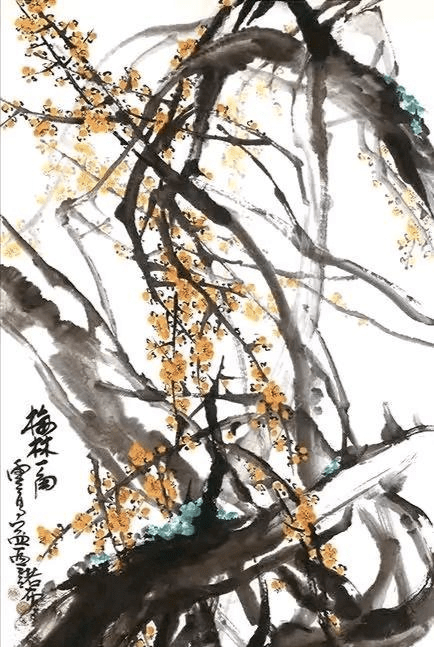
Small Portion of a Plum Grove
Yellow plum blossoms bloom in winter and are generally used during Chinese New Year celebrations as a symbol of great auspiciousness. The painting expresses beauty of a real plum blossom grove.
Drunk in a Green Garden
The turquoise plum blossom is a rare species of plum blossom. These elegant, sublime flowers have a strong resistance to coldness and a scent that is quite fresh and fragrant. This painting has a vigorous and firm style yet maintains great simplicity. The brushwork is bold, vigorous, and completely unconstrained. Large, dancing strokes of a casual hand and free mind bring to form branches and twigs.
Plum Fragrance in the Holy Realm
The brushwork, casually applied, was accomplished with an unfettered hand and detached mind, free of the slightest artificiality. It is a seemingly ever-changing work. Its charm, tone, transitions, and depictions represent the highest level of Eastern ink-and-wash paintings. A transparent layer of lighter ink on top of darker ink is clearly visible, imbuing the painting with a pure and fragrant air and providing the viewer with a feeling of comfort and ease.
Winter Powder
A most elegant and valued plum flower called ‘Dong Fen” (winter powder). It is widely known to be the king of whiter plum blossoms. A strong contrast is presented by the graceful dense ink that was used to paint the tree trunk and the whiting used to form the flowers. The spatial effect of fairness adds to the charm of the picture, showing an awareness of both emptiness and form. A very special aspect of this painting is that the artist did not apply powerful, bold strokes of uneven contour and content. Rather, ink was applied through a gradual moistening process, manifesting the strong talent of the artist.
God grant me the serenity to accept the things I cannot change; courage to change the things I can; and wisdom to know the difference.
Living one day at a time; enjoying one moment at a time; accepting hardships as the pathway to peace; taking, as He did, this sinful world as it is, not as I would have it; trusting that He will make all things right if I surrender to His Will; that I may be reasonably happy in this life and supremely happy with Him forever in the next. Amen.
The Serenity Prayer is well known by both believers and non-believers. The famous prayer asks for God’s help achieving something that most people desire but few can achieve: peace and happiness in life. Unlike many prayers that ask for peace or happiness, the Serenity Prayer does not simply ask that God hand a person peace wholesale. Instead, the prayer lays out specific steps that will help a person achieve serenity in their life and asks God to help them gather the strength to live by those smaller goals. The Serenity Prayer does not so much ask for a gift as much as it asks God to help a person create or earn their own peace.
The first half of the Serenity Prayer is the most commonly quoted section of the prayer. The prayer has inspired millions of people, Christians and non-Christians alike. This beautiful prayer, however, is so often quoted that its wisdom can be lost. Here is a breakdown of the wisdom of the Serenity Prayer.
God grant me the serenity to accept the things I cannot change… Everyone has things in their life they wish that they could change, whether it is something as small as the traffic and congestion that fills a person’s daily commute or something as serious as a loved one’s diagnosis with terminal cancer. When faced with something we wish we could change, we often fight it. We rage against the congested traffic and fall prey to road rage. We deny the terrible news of a deadly diagnosis and stick our heads in the sand. We hide from the truth. We hate it. We curse it. We do the spiritual equivalent of punching a brick wall and expecting the wall to come down instead of our knuckles to bruise and split and break. In our hearts we know that there is nothing we can do to change some facts of life. People will die. Tragedies will happen. The inevitability of those facts does not make them less horrible, but it does mean that there is nothing we can do about it.
The first two lines of the Serenity Prayer ask for perhaps one of the hardest things of all: the strength to both accept that some things are out of our control and come to peace with that fact rather than drowning in useless, toxic rage.
Courage to change the things I can… People love to complain. Think about it. How often do our coworkers start the week not with a smile and story about something pleasant they did over the weekend but a moan, groan or curse about the first day of the work week? When starting a conversation, do we share our joy? Unfortunately, we are much more likely to start a conversation by complaining about something, even something as small as the weather. Complaints seem to be our go-to form of communication, but how often do people really try to change what they claim so grievously offends, inconveniences or angers them?
In the age of social media and the internet, it is easier than ever to jump on the bandwagon and complain about an event, person, policy or organization. Ironically, many of the loudest virtual voices have never done a thing to help the causes they claim matter so much. It is easy to complain, especially from behind the protection of a screen name and keyboard. It is not easy to actually enact change. It is not easy to go up to someone we respect and say “I disagree.” It is not easy to face down someone who is screaming with hate and say, civilly and respectfully, “You are wrong and here is why.” Truly creating change does not happen from behind a screen or around a water cooler. It takes time, effort, energy and, yes, risk.
The penultimate line of the first stanza of the Serenity Prayer asks God to help us find the inner strength and deep well of bravery we all possess and turn that willpower and courage toward bringing about the changes that matter to us.
And the wisdom to know the difference. Discernment is one of the most difficult skills to master especially when it comes to dealing with our ability to influence the world around us. We often have an overinflated sense of our own power to enact change. On some subconscious level, we truly believe that we can make other people see our point of view if we just have one more conversation with them, explain our position one more time or, sometimes, yell loudly enough. This, of course, is ridiculous. People do not change their minds when others shout at them or call them names. Even those who try to change events or others’ opinions with civil, respectful behavior often find themselves frustrated as things refuse to change. This is because the things they want to influence are not within their ability to alter. Discerning what we can change and what we simply wish we could change is not easy. The Serenity Prayer recognizes that very human refusal to admit defeat and accept that something is out of our hands. As such, the prayer asks for God’s help discerning what we can truly control and what we merely wish we could influence.
Living one day at a time, enjoying one moment at a time We all know someone who is never really present in the moment. They may be worrying constantly about tomorrow or forever daydreaming about the next great thing that they believe will happen in their life. They never take the time to enjoy the moment they are standing in or to revel in the life they live. Their focus is always on something else. Unfortunately, when we are focused on something in the far off future or distant past, whether good or bad, we let life pass us by. Whether we want to admit it or not, most of life is composed of the little moments that so many of us ignore. When we are worrying about the big presentation we have at work later in the week, we are not paying attention to our spouse who is longing for some emotional connection. When we are consumed with excitement for our cruise next month, we miss the friend who was looking to simply catch up over lunch. The Serenity Prayer reminds us that those little moments—the butterfly perched on the flowers by the office door, the smile of our child when she sees that daddy’s home, the smell of fresh baked cookies–get lost so easily even though those little moments are the ones that make up most of our lives and make our lives worth living.
Accepting hardships as the pathway to peace No one likes to focus on the difficulties that come with life. For all that people love to complain, no one really wants to have a troubled life. We want to be able to win the competition of “who had the worst day,” but we do not actually want to be miserable. We want to have our cake and eat it, too. Unfortunately, this is not possible. Hardships will come up in life, but they are so much more important than a way to win the misery Olympics that so often take place at family dinners or around the water cooler.
“Nothing worth doing was every easy.” This cliché phrase has been both revered for its truth and reviled for its unpleasant reality, but there is no denying its accuracy. Finding love is difficult, and marriages are hard work. Few relationships, however, come close to being as fulfilling as a loving marriage. Parenting is a lifetime of staring at the ceiling at night wondering if we are screwing up our kids irreversibly. That does not mean that it is not the most important job on earth. Almost anything that will bring us true lasting happiness and peace instead of transient pleasure comes with difficulty and trial. In moments when we want to walk away, the Serenity Prayer reminds us that those struggles will be worth it in the end.
Taking, as He did, this sinful world as it is, not as I would have it The world is not perfect. Anyone who would say otherwise is naïve, blind or has their head buried so deep in the sand that their hair is poking through the grass on the other side of the globe. The advent of 24 hour news and the internet has driven home the imperfection of the world in all its gruesome, filthy, nightmarish detail. The worst of humanity is regularly on display as both natural and human made disasters dominate the news and religious extremism and terrorism are documented with sickly loving detail. Given that the horrors of the world are regularly shoved down our throats, is it any wonder that many people would prefer to hide under the covers and pretend that everything is just hunky dory?
Hiding from reality, however, does nothing to change what is actually happening in the world. Distorting facts and figures to feed a popular narrative robs those actually hurt of any chance of enacting real change. The key to dealing with this world is to accept it as it is, both the good and the bad. It is wrong to pretend away the suffering of others, but it is not right to rub the worst of human depravity in the face of someone who is counting their own blessings. The Serenity Prayer makes it clear that we need to deal with reality, not wishful fantasy. To do that, we need to celebrate the highs and spread the good as far and as wide as we can. We need to mourn the lows and fight fiercely to correct what wrongs we can. We cannot change reality when we do not even know what is real.
Trusting that He will make all things right if I surrender to His Will Trust is one of the key components of the Christian faith. Christians must trust that God has a plan for their lives. They must trust that everything, even terrible things, happen for a reason. Painful though it may be, they must trust that their loved ones who die are going to a better place. Trust, however, does not always come easily. Christians who are mourning a lost parent, spouse, friend or, worst of all, a child, may find themselves raging against God and questioning everything they ever believed.
While hardship and trial sometimes brings a person’s faith to its knees, the hottest fires sometimes forge the strongest faith. Those people who come out of trials with both a faith core of steel and a deepened trust in God are often those who manage to accept, somehow, that God is in control even when everything around them is going to hell in a handbasket. Even when life is easy-breezy and good, however, it is not always easy for us to trust in God and surrender. We want to take control. We want to be in charge. The Serenity Prayer reminds us, though, that what we can influence is so much smaller than what God can determine. Whether we like it or not, we are being dragged in the direction God wants us to go, so we may as well stop fighting, go with the flow and trust that He has our best interests at heart.
So that I may be happy in this life Everyone wants to be happy. We know that this life is too short, and we want to enjoy every minute of it. We want to spend our days smiling and laughing. We want to feel both joy and excitement and treasure every moment. The desire to be happy is one of the most natural desires of humanity. Our very biological drive to survive is based on our need to be happy. Our bodies are hardwired to use a biological reward-based system to keep us alive. When we do something that helps us survive, we are rewarded with a surge of dopamine, a feel-good chemical. These hormonal surges come when we eat, sleep, talk with other human beings and have sex. These processes are necessary for the continuation of the human species. Staying happy in this life, however, is not just about fulfilling biological urges. We are hardwired to do more than survive. Dopamine floods our brains when we truly live. Singing, dancing, creating and exploring new things all trigger dopamine. The Serenity Prayer helps remind us that, despite what some fire-and-brimstone sermons say, aiming to be happy in this life is nothing to be ashamed of as long as we do not trade morality for transient pleasure. This, however, rarely happens when we do what is hardwired to be one of our greatest natural sources of happiness: connecting with and helping others.
And eternally happy with Him forever and ever in the next. Christians know that there is more than just this world. There is another world that is free of the horrors and tragedies that plague this world. Our current world is painfully imperfect, but that does not make it devoid of beauty. God’s hand is everywhere in the world, and hope can be found in even the darkest and most dangerous of times. The beauty and good of this world, however, pale in comparison to what is waiting in the next world with Jesus Christ Himself. When we pursue happiness and peace in this life, we must be sure not to get so caught up in earthly pleasures that we take our eyes off the ultimate prize: eternal life with Christ in the next life. The Serenity Prayer helps us focus on what we need to do to achieve happiness and peace in this life, but the final two lines of the prayer make sure to remind us that there is more, much more, than just this life. It reminds us to keep the next life in mind even as we strive to enjoy this one and to change this world for the better.
The Serenity Prayer is well known by both believers and non-believers. It offers simple, but effective methods to truly begin to feel peace in this life, but it also reminds us of what is waiting for us in the next life. It asks God not to fix our lives for us but to lend us the strength to correct them for ourselves. It offers inspiration and advice in equal measure and reminds the faithful that with God anything is possible.
There are so many beautiful, powerful and life changing lessons you can learn from studying Buddhism and from reading many of Buddha’s quotes.
Here are 20 Life Changing Lessons from Buddha:
1. Love heals all things. “Hatred does not cease by hatred, but only by love; this is the eternal rule.”
2. It’s not what you say but what you do that defines you. “A man is not called wise because he talks and talks again; but if he is peaceful, loving and fearless then he is in truth called wise.”
“A dog is not considered a good dog because he is a good barker. A man is not considered a good man because he is a good talker.”
3. The secret of good health is to live fully in the NOW. “Do not dwell in the past, do not dream of the future, concentrate the mind on the present moment.”
“The secret of health for both mind and body is not to mourn for the past, nor to worry about the future, but to live the present moment wisely and earnestly.”
4. Words have the power to both hurt and heal. “Words have the power to both destroy and heal. When words are both true and kind, they can change our world.”
5. Let it go and it will be yours forever. “You only lose what you cling to.”
6. No one can walk your path for you. “No one saves us but ourselves. No one can and no one may. We ourselves must walk the path.”
7. Happiness never decreases by being shared. “Thousands of candles can be lit from a single candle, and the life of the candle will not be shortened. Happiness never decreases by being shared.”
8. Be kind to all. “Resolve to be tender with the young, compassionate with the aged, sympathetic with the striving and tolerant with the weak and wrong. Sometime in your life, you will have been all of these.”
“Have compassion for all beings, rich and poor alike; each has their suffering. Some suffer too much, others too little.”
“Teach this triple truth to all: A generous heart, kind speech, and a life of service and compassion are the things which renew humanity.”
9. Don’t believe everything you are told to believe. “Do not believe in anything simply because you have heard it. Do not believe in anything simply because it is spoken and rumored by many. Do not believe in anything simply because it is found written in your religious books. Do not believe in anything merely on the authority of your teachers and elders. Do not believe in traditions because they have been handed down for many generations. But after observation and analysis, when you find that anything agrees with reason and is conducive to the good and benefit of one and all, then accept it and live up to it.”
10. As you THINK so shall you be “All that we are is the result of what we have thought: it is founded on our thoughts and made up of our thoughts. If a man speak or act with an evil thought, suffering follows him as the wheel follows the hoof of the beast that draws the wagon…. If a man speak or act with a good thought, happiness follows him like a shadow that never leaves him.”
11. Let go of fear. “The whole secret of existence is to have no fear. Never fear what will become of you, depend on no one. Only the moment you reject all help are you freed.”
12. The truth has a way of always leaking out. “Three things cannot be long hidden: the sun, the moon, and the truth.”
13. Control your mind or it will control you. “To enjoy good health, to bring true happiness to one’s family, to bring peace to all, one must first discipline and control one’s own mind. If a man can control his mind he can find the way to Enlightenment, and all wisdom and virtue will naturally come to him.”
“It is a man’s own mind, not his enemy or foe, that lures him to evil ways.”
14. Doubt separates. Trust unites. “There is nothing more dreadful than the habit of doubt. Doubt separates people. It is a poison that disintegrates friendships and breaks up pleasant relations. It is a thorn that irritates and hurts; it is a sword that kills.”
15. Nobody is more deserving of your love than you yourself are. “You can search throughout the entire universe for someone who is more deserving of your love and affection than you are yourself, and that person is not to be found anywhere. You, yourself, as much as anybody in the entire universe, deserve your love and affection.”
16. Knowing others is wisdom, knowing yourself is enlightenment. “It is better to conquer yourself than to win a thousand battles. Then the victory is yours. It cannot be taken from you, not by angels or by demons, heaven or hell.”
17. Let go of attachment. “To live a pure unselfish life, one must count nothing as one’s own in the midst of abundance.”
18. Choose your friends wisely. “An insincere and evil friend is more to be feared than a wild beast; a wild beast may wound your body, but an evil friend will wound your mind.”
19. There is no way to happiness. Happiness is the way. “There is no path to happiness: happiness is the path.”
20. Love. Live. Let go. “In the end these things matter most: How well did you love? How fully did you live? How deeply did you let go?”
The monkey king in Journey to the West was such a thrilling, fascinating, and happy memory in my childhood. I have read the books, comic booklets, and watched the cartoon movies about it many times. The one I liked the most is “The Monkey King makes an Uproar in Heaven”. It ignited my imagination. I wished I could fly on the clouds just like the Monkey King.
The Monkey King is born on Flower Fruit Mountain from a stone egg that forms from an ancient rock created by the coupling of Heaven and Earth. He first distinguishes himself by bravely entering the Water Curtain Cave on the mountain; for this feat, his monkey tribe gives him the title of “Handsome Monkey King (美猴王).” After seeing a fellow monkey die because of old age, he decides to travel around the world to seek the Tao, and find a way to be able to live forever. He eventually found the “Grand Master of Bodhi (菩提祖師),” who taught him the 72 heavenly methods of transformation and a “sumersault cloud” which allows him to travel 108,000 chinese kilometer, almost instantaneously. The Grand Master also give him a name Sun Wukong. Sun is the Sir name, Wukong means “Awakened to Emptiness”.
After angering several gods and coming to the attention of the Jade Emperor, he is given a minor position in heaven as the Keeper of Horses (弼馬溫) so they can keep an eye on him. When Sun realizes that he was given the lowest position in heaven and is not considered a full-fledged god, he becomes very angry. Upon returning to his mountain, he puts up a flag and declares himself the “Great Sage Equal to Heaven (齊天大聖).” The Jade Emperor dispatches celestial soldiers to arrest Sun Wukong, but none succeed.
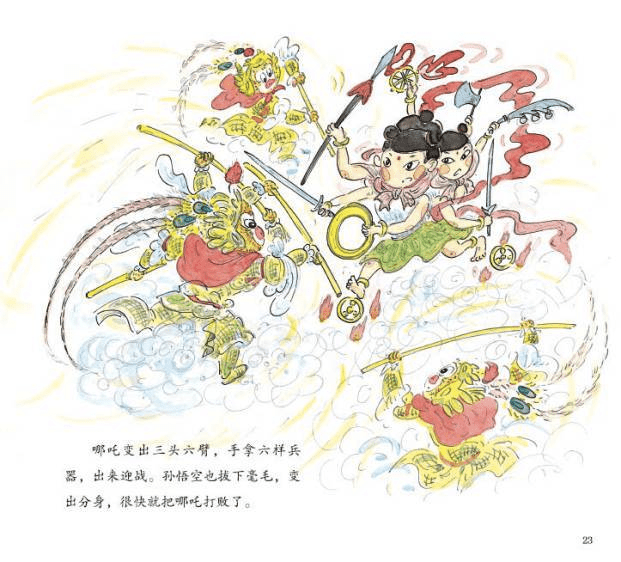
The Jade Emperor has no choice but to appoint him to be the guardian of the heavenly peach garden. The different varieties of peach trees in the garden bear fruit every 3,000, 6,000, and 9,000 years, and eating their flesh will bestow immortality and other gifts, so Sun Wukong eats nearly all of the ripe peaches. Later, after fairies who come to collect peaches for Xi Wangmu‘s heavenly peach banquet inform Sun Wukong he is not invited and make fun of him, he once again begins to cause trouble in Heaven, stealing heavenly wine from the peach banquet and eating Laozi‘s pills of immortality. He defeats an army of 100,000 celestial troops, led by the Four Heavenly Kings, Erlang Shen, and Nezha.
Eventually, the Jade Emperor appeals to the Buddha, who seals Wukong under a mountain called Five Elements Mountain after the latter loses a bet regarding whether he can leap out of the Buddha’s hand in a single somersault. Sun Wukong is kept under the mountain for 500 years and cannot escape because of a seal that was placed on the mountain. He is later set free when Tang Sanzang comes upon him during his pilgrimage and accepts him as a disciple.
When I grew up, I started my own journey in searching the truth and meaning of life and universe. I dabbled in different religions. Finally I became a buddhist. There were many supernormal manifestations in buddhist Sutras. Buddhas, Bodhisattvas and holy venerable ones, demonstrated much much more powers than the monkey king. Such as stories of Shariputra’s action power by wisdom, Mahamaudgalyayana’s supernatural power of going a long distance in a shot time, Master Mi Hong’s trip from Shigatse to ChengDu, etc…. In Buddhism teaching, every disciple who has received initiation has the potential to quickly obtain supernormal dharma powers through practice. One has the potential to easily assume an infinite variety of forms and obtain good worldly fortune.
In the dharma discourse Learning from Buddha, imparted by H.H.Dorje Chang Buddha III. I learned there is a Buddha Dharma called “Fine Horse Traversing the Sky Stepping on Clouds”. When a qualified disciple practice this Dharma, he can fly in the sky. Here is the true account of a fast-flying buddhist nun.
(Reported from Los Angeles) In September 2013, an event of supernatural phenomenon occurred in Los Angeles. Scientists have not been able to explain it. This was about a 49-year old Buddhist nun named Jian Hui, a disciple of H.H.Dorje Chang Buddha III, flying at a speed of 700 km per hour.
This event happened at a Buddhist assembly for beseeching auspiciousness, favorable weather, eliminating disasters, and increasing good fortune. The more than 50 attendees are all famous Buddhist figures. At the time, the ceremonial process required chanting a sutra and burning a letter of petition every 10 minutes. When the fifth letter of petition was to be burned, it was discovered that this letter of petition had been lost by this nun named Jian Hui. She was very sad and could not keep her from crying. Because the assembly could not be stopped and the steps of chanting sutras and burning letters of petition must be followed in the predefined order, it was decided that Jian Hui was to go to Hua Zang Si’s Southern-California satellite monastery located in Monterey Park to get this letter of petition. Some time had passed since Jian Hui left. People became very anxious and they called the satellite monastery to ask when the letter of petition can be brought back. The nuns at that monastery passed the phone to Jian Hui. Jian Hui was quite angry on the phone and said, “Don’t make a fuss! I will be back as soon as possible!” Sure enough, within three minutes after putting down the phone, Jian Hui returned to the site of the ceremony from the monastery that is 12 kilometers away. People at the site were all stunned. A nun at the site named Zheng Hui was very surprised and called the monastery to inquire the whereabouts of Jian Hui. The reply from the monastery was that Jian Hui left just three minutes ago. Further verification later also revealed that, after the phone conversation, Jian Hui also spent time to teach people chanting mantras before leaving for the site of the assembly. Based on the calculation that subtracted the time of delay, Jian Hui traveled this distance of 12 kilometers within at most one minute.
Zheng Hui planned to write this event in a book. To verify the facts, she went to the monastery to talk to the nuns there. They all confirmed, “When you called and said that she had returned to your place, it was just a very short while after she had left.” Zheng Hui then asked Zheng Xue, the nun who handed the phone to Jian Hui, where she was at the time. Zheng Xue took this question as distrusting her and was very upset. She kneeled down in front of the statue of Amitabha Buddha and took an oath against heavy consequences to swear that she received the phone call at the monastery and handed the phone to Jian Hui in person inside the Buddha hall of the monastery. If she told a lie, she is willing to descend into the hell realm. Zheng Hui also took an oath against heavy consequences to swear that, within three minutes after her phone conversation with Jian Hui, Jian Hui returned to the site of the assembly. She is also willing to descend into the hell realm if what she said is untrue. Moreover, eminent Buddhist monks including Gar Tongstan IV Ciren Gyatso, Kaichu, Akou Lamo, Shi Miao Kong, Shi Long Hui, Shi Jue Hui, Shi Kui Zhi and others also completely confirmed from their respective personal presences and witnesses at the two locations that the above event was completely true.
Buddhist Tales for Young and Old, volume 1, Prince Goodspeaker, Stories 1-50
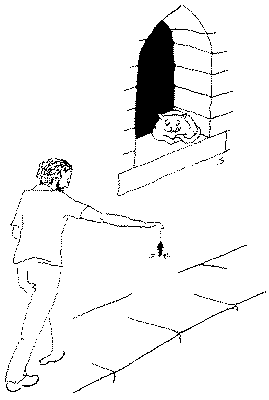
Once upon a time, an important adviser to a certain king was on his way to a meeting with the king and other advisers. Out of the corner of his eye, he saw a dead mouse by the roadside. He said to those who were with him. “Even from such small beginnings as this dead mouse, an energetic young fellow could build a fortune. If he worked hard and used his intelligence, he could start a business and support a wife and family.”
A passerby heard the remark. He knew this was a famous adviser to the king, so he decided to follow his words. He picked up the dead mouse by the tail and went off with it. As luck would have it, before he had gone even a block, a shopkeeper stopped him. He said, “My cat has been pestering me all morning. I’ll give you two copper coins for that mouse.” So it was done.
With the two copper coins, he bought sweet cakes, and waited by the side of the road with them and some water. As he expected, some people who picked flowers for making garlands were returning from work. Since they were all hungry and thirsty, they agreed to buy sweet cakes and water for the price of a bunch of flowers from each of them. In the evening, the man sold the flowers in the city. With some of the money he bought more sweet cakes and returned the next day to sell to the flower pickers.
This went on for a while, until one day there was a terrible storm, with heavy rains and high winds. While walking by the king’s pleasure garden, he saw that many branches had been blown off the trees and were lying all around. So he offered to the king’s gardener that he would clear it all away for him, if he could keep the branches. The lazy gardener quickly agreed.
The man found some children playing in a park across the street. They were glad to collect all the branches and brush at the entrance to the pleasure garden, for the price of just one sweet cake for each child.
Along came the king’s potter, who was always on the lookout for firewood for his glazing oven. When he saw the piles of wood the children had just collected, he paid the man a handsome price for it. He even threw into the bargain some of his pots.
With his profits from selling the flowers and the firewood, the man opened up a refreshment shop. One day all the local grass mowers, who were on their way into town, stopped in his shop. He gave them free sweet cakes and drinks. They were surprised at his generosity and asked, “What can we do for you?” He said there was nothing for them to do now, but he would let them know in the future.
A week later, he heard that a horse dealer was coming to the city with 500 horses to sell. So he got in touch with the grass mowers and told each of them to give him a bundle of grass. He told them not to sell any grass to the horse dealer until he had sold his. In this way he got a very good price.
Time passed until one day, in his refreshment shop, some customers told him that a new ship from a foreign country had just anchored in the port. He saw this to be the opportunity he had been waiting for. He thought and thought until he came up with a good business plan.
First, he went to a jeweler friend of his and paid a low price for a very valuable gold ring, with a beautiful red ruby in it. He knew that the foreign ship was from a country that had no rubies of its own, where gold too was expensive. So he gave the wonderful ring to the captain of the ship as an advance on his commission. To earn this commission, the captain agreed to send all his passengers to him as a broker. He would then lead them to the best shops in the city. In turn, the man got the merchants to pay him a commission for sending customers to them.
Acting as a middle man in this way, after several ships came into port, the man became very rich. Being pleased with his success, he also remembered that it had all started with the words of the king’s wise adviser. So he decided to give him a gift of 100,000 gold coins. This was half his entire wealth. After making the proper arrangements, he met with the king’s adviser and gave him the gift, along with his humble thanks.
The adviser was amazed, and he asked, “How did you earn so much wealth to afford such a generous gift?” The man told him it had all started with the adviser’s own words not so long ago. They had led him to a dead mouse, a hungry cat, sweet cakes, bunches of flowers, storm damaged tree branches, children in the park, the king’s potter, a refreshment shop, grass for 500 horses, a golden ruby ring, good business contacts, and finally a large fortune.
Hearing all this, the royal adviser thought to himself, “It would not be good to lose the talents of such an energetic man. I too have much wealth, as well as my beloved only daughter. As this man is single, he deserves to marry her. Then he can inherit my wealth in addition to his own, and my daughter will be well cared for.”
This all came to pass, and after the wise adviser died, the one who had followed his advice became the richest man in the city. The king appointed him to the adviser’s position. Throughout his remaining life, he generously gave his money for the happiness and well being of many people.
The moral is: With energy and ability, great wealth comes even from small beginnings.
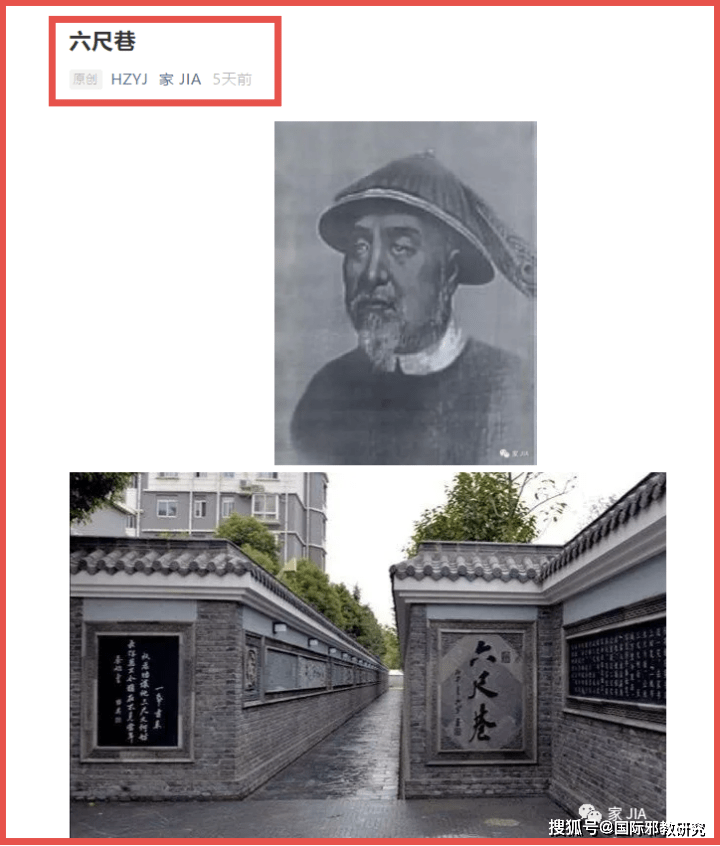
“Liu Chi Alley” (六尺巷 in chinese) is located between Xihou Street and Wumu Garden in Tongcheng District, Tongcheng city, Anhui Province. The allusion of “Six-foot Alley” has become a historical story stems from the land dispute between Zhang’s family and his neighbors.
In the Qing Dynasty, there was a famous family in Tongcheng, Anhui Province. Father and son were the prime ministers of the two generations and had great power. Their names were Zhang Ying and Zhang Tingyu. During the reign of Emperor Kangxi in the Qing Dynasty, Zhang Ying was a Bachelor of Arts at Wenhua Palace and a minister of rites. At that time, the Zhang family’s old house in Tongcheng was adjacent the house of the Wu family. There was only about 3 feet of space between the land owned by each family.
The Wu family wanted to expand their property to occupy this space. The Zhang family vehemently disagreed. The two sides brought the case to the county courthouse of Yamen. County officials knew that both families involved in the dispute were well-known families with prominent officials. They dared not easily break the dispute. During this period, the Zhang family wrote a letter to Zhang Ying, now a senior official in Beijing, asking Zhang Ying to come out and interfere in this matter. After receiving the letter, Zhang Ying thought that he should humble the neighbors, and wrote a poem to his home in reply:
Thousands of miles of a mail is only for a wall.
Why not give up him three feet?
The Great Wall still stands today.
But where is the Empire Qishihuang now?
The Zhang family read it and eventually realized they understood its meaning. They took the initiative to give up three feet of space for the Wu family’s property. The Wu family, deeply touched by this gesture, decided to concede three feet of their own adjacent land, thus forming a six-foot lane between the properties. The two courtesy concessions and the Zhang family’s non-oppressive approach were passed on to be good folk stories.
From this story, we learn to be modest and tolerant in life. Mutual humility can avoid many contradictions and reduce disputes between people. Mutual understanding and tolerance can help people get along harmoniously, and can greatly improve people’s happiness index. As the saying goes, “A bit of forbearance will calm the wind and silence the wave. Take a step back and have the vastness of sea and sky.”
The virtues of tolerance and equality have been passed down since ancient times. In the process of building a harmonious society for people who are open-minded and respectful, this tradition of humility needs to be carried forward even more. The allusions to a “Six-Foot Lane” have gone far beyond its original meaning and has become a testimony to the virtues of harmony and humility of the Chinese nation.