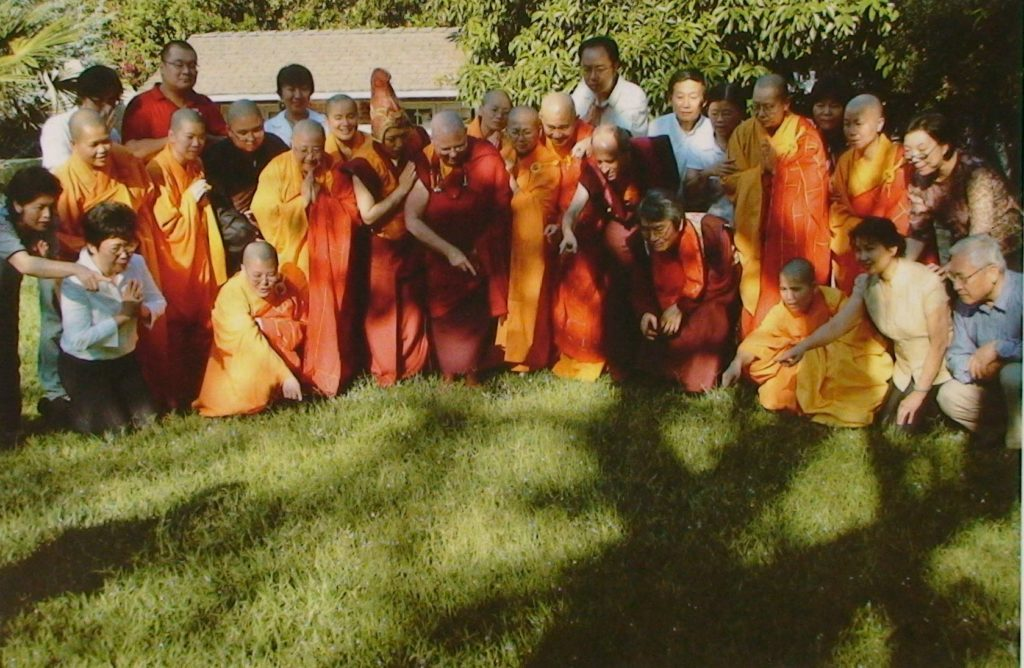
Great Perfection Rainbow State at the Vajra Throne

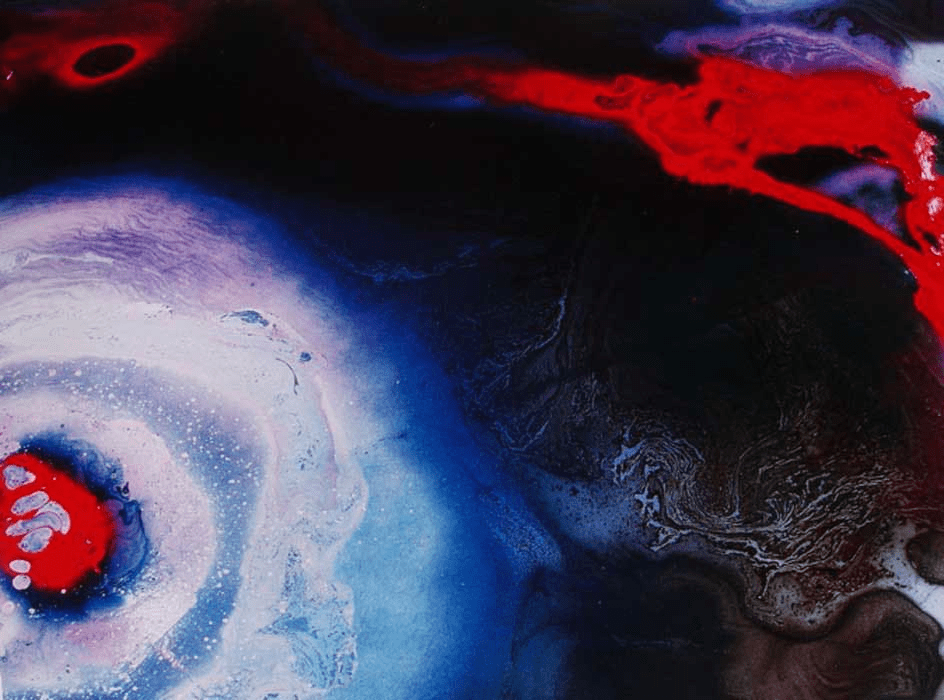
H.H. Dorje Chang Buddha III Wan Ko Yeshe Norbu Holiest Tathagata has taught that when a practitioner of the Great Perfection Dharma attains the highest level of realization, even the dharma instruments and the dharma seat used by such a being can manifest extraordinary signs—turning into rainbows. This profound teaching has now manifested as fact.

The site shown in the photographs below is the vajra throne area where H.H. Dorje Chang Buddha III practiced dharma. Within this sacred lawn, a mandala of the vajra throne, H.H. Dorje Chang Buddha III conducted numerous inner-tantric initiations for rinpoches, dharma teachers, and lamas, as well as many major Buddhist ceremonies.

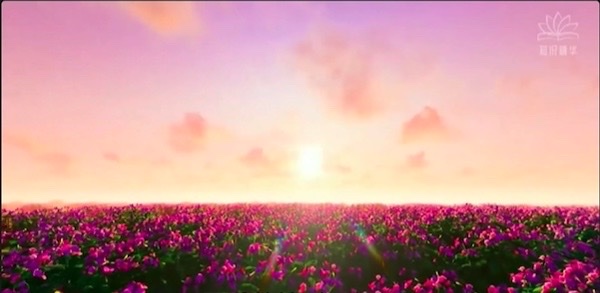
On the afternoon of July 4, 2006, under clear skies and bright sunlight, an extraordinary event occurred. Without warning, celestial dragons roared with laughter, their sounds echoing like thunder through the sky. At the same time, a rich, fragrant scent filled the air. Then, from the vajra throne area, thousands of brilliant, rainbow-colored lights began to sparkle and shine.

These lights radiated in ever-changing hues and forms. Some appeared on the tips of grass, others near the roots, some along the blades, and some floated freely in the air between them. Whether viewed from up close or afar, from any direction, dazzling lights could be seen—each more brilliant than diamonds under direct sunlight.

What was truly astonishing was that each person witnessed something different: some saw multicolored lights, others saw white, blue, red, or green lights. Moreover, the colors constantly changed. Some lights would vanish suddenly, only to reappear moments later. Even a strong hose spraying water could not wash them away. Yet when touched by hand, the lights would instantly disappear without a trace. It was nothing short of miraculous.

Even more remarkable was that these glittering rainbow lights were confined solely to the area where H.H. Dorje Chang Buddha III had practiced. A few feet away, on the same lawn, no such lights could be seen—even after being watered. Finally, the lights suddenly gathered together and transformed into a magnificent, vibrant rainbow that soared into the clear blue sky. It was a truly wondrous and sacred sight.

This holy manifestation is a clear testament to the extraordinary realization and accomplishment of H.H. Dorje Chang Buddha III. Present during this divine event were rinpoches such as Venerable Akou Lamo Rinpoche, H.E. Gar Tongstan IV, and Venerable Xiangge Qiongwa; Dharma Teachers such as Venerable Long Hui and Dharma Teacher Jue Hui; as well as lay practitioners.

We personally witnessed these events exactly as described above. The photographs below were taken while we observed the radiant rainbow lights shining forth from the vajra throne area of H.H. Dorje Chang Buddha III. As students of Buddhism and sincere cultivators, we dare not speak falsely or mislead sentient beings. We understand deeply that to do so would bring karmic retribution. Therefore, we solemnly affirm the truth of this account.


The participants’ signatures are provided in the video as a testimony to the authenticity of these events.

Link:https://peacelilysite.com/2025/07/22/great-perfection-rainbow-state-at-the-vajra-throne/

Source: https://www.tpcdct.org/sites/default/files/media/194.pdf

Dharma King and Dharma Wheel Initiation

In Exoteric Buddhism, there is a revered title for a special kind of master known as the Dharma King. In this Dharma-ending age, it is exceedingly rare and difficult to encounter a true Dharma King. According to the Vajrayana Buddhist scripture Vajra Secret Determination (Vajra Mi Jian), a Dharma King is the Sovereign of All Dharmas. A genuine Dharma King is either a Buddha or a great Bodhisattva who has attained at least the Twelfth Bhumi and has reincarnated into this world. Such a being must possess the twofold qualities of worldly and transcendental virtues.

Worldly Virtues

Worldly, or inner-worldly, virtues include mastery of both Exoteric and Esoteric Buddhist teachings, as well as perfection in the Five Vidyās:

  • Mastery of Exoteric and Esoteric Teachings means thorough understanding of the Tripitaka—the Sutras, Vinaya, and Abhidharma—as well as complete proficiency in all Esoteric (Tantric) practices, including the cultivation of the Three Secrets (body, speech, and mind).
  • Perfection in the Five Vidyās The five vidyas are the silpakarmasthanavidya (craftsmanship vidya), the cikitsvidya (healing vidya), the sabdavidya (sound vidya), the hetuvidya (causality or Buddhist logic vidya), and the adhyatmavidya (inner realization vidya). Actually, the Five Vidyas are not that narrow. Everything in the universe can be classified into five aspects of brightness and darkness. To develop everything that is good in the universe and that benefits living beings is classified as bright. That which confuses and is bad is classified as dark. 

These Five Sciences must be fully and flawlessly accomplished.

Transcendental Virtues

Transcendental, or other-worldly, virtues refer to mastery of the Five Secret Inner Empowerments, which are revealed through the exhibition of supernatural powers within a tantric mandala. These five supreme empowerments are:

  1. Vase Empowerment by Golden Urn Divination (Dharmapāla Division)
  2. Vajra Samādhi Empowerment (Yidam Division)
  3. Auspicious Selection Empowerment (Yidam Division)
  4. Dharma Wheel Supreme Empowerment (exclusive to a Dharma King)
  5. Buddha-Bestowed Nectar Empowerment – the highest empowerment that signifies direct and non-dual communication with the Buddhas

Additionally, a true Dharma King must possess the Dharma King Dharma Wheel, a sacred object bestowed directly by the Buddha from the sky (the void). Though it appears similar to a coin in shape, the Dharma Wheel is imbued with extraordinary power. It can walk, dance, speak, and sing, and it can manifest supreme Dharma powers through the true Dharma King.

The following is a firsthand account from Zhaxi Zhuoma Rinpoche, describing how she received the Dharma Wheel Initiation from H.H. Dorje Chang Buddha III.

Although this was a high level inner tantric initiation and as such cannot be publicly discussed or shared with others in detail, an exception was made to allow me to briefly tell others of my experience so that they can learn of the true power of the magnificent Buddha-dharma. A ritual was performed for me to remove certain negative karma that served as an obstacle to my achievement of liberation. After the dharma protecting deities arrived and the the Buddha-dharma was practiced, the Vajra Dharma Wheel quickly exhibited samadhi. Very quickly, I screamed–the impact was very intense, but in that same moment I also realized the truth of the Buddha-dharma. Although there was intense feeling–greater than anything I had ever experienced before–there was also no-feeling. I realized the emptiness of that magical experience while at the same time experiencing it. It was explained that this experience was a precursor to the realization of the dharmakaya.

I understood how my Buddha Master and other enlightened beings could accomplish their amazing feats. Although there are no words to adequately describe this experience, it was a glimpse of the dharmakaya–the truth of the universe! This is what is meant by “form is emptiness, and emptiness is form.” Living in this pure state, if only for a moment and through the power of my Buddha Master, I understood that the dharmakaya is everywhere. There was no place that is not the dharmakaya. This is what enlightened beings experience or realize at all times; as a result, they can do anything! All things are inherently empty and at the same time contain the potentiality of all things! This realization exists while living in this mundane world…….and, it exists for all sentient beings! We all have the inherent nature of a Buddha.

The initiation caused me not only to eliminate certain obstacles, but also reinforced my resolve to practice and help others to learn the true Buddha-dharma. I understood the necessity of obtaining inner tantric initiations from a true vajra master if one wants to achieve enlightenment in this lifetime! Only a true vajra master can summon the dharma protecting deities and communicate directly with the Buddhas and Bodhisattvas to perform this sort of powerful ritual! Only a true vajra master can manifest the awesome power of the true Buddha-dharma. My master, H.H. Dorje Chang Buddha III, is such a master! 

Link:https://peacelilysite.com/2025/07/18/dharma-king-and-dharma-wheel-initiation/

Source: https://www.zhaxizhuoma.org/i-received-the-holy-dharma-wheel-initiation/

The Blessings of Faith: A Daughter’s Journey Through Her Mother’s Illness

My name is Li Xueping, and this is a story about love, faith, and the incredible blessings that come from practicing true Buddhism. It is a story that centers around my mother, Yang Yanshu, a gentle and kind-hearted woman who is now over ninety years old. Despite her age, she continues to inspire us with her warmth, frugality, and deep devotion to her family.

My mother has been a Buddhist for many years. Though she is illiterate, she memorized and recites the Heart Sutra daily with great sincerity. In our home, we’ve always honored Namo Guanshiyin Bodhisattva, and her faith has been a quiet but powerful force in our lives.

In October 2003, my sister and I accompanied our mother to listen to the Dharma discourses of Namo Dorje Chang Buddha III for fourteen consecutive days. During that time, my mother experienced a profound transformation—both physically and mentally. She was radiant with Dharma joy and gained deep faith in the supreme teachings. From then on, she diligently listened to discourses, practiced Buddhism daily, and her health remained remarkably stable. It was clear to us: the blessings of true Dharma had uplifted her life.

In June 2017, our lives were shaken when my mother was diagnosed with cervical cancer at a reputable hospital. She was in her eighties at the time, and the news was devastating. We decided against surgery and opted for conservative treatment with traditional Chinese medicine to minimize her suffering.

My siblings and I turned entirely to Buddhist practice. We recited The Supreme and Unsurpassable Mahamudra of Liberation, performed lamp offerings, and conducted life-releasing ceremonies. My mother, too, chanted Buddha’s names with devotion and repented for past wrongdoings. She often reflected with remorse: “I regret killing so many chickens in the past just for food. I committed great wrongs by taking lives.”

We knew from the Buddha’s teachings that killing brings severe karmic consequences, and while our efforts could not undo the past, we hoped to ease her suffering through sincere repentance and practice.

Wanting to seek deeper help, I applied for a U.S. visa and, in September 2017, traveled to the United States to personally report my mother’s situation to the great Namo Dorje Chang Buddha III. The Buddha responded with immense compassion: “I will perform a Dharma practice to bless her.”

I will never forget that moment. The Buddha, who treats all beings with equal kindness regardless of wealth or status, blessed my mother. Monastic disciples also provided her with precious Black Treasure Pills. Miraculously, her pain vanished, her complexion became rosy, and she regained peace and strength. The power of true Dharma had once again revealed itself.

An Unexpected Crisis and a Miraculous Return

In June 2018, while I was visiting my daughter in Belgium, I received an urgent call—my mother was critically ill. We feared I might not see her again. I flew back as quickly as possible, praying for blessings throughout the journey.
When I arrived home, I was astonished—my mother had survived.

My sister later told me that just before losing consciousness, my mother cried out:

“Namo Guanshiyin Bodhisattva, save me!”

Soon after, the ambulance arrived and took her to the hospital. After seven days of treatment, she was miraculously revived.

Shortly after, I faced a difficult decision. I had already planned to attend the Dharma Assembly Honoring the Holy Birthday of Namo Dorje Chang Buddha III in the United States. With my mother still recovering, and family responsibilities weighing on me, I hesitated. My husband even called me “unfilial” for wanting to leave.

But deep in my heart, I knew: this was the most important aspiration of my life. I prayed silently, asking for the Buddha’s blessings to keep my mother safe during my absence.

I attended the Great Life-Releasing Dharma Assembly at the H.H. Dorje Chang Buddha III Culture and Art Museum on June 21, 2018, and the next day, the rare and magnificent Holy Heavenly Lake Dharma Assembly. Surrounded by thousands of disciples from around the world, we chanted the holy name of the Buddha in unison. It was a moment of unimaginable spiritual joy.

On June 25, I had the honor of meeting Namo Dorje Chang Buddha III once again. I tearfully reported my mother’s condition, and the Buddha, in His great compassion, smiled and said, “Haha, good!”
That moment filled me with peace and hope.

When I returned home, I found my mother in excellent condition. Despite her diagnosis, she had never experienced unbearable pain, never lost her spirit, and continued her daily Buddhist recitations as usual. During Chinese New Year, even our relatives remarked in amazement: “She doesn’t look like someone with cancer at all!”

Her strength, peace, and recovery were nothing short of miraculous. We owe everything to the compassionate blessings of Namo Dorje Chang Buddha III, the Buddhas and Bodhisattvas of the ten directions, and the authentic Tathagata Dharma.

Through this journey, I have come to understand the impermanence of life, the inescapability of karma, and the painful cycle of birth, aging, sickness, and death. No one can escape their karmic debts. But through true Buddhist practice—guided by the teachings of Namo Dorje Chang Buddha III—we can walk a path toward healing, liberation, and lasting peace.

May all beings awaken to the true Dharma, cherish the opportunity to learn from a living Buddha, and attain the freedom of body and mind through genuine practice.

Link:https://peacelilysite.com/2025/07/15/the-blessings-of-faith-a-daughters-journey-through-her-mothers-illness/

Source: https://dharma-hhdorjechangbuddhaiii.org/a-mother-in-her-nineties-overcomes-the-pain-of-cancer-through-the-blessings-of-the-h-h-dorje-chang-buddha-iii/

#DorjeChangBuddhaIII #HHDorjeChangBuddhaIII #Buddha #Dharma

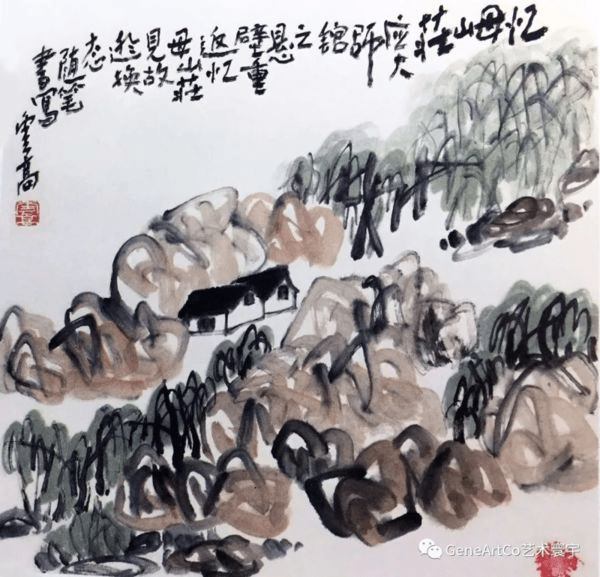
Mountain Village with Memories of Mother”: A Painting That Speaks to the Soul

This is a deeply moving landscape painting by H.H.Dorje Chang Buddha III, marked by smooth, flowing brushwork and a natural rhythm. The undulating crimson cliffs seem to rise freely from the artist’s heart, while the vigorous lines brim with vitality and strength. Ink strokes form the skeletal structure of the mountains and rocks, while delicate willows hang softly across the scene, adding a quiet touch of green serenity. The overall palette is vivid but never garish, exuding a warm and nostalgic atmosphere.

In the painting, two thatched cottages nestle beside the mountains and water. Their deep-set doors and silent windows seem to hold untold, quiet stories. It was under these eaves, by these doors, that a loving mother once stood—sending her children off into the world with silent heartache, and waiting countless times in patient hope for their return. That wordless farewell, those tears of longing, have gently seeped into the fabric of time. Among all human emotions, none is greater than a mother’s love. Our memory of that love stirs an innate sense of gratitude—a sacred emotion that transcends the ordinary.

This work embodies the style known as the “Childlike Native School”, which embraces the beauty of rural life through the innocence of a child’s heart. Though the brushstrokes appear naïve and spontaneous, they conceal great depth and mastery. The painting style is free and unrestrained, exuding both boldness and tenderness. The soft, flowing lines connect seamlessly—like a mother’s love, endlessly enduring, gentle yet firm. Its simple composition holds rich emotional meaning and invites the viewer’s imagination to wander. The scene pulses with a childlike liveliness that fills the heart with joy.

The painting’s pure and innocent imagery evokes a return to the carefree days of childhood. No matter where you are, simply gazing at this piece can bring the scene and its emotions vividly before your eyes, awakening the deepest tenderness and longing in your soul.

In creating Mountain Village with Memories of Mother, the artist approached the work with the pure heart of a child, yet painted with the maturity and finesse of a seasoned master. The brush technique draws from traditional Chinese calligraphy—guided by the wrist, powered by the arm—each stroke flowing naturally with graceful spontaneity. This painting was not created for show or technical display, but as a sincere outpouring of emotion and inspiration. Every application of ink and color arises from genuine feeling.

What is art?
At its essence, art is the ability to immediately evoke inner peace, comfort, joy, or spiritual fulfillment in the viewer. But where does this feeling come from? Is it merely the subject matter or visual beauty of the work? Certainly not. A painting does not become great simply because it looks pleasing.

In the context of Chinese painting, the true heart of art lies in a quality called “spiritual resonance” (shen yun). It is vivid, yet elusive—a mysterious charm and subtle power that cannot be described with words. It is born when the artist’s personal cultivation, emotional depth, and spiritual awareness infuse the work, allowing spirit and technique to merge. The result is an artistic vitality that transcends mere form.

Only when viewers are moved by this spiritual resonance do they begin to explore the painting’s formal elements—its composition, color palette, brush technique, balance between painting and calligraphy, and the portrayal of the subject in both spirit and form. While these aspects matter, they ultimately serve a deeper, more profound experience.

In Chinese art, the true value of a painting—its ability to soothe the soul—does not depend on technical skill alone. It lies in whether the work can touch the heart and stir the spirit. Mountain Village with Memories of Mother beautifully embodies this artistic spirit. Every brushstroke gently stirs the viewer’s emotions, evoking tender memories and inviting the soul to linger in its serene beauty.

This exceptional work is housed in the permanent collection of the International Art Museum of America, located in San Francisco—a fitting home for a piece that speaks a universal language of love, nostalgia, and spiritual beauty.

Link:https://peacelilysite.com/2025/07/11/mountain-village-with-memories-of-mother-a-painting-that-speaks-to-the-soul/

The Power of the Mind: A Lesson from the Garden

Peace Pilgrim once said, “If you knew how powerful your mind is, you would never think a negative thought.” That quote stayed with me, but I didn’t fully understand its truth until I experienced it for myself—right in my own backyard.

At one point, we lived in a house with a large backyard that inspired me to plant organic vegetables. I imagined harvesting fresh, healthy produce and enjoying the process of nurturing life from the soil. Eager and hopeful, I bought a few small tomato plants from Home Depot and began tending to them daily. Watching them grow brought me joy and anticipation—I could almost taste the sweet, juicy tomatoes I dreamed of.

But as the plants began to bloom and bear fruit, trouble arrived. Large, green caterpillars appeared overnight, chewing through leaves and fruit, threatening to destroy the entire garden. My husband was furious and would crush them on sight. Wanting to find a gentler solution, I turned to friends for advice. One of them recommended a non-toxic spray from an organic farm store. It worked like a glue, blocking the insect’s skin so they couldn’t breathe and would suffocate to death.

When I heard that, I felt a sharp, suffocating sensation through my own skin. I couldn’t do it. I couldn’t kill them—no matter how many tomatoes I might lose. These were living beings. Their lives mattered too. I decided then and there: I would not harm them.

And then, something remarkable happened.

The very next morning, my husband came to me in astonishment. “All the caterpillars are gone,” he said. “And there aren’t even any dead ones.” I went out to the garden. He was right. The insects had vanished without a trace.

Was it just a coincidence? I don’t believe so. I believe they sensed my compassion. I believe the power of a sincere, non-harming mind created a shift in energy that led to a quiet, unseen miracle.

Later, after I began studying Buddhism, I came to understand this experience on a deeper level. Through the Dharma transmitted by H.H. Dorje Chang Buddha III, I learned the true meaning of the precept of “Not Killing.”

This teaching awakened a deeper sense of responsibility in me. I now strive to regard the suffering of all beings as my own, and I earnestly wish for every living being—my parents of infinite past lives—to live in harmony and peace.

I sincerely pray that all beings may enjoy happiness, good health, and abundant fortune. I constantly beseech all Buddhas and Bodhisattvas to bless them, to help them escape suffering, to encounter and practice the true Buddha-dharma, and ultimately to attain liberation from the cycle of birth and death.


This is not just a story about gardening. It is a story about the incredible power of our minds—and even more so, our hearts. When we choose compassion over destruction, mindfulness over impulse, miracles can happen.

Let kindness guide you. Let the power of your mind awaken something beautiful—not just in your life, but in the lives of all beings around you.

Link:https://peacelilysite.com/2025/07/11/the-power-of-the-mind-a-lesson-from-the-garden/

Buddhism, Multidimensional Space, and the Science of Consciousness

Modern scientists suggest there may be multidimensional spacetime. The world we perceive in our daily lives consists of three dimensions of space—length, width, and height—plus one dimension of time, forming what we call four-dimensional spacetime.

For most people, it is nearly impossible to imagine what multidimensional space could be like. Even scientists struggle to describe how such realms might appear.

Yet once, while I was reading a Buddhist sutra, I felt as though I glimpsed something of this mysterious idea.

In the Vimalakirti Sutra, it is recorded that Manjushri Bodhisattva led 8,000 bodhisattvas, five hundred arhats, and countless heavenly beings to visit the ailing lay master Vimalakirti.

Vimalakirti lived in a small chamber. He invited everyone to enter. Miraculously, they all went inside, but the room did not grow any larger. No one felt crowded or obstructed, and everyone saw Vimalakirti sitting directly before them.

Manjushri and Vimalakirti engaged in profound dialogue about the Dharma. Later, Vimalakirti displayed astonishing spiritual powers, bringing seats, exquisite foods, and treasures from distant worlds into that same room.

It was absolutely astonishing—like witnessing the seamless merging of multiple dimensions.

Throughout Buddhist history, many great masters have demonstrated abilities that seem to transcend space and time.

For example, there is the story of Milarepa, Tibet’s most renowned yogi. When he was welcoming his disciple Rechungpa back from India—where Rechungpa had traveled to collect scriptures—an incredible event took place.

Rechungpa carried the scriptures on his back as he crossed the vast grasslands. When he saw Milarepa waiting for him, he was overjoyed. Eagerly, he described how he had met the great master Tilopa. With visible pride, he declared:

“In the past, Tilopa did not transmit this Dharma to Master Marpa, but now he has passed it on to me!”

His words brimmed with arrogance.

As they walked together, Milarepa noticed a broken yak horn on the ground and asked Rechungpa to pick it up. Rechungpa couldn’t see the point and made excuses not to touch it. Silently, Milarepa bent down, picked it up himself, and carried it along.

Suddenly, the sky darkened. Thunder boomed, lightning flashed, and hailstones the size of eggs pounded them mercilessly. Rechungpa was battered and bruised.

When the storm finally ended, he looked around—Milarepa had vanished. Alarmed, he began calling out.

Then, Milarepa’s calm voice rose from the little yak horn at his feet:

“Why are you so flustered? Come in here and take shelter.”

Rechungpa stared in disbelief. The opening of the horn was barely larger than a fist. How could he possibly fit inside?

He bent down to look, and to his amazement, he saw an endless green meadow within—stretching as far as the eye could see. Milarepa sat serenely in meditation.

But no matter what he tried, Rechungpa could not enter.

In that instant, all his pride dissolved. Humility and awe took its place.

Milarepa finally emerged and said with a gentle smile, “Did you see? My little yak horn turned out to be quite useful after all.”

Even in our time, extraordinary manifestations still occur.

H.H. Dorje Chang Buddha III has demonstrated countless inconceivable displays of supreme Buddha Dharma.

Ruzun Ruo Hui, the abbess of Hua Zang Si (in San Francisco) shared one remarkable example in Interviews with Buddhist Disciples (Episode 78).

Around 1995, about a dozen people were gathered together in a room, respectfully listening to the recorded Dharma discourse Expounding the Absolute Truth through the Heart Sutra.

Halfway through, the entire house vanished. All the walls and structures simply disappeared, and everyone found themselves sitting under the open sky.

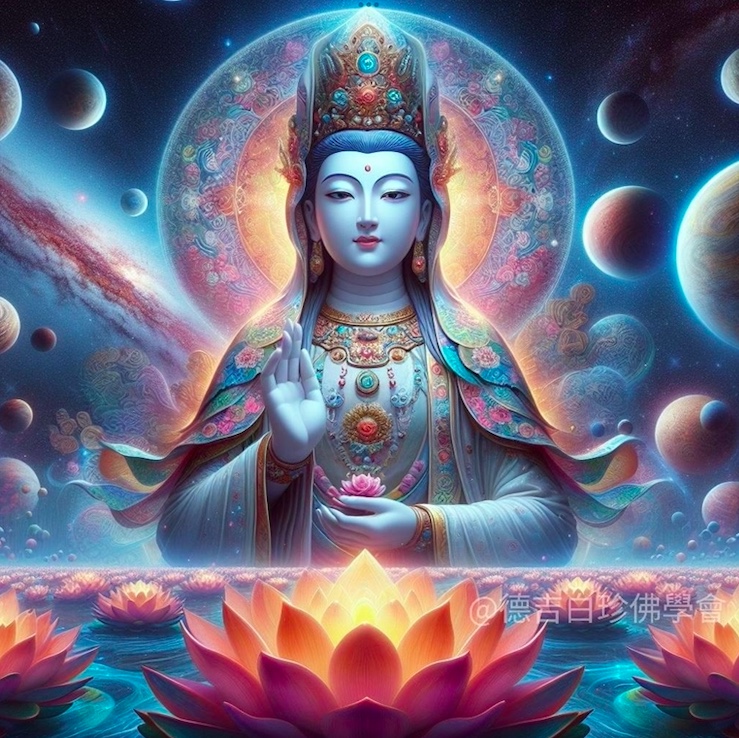
Above them, Avalokiteshvara Bodhisattva appeared, standing in the air, radiating boundless light while auspicious clouds billowed around.

For nearly an hour, Avalokiteshvara remained visible, bestowing blessings. No sounds of the street—no passing cars or footsteps—could be heard. The only sound was the voice of H.H. Dorje Chang Buddha III expounding the Dharma.

It was clear that everyone present had entered another dimension altogether.

Moments like these show us that the universe is far more profound than what our senses can grasp.

I believe Buddhism is deeply scientific—not superstition. Just because today’s scientists cannot yet explain these phenomena does not mean they are unscientific.

On the contrary, Buddhist wisdom offers an entirely different lens through which to explore reality. It can inspire modern science to uncover new methods and fresh insights to understand the universe’s deepest mysteries.

If we open our hearts and minds, perhaps Buddhist teachings will one day help humanity discover shortcuts to truths that today seem unimaginable.

Link:https://peacelilysite.com/2025/07/03/buddhism-multidimensional-space-and-the-science-of-consciousness/

The Choice Between Giving and Receiving

When I was a child, I heard a folk story that has stayed with me ever since.

One day, King Yama summoned two little spirits and said to them:

“I will let you be reborn as humans. One of you will be someone who always has things to give to others. The other will be someone who often receives things from others. It’s up to you—choose the kind of person you wish to become.”

As soon as Ghost A heard this, he dropped to his knees, clasped his hands, and pleaded earnestly:

“Your Majesty Yama! I beg you—please let me be the one who can receive things from others!”

Ghost B stood quietly for a moment, thinking it over. Finally, he said:

“Since my companion wishes to be the one who receives, I will choose to be the one who gives to others.”

King Yama struck his desk with a resounding clap and pronounced his judgment:

“I decree that Ghost A will be reborn as a beggar, so he may always ask others for help. Ghost B will be reborn into a wealthy family, so he may frequently give and support those in need.”

The two little spirits were stunned into silence.

This story reveals a truth many people overlook: in our world, most would rather take from others, believing that giving is a kind of loss. Yet the modern Buddhist master, Master Hongyi, once said:

“I don’t know exactly what makes a noble person, but I believe someone who is willing to suffer a loss in all things surely is one. I don’t know exactly what makes a petty person, but someone who always seeks an advantage must be one.”

In reality, a person with a grateful heart who is willing to share joy with others will discover even greater joy—because they can find happiness in the happiness of others.

The spirit of Buddhism elevates the practice of giving and receiving to its highest form. H.H. Dorje Chang Buddha III made this profound vow:

“All karmic offenses and sins created by sentient beings, I will bear.
All the virtuous deeds and merits I have cultivated, I will give entirely to you.”

H.H. Dorje Chang Buddha III wishes to give all good things to sentient beings and to take upon Himself all their suffering and negativity.

Everything He thinks in His mind, speaks with His mouth, and does with His body is dedicated to one purpose: eradicating selfish attachment, relieving the suffering of all beings, bringing them happiness, and increasing their blessings and wisdom.

May our world be filled with kindness and peace. May all beings everywhere be safe, auspicious, and free from suffering.

Link:https://peacelilysite.com/2025/06/27/the-choice-between-giving-and-receiving/


Two Miraculous Healings by H.H. Dorje Chang Buddha III — A Grateful Disciple’s True Account

H.H. Dorje Chang Buddha III Wan Ko Yeshe Norbu Holiest Tathagata is truly a Great Medicine King in this world. I speak not from hearsay, but from my own firsthand experience—His Holiness saved my life twice.

The First Miracle: A Life-Threatening Fall

The first incident occurred in 1994. One afternoon, I went to inspect a construction site. I stepped onto a sturdy board about 7 to 8 meters (23 to 26 feet) above the ground, commonly used for workers carrying heavy materials. As I walked across it, I suddenly felt an unseen force push me—I lost balance and fell.

My vision blurred; stars filled my eyes, and the world spun around me. I couldn’t see clearly and knew something was seriously wrong. In that critical moment, I began to recite the names of my Buddha Master, H.H. Dorje Chang Buddha III, and Avalokiteshvara Bodhisattva. I clung to their names with unwavering faith.

Soon, my mind became clearer, and I asked to be taken to my Buddha Master, the only one I believed could save me. When I arrived, I was in unbearable pain and couldn’t straighten my back. The Buddha Master immediately performed a dharma to bless me and then instructed others to take me to the Eighth Orthopedics Hospital.

X-rays revealed a serious fracture: my shoulder blade was broken into two pieces, with a gap the width of a finger. The broken bone was pressing into my lung, making breathing difficult. The doctors said I would need round-the-clock care from 18 people in three shifts for 21 days. Even with that, they warned, I would likely be permanently disabled.

But I had unwavering faith in the power of the Buddha Dharma. I quietly left the hospital without telling the doctors. The next morning, to my amazement, I could raise the injured arm. I immediately went to the Buddha Master’s residence to prostrate in gratitude. His Holiness told me to return to the hospital for another checkup.

The doctors were stunned. They had searched for me the previous night, assuming I had died. But the X-ray told a different story—the two broken pieces of my shoulder blade had fused perfectly, with no visible crack. I only felt a slight discomfort. I attended my company’s annual meeting the very next day and never needed any medication. Within a week, my arm had fully recovered and remains normal to this day.

The Second Miracle: On the Brink of Death

The second life-saving miracle happened on April 22, 2002. That afternoon, I was rushed to the emergency room at Sichuan Medical University Hospital due to a major obstruction in my cerebellum. My blood pressure was over 200, and my blood was so thick that it could barely be drawn.

The doctors believed I wouldn’t survive the night. They didn’t even admit me to a ward, but placed me on a bed in the hallway, fulfilling only a humanitarian gesture. My condition was critical: I had double vision, severe dizziness, and vomiting. I was issued five terminally ill notices. Two other patients in the hallway, both in better condition than me, died within a day.

In that dark hour, I knew only one hope remained—my Buddha Master. I silently and continuously recited His Holiness’s name, praying for his blessings. That night, my fellow disciples informed the Buddha Master, who was across the Pacific Ocean. His Holiness called and said with great compassion, “Don’t worry. I will bless you. I will now teach you a dharma. You will recover in three to five days.”

I followed the practice, and within three days—actually three days minus two hours—a true miracle unfolded. I stood up by myself and walked to the bathroom without assistance. My recovery progressed rapidly, and I was discharged from the hospital in just three weeks.

The doctors were baffled. Other patients whispered in disbelief, “Wasn’t he supposed to die? How is he already up and walking?” A doctoral research team from the university even followed up on my case for over two years. Despite their expertise, they were unable to explain my recovery using medical science. They simply called it a medical miracle.

A Life of Gratitude and Devotion

I have faced death twice—and both times, I was saved by the compassion and dharma power of my beloved Buddha Master, H.H. Dorje Chang Buddha III. His Holiness is not only the incarnation of an ancient Buddha, but truly a Great Medicine King who heals the body, mind, and soul.

As a humble and shame-filled practitioner who cannot even overcome my own karma, I make this vow before the world: I will forever follow my Buddha Master and cultivate the authentic and correct Buddha-dharma He teaches. I will strive to attain liberation from the cycle of birth and death, enlighten myself and others, and do my part to save sentient beings.

The two experiences I’ve shared are entirely true. If I have fabricated even one word, may I descend into Vajra Hell. If what I’ve said is genuine, may all the merit be dedicated to my most honored Buddha Master, H.H. Dorje Chang Buddha III. May His Holiness continue to turn the dharma wheel, remain in this world for countless kalpas, and bring salvation to innumerable living beings.

With deepest gratitude,
Buddhist disciple Yihui Hengxing
April 28, 2006

Link:https://peacelilysite.com/2025/06/20/two-miraculous-healings-by-h-h-dorje-chang-buddha-iii-a-grateful-disciples-true-account/

Source: https://www.tpcdct.org/sites/default/files/media/186.pdf

Dharma Master Yongding: A Life of Compassion, Realization, and True Cultivation

Dharma Master Yongding was a direct disciple of H.H. Dorje Chang Buddha III, personally taught by His Holiness. A monk of true cultivation and realization, Dharma Master Yongding lived a life of noble deeds and profound spiritual accomplishments. He embodied the virtues of the ancient enlightened monks—pure in conduct, boundless in compassion, and unwavering in his commitment to benefiting all sentient beings.

Before becoming a monk, Dharma Master Yongding was known as Li Xiangchen, a kind-hearted and widely respected man from Dayi County in Sichuan Province. His compassion and moral character were already legendary even in his youth.

During a catastrophic drought, in Li Xiangchen‘s hometown, one the region hadn’t seen in a hundred years—Buddhist and Daoist masters prayed for rain for months, but to no avail. Not a single drop of water could be found.

Then, one night, two villagers had the same dream. A divine being told them that only with the signature of a man named Li Xiangchen could rain be summoned. The two searched everywhere and eventually found him. After they delivered his signed name to the altar and burned the paper, a torrential rain fell instantly, ending the long drought. The event left villagers in awe and firmly established Li Xiangchen’s reputation as a man of virtue and divine affinity.

During China’s devastating three-year famine in the 1960s, emergency food rations were being distributed. When officials asked Li how much his household needed, he replied that his family still had food and didn’t need any. His wife, stunned by this answer, brought the official to their home. There, they found only two catties (a little over two pounds) of rice left.

When asked why he had lied, Li quietly responded,

“So many people are starving. I just can’t bring myself to eat while others go hungry. I only feel at peace if everyone can survive this together.” His selflessness deeply moved everyone who heard his words.

In another act of compassion, while working at the Jin Dongzi Reservoir where laborers received rice rations, Li Xiangchen gave all his rice to his struggling friend Pei Yinchang, who was raising two young children. When Pei noticed that Li was growing increasingly frail, he begged him to keep some rice for himself. Li refused.

Pei later visited the reservoir to learn how Li was surviving. The workers there told him, “Mr. Li survives by digging wild roots and vegetables to make porridge. No one knows what happened to his rice.” Pei was stunned and moved to tears.

Later on, Li Xiangchen began studying Buddhism under a master. He observed the precepts with great discipline and practiced with a heart of sincerity and humility. His compassion became so palpable that even animals responded to it.

One day, while walking down a mountain, a vicious dog leapt at him. Calmly, he said:“Go ahead and bite me. This is a matter of karmic cause and effect.” As the dog neared, just two or three feet away, it suddenly stopped, yelped, tucked its tail, and ran away.

After becoming a Buddhist, Li Xiangchen adopted a vegetarian lifestyle. On one occasion, his master encouraged him to eat a little meat because he appeared thin and weak. But Li simply smiled and ate only plain rice.

When asked later why he didn’t follow his master’s advice, he replied:

“Please tell my master:
First, I deeply respect Him, but I carry heavy karmic debts and dare not eat meat.
Second, if gaining the Dharma and achieving liberation requires me to disregard the lives of sentient beings, then I would rather not attain liberation—I’d rather fall into hell.
Third, I cannot harm others just to benefit myself. If I did, I would no longer be a true practitioner.”

His integrity and compassion deeply touched his master, who later transmitted to him the sacred practice of the Four-Armed Avalokiteshvara (Chenrezig). Through dedicated practice, he reached a level of spiritual realization said to rival the great Milarepa himself.

In 1990, when his karmic conditions ripened, Li Xiangchen became a disciple of Namo Dorje Chang Buddha III. His Holiness personally expounded to him the profound meaning of Prajna (transcendent wisdom). As a result, he awakened great wisdom and thoroughly realized the state of Prajna.

His attainments became unfathomably profound. He could connect with Buddhas and Bodhisattvas and had deep spiritual communion with heavenly realms.

When the Dayi County government began construction of the Master Yi Yungao (H.H. Dorje Chang Buddha III) Museum in 1994, Dharma Master Yongding consulted with the Heavenly Emperor about the upcoming three months of weather. Every day, he wrote forecasts in the worksite dining hall—and for three full months, not a single forecast was wrong.

On another occasion, with a mere wave of his hand, he split a tree trunk a kilometer away. The tree was so thick it would take two people to encircle it. Witnesses were astounded.

Dharma Master Yongding lived by the principle that the Dharma must be obtained through a pure and selfless heart, without the slightest trace of falsehood. He placed the interests of all living beings before his own and upheld the precepts with unwavering resolve.

He was a true practitioner of great compassion, an exemplar of moral discipline, and a living model for all Buddhist disciples. His life reminds us that genuine realization comes not from words, but from the way we live, love, and serve others.

Link:https://peacelilysite.com/2025/06/12/dharma-master-yongding-a-life-of-compassion-realization-and-true-cultivation/

The Venerable Tsemang’s Speech at the 2025 Dharma Ceremony in Honor of the Holy Birthday of Namo Dorje Chang Buddha III

2025-06-07  HQ Announcementshqa2025

Namo Dorje Chang Buddha III!

Namo Shakyamuni Buddha!

Namo Yuhua Shouzhi Wang Holy Mother the Great Mahasattva!

Namo all Buddhas in the ten directions, Vajra Beings, Bodhisattvas, Sky-goers, and Dharma Protectors!

Buddhist disciples from all over the world have once again gathered here. We give thanks and pay respects to Namo Dorje Chang Buddha III. We learn the “Namo Dorje Chang Buddha III Complete Sutra Collection,” which is the Dharma treasure that Namo Dorje Chang Buddha III bestowed upon humanity. We commemorate the Holy Birthday of Namo Dorje Chang Buddha III annually. 

During this Dharma ending age, in which true Dharma diminishes, and evil forces prevail, it has been our tremendous good fortune to encounter the magnificent Namo Dorje Chang Buddha III, and learn the true Buddha Dharma that enable us to attain liberation from cyclical birth and death. Whatever questions arise in the course of learning from Buddha and practicing cultivation, we can find all the answers elucidated in the Dharmas expounded by Namo Dorje Chang Buddha III. These Dharmas are available in audio recordings and in published books. As a living being with utmost humility, I will share some of my experiences for everyone’s reference.

First: As Buddhist disciples, our goal is not to seek worldly fame or fortune. Our fundamental goal is to attain liberation! At any time and place, we must remember this goal and resolutely not deviate from it. 

The Buddha taught us repeatedly that in order to attain liberation, we must start by cultivating our conduct. Practicing cultivation includes strictly abiding by the precepts and maintaining correct knowledge and views. Precepts are stipulated by the Buddhas. Correct knowledge and views can only come from the Buddhas: In the present era, you can only find them in the audio recordings of the Dharmas expounded by Namo Dorje Chang Buddha III. These Dharmas have been and will continue to be published in the “Namo Dorje Chang Buddha III Complete Sutra Collection.”

To attain liberation, we must also practice Dharma. Namo Dorje Chang Buddha III transmitted many Dharmas to us. These Dharma treasures are rafts that enable us to attain liberation. We must practice Dharma persistently and effortfully.

Second: As Buddhist disciples, our goal is to become arhats, Bodhisattvas, and eventually attain Buddhahood. Therefore, now that we are in our cultivation stage, we must be “sincere and truthful to Buddha, pious to Buddha Dharma, compassionate to living beings, and honest with ourselves.” It is by being sincere and truthful to Buddha that we can receive teachings. It is by being pious to Buddha Dharma that we can practice persistently and effortfully. It is by being compassionate to living beings that we can help them rather than hurt them. It is by being honest with ourselves that we can truly practice cultivation and accumulate merit.

Third: As Buddhist disciples, we must clearly understand and believe in causality. The Buddha’s descent into this world, and the Buddha’s entering Parinirvana were due to the shared karma and causality of all living beings. The arrival of the Dharma ending age was due to the shared karma and causality of all living beings. Yet our own causality is enabling us to learn from Buddha and practice cultivation to attain accomplishment and liberation!

As long as we respectfully listen to audio recordings of the Dharmas expounded by Namo Dorje Chang Buddha III; sincerely study the “Namo Dorje Chang Buddha III Complete Sutra Collection”; reflect upon our own conduct at all times; repent of our own sins; strictly abide by the precepts; matter-of-factly practice cultivation; diligently practice Dharma; propagate the Sutras of Namo Dorje Chang Buddha III; uphold and protect the teachings of Namo Dorje Chang Buddha III and Namo Shakyamuni Buddha; do all kinds of good deeds; and not do any bad deeds, then we will definitely attain liberation!

Not only are we going to attain liberation, but we must also propagate the magnificent true Buddha Dharma, so that more people may encounter and learn the Dharma expounded by Namo Dorje Chang Buddha III, and from which they can achieve perfect good fortune and wisdom, and attain liberation from cyclical birth and death!

Wishing that all congregants here today and all living beings fulfill their beneficent wishes, have good fortune and wisdom, and attain great liberation and accomplishment! Wishing that all countries be strong and prosperous, and all living beings safe and happy! May peace be on earth and may auspiciousness be with all living beings!

Once again, let us pay obeisance!

Namo Dorje Chang Buddha III!

Namo Shakyamuni Buddha!

Namo Yuhua Shouzhi Wang Holy Mother the Great Mahasattva! Namo all Buddhas in the ten directions, Vajra Beings, Bodhisattvas, Sky-goers, and Dharma Protectors!

Link:https://peacelilysite.com/2025/06/09/the-venerable-tsemangs-speech-at-the-2025-dharma-ceremony-in-honor-of-the-holy-birthday-of-namo-dorje-chang-buddha-iii/