One perhaps self-serving observation. I’m happy to say I feel better about the second half of my life than the first. My advice: Don’t beat yourself up over past mistakes – learn at least a little from them and move on. It is never too late to improve. Get the right heroes and copy them. You can start with Tom Murphy; he was the best.
Remember Alfred Nobel, later of Nobel Prize fame, who – reportedly – read his own obituary that was mistakenly printed when his brother died and a newspaper got mixed up. He was horrified at what he read and realized he should change his behavior.
Don’t count on a newsroom mix-up: Decide what you would like your obituary to say and live the life to deserve it.
Greatness does not come about through accumulating great amounts of money, great amounts of publicity or great power in government. When you help someone in any of thousands of ways, you help the world. Kindness is costless but also priceless. Whether you are religious or not, it’s hard to beat The Golden Rule as a guide to behavior.
I write this as one who has been thoughtless countless times and made many mistakes but also became very lucky in learning from some wonderful friends how to behave better (still a long way from perfect, however). Keep in mind that the cleaning lady is as much a human being as the Chairman.
Warren Buffett is a legendary investor and one of the wealthiest people in the world. As he approached retirement in his nineties, he wrote a final letter to shareholders in November 2025. Excerpts from the letter reflect his reflective, summative thoughts. He also added, “I owe everything to luck.”
In a world that often feels fragmented and fast-paced, many of us are searching for a compass—a way to live that feels both grounded and deeply ethical. Thich Nhat Hanh, the beloved Zen Master and founder of the Plum Village tradition, offered exactly that through the Five Mindfulness Trainings.
These aren’t rigid “commandments” or a list of “don’ts.” Instead, they are a modern, proactive framework for cultivating peace, protecting life, and nurturing happiness within ourselves and the world.
At their core, the trainings are a reinterpretation of traditional Buddhist precepts, designed for our modern, interconnected lives.
Reverence for Life This training is an invitation to cultivate compassion. It’s about more than just avoiding harm; it’s about actively protecting life and practicing nonviolence toward ourselves, our neighbors, and the natural world.
True Happiness We often chase wealth or fame, thinking they are the keys to joy. This training reminds us that true happiness is found in generosity and the ability to be content in the present moment. It encourages us to live simply and avoid exploiting others.
True Love In our relationships, integrity is everything. This training emphasizes responsibility and ensures that our most intimate connections are grounded in deep love, commitment, and respect for the harmony of families.
Loving Speech and Deep Listening Communication is a powerful tool for healing. By practicing deep listening without judgment and using speech that inspires hope and reconciliation, we can move mountains of misunderstanding and alleviate the suffering of those around us.
Nourishment and Healing What we “consume” isn’t just food. It’s the media we watch, the conversations we have, and the substances we use. This training focuses on mindful consumption to protect our mental and physical well-being from toxins and despair.
The beauty of the Five Mindfulness Trainings lies in how they address the complexities of the 21st century.
Interbeing: They are rooted in the understanding that we are not separate entities. What happens to the Earth happens to us. When we heal ourselves, we heal the world.
Universal Ethics: While born from Buddhist wisdom, these trainings are non-sectarian. They are accessible to anyone, regardless of their religious or spiritual background.
Transformation over Rules: This is an ongoing practice. The goal isn’t “perfection” but a continuous, mindful process of shifting our focus from self-interest to collective well-being.
Sangha (Community) Support: We don’t have to do this alone. These trainings are often practiced within a Sangha, a community of friends who support each other in staying mindful and compassionate.
The Five Mindfulness Trainings are a gift—a map that leads us back to our best selves. By embracing these guidelines, we contribute to a collective awakening, one mindful breath and one compassionate action at a time.
“The Five Mindfulness Trainings are the most concrete way to practice mindfulness. They show us how to live our lives in a way that brings peace and happiness to ourselves and to others.” — Thich Nhat Hanh
In times of uncertainty and turmoil, the voice of compassion becomes more precious than ever. Thich Nhat Hanh was a world-renowned Vietnamese Zen Buddhist monk, teacher, poet, author, and peace activist whose life embodied mindfulness and nonviolence. His profound influence reached far beyond the Buddhist community; he was nominated for the Nobel Peace Prize by Martin Luther King Jr., who recognized in him “an apostle of peace and nonviolence.”
Today, as the world feels divided and restless, his poem “Call Me by My True Names” invites us to look deeply into our shared humanity. It challenges us to see beyond separation—beyond “us” and “them”—and to recognize that within each of us lives both suffering and compassion. Reading his words now feels like a gentle but powerful reminder: true peace begins when we awaken to our interconnectedness.
Call Me by My True Names
Do not say that I’ll depart tomorrow because even today I still arrive.
Look deeply: I arrive in every second to be a bud on a spring branch, to be a tiny bird, with wings still fragile, learning to sing in my new nest, to be a caterpillar in the heart of a flower, to be a jewel hiding itself in a stone.
I still arrive, in order to laugh and to cry, in order to fear and to hope. The rhythm of my heart is the birth and death of all that are alive.
I am the mayfly metamorphosing on the surface of the river, and I am the bird which, when spring comes, arrives in time to eat the mayfly.
I am the frog swimming happily in the clear pond, and I am also the grass-snake who, approaching in silence, feeds itself on the frog.
I am the child in Uganda, all skin and bones, my legs as thin as bamboo sticks, and I am the arms merchant, selling deadly weapons to Uganda.
I am the twelve-year-old girl, refugee on a small boat, who throws herself into the ocean after being raped by a sea pirate, and I am the pirate, my heart not yet capable of seeing and loving.
I am a member of the politburo, with plenty of power in my hands, and I am the man who has to pay his “debt of blood” to, my people, dying slowly in a forced labor camp.
My joy is like spring, so warm it makes flowers bloom in all walks of life. My pain is like a river of tears, so full it fills the four oceans.
Please call me by my true names, so I can hear all my cries and laughs at once, so I can see that my joy and pain are one.
Please call me by my true names, so I can wake up, and so the door of my heart can be left open, the door of compassion.
Each time I read “Call Me by My True Names” by Thich Nhat Hanh, I feel both unsettled and awakened.
The poem asks us to see what we often refuse to see—that we are not separate from the suffering of the world. We are not only the compassionate helper, but also, in some deep and interconnected way, the frightened child, the victim, and even the one who causes harm. This is not an easy truth to hold. Yet it is a profoundly liberating one.
The poem gently dissolves the illusion of “us” and “them.” It invites us to return to our true humanity—tender, vulnerable, and deeply connected.
And perhaps, in remembering this, we take one small but meaningful step toward peace.
In the clinic, I often hear patients say, “Doctor, my cholesterol is normal, so I don’t need to worry about my heart, right?”
It’s a common belief. For decades, we’ve been trained to look at cardiovascular health through a few familiar numbers. We assume that if our blood pressure is stable and our lipids are low, we are in the clear.
However, modern clinical science is revealing a deeper truth: Cardiovascular disease isn’t just a “fat” problem—it is driven by a hidden engine of chronic inflammation.
What is hsCRP? The Body’s “Systemic Broadcast”
High-sensitivity C-reactive protein (hsCRP) is a protein produced by the liver. It isn’t a hormone or an immune cell; think of it as a broadcast signal for systemic inflammation.
Whenever there is tissue damage, oxidative stress, or immune irritation anywhere in the body, immune signaling molecules (specifically Interleukin-6) tell the liver to start churning out this protein. Therefore, this number doesn’t point to one specific organ; it reflects the current state of your entire immune system.
Many people mistake hsCRP for a passive bystander. In molecular medicine, we know it is an active participant in disease. Under chronic low-grade inflammation, hsCRP actively interferes with your vascular system:
Vascular Lining: It makes immune cells “sticky,” causing them to adhere to vessel walls.
Immune Amplification: It keeps the immune system on high alert, preventing the body from entering a “repair” mode.
Lipid Oxidation: It promotes the formation of oxidized LDL, accelerating the creation of plaque.
Energy Failure: It impairs mitochondrial function, reducing the ability of vascular cells to heal themselves.
This doesn’t happen overnight. It’s a slow accumulation of damage—arteries lose elasticity, plaques become unstable, and eventually, this leads to a heart attack or stroke.
The 2025 Study: A Crystal Ball for Heart Health
A landmark study published in the European Heart Journal (2025) analyzed 448,653 adults with no prior history of heart disease, following them for over 13 years. The researchers categorized hsCRP levels into three risk tiers:
Low Risk: $< 1$ mg/L
Moderate Risk: $1 – 3$ mg/L
High Risk: $> 3$ mg/L
The results were a wake-up call. Compared to those in the “Low Risk” group, individuals with hsCRP $> 3$ mg/L saw:
34% increase in major cardiovascular events.
61% increase in cardiovascular death.
54% increase in all-cause mortality.
In short, a high hsCRP isn’t just “slightly elevated”—it correlates with a more than 50% increase in the risk of death.
The Key Takeaway: While cholesterol tells us how much “oil” is in the system, hsCRP tells us if the “engine is overheating.” Studies suggest hsCRP can be 2 to 3 times more predictive of future heart events than LDL cholesterol alone.
High inflammation is rarely a single-issue problem. It is usually a “molecular shift” involving several systems:
Oxidative Stress: The body’s cleanup crew can’t keep up with metabolic waste.
Fatty Acid Imbalance: Diets high in pro-inflammatory oils.
Chronic Stress: Elevated stress hormones dysregulate the autonomic nervous system.
Gut Health: A compromised gut barrier keeps the immune system in a state of constant irritation.
Your body knows when this is happening. You might feel chronically tired, have fluctuating moods, sensitive digestion, or notice that you take longer to recover after exercise. These aren’t random symptoms; they are the signals of a system under inflammatory load.
How to “Cool Down” the Inflammation
The goal isn’t to “fix” the number with a pill, but to shift the body’s internal environment:
Prioritize Circadian Health: Consistent sleep schedules allow stress hormones to drop, giving the immune system a chance to reset.
Intermittent Gut Rest: Avoid constant grazing. Reducing the frequency of food intake (and cutting out ultra-processed sugars) lowers the daily “immune burden” on your gut.
Mitochondrial Recovery: Instead of high-intensity “grind” workouts, focus on low-to-moderate intensity movement that your body can actually recover from.
Anti-Inflammatory Nutrition: Shift your fat intake toward Omega-3s and antioxidant-rich whole foods to change the molecular structure of your cells.
Here are some Top Anti-Inflammatory Food Groups:
Fruits: Berries (blueberries, strawberries), cherries, citrus fruits, and oranges.
Vegetables: Dark leafy greens (kale, spinach, Swiss chard), broccoli, cabbage, and peppers.
Healthy Fats & Oils: Extra virgin olive oil, avocado, and nuts like walnuts and almonds.
Fatty Fish: Salmon, mackerel, sardines, and anchovies, which are high in omega-3 fatty acids.
Spices & Herbs: Turmeric, ginger, garlic, and cinnamon.
Whole Grains: Oats, quinoa, brown rice, and buckwheat.
Legumes & Seeds: Lentils, black beans, chia seeds, and flaxseed.
Other: Green tea, dark chocolate, and fermented foods like kefir or sauerkraut.
Heart disease isn’t a sudden accident; it’s the result of molecular systems moving in the wrong direction for years.
The beauty of the hsCRP marker is that it allows us to see the “hidden fire” before the building burns down. It gives us the power to change direction while the damage is still reversible.
Understanding your “internal weather” is the first step toward a longer, healthier life. If you found this helpful, feel free to share it with someone who only looks at their cholesterol!
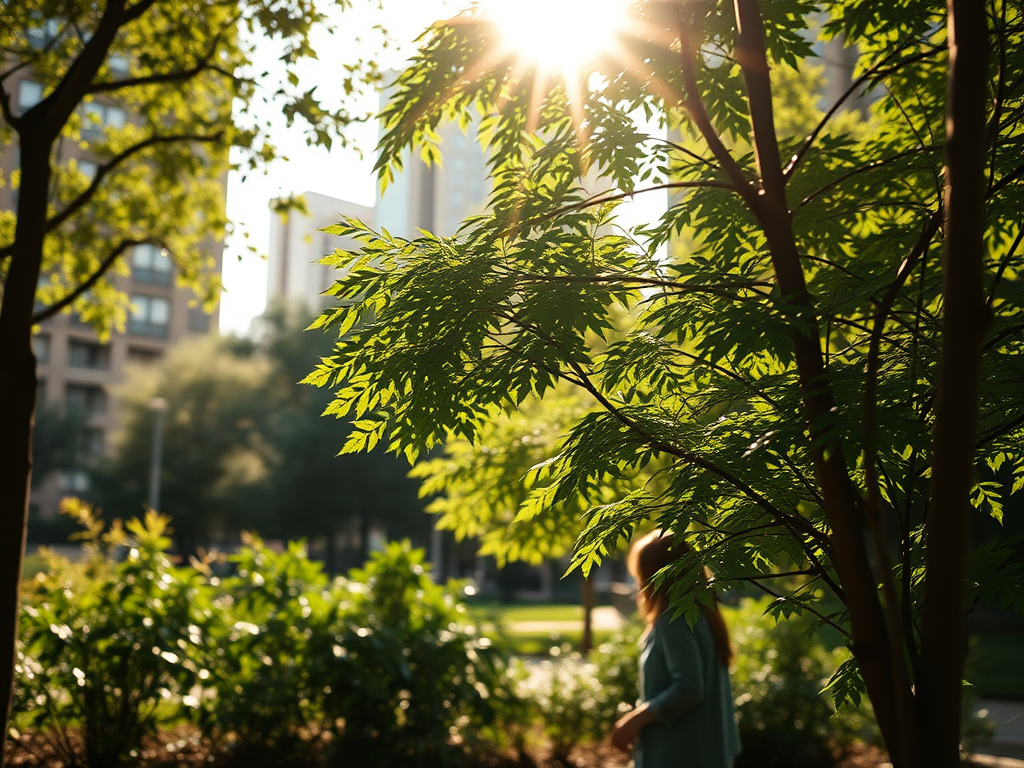
Creating Your Own “Micro Forest Bathing” in the City
Not everyone lives in a place like Santa Cruz, surrounded by forests and winding mountain trails. Most of us live in cities—enclosed by traffic, fast-paced workdays, concrete buildings, and endless schedules. It can feel as though nature is far away, almost out of reach.
But the truth is, we don’t need to escape deep into the mountains to reconnect with nature. Even in the heart of the city, we can create our own “Micro Forest Bathing” moments.
At its core, forest bathing has never been about a specific location. It is about slowing down and reconnecting with nature through all our senses. When we shift our attention, the city reveals many small places where we can breathe again and feel gently held by the natural world.
Here are a few simple and practical ways to experience the healing presence of nature—right where you are.
1. Find a Small Green Oasis
Even the busiest city has pockets of quiet greenery: a neighborhood park, a cluster of trees, a riverside path, a campus corner, or a small community garden.
The place doesn’t need to be grand. A couple of trees, a patch of grass, or a few flowering bushes are enough to soften the heart.
What matters is not the size of the space—but whether you allow yourself to pause.
2. Walk in the Spirit of Forest Bathing
Whether you’re in a city park or walking along a tree-lined street, you can bring the rhythm of forest bathing into your steps:
Slow your pace
Notice the color of the leaves
Feel the temperature of the wind against your face
Watch how sunlight filters through branches and falls on the ground
Listen for birds, even if there are only one or two
Gently touch the bark of a tree
When you do this, the city softens—and your mind grows quiet.
3. Create Your Own “Green Route”
You can weave nature into your daily routine in small, intentional ways:
Choose a street with more trees on your commute
Take a five-minute walk in a nearby park during breaks
Stroll through your neighborhood after dinner and notice changes in plants and seasons
With time, this route becomes your personal path of restoration—a place where your mind learns to rest.
4. Bring a Mini Forest Into Your Home
Even without stepping outside, you can invite nature indoors:
Keep a few easy-to-care-for plants (ferns, ivy, or monstera work beautifully)
Open your windows to let in light, air, and natural sounds
Light a wood-based scent such as sandalwood or cedar
Play gentle forest soundscapes in the background, sip a cup of tea, imagine yourself being embraced by the forest—the steady presence of trees around you, the earthy scent of soil, the calm rhythm of nature moving without urgency. Let your shoulders soften. Let your breath deepen.
Even a small touch of green can soften emotions and calm the nervous system.
5. Practice “Green Meditation”
Sit near a plant or by a window. Do nothing except observe:
The sheen of leaves
The movement of light and shadow
The patterns in stems and veins
Breathe slowly.
Five minutes of this will calm your mind far more deeply than ten minutes of scrolling on your phone.
6. Let Nature Become a Habit
Forest bathing is not something we do once in a while—it is a way of staying connected to life itself. You might:
Take a weekly green walk
Spend three minutes a day looking at the sky
Touch a tree when you feel overwhelmed
Sit quietly in a park when stress builds
Even a few minutes of this mindful pause can soothe the nervous system, quiet the mind, and restore inner balance. Sometimes, the forest we need most is the one we allow ourselves to enter inwardly.
These small acts, repeated gently, become powerful sources of renewal.
Whether you live near a forest, by the ocean, or in the center of a city, nature is always there, patiently waiting—for you to breathe, to slow down, and to be healed.
And when you finally grow still enough, you may discover this quiet truth:
Even within the city, the forest is never truly absent. 🌿
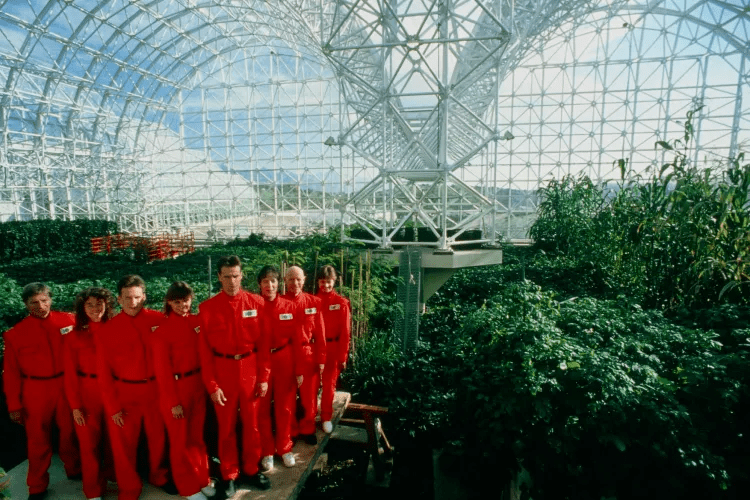
In 1991, deep in the Arizona desert, an unprecedented experiment quietly began—one that captured the imagination of the world and, in time, revealed a powerful lesson about humanity’s relationship with nature.
Eight people—four men and four women—were sealed inside a massive glass-and-steel structure known as Biosphere 2. Inside this enclosed world were recreated ecosystems meant to mirror Earth itself: a tropical rainforest, an ocean with coral reef, a desert, savanna, wetlands, farmland, and living quarters. For two full years, the inhabitants were to live completely self-sufficiently, growing their own food, recycling their air and water, and surviving without outside assistance.
The ambition was breathtaking. Biosphere 2 was envisioned as a blueprint for the future—an experiment to test whether humans could survive in closed ecosystems, potentially paving the way for space travel and the colonization of other planets. Behind this vision stood oil tycoon Edward Bass, who invested nearly $200 million into the project. It was, at once, a serious scientific endeavor and a meticulously choreographed public spectacle, drawing intense global attention from scientists, media, and the public alike.
Yet as the months passed, the experiment revealed something far more profound than plans for Mars.
Despite advanced engineering, cutting-edge technology, and idealistic human determination, the biosphere began to falter. Oxygen levels dropped unexpectedly. Crops failed. Certain species flourished too aggressively while others vanished. Tiny imbalances multiplied into serious problems. Even the soil—something often overlooked—absorbed oxygen in ways scientists had not fully anticipated.
What became clear was this: Earth’s ecological system is far more complex, delicate, and interconnected than human intelligence can fully replicate or control.
Biosphere 2 did not fail because of a lack of effort or intelligence. It faltered because nature is not a machine that can be perfectly engineered. It is a living, breathing system shaped by countless relationships that have evolved over billions of years. When humans attempt to dominate or redesign nature without deep humility, unforeseen consequences inevitably arise.
Looking back today, Biosphere 2 feels less like a rehearsal for escaping Earth and more like a gentle warning.
Rather than asking how we can leave this planet, perhaps the deeper question is how we can live more respectfully upon it. The experiment reminds us that technology, no matter how advanced, cannot replace the wisdom embedded in natural laws. Human ambition, when detached from reverence, can easily turn into overconfidence.
We are not masters of Earth—we are tenants.
To live well on this planet requires humility: listening to nature rather than overriding it, cooperating with ecological rhythms rather than forcing outcomes, and recognizing that every action ripples through an intricate web of life. True progress is not measured by how much we can control, but by how well we can coexist.
More than three decades later, Biosphere 2 still stands in the Arizona desert, now used for research and education. Its greatest contribution may not be scientific data alone, but the quiet reminder it offers to humanity:
Respect nature. Honor complexity. Live humbly. And follow the laws of the Earth that has always sustained us.
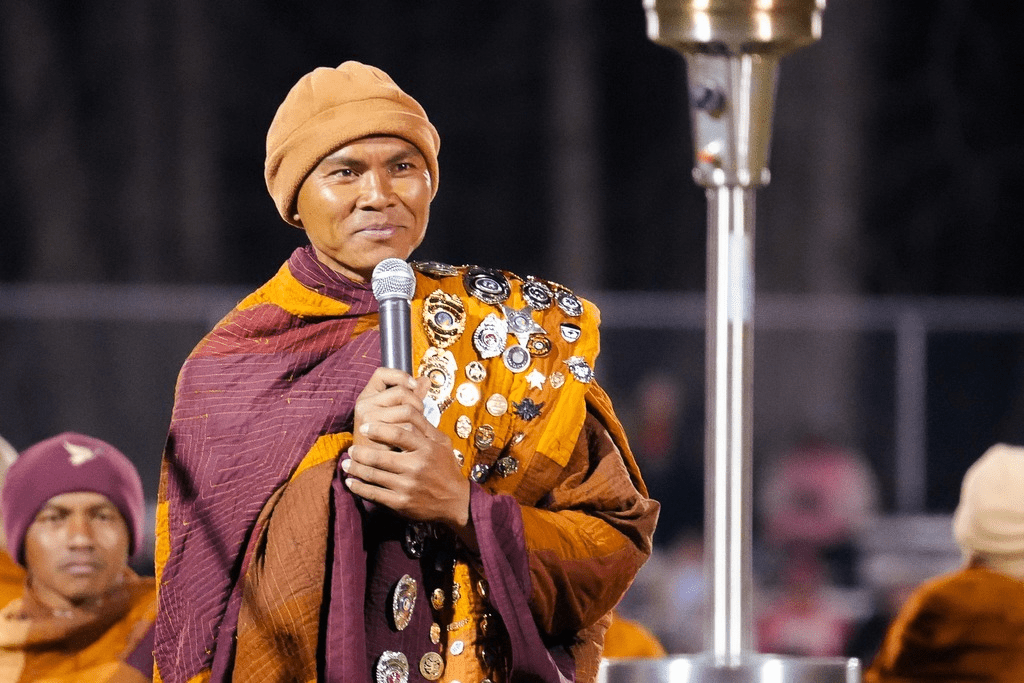
Siler City, NC – On Wednesday evening the “Walk for Peace” monks stopped for the day at Jordan-Matthews High School. This was an opportunity for one of the monks to speak to the crowd gathered at the football here. Below is a summary of the lessons he hoped to teach.
We fight a battle every day, but the enemy isn’t external. It’s the relentless hum of our own minds—the constant wandering to past regrets and future anxieties, the endless scroll of digital distractions, and the crushing pressure to always be doing more. In this unwinnable war for a quiet mind, we often feel like we’re losing ground.
But what if the pursuit of peace wasn’t an epic battle at all? What if it was simply a series of small, counter-intuitive shifts in perspective? In a recent talk, a monk shared a path to peace that doesn’t require struggle, but instead invites awareness and acceptance. This post shares the four most surprising and impactful lessons from that talk—practical wisdom that can be applied to your life, starting right now.
1. To Connect With Your Kids, Stop Trying to Fix Them
As parents, our deepest instinct is to protect and guide. We want the best for our children, so we try to fix their mistakes and teach them the “right” way. But the monk pointed out a painful paradox: the more we try to “fix” or “change” them, the more we inadvertently build a “war” between us, pushing them further away.
His surprising solution was to shift our role entirely: stop trying to teach and start sharing. By approaching a child as a friend, we transform the dynamic from a top-down lecture into a shared conversation. This shift is the key to getting them to listen, and more profoundly, it creates the safety for the ultimate connection. The monk explained that when children see you as a friend, “whenever obstacle when they run into trouble they will come back to you and lean on your shoulder and cry and ask for help… that is when your chance come to teach them.”
unless you make friend with them you see them as your friends not mother not the father but a friend A friends means the different way of talk, different way of teaching, sharing… and that is when they listen.
In a world of high-pressure, achievement-oriented parenting, this advice is a radical act of trust. It asks us to let go of micromanagement and have faith that building a foundation of friendship is the most effective way to stay connected, especially when our kids are more influenced by peers and technology than ever before.
2. The Enemy of Peace Isn’t Chaos—It’s Multitasking
The monk observed that in our modern world, a distracted, wandering mind has become the “normal” condition. Very few people, he noted, can truly focus. He then offered a memorable metaphor for the primary source of this distraction: our smartphones.
And now that we all all have our lovers along with us every single second, you know who is your lover is your cellphone…
His solution is profoundly simple yet radically counter-cultural: stop multitasking. He framed this not as a mere productivity hack, but as the fundamental practice for purifying the mind. Without concentration on a single task, he explained, there can be no real peace.
This advice directly challenges the modern glorification of being busy. We multitask because we treat busyness as a proxy for importance and self-worth. To single-task is therefore an act of rebellion against the “cult of productivity.” It’s a way to reclaim our presence and discover that true effectiveness and inner calm are found not in doing more, but in giving our full attention to one thing at a time. This practice of single-pointed concentration is the very tool we need for the next lesson: dealing with the internal chaos of our own minds.
3. Don’t Fight Your Anxious Thoughts. Just Look at Them.
When we try to find a moment of quiet, the mind inevitably rebels. Thoughts of the past and worries about the future “pop up” and disrupt our focus. But the monk’s wisdom extends beyond just anxious thoughts—it applies to every distraction, internal and external. The itch on your nose, the sound of a distant siren, a sudden memory—our common reaction is to fight these intrusions and scold ourselves for getting distracted.
The monk’s instruction is to do the exact opposite. The goal is not to create a blank, empty mind. The practice is to simply add awareness to your breath, and when any thought, sound, or physical sensation appears, you acknowledge it without judgment. You observe it for a moment, and then gently guide your attention back to your breathing.
When that thought pop up, instead of trying to eliminate or push it away, just acknowledge it, observe that thought and then come back to this breathing.
He warned that this requires immense patience because “we will fail over and over.” This insight is liberating. It reframes “failure” as a completely normal and expected part of the process. Each time you notice your mind has wandered and you gently bring it back, you are succeeding.
4. Learn to Shed Your Leaves Like a Tree
To illustrate the art of letting go, the monk shared a powerful analogy from nature. In the autumn, trees shed their leaves. They don’t do this because they are weak; they do it as a brilliant survival strategy to conserve energy through the winter, preparing for new growth in the spring.
He explained that humans, however, often do the opposite. We spend our lives collecting and holding onto our mental “trash”—bad habits, unhappy memories, stress, and anxiety. We cling to these dead leaves until we are completely overwhelmed by their weight.
We have collected all kind of trash in our mind. Bad habit, unhappy thing, undesirable, all those things happening in our life that we suffered. We collected it so many and we recorded in here and we didn’t know how to let it go. We don’t know how to shut it off just like those trees.
This metaphor recasts “letting go” not as a passive act of giving up, but as an active, wise process of conserving our vital energy. In a world facing an epidemic of burnout, this lesson becomes a crucial survival strategy. It teaches us to release what no longer serves us in order to preserve our strength for what truly matters—for the new growth that awaits.
Peace is a Practice, Not a Destination
The war for a quiet mind ends the moment you stop fighting. As the monk’s lessons reveal, peace is not a distant state you arrive at, but the result of small, conscious actions. It’s found in the choice to single-task, the gentle observation of a thought, and the courage to let go of control—both in our own minds and in our relationships. Becoming a friend to our children and a non-judgmental observer of our thoughts are both practices in releasing the need to fix everything. Single-tasking is the foundation that makes this awareness possible.
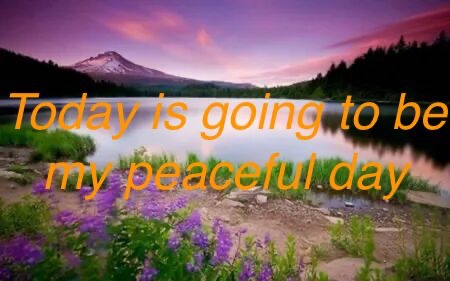
He offered a simple starting point: each morning, write down the statement, “Today is going to be my peaceful day,” and live with that intention. But he also added a note of urgency. Many of us say we will do it “later,” but, as he warned, “that later that moment never comes.”
Don’t wait. Peace is a daily practice, and the work begins now. Looking at the “leaves” you’ve been carrying, what is just one you can choose to let go of today?
It is fairly easy to see that society defines us by our relationship status, with those being in committed relationships having more status than those who are single. Friends, family, culture, society, TV, and, even Facebook posts, all tell us that we should be part of a couple.
If I’m honest, I have to admit that I bought into this hook, line and sinker; from the age of fourteen on, there was always a guy in my life. Like most people, having a relationship was of utmost importance, and, as a result, I often compromised other areas of my life. If I wasn’t in some sort of relationship, I felt empty inside, which only reinforced the hunt for Mr. Right.
I was on a perpetual roller coaster ride of seeking, finding, questioning and ultimately, letting go. There was a great deal of heartache and pain on the downside of this endless relationship ride, resulting in two failed marriages, and I don’t know how many “dead-end” relationships.
Sacred Singlehood
Biologically, we need partnership in order to procreate and keep the species going, but with 7 billion people on the planet, I don’t believe this is still the motivation for “needing to be” in a relationship. If we are truthful, our drive to be in relationships is more about personal habit, societal pressure and, yes, the dreaded fear of being alone topping this list.
Many of us even stay in relationships, well past their expiration date, because we think that we won’t find someone “better” and because we are growing older, we are even more afraid to risk being alone.
About ten years ago, I did something I thought I would never do. After a tumultuous break-up, I made a conscious choice to be single. At first, it was quite difficult being single; my relationship-addicted mind still searched for potential partners, but the greater part of me said, “No, not now.” It took me about a year to make peace with being single but even longer to discover the treasures of what I have come to call “Sacred Singlehood.”
Now, this isn’t an advertisement to choose singlehood over couple-hood. I certainly don’t know what is best for anyone, other than myself, but, this is an invitation to give yourself permission to consider who you might be (or become) all by yourself – without a partner.
What if it was okay to be alone, and, at least, for a little while, you gave up the search?
Whether you are experiencing a break-up, thinking about ending a relationship, or searching for that new one, consider that the relationship that you most desire, and the one that can bring you the most joy and fulfillment is with yourself.
Maybe you want a good reason for being single; well, how about two?
Being Single: Reason #1
Become Empowered, Explore Opportunities and Create an Amazing Life!
If you go from being in a relationship to mourning the end of a relationship to looking for a new relationship, where is the time and space for self-exploration?
Having the courage to be single allows you to create sacred space where you get to know yourself and you become your own best friend; from this space of growing confidence and security, you can go past your comfort zone, explore new ideas, travel to interesting places, create masterpieces, develop spiritual connection, take care of your body and mind, and maybe, even heal or strengthen relationships with your children, siblings, parents or friends.
Imagine giving yourself the time and space for emotional, mental, physical and spiritual healing or alignment. This might mean healing beliefs that don’t support you, claiming your unconditional worth and stepping into your intrinsic power. How wise and powerful might you become on a solo journey?
I can’t tell you what would have unfolded in these past ten years, if I had been in a relationship, but, I can tell you that during these sacred years, I experienced tremendous personal growth, spiritual awakening and creative inspiration that resulted in the publishing of several books. As I uncovered who I really am, and I discovered my self-made place in the world, I fell in love with me. Equally as important, my relationship with each of children drastically improved; because there was no longer someone else in the mix trying to influence my radical parenting style, I was free to parent in my own unique way. For this reason alone, my choice to be single was phenomenal.
When you give yourself the gift of being single, it can be the most sacred experience of your life.
Being Single: Reason #2
Meet Your Soul Mate by becoming the perfect partner for your perfect partner.
What if you took the time to really get to know yourself in order to become the person who can attract your ideal mate? Consider that any partner that you attract before you grow into your best self is very different than the partner you will attract from your highest and best self. Mr. Right can’t show up, if you are not yet Ms. Right and vice versa.
Law of Attraction Maybe we keep meeting the “wrong person” because we don’t measure up to our wants and desires in a partner. In other words, if you desire a partner who is open, honest and communicative, you must be open, honest and communicative. If you desire a partner who is in great shape, spontaneous and adventurous, you must be in great shape, spontaneous and adventurous.
In the quest for your perfect partner, you must be his/her perfect partner. This means that in order to attract your ideal mate, you must really know yourself and be true to your dreams and desires.
It is helpful to make a list of the qualities and attributes that you desire in a partner and rate yourself accordingly. If you don’t score high in each of those same qualities/attributes, according to the law of attraction, you are not yet a perfect match.
In order for the law of attraction to work in relationships, you must become that which you desire in another. Instead of jumping into a new relationship, imagine taking the time to develop these desired qualities and attributes, so that you can become the perfect partner for your perfect partner.
Heal Emotional Wounds If you keep ending up in relationships where you feel abandoned, misunderstood or unappreciated, chances are, there are some emotional wounds that require healing. If you want to be in an emotionally healthy relationship, you must be emotionally healthy. Being single offers you the time and energy required to heal past wounds, allowing you to align with an emotionally healthy partner.
Afraid of Being Alone I am going to guess that your perfect partner isn’t afraid of being alone, so, if you want to meet him/her, it is probably necessary to heal any fears of being alone – because, no doubt, you will attract potential partners who align with your fears. This means that if you are afraid of being alone, you will attract someone who is also afraid of being alone, or you will attract someone who will trigger your fear of being alone. If you do not want to attract a relationship based on this fear, it is essential that you fearlessly embrace singlehood.
Filling that Empty Space Many of us desire a partner to fill the empty space, but it never works because the only one who can ever fill your empty space is you. Being single allows you the opportunity to find yourself and experience fulfillment. Once you fill that space with yourself, you will be a perfect match for a man/woman who is whole, conscious and empowered.
The Desire for Love Okay, it’s normal to desire a relationship so that we feel loved, but, oftentimes, our relationships leave us feeling unloved. If you want to experience love in a relationship, it is important to take time alone in order to learn to love yourself unconditionally. Your unconditional self-love has the power to attract a partner who also loves him/herself unconditionally and together you can experience unconditional love for each other. This is the foundation for the loving relationship you seek.
Whether you are looking to find yourself or you are seeking a soul mate, being single may hold the answers.
The Point of Sacred Singlehood
The point of Sacred Singlehood is not to be single forever, unless that is what you choose, but, rather to become the highest version of you, who is emotionally secure, confident and free to express uninhibited authenticity, and, then, if you choose to share your life with another, you can attract your ideal partner, who is also consciously authentic, and together you can experience an enlightened paradigm of partnership that is truly amazing.
There is something so beautiful and transformative about being single, and, if I had missed it, I might have missed myself entirely. I am so grateful to my past self for making the courageous decision, and sticking to it.
Whatever your reasons to explore being single, Sacred Singlehood offers a Golden Opportunity where you can become the Real You and create the life you most desire.
About the Author:
As a Conscious Creation Coach since 1997, Nanice teaches mastery level manifestation skills, and, as a result, her powerful coaching style is often referred to as the “Nanice Effect.” Bridging the gap from imagination to realization, Nanice coaches people to live their true dreams. Nanice is the author of several inspirational books including, “Is There a White Elephant in Your Way? – a comprehensive guidebook to awakening and self-empowerment.” Sign up for Nanice’s Free 7 Part Awakening Series. To find out more, please visit www.Nanice.com.
There are moments in life when, despite our best intentions and most sincere efforts, things still feel profoundly unfair. Right and wrong seem reversed. The ground beneath us shifts, and our inner balance begins to tilt toward chaos. In those moments, our first instinct is often to react—to defend, to argue, to strike back.
Before you do, pause.
Take a breath. Return to your body. Listen to what is happening beneath the noise.
When we step into conflict fueled by “righteous anger,” wounded pride, or a desire for revenge, we rarely restore balance. More often, we simply exchange one form of turmoil for another. Peace quietly slips away.
Holding onto resentment or remaining lodged in the role of the victim keeps us circling the same pain, replaying the same arguments, long after the moment has passed. Whether we choose to walk away with a clear conscience or feel called to stand up for what feels just, one truth remains: every action—and every silence—creates ripples. They shape who we are becoming and touch the lives of those around us.
At first glance, the phrase Peaceful Warrior seems contradictory. Yet a life rooted in peace and integrity demands precisely this paradox.
To be peaceful does not mean to be passive. To be a warrior does not mean to be aggressive.
True strength lies in seeing beyond illusion and surface drama. It lies in choosing awareness over reflex, clarity over emotional momentum. A Peaceful Warrior does not drift from one reaction to the next; they choose their response with care.
Such a warrior knows how to step back and observe themselves in the heat of the moment. They are capable of decisive action, but their actions are guided by wisdom and oriented toward the greater good. Only genuine courage allows us to respond from the heart, rather than from outdated conditioning and habitual fear.
The next time you find yourself facing opposition, remember this: you can remain present. You can maintain your inner edge without surrendering to fear or hostility. You can stand firmly without hardening your heart.
You can be a Peaceful Warrior.
When life confronts us with injustice, it becomes a quiet test of our spiritual maturity. These reflections may help illuminate the path:
1. Discern Reaction from Response A reaction is automatic—rooted in survival, memory, and past wounds. A response is conscious, grounded in the present moment. When you feel that surge of heat in your chest, pause and ask: Is this my deeper wisdom speaking, or is it my ego defending its image?
2. Release Attachment to Outcomes The Bhagavad Gita teaches action without attachment to results. Spiritually, this means doing what is right not for victory or validation, but because it aligns with truth. When the need to “win” dissolves, a quieter, more enduring power emerges—one that cannot be taken from you.
3. Receive the Mirror Those who unsettle us most often reveal where we are still tender or unhealed. This does not excuse harmful behavior, but it offers insight. Let the discomfort become a question: What within me is asking for strength, clarity, or compassion?
Recently, I watched a short video that stayed with me far longer than I expected.
The scene took place in a small shop in Pakistan. A robber walked in, grabbed money and a phone, and prepared to leave. Sitting beside the shop owner was a little girl. She looked at the robber calmly, without screaming or hiding, and gently offered him the lollipop she was holding.
For a brief moment, everything seemed to stop.
The robber froze. He looked at the child, then slowly put the money and phone back down. Before leaving, he leaned over and kissed her on the forehead.
I don’t know whether the girl acted out of fear, nervousness, or pure instinct. But her simple, innocent gesture touched something deeply human in him. Perhaps, in that fleeting moment, his life took a different turn.
What moved me most was this realization: Even those who appear hardened or dangerous may still carry a seed of kindness within them. And sometimes, it only takes the smallest act to awaken it.
A single lollipop opened a door in the human heart.
Lately, I’ve been noticing more and more of these quiet sparks of goodness appearing around the world.
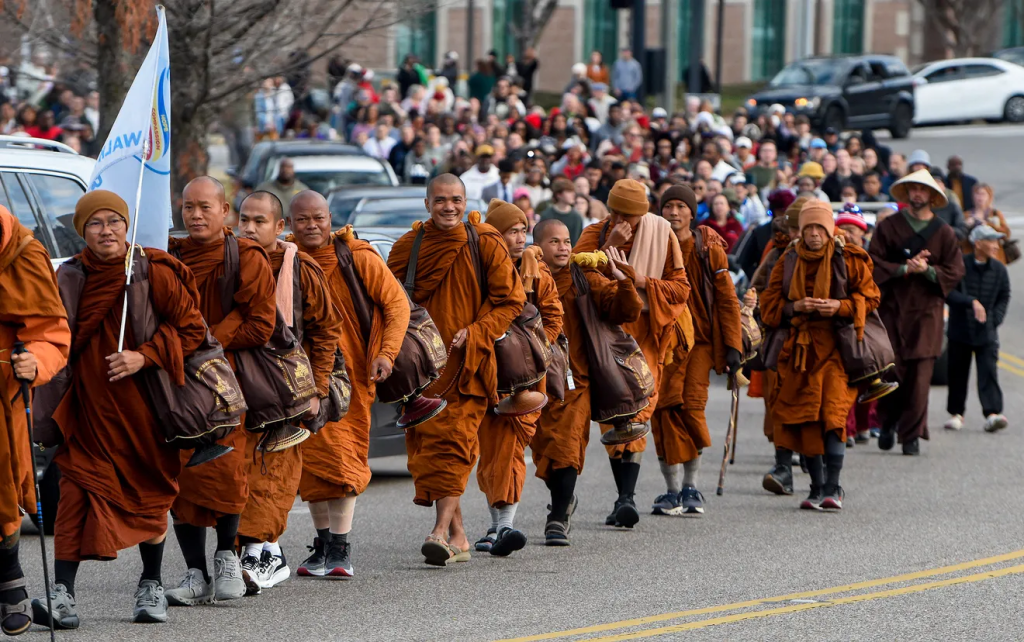
In the United States, a group of Buddhist monks has been walking on foot, praying for peace. Without slogans or confrontation, they offer presence, humility, and sincerity. Their journey has inspired many people to reflect on peace in a deeper way, and countless strangers have stepped forward to support them.
Guided by the teachings of Namo Dorje Chang Buddha III, and with deep respect for the great mercy and loving-kindness through which Buddhas and Bodhisattvas benefit all living beings, the World Buddhism Association Headquarters (W.B.A.H.), Holy Miracles Temple (at Pasadena CA) and Sanger Mission sincerely to carry out Charitable Acts to Benefit Our Community Together: 2026 Food and Goods Drive, to collectively plant goodness. All donations will be sent to support local food banks, homeless shelters, and animal shelters in the Los Angeles area.
I also read about Jon Stewart, who announced an extraordinary donation of $116 million to help address homelessness across the United States—providing housing and dignity to people who have long been forgotten by society. It was a reminder that compassion, when paired with courage, can bring real and lasting change.
And then there is the story that expanded my sense of hope even further.
Johan Eliasch, a Swedish billionaire, acquired approximately 400,000 acres of the Amazon rainforest by purchasing the company that held its logging rights. Instead of continuing operations for profit, he immediately halted all logging activities.
Just like that, the chainsaws stopped.
That vast stretch of forest was allowed to remain intact—continuing to absorb carbon, protect biodiversity, and sustain one of the planet’s most vital ecosystems. His action demonstrated something profound: that private ownership, when guided by conscience, can become a powerful force for environmental protection.
This act of kindness may not be immediately seen by everyone, yet it will have a profound impact on the Earth’s ecological balance—and it is, in its own quiet way, safeguarding a future our children and grandchildren will still be able to breathe in.
From a child offering a lollipop… to a monk walking for peace… to a philanthropist sheltering the homeless… to a forest saved from destruction—
These acts may differ in scale, but they arise from the same source: the human longing to protect, to heal, and to do what is right.
In Buddhist teachings, compassion is not passive emotion—it is action. It is wisdom expressed through kindness.
As a new year begins, I sincerely hope we will witness more of these compassionate and righteous choices—choices that quietly warm the world.
May we walk together, letting kindness extinguish the fires of war, allowing love to dissolve hatred and conflict, and using compassion to heal sorrow, fear, and pain.
The world does not change all at once. But every gentle act—no matter how small—adds light.
And sometimes, that light begins with something as simple as a child’s open hand.































 Peace LiLy