In all the world there is no one else exactly like me.
Everything that comes out of me is authentically mine because I choose it…
I own everything about me, my body, my feelings, my mouth, my voice, all my actions whether they be to others or to myself
I own my fantasies, my dreams, my hopes, my fears
I own all of my triumphs and successes, all of my failures and mistakes because I own all of me.
I become intimately acquainted with me by so doing, I can love me and be friendly with me in all my parts
I know there are aspects about myself that puzzle me and other aspects I do not know…
but as long as I am friendly and loving to myself, I can courageously and hopefully look for solutions to the puzzles and for ways to find out more about me…
however I look and sound whatever I say and do, and whatever I think and feel at a given moment in time is authentically me
if later some parts of how I looked, sounded, thought and felt turned out to be unfitting, I can discard that which is unfitting and keep the rest and invent something new for that which is I discard
I can see, hear, feel, think, say and do.
I have the tools to survive, to be close to others, to be productive, and to make sense and order out of the world of people and things outside of me…
I own me and therefore I can engineer me
I am me and I AM OKAY.
Satir’s beautiful and empowering poem “I Am Me” encapsulates her core belief in self-worth and individuality. Its heartfelt lines inspire readers to embrace their authentic selves, fostering inner peace and self-acceptance. Through her words, Satir invites us to celebrate who we truly are, reminding us that personal growth is both possible and transformative.
Anton was a farmer who lived with his wife Rubina and their seven children at the edge of the forest. He worked hard and they were happy for many years. Then one spring, the rains didn’t fall and Anton’s wheat died in the fields. As winter came on, their food supply grew smaller and smaller. Soon, Anton’s shoulders were stooped with worry. Rubina’s plump apple cheeks withered. The children no longer sang or laughed or danced, for they were all too hungry.
Every day Anton went out to hunt for food but returned without firing a shot. And every day, Rubina added water to the onion soup until there was nothing in the pot but water. When Anton saw his family crying with hunger, he wanted to cry too.
But instead, he took his gun and went out again into the cold, cold night. He had to find something for them to eat: a bird or a rabbit. But the black branches were empty of birds and no rabbits crouched in the frozen shrub. The only tracks Anton saw were his own.
He came to a small hill and knew it was the last one he would be able to climb before his strength was gone. His feet were numb and his breath rasped in the freezing air. At the top of the rise, he stopped to rest, scanning the snow for tracks. In despair, Anton turned to go. Just then, he saw below him a lake that was not yet frozen over. Its edge was lacy with ice and at its center floated a swan of such dazzling beauty that Anton could not look away. Its stark white feathers gleamed against the dark water and as Anton watched, the swan seemed to grow larger until its image filled his eyes.
Suddenly, juices flowed into Anton’s mouth. He could taste succulent roast swan and see his children’s faces glowing as his family sat at the table eating again. He raised his gun and sighted down the long barrel. Anton put his finger on the trigger. The swan seemed to be looking at him, listening for the shot that would kill it. He lowered the gun. The swan was the most beautiful creature Anton had ever seen. As he watched, the swan fanned its magnificent wings.
Anton closed his eyes and thought of his family. Again, he raised his gun. Hours seemed to pass. The feathers on the swan’s breast moved gently with each beat of its heart, and Anton could feel his own heart beating. He lifted his heavy wet feet, walked a few steps, and then dropped to his knees. “I can’t do it,” he said.
“Why not?” asked a voice as soft as snow or feathers ruffling in a gentle wind.
“I cannot kill beauty. If I kill this swan, my family will have food for one or two meals. And then what? We will be hungry again and it will have been for nothing.”
Anton was too tired to be surprised that he was speaking to the swan or the wind or the night. He was too tired to walk back home. He bowed his head with sadness for his family.
With a cry, the swan lifted its wings, rose from the lake, and circled Anton, water dropping from its wing feathers.As the water hit the snow, it froze into crystals that sparkled in the moonlight. Anton reached out and touched one. It was hard, harder than ice, and did not melt in the warmth of his hand.
“A diamond!” Anton said. Quickly, he scooped up the diamonds that lay in a glittering circle around him. He filled his pockets with them and set off through the snow to a nearby village.
Anton was no longer tired. He no longer felt the cold. He woke up the innkeeper, calling, “I need food.”
“Your crops failed,” said the innkeeper. “Everyone knows you have no money.”
“I have a diamond,” said Anton.
“Where would the likes of you get a diamond?” the man scoffed.
“Let me in and I will explain.”
The innkeeper fed Anton cold venison and sweet dumplings while Anton told his story, and the innkeeper’s wife packed a sledge for him with roast chickens and cheeses and onions and turnips. Then they sent Anton on his way so that they could begin looking for the magic swan themselves.
Rubina met him at the door. “Did you find any food? Mischa has fainted.”
“No. But look what I have brought.” Anton showed her the sledge.
“But how did you get it?” she asked.
For answer, he spilled the diamonds onto the table.
“Oh,” cried Rubina, “you have turned to robbery!”
“No,” said Anton. And he told her all about the swan, and how it had circled him with the diamonds falling from its wings.
Anton and Rubina woke the children even though it was the middle of the night, and they all sat at the table eating slowly, enjoying the flavor of the food and wonderful feeling in their stomachs. Rubina’s black eyes sparkled as she filled her children’s bowls. Anton felt his strength returning. Several of the children hummed as they were put to bed.
Anton and Rubina and their children were never hungry again, for they used their diamonds wisely and well. News of the magic swan spread throughout the land and many people searched for it. But the swan was never found.
Sometimes when Anton was alone in the forest, the image of the swan rose before him. He saw again the gleam of its feathers, the coral glow of its beak, and the magnificent reach of its wings as it glided silently across the sky.
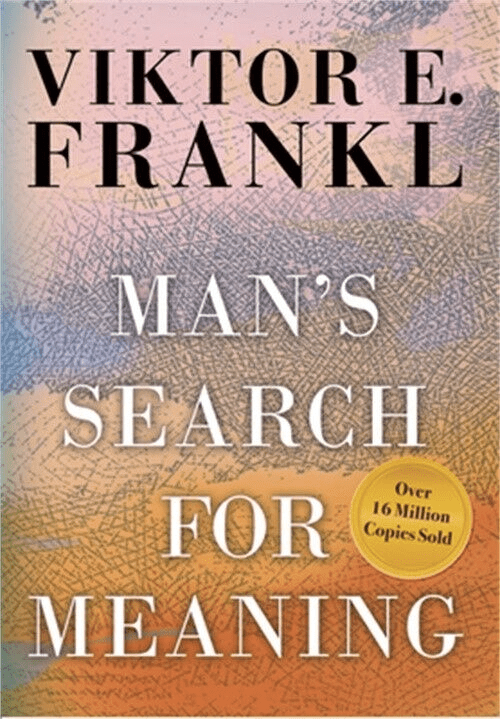
In his profound book “Man’s Search for Meaning,” psychologist Viktor Frankl imparts crucial lessons on finding meaning in our lives. The book is divided into two parts: the first half comprises the author’s semi-autobiographical narrative of life in a concentration camp, retaining insights and thoughts from the perspective of a refugee. Frankl, with the keen observational eye of a psychologist, categorizes the camp’s inhabitants into two main groups. Those who survived were invariably those who found meaning in life and clung to a shred of hope to keep moving forward, although many of them did not persevere until the end. Those who deemed life meaningless, lost the will to live, and had no hope, inevitably perished.
The second half delves into the fundamental concepts of logotherapy from a psychological perspective. Observations from the refugee camp are documented and internalized into the author’s own “logotherapy,” aiding patients—or ordinary people like us—in finding meaning in life and living their unique existence. The author advocates against determinism, emphasizing the importance of individual choice over environmental determinism.
Frankl, a Jewish psychiatrist imprisoned in the Auschwitz concentration camp, experienced a tumultuous journey of emotions. Before Christmas in 1944, rumors spread in Auschwitz that the war would end and everyone would be released, yet after Christmas passed without the anticipated victory, hopelessness descended, resulting in the death of 80% of the camp’s inhabitants—not from hunger and cold, but from the loss of hope. Frankl survived because two things mattered to him: his family, especially his love for his wife, which provided him with immense motivation during times of suffering, and his manuscript, his work on the psychological “logotherapy” he aimed to complete. These two things were bigger than himself, sustaining him through the ordeal.
This book stands out among numerous works because it encompasses both the author’s personal harrowing experiences and the detached observations of a scientist. From the outset, the author states his reluctance to write a mere chronicle of the concentration camp but rather aims to answer one question: “What psychological journey does an ordinary prisoner go through each day in the camp?” His observations focus on the silent, anonymous inmates’ reactions to their environment, including his own.
What fascinates me most is the author’s earnest yet transcendent perspective. Grounded in his own inner being, he strives for honesty without self-pity or complaint, maintaining a clinical detachment that rises above the harsh realities of the time. This writing style and attitude reveal both his resilient spirit and remarkable clarity of mind, as well as his profound understanding of his inhuman conditions, rendering emotional catharsis unnecessary.
At times, he detaches himself from his immediate surroundings, engaging in imaginary dialogues with his beloved wife, allowing love to fill his heart. The ability to detach oneself from reality using imagination is a unique human skill that aids survival in extreme adversity.
His theory posits that the search for meaning in life is the fundamental driving force of human existence. This meaning is unique and individual, requiring realization and practice by each person; only through this realization can one’s will to meaning be fulfilled. The aim of “logotherapy” is to aid individuals in uncovering the meaning in their lives. This meaning varies for each person and changes at different life stages, necessitating personal exploration. Once discovered, it provides hope for easing the neuroses arising from a lack of meaning in life. Meaning in life is concrete and tangible. For instance, a mother may find meaning in living for her children. I wholeheartedly concur with the author’s view that the meaning of life is not fixed. The sustenance it provides varies at different ages and stages of life. For instance, there was an elderly man who had been depressed for two years after losing his wife, seeking assistance from Frankl. When asked what his wife would do if he had passed away before her, the man responded that she would not be able to bear such pain. Frankl then remarked, “So, she left first. You can bear the pain for her to rest in peace. Isn’t that good?” The man felt relieved upon hearing this. He found the meaning of his life at that time.
According to author, there are three paths to finding meaning in life: 1. Creativity and work; 2. Recognizing values (such as love); 3. Suffering. Frankl firmly believes that everyone can find meaning in life, whether through creativity and work, experiencing something or loving someone, or, in extreme circumstances, when all joy is stripped away, unavoidable suffering itself becomes the meaning of life. From his experiences in the concentration camp, he realized the third path.
In extreme adverse conditions, when a person is reduced to nothing but their body and mind, they still retain the freedom to choose their attitude towards their environment. They can either actively and arduously utilize every condition to survive or succumb to the desire to die, yielding to fate. The choice of attitude is the only and complete dignity and meaning. And humans can choose to say “yes” to life.
Therefore, Frankl is a pessimistic optimist. He acknowledges that life itself is inherently meaningless, yet he is willing to inspire humanity to find meaning for themselves. His mission in existential psychiatry is to help patients find their own meaning in life through various methods. In contrast to psychoanalysis, which views humans as passive products of their environment, Frankl places human subjective will in a more significant position.
I cannot disagree with Frankl’s viewpoint. From my own half-century of life experience, I also believe that the attitude we adopt towards our environment, whether favorable or adverse, ultimately determines the trajectory of our lives. This is what I mean by “character determines destiny.” There are times of despair, hopelessness, and pessimism, of course, and there is no need to feel ashamed. We should learn to pull ourselves out of negative emotions and sincerely believe that “tomorrow will be better.” And indeed, tomorrow often turns out fine.
Nine powerful quotes from the book Man’s Search for Meaning
Choose hope. We cannot always change our circumstances but we always have a choice about our attitude in any given situation. As Viktor Frankl writes, “When we are no longer able to change a situation, we are challenged to change ourselves.”*
Know your why. Ask yourself: What am I living for? Every single day, we should ask ourselves why we are getting up and why we are here at all “Those who have a ‘why’ can bear with almost any ‘how’.”
Learn how to cry. Tears are not a sign of weakness; they emanate from a soul that is not afraid to break: “But there was no need to be ashamed of tears, for tears bore witness that a man had the greatest courage, the courage to suffer.”
Don’t just be part of the herd. The world is upside down; sometimes doing what everyone else is doing is what is insane. “An abnormal reaction to an abnormal situation is normal.”
Live meaningfully. We create meaning by answering the questions life asks from us. “Ultimately, man should not ask what the meaning of his life is, but rather must recognize that it is he who is asked. In a word, each man is questioned by life and he can only answer to life by answering for his own life. It did not really matter what we expected of life, but rather what life expected of us.”
Fill your day doing acts of kindness. There is purpose in kindness; there is meaning in the hundreds of small acts of giving that we have the opportunity to grasp each day. “We who lived in concentration camps can remember the men who walked through the huts comforting others, giving away their last piece of bread. They offer sufficient proof that everything can be taken from man but one thing: the last of the human freedoms-to choose one’s own way.”
Move beyond yourself. We find true meaning when we transcend our own needs and limits. “The more one forgets himself – by giving himself to a cause to serve or another person to love – the more human he is and the more he actualizes himself.”
Feel the pain of others. Suffering hurts no matter how irrelevant or ordinary it may seem to others. Be attuned to others’ grief even if doesn’t seem like a tragedy in the overall scheme of life. “Thus suffering completely fills the human soul and conscious mind, no matter whether the suffering is great or little. Therefore, the ‘size’ of human suffering is absolutely relative.”
We can change even when life is hard. We can create meaningful lives full of depth and love and purpose. “Man does not simply exist but always decides what his existence will be, what he will become the next moment. By the same token, every human being has the freedom to change at any instant.”
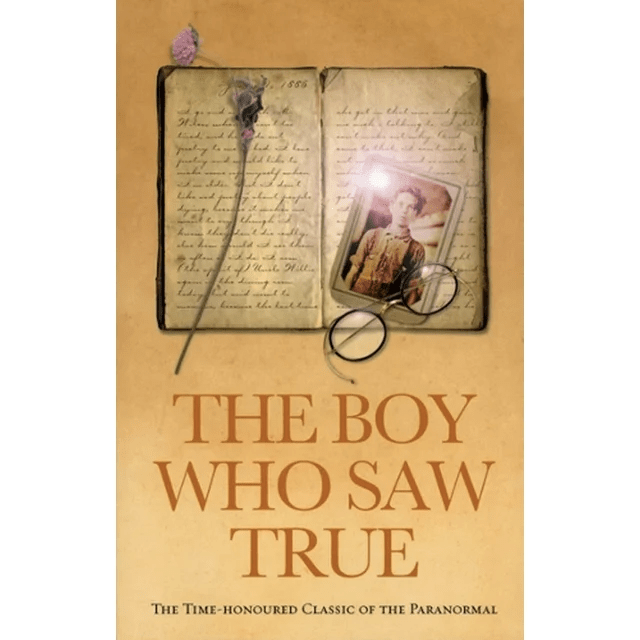
Have you ever stumbled upon a book that instantly captivates your attention, drawing you into its pages with an irresistible allure? That’s precisely what happened to me when I discovered the Chinese version of “The Boy Who Saw True.” From the moment I started reading, I was completely enthralled.
At the heart of this remarkable book is a young boy from England, born into privilege yet endowed with an extraordinary gift. Raised in a family where literature was cherished, he inherited his father’s passion for reading, immersing himself in books far beyond his tender years. Despite his mother’s attempts to steer him away from certain subjects, his determination to explore the literary world only grew stronger, infusing his writings with a delightful blend of wit and charm that is uniquely his own.
But what truly sets this young boy apart is his “third eye” – an innate ability to see truths hidden from ordinary sight. In his diary, he meticulously chronicles the myriad of peculiar phenomena he encounters in the spiritual realm. From envisioning himself as a monk in a secluded cave, imparting ancient Buddhist teachings to his disciples, to glimpsing his past life as a revered priest in ancient Egypt, seduced by the allure of worldly power – each revelation is as astonishing as it is profound, offering profound insights into the mysteries of human nature and the cosmic order.
Despite facing skepticism and misunderstanding from those around him, the boy’s unwavering insight into the spiritual realm remains unquestionable. His experiences, both mysterious and mesmerizing, serve as a beacon of inspiration, igniting a fervent curiosity in readers eager to unlock the secrets of the universe.
The author’s integrity shines through every page, as he never seeks to exploit his psychic abilities for personal gain. It’s this steadfast commitment to truth and authenticity that makes his diary a rare and precious gem, entrusted to the world by the esteemed editor, Mr. Cyril Scott, after the author’s passing.
What makes “The Boy Who Saw True” truly exceptional is its exploration of the spiritual realm through the innocent eyes of a child. Unlike other metaphysical books, it eschews complex theories in favor of a refreshingly simple and humorous narrative style, making it accessible to readers of all ages.
As I delved deeper into its pages, I couldn’t help but feel a profound sense of wonder and enlightenment. This book is more than just a literary masterpiece – it’s a journey of self-discovery and spiritual awakening that transcends the boundaries of time and space.
In conclusion, “The Boy Who Saw True” invites readers to embark on a transformative voyage into the unknown, where the boundaries between reality and imagination blur, and the truth reveals itself in the most unexpected of places. It’s a reminder that our lives are but a small part of a vast and wondrous universe, waiting to be explored and embraced with open hearts and minds.
In the ancient Dunhuang Grottoes of China, a mesmerizing love story unfolds, delicately captured in murals that have withstood the test of time. Let us immerse ourselves in this enchanting tale of kindness, courage, and wisdom.
Once upon a time, in the Kingdom of Polo, a joyous occasion marked the birth of a prince named Sunwoo. Born to the noble king and queen after twelve years of fervent prayers, the young prince brought immense happiness to the royal family.
As Sunwoo grew, so did his wisdom and kindness. His presence was a beacon of light, radiating love and compassion. However, alongside him was a stepbrother, an evil friend, whose heart harbored jealousy and resentment towards the virtuous prince.
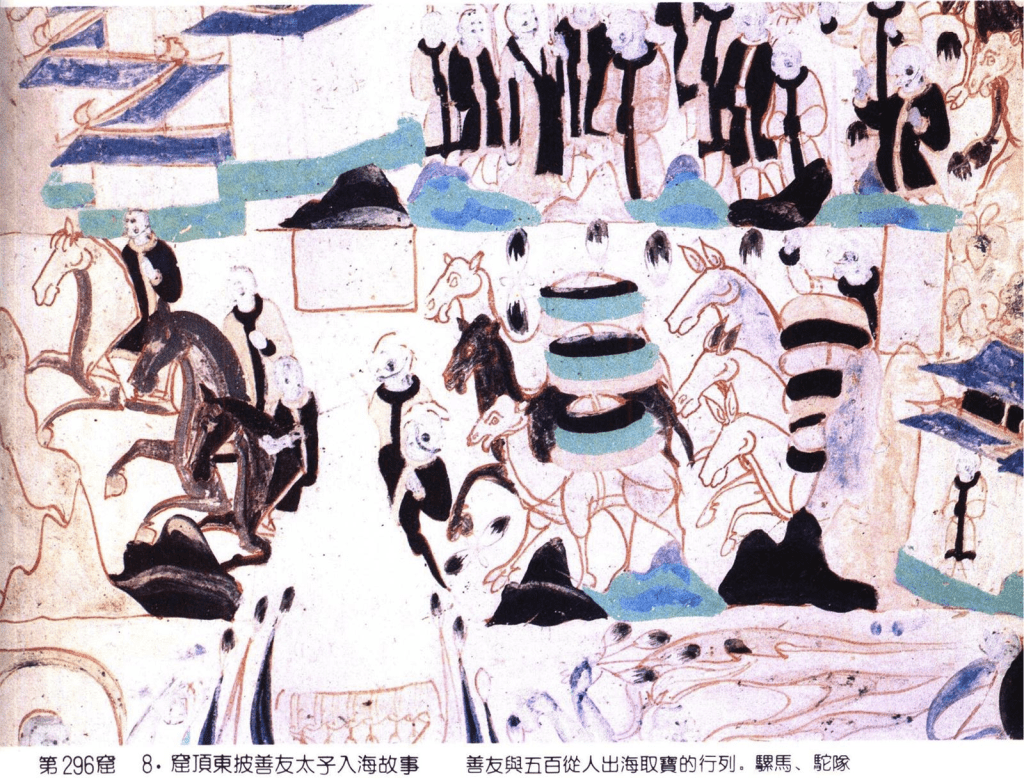
The tale takes an unexpected turn when Sunwoo, driven by a desire to alleviate the suffering of his people, embarks on a perilous journey to seek treasures from the sea. His selflessness touches the hearts of many, but it also ignites the envy of his malevolent stepbrother.
Prince Sunwoo accompanied by 500 volunteers to search for treasur
Guided by an elderly instructor and accompanied by 500 volunteers, Sunwoo reaches Haizhou Jumbo Island. As he ventures further, facing challenges and loss, he encounters the benevolent Dragon King, who grants him the priceless Ruyi pearl.
Prince Sunwoo and his team sailed across the ocean
Meanwhile, back in the Kingdom of Polo, Sunwoo’s absence is keenly felt. His parents, yearning for his return, send a white goose as a messenger. The devoted goose delivers a letter revealing the Prince’s dire circumstances.
As Sunwoo’s journey unfolds, his evil stepbrother, fearing Sunwoo’s increased popularity upon return, decides to sabotage him. The malicious act blinds Sunwoo, leaving him vulnerable and alone.
In his darkest hour, a compassionate cowherd boy comes to Sunwoo’s aid. Unaware of his royal identity, the boy rescues Sunwoo and becomes his loyal companion, leading him back to the kingdom.
The love story takes an unexpected twist when the blind Sunwoo, reduced to a beggar, meets a kind princess during his wanderings. The princess was very touched by Sunwoo’s music. Her genuine affection and determination to marry him, despite societal norms, lead to a grand wedding.
In a poignant moment, the princess, deeply in love, makes a solemn vow. She promises to restore Sunwoo’s sight if her love is true and vows to take away her own eyes if she ever betrays him. Miraculously, her unwavering love restores one of Sunwoo’s eyes.
The narrative weaves through twists and turns, revealing the complex interplay of good and evil, karma, and ultimate redemption. Sunwoo’s evil stepbrother, realizing the consequences of his actions, repents and reveals the hidden Ruyi pearl.
In a grand reunion, Sunwoo’s parents regain their sight, and the entire kingdom is bathed in prosperity. The murals in Dunhuang and Kaihua Temple immortalize this timeless love story, showcasing not only the artistic brilliance of ancient China but also the enduring power of kindness and virtue.
As we reflect on this captivating tale, may it inspire us to embrace compassion, navigate life’s challenges with wisdom, and believe in the transformative power of love and redemption. The Dunhuang Grottoes stand as a testament to the rich tapestry of human stories etched in history, inviting us to cherish the enduring lessons embedded in their ancient walls.
In the intricate tapestry of human beliefs, the concept of reincarnation has woven itself through the fabric of traditional Asian cultures for centuries. However, this idea finds little resonance in Western cultures and often faces skepticism from the scientific community. Amidst this cultural and scientific dichotomy, a pioneering exploration is unfolding at the prestigious University of Virginia School of Medicine, led by Dr. Jim B. Tucker, a child psychiatrist with a unique perspective on life after death.
Born and raised in the southern United States, Dr. Tucker’s early life was immersed in the traditional beliefs of the American South. As he embarked on his academic journey, obtaining an undergraduate degree in psychology and specializing in child psychiatry, he encountered the notion of reincarnation with a healthy dose of skepticism. The clash between cultural beliefs, scientific inquiry, and personal skepticism set the stage for Dr. Tucker’s intriguing exploration into the mysteries of existence.
The documentary, highlighted on the Discovery Channel, explores the extensive and worldwide research conducted by Dr. Tucker. The film encapsulates the core of his studies, presenting interviews, case studies, and the profound implications of his findings. Through this visual medium, viewers are welcomed to observe the intersection of traditional beliefs, modern skepticism, and scientific exploration—all in the quest to unravel the mysteries of human existence.
Buddhism holds that life undergoes reincarnation through the six realms. After a person dies, if the karmic conditions accumulated in their past life mature, they may be reborn into the heavenly realm as a deity, or into the realm of asuras, or they may be reincarnated in the human realm. If negative karma, such as killing, deception, or greed, comes to fruition, the individual will inevitably fall into the hell realm and suffer, or they may be reborn in the realms of hungry ghosts or animals to endure suffering.
As for which realm one will be reborn into among the six, it depends on the karmic conditions of their virtuous and non-virtuous actions. Why does reincarnation occur? The fundamental reason lies in the attachment of sentient beings. Attachment gives rise to the confusion of karma, and from this confusion arises ignorance. Due to the endless causes and effects generated by ignorance, various positive and negative karmic forces are produced. It is these karmic forces that determine which realm of existence one will be reborn into.
The investment realm bids farewell to its philosopher, the golden partner of Warren Buffett, Charlie Munger, who passed away on November 28th this year, at the age of 99. Munger’s life was a testament to generosity, kindness, rationality, humility, and a low-key demeanor. Renowned for his honesty, integrity, lack of complaints, and absence of hindsight bias, Munger earned global admiration and respect. His impactful literary work, “Poor Charlie’s Almanack,” reflects his profound humanity.
Among Munger’s profound teachings, five sentences stand out, resonating deeply with individuals and serving as timeless nuggets of wisdom. Deserving Success, Value Investing Strategy, Success and Surroundings, Magic of Compound Interest, Probabilities Over Luck.
“The best way to obtain something is to make oneself deserving of it” reflects classic wisdom upon contemplation. Unlike typical words of wisdom that merely offer principles without practical methods, Munger’s comprehensive approach in “Poor Charlie’s Almanack” reveals a value investing strategy intertwined with life philosophy.
Charlie Munger’s love for books was profound. Often referred to as a “bookshelf with two legs,” Munger’s voracious reading habit extended beyond the realms of finance. He explored diverse genres, not just for knowledge acquisition but to open his mind to different angles and views. His extensive reading shaped him into a profound thinker, and his eclectic taste in literature reflected in his unique perspectives. Munger’s commitment to continuous learning and intellectual curiosity made him an embodiment of wisdom.
Munger’s belief in value investments extended beyond finance to personal development. He advocated assessing the value of a business before evaluating its stock, discarding speculative opportunities, and overlooking short-term factors. The enduring factor for a stock’s reliability, according to Munger, is whether it truly deserves its current price. This principle, he argued, holds true for personal growth, embodied in the saying, “The essential reason for a person’s success is that those around him wish for his success.”
Throughout his illustrious investment career, Munger adhered to the traditional values of the American West — diligence, focus, sincerity, thrift, and future investment. These principles earned him the trust of many collaborators. Notably, Munger’s initial million came from a real estate investment while he was still a lawyer. Recognizing the potential for real estate development in a property left by a client’s ancestors, Munger, through the client’s trust, achieved tremendous success.
Munger’s philosophy that making oneself valuable attracts potential collaborators is the most reliable investment method. This philosophy aligns with renowned stock guru Warren Buffett’s simple yet effective secret to wealth: save, invest, continue saving, and continue investing. Munger’s teachings delve into the power of compound interest, demonstrated in a thought experiment within “Poor Charlie’s Almanack.”
The experiment presents two choices — receiving $1000 daily for 30 days or receiving an escalating amount starting with 1 cent, doubling each day for 30 days. The seemingly attractive first choice limits the total to $30,000, while the second, with the magic of compound interest, accumulates to an astonishing $5.37 million. Munger highlights the patience required for compound interest to exhibit its true power, a principle applicable to personal growth.
Economist Xiang Shuai’s intriguing experiment reinforces Munger’s teachings. Progressing a little every day, even by 1%, leads to significant advancement after a year, while regressing daily results in minimal talent advantage. Munger’s emphasis on the importance of daily learning and reading resonates with the ancient wisdom: “Accumulate small steps, and you will cover a thousand miles.” He advocates believing in probability over luck, emphasizing that probability theory aligns closely with the world’s functioning.
Munger’s views on setting goals underscore the importance of realistic expectations and avoiding fanaticism. He advises setting goals slightly beyond one’s capabilities, then striving wholeheartedly to achieve them. The rational and joyful life attitude Munger promotes hinges on believing in the magic of compound interest.
Despite initial misconceptions, “Poor Charlie’s Almanack” is hailed as a seriously underestimated gem, transcending the appearance of a self-help book. Patiently reading through Munger’s insights reveals a figure resembling a traditional Chinese sage, offering universal wisdom for living a fulfilled and prosperous life. His desire for everyone to master universal wisdom echoes in the statement, “I only pass my sword to those who can wield it.” Munger’s legacy serves as a guiding light, illuminating our paths to a brighter and more brilliant existence.












 Peace LiLy