San Francisco Hua Zang Si Temple Celebrates 20th Anniversary with Charity Event: “Love Without Limits” Donation Drive


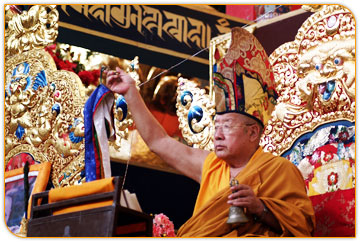
San Francisco Hua Zang Si Temple Celebrates 20th Anniversary with Charity Event: “Love Without Limits” Donation Drive Photo Courtesy: Joyce Lee (The Hua Zang Si Temple held a Dharma Assembly to celebrate the Holy Birthday of Amitabha Buddha)

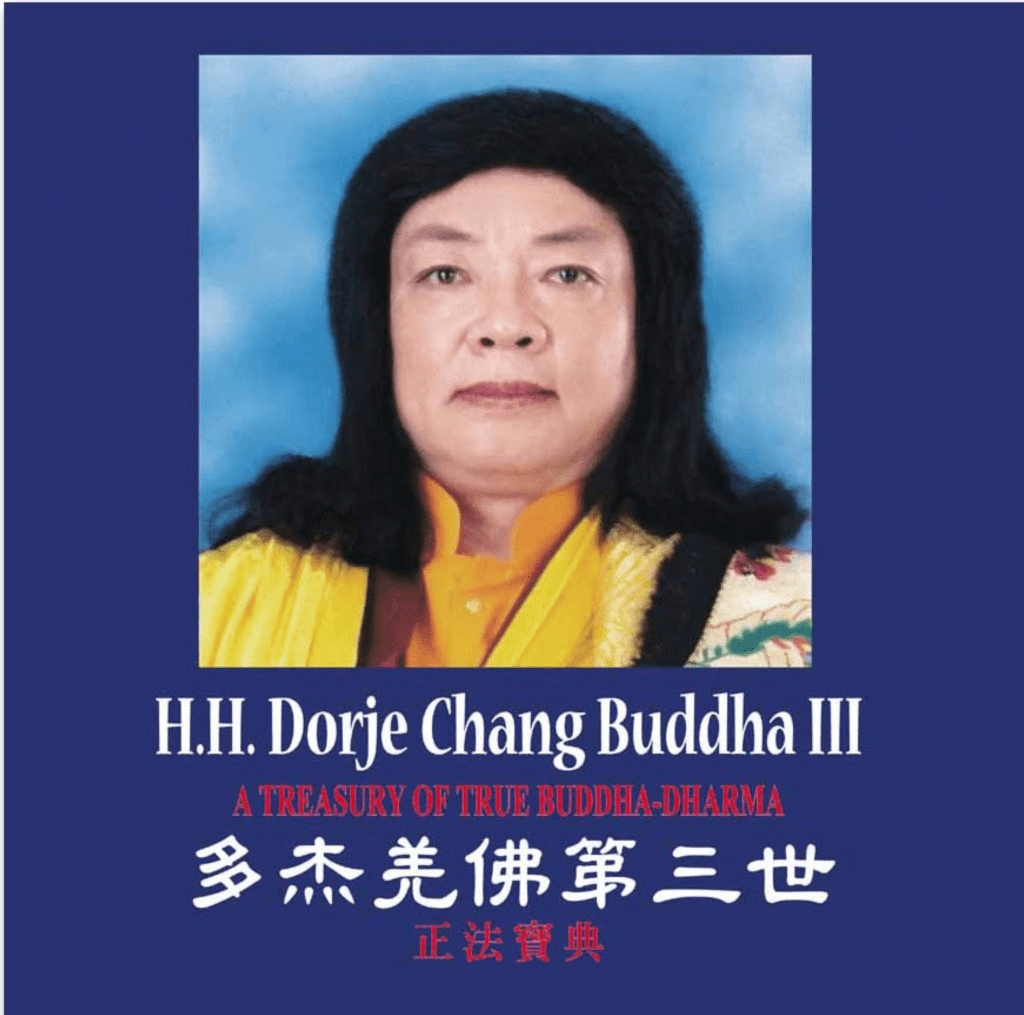
The San Francisco Hua Zang Si Temple, inaugurated on December 26, 2004, upholds and promotes the genuine teachings of H.H. Dorje Chang Buddha III, the incarnation of the primordial Buddha, and the World-Honored Shakyamuni Buddha, extending boundless compassion and kindness to all beings. 

Guided by the teachings of H.H. Dorje Chang Buddha III, Hua Zang Si Temple has actively participated in various charitable activities for many years, including organizing New Year entertainment events in nursing homes, assisting with hospital relocations, providing food relief to disaster-affected areas, and holding garage sales, with all proceeds donated to vulnerable groups. The temple expressed their hope that this spirit of helping others will continue to flourish: “In acts of kindness, seeds of virtue grow, a family that sows goodness finds happiness in full flow.”
San Francisco Hua Zang Si Temple Celebrates 20th Anniversary with Charity Event: "Love Without Limits” Donation Drive
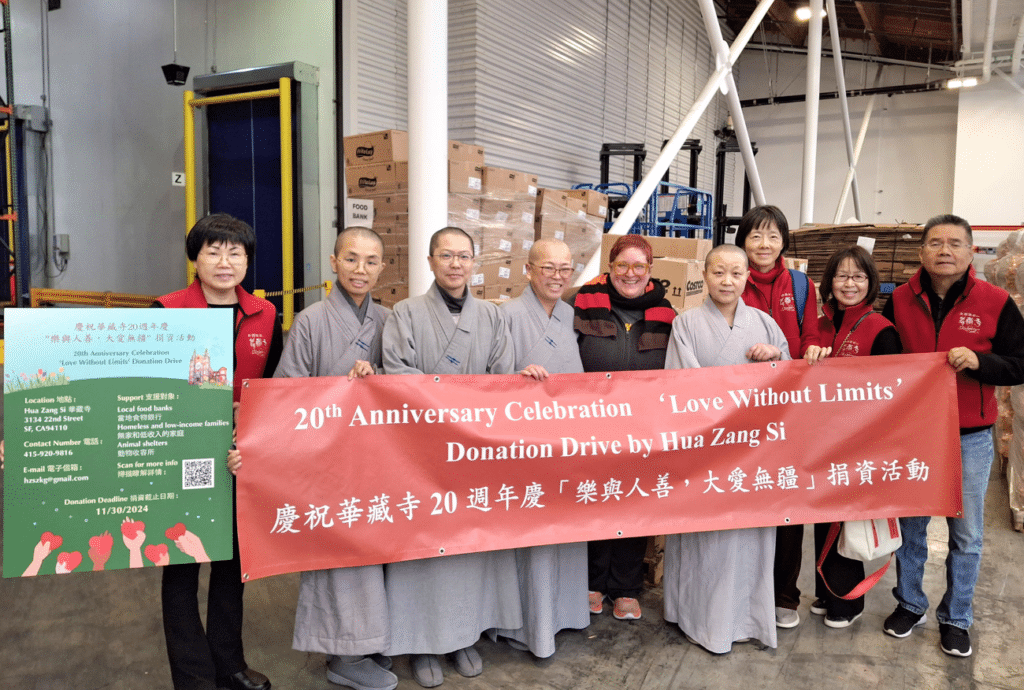
Photo Courtesy: Natty Kao (Nuns from Hua Zang Si Temple and volunteers from the Dharma-Protecting Fellowship of Hua Zang Si donated items to San Francisco Marin Food Bank.)

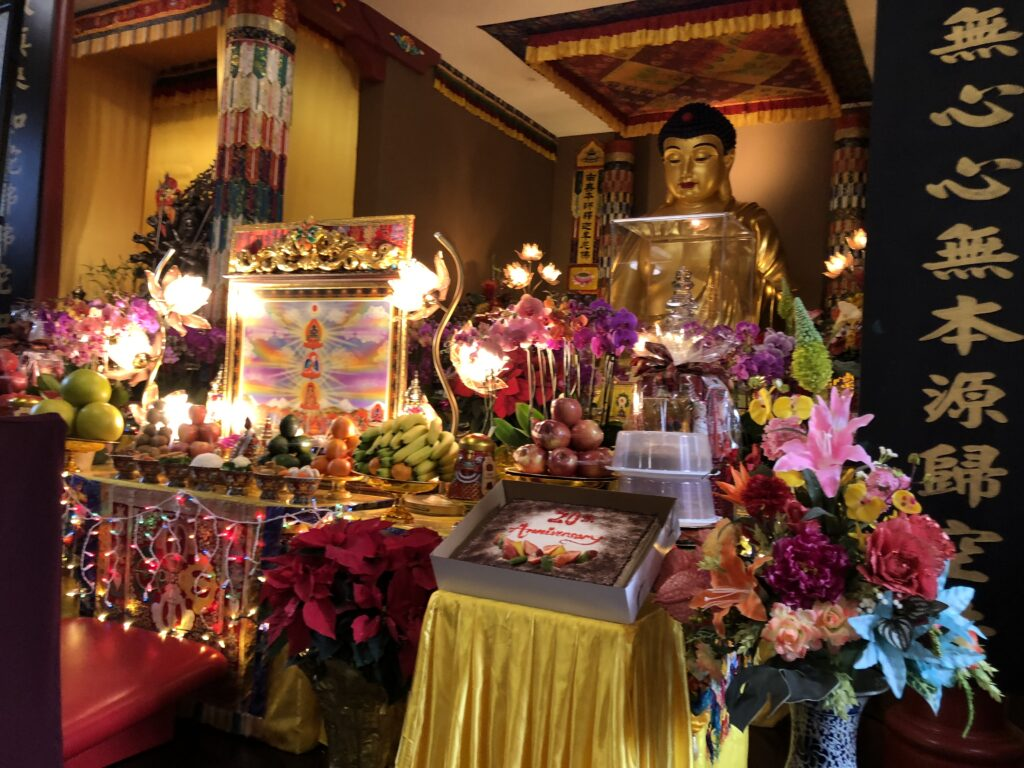
To commemorate its 20th anniversary, Hua Zang Si launched a month-long charity drive titled “Love Without Limits” in November, supporting animal rescue centers, homeless and low-income families, and local food banks. On the morning of December 15, a Dharma Assembly was held to celebrate the Holy Birthday of Amitabha Buddha, praying for world peace and the well-being of all people. The afternoon featured a 20th-anniversary performance and raffle, attended by nearly 300 people.

By December, Hua Zang Si had collected a total of 812 items, categorized into three main types: 241 animal supplies, including dog collars, walking harnesses, pet carriers, and disposable puppy pads; 211 baby and cookware items, including baby bottle drying racks, baby bodysuits, air fryers, and cookware sets; and a total of 2,265 pounds of food, including rice, pasta, and other food items. On December 11, nuns from Hua Zang Si Temple and volunteers from the Dharma-Protecting Fellowship of Hua Zang Si delivered these items to Muttville Senior Dog Rescue, the Homeless Prenatal Program (HPP), and the San Francisco Marin Food Bank.
San Francisco Hua Zang Si Temple Celebrates 20th Anniversary with Charity Event: "Love Without Limits” Donation Drive
Photo Courtesy: Joyce Lee 
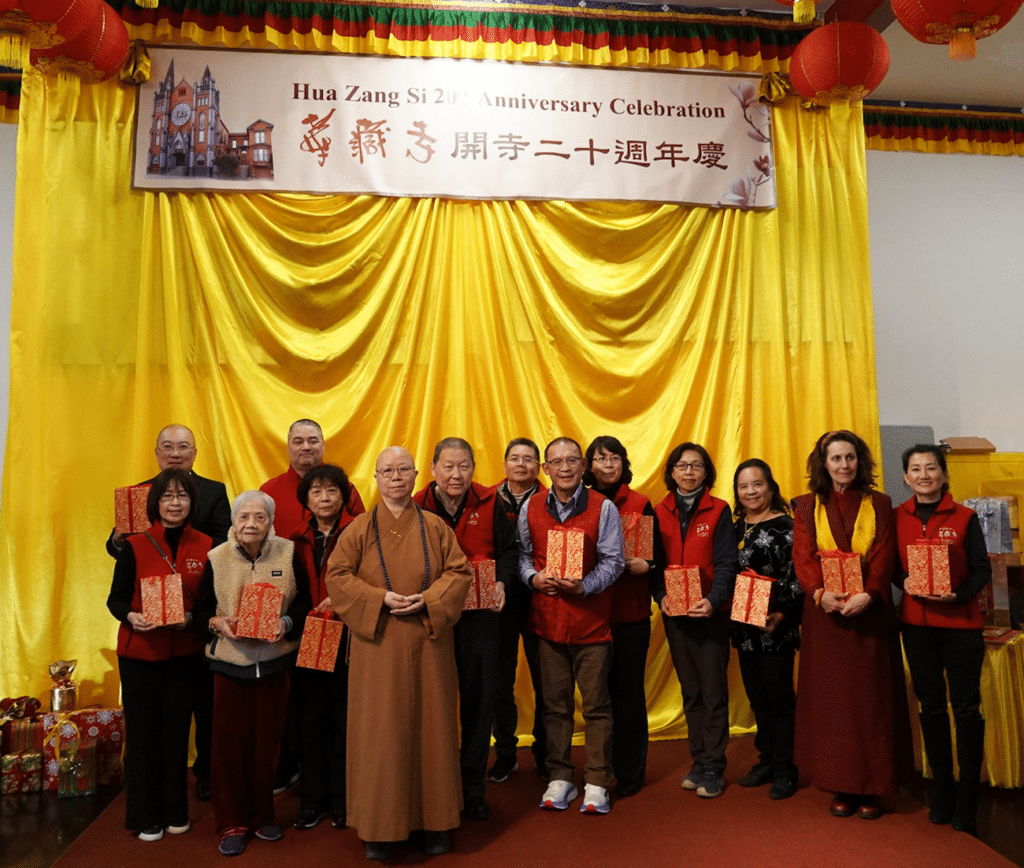
(The abbess of Hua Zang Si Temple awarded 20 years’ service awards to volunteers.)
Photo Courtesy: Joyce Lee (The abbess of Hua Zang Si Temple awarded 20 years’ service awards to volunteers.)

As the first cage-free rescue organization in the U.S. and California’s first nonprofit dedicated to rescuing senior dogs, Muttville has rescued nearly 13,000 senior dogs over the past 17 years, providing support for about 100 senior dogs each month. The generous donations from Hua Zang Si were gratefully received, greatly aiding in the care and rehoming efforts for these senior dogs.

The San Francisco Marin Food Bank, a nonprofit organization dedicated to addressing hunger in San Francisco and Marin counties, distributed over 60 million pounds of food this year, thanks in part to Hua Zang Si’s year-end support. In these regions, one in five people faces food insecurity, and the temple’s contributions have significantly bolstered the food bank’s efforts. The donated food from the temple will be utilized in various community programs, including after-school programs, Boy and Girl Scouts, ensuring that nutritious meals reach those in need.
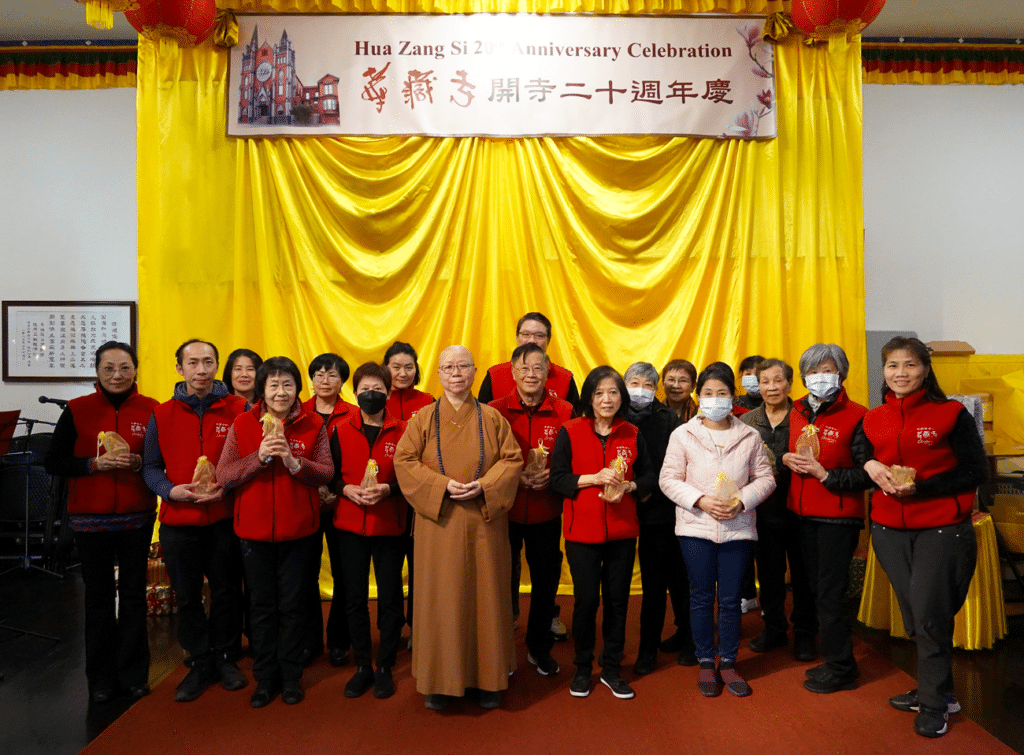
San Francisco Hua Zang Si Temple Celebrates 20th Anniversary with Charity Event: "Love Without Limits” Donation Drive
Photo Courtesy: Joyce Lee
(The abbess of Hua Zang Si Temple awarded 10 years’ service awards to volunteers.)

The Homeless Prenatal Program (HPP), a renowned family support center in the U.S, serves over 4,000 vulnerable families each year, particularly aiding mothers seeking assistance during pregnancy and parenting. The temple’s donations have significantly enhanced HPP’s ability to support mothers and children facing life challenges.

On the afternoon of December 15, the 20th-anniversary celebration was held in the main shrine of Hua Zang Si, featuring live performances of several classic philosophical songs with lyrics written by H.H. Dorje Chang Buddha III, cello performances of various songs, a mesmerizing Tibetan dance, and an exciting raffle with numerous prizes. The event provided a visual and auditory feast for nearly 300 attendees. The celebration concluded with a heartfelt group sing-along of “Buddha Holding My Hand,” bringing the 20th-anniversary festivities to a perfect close.

Looking ahead, Hua Zang Si will continue to serve as a beacon of love and care within the community. They hope more people will join in these acts of kindness, creating a warm, loving, and harmonious society together.

The above article is from the World Reporter, December 23, 2024.
Link:https://peacelilysite.com/2025/01/08/san-francisco-hua-zang-si-temple-celebrates-20th-anniversary-with-charity-event-love-without-limits-donation-drive/

The Story Behind Dharma Discourse: The Dharma of Concentration and Visualization Essential for Enlightenment

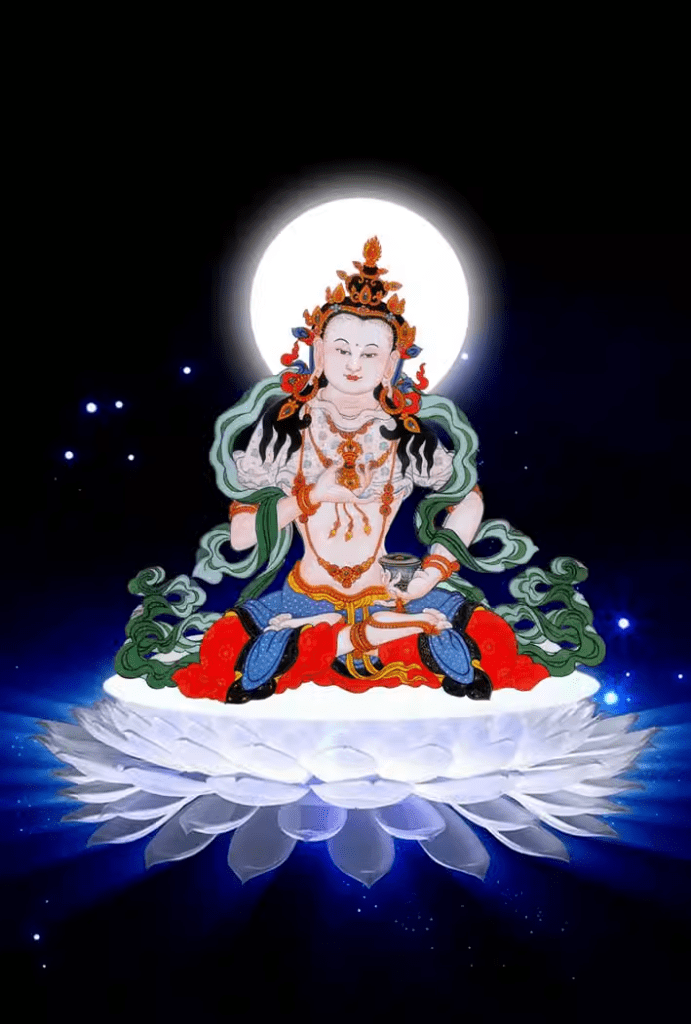
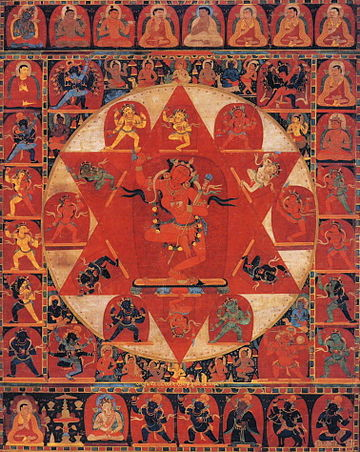
Vajravārāhī

By Yang Zong Da Wa Rinpoche

Pamu has been seriously ill for three months. She is often in a state of unconsciousness, with sores all over her body. Since she can only intake a small amount of liquid food, her body is as dry and thin as rattan. Her once youthful and solemn face has already become like that of a 100-year-old lady, with spots and deep wrinkles. She often says:

“Time does not wait for anyone. Everything is changing. Everything is in a state of impermanence. You should use this as a lesson. After you have read the books I have written, you should put into practice the principles contained in those books. Otherwise, you will not be able to end the cycle of birth and death.”

We used all kinds of medicine and thought of all kinds of methods, yet we could not cure her illness. Thus, on March 29 of this year, Sang Ba Kun Jue Rinpoche and I returned to Lalong-gegan. On the fifth day after our return, we made our way to Lhasa. We went to the Zu Pu Temple to worship, make offerings, and pray for Pamu’s swift recovery. Due to time constraints, we stayed there for only three days and then rushed back to our meditation cells.

Vajrasattva

Sang Ba Kun Jue and I together practiced the Wu Xiu Yoga Samadhi. We decided to go to the Tusita Heaven to ask Maitreya Bodhisattva to save Pamu. In my state of concentration, I arrived at the inner palace of the Tusita Heaven and paid my respects to Maitreya Bodhisattva. After prostrating myself, I suddenly saw Vajrasattva and Pamu each sitting on a lotus throne, discussing the Dharma with Maitreya Bodhisattva.

At this time, Maitreya Bodhisattva said to me:

“Yang Zong Da Wa, go back and tell those good men and women that Amang Nopu Pamu is the magnificent Buddha Mother of wisdom.”

I joined my palms in front of my heart and asked, “If people ask me how she is magnificent, how should I answer them?”

Maitreya Bodhisattva replied:

“When looking at the history of Buddhism in the human realm, which Buddha Mother in the earthly world has been able to master the Tripitaka and write so many commentaries by the age of 20? Her Dharma water can cause a beard that has stopped growing to grow again rapidly. This is the true Vajravarahi. Have you seen any Buddha Mother who simply saves living beings without accepting any offerings? Her magnificence fills infinite space and cannot be completely expressed to living beings with words. You should quickly go back. Your Pamu will at once return to the earthly world to preach ‘The Dharma of Concentration and Visualization Essential for Enlightenment.’ If you do not quickly leave, you will miss this class.”

I again joined my palms in respect and said to Maitreya Bodhisattva:

“Greatly Honored Maitreya Mahasattva, Pamu is now ill. Why is she here with you? I will go back together with Pamu.”

Maitreya Bodhisattva smiled but did not speak. Vajrasattva then said:

“Do not say anything more. Such deep Dharma is so seldom heard in the world. Quickly go back to the human realm.”

I hurriedly prostrated before Pamu, Vajrasattva, and Maitreya Bodhisattva and bid farewell to them. Through my state of samadhi, I returned to the human realm.

After I emerged from my concentration, three months and six days had already passed. Without even thinking about washing myself, I hurriedly went to pay my respects to Pamu. When I saw her, she still looked so old. She was in the sacred state of having only a faint breath of life left.

Pamu said: “You entered that state of concentration for a few months. I was waiting for you to return. I will soon give discourses on the essential Dharma for practicing concentration and visualization.”

Representing all living beings, I hurriedly prostrated myself before Pamu, joined my palms in respect, and asked:

“Most kind Pamu, when did you return?”

Pamu replied:

“Return from where? With such a serious illness, I did not go anywhere.”

I said, “I clearly saw you in the inner palace of the Tusita Heaven.”

Pamu rejoined:

“This is what you viewed in your state. Do not speak nonsense. Things of the world are all impermanent. One must make the best use of one’s time to benefit living beings.”

As soon as we obtained Pamu’s kind approval, we took a few photographs of her virtuous face. After the film was developed, one photograph showed a young, solemn appearance, while another showed an aged appearance. These two photographs were taken within a few seconds of each other but were totally different. This is truly unbelievable.

We immediately took the photographs to Pamu and asked her to explain the causative factors surrounding this. When we entered the door, everyone was startled. Pamu could hardly speak. Her face was shriveled and had no color. The Great Rinpoches all began to cry.

The next day, when everyone was terribly sad and hopeless, Pamu got up from her seat. My heavens! After only one night, she who was sitting before us was not an old lady about to die but our young and solemn Pamu! All who witnessed this were stupefied. The sound of crying mixed with laughter filled the room.

Pamu then said:

“Do you think I can mysteriously change myself? In fact, you are mistaken! You were not able to see clearly since there was medicine on my face and I was under the lamplight. I only have a heart of humility. How could I have such great skills? You must realize that everything is impermanent and always changing.”

The next day, Pamu formally ascended her throne to give a discourse. The subject was the Dharma of concentration and visualization. With utmost sincerity, I am telling everyone that this is the transcription of the discourses of Amang Nopu Pamu Rinpoche, the greatest and most outstanding Holy Mother in the history of Buddhism. She has never accepted any offerings, silently contributing to the benefit of living beings throughout the three spheres of existence.

This lesson of Dharma practice was given after Pamu returned from the inner palace of the Tusita Heaven. No other Buddha Mother or Dakini can compare with her loftiness and magnificence. We should prostrate ourselves before and feel grateful to the Great Jewel Amang Nopu Rinpoche Holy Mother, appreciating the empowerment of the Buddhas and Bodhisattvas abiding in the ten directions.

Link:https://peacelilysite.com/2025/01/04/the-story-behind-dharma-discourse-the-dharma-of-concentration-and-visualization-essential-for-enlightenment/

Source: Dharma that every Buddhist must follow by Amang Nopu Pamu, translated by Bodi Wentu Rinpoche. This post is an excerpt from the original article, taken from the preface of The Dharma That Every Disciple Must Follow, pages 55 to 58, by the great Rinpoche Yang Zong Da Wa.

Hair Sariras of H.H. Dorje Chang Buddha III

In Buddhist scriptures, relics are broadly classified into two types. The first type, known as Dharma-body relics, refers to the teachings and scriptures spoken by the Buddha, representing his spiritual essence and wisdom. The second type, physical relics, comprises the solid remains left after the Buddha’s cremation. These physical relics are traditionally described as being of three kinds: white bone relics, red flesh relics, and black hair relics. They are noted for their luminous, pristine appearance, unbreakable nature, and incomparable beauty, far surpassing worldly jewels.

It is also believed that Bodhisattvas and Arhats may leave behind similar relics. According to Buddhist teachings, relics naturally crystallize in those who have achieved enlightenment and sincerely practiced devotion to the Buddha. They are considered extraordinary and unattainable by ordinary individuals.

H.H. Dorje Chang Buddha III is recognized as the true reincarnation of the Primordial Buddha. His Holiness has demonstrated extraordinary miracles, including the manifestation of hair sariras. Below are authentic accounts from Buddhist disciples detailing their experiences and discoveries of the hair sariras of H.H. Dorje Chang Buddha III.

Hair Sariras (1)

H.H. Dorje Chang Buddha III Wan Ko Yeshe Norbu Holiest Tathagata usually cuts His own hair. However, there have been several occasions when I respectfully accompanied His Holiness to a barber shop. Each time, out of reverence, I carefully swept away the floor and removed other people’s hair before the haircut began. After the Buddha Master’s haircut was finished, I would gather His hair from the floor, wrap it carefully in paper, and place it on my Buddhist altar upon returning home. Gradually, I began collecting and keeping some of the hair.

I still remember what happened on June 1, 2003. On that day, I took out several unopened paper packs and organized them, intending to wash the hair. Because the individual hairs were very fine, I had paid special attention and placed them on a screen. While soaking them in water, I saw three small round red beads among the hair. The entire cleaning process was handled by me, and I did not touch anything else during that time. I felt this to be very strange and wondered where those red beads came from. I intended to press them with my finger to see if they were hard or soft and even took a magnifying glass to carefully exam them. Suddenly, a thought occurred to me. Could they be sariras? I realized if I did this, it would be too disrespectful.
Hurriedly, I placed the three small beads in a small white box and took them to H.H. Dorje Chang Buddha III to inquire of their origin. I asked, “May I know what these things are?” The Buddha Master said, “Where did you get these? These are sariras!” Afterwards, the Buddha Master practiced dharma and chanted mantras to prove the authenticity of those sariras. I reported to the Buddha Master that they were wrapped in paper and appeared from the cut hair of His Holiness.

Later, the Buddha Master gave us a special discourse in which His Holiness stated, “This has happened because of conditions and the level of fortune of all sentient beings. It does not matter where they come from. Perhaps they originated from the empowerment of the Buddhas and Bodhisattvas. It actually does not matter what the disciples think concerning how or where they come from. If they can appear out of nothing, then they can disappear out of nothing. The important thing is the cultivation of each one of us and the need to live in accordance with the teachings and abide by the principles of Buddhism.”
That night, I carefully placed those three red sariras in a small tightly covered Tibetan box and cushioned them with white cotton. The next day, a fellow disciple requested to view them. I thought about placing the sariras in a crystal bottle that I had just bought. When I opened the small box and looked inside–how could it be that there were only two sariras left? I did not touch any other things anymore! I shredded and tore the cotton, but could only find two sariras. It was really upsetting! This proves and corresponds to what H.H. Dorje Chang Buddha III previously expounded: “If they can
appear out of nothing, then they can disappear out of nothing.”

This extraordinary occurrence reminded me of a fellow disciple’s personal testimony of witnessing sariras falling from the Buddha Master. This time, I experienced it firsthand, and it was truly a wonderful and auspicious sign.

Everything I have recounted above is true and authentic. If there are any falsehoods, may I suffer all evil retribution. If they are genuine facts, may living beings receive the dharma teachings of H.H. Dorje Chang Buddha III Wan Ko Yeshe Norbu Holiest Tathagata, be liberated from the cycle of life and death, and attain wisdom and good fortune.

Buddhist disciple,
Hsuan Hui

(This is a complete translation of the Chinese text that follows, originally written and signed by Hsuan Hui.)

Hair Sariras (2)

I established a Buddhist altar in my home in Thailand on January 16, 2005. On that day, a fellow disciple brought me a small glass bottle containing several individual strands of the hair sariras of my Buddha Master, Dorje Chang Buddha III Wan Ko Yeshe Norbu Holiest Tathagata. Each strand was approximately one centimeter long. Out of reverence, I placed a blue semi-precious stone inside the bottle and set it on my altar.

A few months later, I decided to replace the glass bottle with a Venetian crystal one. When I opened the glass bottle, I noticed something astonishing: the originally short hairs had grown longer. Although surprised, I did not dwell on it initially. However, the hairs continued to grow, and recently the change has become undeniable. Some strands have grown to five or six times their original length, now measuring five or six centimeters. Remarkably, some of the hairs, pinned down on both ends by the stone, have grown in their middle sections, forming loops. How truly extraordinary!

From a scientific perspective, hair cells die once cut, making it inexplicable how short, severed hairs could continue to grow. Let this miraculous phenomenon strengthen our faith and conviction. It is a genuine manifestation of the power of the Buddha-dharma!

Buddhist disciple,
Shu-Hui Chen

(This is a complete translation of the Chinese text that follows, originally written and signed by Shu-Hui Chen.)

Link:https://peacelilysite.com/2024/12/06/hair-sariras-of-h-h-dorje-chang-buddha-iii/

Source: https://www.tpcdct.org/sites/default/files/media/194.pdf

The Meaning and Merits of “Life Release”

Embracing Compassion: The Day of Releasing Lives and the Teachings of H.H. Dorje Chang Buddha III

The practice of life release originates from Mahayana Buddhist scriptures and has been widely practiced in mainland China, Tibet, and also spread to Japan, Korea, Vietnam, and neighboring regions. The act of life release is rooted in the compassionate principle of equality among all beings and the karmic understanding of the cycle of birth and death. As the saying goes, “If you take half a pound from others, you will have to repay eight ounces.” Abstaining from killing while also practicing life release brings even greater merit, and there are countless historical accounts of miraculous responses and blessings resulting from such acts.

In Volume 4 of the Miscellaneous Treasures Sutra, there is a story about a novice monk and his teacher. The teacher foresaw that the novice monk would pass away within seven days and advised him to return to his family home, asking him to come back after seven days, without explaining why.

On his way home, the novice monk came across a broken pond, where water was flooding an anthill.

The ants were frantically trying to escape, but their speed was no match for the rushing water. Seeing that countless ants were about to drown, the novice monk used his robe to carry soil and blocked the breach in the pond, saving all the ants.

After seven days, the novice monk returned to his teacher. The teacher, upon seeing him alive, was astonished and asked what had happened during those days. Mistakenly thinking he was being accused of wrongdoing, the novice monk fearfully replied that he had done nothing. The teacher, being an Arhat, used his divine vision and discovered that the novice monk had performed a small yet significant act of kindness by saving the ants from drowning.

This single compassionate act altered the novice monk’s karmic fate, extending his lifespan and allowing him to live a long life until his natural passing.

The Profound Teachings Behind Life Release

The practice of releasing lives is deeply rooted in Buddhist scriptures:

  • The Chapter on the Practices and Vows of Samantabhadra states:
    “Living beings cherish their lives above all, and Buddhas cherish living beings above all. To save the lives of living beings is to fulfill the heartfelt wishes of the Buddhas.”
  • The Brahma Net Sutra on the Bodhisattva Precepts states: “If a disciple of the Buddha practices life release out of compassion, they should regard all men as their fathers and all women as their mothers, for in every life, they are born through them. Therefore, all beings in the six realms are like one’s own parents. To kill and eat them is akin to killing one’s parents or oneself. When witnessing the slaughter of animals, one should strive to protect and relieve them from their suffering. Furthermore, one should teach and explain the Bodhisattva Precepts, guiding and saving all sentient beings.”
  • The Sutra on Distinguishing the Origin of Good and Evil reveals:
    “The Buddha said: In this world, if one possesses a compassionate heart and refrains from killing, they will gain five blessings: longevity, physical well-being, freedom from harm, rebirth in the heavens, and a long life when returning to the human world. Those who live to a hundred years today owe it to their abstention from killing in past lives.”

These teachings emphasize that compassion is both a passive and active virtue. While refraining from killing is essential, taking proactive steps to save lives embodies the true spirit of Buddhist teachings.

October 29 marks the Day of Releasing Lives, a profound observance dedicated to the protection and liberation of living beings. This day calls for the nurturing of compassion, the accumulation of virtue, and the cultivation of good karma. Initiated in 2009 by H.H. Dorje Chang Buddha III, this practice symbolizes an enduring commitment to compassion and liberation. Following a major Buddhist event, H.H. Dorje Chang Buddha III designated this day as a global occasion for the compassionate release of captive lives, inspiring a tradition now embraced worldwide.

The 2024 Life Release Event: A Global Act of Compassion

This year, the H.H. Dorje Chang Buddha III Culture and Art Museum, in collaboration with the World Buddhism Association Headquarters, hosted a commemorative Dharma Assembly in Marina Del Rey, California. The event brought together esteemed holy gurus, eminent monks, and devout Buddhists from around the world.

Photo Courtesy: Joyce Lee | Vice President of World Buddhism Association Headquarters, Jiaozun Zhengda, presided over the Dharma Assembly on the Buddha-Stipulated Day of Releasing Lives.

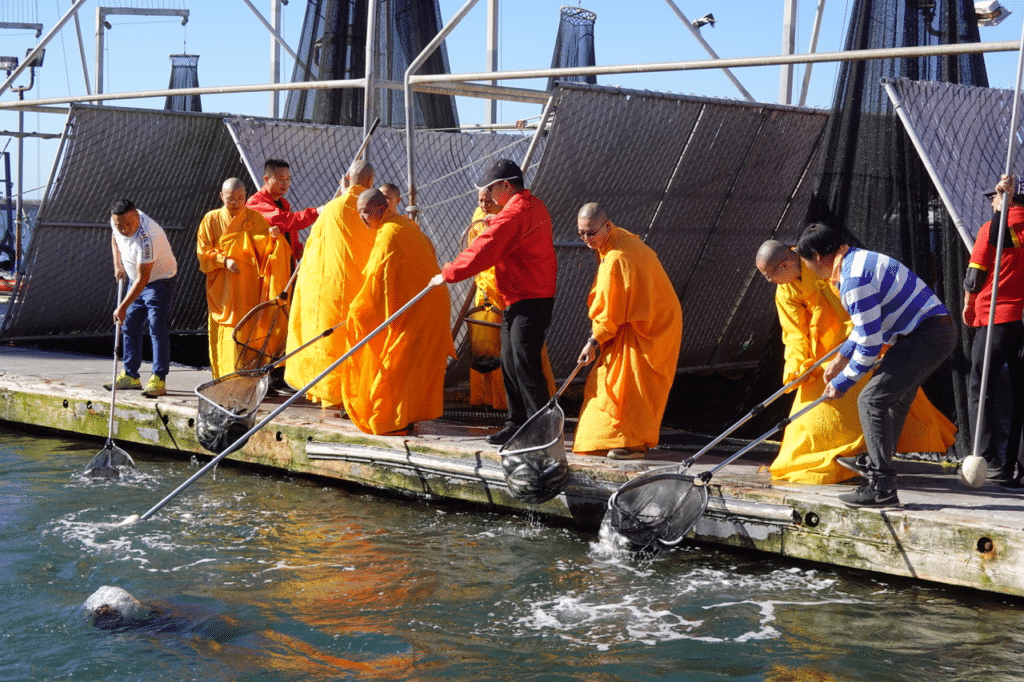
The gathering featured the release of thousands of fish back into the ocean, accompanied by the recitation of the Heart Sutra. Jiaozun Zhengda, Vice President of the World Buddhism Association Headquarters, led the prayers and delivered an inspiring address on the significance of the occasion. She emphasized the need for ongoing acts of compassion and the responsibility to protect living beings wherever and whenever they face suffering.

Jiaozun Zhengda explained that the practice of releasing lives arises naturally from the precept of refraining from killing. While refraining from harm is virtuous, actively saving lives elevates compassion to its highest form. This principle is at the heart of the teachings of Namo H.H. Dorje Chang Buddha III and Namo Shakyamuni Buddha.

Photo Courtesy: Joyce Lee | Hundreds of Buddhists from all over the world attended the Dharma Assembly of Releasing Lives.

Photo Courtesy: Joyce Lee | Participants released captive fish into the ocean

Participants shared profound reflections on the event. Watching the fish swim freely into the ocean became a moving symbol of resilience, freedom, and the boundless compassion of Buddhas and Bodhisattvas. For many, this practice reaffirmed their vows to live with kindness, respect all life, and emulate the selflessness of the Buddhas.

The Day of Releasing Lives is more than a symbolic gesture. It is a reminder that compassion knows no boundaries of time or space. Through the release of captive lives, Buddhists actively demonstrate their commitment to fostering a world of harmony and peace.

A Global Call for Compassion

As we observe the Day of Releasing Lives, let us remember that every act of compassion matters. By choosing to release lives, we contribute to a legacy of kindness that transforms our world. May this day inspire all of us to nurture compassion, protect life, and cultivate peace for the benefit of all beings.

For more information about the H.H. Dorje Chang Buddha III Culture and Art Museum and their compassionate initiatives, please visit https://www.wbahq.org/.

Link: https://peacelilysite.com/2024/11/07/the-meaning-and-merits-of-life-release/

Source: https://www.wbahq.org/reports-by-news-media/rm20241105/

#DorjeChangBuddhaIII #HHDorjeChangBuddhaIII  #Buddha Dipankara#FishRelease #Buddhism #HolyGurus#Rinpoches#Bodhisattva Avalokiteshvara#HolyMiraclesTemple#DvineTransformations #DharmaAssembly#ShakyamuniBuddha #H.H.DorjeChangBuddhaIIICultureandArtMuseum

Holy Miracles Temple: A Sanctuary of Compassion and Healing Amid Global Turmoil

Holy Miracles Temple, located at 1730 N. Raymond Ave., Pasadena, CA, serves as a sanctuary dedicated to teaching the true Dharma of the Tathagata, as transmitted by Namo H.H. Dorje Chang Buddha III and Shakyamuni Buddha, guiding disciples on their path to liberation and spiritual accomplishment. Grounded in the Buddha’s teachings and fueled by boundless compassion, the temple’s core mission is to selflessly serve humanity. Its hope is for people in America and across the globe to embrace Buddha Dharma, cultivating love for their country, fellow people, and the world. Through mutual support, peace, kindness, and auspiciousness, the temple envisions a strong nation with thriving citizens and a world brimming with joy and happiness.

In these challenging times, when suffering and catastrophe touch so many, Buddhism’s compassionate spirit calls us to extend blessings to all sentient beings. On October 13, 2024, the Holy Miracles Temple held a Blessing and Peace Dharma Assembly, a response to the unprecedented hardships the world faces today. Devoted Buddhist disciples gathered to honor the teachings of Namo Dorje Chang Buddha III, coming together to send prayers for healing and hope to those affected by natural disasters, conflicts, and upheavals. This assembly reaffirmed the Buddhist commitment to easing the suffering of all.

The event featured a solemn chanting of the Universal Gate Chapter of the Lotus Sutra, dedicated to Avalokitesvara Bodhisattva, the embodiment of compassion. The gathering was led by Abbess Ruzun Ruohui from Hua Zang Si Temple, who guided attendees through the prayers.

This year has been marked by profound global calamities. In the United States, Hurricane Helene ravaged Texas and Louisiana in August, displacing thousands and flooding communities. Just weeks later, Hurricane Milton unleashed further destruction in Florida and Georgia. Recovery efforts faced tremendous challenges as these back-to-back disasters left homes shattered and lives in turmoil.

In Asia, Typhoon Dindo devastated the Philippines, causing severe flooding and landslides across Luzon in September. Thousands of people were forced to evacuate as the typhoon submerged entire neighborhoods. Nepal, too, was struck by tragedy when a powerful earthquake hit in June, resulting in widespread destruction and loss of life in remote regions.

The war in Ukraine, continuing its escalation throughout 2024, inflicted further suffering on cities like Kyiv and Mariupol, leaving behind a deepening humanitarian crisis. Meanwhile, renewed violence in Syria once again brought bloodshed to war-torn cities such as Aleppo and Damascus, compounding the plight of its weary people.

Europe was not spared from disaster either, as record-breaking floods struck in July. Torrential rains overwhelmed parts of Germany and Belgium, causing rivers to overflow and submerging entire towns. Meanwhile, the United States’ western regions grappled with annual wildfires of increasing magnitude, destroying homes and forests alike.

During the Dharma Assembly at Holy Miracles Temple, attendees united in spirit and purpose. As the sacred verses of the Universal Gate Chapter resonated through the temple, the prayers reached out to those suffering from this year’s tragedies, seeking to bring healing and relief. Prayers were offered for the displaced, the injured, and those who had lost everything. In the face of conflict and war, the community gathered to extend peace, comfort, and hope to all those impacted.

This powerful assembly embodied the compassionate essence of Avalokitesvara Bodhisattva, radiating light and healing to all beings affected by suffering. It was a profound reminder that through shared compassion and collective action, we can create a world where all beings may find peace, healing, and joy.

Link:https://peacelilysite.com/2024/10/18/holy-miracles-temple-a-sanctuary-of-compassion-and-healing-amid-global-turmoil/

Source: https://cagazette.com/insights-from-the-blessing-and-peace-dharma-assembly-at-the-holy-miracles-temple/?fbclid=IwY2xjawGADEJleHRuA2FlbQIxMAABHSOFxdL9Y7OJSnH14qBxTQoBYe2QSzdXAI_yk56BTajnwGdAXcnXxCa7bQ_aem__GWuVw6xxEGleMzpPI9e5A

The Extraordinary Life of H.E. Xiazhu Qiuyang Rinpoche: A Master of Boundless Compassion and Wisdom

The most venerable H.E. Xiazhu Choying Rinpoche, also known as H.E. Xiazhu Qiuyang Rinpoche, is a highly accomplished Buddhist master from Guoluo, renowned for his spiritual achievements and mastery of Vajrayana teachings. Born in the winter of 1945, his birth was marked by extraordinary signs: thunder echoed across the sky, and colorful flowers blossomed spontaneously on the grasslands surrounding his birthplace. Many local herdsmen witnessed these rare and auspicious omens, heralding the arrival of an extraordinary being.

Renowned mantra master Regong, a revered monk, recognized the young child as the reincarnation of the venerable Chagailong Cichengdaji Rinpoche and the great master Naropa. From an early age, Rinpoche dedicated himself to the welfare of all sentient beings, living a life of simplicity and spiritual practice in the mountains. Throughout his life, H.E. Xiazhu Choying Rinpoche devoted himself to intense ascetic practice, receiving direct teachings from the supreme Vajrayogini and attaining profound realization. It is said that he could soar through the sky, using his monk robes as wings, a testament to his deep mastery of esoteric yoga.

At the age of fourteen, Rinpoche was ordained as a monk under the guidance of Xiari Huzuo Qintu Dannima. Over the years, he studied under more than 100 highly accomplished masters from all major Tibetan Buddhist schools, including:

  • H.H. the Tenth Panchen Lama and H.H. the Sixth Dharma King Gongtang Yongzeng from the Gelug sect.
  • H.H. Dodrupchen Rinpoche and Khenpo Mengse from the Nyingma sect.
  • Kanda Chiwa Gadan from the Sakya sect.
  • Lama Wangcai Kazhige from the Kagyu sect.
  • Jiana Bannan from the Jonang sect.

From these masters, H.E. Xiazhu Choying Rinpoche absorbed the essence of both exoteric and esoteric teachings. His spiritual journey led him to receive numerous secret mind-dharma teachings and unique empowerments, passed down without reservation, like water flowing freely from a vessel.

Rinpoche spent much of his life wandering through remote mountains and plains, sleeping in caves, eating cold rice and vegetables gathered from alms, and wearing discarded clothing. He lived humbly, indifferent to worldly praise or criticism, appearing at times like a wandering madman. For 25 years, he did not speak a single word, dedicating himself entirely to the practice of the Dharma, undisturbed by the distractions of the world. His rigorous practice took him to numerous sacred sites across Tibet, Qinghai, and India, where he engaged in solitary retreat, including seven years of intense meditation at a holy site in India.

Through these practices, Rinpoche achieved profound realization in the Dakini Dharma, the Great Perfection (Dzogchen) teachings, Kalachakra Vajra Dharma, and Green Tara Dharma. His deep connection with Vajrayogini from a young age allowed him to access highly secret dakini teachings. Buddhist masters of great virtue have recognized H.E. Xiazhu Choying Rinpoche as the true reincarnation of the great master Naropa, revered as the “venerable leader of 100,000 dakinis.”

In a historic event, the International Buddhism Sangha Association conducted an unprecedented Drawing Lots From a Golden Vase Ceremony, drawing one lot from 120 sealed lots. This ceremony affirmed that H.E. Xiazhu Choying Rinpoche is indeed the reincarnation of Patriarch Naropa, a recognition that had been previously confirmed by H.H. Dorje Chang Buddha III.

H.E. Xiazhu Choying Rinpoche has been praised by numerous revered masters, including H.H. the Tenth Panchen Lama, H.H. Dharma King Yongzeng, and H.H. Dharma King Jigme Phuntsok. Xiaridong Rinpoche, a master of the Yamantaka Dharma, described him as “a truly great master of the Dakini Dharma,” while H.H. Dharma King Jigme Phuntsok hailed him as “an extremely rare master who has perfected the Four Initiations Dharma.”

Despite his vast accomplishments, H.E. Xiazhu Choying Rinpoche remains humble and approachable, freely exercising his supernatural powers without attachment. Known for miraculous feats such as flying, multiplying his body, walking underwater, understanding multiple languages, foreseeing disasters and blessings, and reading people’s minds, Rinpoche is revered as “the unhindered rinpoche.” Clothing and personal items that Rinpoche has worn or used are said to be imbued with miraculous blessings. Many Tibetans have reported turning disasters into blessings, surviving dangerous situations, or recovering from serious illnesses after wearing or ingesting a small piece of his monk’s robe.

H.E. Xiazhu Choying Rinpoche’s legendary life and accomplishments have been widely recorded, including in books such as Holy Cultivation and Its Marvelous Fruits and Biographies of Ten Major Disciples of Dharma Kings. In Tibet, particularly in the Amdo region, almost everyone knows of his miraculous deeds. His life stands as a beacon of inspiration and a model of Dharma practice in this world of five defilements.

This image has an empty alt attribute; its file name is image-8.png

Upon reading A Treasury of True Buddha-Dharma, H.E. Xiazhu Choying Rinpoche immediately recognized H.H. Wan Ko Yeshe Norbu as the primordial Dorje Chang Buddha, the highest Buddha in Buddhism. His realization corroborated the recognition of other great holy dharma kings. H.E. Xiazhu Choying Rinpoche offered his heartfelt congratulations in a respectful letter, further acknowledging the sacred truth.

To the Most Revered and Holiest Wish-Fulfilling Jewel Dharma King:

I have learned that A Treasury of True Buddha-Dharma, is a sacred text about His Holiness, the supreme and most honored H.H. Dorje Chang Buddha III, is soon to be distributed worldwide. This book contains the highest, authentic Dharma that brings immense benefit to all sentient beings.

Master Dodrupchen, who is universally recognized as the second Guru Padmasambhava and the highest holy being within Tibetan esoteric Buddhism, expressed his astonishment in his formal congratulations. He praised the accomplishments of the Holiest Wan Ko Wish-Fulfilling Jewel Dharma King as truly extraordinary—unimaginable and miraculous, transcending the ordinary. These achievements express both the describable and indescribable absolute truth of the Buddha-Dharma.

We shall proclaim and praise the accomplishments of His Holiness throughout the Dharma realm. We express our deepest gratitude to His Holiness, the ancient Buddha, for His boundless and great compassion in coming to this world once again to benefit all sentient beings!

Xiazhu Qiuyang Rinpoche
May 1, 2007

▲那諾巴祖師轉世的夏珠秋楊敬賀第三世多杰羌佛成就之原函(楊宜翻攝自《多杰羌佛第三世》正法寶典)
▲Original congratulatory letter from Xiazhu Choying in Tibetan

#DorjeChangBuddhaIII #HHDorjeChangBuddhaIII  #MasterWanKoYee #Buddha#HuaZangSi#InternationalBuddhismSanghaAssociation#IBSA#WorldBuddhismPublishingLLC#WorldDharmaVoice #XiazhuQiuyangRinpoche #Tibetan #EsotericBuddhism

Link:https://peacelilysite.com/2024/10/16/the-extraordinary-life-of-h-e-xiazhu-qiuyang-rinpoche-a-master-of-boundless-compassion-and-wisdom/

Source: https://www.tpcdct.org/article/1327#detail

The Old Boat and the Journey Within: Lessons from the Buddha on Cultivation and Liberation

During the Buddha’s lifetime, there was a time when he was teaching on the far side of a river. Eager to hear his wisdom, many monks wished to cross the river, but there was only one boat available. The boatman warned them, “My boat is very old, and with so many of you on board, it could be dangerous!” Yet, in their eagerness to reach the Buddha, the monks ignored the boatman’s caution and all climbed aboard. Reluctantly, the boatman set sail.

As they reached the middle of the river, the monks noticed water seeping into the bottom of the boat, and panic began to spread. The boatman calmly said, “I told you this boat is old, but you didn’t listen. Now, if you can’t stay calm, the boat will sink even faster.”

Upon hearing this, the monks stilled themselves and did not dare move. Thankfully, the boatman’s experience guided them safely to the other shore.

When the monks arrived and recounted the incident to the Buddha, he offered this teaching: “When you were in the boat, you feared for your safety. But in daily life, you fail to realize that danger is ever-present. Many people worry about the uncertainty of the future, yet neglect the most important thing — being mindful of the present moment. Focus on this life, this moment. Pay attention to your thoughts and purify your mind of the five poisons: greed, anger, ignorance, pride, and doubt.”

The Buddha continued, “Our bodies are like that old, leaky boat. We must reduce its burden, and the heaviest load is the weight of greed, anger, ignorance, pride, and doubt. Just like in the boat, if we don’t repair our minds and lighten our burdens, we risk sinking. Only by addressing these burdens can we safely reach the other shore.”

“Do not be preoccupied with the thought of being reborn in the Western Pure Land in your next life. Instead, focus on your present condition. Are you free from afflictions in this very moment? Do you act with an open heart? Can you humble yourself in the eyes of others? These are the true questions we must face in life.”

The contemporary Buddha H.H. Dorje Chang Buddha III  has also imparted timeless wisdom on cultivation. His Holiness teaches that true cultivation stems from the depths of your heart, from your bodhicitta — the awakened mind of compassion. Be genuinely friendly and loving to your spouse, your brothers, and your sisters. Foster harmony with your friends, act cooperatively with others, and extend care and help to all sentient beings. Apply the Four Limitless States of Mind — loving-kindness, compassion, joy, and equanimity — and cultivate bodhicitta in every action. Constantly reflect on yourself: How do you treat others with your words? With your thoughts? With your actions?

The conduct of Buddhas and great Bodhisattvas is marked by complete disregard for personal gain. When interests conflict, they give way to others, willingly taking fewer benefits or even none. You must remind yourself, “When others harm or slander me, I will not be disturbed. Even to those who harm me, I will wish them well, sincerely hoping for their happiness. Furthermore, I will take practical steps to help them, even offering financial aid — without letting them know that I am doing so.”

By living in accordance with these teachings, we become holy ones at the causal stage. Without a doubt, such cultivation leads to the perfection of wisdom and virtue. Achieving liberation and accomplishment becomes as simple as turning over one’s hand!

Link:https://peacelilysite.com/2024/09/19/the-old-boat-and-the-journey-within-lessons-from-the-buddha-on-cultivation-and-liberation/

#HHDorjeChangBuddhaIII #DorjeChangBuddhaIII #DorjeChangBuddha #ShakymuniBuddha

#WhatisCultivation #Compassion #Kindness #Liberation

A True Friend

Once, in a quiet monastery nestled in the hills, the Buddha sat before his disciples. The evening sun painted the sky in hues of gold and crimson, and the air was filled with a profound stillness, broken only by the occasional rustling of leaves in the gentle breeze. The monks, eager for wisdom, sat in reverence as the Buddha began to speak.

“Monks,” the Buddha said, “in this world, there are many who come and go in our lives. Some pass by like the wind, leaving no trace, while others remain, their presence felt deeply in our hearts. Among those who remain, there is a rare kind of person, a true friend, who is like a shelter from life’s storms, a beacon of light in the darkest of times. Such a friend is endowed with seven precious qualities, and these qualities are worth cultivating, for a friend like this is rare indeed.”

The monks listened attentively as the Buddha continued, “Which seven qualities are these? First, a true friend gives what is hard to give. He does not withhold generosity, even when it is difficult. Whether it be his time, his effort, or his possessions, he offers them freely, without hesitation. This kind of giving is rare, for many are willing to give when it is convenient, but few give when it costs them something.”

The Buddha paused, letting his words sink in, then added, “Second, he does what is hard to do. A true friend will go beyond his comfort zone for the sake of his companion. He will stand by you when others shy away, face challenges with you, and make sacrifices when needed, not for his own gain, but for the sake of friendship.”

The monks reflected on this as the Buddha continued, “Third, he endures what is hard to endure. Life is not always easy. There are times of joy, but also times of suffering and hardship. A true friend remains steadfast during the difficult times. He does not flee when the winds of adversity blow; instead, he endures alongside you, bearing the weight of the struggle as if it were his own.”

Then, the Buddha smiled softly and said, “Fourth, he reveals his secrets to you. Trust is the foundation of true friendship. A true friend does not hide behind a mask or shield himself with falsehoods. He shares his heart with you, revealing his vulnerabilities, knowing that in doing so, the bond of trust between you will grow ever stronger.”

“Fifth,” the Buddha continued, “he keeps your secrets. Just as he trusts you with his, so too does he honor your trust. He safeguards what you confide in him, never betraying your confidence, never allowing the winds of gossip to carry away what you have entrusted to him.”

The Buddha’s voice softened as he spoke of the sixth quality. “When misfortunes strike, he doesn’t abandon you. Life is unpredictable, and at times, suffering may come upon you like a sudden storm. A true friend does not turn his back on you in these moments. He stands beside you, offering support, comfort, and strength. He is like a tree with deep roots, unshaken by the winds of fate.”

Finally, the Buddha said, “The seventh quality is this: When you’re down and out, he doesn’t look down on you. In times of failure or disgrace, when the world seems to turn its back on you, a true friend remains by your side, never judging, never scorning. He sees you not for your misfortune, but for who you truly are. His respect for you does not waver, even when you are at your lowest.”

The monks, inspired by these words, bowed their heads in gratitude as the Buddha’s voice grew gentle. “Such a friend, endowed with these seven qualities, is a rare and precious gift. He gives what is beautiful yet hard to give, does what is hard to do, and endures the bitter words that life may bring. His heart is open to you, and he protects your heart in turn. In the darkest of times, he will not leave you, and even when you falter, his love for you does not falter.”

The Buddha paused for a moment, letting the weight of his words fill the air before continuing, “To cultivate such a friendship is a blessing for both parties. A friend like this is not just a companion but a guide, a mirror that reflects your virtues and helps you grow. Such a bond nurtures the spirit and brings peace to the heart. Therefore, monks, seek to be such a friend. Cultivate these seven qualities within yourself, and you will draw others of similar virtue to your side.”

The monks looked at one another with renewed purpose, understanding now that friendship was not a simple matter of convenience or shared interests but a profound practice of giving, endurance, and trust. The Buddha’s words had opened their hearts to the deeper meaning of companionship, and they resolved to embody the qualities of a true friend in their own lives.

And so, as the evening deepened and the stars began to appear in the sky, the monks rose, filled with a sense of peace. They knew that in cultivating these seven qualities, they would not only find true friends but would become true friends themselves—vessels of compassion and wisdom in a world often marked by fleeting connections.

The Buddha smiled as he watched them depart, knowing that the seeds of his teaching had taken root in their hearts, and that in time, they would bear the fruits of deep and enduring friendships, blessed with the seven qualities of a true friend.

Link: https://wisdomtea.org/2024/09/05/a-friend/

The Life and Legacy of His Holiness Penor Rinpoche

Within the six major Nyingma monasteries, the Palyul lineage stands as the largest, with over 400 branch monasteries and Buddhist centers spread across the globe. One of its most revered figures is His Holiness the Third Drubwang Pema Norbu Rinpoche, also known as Penor Rinpoche, who is recognized as the reincarnation of the Indian Mahapandita Vimalamitra. Born in December 1932, during the Water Monkey Year of the Tibetan calendar, he came into this world in Powo, Eastern Tibet, in the historical region of Kham (also known as Pome or Powo). Remarkably, despite the cold and dry winter that usually stifles any growth, fragrant flowers bloomed when Rinpoche was born, an auspicious sign that heralded his extraordinary life. His reincarnation was prophesied and recognized by the Fifth Dzogchen Rinpoche and Kathok Khenchen Yagga Rinpoche.

At just five years old, Penor Rinpoche was brought to the Palyul mother monastery in Kham, where he was officially enthroned as the 11th throne holder of the Palyul lineage. This ceremony, conducted by his previous incarnation’s spiritual teacher, Tulku Tuktendawa, and the 10th Karma Kuchen Rinpoche, Karma Thekchok Nyingpo, marked the beginning of a life dedicated to preserving and spreading the Dharma.

Palyul Temple at Ganzhi, SiChuan, China. Photo from: http://www.palyul-center.org.tw/palyul_d1.asp

Penor Rinpoche’s early years were spent in the monasteries of Palyul and Dakhor, where he received teachings and guidance from the 10th throne holder, Karma Thekchok Nyingpo, and other precious masters. These teachings laid the foundation for his future role as a lineage holder.

Even as a child, Penor Rinpoche exhibited extraordinary signs. On one occasion, while playing with a precious vajra, he accidentally dropped it, breaking it into two. With childlike innocence, he used his saliva to mend it, and astonishingly, the vajra became stronger than before. In another instance, during a ritual, he accidentally dropped a vajra bell on a stone floor. To everyone’s amazement, the bell remained intact and sounded even clearer than before.

As a young boy, Rinpoche’s spiritual prowess became evident when an elderly man approached him, requesting the Phowa (transference of consciousness) ritual. Innocently, Rinpoche performed the ritual, and the man peacefully passed away. However, realizing the man had died, Rinpoche performed another ritual to revive him. When the man regained consciousness, he exclaimed, “Oh my! Why did you bring me back, Rinpoche? I was already in Amitabha’s Pure Land!”

Throughout his life, Penor Rinpoche received numerous profound teachings and empowerments from great masters. These included the Namcho lineage’s Great Perfection teachings, the Eight Herukas, the Great Treasury of Terma, and many more. With unwavering dedication, he practiced these teachings and achieved realization. Penor Rinpoche also engaged in long retreats with his teacher Tulku Tuktendawa, delving deeply into the Great Perfection practices and realizing his true nature.

Despite his high status, few Rinpoches endured the hardships that Penor Rinpoche faced. During the construction of Namdroling Monastery in Mysore, South India, Rinpoche worked tirelessly alongside monks and workers, carrying stones and mud under the scorching sun. His hands bled and ached, yet he persevered. The absence of running water and paved roads made construction even more challenging, but Rinpoche personally fetched water from distant locations.

One day, while working under the blazing sun, a man approached Rinpoche, expressing his desire to meet him. Unaware that the person he was speaking to was Penor Rinpoche himself, the man asked if he could see the great master. Rinpoche humbly replied, “Oh, of course! No problem,” and led him to his simple room. The man was both surprised and embarrassed to realize that the great Rinpoche was not the grand figure he had imagined, but a humble, down-to-earth monk. Indeed, Penor Rinpoche was a true wish-fulfilling jewel, tirelessly working to benefit others.

Year after year, Penor Rinpoche’s unwavering dedication, energy, and great aspiration propelled him forward despite countless obstacles. His efforts bore fruit, and today, Namdroling Monastery in Mysore, South India, stands as the largest Nyingma monastery in the world, home to over 3,000 monks. He re-established the monastic discipline, reinstated the traditional summer retreat, and instituted annual pujas, including the One Thousand Offerings to the Hundred Peaceful and Wrathful Deities, the Vajrakilaya Puja, and the Medicine Buddha Puja. These ceremonies were often accompanied by auspicious signs, such as rainbows and the overflowing of amrita from skull cups.

Penor Rinpoche’s compassion extended far beyond his monasteries. He built bridges, roads, and a comprehensive hospital offering both Western and Tibetan medicine. In Tibet and India, he became renowned for his prayers that brought timely rain during droughts, earning him the affectionate nickname “Rain Lama” from the local Indian people.

As a fully ordained monk, Penor Rinpoche ordained over 2,500 monks. Day after day, from morning until night, he selflessly benefited the living, the dying, and the deceased.

In 1993, during the Nyingma Monlam Chenmo for World Peace held at the Vajra Seat in Bodh Gaya, India, Nyingma lamas and monks from around the world unanimously appointed Penor Rinpoche as the Supreme Head of the Nyingma lineage.

This honor was well-deserved, as Rinpoche embodied the wisdom of Manjushri, the compassion of Avalokiteshvara, and the strength of Vajrapani in his tireless efforts to benefit the Dharma and all sentient beings.

In August 2007, when Penor Rinpoche encountered the A Treasury True Buddha Dharma by the H.H. Dorje Chang Buddha III, he was deeply moved, believing the book would greatly benefit all beings. In response, he sent a congratulatory letter to the Rinpoches:

Honorable Rinpoches,

The True Dharma Treasures, a text recognized by many great masters and high lamas as the work of the Third Dorje Chang Buddha, Yongey Mingyur Dorje, has been published at the request of Buddhist followers across the nation.

This publication ensures that the Buddha Dharma will remain in the world forever, serving as a cause for sentient beings to attain immediate happiness, freedom from worldly suffering, and ultimately, the supreme enlightenment.

Palyul Rinpoche Pema Norbu
August 11, 2007

Link:https://peacelilysite.com/2024/09/06/the-life-and-legacy-of-his-holiness-penor-rinpoche/

Source: http://www.palyul-center.org.tw/palyul_d1.asp, http://www.palyultp.org/tp02.html

H.H. Dodrupchen Rinpoche: The Pillar of Longchen Nyingthig Dharma and Compassionate Wisdom

THE WORLD’S SOLE HOLDER OF THE HIGHEST RAINBOW BODY ACCOMPLISHMENT DHARMA: H.H. DHARMA KING DODRUPCHEN

H.H. Dodrupchen Rinpoche stands as the supreme leader and sole lineage holder of the complete Great Perfection Longchen Nyingthig Dharma across the world. Every Longchen Nyingthig lineage practiced in the major monasteries worldwide traces its origins to the initiations and teachings of H.H. Great Dharma King Dodrupchen. Without his guidance, the highest esoteric dharma, Longchen Nyingthig Great Perfection, would not exist.

The Longchen Nyingthig transmissions of the Nyingma tradition, including those practiced in renowned monasteries like Kathok and Dzogchen, all flow from the empowerment of H.H. Dodrupchen Rinpoche.

The title “Dodrupchen” translates to “the great accomplished one from the Dokham Valley,” a name rooted in the legacy of the First Dodrupchen Rinpoche, who was born in the Upper Dokham Valley of the Golok region in eastern Tibet. When the First Dodrupchen Rinpoche met the great master Jigme Lingpa, he received the complete transmissions of the “Buddha’s Words” and the “Treasured Teachings.” Jigme Lingpa also recognized him as the sole root lineage holder of Longchen Nyingthig. Remarkably, when Dodrupchen Jigme Trinle Ozer, the reincarnation of Jigme Lingpa, encountered Dodrupchen Rinpoche, he saw him as Guru Padmasambhava. Over generations, the Dodrupchen Rinpoches have demonstrated profound wisdom and miraculous abilities, while also tirelessly transmitting Longchen Nyingthig teachings to those with the right karmic connections, nurturing many accomplished masters.

The Fourth Dodrupchen Rinpoche, Thubten Thrinle Lhawang Sangpo, was born in 1927 in the Tse village of the Serta Valley, Golok. Even before his birth, auspicious signs appeared, such as rainbows gracing the skies above his village almost daily and the protector deity Rahula being seen atop his rooftop nightly. A rare flower bloomed on his rooftop, similar to those cherished by the Third Dodrupchen during his retreat, even though it had never been seen in the region. His mother experienced miraculous phenomena throughout her pregnancy, such as the unborn child momentarily disappearing and a mysterious light accompanying her, enabling her to see in the dark without any need for illumination.

After Rinpoche was born, many miraculous events occurred. On one occasion, a Mani stone fell from a rock and struck Rinpoche, shattering many of his bones. However, just a few hours later, all signs of injury miraculously disappeared. Sometimes, young Rinpoche would be on the ground one moment, and in the blink of an eye, he would be on the rooftop or a mountain rock wall. Before the monks from Dodrupchen Monastery came to visit and identify the reincarnated lama, Rinpoche’s parents were unaware of their visit. Yet, Rinpoche told his parents, “Guests are coming today,” and joyfully began to sing.

When the search team presented items previously used by the previous Dodrupchen, such as books and prayer beads, mixed with items from other people, Rinpoche accurately selected his past life’s belongings, saying, “These are mine.” The Fifth Dzogchen Rinpoche personally recognized the young boy as the Fourth Dodrupchen Rinpoche.

As Rinpoche grew older, he rarely displayed miraculous powers, except in rare circumstances. Despite not needing to purify his mind or accumulate merit like ordinary practitioners, he sought teachings from various human masters and completed many years of retreat to set a true example of practice for all beings. By age fifteen, Rinpoche had already mastered mandala painting, calligraphy, pottery, architecture, and numerous other skills, as well as profound teachings like the supreme methods of seed syllables and karmic selection. Throughout his life, he interacted with others with unwavering peace, humility, and simplicity, without any pretense. His compassionate actions, in every moment and place, served as a guiding light for all beings.

The Fourth Dodrupchen Rinpoche’s status was elevated above many great Dharma kings, and his disciples spanned across all major lineages, many of whom became renowned masters, celebrated worldwide. Among them are illustrious lineage holders such as the Seventh Dzogchen Rinpoche, Sogyal Rinpoche, Rinchen Nyingma Rinpoche, H.H. Jigme Phuntsok Rinpoche, and H.H. Togdan Rinpoche, among others.

In December 2006, after reading A Treasury of True Buddha-Dharma, H.H. Dodrupchen Rinpoche was deeply moved by the accomplishments of H.H. Dorje Chang Buddha III Wan Ko Yeshe Norbu. In response, he promptly wrote a congratulatory letter, stating that the accomplishments of H.H. Dorje Chang Buddha III are miraculous and clearly demonstrate the absolute truth of Buddha-dharma.

Link: https://peacelilysite.com/2024/08/29/h-h-dodrupchen-rinpoche-the-pillar-of-longchen-nyingthig-dharma-and-compassionate-wisdom/

#DorjeChangBuddhaIII #HHDorjeChangBuddhaIII  #MasterWanKoYee #Buddha #HuaZangSi #InternationalBuddhismSanghaAssociation #IBSA #DodrupchenRinpoche #Nyingmatradition #LongchenNyingthig