The Last Night Before Liberation: A Tale of Dharma and Destiny

During the time of the Buddha, King Fugasya and King Bimbisāra of Magadha were close friends. One day, King Fugasya gifted King Bimbisāra a magnificent flower crafted from seven kinds of treasures—gold, silver, and glazed tiles among them. Realizing that King Fugasya had never encountered the Buddha’s teachings, King Bimbisāra decided to offer the exquisite flower to the Buddha instead.

He said to the Buddha, “My good friend, King Fugasya, gave me this precious flower. I now offer it to the World-Honored One, wishing that the merit from this offering may help open his heart. May he let go of his attachments, come to revere the Three Jewels, and seek the Dharma. However, I am unsure what I can offer him in return.”

The Buddha replied,
“Write down the Sutra of the Twelve Links of Dependent Origination and give it to him. Once he receives this sutra, he will surely begin to develop faith and understanding.”

King Bimbisāra immediately copied the sutra and sent it to King Fugasya with a message:
“You have given me a priceless flower of treasures; I now return a flower of Dharma. If you contemplate its meaning, you will understand the truth of dependent origination and karmic consequences. I hope you will recite it sincerely, and experience the taste of the Dharma.”

Upon receiving the sutra, King Fugasya read it repeatedly and deeply contemplated its meaning. The teachings resonated with him. He exclaimed,
“This Dharma is truly subtle and profound! It calms the mind and brings peace to the nation. Wealth, desire, fame, food, and sleep—these worldly pursuits are the root of suffering. For countless lifetimes I have been lost in delusion, but now I finally see the true nature of existence. There is nothing in this world worth clinging to.”

With this realization, King Fugasya gathered his ministers, announced his abdication, and passed the throne to the crown prince. Then he shaved his head, donned robes, and left the worldly life behind.

He set out on foot to seek the Buddha in Rājagṛha, determined to receive the precepts and deepen his cultivation. When he arrived at the outskirts of the city in the evening, he decided to rest overnight at a potter’s house. The next morning, he planned to go on alms-round and visit the monastery.
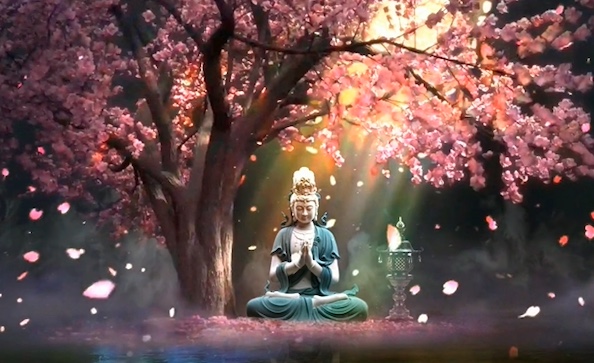
However, the Buddha, with His all-seeing wisdom, knew that King Fugasya’s life would end the next day—he would not live to meet the Buddha or hear the Dharma in the conventional way. Out of great compassion, the Buddha manifested as an ordinary monk and went to the potter’s house seeking shelter.
The potter said,
“There’s already a monk here tonight. He’s resting in the kiln cave—you may stay with him.”

The Buddha took some dry grass, entered the kiln cave, and sat in a corner. He gently asked the monk,
“Where are you from? Who is your teacher? What brought you to the monastic path? Have you ever seen the Buddha?”

King Fugasya replied,
“I have never seen the Buddha. I only read the Sutra of the Twelve Links of Dependent Origination. It inspired me to renounce the world and seek the path. Tomorrow, I plan to go into the city for alms, then visit the monastery to meet the Buddha and request the precepts.”

The Buddha responded with heartfelt words:
“Human life is fragile—impermanence arrives without warning. This body is made of the four elements—earth, water, fire, and wind—and when death comes, they simply return to their natural state. There is no need to fear. Keep your mind clear, let go of deluded thoughts, and place your trust in the Three Jewels. Practice generosity and maintain pure precepts with sincerity. If you understand the truth of impermanence in this way, it is as if you have already seen the Buddha. Do not cling to the idea of seeing Him tomorrow, for true benefit lies in your present awareness.”

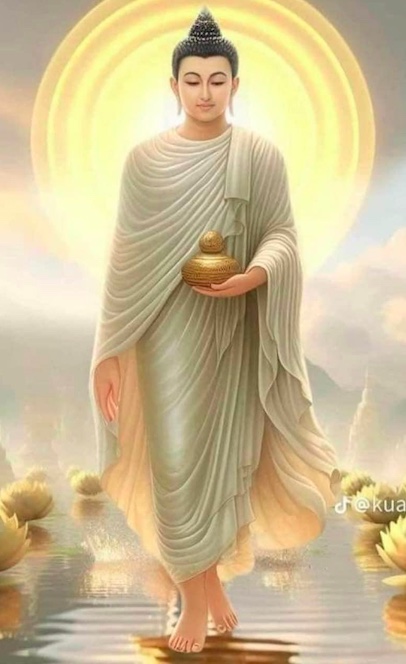
Then, the Buddha expounded the profound truths of suffering, emptiness, and impermanence. King Fugasya listened with deep concentration, entered meditative absorption, and swiftly attained the Anāgāmi (Non-returner) stage. Recognizing his realization, the Buddha revealed His true, radiant form.

Overwhelmed with joy and reverence, King Fugasya prostrated and received a final teaching:
“When impermanence comes, do not be afraid.”

He vowed to uphold the Dharma faithfully.

The next morning, while going into the city for alms, King Fugasya was fatally gored by a mother cow protecting her newborn calf. Because he had already attained realization, his rebirth was in the Anāgāmi Heaven.

The Buddha, upon hearing of his passing, instructed the disciples to cremate his body and build a stupa in his honor. He then solemnly reminded them:
“Be ever mindful, for the root of all karmic offenses lies in carelessness.”


This world of samsara is full of the inevitable sufferings of birth, aging, sickness, and death. For those attached to fleeting worldly pleasures, this story is a powerful reminder to awaken.

By placing faith in the Dharma, recognizing our inherent pure Buddha-nature, contemplating impermanence, practicing wholesome deeds, and accumulating both merit and wisdom, we can transcend the pain of impermanence and attain lasting peace and happiness.

Link:https://peacelilysite.com/2025/04/25/the-last-night-before-liberation-a-tale-of-dharma-and-destiny/

A Great Drum

The Wisdom of Generosity: A Tale of Compassion and Righteousness

Once, the Buddha was residing in the Jetavana Monastery in the kingdom of Śrāvastī, spreading his teachings. At that time, there was a prince of a celestial king named Pilu. One day, he flew down from the heavens to the Jetavana Monastery, prostrated himself at the Buddha’s feet, and, with hands folded in reverence, asked the Buddha: “In this world, people are constantly pursuing clothes, food, treasures, pleasures, official positions, and territories. Are there any treasures that pursue people in return?” The Buddha praised Prince Pilu: “You have asked a good question. Indeed, there are situations where territories, treasures, and pleasures pursue people.”

Prince Pilu asked again, “What does it mean for the causes and conditions that fulfill people’s wishes and bring complete satisfaction to always follow them?”

The Buddha replied, “All actions can be categorized into two types: doing good deeds, which brings blessings, and committing evil deeds, which results in calamities. Whether it is blessings or disasters, they always follow each person like a shadow.”

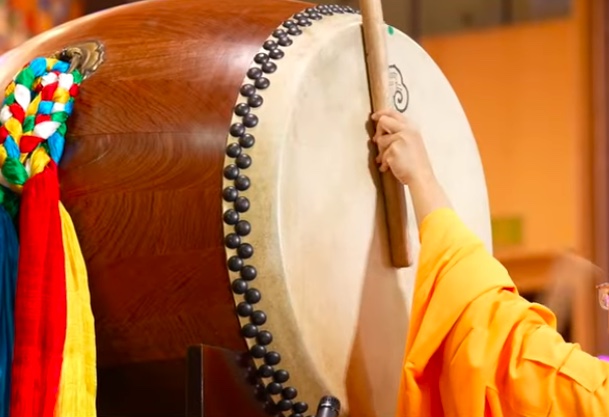
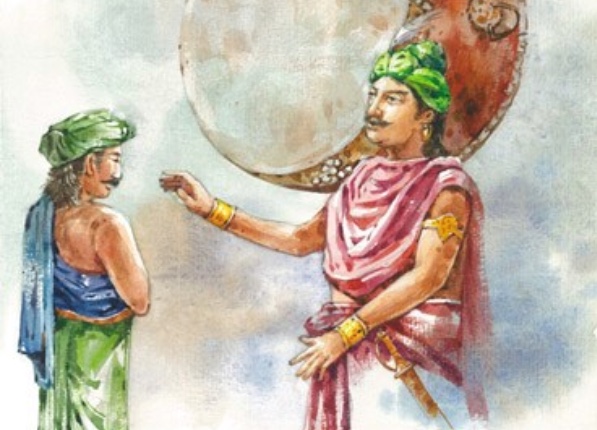
Prince Pilu said, “This is truly extraordinary! Just as the World-Honored One has taught, in my past life, I was once a king among humans. Because I was aware of the impermanence of life and had no attachment to material things, I wanted to practice generosity widely. One day, during a gathering of my ministers, I announced: ‘I want to make a great drum whose booming sound can spread for a hundred miles. Who can accomplish this task for me?’

However, the ministers all replied, ‘We are incapable of doing so!’ At that moment, a minister named Kuang Shang, who had always been loyal to the court and compassionate towards the people, stepped forward and said to the king, ‘I can accomplish this task, but it will require some funding.’

The king said, ‘Great! Whatever amount you need is not a problem.’ Thus, the treasury was opened, and a large sum of money was handed over to Kuang Shang.

Kuang Shang transported a carriage full of treasures to the gate of the royal palace and beat the drum to announce, “Today, our benevolent king, with great compassion, is distributing wealth to the world to relieve all those in poverty and distress, as well as to provide for the needs of practitioners. Anyone in need can come to the palace gate to receive these goods.”

The news quickly spread to neighboring countries. The poor, carrying their babies and bringing along the elderly and young, came in droves, filling all the roads leading to the city. People would often look up to the sky and exclaim, “Thank you, benevolent king! We, the poor people, finally have the chance to escape the days of hunger and cold!”

A year later, the king asked Kuang Shang, “Is the great drum completed?” The minister replied, “Your Majesty, it is done.” The king asked again, “Since it is finished, why haven’t I heard the drum sound?” Kuang Shang responded, “Please, Your Majesty, take a trip into the city tomorrow, and you will hear the sound of virtue resonating far and wide.”

The next day, the king’s procession entered the city, discovering it was crowded and bustling. The king exclaimed, “Why are there so many people in the city?” Kuang Shang answered, “Last year, Your Majesty ordered me to create a great drum, hoping its mighty sound would spread for miles, proclaiming Your Majesty’s benevolence. I thought that a drum made of dead wood and cowhide would not adequately convey the king’s virtue. After much deliberation, I decided to use the treasures Your Majesty entrusted to me to provide for the practitioners and relieve the poor and distressed. Since the announcement, people from neighboring countries have come, hoping for Your Majesty’s benevolence, like hungry children yearning for their compassionate mother.”

Upon hearing this, the king asked the nearby citizens, “Where have you come from?” The people respectfully bowed and replied, “We came from a hundred miles away.” Some said, “I came from two hundred miles away.” Others said, “I came from thousands of miles away.” Then, they all declared, “Wise and benevolent king! Your widespread generosity has brought joy to the people of the neighboring countries. Many have even moved their entire families here, seeking to live under your benevolent protection and hoping for a stable life henceforth.”

The king was very pleased and said, “Kuang Shang, you have done an excellent job! Previously, I was attached to fame, hoping that the great drum’s mighty sound would resonate far and wide. Now, I finally understand that the unrest in the country comes from the people’s unease. Just as a sick body needs medicine to be healed, I should provide remedies to address the people’s suffering. You, my minister, understood the hardships of the people and distributed food to help the poor and needy, allowing the people to live in peace and return their loyalty to me.” Thus, the king declared, “From now on, as long as it concerns the people’s needs, take care of it to the best of your ability without needing to consult me!”

After the king’s natural death, he was reborn in heaven as King Miao. After his life in heaven ended, he was reborn as a Cakravartin (Wheel-Turning) King on earth, always accompanied by seven treasures and surrounded by followers who protected him. Now, he has again been reborn in heaven as a prince of the heavenly king. All of this was because he strictly upheld pure precepts and compassionately aided all living beings, earning such blessings. If we follow the Buddha’s teachings and rectify our body, speech, and mind, we can all obtain such magnificent blessings.

The Buddha encouraged Prince Bilu, saying, “A person’s actions are like a shadow following the body, or an echo responding to a sound. For every cause, there is an effect, and retribution is certain!” Prince Bilu, after hearing the Buddha’s teaching, joyfully made obeisance and departed.

A Great Drum

Link:https://peacelilysite.com/2024/05/23/a-great-drum/

Source: https://www.ctworld.org.tw/sutra_stories/story801-1000/story862.htm,


When I say I’m a Buddhist

Professor Richard Gombrich, who dedicated 40 years of his life to studying Buddhism and Pali language at Oxford University, shares his understanding of Buddhism.

When I say I’m a Buddhist, it doesn’t mean I’m purer and nicer than others. But it means I have too much ignorance and mental defilement to remove. I need Buddhas’ wisdom.

When I say I’m a Buddhist, it doesn’t mean I have more wisdom than others. But it means I have been occupied by too much arrogance. I need to learn to be humble and to develop a broader perspective.

When I say I’m a Buddhist, it is not because I am better or worse than others, but because I understand all beings are equal.

When I say I’m a Buddhist, I know I only love those to my taste, but Buddha loves even people he does not like, guiding them to be full of wisdom and compassion. That’s why I choose to follow Buddha’s teachings!

When I say I’m a Buddhist, it is not with the goal of getting what’s in my interest. But for letting go of my personal clinging to all worldly desires.

When I say I am a Buddhist, it is not because I pursue a smooth life. But for the calm acceptance of impermanence, and be calm and confident like a king in any adverse circumstances.

When I say I am a Buddhist, I do not mean to manipulate others with the motivation of self-interest. But with good use of wisdom, to benefit self and others while being empathetic to all sentient beings.

When I say I am a Buddhist, it is not because I want to escape from the world and pursue nothingness. But to know everyday life is within Dharma, and to live in the present is to practice.When I say I am a Buddhist, it does not mean that my life will no longer experience setbacks.

But with the Dharma, setbacks are transformed into a cause for my growth.

When I say I am a Buddhist, my heart is filled with endless gratitude. Just thinking I was born as a human and have the ability to practice in this life, with the opportunity to meet wise teachers and hear the Buddha’s teachings, I am deeply moved by this unbelievable karmic affinity.

When I say I am a Buddhist, it is not because there is a God outside of me. But that I find the true Buddha-nature of my own heart.

Link:https://peacelilysite.com/2024/05/16/when-i-say-im-a-buddhist/

Source: https://buddhistbugs.blogspot.com/2018/07/when-i-say-im-buddhist.html

The Celestial Window of the Western Pure Land Opens, Revealing the Blissful Sacred Realm for all to Behold

(This is the text of an article published in the Asian Journal on Oct. 6, 2004.)

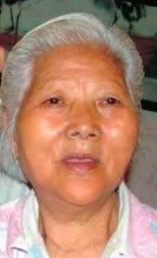
Elder laywoman Quan-Fang Lu who was a disciple of Great Dharma King Yangwo Yisinubu1, was from Chengdu, Sichuan. She and her husband, layman Guang-Ming Wang, had been Buddhists since the 1950’s. When they took refuge in Buddhism, they received an initiation and Dharma transmission from the Great Dharma King. In the 1950’s, they were working in Tibet. Because of their underlying karmic conditions, they received the guidance of an outstanding Rinpoche of Tibetan esoteric Buddhism. That Rinpoche told them that Great Dharma King Yangwo Yisinubu possessed the best and highest Buddha Dharma. After going through many hardships, they brought their son to the Great Dharma King. The Great Dharma King was not even seven years old at the time. The three of them formally acknowledged the Great Dharma King as their Master. Laywoman Quan-Fang Lu and her husband Guang-Ming Wang then resolutely decided to have their son stay by the side of the Great Dharma King in order to receive his training and Dharma teachings.

They have been very pious and respectful toward the Great Dharma King, and they have diligently practiced the Dharma that the Great Dharma King transmitted to them. Over the past years, certain people have spread rumors and made false accusations against the Great Dharma King. Laywoman Quan-Fang Lu and her husband Guang-Ming Wang were filled with righteous indignation at this. They vigorously berated the contemptible conduct of those rascals who spread rumors, fabricated lies, and deceived people.

Based upon layman Guang-Ming Wang’s own pious heart and upon the Great Dharma King’s realization, which is like that of a Buddha, in November of 2003, layman Guang-Ming Wang passed on to the Western Paradise of Ultimate Bliss. At his cremation, layman Guang-Ming Wang left behind 11 sarira firm relics.

In the middle of August, 2004, laywoman Quan-Fang Lu told her son Min Wang that she would soon pass away. Min Wang telephoned the Great Dharma King a few times, beseeching the Great Dharma King to cause his loving mother to stay alive longer. When Min Wang’s mother found out about these calls, she admonished her son, “Those who learn Buddhism and cultivate themselves must understand that the law of cause and effect never fails. My karmic connection with this world is about to end. My karmic connection with the Dharma is now complete. The Dharma King Master will help me go to the Western Paradise of Ultimate Bliss.”


As expected, at around noon on September 9th, the crown of elder laywoman Lu’s head suddenly opened. The crown of her head became as soft as cotton. At that time, a colorful auspicious light filled the room. Amitabha Buddha came to escort her away. Beautifully set off by a huge white Buddha light, the pure gold bowl of Amitabha Buddha slowly descended. The red lotus flowers in the bowl were bright-colored. Two photographs were hurriedly taken of this extremely rare and holy sight. Heavenly music could be heard. Imitating the Buddha, elder laywoman Lu assumed the “auspicious recumbent posture.” Amid the Buddha light, she passed on to the Western Paradise of Ultimate Bliss.
The next day, her body was placed in the Buddha worshipping hall of Bao Guang Temple in Xindu, which is one of the four great Chan (Zen) temples in China. Right after her body was placed there, an image of the Great Dharma King suddenly emitted bright light. A colorful Buddha light went round and round the Great Dharma King’s image. A fragrant scent wafted through the air.

Photo showed lotus light on the top of laywoman Lu’s house


News of such phenomena began to spread. More and more people came to chant mantras and sutras for the benefit of laywoman Lu, respectfully see her off to the next realm, and observe the ceremony. Day and night, the chanting of Amitabha Buddha’s name did not stop. On the evening of September 10th, eminent Tibetan Rinpoches and Lamas who were all disciples of the Great Dharma King arrived at the temple after having traveled a great distance. They came to perform Buddhist rites. On the evening of September 11th, the machine used to chant the name of Amitabha Buddha suddenly emitted the shocking sound of the Great Dharma King chanting the name of Amitabha Buddha. The Great Dharma King was in the United States. The monastics and laypersons in attendance were all extremely moved.


At around noon on September 12th, a holy sight appeared for the first time in history! A painting of Amitabha Buddha hangs in the Buddha worshipping hall of the temple. In front of Amitabha Buddha’s chest, a heavenly window to the Western Paradise of Ultimate Bliss suddenly opened. This heavenly window directly displayed the sights of the Western Paradise of Ultimate Bliss! People were seething with excitement. They were so pleasantly surprised they could hardly control themselves. Through that heavenly window to a Buddha land that appeared in front of the painting of Amitabha Buddha, all of those who had the requisite karmic affinity saw Amitabha Buddha. They even saw the protuberance on top of Amitabha Buddha’s head. They saw Kuan YinBodhisattva wearing white clothes and holding willow tree branches. They alssaw Mahasthamaprapta Bodhisattva. In that heavenly window, elder laywoman Lu was reciting the name of Amitabha Buddha. Her lips were constantly moving, her
eyes blinked, and her head swayed. She looked the same as when she recited Amitabha Buddha’s name when she was alive.


The image of Great Dharma King Yangwo Yisinubu appeared in that heavenly window. He was wearing a red Dharma robe and a Dharma crown. When he appeared, people excitedly shouted words such as, “Master, I see you!” “Great Dharma King Master, by following you we do not fear even death!” “Great
Dharma King, my whole family wants to take refuge in you! We want to learn the true Buddha Dharma from you!” People were awestruck by these holy scenes. They could not control their emotions. The sounds of people marveling, shouting, and kowtowing could be heard.

During the cremation of laywoman Lu, holy sights continually appeared. Lotus flowers emerged. Images of the Dharma King, the Three Holy Ones of the Western Paradise (Amitabha Buddha, Kuan Yin Bodhisattva, and Mahasthamaprapta Bodhisattva), and Maitreya Bodhisattva all appeared. Vajra
Dharma protecting deities and dragon-spirit Dharma protecting deities stood in a circle on both sides of her. Fire phoenix flew to and fro inside the cremation furnace. Beautiful scenes of pagodas and towers from the Western Paradise of Ultimate Bliss repeatedly appeared. People before the cremation furnace were filled with Dharma joy and began prostrating. They were so moved they began to
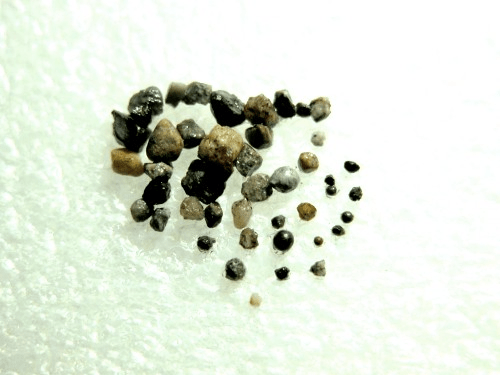
cry. The sound of joyous laughter filled the temple.After the cremation was completed, people collected 49 sarira firm relics from the bone ashes of laywoman Quan-Fang Lu.

49 solid relics from the ashes of the remains of Layman Lu Quanfang after his cremation

1.Here and below the words Great Dharma King Yangwo Yisinubu, Great Dharma King, or Dharma King Master refers to H.H. Dorje Chang Buddha III Wan Ko Yeshe Norbu Holiest Tathagata.

Link:https://peacelilysite.com/2024/02/09/the-celestial-window-of-the-western-pure-land-opens-revealing-the-blissful-sacred-realm-for-all-to-behold/

#DorjeChangBuddhaIII #HHDorjeChangBuddhaIII  #MasterWanKoYee #Buddha#AmitabhaBuddha#KuanYinBodhisattva #MahasthamapraptaBodhisattva# Relics#ThreeHolyBeings

Dazu Rock Carvings – The Last Monumental Works in the History of World Grotto Art

Detail of reclining Buddha, Parinirvana of Shakyamuni attended by bodhisattvas, Mt. Baoding, Southern Song Dynasty, Dazu, China, 102′ long (photo: Mulligan Stu, CC BY 2.0)

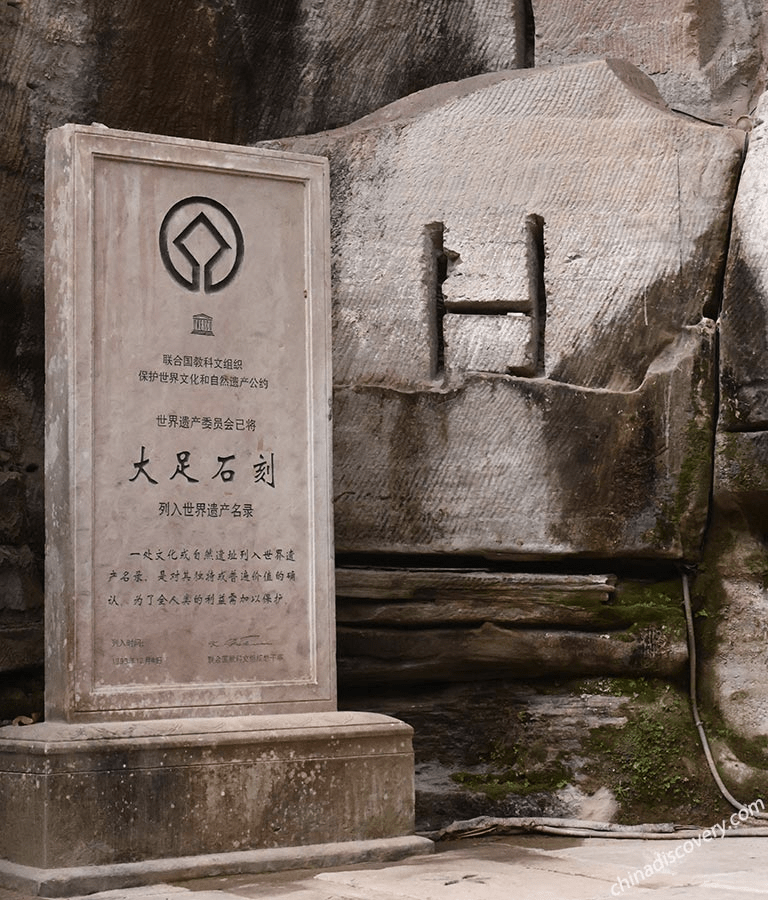
With a history spanning over 1,300 years, the Dazu Rock Carvings represents the pinnacle of grotto art worldwide from the ninth to the thirteenth century. The exquisite and varied cliff-side sculptures at Dazu caves provide outstanding proof of the harmonious fusion of Buddhism, Taoism, and Confucianism in civil. In 1999, the Dazu Rock Carvings was inscribed on the World Heritage List by UNESCO.

Enjoying a comparable reputation with the top four grottoes in China (Mogao Grottoes, Yungang Grottoes, Longmen Grottoes, and Maijishan Grottoes) and being rated as one of the eight grottoes in the world, the Dazu Rock Carvings (“大足石刻” in Chinese), also known as Dazu Caves or Dazu Grottoes, located 167km from the city center of Chongqing. It is the one and only UNESCO World Cultural Heritage Site in Chongqing municipality. The Dazu Rock Carvings consists of 75 cave temple sites, including more than 50,000 statues, being protected for their historical, artistic, and scientific values at different levels, representing the pinnacle of Chinese cave temple art between the 9th and 13th centuries. Among them, rock carvings of Baodingshan (宝顶山), Beishan (北山), Nanshan (南山), Shimenshan (石门山), and Shizhuanshan (石篆山) are exquisitely sculpted with the most distinctive style.

The Dazu Rock Carvings started in the early Tang Dynasty, went through the late Tang Dynasty and the Five Dynasties, and then experienced its golden time in the Northern and Southern Song Dynasty. At the time when cave art in northern China fell into decay, the Dazu Rock Carvings undoubtedly created another peak in the history of Chinese cave art, extending the history of Chinese cave art for more than 400 years. Since then, there have been no such large-scale rock carving events in China or even in the world. Therefore, the Dazu Rock Carvings are also known as the last monument and swan song in the history of the world’s grotto art.

UNESCO Stele of the Dazu Rock Carvings

Differing from famous royal grottoes in the north, the religious cliff inscriptions in Dazu show distinctive features of nationalization, secularization, and everyday life, reflecting the remarkable development and changes in folk religious beliefs. Thus, the Dazu caves have the irreplaceable historical, artistic, scientific, and connoisseurship values of grottoes of the previous generations. Another highlight that has to be mentioned is that the statues there provide outstanding evidence of the harmonious synthesis of Tantric Buddhism, Taoism, and Confucianism. Visitors can see separate stone carvings as well as the unity caves reflecting the three religions’ confluence and ruling together. Moreover, thanks to the southern hinterland location of the Dazu Rock Carvings, this cultural heritage stays far away from man-made sabotage, retaining the integrity of the statues, the original characteristics and values of the period when the carvings were created.

Rock carvings in Dazu are mainly located across five mountains, each containing distinct sets of grottoes, among which the cliff-side sculptures on Baodingshan and Beishan are best known and considered to be the model of the late Chinese grottoes statue art. The pictures of the Dazu rock carvings that we commonly find online were mostly taken at the Baodingshan Scenic Area, which is also the must-visit site for a Dazu Rock Carvings tour.

Baodingshan Rock Carvings (Baodingshan Scenic Area)

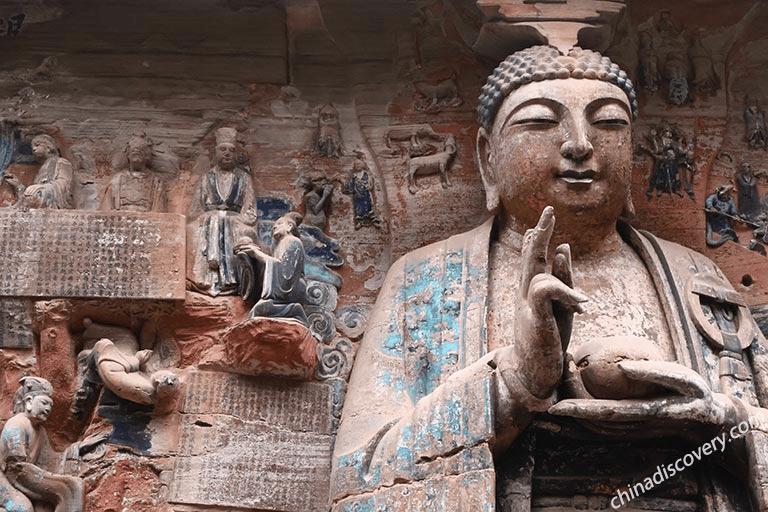
Fifteen kilometers northeast from Dazu center, Baodingshan Rock Carvings was constructed by the famous monk Zhao Zhifeng in the Song Dynasty for more than 70 years. As one of the most famous Tantric Buddhist shrines in China, there is an old saying that goes like “Go North, climb the Emei Mountain; Go South, reach the Baoding Mountain.” The centerpiece of the Baodingshan rock carvings is the U-shaped Grant Buddha Bay, also known as Dafowan (“大佛湾” in Chinese). Nearly ten thousand statues are carved along the east, north, and south cliffs, which are approximately 500 meters in length and 8-25 meters high. Like a picture scroll with endless photographs, the content of Baodingshan rock carvings is mainly Buddhist scripture stories, each niche related to the other but not identical.

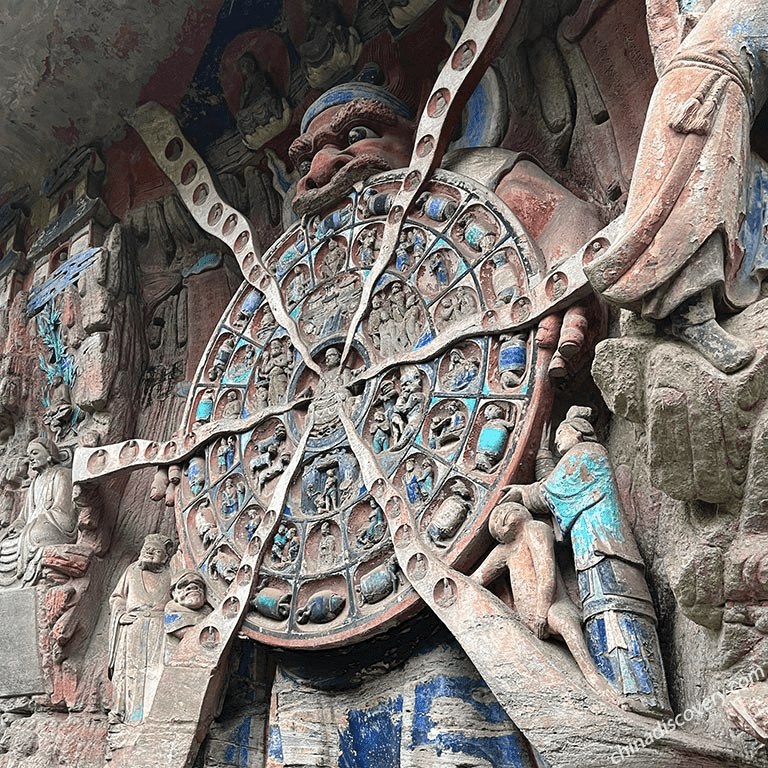
Dazu Rock Carvings – Buddhist Wheel of Life

Avalokitesvara with Thousand Hands

The Buddha statues at Baodingshan are novel in conception, skillful in carving, and rich in secular characters. Religious treasures come one after another, including the representative work – Niche of Sakyamuni Entering Nirvana, one of the wonders of Buddhist art in the world – Avalokitesvara with Thousand Hands, striking image of Buddhist Wheel of Life, scientific designs of Three Saints of Huayan School of Buddhism and Cave of Full Enlightment showed craftsmans’ ingenuity.

In addition, niche content and their expression approach are striving to visualize reality. For instance, Niche of Parental Love Sutra contains ten groups of carvings, including scenes like begging for a son, carrying a child, and going into labor, etc., depicting parental love in bringing up children with plots linking to each other as a picture-book. These carvings are vivid and impressive. They were the outcome after Buddhism had been localized in China.

The ox herding story

Located at the eastern end of the Great Buddha Bend, the ox herding tableau, shows a herdsman taming a disobedient ox—a traditional metaphor for the path to self-enlightenment and a popular theme among Ch’an Buddhist monks and painters in the Song Dynasty. The tableau is made up of eleven vignettes arranged horizontally along a 27-meter cliff wall.

Ox herding story (scene 1–2), Niche 30, Dafowan, Mt. Baoding, Dazu. Southern Song Dynasty (photos: G41rn8, CC BY-SA 4.0)

The first three vignettes each depict a lively interaction between a herdsman and an ox in a landscape setting. The herdsman represents the Buddhist practitioner while the ox refers to the practitioner’s potential to become a Buddha. As the ox turns its body away, the stocky herdsman uses force, grass, and a stick to tame the ox. The verses accompanying the scenes further recount these struggles. 

Herdsmen embracing in the ox herding story (scene 5), Niche 30, Dafowan, Mt. Baoding, Dazu. Southern Song Dynasty (photos: G41rn8, CC BY-SA 4.0)

In the fourth and fifth vignettes, the ox is finally brought under control. The herdsman, featuring a wide, joyful smile, wraps his arms around his fellow herdsman while holding on to the ox with the rope in his hands.

In addition to the uncanny quality of grottoes’ masterpieces at Grant Buddha Bay (Dafowan), there are also many highlights you can’t miss while visiting Baodingshan Scenic Area:

  • Watch a 4K film with English subtitles to learn about the history and development of Dazu rock carvings, and enjoy an 8D view of spectacular grottos at the dome theater
  • Take a leisure stroll at Dazu Rock Carvings Museum (大足石刻博物馆) to gain insights into the whole thread of world cave temple art and the basic characteristics of Dazu Rock Carvings
  • Visit Shengshou Temple (圣寿寺) to admire the exquisite temple architecture, which was rebuilt at the Ming and Qing Dynasties.
Shengshou Temple & Dazu Rock Carvings Museum

Beishan Rock Carvings

1.5km north to Longgang Town of Dazu, with an altitude of 545.5m, Beishan is also called Longgang Mountain in the past. Beishan Rock Carvings is the initial of Dazu Rock Carvings. They were first created by Wei Junjing, prefect of Changzhou, in 892 A.D. of the late Tang Dynasty. Until 1162 A.D. of the Southern Song Dynasty, the existing scale of Beishan Rock Carvings was formed, and it centered around Fowan. The rock carvings are numbered and divided into two sections: No.1 ~ No.100 are in the south section, while No.101 ~ No. 290 are in the north section. There are over 5,000 statues on a 500m long cliff, with a height of 7 to 10 meters. The grottoes are very dense, just like a hive, and all of them are delicate and carved with high sculpture skills.

Avalokitesvara with a Rosary

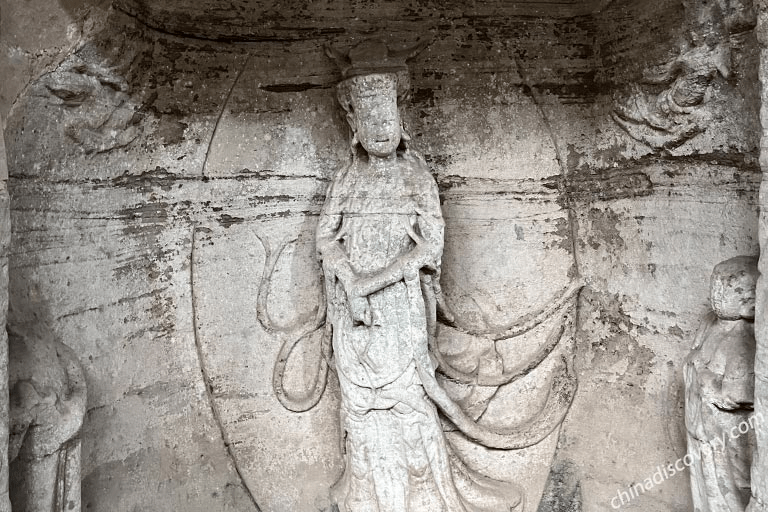
The crowning jewels of Beishan rock carvings are the statues of Avalokitesvara. They are ornamental and artistic, with diverse looks and postures. The most emblematic ones are the Avalokitesvara with a RosaryAvalokitesvara Watching the Moon Reflection in the Water, and Thousand-armed and Thousand-eyed Avalokitesvara, etc.

Beishan rock carvings can be visited both during the day and at night. An additional visual experience is provided by the scenic spot’s usage of colored light to illuminate the stone statues. Besides, if you have enough time and stamina, don’t forget to follow the downhill trail to visit the Duobao Pagoda (多宝塔) to see the giant cliff statues of Beishan, the Two Buddhas of the North Pagoda.

Dazu Rock Carvings – The Last Monumental Works in the History of World Grotto Art

Link:https://peacelilysite.com/2024/01/04/dazu-rock-carvings-the-last-monumental-works-in-the-history-of-world-grotto-art/

#AvalokitesvarawithThousandHands #Shakymunibuddha #DazuRockCarvings #History #WorldGrottoArt #Buddhism #BuddhistArt #BuddhaStatue#Cave#TravelChina #ChineseCulture

Source:https://www.chinadiscovery.com/chongqing/dazu-rock-carvings.html, https://smarthistory.org/mt-baoding-dazu-rock-carvings/

Maijishan Grottoes – Buddhist Treasure Well-preserved on Maiji Mountain Cliff

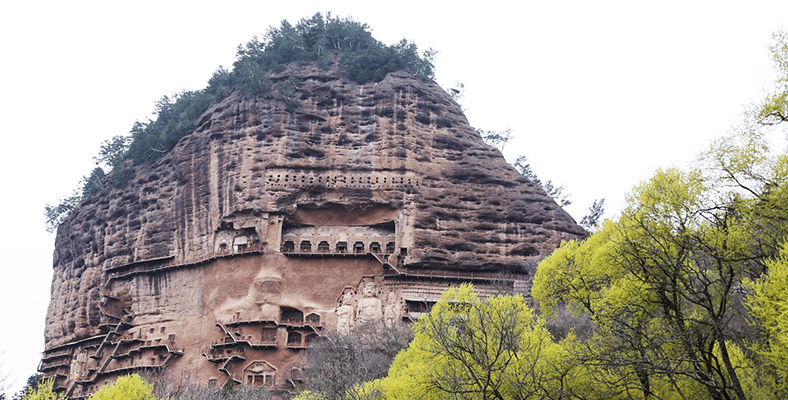
Maijishan Grottoes, also known as Maiji Mountain Grottoes or Maijishan Caves, is situated in Maiji District, Tianshui City, Gansu Province, in northwest China. Alongside the Longmen Grottoes, Yungang Grottoes, and Dunhuang Grottoes, it holds the esteemed title of being one of the “Four Greatest Grottoes in China.”

If the Mogao Caves are likened to a vast mural museum, the Maijishan Caves undoubtedly resemble an expansive sculpture museum. Boasting 10,632 clay sculptures, Maijishan is hailed as “the Oriental Sculpture Art Exhibition Hall.”

Much like the Parthenon temple in ancient Greece, the stone and clay carvings at Maijishan have been remarkably preserved since ancient times, earning it the moniker of “China’s Parthenon Temple.”

In contrast to the exotic sculptures found in the Mogao Caves, the sculptures in Maijishan are characterized by a more secular, human, and distinctly Chinese quality.

Unlike the exotic sculptures in Mogao Caves, the sculptures in Maijishan Caves are more secularized, human, and more Chinese

The name Maiji in Chinese translates to “piled sheaves of wheat,” reflecting the mountain’s appearance and the origin of its name. The Maijishan Grottoes were initially constructed in A.D. 384-417 and underwent subsequent expansions in dynasties such as Northern Zhou (A.D. 557-581) and Tang (A.D. 618-907). The site currently comprises 221 caves, 10,632 clay sculptures, and over 1300 square meters of murals, earning global acclaim for its exquisite clay sculpture art and recognition as the “Oriental Sculpture Art Exhibition Hall.”

While Maijishan Grottoes may not be as renowned as the other three great grottoes, it stands out as the best-preserved among them. Carved into the steep cliff of the mountain, the caves were not easily accessible, thus escaping much of the destruction that plagued other sites throughout tumultuous periods in history. Today, visitors can marvel at Buddha sculptures and murals along a narrow path clinging to the cliff’s edge.

Marsman Rom, Wikimediia Commons

Shizao, Wikimedia Commons

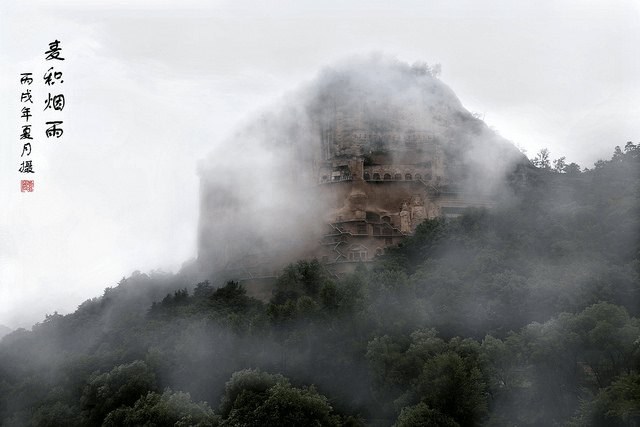
Maijishan in a sea of fog. ©Maijishan Grotto Art Institute and Global Heritage Fund

Located just a few miles south of the main road connecting China and Central Asia, Maijishan emerged as a hub of cross-cultural exchange, drawing hundreds of thousands of itinerants and serving as a historical canvas reflecting the art of 12 distinct dynasties. Indians, Mongols, Huns, Sogdians, Tibetans, Chinese, and others traversed its halls, leaving enduring imprints of their cultures in the form of art.

The mountain’s 194 grottoes stand as tangible evidence of this diverse influence, showcasing seven architectural variations, housing over 7,000 statues, and adorned with more than 100 square meters of murals. Everything within reflects a dedication to Buddhism, from depictions of Siddhartha’s birth to bodhisattvas engaged in meditation and scenes of new devotees arriving. While Maijishan’s physical features initially garnered attention, it is the heritage inscribed, painted, and sculpted onto the soft golden stone that solidified its place in the globalized consciousness of Buddhism, akin to Mount Sumeru, the sacred Buddhist mountain often considered the “mythical axis of the universe.”

The history of Maijishan, like the tales along ancient trade routes, commences with a journey. One account tells of the priest Hsüan-kao meditating at Maijishan, later joined by the shaman T’an-Hung. Together, they founded the mountain’s first monastic community, growing to nearly 300 people before their departure, marking a departure filled with religious fervor, and in T’an-Hung’s case, a morbidly poetic self-immolation in Cochin.

This semi-mythical origin, whether entirely factual or not, undeniably solidified Maijishan as a significant religious site for Chinese rulers. In the Fang-yü sheng-lan, a Sung Dynasty-era book, it is noted that Yao Hsing transformed the mountains, carving 1,000 cliffs and 10,000 images, transforming the cliffs into halls. A stele from 1222 attests to the site’s prominence, with 10,000 people praying there, empires granting land for farming, and seven kingdoms continuously contributing to its maintenance. Subsequent imperial decrees bestowed various names, including “Ching-nien ssu,” “Ying-chien kan ssu,” and “Jui-ying ssu,” before settling on the name Maijishan.

Examples of how brilliantly these works of art were once colored. Shizao, Wikimedia Commons

Differences between Maijishan’s Grottoes and Mogao’s

The Maijishan Grottoes and the Mogao Grottoes, both situated in Gansu Province along the Silk Road, offer distinct experiences, prompting consideration for visitors on a Silk Road journey. Despite being grottoes, they differ significantly, making a visit to both a worthwhile endeavor.

  1. The Maijishan Grottoes are renowned for their clay sculptures, whereas the Mogao Grottoes impress with expansive and beautiful murals. The arid climate in Dunhuang aids mural preservation, while the Maiji Mountain area, with more rainfall and looser mountain rock (clay), is conducive to sculpture carving.
  2. Sculptures in the Maijishan Caves are primarily plain clay pieces, while in the Mogao Caves, they are predominantly painted sculptures integrated with murals. Buddha statues in Maijishan exhibit a more secularized and daily-life-oriented character.
  3. The surrounding natural landscapes vary. Maijishan Caves, located in the Maiji Mountain Reserve area, offer a summer retreat with lush trees and springs, providing opportunities to explore diverse wildlife. In contrast, the Mogao Grottoes are situated in the Gobi Desert, surrounded by wild desert scenery.
  4. The Maiji Grottoes were carved into a steep 100-meter-high cliff face, requiring travelers to ascend the “floating plank road” for a more adventurous experience. In comparison, the Mogao Grottoes were carved into a 30-meter-high sandstone outcrop distributed over four floors.

The breathtaking Maiji Caves, carved into the steep cliffs of Maiji Mountain, stand about 100 meters (330 feet) above the ground, divided into East and West Cliffs. These caves, resembling honeycombs in hives, are interconnected by plank walkways suspended in the air from the cliff face.

Have you ever pondered how this feat was accomplished over a thousand years ago without modern machinery?

Legend has it that the Maijishan Grottoes were excavated at the expense of clearing all the woods near Maiji Mountain. Ancient people built wooden scaffolds from the mountain’s foot to the top, serving as precursors to the later generations’ “plank roads.”

During the Tang Dynasty (618–907), an earthquake divided Maiji Mountain into two cliffs, east and west. Over subsequent dynasties — Song, Yuan, Ming, and Qing — the Maijishan Grottoes underwent development, evolving into the cohesive complex seen today.

The Maijishan Caves stand as a testament to human wisdom and art along the Silk Road, embodying profound respect for Buddhism and an unending yearning for a better life.

Part of the Maiji Mountain Scenic Reserve area (including Xianren (‘Fairy’) Cliff, Shimen, Quxi, and Jieting Hot Spring), the Maijishan Grottoes boast diverse forests and a rich array of plants and animals.

While the Maijishan Grottoes can be visited year-round, the best time to explore the Maiji Mountain Scenic Reserve area is from July to October when the mountain, adorned with dense foliage, provides an ideal summer getaway.

Maijishan Grottoes – Buddhist Treasure Well-preserved on Maiji Mountain Cliff

Link:https://peacelilysite.com/2023/12/15/maijishan-grottoes-buddhist-treasure-well-preserved-on-maiji-mountain-cliff/

#MaijishanGrottoes #BuddhistTreasure #MaijiMountainCliff #Travel #China#Art#TravelChina

Source: https://globalheritagefund.org/2018/02/13/inside-the-lost-grottoes-of-maijishan/, https://www.chinadiscovery.com/gansu/maijishan-grottoes.html, https://www.chinahighlights.com/tianshui/attraction/mount-maiji-grottoes.htm

The Best Buddhist Dharma to Rebirth at Paradise of Ultimate Bliss

Buddhist Devotee Hou Yushan Passed Away, Leaving a Legacy of Spiritual Journey

On June 1st, 2002 Buddhist disciple Hou Yushan peacefully passed away at his home in Los Angeles. Witnessed by his wife, Hou Li Qingqiu, the celestial realm appeared before him as Shakyamuni, Amitabha Buddha, and Avalokiteshvara, guiding him towards the ultimate state of bliss. Prior to his passing, Hou Yushan expressed his unwavering determination to learn Buddhism in this lifetime under the guidance of his master.

Hou Liqingqiu, a devoted practitioner of Chinese medicine in California, addressed over 20 monks who gathered in their home for a Buddhist practice session in honor of Hou Yushan. She shared the remarkable journey of her husband, stating that he had dedicated many years to the study of Buddhism. Diagnosed with lung cancer four years ago, Hou Yushan had endured arduous and prolonged treatments. However, his life took a transformative turn a year and a half ago when he and his wife attended the Yiyungao International Cultural Foundation, where they listened to the enlightening teachings of Master Yiyungao (H.H. Dorje Chang Buddha III).

Deeply inspired by the teachings on the pre-recorded dharma discourse, Hou Yushan developed profound admiration and sincerity towards Great Master Yi. He actively participated in the group cultivation programs of the foundation, he never missed an opportunity to listen to the pre-recorded dharma discourse. Despite the advice of others to focus on rest and recovery, Hou Yushan insisted on continuing his full-time volunteer work at the foundation, driven by his desire to meet Master Yun Gao Yi as soon as possible.

In February of year 2002, Hou Yushan and his wife sought refuge under the guidance of Great Master Yi Yungao (H.H. Dorje Chang Buddha III) through the American Master Yiyungao International Cultural Foundation, led by Lobsang Gyatso Rinpoche. Upon meeting the revered master, they were pleasantly surprised to find that their preconceived notions were far from reality. Master Yi was not the distant figure they had imagined, instead, he displayed approachability and warmth. With utmost sincerity, they sought empowerment to learn the Dharma, presenting their offerings. However, Master Yi, without even glancing at them, humbly declined their offerings, explaining that he could not set such a precedent. Nonetheless, Great Master Yi graciously provided them with the empowerment and transmission of the Dharma. Hou Yushan diligently practiced the teachings and swiftly progressed, experiencing a sudden disappearance of his cancer pains.

Hou Yushan’s wife Hou Liqingqiu shared the incredible experience with the monastery

On the auspicious occasion of Buddha Bathing Day in May 2002, Hou Yushan and Hou Liqingqiu had the opportunity to reunite with Master Yi Yungao (H.H. Dorje Chang Buddha III). When asked about his wishes, despite his terminal illness, Hou Yushan expressed his sole desire to learn how to attain a stable rebirth in the Land of Ultimate Bliss. In response, Master Yi advised him to adopt a different practice method, specifically the Pure Land School’s method of reciting Buddha, with a particular emphasis on Amitabha. Additionally, Master Yi imparted a secret handprint of rebirth, promising that through this method, Hou Yushan would soon witness the state of Amitabha and be guided by Buddhas and Bodhisattvas to the Paradise of Ultimate Bliss. The compassion demonstrated by the master was profound, as he called Hou Yushan to his side and secretly shared the sacred handprint with him. Hou Yushan experienced indescribable excitement and joy upon receiving this precious gift—the profound Great Dharma of the Supreme PureLand Buddha Dharma.

Ever since Hou Yushan received the transmission of Amitabha Dharma on the Buddha Bathing Festival, his wife has witnessed a remarkable transformation in his condition. Hou Liqingqiu, the wife saw golden rays of yellow and red light radiating from his head and back at any given time. As a result, all the cancer-related pains in his body have vanished, along with the swelling. He no longer required the morphine painkillers prescribed by the hospital.

One day, Hou Yushan asked his daughter Lily, who worked as an anesthetist in the hospital, about his complexion. Lily responded, saying, “Dad, your complexion is genuinely vibrant, and your spirits are high. One would never guess that you are a patient.” On the morning of May 25, Hou Yushan shared with his wife that during his Dharma practice the previous night, he entered a state of samaya and visited the Land of Ultimate Bliss. He described the indescribable beauty of the paradise, filled with captivating shades of red, green, and purple.

Hou Liqingqiu eagerly inquired, “Can you provide me with an analogy to illustrate its beauty?” After a moment of contemplation, Hou Yushan responded, “The Paradise of Ultimate Bliss surpasses any scenery in this world. Do you recall our visit to West Lake when we were young? In the early morning, the misty air and the colorful reflections on the lake created a breathtaking view. However, the beauty of the Paradise surpasses even that. Furthermore, the Buddha informed me that he would come to fetch me in seven days, urging me to proclaim to the world that the greatest Dharma in existence is with our master.”

On May 31, Hou Yushan carefully settled all family matters and left final words for his daughter. He advised her, “Do not hold your mother responsible for everything in her life. However, there is one thing you can admonish her for: if your mother ever strays from Buddhism and deviates from following Vajra Master (Master Yi Yungao – H.H. Dorje Chang Buddha III), remind her to earnestly practice under our Master Yungao’s guidance without hesitation.” Then, he turned to his wife, Hou Li Qingqiu, and earnestly said, “In your life, it doesn’t matter if you make other mistakes, but there is one thing you must not falter in: wholeheartedly follow the Vajra Master in dedicated practice. Your success lies solely in following his guidance, as his Dharma is the true path.”

Hou Yushan informed his wife that he would pass away that night and advised her, “Pay close attention tonight. At the moment of my passing, I fear I may fall into drowsiness and enter a demonic realm. Do not sleep, but remind me to visualize the Vajra Master above my head and Amitabha Buddha atop my head, while reciting the mantra wholeheartedly.” That night, in their seaside home, Hou Li Qingqiu had already foreseen that her husband, Hou Yushan, would depart to the Buddhist realm. Therefore, she set four alarms to ring at different times, once every hour. True to her premonition, at 6:15 a.m. on June 1st, Hou Yushan’s pulse and breathing slowed down. Hou Li Qingqiu shook his bed, and together they chanted, “Namo Vajra Guru! Namo Amitabha!” Hou Yushan held the secret handprint taught by Master Yi Yungao.

At that moment, Hou Li Qingqiu heard heavenly music, and Hou Yushan’s body emitted increasingly powerful golden light. She witnessed the appearance of Shakyamuni Buddha, Amitabha Buddha, Guanyin Bodhisattva, and other Buddhas and Bodhisattvas in the sky by the seaside. The merging rays of light grew more potent. After about five minutes, the Buddhas and Bodhisattvas, along with the celestial splendor, disappeared. It was then that she remembered to check Hou Yushan’s pulse, which had ceased along with his heartbeat.

Zhang Tianyou, the president of the American Master Yi Yungao International Cultural Foundation, was the first to arrive at Hou Yushan’s residence after his passing. He observed Hou Yushan, who appeared peacefully asleep, with no signs of pain on his face. Hou Yushan’s hands held the secret handprint from his previous life.

The incident deeply moved Long Hui, the chairman of the International Federation of Buddhist Monks and Nuns and the abbot of Huazang Temple. She continuously praised the greatness of Master Yi, stating that she often witnessed the suffering experienced by lung cancer patients at the end of their lives. However, the Pure Land method of reciting Buddha taught by Master Yi could transform a lung cancer patient’s condition within a month, filling their surroundings with auspicious golden light and relieving their pain. This would ultimately lead them to be reborn in the Land of Ultimate Bliss under the guidance of Buddhas and Bodhisattvas. Long Hui marveled at the tremendous power of Tathagata-rectification, beyond the capacity of words to express.

On the night before his passing, Hou Yushan personally prepared gifts and $5,000, and said to his wife, “The master never accepts offerings. He did not accept my offerings. Tonight, as I pass away, tomorrow you shall make the offerings and send them to the master. Please ensure he accepts them.” On June 1st, Hou Li Qingqiu faithfully followed her husband’s final instructions and sent the offering package to Yi Yungao, kneeling on the ground with tears in her eyes. She implored Master Yi to accept the offering, shouting loudly, “My supreme Buddha Vajra Master!” The master replied, “Do not address me as such, for I am not a Buddha. I am merely an ordinary practitioner, just like everyone else.” Hou Li Qingqiu explained that it was Hou Yushan’s testamentary offering, to which the master responded, “It seems there is no other way. These relics of Layman Hou shall be displayed in the temple and not for individual use.” The master immediately transferred $6,000 from his personal funds for Layman Hou’s burial expenses and informed the masters of two prominent temples to offer their support in accumulating merit for the deceased.

Photo from weixin.com

Buddhist Devotee Hou Yushan Passed Away, Leaving a Legacy of Spiritual Journey

Link: https://peacelilysite.com/2023/06/09/the-best-buddhist-dharma-to-rebirth-at-paradise-of-ultimate-bliss/

#DorjeChangBuddhaIII #HHDorjeChangBuddhaIII#DorjeChangBuddha #PureLand #Shakyamuni Buddha #AmitabhaBuddha #Avalokiteshvara #Cancer #ParadiseofUltimateBliss #MasterYiYungao #HouYunshan #Compassion #SupremeBuddhaDharma

Su Dongpo and Zen Master Foyin

Su Dongpo and Zen Master Foyin

Su Shi was a prominent figure during the Song Dynasty, renowned for his literary, artistic, calligraphic, pharmaceutical, and political contributions. He was also one of the most notable poets of his era and was known by his courtesy name, Zizhan, and his pseudonym, Dongpo Jushi (東坡居士 “Resident of Dongpo”). Su Dong Po is the commonly used name to refer to him.

In the realm of Chinese literature, Su Shi is widely recognized as a highly accomplished figure, having produced some of the most well-known poems, lyrics, prose, and essays.

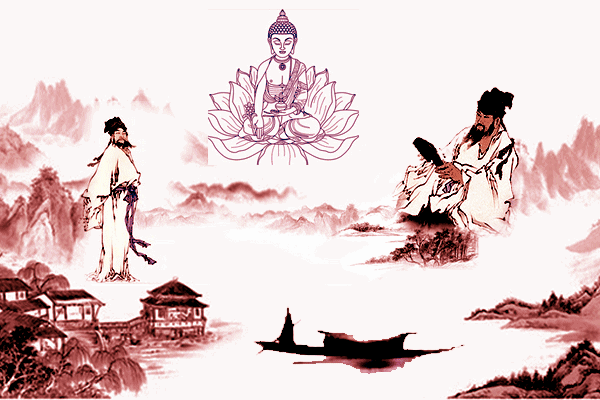
Su Dongpo was a close friend of an esteemed monk named Foyin, and the two often practiced Zen meditation together. There were many stories about the two.

Buddha and Cow Dung

One day, Su Shi decided to play a prank on his good friend Foyin. He asked him, “What do I look like in your eyes?”

Foyin replied, “In my eyes, you look like a Buddha.”

Su Shi then asked, “Do you know what you look like in my eyes?” Foyin replied that he did not know.

Su Shi gleefully exclaimed, “In my eyes, you look like a pile of cow dung!”

Upon returning home, Su Shi shared his victory with his younger sister, Su Xiaomei. However, she frowned upon hearing this and told her brother that he had lost the exchange. She explained that if a person has Buddha in their heart, they will see the Buddha’s qualities in everything around them. Conversely, if a person has impure thoughts and feelings, they will see everything as dirty and unpleasant. She pointed out that Foyin’s heart was pure, while Su Shi’s was not.

Eight winds and a Fart

Su Dongpo was not only a renowned literary figure but also a Buddhist disciple who regularly practiced meditation.

One day, after a particularly serene meditation session, Su Shi felt that he had made a significant realization. He decided to capture his experience in a poem, which read, “Sitting still on the lotus platform, even the eight winds cannot move me.”

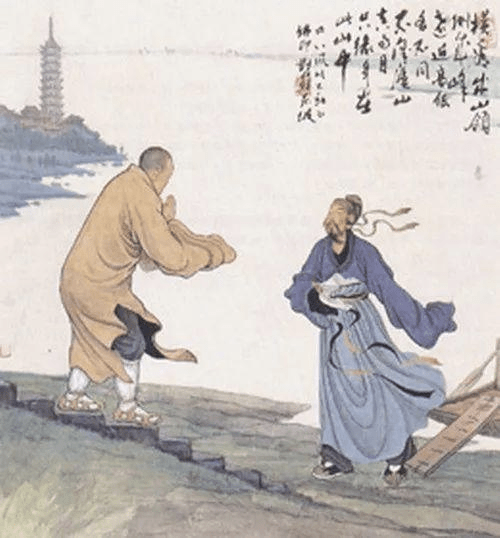
Curious about the authenticity of his realization, Su Shi asked his servant to deliver the poem to Zen Master Foyin, who resided in the Jinshang Temple across the river.

Upon receiving the poem, the Zen Master smiled and wrote two large characters on a piece of paper, which he instructed the servant to take back to Su Dongpo.

Excited to receive feedback from the Zen Master, Su Dongpo eagerly unfolded the paper, hoping to see praise for his state of practice.

However, instead of receiving the expected validation, Su Dongpo was infuriated to see the two characters “fart” written on the paper. Without hesitation, he boarded a boat and crossed the river to confront Zen Master Foyin.

When Su Dongpo arrived at the Jinshan Temple, he found the Zen Master waiting for him on the shore. In a loud and accusatory tone, Su Dongpo asked, “Great monk! You and I are best friends. If you don’t appreciate my poems and my practice, it’s fine. How can you slander me?”

The Zen Master remained unperturbed and asked, “How did I slander you?”

Su Dongpo then showed him the word “fart” written in the poem.

The Zen Master burst into laughter and exclaimed, “Ah! Didn’t you say ‘Eight winds cannot move you’? How come just one fart was enough to blow you over the river?”

The “Eight Winds” refer to the eight worldly concerns: gain and loss, honor (fame) and disgrace (dishonor or infamy), praise and ridicule (censure, blame or criticism), pleasure and suffering (pain). Eight situations that normally preoccupy and sway unrealized people. To be unmoved by these Eight winds is a mark of a true buddhist practitioner.

Su Dongpo and Zen Master Foyin

Link:https://peacelilysite.com/2023/02/24/su-dongpo-and-zen-master-foyin/

#SuShi#SuDongpo#ZenBuddhism #ZenMasterFoyin #Eightwinds #Buddha

Leshan Giant Buddha

Leshan Giant Buddha

Around a 2-hour drive from downtown Chengdu lies one of the most marvelous ancient wonders of China, the Leshan Giant Buddha, also known as Lingyun Giant Buddha. Carved into a cliff-face along a peaceful river, this imposing figure, at 71 meters (over 200 feet) in height, dates back over a thousand years and is the largest and tallest stone Buddha statue in the world.

Carved in the 8th century during the Tang Dynasty, the Leshan Giant Buddha was built during a peak period of Buddhist culture in ancient China. The sculpture depicts Maitreya, a very popular Buddha in the Tang Dynasty. The sutras say that when Maitreya comes into world, the world will be at peace. The female Chinese female sovereign Wu Zetian even proclaimed she was the reincarnation of Maitreya and was a strong advocate of Maitreya sculptures being built as a way to maintain her rule. People liked to carve Maitreya sculptures and believed that Maitreya would bring light and happiness into their lives in the future.

This remarkable historic site was listed as a UNESCO World Heritage Site since 1996. It is an amazing and immense religious relic that was built over a period of 90 years from 713 to 803 AD. The statue was constructed at the confluence of three rivers notorious for their turbulent waters; it was hoped that the Buddha’s presence would help calm the rivers’ waters.

Hai Tong’s Legacy

The Buddhist monk Hai Tong was concerned about the safety of the local people who earned their living around the three rivers. Many people traveling by boat in the area were killed by the turbulent waters each year before the Leshan Giant Buddha was created. Hai Tong decided to carve a statue of Buddha beside the river and believed that this sculpture would appease the river gods and keep the locals safe.

He had begged for over 20 years to accumulate enough money needed to build this statue. During this hard period in his life, he refused official help because the parties who offered it didn’t just want to help him but wanted to gain personal profits from the project. He even gouged out his eyeball in protest against the local authorities. These officials backed off after this behavior. Fortunately, Hai Tong’s disciples continued his work after he passed away and finally completed the sculpture in 803 AD after 90 years of hard work.

There is a cleverly designed drainage system behind the Buddha’s head and between his two ears. This important design aspect is the reason why the great Buddha of Leshan has not eroded despite having existed for thousands of years. The “spectacle”

Interestingly, there haven’t been any shipwrecks since the Buddha was built. Many stones were actually removed from the cliff and transferred to the rivers during construction, which made the waters calmer and safer than before. The project didn’t end after the Leshan Giant Buddha was finished.

Buddhism had been one of the most important religions in ancient China and many other people built statues around the giant Buddha to thank the gods . Numerous small Buddhas were carved around this huge statue. People even excavated the cliff tombs of the Han Dynasty around the Leshan Giant Buddha. Multiple historic sites make the Leshan Giant Buddha particularly important for archaeologists and researching people’s lifestyles in ancient times.

With the most sunny days and beautiful scenery, April and October are the best months of the year to travel to see the Leshan Giant Buddha.

There are two ways for visitors to see the Giant Buddha. One is to walk down from the top near the head and end at its feet. This involves some waiting in line, sometimes for hours on particularly busy days, and larger crowds, as well as many narrow and steep stairs, but offers you a more intimate perspective of the Buddha. This up-close view will allow you to appreciate the statue’s enormity; its shoulders spread over a width of 28 meters (as long as a basketball court!) and its pinky toe is large enough for a person to sit on.

The other option is to view the statue from a boat on the river immediately in front of it. The boat trip allows you to get the best and fullest front-facing view of the Buddha from a distance and is ideal for those who prefer not to wait in line and climb the stairs. The cruise takes around 30 minutes there and back, stopping for several minutes in front of the Buddha for visitors to appreciate the statue and take pictures. It’s best to sit on the right side of the boat, as the Buddha will end up being on that side once you arrive.

Leshan Giant Buddha

Link:https://peacelilysite.com/2023/02/23/leshan-giant-buddha/

#Travel#China#LeshanGiantBuddha#Buddhism#MarvelousAncientWonder

Source: https://www.trippest.com/chengdu-travel-guide/leshan-giant-buddha/ https://www.thechinaguide.com/sight/leshan-giant-buddha#:~:text=It’s%20best%20to%20sit%20on,worth%20seeing%20from%20both%20angles.

Dharma Assembly at Hua Zang Si — Holy Birthday of Maitreya Bodhisattva

Dharma Assembly at Hua Zang Si — Holy Birthday of Maitreya Bodhisattva

January 1st in the Chinese lunar calendar, is chinese Spring festival, it is the biggest holiday in china. It is also the holy birthday of Maitreya Bodhisattva – the next Buddha in the saha world. This is a special and joyful holiday that is celebrated by many. Hua Zang Si in San Francisco held a Dharma Assembly to celebrate this important occasion. It was the first Dharma Assembly of the year and it was held on a beautiful sunny day. Many laypersons participated in the event.

At the entrance of the temple is an oversize marvelous statue representation of a jolly, laughing Buddha: Maitreya Bodhisattva (the next Buddha in this Saha world). It is such a warm welcoming sign. The big belly not only means jolly, it also means tolerating the intolerable things in the world. So when you look at the statue, you will start to feel that learning Buddhism is happy and kind.

The Dharma Assembly was an opportunity for people to come together and celebrate the teachings of Maitreya Bodhisattva. It was a time for reflection and meditation, as well as a chance to learn more about the teachings of Buddhism. The atmosphere was filled with positivity and joy, as people came together to celebrate this important holiday.

In Chinese culture, Maitreya Bodhisattva is seen as a symbol of joy and tolerance. As practitioners of Buddhism, we are encouraged to strive to be like the Buddhas and Bodhisattvas by cultivating a broad mind, open heart, and great tolerance.

One of the key principles of Buddhism is patience and forbearance, particularly under insult. This is seen as a key aspect of self-cultivation and it is important to remember that everything in the dharma realms can change from ordinary to holy. This means that even difficult situations can be transformed and overcome through the practice of patience and tolerance.

Patience and tolerance are not just passive qualities, but rather active ones that require effort and practice. We must actively cultivate them in our daily lives and strive to maintain them even in difficult situations. Through this practice, we can transform our own minds and hearts, becoming more like the Buddhas and Bodhisattvas that we strive to emulate.

At the Dharma Assembly, we chanted the Eighty-eight holy Buddha name jeweled repentance sutra, in hopes that the Buddhas will wash away all of our sins and negative karmas. After the chanting, we offered a meal to the Buddhas and Bodhisattvas. The event concluded with a dharma talk given by Dharma Master Ruohui.

During her talk, Dharma Master Ruohui emphasized the importance of faith, vows, and actions for disciples of Buddhism. She explained that faith is the foundation of our practice, and that with strong faith, we will have the determination to follow the Buddha’s teachings and put them into action in our lives.

The Dharma Assembly was a meaningful event where participants not only had the opportunity to reflect on their own spiritual growth but also to make an impact on the world around them. During the assembly, the participants returned the merit to all living beings, holding the hope that they shall be rid of suffering, obtain happiness, and have the opportunity to listen to authentic Buddha Dharma.

The act of returning merit is an important aspect of Buddhist practice as it is believed that by dedicating the positive energy generated through our spiritual practice to the benefit of others, we can help bring about peace and prosperity in the world. By returning merit to all living beings, participants were able to contribute to the collective well-being of the world and make a positive impact on the lives of others.

Furthermore, the participants also held the hope that by listening to authentic Buddha Dharma, they will be able to perfect their fortune and wisdom, leading to a more prosperous and peaceful world for all. This is the ultimate goal of Buddhism, to help all beings to find inner peace, happiness and liberation from suffering.

Dharma Assembly at Hua Zang Si — Holy Birthday of Maitreya Bodhisattva

Link: https://peacelilysite.com/2023/01/26/dharma-assembly-at-hua-zang-si-holy-birthday-of-maitreya-bodhisattva/

#Buddha#Buddhism#BuddhistDisciple#MaitreyaBodhisattva#HuaZangSi#Tolerance#Cultivation#Assembly#ChineseLunarCalendar#ChineseNewYear