In our culture, success is often seen as the ultimate destination—the long-awaited moment when effort finally blossoms into happiness. We are taught to dream, to strive, and to believe that once we reach our goals, fulfillment will naturally follow. Yet, both modern science and lived experience are beginning to tell a more nuanced story.
In recent years, research in neuroscience and psychology has revealed a quiet paradox: achieving our most cherished goals does not always bring lasting happiness. The brain’s reward system, driven by dopamine, is designed primarily for anticipation rather than arrival. It fuels the excitement of pursuit—the late nights, the hopeful striving, the vision of what could be. But once the goal is reached, that surge of motivation fades, and the emotional intensity often drops.
At the same time, psychologists describe a phenomenon known as hedonic adaptation—our tendency to quickly return to a baseline level of happiness even after major positive events. The dream job becomes routine. The long-awaited achievement becomes part of everyday life. What once felt extraordinary quietly becomes ordinary.
For some, this transition is subtle. For others, it can feel like an unexpected emptiness—a sense of “What now?” after the finish line has been crossed.
But this discovery is not discouraging. In fact, it is deeply illuminating.
It reminds us that the human mind is intricate, and happiness is more than just accomplishment. Success, by itself, is not designed to sustain joy—it is only one part of a much larger inner landscape.
True fulfillment begins when we understand this hidden pattern and learn to work with it, rather than against it.
A meaningful life is not built solely on reaching goals, but on what those goals serve. When ambition is guided by purpose—when our efforts contribute to something beyond personal gain—success no longer feels like an ending. Instead, it becomes a doorway.
This is why acts of kindness, compassion, and contribution carry such enduring power. Unlike fleeting achievements, they create a sense of connection and meaning that the mind does not easily adapt away from. They anchor us in something deeper than momentary reward.
Imagine a different way of living:
A life where ambition and inner well-being are not in conflict, but in harmony. A life where achieving a dream does not leave a void, but opens a new horizon of purpose. A life where each success is not a final destination, but a step toward greater understanding, compassion, and joy.
By understanding the brain’s hidden responses, we gain the ability to design such a life. We begin to see that fulfillment is not something waiting at the end of achievement—it is something woven into the journey itself.
In this light, success becomes more than personal victory. It becomes an opportunity to deepen meaning, to expand the heart, and to align our outer accomplishments with our inner growth.
Perhaps lasting happiness has never been about reaching the summit.
Perhaps it is about learning how to walk the path—with awareness, purpose, and a quiet, enduring sense of joy.
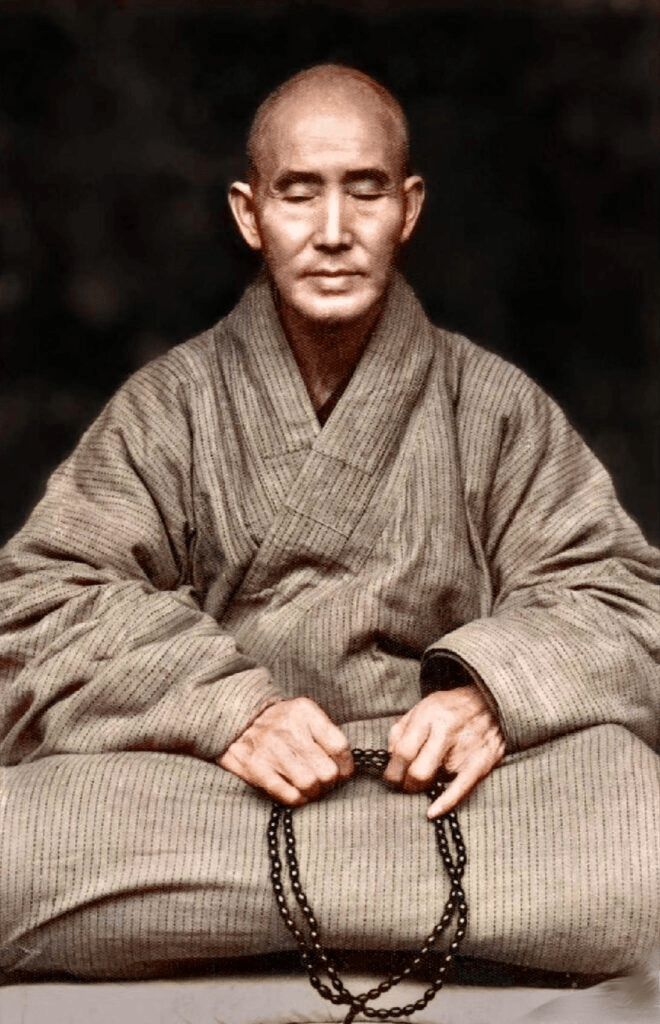
In 1925, the lay practitioner Zhou Qunzheng made a pilgrimage to Mount Putuo together with Master Hongyi (弘一). At the Zhoushan pier, they encountered a monk. Upon learning that the monk was from the same hometown, Zhou asked him, “What inspired you to leave the household life and become a monk?”
The monk replied:
“I was originally a soldier. One day, I saw a shopkeeper’s wife sitting on the street, weeping. I asked her what had happened. She said a customer had come into her shop, bought something, and paid with three silver coins. After he left, she discovered that all three coins were counterfeit. She feared her husband would scold her, so she cried in distress.
I couldn’t bear to see her suffering, so I took out three genuine silver coins and offered to exchange them with her. She refused, but I insisted and eventually made the exchange.
Later, during a battle, a shell exploded right beside me. Shrapnel struck my chest, yet I was unharmed. When I looked closely, I realized that the three counterfeit coins in my pocket had saved my life—two had been pierced by the shrapnel, and one remained intact. It was because they shielded me that I survived without injury.
After that, I thought to myself: what meaning is there in spending the rest of my life amid gunfire and danger? So I chose to leave the worldly life and become a monk…”
Therefore, do not think that constantly encouraging others to do good deeds and accumulate virtue is merely empty, repetitive talk. Sometimes, you have no idea how much misfortune your blessings have already shielded you from.
Behind every day that you return home safely, how much of it is because “before blessings fully arrive, calamities have already been kept at a distance”?
To practice kindness and accumulate virtue—it is never too late.
He built a road for others, and unknowingly paved one for himself
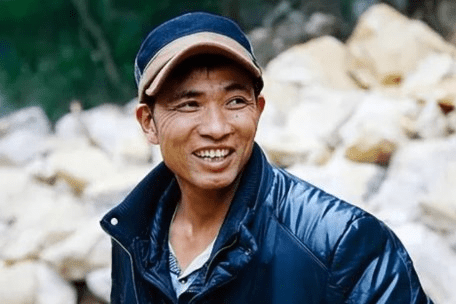
In 2014, in a remote village in Guangxi(广西)China, a 44-year-old man named Huang Yuanfeng was diagnosed with terminal liver cancer. Doctors told him the reality: without treatment, he might live only three months; with treatment, perhaps a few more years—but at the cost of his family’s entire savings of 170,000 yuan.
Most people would have chosen to fight for their own survival.
But Huang made a different decision.
Looking at the muddy, nearly impassable road in his village—a road that trapped children at home during rainy days and left crops to rot—he chose to spend all his savings not on treatment, but on building a road for everyone.
When the money ran short, he borrowed more from neighbors, making a solemn promise: “Even if I die, my son will repay you.”
Against all odds, the road was completed. It transformed the village, bringing in visitors, creating opportunities, and improving countless lives.
But what happened next was even more astonishing.
When Huang returned to the hospital for a check-up, his condition had not worsened—in fact, it had stabilized, even improved. What seemed like a certain end became an unexpected turning point.
His story carries a simple but powerful truth:
Kindness is never lost. The good you do for others may one day return to protect you—especially in life’s most dangerous moments.
Throughout history, great spiritual teachers have reminded humanity that true strength does not come from violence, but from compassion. One of the most powerful voices for this truth was Mahatma Gandhi, whose philosophy of nonviolence transformed not only India’s independence movement but also the moral thinking of the modern world.
Gandhi believed deeply that responding to hatred with hatred only multiplies suffering. One of his most famous reminders is:
“An eye for an eye only ends up making the whole world blind.”
These words echo a truth that has been taught for thousands of years in Buddhist philosophy. The teachings of Gautama Buddha emphasize that violence and anger inevitably create more suffering through the universal law of cause and effect, often described as karma.
When people act with hatred, harmful consequences naturally follow. But when people act with compassion, patience, and kindness, they plant seeds of peace that can transform the future.
Gandhi understood this deeply. He once said:
“Non-violence is the greatest force at the disposal of mankind.”
At first glance, nonviolence may seem passive or weak. Yet both Gandhi and Buddhist teachings reveal the opposite: choosing compassion when faced with anger requires tremendous inner strength. It means resisting the instinct to retaliate and instead responding with wisdom and humanity.
Another powerful statement from Gandhi reminds us of this inner strength:
“The weak can never forgive. Forgiveness is the attribute of the strong.”
In Buddhist practice, forgiveness and compassion are essential qualities for spiritual growth. When we release anger and cultivate compassion, we stop feeding the cycle of negative karma. Instead, we create positive causes that lead to harmony and healing.
The world today often appears filled with conflict, division, and hostility. Yet the teachings of Gandhi and the Buddha remind us that lasting peace cannot be built through force. Peace grows from the transformation of the human heart.
Every act of kindness, every moment of patience, and every compassionate choice becomes a small but powerful step toward a more peaceful world.
Gandhi expressed this hopeful vision beautifully:
“Where there is love there is life.”
His words remind us that true change does not always come from power or domination. Often, it begins quietly—with compassion, moral courage, and the determination to do what is right.
When we choose compassion over anger, forgiveness over revenge, and wisdom over violence, we participate in a timeless spiritual truth: good causes create good results. In this way, every compassionate action becomes a seed of positive karma that can gradually transform both our own lives and the world around us.
And perhaps this is the deepest lesson shared by both Gandhi and the Buddha: compassion may appear gentle, but in the end, it is stronger than violence.
In recent days, my heart has been unsettled by the wars, conflicts, and endless scandals that seem to surround our world. In such turbulent times, the gentle wisdom of Gandhi becomes like a quiet lamp in the darkness, calming my mind and reminding me to return to inner peace.
I make a sincere vow to guard the peace within my own heart and not allow anger or despair to take root. Instead, I choose to pray for those who are suffering and to let the love and compassion within me flow outward. My voice may be small in this vast world, but I believe that every sincere prayer carries its own power, and the divine will surely hear it.
May the blessings of all the divine beings in the universe embrace this world. May compassion arise in human hearts, hatred dissolve, and may peace and harmony gently return to our shared home.
Nadia Murad: One Woman’s Courage Can Change the World
In a world often shaken by violence and injustice, the story of Nadia Murad reminds us that even in the darkest moments, the human spirit can rise with extraordinary courage.
Murad was born in a small Yazidi village in northern Iraq. Like many young women, she once dreamed of living a quiet and simple life. She hoped to open a beauty salon in her hometown and build a peaceful future with her family.
But in 2014, her life was shattered when the extremist group Islamic State of Iraq and Syria (ISIS) attacked her village. Many members of her family were killed, and she, along with thousands of Yazidi women and girls, was captured and subjected to unspeakable violence.
After months of captivity, Murad managed to escape. Her survival alone was extraordinary, but what she chose to do next required even greater courage.
Rather than remain silent, she decided to tell the world what had happened. Speaking before global leaders at the United Nations, she courageously shared her story and spoke on behalf of thousands of victims who could not speak for themselves.
As she once said:
“I want to be the last girl in the world with a story like mine.”
These simple but powerful words express her deepest mission—to ensure that no other woman or girl must endure the suffering she experienced.
Murad continued her advocacy for survivors of human trafficking and wartime sexual violence, calling on the world to pursue justice and accountability. Her bravery and determination were recognized globally when she was awarded the Nobel Peace Prize in 2018.
Yet Murad’s work has never been about personal recognition. Her goal has always been to restore dignity and hope to those whose lives have been torn apart by violence.
In another moving statement, she said:
“There is no greater honor than being able to speak on behalf of those who have been silenced.”
Her life demonstrates how even the deepest suffering can be transformed into compassion and purpose. Instead of allowing pain to define her, she chose to turn her experience into a force for justice and healing.
Murad also reminds the world that silence allows injustice to continue:
“If the world had listened earlier, perhaps this tragedy could have been avoided.”
Her words challenge us all—not only to listen, but to act.
Today, Nadia Murad’s voice has become a symbol of resilience, courage, and hope. From a small village in Iraq to the global stage, she has shown that one person’s courage can awaken the conscience of humanity. Her story is not only a testimony of survival—it is a call for compassion.
From a deeper spiritual perspective, her journey also reminds us of the universal law of cause and effect—what many traditions call karma. Violence, hatred, and cruelty create suffering that ripples across generations, while compassion, courage, and moral responsibility create healing and hope. When individuals like Nadia Murad choose truth over silence and compassion over hatred, they help restore moral balance in the world. Her courage encourages each of us to cultivate kindness, protect the vulnerable, and act with integrity in our own lives. In this way, even small acts of compassion can become powerful seeds of positive karma, helping to guide humanity toward a more peaceful and just future.
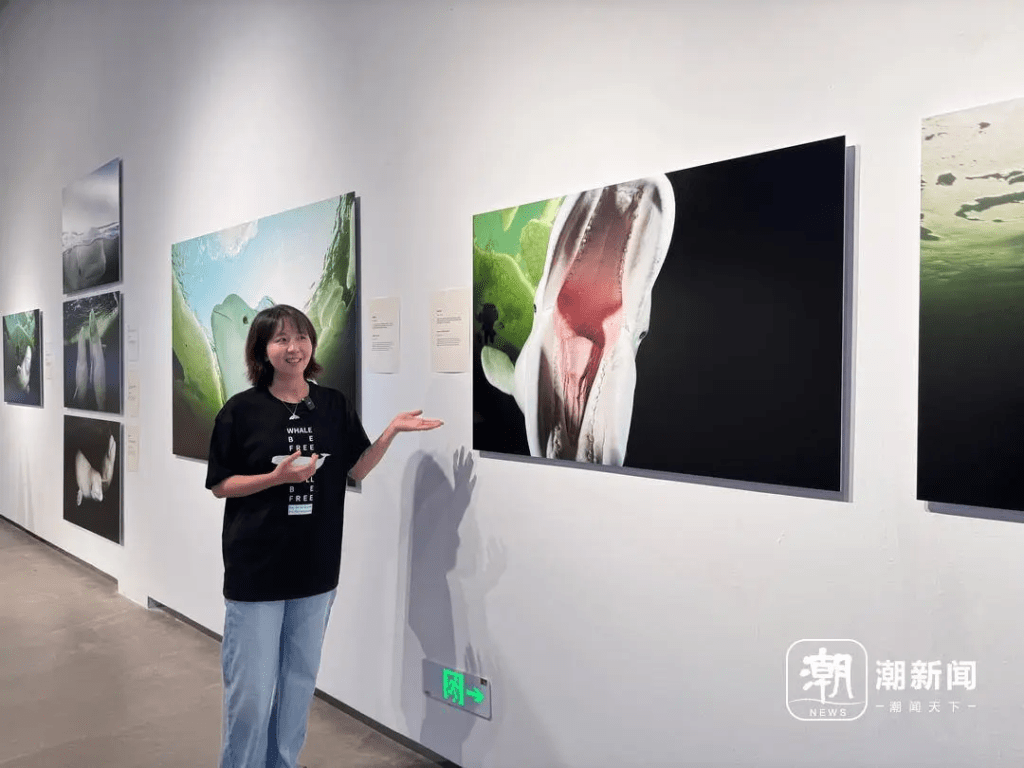
Standing before the massive screen at the exhibition, I raised my arm and waved upward.
On the screen, a white whale responded instantly—leaping out of the water. Its enormous body traced a graceful arc through the air before crashing back down, sending waves of spray in every direction.
At the recently concluded art exhibition in Shenzhen, Whale Room: A Blue Dream Confined, nearly every visitor briefly stepped into the role of a “whale trainer” through multimedia interaction.
What We Call Beauty May Be Their Burden
In the wild, white whales rarely leap repeatedly out of the water. Their heavy bodies are not meant for frequent, high jumps.
What humans describe as “graceful” or “awe-inspiring” may, for them, be exhausting, oppressive, even a cycle of repeated pain.
The exhibition’s founder, Shao Ran, once worked as a whale trainer for five years. She stood by the pool countless times, receiving applause and cheers.
This time, however, she chose to tear open the surface of the “blue dream.”
When the decorations are removed, steel and concrete are revealed beneath. No matter how vast an artificial pool may appear, to a whale, it is still an inescapable prison.
Their suffering is carefully packaged as entertainment.
When a Life Was Entrusted to a White Whale
What truly changed Shao Ran’s life was a moment of life and death beneath the water.
That day, she entered the pool to perform with a white whale named Sophie. Suddenly, Sophie lost control—clamping onto her foot and dragging her downward again and again.
Fear. Powerlessness. Suffocation. All magnified in that endless blue.
“The only thing I could do was wait,” she later said. “To gamble on her kindness.”
She did not escape—not out of bravery, but because for the first time, she fully understood:
In the water, she was no longer the one in control. She was utterly vulnerable.
She looked into Sophie’s eyes. No commands. No intimidation. Only one thought remained:
I want to live.
In the end, Sophie stopped. She slowly swam closer, lifted Shao Ran’s foot with her mouth, and gently pushed her back to shore.
In that moment, Shao Ran understood what compassion truly means.
Not weakness— but the choice not to harm, even within extreme injustice and oppression.
Who, Then, Is Truly Being Tamed?
Sophie was not the only one who resisted.
Another dolphin, Huahua, after enduring prolonged loneliness and stress, eventually chose to stop breathing.
That day, as Shao Ran sat beside Huahua’s body, she could no longer persuade herself with words like “work,” “regulations,” or “procedure.”
She began to see clearly:
So-called training does not only tame animals. It slowly tames the human heart as well.
When violence becomes institutionalized, when suffering is rationalized, when harm is renamed “normal work”—
Humans, like the captive animals, lose freedom and awareness.
There is a line in Buddhism: All beings suffer. Ignorance causes beings to harm one another.”
The Buddhist teaching of non-harming calls us to awaken from this very ignorance.
Walking the Path of Compassion in Another Way
Shao Ran left the marine park.
She no longer stands beside a pool, but walks into schools, bookstores, and quiet corners of the city, telling stories about animals.
No stage. No applause. Sometimes, only a handful of listeners.
Still, she speaks.
She founded a nature protection community called “Ran Ai Tong Sheng” (“All Beings, One Compassion”).
“Ran” is not her name. It means following what is natural— respecting the original state of all beings.
The image of that white whale pushing her gently back to shore has stayed with me ever since.
After long confinement and deprivation, it did not choose destruction— it chose kindness.
Buddhism teaches us:
Compassion is not a result—it is a direction.
If we consider ourselves more intelligent, more civilized, more faithful—
Then perhaps we should also learn:
Not to build our joy upon the suffering of others. Not to hide harm behind habit. Not to allow violence through silence.
Buddhist compassion is not mere sympathy. It is a lucid responsibility.
May we, toward every life, give rise to respect, and cultivate a heart of non-harming.
When non-harming becomes a choice, when compassion becomes action, only then can this world truly move toward freedom.
Photo Courtesy: Hua Zang Si (Community members unite across California to honor the Life Release Day Designated by Buddha, transforming compassion into action through ceremonies, education, and charitable outreach.)
Buddhist communities across California came together on October 29 to honor “The Life Release Day Designated by Buddha,” a global observance dedicated to compassion, the protection of life, and the collective aspiration for peace.
On the morning of October 29, 2025, the H.H. Dorje Chang Buddha III Cultural and Art Museum hosted a life release event at the Marina Del Rey harbor, drawing spiritual leaders and community members from across Southern California. The event was led by Venerable Master Ruzun Ruohui, Abbess of Hua Zang Si Temple and Hongfa Temple.
Participants gathered in unity to chant praises and recite the Great Compassion Mantra of Avalokiteshvara Bodhisattva. Venerable Master Ruzun Ruohui blessed the fish awaiting release with consecrated Dharma water, offering prayers that these sentient beings be freed from suffering and karmic obstructions. Upon release, the fish were returned to the ocean with the hope that they would find safety and live free from harm and predators.
The Life Release Day Designated by Buddha originated on October 29, 2009, when H.H. Dorje Chang Buddha III personally led His disciples in a life release ceremony following a significant Buddhist event. He compassionately declared this day as “Life Release Day” to promote the protection of life and the practice of compassion.
The H.H. Dorje Chang Buddha III Cultural and Art Museum upholds the compassionate teachings of H.H. Dorje Chang Buddha III. The museum urges all sectors of society to transform empathy into action—promoting the safeguarding of life, the cessation of killing, and the daily practices of kindness as a fundamental way of living. Venerable Master Ruzun Ruohui emphasized that life release practices are not confined to specific days or locations. Whenever a life is in danger, we are called to act—to return it to a suitable environment, to grant it freedom, and to relieve it from fear.
On October 29, 2025, San Francisco’s Hua Zang Si Temple also held a life release ceremony at San Rafael. Participants from diverse cultural backgrounds gathered to recite the Heart Sutra and the Great Compassion Mantra before gently releasing fish back to their natural habitat. Organizers emphasized that life release is not only a spiritual practice, but also a call to awaken society’s compassion and deepen our care for the sentient beings.
Photo Courtesy: H.H. Dorje Chang Buddha III Cultural and Art Museum Venerable Master Ruzun Ruohui blesses fish awaiting release with Dharma water during the Life Release Day ceremony at Marina Del Rey.
Photo Courtesy: H.H. Dorje Chang Buddha III Cultural and Art Museum Upon release, the fish were returned to the ocean.
To nurture compassion in the next generation, Hua Zang Si Temple held a Buddhist children’s story class on October 19. Through storytelling and interactive learning, the program guided young participants to understand the core values of “equality of all life” and “compassion without harm.” The initiative was warmly received by parents, who expressed deep appreciation for the temple’s commitment to meaningful and values-based education.
On October 26, Macang Monastery in San Francisco held a special “Life Release Day Blessing and Food Donation Ceremony” in honor of the Life Release Day Designated by Buddha. Following collective sutra recitation and prayers by both monastics and lay practitioners, the temple donated food supplies to unhoused individuals and low-income families—embodying the Buddhist spirit of compassion and service to those in need.
This year’s Life Release Day Designated by Buddha brought together Buddhist disciples and compassionate leaders from all walks of life through a range of activities—including life release ceremonies, prayer gatherings, educational outreach, and food donations. Participants were reminded that cultivation is not merely a slogan, but a continuous practice through every kind thought and virtuous deed.
In 1947, shortly after Japan’s surrender and withdrawal from China, the great Zen Master Xuyun (Empty Cloud) gave a profound speech at a middle school. The nation was still recovering from the devastation of war, and hearts were heavy with both relief and sorrow. With deep compassion, Master Xuyun used the timeless wisdom of the Buddha to explain the law of cause and effect (karma) — reminding people that wars do not arise by chance, but are the result of humanity’s collective actions.
He taught that true peace cannot be achieved through force or politics alone. Only by transforming our hearts and purifying our minds through virtue, compassion, and the practice of Buddhist teachings can we bring real and lasting peace to the world.
War does not arise by chance — it is the collective karma of all beings that brings it forth.
Dear friends, during the years of occupation, we endured immense suffering under the enemy’s oppression — our lives were steeped in water and fire, hardship and pain. Now that our nation has regained its light, we should feel endless gratitude and reflection. We must understand that the outbreak of war is not accidental; it is the result of the shared karma created by all individuals.
The ancient masters said, “If you wish to know the causes of your past lives, look at what you are experiencing in this life. If you wish to know the results of your future lives, look at what you are doing now.” They also said, “Even after hundreds or thousands of eons, the karma one has created will not disappear. When the conditions ripen, the results will be experienced by oneself.”
When people lose their moral compass and commit all kinds of evil, they plant the seeds for calamities such as war, floods, fires, and famine. If we wish to change the will of Heaven and eliminate disasters, we must begin by transforming human hearts — by restoring virtue and morality. When everyone practices the Five Precepts and the Ten Good Deeds, cultivates upright minds and pure conduct, and lives with benevolence, trust, and righteousness, then the hearts of men and the will of Heaven will naturally align.
But if people persist in wrongdoing and refuse to repent, how can hostility and suffering ever be dissolved? The Buddha said, “The sea of suffering has no end, but when one turns around, there is the shore.” This means awakening from delusion and returning to goodness — the essential path to liberation.
We must truly believe in the law of cause and effect. It is not fiction but reality. If everyone understood that good deeds bring good results, and evil deeds bring suffering — that when one plants melons, one harvests melons; when one plants beans, one harvests beans — then no one would dare to act against conscience or break the law. Out of great compassion for all beings, Shakyamuni Buddha renounced his royal life and underwent arduous practice to save the world from ignorance and suffering.
If we understand the principle of cause and effect and wish to avoid future suffering, we must now create good causes. The hardships we experience today are the results of past evil actions. Therefore, we should now sow good seeds, and in time, we will naturally reap good fruits.
The scriptures speak of “Anuttara-samyak-sambodhi,” meaning “unsurpassed perfect enlightenment.” In its essence, it transcends the distinction of self and others — there is no “you” and “me.” But this state must be cultivated from one’s own heart. If our minds remain filled with greed, anger, and ignorance, unable to abandon all evil and practice all good, the barriers of self and ego become like iron mountains, preventing us from reaching the Pure Land or true harmony. This is the most crucial point — one we must all remember well.
The Sanskrit word “Buddha” means “the Awakened One.” Enlightenment has three aspects: awakening oneself, awakening others, and perfecting both understanding and conduct.
To awaken oneself is to realize that all experiences of good and evil, joy and suffering, arise from cause and effect. Once a person truly understands this, delusion fades, the four attachments dissolve, and one becomes enlightened.
To awaken others means recognizing that all living beings — whether born from the womb, from eggs, from moisture, or by transformation — all possess Buddha nature. They are called “sentient beings” only because they are deluded and unaware. We should therefore cherish and respect ourselves, and in keeping with the Buddha’s great vow of compassion and universal salvation, share these truths with others, guiding them out of the sea of suffering.
As stated in the Śūraṅgama Sūtra: “Regard all men as your fathers and all women as your mothers.” If we cultivate such deep reverence and love, especially for widows, orphans, and those who are lonely or destitute, and show them kindness and compassion through giving and aid, we can realize true equality and the ideal of great harmony.
To perfect both understanding and conduct means to live according to the Buddha’s teachings and precepts until one’s virtue and merit are complete. After the Buddha’s passing, he left behind the Three Baskets of Scriptures — Sutra, Vinaya, and Abhidharma — as our priceless raft to cross the sea of suffering. All the rules and precepts should be faithfully practiced. When one fulfills them completely, that is the perfection of wisdom and conduct.
Thus, the Buddha is the awakened one, while sentient beings are the deluded. The distinction between delusion and enlightenment marks the boundary between beings and Buddhas. To turn away from delusion and return to truth — that is awakening, and that is Buddhahood.
To further illustrate the law of karma, there is a story from one of Shakyamuni Buddha’s past lives.
Long ago, in the city of Rajagaha, there was a fishing village with a large pond. One year, a great drought struck, and the pond began to dry up. The villagers caught and ate almost all the fish, until only one giant fish remained, which was finally killed and eaten. Only one eight-year-old boy refused to eat the fish; he simply watched and laughed.
In his later life as the Buddha, King Prasenajit of Kosala, a devoted follower of the Buddha, married a princess of the Shakya clan, and they had a son named King Virudhaka. After ascending the throne, Virudhaka led his army to attack the Shakya capital of Kapilavastu and slaughtered all its inhabitants.
During that time, the Buddha suffered a severe headache for three days. His disciples begged him to use his powers to save the Shakya people, but he refused. Even when Maudgalyayana repeatedly pleaded, the Buddha said no. Maudgalyayana tried to rescue some survivors with his alms bowl, but when he put it down, all he found was a pool of blood.
When the disciples asked why, the Buddha revealed the cause: in a past life, during a great drought in Rajagaha, the villagers had killed and eaten the fish in that pond. The giant fish was reborn as King Virudhaka, and the villagers were reborn as the Shakyas who were killed. The young boy who merely watched and laughed was reborn as Shakyamuni Buddha himself. Because this karma had matured, the outcome was unchangeable.
The Buddha fully understood this karmic connection and taught it to his disciples as a warning. Chan Master Yuan Yun wrote in verse:
“For hundreds of years, the soup in your bowl Is filled with deep hatred, hard to dissolve. If you wish to know why wars arise, Listen to the cries from the butcher’s gate at midnight.”
Reflect on this story and recite the verse, and you will awaken to the true causes of war and violence — and learn to guard your conduct with mindfulness.
If we wish to transform the world and move toward true harmony, everything must begin with our hearts. Students should study diligently, yet never forget the greater mission of saving the world. And the first step to saving the world is saving the heart — correcting one’s own wrong thoughts and firmly believing in the law of cause and effect, avoiding all evil paths.
By cultivating sincerity, righteousness, self-discipline, and harmony within the family, one can extend peace to the nation and the world. If all the people of every country sincerely believe in karma and practice the Eight Virtues and Ten Precepts, then oppression, violence, and wars will cease to arise. True peace, equality, and the Pure Land of Great Harmony will appear, free from the Five Defilements and all suffering.
For the original Chinese speech, please click here. This English translation is by Linda Chang and is provided for reference only.
This is a true story, personally recounted by a monk.
He said that before he became a monk, he was a hunter, specializing in capturing foxes. One day, he caught a large fox as soon as he left home. After skinning it for its valuable fur, he left the animal—still barely alive—hidden in the grass.
By evening, when the hunter returned to retrieve the fox, it was gone. Looking more carefully, he noticed faint traces of blood on the ground, leading toward a small cave nearby.
Peering inside, he was stunned by what he saw: the fox, in excruciating pain and skinned alive, had struggled back to its den. Why?
When the hunter dragged out the now lifeless body, he discovered two tiny, blind cubs tightly suckling their dead mother’s withered breast.
The sight struck him to his very core. Never before had he realized that animals, too, share the same bonds of maternal love as humans. Even in her dying moments, the mother fox had thought only of feeding her children, afraid they would go hungry. At that realization, an overwhelming wave of grief, shame, and remorse consumed him. He was devastated, unable to forgive himself.
From that moment, he laid down his weapons, abandoned hunting, and chose the path of monastic life.
Many years later, whenever this monk recalled that experience, his eyes would still well up with tears.
The Selfless Leap: A Lesson from the Bharal
There are moments in life when a single experience reshapes the way we see the world forever. The extraordinary sacrifice of animals that opened a hunter’s heart and made him vow never again to take a life.
It happened during a hunt many years ago. Our party had driven a herd of more than sixty bharal—also known as blue sheep—to the edge of a cliff on Mount Bulang. The plan was cruel but simple: trap them on the precipice, and force them to fall to their deaths so we wouldn’t waste bullets.
The herd panicked, but then something astonishing happened. At the sound of a cry from a large male, the bharal divided themselves into two groups—young and old. Out of the elders stepped a weathered male, his horns broken, his face lined with age. He bleated once, and a half-grown bharal emerged from the younger group to join him.
Together they approached the cliff’s edge, then charged forward. The young one leapt first, soaring into the abyss, but it quickly began to fall. At that very moment, the old male followed, placing himself directly beneath the younger in midair. The youth’s hooves struck the elder’s back, using it as a springboard for a second leap. Miraculously, it landed safely on the opposite cliff.
The old one, having given all he had, plummeted to his death.
And then, pair after pair followed. The sky above the gorge was filled with arcs of courage—each elder laying down its life so a younger one might live. By the end, countless old bharal lay broken on the rocks, but the youth had crossed to safety.
I was stunned beyond words. At the edge of extinction, this herd had discovered a way to save itself—by sacrificing half to preserve half. But what shook me even more was not the strategy itself, but the spirit behind it. These elders did not resist, did not hesitate. They walked calmly toward death, offering their bodies so their children might have a future.
In that moment, my heart broke open. I realized that animals, too, embody wisdom, love, and a willingness to sacrifice that rivals, and perhaps even surpasses, our own. I could no longer see them as mere prey. That day, I made a vow: I would never again take life.
✨ The story of the bharal is more than just a tale of survival. It is a mirror for us as human beings. Would we, when faced with the survival of our families, communities, or world, have the courage to lay ourselves down for the next generation? Would we live not only for ourselves, but for those who come after us?
The bharal taught me that true strength is not in holding on, but in letting go—for love. And from that lesson, my heart turned toward compassion.
Peace Pilgrim once said, “If you knew how powerful your mind is, you would never think a negative thought.” That quote stayed with me, but I didn’t fully understand its truth until I experienced it for myself—right in my own backyard.
At one point, we lived in a house with a large backyard that inspired me to plant organic vegetables. I imagined harvesting fresh, healthy produce and enjoying the process of nurturing life from the soil. Eager and hopeful, I bought a few small tomato plants from Home Depot and began tending to them daily. Watching them grow brought me joy and anticipation—I could almost taste the sweet, juicy tomatoes I dreamed of.
But as the plants began to bloom and bear fruit, trouble arrived. Large, green caterpillars appeared overnight, chewing through leaves and fruit, threatening to destroy the entire garden. My husband was furious and would crush them on sight. Wanting to find a gentler solution, I turned to friends for advice. One of them recommended a non-toxic spray from an organic farm store. It worked like a glue, blocking the insect’s skin so they couldn’t breathe and would suffocate to death.
When I heard that, I felt a sharp, suffocating sensation through my own skin. I couldn’t do it. I couldn’t kill them—no matter how many tomatoes I might lose. These were living beings. Their lives mattered too. I decided then and there: I would not harm them.
And then, something remarkable happened.
The very next morning, my husband came to me in astonishment. “All the caterpillars are gone,” he said. “And there aren’t even any dead ones.” I went out to the garden. He was right. The insects had vanished without a trace.
Was it just a coincidence? I don’t believe so. I believe they sensed my compassion. I believe the power of a sincere, non-harming mind created a shift in energy that led to a quiet, unseen miracle.
Later, after I began studying Buddhism, I came to understand this experience on a deeper level. Through the Dharma transmitted by H.H. Dorje Chang Buddha III, I learned the true meaning of the precept of “Not Killing.”
This teaching awakened a deeper sense of responsibility in me. I now strive to regard the suffering of all beings as my own, and I earnestly wish for every living being—my parents of infinite past lives—to live in harmony and peace.
I sincerely pray that all beings may enjoy happiness, good health, and abundant fortune. I constantly beseech all Buddhas and Bodhisattvas to bless them, to help them escape suffering, to encounter and practice the true Buddha-dharma, and ultimately to attain liberation from the cycle of birth and death.
This is not just a story about gardening. It is a story about the incredible power of our minds—and even more so, our hearts. When we choose compassion over destruction, mindfulness over impulse, miracles can happen.
Let kindness guide you. Let the power of your mind awaken something beautiful—not just in your life, but in the lives of all beings around you.
As the saying goes, “Don’t be afraid of not knowing the quality of something—be afraid of comparing one thing with another.” Comparison is a double-edged sword. Without it, there is no disappointment. But once we begin measuring ourselves against others, dissatisfaction creeps in. Comparison is one of the root causes of suffering, and often the very reason happiness eludes us. Much of our pain in life arises not from reality itself, but from our attachments and the distinctions we draw in our minds.
I recently came across a thought-provoking story: A king once posed a question to a wise man—“If I draw a line on a piece of paper and you’re not allowed to shorten it, how can you make it appear shorter?” The wise man calmly stepped forward and drew a longer line next to it. Suddenly, the original line seemed shorter, not because it changed, but because of the comparison.
This simple parable reveals a profound truth: dissatisfaction often comes not from our actual circumstances, but from comparing them to someone else’s.
Take a look at real life. I weigh 170 pounds and carry a round belly. But if I constantly compare myself to someone who weighs 140 pounds and is lean and fit, I’ll label myself as “fat.” If I live on $2,000 a month and compare my lifestyle to someone spending $20,000, I’ll think I’m “poor.” But what if I didn’t compare? What if I simply appreciated what I had?
Survival is only part of life’s weight. The heavier burden is comparison. Many people spend their whole lives chasing after what others were born with, only to realize too late that what they’ve always had was someone else’s lifelong dream.
In the classic novel Demi-Gods and Semi-Devils, the character Murong Fu dedicates his entire life to a goal that Duan Yu was born into. Ironically, the woman Duan Yu longs for is someone Murong Fu already had from the beginning. And Ding Chunqiu, who went to great lengths and harmed countless people to get what he wanted, lost in the end to Xuzhu—who gained it all effortlessly, through virtue and sincerity.
We come into this world busying ourselves, striving, chasing after happiness. Yet we become trapped in appearances, constantly looking outward for fulfillment. We complain about stress and pressure, but when we pause to reflect, we often find that we’ve created most of that pressure ourselves—through endless comparison and unrealistic expectations.
It’s unwise—and even harmful—to judge the value of your own life by someone else’s standards. In life, not everything goes our way. If we spend all day comparing ourselves to others, we’ll always feel like something’s missing. But what if we started each day with gratitude instead?
Try this: When you wake up, take three minutes to feel content. Say to yourself with sincerity: “I am grateful for what I have right now. I am content. I am thankful.” It’s a small act, but it can change your entire mindset.
Comparison doesn’t have to be harmful. It can also be a mirror for growth—if we use it wisely. Rather than feeling inferior and falling into envy or resentment, we can choose to let comparison inspire self-improvement. Let it motivate us to become a better version of ourselves.
And most importantly, compare yourself to your past self. As a Buddhist disciple, I ask myself daily:
Have I improved my spiritual practice compared to yesterday?
Have I reduced negative thoughts and actions?
Have I done more good today than I did yesterday?
Over time, these small reflections add up. Bit by bit, we grow in virtue, in clarity, in compassion. And when we live this way—progressing each day, anchored in gratitude—we naturally find peace. We naturally move toward liberation and fulfillment.
Be thankful for what you have, right here, right now. Don’t compare. Don’t compete. Contentment is the true path to lasting happiness.
Fill your life with kindness and righteousness. Strengthen your heart and spirit. In a world full of comparisons, choose instead to grow, to give, and to be deeply, joyfully alive.


























 Peace LiLy