“People photography has a rich, captivating history, evolving alongside the development of the medium itself,” the organizers explain. “From capturing iconic figures to telling the stories of everyday individuals, it continues to fuel our profound curiosity about the human experience.”
This award sought to celebrate the most powerful and compelling images of people today, highlighting the diverse and meaningful narratives that shape our shared world.”
Crossing borders, spanning cultures and traversing the world’s most remote corners, the People Photography Award celebrates the diverse beauty of humanity.
The People Photography awards were judged by prizewinning photographer Steve McCurry, one of the most celebrated voices in contemporary photography and author of a unique collection of work featuring some of the most famous images of our time — not least his iconic portrait of an Afghan Girl with piercing green eyes.
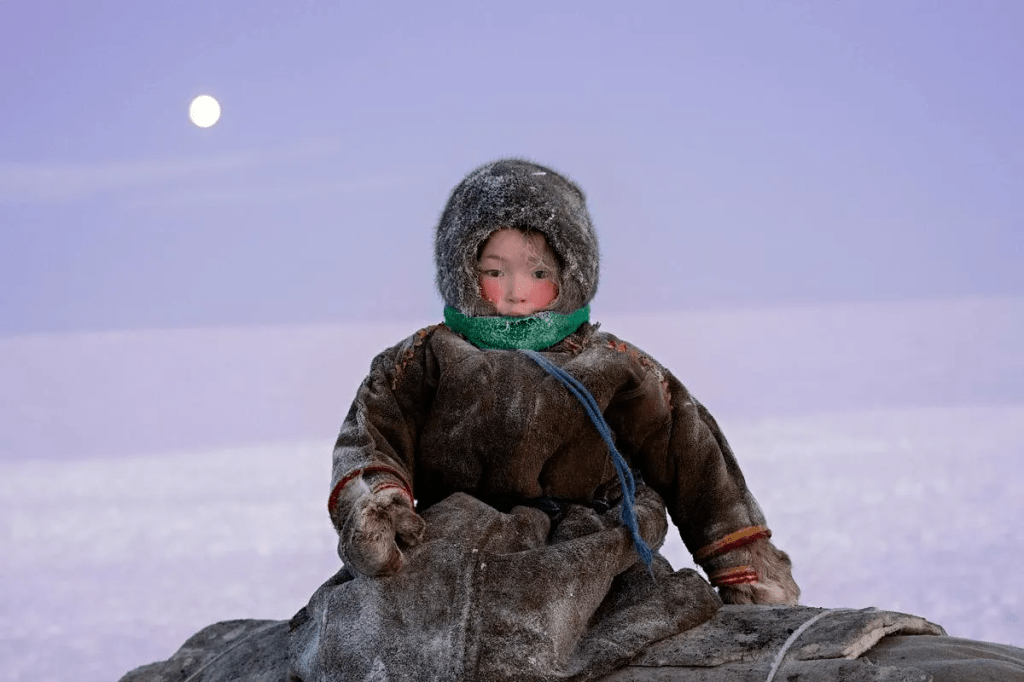
“Shades of white,” 3rd Prize, Yamal peninsula, Siberia, Northern Russia Nicola Ducati – People Photography Awards, The Independent Photographer
The photo above, winner of the third prize and $400, is one of the series “Shades of white” and was taken in the Yamal peninsula, Siberia, Northern Russia, where the air is thin and the polar day is very short.
For 4 1/2 hours, the light becomes magical and the colors of everything are perfect pastel against the artic sky, with delicate and unreal shades.
This land is inhabited by the Nenets people, nomadic reindeer herders who, guided by the seasonal cycles and the needs of their animals, migrate incessantly in an infinite circle of movements between ice, frozen rivers and incessant winds in search of new pastures in the most remote tundra. The hostile environment didn’t stop their innate adaptability and gave them prosperity for millennia.
“The soft polar light accentuates frosted textures and the child’s rosy cheeks, underscore both the harshness of the environment and the resilience of those who call it home,” the editors wrote. “It tells a powerful story of a people who have forged a life in one of the planet’s most unforgiving regions — but a people whose future remains uncertain.”
“Puzzled,” 2nd Prize, Western Mongolia Alessandra Manzotti – People Photography Awards, The Independent Photographer
A curious Kazakh nomad from Western Mongolia stops his truck to find out what a group of Westerners are doing walking in this remote and desolate stretch of land in the middle of a bitterly cold winter.
“This image captures the spirit of curiosity and resilience that defines life in remote Mongolia,” says McCurry. “The composition is powerful, with the truck and its vibrant blue color creating a striking contrast against the muted tones of the barren landscape. The candid expressions of both the nomad and the dog evoke a sense of warmth and connection, even in a harsh and unforgiving environment. The attention to detail, like the weathered texture of the truck and the distant herd in the background, adds depth to the story. It’s a beautiful balance of humanity and environment, which makes it a memorable piece.”
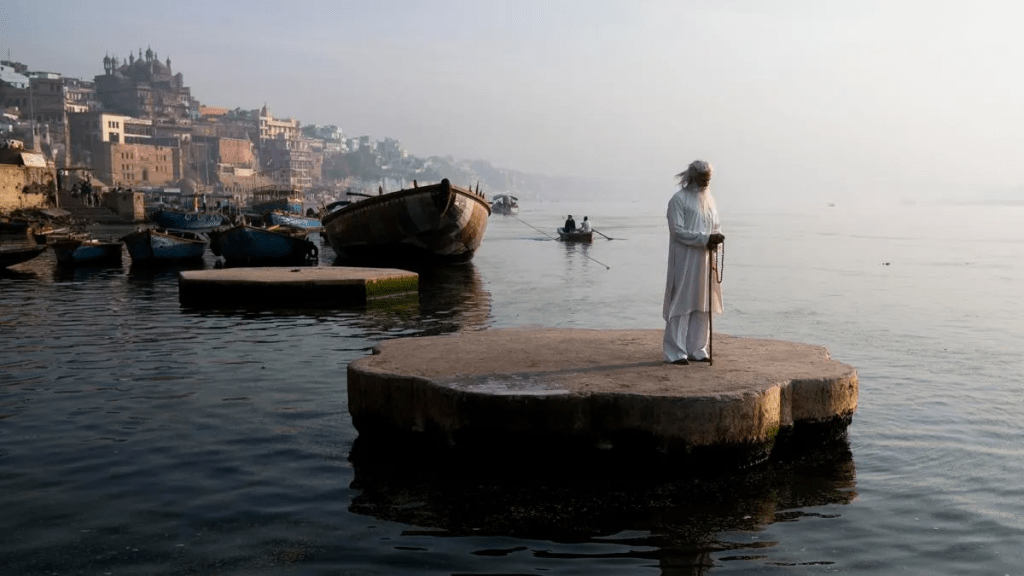
Contemplation, 1st Prize, Ganges River, Varanasi, India Mohammad Kamal – People Photography Awards, The Independent Photographer
A lone Sadhu stands pensively at the edge of a platform in the Ganges River in Varanasi, India. The image “Contemplation” , taken by photographer Mo Kamal in Varanasi, India, won first prize and $1,000.
“This image embodies a profound sense of stillness and spirituality, which perfectly captures the essence of Varanasi and the sacred Ganges,” said McCurry.“The man’s serene pose, framed against the soft morning light, evokes a sense of timelessness and introspection. The photograph is a poetic depiction of solitude and faith.”
“Andean Motherhood,” Finalist, Peruvian Andes Jimmy Strouse – People Photography Awards, The Independent Photographer
In the Peruvian Andes, a mother carries her baby in a traditional bag. “The backdrop of rugged mountains just added to the beauty, giving a glimpse into the rich traditions of indigenous life,” Jimmy Strouse explains. “After showing her the photo on my camera, she nearly started crying, and it hit me: She probably doesn’t see many photos of herself, if ever.”
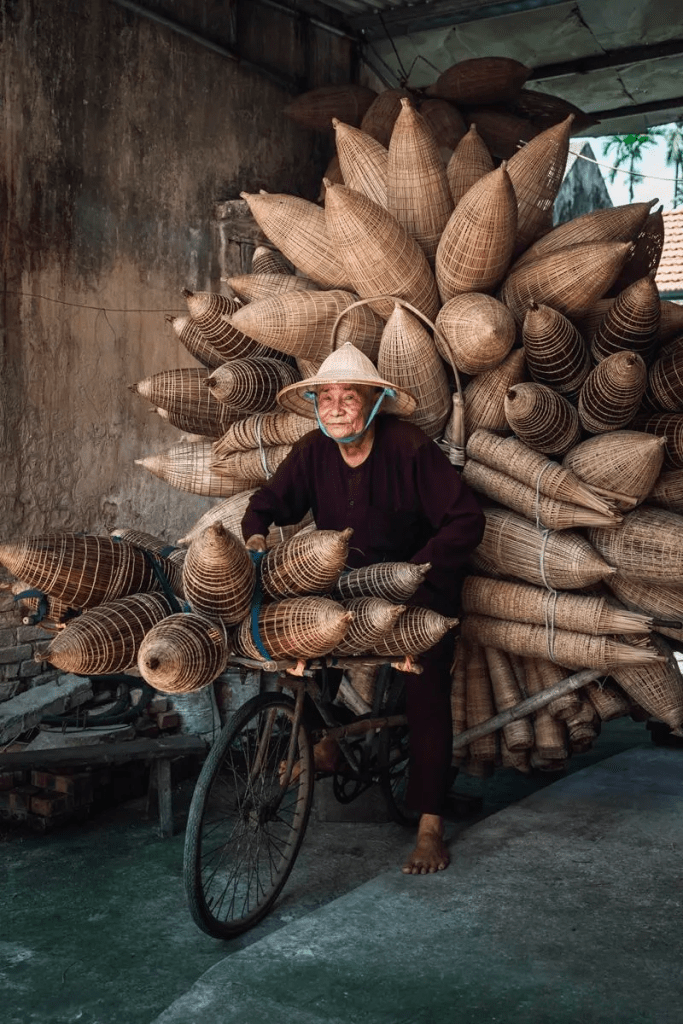
“The Art of Fish Traps,” Finalist, Thu Sy, Vietnam Vincenzo Avallone – People Photography Awards, The Independent Photographer
“During my journey, I had the opportunity to visit Thu Sy, a village in Vietnam known for its artisanal production of fish traps,” Vincenzo Avallone explains. “In this photo, I captured a local elderly man transporting an incredible number of fish traps on his bicycle.
“Villamar,” Finalist, Villamar, Bolivia Michael Murray – People Photography Awards, The Independent Photographer
In a small settlement outside Villamar, Bolivia, a clothes maker pauses for a portrait.
“Shore Bound,” Finalist, Ladakh region, India Wasim Malik – People Photography Awards, The Independent Photographer
This is Lamo, a nomadic woman from the serene Changthang region in Ladakh, India, where the vast highlands meet a life of simplicity and resilience.
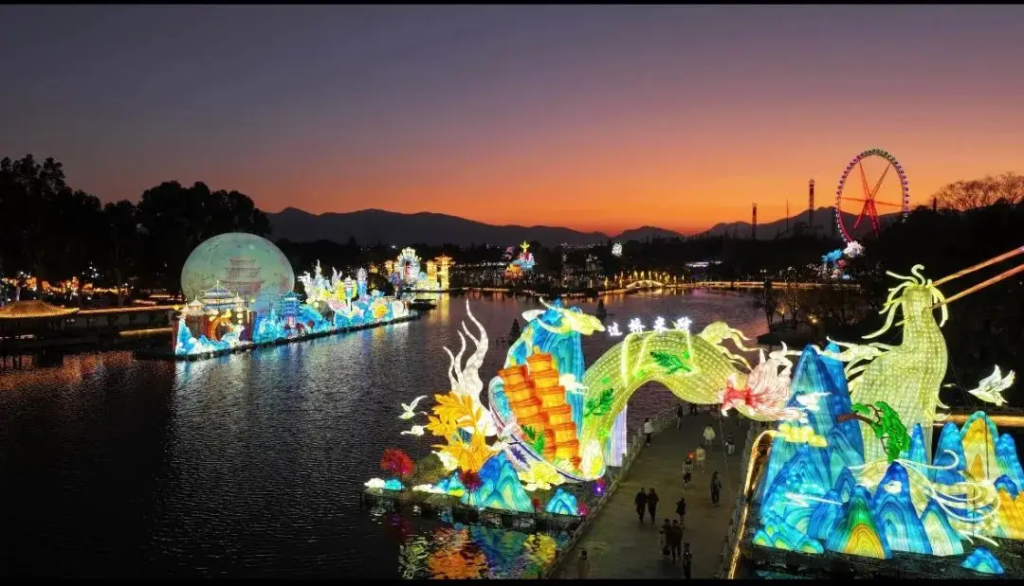
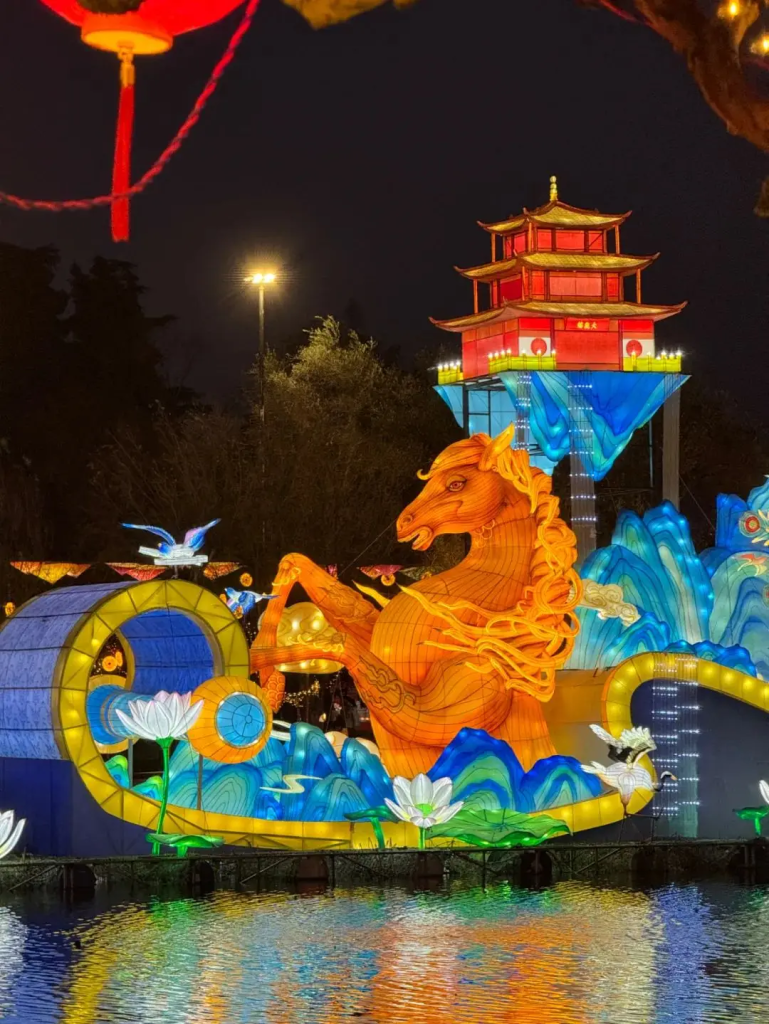
The Chinese Lunar Lantern Festival, also known as the Yuan Xiao Festival, is a vibrant celebration that marks the end of the Chinese New Year festivities. This enchanting festival, rich in history and culture, is an opportunity for families to come together, enjoy delicious food, and marvel at the stunning displays of lanterns that illuminate the night sky.
The Origin of the Lantern Festival
The Lantern Festival is a traditional Chinese holiday that dates back over 2,000 years to the Western Han Dynasty. The custom of enjoying lanterns began during the Ming Dynasty under Emperor Ming, who promoted Buddhism. It is said that on the 15th day of the first lunar month, monks would observe Buddhist relics and light lamps in reverence. In response, the emperor ordered that lamps be lit in the palace and temples on this night, encouraging both nobles and commoners to hang lanterns. Over time, this Buddhist ceremonial festival gradually evolved into a grand folk celebration. The festival has transitioned from the imperial court to the general public and expanded from the Central Plains to the entire country. As the tradition evolved, lanterns became a central feature of the celebrations, symbolizing hope, prosperity, and good fortune.
How the Chinese Celebrate the Festival
The Lantern Festival is celebrated with various customs and activities that bring communities together. Here are some of the most cherished traditions:
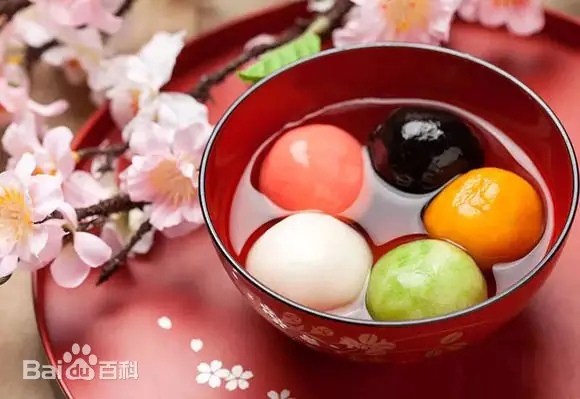
Eating Tangyuan: A key highlight of the festival is the consumption of tangyuan, sweet glutinous rice balls filled with various fillings such as sesame paste, red bean paste, or peanut butter. These round dumplings symbolize family unity and togetherness.
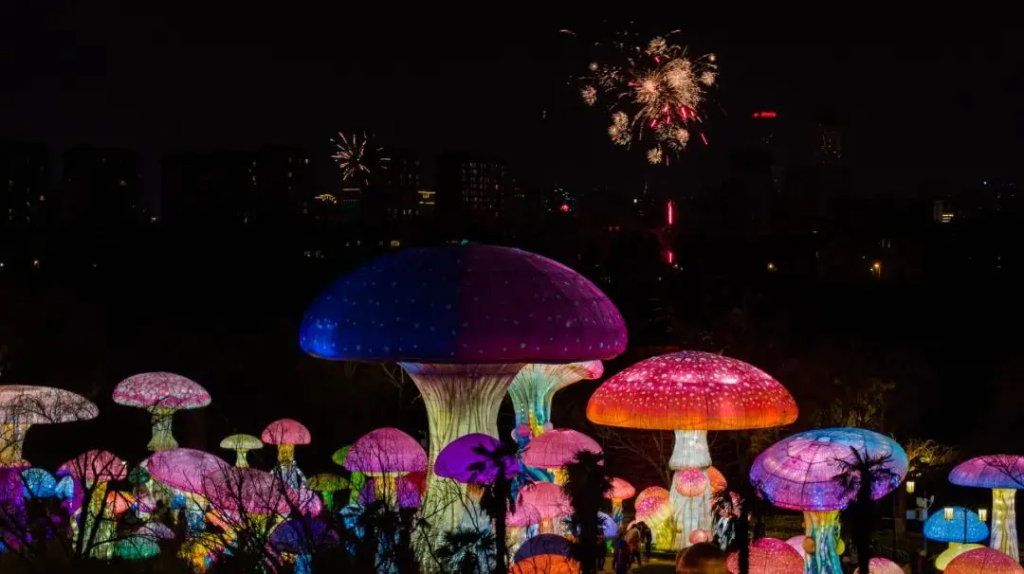
Fireworks: In many regions, fireworks are set off to celebrate the occasion, adding to the festive atmosphere and marking the end of the New Year celebrations.
Lion Dances and Dragon Dances: Traditional lion and dragon dances are performed to ward off evil spirits and bring good luck. The rhythmic drumming and vibrant costumes add to the festive spirit.
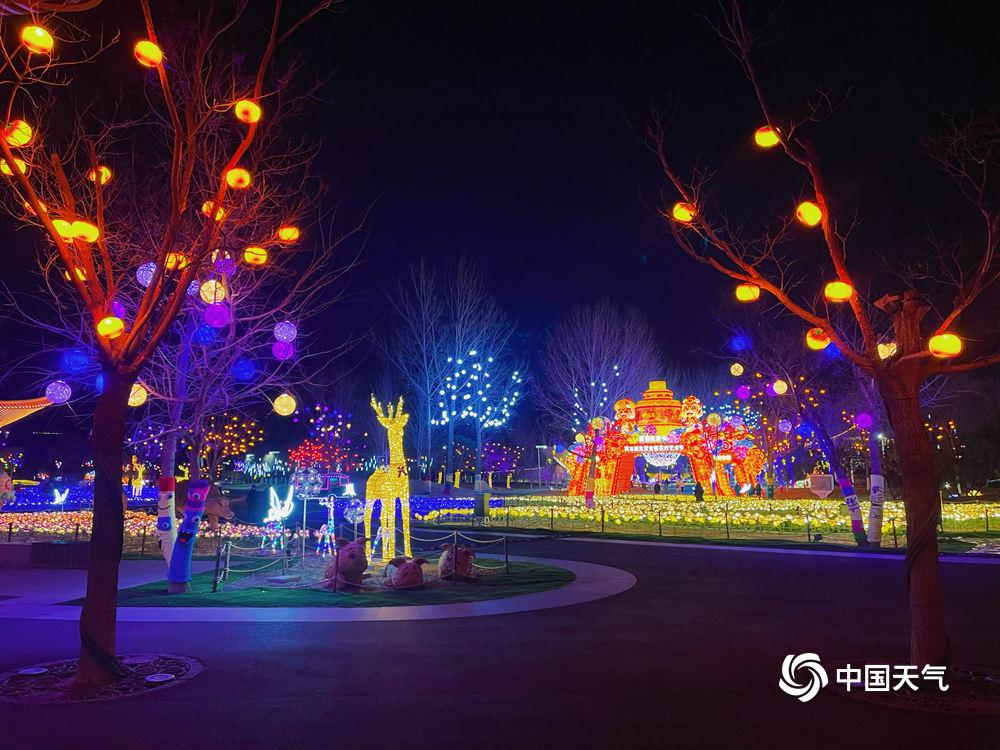
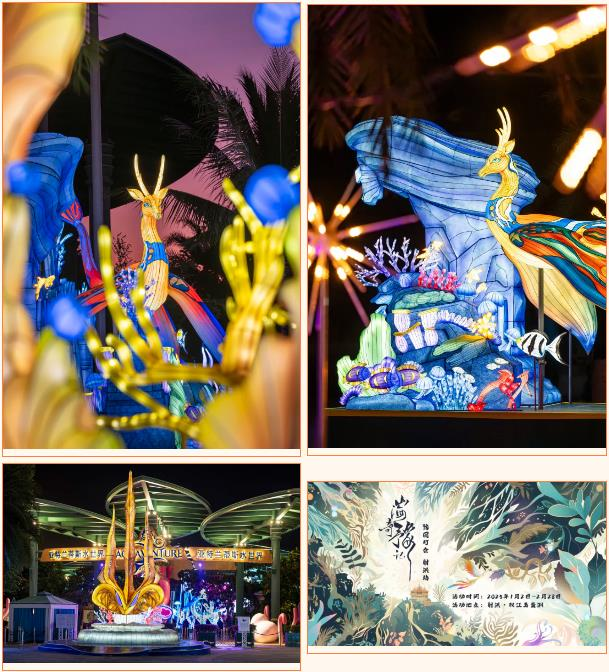
Lantern Displays: People of all ages create and display colorful lanterns, often in intricate shapes and designs. These lanterns can be found in parks, streets, and temples, creating a magical atmosphere.
Solving Lantern Riddles: A fun and engaging activity during the festival is solving riddles written on lanterns. Families and friends gather to test their wits and enjoy the playful competition.
The Most Beautiful Places to See Lanterns
If you’re looking to experience the beauty of the Lantern Festival, several locations across China are renowned for their stunning lantern displays:
Beijing: The city’s parks, such as the Yuanmingyuan Park and the Temple of Earth Park, host impressive lantern displays, attracting thousands of visitors each year.
Shanghai: The Yuyuan Garden in Shanghai is transformed into a lantern wonderland, featuring elaborate designs and a lively atmosphere, making it a must-visit during the festival.
Hangzhou: Known for its picturesque West Lake, Hangzhou hosts beautiful lantern displays that reflect off the water, creating a breathtaking sight.
Chaozhou: This city in Guangdong Province is famous for its traditional lantern-making techniques, and visitors can witness the craftsmanship and creativity of local artisans.
Beijing
Beijing
Beijing
HangZhou
Shanghai
Shanghai Yuyuan Lanter Festival
ChaoZhou
Chaozhou
Chaozhou
Chaozhou
Kunming Da Guan Lou
Kunming Da Guan Lou
The Chinese Lunar Lantern Festival is a captivating celebration that brings together tradition, culture, and community. As families gather to enjoy delicious food, admire beautiful lanterns, and participate in lively activities, the festival serves as a reminder of the importance of unity and hope. Whether you’re in China or celebrating from afar, the Lantern Festival is a time to reflect on the past year and look forward to the future, illuminated by the light of countless lanterns.
Bamboo of Noble Integrity By Professor Yuhua Shouzhi Wang
Bamboo, as a plant with profound cultural significance, carries rich and diverse symbolism. It represents resilience, noble character, vitality, humility, modesty, harmony, and unity. With its graceful posture and vibrant green appearance, bamboo evokes a sense of freshness and refinement. Though its exterior is simple and unadorned, it embodies a noble inner quality. This unique temperament has made bamboo a symbol of integrity and uprightness. In ancient times, it often served as a metaphor in the writings of scholars and poets for individuals of high moral character and self-discipline.
For the Chinese, admiration for bamboo has endured throughout history. Countless poets and literati have celebrated its virtues, grouping it alongside plum blossoms, orchids, and chrysanthemums as one of the “Four Gentlemen,” embodying the character and aesthetic spirit of the Chinese people. Bamboo’s simplicity belies its profound cultural significance. In traditional Chinese culture, it is a symbol of auspiciousness and virtue, carrying layers of meaning that resonate deeply with the human spirit.
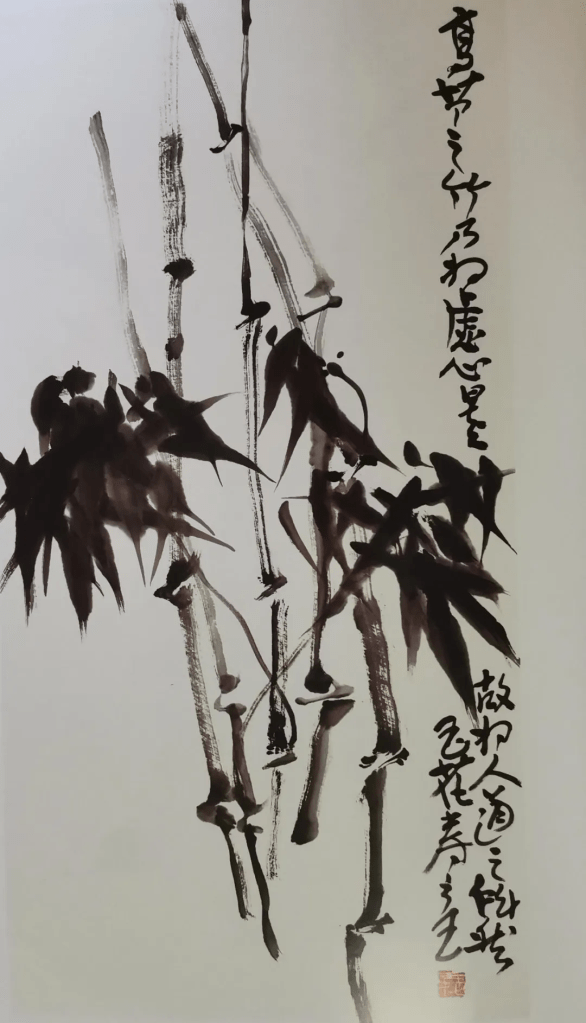
Professor Wang’s Chinese paintings of bamboo are a testament to her extraordinary ability to bring this cultural icon to life. Each stroke captures the essence of bamboo’s resilience and unyielding spirit while emphasizing its humility and integrity. Her works not only celebrate the elegant charm of bamboo but also evoke its vibrant vitality and enduring strength.
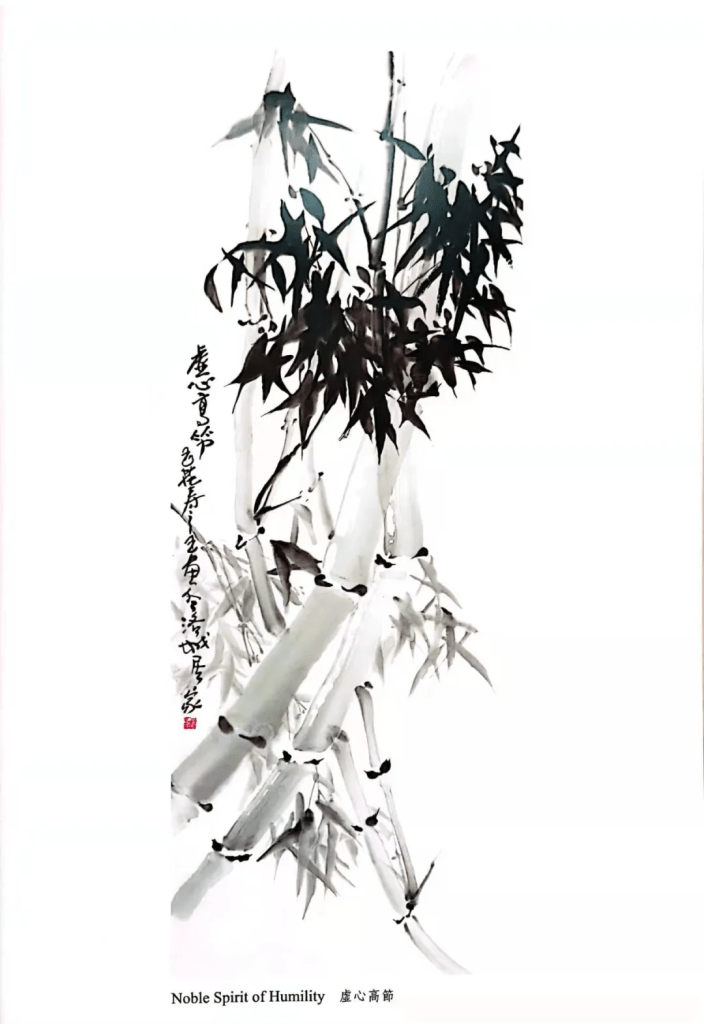
Professor Wang’s Artwork “Noble Spirit of Humility”
The artwork “Noble Spirit of Humility“ depicts a cluster of bamboo deep within a dense forest. Two tall and robust bamboo stalks stand prominently in the foreground, their lush branches and leaves rendered in bold ink. Behind them, a few smaller bamboo stalks, delicately painted in lighter ink, appear to lean on the larger ones, as if embraced by Mother Earth. Together, they form a unified group, advancing and retreating in harmony.
Look closely, and you’ll see their branches intertwine amidst the clouds, and their roots tightly clasp together underground. Neither torrential rain nor fierce winds can break them down. The bamboo’s unyielding resilience is vividly and profoundly brought to life.
Dr. Yuhua Shouzhi Wang was recognized and chronicled in the United States Congressional Record as “a great artist and sculptor,” and “treasure of the world.” In 2013, President George Christophides of the World Federation of UNESCO Clubs, Centers, and Associations (WFUCA) conferred the title “2013WFUCA” to one of her artworks.
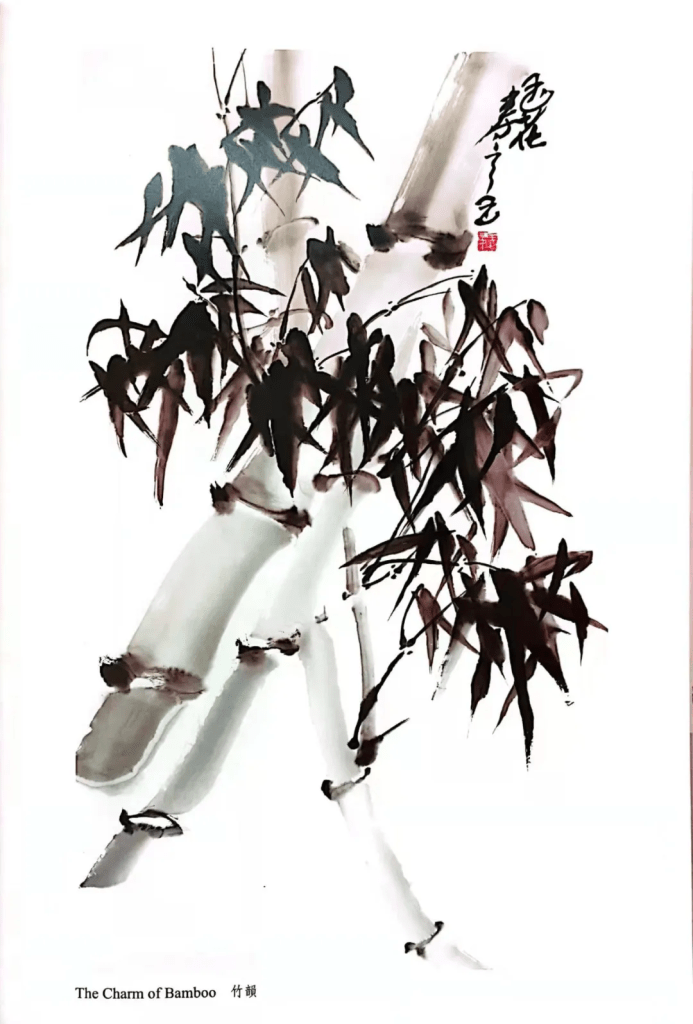
The artwork “The Charm of Bamboo” conveys the fresh and elegant essence of bamboo, exuding a gentle and harmonious beauty. It seems to remind us that in life and work, we should not only take responsibility but also foster an atmosphere of harmony and mutual respect. The use of varying ink tones, alternating between light and dark, strikes a balance of simplicity and ingenuity, greatly enhancing the dynamic energy of the piece.
Dr. Yuhua Shouzhi Wang’s bamboo paintings are truly exceptional. Through her art, she vividly conveys bamboo’s noble qualities, leaving viewers with a deep appreciation for this remarkable plant and its timeless symbolism. Her work serves as a bridge between nature and art, reminding us of the profound lessons we can draw from the natural world.
Like Pinocchio, everyone sometimes tells a lie. Most people don’t lie often, science finds. But research shows that even small lies can take a toll on your brain. MALERAPASO / GETTY IMAGES
Most of us have told a lie at one time or another. Some lies are harmful. Others, like small fibs to avoid hurting someone’s feelings, are mostly harmless. Some lies are even intended to protect others. But no matter the type of lie, it takes a surprising amount of brainpower to pull it off, which can be costly.
Lying requires significant mental effort. Imagine you’re late to class and decide to lie about why. You might say, “I had to stop by the library and pick up a book.” When your teacher asks, “The book I assigned last week?” you must quickly decide how to respond. You may say, “No, it was a different book,” and now you have to be ready with another title. This constant mental juggling uses up brainpower that could be spent on more important tasks.
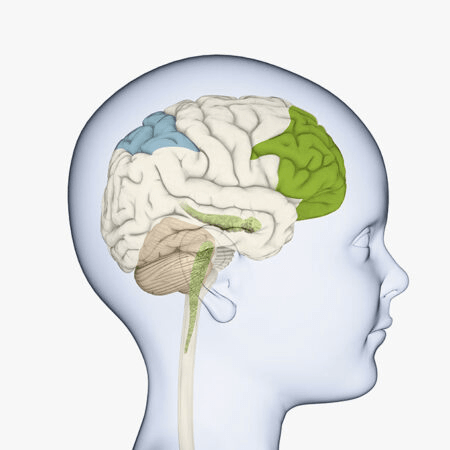
A lot of this mental work is done in the prefrontal cortex, the part of the brain responsible for working memory, planning, problem-solving, and self-control. Using these resources for lying means they are not available for other tasks, like solving math problems or remembering important facts.
Lying also has social consequences. People generally value honesty and don’t like liars. If people view you as untrustworthy, it can damage your relationships. Even well-intended lies, such as insincere compliments, can backfire. If your friends realize they can’t trust your compliments, those compliments become meaningless.
Most people don’t lie very much, says Timothy Levine, a psychologist at the University of Alabama at Birmingham who studies deception. His research shows that almost three-quarters of people rarely lie, and 90 percent of the lies they tell are “white lies.” However, Levine’s research also shows that while most people don’t lie often, a few lie a lot. The top one percent of liars, according to Levine, tell more than 15 lies per day. Some chronic liars are insecure. Others may lie about their accomplishments because they’re conceited or overly impressed with themselves. Still others lie to take advantage of people — perhaps even to cheat them or to steal from them.
The brain’s prefrontal cortex, behind the forehead (shown right, in darker green) isn’t fully mature until we are in our 20s. That’s a problem for adolescents. This part of the brain helps us understand risk. It’s also in charge of a lot of our higher-level thinking, such as planning and self-control.
DORLING KINDERSLEY/GETTY IMAGES PLUS
Lying is especially hard for young people because their prefrontal cortex is not fully developed until around age 25. This part of the brain helps with higher-level thinking, such as planning and self-control. When it’s busy with tasks related to lying, it has a harder time doing other important tasks.
Some lies never stop, like those told by spies or people hiding a difficult home life. Pretending to be something you’re not almost every hour of every day is mentally draining and can have long-lasting effects. Over time, this kind of lying uses up the brain resources needed for thinking and planning.
Most people value honesty, and research shows that honest people build social capital, or goodwill, within their communities. Trust is essential for healthy relationships and a well-functioning society.
Lying may seem easier in the short term, but it has significant cognitive and social costs. By striving to be honest, we can save mental energy and build stronger, more trusting relationships.
Neil Garrett, a neuroscientist at the University of East Anglia in Norwich, England, has studied how emotions affect our willingness to be dishonest. He points to a study where students were given a beta blocker, a medicine that dampens emotions. These students were more likely to cheat on an exam than those who didn’t receive the medicine, possibly because they felt less fear or anxiety about being dishonest.
Garrett and his team also examined the relationship between lying and activity in the amygdala, the part of the brain that processes emotions. They conducted an experiment where volunteers played a game to make money by lying to a partner. Brain scans showed that the amygdala was very active when participants first lied. However, as they continued to lie, activity in the amygdala decreased, and the participants lied even more. These findings were reported in Nature Neuroscience.
In one study, students were more likely to cheat on exams when they’d taken a drug that mutes emotions. ANDY SACKS/THE IMAGE BANK/GETTY IMAGES PLUS
Garrett suggests this brain effect might be similar to how our sense of smell adapts to strong odors. Initially, a strong smell is overwhelming, but after a while, we barely notice it. Emotions might work similarly; the more you lie, the less you feel the uncomfortable emotions like fear or guilt. In other words, lying becomes easier the more you do it.
Nearly all cultures value honesty, notes Victoria Talwar, a psychologist at McGill University in Montreal, Quebec. She suggests that creating a culture that reinforces the value of honesty can help. One strategy is to support friends while still being truthful. “When people’s friends are truthful with them,” she says, “it creates a culture of honesty among them,” which builds stronger friendships.
Jennifer Vendemia, a neuroscientist at the University of South Carolina, emphasizes that lying lessens when there are consequences for dishonesty. However, she adds that rewarding truth-telling is more effective than punishing lying. This is especially important when people share significant truths about themselves. “Being able to tell the truth to a friend is rewarding,” she says. “It feels good.”
Most people know that lying is generally bad and can have serious consequences. Science is now revealing how dishonesty impacts the brain and undermines the trust essential for strong relationships.
Landscape painting is a direct cultural expression of Chinese philosophy. Throughout history, eminent painters such as Dong Yuan, Ju Ran, Zong Bing, Guo Xi, Huang Gongwang, Shi Tao, and Bada Shanren have all used landscape painting to express their extraordinary spiritual realms. Unlike the representational approach of Western painting, landscape painters observe the myriad phenomena of heaven and earth, contemplate the vastness of the universe, and use their hearts to transform their inner landscapes into brushstrokes, imbuing their works with the majestic spirit of nature. Beneath the bold and uninhibited brushstrokes lies the creation of inner beauty, revealing a unified spiritual realm through the language of painting.
The quality of ink and brushwork is paramount in judging the merit of a Chinese painting. Indeed, without mastery of ink and brush, there would be no Chinese painting. The importance of ink and brush in Chinese painting is akin to that of cells in life. From mountains and rivers to figures and forests, all are realized through the use of ink and brush. The concept of bone structure and brush technique refers to the artist’s outlining, texturing, and dotting within the painting.
H.H.Dorje Chang Buddha III landscape paintings in Fanjuan Style exhibit a natural and vigorous brushwork, with bold and powerful strokes. The ink’s varying degrees of wetness and dryness create distinct layers and a lively rhythm in the composition. The rich and vivid atmosphere in the paintings brings joy and resonance to viewers, touching their hearts deeply. The exceptional quality of ink and brushwork in these paintings is truly breathtaking.
Here, let us appreciate some of His Holiness’s landscape paintings in the Fanjuan style, a style created by His Holiness himself.
The “Fanjuan” Style Numerous brush strokes exude an air of scholarly refinement. Despite the complexity of the strokes, there is no sense of disorder; instead, they reflect artistic talent rooted in profound and extensive knowledge.
“Ferrying the Xia River” is an ink-and-wash painting created in 1993 by H.H.Dorje Chang Buddha III. While predominantly utilizing black ink, the brush strokes encapsulate the essence of both painting and calligraphy. Despite the monochromatic palette, the sense of depth and proximity is distinctly rendered. Renowned artist Mr. Huang Binhong once remarked, “Black ink pervades like the vastness of heaven and earth. A single sheet of painting paper can unfurl myriad mountains.” Crafted seemingly effortlessly within a few days, this masterpiece is the culmination of nearly a century of brushwork mastery.
The painting boasts a richly layered appearance, its thick black ink imbued with elegance, resulting in a masterfully conceived and captivating image. Amid this tranquil setting, sounds reverberate from thatched mountain cottages to boats on the water and back again.
In the artwork, a distant view unveils a series of lead-gray mountains, nestled against a lively stream at their base. Rocks, trees, and vegetation seamlessly merge with the mountain range, their tones resembling the clarity of a mountain stream’s deep pool. Though mysterious and profound, the depths of the pool are subtly visible.
The rustic palette, layered landscapes, and deep ink colors infuse the scene with a primordial ambiance. It feels like dawn, with small boats beginning to glide along the cold stream at the mountain’s foot. The entire composition radiates a misty spring ambiance, with the moist spring tide enveloping the scene. At the painting’s base, diminutive figures become the most captivating element. Despite their scale and near indiscernibility, their silhouettes vividly convey distinct personalities and ages, infusing the composition with a human touch. These lively figures serve as the painting’s eyes, enriching the work with a profound aesthetic sensibility. Truly exceptional artists possess a pure and sacred artistic vision.
Clouds, Mountains, and Water Seem To Sing a Song of Autumn
“Clouds, Mountains, and Water Seem To Sing a Song of Autumn” is a landscape painting featuring misty mountain ranges, clear rivers, rushing waterfalls, icy mountain springs, simple farmhouses, scenes of honest fishermen fishing, and humble farmers gathering firewood on the mountainside. Through this artwork, H.H.Dorje Chang Buddha III vividly captures the raw beauty of nature and the diverse lives of the people. It is a rare masterpiece of landscape painting, grand and expansive, with a profound connection to the pulse of life. The bold brushstrokes create a rich and fresh atmosphere, with a lush ink texture. Within the valleys lie a few buildings, nestled among red autumn maples, promising tranquility and serenity. The distant mountains, shrouded in mist and haze, inspire boundless imagination and contemplation.
“Ancient Village at Remote Mountain Spring” is a small-scale painting created by H.H. Dorje Chang Buddha III in last decade. An artist who saw that painting said, “Although ‘Ancient Village at Remote Mountain Spring’ is as small as only one-fourth of the size of the palm of a hand, one can see curling mist, mountains, and cliffs. It truly is a magnificent landscape scene that expresses a lofty and broad artistic conception. The energy of the cloudy mountains is palpable. Such a tiny painting seems to contain thousands of mountains. It is not merely an ink-wash painting. Rather, it is a vivid landscape scene that is brimming with vitality!”
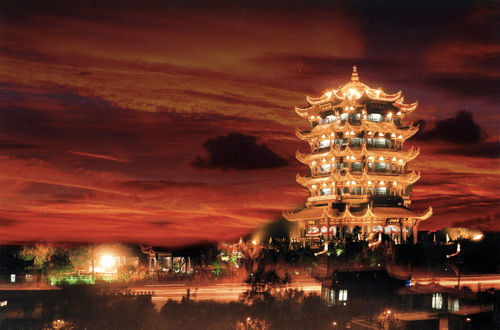
Perched majestically atop Snake Mountain, Yellow Crane Tower stands as a beacon of cultural significance in Wuhan, Hubei Province, rivaling the fame of Yueyang Tower in Hunan Province and Tengwang Pavilion in Jiangxi Province. With origins tracing back to the Three Kingdoms period in 223 A.D., this architectural marvel is more than just a sightseeing spot; it’s a testament to China’s rich history and enduring legacy.
Rising 51.4 meters into the sky, Yellow Crane Tower’s five floors house a treasure trove of murals, couplets, and cultural relics, each floor a testament to centuries of artistry and inspiration. The tower is not an isolated structure; it is surrounded by auxiliary buildings, including pagodas, memorial arches, and pavilions, which add to its grandeur and mystique.
Throughout history, Yellow Crane Tower has attracted luminaries from all walks of life, drawn by its ethereal beauty and historical resonance. Poets and writers, including the esteemed Cui Hao, have penned timeless works inspired by the tower’s allure. Cui Hao’s masterpiece, “Yellow Crane Tower,” resonates across generations, immortalizing the tower’s mystique in poetic verse.
Legend intertwines with reality in the tale of Yellow Crane Tower’s origins, where an act of kindness transforms a humble innkeeper’s life forever. The story unfolds in the ancient city of Wuhan, where a benevolent innkeeper named Old Xin encountered a shabbily dressed customer. Unperturbed by the visitor’s destitution, Mr. Xin welcomed him daily, offering him a glass of wine without expecting payment.
For six months, the mysterious customer continued to frequent the inn, accumulating a debt that Old Xin graciously overlooked. One day, the indebted visitor revealed his true identity as a magical being. He presented a drawing of a yellow crane, which came to life as he played a flute and sang. The enchanted crane danced along with the music, captivating the onlookers and turning the inn into a spectacle.
This magical partnership continued for ten years, bringing wealth and prosperity to Mr. Xin. When the mysterious customer returned one day, Old Xin, overwhelmed with gratitude, offered to support him in any way possible. However, the magical visitor had no material desires. Instead, he played a few tunes on his flute, and white clouds descended from the sky, carrying the drawing of the crane. With a graceful ascent, the customer mounted the crane and soared into the sky, leaving behind a tale imbued with traditional Chinese wisdom—kindness is a virtue that will always be repaid.
To express his gratitude and immortalize this magical encounter, Mr. Xin erected a tower on the spot and named it the “Yellow Crane Tower.”
Despite enduring centuries of upheaval and destruction, Yellow Crane Tower stands resolute, a symbol of resilience and cultural continuity. From its inception during the Three Kingdoms to its reconstruction in modern times, the tower has weathered the storms of history, emerging stronger with each passing era.
The tower’s architectural splendor is matched only by its cultural significance. Each floor tells a story, from legends of ancient cranes to the poetry of Tang Dynasty luminaries. Visitors are treated to panoramic views of the Yangtze River and Wuhan cityscape, offering a glimpse into China’s past and present.
It stands 51.4 meters (about 168 feet) high and has five floors
Around the main tower there are many other buildings, including the Sheng Xiang Pagoda and the temple gate. Each storey is decorated with traditional upturned eaves, but each one has a different style. The ground floor is a tall, wide hall. The midmost caisson ceiling stands over 10 meters high. On the front wall is a huge ceramic mural painting of a white cloud and a yellow crane. A pair of 7-meter-long inscribed tablets hang on the posts on both sides. The front wall of the second floor holds a marble inscription of Tang Dynasty poet Yan Baojin’s ‘Note on the Yellow Crane Tower’. On each side of it are mural paintings. One is ‘The Town that Sun Quan Built’. It describes the history of the Yellow Crane Tower and Wuchang town. The other is ‘Zhou Yu Made a Feast’, which tells the story of the Three Kingdoms celebrity’s visit to the tower.
With yellow upturned eaves, each floor seems to have been designed to resemble a yellow crane spreading its wings to fly.
As visitors explore Yellow Crane Tower, they encounter a journey through time and culture. Each floor is a testament to China’s literary and artistic heritage, inviting travelers to immerse themselves in centuries of tradition and innovation.
Outside the tower, bronze cranes stand sentinel, silent witnesses to the ebb and flow of history. Memorial gateways and pavilions beckon travelers to explore further, inviting them to partake in the tower’s timeless legacy.
Yellow Crane Tower is more than just a scenic spot; it’s a living testament to China’s cultural resilience and artistic ingenuity. As visitors stand atop its lofty heights, they are reminded of the enduring power of human creativity and the timeless allure of the written word.
In the heart of Wuhan, Yellow Crane Tower stands as a testament to the enduring spirit of China’s cultural heritage. Its towering presence serves as a beacon of inspiration for generations to come, inviting travelers from near and far to embark on a journey through time, tradition, and a touch of enchantment.
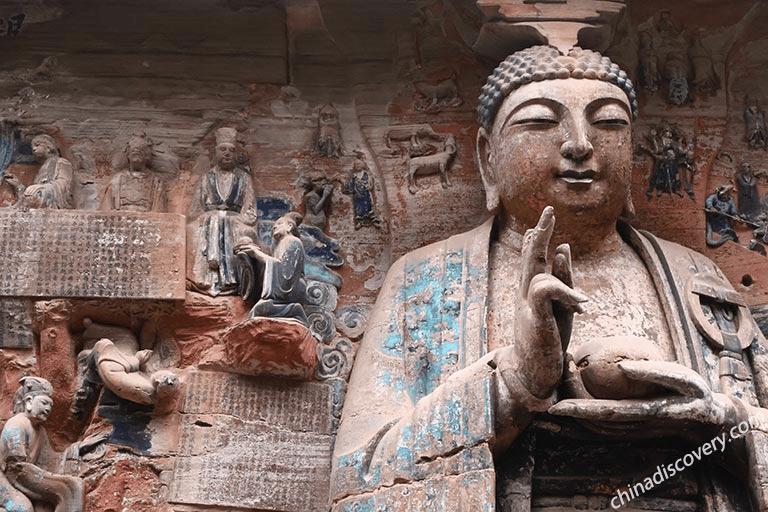
Detail of reclining Buddha, Parinirvana of Shakyamuni attended by bodhisattvas, Mt. Baoding, Southern Song Dynasty, Dazu, China, 102′ long (photo: Mulligan Stu, CC BY 2.0)
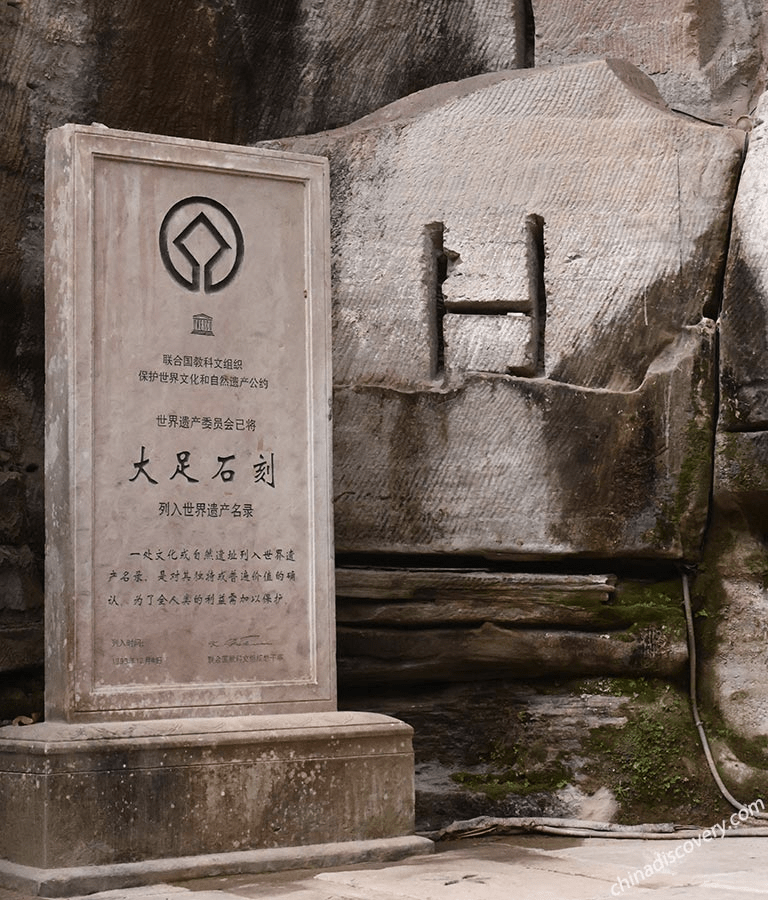
With a history spanning over 1,300 years, the Dazu Rock Carvings represents the pinnacle of grotto art worldwide from the ninth to the thirteenth century. The exquisite and varied cliff-side sculptures at Dazu caves provide outstanding proof of the harmonious fusion of Buddhism, Taoism, and Confucianism in civil. In 1999, the Dazu Rock Carvings was inscribed on the World Heritage List by UNESCO.
Enjoying a comparable reputation with the top four grottoes in China (Mogao Grottoes, Yungang Grottoes, Longmen Grottoes, and Maijishan Grottoes) and being rated as one of the eight grottoes in the world, the Dazu Rock Carvings (“大足石刻” in Chinese), also known as Dazu Caves or Dazu Grottoes, located 167km from the city center of Chongqing. It is the one and only UNESCO World Cultural Heritage Site in Chongqing municipality. The Dazu Rock Carvings consists of 75 cave temple sites, including more than 50,000 statues, being protected for their historical, artistic, and scientific values at different levels, representing the pinnacle of Chinese cave temple art between the 9th and 13th centuries. Among them, rock carvings of Baodingshan (宝顶山), Beishan (北山), Nanshan (南山), Shimenshan (石门山), and Shizhuanshan (石篆山) are exquisitely sculpted with the most distinctive style.
The Dazu Rock Carvings started in the early Tang Dynasty, went through the late Tang Dynasty and the Five Dynasties, and then experienced its golden time in the Northern and Southern Song Dynasty. At the time when cave art in northern China fell into decay, the Dazu Rock Carvings undoubtedly created another peak in the history of Chinese cave art, extending the history of Chinese cave art for more than 400 years. Since then, there have been no such large-scale rock carving events in China or even in the world. Therefore, the Dazu Rock Carvings are also known as the last monument and swan song in the history of the world’s grotto art.
UNESCO Stele of the Dazu Rock Carvings
Differing from famous royal grottoes in the north, the religious cliff inscriptions in Dazu show distinctive features of nationalization, secularization, and everyday life, reflecting the remarkable development and changes in folk religious beliefs. Thus, the Dazu caves have the irreplaceable historical, artistic, scientific, and connoisseurship values of grottoes of the previous generations. Another highlight that has to be mentioned is that the statues there provide outstanding evidence of the harmonious synthesis of Tantric Buddhism, Taoism, and Confucianism. Visitors can see separate stone carvings as well as the unity caves reflecting the three religions’ confluence and ruling together. Moreover, thanks to the southern hinterland location of the Dazu Rock Carvings, this cultural heritage stays far away from man-made sabotage, retaining the integrity of the statues, the original characteristics and values of the period when the carvings were created.
Rock carvings in Dazu are mainly located across five mountains, each containing distinct sets of grottoes, among which the cliff-side sculptures on Baodingshan and Beishan are best known and considered to be the model of the late Chinese grottoes statue art. The pictures of the Dazu rock carvings that we commonly find online were mostly taken at the Baodingshan Scenic Area, which is also the must-visit site for a Dazu Rock Carvings tour.
Baodingshan Rock Carvings (Baodingshan Scenic Area)
Fifteen kilometers northeast from Dazu center, Baodingshan Rock Carvings was constructed by the famous monk Zhao Zhifeng in the Song Dynasty for more than 70 years. As one of the most famous Tantric Buddhist shrines in China, there is an old saying that goes like “Go North, climb the Emei Mountain; Go South, reach the Baoding Mountain.” The centerpiece of the Baodingshan rock carvings is the U-shaped Grant Buddha Bay, also known as Dafowan (“大佛湾” in Chinese). Nearly ten thousand statues are carved along the east, north, and south cliffs, which are approximately 500 meters in length and 8-25 meters high. Like a picture scroll with endless photographs, the content of Baodingshan rock carvings is mainly Buddhist scripture stories, each niche related to the other but not identical.
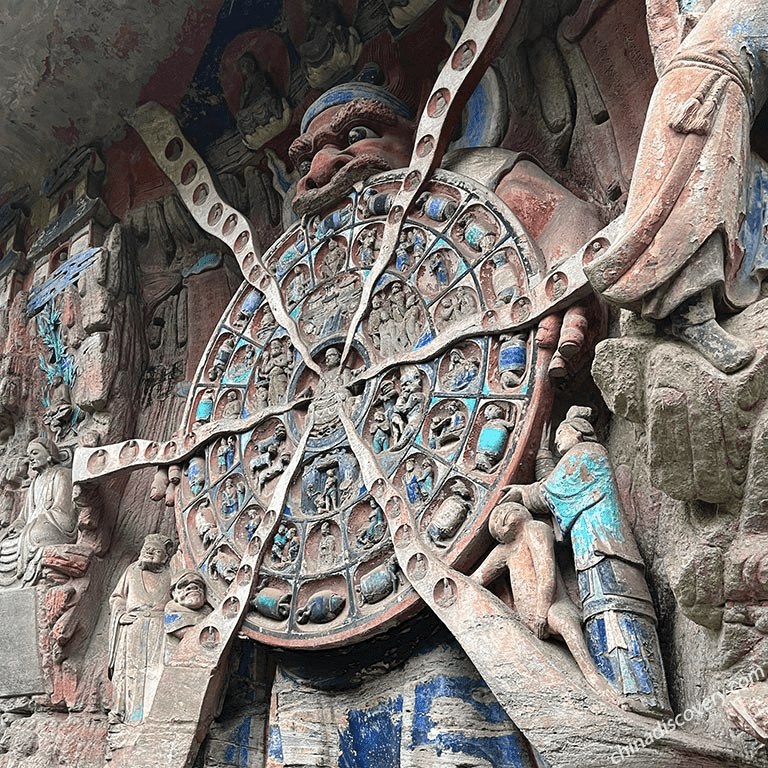
Dazu Rock Carvings – Buddhist Wheel of Life
Avalokitesvara with Thousand Hands
The Buddha statues at Baodingshan are novel in conception, skillful in carving, and rich in secular characters. Religious treasures come one after another, including the representative work – Niche of Sakyamuni Entering Nirvana, one of the wonders of Buddhist art in the world – Avalokitesvara with Thousand Hands, striking image of Buddhist Wheel of Life, scientific designs of Three Saints of Huayan School of Buddhism and Cave of Full Enlightment showed craftsmans’ ingenuity.
In addition, niche content and their expression approach are striving to visualize reality. For instance, Niche of Parental Love Sutra contains ten groups of carvings, including scenes like begging for a son, carrying a child, and going into labor, etc., depicting parental love in bringing up children with plots linking to each other as a picture-book. These carvings are vivid and impressive. They were the outcome after Buddhism had been localized in China.
The ox herding story
Located at the eastern end of the Great Buddha Bend, the ox herding tableau, shows a herdsman taming a disobedient ox—a traditional metaphor for the path to self-enlightenment and a popular theme among Ch’an Buddhist monks and painters in the Song Dynasty. The tableau is made up of eleven vignettes arranged horizontally along a 27-meter cliff wall.
Ox herding story (scene 1–2), Niche 30, Dafowan, Mt. Baoding, Dazu. Southern Song Dynasty (photos: G41rn8, CC BY-SA 4.0)
The first three vignettes each depict a lively interaction between a herdsman and an ox in a landscape setting. The herdsman represents the Buddhist practitioner while the ox refers to the practitioner’s potential to become a Buddha. As the ox turns its body away, the stocky herdsman uses force, grass, and a stick to tame the ox. The verses accompanying the scenes further recount these struggles.
Herdsmen embracing in the ox herding story (scene 5), Niche 30, Dafowan, Mt. Baoding, Dazu. Southern Song Dynasty (photos: G41rn8, CC BY-SA 4.0)
In the fourth and fifth vignettes, the ox is finally brought under control. The herdsman, featuring a wide, joyful smile, wraps his arms around his fellow herdsman while holding on to the ox with the rope in his hands.
In addition to the uncanny quality of grottoes’ masterpieces at Grant Buddha Bay (Dafowan), there are also many highlights you can’t miss while visiting Baodingshan Scenic Area:
Watch a 4K film with English subtitles to learn about the history and development of Dazu rock carvings, and enjoy an 8D view of spectacular grottos at the dome theater
Take a leisure stroll at Dazu Rock Carvings Museum (大足石刻博物馆) to gain insights into the whole thread of world cave temple art and the basic characteristics of Dazu Rock Carvings
Visit Shengshou Temple (圣寿寺) to admire the exquisite temple architecture, which was rebuilt at the Ming and Qing Dynasties.
Shengshou Temple & Dazu Rock Carvings Museum
Beishan Rock Carvings
1.5km north to Longgang Town of Dazu, with an altitude of 545.5m, Beishan is also called Longgang Mountain in the past. Beishan Rock Carvings is the initial of Dazu Rock Carvings. They were first created by Wei Junjing, prefect of Changzhou, in 892 A.D. of the late Tang Dynasty. Until 1162 A.D. of the Southern Song Dynasty, the existing scale of Beishan Rock Carvings was formed, and it centered around Fowan. The rock carvings are numbered and divided into two sections: No.1 ~ No.100 are in the south section, while No.101 ~ No. 290 are in the north section. There are over 5,000 statues on a 500m long cliff, with a height of 7 to 10 meters. The grottoes are very dense, just like a hive, and all of them are delicate and carved with high sculpture skills.
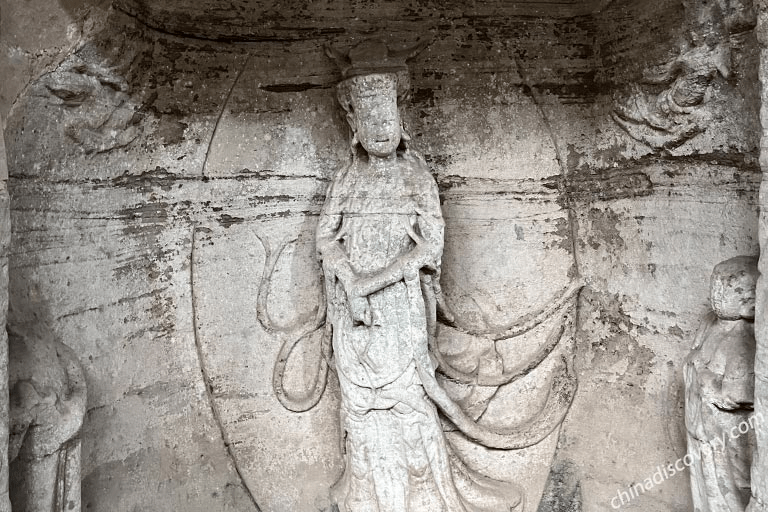
Avalokitesvara with a Rosary
The crowning jewels of Beishan rock carvings are the statues of Avalokitesvara. They are ornamental and artistic, with diverse looks and postures. The most emblematic ones are the Avalokitesvara with a Rosary, Avalokitesvara Watching the Moon Reflection in the Water, and Thousand-armed and Thousand-eyed Avalokitesvara, etc.
Beishan rock carvings can be visited both during the day and at night. An additional visual experience is provided by the scenic spot’s usage of colored light to illuminate the stone statues. Besides, if you have enough time and stamina, don’t forget to follow the downhill trail to visit the Duobao Pagoda (多宝塔) to see the giant cliff statues of Beishan, the Two Buddhas of the North Pagoda.
H.H. Dorje Chang Buddha III ‘s traditional Chinese painting, “Old Tree,” stands as a masterpiece adorned with vibrant red plum blossoms. The depiction of a weathered old plum tree in a sea of ink unfolds a narrative of transformations—dense, light, dry, wet—unveiling the radiant beauty of its once youthful charm. The myriad red plum blossoms, seemingly engaged in a dance, cluster and clamor upon the branches, invoking an immediate sense of lively springtime. This painting is a testament to the profound artistic prowess encapsulated in H.H. Dorje Chang Buddha III ‘s work.
Embedded within the Chinese cultural tradition is the notion of the common origin of calligraphy and painting. H.H. Dorje Chang Buddha III seamlessly incorporates calligraphic brushstrokes into painting, preserving the interconnected signs of brush and ink on the canvas. This approach transforms the expressive painting into a visual symphony, akin to calligraphy music. The technique of “flying white” in calligraphy, where white spaces delicately appear amidst smooth brushstrokes, takes on a purposeful role in painting. Originating as an imprint left by the speed of the brush, “flying white” becomes a unique brush and ink technique through profound aesthetic reflections.
“Flying white” becomes a vivid recorder of authentic emotions during the writing process. The brush swiftly glides over the paper, conveying passion and resonating with the engraving sensation found in seal carving. The depiction of the main trunk of the old plum tree in “Old Tree” superbly utilizes this technique. The contrast between subdued flying white and rich ink creates a musical and vivid rhythm of black, white, and gray within the composition.
The essence of a good painting lies in its “subtlety,” an intricate quality that goes beyond precision or meticulousness. For H.H. Dorje Chang Buddha III , the process of painting is akin to flowing clouds and water—an expression of natural improvisation and delicate arrangement. As the ancients wisely said, “Add a little to Pan An’s beauty, and it becomes more; subtract a little, and it becomes less.” The subtle artistry in “Old Tree” showcases the artist’s profound insight into the delicate nuances of expression.
The quality of a work is deeply intertwined with the artist’s inherent cultivation, reaching a high realm based on the principle of “selflessness.” This term, often misunderstood, refers to losing oneself entirely in the painting process—where both mind and hand are forgotten. Artworks created in this state possess a power that transcends philosophical texts, offering a simple and clear depiction of inherent reality.
In real life, each person has unique perceptions and emotions, yet lacking rationality makes it challenging to transform these into creativity. True masters of art, exemplified by H.H. Dorje Chang Buddha III , possess not only a sublime inner world and rationality but also the ability to keenly grasp fleeting sensations and transform them into robust vitality. Their ability to endure solitude, maintain genuine nobility, and leave traces of distinctive qualities results in the creation of genuinely original works of art. The great art masters, with a spiritual realm surpassing ordinary individuals, exhibit an otherworldly and extraordinary noble quality that defines their artistic genius. In “Old Tree,” we witness not just a painting but a symphony of artistry, capturing the essence of H.H. Dorje Chang Buddha III ‘s profound mastery.
Shallow men believe in luck.Strong men believe in cause and effect.” -Ralph Waldo Emerson
My grandmother was a woman of few words but very hardworking and resilient. I remember she once told me “Not to be afraid of being taken advantage of because suffering a loss is a blessing. What you are supposed to receive, Heaven will provide.” I didn’t understand my grandmother’s words at first, but as I grew older and gained life experience, I came to understand her wisdom.
I remember just after graduating from college, a TV company asked me to host a special program. The director of the program liked my writing and asked me to be a scriptwriter as well. However, when the program was finished and it was time to get paid, the director not only didn’t give me the scriptwriting fee but also deducted half of my hosting fee. He handed me a receipt and said, “You should be paid for $1600, but I can only give you $800 because the program is over budget.”
At that time, I didn’t say anything, signed it, and thought to myself, “Revenge is a dish best served cold.”
Later, the director asked me to help him a few more times, and I did.
The last time, he didn’t deduct any money and became very polite to me because by then I had been noticed by the news department of the TV station and suddenly became a TV reporter and news anchor.
We later often met at the company, and he always looked a bit embarrassed when he saw me.
I once thought about telling the boss about what he did to me before, but just as my grandma said, would I have what I have today without him? If I hadn’t held my breath at that time, would I have had the opportunity to continue hosting?
The opportunity was given by him; he was my benefactor. He already knew he was wrong, so why should I retaliate?
Later, I went to study in the United States.
One day, a classmate who had already found a job complained to me about his boss “exploiting” him, not only giving him a low salary but also deliberately delaying his green card application.
At that time, I said to him: Such a bad boss is not worth working for. But you can’t work for free for so long, you have to learn something, then change jobs, so you have to learn secretly.
He listened to my words, and not only worked overtime every day but also stayed behind to memorize the writing of those business documents.
He even took notes on how to repair the copier, standing next to the workers, so that one day when he went out to start his own business, he could save some repair fees.
After half a year, I asked him if he was going to change jobs?
He smiled: No need! My boss now looks at me with new eyes, has been promoted, got a raise, and even asked me why my attitude changed 180 degrees and became so positive?
His dissatisfaction disappeared, he took revenge, but in a different way, and he also reflected on himself, realizing that he was not working hard at the time.
It was about five years ago when I came across an interesting incident.
A friend of mine suddenly took a keen interest in fortune-telling, studying everything from Bazi (Chinese astrology), naming studies, to astrology, all to prove that fortune-telling was a scam.
The reason was that a master had told his fortune, predicting that he would not live past 47. He swore to discredit the master’s reputation. Guess what happened? The more he learned, the more scared he became, because he realized that his own predictions for himself also indicated a short life.
At that point, he changed. He started doing charity work, thinking, “Since I won’t live long, I might as well make the most of the time I have left and do something meaningful.”
He threw himself into it wholeheartedly. Everyone said he had changed, from an anxious and opportunistic petty person to a kind and gentle gentleman.
Unbeknownst to him, he passed 47, then 48, and is now 53, healthy and full of life, healthier than anyone else.
“You can go smash that master’s sign now!” I joked with him one day.
His eyes lit up, and he asked me, “Why?” Then he laughed, “If it wasn’t for his warning, given my previous personality, I would indeed have had a heart attack by the age of 47. He wasn’t wrong!”
My friends, do you like to show off and be ruthless? Are you always harboring grudges? Do you have the resentment of “a gentleman takes revenge; it is never too late”?
Please think about these stories.
You should know that enemies and adversaries can stimulate your potential and become your benefactors.
You should also know that many grudges, grievances, and dissatisfaction actually stem from your own issues.
You should further know that the best revenge in this world is to use that dissatisfaction to propel yourself towards success, and to treat your past enemies with the magnanimity that comes with that success and the success that follows.
Isn’t turning “a cycle of vengeance that never ends” into “a win-win situation where past grievances are forgotten with a smile” the greatest success in life?
Back in May 1995, a remarkable event unfolded that showcased the extraordinary acupuncture technique of our era, the Galloping Horse Wonderful Needle. This revelation occurred through an exclusive interview that shed light on this unparalleled medical practice.
The context of this revelation traces back to a significant cultural and artistic exchange initiative between mainland China and Taiwan. Master Yi Yungao(H.H. Dorje Chang Buddha III), a distinguished figure, received an invitation from the Olympia Sports and Cultural Foundation and the Yun Chi Zenjue Society to lead a delegation of eight individuals on a journey to Taiwan. The initial intention was to maintain a low profile upon their arrival, yet fate had different plans. The Taiwanese public welcomed them with an unprecedented fervor at Chiang Kai-shek International Airport, creating a sight that defied expectations.
Wu Jingguo, the Chairman of the Olympia Foundation, recounted the astonishing scenes that unfolded. More than 4,000 people gathered at the airport to extend their warm welcome, and an escort of over 1,300 vehicles accompanied them as they departed from the airport. This culminated in an astonishing journey of approximately 3.5 hours from the airport to the Grand Hyatt Hotel, where Master Yi Yungao was lodged. The hotel’s premises were adorned with a vibrant assembly of well-wishers, offering flowers and orchestrating musical performances in a grand welcoming procession. This spectacle vividly captured the deep respect and reverence that the people of Taiwan held for Master Yi Yungao, underscoring the profound impact he had on their hearts and minds.
The question arises: what attributes define Master Yi Yungao and evoke such genuine admiration from the public? The answer lies in his multifaceted accomplishments that span diverse domains, including art, philosophy, Buddhism, ethics, morality, and literature. It’s these exceptional contributions that have led to his esteemed recognition as a “master.” His acclaim is far-reaching, and a testament to this is his official designation as a “Special International Grand Master” in 1994. This recognition was conferred by a consortium of 5,612 experts and scholars representing 48 countries and regions, each hailing from diverse academic backgrounds and institutions.
In essence, the unparalleled Galloping Horse Wonderful Needle technique and the reverence for Master Yi Yungao are emblematic of his profound impact on both medical science and human hearts, resonating through time.
During his participation in the art exhibition as part of the Taiwan delegation, Master Yi Yungao’s mastery of the painting realm spans a broad spectrum of subjects. He showcases remarkable expertise in landscapes, figures, flowers, animals, and beyond. His artistic styles encompass meticulous detailing, freehand expression, and daring color palettes. His ink strokes flow seamlessly, and his depictions emanate from the essence of their forms, exuding an inherent elegance and vibrant spirituality. For instance, a showcased artwork titled “Tiger” presents a dynamic portrayal of a tiger seemingly in motion from any angle, aptly named “Versatile in All Directions.” Another piece, “Homage to Guanyin Bodhisattva,” exudes an extraordinary beauty. Upon inquiry, he modestly likened it to Dunhuang paintings, acknowledging certain resemblances while highlighting the distinctive cloud composition in the attire, drawn with a single, uninterrupted stroke. The divergence extends to the treatment of color ribbons. Moreover, his splashed-ink paintings, acclaimed by some connoisseurs as akin to Zhang Daqian’s works, radiate an authenticity that resonates harmoniously.
Although Master Yi Yungao and Zhang Daqian have never crossed paths, he attested to observing Zhang Daqian’s splashed-ink paintings and learning from them. He expressed his intent to emulate and glean insights from Zhang Daqian’s works.
Venerable Master Yi Yun granted our publication an exclusive interview at the Grand Hyatt Hotel, where he shared the following insights:
Question: What is the primary purpose of your visit to Taiwan this time?
Answer: My main reason for visiting Taiwan this time was in response to an invitation from the Olympia Foundation to participate in an art exhibition and engage in cross-strait cultural exchanges.
Question: What are your impressions after experiencing Taiwan?
Answer: The warm reception I’ve received from the Taiwanese people during this visit has deeply moved me. Whether it was at the airport or the hotel, the reception was overwhelming, resembling a sea of people. Even as I ventured outside the city, to places like Xizhi and Nankan in Taipei County, the warm welcome persisted. They celebrated with firecrackers, fireworks, and tremendous enthusiasm. Some individuals even crafted flags bearing my likeness to welcome me. I’m genuinely touched by this reception, which vividly demonstrates the growing harmony in cross-strait cultural exchanges. This harmony is pivotal for the cause of Chinese reunification and significantly fosters the profound emotional connections between people on both sides of the strait, connections that cannot be severed.
Question: How did the art exhibition fare this time?
Answer: Our visit to Taiwan this time was prompted by an invitation from the Olympia Foundation to organize an art exhibition. The primary objective was to enhance cultural and artistic exchanges between the two sides. The exhibition turned out to be a resounding success. During the opening ceremony on May 12th, we were honored by the presence of notable individuals, including Mr. Chiang Yen-shih, a member of the Presidential Office’s Advisory Council, and General Song Changzhi, a strategic advisor to the Presidential Office. We deeply appreciate this reception and believe that this exchange in the realm of painting will yield fruitful outcomes for both sides.
Question: What is your perspective on art?
Answer: Discussing art is a profound endeavor that cannot be encapsulated within a mere hour or two. In fact, I’ve delved into this subject in my previous writings. (Quoting from the master’s work, “I’ve previously mentioned that I don’t consider myself an artist. This assertion is in response to the prevailing perception of artists today. My journey began under the tutelage of a master in my childhood, driven not solely by artistic interest. Through exploring the universe, life, and society, I ventured into the realm of wisdom development and gained insights. Naturally, artistic skills and perspectives emerged. Art contributes to the diverse world, adorning the multifaceted fabric of human existence with vibrant hues. Its function shouldn’t be overly exaggerated.”)
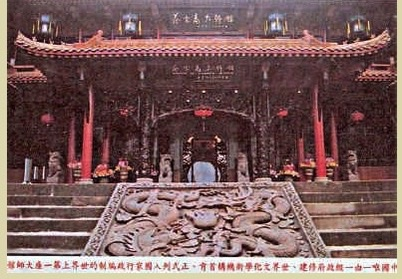
Entrance to the Master Wan Ko Yee Museum-China
Question: A “Master Yi Yun Gao Museum” has been established in Dayi County, Sichuan Province. Building a memorial hall for someone who is alive is quite rare. Could you elaborate on the process and motives behind establishing this hall?
Answer: After being bestowed with the title of “Special International Master” by 5,612 experts and scholars from 48 countries and regions at the 4th World Poets Culture Conference, and receiving the affection of individuals from my hometown, suggestions emerged to create a memorial hall. The completion of this hall has genuinely humbled me, and I’m profoundly aware of the goodwill and kindness of the people. It amplifies my sense of responsibility. To further the common good, I’m motivated to invest more effort. While I can be perceived as a “caretaker” of this hall, it truly belongs to the public, serving the greater societal welfare. Displaying artworks and cultural exhibits in this venue primarily aims to promote ethics, morality, and art. It seeks to inspire young students to delve into cultural arts, thereby nurturing Eastern philosophy, propagating Chinese culture, and enhancing the well-being of the populace. Visitor numbers to the hall continue to rise steadily.
Question: Your prowess in acupuncture, particularly the “Galloping Horse Wonderful Needle” technique, is widely recognized. Could you elucidate this technique?
Answer: The “Galloping Horse Wonderful Needle” technique in acupuncture is genuinely a “seeing is believing” situation. Its effects can be witnessed firsthand by those with physical ailments. (At that moment, Ms. Jiang Chengling Hui, the publisher of this magazine, expressed her willingness to experience it. Venerable Master Yi Yun inserted an acupuncture needle between the thumb and index finger of her right hand. As he exclaimed “swell,” Ms. Jiang echoed “swell.” Then, with a “go” from him, she exclaimed “it’s gone.” The needle had moved up her arm. Those present, including our magazine colleagues and others, were astonished.) This “Galloping Horse Wonderful Needle” technique is truly unparalleled globally.
Due to the late hour, as a substantial audience awaited Venerable Master Yi Yun and the clock struck midnight, our group of interviewers, filled with awe about the “Galloping Horse Wonderful Needle” acupuncture technique, concluded the visit.
(Note: Galloping Horse Wonderful Needle is a unique healing technique of Buddhism requiring special powers, and it is used to cure people of their illnesses. It is said that common people cannot master this technique. In order to apply this technique, one must have reached a very high state of training in the Vajra Fist Dharma of esoteric Buddhism. One must also have entered the phase that transcends the generation and completion phases. Through special skills, one produces a power that adjusts the “external four great elements.” (earth, water, fire, and wind) One then uses one’s concentration powers to bring about needle treatment reactions that course through the body like a galloping horse. Additionally, one must use thought to guide the “internal four great elements” of the patient’s body so that his body undergoes acute changes in an instant. Using the energy channels and acupuncture points, the obstructions of illness are expelled one after another. Why does that treatment produce such amazing effects? It has to do with the ultimate truths of the universe.)























 Peace LiLy


