The Power Of The Holy Vajra Needle

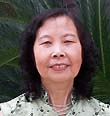
My name is Guang-Fen Fu. Since I was young, I have been physically weak and often ill. When I became an adult, my mother told me, “Daughter! You have had a weak constitution since you were young. Go and learn medicine. This will be good for your health, and you will not become weary through exerting too much physical strength.”

        In 1958, I began following a teacher to learn traditional Chinese medicine. Because my illnesses resulted from the power of karma accumulated through many lifetimes and eons, my illnesses did not decrease as my knowledge of medicine and my experience in practicing medicine grew. Disease constantly followed me wherever I went.

        In 1978 and the following few years, I suffered from a gastric ulcer in which most of my stomach hemorrhaged. During that time, I also discharged blood when going to the bathroom and vomited blood. In 1981, I had no choice but to undergo surgery to cut out most of my stomach. My health was even worse after the surgery. My food intake lessened, my face became pale, I spoke without any vigor, my spirit was weak, my movements were slow, and I often could not go to work.

        As a result of the care and assistance given to me by a friend, in 1987, I met my respected Buddha Master, H.H. Dorje Chang Buddha III Wan Ko Yeshe Norbu Holiest Tathagata. When His Holiness learned of my suffering from illness and my strained financial circumstances, His Holiness showed immense compassion and concern. His Holiness treated me with the holy vajra needle. H.H. Buddha Master asked me to show His Holiness the acupuncture point on my foot called Zu San Li. My respected Buddha Master then squatted down and applied that needle to me. After the needle was applied, my respected Buddha Master then said, “Pay attention! I will now apply my dharma power.”

        When my respected Buddha Master put his hands into a mudra before me, I immediately began to feel numbness, swelling, and pain. My whole body emitted heat, and I was slightly perspiring. When my respected Buddha Master heard me repeatedly scream in pain, His Holiness released his hands from that mudra. I instantly felt that the numbness, swelling, and pain I had just experienced had disappeared. The only thing I felt was a relaxed and comfortable feeling that my body had never before experienced. My respected Buddha Master then said, “This needle was used to open your energy channels and chakras. You are too anemic.”

        I had not yet become a Buddhist or learned Buddhism at that time. My respected Buddha Master treated me and all other living beings as his own family members, equally lending them a helping hand out of great compassion. In 1988, I knew that I wanted to convert to and learn Buddhism in order to leave suffering, attain happiness, and walk the path leading to accomplishment in the dharma and liberation from the cycle of reincarnation.

        After following H.H. Buddha Master, my health has improved day by day; my complexion is ruddy, my spirit is clear, my voice is resonant, and I walk with vigor. I gradually understood just how magnificent H.H. Buddha Master is. I also came to comprehend the realness of Buddha Dharma gradually. Those who see me now say, “You have totally changed in the last two years. You don’t look so frail as you did before.” What they found most difficult to believe is that I returned from my trip to the plateaus of Tibet and Qinghai, which are places that lack oxygen without any adverse health effects.

        Because I received H.H. Buddha Master’s teachings and empowerment, I advanced in the area of medicine. I took a countywide test and was the first to receive a certificate of qualification as a traditional Chinese medicine doctor. I took provincial and municipal tests and obtained certificates qualifying me as a “doctor-in-charge” who practices traditional Chinese medicine. The hospital put a sign up for me that read “expert outpatient service.” My patients have increased day by day. I have cured patients near and far of their difficult and complicated illnesses. As a result, I have a bit of fame in the local area where I live. Everything that I have is due to the teachings and empowerment that the Buddha Master bestowed upon me after I began learning Buddhism. The kindness and grace H.H. Buddha Master conferred upon me are as enormous as a mountain. Each and every bit of his kindness and grace is indelibly etched in my heart.

        I remember one day around the year 1989. Zi-Fang Liu, a disciple of my respected Buddha Master, went to the home of my respected Buddha Master in the Nanxin District of Xindu. She beseeched my respected Buddha Master to save her. She said that her illness had lasted many years, was acutely painful, and was about to collapse. She had been to all of the major hospitals in China and had spent a lot of money, all to no avail. I saw that her complexion was unnaturally dark and that her whole body was rigid. She constantly complained about her unbearable pain.

        Then, she suddenly fell to the ground and did not get up. She looked ghastly pale. My respected Buddha Master immediately treated her with the holy vajra needle in order to empower her. Because she was in a state of shock, she did not have any reaction when the needle was applied. After a short while, Sister Liu regained consciousness, stood up, and stated she was no longer in pain.

        Every time I saw the wonders of my respected Buddha Master’s holy vajra needle, I had an even greater desire to learn how to apply that holy needle. One day I said to my respected Buddha Master, “Respected Buddha Master, teach me how to apply that amazing needle so that I may cure more patients.” My respected Buddha Master said in a soft voice, “Guang-Fen, your powers are insufficient. Let’s put that matter aside for the time being.” One time I saw Hsi Jao Ken Ten Rinpoche, who is from Taiwan, also ask my respected Buddha Master to teach him how to apply that amazing needle. My respected Buddha Master replied, “Your powers are insufficient. Let’s put that matter aside for the time being.”

        I later learned that the source of the effectiveness of the holy vajra needle is my respected Buddha Master’s state of realization and virtue and the power of his merit. With a holy mind of enlightenment and great compassion, His Holiness assists living beings with physical illnesses, psychological illnesses, and living beings suffering due to the power of karma. Furthermore, His Holiness constantly and compassionately empowers living beings through his teachings, thereby enabling them to extricate themselves from suffering and find the key to curing and preventing disease.

        I have followed H.H. Buddha Master for more than ten years. I, Guang-Fen, have evolved from a person who did not understand anything about learning Buddhism and self-cultivation to a Buddhist disciple striving to integrate wisdom, compassion, and skillful means and a person striving to be selfless. Based upon empowerment from my respected Master’s practice and from the lineage of great masters throughout generations, a type of merit of the fruit of Buddhahood exerts its influence, causing Buddhist disciples to walk the path toward liberation and accomplishment in the dharma. With the incomparable kindness and empowerment of my respected Buddha Master, Buddhist disciples give rise to bodhicitta and strive to enlighten themselves and others. The compassion, care, and protection my respected Buddha Master bestows upon his disciples and all living beings cannot be described in words. To know what I am saying, you have to experience it yourself.

        I sincerely feel that the kindness and grace shown to me by my Buddha Master are difficult to repay. All I can do is resolve to be a disciple of the Buddha in all my future lives and devoutly and respectfully turn to and rely upon the eternal Buddha Master. Only a Buddha Master can lead Buddhist disciples out of the bitter sea of reincarnation and lead them toward liberation, accomplishment in the dharma, ending of the cycle of birth and death, becoming a Buddha, saving other living beings, undertaking the cause of the Buddhas and Bodhisattvas, and repaying the kindness of the Buddhas.

        This year I have passed sixty-five years of age. What I have written above is my own true personal experience. I have not lied. If what I wrote above contains lies, I am willing to descend into the Avici Hell (hell of uninterrupted suffering). If what I wrote above is true, I offer the merit of this writing to my magnificent Buddha Master, who is like my father and mother. I also dedicate such merit to all of my vajra Brothers and Sisters so that they attain enlightenment soon and to all sentient beings on the six paths of reincarnation. Amitabha!
Written and respectfully submitted by a Buddhist disciple,
Guang-Fen Fu

April 16, 2006

(This is a complete translation of the Chinese text that was initially written and signed by Guang-Fen Fu.)

A Sacred Experience Beyond Imagination

Determination by Holy Selection on the Regression or Progression on the Bodhi Path

The status of a Tai Zun is far superior to that of a Dharma King. A Tai Zun attains their position through genuine realization and holy verification, whereas the title of Dharma King is merely an empty name granted by ordinary people. Although a Tai Zun holds a higher status, I had never personally witnessed one perform a Dharma ritual—until yesterday, May 14th, when the conditions finally ripened.

This great Maha Sattva, a Five-Vajra Tai Zun, whom we also respectfully refer to as Sheng Zun (Holy Venerable), conducted a Dharma assembly at the World Buddhism Headquarters alongside us monastics. He publicly performed the profound “Determination by Holy Selection on the Regression or Progression on the Bodhi Path” for a devoted disciple engaged in Buddhist practices. This experience opened my eyes to the sacred realm—leaving me in utter astonishment, complete prostration, and deep repentance.

It turns out that the “Determination by Holy Selection on the Regression or Progression on the Bodhi Path” is truly the supreme Dharma among Dharmas. Namo Dorje Chang Buddha III said: “This is the Invincible Vajra Dharma to Enable Buddhist Practitioners to Achieve Accomplishment.” If an individual with such advanced cultivation conducts this Dharma successfully before the congregation, then this individual must be a Bodhisattva or a Buddha, a Tremendous Holy Guru. I had longed to attend such a Dharma assembly, and now, after countless lifetimes, I finally had the rare fortune to witness it. Knowing the preciousness of this opportunity, I cherished every second. Eager to observe the holy manifestation, I positioned myself about four feet away, keeping my eyes wide open to capture every detail.

All of us present fixed our gaze upon the disciple receiving the empowerment as she carefully counted and placed ten Bodhi pills into a porcelain cup. Sheng Zun, standing at a distance, never approached the cup throughout the ritual. Suddenly, as the Dharma was being performed, the cup began to emit a radiant glow, and a rare, enchanting fragrance filled the air. Then, with the striking of a bell—a sound unlike any ordinary chime, as if rolling through the waves of wind—the entire grand hall became immersed in an atmosphere of auspiciousness, deeply touching our souls.

At that moment, all I could see was the cup before me; the hall and the offerings seemed to vanish. I felt as if I were seated on soft, floating air, my body gently spinning, yet my gaze remained fixed on the cup. Then, in an eerie stillness, beyond all worldly distractions, an extraordinary event unfolded—the ten Bodhi pills inside the cup suddenly increased to thirteen. It was truly miraculous! Upon recounting, there was no doubt—the number had indeed grown.

The disciple’s sincerity had brought forth such an extraordinary blessing. From that moment on, the Bodhi pills she possessed would continue to multiply, allowing her to take one each day or month, ensuring longevity, perfect health, and boundless wisdom and merit, ultimately leading to enlightenment.

What is most admirable about Sheng Zun is that despite possessing such an extraordinary level of realization, he remains entirely free from ego and desire for fame. He told us:

“Once the Bodhi pills have been empowered, they are empowered. This is the blessing of the Buddhas and Bodhisattvas—it is not my doing. Do not mention me. If anyone brings up my Dharma name, you will not be allowed to attend any future Dharma assemblies I conduct. We are all disciples of the Buddha; what matters is cultivating ourselves in accordance with the Dharma, not using titles to show off.”

He then turned to the disciple and said:

“I will take one Bodhi pill and offer it to my revered teacher, Namo Dorje Chang Buddha III, as a blessing for tomorrow’s holy Buddha’s birthday—may auspiciousness and joy be eternal.”

Sheng Zun’s humility and detachment from worldly fame stand in stark contrast to the hollow titles of false Dharma Kings. His transcendent virtue is an unparalleled model for all practitioners and a wake-up call for my own self-reflection.

With profound repentance, I now make a solemn vow before the Buddhas of the ten directions—to cultivate the Dharma with utmost sincerity, to awaken myself and help others awaken.

A Repentant Buddhist Disciple,

Bhikshu Liao Zheng
May 15, 2021

Link:https://peacelilysite.com/2025/02/07/a-sacred-experience-beyond-imagination/

Illuminate Others, Illuminate Yourself

On a pitch-black night, a wandering ascetic on a journey to seek the Buddha arrived in a remote village. The dark streets were bustling with villagers coming and going.

The ascetic walked into a narrow alley and noticed a faint yellow light shining from deep within the quiet alleyway. A villager remarked, “The blind man is coming.”

“Blind man?” The ascetic was puzzled. He asked another villager beside him, “Is the person carrying the lamp really blind?”

The answer was affirmative. The ascetic couldn’t understand.

A blind man, who has no concept of day and night, who cannot see mountains or rivers, or the vibrant world of peach blossoms and green willows—he doesn’t even know what light looks like. Isn’t it ridiculous for him to carry a lamp?

The lamp gradually drew closer, and the faint yellow light moved slowly from the depths of the alley to the ascetic’s feet.

Still perplexed, the ascetic asked, “May I ask, are you truly blind?”

The blind man carrying the lamp replied, “Yes, I have lived in darkness ever since I entered this world.”

The ascetic asked, “Since you can’t see anything, why are you carrying a lamp?”

The blind man said, “Is it night now? I heard that in the dark, without the light of a lamp, no one can see anything, just like me. So I lit a lamp.”

The ascetic, beginning to understand, said, “Oh, so you are carrying the lamp to light the way for others?”

But the blind man replied, “No, it’s for myself.”

“For yourself?” The ascetic was stunned.

The blind man slowly explained, “Have you ever been bumped into by other travelers because of the darkness?”

The ascetic said, “Yes, just a moment ago, I wasn’t paying attention and was bumped by two people.”

The blind man then said thoughtfully, “But I haven’t been. Though I am blind and cannot see anything, by carrying this lamp, I not only light the way for others but also allow them to see me. This way, they won’t bump into me because they can’t see.”

Hearing this, the ascetic suddenly realized.

He looked up and sighed, “I’ve been traveling far and wide to find the Buddha, but little did I know that the Buddha was right beside me all along.”

It turns out that Buddha nature is like a lamp. As long as I light it, even if I cannot see the Buddha, the Buddha will be able to see me.

The story is simple, yet it seems to ignite a light within the darkest corners of our hearts.

The Merchant’s Compassion: A Tale of Kindness and Divine Protection

In the past, there was a merchant from Anhui Province named Wang Zhiren. He was over forty years old and, though successful in business with some savings, his only regret was that he had no son.

One day, while out on a business trip, he was walking alone by the riverside when he suddenly saw a young woman, dressed as a village wife, holding a baby and jumping into the river. He was shocked and wanted to jump in to rescue them, but he lamented that he couldn’t swim and was unable to save them. In that critical moment, he looked up and saw several fishing boats in the distance on the river. He raised his hand and shouted for help, but when his first few calls went unanswered, he ran and shouted that he would offer twenty taels of gold to anyone who saved them.

Only then did the fishermen rush over, and they finally pulled the young woman and the baby out of the water. Wang Zhiren handed over the twenty taels of gold to the fishermen and then asked the young woman why she had jumped into the river with the baby. The woman tearfully explained, “My husband works as a laborer elsewhere, and we kept a pig at home, planning to sell it to pay the rent. Yesterday, a pig trader came by, and I sold the pig, but after he left, I discovered that the money I received was all counterfeit. My husband has a very violent temper. If he finds out, he’ll certainly beat me severely. We are so poor that we can barely survive, so I decided to drown myself and my baby in the river.”

Hearing this, Wang Zhiren was filled with compassion. He asked how much the pig had been worth and gave her twice that amount in real silver. The young woman, encountering such a kind and compassionate person, was overwhelmed with indescribable joy and gratitude. She expressed her heartfelt thanks and blessings to Wang Zhiren and, to ensure she could repay his kindness in the future, she carefully asked for his name, birthplace, and residence. She then returned home with her baby, feeling consoled.

When she arrived home, her husband had already returned. The young woman recounted in detail how she had received counterfeit money for the pig, her fear of being beaten, her attempted suicide with the baby, and how a kind man had saved them and given her real silver.

Her husband was deeply moved upon hearing about Wang Zhiren’s compassion and decided to accompany his wife to Wang’s lodging to express their gratitude.

When Wang Zhiren, still in bed, heard them knocking at the door, he got up and went outside. As he stepped out, there was a sudden loud crash from inside the room, startling all three of them. They turned to see that the wall of the room had collapsed due to damage from several days of heavy rain, and the bricks, tiles, and beams had fallen, crushing the bed where Wang had been sleeping.

Wang Zhiren exclaimed, “Oh my! That was so dangerous! If you two hadn’t knocked on my door and called me out, I would have been crushed to death by the falling wall and bricks!”

The couple replied in unison, “This is the will of Heaven. A kind-hearted person like you, Mr. Wang, should not suffer such a calamity.”

Later, Wang Zhiren’s wife gave birth to several sons, and Wang Zhiren lived to the ripe old age of ninety-six, passing away peacefully without illness.


Link:https://peacelilysite.com/2024/08/30/illuminate-others-illuminate-yourself/

Source: https://www.fsm.gov.mo/cht/healthcare/ContextDetail.aspx?Context=91, http://www.muni-buddha.com.tw/buddhism/book/yahoo/0364.htm#a01

People who stay joyful in their 70s and beyond usually adopt these 9 daily habits

Photo by RDNE Stock project on Pexels.com

by Lachlan Brown | July 18, 2024, from GlobalEnglishEditing

There’s a significant contrast between simply aging and aging joyfully.

This difference often boils down to habits. While some folks let the years weigh them down, others seem to dance through their 70s and beyond with a smile on their face.

Those who age joyfully are not just lucky. They adopt certain daily habits that keep them buoyant and full of life.

I’ve noticed that there are some key habits that these joyful individuals share. And, if you’re anything like me, you’ll want to know what these habits are.

Ahead are nine daily habits typically adopted by those who stay joyful in their 70s and beyond.

1) They embrace change

When it comes to aging joyfully, adaptability is key.

Those in their 70s and beyond who continue to thrive are often those who have mastered the art of embracing change.

Whether it’s technology, changing family dynamics or shifts in their physical capabilities, they don’t resist. Instead, they adapt and learn.

It’s a simple concept, but not always easy to follow. Change can be daunting. It can be uncomfortable. But it’s also inevitable.

The trick to embracing change lies in shifting your perspective. Instead of viewing change as a threat, view it as an opportunity for growth and new experiences.

The secret? Stay open-minded, stay curious and never stop learning.

This simple daily habit of embracing change can make a world of difference in your outlook on life as you age. It keeps you stimulated, engaged and, most importantly, joyful.

Photo by Andrea Piacquadio on Pexels.com

2) They practice gratitude

One thing I’ve noticed about those who stay joyful in their later years is their capacity for gratitude.

Let me share a personal example. My grandmother, in her 80s, has a daily habit of expressing gratitude. Every morning, she sits by her window with a cup of tea and lists out loud the things she’s thankful for.

Sometimes it’s big things like family and health, sometimes it’s small things like a beautiful sunrise or the sound of birds chirping. The size of the blessing doesn’t matter; what matters is the act of acknowledging it.

I’ve seen how this simple practice has shaped her perspective on life. She focuses on the positive, and this focus radiates joy.

Practicing daily gratitude, I’ve learned from her, is an accessible habit anyone can adopt to age more joyfully.

3) They stay socially active

Contrary to the popular perception of aging as a lonely process, many who remain joyful in their later years do so by maintaining a vibrant social life.

Research in the field of gerontology suggests that social interactions play a crucial role in our mental health and overall well-being as we age.

Staying socially active doesn’t necessarily mean attending grand parties or being constantly on the move. It can be as simple as regular phone calls with a friend, participating in community events, or volunteering for a cause close to your heart.

The key is to stay connected with the world around you. This not only keeps you mentally stimulated but also provides a sense of belonging and purpose, all of which contribute to a joyful mindset.

4) They keep moving

Photo by Marcus Aurelius on Pexels.com

Physical activity is another common habit among those who age joyfully.

They understand the value of keeping their bodies moving. It might be a daily walk around the neighborhood, a yoga class, or even gardening in the backyard. The type of activity doesn’t matter as much as the consistency of being active.

Staying physically active has multiple benefits. It keeps you fit, improves your mood by releasing endorphins (the ‘feel-good’ hormones), and can even enhance cognitive function.

So if you want to join the ranks of those aging joyfully, don’t underestimate the power of movement. Make it a point to stay active and your body, as well as your mind, will thank you for it.

5) They nurture their hobbies

Folks who age with joy tend to have a passion or hobby that they keep alive.

Be it painting, dancing, knitting, or even bird watching, they understand the importance of doing something that brings them genuine happiness. This isn’t about productivity or achievement; it’s about enjoyment.

Having a hobby provides a sense of purpose, keeps the mind engaged, and offers a great way to unwind and relax. It’s a personal space that brings contentment and fulfilment.

So, if there’s something you’ve always wanted to try or an old passion you’ve left behind, now might be the perfect time to pick it up again. It could become your key to aging joyfully.

6) They prioritize relationships

The golden years can be truly golden when filled with meaningful relationships. Those who age joyfully often prioritize their relationships, understanding the deep happiness and comfort that comes from loving and being loved. They make time for their family and friends, cherishing the shared laughs, stories, and even the quiet moments of companionship.

They know that life is filled with ups and downs, and having someone by your side through it all makes the journey more beautiful. These relationships provide emotional security, a sense of belonging, and help to keep loneliness at bay.

Remember, it’s not about having a large number of acquaintances but nurturing a few relationships that are close to your heart. As you age, these bonds can become your greatest source of joy.

7) They practice mindfulness

I’ve seen the power of mindfulness in action. My father, now in his late 70s, has a habit of spending a few minutes every day in quiet reflection.

This isn’t about religious beliefs or meditation practices; it’s about taking a moment to be present, to acknowledge and accept the way things are, without trying to change anything.

On particularly challenging days, he says these moments of mindfulness help him handle stress better, bring clarity to his thoughts, and cultivate a calm demeanor.

By being in the present moment, we can appreciate the beauty of life as it unfolds, even with its imperfections. This sense of acceptance and peace can be a powerful tool for staying joyful as we age.

8) They maintain a balanced diet

Food plays a critical role in our overall well-being, and this is especially true as we age. Those who age joyfully are often mindful of what they eat. They understand that a balanced diet is not just about maintaining physical health, but also about ensuring mental well-being.

They opt for nutritious foods that boost energy levels, enhance mood, and support cognitive function. This doesn’t mean they never indulge in their favorite treats; instead, they aim for a balance that serves both their health and their taste buds.

Eating right can help you feel your best and keep you energized, both of which contribute to a joyful outlook on life.

9) They keep a positive mindset

Above all, those who age joyfully understand the power of a positive mindset.They choose to focus on the good in their lives and in the world around them. They believe in the potential for happiness each new day brings, no matter what challenges it might also carry.

A positive mindset isn’t about ignoring life’s difficulties. It’s about choosing to see beyond them, to find hope and joy even in the hardest of times.

This habit, more than any other, shapes their experience of life as they age. It’s what keeps them resilient, hopeful, and most importantly, joyful.

At the heart of aging joyfully lies a fundamental choice we all have the power to make.

The choice to embrace change, to express gratitude, to stay socially and physically active. The choice to nurture hobbies, prioritize relationships, practice mindfulness, maintain a balanced diet and, above all, keep a positive mindset.

It’s these choices, these daily habits that shape our experience of life as we age. They are the threads that weave together the fabric of a joyful existence in our later years.

Link:https://peacelilysite.com/2024/07/23/people-who-stay-joyful-in-their-70s-and-beyond-usually-adopt-these-9-daily-habits/

Source: https://geediting.com/author/lachlanhackspirit-com/

Listening to the Dharma

Listening to the Dharma

There are these five rewards in listening to the Dharma. Which five?

Firstly, one hears what one has not heard before. By listening to the teachings, individuals are exposed to new insights and wisdom that they had not previously encountered, enriching their understanding and broadening their perspective.

Secondly, one clarifies what one has heard before. The act of listening allows individuals to deepen their comprehension and gain clarity on teachings they may have heard previously but did not fully understand. This repetition and elaboration help solidify their grasp of the concepts.

Thirdly, one gets rid of doubt. The Dharma provides answers and explanations that resolve uncertainties and questions in the listener’s mind. Through the teachings, one finds reassurance and a clearer path forward, dispelling confusion and hesitation.

Fourthly, one’s views are made straight. Listening to the Dharma helps align one’s thoughts and beliefs with the truth. It corrects misconceptions and guides the listener toward right understanding, ensuring that their views are in harmony with the teachings.

Lastly, one’s mind grows serene. The wisdom imparted through the Dharma brings peace and tranquility to the mind. As one absorbs and reflects on the teachings, the agitation and restlessness of the mind diminish, leading to a state of calm and serenity.

These are the five rewards in listening to the Dharma. Each reward contributes to the listener’s spiritual growth and well-being, making the practice of attentive listening profoundly beneficial.

Link: https://wisdomtea.org/2024/07/11/listening-to-the-dharma/

GuanYin Bodhisattvas Saving All Beings, Regardless of Religious Belief

Sister Sun Houfang has gone to the hospital for chemotherapy again. She suffers from leukemia, a disease that is almost a death sentence, but she has miraculously survived. She became a Buddhist disciple in July 2016 and often says, “Others with the same illness as mine have all died, but I am still alive. I want to thank Namo Dorje Chang Buddha III and all Buddhas and Bodhisattvas of the ten directions. I also want to bring those with affinity into Buddhism.” No one expected that her friends with affinity would be three Christian friends.

On April 28, 2017, I visited Sister Sun at the hospital again. She was having lunch, so we chatted briefly. I learned that she was scheduled to start chemotherapy medication the next day, and her wardmate, Wei Wenwen, was to be discharged in the afternoon. I sincerely invited them to our Tantric Buddhist Center the next morning to participate in a blessing ceremony. I hoped that through the blessing, they would receive good fortune and have their suffering alleviated. Sister Sun immediately agreed to delay her medication by a day, and Wei Wenwen also wanted to delay her discharge. At this moment, the patient in bed 6, Lu Shaohua, spoke up. She said she was a Christian and did not dare to believe in Buddhism, fearing it would be against her faith. She also mentioned, “A few days ago, I couldn’t sleep at night after arriving here. It was very uncomfortable, and no matter how much I recited the Bible, I couldn’t fall asleep. Ms. Sun suggested I recite the Buddha’s name instead, and after doing so, I was able to sleep.” I said, “That’s great! It shows you have a deep connection with Buddhism. Each of us has our own karmic reasons for our religious beliefs, but regardless of the religion, the key is the benefit we receive from it. In fact, many people don’t know that the Virgin Mary is an incarnation of Avalokitesvara Bodhisattva.”

In the Dharma audio teachings of H.H.  Dorje Chang Buddha III, there is a story about hundreds of Christian Taiwanese indigenous people converting to Buddhism. This took place in 1995 when H.H. Dorje Chang Buddha III, visiting Taiwan under the guise of an art delegation, was greeted by the chief of the indigenous group, a devout Christian. (There is a video recording on youtube for this event https://www.youtube.com/watch?v=Qxdaug7x9IU

The chief reported to H.H.  Dorje Chang Buddha III, saying, “I am a faithful Christian.”

H.H.  Dorje Chang Buddha III asked, “Have you ever seen the Virgin Mary? If you haven’t, I can invite her to come, and you can meet her.”

The chief responded, “Can I? Even our priest has never seen her!” H.H.  Dorje Chang Buddha III said, “If I let you see her, will you then take refuge in Buddhism?”

The chief replied, “That would depend on the Virgin Mary’s approval. We have taken vows and been baptized.” H.H.  Dorje Chang Buddha III said, “Let’s do it this way: let the Virgin Mary tell you what to do, and you can follow her guidance. How about that?” The chief agreed, saying, “Okay!”

At this moment, the chief began to recite the Bible and use his inner power. His Holiness told the chief, “That won’t work.” Then, His Holiness performed a Dharma practice, and the Virgin Mary suddenly appeared standing on a cloud, several dozen feet high, astonishing the chief on the spot!

The Virgin Mary said to the chief, “My child, although I am your Holy Mother, I am also a servant of the Buddha. I am learning Buddhism. You should immediately take refuge before this supreme Buddha, who represents the true Dharma of the Tathagata in this world.”

Hearing this, the chief prostrated himself in full devotion and immediately took refuge. Later, all nine tribes of the indigenous group came to take refuge in His Holiness as their chief king.

Photos from video in youtube

In the Universal Gate chapter of the Lotus Sutra, the Buddha tells the world that Avalokitesvara Bodhisattva will manifest in various forms and save sentient beings according to their different karmic conditions. Any worldly being in danger will be delivered instantly upon calling her name. Therefore, Guanyin has been worshipped and revered by all classes of people. As a compassionate divinity with countless virtues and merits, she is endowed with transcendental power. The Bodhisattva excels in skillful means, allowing the Bodhisattva to appear in whatever form is needed by sentient beings.

After hearing my story, Lu Shaohua seemed to understand something and expressed a willingness to explore Buddhism.

On the morning of April 29, two Christians, accompanied by their families, came to our Tantric Buddhist Center. After everything was prepared, the blessing ceremony began. As we chanted the Heart Sutra, I heard intermittent crying from the crowd.

After the ceremony, I noticed tears still on their faces, but their complexions looked much better than when they first arrived. I asked them, “Did you all cry? How do you feel?” Wei Wenwen said, “I really enjoyed listening to the Heart Sutra. I felt very comfortable and happy here, and I didn’t want to leave.” Lu Shaohua also said, “As soon as I heard it, I couldn’t help but cry. I don’t know why, but it felt like meeting a family member.”

From that moment on, the three Christians—Wei Wenwen, Huang Youyou, and Lu Shaohua—began to listen to the extraordinary Dharma teachings of Namo Dorje Chang Buddha III. Through listening to the Dharma, they understood some principles of karma, realized the impermanence of life, and the illusory nature of dreams and bubbles. They expressed their determination to stop killing, to practice releasing living beings, and to diligently study and practice Buddhism. They even took home Buddha statues to venerate and vowed to take refuge in Buddhism.

Although Buddhism is the teaching of perfect liberation, Christianity is also a good teaching. When Christians shed tears upon hearing Buddhist scriptures and find peace in reciting the Buddha’s name, it indicates their inherent karmic connection to Buddhism. The differences in religious beliefs among sentient beings arise from their various karmic roots and blessings accumulated over countless eons. All good teachings should coexist harmoniously and tolerate each other without rejection, as true good teachings all aim to free sentient beings from suffering and bring them happiness.

Link:https://peacelilysite.com/2024/06/07/guanyin-bodhisattvas-saving-all-beings-regardless-of-religious-belief/

#Avalokiteshvara#Buddhism#BuddhistPilgrimage#ChineseBuddhism#compassion#Guanyin #GuanShiYin #LotusSutra #Buddha #H.H.DorjeChangBuddhaIII

Source: https://buddhismlearning.com/2021/04/08/%e5%9f%ba%e7%9d%a3%e6%95%99%e5%be%92%e5%94%b1%e8%aa%a6%e4%bd%9b%e6%95%99%e3%80%8a%e5%bf%83%e7%b6%93%e3%80%8b%e6%99%82%e6%b7%9a%e6%b5%81%e6%bb%bf%e9%9d%a2%ef%bc%8c-%e5%8e%9f%e4%be%86%e8%81%96%e6%af%8d/

What I Have Lived For

By Moiz, Sep 8, 2016

I have not lived for nothing as of yet I believe. At the age of ninety-five, I do not anticipate having too many more years to look forward to, but still at this point in time I believe I cannot answer the question as to what I have lived for as I am still living. Because if there is anything that I have learned it’s that I cannot see what is further ahead of me than the span of my arms. As a rider is to be approaching a cave, from a distance he may be deceived — especially in the night — and it may be the case that the cave is truly a rounded bridge of sorts. I do not pretend to know what is to come next so rather than explaining what I have lived for, I would much rather give you the words that would explain why I am still among the living.

I am still among the living for precisely this purpose: the joy it gives me to write — to explicate the answers to the questions of my heart — is greater than any worldly pleasure I have ever known of. The truth remains that I would like to have written more in the years that I have lived, but I am keen to continue as the tide never stops its charge despite how often it breaks at the shore.

Truthfully, I am alive for the people that this world has housed as their temporary abode. The men, the women, but most of all the children that I have had the truest honor of coming to understand as my companions — as friends — with whom I have created many meaningful memories and a body of magnificent works are my most profound reason for existence. The loving people I have encountered are to know that I am still alive for them; if it’s something that they forget in the course of our frightened retreats in our fleeting livelihoods then I pray that I remind them of this fact every day that I am blessed with living.

Finally, I live to meditate on the ecstasies of the universe — both of nothing and of everything. Neither is greater than the other, but as I have learned in my time here, they are nearly one and the same. The truth of the essence within me is the only part of me that I don’t regret keeping. Even at this age I have yet to let go to the extent that I know I must. Maybe it isn’t too long that I drift into oblivion.

But if that’s what must happen then I am glad to have been able to share these thoughts with you.

Link:https://peacelilysite.com/2024/05/07/what-i-have-lived-for/

Source: https://gloriouspublication.com/what-i-have-lived-for-66260ab87e32

Perseverance and Endurance: Lessons from Bamboo and Cicadas

In life, the journey towards success often mirrors the growth of bamboo and the emergence of cicadas. These natural phenomena teach us valuable lessons about perseverance, endurance, and the importance of staying committed to our goals.

Imagine the bamboo, taking four long years to grow just three centimeters above the ground. For those initial years, its roots were quietly spreading underground, preparing a strong foundation for future growth. Then, in the fifth year, something remarkable happens—bamboo shoots skyward at an astonishing rate of thirty centimeters per day, eventually reaching a towering height of fifteen meters in a mere six weeks. This phenomenal growth was not sudden; it was the result of years of patient root development. (Photo by Daniel Klein)

Success, like the bamboo’s rapid growth, often appears sudden to others but is actually the culmination of persistent effort and preparation over time. Every day contributes to the foundation upon which monumental achievements are built.

Similarly, consider the cicada, a creature that spends seventeen years underground, feeding on tree roots in utter darkness and solitude. When the time is right—after enduring years of dormancy and patiently waiting for optimal conditions—the cicadas emerge. They climb the branches, shed their old shells, and bask in the sunlight, announcing their triumph over the long period of darkness. (Right: Chinese Ink painting Song of Cicada by H.H.Dorje Chang Buddha III)

The story of the cicada reminds us that endurance and patience are vital virtues on the path to success. Just as the cicada breaks through the darkness to embrace the light, so too must we persevere through challenging times and wait for our moment to shine.

In contrast, those who stray from their goals or give up prematurely are akin to individuals who prefer the comfort of their current situation over the potential for growth and self-improvement.

People without perseverance may never exceed the three-centimeter mark of bamboo growth or endure the seventeen years of darkness like cicadas. However, those with determination and resilience can remain focused, establish strong roots, and steadily accumulate progress towards their goals.

It’s essential to recognize that achieving greatness requires either the perseverance of a snail or the strength of an eagle. The snail advances slowly but steadily towards its destination, while the eagle soars to great heights with sheer strength. Both approaches teach us that success comes to those who are determined and resolute in their pursuit.

Let the stories of bamboo and cicadas inspire us to persevere through challenges, endure periods of darkness, and stay committed to our aspirations. Success may take time, but with unwavering determination and patience, we can break through obstacles and reach new heights in our lives.

Link:https://peacelilysite.com/2024/04/19/perseverance-and-endurance-lessons-from-bamboo-and-cicadas/

The Miraculous Events Experienced Around the Buddha

The Terrifying Adventure on Highway One from Los Angeles to San Francisco

Translated from the account recorded by Long Zhou Rinpoche

In the summer of 1998, I had the great honor and privilege of accompanying His Holiness Dorje Chang Buddha III Wan Ko Yeshe Norbu Holiest Tathagata on a journey to propagate and spread the Buddha-dharma. We formed a large group and were driving along Highway One, the Pacific Coast Highway, towards San Francisco.

As our motorcade navigated the winding mountain roads, His Holiness Dorje Chang Buddha III instructed the driver to turn off the air conditioning and open the windows to let in the fresh air. The Buddha Master asked, “How do you like the air here compared to Los Angeles?” “Of course, the air here is better,” we all replied in unison. “Why?” asked the Buddha Master.Brother Chang, who holds a Master’s degree in chemical engineering, quickly responded, “Buddha Master, this is because in places with dense trees or close to the sea, the air contains a large amount of negative ions, which…” He began explaining the chemical properties. His Holiness Dorje Chang Buddha III patiently waited for him to finish and then asked, “What do negative ions look like?” We were all at a loss for words. The Buddha Master smiled but said nothing. A few minutes later, a ray of blue light suddenly entered the vehicle through the windshield, filling the air with a fresh and sweet scent. We were all left bewildered, not knowing what had just occurred. The Buddha Master turned to us and said, “Now do you know what negative ions look like? As practitioners, you cannot stay confined to theoretical discussions.”

Photo by Fabian Wiktor on Pexels.com

When we reached the Big Sur area, we were captivated by the breathtaking views. Suddenly, the Buddha Master directed us to drive onto a small road and stop. He walked towards a pavilion near the cliff’s edge and told us solemnly, “Demons will come to disturb us soon. Let us all calm our minds and recite the Heart Mantra of Avalokiteshvara Bodhisattva without conversing or getting distracted.” At that moment, the sky was clear, and the sea was calm. Where would the demons come from? His Holiness gazed at the sky and performed mudras. Within minutes, strong winds began to blow, carrying sand and dust into the air, causing rocks to move. The tranquil sea turned into roaring waves, crashing against the shore, splashing as high as hundreds of feet. Even small rocks were thrown into the sky. It was a frightening scene. Witnessing this, we focused on our practice and recited the mantra loudly. Eventually, peace returned after His Holiness subdued the demons. He then imparted a teaching, “Among our group on this dharma propagation journey, there are rinpoches, great dharma teachers, and officers of the Institute and publishing house. Demons fear that the correct Buddha-dharma will benefit beings in the Western world, so they will do everything to obstruct us. However, there is no need to worry; the demons cannot harm you.”

Our journey continued into the night. The mountain roads were rugged, and it was dark. We sought a motel to stay for the night but faced difficulties finding one with available rooms. We even tried negotiating with the manager to let us stay in the lobby but were refused. We returned to the parking lot, feeling tired and cold. The temperature was around -2 degrees Celsius (29 degrees Fahrenheit).

His Holiness suddenly rolled down the window and warned us, “The demons are coming to harm you again. Quickly get into the vehicles and concentrate on reciting the mantra.” Before we could settle back into our seats, we heard eerie howls from the forest, drawing closer and closer.

We were chilled to the bone, our bodies shaking. At that moment, hunger and cold became insignificant as we focused solely on reciting the mantra. After a few minutes, we were startled by frantic knocking on the window. I looked out and saw His Holiness gesturing for me to come outside. He led me towards the forest, where he performed mudras towards dark shadows. “These shadows are demons. They are constantly seeking opportunities to attack us,” he explained. It took nearly half an hour to subdue the demons. By then, it was well past midnight, and His Holiness continued practicing dharma silently inside the vehicle. We still had not found a place to stay. Just as we were unsure of our next move, a Caucasian man approached us and kindly offered the use of his mansion. We were overjoyed and eventually arrived at the mansion after driving through the dark. Some of us prepared food in the kitchen, finding exactly fourteen sets of dinnerware and fourteen seats in the dining room—miraculously matching the number of people in our group. We were amazed by this inexplicable occurrence.

Early the next morning, we gathered on the mansion’s balcony, our fright and fatigue from the previous night vanished. The surrounding scenery was stunning, with valleys stretching endlessly and peaks surrounded by swirling clouds and mist. From east to west, the horizon was adorned with the silver light of the sea, waves crashing against the shore. As we enjoyed breakfast, we attributed our survival the previous night to the protection of dharma deities. His Holiness asked, “Is this what you disciples believe?”

Photo by Life Of Pix on Pexels.com

Our journey continued, fraught with dangers and crises as demons continued to pursue us. Fortunately, under the protection of His Holiness, we faced and overcame these challenges each time. Normally, the journey from Los Angeles to San Francisco takes a day or less, but this time it took us seven days and seven nights. Even if I spent seven days and nights recounting His Holiness’s merit and holy deeds, it would not suffice. Therefore, I have composed the following poem to express my profound gratitude:

The Supreme Buddha Vajradhara of all sects, Honored one with boundless unimaginable merit; His Holiness expounds the esoteric scriptures of the Tathagata, With great compassion, benefiting all sentient beings.

The roars of the Vajra Lion shake the Three Spheres, Praised by holy and virtuous dharma kings; Guiding master of humans and celestial beings, Never hesitating to save the suffering.

The Buddha Master’s kindness is as grand as Mount Sumeru, I can never repay his boundless favors; I pray for His Holiness to remain in this world forever, Manifesting a sacred realm within samsara!

Humble disciple, Long Zhou Recording the truth in this account

The Terrifying Adventure on Highway One from Los Angeles to San Francisco

Link:https://peacelilysite.com/2024/04/19/the-miraculous-events-experienced-around-the-buddha/

#DorjeChangBuddhaIII#HHDorjeChangBuddhaIII#LongZhouRinpoche#BuddhaDharma #Tathagata #Compassion #SentientBeings #SanFrancisco #LosAngeles

In Commemoration of the Holy Birthday of Avalokitesvara Bodhisattva, Dharma Assembly Unites Buddhists in Pasadena

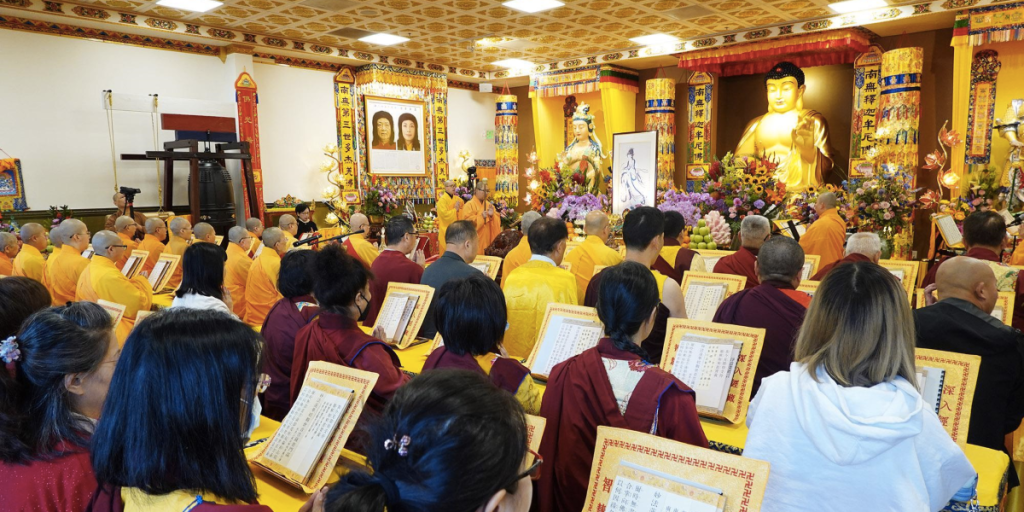
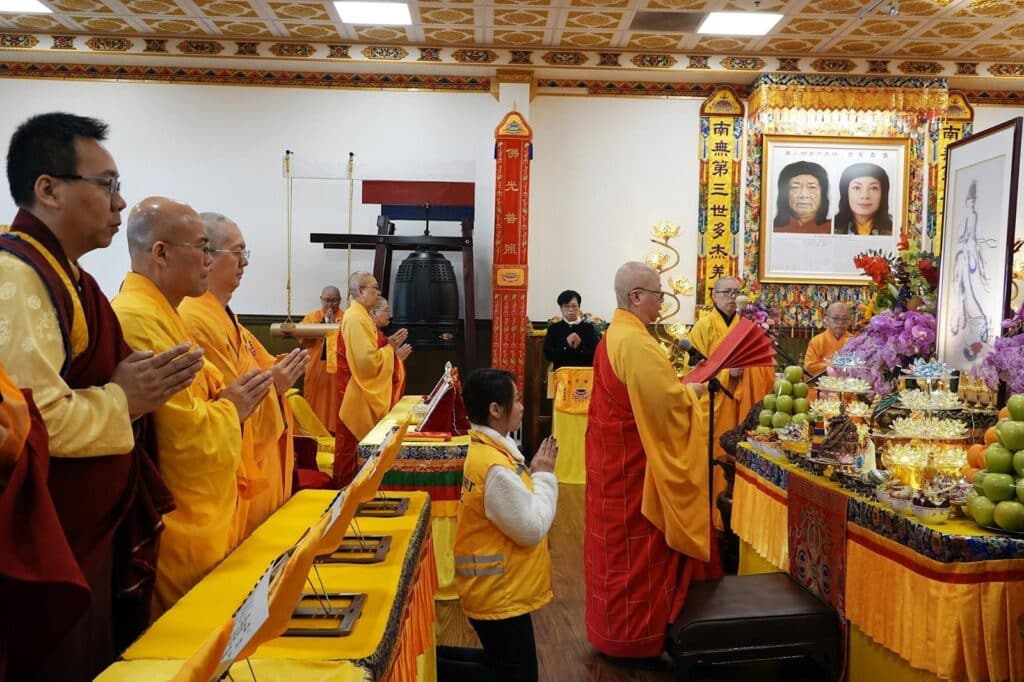
To honor the Holy Birthday of Avalokitesvara Bodhisattva, Buddhists and local residents converged at the Holy Miracles Temple in Pasadena, California, for the Avalokitesvara Bodhisattva Dharma Assembly. Held on March 17, 2024, within the Sakyamuni Buddha Hall, this event was a collaborative effort between the World Buddhism Association Headquarters, Holy Miracles Temple, and Sanger Mission.

Presided over by the Abbess of the Hua Zang Si Temple, Ruzun Ruohui, and jointly guided by Dharma Master JueHui and Dharma Master MiaoKong, the assembly brought together a congregation of holy gurus, eminent monks, dedicated monastics, and others. Their shared purpose was to pay homage to Avalokitesvara Bodhisattva, whose boundless compassion and loving kindness have been a beacon of hope for countless beings throughout the ages. 

In Commemoration of the Holy Birthday of Avalokitesvara Bodhisattva, Dharma Assembly Unites Buddhists in Pasadena

The Avalokitesvara Bodhisattva Dharma Assembly was held in the Sakyamuni Buddha Hall of Holy Miracles Temple.
Photo Courtesy: Joyce Lee

Avalokitesvara Bodhisattva, also known as Guan Shi Yin Bodhisattva in Chinese, is revered for profound compassion and unwavering commitment to alleviating the suffering of all sentient beings. According to Buddhist scriptures, Avalokitesvara Bodhisattva attained Buddhahood eons ago and is known as Zheng Fa Ming Ru Lai, the Correct Dharma Realization Tathagata. Through sacred vows and bodhicitta, the Correct Dharam Realization Tathagata manifests as a Bodhisattva to extend aid to those in need and save sentient beings from suffering. Avalokitesvara Bodhisattva expounded one of the most influential Buddha Sutras – “The Prajna Paramita Heart Sutra,” which encapsulates the profound wisdom of the Buddha, illustrating the meaning of prajna.

While honoring Avalokitesvara Bodhisattva’s great compassion, sovereign wisdom, profound power, and benevolence, the assembly also reflected on the significance of bodhicitta, as elucidated by H.H. Dorje Chang Buddha III in the Sutra – “What is Cultivation.” He imparted, “The broad meaning of bodhicitta encompasses all of the Mahayana Dharma related to saving living beings out of great compassion and the causes leading to attaining the stages of enlightenment of a Bodhisattva.” This essence of conduct rooted in compassion deeply resonated with the attendees, reinforcing their dedication to selflessness and enlightenment. 

The assembly witnessed the recitation of passages from “The Lotus Sutra’s Universal Gate Chapter on Avalokitesvara Bodhisattva,” a revered text extolling the virtues and profound wisdom of Avalokitesvara Bodhisattva. Participants engaged in practices such as meal offerings to the Buddhas, seeking blessings for happiness, auspiciousness, and the enhancement of fortune and wisdom. The gathering also collectively expressed their aspirations for the endurance of world peace, the cessation of calamities, while invoking prosperity, good health, and longevity for all.

As incense wafted through the temple and chants echoed in the halls, attendees were reminded of the profound teachings of compassion and empathy advocated by Avalokitesvara Bodhisattva. The ceremony served as a reminder of the transformative power of faith, uniting individuals from all walks of life in celebration of the Dharma.

Link:https://peacelilysite.com/2024/04/03/in-commemoration-of-the-holy-birthday-of-avalokitesvara-bodhisattva-dharma-assembly-unites-buddhists-in-pasadena/

Source: https://usreporter.com/in-commemoration-of-the-holy-birthday-of-avalokitesvara-bodhisattva-dharma-assembly-unites-buddhists-in-pasadena/?fbclid=IwAR1_ZsMbU5EVdHTB4vs3-N5rxvYPDAyp1yau1Q2yzlR7muGBUg8T34Df5ks_aem_AaJlydz4lJZkOOrnb9SbNs3AvRoEj8k7_mqFFoKYsQDZwiLLe6Rq426dYKN-i1Tm0LtTahh5Y8RLfTYXwOU31LBW