The Seven Treasures of True Wealth

In this world, which sentient being does not desire great wealth? Which of us does not seek blessings and fortune? But what truly defines wealth? Most people measure it by the amount of money they have, the assets they own—be it real estate, cars, or stocks. These tangible things may seem like wealth, but they are easy to lose.

Money and jewels cannot provide lasting security—they can be stolen by thieves.
Reputation and status cannot guarantee stability—enemies can destroy them.
Family and friends are not unshakable—they can change as people’s hearts do.
Illness, aging, and death remind us that the body itself is fragile and impermanent.
Fate and fortune cannot be relied upon—karma follows us, shaping our circumstances.

So, what is the true wealth that we can hold onto in this fleeting lifetime?

Over 2,500 years ago, Shakyamuni Buddha illuminated the path to real wealth—wealth that transcends the material and leads to lasting peace and wisdom. He shared the Seven Treasures of Life, invaluable treasures that guide us to inner fulfillment and enlightenment. These treasures cannot be stored in vaults or spent like gold and jewels. They are the true treasures that nurture the soul.

The Seven Treasures:

  1. The Treasure of Faith
    This is the deep trust a disciple places in the Buddha’s awakening. It is unwavering confidence in the truth of the Buddha’s enlightenment and teachings. Faith is the compass that keeps a person on the path of liberation, a guiding light through life’s trials.
  2. The Treasure of Integrity
    Integrity means living in alignment with one’s highest principles. It manifests as abstaining from harmful actions—whether through speech, thought, or deed. A person with integrity refrains from violence, stealing, falsehood, and indulgence in intoxicants. Integrity is the treasure of a life well-lived with honesty, respect, and compassion for all beings.
  3. The Treasure of Self-Respect
    This treasure is found in the heart of those who uphold their dignity and honor. Self-respect means feeling shame at the thought of misconduct and avoiding actions that degrade one’s character. A person who treasures self-respect lives with a deep sense of morality and avoids causing suffering.
  4. The Treasure of Responsibility
    This treasure reflects an understanding of the consequences of one’s actions. It is a profound sense of accountability for one’s choices, knowing that every action—whether good or bad—impacts oneself and others. Responsibility is driven by a genuine concern for well-being, not out of fear, but from love and care.
  5. The Treasure of Learning
    Learning is the treasure of an eager and inquisitive mind. It is the pursuit of wisdom through listening, reflecting, and studying the teachings. A disciple who treasures learning delves into the Dharma, growing in understanding, and cultivating insight that transforms their perception of life.
  6. The Treasure of Generosity
    This treasure resides in an open and giving heart. It is the joy of sharing wealth, time, and kindness without clinging to material things. A generous person delights in helping others and is always ready to support those in need. Generosity brings happiness both to the giver and the receiver, and it enriches the soul beyond measure.
  7. The Treasure of Wisdom
    Wisdom is the crown jewel of all treasures. It is the deep understanding of life’s impermanence and the realization that clinging to fleeting things leads only to suffering. With wisdom, one sees the world as it truly is, cultivating peace, detachment, and the ability to make decisions that lead to lasting happiness.

True Wealth Beyond Material Possessions

Shakyamuni Buddha shared these seven treasures with his disciples, emphasizing that true wealth is not measured by material abundance but by these inner riches. Whether man or woman, young or old, those who possess these treasures are truly wealthy. Their lives are meaningful, filled with purpose, and unshaken by the ups and downs of worldly fortunes.

So, what can we learn from these timeless teachings?

Cultivate faith and integrity,
Grow in generosity and wisdom,
Walk the path with responsibility and learning,
Always remembering the teachings of the Buddhas,
for they are the guideposts to inner peace, fulfillment, and the truest wealth.

Link:https://peacelilysite.com/2024/09/26/the-seven-treasures-of-true-wealth/

Source: https://wisdomtea.org/2024/09/13/treasure/

The Old Boat and the Journey Within: Lessons from the Buddha on Cultivation and Liberation

During the Buddha’s lifetime, there was a time when he was teaching on the far side of a river. Eager to hear his wisdom, many monks wished to cross the river, but there was only one boat available. The boatman warned them, “My boat is very old, and with so many of you on board, it could be dangerous!” Yet, in their eagerness to reach the Buddha, the monks ignored the boatman’s caution and all climbed aboard. Reluctantly, the boatman set sail.

As they reached the middle of the river, the monks noticed water seeping into the bottom of the boat, and panic began to spread. The boatman calmly said, “I told you this boat is old, but you didn’t listen. Now, if you can’t stay calm, the boat will sink even faster.”

Upon hearing this, the monks stilled themselves and did not dare move. Thankfully, the boatman’s experience guided them safely to the other shore.

When the monks arrived and recounted the incident to the Buddha, he offered this teaching: “When you were in the boat, you feared for your safety. But in daily life, you fail to realize that danger is ever-present. Many people worry about the uncertainty of the future, yet neglect the most important thing — being mindful of the present moment. Focus on this life, this moment. Pay attention to your thoughts and purify your mind of the five poisons: greed, anger, ignorance, pride, and doubt.”

The Buddha continued, “Our bodies are like that old, leaky boat. We must reduce its burden, and the heaviest load is the weight of greed, anger, ignorance, pride, and doubt. Just like in the boat, if we don’t repair our minds and lighten our burdens, we risk sinking. Only by addressing these burdens can we safely reach the other shore.”

“Do not be preoccupied with the thought of being reborn in the Western Pure Land in your next life. Instead, focus on your present condition. Are you free from afflictions in this very moment? Do you act with an open heart? Can you humble yourself in the eyes of others? These are the true questions we must face in life.”

The contemporary Buddha H.H. Dorje Chang Buddha III  has also imparted timeless wisdom on cultivation. His Holiness teaches that true cultivation stems from the depths of your heart, from your bodhicitta — the awakened mind of compassion. Be genuinely friendly and loving to your spouse, your brothers, and your sisters. Foster harmony with your friends, act cooperatively with others, and extend care and help to all sentient beings. Apply the Four Limitless States of Mind — loving-kindness, compassion, joy, and equanimity — and cultivate bodhicitta in every action. Constantly reflect on yourself: How do you treat others with your words? With your thoughts? With your actions?

The conduct of Buddhas and great Bodhisattvas is marked by complete disregard for personal gain. When interests conflict, they give way to others, willingly taking fewer benefits or even none. You must remind yourself, “When others harm or slander me, I will not be disturbed. Even to those who harm me, I will wish them well, sincerely hoping for their happiness. Furthermore, I will take practical steps to help them, even offering financial aid — without letting them know that I am doing so.”

By living in accordance with these teachings, we become holy ones at the causal stage. Without a doubt, such cultivation leads to the perfection of wisdom and virtue. Achieving liberation and accomplishment becomes as simple as turning over one’s hand!

Link:https://peacelilysite.com/2024/09/19/the-old-boat-and-the-journey-within-lessons-from-the-buddha-on-cultivation-and-liberation/

#HHDorjeChangBuddhaIII #DorjeChangBuddhaIII #DorjeChangBuddha #ShakymuniBuddha

#WhatisCultivation #Compassion #Kindness #Liberation

The Wisdom of Humility: A Tale of Zuo Zongtang

Zuo Zongtang, a prominent official of the late Qing dynasty, was renowned not only for his military prowess but also for his skill in the game of Go. His expertise was so exceptional that none of his subordinates could match him.

One day, while traveling incognito, Zuo Zongtang stumbled upon a thatched cottage with a plaque reading “The Best Go Player in the World.” Skeptical, he decided to challenge the owner to a series of games. To his surprise, he won all three matches. With a smile, Zuo Zongtang remarked, “You can take down that plaque now!” Satisfied, he continued on his journey.

However, after a successful military campaign, Zuo Zongtang returned to the same area. Curious to see if the plaque had been removed, he visited the cottage once more. To his astonishment, the plaque was still there. Determined to test his luck again, he challenged the owner to another three games—and this time, he lost all three. Perplexed, he asked the owner how this was possible.

The owner explained, “The last time you visited, you were on a mission to lead troops into battle. I didn’t want to affect your spirit negatively. But now that you’ve returned victorious, I felt free to play at my best.”

This story highlights a profound lesson: True mastery often involves knowing when to yield. A master may win, but true greatness lies in the ability to be gracious. Similarly, wisdom involves understanding the feelings of others and knowing when to let go of one’s own ambitions.

Life often mirrors this dynamic. While the clever may fixate on gains and losses, the truly wise are those who bravely release their attachments. Wisdom is not merely about cleverness but about humility and compassion.

In Buddhism, true wisdom arises from great compassion. When one transcends self-interest and embraces deep compassion, the door to true wisdom opens. H.H. Dorje Chang Buddha III emphasizes in his teachings that genuine cultivation involves prioritizing the well-being of others. In his Dharma discourses, His Holiness has repeatedly highlighted the importance of:

“Establishing great compassion as your foundation. Avoid all evil deeds. Commit to all that is good. Set aside personal interests to benefit others. Patiently endure humiliation and adversity. Practice humility. Purify your mind. When encountering beings, regardless of their condition—be they handicapped, deficient, sick, or healthy—treat them all as family. Understand that all phenomena are governed by causality.”

The Buddha’s life exemplified this principle perfectly. He never sought to be revered from a lofty pedestal but instead viewed himself as a humble servant to all beings. Every action he took was dedicated to promoting peace, liberation, and happiness for all.

As a true Buddha living in the world at this time, H.H. Dorje Chang Buddha III has never been concerned about damaging His own honor, status, or image, for He has effaced Himself in order to benefit living beings by saying that He is an ordinary person like everyone else. In reality, the facts prove that in the few-thousand-year history of Buddhism, H.H. Dorje Chang Buddha III is truly one who has actually manifested the pinnacle of attainment in both Exoteric and Esoteric Buddhism and perfection in the Five Vidyas! His Holiness the Buddha is also the only one in the history of Buddhism who has made it His practice to benefit and serve living beings without accepting any offerings.

Link: https://peacelilysite.com/2024/08/09/the-wisdom-of-humility-a-tale-of-zuo-zongtang/

Source: https://www.sohu.com/a/113788534_456094

Can One Possess All-Encompassing Wisdom?

It is hard to believe that anyone could possess all-encompassing wisdom. For us humans, dedicating a lifetime to mastering even one discipline is remarkable. How could someone be a philosopher, scientist, painter, sculptor, writer, doctor, and inventor all at once, mastering each within a few decades? This seems impossible by human standards. However, the Buddha’s vast and profound wisdom is genuinely real. Over 2,500 years ago, Siddhartha Gautama, the Buddha, invited anyone to ask him any question, promising a detailed answer. This is illustrated in the story of the Buddha teaching a cowherd, as recorded in the “Sutra of the Cowherd Parable.”

King Bimbisara of Magadha once invited the Buddha and 500 disciples to preach in his kingdom for three months. To provide them with fresh dairy products daily, the king arranged for cowherds to stay nearby. As the end of the three months approached, the king suggested the cowherds meet the Buddha. The cowherds, having heard of the Buddha’s wisdom, decided to test him with questions about cowherding. They reasoned that if he could answer these, he truly possessed all-encompassing wisdom.

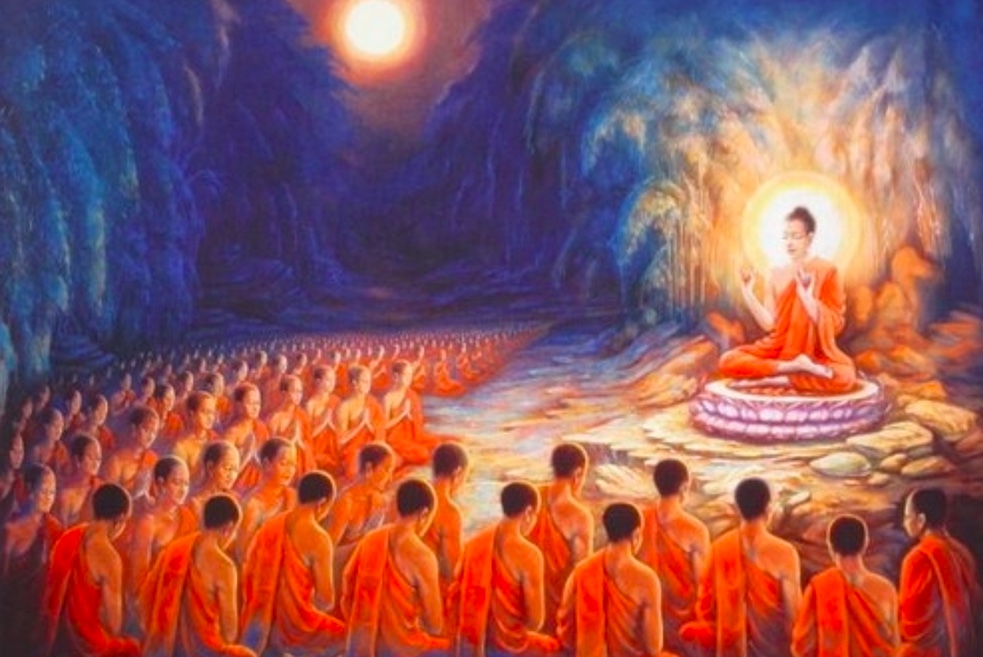
Upon arriving at the Bamboo Grove, they were struck by the Buddha’s radiant presence. They saw him sitting under a tree, glowing like a golden mountain, radiating light like melted gold. Overwhelmed with joy, the cowherds discussed among themselves, “Regardless of whether the Shakyamuni possesses all-encompassing wisdom, anyone who sees him feels joy. His light is unparalleled, his appearance noble, and his presence exudes majesty. His radiance is clear and bright, his demeanor commanding respect, and his body adorned with the aura of virtue, making anyone who sees him feel immense joy.

If he indeed possesses all-encompassing wisdom, it must be due to his immeasurable merits. No worldly treasure can compare to the Buddha’s sublime and dignified presence, which brings great joy and pure faith to all who see him. It is clear that the Buddha must indeed possess all-encompassing wisdom.”

The shepherd thought about this and sat down to pay respects to the Buddha. They asked the Buddha, “What are the various methods a shepherd can use to ensure that the cattle thrive and reproduce well? And what conditions might prevent the cattle from growing properly and living peacefully?” The Buddha answered: There are eleven methods by which a shepherd can ensure the cattle’s well-being and reproduction. What are these eleven methods?

Understanding the Caretaker: Having a strong and capable caretaker who can protect and nourish the cattle, keeping them healthy and well-maintained. Similarly, a monk should be a respected and virtuous leader who can uphold the Dharma and guide beings toward good deeds.

Understanding Color: Knowing the colors of the cattle, such as black, white, or mixed. Similarly, a monk should understand that all phenomena in the world are composed of the four elements: earth, water, fire, and wind.

Understanding Appearance: Recognizing whether the cattle’s appearance is auspicious and whether they will be harmonious. A monk should similarly be able to discern whether someone’s actions indicate wisdom or ignorance.

Understanding Scraping: If insects bite the cattle and their blood is consumed, sores will develop. Scraping can remove these pests and promote the cattle’s well-being. Likewise, a monk should remove harmful views and misconceptions that corrupt their spiritual practice.

Understanding Wound Treatment: Applying medicine to prevent mosquito and fly bites and other injuries. Similarly, a monk should use correct Dharma teachings to protect themselves from delusions and negative emotions.

Understanding Smoke: Using smoke to drive away insects so the cattle can stay in a comfortable, insect-free shelter. Similarly, a monk should use the teaching of Dharma to lead beings to the state of emptiness and liberation.

Understanding Good Ways: Knowing the behavior and preferences of the cattle and how to keep them healthy. A monk should understand how to practice the Noble Eightfold Path to achieve Nirvana and avoid falling into the extreme paths of annihilation or eternalism.

Understanding the Right Place: Knowing how to provide a place where the cattle can live healthily and with minimal sickness. Similarly, a monk should practice and teach the Dharma to cultivate purity and increase good roots.

Understanding Good Routes: Knowing which paths are safe and which places are good for crossing rivers, avoiding places with waves and pests. Similarly, a monk should learn from knowledgeable teachers and adapt their teachings to the capacities of sentient beings.

Understanding Safe Places: Ensuring the cattle live in places free from predators and harmful creatures. Similarly, a monk should maintain mindfulness to avoid the harmful effects of negative emotions.

Understanding Milk Preservation: Ensuring that the mother cow’s milk is not consumed completely by the calf so that both the mother and the owner can benefit from it daily. Similarly, laypeople should use offerings such as clothing and food economically to benefit both the givers and receivers.

The cowherds, after hearing the Buddha’s teachings, thought, “We cowherds know only three or four methods, and our predecessors knew only five or six. Hearing the Buddha today is truly astonishing and unprecedented! The Buddha indeed possesses complete wisdom beyond doubt.”

This is described in the “Sutra of the Parable of the Cowherds.” From this, we understand that there are individuals with complete wisdom.

Today, due to the supreme and exceptional causes and conditions, the original primordial Buddha, Vajradhara has once again descended into the Saha World to manifest all-encompassing wisdom. H.H. Dorje Chang Buddha III once said: Within five years (from 1995 to 1999), if any sentient being asks ME any question, the answer should be given immediately without any hesitation. If there is any need to think about it, or if there is slight hesitation or any fabrication, or if the answer is not comprehensive, I will immediately step down from the Dharma throne and no longer be qualified to teach the Dharma.”

In the more than two thousand Dharma discourses spoken by the Buddha, He provided direct and comprehensive answers to various questions on practice and methods for His disciples. Sometimes, even before the disciples spoke, He would say, ‘I know what you want to ask. You don’t need to say anything; I will answer you directly.’ The disciples would nod in agreement. There was also Zeng Ruzhang, who studied stealth aircraft and asked why they can be invisible. Lobsang Zhenzhu Rinpoche once proposed to see Green Tara, and shortly after, a divine manifestation appeared, H.H. Dorje Chang Buddha III fulfilled his wish…

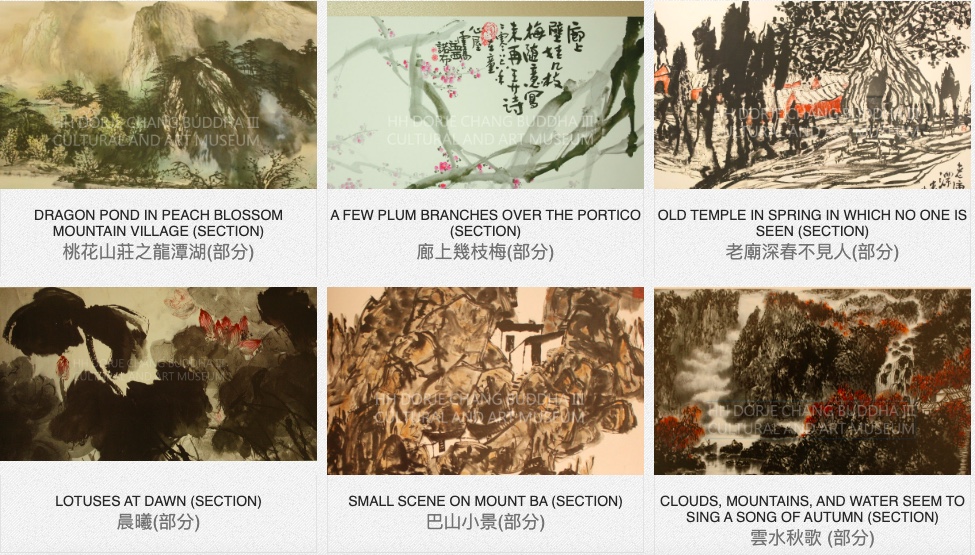
Step into the International Art Museum of America in San Francisco or the  H.H. Dorje Chang Buddha III Culture and Art Museum in West Covina, and you will be able to appreciate world-class masterpieces of art. H.H. Dorje Chang Buddha III has created Chinese paintings, oil paintings, and various styles of calligraphy. In addition to mastering styles from existing schools of painting, such as Realism, Abstract, Line, and Impressionism, H.H. Dorje Chang Buddha III has independently developed sixteen unique schools of painting.

At the fourth session of the World Poets and Culture Conference held in Hungary in 1994, more than 5,600 experts and scholars representing 48 countries and regions unanimously approved conferring upon H.H.  Dorje Chang Buddha III the title “Distinguished International Master,” which has an honorific status comparable to a head of state. 

H.H. Dorje Chang Buddha III possesses extraordinary and saintly wisdom, perceiving the true essence of the universe and life. Whether it be within the various sects of Buddhism or in all worldly fields such as art, science, medicine, and philosophy, His accomplishments reach the highest level in every aspect, with unparalleled expertise and a unique status beyond any saint.”

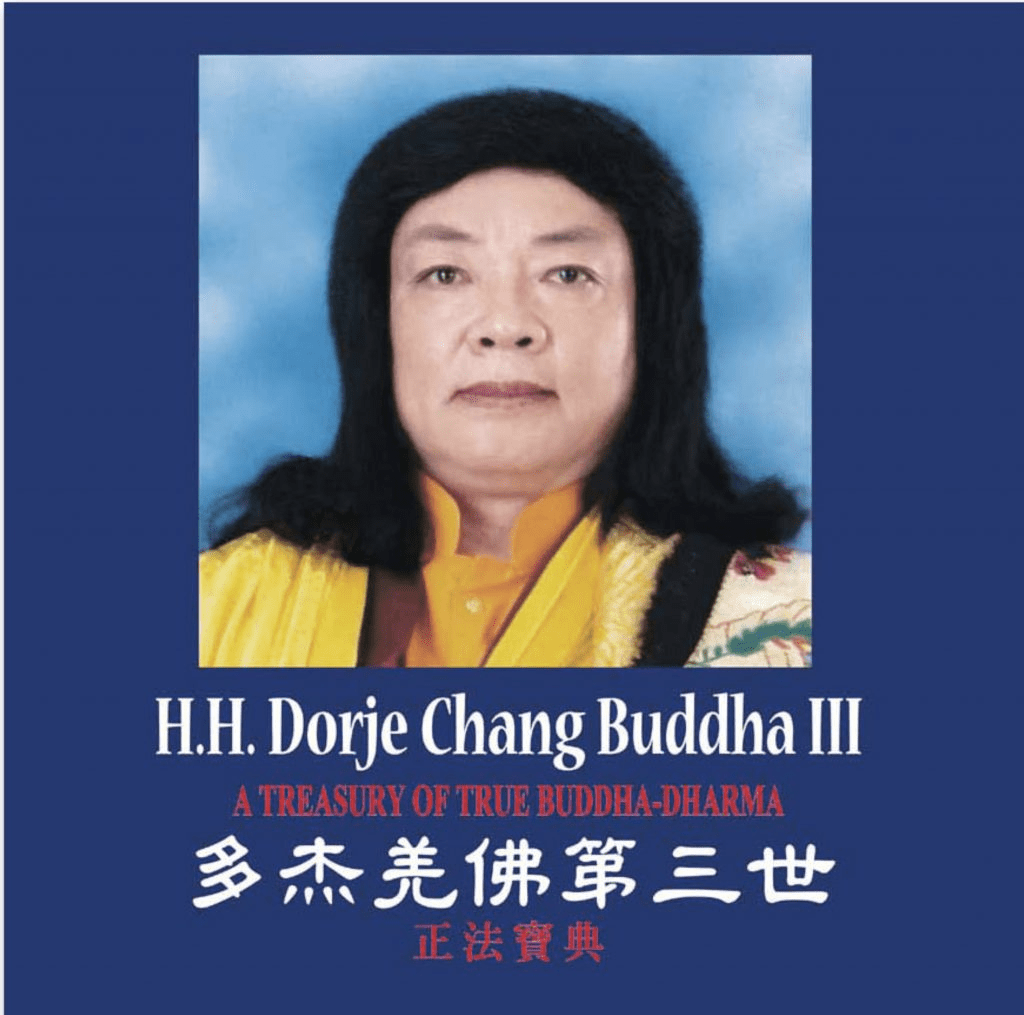
The treasure book, “H.H. Dorje Chang Buddha III,” stands as a testament to this statement. However, this book contains only a drop of water from the vast ocean of Buddha’s teachings and wisdom.

The video below showcases the boundless compassion and highlights the extraordinary accomplishments of H.H. Dorje Chang Buddha III. It was published by China Educational Channels TV and features interviews with Buddhist disciples from around the globe.

Link:https://peacelilysite.com/2024/07/26/can-one-possess-all-encompassing-wisdom/

#MasterWanKoYee #DorjeChangBuddhaIII #HHDorjeChangBuddhaIII ##H.H.DorjeChangBuddha IIICulturalAndArtMuseum#YunSculpture#Art#IrreplicableArt#FiveVidyas#Buddhism#Buddha

A Great Drum

The Wisdom of Generosity: A Tale of Compassion and Righteousness

Once, the Buddha was residing in the Jetavana Monastery in the kingdom of Śrāvastī, spreading his teachings. At that time, there was a prince of a celestial king named Pilu. One day, he flew down from the heavens to the Jetavana Monastery, prostrated himself at the Buddha’s feet, and, with hands folded in reverence, asked the Buddha: “In this world, people are constantly pursuing clothes, food, treasures, pleasures, official positions, and territories. Are there any treasures that pursue people in return?” The Buddha praised Prince Pilu: “You have asked a good question. Indeed, there are situations where territories, treasures, and pleasures pursue people.”

Prince Pilu asked again, “What does it mean for the causes and conditions that fulfill people’s wishes and bring complete satisfaction to always follow them?”

The Buddha replied, “All actions can be categorized into two types: doing good deeds, which brings blessings, and committing evil deeds, which results in calamities. Whether it is blessings or disasters, they always follow each person like a shadow.”

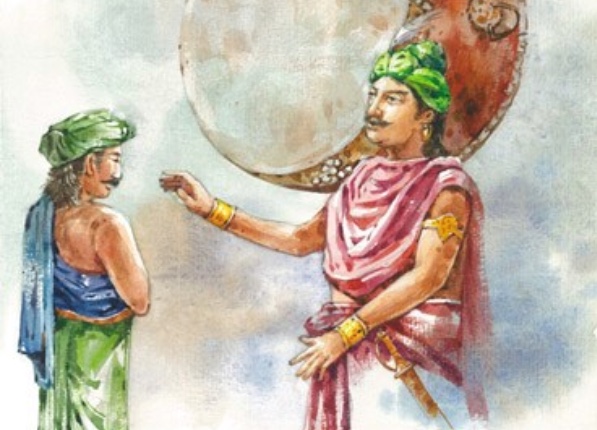
Prince Pilu said, “This is truly extraordinary! Just as the World-Honored One has taught, in my past life, I was once a king among humans. Because I was aware of the impermanence of life and had no attachment to material things, I wanted to practice generosity widely. One day, during a gathering of my ministers, I announced: ‘I want to make a great drum whose booming sound can spread for a hundred miles. Who can accomplish this task for me?’

However, the ministers all replied, ‘We are incapable of doing so!’ At that moment, a minister named Kuang Shang, who had always been loyal to the court and compassionate towards the people, stepped forward and said to the king, ‘I can accomplish this task, but it will require some funding.’

The king said, ‘Great! Whatever amount you need is not a problem.’ Thus, the treasury was opened, and a large sum of money was handed over to Kuang Shang.

Kuang Shang transported a carriage full of treasures to the gate of the royal palace and beat the drum to announce, “Today, our benevolent king, with great compassion, is distributing wealth to the world to relieve all those in poverty and distress, as well as to provide for the needs of practitioners. Anyone in need can come to the palace gate to receive these goods.”

The news quickly spread to neighboring countries. The poor, carrying their babies and bringing along the elderly and young, came in droves, filling all the roads leading to the city. People would often look up to the sky and exclaim, “Thank you, benevolent king! We, the poor people, finally have the chance to escape the days of hunger and cold!”

A year later, the king asked Kuang Shang, “Is the great drum completed?” The minister replied, “Your Majesty, it is done.” The king asked again, “Since it is finished, why haven’t I heard the drum sound?” Kuang Shang responded, “Please, Your Majesty, take a trip into the city tomorrow, and you will hear the sound of virtue resonating far and wide.”

The next day, the king’s procession entered the city, discovering it was crowded and bustling. The king exclaimed, “Why are there so many people in the city?” Kuang Shang answered, “Last year, Your Majesty ordered me to create a great drum, hoping its mighty sound would spread for miles, proclaiming Your Majesty’s benevolence. I thought that a drum made of dead wood and cowhide would not adequately convey the king’s virtue. After much deliberation, I decided to use the treasures Your Majesty entrusted to me to provide for the practitioners and relieve the poor and distressed. Since the announcement, people from neighboring countries have come, hoping for Your Majesty’s benevolence, like hungry children yearning for their compassionate mother.”

Upon hearing this, the king asked the nearby citizens, “Where have you come from?” The people respectfully bowed and replied, “We came from a hundred miles away.” Some said, “I came from two hundred miles away.” Others said, “I came from thousands of miles away.” Then, they all declared, “Wise and benevolent king! Your widespread generosity has brought joy to the people of the neighboring countries. Many have even moved their entire families here, seeking to live under your benevolent protection and hoping for a stable life henceforth.”

The king was very pleased and said, “Kuang Shang, you have done an excellent job! Previously, I was attached to fame, hoping that the great drum’s mighty sound would resonate far and wide. Now, I finally understand that the unrest in the country comes from the people’s unease. Just as a sick body needs medicine to be healed, I should provide remedies to address the people’s suffering. You, my minister, understood the hardships of the people and distributed food to help the poor and needy, allowing the people to live in peace and return their loyalty to me.” Thus, the king declared, “From now on, as long as it concerns the people’s needs, take care of it to the best of your ability without needing to consult me!”

After the king’s natural death, he was reborn in heaven as King Miao. After his life in heaven ended, he was reborn as a Cakravartin (Wheel-Turning) King on earth, always accompanied by seven treasures and surrounded by followers who protected him. Now, he has again been reborn in heaven as a prince of the heavenly king. All of this was because he strictly upheld pure precepts and compassionately aided all living beings, earning such blessings. If we follow the Buddha’s teachings and rectify our body, speech, and mind, we can all obtain such magnificent blessings.

The Buddha encouraged Prince Bilu, saying, “A person’s actions are like a shadow following the body, or an echo responding to a sound. For every cause, there is an effect, and retribution is certain!” Prince Bilu, after hearing the Buddha’s teaching, joyfully made obeisance and departed.

A Great Drum

Link:https://peacelilysite.com/2024/05/23/a-great-drum/

Source: https://www.ctworld.org.tw/sutra_stories/story801-1000/story862.htm,


Unlocking Life’s Wisdom: Lessons from Benjamin Franklin

In the intricate tapestry of life, the tragedy often unfolds in the untimely aging of our bodies and the delayed acquisition of wisdom. The relentless pace of time is keenly felt as we advance in age, and it appears to quicken its stride. Acknowledging the finite and precious nature of life, the imperative emerges to use time judiciously, ensuring it doesn’t slip away in vain. Wisdom, a product of experience, demands the investment of time to mature.

Many traverse their youthful years without a profound understanding of life or the ability to make sound decisions. These capabilities tend to evolve slowly, sculpted by the crucible of life and work experiences. Regrettably, just as individuals amass the wisdom to navigate life effectively, the opportune moments for significant changes might have already slipped through their grasp.

To avert the arrival of wisdom too late, one must treasure time, actively seek learning and growth opportunities, and expedite wisdom acquisition through continuous learning, reflection, and introspection. Making sagacious choices early in life becomes a shield against future regrets.

The aforementioned philosophy mirrors Franklin D. Roosevelt’s contemplation and insight into life, urging individuals to proactively plan and reflect on their lives from a young age. Striving for the wisdom that typically takes years to acquire allows for the optimal utilization of limited time, resulting in a more fulfilling and meaningful life.

Persuasion: Appealing to Interests Over Reason

In the realm of persuasion, appealing to interests often outshines the use of reason alone. The driving force behind human behavior lies in the pursuit of benefits and the avoidance of harm. To sway others convincingly, it is crucial to showcase the tangible or intangible benefits they stand to gain by adopting a suggestion. This pragmatic approach surpasses relying solely on logic and rational arguments.

Rooted in fundamental psychological principles of human decision-making, individuals tend to weigh their interests and benefits when making choices. Clearly illustrating how adopting a suggestion directly or indirectly benefits them—such as saving time, reducing costs, improving health, or increasing happiness—makes the suggestion more likely to be accepted.

While rational thinking plays a pivotal role in decision-making, emotions profoundly influence human choices. Emphasizing how a suggestion meets others’ needs, desires, or alleviates their pain can evoke emotions and enhance the persuasiveness of the argument.

The call to appeal to interests doesn’t negate the importance of logic and reason in persuasion. Rather, it recognizes that addressing individuals’ interests alongside rational thinking fosters emotional resonance, increasing the likelihood of persuasive success.

Combining the demonstration of benefits with sound reasoning can comprehensively influence the audience’s decision-making process. Yet, the essence lies in the reminder that, in persuading others, emphasis should be placed on making them see the direct benefits of following the advice. Such appeals are more attractive and compelling, urging action.

Words of Wisdom: Thoughtful Speech and Lifelong Learning

“Fool’s hearts are in their mouths; wise men’s mouths are in their hearts.” This timeless advice urges against reckless or thoughtless speech, stemming from the eagerness to express ideas without due consideration. A wise person contemplates before speaking, filtering thoughts and emotions before choosing words. This not only avoids misunderstandings and conflicts but also reflects maturity and wisdom.

Thinking more and speaking less is the mantra. Caution with words prevents reckless speech. Investing in knowledge, unlike wealth, provides lasting returns. Allocating resources to personal growth and wisdom yields valuable returns. While wealth can be stolen or lost, knowledge gained through learning becomes an everlasting asset, guiding individuals to make wise decisions and achieve success.

Investing time, money, and energy in education and learning ensures acquired knowledge becomes an intrinsic part of oneself—a secure and irrevocable asset. Returns from self-improvement far exceed material wealth accumulation.

Stages of Life: Wisdom’s Evolution

At twenty, willpower dominates; at thirty, wit takes control; at forty, judgment prevails. Different life stages exhibit distinct psychological and competency characteristics. The twenties are often driven by willpower, with decisions based on impulses and passion. By thirty, adaptability and mechanisms take precedence, with accumulated experience guiding creative problem-solving. Wit becomes crucial for survival and success. By forty, decisions are grounded in mature judgment, informed by rich experiences.

Judgment becomes the key ability for this age group—guiding individuals to make rational and long-term decisions in complex environments. Mental development undergoes changes with age, and active learning and adaptation should be encouraged at every stage. Utilizing each period’s characteristics to achieve personal potential and goals is the key.

Continuous Growth: The Lifelong Pursuit

In the journey of life, successful individuals strive for daily self-improvement. Failures, on the other hand, repeat the same patterns daily. The distinction between success and failure lies in continuous self-improvement versus stagnation.

Some individuals stagnate in the early stages of life, and while physically alive, they lack true meaning and vitality. The essence of life isn’t solely in its length but in its depth and quality. Lifelong learning, continuous self-improvement, and exploration are crucial to maintaining vitality and meaning. Regardless of life stage, the pursuit of growth and change is paramount, avoiding premature spiritual death and infusing life with vibrancy and progress.

Positive Communication: The Power of Praise

“I won’t say anything negative about anyone; I’ll only speak positively about everyone I know.” Focusing on people’s strengths rather than weaknesses builds and maintains good relationships. Choosing to selectively share opinions about others, even if aware of their shortcomings, promotes a positive atmosphere.

This practice avoids hurting others’ self-esteem, reduces conflicts, and fosters a positive environment. Commending others’ strengths and achievements makes them feel respected and recognized, enhancing relationships and intimacy. Praise motivates individuals, opens their hearts, and fosters a positive and constructive attitude in interpersonal relationships.

By concentrating on others’ strengths and offering sincere praise, a harmonious social environment is cultivated, and deeper connections are formed. This approach applies not only to personal relationships but also to interactions in the workplace and public life.

Thoughtful Debate: Constructive Communication

Debating and refuting in interpersonal communication can have potential negative impacts, particularly when this behavior becomes habitual. Even if one proves their point in an argument, victories may lack substantive value, potentially sacrificing relationships. People value being respected and understood more than being persuaded or defeated.

Adopting an open and constructive attitude in communication, listening, respecting others’ viewpoints, and seeking understanding fosters healthy relationships. This approach prioritizes effective communication over the pursuit of victory in every argument.

Practical Wisdom: Testing Thoughts Through Action

Thoughts lead to actions, and actions have consequences. The true test of thoughts lies in observing the effects of the behavior they guide. Judging the value of a thought is most effectively done by observing the practical effects of the behavior it influences. Actions guided by positive thoughts, leading to personal growth and societal improvement, are considered valuable and correct.

The effectiveness of thoughts and beliefs is best evaluated by their application in real life, focusing on outcomes rather than theoretical consistency. A results-oriented approach encourages critical thinking based on actual consequences, promoting self-awareness and a practical mindset.

Navigating Contradictions: Empathy and Self-Reflection

In a world where fools and cowards coexist, Franklin’s observation highlights the contradiction in human behavior. People often find enough courage and wisdom to endure others’ misfortunes and mind others’ business. This contradiction emphasizes the need for self-improvement rather than excessive intervention in others’ lives.

“Love thy neighbor, but do not tear down your fence” underscores the importance of maintaining good social relations while respecting personal boundaries and privacy. Balancing relationships while preserving personal independence and dignity fosters both community welfare and personal growth.

Overcoming Poverty: The Power of Mindset

“Poverty itself is not frightening; what is truly frightening is the mindset that believes one is destined to be poor or bound to die poor.” The real danger lies in negative thought patterns perceiving oneself as inevitably poor. Poverty is a changeable condition, and individuals can improve their situations through effort, education, and innovation.

Rejecting the acceptance of poverty as an unchangeable fate and believing in the ability to alter life circumstances fosters optimism. Maintaining a positive mindset provides the motivation to seek change, find opportunities, and achieve personal growth and success.

Benjamin Franklin’s Timeless Wisdom

Franklin’s thoughts and quotes encompass various facets of life, offering lessons in personal growth, interpersonal relationships, professional ethics, and social responsibility. His profound insights and pragmatic philosophy remain relevant, providing guidance on how to balance personal development with social responsibility, navigate complex relationships, and approach life’s challenges with a positive attitude.

As we absorb Franklin’s wisdom, we gain not only a deeper understanding of human nature and social phenomena but also a blueprint for a more fulfilling and meaningful life. Franklin’s legacy endures as a beacon of practical wisdom, encouraging us to embrace continuous learning, cultivate positive relationships, and face life’s journey with resilience and optimism.

Link:https://peacelilysite.com/2024/03/07/unlocking-lifes-wisdom-lessons-from-benjamin-franklin/

Benjamin Franklin’s 13 Virtues: A Blueprint for Personal Development

A Path to Personal Excellence

George Washington may rightly be known as the “Father of his Country,” but for the two decades before the American Revolution, Benjamin Franklin held the title of the world’s most famous American.

Franklin, a celebrated scientist and inventor, earned recognition for his groundbreaking electrical experiments, winning the Royal Society’s Copley Medal—a prestigious 18th-century equivalent of the Nobel Prize. His notable inventions included the lightning conductor, the first map of the Gulf Stream, and a unique musical instrument, the glass armonica. Renowned composers like Gluck, Mozart, and Beethoven created concertos for this instrument. Franklin’s genius received international acclaim, with Immanuel Kant describing him as “The Prometheus of Modern Times,” and David Hume hailing him as America’s “first great man of letters.”

Benjamin Franklin, a polymath and one of the Founding Fathers of the United States, left an enduring legacy not only for his political contributions but also for his philosophy of personal development. In his autobiography, Franklin outlined 13 virtues that he believed were crucial for leading a virtuous and successful life. This blog post will explore each of these virtues and delve into how Franklin practiced them in his own life.

  1. Temperance: Franklin advised moderation in eating and drinking, emphasizing the importance of avoiding excess. By maintaining temperance, individuals could achieve a clear and focused mind. Franklin recognized that a balanced lifestyle laid the foundation for success in cultivating other virtues.
  2. Silence: The virtue of silence urged individuals to speak only when their words could benefit others or themselves, discouraging trifling conversation. Franklin realized the power of listening and the importance of thoughtful communication for personal and intellectual growth.
  3. Order: To bring order to one’s life, Franklin recommended organizing belongings and allocating time efficiently. By assigning specific places for possessions and dedicating time to each aspect of one’s business, an individual could enhance productivity and reduce chaos.
  4. Resolution: Resolution involved the commitment to fulfill one’s duties and promises without fail. Franklin understood that steadfast determination was crucial for personal and professional success, encouraging individuals to set goals and work relentlessly towards achieving them.
  5. Frugality: Franklin advocated for mindful spending, emphasizing that expenses should serve a purpose, either benefiting oneself or others. This virtue highlighted the importance of avoiding wastefulness and making financial decisions with a long-term perspective.
  6. Industry: Losing no time and being consistently engaged in useful activities formed the basis of the virtue of industry. Franklin valued hard work and believed that avoiding unnecessary actions was essential for personal progress and achievement.
  7. Sincerity: Sincerity required the avoidance of deceit and the cultivation of honest and just thoughts and speech. Franklin believed that sincerity contributed to building trust in personal and professional relationships.
  8. Justice: The virtue of justice focused on treating others fairly and fulfilling one’s duty to both prevent harm and provide benefits. Franklin emphasized the importance of not wronging others through actions or neglect.
  9. Moderation: Avoiding extremes in emotions and reactions, particularly in response to injuries, was crucial for maintaining composure and cultivating the virtue of moderation. Franklin recognized the value of forbearance in dealing with challenges.
  10. Cleanliness: Tolerating no uncleanliness in body, clothes, or habitation reflected Franklin’s belief in the importance of personal hygiene and a clean environment for overall well-being.
  11. Tranquility: Tranquility involved maintaining a calm and composed demeanor, especially in the face of trifles and common accidents. Franklin valued the ability to remain undisturbed and focused on long-term goals.
  12. Chastity: Chastity, as outlined by Franklin, suggested a responsible approach to intimate relationships, emphasizing health and the well-being of oneself and others.
  13. Humility: Imitating the virtues of Jesus and Socrates, humility was the capstone of Franklin’s 13 virtues. Humility involved recognizing one’s strengths and weaknesses, learning from others, and continually striving for self-improvement.

Franklin’s approach to acquiring these virtues was systematic. He advised focusing on one virtue at a time, mastering it before moving on to the next. By prioritizing temperance, Franklin believed that a clear and focused mind would make subsequent virtues easier to acquire. This deliberate and methodical approach allowed him to build a foundation for a virtuous life.

Benjamin Franklin’s 13 virtues remain a timeless guide to personal development and success. By understanding and incorporating these principles into our lives, we can strive towards a more virtuous and fulfilling existence, following in the footsteps of one of history’s most influential thinkers and statesmen.

Benjamin Franklin’s 13 Virtues: A Blueprint for Personal Development

Link:https://peacelilysite.com/2024/01/12/benjamin-franklins-13-virtues-a-blueprint-for-personal-development/

#BenjaminFranklin #Virtues #PersonalDevelopment #Thinkers #Statesmen#Temperance#Humility

Source: https://www.mountvernon.org/library/digitalhistory/digital-encyclopedia/article/benjamin-franklin/

The transformative story of Angulimala

A Tale of Compassion and Transformation

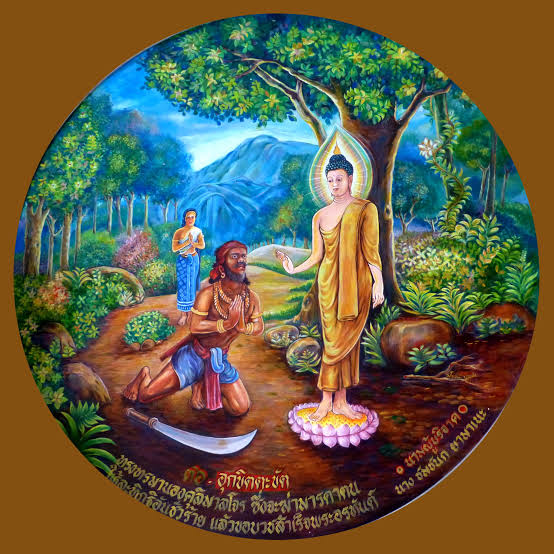
The Angulimala Sutta, a captivating narrative from Buddhist scriptures, recounts the remarkable transformation of a blood-thirsty murderer into a compassionate monk under the profound influence of the Buddha. Angulimala, notorious for his brutal killings and a garland of severed fingers, terrorized the realm of King Pasenadi. The tale unfolds during a time when the Buddha, with unwavering compassion, confronted the darkness that shrouded Angulimala’s soul.

Angulimala’s notoriety as a ruthless killer, leaving villages and towns in a state of fear, paints a grim picture of his violent nature. His garland of fingers serves as a gruesome testament to the lives he had taken, making him a symbol of terror and malevolence.

Undeterred by Angulimala’s fearsome reputation, the Buddha ventured into the region where the murderer roamed freely. Despite warnings from locals about the dangers posed by Angulimala, the Buddha calmly continued his journey, determined to confront the source of darkness.

As the Buddha walked towards Angulimala’s lair, the air thick with tension, he encountered the menacing killer. Rather than responding with fear, the Buddha skillfully engaged Angulimala in a dialogue that would alter the course of his life. The Buddha’s words, laden with wisdom and compassion, began to unravel the tightly woven fabric of Angulimala’s violent identity.

In a pivotal moment, as Angulimala sought to chase down the Buddha with murderous intent, the Buddha employed a feat of psychic power. Despite running at full speed, Angulimala found himself unable to catch up with the Buddha walking at a normal pace. This display of supernatural ability left Angulimala astonished and created a space for the transformative dialogue that followed.

Angulimala urgently called out, “Stop, contemplative! Stop!” The Buddha calmly replied, “I have stopped, Angulimala. You stop.”

Perplexed, Angulimala asked, “While walking, contemplative, you say, ‘I have stopped.’ But when I have stopped, you say I haven’t. I ask you the meaning of this: How have you stopped? How haven’t I?”

The Buddha responded, “I have stopped, Angulimala, once and for all, having cast off violence toward all living beings. You, though, are unrestrained toward beings. That’s how I’ve stopped and you haven’t.”

Baffled by the Buddha’s profound words, Angulimala sought clarity on the apparent contradiction. The Buddha’s response not only clarified the cessation of violence within his own heart but also illuminated the unrestrained nature of Angulimala’s actions. This insightful exchange marked the beginning of a transformative journey within Angulimala, planting the seeds of change in his consciousness.

With a heart now inclined towards virtue, Angulimala, in an impromptu moment, requested ordination from the Buddha. The Buddha, recognizing the sincerity of Angulimala’s transformation, granted his request, welcoming him into the community of monks adorned with saffron robes and shaven heads.

Even as Angulimala embraced the monastic life, local villagers, fearing his past atrocities, sought protection from King Pasenadi. The king, in response, assembled an army and approached the monastery. Despite the villagers’ pleas to “stamp him out,” the Buddha’s wisdom paved the way for an unexpected resolution.

When questioned by the Buddha about how he would treat Angulimala if he had truly renounced violence, King Pasenadi underwent a profound transformation. The Buddha’s teachings on discernment and compassion prompted the king to reconsider his stance. Witnessing Angulimala’s monkhood, the king shifted from disbelief to acceptance, vowing to support him on his path to redemption.

The Angulimala Sutta not only narrates the personal transformation of a notorious murderer but also highlights the transformative power of compassion and wisdom. The Buddha’s fearlessness, compassion, and skillful means shattered the shackles of violence that bound Angulimala. Moreover, the sutta portrays the ripple effect of transformation, as even King Pasenadi undergoes a change of heart. This timeless tale serves as an enduring testament to the potential for redemption, forgiveness, and the profound impact of the Buddha’s teachings on even the most deeply entrenched patterns of suffering.

The transformative story of Angulimala

Link:https://peacelilysite.com/2023/11/15/the-transformative-story-of-angulimala/

#AngulimalaSutta #ShakymuniBuddha #Transformation #Compassion #Wisdom #Monk

Source: https://blogs.icrc.org/religion-humanitarianprinciples/a-humanitarian-re-reading-of-the-angulimala-sutta/#:~:text=Moved%20by%20the%20Buddha’s%20words,saffron%20robes%20and%20shaven%20heads.

Everything is the Best Arrangement

Photo by Benjamin Suter on Pexels.com

A Lesson in Patience and Gratitude

Life has a way of presenting us with unexpected situations, challenging our beliefs and testing our patience. In a world where instant gratification is often sought after, we sometimes forget the value of patience and the wisdom of waiting for life’s answers. A thought-provoking encounter between a traveler and an old lady by the river teaches us the importance of embracing life’s mysteries and being grateful for every experience.

Imagine a tired traveler standing beside a vast river, witnessing an old lady desperately in need of help to cross. Overcoming his own exhaustion, the traveler selflessly aids her in crossing the river. However, his act of kindness is met with disappointment when the old lady hurriedly departs without expressing gratitude. Regret fills the traveler’s heart, and he questions the worth of his effort without a simple “thank you.”

Hours later, just as the traveler’s energy reaches its lowest point, a young man catches up to him. To the traveler’s surprise, the young man expresses gratitude for helping his grandmother and presents him with dried food and a horse as tokens of appreciation. The traveler realizes that the old lady’s departure was not an act of ingratitude but a testament to the unpredictability of life’s unfolding. Sometimes, the answers we seek are not immediate; we must wait patiently to hear the echoes of our actions.

Life is often compared to a tapestry, woven with threads of joy and sorrow, success and failure. Similarly, the years are likened to giant trees, and life itself is the little birds that fly in and out. Adversity may cause our dreams and achievements to fade like bubbles, but in those moments of despair, we must shift our perspective. By embracing the belief that “everything is the best arrangement,” we can find solace and trust in life’s unfolding mysteries.

When faced with the bitter winds and rains of life, it may seem unbearable to our hearts. However, if we persevere and patiently wait, life will reward our efforts. Good times may not immediately emerge, but with steadfast dedication, they will gradually find their way to us. Life’s returns are not always immediate, but by staying hopeful and diligent, we open ourselves to the possibility of unforeseen surprises and positive transformations.

Instead of becoming upset or frustrated with life’s twists and turns, let us cast our eyes towards the horizon of life. Let us resist the urge to resort to self-pity or blame, and instead, cultivate gratitude for every encounter and experience. By maintaining an optimistic outlook, striving for personal growth, and believing in the inherent goodness of the universe, we create a space for blessings to manifest.

Life’s journey is filled with unpredictable encounters, and not all answers are readily available to us. Through the tale of the traveler and the old lady, we are reminded of the power of patience and the importance of gratitude. Remember, “everything is the best arrangement.” By embracing this belief, staying hopeful, and expressing gratitude for life’s encounters, we can navigate the twists and turns with a sense of peace and contentment. So let us be grateful for the wisdom gained from reading this article and cherish the beauty of life’s unfolding mysteries.

A Lesson in Patience and Gratitude

Link:https://peacelilysite.com/2023/06/02/everything-is-the-best-arrangement/

#Patience #Gratitude #Journey #unpredictableEncounters #Wisdom #BestArrangement #Traveler

The Story of Bhiksuni Weimiao

The Story of Bhiksuni Weimiao

Sutra about Wisdom and the Foolishness [賢愚経] ( A sutra translated into Chinese in 445 by Hui-chüeh and others. It contains sixty-two Buddhist tales (sixty-nine tales, in a separate extant edition). A Collection of Records concerning the Tripitaka, the catalog of the Buddhist canon compiled by Seng-yu (445–518), ascribes the translation of the Sutra on the Wise and the Foolish to others. According to that work, T’an-hsüeh, Wei-te, and six other priests went westward from northwestern China to Khotan on the southern edge of the Takla Makan Desert to seek Buddhist scriptures. They happened upon a great Buddhist ceremony that was held once every five years at a monastery. There they heard the learned monks expound the Buddhist scriptures and rules of monastic discipline in the language of Khotan. T’an-hsüeh and the others translated and recorded the lectures in Chinese. Later they returned from Khotan and, upon reaching the region of Turfan, compiled the lectures given by the monks in Khotan as a single sutra, which is known as the Sutra on the Wise and the Foolish. The sutra contains stories explaining the causal relationship between incidents in one’s past existence and those in one’s present existence. In each of these stories, Shakyamuni Buddha makes a connection between someone living in the present and a person involved in a past incident. The law of cause and effect states that every single action in the universe produces a reaction no matter what. We need to abstain from anything that is evil, do everything that is good, and use the correct understanding and views to cultivate. Don’t violate any of the precepts, otherwise you will end in miserable retribution. 

This story comes from ” Karma Scriptures about Wisdom and Foolishness “, the third volume in the ” Weimiao Bhiksuni “. In the era of Buddha Sakyamuni, many aristocratic women after ordination were very worried that their habits, such as lust, anger and ignorance, had not been eliminated yet. So they gathered to consult Bhiksuni Weimiao who had already attained the arhatship. Weimiao Bhiksuni told everyone the pain of the desire to bring, and tells the story of her previous life experience…

The Story of Bhiksuni Weimiao

Link:https://peacelilysite.com/2022/12/28/the-story-of-bhiksuni-weimiao/

#Buddhism#BuddhistSutra#Wisedom#Foolishness#KarmaScriptures#WeimiaoBhiksuni#CauseandEffect#Casulity

Source: https://www.nichirenlibrary.org/en/dic/Content/S/329