At 92 years old, Tasha Tudor lived a life that seemed lifted from the pages of a fairy tale. A beloved American picture book author and illustrator, her world was filled with charm, creativity, and a profound connection to nature. Her quiet, pastoral lifestyle captured the imagination of many, and a documentary about her life gained widespread acclaim in both the United States and Japan—earning her the title of one of the most admired women of her time.
Tasha was born into a prominent family, surrounded by great minds and cultural icons—her home once welcomed the likes of Albert Einstein and Mark Twain. Growing up in such an environment may have nurtured her early independence and vivid imagination. While others her age dreamed of parties and popularity, Tasha longed for a simpler dream: to own a cow and live close to nature.
At just 15, she left formal schooling to follow her passion for art and farming. This bold decision marked the beginning of a remarkable artistic journey. Over her lifetime, Tasha created more than 80 beautifully illustrated children’s books, winning the prestigious Caldecott Medal and receiving the Queen’s Lifetime Achievement Award. Her delicate, nostalgic illustrations shaped the childhoods of generations.
At 23, she married and raised four children. But when her unconventional lifestyle became too difficult for her husband to accept, they separated. Tasha pressed on, supporting herself through her art and craftsmanship.
When she was 57, and her children had grown, Tasha embraced the life she had always dreamed of. She moved to the hills of Vermont and built a cottage modeled after an 18th-century farmhouse. There, she lived without electricity, running water, or modern conveniences—choosing instead to return to the rhythms of a bygone era.
Her days were filled with meaningful simplicity: raising chickens and sheep, growing vegetables, preparing meals by hand. She wove and sewed her own clothes—elegant dresses and colorful scarves—always taking pride in her appearance, even in solitude.
Tasha found deep joy in the natural world. She built a lush, secret garden where flowers bloomed in every season, and she tended it with love. Whether watering plants or walking through her fields, she embraced each moment with a grateful heart.
Though she lived alone, she was never lonely. Her cats and dogs kept her company, and her grandchildren visited often. Her home radiated warmth, creativity, and quiet joy.
“Letting go is a kind of strength,” she once said.
In an age obsessed with material gain, Tasha Tudor’s life reminds us that true richness lies in simplicity. She let go of the noise and temptations of modern life, choosing instead a path of peace, beauty, and authenticity.
Tasha Tudor didn’t just illustrate magical worlds—she lived in one. And through her life and work, she continues to inspire us to slow down, appreciate the everyday, and create beauty from the inside out.
In a world increasingly dominated by artificial intelligence and digital innovation, Dr. Jeff Walker, a retired neurosurgeon turned philanthropist, is on a mission to “keep the humans in the humanities.” His Walker’s Rising Stars Scholarship Program, launched in 2003 in partnership with the Pinellas Education Foundation in Florida, has awarded over $970,000 to high school students excelling in Dance, Instrumental, Theater, Visual Arts, and Vocal Performance.
Now, with a bold vision to expand the program nationally, Walker is poised to reshape arts education across the United States: “I want this to expand to cover the whole country and change arts education in high school and college,” says Walker, who has made it his mission to provide free education for all.
Walker’s inspiration—rooted in personal tragedy, a love for the arts, and a deep commitment to education—drives a movement that empowers young artists to pursue their dreams without the crushing weight of student debt.
His path to philanthropy was anything but conventional. A Duke-trained neurosurgeon who performed over 10,000 operations and established a major trauma center in Florida, Walker’s career was defined by precision and impact.
Yet his drive to give back stems from a deeply personal experience at age five. “I had a tragic event, a near-drowning incident,” he recalls. His best friend didn’t know how to swim. Influenced by childhood media and misunderstanding the risks, he pushed him into the water. The outcome was devastating: his friend drowned, and Walker nearly did too. “I felt so guilty, blocked it out for 15 years,” he says. “I think I tried to overcompensate by helping people. It was something that took an incredibly long time for me to forgive myself for.”
This tragedy instilled a lifelong mission to serve others—first through medicine and later through philanthropy. His medical journey began under the influence of his father, a dentist and university chairman, and his mother. “I scrubbed in on over 200 open-heart operations,” he says. But it was in medical school that he discovered neurosurgery, drawn to the brain as “what you are.” He completed his residency at Duke by 1985, laying the foundation for a career that blended science with service.
Walker’s love for the arts, though not as a performer, also shaped his vision: “I played the piano when I was younger, very methodical, classical music,” he shares. A humbling moment came at 15 when a friend played a Beatles song effortlessly, revealing Walker’s limitations. “I couldn’t do that at all,” he admits.
Yet, this experience underscored his belief in the arts as a universal force: “Every culture has their own dance, songs, music, symphonies, operas—the arts are a unifying factor,” he says. “There’s so much diversity in America today, and this brings everyone together.”
In 2003, Walker channeled his passion for education and the arts into the Walker’s Rising Stars Scholarship Program, partnering with the Pinellas Education Foundation to support local high school students. The program, which awards scholarships for arts education, is a vibrant celebration of talent, culminating in an annual event at the Mahaffey Theater.
“The kids get there at noon, we have lunch, they audition during the day, and then put on a show at night—three-minute acts, five categories, with the county jazz band. Families are cheering, it’s super fun,” he says.
The program’s impact transcends financial support. After the show, students gather backstage, hugging and celebrating. “They’re all aspiring artists, and you can feel the love,” Walker says.
As a father of four and grandfather of eight, Walker connects deeply with the pride parents feel at these events. “You’ve taken these kids to music, art, dance lessons for years, and to see them on stage as young adults—the pride and love bounce off the walls.”
The scholarships address the broader student loan crisis, which Walker views as a significant burden on young people. “Every dollar is $1 the family doesn’t have to spend on education,” he says.
Beyond financial relief, the program instills confidence and recognition. “It’s not easy to get on that stage, knowing hundreds of kids are vying for that spot,” Walker says. “The confidence they get is key.”
He recalls a student letter that captures the program’s transformative power: “She wrote, ‘I was going to go to St. Pete College, but after winning this, I’m going to Manhattan School of Art.’ It’s a life-changing event.”
Walker estimates that the program changes “about half the kids’ lives,” with alumni achieving remarkable success. “They’re making a living in the arts,” he says proudly.
Walker’s inspiration for Rising Stars is grounded in his belief in education as a pathway to opportunity: “As a Duke-trained neurosurgeon, I went to school a long time, and I owe everything I have to my education,” he states. “In the end, when you look back on your life, it’s not what you get, it’s what you give.”
This philosophy fuels his commitment to expanding arts education, particularly in public schools. “Education is the way out,” he says. “Through hard work and education, I still believe in the American Dream—you can be anything.”
Walker also recognizes the challenges the arts face in an increasingly digital age. He trademarked the phrase “keep the humans in the humanities” to emphasize the need for genuine human creativity. “How do you combat that? You create a generation of talented singers, dancers, actors,” he explains. The program reinforces human expression and creativity during a time when automation is on the rise.
Now, Walker has announced the national expansion of Rising Stars, choosing the prestigious Sundance Film Festival to unveil his plan. His goal: establish 1,000 program sites, each supported by a $4 million endowment that yields 5% annually to fund 25,000 students each year. “After four years, that’s 100,000 Rising Stars in college—enough to transform arts programs,” he calculates.
The national rollout will replicate the local model, with auditions and performances administered through public school districts and education foundations. “Everything goes through the school district, the teachers,” Walker says, highlighting a grassroots approach. Local events will feed into regional, state, and national competitions—potentially televised to amplify awareness and participation.
“This will bring every community together to support their young people,” he says, envisioning the program as a unifying force during divisive times.
Walker also sees the initiative as a response to the underfunding of arts education. “In high school, the arts are underfunded,” he notes. “Everybody’s talking STEM these days, but an education in the arts is very difficult.”
The program aims to uplift students pursuing creative careers, helping them gain recognition, validation, and the resources they need to thrive. “This program tells them, ‘You’re a great singer, artist, you’ve got talent,’” Walker says. “It gives them the confidence to pursue their dreams.”
Scaling Rising Stars nationwide presents challenges, but Walker remains focused: “As a Duke-trained neurosurgeon, I didn’t get here by luck. We have a plan.”
He’s connecting with artists’ unions and entertainment professionals to grow the network of supporters. To aid in funding, Walker has even developed a travel toothbrush—with proceeds directed toward scholarships—and is exploring other creative avenues to generate resources. “This is a generational project,” he says. “If you can’t get the generation behind it, it’s not going to happen.”
Walker’s long-term goal is free college education for students in the arts—including room and board. “I envision a future where Rising Stars have their own dorms, live and perform together, support each other,” he says. “If a student’s parent gets sick and they can’t afford school, let’s have a concert to raise money so they don’t drop out.”
For Walker, the legacy is not about awards but impact: “In 2035, if every Oscar, Emmy, or Tony category has a Rising Star, that’d make me happy,” he says.
What brings him joy is the personal fulfillment: “At first, I thought it was about sitting in the front row, hearing nice things,” he reflects. “But it makes me happy inside. I’m a good person, and this brings fulfillment, self-satisfaction, and love for myself.”
As Walker’s Rising Stars prepares to take the national stage, it stands as a powerful testament to one man’s belief in the power of art, education, and human connection to change lives and strengthen communities.
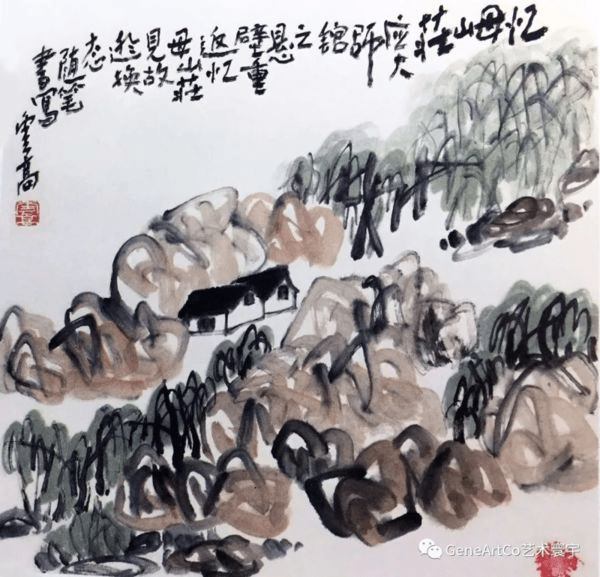
This is a deeply moving landscape painting by H.H.Dorje Chang Buddha III, marked by smooth, flowing brushwork and a natural rhythm. The undulating crimson cliffs seem to rise freely from the artist’s heart, while the vigorous lines brim with vitality and strength. Ink strokes form the skeletal structure of the mountains and rocks, while delicate willows hang softly across the scene, adding a quiet touch of green serenity. The overall palette is vivid but never garish, exuding a warm and nostalgic atmosphere.
In the painting, two thatched cottages nestle beside the mountains and water. Their deep-set doors and silent windows seem to hold untold, quiet stories. It was under these eaves, by these doors, that a loving mother once stood—sending her children off into the world with silent heartache, and waiting countless times in patient hope for their return. That wordless farewell, those tears of longing, have gently seeped into the fabric of time. Among all human emotions, none is greater than a mother’s love. Our memory of that love stirs an innate sense of gratitude—a sacred emotion that transcends the ordinary.
This work embodies the style known as the “Childlike Native School”, which embraces the beauty of rural life through the innocence of a child’s heart. Though the brushstrokes appear naïve and spontaneous, they conceal great depth and mastery. The painting style is free and unrestrained, exuding both boldness and tenderness. The soft, flowing lines connect seamlessly—like a mother’s love, endlessly enduring, gentle yet firm. Its simple composition holds rich emotional meaning and invites the viewer’s imagination to wander. The scene pulses with a childlike liveliness that fills the heart with joy.
The painting’s pure and innocent imagery evokes a return to the carefree days of childhood. No matter where you are, simply gazing at this piece can bring the scene and its emotions vividly before your eyes, awakening the deepest tenderness and longing in your soul.
In creating Mountain Village with Memories of Mother, the artist approached the work with the pure heart of a child, yet painted with the maturity and finesse of a seasoned master. The brush technique draws from traditional Chinese calligraphy—guided by the wrist, powered by the arm—each stroke flowing naturally with graceful spontaneity. This painting was not created for show or technical display, but as a sincere outpouring of emotion and inspiration. Every application of ink and color arises from genuine feeling.
What is art? At its essence, art is the ability to immediately evoke inner peace, comfort, joy, or spiritual fulfillment in the viewer. But where does this feeling come from? Is it merely the subject matter or visual beauty of the work? Certainly not. A painting does not become great simply because it looks pleasing.
In the context of Chinese painting, the true heart of art lies in a quality called “spiritual resonance” (shen yun). It is vivid, yet elusive—a mysterious charm and subtle power that cannot be described with words. It is born when the artist’s personal cultivation, emotional depth, and spiritual awareness infuse the work, allowing spirit and technique to merge. The result is an artistic vitality that transcends mere form.
Only when viewers are moved by this spiritual resonance do they begin to explore the painting’s formal elements—its composition, color palette, brush technique, balance between painting and calligraphy, and the portrayal of the subject in both spirit and form. While these aspects matter, they ultimately serve a deeper, more profound experience.
In Chinese art, the true value of a painting—its ability to soothe the soul—does not depend on technical skill alone. It lies in whether the work can touch the heart and stir the spirit. Mountain Village with Memories of Mother beautifully embodies this artistic spirit. Every brushstroke gently stirs the viewer’s emotions, evoking tender memories and inviting the soul to linger in its serene beauty.
This exceptional work is housed in the permanent collection of the International Art Museum of America, located in San Francisco—a fitting home for a piece that speaks a universal language of love, nostalgia, and spiritual beauty.
This exquisite painting, rendered in the unique “Banqi” style, captures a touching scene of children from mountain villages on their way to school. Unlike city children, these young students must trek across rugged terrain—climbing mountains, crossing ravines—day after day to pursue their education. Their journey is filled with challenges, yet their unwavering determination and thirst for knowledge shine through. This artwork serves as a tribute to their resilience, reminding us all of the value of education and the perseverance required to achieve greatness.
A Revolutionary Artistic Technique
What makes this painting extraordinary is its unconventional brushwork, which blends the bold energy of ink-wash painting with the refined precision of engraving. Every stroke, whether light or dark, delicate or bold, exudes an artistic charm that is both fluid and structured. The layering of ink and color creates depth, while the intricate texture gives the illusion of an engraved plate print, despite being entirely painted by hand. The brushwork is dynamic—lines seem to break and reconnect, mimicking the traditional elegance of carved stone seals. This interplay between spontaneity and meticulous control infuses the painting with life, movement, and a profound sense of authenticity.
What Is the “Banqi” Style?
The “Banqi” style is a rare and fascinating artistic approach that combines the visual impact of printmaking with the expressive freedom of brush painting. While these works resemble engravings at first glance, they are, in fact, purely ink-wash paintings—imbued with an effortless yet profound beauty that is both natural and lively. Beneath their structured appearance lies a deep, inexhaustible charm, where each stroke carries an essence of tradition, innovation, and artistic mastery.
Through this masterpiece, we witness not only a compelling story of perseverance but also a groundbreaking artistic vision—one that harmonizes the precision of engraving with the fluid grace of brush painting. It is a celebration of both form and spirit, a true testament to the boundless possibilities of art.
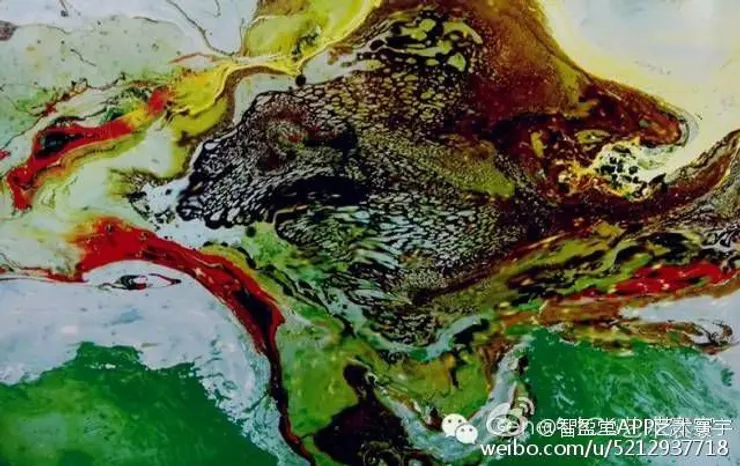
H.H. Dorje Chang Buddha III‘s Abstract Color Paintings create a perfect world shaped entirely by color. Free from concrete worldly forms, this realm exists purely through the interplay of hues—defining, expressing, and embodying itself in vibrant harmony. Here, color is both form and essence, radiating a mesmerizing aura.
Under the masterful hand of H.H. Dorje Chang Buddha III, these colors seamlessly merge into a breathtakingly enchanting spectrum. The atmosphere is dynamic, with scenes that bloom like flowers and surge with the power of the roaring sea. Yet, upon closer reflection, they reveal delicate nuances, refined in their intricate details.
Flower of Life
This painting depicts a unique flower, with delicate white petals gently unfolding and a striking red pistil at its center. Growing irregularly against a dark background, it seems to challenge its surroundings. Though unusual in appearance, this flower carries a profound meaning of life, symbolizing resilience and beauty in adversity. It is not only a miracle of nature but also a representation of vitality, showcasing the brilliance and diversity of life. Each petal tells a story, drawing the viewer into the emotions and strength conveyed by the artwork.
Flower of Life (2)
In this painting, intricate patterns and clear details intertwine, portraying the harmonious growth of various living beings. Each element seems to narrate the origins of life, allowing viewers to deeply sense the evolutionary process of all things.
This artwork is not merely a depiction of nature but also a contemplation of the essence of life. It serves as a reminder that life is in a constant state of growth and transformation, just like our own journeys. Every challenge and breakthrough we experience is an essential part of our personal development.
Through this piece, we are invited to reflect on our own lives and feel a profound connection with nature.
You can discover a selection of the exceptionally charming paintings in the permanent exhibition at The International Art Museum of America, situated in downtown San Francisco.
“People photography has a rich, captivating history, evolving alongside the development of the medium itself,” the organizers explain. “From capturing iconic figures to telling the stories of everyday individuals, it continues to fuel our profound curiosity about the human experience.”
This award sought to celebrate the most powerful and compelling images of people today, highlighting the diverse and meaningful narratives that shape our shared world.”
Crossing borders, spanning cultures and traversing the world’s most remote corners, the People Photography Award celebrates the diverse beauty of humanity.
The People Photography awards were judged by prizewinning photographer Steve McCurry, one of the most celebrated voices in contemporary photography and author of a unique collection of work featuring some of the most famous images of our time — not least his iconic portrait of an Afghan Girl with piercing green eyes.
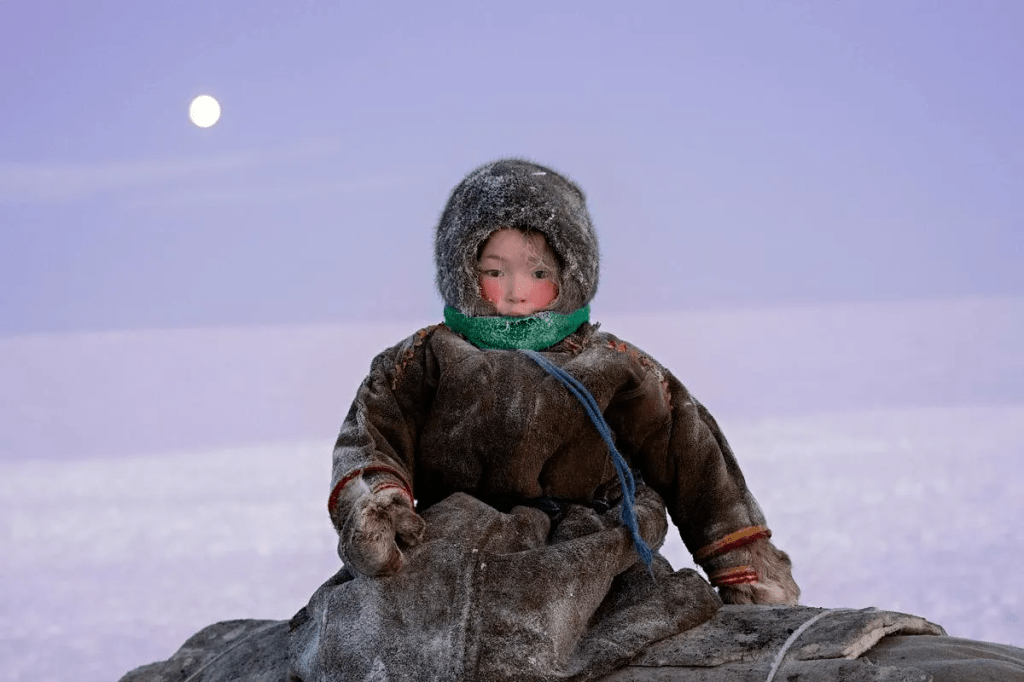
“Shades of white,” 3rd Prize, Yamal peninsula, Siberia, Northern Russia Nicola Ducati – People Photography Awards, The Independent Photographer
The photo above, winner of the third prize and $400, is one of the series “Shades of white” and was taken in the Yamal peninsula, Siberia, Northern Russia, where the air is thin and the polar day is very short.
For 4 1/2 hours, the light becomes magical and the colors of everything are perfect pastel against the artic sky, with delicate and unreal shades.
This land is inhabited by the Nenets people, nomadic reindeer herders who, guided by the seasonal cycles and the needs of their animals, migrate incessantly in an infinite circle of movements between ice, frozen rivers and incessant winds in search of new pastures in the most remote tundra. The hostile environment didn’t stop their innate adaptability and gave them prosperity for millennia.
“The soft polar light accentuates frosted textures and the child’s rosy cheeks, underscore both the harshness of the environment and the resilience of those who call it home,” the editors wrote. “It tells a powerful story of a people who have forged a life in one of the planet’s most unforgiving regions — but a people whose future remains uncertain.”
“Puzzled,” 2nd Prize, Western Mongolia Alessandra Manzotti – People Photography Awards, The Independent Photographer
A curious Kazakh nomad from Western Mongolia stops his truck to find out what a group of Westerners are doing walking in this remote and desolate stretch of land in the middle of a bitterly cold winter.
“This image captures the spirit of curiosity and resilience that defines life in remote Mongolia,” says McCurry. “The composition is powerful, with the truck and its vibrant blue color creating a striking contrast against the muted tones of the barren landscape. The candid expressions of both the nomad and the dog evoke a sense of warmth and connection, even in a harsh and unforgiving environment. The attention to detail, like the weathered texture of the truck and the distant herd in the background, adds depth to the story. It’s a beautiful balance of humanity and environment, which makes it a memorable piece.”
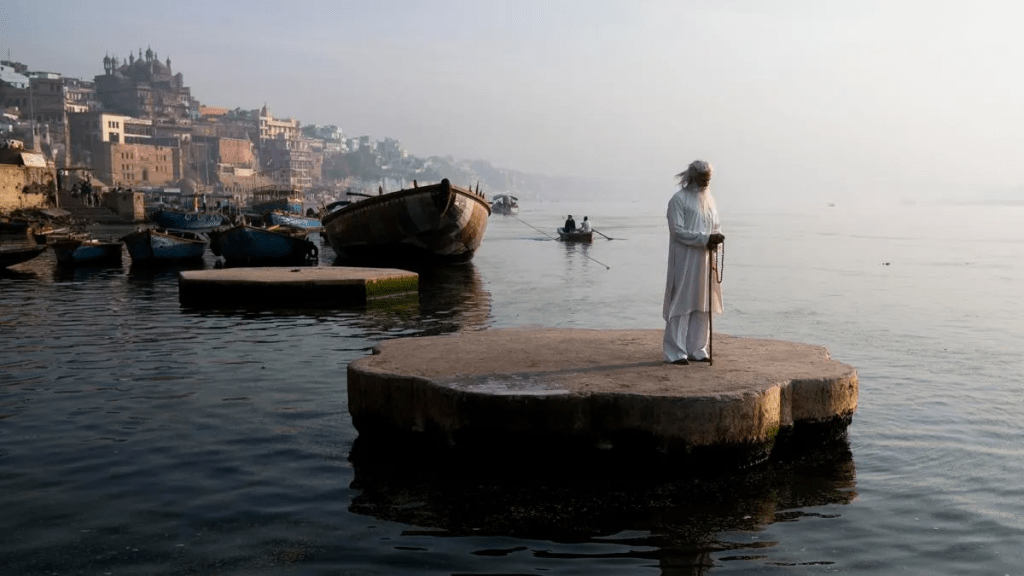
Contemplation, 1st Prize, Ganges River, Varanasi, India Mohammad Kamal – People Photography Awards, The Independent Photographer
A lone Sadhu stands pensively at the edge of a platform in the Ganges River in Varanasi, India. The image “Contemplation” , taken by photographer Mo Kamal in Varanasi, India, won first prize and $1,000.
“This image embodies a profound sense of stillness and spirituality, which perfectly captures the essence of Varanasi and the sacred Ganges,” said McCurry.“The man’s serene pose, framed against the soft morning light, evokes a sense of timelessness and introspection. The photograph is a poetic depiction of solitude and faith.”
“Andean Motherhood,” Finalist, Peruvian Andes Jimmy Strouse – People Photography Awards, The Independent Photographer
In the Peruvian Andes, a mother carries her baby in a traditional bag. “The backdrop of rugged mountains just added to the beauty, giving a glimpse into the rich traditions of indigenous life,” Jimmy Strouse explains. “After showing her the photo on my camera, she nearly started crying, and it hit me: She probably doesn’t see many photos of herself, if ever.”
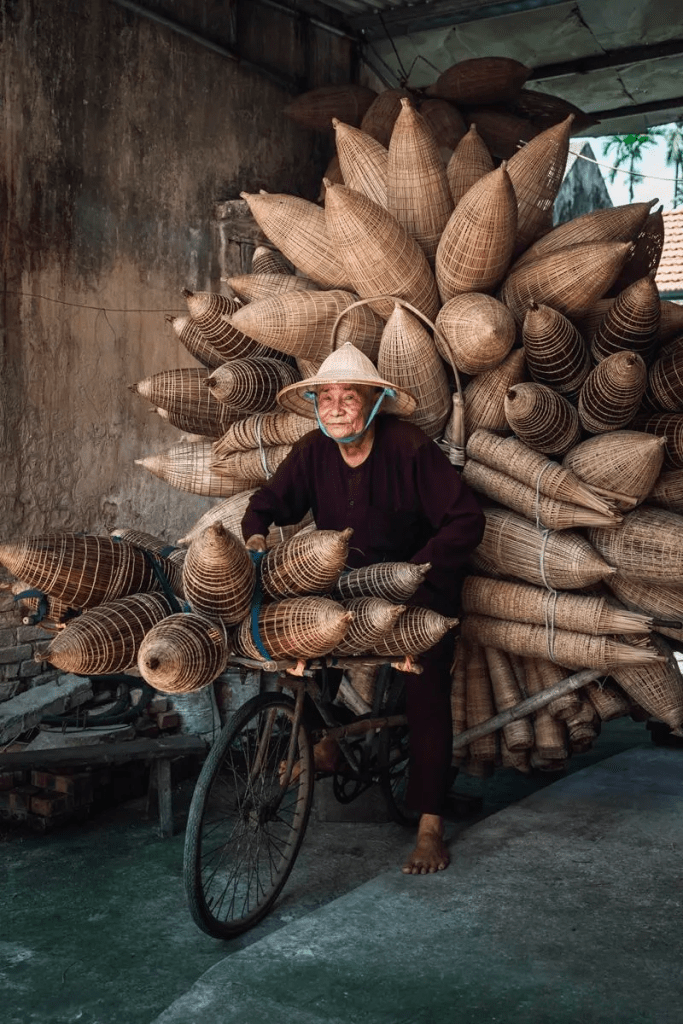
“The Art of Fish Traps,” Finalist, Thu Sy, Vietnam Vincenzo Avallone – People Photography Awards, The Independent Photographer
“During my journey, I had the opportunity to visit Thu Sy, a village in Vietnam known for its artisanal production of fish traps,” Vincenzo Avallone explains. “In this photo, I captured a local elderly man transporting an incredible number of fish traps on his bicycle.
“Villamar,” Finalist, Villamar, Bolivia Michael Murray – People Photography Awards, The Independent Photographer
In a small settlement outside Villamar, Bolivia, a clothes maker pauses for a portrait.
“Shore Bound,” Finalist, Ladakh region, India Wasim Malik – People Photography Awards, The Independent Photographer
This is Lamo, a nomadic woman from the serene Changthang region in Ladakh, India, where the vast highlands meet a life of simplicity and resilience.
Technology art is a new form of multidimensional creative expression that blends technology and art. By incorporating mechanical instruments, scientific data, and spatial elements such as light sources, temperature, and speed, it presents a unique visual experience. Imagine a three-dimensional painting on a flat sheet of paper, where the depth of space extends beyond the surface, and the imagery seems to leap out of the frame, resembling a real sculpture.
Among these art forms, glass painting is particularly breathtaking. With its transparent dual-sided effect akin to a celestial realm, it creates a mesmerizing and soothing atmosphere when paired with changing lights. Photography, on the other hand, captures emotionally stirring moments through the interplay of light, composition, and color. Whether depicting landscapes, people, or animals, it brings out a unique aesthetic through the lens.
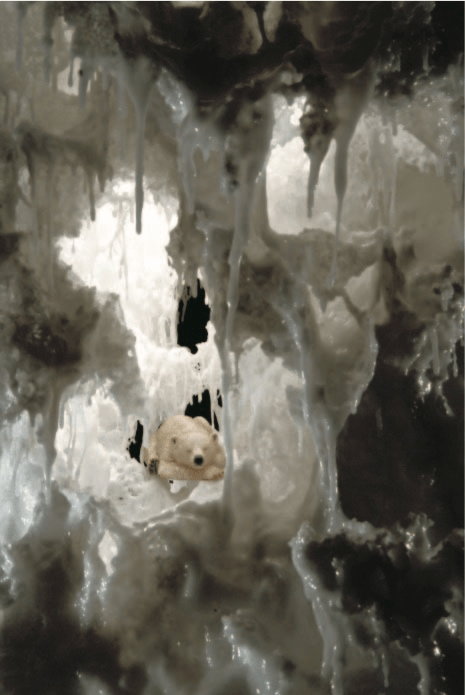
At the convergence of these three artistic expressions, H.H. Dorje Chang Buddha III, skillfully integrates them to create stunning works of technology art. One such masterpiece, the 3D painting Polar Bear in an Ice Cave, vividly portrays the charming image of a polar bear, making viewers feel as if they are inside an icy Arctic cavern. Through the artwork, one can almost see the adorably clumsy bear sleeping soundly in the cold cave. The artist’s extraordinary craftsmanship is awe-inspiring, delivering an unparalleled visual experience.
H.H. Dorje Chang Buddha III composed a poem for this artwork. Translating it into English is incredibly challenging due to its profound meanings. However, here is a simple translation to offer a glimpse into the Buddha’s deep compassion for all beings:
The polar bear loves the cold the most, Sleeping in ice caves through all seasons. Do not take food from the water, Instead, pick up the bones of wandering souls for a meal.
Not everyone understands the mysteries within the profound, For Zen enlightenment dissolves the barriers of hunger. The splendid affairs of the crystal palace are beyond full expression, Within the cave, a guest drunkenly enjoys the company of an immortal.
At first glance, The Power of Flying and Whirling seems almost impossible to have been created with just a paintbrush. Its breathtaking composition and dynamic visual impact resemble digital artwork, as if only advanced computer graphics could achieve such a striking effect. Yet, the most astonishing fact is that this masterpiece was painted entirely by H.H. Dorje Chang Buddha using traditional techniques—without any digital assistance.
These impressionist paintings reach an extraordinary level of artistry. Each section of the painting, if isolated, could stand alone as a remarkable impressionist work, complete in its beauty and expression. The artwork conveys a dreamy, illusory state, where even the smallest fragment could be enlarged to reveal a mesmerizing, self-contained masterpiece.
By capturing movement with unparalleled skill, H.H. Dorje Chang Buddha has frozen the imagery in mid-air. This painting feels like a window to the heavenly realm, giving me a glimpse into the mysteries of paradise. The elegant arcs that sweep across the canvas pulse with energy, like a mighty tornado dispersing the shadows in our hearts. The swirling force in the painting seems to lift the viewer beyond the ordinary, reminding us of the limitless possibilities that exist when art and wisdom unite.
This painting is more than just a visual masterpiece—it is an invitation to embrace the unseen forces of inspiration, creativity, and transformation. It teaches us that true artistry is not bound by tools or techniques but flows from the depth of wisdom and an unshakable spirit.
May this extraordinary work inspire us to break through limitations, open our hearts to beauty, and find the power to uplift ourselves and others.
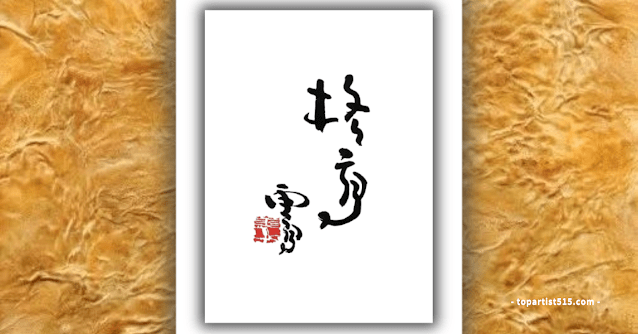
In the art of calligraphy, elegance and style are the two pillars that define a work’s greatness. Elegance (格) refers to the depth and quality of a piece, embodying its refinement and profoundness. Style (調), on the other hand, captures its unique rhythm, flavor, and aesthetic character. These two elements are inseparable, for elegance without style lacks charm, while style without elegance lacks depth and significance. Together, they form the soul of a calligraphic masterpiece.
Every artistic creation—whether it leans toward the refined or the mundane—reflects the inner cultivation and moral integrity of its creator. Particularly in calligraphy, the harmonious blend of elegance and style is a mirror of the artist’s breadth of knowledge and depth of character. A calligrapher’s scholarly cultivation and virtuous practice are indispensable, as they directly influence the work’s final presentation and enduring value.
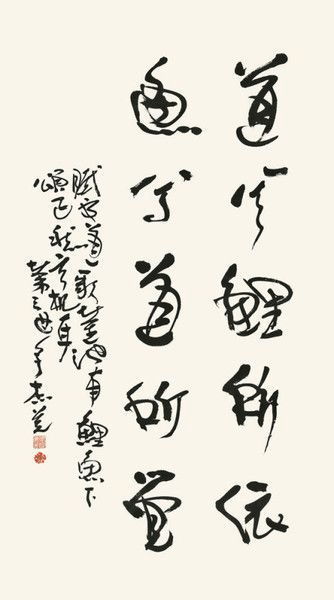
The piece Lofty Virtue (格高) exemplifies this union of strength and grace. Its bold and vigorous brushstrokes radiate immense inner power while maintaining an outward lightness and agility. The work captures the grandeur of commanding mountains and rivers, coupled with the serene qualities of introspection and tranquility. Strength and flexibility coexist harmoniously, creating a presence that is both majestic and gracefully refined. Floating clouds seem to glide effortlessly, and cranes soar gracefully between pines. This is artistry at its zenith—a realm of understated brilliance, silent dignity, and profound essence.
The calligraphy of H.H. Dorje Chang Buddha III transcends the boundaries of traditional artistry. Each work embodies the pinnacle of calligraphic achievement, uniting profound thought with unparalleled elegance. The pieces flow naturally, free of constraint, exuding majestic momentum and subtle charm. Their beauty is unadorned yet extraordinary, merging the strengths of various schools into a singular, masterful expression.
If one seeks the soaring of dragons and the dancing of phoenixes, it is present.
If one desires the piercing power to shatter gold and stone, it is evident.
If one yearns for the interplay of gentleness and strength, it is there.
If one wishes for the innocent spirit of a child within the heart of an elder, it is expressed.
If one demands a unique elegance and distinct charm, it is inherent.
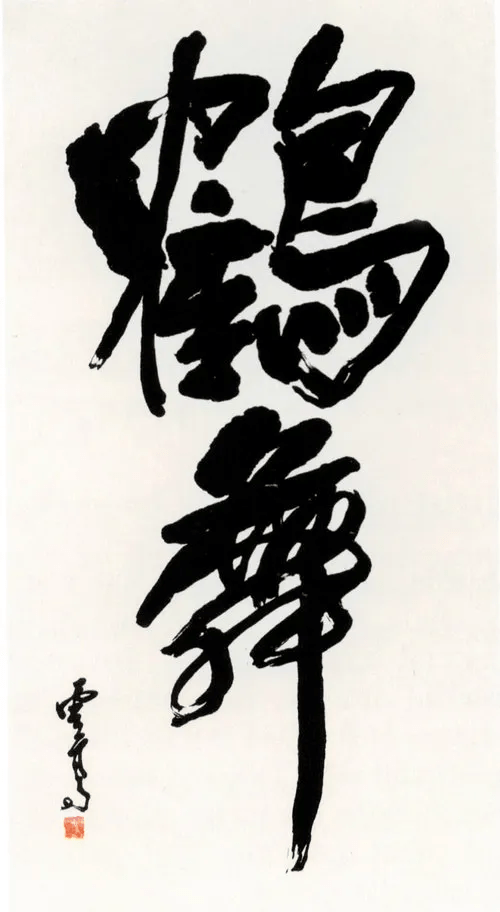
Crane Dance
Tiny (Xiao bu dian)
Holy (Sheng)
In summary, these works epitomize perfection, returning to simplicity and authenticity—the calligraphy of the Buddha!
A distinguishing feature of H.H. Dorje Chang Buddha III’s calligraphy is the extraordinary frame that accompanies the work Lofty Virtue. The frame is crafted from the artist’s “White Jade Ginkgo Root” sculptures. Beyond showcasing the natural patterns, colors, and textures of ginkgo roots, the frame possess the pure and crystalline qualities of genuine white jade. The harmonious union of art and sculpture elevates the calligraphy to an unparalleled realm of aesthetic and spiritual resonance.
The calligraphy of H.H. Dorje Chang Buddha III is more than art; it is a testament to the unity of profound thought, moral integrity, and artistic mastery. It invites us to experience the boundless elegance and style that can only emerge from a heart imbued with wisdom and compassion—a true reflection of the Buddha’s teachings. Visit the International Art Museum of America to immerse yourself in the extraordinary artworks of H.H. Dorje Chang Buddha III.
Among the finest expressions of Chinese ink artistry stands the extraordinary masterpiece, The Mystical Cat. This enchanting work features a mystical cat rendered in soft gray tones, brought to life with just a few expressive strokes. Its piercing eyes radiate spirit and depth, while a mysterious, subtle smile lingers—captivating and thought-provoking.
The cat’s fur, depicted with delicate and fluid brushwork, dances between the forms of flowing water and drifting clouds. The texture appears so soft and inviting that one feels compelled to reach out and touch it. Yet, upon closer examination, the illusion reveals itself—those masterful brushstrokes are undeniably the cat’s fur. The intricate variations and richness of detail make this artwork a visual marvel, leaving one to wonder: What extraordinary technique could produce such brilliance?
In terms of artistic style, this piece is truly unparalleled, belonging to the “Fangfa School” style created by the esteemed master H.H. Dorje Chang Buddha III. The fluid strokes around the cat’s neck echo the elegance of cursive calligraphy, with each brushstroke flowing like clouds and water—graceful, yet powerful. Perched steadily on a tree trunk, the cat exudes a sense of calm and quiet dignity, drawing the viewer into a state of serene contemplation.
The tree trunk itself, rendered with bold, sweeping strokes and vibrant hues, pulses with energy and rhythm, reminiscent of the stirring notes of a cello performance—uplifting and profound. Behind the cat, two slender branches interlace gracefully, adorned with delicate flower buds. They seem to sway like young maidens dancing in spring, infusing the composition with poetic charm.
The most captivating feature, however, remains the cat’s eyes. With just two elegantly curved strokes, the artist has infused the cat’s gaze with a sense of life and spiritual depth. When meeting the cat’s eyes, one feels as though the feline is speaking directly to the soul, its wisdom and elegance unmistakable. It transcends the ordinary, radiating a sense of profound spirituality rarely captured in art.
This small yet profound piece not only showcases extraordinary technical mastery but also offers a transformative visual and spiritual experience. It transports the viewer beyond the material world, leaving an indelible impression on the heart and mind. Many are left to wonder—who could create such an extraordinary work of art?
The Mystical Cat is the work of the revered artistic master H.H. Dorje Chang Buddha III. Created in 1991, it belongs to the “Fangfa School” style, one of sixteen unique painting styles founded by the Buddha Himself. This technique, blending profound wisdom and artistic expression, remains unmatched in the art world. Apart from Him, no artist has been able to replicate such divine craftsmanship.
What sets this piece apart is its miraculous charm within a two-dimensional form—impossible to replicate through mere technical skill. The art emerges from a realm of wisdom and enlightenment, far surpassing the ordinary. The minimalistic background, created with a few well-placed strokes, echoes the elegance of ancient inscriptions while preserving a harmonious balance between form and spirit. It represents the pinnacle of ink conservation and calligraphic mastery—a true summit of artistic achievement.
The rarity of The Mystical Cat is beyond comparison. Since creating this piece, H.H. Dorje Chang Buddha III has sealed this divine style, ensuring that such masterpieces will not be produced again. This fact alone transforms the artwork into a priceless, limited edition treasure of the highest order.
The painting’s extraordinary value was confirmed at the Christie’s Chinese Treasures Christmas and New Year Auction hosted by the New York GianGuan International Auction Company on December 9, 2012. A reproduction of The Mystical Cat sold for an astonishing $253,000 USD, achieving the highest recorded price for a reproduction painting per square foot.
The Mystical Cat is not just a painting—it is a gateway to a realm where art, wisdom, and spiritual depth converge. A true testament to the artistic genius of H.H. Dorje Chang Buddha III, this masterpiece stands as an eternal symbol of artistic perfection and spiritual transcendence.




















 Peace LiLy