The Story of the Nine-Colored Deer

The Most Perfect Continuous Mural in the Dunhuang Mogao Caves

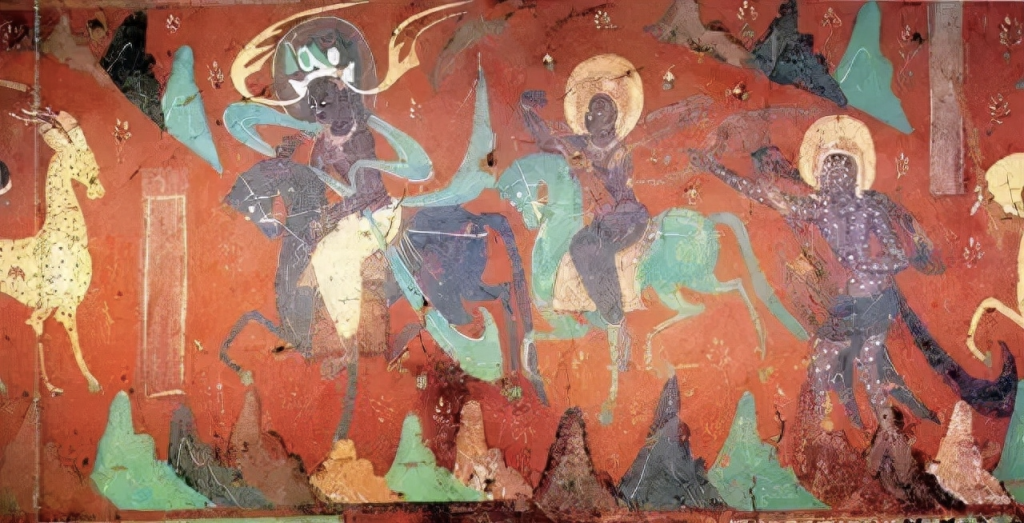
“The Story of the Nine-Colored Deer King” is the main theme of the murals in Cave 257 of the Mogao Caves. It unfolds in a long horizontal scroll, narrating many stories from the past life of the founder of Buddhism, Siddhartha Gautama.

Legend has it that long ago, on the banks of the Ganges River in India, there lived a beautiful and kind nine-colored deer king (the previous incarnation of Siddhartha Gautama)…

One day, as the nine-colored deer king was leisurely strolling by the river, he suddenly heard a pitiful cry from the water. Without hesitation, the brave nine-colored deer leaped into the river, risking its own safety, and rescued the drowning person. The saved individual, overwhelmed with gratitude for a second chance at life, repeatedly bowed in thanks to the nine-colored deer.

The nine-colored deer king said, “No need for thanks; just go on your way. My only request is that you do not reveal my whereabouts to anyone.” The drowning person solemnly swore, “Kind benefactor, rest assured. If I ever betray this promise, may my body be covered in sores and my mouth emit a foul odor.” With that, the person departed.

Before long, the queen of that country dreamt of a deer—one with nine colors and silver-like antlers. She told the king about her dream and requested that he order the capture of such a deer. She had a strong desire to use its colorful hide for clothing and its antlers for earrings. Consequently, the king issued a proclamation and offered a substantial reward.

Upon seeing the proclamation, the person who had been saved reported to the king, leading soldiers to the mountain to hunt down the nine-colored deer.

When the nine-colored deer was surrounded by the king’s troops… it spotted the person it had rescued from drowning, tears of sorrow welled up in its eyes…

The nine-colored deer leaped in front of the king and recounted the story of how it had saved the person from drowning and how that person had broken his promise. The king and the soldiers were deeply moved by the deer’s account. The king ordered the soldiers to clear a path, allowing the nine-colored deer to regain its freedom. He also issued a decree: “From now on, people are not allowed to shoot deer.”
As for the person who had broken his promise, in an instant, sores covered his body, and a foul odor emanated from his mouth. From that moment on, he was despised and reviled by the people.

The story of the nine-colored deer is vividly portrayed in Cave 257 of the Dunhuang Grottoes, which is what we now see as “The Story of the Nine-Colored Deer King.” While the mural is not particularly large in size, it holds significant importance in Chinese art history.

This artwork takes the form of a horizontal scroll with the story unfolding from both ends and converging in the middle. It consists of multiple scenes depicting various stages of the story, such as its origin, development, climax, and conclusion, all seamlessly connected to create a cohesive narrative.

“The Story of the Nine-Colored Deer King” is composed of nine panels, illustrating five key plot points: the person drowning, the nine-colored deer rescuing the drowning person, the drowning person expressing gratitude to the deer, the queen’s desire to capture the deer, the informant revealing the deer’s whereabouts to the king, and the confrontation between the king and the deer.

The story progresses from both ends of the mural towards the center, placing the pivotal conversation between the king and the deer in the middle. This unique composition style captures the essence of continuous horizontal scroll art from the Wei and Jin dynasties, showcasing the distinctive historical aesthetics of the era.

In the artwork, the depiction of mountains, rocks, and rivers occupies a significant portion. The rendering of the landscape primarily serves to fill the space and delineate the composition, providing a brief description of the specific environment, thereby enhancing the visual impact of the artwork and its storytelling function.

“The Story of the Nine-Colored Deer King” places the climax of the story—the moment when the nine-colored deer recounts the events—at the center of the composition. At the same time, both nine-colored deer on the left and right sides turn their bodies toward the center, serving as visual guides.

This is precisely the turning point in the storyline of the nine-colored deer, where the drowning person’s affliction receives its retribution. It places the Buddhist concept of rewarding goodness and punishing evil at the visual forefront, narrating the sequence of events step by step to gradually reveal the story’s progression to the viewer.

The entire process is rhythmic, marked by the ebb and flow of the narrative, skillfully aligning the chronological order with the spatial arrangement, showcasing the artist’s unique conceptualization of the composition.

In terms of color usage, “The Story of the Nine-Colored Deer King” appears to be very vibrant, but in reality, it uses a limited color palette, consisting of only six colors. The earthy red color dominates the entire painting, which is a prominent color characteristic of the Wei, Jin, Northern and Southern Dynasties period.

Complementing this are touches of stone blue and stone green, along with the harmonious blending of black, white, and gray. This blending softens the strong contrast between earthy red and stone green and blue, achieving a harmonious contrast of warm and cool tones. At the same time, it also accentuates the brightness of contrasting colors.

The introduction of Buddhism had a significant impact on the development of portraiture in China, introducing a set of strict conventions for Buddhist iconography. During the Northern Wei dynasty, the Dunhuang murals began to emphasize body proportions and adopted more attention to three-dimensionality after incorporating color shading techniques.

In “The Story of the Nine-Colored Deer King,” most of the figures on the canvas have slender bodies, with their clothing belts fluttering in the wind. Their gestures and movements exude a graceful dance-like elegance, evoking the style of figures that “float like wandering dragons and are delicate as startled swans.”

In the murals of the Northern Wei period in Dunhuang, Jataka stories are an important theme. Jataka stories refer to the countless events and experiences in the past lives of Siddhartha Gautama, who would later become the founder of Buddhism. In history, there are numerous Jataka stories related to Siddhartha Gautama.

Within Buddhist art themes, there are many Jataka story paintings, and “The Story of the Nine-Colored Deer King” is just one of them. Story paintings are used to promote the Buddhist concept of karmic retribution and to praise the spirit of self-sacrifice displayed by the Nine-Colored Deer King.

In reality, all Jataka paintings ultimately convey one message: that by performing good deeds, selflessly giving, and enduring hardships, one can achieve positive outcomes, whereas engaging in wrongful actions will lead to self-destruction.

The Story of the Nine-Colored Deer King

Link:https://peacelilysite.com/2023/10/02/the-story-of-the-nine-colored-deer/

#SiddharthaGautama #SakymuniBuddha #JatakaStories #BuddhistStories #MoralStory #Mural #Dunhuang #MogaoCaves #Grottoes #Buddhism #ChineseCulture #Art #karmicRetribution #Paintings

Source: https://www.toutiao.com/article/7025418785972847140/?ug_source=seo_juhe, https://zhuanlan.zhihu.com/p/346828893
Mount Wuzhong – A Place Filled with Historical and Cultural Significance

Early distribution spot of Chinese Buddhism

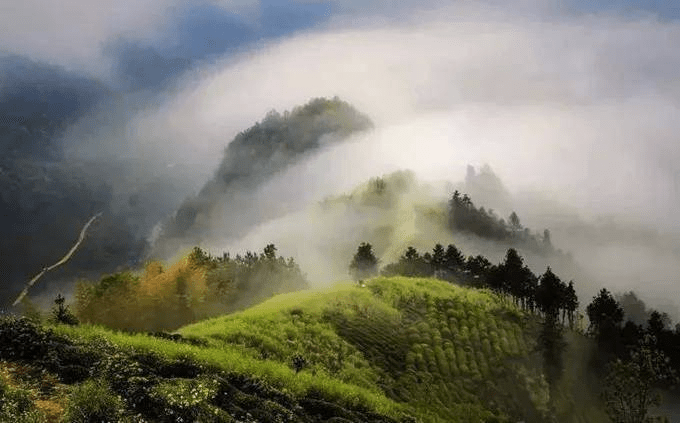
The Mount Wuzhong, also known as Misty Mountain and formerly referred to as Daguangming Mountain, Tiancheng Mountain, and Wushan, is a significant Buddhist pilgrimage site situated along the ancient Sichuan-to-India trade route, often referred to as the Southern Silk Road, within ancient China. It is located in Wushan Township, north of Dayi County, 25 kilometers from the county seat, and 80 kilometers from Chengdu. To its east lies Qinglong Mountain, to the south it connects with Daping, to the west it borders Wayao (also known as Baihushan), and to the north, it meets Longwo. The primary peak elevates to 1638 meters, with Jiulong Mountain and Jingang Mountain to the north and Hongyan Mountain to the west. Covering an expansive area of several square kilometers, it is aptly known as the “72 peaks” due to the constant presence of clouds and mist, hence earning its moniker as the “Misty Mountain.”

Historical records, such as the Ming Dynasty’s “Kaihuasi Stele Inscription” and the “Records of Misty Mountain,” reveal that as early as the Western Han Dynasty, Mount Wuzhong was renowned for its breathtaking natural beauty and mysterious wonders that left people in awe. It was described as a “land adorned in golden cloth and adorned with jade-like peaks, filled with endless wonders that inspired astonishment and amazement.” It was even considered “the place where the ancient Buddha Amitabha performed miracles.” In the 16th year of Emperor Ming of the Han Dynasty, responding to recommendations from the imperial court, Emperor Ming dispatched the courtier Fu Ying, accompanied by two distinguished monks from ancient India – the venerable monks Kashyapa Matanga and Zhu Falan – to establish a Buddhist temple on the mountain. Their mission was to propagate Buddhism and disseminate its teachings, thereby benefiting people far and wide with the nectar of Buddhist wisdom.

During the Ming Dynasty, Buddhism at Misty Mountain reached its zenith. The mountain boasted a total of seventy-two peaks, nine passes, and one hundred and eight winding paths, accommodating one hundred and eighty temples and forty-eight hermitages. According to the “Records of Misty Mountain,” it was described as a place “spanning dozens of square miles north of the two rivers and south of Longwo, with buildings scattered like black houses, without overcrowding.” “Monasteries and temples were as numerous as stars in the sky, surrounding the mountain from all sides, too numerous to count.” In modern terms, the total constructed area exceeded 400,000 square meters, equivalent to the size of a medium-sized city. During the Ming Zhengtong era, the emperor established the Dugang Institute at Misty Mountain, with the venerable monk Yuanxi serving as the official historian, overseeing all temple affairs. The temples at Misty Mountain were so prosperous and grand in scale during that period that a local saying emerged: “There are 25 thousand great monks, and the number of ordinary monks is beyond count.”

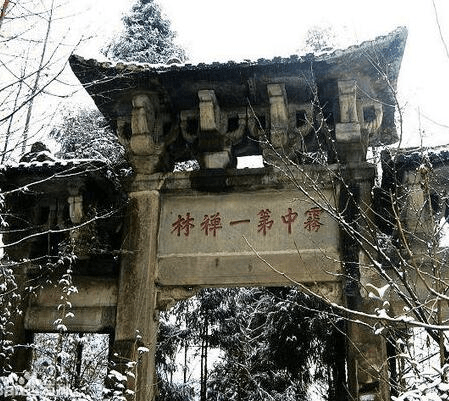
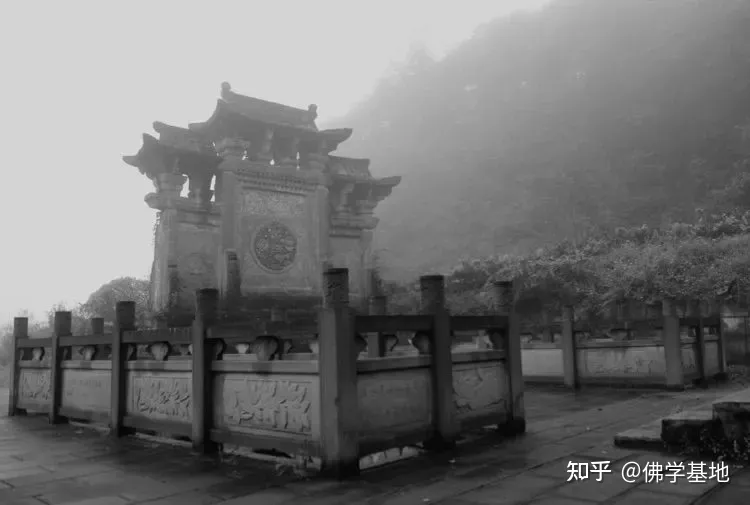
Eminent scholar Yang Sheng An, during his travels in Misty Mountain, inscribed a couplet on the “Heavenly Mountain” archway, proclaiming, “There is no match in the world; Misty Mountain is the number one.” With Yang Shen’s profound insight, he boldly asserted that Misty Mountain was unrivaled, and in the “Inscription of Kaihuasi temples at Misty Mountain,” he referred to this place as the “supreme stronghold of Chan (Zen) Buddhism.” This attests that during the Ming Dynasty, the prestige of Buddhism at Misty Mountain remained unmatched by other mountains in the region.

The Buddhist temple – KaihuaSi – established by the venerable monks Kashyapa Matanga and Zhu Falan was erected just six years after the White Horse Temple, often regarded as the first temple in Chinese Buddhist history. Therefore, it holds the distinction of being the second temple in the annals of Chinese Buddhism’s history and the first temple for the transmission of Buddhism from the south. Emperor Ming of the Han Dynasty bestowed upon it the name “Daguangming Puzhao Temple.”

KaiHuaSi Temple

Since the Han Dynasty, Mount Wuzhong has been home to renowned monks who have propagated and practiced the Buddhist teachings. During the Yonghe period of the Jin Dynasty, the esteemed Western monk Faxian revitalized Misty Mountain, renaming the temple as Tiancheng Mountain Xianying Temple. In the reign of Emperor Gaozong of the Tang Dynasty, two great masters, Sangha and Senghu, resided here and, by imperial decree, restored the original name of Daguangming Mountain Puzhao Temple. In the reign of Emperor Xiaozong of the Song Dynasty, Master Yuanze Laochang expanded and embellished the temple, bestowing it with splendor. During the reign of Emperor Xuanzong of the Ming Dynasty, Tibetan monks Pudashaye and Shigaba were once again appointed by imperial decree to rebuild the temple and requested the imperial name “KaiHuaSi at Misty Mountain.” This name has endured for the temple ever since.

Throughout its long history, Kaihuasi at Misty Mountain has withstood nearly two thousand years, bearing witness to the rise and fall of temple structures, yet it persists to this day. In this enduring history, one can discern the resilience of Buddhism, the steadfastness of human hearts, and the enduring nature of faith.

.

JiewangSi

In more recent times, two esteemed monks resided within the temples of Misty Mountain: Master PuGuan and Master Guozhang. Both were disciples of H.H. Dorje Chang Buddha III, receiving profound Dharma initiations from Him and achieving liberation. In 1998, Master Pu Guan passed away while in meditation, having attained mastery over his life and death. Remarkably, even eight years after his passing, his remains rest within a stupa, preserved in the meditation posture without any signs of decay.

Master Guozhang, a renowned Chinese Buddhist monk, embarked on his monastic journey at a young age on Mount Emei, one of China’s four famous Buddhist mountains. In his middle years, he ventured to Kangding in Tibet, where he received empowerment from the Supreme Vajradhara, H.H.  Dorje Chang Buddha III, who became his fundamental guru. Subsequently, he served as the abbot of Jiulao Cave on Mount Emei. Master Guozhang was celebrated for his unwavering commitment to monastic precepts, profound spiritual realization, and his extraordinary ability to tame wild animals on the mountain. Legends even spoke of his capacity to hear conversations between heavenly beings and humans.

In 1992, both Master Puguan and Master Guozhang were appointed to key positions at Misty Mountain’s Kaihuasi Temple by the government of Dayi County. Master Puguan assumed the role of abbot and oversaw Buddhist affairs within the mountain, while Master Guozhang was entrusted with overseeing the temple. Later on, Master Guozhang became the abbot of Jiewangting temple, which also located in the Misty Mountain.

Master Guo Zhang once shared with his disciples a remarkable experience: he received the Great Dharma initiation from H.H.  Dorje Chang Buddha III in Tibet when His Holiness was less than 5 years old.

In 2015, Master Guo Zhang passed away at the age of 108. Eleven days later, local government officials visited Jiewangting Temple and, doubting the profundity of the master’s practice, pierced his body with needles, causing blood to flow.

In China, there exists a saying that “famous temples produce famous tea since ancient times,” and the tea from Misty Mountain gained renown as early as the Tang and Song dynasties. Throughout history, the monks of Misty Mountain have often been involved in tea cultivation, using tea as sustenance, and blending Zen and tea culture. Within Misty Mountain’s expanse, ancient tea tree groves flourish, some so immense that it takes two people to encircle them. The tea leaves harvested from these trees emit a fragrant aroma and are considered the highest-quality Misty Mountain tea.

The fusion of Zen and tea culture embodies three virtues: “During Zen meditation, one stays awake all night, when one is full, tea aids in digestion, and tea is not consumed when not needed.” Tea serves to quench thirst, invigorate the senses, alleviate stress, purify the mind, nurture virtuous qualities, and has thus become an invaluable aid in Zen practice. The spiritual essence of Misty Mountain’s Zen and tea culture is encapsulated as “upright, pure, harmonious, and elegant,” with the purpose of “expressing gratitude, embracing inclusivity, sharing, and fostering connections.”

Mount Wuzhong – A Place Filled with Historical and Cultural Significance

Link:https://peacelilysite.com/2023/09/27/mount-wuzhong-a-place-filled-with-historical-and-cultural-significance/

Source: https://club.autohome.com.cn/bbs/thread/a3b8e453b0c45836/72821534-1.html, http://www.day.gov.cn/day/c140445/2021-01/14/content_d51260858d10469a94a004e1395bd9c6.shtml, http://www.lvyoudream.com/lvyougonglue/938/

Bodhisattva Ksitigarbha: A Beacon of Hope in Impermanence

The belief in Bodhisattva Ksitigarbha is deeply rooted in Asian folk religions, offering a profound message of compassion and salvation. Ksitigarbha, also known as “Earth Treasury” or “Earth Store,” is revered for his extraordinary vows and his unwavering commitment to alleviating suffering, particularly in hellish realms. In China, alongside Manjusri, Samantabhadra, and Avalokiteshvara, Bodhisattva Ksitigarbha is honored as one of the “Four Great Bodhisattvas.”

The “Sutra of the Bodhisattva Ksitigarbha’s Fundamental Vows” is a sacred scripture, attributed to Shakyamuni Buddha himself, that highlights the remarkable vow power of Bodhisattva Ksitigarbha. In this sutra, Ksitigarbha’s magnificent vow is eloquently praised: “Until the hells are empty, I will not attain Buddhahood, and I will only achieve enlightenment after saving all beings.” The text also provides insights into Ksitigarbha’s exemplary actions and deeds along his spiritual path.

A Tale of Filial Piety and Redemption: In one of his past lives, Bodhisattva Ksitigarbha incarnated as a woman named Guangmu. She exemplified unparalleled filial devotion, but her mother’s disbelief in karma led to her descent into hell after death. Learning of her mother’s plight, Guangmu selflessly sacrificed her most cherished possessions to accumulate merits on her mother’s behalf. Before the Buddha, she made a solemn vow: to secure her mother’s permanent liberation from the three evil paths and, only then, seek her own enlightenment. Through Guangmu’s selfless acts and immense vow, her mother swiftly attained liberation and ultimately achieved Buddhahood.

People place their faith in Bodhisattva Ksitigarbha due to his profound aspiration: “To save all sentient beings and attain enlightenment; I will not achieve Buddhahood until hell is empty.” This resolute vow has made him a beacon of hope for those seeking liberation in the afterlife.

The holy birthday of Bodhisattva Ksitigarbha falls on the last day of July in the Chinese lunar calendar, which corresponds to September 14th this year. Buddhists worldwide come together to honor and memorialize Bodhisattva Ksitigarbha during special assemblies held in Buddhist temples. These gatherings serve not only to pray for the well-being of all living beings but also to beseech blessings for departed relatives and friends, hoping they will ascend to higher realms through the benevolent influence of Bodhisattva Ksitigarbha. This year, a special assembly was held at Hua Zang Si temple in San Francisco on September 10th.

Every year, my participation in the Ksitigarbha Dharma assembly evokes a mix of emotions. On one hand, I feel a deep sense of joy as I pray for the protection and blessings of the Buddhas and Bodhisattvas for all beings. On the other hand, a profound sadness envelops me as I witness my loved ones departing from this world one by one. The list of those to be transferred to a better realm, through prayers and rituals, continues to grow. This year, the passing of my uncle, the youngest brother of my father, added to the somber realization of life’s brevity and the swift nature of impermanence.

As I age, I keenly experience various illnesses, physical decline, and a slowing of my movements. These experiences have deepened my understanding of why H.H.  Dorje Chang Buddha III continually reminds us to cultivate the awareness of impermanence. In “What is Cultivation?” and in many pre-recorded Dharma discourses, His Holiness emphasizes that being mindful of impermanence is the cornerstone of our spiritual development. Without this awareness, one cannot establish the sincere commitment required to practice Buddhist Dharma earnestly and break free from the cycle of life and death.

Life has presented me with numerous unpredictable natural disasters and personal sufferings. Unless I persistently dedicate myself to spiritual practice, the looming specter of death may catch me unprepared, leading to a fate that is both pitiable and terrifying.

I earnestly pray that all Buddhas and Bodhisattvas, with a special invocation to Bodhisattva Ksitigarbha, bless all living beings with the wisdom to grasp the impermanence of life. May we all diligently cultivate ourselves, seeking liberation in this lifetime and guiding the departed souls to higher realms, where they can encounter the profound teachings of Buddhism and ultimately break free from the cycle of birth and death.

Bodhisattva Ksitigarbha: A Beacon of Hope in Impermanence

Link:https://peacelilysite.com/2023/09/22/bodhisattva-ksitigarbha-a-beacon-of-hope-in-impermanence/

#  DorjeChangBuddhaIII#HHDorjeChangBuddhaIII#HuaZangSi #Buddha #Buddhism #buddhist #Temple#BuddhismTemple#SanFrancisco#BodhisattvaKsitigarbha #Impermanence

Scientific Discovery: Once You Choose Forgiveness, Your Brain Will Help You “Let Go” of Pain

Choosing forgiveness makes it easier to forget pain

A scientific study published on May 21, 2014, in the journal ‘Psychological Science’ found that people who choose to forgive are more likely to forget the details of past hurts. This is because the act of forgiveness triggers a mechanism that helps in forgetting painful memories.

Researchers from the University of St. Andrews in the United Kingdom had 30 participants read content describing various scenarios, including severe harm to others and theft. They then asked each participant to rate the extent of harm caused by each behavior and to consider how likely they would be to forgive the perpetrator if they were the victim.

Two weeks later, the same group of participants read the same content, but this time it was color-coded, with some portions in red and others in green. Researchers instructed participants to recall the content in green while avoiding thinking about the red portions.

Dr. Saima Noreen, the lead author of the paper, explained that participants who initially chose to “forgive” had difficulty recalling the details when they later tried to remember the events. In contrast, those who initially chose “not to forgive,” even when instructed not to recall the details during the experiment, still had vivid memories.

The research findings suggest that when people make the decision to “forgive,” the brain activates a forgetting mechanism that helps them forget painful memories that were once detrimental to them. While achieving true forgiveness may still be challenging at times, simply choosing forgiveness can make it easier to forget those memories.

Dr. Noreen stated, “The relationship between forgiveness and forgetting is bidirectional and becomes more complex over time. Over the long term, we have known that forgiving others has positive effects on personal health.”

The Lifelong Disasters of Unforgiveness

In recent years, researchers have conducted numerous experiments to explore the relationship between ‘forgiveness’ and health. They have discovered that forgiveness, as a psychological activity, can improve cardiovascular function, reduce chronic pain, alleviate stress, and enhance the quality of life. It is indeed a potent remedy for maintaining good health.

On the other hand, individuals who harbor unresolved conflicts and refuse to forgive often experience constant psychological tension. The inner turmoil, when left unresolved, can lead to heightened brain and nervous system activity. This can result in nervous tension, blood vessel constriction, elevated blood pressure, gastrointestinal spasms, and inhibited digestive secretions, thereby increasing the risk of heart disease, mental health issues, and other ailments.

Practical life experiences have also demonstrated that individuals who react impulsively and are unable to forgive others tend to escalate minor issues into major conflicts, intensifying contradictions, and causing long-term consequences for themselves.”

In the book Midnight Conversations in Medicine (醫山夜話)compiled from real-life cases, the chapter titled “Financial Ruin Caused by Unforgiveness” narrates the life catastrophe resulting from “unforgiveness.”

In the story, the patient’s name is Rui, who sought treatment at a Traditional Chinese Medicine clinic for Parkinson’s Disease. In Chinese medicine, Parkinson’s Disease is referred to as “tremor paralysis.” Rui had been suffering from this condition for nearly three years, experiencing tremors in both of her hands. She often struggled to eat because of her severe tremors, with her food falling to the ground before reaching her mouth. After a period of treatment with traditional Chinese medicine, her condition showed little improvement, with symptoms frequently recurring. Perplexed, the Chinese medicine practitioner inquired about her life, leading Rui to recount the events that had unfolded:

“My husband and I run a container shipping company for ships. We own a villa on an island, sharing a private road with our neighbors. On the island, it’s just our two families. Due to the poor condition of the road, we proposed that both families contribute money to repair it. However, our neighbors opposed the idea, so we had to foot the bill for repairs ourselves. Unfortunately, the workers we hired were careless and dumped the road repair stones in the middle of the road, causing inconvenience to our neighbors’ traffic. They suspected that we did this out of spite and sealed off a gate that belonged to their property but was more convenient and closer to our home. This meant that we had to take a much longer route to get home.

“My husband, in his anger, turned off the main water valve. We had installed the water system first, and to save money, they connected their water supply from ours. Turning off the valve cut off their water source. This infuriated them, and they retaliated by pouring cement and piling stones on our driveway, completely blocking our way home. And so, over a mere 2,000 yuan road repair cost, we became bitter enemies. What’s even more unbearable is that both sides hired lawyers, and this legal dispute has been going on for nearly three years, costing us a whopping 2 million yuan in legal fees. During these three years, we couldn’t go home, and they couldn’t live there either. Now our conflict has escalated to a life-and-death struggle. The house cannot be sold due to the unresolved lawsuit, it’s uninhabitable, and it needs repairs…”

As Rui continued her narrative, she became increasingly emotional, her hands trembling, her face turning red, and her emotions nearly reaching the breaking point. The Chinese medicine practitioner realized the underlying cause of her recurring illness was rooted in her inability to forgive.

Psychologists have found that when people can view conflicts from the other person’s perspective, there are significant physiological changes. Both heart rate and blood pressure decrease, there is less frowning, and skin conductance (a measure of sympathetic nervous system activity) also decreases – all of which are good indicators of the sympathetic nervous system functioning.

Religions also emphasize the practice of forgiveness. In Christianity, it is taught that forgiveness towards others is essential for God to forgive one’s own sins. Buddhism, on the other hand, encourages a comprehensive approach to forgiveness. In the core process of self-cultivation, true Buddhist practitioners are guided to embrace the Four Limitless States of Mind, which encompass virtues such as Equanimity, Loving Kindness, Compassion, and Sympathetic Joy.

A profound illustration of forgiveness is exemplified by the contemporary Buddha, H.H.  Dorje Chang Buddha III,. One of His Holiness’ disciples, Hongxi Fazang, engaged in numerous defamatory actions against H.H.  Dorje Chang Buddha III, through social media and within Buddhist temples. Later, he came to realize the gravity of his actions and was overwhelmed with remorse. Desiring to return to the guidance of the Buddha Master, he sought reconciliation.

Remarkably, the profoundly compassionate Buddha welcomed him back as a disciple with the same love and teachings as before. When other disciples found it hard to believe Hongxi Fazang’s return, His Holiness simply said, “If I don’t forgive him, who can?” The following video showcases Hongxi Fazang’s heartfelt repentance and deep gratitude towards H.H.  Dorje Chang Buddha III, at the Holy Miracle Temple.

Scientific Discovery: Once You Choose Forgiveness, Your Brain Will Help You “Let Go” of Pain

Link:https://peacelilysite.com/2023/09/13/scientific-discovery-once-you-choose-forgiveness-your-brain-will-help-you-let-go-of-pain/

#DorjeChangBuddhaIII #HHDorjeChangBuddhaIII #Forgivness #Christianity #HolyMiracleTemple

Source: https://www.tpcdct.org/article/4458#comment-1080

The Shark and the Glass Wall

Impact of Habit Formation

During a research experiment a marine biologist placed a shark into a large holding tank and then released several small bait fish into the tank.

As you would expect, the shark quickly swam around the tank, attacked and ate the smaller fish.

The marine biologist then inserted a strong piece of clear fiberglass into the tank, creating two separate partitions. She then put the shark on one side of the fiberglass and a new set of bait fish on the other.

Again, the shark quickly attacked. This time, however, the shark slammed into the fiberglass divider and bounced off. Undeterred, the shark kept repeating this behavior every few minutes to no avail. Meanwhile, the bait fish swam around unharmed in the second partition. Eventually, about an hour into the experiment, the shark gave up.

This experiment was repeated several dozen times over the next few weeks. Each time, the shark got less aggressive and made fewer attempts to attack the bait fish, until eventually the shark got tired of hitting the fiberglass divider and simply stopped attacking altogether.

The marine biologist then removed the fiberglass divider, but the shark didn’t attack. The shark was trained to believe a barrier existed between it and the bait fish, so the bait fish swam wherever they wished, free from harm. This experiment illustrates that the formation of habits has a significant impact on biology.

From 123RF

Humans are also creatures of habit, and habits become second nature. Human behavior is often governed by habits, and as long as something is done or said repeatedly, it gradually becomes a habit, and people start doing or saying it unconsciously. Some people constantly use foul language or lie, and it has become a habit for them. Therefore, changing these habits is not an easy task.

Buddhist practice places great emphasis on verbal karma (the consequences of one’s speech). If a person cultivates virtuous speech karma, they will speak kindly, offer comfort, encouragement, praise others, and even propagate the Dharma, thereby achieving immeasurable merit. On the other hand, if one engages in unwholesome speech karma, they will use hurtful and negative words, twist the truth, sow discord, and create a negative impact, thus planting the seeds of negative karma. Therefore, in our daily lives, we should be mindful of our speech. Speak when it’s necessary, and refrain from speaking when it’s not. In addition to refraining from false speech, divisive speech, and harsh speech, we should also avoid frivolous speech, which means not engaging in meaningless or idle chatter.

When we speak, we should naturally utter words that are meaningful, moral, or beneficial to others. However, in reality, this is often not the case. Whenever a small group of people gathers for casual conversation, they tend to talk about various things, cracking jokes to make others laugh, or uttering words that lack propriety, or even resorting to explicit or suggestive language, which can lead others to have improper thoughts. Some may use flattering or sweet talk to make themselves more likable. Engaging in such meaningless conversations can mislead others and lead them astray, which is truly a wrongdoing. Many individuals who were initially pure-minded may, under the influence of frivolous speech, become cunning and engage in inappropriate behavior.

A person who frequently engages in frivolous talk, no matter where they go, is often met with comments like, “Here comes that unserious person again,” and people tend to hold a kind of contemptuous attitude towards them. Frivolous speech can confuse and harm people’s moral values, so we should distance ourselves from it. For those who are practicing Buddhism, when they meet each other, they should ask questions like: “Have you been diligent in your practice lately? Are you focused in your recitation of the Buddha’s name? Have you made progress in meditation?” Encouraging and challenging each other in this way can help avoid complacency and steer clear of frivolous speech.

Photo by Oleksandr P on Pexels.com

The Buddhist scriptures state, “If a person can distance themselves from frivolous speech, they will earn the respect of those with wisdom. They will decisively answer any question, and because they have never engaged in falsehood, they will attain the most excellent virtues.”

Speaking is a crucial aspect of participating in social life. It not only affects the success or failure of one’s personal endeavors but also plays a significant role in the happiness of family life. It is hoped that everyone speaks with sincerity and cultivates good habits, which will contribute to a harmonious society and a fulfilling family life.

The Shark and the Glass Wall

Link:https://peacelilysite.com/2023/09/07/the-shark-and-the-glass-wall/

#Shark #Glass Wall #habit #Buddhism # BuddhistScriptures

Source: https://medium.com/@ways2capitalcsr/the-shark-and-the-glass-wall-75636de9834f

Lessons from Orchids: Finding Serenity Amidst Life’s Challenges

Photo by Tayla Walsh on Pexels.com

In the tranquil solitude of a monastery, an old monk devoted his time to cultivating a pot of delicate orchids. Each day, he lavished care upon these tender blooms, diligently tending to their needs by watering and weeding them with unwavering dedication.

As a result of the old monk’s meticulous attention, the orchids flourished under his care, displaying an elegant and breathtaking beauty that mirrored his own inner peace.

One day, the old monk found himself with a commitment that required him to leave the monastery to meet with friends. In his absence, he entrusted the nurturing of the cherished orchids to a young monk. He handed over the responsibility, emphasizing the importance of their care.

With a sense of honor and respect for the elder monk’s teachings, the young monk embraced his duty wholeheartedly. He approached the task just as the old monk had, showing genuine care and tenderness towards the orchids. Under his watchful eye, the orchids continued to thrive and bloom.

However, fate took an unexpected turn. On a day when the young monk had diligently watered the orchids and positioned them on a windowsill to soak in the sunlight, a sudden and fierce rainstorm struck. Powerful winds knocked the orchids from their perch, causing them to shatter upon impact.

Upon his return, the young monk was met with the heartbreaking sight of the shattered remnants of the once-beautiful orchids. He was overwhelmed with sorrow, dreading the old monk’s reaction and fearing his reprimand for failing in his entrusted duty.

Several days later, the old monk returned to the monastery. The young monk gathered the courage to confess the unfortunate incident, ready to face whatever consequence may arise from his actions.

Surprisingly, the old monk responded with silence. This unexpected reaction left the young monk puzzled and uncertain. After a moment, the old monk’s serene countenance broke into a calm smile, and he uttered words that carried profound wisdom, “I don’t cultivate orchids to get angry.”

In that simple and sincere statement, the old monk revealed a profound truth about his serene attitude towards life. The cultivation of the orchids was not about breeding frustration or anger; rather, it represented a deeper pursuit—the nurturing of one’s character and inner qualities. The orchids, though precious, were symbolic of the journey to refine one’s life and embrace noble virtues.

Life, much like a bustling marketplace, presents us with an array of experiences, people, and emotions. Some individuals exhibit unwavering positivity and joy, while others grapple with restlessness and anxiety. Our perspectives differ, our thought processes vary, and as a consequence, our approaches to problem-solving diverge greatly.

So, how can we navigate the sea of life’s challenges and find solace amidst the chaos? The answer lies in the simple yet profound art of detachment. By relinquishing our attachments and embracing life’s imperfections, we can begin to comprehend the transient nature of all things. Just as clouds swiftly drift across the sky, life’s moments are fleeting and subject to the universal cycle of existence.

The key lies in cultivating a mindset of detachment and releasing the grip of selfish desires. In doing so, we can expand our hearts, broaden our perspectives, and uncover a sense of tranquility that transcends the storms of life. Through this journey of self-discovery, we can learn from the wisdom of the orchids and the serenity of the old monk—finding beauty not just in the blooms, but in the growth of our own souls.

Lessons from Orchids: Finding Serenity Amidst Life’s Challenges

Link:https://peacelilysite.com/2023/08/29/lessons-from-orchids-finding-serenity-amidst-lifes-challenges/

#Orchids #Serenity #Monk #BuddhistWisdom #BuddhistTeaching

Chinese Valentine’s Day

Qixi Festival when Niulang and Zhinu Meet Once a Year

Valentine’s Day, observed worldwide on February 14th, is a celebration dedicated to love, inspired by the legacy of Saint Valentine. This global festival serves as an emblem of affection and connection. Similarly, in China, a comparable event pays homage to an enamored couple.

Known as the Qixi Festival, also referred to as the Qiqiao Festival and colloquially named “Chinese Valentine’s Day” in Western culture, this festival possesses a captivating historical narrative. The Qixi Festival commemorates the age-old tale of Zhinu and Niulang. Zhinu, an ethereal weaver, and Niulang, a humble cowherd, compose this mesmerizing love story. According to legend, their love was thwarted by the Milky Way, allowing them a solitary annual reunion—on the night of Qixi.

The celestial pairing of Zhinu and Niulang is immortalized as radiant stars in the expanse of the galaxy. A passage connecting their realms materializes each year, expertly crafted by magpie birds in anticipation of their rendezvous.

The Qixi Festival, rooted in the Lunar Calendar, unfolds on the seventh day of the seventh month. Transitioning to the Gregorian calendar, this momentous occasion occupies the eighth month, specifically August. In the year 2023, the Qixi Festival is slated for celebration on Tuesday, August 22nd.

Buddhism offers a multifaceted lens through which to view human emotions and relationships. Rooted in the concept of the “Twelve Links of Dependent Origination,” Buddhism elucidates the cyclical nature of birth and death, attributing this cycle to ignorance and attachment. Humans, characterized as “sentient beings,” are intricately tied to these attachments. While Buddhism does not oppose love and marriage, it does caution against excessive attachment and an undue grasp on emotions, as they can impede the path to liberation.

Within Buddhism, emotions are not dismissed but embraced. Modern perceptions sometimes label Buddhism as detached and unfeeling. There’s a notion that embarking on a monastic journey necessitates forsaking family and worldly ties, an outlook perceived as callous. This misconception paints monastics as “heartless.”

Yet, the reality of Buddhism diverges from this stereotype. The monastic life, as envisioned by Buddhism, doesn’t mandate the abandonment of all emotions.

It’s essential to recognize the transient nature of the intense romantic love that often consumes us. Such love possesses a fleeting existence, its novelty waning with time. Buddhism offers intricate insights into this ephemeral sentiment, highlighting that all desires are impermanent and tinged with suffering, stemming from irrational attachments of sentient beings. An in-depth exploration of Buddhist teachings can foster a profound comprehension of these principles.

In the ebb and flow of relationships, cherish the connections when they emerge and gracefully embrace their absence when they dissipate. Buddhism advocates for mastering the art of detachment, discouraging the clutching onto emotions. This isn’t an endorsement of emotional callousness, but rather a perspective that perceives the unions and separations inherent in love and marriage as natural transitions dictated by circumstances. These transitions can be viewed as shared opportunities for growth, mutual enrichment, and learning—cornerstones of companionship on the journey to enlightenment.

Buddhism champions the elevation of emotions through the channels of compassion and wisdom. It fosters an environment where spouses treat each other with reverence and intimacy, colleagues extend assistance and forgiveness, and friends place a premium on their connections. This culminates in embodying “great compassion without attachment” and “great mercy as a shared essence.” In essence, personal love evolves into a universal compassion for all sentient beings—an embodiment of empathy that transcends the confines of the individual.

Chinese Valentine’s Day

Link:https://peacelilysite.com/2023/08/25/chinese-valentines-day/

#Valentine #ChineseCulture #QixiFestival#Buddhism #GreatCompassion

Source: https://economictimes.indiatimes.com/news/international/us/when-is-qixi-festival-2023-all-about-the-chinese-valentines-day-legend-of-lovers-zhinu-and-niulang/articleshow/102917179.cms?from=mdr

51. King Goodness the Great [Perseverance]

51. King Goodness the Great [Perseverance]

Once upon a time, in Benares in northern India, the Enlightenment Being was born into the royal family. When he became king he was called Goodness the Great. He had earned this title by trying to do good all the time, even when the results might not benefit him. For example, he spent much of the royal treasury on the building and running of six houses of charity. In these houses good and aid were given freely to all the poor and needy who came along, even to unknown travellers. Soon King Goodness the Great became famous for his patience, loving-kindness and compassion. It was said that he loved all beings just like a father loves his young children.

Of course King Goodness observed the holy days by not eating. And naturally he practiced the ‘Five Training Steps’, giving up the five unwholesome actions. These are: destroying life, taking what is not given, doing wrong in sexual ways, speaking falsely, and losing one’s mind from alcohol. So his gentle kindness became more and more pure.

Since he wished to harm no one, King Goodness the Great even refused to imprison or injure wrongdoers. Knowing this, one of his highest ministers tried to take advantage of him. He cooked up a scheme to cheat some of the women in the royal harem. Afterwards it became known by all and was reported to the king.

He called the bad minister before him and said, ‘I have investigated and found that you have done a criminal act. Word of it has spread and you have dishonoured yourself here in Benares. So it would be better for you to go and live somewhere else. You may take all your wealth and your family. Go wherever you like and live happily there. Learn from this lesson.’

Then the minister took his family and al his belongings to the city of Kosala. Since he was very clever indeed, he worked his way up and became a minister of the king. In time he became the most trusted adviser to the King of Kosala. One day he said, ‘My lord, I came here from Benares. The city of Benares is like a beehive where the bees have no stingers! The ruling king is very tender and weak. With only a very small army you can easily conquer the city and make it yours.’

The king doubted this, so he said, “You are my minister, but you talk like a spy who is leading me into a trap!’ He replied “No my lord. If you don’t believe me, send your best spies to examine what I say. I am not lying. When robbers are brought to the King of Benares, he gives them money, advises them not to take what is not given, and then lets them go free,”

The king decided to find out if this was true. So he sent some robbers to raid a remote border village belonging to Benares. The villagers caught the looters and brought them to King Goodness the Great. He asked them, “Why do you want to do this type of crime?”

The robbers answered, “Your worship, we are poor people. There is no way to live without money. As your kingdom has plenty of workers, there is no work for us to do. So we had to loot the country in order to survive.” Hearing this, the king gave them gifts of money, advised them to change their ways, and let them go free.

When the King of Kosala was told of this, he sent another gang of bandits to the streets of Benares itself. They too looted the shops and even killed some of the people. When they were captured and brought to king Goodness, he treated them just the same as the first robbers.

Learning of this, the King of Kosala began marching his troops and elephants towards Benares.

In those days the King of Benares had a mighty army which included very brave elephants. There were many ordinary soldiers, and also some that were as big as giants. It was known that they were capable of conquering all India.

The giant soldiers told King Goodness about the small invading army from Kosala. They asked permission to attack and kill them all.

But King Goodness the Great would not send them into battle. He said, “My children, do not fight just so I may remain king. If we destroy the lives of others we also destroy our own peace of mind. Why should we kill others? Let them have the kingdom if they want it so badly. I do not wish to fight.”

The royal ministers said, “Our Lord, we will fight them ourselves. Don’t worry yourself. Only give us the order.” But again he prevented them.

Meanwhile the King of Kosala sent him a warning, telling him to give up the kingdom or fight. King Goodness the Great sent this reply: “I do not want you to fight with me, and you do not want me to fight with you. If you want the country, you can have it. Why should we kill people just to decide the name of the king? What does it matter even the name of the country itself?”

Hearing this, the ministers came forward and pleaded, “Our Lord, let us go out with our mighty army. We will beat them with our weapons and capture them all. We are much stronger than they are. We would not have to kill any of them. And besides, if we surrender the city, the enemy army would surely kill us all!”

But King Goodness would not be moved. He refused to cause harm to anyone. He replied, “Even if you do not wish to kill, by fighting many will be injured. By accident some may die. No one knows the future – whether our attackers will kill us or not. But we do know whether our present actions are right or wrong. Therefore I will not harm, or cause others to harm, any living being!”

Then King Goodness ordered the city gates be opened up for the invaders. He took his ministers to the top floor of the palace and advised them, “Say nothing and try to remain calm.”

The King of Kosala entered the city of Benares and saw that no one was against him. So he and his soldiers entered and went up to the top floor. They capture the innocent King Goodness the Great. The soldiers tied the hands of the defeated king and all of his ministers.

Then they were taken to the cemetery outside the city. They were buried up to their necks, standing straight up, with only their heads above ground. But even while the dirt was being trampled down around his neck, the Great Being remained without anger in his mind and said nothing.

Their discipline and obedience to King Goodness were so great that not a single minister spoke a word against anyone. But the King of Kosala had no mercy. He said roughly, “Come night time, let the jackals do as they please!”

And so it came to pass that, at midnight, a large band of jackals wandered into the cemetery. They could smell a feast of human flesh waiting for them.

Seeing them coming, King Goodness and his ministers shouted all at once and scared the jackals away. Twice more this happened. Then the clever jackals realised, “These men must have been put here for us to kill and eat.” No longer afraid, they ignored the shouts. The jackal king walked right up to the face of King Goodness.

The king offered his throat to the beast. But before he could bite into him, the king grabbed the jackal’s chin with his teeth. No harming him, King Goodness gripped him tightly so the jackal king howled in fear. This frightened his followers and they all ran away.

Meanwhile the jackal king thrashed back and forth, trying madly to free himself from the might jaws of the human king. In so doing, he loosened the dirt packed around the king’s neck and shoulders. Then King Goodness released the screaming jackal. He was able to wiggle himself free from the loosened earth and pull himself up onto the ground. Then he freed all his frightened ministers.

Nearby there was a dead body. It just so happened that it was lying on the border of the territories claimed by two rival demons. They were arguing over the division of the body, insulting each other in ways that only demons can.

Then one demon said to the other, “Why should we continue quarrelling instead of eating? Right over there is King Goodness the Great of Benares. He is famous in all worlds for his righteousness. He will divide the dead body for us.

They dragged the body to the king and asked him to divide it between them fairly. He said, ‘My friends, I would be glad to divide this for you. But I am filthy and dirty, I must clean myself first.”

The two demons used their magic powers to bring scented water, perfume, clothing, ornaments and flowers from the king’s own palace in Benares. He bathed, perfumed himself, dressed, and covered himself with ornaments and flower garlands.

The demons asked King Goodness if there was anything else they could do. He replied that he was hungry. So, again by their magic powers, the demons brought the most delicious flavoured rice in a golden bowl and perfumed drinking water in a golden cup — also from the royal palace in Benders.

When he was satisfied, king Goodness asked them to bring him the sword of state from the pillow of the King of Kosala, who was sleeping in the palace in Benares. With magic that too was easily done. Then the king used the sword to cut the dead boy into two halves, right down the spine. He washed the sword of state and strapped it to his side.

The hungry demons happily gobbled up the fairly divided dead body. Then they gratefully said to King Goodness, “Now that our bellies are full, is there anything else we can do to please you?”

He replied, “By your magic, set me in my own bedroom in the palace next to the King of Kosala. In addition, put all these my ministers back in their homes.” Without a word, the demons did exactly as the king had asked.

At that moment the King of Kosala was fast asleep in the royal bedchamber. King Goodness the Great gently touched the belly of the sleeping king with the sword of state. The king awoke in great surprise. In the dim lamplight he was frightened to see King Goodness leaning over him with sword in hand. He had to rub his eyes to make sure he was not having a nightmare!”

Then he asked the great king, “My lord how did you come here in spite of all my guards? You were buried up to your neck in the cemetery — how is it you are spotlessly clean, sweet smelling, dressed in your own royal robes, and decorated with fine jewellery and the loveliest flowers?”

King Goodness told him the story of his escape from the band of jackals. He told of the two demons that came to him to settle their quarrel. And he told how they gratefully helped him with their magic powers.

On hearing this, the King of Kosala was overcome by his own shame. He bowed his head to King Goodness the Great and cried, “Oh great king, the stupid ferocious demons, who live by eating the flesh and drinking the blood of dead bodies — they recognised your supreme goodness. But I, who was lucky enough to be born as an intelligent and civilised human being — I have been too foolish to see how wonderful your pure goodness is.

“I promise never again to plot against you, my lord —- you who have gained such perfect harmlessness. And I promise to serve you forever as the truest of friends. Please forgive me, great king.” Then, as if he were a servant, the King of Kosala laid King Goodness the Great down on the royal bed, while he himself lay on a small couch.

The next day the King of Kosala called all his soldiers into the palace courtyard. There he publicly praised the king of Benares and asked his forgiveness once again. He gave back the kingdom and promised that he would always protect King Goodness. Then he punished his adviser, the criminal minister, and returned to Kosala with all his troops and elephants.

King Goodness the Great was sitting majestically on his golden throne, with its legs like those of a gazelle. He was shaded from the sun by the pure white royal umbrella. He taught his loyal subjects saying, “People of Benares wholesomeness begins with giving up the five unwholesome actions once and for all. The highest qualities of the good person, whether ruler or subject, are loving-kindness and compassion. Filled with these qualities, one cannot harm another —- no matter what the reason or the cost. No matter how dangerous the threat, one must persevere until the greatness of the good heart wins in the end.”

Throughout the rest of his reign, the people of Benares lived peacefully and happily. King Goodness the Great continued performing wholesome works. Eventually he died and was reborn as he deserved.

The moral is: Refusing to harm others, the good heart wins over all.

51. King Goodness the Great [Perseverance]

Link:https://hhdorjechangbuddhaiiiinfo.com/2023/08/15/king-goodness-the-great-perseverance/

#Buddhisttalesforyoungandold #Buddhiststories #storiesforkids #moralstories #Buddha #Jatakastories #PansiyaPanasJataka

Nick Best Grandfather of Strongman

Nick Best is an individual whose name resonates without the need for an introduction, a living legend whose influence spans decades. In the realm of strength sports, his accomplishments stand as a testament unmatched by any on this planet. With a legacy steeped in unrivaled achievements, Nick embodies a reservoir of wisdom, a testament to his years of triumph. Beyond his feats in the realm of lifting and coaching, Nick is a devoted family man, finding solace in the company of his beloved wife, Callie, and unwaveringly standing by his children, Dylan and Jessica.

Originating from the vibrant city of Las Vegas, Nevada, Nick Best’s tenure as a formidable Strongman competitor exceeds a decade. Revered as the “grandfather” of Strongman, he defies age with his storehouse of sagacity and experience. A veritable luminary among the competitors, Nick’s zeal for history burns fiercely. In the late 1990s, he reigned as the Powerlifting champion of the world, and etched his name in history with a world record in the Shield Carry event.

However, recent revelations have uncovered a dimension beyond his well-known accolades. A chance encounter with a YouTube video left me astonished. Beneath the veneer of triumph and robust musculature, lies a facet of Nick Best that is astonishing. As it turns out, he is a devoted Buddhist disciple, his connection to spirituality tracing back to childhood when he was identified as the reincarnation of Rinpoche. In the year 2002, he embarked on a transformative journey, becoming a disciple of H.H. Dorje Chang Buddha III. Under the tutelage of his revered Buddha Master, Nick delved into the realm of authentic supreme Buddha Dharma, a pursuit that wrought profound changes not only in his spiritual being but also manifested in his physical prowess, endowing him with extraordinary strength beyond imagination. Now he is known by buddhist disciples as Wangzha ShangZun.

After years of dedicated cultivation and practice, diligently following the Dharma teachings imparted by H.H. Dorje Chang Buddha III, Wangzha Shangzun (Nick Best) has ascended to the esteemed Bodhisattva stage, attaining the exalted status of Golden Button Level Three. His unwavering commitment is directed towards the salvation of sentient beings, embodying a profound dedication to their well-being.

Nick Best Grandfather of Strongmen

Link:https://peacelilysite.com/2023/08/15/nick-best-grandfather-of-strongman/

#DorjeChangBuddhaIII #HHDorjeChangBuddhaIII  #Buddhism #Buddhist #Strongman #Worldchampion #Powerlifting #Grandfather #NickBest #Rinpoche #Reincarnation #WangzhaShangzun

Source: https://www.strengthletecollective.com/nick, https://www.history.com/shows/the-strongest-man-in-history/cast/nick-best

Buddha-dharma, Buddhist Studies And Popular Buddhism

Buddha-dharma, Buddhist Studies And Popular Buddhism

 In Taichung there is an elderly layman. All nine members of his family are devout Buddhists. They have followed and learned from a famous old monk for many years. However, what they hear from this old monk is completely theory. Each of them can talk about the sutras in a clear and logical fashion. However, none of them have real skills associated with the Buddha-dharma.

            In the autumn of 1995 the Elder Dharma King happened to be in Taiwan propagating the dharma.  The elderly layman requested instruction from the Elder Dharma King by saying, “This year I am already eighty-one years old.  I do things in furtherance of Buddhism everyday.  I have donated over one-half of my vast wealth.  Nevertheless, I have never seen a real Buddha or Bodhisattva.  The only knowledge I have of supernormal dharma powers comes from what I read in books.  Why do the Buddhas and Bodhisattvas not come down to our house?  May I ask the Elder Dharma King, what is the Buddha-dharma?”

When the Dharma King heard these words, he chanted “Wobamei!”  He then said, “Layman, you all have not learned the Buddha-dharma.  How could you have any true skills?” When all of the members of the layman’s family heard this, they felt quite surprised.  With his brows tightly knit, the old layman said, “My entire family devoutly learns Buddhism and recites sutras. How is it that we are not learning the Buddha-dharma? Could it be said that these sutras are all false?”

The Elder Dharma King said, “It is true that all of you are reading sutras and learning Buddhism.  Those sutras are genuine sutras and are dharma treasures.  The knowledge concerning Buddhism which those old monks impart to all of you is also genuine knowledge.  However, this is Buddhist studies.  It is not the Buddha-dharma!  In Esoteric Buddhism, Buddhist studies is called the exoteric teachings portion.  This is what we are required to learn when we first enter Esoteric Buddhism.  After we have learned the exoteric teachings portion and we have this foundation of theory, we must then enter into real, practical cultivation of our conduct, speech and thoughts.  The process of putting this into practice is called cultivation of the Buddha-dharma.

“Take, for example, the practice whereby one invites the Buddhas and Bodhisattvas to bestow nectar. In theory, people think that this is simply reciting mantras, reciting passages from sutras and visualizing.  In theory, people think that nectar is simply water which has been empowered by mantras. However, in the real practice of the Buddha-dharma, there is a special dharma method to invite the Buddhas to directly bestow true nectar from the sky. The shape of this nectar is unlike any other thing on this earth. It has unlimited power. It can cure all illnesses and can easily increase one’s life span! This is because this is the Buddha-dharma, not Buddhist studies.”

The old layman said, “I received the Kalachakra Vajra Initiation from the Dalai Lama!”  Elder Dharma King Losang said, “Last year a Great Rinpoche wanted to introduce the Dalai Lama to me.  I did not have any spare time.  I wanted to do other things in furtherance of the Buddha-dharma.  I did not meet him.  I do not know much about him and will not comment on him.  I do not have any right to inquire into that initiation.  I hope that you are able to receive benefits from it.”

When the old layman and his family heard this, it was as if they had awakened from a big dream.  Their eyes became teary, they knelt down on the ground and respectfully requested the Elder Dharma King to teach them the dharma.  After a moment, the Elder Dharma King slowly said, “Today I will teach the dharma to your entire family.  I will also teach the dharma to all living beings.”  Following his words, a beam of red light emanated from in between his eyebrows which circled the room.  The Elder Dharma King then said, “Do no evil.  Do that which is good.  Deeply study the sutras. This is Buddhist studies.  Do no evil.  Do that which is good.  Recite the Buddha’s name with all your mind.  This is the way to ascend to the Pure Land.  Do no evil. Do that which is good.  Deeply study the sutras.  Esoteric initiations in which supernormal powers are manifested and which comply with Know the True Doctrine is the Buddha-dharma.”

After the old layman heard these words, he put his palms together and respectfully asked, “Other than Know the True Doctrine, what books should I read?”  Dharma King Losang said, “With respect to Know the True Doctrine, it is enough if you understand its contents.  The most important thing is that you read the books of Ah Wang Nuo Bu Pa Muand Great Dharma King Yangwo Yisinubu [H.H. Dorje Chang Buddha III].  The more you read such books the better.  You must also live in accordance with the principles contained therein.  This is the best method!”

The old layman said, “I will remember your words. I would like to ask another question.  Does every Rinpoche have a mind which regards all things as equal?” The Elder Dharma King instructed, “The most difficult thing to attain in one’s cultivation and in one’s practice of the Buddha-dharma is a mind which regards all things as equal.  Without such a mind, one will pursue fame, gain, riches, high government positions and occupation of other people’s land.  One with a mind which regards all things as equal does not pursue such things.

“For example, some people want to cut apart my native place, Tibet.  Actually, this way of thinking is a deviation from cultivation.  Is this cultivation or is this fighting for something based upon personal desire?  Tibetan people, Chinese people and people of every other race and ethnicity should all be considered our close family members who are on an equal footing!  We should cause all of these people to unite so that they can live together in friendship and love and develop their common happiness.  The Buddha taught us that all living beings have the Buddha nature and that we should treat them equally and with love.  We should not desire government positions.  Only by cutting off the concept of self, cutting off erroneous thinking and cutting off attachment to things of the world can one reach high spiritual states!  This is the certain truth of the Buddha-dharma.  We must love others equally in order that we may give rise to the four limitless states of mind.   With the four limitless states of mind as our foundation, we will be able to enter into the state of the sacred bodhi mind.  If one cannot even renounce selfish desires and cannot even look after all living beings on an equal basis, then how can one enlighten oneself and enlighten others?”

Link: https://wisdomtea.org/2023/08/11/buddha-dharma-buddhist-studies-and-popular-buddhism/