Masterful Artwork: Portraits of Namo Avalokitesvara Bodhisattva

In the history of painting in China, many renowned artists have used Namo Avalokitesvara Bodhisattva as a subject for their works. These artistic images are beloved by the people because the Bodhisattva is a symbol of compassion. These exalted artistic images subtly influence the inner world of generations, inspiring and shaping the soul of the nation.

The Mogao Caves in Dunhuang are the largest and most well-preserved repository of Buddhist art in China and the world. Among the murals in the Mogao Caves, there are masterpieces of Namo Avalokitesvara Bodhisattva created by painters over the ages, including images of the Water-Moon Guanyin, the White-Robed Guanyin, and the Eleven-Faced Guanyin. It is said that this treasure trove of painting art contains works by masters like Gu Kaizhi and others from various dynasties.

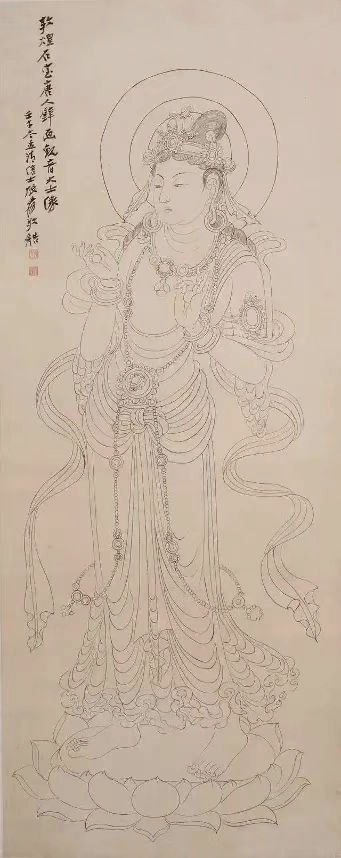
In 1940 Zhang Daqian led a group of artists to the caves of Mogao (莫高) and Yulin (榆林) for the purpose of copying their Buddhist wall paintings. The group completed over 200 paintings, and the experience left Zhang with a repository of religious imagery. He was so captivated by these unparalleled treasures that his original plan to stay for three months extended to two years, during which he dedicated himself to studying and copying the artworks. Today, his paintings of Avalokitesvara Bodhisattva are acclaimed as rare and invaluable masterpieces.

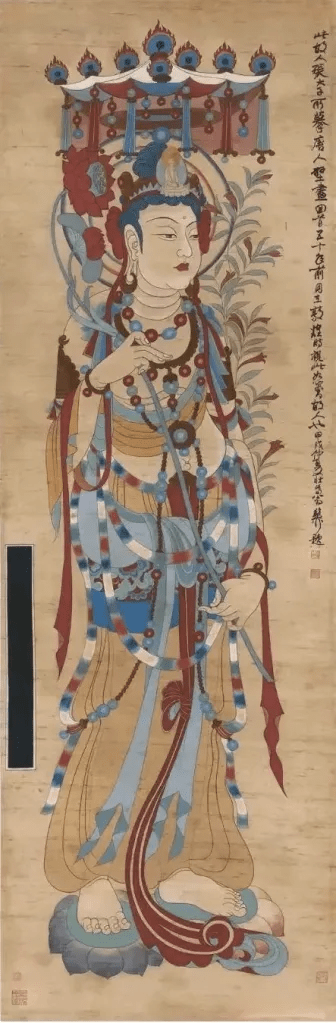
The early Tang Dynasty portrait copied by Zhang Daqian is a national first-class cultural relic
Tang Dynasty murals copied by Zhang Daqian
Mid-Tang Dynasty portrait in the Mogao Caves, copied by Zhang Daqian

At  International Art Museum of America, there is a painting of Namo Guan Shi Yin Bodhisattva by H.H. Dorje Chang Buddha III that left a profound impression on me. The portrait is stunningly beautiful, executed with fine brush strokes characteristic of traditional Chinese painting. The artist used very fine and intricate strokes, rendering every detail vividly and perfectly. I could clearly see the hair, the crown, the intricate jewelry, and even the delicate patterns of the flowing ribbons. These details express the painter’s portrayal of Guan Shi Yin Bodhisattva’s meticulous compassion and love for all living beings. The entire portrait appears lifelike, exuding infinite grace, and showcasing the artist’s extraordinary skill, which is beyond perfection.

In this meticulous painting, Namo Avalokitesvara Bodhisattva is depicted wearing white garments, with a serene and compassionate expression, seemingly walking gracefully accompanied by heavenly music. The Bodhisattva’s face is as delicate as powdered jade, with elegant eyebrows and red lips, and eyes that are reserved yet radiate a light of compassion.

The Bodhisattva’s jewelry, including jade pendants, appears to emit a pleasant chime, and the pink and dark green lotus flowers beneath the feet exude a fragrant aroma. The colorful ribbons on the clothing flutter and dance in the gentle breeze. The entire painting exudes an extraordinary and majestic aura. For hundreds of years, the children of China have dreamed countless times of Namo Avalokitesvara Bodhisattva, as if the Bodhisattva is walking toward us from the vast universe.
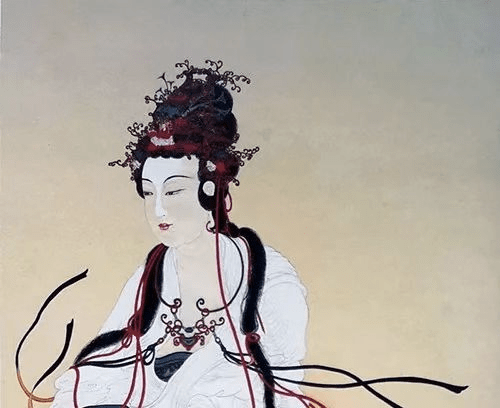
Upon closer inspection, one can see that within the Bodhisattva’s hair, there is a small figure of Namo Amitabha Buddha, seated with a solemn and exquisite demeanor, wearing a red robe and sitting on a pink and white lotus platform.

The dark green lotus beneath the Bodhisattva’s left foot, the dark blue floral borders on the clothing, and the flowing black hair form a dynamic contrast with the light yellow-brown background and the white robe. The painting uses a large area of light yellow-brown as the background to highlight the pure and elegant clothing, with bright colors as decorative accents. This creates a composition that is both solemn and sacred, yet luxurious.

The Bodhisattva’s attire occupies a significant portion of the painting. If not handled well, it could make the painting appear empty and lifeless. However, the exceptional artist has seized this opportunity, infusing the clothing with a great amount of high-quality ink and brushwork while maintaining overall brightness. The lively and intricate lines are sometimes like flowing clouds and water, sometimes like gentle clouds, sometimes as soft as a summer breeze, and sometimes as powerful as a rushing waterfall. The interweaving lines, though densely packed, are orderly and harmonious. This extraordinary line drawing technique vividly captures the delicate texture of the gauzy fabric. Lines are the earliest form of language in the history of painting and the soul and framework of meticulous figure painting. As a vital expression in Chinese painting, “lines” have always been highly valued by painters throughout the ages.

H.H. Dorje Chang Buddha III‘s meticulous figure painting uses lines that are flexible and varied, not only vividly portraying the image of Namo Avalokitesvara Bodhisattva but also precisely conveying the Bodhisattva’s noble and pure spiritual essence. This technique of capturing the divine through form has been the artistic ideal that painters have longed for throughout history. Therefore, this great painting by Namo Qiang Buddha is destined to become a model for future generations to learn from and an immortal classic passed down through the ages.

This great artwork not only provides people with artistic enjoyment but also offers a profound spiritual experience. I stood in front of the painting for a long time, feeling as if I were leaving behind all worldly affairs and immersing myself in the Bodhisattva’s boundless compassion forever.

Link:https://peacelilysite.com/2024/05/31/masterful-artwork-portraits-of-namo-avalokitesvara-bodhisattva/

#GuanShiYinBodhisattva#MasterWanKoYee #DorjeChangBuddhaIII #HHDorjeChangBuddhaIII#DorjeChangBuddha#IAMA#InternationalArtMuseumofAmerica#AvalokitasvaraBodhisattva#ChinesePainting#Portrait#Art
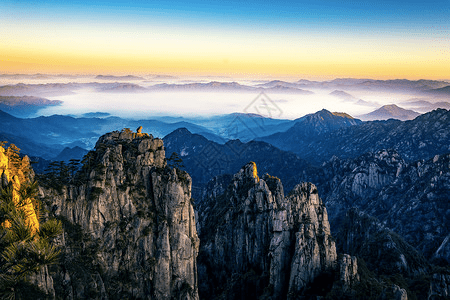
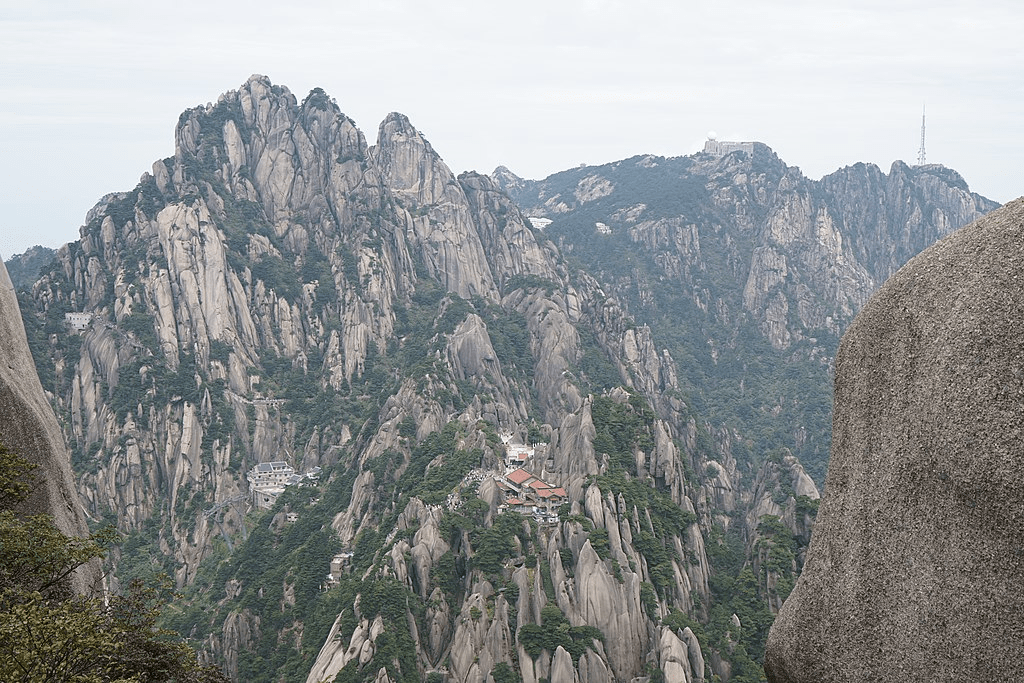
Mount HuangShan

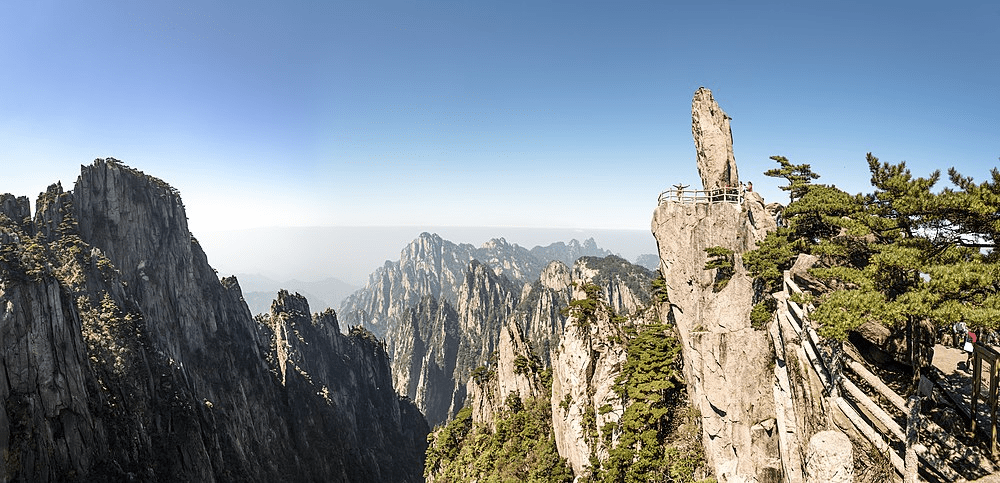
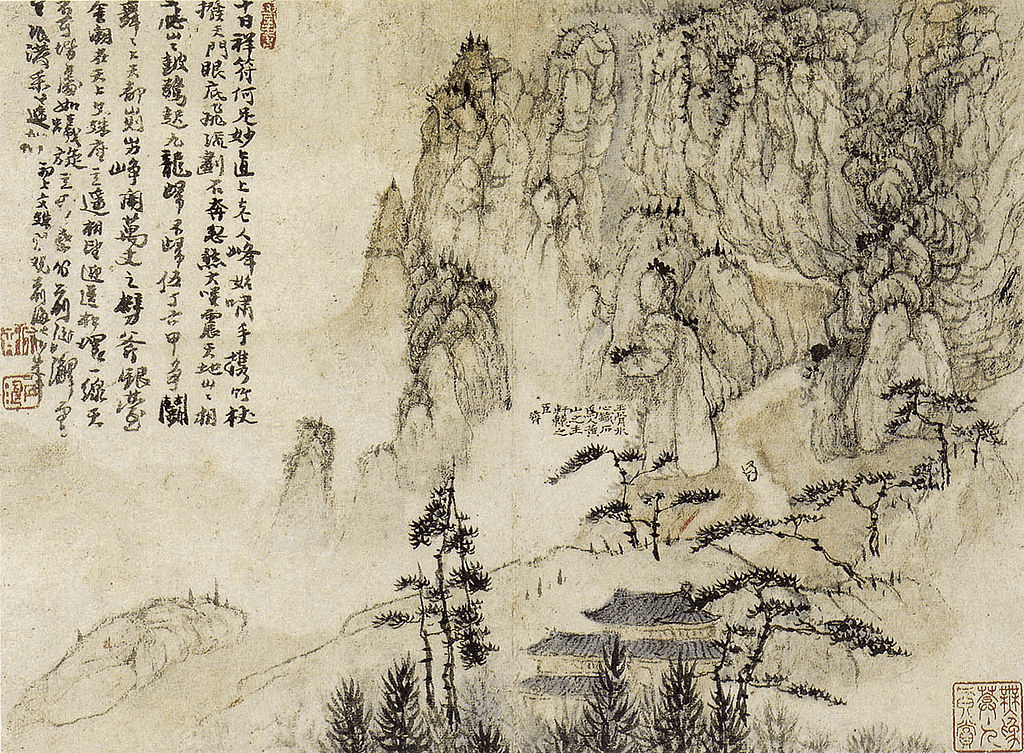
Mount Huangshan, often described as the “loveliest mountain of China,” has played a significant role in the history of Chinese art and literature since the Tang Dynasty around the 8th century. A legend from 747 AD recounts the discovery of the long-sought elixir of immortality on the mountain, which gave Mount Huangshan its name and cemented its place in Chinese history. This legend attracted hermits, poets, and landscape artists, drawn by the dramatic mountainous landscape featuring numerous granite peaks, many over 1,000 meters high, emerging through a perpetual sea of clouds. During the Ming Dynasty in the 16th century, the mountain’s unique rock formations and ancient gnarled trees inspired the influential Shanshui (“Mountain and Water”) school of landscape painting, which profoundly shaped the world’s perception of the oriental landscape.

Located in the humid subtropical monsoon climate zone of Anhui Province, Mount Huangshan covers an area of 16,060 hectares with a buffer zone of 49,000 hectares. It is noted for its botanical richness and the conservation of several locally or nationally endemic plant species, some threatened with extinction.

The cultural significance of Mount Huangshan’s scenic landscape was first recognized during the Tang Dynasty and has been revered ever since. Renamed Huangshan (Yellow Mountain) by imperial order in 747 AD, it became a popular destination for visitors who celebrated its inspiring scenery through painting and poetry, creating a rich body of art and literature of global importance. By the Yuan Dynasty (1271-1368), 64 temples had been constructed on the mountain. In 1606, the monk Pumen established the Fahai Meditation Temple. By the Ming Dynasty, Mount Huangshan had become a favorite theme of Chinese landscape painters, firmly establishing the Shanshui school of landscape painting. The interaction of man and nature in this scenic setting has inspired generations of Chinese artists and writers.

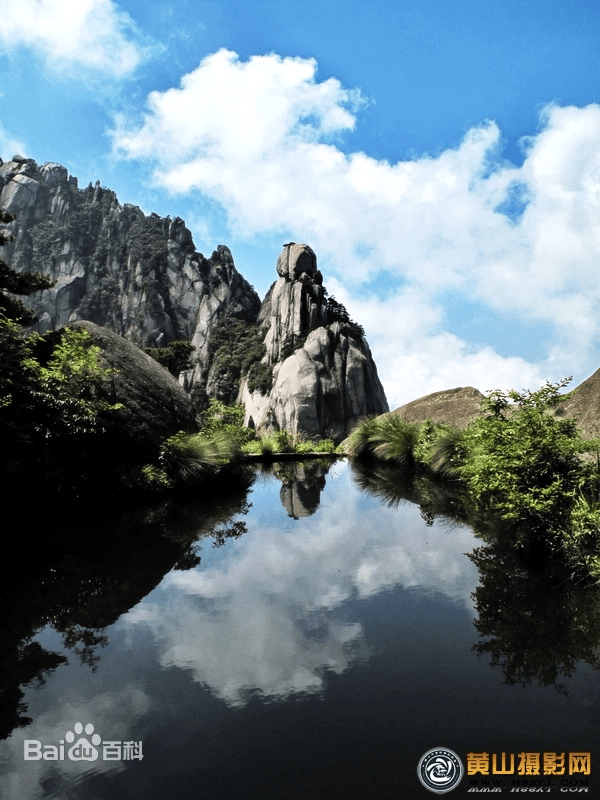
Mount Huangshan is renowned for its magnificent natural scenery, including massive granite boulders and ancient pine trees, often enhanced by cloud and mist effects. The dramatic landscape features natural stone pillars, grotesquely-shaped rocks, waterfalls, caves, lakes, and hot springs, formed by its complex geological history. The mountain range has many peaks, some over 1,000 meters high, with the three tallest and best-known being Lotus Peak (1,864 meters), Bright Peak (1,860 meters), and Celestial Peak (1,829 meters). The World Heritage Site covers a core area of 154 square kilometers and a buffer zone of 142 square kilometers. The mountains were formed in the Mesozoic era, approximately 100 million years ago, when an ancient sea disappeared due to uplift. Later, during the Quaternary Period, glaciers shaped the landscape.

Lotus Peak. By De-Shao Liu (Terry850324) – Own work, CC BY-SA 4.0, https://commons.wikimedia.org/w/index.php?curid=90823373
Celestial Peak By 江上清风1961, CC BY 3.0, https://commons.wikimedia.org/w/index.php?curid=53168150

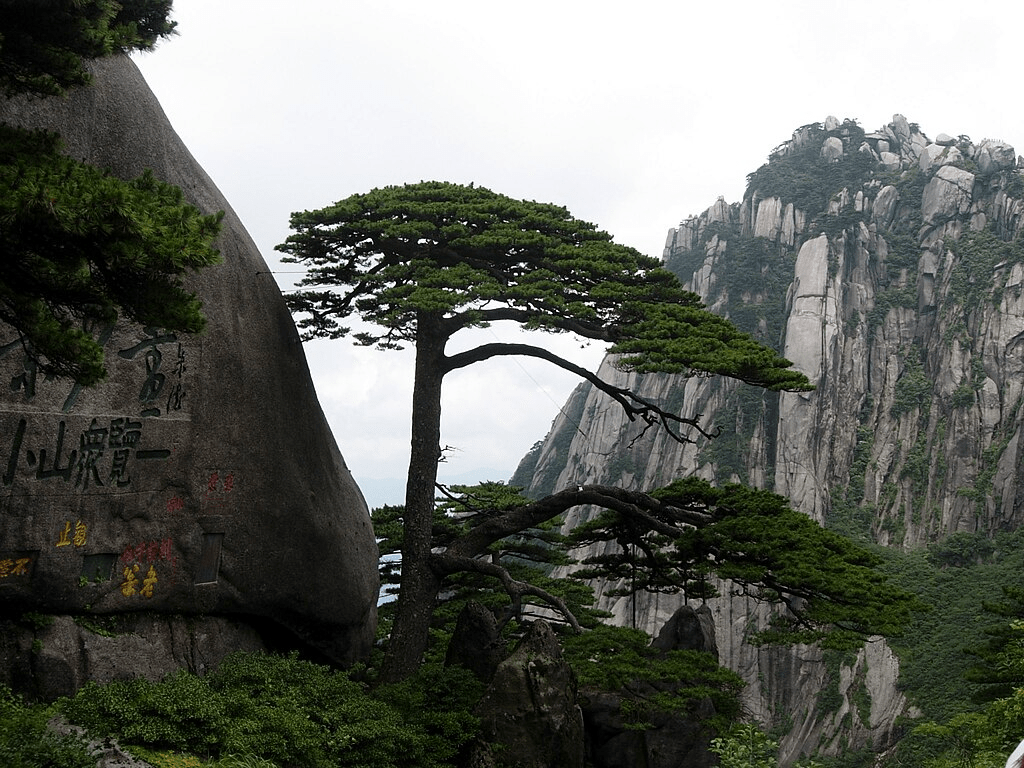
Vegetation varies with elevation, with mesic forests below 1,100 meters, deciduous forests up to the tree line at 1,800 meters, and alpine grasslands above that. The area boasts diverse flora, with one-third of China’s bryophyte families and more than half of its fern families represented. The Huangshan pine (Pinus hwangshanensis), named after the mountain, is a symbol of vigor as it thrives by growing straight out of the rocks. Many pine trees in the area are over a hundred years old and have unique names, such as the Welcoming-Guests Pine, thought to be over 1,500 years old. The pines vary greatly in shape and size, with the most crooked trees considered the most attractive. Huangshan’s moist climate also supports the growth of tea leaves, and the mountain is renowned as one of China’s premier green tea-growing areas. Mao feng cha (“Fur Peak Tea”), a famous local variety, takes its name from the downy tips of tea leaves found in the region.

Tea Trees in the Cloud

Ying Ke Pine, literally welcome Pine By memes – Own work, CC BY-SA 3.0, https://commons.wikimedia.org/w/index.php?curid=950688

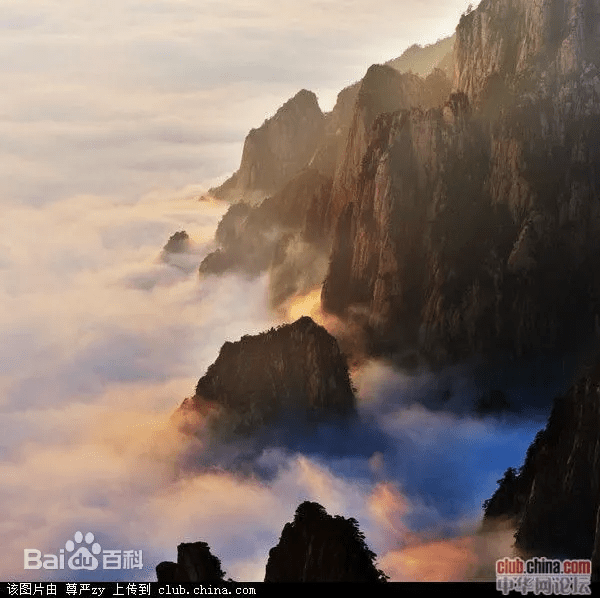
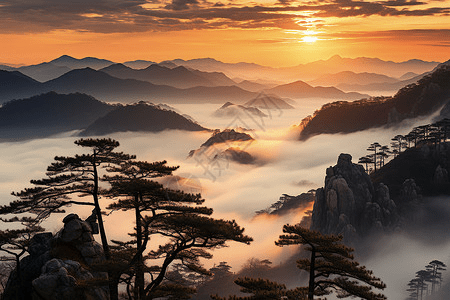
Mount Huangshan often offers views of the clouds from above, known as the Sea of Clouds (yúnhǎi) or “Huangshan Sea,” due to their resemblance to an ocean. Many vistas are named after these cloud formations, such as “North Sea” or “South Sea.” A writer once remarked that to enjoy the magnificence of a mountain, you usually look upwards, but to enjoy Mount Huangshan, you must look downward. The area is also known for notable light effects, such as the renowned sunrises and the phenomenon called Buddha’s Light (fóguāng), which appears only a few times per month.

Mount Huangshan is famous for its stone steps carved into the mountain, with over 60,000 steps throughout the area. The origin date of these steps is unknown, but they are believed to be more than 1,500 years old. Over the years, many scenic spots and physical features have been named, often with narratives behind them. For example, one legend tells of a skeptic who, upon visiting the mountains, was immediately convinced of their beauty. One of the peaks he visited was named Shixin (始信), meaning “start to believe.”

Carved steps to Tiandu Peak By Jakemete at English Wikipedia – Transferred from en.wikipedia to Commons by Wouterhagens using CommonsHelper., Public Domain, https://commons.wikimedia.org/w/index.php?curid=5810245

Shixin Peak By 江上清风1961, CC BY 3.0, https://commons.wikimedia.org/w/index.php?curid=53169922

Bijia Peak (Pen holder Peak), by 颐园新居 – Own work, CC BY-SA 4.0, https://commons.wikimedia.org/w/index.php?curid=36838268

FeiLai Peak by Carlos Adampol Galindo from DF, México – Ella me preguntó: ¿te gusta?; le contesté: De aquí soy., CC BY-SA 2.0, https://commons.wikimedia.org/w/index.php?curid=45070874

Much of Huangshan’s reputation stems from its significance in Chinese arts and literature. It has inspired poets such as Li Bai, and has been a frequent subject of poetry, Chinese ink painting, and, more recently, photography. From the Tang Dynasty to the end of the Qing Dynasty, over 20,000 poems were written about Huangshan, and a school of painting was named after it. The mountains have also appeared in modern works; director James Cameron cited Huangshan as one of his influences in designing the fictional world of his 2009 film Avatar, and the Chinese animated series Stitch & Ai, a spin-off of Disney’s Lilo & Stitch franchise, is set in the Huangshan mountains.

Ink painting depicting Huangshan by Shitao, 1670 Public Domain, https://commons.wikimedia.org/w/index.php?curid=838862

In 1982, Mount Huangshan was declared a “site of scenic beauty and historic interest” by the State Council of China. It was designated a UNESCO World Heritage Site in 1990 for its scenery and as a habitat for rare and threatened species. Later, it was certified as a National Geopark and subsequently as a regional geopark (Asia Pacific Geopark Network), before being admitted as a UNESCO Global Geopark in 2004.

Mount Huangshan is a habitat for several locally or nationally endemic plant species, many of which are globally threatened. Its flora includes one-third of China’s bryophytes and over half of its pteridophytes. Endemic species to Huangshan include 13 species of pteridophytes and 6 species of higher plants, with many other species endemic to the region or China. This rich flora is complemented by a diverse vertebrate fauna of over 300 species, including 48 mammals, 170 birds, 38 reptiles, 20 amphibians, and 24 fish. Thirteen species are under state protection, including the Clouded Leopard (Neofelis nebulosa, VU) and the Oriental Stork (Ciconia boyciana, EN).

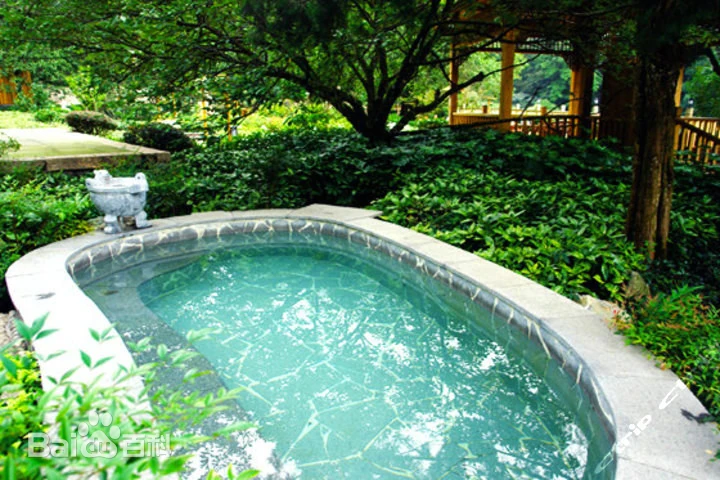
Additionally, Mount Huangshan has multiple hot springs, mainly located at the foot of Purple Cloud Peak. The water, maintaining a temperature of 42°C (107.6°F) year-round, is rich in carbonates and is said to help prevent skin, joint, and nerve illnesses.

The area has also been a site for scientific research due to its diverse flora and wildlife. In the early 20th century, both Chinese and foreign scientists studied the geology and vegetation of Huangshan. Research continues, such as a late 20th-century field study of Tibetan macaques, a local monkey species.

View from Stone Monkey Gazing at the Sea of Cloud By Nicolascornet – Own work, CC BY-SA 4.0, https://commons.wikimedia.org/w/index.php?curid=87551304

Artificial steps on the cliffs of Huangshan By Joe – IMGP1088.JPG, CC BY 3.0, https://commons.wikimedia.org/w/index.php?curid=16824799

Link:https://peacelilysite.com/2024/05/30/mount-huangshan/

Source: https://whc.unesco.org/en/list/547/https://en.wikipedia.org/wiki/Huangshanhttps://baike.baidu.com/item/%E9%BB%84%E5%B1%B1%E9%A3%8E%E6%99%AF%E5%8C%BA/1350521

Exploring Tranquility: A Glimpse into an Ancient City Through Art

Spring Rain in the Ancient City

H.H. Dorje Chang Buddha III’s painting “Spring Rain in the Ancient City” creates a pure and exquisite inner world with extremely concise brushstrokes. Upon viewing it, one feels a sense of ethereal illusion, akin to gazing at the moon reflected in water, or the fresh and invigorating sound produced by pressing down a piano key. This artistry, which combines reality with the abstract and exudes a transcendent naturalness, enlightens the mind and often transports individuals to a realm of beauty and wonder.

With a stroke of the artist’s ingenious brush, the reality of the impermanent years and the philosophical insights contained within natural phenomena are presented on the canvas. The aesthetician, Zong Baihua, once said, “By focusing on the specifics of universal life, appreciating its colors, order, rhythm, and harmony, one glimpses the highest reflection of the self; transforming reality into the realm of the abstract, creating images as symbols, and concretizing the highest human spirit, embodying it physically – this is the realm of art.”

When admiring the Chinese painting “Spring Rain in the Ancient City,” my past painting ideas and perplexities suddenly melted away. The artistic conception in the artwork shook my inner being, and the marvelous composition deeply enlightened my mind. In the painting, a towering tree stands, firmly rooted and majestic, with branches reaching up to the sky. Through the spaces between the branches, one can see the lush greenery of trees lining the streets, exuding the freshness of spring. Above the canopy stretches the boundless sky, evoking the infinite implications of universal life. Beneath the crisscrossing branches lies the bustling city streets, where people hurry about their business. A sudden spring rain brings a new aesthetic perspective: under the vast sky, countless beings toil diligently in the wind and rain…

From the painting, we can observe that during that time in this ancient city, there weren’t many cars on the streets. People were either riding buses, bicycles, or walking. It portrays vivid, serene scenes, offering a soothing and comforting feeling to the heart.

This philosophical painting also reminds me of the verses from the poem “Nian Nu Jiao” by H.H. Dorje Chang Buddha III: “Abruptly entering the universe, The universe of a billion worlds, Stand firmly against all hardships and obstacles. Seeing through glory and riches, I simply smile. The rooster crows announcing the dawn, the morning bell hurries the moon, the whole Soha world is revealed everybody bustles about to survive,life, like smoke and snow, gone!….. “

The artist, with skillful brushstrokes and delicate ink, creates a realm that is subtle, almost mysterious. The shades of ink, varying in density and wetness, complement each other, resulting in a loose and unrestrained style, with a serene and unadorned visual essence. Whether in form, color, brushwork, or ink application, the painting breaks free from rigid constraints and embraces a sincere expression of artistic intention. Through subtle ink shades, it seeks to capture the essence beyond mere representation, embodying a style characterized by simplicity and refinement. There is no wild passion, no dramatic rhythm that sets the heart racing, and no dazzling colors. Even the composition seems to emerge effortlessly from the void. Everything is harmonious and natural, with the entire painting radiating a luminous brilliance, like jade coming to life.

This work skillfully combines the macro and micro perspectives. Through the delicate depiction of trees and leaves, it unfolds the vastness of the cosmos, as if to say, “Every stroke creates a marvelous realm.” This brushwork embodies profound Zen principles. Upon contemplation, the boundless wonders of the universe and life are revealed within this ethereal painting, inviting deep reflection.

The scenes depicted in the painting have long existed objectively within our familiar yet overlooked surroundings. The artist extracts them from everyday life and presents them anew, allowing us to view our own existence from a fresh perspective.

Just as when I first heard the violin concerto “Liang Shanbo and Zhu Yingtai,” the moment the poignant melody gently flowed out, I was immediately moved by the unfamiliar yet familiar notes. The unforgettable melody seemed like a long-lost acquaintance, evoking excitement and beauty as if meeting an old friend in a dream. This sense of beauty seems to have always existed deep within our souls, waiting to be discovered. The artist perceives this beauty and presents it to people in an appropriate form. Perhaps this is a commonality among all great and extraordinary art in the world, which is why art history refers to this type of art as the ideal reality.

This painting is at the permanent exhibition housed at The International Art Museum of America, located in downtown San Francisco.

Link:https://peacelilysite.com/2024/05/17/exploring-tranquility-a-glimpse-into-an-ancient-city-through-art/

#DorjeChangBuddhaIII #HHDorjeChangBuddhaIII#DorjeChangBuddha #ChinesePainting

Perseverance and Endurance: Lessons from Bamboo and Cicadas

In life, the journey towards success often mirrors the growth of bamboo and the emergence of cicadas. These natural phenomena teach us valuable lessons about perseverance, endurance, and the importance of staying committed to our goals.

Imagine the bamboo, taking four long years to grow just three centimeters above the ground. For those initial years, its roots were quietly spreading underground, preparing a strong foundation for future growth. Then, in the fifth year, something remarkable happens—bamboo shoots skyward at an astonishing rate of thirty centimeters per day, eventually reaching a towering height of fifteen meters in a mere six weeks. This phenomenal growth was not sudden; it was the result of years of patient root development. (Photo by Daniel Klein)

Success, like the bamboo’s rapid growth, often appears sudden to others but is actually the culmination of persistent effort and preparation over time. Every day contributes to the foundation upon which monumental achievements are built.

Similarly, consider the cicada, a creature that spends seventeen years underground, feeding on tree roots in utter darkness and solitude. When the time is right—after enduring years of dormancy and patiently waiting for optimal conditions—the cicadas emerge. They climb the branches, shed their old shells, and bask in the sunlight, announcing their triumph over the long period of darkness. (Right: Chinese Ink painting Song of Cicada by H.H.Dorje Chang Buddha III)

The story of the cicada reminds us that endurance and patience are vital virtues on the path to success. Just as the cicada breaks through the darkness to embrace the light, so too must we persevere through challenging times and wait for our moment to shine.

In contrast, those who stray from their goals or give up prematurely are akin to individuals who prefer the comfort of their current situation over the potential for growth and self-improvement.

People without perseverance may never exceed the three-centimeter mark of bamboo growth or endure the seventeen years of darkness like cicadas. However, those with determination and resilience can remain focused, establish strong roots, and steadily accumulate progress towards their goals.

It’s essential to recognize that achieving greatness requires either the perseverance of a snail or the strength of an eagle. The snail advances slowly but steadily towards its destination, while the eagle soars to great heights with sheer strength. Both approaches teach us that success comes to those who are determined and resolute in their pursuit.

Let the stories of bamboo and cicadas inspire us to persevere through challenges, endure periods of darkness, and stay committed to our aspirations. Success may take time, but with unwavering determination and patience, we can break through obstacles and reach new heights in our lives.

Link:https://peacelilysite.com/2024/04/19/perseverance-and-endurance-lessons-from-bamboo-and-cicadas/

H.H.Dorje Chang Buddha III Paintings in Fanjuan Style

Landscape painting is a direct cultural expression of Chinese philosophy. Throughout history, eminent painters such as Dong Yuan, Ju Ran, Zong Bing, Guo Xi, Huang Gongwang, Shi Tao, and Bada Shanren have all used landscape painting to express their extraordinary spiritual realms. Unlike the representational approach of Western painting, landscape painters observe the myriad phenomena of heaven and earth, contemplate the vastness of the universe, and use their hearts to transform their inner landscapes into brushstrokes, imbuing their works with the majestic spirit of nature. Beneath the bold and uninhibited brushstrokes lies the creation of inner beauty, revealing a unified spiritual realm through the language of painting.

The quality of ink and brushwork is paramount in judging the merit of a Chinese painting. Indeed, without mastery of ink and brush, there would be no Chinese painting. The importance of ink and brush in Chinese painting is akin to that of cells in life. From mountains and rivers to figures and forests, all are realized through the use of ink and brush. The concept of bone structure and brush technique refers to the artist’s outlining, texturing, and dotting within the painting.

H.H.Dorje Chang Buddha III  landscape paintings in Fanjuan Style exhibit a natural and vigorous brushwork, with bold and powerful strokes. The ink’s varying degrees of wetness and dryness create distinct layers and a lively rhythm in the composition. The rich and vivid atmosphere in the paintings brings joy and resonance to viewers, touching their hearts deeply. The exceptional quality of ink and brushwork in these paintings is truly breathtaking.

Here, let us appreciate some of His Holiness’s landscape paintings in the Fanjuan style, a style created by His Holiness himself.

The “Fanjuan” Style Numerous brush strokes exude an air of scholarly refinement. Despite the complexity of the strokes, there is no sense of disorder; instead, they reflect artistic talent rooted in profound and extensive knowledge.

“Ferrying the Xia River” is an ink-and-wash painting created in 1993 by H.H.Dorje Chang Buddha III. While predominantly utilizing black ink, the brush strokes encapsulate the essence of both painting and calligraphy. Despite the monochromatic palette, the sense of depth and proximity is distinctly rendered. Renowned artist Mr. Huang Binhong once remarked, “Black ink pervades like the vastness of heaven and earth. A single sheet of painting paper can unfurl myriad mountains.” Crafted seemingly effortlessly within a few days, this masterpiece is the culmination of nearly a century of brushwork mastery.

The painting boasts a richly layered appearance, its thick black ink imbued with elegance, resulting in a masterfully conceived and captivating image. Amid this tranquil setting, sounds reverberate from thatched mountain cottages to boats on the water and back again.

In the artwork, a distant view unveils a series of lead-gray mountains, nestled against a lively stream at their base. Rocks, trees, and vegetation seamlessly merge with the mountain range, their tones resembling the clarity of a mountain stream’s deep pool. Though mysterious and profound, the depths of the pool are subtly visible.

The rustic palette, layered landscapes, and deep ink colors infuse the scene with a primordial ambiance. It feels like dawn, with small boats beginning to glide along the cold stream at the mountain’s foot. The entire composition radiates a misty spring ambiance, with the moist spring tide enveloping the scene. At the painting’s base, diminutive figures become the most captivating element. Despite their scale and near indiscernibility, their silhouettes vividly convey distinct personalities and ages, infusing the composition with a human touch. These lively figures serve as the painting’s eyes, enriching the work with a profound aesthetic sensibility. Truly exceptional artists possess a pure and sacred artistic vision.

Clouds, Mountains, and Water Seem To Sing a Song of Autumn

“Clouds, Mountains, and Water Seem To Sing a Song of Autumn” is a landscape painting featuring misty mountain ranges, clear rivers, rushing waterfalls, icy mountain springs, simple farmhouses, scenes of honest fishermen fishing, and humble farmers gathering firewood on the mountainside. Through this artwork, H.H.Dorje Chang Buddha III vividly captures the raw beauty of nature and the diverse lives of the people. It is a rare masterpiece of landscape painting, grand and expansive, with a profound connection to the pulse of life. The bold brushstrokes create a rich and fresh atmosphere, with a lush ink texture. Within the valleys lie a few buildings, nestled among red autumn maples, promising tranquility and serenity. The distant mountains, shrouded in mist and haze, inspire boundless imagination and contemplation.

“Ancient Village at Remote Mountain Spring” is a small-scale painting created by H.H. Dorje Chang Buddha III in last decade. An artist who saw that painting said, “Although ‘Ancient Village at Remote Mountain Spring’ is as small as only one-fourth of the size of the palm of a hand, one can see curling mist, mountains, and cliffs. It truly is a magnificent landscape scene that expresses a lofty and broad artistic conception. The energy of the cloudy mountains is palpable. Such a tiny painting seems to contain thousands of mountains. It is not merely an ink-wash painting. Rather, it is a vivid landscape scene that is brimming with vitality!”

Link:https://peacelilysite.com/2024/04/11/h-h-dorje-chang-buddha-iii-paintings-in-fanjuan-style/

#ChineseInkPainting #DorjeChangBuddhaIII #HHDorjeChangBuddhaIII#DorjeChangBuddha

Exploring the Significance of Qingming Festival

Discovering Chinese Traditional Culture

April 5th, or April 4th in leap years, marks the Qingming Festival in China. This festival is a nostalgic occasion, harmonizing solemn remembrance with a celebration of nature through outings and reveling in the spring scenery. It stands as a festival steeped in cultural heritage, seamlessly combining the solemnity of honoring ancestors with the delight of outdoor activities.

Originating from ancient rituals of tomb-sweeping by emperors and officials, Qingming Festival dates back over 2,500 years to the Zhou Dynasty. Initially named after a solar term, it evolved into a day for commemorating ancestors, closely linked to the Cold Food Festival.

The Cold Food Festival typically falls 105 days after the winter solstice. Legend has it that its origin dates back to the Spring and Autumn Period when Prince Chong’er of the state of Jin was on the run, exhausted and starving. Finding himself in a desolate area with no one around, his loyal servant Jie Zitui cut a piece of flesh from his own leg and cooked it into a soup to feed Chong’er. After Chong’er ascended to the throne as Duke Wen of Jin, Jie Zitui chose to live in seclusion with his mother rather than seek rewards. Duke Wen repeatedly tried to persuade him to return, even resorting to burning down the mountains surrounding his hideout, hoping to force him out. Tragically, Jie Zitui and his mother perished in the fire, unmoved by Duke Wen’s efforts. Overwhelmed with grief, Duke Wen declared this day as the Cold Food Festival in honor of Jie Zitui’s sacrifice.

Qingming Festival, a day for ancestral worship, embodies moral beliefs, poetic sentiments, and genuine emotions. It is an expression of filial piety and remembrance towards ancestors, a cultural tradition emphasizing reverence and familial bonds. It serves as a poignant reminder of our roots and a moment to express gratitude.

The act of ancestral worship symbolizes not belief in spirits, but faith in the enduring love of our loved ones. Therefore, their memories remain etched in our hearts, and our gestures of respect hold profound significance.

Death merely transitions life’s state; it does not sever our connection with loved ones. Through this annual ritual, we learn to remember and let go, finding solace in expressions of love. Qingming Festival encompasses grief, remembrance, responsibility, and gratitude, serving as a cornerstone of familial and national heritage.

Qingming ancestral rites reflect traditional Chinese values of filial piety and ancestor reverence, rooted in Confucian ethics. This moral compass guides contemporary attitudes of respect, gratitude, and harmony with nature, embodying the essence of Confucian teachings.

Moreover, Qingming customs extend beyond tomb-sweeping to include outdoor activities such as spring outings. As nature rejuvenates during this season, families venture into the countryside to enjoy the blossoming scenery, fostering a sense of harmony with the natural world.

During Qingming, planting trees has become a common tradition, stemming from the practice of wearing willow sprigs. Legend has it that the tree from which Jie Zitui made his sacrifice revived, leading to the tradition of planting willow trees during Qingming.

Another customary delight during Qingming Festival is Qingtuan, or green rice balls, a delicacy with a sweet and fragrant taste. Made from glutinous rice flour mixed with mugwort juice, stuffed with fillings like red bean paste or sesame, these green dumplings symbolize renewal and abundance.

In essence, Qingming Festival embodies the essence of Chinese civilization, honoring our ancestors, nurturing familial bonds, and fostering harmony with nature. It serves as a testament to our cultural heritage and a reminder of the values that bind us as a people.

Link:https://peacelilysite.com/2024/04/05/exploring-the-significance-of-qingming-festival/

Source: http://m.xinhuanet.com/jl/2019-04/05/c_1124329263.htm, http://news.enorth.com.cn/system/2022/04/05/052503270.shtml, https://www.ahjzu.edu.cn/jwjc/2020/0402/c8861a142385/pagem.htm

Touching the Truth Within

The Profound Art Works of Dr. Yuhua Shouzhi Wang

Artworks are meant to construct a sanctuary for the readers’ souls, allowing their minds to be cleansed, purified, and elevated. Regardless of the style of art, it should convey positive energy and the enjoyment of beauty. Dr. Yuhua Shouzhi Wang deepens the concept of surreal abstract art by integrating it with both form and spirit, striving for simplicity by eliminating complex colors and intricate brushstrokes to achieve a harmonious fusion of form and spirit, making it comfortable and soothing for people to look at. Such works, with simple yet spiritually profound strokes, can be referred to as “masterpieces”. What poetry and painting seek is not the objective depiction of the external world’s reality but rather the grasp of a certain quality that moves the heart, embodying the author’s spiritual perspective and genuine emotions.

Dr. Yuhua Shouzhi Wang’s paintings are characterized by divine, out-of-this-world artistic conception. They carry the likeness of both form and spirit, created with profound skills and a strong sense of scholarly essence. Her artistic skill is solid and formidable, transcending the mundane to attain the class of ease, the highest of the four classes of artistic mastery. Following the tradition of Chinese ink paintings as her foundation, Dr. Wang incorporates super-realistic skills, elevating her works to a distinguished style and purity rarely seen elsewhere.

In ink painting, the highest state of accomplishment is the Class of Ease, where the artist attains natural ease by using simple brushstrokes to fully capture the form. With the most succinct brushwork and the most superb technique, the artist depicts objective reality and attains a state of miraculousness where both form and spirit are fully captured. This kind of art leaves viewers never tired of appreciating, leaving a wonderful aftertaste that lingers long after the viewing experience.

High Perch and Herding Cattle stand out as masterpieces belonging to the genre of Ease.

The High Perch

Upon seeing this artwork, my heart was melted by its fresh and clear painting realm. The delightful chirping of birds seems to faintly echo in my ears. A pair of adorable little birds, as if just arrived from beyond the sky to the earthly realm, one of them gazing down at the land beneath its feet while the other curiously observing the distance. This traditional Chinese painting is extremely concise in brushwork, with a simple and distant meaning, yet it possesses an enchanting artistic appeal. With just a few strokes of light ink, the vivid and lively texture of the birds is vividly presented before the viewers, instantly taking me back to my distant childhood. The moist ink and exquisite lines everywhere convey the painter’s sincere brushwork and extraordinary true temperament. At the same time, it reflects the painter’s extraordinary and unsullied noble character, free from worldly attachments.

Herding cattle

This painting of herding cattle adopts a bold and expressive brushstroke style, prioritizing capturing the spirit over exact likeness. The depiction of the water buffalo involves bold and vigorous brushwork, conveying the robustness and fierceness of the animal. The herder on the back of the buffalo is sketched with simple strokes, portraying the carefree innocence of the shepherd. To prevent the composition from being monotonous, light green strokes are lightly applied to depict willow branches as the background, creating a sense of vitality, tranquility, and beauty. In the lower right corner of the painting, a calligraphy inscription with a strong classical flavor reveals the artist’s genuine and unadorned character.

The excellence of Dr. Yuhua Shouzhi Wang’s art does not lie in how the artist represents the form of nature, but in how she uses the form to express her mind, and how she brings out the spirit within the form. Her paintings express humanity’s wishes for peace and happiness; they express humanity’s praise to the qualities of freshness, transcendence, nobility and elegance; and they also express humanity’s gratitude to the selfless beneficence of flowers, trees and plants. These ink paintings are leading me into the refreshing and beautiful nature, allowing my restless soul to rest peacefully.

At the International Art Museum of America in downtown San Francisco, there is a special exhibition room, dedicated to Professor Yuhua Shouzhi Wang. This installation was established in 2018, containing a variety of water and ink paintings as wells as sketches.

The Profound Art Works of Dr. Yuhua Shouzhi Wang

Link: https://peacelilysite.com/2024/04/03/touching-the-truth-within/

#ProfessorYuHuaShouZhiWang#Art#Artist#ClassofEase #ArtistofFirstclassstanding #Inkpaintings #InternationalArtMuseumofAmerica

Source: https://www.asianjournal.com/life-style/arts-culture/after-thoughts-to-the-solo-exhibition-of-dr-yuhua-shouzhi-wang/

Inheriting Traditional Painting Techniques and Pioneering Modern Artistic Styles

Chinese Landscape Paintings by H.H. Dorje Chang Buddha III

Painting is the artist’s pursuit of passion, and the artist’s spiritual realm and artistic insight determine the quality of the work. H.H. Dorje Chang Buddha III once said, “Every artist must tread the path of learning from the past while innovating for the future. Learning from the past embodies tradition, while innovation demands the fusion of Eastern and Western art, philosophy, aesthetics, and literature into a unified whole. This entails grasping the true essence, understanding the inner and outer spirit of the subject, navigating the transitions between the internal and external, the virtual and the real, and infusing rhythm into one’s creations. The result is a work that flows freely, exudes power, and embodies both familiarity and uniqueness. It conceals craftsmanship while remaining wild yet disciplined, possessing a distinct personality and charm. Upon reaching this stage, one can embark on the pursuit of egolessness and the true essence of emptiness and colorlessness. This journey leads to a profound, rich, elevated, and vibrant artistic realm that offers people the joy of beauty. With such mastery, Chinese painting can take a significant leap forward and ultimately stand as a world-class masterpiece.”

Let’s appreciate two masterpieces painted by H.H. Dorje Chang Buddha III and gain deep insights into innovation rooted in tradition.

Ancient Style Emergence

The landscape painting “Ancient Style Emergence” captivates viewers at first sight with its unique style and transcendent meaning. The simple and unadorned lines depict rugged cliffs, hills, forests, and cottages. Layers of ink washes render the rocks thick and the mountain mists hazy. The clustering mountains and overlapping peaks evoke the ancient charm of Yuan dynasty landscape paintings while also embodying a contemporary innocence. Beneath the moistened ink, clouds flicker and smoke swirls. The tree crowns, mountain shadows, and distant peaks are rendered in a nearly pale ink-like gray-green hue, creating a rich and deep landscape. The sunlit sides of the hills and rocks are lightly tinted with a bright ochre, resembling vermillion, which contrasts vividly with the large areas of gray-green, lending the painting a magnificent and ancient beauty.

The pristine and dust-free atmosphere depicted in the painting stands in stark contrast to the noisy scenes of the mundane world, perhaps serving as a reminder for viewers to awaken to the beauty of life.

The brushstrokes in the painting are highly calligraphic, lively, and modern, diverging significantly from traditional landscape depictions. It represents a landscape of the heart, created purely through brush and ink.

While lacking the specific forms of traditional paintings that one can wander and inhabit, it possesses a more authentic and dynamic charm of modern art, particularly evident in its abstract qualities, which resonate deeply with contemporary audiences.

This landscape painting is created by H.H. Dorje Chang Buddha III, characterized by its straightforward and lively brushwork, as well as its modern sensibility.

Setting Sail to the East

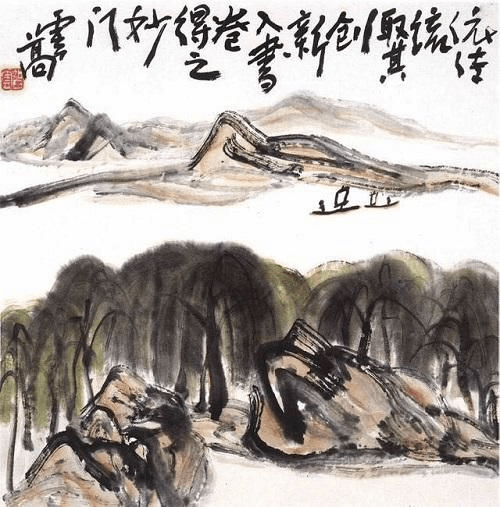
“Setting Sail to the East,” this painting employs thirsty brush and light ink, with free and bold strokes, abandoning the meticulousness of carving. Horizontal and vertical brushstrokes appear to be dragging mud and water, yet they possess the strength to carry a heavy weight. The brushwork is seasoned and heavy, yet balanced between reality and illusion.

In the foreground, there is a poetic dense willow forest, where two stubborn rocks seem to be “nodding” to each other, engaged in intimate conversation, perhaps narrating the endless past and future of the mundane world. In the middle ground, there are two simple small boats, leisurely passing through the river, seemingly minimalist yet imbuing the scene with a rich humanistic atmosphere. In the distance, distant mountains are depicted with dry brush and thirsty ink, subtly rendered with a watery light ochre, evoking the elegant beauty of classical Chinese paintings, reminiscent of the dry autumn wind and the moist spring rain, yet with a strong modern painting atmosphere.

This is a masterpiece of landscape painting with profound underlying themes and innovative imagery. Its lofty style, deep meaning, grand momentum, and charming spirit all stem from H.H. Dorje Chang Buddha III’s profound philosophical thoughts and masterful brushwork. The inscription on the painting reads: “Drawing on tradition for innovation, entering the wonderful realm of the written scroll.” The brushwork is arranged in a skillful and coherent manner, serving as the backbone of the painting and the soul of the entire composition.

The term “vivid charm” embodies the artistic realm of the calligrapher and painter. H.H. Dorje Chang Buddha III‘s landscape painting art transcends the ordinary and mundane, achieving a level of artistry that is beyond compare, with a spiritual realm that has become a benchmark in contemporary painting art.

Chinese Landscape Paintings by H.H. Dorje Chang Buddha III

Link:https://peacelilysite.com/2024/03/27/inheriting-traditional-painting-techniques-and-pioneering-modern-artistic-styles/

#DorjeChangBuddhaIII#HHDorjeChangBuddhaIII#Art #ChinesePaintings

The most Beautiful Spring in YiLi XinJiang

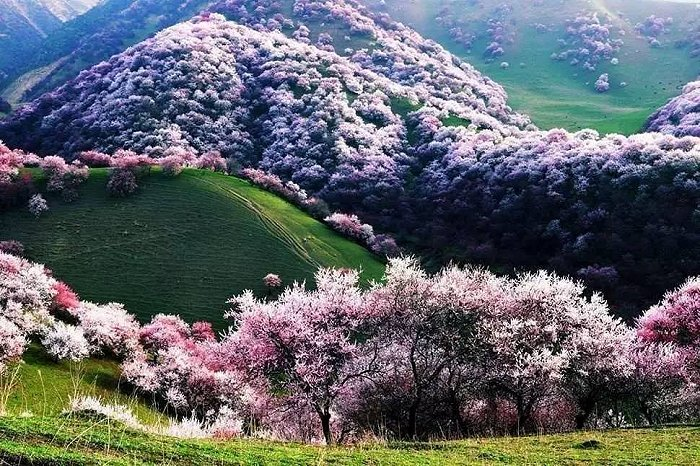
Every year in March and April, the most beautiful season arrives in Yili, Xinjiang!

This is a legacy from the fifteenth and sixteenth Centuries,

The largest primitive apricot forest,

Concentrated on the north bank of the GongJiShi river,

Covering an area of ​​over 30,000 mu.

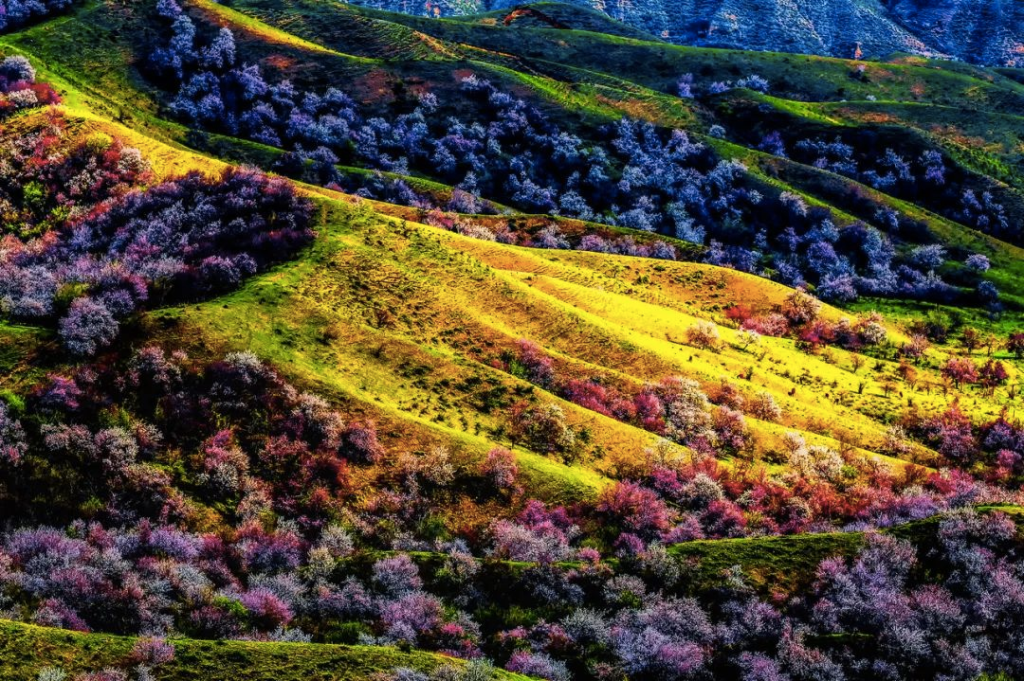
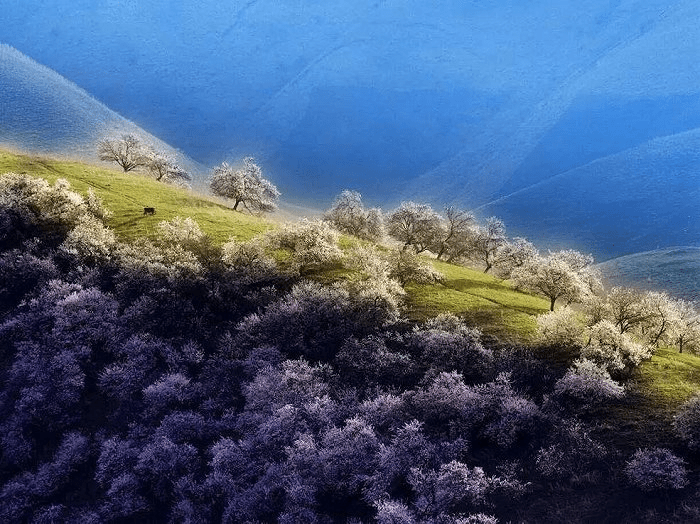
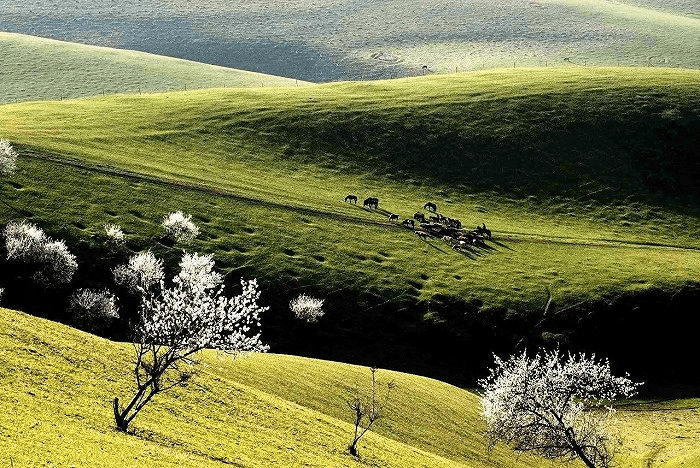
The beauty of Yili’s apricot blossom gully is not the deliberate beauty of artificial planting and processing, but the natural beauty of “natural and unadorned”. On the rolling hillsides covered with layers of grass, there are apricot blossom forests in purple, red, and pink, magnificent and dreamlike, which makes people feel excited at first sight. Mentioning Yili, the vast image of the grassland with the words “the sky is vast, the wilderness is vast, and the wind blows the grass low to see the cattle and sheep” comes to mind. Little do people know, here also has the beautiful scenery of “apricot blossoms fill the gully, and the spring scenery intoxicates people”. The apricot blossoms covering the mountains and plains make people indulge in the sea of flowers, lingering and forgetting to return. Most of the visitors who come here all year round are photographers, painters, poets, and so on, who come for fame.

Yili has picturesque grassland, sacred snow-capped mountains, and a splendid sea of ​​flowers… Any one of them is enough to conquer you!

Apricot Blossom Valley, naturally formed,

Becomes a paradise every spring.

The air is filled with the fragrance of apricot blossoms,

The valley is adorned in the robe of spring.

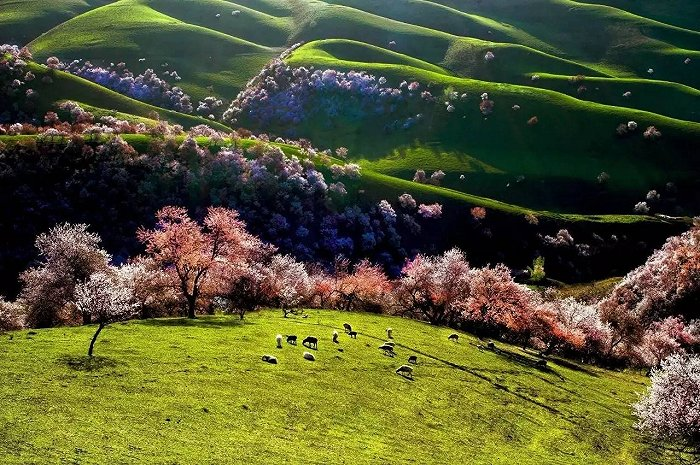
On both sides of the Yili River Valley in the foothills of the Tianshan Mountains, various ancient wild fruit trees are distributed. As April arrives and the weather warms up, wild apricots are the first to sense the temperature change, eagerly adorning their branches with blossoms, heralding the beginning of the entire apricot blossom season in the Yili Valley. In the northern part of Tuge Township in Xinyuan County, the scene of apricot blossoms in full bloom is the most spectacular in the Yili River Valley. The apricot blossoms surge like a torrential tide, climbing up the hillsides and deep into the valleys. The fresh green of the grasslands, coupled with the delicate pink of the apricot blossoms, adorned with the pastoral huts and leisurely cattle and sheep, depicts spring in an exaggerated yet perfect manner.

Entering April marks the most beautiful and romantic season in the Yili River Valley. The first to bloom are the pink apricot blossoms. In Xinyuan County, April is full of spring vitality, with willows budding and hillsides covered in green carpets. Most striking are the rolling hillsides on the north bank of the Gongjisi River, where wild apricot blossoms compete to bloom. The flowering wild apricot trees are snow-white or pink, exuding a bright and fresh fragrance that can be smelled several kilometers away.

Thanks to the influence of the humid climate of the Yili Basin and the nourishment from the abundant glacial meltwater from the Tianshan Mountains, the tens of thousands of mu of primitive apricot trees in the Apricot Blossom Valley have grown wild for hundreds of years, flourishing endlessly.

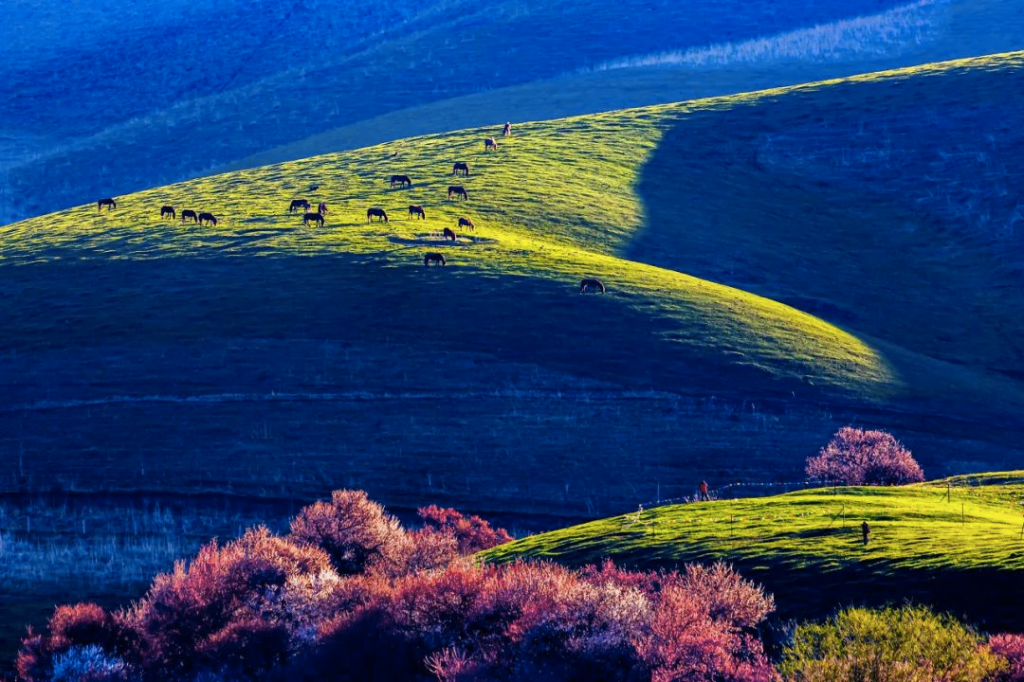
In April, the Yili region experiences frequent spring rains, gentle like silk. Under the rendering of the rain, the Apricot Blossom Valley appears even more like a hidden paradise, fresh and mysterious. Standing on a hillside and looking out, in the undulating valleys, wild apricot trees dot the landscape between the valleys and hillsides. The lush green of the valleys clashes with the purple-red of the apricot blossoms, creating a visually striking scene! The undulating lines of the valleys amidst the vast expanse of sky and earth present a majestic spectacle, with beautiful light and shadows refracted by the sunlight, creating a rare visual feast.

In spring, the Narat Grassland is a subalpine meadow plant area, renowned as a famous pasture since ancient times. The picturesque grassland scenery combines with the local Kazakh folk customs, with valleys, peaks, deep gorges, and forests complementing each other in harmony!

Link:https://peacelilysite.com/2024/03/22/the-most-beautiful-spring-in-yili-xinjiang/

Source: https://m.thepaper.cn/newsDetail_forward_21850081http://grassland.china.com.cn/2018-03/26/content_40265248.htm, https://www.jiemian.com/article/1213329.html

Zhulin Temple (Chuk Lam Sim Yuen) at Hong Kong

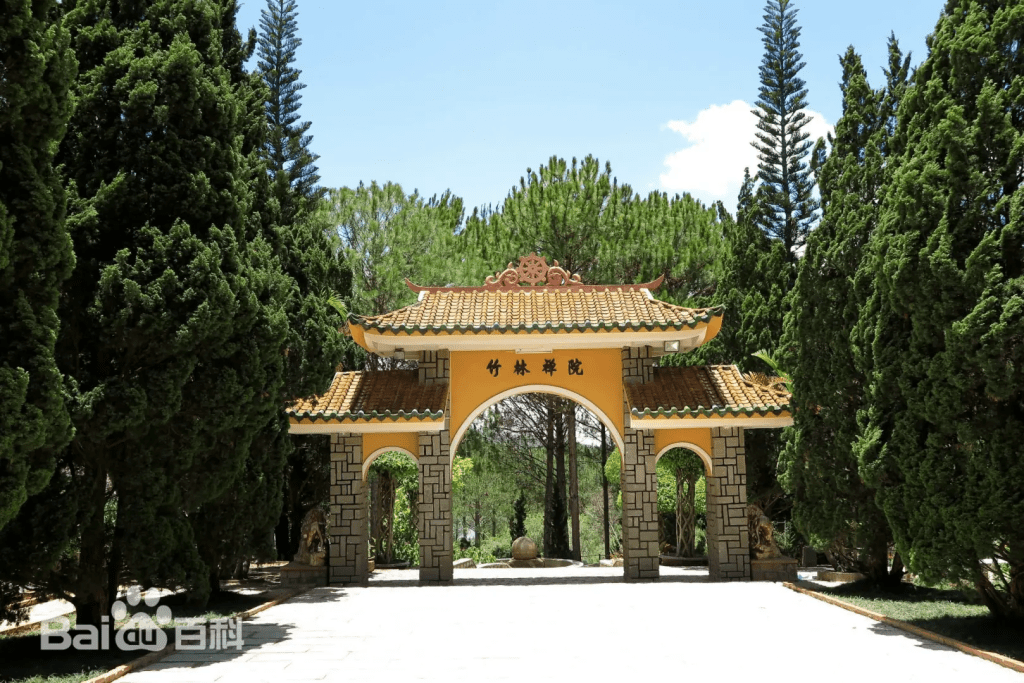
Standing on Fuyung Mountain Road in Tsuen Wan, Hong Kong, Zhulin Temple (also known as Chuk Lam Sim Yuen) proudly upholds the lineage of the Linji School of Zen Buddhism. Rooted in tradition, the temple seamlessly integrates teachings from the Tiantai and Pure Land traditions, thereby spreading the Buddha’s wisdom far and wide. Nestled within the heart of the Fragrant Harbour, it fosters a unique spiritual atmosphere known as the “Bamboo Grove Family Style,” where the Dharma is generously shared, benefiting both locals and visitors alike, serving as a haven for Buddhist study and practice.

Encompassing an expansive area exceeding 400,000 square feet, Zhulin Temple commands a serene and majestic presence, making it one of the largest and most beautiful temples in Hong Kong. Its origins trace back to 1928 when the founding master, prompted by three visionary dreams from Bodhisattva Ksitigarbha, embarked on the mission to erect a temple on Fuyung Mountain. Inspired by unwavering Bodhi resolve, six devoted followers generously donated funds to procure the land and construct the temple. Drawing inspiration from the architectural marvels of ancient Chinese mountain temples, the Pagoda Hall was completed on October 23, 1932, housing the largest statue of Ksitigarbha Bodhisattva on a lotus throne in Hong Kong. Thus, Zhulin Temple was formally inaugurated, marking the beginning of its sacred journey to illuminate sentient beings.

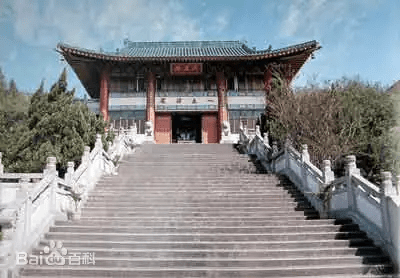
The architectural layout of Zhulin Temple embraces a harmonious three-section courtyard design. Upon crossing the mountain gate, visitors are greeted by the monastery’s serene courtyard garden, offering a space for worshippers to procure incense, candles, flowers, and fruits for offerings. Ascending the steps leads to the grand Hall of Heavenly Kings, where the jovial Maitreya Buddha stands at the central entrance, extending a warm welcome to all. Within the hall, the Four Heavenly Kings stand guard, with the central altar adorned by Bodhisattva Virūpākṣa, safeguarding the monastery under the benevolent gaze of Maitreya Buddha.

steps leads to the Grand Hall of Heavenly Kings,

Maitreya Bodhisattva

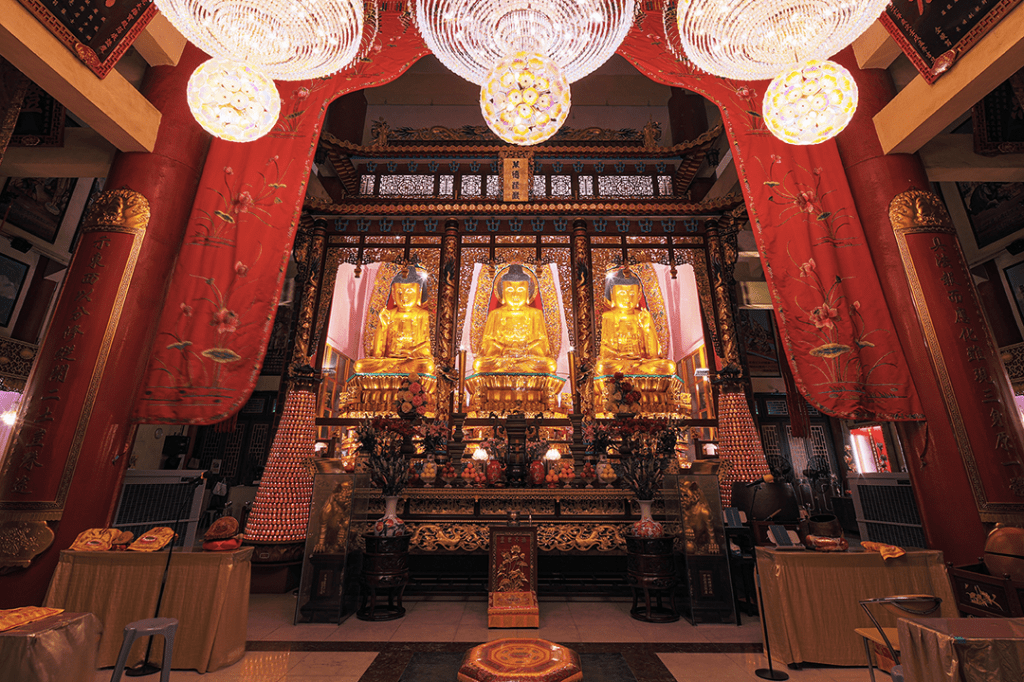
Further beyond lies a spacious courtyard flanked by a bell tower and drum tower. Ascending the stairs unveils the majestic Grand Hall, where the Triple Gem (Amitābha Buddha, Śākyamuni Buddha, and Bhaiṣajyaguru Buddha) resides on the central altar, accompanied by eighteen Arhats on either side. Adorning the rear of the Triple Gem altar is a depiction of the transformative scene from the Avalokiteśvara Sūtra, illustrating the manifestation of Avalokiteśvara Bodhisattva.

Bell Tower and Drum Tower

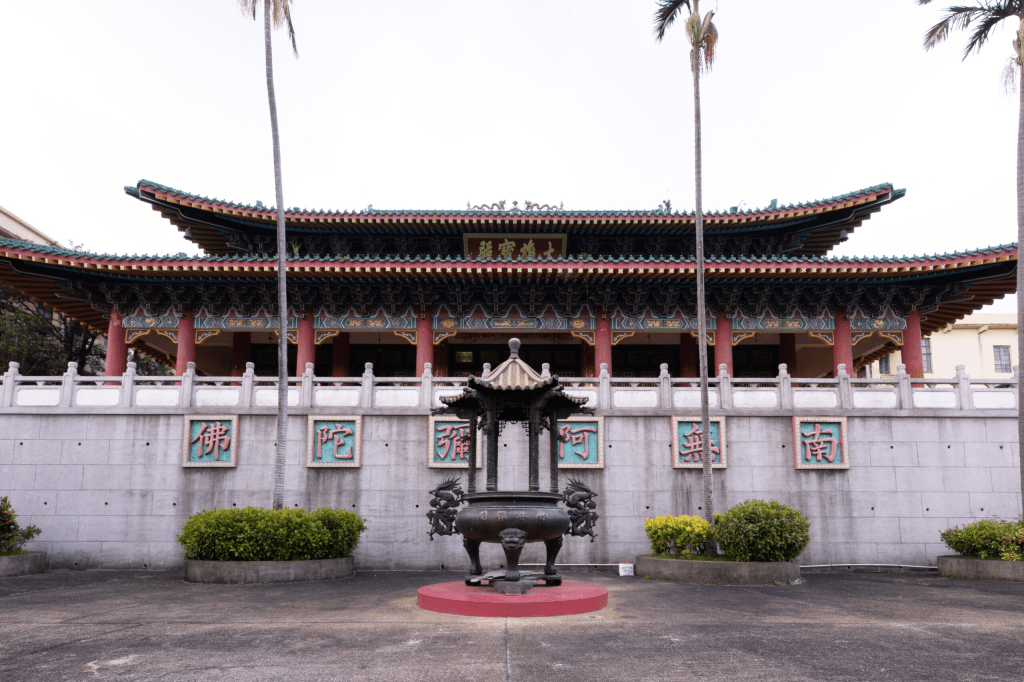
The Grand Hall

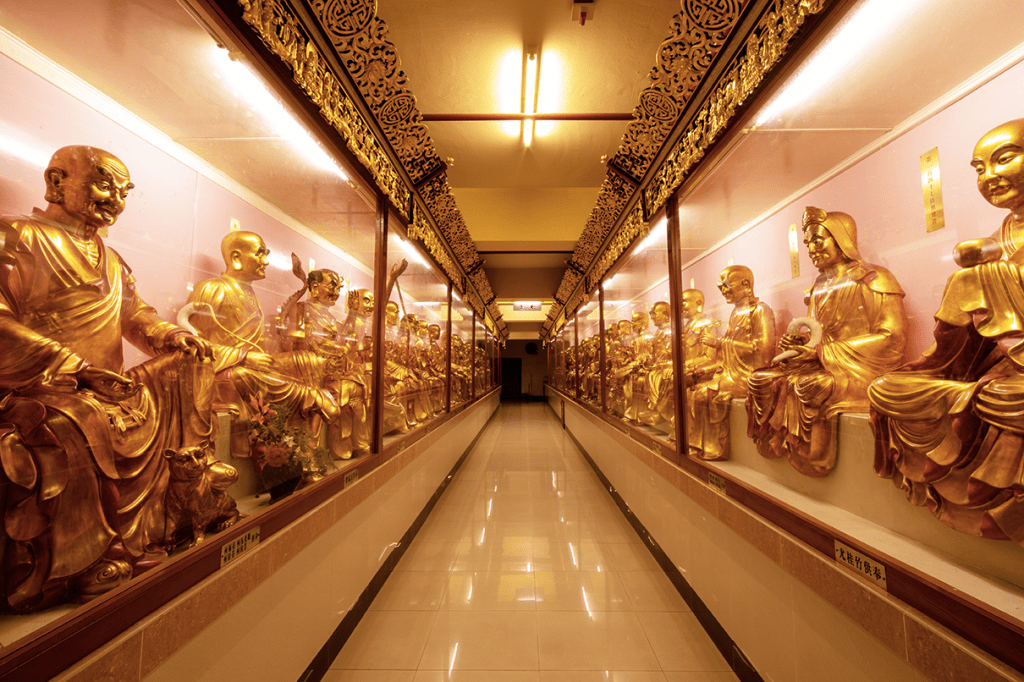
Adjacent to the main hall, worshippers find solace in a pavilion, while the Guan Yin Hall and Jade Buddha Hall flank its sides. Upstairs, the Pagoda Hall, now known as the Ksitigarbha Hall, stands adjacent to the Ancestral Hall and the Kitchen. Surrounding the monastery are additional halls including the Five Hundred Arhats Hall, the Dharma Hall, the Chan Hall, and the Scripture Repository, nestled along the outskirts and mountain slopes.

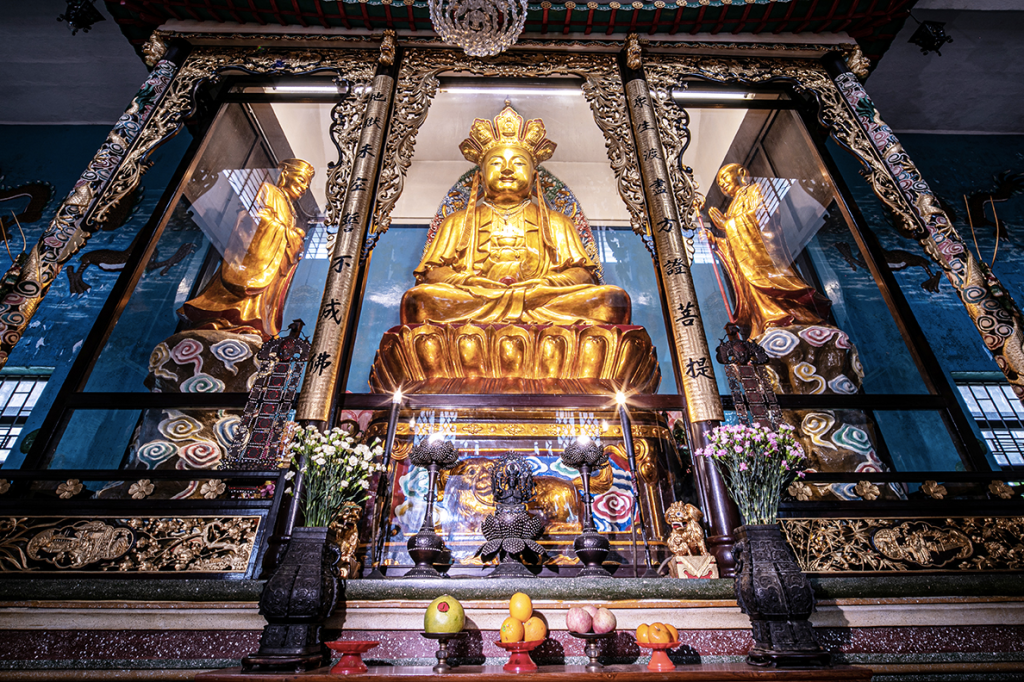
Guan Yin Hall

Ksitigarbha Hall
Five Hundred Arhats Hall

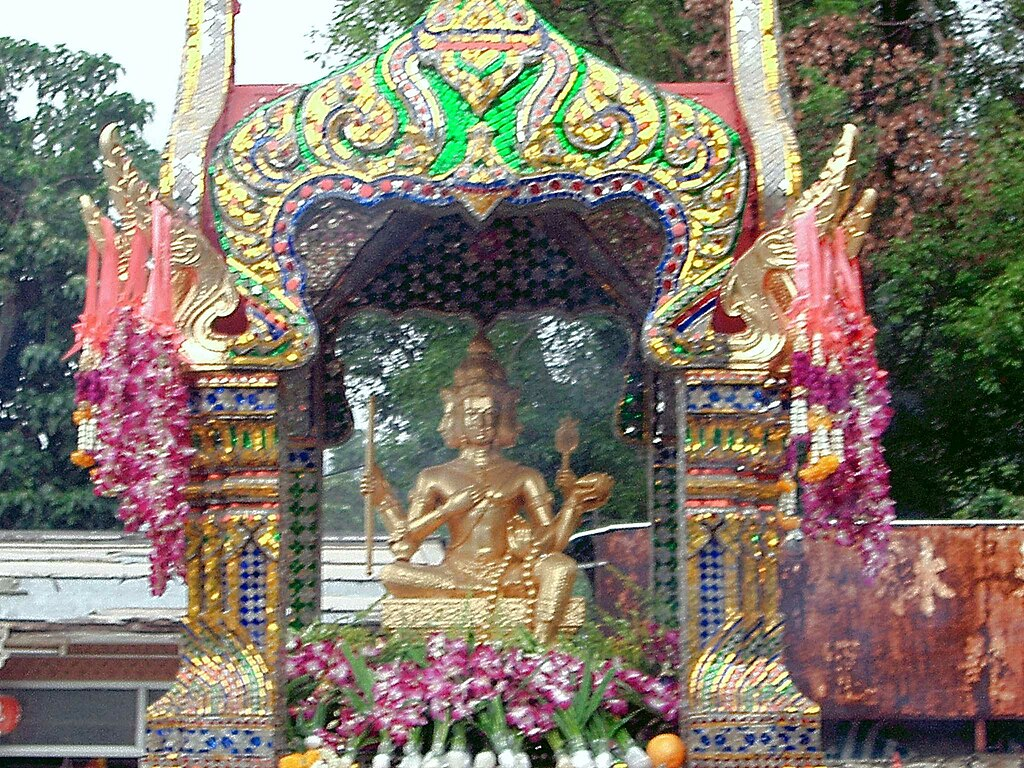
Four faced Buddha Statue 由Hkgalbert – 自己的作品,公有领域,https://commons.wikimedia.org/w/index.php?curid=9932768

Throughout its century-long history, Zhulin Temple has been overseen by five abbots. Notably, the fourth Abbot Master YiZhao emerged as an eminent monk of his time. Venerable Dharma Master Yizhao (1927-2013), born in Guangdong, China, embarked on his spiritual journey by joining Zhulin Zen Monastery in Hong Kong in 1940, formally becoming a monastic in 1941.

Under the guidance of Master Xuyun, he received the transmission of Viyana at Nanhua Temple in 1944, subsequently inheriting the Linji (Rinzai) Dharma lineage and becoming its 44th holder. Establishing the Guyan Pure Monastery in 1952, he later returned to Zhulin Temple to assist in its renovation, eventually assuming the role of abbot. He peacefully passed away in 2013, leaving behind a legacy of enlightenment and compassion.

Master YiZhao (left) and Master XuYun (right) were together at KaiYuan Temple in ChaoZhou, GuangDong , in 1946

Venerable Dharma Master Yizhao, the successor to H.E. Dharma Master Xuyun, exemplifies profound virtue within contemporary Zen Buddhism. Having attained the supreme state of Bodhi, he relinquished all ties to further reincarnation long ago. Inspired by the compassionate vow of Ksitigarbha Bodhisattva, he pledged “As long as there is any living being in the earthly realm, I vow not to become a Buddha.” Renowned as the nirmanakaya of Ksitigarbha Bodhisattva, he received the Amrit Empowerment Initiation from H.H.  Dorje Chang Buddha III, lauded as an exceptional monk who ardently upholds precepts.

In June 2000, Venerable Dharma Master Yizhao seized the opportunity to participate in the Buddhas Bestowing Nectar Dharma Assembly presided over by H.H.  Dorje Chang Buddha III. (The very left in the photo is Master Yizhao)

Following the conclusion of the assembly, Venerable Dharma Master Yizhao graciously shared his personal insights and expressed his profound admiration and gratitude towards H.H.  Dorje Chang Buddha III. For more details, please refer to the interview titled “Interview with Elder Monk Yi Zhao After the Buddhas Bestowing Nectar Dharma Assembly.

Zhulin Temple stands as a testament to beauty and sanctity, inviting visitors to immerse themselves in Buddhist culture, prayers, and blessings, offering a profound spiritual experience.

Link:https://peacelilysite.com/2024/03/14/zhulin-temple-chuk-lam-sim-yuen-at-hong-kong/

#Buddhist #BuddhaDharma #ZhulinTemple #HongKong #ZenBuddhism #YiZhaoMaster #Nectar #MasterXuYun #DorjeChangBuddhaIII  #HHDorjeChangBuddhaIII #ChukLamSimYuen #Abbot #LinjiSchool

Source: https://chuklam.org/, https://baike.baidu.com/item/%E7%AB%B9%E6%9E%97%E7%A6%85%E9%99%A2/19659656