The Wisdom of the Empty Boat: Ancient Chinese Insight for Inner Peace

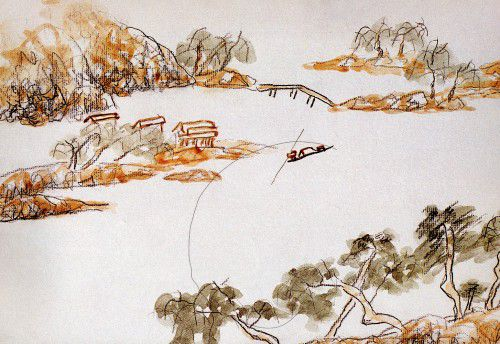
Chinese Painting by Henggong Yi

In the Mountain Tree chapter of the ancient Taoist classic Zhuangzi, there’s a simple yet profound story:

A man was crossing a river in a small boat when he noticed another boat drifting straight toward him. He shouted several times to warn the oncoming boat, but received no reply. Furious, he began cursing the other “reckless” person. But when the boats collided, he realized the other vessel was completely empty. In that moment, his anger vanished into thin air.

This story reveals a timeless truth: Often, what triggers our anger isn’t real harm but our judgment about the intention behind an event—our belief that someone shouldn’t have acted a certain way, or that people like that shouldn’t exist.

Imagine the same situation, but this time with a person steering the other boat. Most of us would react with outrage: “What’s wrong with you? Watch where you’re going!” A conflict would likely erupt. But when we know the boat is empty, we simply steer around it and move on.

This is beautifully explained in psychology by the ABC model:

  • A stands for the Activating event
  • B is our Belief about the event
  • C is the Consequence—our emotional response

It’s not the event itself that causes our reaction, but how we interpret it. Change your mindset, and your entire emotional response changes with it.

“The weak blame, the strong adjust, the wise let go.”
How you choose to interpret the world shapes the emotional and spiritual life you live.

Zhuangzi’s parable invites us to practice a mental shift: what if we saw others as “empty boats”? When a coworker unintentionally bumps into you, instead of assuming hostility, think, “Maybe they were just distracted.” When a friend speaks harshly, perhaps they’re struggling with something you don’t know. Instead of reacting with pain or revenge, consider that it may not have been personal.

Seeing others as “empty boats” helps us release resentment, practice compassion, and expand our emotional resilience. It allows us to heal ourselves faster, without getting trapped in cycles of blame and victimhood.

German philosopher Arthur Schopenhauer once said:

“To be angry at someone’s behavior is as foolish as being angry at a rock blocking your path.”
True wisdom lies in seeing through the illusion of control, and responding with tolerance rather than judgment.

When life doesn’t go our way, it’s easy to fall into the trap of self-pity: “Why is this happening to me?” But such thoughts only darken our mood and invite more misery.

The real shift happens when we stop blaming others and start examining our own mindset. By applying the “Empty Boat” perspective, we reduce conflict, soothe emotional storms, and gain a wider, calmer view of life. This isn’t just emotional regulation—it’s a deeper level of personal growth.

Zhuangzi also wrote:

“If a person can empty themselves and move through the world with humility, who can harm them?”

When we’re too attached to ego—too quick to feel offended, too focused on saving face—we inevitably clash with others. But if we release pride, prejudice, and the need to control, we become unshakable. No one can truly hurt us when we no longer take things personally.

Our mindset is the foundation of how we face adversity. Approach life with a peaceful, open heart, and life will respond in kind. Let go of the need for constant validation. Don’t let others’ words disturb your inner calm.

The journey of life is like sailing through mist—we never know what lies ahead. Complaining or getting angry doesn’t change reality; it only slows us down. But when we practice acceptance and face life with serenity, we go farther, and with greater ease.

Imagine all the unpleasant people or events in your life as “empty boats.” Let go of resentment and emotional baggage. You’ll find that forgiveness is not weakness, but a deep, penetrating wisdom. No longer a slave to your emotions, you become the true master of your mind.

May you carry an empty and serene heart, navigating life’s storms with grace, and holding on to peace amid the noise of the world.

Link: https://peacelilysite.com/2025/05/16/the-wisdom-of-the-empty-boat-ancient-chinese-insight-for-inner-peace/

The Subtle Truth of Karma: Only a Buddha Sees It All

During the time of Namo Shakyamuni Buddha, there was an old man who heard that by renouncing the worldly life and practicing cultivation, one could be free from suffering, attain happiness, and achieve liberation and ease. Filled with joy, he went to the monastic dwelling, hoping to take refuge under the Buddha.

When the old man arrived at the monastery, he learned that the Buddha had already gone out to teach and transform beings. He thought to himself, “Although the World-Honored One is not here, I’ve heard that Venerable Shariputra is foremost in wisdom—why not ask him to allow me to become a monk?”

Shariputra silently observed the old man to see whether he had the necessary virtuous roots. After careful contemplation, he discovered that this person, in this life and even through countless past kalpas, lacked sufficient virtuous roots and blessings.

When the other monks heard that even the most wise Venerable Shariputra had declined him, they said, “If even Venerable Shariputra will not accept you, you must have some grave shortcomings. How can we possibly let you enter monastic life? You’d better leave.”

The old man felt deeply ashamed and heartbroken. Through tear-filled eyes, he suddenly felt an incredibly gentle hand caressing his head, as tenderly as a loving parent would touch their child. The figure before him radiated a pure and gentle light—it was none other than the Buddha, beloved and revered by all.

The Buddha compassionately asked the old man why he was crying. The old man replied, “I wish to renounce the worldly life, learn the Buddha’s teachings, and cultivate the path, but the monks all refused my request. They said my causes and conditions are not yet sufficient, so I feel very sad.”

“Who said that you lack the causes and conditions to become a monk?” the Buddha asked.

The old man replied, “It was Venerable Shariputra, who is foremost in wisdom.”

The Buddha then turned to ask Venerable Shariputra. Shariputra answered, “World-Honored One, I observed his past life causes and conditions and found that he truly does not have even the slightest virtuous root.”

The Buddha said to Shariputra, “You must not think this way. This person’s virtuous roots are extremely subtle. A long, long time ago, in an eon far in the past, there was a poor man who went into the deep mountains to gather firewood. He encountered a tiger, and in his panic and terror, he cried out, ‘Namo Buddha!’ That one utterance of the Buddha’s name planted the seed for his future aspiration to learn the Dharma and attain liberation. That poor man is the old man in this life. Because the seed of his virtuous root has now matured, he has the conditions to renounce the world and cultivate the path.”

So the old man was ordained under the Buddha’s guidance and received personal instruction from the Buddha himself. Through continuous diligence and effort in his cultivation, he ultimately attained corresponding realization and achievement.

In the Dharma discourses of Namo Dorje Chang Buddha III, there is also a story (a gong’an, or spiritual case) that was told. Once, while Namo Shakyamuni Buddha was expounding the Dharma, seven tall beings suddenly appeared. These were exceptionally tall figures who entered and immediately prostrated before the Buddha, saying:

“Oh Buddha! Great Holy One! You have liberated us—we are deeply, deeply grateful!”

At that moment, Maitreya Bodhisattva saw them and thought: “How could these people be disciples of the Buddha? They’re clearly not!” Maitreya Bodhisattva, known for his incredible abilities to see into countless past and future kalpas, believed they were lying and said:

“Why are you speaking falsehoods? You must not lie! You are clearly not disciples of the Buddha!”

Hearing this, the seven tall beings had no choice but to explain: “We became his disciples in past lifetimes. We are disciples of the World-Honored One. If you don’t believe us, ask the Buddha.”

So Maitreya Bodhisattva turned to the Buddha and said: “Rare and wondrous World-Honored One, can you tell us—are these people truly your disciples?”

The Buddha replied: “They have not spoken falsely.”

From this story, we can understand that even a Bodhisattva of equal enlightenment like Maitreya could not perceive the subtle karmic causes and conditions of these seven beings. This shows just how profoundly deep and inconceivably subtle the true nature of karma is—only a Buddha of unsurpassed, perfect enlightenment can fully understand it.

In fact, there are many similar gong’an (spiritual cases). On one occasion, Namo Shakyamuni Buddha was transmitting the Dharma to a tall person who had been that way since beginningless kalpas. When the Buddha designated a particular yidam (personal deity) to guide him, the yidam refused. The Buddha asked, “Why won’t you teach him?”

The yidam replied, “This person has serious problems. He lacks virtuous roots.”

The Buddha asked, “How do you know?”

The yidam said, “As soon as you pointed to him, I immediately observed his karmic history over many kalpas. He has no virtuous roots and is incapable of learning the Dharma—he’ll only turn into a bad person.”

The Buddha said, “Let’s ask Manjushri Bodhisattva.”

Manjushri then said, “This person does have virtuous roots. In the previous kalpa known as the Worthy Eon (Xian Jie), he was a crab. At that time, he committed many evil acts—catching and eating shrimp and other crabs. But later, he encountered the Dharma in the Dragon Palace and repented his sins. From that moment, he vowed to become vegetarian and made a great aspiration: from that moment until beginningless time, he would never again harm any living being. Gradually, through the force of that vow, he was reborn as a human in this lifetime. So, he does indeed possess wholesome karma.”

At that point, Namo Shakyamuni Buddha said to Manjushri Bodhisattva, “You should take the yidam to witness that past life.”

The yidam then said to the Buddha, “There’s no need. Since a Bodhisattva has verified it, and what the Buddha says is to be followed without question, I’ll abide by it. I simply didn’t see that part before—my cultivation is still shallow, and I feel deeply ashamed.”

Thereafter, the yidam vowed to accept the person as a disciple.

From this, we can see that only the enlightened state of a Buddha can, in a single thought, fully perceive the true reality of all beings’ karmic causes and effects.
Therefore, to cultivate and learn the Buddha’s teachings, one must begin with understanding karma—cause and effect—as it is the very root and essence of the Dharma.

As Namo Dorje Chang Buddha III has taught:
One must know that all phenomena are governed by causality. With good causes, you receive good retributions. Good retributions yield good fruits. Good fruits enable you to receive the true Dharma. Relying on the Dharma, you can achieve perfect good fortune and wisdom. Then you can step into the state of accomplishment, break away from the sufferings that living beings experience, cease transmigrating in the cycle of birth and death, and accomplish the perfect enlightenment of a Buddha!

We should uphold the precepts of Buddhism, develop firm faith in karma, and never err in understanding cause and effect. Only through proper and lawful cultivation can we transform our karma, perfect our blessings and wisdom, ultimately see through and fully realize karma, and attain the sacred path of bodhi enlightenment.

Link:https://peacelilysite.com/2025/05/08/the-subtle-truth-of-karma-only-a-buddha-sees-it-all/

Kindness Is the Best Feng Shui

Feng shui has long held a mysterious allure in Chinese traditional culture. For centuries, it has been highly respected and followed by many. Even in today’s modern society, interest in feng shui remains strong. From choosing a home to arranging furniture, people often seek out feng shui masters to predict their fortune or improve their luck. This enthusiasm has even spread beyond China, gaining popularity in many countries as a fashionable practice.

But have you ever wondered what kind of feng shui truly brings good fortune? The following story offers a fresh and enlightening perspective.


A wealthy man once bought a piece of land and built a luxurious villa. Because his wife loved lychees, he planted many lychee trees in the backyard. During the renovation, a friend suggested that he consult a feng shui master to ensure there were no negative formations. Though skeptical of feng shui, the wealthy man decided to give it a try and traveled to Hong Kong to invite a renowned master with over thirty years of experience.

After meeting the master at the train station and sharing lunch, they drove to the man’s home. Along the way, whenever another car tried to overtake them, the master noticed that the wealthy man would gently slow down and give way. “You’re a steady driver,” the master remarked.

The man smiled and replied, “Most of the people overtaking are probably in a hurry. I don’t want to hold them up.”

As they approached the town, the streets grew narrower, and the man slowed the car even more. Suddenly, a laughing child darted out from an alley. The man quickly hit the brakes. Instead of accelerating again, he kept watching the alley. Moments later, another child ran out, chasing the first.

“How did you know there was another child coming?” the master asked, surprised.

The man explained, “Kids always run in groups when playing. One laughing child usually means others are nearby.”

The master gave him a thumbs-up and said with a smile, “You’re very thoughtful.”

When they arrived at the villa, just as the man was about to unlock the door, several birds suddenly flew up from the backyard. He turned to the master and said, “Please wait a moment.”

“Is something wrong?” the master asked.

“There are probably children in the yard stealing lychees. If we go in now, they’ll panic. If they fall while trying to run, they might get hurt. Let’s give them a bit more time. We can wait here and let them enjoy the fruit.”

The master stood in silence for a while, then said, “Take me back to the train station. There’s no need to examine the feng shui of your house.”

The man was puzzled. “Why, Master?”

The master looked at him and said sincerely, “Wherever you are, that place already has the best feng shui.”


This story opens our eyes to a deeper truth: the most powerful feng shui isn’t found in the placement of objects or the direction of a door — it’s found within us. Our behavior, compassion, and moral integrity shape the energy we bring into the world.

Everyone desires good fortune and happiness, but many look for it in the wrong places. Some rely solely on feng shui arrangements or fortune tellers, hoping for shortcuts to a better life. But these are often just psychological comforts, lacking true substance.

The law of cause and effect governs all things: “Plant good causes to reap good results; avoid bad causes to prevent misfortune.” Only by performing good deeds and cultivating a kind heart can we attract blessings and peace. Relying purely on external feng shui while ignoring inner morality goes against this fundamental principle.

In truth, our actions and intentions are our personal feng shui. Kindness is the most powerful feng shui one can have.

As the saying goes: “A fortunate person lives in a fortunate place, and a fortunate place is inhabited by a fortunate person.” Here, “fortunate person” means someone with a kind and upright heart. A person’s energy — their “magnetic field” — reflects their character. Even the best feng shui cannot save someone with selfish or harmful intent, while a good-hearted person can transform even a less-than-ideal environment into a space of warmth and harmony.

When we live with compassion and integrity, we naturally draw good karma, success, and joy into our lives. At that point, we no longer need to search for feng shui — we are the feng shui.

Kindness is the best feng shui. May we all cultivate it from within.

Link:https://peacelilysite.com/2025/05/01/kindness-is-the-best-feng-shui/

The Last Night Before Liberation: A Tale of Dharma and Destiny

During the time of the Buddha, King Fugasya and King Bimbisāra of Magadha were close friends. One day, King Fugasya gifted King Bimbisāra a magnificent flower crafted from seven kinds of treasures—gold, silver, and glazed tiles among them. Realizing that King Fugasya had never encountered the Buddha’s teachings, King Bimbisāra decided to offer the exquisite flower to the Buddha instead.

He said to the Buddha, “My good friend, King Fugasya, gave me this precious flower. I now offer it to the World-Honored One, wishing that the merit from this offering may help open his heart. May he let go of his attachments, come to revere the Three Jewels, and seek the Dharma. However, I am unsure what I can offer him in return.”

The Buddha replied,
“Write down the Sutra of the Twelve Links of Dependent Origination and give it to him. Once he receives this sutra, he will surely begin to develop faith and understanding.”

King Bimbisāra immediately copied the sutra and sent it to King Fugasya with a message:
“You have given me a priceless flower of treasures; I now return a flower of Dharma. If you contemplate its meaning, you will understand the truth of dependent origination and karmic consequences. I hope you will recite it sincerely, and experience the taste of the Dharma.”

Upon receiving the sutra, King Fugasya read it repeatedly and deeply contemplated its meaning. The teachings resonated with him. He exclaimed,
“This Dharma is truly subtle and profound! It calms the mind and brings peace to the nation. Wealth, desire, fame, food, and sleep—these worldly pursuits are the root of suffering. For countless lifetimes I have been lost in delusion, but now I finally see the true nature of existence. There is nothing in this world worth clinging to.”

With this realization, King Fugasya gathered his ministers, announced his abdication, and passed the throne to the crown prince. Then he shaved his head, donned robes, and left the worldly life behind.

He set out on foot to seek the Buddha in Rājagṛha, determined to receive the precepts and deepen his cultivation. When he arrived at the outskirts of the city in the evening, he decided to rest overnight at a potter’s house. The next morning, he planned to go on alms-round and visit the monastery.

However, the Buddha, with His all-seeing wisdom, knew that King Fugasya’s life would end the next day—he would not live to meet the Buddha or hear the Dharma in the conventional way. Out of great compassion, the Buddha manifested as an ordinary monk and went to the potter’s house seeking shelter.

The potter said,
“There’s already a monk here tonight. He’s resting in the kiln cave—you may stay with him.”

The Buddha took some dry grass, entered the kiln cave, and sat in a corner. He gently asked the monk,
“Where are you from? Who is your teacher? What brought you to the monastic path? Have you ever seen the Buddha?”

King Fugasya replied,
“I have never seen the Buddha. I only read the Sutra of the Twelve Links of Dependent Origination. It inspired me to renounce the world and seek the path. Tomorrow, I plan to go into the city for alms, then visit the monastery to meet the Buddha and request the precepts.”

The Buddha responded with heartfelt words:
“Human life is fragile—impermanence arrives without warning. This body is made of the four elements—earth, water, fire, and wind—and when death comes, they simply return to their natural state. There is no need to fear. Keep your mind clear, let go of deluded thoughts, and place your trust in the Three Jewels. Practice generosity and maintain pure precepts with sincerity. If you understand the truth of impermanence in this way, it is as if you have already seen the Buddha. Do not cling to the idea of seeing Him tomorrow, for true benefit lies in your present awareness.”

Then, the Buddha expounded the profound truths of suffering, emptiness, and impermanence. King Fugasya listened with deep concentration, entered meditative absorption, and swiftly attained the Anāgāmi (Non-returner) stage. Recognizing his realization, the Buddha revealed His true, radiant form.

Overwhelmed with joy and reverence, King Fugasya prostrated and received a final teaching:
“When impermanence comes, do not be afraid.”

He vowed to uphold the Dharma faithfully.

The next morning, while going into the city for alms, King Fugasya was fatally gored by a mother cow protecting her newborn calf. Because he had already attained realization, his rebirth was in the Anāgāmi Heaven.

The Buddha, upon hearing of his passing, instructed the disciples to cremate his body and build a stupa in his honor. He then solemnly reminded them:
“Be ever mindful, for the root of all karmic offenses lies in carelessness.”


This world of samsara is full of the inevitable sufferings of birth, aging, sickness, and death. For those attached to fleeting worldly pleasures, this story is a powerful reminder to awaken.

By placing faith in the Dharma, recognizing our inherent pure Buddha-nature, contemplating impermanence, practicing wholesome deeds, and accumulating both merit and wisdom, we can transcend the pain of impermanence and attain lasting peace and happiness.

Link:https://peacelilysite.com/2025/04/25/the-last-night-before-liberation-a-tale-of-dharma-and-destiny/

Life Stories of H.H. Dorje Chang Buddha III

Life Stories of H.H. Dorje Chang Buddha III

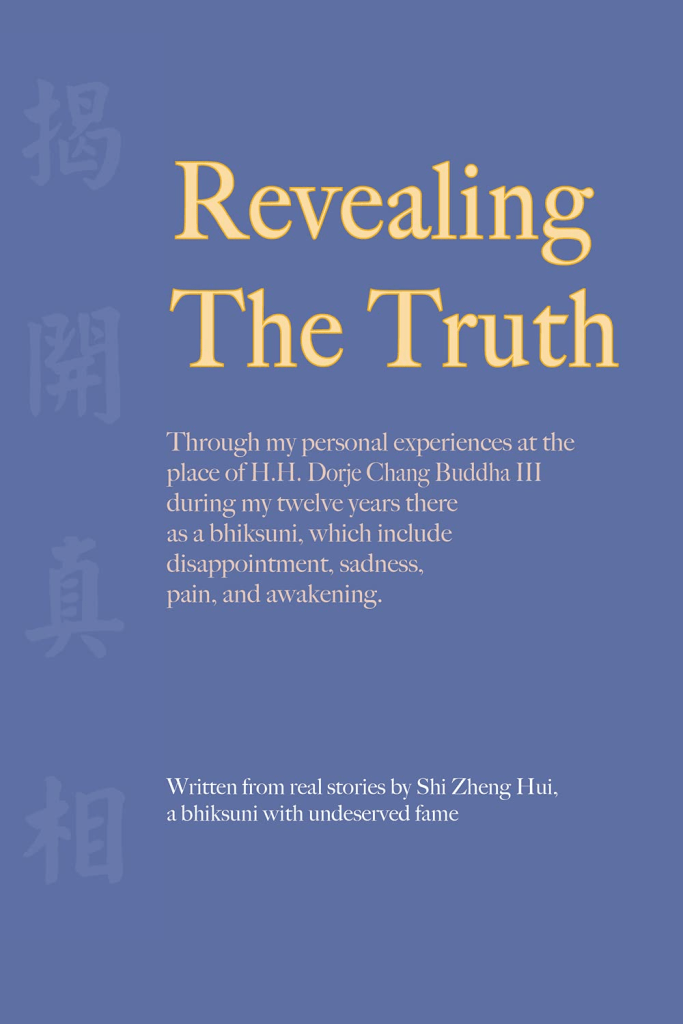
In the last post, I mentioned the treasured book H.H. Dorje Chang Buddha III: A Treasury of True Buddha-Dharma. It is a comprehensive and extensive read, which can feel overwhelming to some. I was recently asked if there is an easier-to-read book that also provides insight into the Buddha’s life and teachings.

In fact, on page 139 of A Treasury of True Buddha-Dharma, under Category 2: The Virtue of H.H. Dorje Chang Buddha III and Holy Occurrences, you’ll find inspiring stories and testimonies from disciples. Many readers may find these accounts both engaging and easy to read, making them a great starting point for those yearning to learn more. 

I sure can introduce another book that offers a glimpse into the Buddha’s daily life—Revealing the Truth. The paper copies of the book are available at Buddhist temples or can be purchased online at Amazon. It chronicles the personal experiences of a nun over 12 years (2001–2013) at the Buddha’s home base. As the cover describes, it explores moments of disappointment, sadness, pain, and ultimately, awakening.

Below please find more information from Great River Publishers.

A Buddhist Nun Tells the Extraordinary Story of Her Practice in America

Upon graduating law school, Shi Zheng Hui decided she could better penetrate and accomplish her life by entering a monastery in Taiwan as a Buddhist nun. In 2001, she was given a rare opportunity to study in America at the Temple and home base of H.H. Dorje Chang Buddha III where she received Buddhist training of the highest order.  Her book, Revealing the Truth tells the story of her extraordinary experiences there, including being witness to miraculous manifestations during Holy Assemblies and on other occasions.  Her story exemplifies the sometimes painful and sometimes exultant life of a deeply committed Buddhist cultivating herself through effort and self-reflection to emulate the actions, speech and thoughts of a Bodhisattva (a selfless being who lives to help others eliminate suffering and become enlightened.)  After years of cultivation and refinement, Zheng Hui proves her worthiness to receive a very great Dharma practice and is transmitted the Xian Liang Great Perfection Dharma through which she actually accomplishes the rainbow body state.

H.H. Dorje Chang Buddha III, by virtue of His unprecedented accomplishments, has been recognized to be the incarnation of the Ancient Buddha by scores of high-level masters from Tibet and elsewhere. On September 10, 2008, the US House of Representatives confirmed these recognitions in H. Res. 1423. Prior to this recognition in 2008, His Holiness was known as the Great Dharma King Yangwo Wan Ko Yeshe Norbu and also as Master Wan Ko Yee.

H.H. Dorje Chang Buddha III is also famous in Asian Art circles for His paintings and sculptures.  A recent painting, Ink Lotus, was sold by the Gianguan Auction House on March 11, 2015 for over 16 million dollars. One of the His Holiness’s widely viewed sculptures contains a mysterious mist that miraculously occupies a cavernous carving in a sculpted boulder.  This otherworldly sculpture has been exhibited at the US Capitol’s Rayburn building in October 2003 and in Los Angeles and San Francisco, California.

Revealing the Truth is now in English translation from the original Mandarin language edition published in Taiwan in 2013.

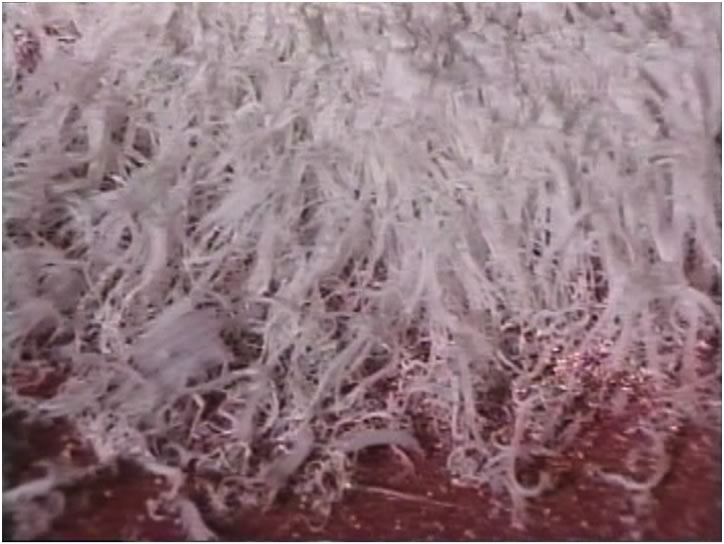
Nectar Bestowed By Amitabha Buddha during a Holy Buddha-dharma Assembly in 2000

(Above) Genuine precious nectar bestowed by Amitabha Buddha during a Holy Buddha-dharma Assembly in California. From Revealing The Truth by Shi Zheng Hui

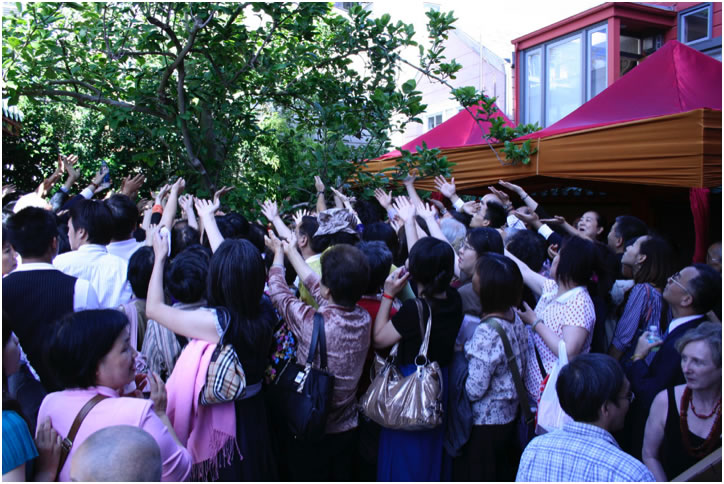
(Above) San Francisco June 21, 2008.  The packed crowd under this holy tree at Hua Zang Si was happily reaching for the fragrant nectar descending from empty space. From Revealing The Truth by Shi Zheng Hui.

_________________________________________________________________________________________________

With its unexpected twists and turns and the author’s delightful sense of humor, this book presents personal stories that you will not find elsewhere. I am truly grateful for its existence, as it allows us to gain a more intimate understanding of a revered public figure such as the Buddha.

Pick up a copy and embark on a journey of spiritual discovery alongside Dharma Master Zheng Hui.

Life Stories of H.H. Dorje Chang Buddha III

Link: https://hhdorjechangbuddhaiiiinfo.com/2025/04/08/life-stories-of-h-h-dorje-chang-buddha-iii/

#DorjeChangBuddha #H.H.DorjeChangBuddhaIII #RevealingtheTruth #ShiZhengHui #DharmaofH.H.DorjeChangBuddhaIII #HuaZangSi #InkLotus

Vimalakirti’s Profound Teachings on Suffering and Liberation

The Profound Wisdom of the Holy Buddha Vimalakirti

The Vimalakirti Sutra stands as one of the most profound texts in Mahayana Buddhism, offering deep insight into wisdom, compassion, and the nature of illness. One of its most significant sections, the “Chapter on Illness,” presents a powerful dialogue between Manjushri and Vimalakirti, a lay Bodhisattva of extraordinary realization.

Vimalakirti, despite his unparalleled wisdom, feigns illness to teach a vital lesson. When Manjushri visits him and asks, “Aren’t you successful in your practice? If so, how can you be ill?” Vimalakirti responds, “I am ill because all sentient beings are ill.” This response redefines illness—not as a personal affliction but as an expression of universal suffering. His illness is a manifestation of his boundless compassion, mirroring the pain of all beings so that he may guide them toward liberation.

Manjushri Bodhisattva and other disciples visiting H.H. Vimalakirti

The dialogue between Vimalakirti and Manjushri unfolds into a deeper contemplation on suffering. When asked when his illness will be cured, Vimalakirti replies, “When the last sentient being is free from illness, then my illness will be cured.” This statement embodies the heart of Mahayana Buddhism—the vow to attain enlightenment not for oneself alone but for all beings. His words resonate with the self-sacrificial love found in other spiritual traditions, such as Jesus Christ’s willingness to bear humanity’s suffering.

Vimalakirti further explains, “From ignorance comes love, and thus my illness arises.” He reveals that suffering stems from attachment—attachment to family, possessions, ambitions, and even spiritual practice. Such attachments cloud the mind, giving rise to suffering. True liberation, he teaches, comes from transcending these attachments through wisdom and compassion.

The holy and venerable Vimalakirti is unique in Buddhist history, as he was an ancient Buddha who chose to manifest as a layperson rather than an ordained monk. During the time of Shakyamuni Buddha, he played a crucial role in teaching monastics and Bodhisattvas who struggled to develop Mahayana bodhicitta. His unparalleled wisdom and skillful means helped bridge the gap between monastic and lay practitioners, proving that profound realization is not limited to those in monastic robes.

In reality, Vimalakirti was the incarnation of the supreme Buddha Dorje Chang (Vajradhara), the primordial Buddha and master of all Buddhas. Yet, instead of taking a leadership role that might have caused sectarian divisions, he humbly chose to serve as a Bodhisattva assisting Shakyamuni Buddha. His teachings, recorded in the Vimalakirti-nirdesa Sutra, are regarded as sutras in their own right, carrying the weight of authentic Buddha-dharma.

The depth of Vimalakirti’s wisdom was so vast that even the most accomplished Bodhisattvas hesitated to engage him in dialogue. When Shakyamuni Buddha asked Maitreya Bodhisattva to inquire about Vimalakirti’s health, Maitreya declined, admitting that Vimalakirti had once humbled him with his superior insight. Ultimately, only Manjushri, the ancient Buddha and master of the seven Buddhas, dared to engage Vimalakirti in discourse.

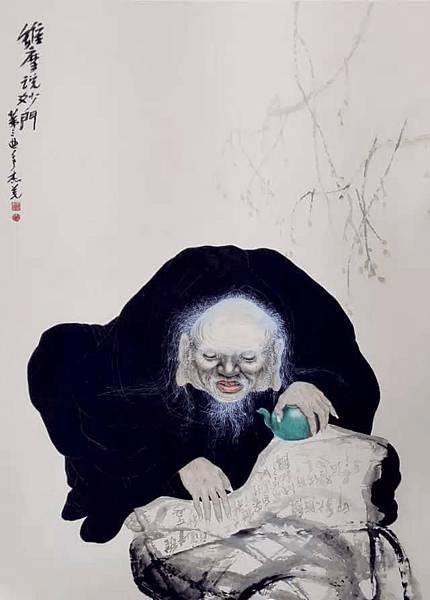
Chinese Ink painting Holy Master Vimalakirti by H.H. Dorje Chang Buddha III

Vimalakirti’s teachings were not limited to words alone—he also demonstrated his supreme realization through extraordinary miracles. In one instance, he used his boundless supernatural powers to bring the entire Buddha-land of Abhirati, including the Immovable Buddha (Aksobhya), into the human realm. Even the Immovable Buddha himself declared, “I did not do this; it was through the supernatural powers of Vimalakirti.” Such feats reveal that Vimalakirti’s realization surpassed that of all Bodhisattvas and was equal to that of Shakyamuni Buddha himself.

Shakyamuni Buddha himself affirmed the extraordinary status of Vimalakirti, stating, “One who makes offerings to that holy being should know that this is making offerings to the Buddhas. One who transcribes this sutra or keeps it in a room should know that the Tathagata exists in that room.” These words confirm that Vimalakirti was, in essence, a Buddha.

His teachings continue to inspire practitioners today, offering a profound perspective on suffering, wisdom, and compassion. His willingness to manifest illness as a teaching tool, his unparalleled debates with great Bodhisattvas, and his supernatural demonstrations all serve as timeless lessons in the path to enlightenment.

Link:https://peacelilysite.com/2025/03/28/vimalakirtis-profound-teachings-on-suffering-and-liberation/

Exploring the Concept of Size in Buddhism: Mount Sumeru and the Mustard Seed

In the realm of Buddhist philosophy, the imagery of Mount Sumeru and the mustard seed serves as a profound metaphor for understanding the nature of reality and perception. Originally a mountain in Indian mythology, Mount Sumeru is revered in Buddhism as the dwelling place of celestial beings like Indra and the Four Heavenly Kings. Standing at an astonishing height of 84,000 yojanas, it symbolizes the vastness and grandeur of existence. In contrast, the mustard seed, a tiny grain often used in culinary practices, represents the minuscule aspects of life.

This juxtaposition is beautifully illustrated in a dialogue between Li Bo, a governor of Jiangzhou during the Tang Dynasty, and the Zen master Zhi Chang. Li Bo questioned the seemingly paradoxical notion found in Buddhist texts that “Mount Sumeru can fit within a mustard seed, and a mustard seed can contain Mount Sumeru.” He found it hard to believe that such a small seed could encompass such a towering mountain.

With a smile, Zhi Chang responded by asking, “People say you have read thousands of books; is that true?” Proudly, Li Bo affirmed, “Of course! I have read far more than that!”

Zhi Chang then inquired, “And where are those thousands of books now?”

Li Bo pointed to his head and replied, “They are all right here!”

Zhi Chang chuckled and said, “Strange, then. Your head seems no bigger than a coconut; how could it possibly hold thousands of books?”

At that moment, Li Bo experienced a profound realization: the distinctions of large and small are mere constructs of the mind. In reality, size is subjective and arises from our perceptions.

This concept resonates deeply with modern science, which demonstrates that vast amounts of knowledge can be stored within a minuscule chip, echoing the Buddhist teaching that the universe can be contained within the smallest of objects.

The English poet William Blake expressed a similar sentiment in his famous lines:
“To see a world in a grain of sand,
And a heaven in a wild flower,
Hold infinity in the palm of your hand,
And eternity in an hour.”

His words capture the essence of this Buddhist teaching: within the tiniest elements of our world lies the vastness of the infinite.

Ultimately, Buddhist wisdom encourages us to transcend conventional notions of size and reality. When we embrace the idea that the vast can reside within the minute, we cultivate a deeper awareness of the interconnectedness of all things. In this way, Mount Sumeru and the mustard seed serve as powerful reminders of the boundless nature of existence and the limitless potential of the human mind.

In the Āgama Sūtra, there is a remarkable story that illustrates how the merit of a single grain of rice can be as vast as Mount Sumeru.

During the time of the Buddha, a poor couple lived in a crumbling cave with nothing to their name. They were so impoverished that they owned only a single set of clothes, which they had to share. When the husband went out, the wife had to stay home, and when the wife needed to leave, the husband had no choice but to remain inside, barely clothed.

One day, they heard that the Buddha and his disciples were passing through their village on their alms rounds. The couple reflected on their misfortune and said, “We have never practiced generosity, which is why we suffer such poverty today. Now that the Buddha is here, how can we miss this rare opportunity to give?”

However, as they looked around their home, the wife sighed deeply, “But we have nothing to offer…”

The husband, after thinking for a moment, made a firm decision: “No matter what, we must not let this opportunity slip away. Even if we starve, we must make an offering! The only thing we still have of value is this set of clothing—let us give it to the Buddha!”

With hearts full of joy, they humbly presented their only garment as an offering. The disciples, however, hesitated, feeling uneasy about receiving such an item. They passed the garment among themselves, reluctant to accept it, until Ananda finally brought it before the Buddha and asked, “Lord, this garment is too worn to be used. Should we discard it?”

The Buddha, filled with compassion, gently instructed, “My disciples, do not think this way. The generosity of the poor is the most precious of all. Bring the garment to me.”

Feeling ashamed for their earlier hesitation, Ananda and Maudgalyayana took the garment to the river to wash it. But as soon as they immersed it in the water, the entire river surged wildly, waves crashing in all directions. Alarmed, Maudgalyayana used his divine powers to summon Mount Sumeru in an attempt to subdue the turbulent waters. Yet, no matter how he pressed it down, the waves remained uncontrollable.

Helpless, the two disciples rushed back to the Buddha to report what had happened. At that moment, the Buddha was calmly eating his meal. Without saying much, he gently picked up a single grain of rice and handed it to them, saying, “Take this rice grain to the river, and it will settle.”

Perplexed, Ananda asked, “Lord, even the mighty Mount Sumeru couldn’t calm the waves—how can a tiny grain of rice possibly do so?”

The Buddha smiled and said, “Try it and see.”

Still doubtful but obedient, Ananda and Maudgalyayana took the grain of rice and cast it into the river. Miraculously, the raging waters instantly calmed, becoming as still as a mirror.

Shocked by what they had witnessed, the two disciples returned to the Buddha and asked, “How could a single grain of rice hold more power than a mountain?”

The Buddha then explained, “From the moment a grain of rice is planted, it undergoes countless efforts—watering, fertilizing, harvesting, processing, and selling—each step carrying the labor and dedication of many beings. Because of this, a single grain of rice contains immeasurable merit. Likewise, the garment offered by the poor couple was their only possession, their entire livelihood. Their act of giving was boundless in sincerity, making its merit just as vast. The Dragon Kings of the ocean understood the profound virtue behind this offering, which is why they immediately retreated in reverence. This is the power of true devotion—whether a grain of rice or a simple piece of clothing, when given with absolute sincerity, its merit can equal that of Mount Sumeru.”

From this teaching, a well-known Buddhist verse arose to remind monks and practitioners of the sacred nature of even the smallest offering:

“A single grain of rice in the Buddha’s gate,
As vast as Mount Sumeru.
If enlightenment is not attained in this life,
One shall return repaying the debt, bearing horns and fur.”

This verse serves as a powerful reminder that every offering—no matter how small—carries immense significance when given with a pure heart. It also warns practitioners to cherish and respect all acts of generosity, for every grain of rice represents the kindness and labor of countless beings.

Link:https://peacelilysite.com/2025/03/21/exploring-the-concept-of-size-in-buddhism-mount-sumeru-and-the-mustard-seed/

The Sacred Dragon Stone: Manjushri Bodhisattva’s Compassion and the Five Dragon Princess

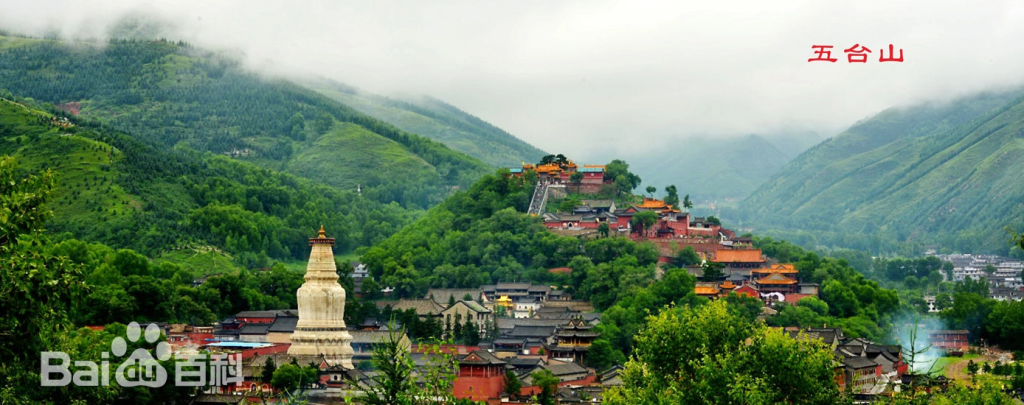
Mount Wutai, home to over 53 sacred monasteries, stands as one of the Four Sacred Mountains of Chinese Buddhism. Each of these mountains is regarded as the bodhimaṇḍa of one of the four great bodhisattvas, and Wutai is the sacred domain of Manjushri, the Bodhisattva of Wisdom. Revered since ancient times, Mount Wutai holds a profound spiritual significance, attracting countless pilgrims seeking enlightenment and divine blessings.

Mount Wutai was the first of the four great mountains to be identified and is often referred to as the “First Among the Four Great Mountains.” Due to its unique status, it is also known as “Golden Wutai.” The identification of this sacred site can be traced back to the Avataṃsaka Sūtra, which describes the abodes of many bodhisattvas. In this scripture, Manjushri is said to reside on a “clear cold mountain” in the northeast. This passage not only solidified Wutai’s spiritual identity but also inspired its alternative name, “Clear Cool Mountain.” With an annual average temperature of around -4°C and high-moisture air, the mountain’s name perfectly encapsulates its serene and pure atmosphere.

Legends tell of Manjushri’s frequent appearances on Mount Wutai, often taking the form of ordinary pilgrims, monks, or most notably, five-colored clouds. Among the many tales that surround this sacred land, the story of the Xielong Stone and the Dragon Temple remains one of the most awe-inspiring.

In ancient times, the climate of Mount Wutai was harsh—winters were bitterly cold, and powerful spring winds carried dust and sand, making the land inhospitable. At that time, the mountain was simply known as “Five Peaks Mountain.” Determined to transform Wutai into a haven for spiritual cultivation and to bring blessings to sentient beings, Manjushri sought the mystical Xielong Stone, a sacred gem held by the Dragon King of the Eastern Sea. This stone possessed miraculous powers that could regulate the climate, making the land fertile and serene.

Manjushri traveled to the Dragon Palace and humbly requested the Xielong Stone. However, the Dragon King hesitated, explaining, “This stone was left behind by the goddess Nüwa. It is a resting place for our dragon clan, and we cannot part with it.”

With infinite compassion, Manjushri responded, “I seek this stone to benefit all sentient beings. I hope you, great Dragon King, will fulfill this virtuous karmic connection.”

Although moved by Manjushri’s vow, the Dragon King was reluctant to relinquish the treasured stone. He assumed that even with his great dharma powers, Manjushri would be unable to move it, as it weighed tens of thousands of pounds. Feigning generosity, he said, “Great Bodhisattva, if you can take the stone, you may do so.”

To the Dragon King’s astonishment, Manjushri gently approached the stone, recited a divine mantra, and instantly shrank the massive rock to the size of a marble. With a flick of his sleeve, he stowed it away, bowed to the Dragon King, and effortlessly departed.

The Dragon King, realizing his mistake too late, could only watch in stunned regret.

When the five dragon princes returned to the palace and learned what had happened, they were enraged. Determined to reclaim the stone, they pursued Manjushri to Wutai Mountain. As they arrived, Manjushri sat in serene meditation, awaiting them.

Upon seeing him, the Fifth Dragon Prince demanded, “Are you truly the teacher of the Seven Buddhas, the Awakened Mother of the Three Periods, Manjushri Bodhisattva?”

Manjushri calmly replied, “Indeed, I am.”

Scoffing, the young dragon sneered, “It is said that past Buddhas were your disciples, yet you appear to be only fifteen or sixteen years old. How can this be?”
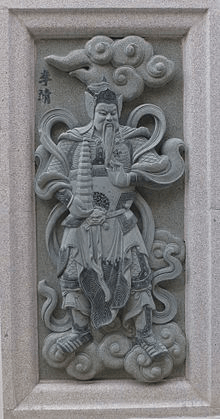
Manjushri then imparted a teaching:

“The Buddha taught that there are four things in the world that must never be underestimated:

  • A young prince—though small, he will one day rule the land and influence countless lives.
  • A young dragon—though young, he will one day command the winds and tides.
  • A small flame—though weak, it can grow into an all-consuming blaze.
  • A young monk—though inexperienced, he may attain supreme wisdom through practice.”

Hearing this, the young dragons began to reflect on the depth of Manjushri’s wisdom. However, the young dragons were still defiant. They demanded, “If you truly have great divine power, why not change the climate of Wutai Mountain directly? Why did you have to take the Xielong Stone?”

With patience, Manjushri explained, “Divine power can temporarily change conditions, but only through the Xielong Stone can Wutai Mountain remain perpetually cool and become a sanctuary for spiritual cultivation.”

Unconvinced, the young dragons retorted angrily, “So you admit that your power is limited! Return the stone at once, or we will show no mercy!”

Furious, the five dragons launched a fierce attack, unleashing their claws, storms, and lightning against Manjushri. Yet, no matter how they struck, they could not harm him in the slightest.

In their frustration, they began to tear at the mountains, hoping to shake the ground beneath Manjushri. Their immense strength clawed away the mountaintops, scattering rocks across the land, creating what is now known as the Dragon-Turned Stones (龙翻石).

Realizing the young dragons’ arrogance and aggression, Manjushri used his supreme power to subdue them. He sealed them beneath Mimo Rock (秘魔岩), merging two great peaks, leaving only a narrow crevice for them to reflect and temper their hearts. He then instructed the local mountain spirits and earth deities to ensure the dragons were provided with food and offerings, allowing them to cultivate patience and wisdom until their minds were at peace.

Later, the Dragon King of the Eastern Sea personally traveled to Wutai Mountain, pleading with Manjushri to release his sons.

With a compassionate smile, Manjushri assured him, “I have never harmed even an ant, let alone your five sons. They are here only to refine their minds. Once they achieve inner harmony, they will be freed naturally.”

To honor the young dragons and appease their spirits, Manjushri decreed that a Dragon King Temple be built in their name. There, they would receive offerings and incense from devoted followers, increasing their divine merits while they cultivated.

From then on, the Dragon King Temple on Wutai Mountain flourished, becoming a revered site for pilgrims seeking blessings for favorable weather and divine protection. Its existence symbolizes humanity’s reverence for the water deities and our hope for harmony between nature and sentient beings. Amidst the rising incense and prayers, worshippers not only feel the celestial blessings but also gain insight into wisdom and inner peace through spiritual practice.
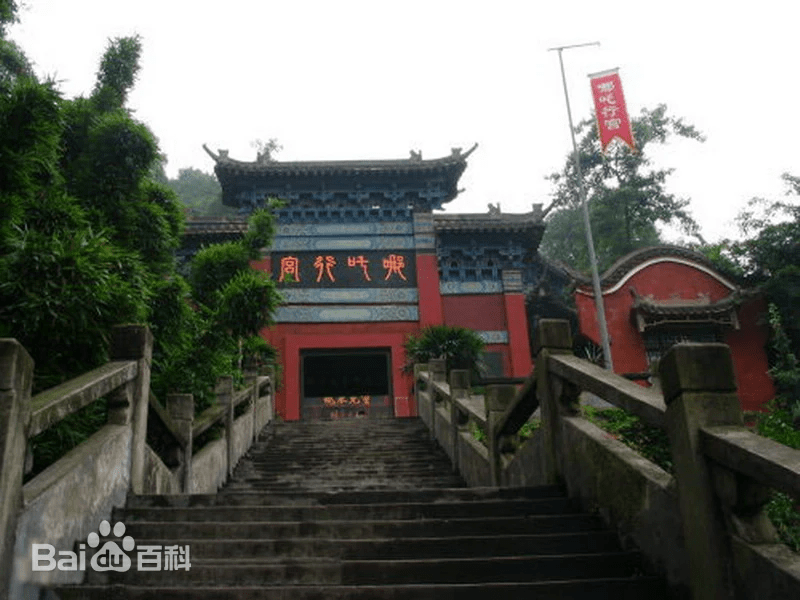
Today’s Wutai Mountain is surrounded by lush green hills, beneath a sky of pure blue and auspicious clouds. In summer, the weather shifts between sunshine and rain, mist and fog. On clear days, the vast sky is brilliantly blue, filling the heart with joy and serenity; on rainy days, the misty veils create an atmosphere of elegance and tranquility, bringing deep peace to the soul. Strolling through the mountains, one feels naturally at ease and in harmony with the surroundings.

All of this, in truth, is a manifestation of the blessings and protection of Manjushri Bodhisattva. With His innate cool radiance, Manjushri employed the Dragon-Resting Gem to enlighten the beings of the dragon lineage. In doing so, He also established this sacred pure land of Wutai, where both ordinary and holy beings coexist. Here, He watches over this realm, awaiting the return of the countless wayfarers lost in the endless cycles of samsara.

Link:https://peacelilysite.com/2025/03/04/the-sacred-dragon-stone-manjushri-bodhisattvas-compassion-and-the-five-dragon-princess/

Nezha: From Buddhist Origins to a Chinese Cultural Icon

Recently, the animated film Nezha 2 has become incredibly popular, reaching the top spot in global box office earnings for animated movies. While many believe Nezha is a character from Chinese mythology, his origins can actually be traced back to Buddhist scriptures.

Vaisravana

Nezha’s name first appeared in Vajrayana Buddhist texts, where he is associated with the role of a Dharma protector. He is described as the third son of Vaisravana, one of the Four Heavenly Kings. According to The Ritual of Vaisravana, “The Heavenly King’s third son, Prince Nezha, holds a pagoda and always follows the King.” His duty is to assist his father in safeguarding the Dharma, driving away evil forces, and protecting humanity. In The Mantra of the Dharma Protector Following the Northern Vaisravana Heavenly King, translated by the eminent Tang Dynasty monk Amoghavajra, Nezha is again referred to as Vaisravana’s third son. Other Buddhist texts from the Tang Dynasty, such as The Awakening of Faith in the Mahayana and The Lotus Sutra, also mention Nezha.

In Buddhism, Dharma protectors and yaksha deities often have fierce appearances, symbolizing their hatred of evil and fearless bravery. As a result, Nezha is typically depicted with a wrathful and intimidating image. As Buddhism spread to China, many Buddhist stories and figures gradually merged with local Chinese culture, giving rise to new belief systems. Over time, Nezha became integrated into Taoism and Chinese folk beliefs, forming a unique cultural phenomenon.

The story of Nezha is filled with many well-known and beloved episodes, such as his birth from a ball of flesh, cutting his flesh and bones to repay his parents, and being reborn from a lotus flower. Although this scene cannot be found in modern Buddhist scriptures, it became a popular topic among monks after the Song Dynasty. For example, Volume 1 of The Comprehensive Collection of Zen Verses on Ancient Cases mentions: “Prince Nezha offered his flesh to his mother and his bones to his father, then manifested his true form and used his divine power to preach to his parents.” This suggests that the story of Nezha sacrificing his flesh and bones likely originated from Buddhist texts. Although the exact cause and details are unclear, this story undoubtedly provided a prototype for later adaptations in folk literature.

As Buddhism spread throughout China, the assimilation of foreign religions by local culture and the evolution of folk beliefs gradually transformed Nezha’s image, steering it away from its original Buddhist context and toward a more Chinese identity. After the Tang Dynasty, the worship of Vaisravana (known as Bishamonten in Japan) reached its peak in China, gaining widespread recognition from both the imperial court and the common people. He was honored in official rituals and revered by many folk believers. Simultaneously, Li Jing, a prominent Tang Dynasty military general, became a popular figure of worship as a god of war. Renowned for his military campaigns against the Turks and Tuyuhun in the northwest, Li Jing was deified as early as the Tang Dynasty, with dedicated temples built in his honor during the Song Dynasty.

Li Jing’s temple wall statue

The broader and deeper the spread of a belief, the greater the possibility of its transformation and integration with other cultural elements. Over time, through public imagination and interpretation, the belief in Vaisravana merged with the worship of Li Jing, forming a new deity known as “Pagoda-Wielding Heavenly King Li” (Tuota Li Tianwang) by the Song Dynasty at the latest. From then on, Vaisravana took on the surname Li and became more secularized and localized within Chinese culture. Since Li Jing became identified with Vaisravana, it was only natural within folk beliefs to regard Nezha as Li Jing’s son. This marked Nezha’s departure from the cultural context of foreign religions and his integration into the Chinese pantheon.

This transformation made Nezha a more relatable and accessible figure, understood through the lens of native cultural concepts. As a result, Nezha’s story gained broader appeal, providing ample room for reinterpretation and adaptation in later generations.

Nezha holds an important place in ancient Chinese mythology. Under the influence of Taoism, he was endowed with more mythological attributes, portrayed as a young hero with powerful magical abilities who frequently battles demons and protects the people. His story further developed in classic literary works such as Journey to the West and Investiture of the Gods, where Nezha became a symbol of justice and courage.

Nezha Temple in HeNan China

Folk worship activities for Nezha

Link:https://peacelilysite.com/2025/02/21/nezha-from-buddhist-origins-to-a-chinese-cultural-icon/

Celebrating the Chinese Lunar Lantern Festival: A Journey Through Tradition and Light

The Chinese Lunar Lantern Festival, also known as the Yuan Xiao Festival, is a vibrant celebration that marks the end of the Chinese New Year festivities. This enchanting festival, rich in history and culture, is an opportunity for families to come together, enjoy delicious food, and marvel at the stunning displays of lanterns that illuminate the night sky.

The Origin of the Lantern Festival

The Lantern Festival is a traditional Chinese holiday that dates back over 2,000 years to the Western Han Dynasty. The custom of enjoying lanterns began during the Ming Dynasty under Emperor Ming, who promoted Buddhism. It is said that on the 15th day of the first lunar month, monks would observe Buddhist relics and light lamps in reverence. In response, the emperor ordered that lamps be lit in the palace and temples on this night, encouraging both nobles and commoners to hang lanterns. Over time, this Buddhist ceremonial festival gradually evolved into a grand folk celebration. The festival has transitioned from the imperial court to the general public and expanded from the Central Plains to the entire country. As the tradition evolved, lanterns became a central feature of the celebrations, symbolizing hope, prosperity, and good fortune.

How the Chinese Celebrate the Festival

The Lantern Festival is celebrated with various customs and activities that bring communities together. Here are some of the most cherished traditions:

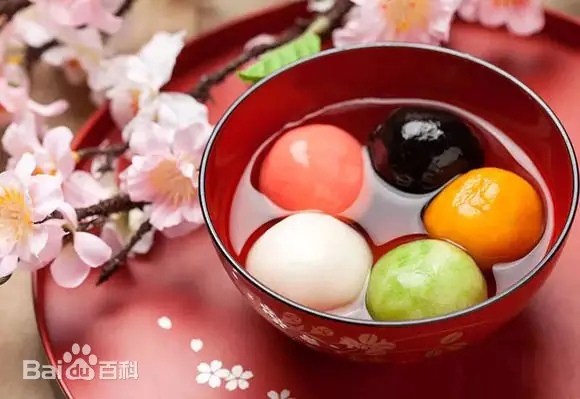
Eating Tangyuan: A key highlight of the festival is the consumption of tangyuan, sweet glutinous rice balls filled with various fillings such as sesame paste, red bean paste, or peanut butter. These round dumplings symbolize family unity and togetherness.

Fireworks: In many regions, fireworks are set off to celebrate the occasion, adding to the festive atmosphere and marking the end of the New Year celebrations.

Lion Dances and Dragon Dances: Traditional lion and dragon dances are performed to ward off evil spirits and bring good luck. The rhythmic drumming and vibrant costumes add to the festive spirit.

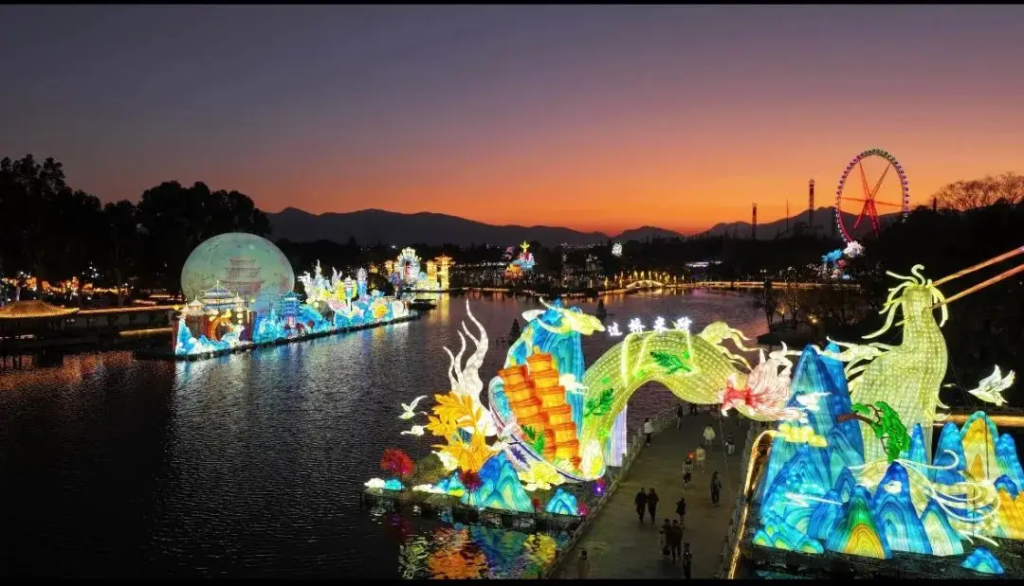
Lantern Displays: People of all ages create and display colorful lanterns, often in intricate shapes and designs. These lanterns can be found in parks, streets, and temples, creating a magical atmosphere.

Solving Lantern Riddles: A fun and engaging activity during the festival is solving riddles written on lanterns. Families and friends gather to test their wits and enjoy the playful competition.

The Most Beautiful Places to See Lanterns

If you’re looking to experience the beauty of the Lantern Festival, several locations across China are renowned for their stunning lantern displays:

  1. Beijing: The city’s parks, such as the Yuanmingyuan Park and the Temple of Earth Park, host impressive lantern displays, attracting thousands of visitors each year.
  2. Shanghai: The Yuyuan Garden in Shanghai is transformed into a lantern wonderland, featuring elaborate designs and a lively atmosphere, making it a must-visit during the festival.
  3. Hangzhou: Known for its picturesque West Lake, Hangzhou hosts beautiful lantern displays that reflect off the water, creating a breathtaking sight.
  4. Chaozhou: This city in Guangdong Province is famous for its traditional lantern-making techniques, and visitors can witness the craftsmanship and creativity of local artisans.
Beijing

Beijing

Beijing

HangZhou

Shanghai

Shanghai Yuyuan Lanter Festival
ChaoZhou

Chaozhou

Chaozhou

Chaozhou

Kunming Da Guan Lou

Kunming Da Guan Lou

The Chinese Lunar Lantern Festival is a captivating celebration that brings together tradition, culture, and community. As families gather to enjoy delicious food, admire beautiful lanterns, and participate in lively activities, the festival serves as a reminder of the importance of unity and hope. Whether you’re in China or celebrating from afar, the Lantern Festival is a time to reflect on the past year and look forward to the future, illuminated by the light of countless lanterns.

Link:https://peacelilysite.com/2025/02/13/celebrating-the-chinese-lunar-lantern-festival-a-journey-through-tradition-and-light/