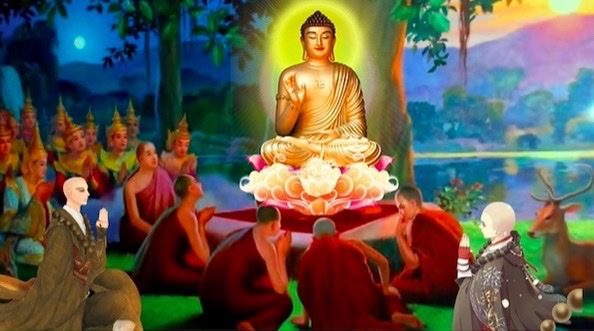
A Miracle in Pleasanton: How a Police Car Accident Became a Lesson in Karma and Protection

On the evening of May 31, 2013, an ordinary family outing turned into a life-changing experience that revealed to me the power of karma, faith, and divine protection.

That spring, my two daughters had just returned home from their colleges on the East Coast for summer vacation. We were all joyful to be reunited as a family. After dinner that evening, my husband, Yiao-Tee, and our daughters decided to take a short walk to the nearby Walmart in Pleasanton, California, to buy a watch battery.

It was around 9 p.m. when we stepped out of the store. My husband and daughters walked a few meters ahead, while I followed behind them on the pedestrian walkway. Suddenly, a police car pulled out of a parking space.

The officer inside noticed my daughters walking past his vehicle and, focusing on them, momentarily forgot that he was still driving. In that instant, he failed to see me. By the time he realized I was there, it was too late—
the police car struck me squarely. Screams broke out around us as I was thrown into the air and landed heavily on the ground.

When the officer got out of his vehicle, his first reaction was to blame me, claiming I had suddenly stepped in front of his car. My husband and daughters immediately refuted this. They knew I would never rush recklessly in front of a moving vehicle.

Eyewitnesses later confirmed that the impact had lifted me several feet into the air. Yet, against all odds, I was conscious and could move. An ambulance soon arrived and rushed me to the emergency room.

After thorough examinations and X-rays, the doctor and nurses were astonished.
They told me, almost in unison, that my survival was nothing short of a miracle.

There were no broken bones, no internal injuries, not even minor scrapes. Only a light swelling and redness on my left thigh showed any sign of trauma. The next day, I received acupuncture and laser treatment—and even went to work as usual. My daily life was completely unaffected.

When I reflect on that night, I recall no sensation of pain or impact. My mind had gone blank. Yet, very subtly, I felt as though someone had caught me and gently placed me back on the ground.

That feeling was profound and beyond words.

I have always worn the Vajra Thread given to me by my master when I took Refuge. I believe wholeheartedly that the compassionate empowerment of H.H. Dorje Chang Buddha III and the blessings of Buddhas and Bodhisattvas protected me from harm.

While I was physically unharmed, the aftermath was not easy. The police department initially refused to accept responsibility. They attempted to shift the blame to Walmart, claiming the store had not provided adequate pedestrian markings. As a result, they also refused to cover the nearly ten thousand dollars in ambulance and medical expenses.

It was only through Walmart’s surveillance footage, which captured the entire incident, that the truth could be verified.

I reported the situation to my master, explaining how I had been struck by a car yet walked away without injury.

Then, three months later, a call came from the police department’s insurance representative:
they would cover all the expenses in full.

In that moment, my heart overflowed with gratitude—to the Buddhas and Bodhisattvas for their protection, and to H.H. Dorje Chang Buddha III for His compassion and empowerment.

This experience deepened my faith and strengthened my resolve to cultivate diligently. Our whole family now listens to the Buddha Dharma of H.H. Dorje Chang Buddha III and practices accordingly.

Through continued study and sincere cultivation, we have found that every aspect of our lives—career, health, and even our children’s educational paths—has been smooth and filled with blessings.
Inspired by this miracle, our family established a Dharma Listening Center to share the authentic Buddha Dharma of H.H. Dorje Chang Buddha III, so that others may also receive the same blessings of wisdom and protection.

From the bottom of my heart, I express my deepest gratitude to H.H. Dorje Chang Buddha III, the Pope of Buddhism, for expounding the supreme and authentic Buddha Dharma.

I also bow in reverence to all Buddhas and Bodhisattvas for their compassionate protection. This experience reminded me of an unshakable truth:
the law of cause and effect never errs.

This accident was no coincidence—it was the ripening of past karmic causes. Yet, through sincere cultivation and the accumulation of merits, even serious calamities can be transformed.

This event has forever affirmed my faith in the Buddha’s teachings.
If we believe in the law of cause and effect, remain steadfast in our cultivation, and dedicate ourselves to doing good and spreading the true Dharma, every bit of merit will bring us peace and blessings.

When one lives in alignment with the Buddha Dharma, miracles are not extraordinary—they are the natural expression of divine compassion.

Link:https://peacelilysite.com/2025/10/22/a-miracle-in-pleasanton-how-a-police-car-accident-became-a-lesson-in-karma-and-protection/

To see the Love in all beings is to Awaken the Compassion in ourselves

The Tears of a Mother Fox

This is a true story, personally recounted by a monk.

He said that before he became a monk, he was a hunter, specializing in capturing foxes. One day, he caught a large fox as soon as he left home. After skinning it for its valuable fur, he left the animal—still barely alive—hidden in the grass.

By evening, when the hunter returned to retrieve the fox, it was gone. Looking more carefully, he noticed faint traces of blood on the ground, leading toward a small cave nearby.

Peering inside, he was stunned by what he saw: the fox, in excruciating pain and skinned alive, had struggled back to its den. Why?

When the hunter dragged out the now lifeless body, he discovered two tiny, blind cubs tightly suckling their dead mother’s withered breast.

The sight struck him to his very core. Never before had he realized that animals, too, share the same bonds of maternal love as humans. Even in her dying moments, the mother fox had thought only of feeding her children, afraid they would go hungry. At that realization, an overwhelming wave of grief, shame, and remorse consumed him. He was devastated, unable to forgive himself.

From that moment, he laid down his weapons, abandoned hunting, and chose the path of monastic life.

Many years later, whenever this monk recalled that experience, his eyes would still well up with tears.

The Selfless Leap: A Lesson from the Bharal

There are moments in life when a single experience reshapes the way we see the world forever. The extraordinary sacrifice of animals that opened a hunter’s heart and made him vow never again to take a life.

It happened during a hunt many years ago. Our party had driven a herd of more than sixty bharal—also known as blue sheep—to the edge of a cliff on Mount Bulang. The plan was cruel but simple: trap them on the precipice, and force them to fall to their deaths so we wouldn’t waste bullets.

The herd panicked, but then something astonishing happened. At the sound of a cry from a large male, the bharal divided themselves into two groups—young and old. Out of the elders stepped a weathered male, his horns broken, his face lined with age. He bleated once, and a half-grown bharal emerged from the younger group to join him.

Together they approached the cliff’s edge, then charged forward. The young one leapt first, soaring into the abyss, but it quickly began to fall. At that very moment, the old male followed, placing himself directly beneath the younger in midair. The youth’s hooves struck the elder’s back, using it as a springboard for a second leap. Miraculously, it landed safely on the opposite cliff.

The old one, having given all he had, plummeted to his death.

And then, pair after pair followed. The sky above the gorge was filled with arcs of courage—each elder laying down its life so a younger one might live. By the end, countless old bharal lay broken on the rocks, but the youth had crossed to safety.

I was stunned beyond words. At the edge of extinction, this herd had discovered a way to save itself—by sacrificing half to preserve half. But what shook me even more was not the strategy itself, but the spirit behind it. These elders did not resist, did not hesitate. They walked calmly toward death, offering their bodies so their children might have a future.

In that moment, my heart broke open. I realized that animals, too, embody wisdom, love, and a willingness to sacrifice that rivals, and perhaps even surpasses, our own. I could no longer see them as mere prey. That day, I made a vow: I would never again take life.

✨ The story of the bharal is more than just a tale of survival. It is a mirror for us as human beings. Would we, when faced with the survival of our families, communities, or world, have the courage to lay ourselves down for the next generation? Would we live not only for ourselves, but for those who come after us?

The bharal taught me that true strength is not in holding on, but in letting go—for love. And from that lesson, my heart turned toward compassion.

Link:https://peacelilysite.com/2025/09/12/to-see-the-love-in-all-beings-is-to-awaken-the-compassion-in-ourselves/

5 Morning Affirmations to Begin Your Day with Peace and Strength

This morning, I stumbled upon a truly inspiring video—one that I feel compelled to share. It’s about something simple yet deeply powerful: the words we choose to tell ourselves at the start of each day.

The video introduces five morning affirmations—phrases rooted in mindfulness, gratitude, and self-compassion. These words are not just reminders; they are seeds we plant in our hearts. By repeating them daily, we can replace anxiety with calm, transform doubt into confidence, and begin our day already centered in peace.

Here are the affirmations:

  1. I am here, I am alive. This moment is enough.
  2. Nothing outside me can disturb my peace unless I let it.
  3. I will treat myself with kindness, not judgment.
  4. Everything I need is already within me.
  5. Let me be the cause of peace today.

These may seem like simple sentences, yet they carry thousands of years of wisdom. Buddhist teachings remind us that the mind shapes our reality. When we begin each day with thoughts of peace, compassion, and self-respect, we set the tone for everything that follows.

What I love most is the last affirmation: “Let me be the cause of peace today.” Imagine the ripple effect if each of us carried this intention into our daily lives—peace would not just be something we seek, but something we create and share.

The words we tell ourselves each morning truly have the power to shape a lifetime of peace and wisdom.

✨ I wish everyone who watches this video peace, clarity, and growth on their journey. May these affirmations bring light to your mornings and strength to your days.

🌸 Why not give it a try? For the next seven mornings, say these affirmations to yourself before you start your day. Notice how they shift your mood, your focus, and even the way you interact with others. If you feel inspired, share your experience—it might just encourage someone else to begin their own journey of mindful mornings.

Link: https://peacelilysite.com/2025/09/12/5-morning-affirmations-to-begin-your-day-with-peace-and-strength/

Finding the Rose Among the Thorns

In this unstable world, it sometimes feels as if my heart is on a rollercoaster whenever I turn on the TV or scroll through the news. Fear, anger, and uncertainty seem to dominate the headlines. Yet a few days ago, I came across a powerful teaching from Hopi Indian Chief White Eagle that lifted my spirit and gave me a new way of looking at things.

He said:

“This moment humanity is experiencing can be seen as a door or a hole. The decision to fall in the hole or walk through the door is up to you. If you consume the news 24 hours a day, with negative energy, constantly nervous, with pessimism, you will fall into this hole.

But if you take the opportunity to look at yourself, to rethink life and death, to take care of yourself and others, then you will walk through the portal.

Take care of your home, take care of your body. Connect with your spiritual home. When you take care of yourself, you take care of everyone at the same time.

…Resistance is resistance through joy! You have the right to be strong and positive. And there’s no other way to do it than to maintain a beautiful, happy, bright posture.

When we cross the threshold, we have a new worldview because we faced our fears and difficulties. This is all you can do now:

– Serenity in the storm

– Keep calm, pray everyday

– Make a habit of meeting the sacred everyday.

…Show resistance through art, joy, trust and love.”

These words made me pause and reflect. They reminded me that no matter how chaotic the outside world may appear, the choice of how we respond rests within us. We can drown in fear, or we can step through the door into growth, healing, and a deeper connection with life.

The truth is, this world is neither purely rosy nor entirely thorny. A rose, soft and fragrant, blooms on a stem covered with sharp thorns. The beauty does not erase the thorns, and the thorns do not diminish the rose. Both exist together.

An optimist may see only the rose, while a pessimist sees only the thorns. But a realist recognizes that life is always both—the blessings and the hardships, the joys and the sorrows. Wisdom is learning to admire the rose without being blinded by it, and respecting the thorns without being wounded by them.

Chief White Eagle’s message is a reminder that resilience comes not from denial or despair, but from balance—from facing reality with serenity, caring for ourselves and others, and finding joy even amid trials. When we do this, we not only endure the storm—we walk through the door into a brighter, more compassionate world.

Link: https://peacelilysite.com/2025/09/10/finding-the-rose-among-the-thorns/

Raising Successful Kids

I’ve studied over 200 kids—here are 6 ‘magic phrases’ that make children listen to their parents

Reem Raouda, Contributor Published Sun, Aug 31 20259:35 AM EDT

d3sign | Getty

Parents are constantly searching for ways to get their kids to listen. But a lot of us focus too much on trying to get them to obey in the moment, rather than building genuine long-term cooperation.

I’ve studied over 200 parent-child relationships, and I’m a mother myself. I’ve learned that kids listen best when they feel connected. A big part of that is emotional safety: knowing they are respected and have the freedom to express their feelings.

Here are six magic phrases that calm a child’s nervous system and make cooperation feel natural, which is the real secret to getting them to listen.

1. ‘I believe you.’

The moment kids feel doubted (“Did you really mean to do that?”), their defenses go up. They shift from connection into self-protection.

Belief defuses shame and creates safety. When a child feels safe, they can actually hear you.

Example:

Child: “I didn’t spill the juice on purpose!”

Parent: “I believe you. Let’s clean it up together.”

You’re addressing the behavior without getting into an argument.

2. ‘Let’s figure this out together.’

The situation often turns into a standoff when there’s a parent just barking orders. But when kids help solve the problem, they’re more likely to stick to the solution.

Example:

Child refuses to clean up toys.

Parent: “I see you don’t want to clean everything now. Let’s figure this out together. What’s the first step?”

You’re still holding the boundary while preventing power struggles.

3. ‘You can feel this. I’m right here.’

When kids are overwhelmed, they’re in survival mode and logic doesn’t land. Their nervous system is in fight-or-flight, and they need help regulating their emotions. This phrase validates their feelings and assures them they’re not alone, which helps them reset.

Example:

Preschooler has a meltdown when their tower of blocks fall. Instead of “Stop crying, you’re overreacting,” say: “You can feel this. I’m right here.”

You’re letting the wave of emotions pass until they’re ready to re-engage.

4. ‘I’m listening. Tell me what’s going on.’

Before a child will listen to you, they need to feel heard. This simple shift of giving attention before demanding it dissolves resistance. When kids feel understood, they stop trying to push back.

Example:

Child: “I’m never playing with my brother again!”

Parent: “I’m listening. Tell me what’s going on.”

Now you’re uncovering the deeper hurt behind the anger, and that’s the part you can address to help repair both the relationship and the behavior.

5. ‘I hear you. I’m on your side.’

Many meltdowns escalate because kids feel misunderstood or in conflict with the very person they need most. This phrase instantly shifts you from adversary to ally, lowering defenses and opening the door to problem-solving.

Example:

Child: “This homework is stupid! I’m not doing it.”

Parent: “I hear you. I’m on your side. Let’s find a way to make this easier.”

Knowing you’re there to help changes the tone entirely. They’ll be far more likely to meet you halfway.

6. ‘I’ve got you, no matter what.’

Mistakes can trigger shame. But when kids hear this phrase, they learn that love isn’t conditional on performance or perfection.

Example:

Your child breaks a classmate’s project and calls you in tears.

Instead of lecturing, you say: “I’ve got you, no matter what. We’ll make it right together.”

That’s the difference between fear-based compliance and real accountability.  

I always tell parents that if their default is yelling or threatening, then no “magic phrase” will undo the deeper pattern. But when you regularly protect your child’s dignity, make them feel safe, and follow through on boundaries, listening becomes the natural outcome.

Source: https://www.cnbc.com/2025/08/31/child-psychologist-parents-who-raise-kids-who-listen-use-6-magic-phrases.html

Link:https://peacelilysite.com/2025/09/10/raising-successful-kids/

Louise Hay: From Pain to Healing, From Healing to Helping the World

There are some people whose presence feels like sunlight—warm, gentle, and full of hope. Louise Hay was one of them. An internationally renowned spiritual teacher, best-selling author, and pioneer of the self-help movement, she inspired millions of people around the world to believe in their own healing power. Her landmark book You Can Heal Your Life has sold over 50 million copies in 35 countries, translated into 29 languages, and for many, it sits by the bedside as a trusted guide through life’s storms.

To the world, Louise Hay seemed perfect—healthy, elegant, wise, always radiating grace. Her teachings lifted countless people out of despair, helped them restore their health, and gave them courage to live again. Media across the globe lovingly called her “the closest person to a saint.”

But what made Louise extraordinary was not that her life was flawless—it was that she transformed the deepest wounds into the greatest gifts. Behind her radiant presence was a childhood filled with suffering, abuse, and neglect. It was from that very pain that she forged the wisdom that changed the lives of millions.

1. Falling Amid Misfortune

When Louise was just 18 months old, her parents divorced, abruptly ending her once-happy family life.

At that time, women had little social standing. After the divorce, her mother could only work as a maid to survive, while Louise was sent to live in foster care.

At age five, her mother remarried in the hope of giving Louise a complete home. But this marked the beginning of her nightmare.

Louise was raped by a neighbor, abused and assaulted by her stepfather, and subjected to violence and sexual exploitation. These experiences left her with deep wounds and a lack of self-worth. In her teenage years, as long as a man showed her the slightest kindness, she would give herself to him. By the age of sixteen, she had already given birth to a daughter.

Her childhood was filled with tragedy, and her youth with self-destruction. Those early wounds shaped her into someone who did not know how to love herself.

Yet later in life, Louise chose not to remain trapped in resentment or regret. She said, “No little boy is born a predator, and no little girl is born a victim. These are learned behaviors shaped by childhood experiences.”

2. Awakening and Transformation

In her forties, Louise was diagnosed with cancer. That moment became her wake-up call. She realized how little she had cared for her own body, and she resolved to change.

Instead of following the conventional treatment suggested by her doctors, she turned to what she called “holistic healing.” Within six months, her cancer had disappeared.

Holistic healing, as Louise practiced it, meant changing destructive thought patterns and adopting healthier eating habits. She stopped mourning her unhappy past and stopped blaming her parents. Instead, she came to understand their own painful childhoods.

During her recovery, she ate mostly sprouts and simple natural foods, avoiding processed products entirely. She also trained her mind daily—using positive affirmations, choosing not to let negative emotions dominate her, and seeing every situation through a more uplifting perspective.

Her life changed completely. She documented her experiences and insights in books, which went on to inspire millions and transform countless lives.

3. You Can Choose Your Own Destiny

There are many in this world who have been hurt or are still suffering. Their stories move us deeply.

But as an old Chinese saying goes, “Those who seem pitiable often have traits that make them vulnerable.” In truth, much of life’s suffering continues because, consciously or unconsciously, we allow it. And the root often lies in our formative years.

Take, for example, teenage pregnancies. While news headlines may highlight shocking cases, the majority stem not from coercion but from lack of self-respect or proper knowledge. Similarly, many women trapped in abusive relationships remain because they lack self-worth and the courage to leave.

We cannot rewrite our childhoods, but we can shape our adult lives. As Louise Hay wrote in You Can Heal Your Life: Mindfulness Edition:

“Every negative message you received as a child can be transformed into a positive affirmation.”

If you had an unhappy past, stop feeding yourself negative words. Begin telling yourself: I am worthy of love. I am needed. I have many strengths. I can live the life I choose.

And if doubt still lingers, look at Louise Hay’s journey. Few have endured the kind of suffering she did—yet she lived a life admired and envied by many. If she could, why not you?

In the infinity of life where I am, all is perfect, whole, and complete.

Life Is Really Very Simple. What We Give Out, We Get Back.  What we think about ourselves becomes the truth for us. I believe that everyone, myself included, is responsible for everything in our lives, the best and the worst. Every thought we think is creating our future. Each one of us creates our experiences by our thoughts and our feelings. The thoughts we think and the words we speak create our experiences.”

Her books may be called “chicken soup for the soul,” but isn’t that exactly what we need sometimes? A warm voice reminding us that we are enough, that healing is possible, and that life can be beautiful again.

You Can Heal Your Life walks us through every stage of existence—childhood pain, love’s struggles, career challenges, health worries, aging, and even the fear of death. Louise’s message is simple but powerful: change your beliefs, and you will change your life.

This “chicken soup” has comforted millions, given them strength, and helped them step into new beginnings.


💖 A Gentle Reminder

If you feel lost, unworthy, or stuck in a cycle of pain—Louise’s story is a light in the darkness. Her life teaches us that healing begins not from the outside, but from within.

No obstacle is too great. No past is too broken. Deep within each of us lies an infinite potential waiting to bloom. When we dare to change our thoughts and love ourselves, life unfolds in colors we never imagined.

Believe it: just like Louise Hay, you too can heal your life—and create a future filled with peace, love, and joy.

Here is the link for the E-book.

Link:https://peacelilysite.com/2025/09/03/louise-hay-from-pain-to-healing-from-healing-to-helping-the-world/

You’ll Never Guess Why He Survived”?

At late Qing Dynasty, during the reign of Emperor Guangxu, there was a true story that took place:

Mr. Jia from Jiangsu worked for a foreign trading company in the Shanghai concession. He had earned the deep trust of his employer. Just before the Dragon Boat Festival, his boss sent him south of the city to collect debts. With a leather money pouch in hand, Mr. Jia set off.

The collections went smoothly, and by noon he had received more than 1,800 silver dollars. After walking and talking all morning, he was parched and exhausted. Passing by the famous Shiliupu teahouse, he hurried inside for a quick cup of tea before rushing back to deliver the money and finally rest.

When he returned to the company, he suddenly realized—the leather pouch was gone. Thunderstruck, drenched in sweat, and nearly fainting, he could not explain himself clearly in his panic.

Seeing his flustered state, the boss grew suspicious, believing Jia might be dishonest. He harshly rebuked him for betraying trust, warning that if the money was not returned quickly, Jia would be handed over to the authorities.

At that time, 1,800 silver dollars was a fortune—enough for a person to live on comfortably for a lifetime if carefully spent. How could Mr. Jia ever repay such a sum? With his reputation and life on the line, he felt utterly ruined and broke down in despair.

Meanwhile, in another part of the concession, a merchant from Pudong, surnamed Yi, had recently lost all his money in business. Discouraged, he bought a boat ticket for that very afternoon to return home across the river.

With time to spare before boarding, Mr. Yi also went to Shiliupu teahouse, intending to sip tea slowly while pondering his uncertain future.

By coincidence, just as Mr. Jia had hurried out, Mr. Yi walked in. As he sat down, he noticed a small leather pouch left on a chair. He paid it little mind at first and began drinking tea.

After some time, no one came to claim it. Curious, he lifted it and felt its weight. Opening it, he nearly dropped it in shock—inside was a fortune in gleaming silver coins!

At first he was overwhelmed with joy. Such a windfall could end his misfortune and secure a comfortable life. But then he thought: No, money belongs to its rightful owner. If I keep it, the loser may be ruined, disgraced, or even driven to death. The sin would be unbearable.

In those days, most decent people knew the saying: “Ill-gotten wealth must not be taken.” Mr. Yi resolved: Since fate placed this money in my hands, I have the responsibility to return it.

At lunchtime, only eight or nine guests remained in the teahouse. None appeared to be searching for lost money, so Yi, hungry as he was, decided to keep waiting.

By evening, as lamps were being lit, the teahouse emptied out—only Mr. Yi remained, watching the entrance intently.

Suddenly, he saw a pale, staggering man rush in, followed by two companions. It was Mr. Jia. As soon as he entered, Jia pointed at Yi’s table and cried, “There! That’s where I was sitting!” The three came straight toward Yi.

Yi smiled and asked, “Are you looking for a lost pouch?”

Jia stared in disbelief and nodded repeatedly. “I’ve been waiting for you,” Yi said, producing the leather pouch.

Overcome with relief, Jia trembled all over. “You are my savior! Without you, I would have hanged myself tonight!”

It turned out that when Jia had discovered the loss, he had begged to retrace his steps, though he knew recovery was unlikely. His boss, fearing he might flee, initially forbade it. After much pleading, the boss finally allowed him to go, but only under the close watch of two escorts, who were ordered to bring him back regardless of the outcome.

After exchanging names, Jia gratefully offered Yi a fifth of the money as a reward. Yi firmly refused. Jia lowered it to a tenth, then to a hundredth—Yi grew angry and sternly declined.

Flustered, Jia said, “Then at least let me treat you to a drink!” Yi still refused. Finally Jia pleaded, “If I cannot show gratitude, my conscience will not rest. Tomorrow morning, please allow me to host you at such-and-such tavern. I beg you to come—without fail.” Bowing deeply, he left.

The next morning, Yi did indeed appear. Jia was just about to bow in thanks when Yi quickly interrupted, saying:

“Actually, it is I who should thank you. If not for your lost pouch, I would not be alive today!”

Puzzled, Jia asked what he meant. Yi explained:

“Yesterday, I had bought a one o’clock boat ticket to return home. But because I waited in the teahouse to return your money, I missed the departure. When I finally returned to my lodging, I learned that the boat had capsized midway in a violent wave. All 23 passengers drowned. Had I boarded, I too would be dead. So you see, it was you who saved my life!”

The two men, overwhelmed, bowed to each other in tears.

Onlookers marveled, toasting the pair. They said Mr. Yi’s single good deed had saved not just Jia’s life, but his own as well.

The story did not end there. When Jia and his escorts returned and reported everything, the boss was astonished. “Such a virtuous man is rare indeed!” he exclaimed, insisting on meeting Yi.

The two met and felt an immediate bond. After a long conversation, the boss earnestly invited Yi to stay, offering him a high salary to manage accounts. Months later, he even married Yi into his family as a son-in-law. In time, the boss entrusted the entire business to him.

“Cause and effect of good and evil” is absolutely true, without the slightest mistake. Goodness nurtures more goodness, and goodness attracts goodness. To treat others with kindness is, in fact, to accumulate blessings and good fortune for oneself. A human life is not lived for just a fleeting moment. The speed of temporary gains or losses, the ups and downs of a single day, even honor or disgrace in the short term—none of these truly matter. Today’s kindness becomes tomorrow’s blessings. Today’s evil leads to tomorrow’s misfortune. Time is a great author, and it will always write the perfect answer.

Therefore, simply be a good person, and the future will be full of hope. Do good deeds, and the road ahead will surely be bright and promising.

Link:https://peacelilysite.com/2025/08/29/youll-never-guess-why-he-survived/

Nobel Prize Research Reminds Us: Don’t Stay Up Late!

When the 2017 Nobel Prize in Medicine was announced, many were surprised—it focused on something that touches all of us: our biological clock.

Three scientists—Jeffrey C. Hall, Michael Rosbash, and Michael W. Young—received the award for discovering how our bodies keep time at the molecular level. In simple terms, they revealed how our “internal clock” works, and why disrupting it can be so damaging to our health.

This clock silently manages almost everything in the body—when we feel sleepy or alert, our body temperature, hormone levels, and even how our cells repair themselves. But when we stay up too late, this delicate system is thrown off balance, and the consequences can be serious.

Their research found that:

  • Staying up late disrupts the body clock, paving the way for illness.
  • Lack of sleep can cause the brain to “eat itself”—astrocytes, specialized brain cells, begin devouring synapses.
  • If circadian-regulating genes fail, the risk of tumors increases.

The clear takeaway from this Nobel Prize-winning research? A familiar piece of advice: Don’t stay up late!

Yes, it’s something our parents, teachers, and elders have reminded us about countless times. But now, there’s a Nobel Prize—and 9 million Swedish kronor —to back it up.


Ancient Wisdom Meets Modern Science

Interestingly, the idea of the “body clock” isn’t new. Thousands of years ago, Traditional Chinese Medicine described how energy, or Qi, flows through the body in cycles. The 24-hour day was divided into twelve two-hour intervals, with each period linked to a specific organ system.

For example:

  • Between 1 a.m. and 3 a.m., the liver is at peak function, cleansing the blood and preparing the body for renewal.
  • From 3 a.m. onward, energy shifts to organs that support digestion and daily activity, such as the lungs, large intestine, and stomach.
  • By mid-afternoon, energy begins to flow inward again to support organs that restore and maintain the system, such as the kidneys and pericardium.

Understanding this Body-Energy Clock can help us better manage our sleep, meals, and mood. Modern science now echoes this ancient wisdom: align with your natural rhythms, and you’ll thrive.


The Role of Melatonin

Science also tells us about melatonin, often called the “sleep hormone.” Melatonin is vital for regulating the sleep-wake cycle. Levels begin to rise soon after darkness falls, peak between 2 a.m. and 4 a.m., and then gradually decline.

This explains why going to bed too late often leads to trouble falling asleep, and why sleep after 4 a.m. tends to be light and restless. For the best rest, it’s ideal to sleep between 11 p.m. and 4 a.m., when melatonin levels are highest and most restorative.


The Benefits of Sleeping Early and Rising Early

Research consistently shows that early sleepers and early risers enjoy powerful health benefits:

  • Better mental health: Early risers of all ages report more positive emotions and greater self-rated health.
  • Reduced risk of depression: A U.S. study found that going to bed just one hour earlier lowers depression risk by 23%.
  • Weight management: Staying up late disrupts hormones, leading to weight gain. Going to bed on time, combined with early rising and regular exercise, helps maintain a healthy weight.
  • Stronger immunity: Adequate sleep enhances immune function, reducing the risk of infections and chronic diseases such as heart disease, hypertension, diabetes, and stroke.
  • Sharper thinking: Early sleepers and early risers score 30% higher on word-association tests compared to night owls.

The message from both Nobel Prize-winning research and ancient health wisdom is clear: respect your biological clock.

Going to bed early and waking up early is not just about feeling more refreshed—it protects the brain, strengthens the body, improves mood, and may even add years to your life. So tonight, give yourself the gift of sleep—it’s worth more than 5 million!

Link:https://peacelilysite.com/2025/08/28/nobel-prize-research-reminds-us-dont-stay-up-late/

The Season of Prevention: Natural Ways to Protect Your Home as Pests Move Indoors

By Daniel Fusch Contributor

As summer gives way to cooler days and longer nights, a subtle but critical seasonal shift begins inside homes. While many homeowners are busy with back-to-school routines, seasonal cleaning, and the return of structured schedules, rodents and other pests are also preparing to move indoors. As outdoor temperatures drop, these creatures instinctively seek warmth, shelter, and reliable food sources, making people’s homes a prime target. 

Mice and rats are triggered by the shortening daylight and cooling nights, prompting them to search for secure nesting spots. Attics, basements, garages, and wall voids provide ideal zones. By the time the first frost hits, an unnoticed breach in a home can easily turn into a full-blown infestation. “Preventative action in late summer or early fall isn’t only smarter, it’s less stressful and costly than trying to control a problem after it has taken hold,” says Scott deMoulin, CEO of EarthKind, a company dedicated to safe, non-toxic pest prevention. 

This time of the year offers a valuable opportunity for what many refer to as a “home reset.” Much like the fresh start mentality that accompanies the school year, this seasonal rhythm can include natural pest prevention as a key part of household wellness and preparation. However, what does natural prevention actually look like in practice?

EarthKind

EarthKind believes it begins with exclusion. Investing time to seal off entry points around the home is critical. Common access areas include the garage, foundation cracks, utility line entries, attic vents, and dryer exhausts. These often-overlooked gaps act as open doors for rodents, especially when cooler weather sets in. Sealing with durable materials such as steel wool, caulk, mesh screening, or rodent-proofing foam can dramatically reduce the likelihood of unwanted visitors. 

Second, food accessibility must be addressed. Rodents don’t need much to survive. They only need a few crumbs and a place to hide. Hence, kitchens and pantries must be kept meticulously clean. Items like grains, cereal, and pet food should be stored in airtight containers made from glass or thick plastic. In addition, dishes shouldn’t be left overnight. “A clean kitchen is a rodent-free kitchen,” deMoulin emphasizes. 

Unknown to many, moisture is also an attractant. Pests thrive in damp environments, which offer both hydration and shelter. Leaky pipes under sinks, humid basements, and clogged gutters are all red flags. “Think of leaks as an open invitation to pests,” says deMoulin. “Fixing leaks promptly and using dehumidifiers or ventilation in moisture-prone areas can greatly reduce pest survival rates.” 

Finally, outdoor maintenance shouldn’t be neglected. Overgrown shrubbery, piled leaves, and clutter near the home provide perfect hiding spots for pests to stage their invasion. Regularly trimming vegetation, clearing debris, and keeping firewood away from exterior walls creates a hostile perimeter for pests.  

What happens when you do the right things, and pests still find their way in? This is where EarthKind’s product line bridges the gap between prevention and peace of mind. The company’s Fresh Cab Rodent Repellent is a botanical-based pouch designed to repel mice using a blend of plant fibers and essential oils like balsam fir. It’s crafted for those who want results without harsh chemicals or messy cleanup and may last much longer.

EarthKind

EarthKind’s pest control products can integrate seamlessly into natural routines. They can be placed under sinks, in attics, garages, storage closets, and in other areas prone to pest activity. “There’s no killing, no cleanup, and no fear of pets or children accidentally encountering harmful substances,” deMoulin states.  

This philosophy reflects EarthKind’s goal to make every home pest-free without compromise. Founded by Kari Warberg Block, who witnessed firsthand the dangers of conventional pesticides on her North Dakota farm, EarthKind emerged from a desire to harmonize human safety with ecological responsibility.  

Consumers today are increasingly seeking alternatives to toxic pest control, and EarthKind answers that call through its products and a shift in mindset. Scott deMoulin remarks, “Home protection is about cultivating a safe, healthy living space with intention, and it starts with proactive prevention.” 

Link:

Source: https://www.usatoday.com/story/special/contributor-content/2025/07/29/the-season-of-prevention-natural-ways-to-protect-your-home-as-pests-move-indoors/85425732007/

From Despair to a New Life: How Vegetarianism and the Dharma Gave Me a Second Chance

In 2019, my world collapsed. I was diagnosed with cholangiocarcinoma—one of the most aggressive and deadly cancers—at a middle-to-late stage. After a consultation with several medical experts, I was told that even if I underwent surgery, I would only have three or four months left to live. To survive six or seven months would be nothing short of a miracle.

Following the doctors’ advice, I went through surgery. Afterward, however, I made the conscious decision to forgo all other cancer treatments. I knew I had medical insurance that could cover much of the cost, but I questioned whether aggressive treatments would truly give me dignity and quality of life in my final days. Chemotherapy, radiation, and similar methods often do more harm than good, damaging the organs and leaving patients to die not from the cancer itself, but from the effects of over-treatment.

I also thought about something else: if my time was truly so short, I wanted to preserve my remaining healthy organs so that they could be donated to those in need.

When I returned home from the hospital, my health declined rapidly. Every day I lay in bed in pain, but I did not allow myself to sink into despair. Instead, I chose gratitude. I was grateful that when I opened my eyes, I could see the rising sun outside my window. Grateful for each breath of fresh air. Grateful simply for being alive in that moment.

Still, I asked myself: Was my life really destined to end in just a few short months? The answer within me was a resounding No. I wanted to create a miracle.

What gave me this strength was my son. My sudden illness had devastated him, and I could feel how my suffering dragged him into deep sadness. At that moment, I told myself I must rise up—for him, so that he would still have a mother, and also for other patients enduring the same pain, to show them that hope is possible. If doctors had already declared that I had no chance, why not prove with my own body how powerful the human spirit can be? Why not find a way to live with dignity, with quality, and with the least burden?

And then, something incredible happened.

In April 2020, my husband prepared a feast for me with all kinds of fish and meat. Strangely, the moment I looked at it, I felt an overwhelming discomfort in my heart. That very day, I decided to give up meat completely. From then on, I have been a vegetarian, and I know this will remain with me for the rest of my life.

Less than a month later, it was time for my medical review. To my surprise, all my test results had improved dramatically. Even though that same month I experienced the heartbreaking loss of my father, my condition did not worsen. At first, my family opposed my vegetarian choice, but as they watched my health improve, they slowly came to accept it. This only strengthened my resolve. Three months later, the test results were even better. Along with vegetarianism, I began exercising moderately each day and keeping a positive mindset. After six months, all my medical indicators had returned to normal.

Today, apart from being a little weaker in stamina compared to before, I am doing very well. When patients or their families reach out to me online and ask how I got better, I tell them honestly: “A positive mindset + positive energy + vegetarian diet + moderate exercise.”

But vegetarianism gave me more than just a second chance at life. It opened the door for me to encounter the true Dharma.

One day at a banquet, my vegetarianism led me to meet a Dharma sister who had followed H.H. Dorje Chang Buddha III for many years. She introduced me to Buddhism, giving me the precious opportunity to listen to the Dharma discourses of the Buddha. Through studying the Dharma, I came to understand the law of cause and effect and the deeper meaning of being vegetarian. I realized that it is not merely about food, but about repenting for the harm I once caused to living beings, cultivating compassion for all sentient life, and seeking self-redemption through transforming karma.

I am no longer just a “pure vegetarian” who avoids even milk and eggs. I have become a practitioner who genuinely cherishes and protects all beings. My heart has grown softer, kinder, and more compassionate.

Gratitude fills me every day—gratitude to vegetarianism, which pulled me back from the edge of death; gratitude to the Dharma, which allowed me to encounter the true teachings of the Tathagata; gratitude for the miracles that have appeared throughout my life whenever I was in despair. That is why my online name is “After Darkness, Light.”

Looking back, many people used to say, “How could such a good person like you get this disease?” I once thought I was a good person too. But was I really? Before learning the Dharma, I would kill mosquitoes, flies, and ants without hesitation. I once had an abortion. Only after learning the true Dharma did I realize how heavy those karmic debts were. And what about my past lives? How much more karma have I carried forward?

Now, I understand: the suffering I faced in this life is not unfair—it is the natural result of my past actions. But how fortunate I am, despite all of this, to have encountered the true Dharma and to have a holy teacher guiding me. This is an incredible blessing, one I owe entirely to the compassion of the Buddhas and Bodhisattvas of the ten directions.

The reason I am writing this article is because, in a Buddhist study group of more than 400 people, I saw so many “requests for dedication” every day and so much suffering. I felt most of them don’t have the correct view and concepts of Buddhism. That made me want to share my experience, in hopes it may help others. In those lists of dedication requests, I saw too much misfortune and pain—patients with terminal illnesses, those crying out in agony, those with depression and anxiety, those struck by sudden misfortunes, and so on. It made me deeply sad: sentient beings suffer so much! People in this life fall ill or face hardships of all kinds, but these are all karmic consequences ripened from the many unwholesome deeds done over countless lifetimes or in this very life. Each of us must have deep faith in cause and effect. We must understand that sickness and adversity are manifestations of our own karma, and also warnings—opportunities for us to repent and correct our wrongs.

“There is no one else to rely on but ourselves.” What magic cure exists in this world? The only true cure is repentance and cultivation! For patients who request dedication, whether they themselves, their families, or their friends, if they wish for a miracle or at least some relief, then apart from avoiding over-treatment, the only way is for the patient themselves to give rise to deep repentance and truly reform. Therefore, we must learn Buddhism, follow the teachings of the Buddhas and Bodhisattvas: commit no evil, practice all that is good, strictly uphold the precepts, and follow the teachings in our practice.

All that I have written here is based on my own personal experience and feelings. As for the Dharma itself, the standard must always be the teachings personally expounded by H.H. Dorje Chang Buddha III.

Link:https://peacelilysite.com/2025/08/20/from-despair-to-a-new-life-how-vegetarianism-and-the-dharma-gave-me-a-second-chance/

Source: https://mp.weixin.qq.com/s/AmK9EoE_axAUP1xLGP-Jiw