The Fusion of Technology and Art: A Stunning 3D Masterpiece

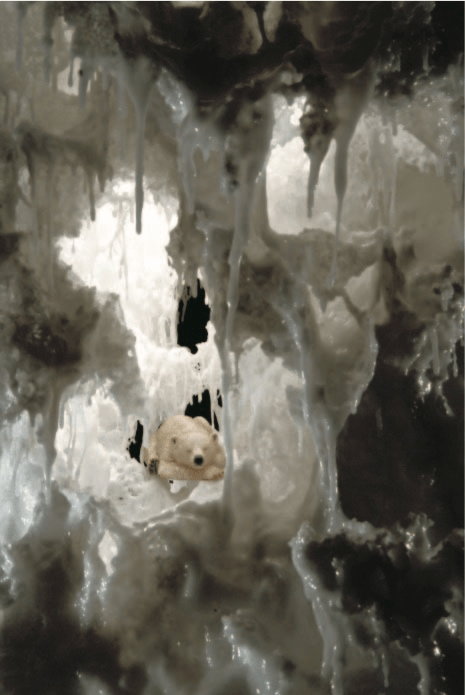
Polar Bear in an Ice Cave

Technology art is a new form of multidimensional creative expression that blends technology and art. By incorporating mechanical instruments, scientific data, and spatial elements such as light sources, temperature, and speed, it presents a unique visual experience. Imagine a three-dimensional painting on a flat sheet of paper, where the depth of space extends beyond the surface, and the imagery seems to leap out of the frame, resembling a real sculpture.

Among these art forms, glass painting is particularly breathtaking. With its transparent dual-sided effect akin to a celestial realm, it creates a mesmerizing and soothing atmosphere when paired with changing lights. Photography, on the other hand, captures emotionally stirring moments through the interplay of light, composition, and color. Whether depicting landscapes, people, or animals, it brings out a unique aesthetic through the lens.

At the convergence of these three artistic expressions, H.H. Dorje Chang Buddha III, skillfully integrates them to create stunning works of technology art. One such masterpiece, the 3D painting Polar Bear in an Ice Cave, vividly portrays the charming image of a polar bear, making viewers feel as if they are inside an icy Arctic cavern. Through the artwork, one can almost see the adorably clumsy bear sleeping soundly in the cold cave. The artist’s extraordinary craftsmanship is awe-inspiring, delivering an unparalleled visual experience.

H.H. Dorje Chang Buddha III composed a poem for this artwork. Translating it into English is incredibly challenging due to its profound meanings. However, here is a simple translation to offer a glimpse into the Buddha’s deep compassion for all beings:

The polar bear loves the cold the most,
Sleeping in ice caves through all seasons.
Do not take food from the water,
Instead, pick up the bones of wandering souls for a meal.

Not everyone understands the mysteries within the profound,
For Zen enlightenment dissolves the barriers of hunger.
The splendid affairs of the crystal palace are beyond full expression,
Within the cave, a guest drunkenly enjoys the company of an immortal.

Link:https://peacelilysite.com/2025/02/27/the-fusion-of-technology-and-art-a-stunning-3d-masterpiece/

Homage to H.H. Dorje Chang Buddha III Cultivators Should Become Buddhist Disciples in Holy Sense with Correct Faith and Real Cultivation

Many people say they have faith in Buddhism and therefore naturally regard themselves as Buddhists. However, these numerous Buddhists who regard themselves as having faith in Buddhism are at many levels and a mixture of true Buddhists and false ones and have all kinds of people in them. Among them, there are people who truly believe in Buddhism and have the correct faith, there are people who regard themselves as having the faith but really do not have the correct faith, some falsely claim to have the faith, and there are descendants of Mara Pipiyan who infiltrated into Buddhism to do damages. That is why the Buddhist world is full of chaos in this dharma-ending era. This situation requires true Buddhists and Buddhist disciples with the correct faith to open up their eyes to clearly distinguish what is true and what is false and determine what is right and what is wrong, in order to advance on the correct Bodhi path toward liberation and accomplishment without deviating aside.

Buddhist is a noun with broad meanings. Within the scope of this concept embodying a wide range of meanings, quite many people are really just “followers” or even “visitors paying the respect of burning incense.” Their knowledge about Buddhas and Bodhisattvas is just knowing the concept. They only have the so-called faith in Buddhism but have not taken refuge or made deep study or investigation. Basically, they are still invaded and corroded by the three poisons in their daily life, do things based on their own opinions, and do not cultivate or practice in accord with the Buddha’s teachings and warnings. When they go into temples to burn incense and pay respect, they beseech only rewards of good fortune in the current lifetime such as making big money in business, getting promotion or advancing to a position of power, happiness and harmony in family life, good health, and so on. Some of them cannot even tell the difference between Buddhism and Daoism and pay respect to deities and ghosts as well. That is absolutely a false faith in Buddhism without any understanding. Therefore, strictly speaking, such “Buddhist followers” really cannot be regarded as Buddhists.

There are also quite some Buddhists who, though having taken refuge in Buddhism, have not become clear about the approach of learning the absolute truth of Buddha-dharma and practice Buddha-dharma selectively as worldly ways. Some of them even have incorrect or evil knowledge and views. Their cultivation falls into superficiality and becomes a futile effort. They think that believing in Buddha’s existence and having taken refuge in Buddhism are the entirety of a Buddhist’s faith. Their faith in Buddhism is not a pure faith and is not an indestructibly firm faith. Their faith is a “faith that can be overpowered,” which can be easily shaken, overpowered, and abandoned. Their faith is an “intermittent faith.” They sometimes have faith and sometimes have doubt. A slight disturbance can cause them to generate doubt, enter into delusion, and lose confidence. Their faith has reversals and impediment and is not always clear and pure. This type of cause from such impure and contaminated faith definitely cannot bear wonderful fruit of accomplishment and liberation. This kind of faith has an extremely weak foundation and of course is not a true faith. Therefore, the refuge ceremony they have taken is just a formality and cannot represent a true faith in Buddhism.

One who does not have a true faith of course will not have a correct understanding and will not put the faith into action. Therefore, these people will not clearly believe in cause and effect and will not truly know impermanence, much less fear impermanence. Rather, they have deep and severe attachment to the self and always treat things related to them as important and having a higher priority than Buddhist work. They may even list conditions and offer deals to Buddhas and Bodhisattvas to ask Buddhas and Bodhisattvas to give them what they want first before doing Buddhist work. How can such cultivation and conduct receive protection and empowerment from Buddhas and Bodhisattvas? How can there be benefits and rewards from learning Buddhism to speak of? Thus, in today’s world, although countless people claim they have faith in Buddhism and cultivators of Buddhism are numerous and everywhere, very few of them can truly receive beneficial rewards. Instances of ending the cycle of birth and death are even rarer. Shouldn’t this situation cause the attention and vigilance of Buddhist disciples learning Buddhism?

The goal of believing in and learning Buddhism is for attaining liberation and accomplishment and becoming a holy one. Therefore, Buddhists questing for liberation and accomplishment should strive to plant and grow the cause of true faith to get the wonderful fruit of liberation and accomplishment and let themselves become veritable disciples of Buddhism with true faith and correct faith. Then, where does true and correct faith come from? Of course it comes from piously cultivating Buddhism through concrete steps. Buddhists with true and correct faith should believe in not only the Buddha’s real existence but also the Buddha’s teachings and precepts, develop strong power of vow from the inner mind to uphold, follow, and carry out the Buddha’s teaching, develop the power of determined faith to regard the principle of Buddha-dharma as the sole standard of selection and the guiding principle of conduct, and strictly and firmly act in accord with the teaching to generate the power of true faith from the inner mind. With such premise, we can establish the determination to cultivate Buddhism, clearly believe in cause and effect, diligently practice the ten actions of goodness and the four limited states of mind, and broadly cultivate the six paramitas through all acts. On the other hand, a person who is deeply plagued by heavy attachment to the self and only superficially obey Buddhas’ and Bodhisattvas’ teachings and precepts will never step onto the path of Bodhi toward liberation and accomplishment even after reading the Tripitaka exhaustively.

Therefore, disciples of Buddhism who truly intend to cultivate Buddhism to attain liberation and accomplishment have to become Buddhist disciples in the holy sense with true faith and real cultivation. Buddhist disciples in the holy sense are in true correspondence with the Buddha’s teaching and the purpose of learning Buddha-dharma and can thoroughly see the true such-ness of mind nature. Such is the meaning of the holy sense. To possess the status of the holy sense, Buddhist disciples must concurrently pursue progress in all three aspects of Buddhism. Only by advancing in all three aspects coherently as a whole can one be regarded as a Buddhist disciple in the holy sense. These three aspects are: the teaching of Buddhism, the study of Buddhism, and Buddha-dharma. Moreover, the three aspects must be combined perfectly to comprise one entity.

The teaching of Buddhism includes the Buddha’s teaching that has been transmitted through the time and historical facts about Buddhism. Among them, there are true events of the Buddha, historical backgrounds, records of the origin and propagation of Buddha-dharma, karmic conditions related to expounding specific dharmas, references and publications of the dharma expounded by the Buddha, rules of Buddhism, and so on. The study of Buddhism refers to Buddhist scriptures, the origin, development, and timeline of Buddhist sects and schools, and the principles and philosophy within Buddha-dharma; all are investigated theoretically using the method of academic research. Buddha-dharma is the special dharma gates transmitted from the Buddha that can enable cultivators transcend the mundane world and enter holiness, methods to lead one into the practice toward liberation and to break away from mundane attachments, including mantras, visualization, mudras, mandala, dharma instrument, the three secret practices of body, speech, and mind, and utilization of the power of siddhi (accomplishment) within the dharma sphere.

It is true that becoming a Buddhist disciple in the holy sense is not easy. However, that is the goal that every Buddhist disciple must pursue and also the only path of cultivating Buddhism toward liberation and accomplishment. Moreover, achieving that goal requires a pious devotion toward the Buddha, focusing the mind on goodness, and pure cultivation of one’s body, speech, and mind.

There is only one way to achieve that goal. That is, taking the dharmas of the Contemplating the Magnificence of Perfect Prerequisite Oceanic Mind Essence and the Most Magnificent Bodhi Dakini Oceanic Mind Essence in the Supreme and Unsurpassable Mahamudra of Liberation and What Is Cultivation expounded by H.H.  Dorje Chang Buddha III as the guiding compass for absolutely correct cultivation, earnestly learning from and studying the dharma Expounding the Absolute Truth through the Heart Sutra expounded by H.H. Dorje Chang Buddha III, and diligently listening to the recorded supreme dharma lessons expounded by H.H. Dorje Chang Buddha III.

Due to our rewards of good fortune accumulated through many lifetimes and eons, we live in this era with H.H.  Dorje Chang Buddha III’s presence. Additionally, we also have the magnificent karmic conditions that allow us to closely follow H.H.  Dorje Chang Buddha III in learning Buddhism. We can listen with our own ears the recorded dharma lessons expounded by H.H.  Dorje Chang Buddha III and respectfully beseech the treasure books with dharmas expounded by H.H. Dorje Chang Buddha III. Moreover, many Buddhist disciples among us have personally received initiations transmitted by H.H.  Dorje Chang Buddha III in person. How lucky and fortunate we are! What reason do we have for not diligently learning Buddhism and cultivating ourselves! We must make our vow to become a one-hundred-percent Buddhist cultivator with true faith and correct faith and strive to be Buddhist disciple in the holy sense with clear and pure cultivation. We must attain liberation and accomplishment in the current lifetime! Amitabha!

by   Zhengfa Hong

Link:https://peacelilysite.com/2025/02/27/homage-to-h-h-dorje-chang-buddha-iii-cultivators-should-become-buddhist-disciples-in-holy-sense-with-correct-faith-and-real-cultivation/

I have never  been aware of or seen anyone who surpassed the accomplishments of H.H. Dorje Chang Buddha III

By Zhaxi Zhuoma Rinpoche

H.H. Dorje Chang Buddha III Tonsuring Zhaxi Zhuoma

I follow  H.H. Dorje Chang Buddha III and have ever since I first encountered His writings in an unusual little book titled True Stories About a Holy Monk thirteen years ago. Prior to that I studied and practiced Zen Buddhism and the shamanic arts for over fifteen years.

Although I knew this was an extraordinary teacher and holy person, none of us who followed this holy being knew who He was until a draft manuscript of a book about His accomplishments in this life was published and distributed to many of the leading Buddhist living in the world at that time. This happened around 2007. Many of the most highest accomplished Buddhist (not all were the most well known) recognized that this was a very special incarnation and wrote letters stating that fact which were included in the final version of the book that was published and presented to the Library of Congress and the world in a grand ceremony in April, 2008. Later that year and the next, I and a group of monks, nuns, and laypeople voluntarily traveled to all 50 states presenting the book to governors, librarians, tribal chiefs, and others and giving a talk on just who H.H. Dorje Chang Buddha III is and why He had come to America. You can read more about all these events on this website.

Many of the current Buddhist sects hold that Dorje Chang Buddha or Vajradhara Buddha was the originator of Buddhism as such. This is especially true in the vajrayana traditions. You will see this dark blue Buddha at the top of their lineage trees. Dorje Chang Buddha was the first samboghakaya manifestation of the formless Dharmakaya Buddha and was the teacher of all dharma to all the other Buddhas in the ten directions including Shakyamuni Buddha. Only one other time did Dorje Chang Buddha incarnate in this world and that was at the time of Shakyamuni Buddha to help teach Shakyamuni Buddha’s disciples. That was as the great holy venerable one, Honorable Vimalakirti. At that time, Shakyamuni Buddha praised Honorable Vimalakirti in the Vimalakirti-Nirdesa Sutra, ”People who make offerings to this person should know that they are making offerings to a Buddha. One who transcribes and learns this sutra should know that a Tathagata is right with him in the same room.” This statement means that, in addition to Shakyamuni Buddha, there was another Tathagata in this world at that time. Shakyamuni Buddha was not the only Buddha. You can read the teachings of Ven. Vimalakirti in the well-known sutra bearing His name. However,  H.H. Dorje Chang Buddha III gave us this discourse, “The dharma I transmit is absolutely the dharma taught by the Buddha. However, I am not a Buddha. Neither am I a master. I am just a humble one propagating the true dharma of Tathagata, without distinguishing sects or schools. Any cultivator who has correct knowledge and views, even a very ordinary cultivator, is better than me. I should learn from them all. Therefore, my body, speech, and mind are just a humble structure.”

In 2008, I had the good fortune to have an interview in upstate New York with H.H. Penor Rinpoche, who had been the  third supreme leader of the Nyingma Sect. He was one of the leaders who recognized H.H. Dorje Chang Buddha III. He told me that this was a very high being, much higher than he (Penor) was and it was very good that such a being should incarnate at this time in these dharma ending days and that He should reveal many miracles so that people would believe that the dharma still existed in this world. He also said that Dorje Chang had never before incarnated in Tibet and other wonderful things.

The fact is that H.H. Dorje Chang Buddha III’s mind practice is different from that of all other dharma kings, rinpoches, and dharma masters in the world. For example, He is truly completely proficient in exoteric and esoteric Buddhism and possesses perfect mastery of the five vidyas, while essentially no other people were able to accomplish that through history. More importantly, He is the only one who only benefits and helps all others and does not accept money or properties from other people. He has even announced that He would never accept offerings and would solely benefit others. Consequently, this fact causes other dharma kings, rinpoches, and great dharma masters of Buddhism to feel very embarrassed and depressed, because all these dharma kings, rinpoches, and dharma masters have to collect and accept offerings. Compared to H.H. Dorje Chang Buddha III’s deed of not accepting offerings, it became clear that they are at lower levels and are greedy for offerings from living beings. Therefore, they are very angry because H.H. Dorje Chang Buddha III ’s deed makes them unable to explain their acts.

H.H. Dorje Chang Buddha III did NOT proclaim himself to be a Buddha. However, He was recognized by many others as such and He did not deny the fact. H.H. Dorje Chang Buddha III has stated repeatedly that this is the era of Shakyamuni Buddha and that Shakyamuni Buddha is the supreme leader of Buddhism in the world today. H.H. Dorje Chang Buddha III only came to correct many of the mistranslations and erroneous views held by Buddhists and about Buddhism that exist in the world today. Please visit the website of the Office of H.H. Dorje Chang Buddha III  www.hhdcb3office.org, you will truly find out that H.H. Dorje Chang Buddha III is a truly great Buddha. He has demonstrated countless accomplishments in all five of the vidyas–the only way that a Buddha can be known. The five vidyas is an ancient concept that most Buddhist do not understand–I know I did not and it took me a long time to fully realize what was meant by the term.

Based on what I have seen and experienced, I do believe H.H. Dorje Chang Buddha III is a nirmanakaya Buddha.  Please allow me to make a statement from the bottom of my heart that bears my responsibility to the law of cause and effect: From what I have learned from books and what I have ever seen in my current lifetime, I have never  been aware of or seen anyone who surpassed the accomplishments of H.H. Dorje Chang Buddha III!

Link:https://peacelilysite.com/2025/02/21/i-have-never-been-aware-of-or-seen-anyone-who-surpassed-the-accomplishments-of-h-h-dorje-chang-buddha-iii/

Source: https://xuanfa.net/news/21448/

Crossing a Mountain, the Small Boat Enters the Canyon

Crossing a Mountain, the Small Boat Enters the Canyon is an awe-inspiring masterpiece of Yun sculpture. How did H.H. Dorje Chang Buddha III capture the shimmering reflections on the lake’s surface? And how was it possible to create such a vivid and lifelike scene using ordinary plastic steel materials? The majestic mountains, the gentle ripples of the lake, and the lifelike figures aboard the small boat—all elements that seem beyond the reach of ordinary people—were brought to life through the unparalleled artistry of H.H. Dorje Chang Buddha III.

This sculpture is not merely a visual creation—it possesses a soul. Every detail, from the rugged mountains and tranquil lake to the humble fishermen, seems to pulse with vitality. The artwork evokes a sense of harmony with nature, conveying a profound feeling of peace and joy that resonates deeply with viewers.

The Unique Art of Yun Sculpture:
Yun sculpture is a groundbreaking art form created by H.H. Dorje Chang Buddha III, with no precedent in history. Since the emergence of Yun sculpture, humanity has witnessed the birth of an art form that is truly non-reproducible. This genre is distinguished by several remarkable features:

  1. Multidimensional Spatiality: Yun sculptures possess an extraordinary sense of multidimensional space. Their intricate and delicate forms exhibit endless variations, captivating viewers from every angle.
  2. Vibrant, Dreamlike Colors: The colors of Yun sculptures are rich, radiant, and dreamlike—depicting scenes beyond the realm of this world. Their hues seem to emanate a light of their own, enchanting all who behold them.
  3. Sacred and Incomparable Depth: Many Yun sculptures possess a profound and sacred quality. For instance, Color Rhythm, displayed in the Holy Relics Room of H.H. Dorje Chang Buddha III Cultural Art Museum, measures only two to three feet in size. Yet, when viewed through its openings, one can perceive a vast inner depth that seems to extend far beyond the sculpture itself, leaving viewers awestruck by its unfathomable dimensionality.

Countless individuals who have had the privilege of witnessing H.H. Dorje Chang Buddha III’s Yun sculptures have expressed their wonder and reverence: “This is a treasure sent from the divine to humanity,” “A sacred gift from the Buddha,” and “So breathtakingly beautiful that it touches the soul.” Others have compared these masterpieces to the finest jade jewelry and the most magnificent stone sculptures, only to find that even the most exquisite human creations pale in comparison—like dim stars surrounding the brilliance of the moon.

Indeed, the advent of Yun sculpture has elevated the realm of art to an entirely new level, offering the world creations that are not only visually stunning but also spiritually profound, filling the hearts of all who witness them with a sense of wonder and inspiration.

Master Wan Ko Yee (H.H. Dorje Chang Buddha III) Has Made A Great Contribution To Art

Link: https://peacelilysite.com/2025/02/19/crossing-a-mountain-the-small-boat-enters-the-canyon/

A Sacred Experience Beyond Imagination

Determination by Holy Selection on the Regression or Progression on the Bodhi Path

The status of a Tai Zun is far superior to that of a Dharma King. A Tai Zun attains their position through genuine realization and holy verification, whereas the title of Dharma King is merely an empty name granted by ordinary people. Although a Tai Zun holds a higher status, I had never personally witnessed one perform a Dharma ritual—until yesterday, May 14th, when the conditions finally ripened.

This great Maha Sattva, a Five-Vajra Tai Zun, whom we also respectfully refer to as Sheng Zun (Holy Venerable), conducted a Dharma assembly at the World Buddhism Headquarters alongside us monastics. He publicly performed the profound “Determination by Holy Selection on the Regression or Progression on the Bodhi Path” for a devoted disciple engaged in Buddhist practices. This experience opened my eyes to the sacred realm—leaving me in utter astonishment, complete prostration, and deep repentance.

It turns out that the “Determination by Holy Selection on the Regression or Progression on the Bodhi Path” is truly the supreme Dharma among Dharmas. Namo Dorje Chang Buddha III said: “This is the Invincible Vajra Dharma to Enable Buddhist Practitioners to Achieve Accomplishment.” If an individual with such advanced cultivation conducts this Dharma successfully before the congregation, then this individual must be a Bodhisattva or a Buddha, a Tremendous Holy Guru. I had longed to attend such a Dharma assembly, and now, after countless lifetimes, I finally had the rare fortune to witness it. Knowing the preciousness of this opportunity, I cherished every second. Eager to observe the holy manifestation, I positioned myself about four feet away, keeping my eyes wide open to capture every detail.

All of us present fixed our gaze upon the disciple receiving the empowerment as she carefully counted and placed ten Bodhi pills into a porcelain cup. Sheng Zun, standing at a distance, never approached the cup throughout the ritual. Suddenly, as the Dharma was being performed, the cup began to emit a radiant glow, and a rare, enchanting fragrance filled the air. Then, with the striking of a bell—a sound unlike any ordinary chime, as if rolling through the waves of wind—the entire grand hall became immersed in an atmosphere of auspiciousness, deeply touching our souls.

At that moment, all I could see was the cup before me; the hall and the offerings seemed to vanish. I felt as if I were seated on soft, floating air, my body gently spinning, yet my gaze remained fixed on the cup. Then, in an eerie stillness, beyond all worldly distractions, an extraordinary event unfolded—the ten Bodhi pills inside the cup suddenly increased to thirteen. It was truly miraculous! Upon recounting, there was no doubt—the number had indeed grown.

The disciple’s sincerity had brought forth such an extraordinary blessing. From that moment on, the Bodhi pills she possessed would continue to multiply, allowing her to take one each day or month, ensuring longevity, perfect health, and boundless wisdom and merit, ultimately leading to enlightenment.

What is most admirable about Sheng Zun is that despite possessing such an extraordinary level of realization, he remains entirely free from ego and desire for fame. He told us:

“Once the Bodhi pills have been empowered, they are empowered. This is the blessing of the Buddhas and Bodhisattvas—it is not my doing. Do not mention me. If anyone brings up my Dharma name, you will not be allowed to attend any future Dharma assemblies I conduct. We are all disciples of the Buddha; what matters is cultivating ourselves in accordance with the Dharma, not using titles to show off.”

He then turned to the disciple and said:

“I will take one Bodhi pill and offer it to my revered teacher, Namo Dorje Chang Buddha III, as a blessing for tomorrow’s holy Buddha’s birthday—may auspiciousness and joy be eternal.”

Sheng Zun’s humility and detachment from worldly fame stand in stark contrast to the hollow titles of false Dharma Kings. His transcendent virtue is an unparalleled model for all practitioners and a wake-up call for my own self-reflection.

With profound repentance, I now make a solemn vow before the Buddhas of the ten directions—to cultivate the Dharma with utmost sincerity, to awaken myself and help others awaken.

A Repentant Buddhist Disciple,

Bhikshu Liao Zheng
May 15, 2021

Link:https://peacelilysite.com/2025/02/07/a-sacred-experience-beyond-imagination/

Feng shui and Fortune Telling cannot change Fortune and Fate

Reply to Inquiry No.20210103

Regarding the inquiry that a particular individual falsely claimed to have obtained permission from His Holiness the Buddha and declared to Buddhist practitioners that Feng shui and fortunetelling can change fortune and fate, the team of Holy Gurus of the World Buddhism Association Headquarters has respectfully submitted a verification petition to Namo Dorje Chang Buddha III. His Holiness the Buddha proclaims, “It is a vicious fallacy against causality and inherently an evil ideology. I have already elucidated the distinction between the righteous and evil of this kind. You are pitiful if you align with evil, and no one can save you.”

Namo Dorje Chang Buddha III expounds Dharma and cautions all Buddhist disciples: “The Law of Cause and Effect is a universal law underlying all phenomena in the universe. It is not an evil heresy of metamorphic feudal superstition, nor voodoo occult fallacies of yin-yang Fengshui and fortunetelling by religious charlatans or sorceress.” These are all fraudulent schemes. Namo Dorje Chang Buddha III has explicitly expounded in the 128 Evil and Erroneous Views that “Acknowledging it is acceptable not to have a clear belief in cause and effect yet have a superstitious belief in fortunetelling and luck. Not having a strong conviction in causality, not believing in causality, rejecting causality and believing in fortunetelling and luck are evil views. It is imperative to understand that all events and phenomena in the universe are based upon causality.” Hence, you reap what you sow. Feng shui and fortunetelling cannot change what you have done in the past. Feudal superstitions such as Feng shui, fortunetelling, physiognomy (face reading), heterodoxy or strange and heretically induced phenomena do not conform to Buddhism. Accordingly, believing these superstitions and spreading fallacies to deceive people are heretic non-Buddhist words and deeds. Regardless of any individual’s status, whoever accepts and practices them is not a genuine Buddhist.

Furthermore, any Buddhist who slightly threads the heterodox path cannot perceive the Tathagata and will not reap the fruits of fortune and wisdom. Evil heresy cannot change one’s fate and can turn any believer into a pathetic, evil person. Therefore, we must follow the Dharma expounded by Namo Dorje Chang Buddha III and the doctrines established by Namo Shakyamuni Buddha. We must turn away from all evildoings and do all good deeds, be compassionate and benefit humanity and all living beings. We should chant and pray for prosperity for all countries, robust and wholesome health for all people, abundant harvest of all crops and peace, auspiciousness and happiness for the world. That is the right path. Sowing the seeds of learning from Buddha and practicing Buddhist cultivation begets the fruits of fortune, wisdom, and, ultimately, perfect and complete liberation.

Inquiry Center, World Buddhism Association Headquarters

November 6, 2021

Link: https://peacelilysite.com/2025/02/01/feng-shui-and-fortune-telling-cannot-change-fortune-and-fate/

The Power of Flying and Whirling

Whirling Power and Infinite Artistry – A Masterpiece by H.H. Dorje Chang Buddha

At first glance, The Power of Flying and Whirling seems almost impossible to have been created with just a paintbrush. Its breathtaking composition and dynamic visual impact resemble digital artwork, as if only advanced computer graphics could achieve such a striking effect. Yet, the most astonishing fact is that this masterpiece was painted entirely by H.H. Dorje Chang Buddha using traditional techniques—without any digital assistance.

These impressionist paintings reach an extraordinary level of artistry. Each section of the painting, if isolated, could stand alone as a remarkable impressionist work, complete in its beauty and expression. The artwork conveys a dreamy, illusory state, where even the smallest fragment could be enlarged to reveal a mesmerizing, self-contained masterpiece.

By capturing movement with unparalleled skill, H.H. Dorje Chang Buddha has frozen the imagery in mid-air. This painting feels like a window to the heavenly realm, giving me a glimpse into the mysteries of paradise. The elegant arcs that sweep across the canvas pulse with energy, like a mighty tornado dispersing the shadows in our hearts. The swirling force in the painting seems to lift the viewer beyond the ordinary, reminding us of the limitless possibilities that exist when art and wisdom unite.

This painting is more than just a visual masterpiece—it is an invitation to embrace the unseen forces of inspiration, creativity, and transformation. It teaches us that true artistry is not bound by tools or techniques but flows from the depth of wisdom and an unshakable spirit.

May this extraordinary work inspire us to break through limitations, open our hearts to beauty, and find the power to uplift ourselves and others.

Link:https://peacelilysite.com/2025/01/31/the-power-of-flying-and-whirling/

HQ Announcement 20210101: An Impostor Will Not Dare To Practice These Eighteen Dharmas

The Headquarters would like to use this announcement to express our gratitude to Namo Dorje Chang Buddha III for the dependent origination of the Dharma impartment for a Shakya descendant, who is the Chairperson of a Buddhist University. This Dharma discourse has jolted and woken the karmic-obstructed Buddhists. Such an earth-shattering Dharma discourse has also destroyed the heresy that “Deluded thought makes you an ordinary person, an enlightened thought makes you a Buddha.” We are incredibly grateful to Namo Dorje Chang Buddha III.

Namo Dorje Chang Buddha III has imparted that since Shakyamuni Buddha entered nirvana, and Mara the Demon King vowed to have his descendants infiltrate the Sangha, those mara-monastics have been wearing sangha attires posing as monks and nuns and become evil masters. They have transgressed and desecrated the authentic Buddha Dharma. Therefore, today’s Buddhism is in a deteriorating and decadent state. Evildoers are rampant in Buddhist communities. They blatantly disregard and contradict Shakyamuni Buddha’s Doctrines, Precepts, and Dharma. Some mara-descendants become evil Dharma masters, and some sit on the Dharma King’s rostrum. Whether monastics or laymen, they all falsely claim to be great Bodhisattva or even Buddha.

They show the inflated and pretentious outside of being eminent monastics, Dharma masters, Dharma kings, or great virtuous laypeople. However, they are just ordinary people with frail bodies who fool and confuse those clueless Buddhist followers. They lie through their teeth without blinking, and their bloviations are merely an army of pompous phrases. They flash their fictitious holiness certificates and show little to no achievement in Five Vidyas. Furthermore, while pretending to be Buddhas or Bodhisattvas, these scoundrels have violated the precepts, eroded the Dharma, and deceived the public. Worse yet, some Bhikkhus and Bhikkhunis exhibit obscene, scandalous, and offensive behaviors and shamelessly post those videos on the web.

These evil masters and evildoers have wreaked havoc in the Buddhist communities. They have fooled millions of people into believing they were holy sages. In fact, whether an individual is a Tathagata, Bodhisattva, or Arahat, the Buddhas have established the Eighteen Kinds of Great Dharma for Holiness Selection and Confirmation. By way of them, all frauds will show their true colors easily. Any evil master, whether they sit on the Dharma king’s rostrum, a patriarch of a Buddhist lineage, a repository of sutras and treatises, or who can talk nineteen to the dozen, once put under the Dharma for confirmation, righteous or evil will reveal itself immediately. It is why the impostors dare not try any of the Eighteen Dharmas, because ordinary people will not be able to conduct any of these Dharmas successfully and will expose their frauds under the sun.

Buddhist disciples, if the truth is what you are after, these four points are essential to remember:

  1. You must not listen to this person’s empty talk on Sutra or Shastra.
  2. You must not solely trust this person’s superficial status as a lineage patriarch.
  3. You must not exclusively believe in this person’s fame and notoriety, such as a lineage-holder of a Buddhist sect.
  4. Tests must validate this individual; the Holy Test is the standard measure.

Otherwise, those who follow the impostors will most likely be deceived and ruined for good.

Whether a heavenly king, earthly deity, Bodhisattva, venerable, or Arahat, if the individual can conduct any of the Eighteen Dharmas and demonstrate the manifestation state according to the Dharma, this person is 100% a reincarnated Bodhisattva or Buddha. On the contrary, if this individual cannot practice any of these Dharmas, this person is certifiably ordinary, an impostor, and may even be a wicked con artist or scoundrel!

These Eighteen Dharmas are 1. Buddha Bestowing Holy Amritas (佛降甘露);2. Sending a Petition to Bodhisattva (送菩薩一表);3. Holy Fire Homa (勝義火供);4. Uncovering Terma with Direct Verification (現量伏藏);5. Knowing in Advance and Foretelling (先知預言);6. Establishing Mandala Through a Boulder (隔石建壇);7. Bodhi Holy Water (菩提聖水);8. Lifting Pestle onto Platform With One Hand (拿杵上座);9. Bodhi Path Sin Decrease and Merit Increase Dharma (菩提道損減增益法);10. Vajra Array (金剛陣);11. Grand Eight Winds Array (八風大陣);12. Vajra Pillar Adjudication (金剛柱擇決);13. Hanging Bowl to Ask the Truth ( 懸缽問真.);14. Moving Vajra Pill like Dancing on Ice ( 冰姿顯聖);15. Vajra Faman Holy Adjudication (金剛法曼擇決);16. Hayagriva Or Horse-Head Wisdom King Water Altar Bead Hexagram (馬頭明王水壇珠卦);17. Dharma Gate Peacock Feathers Adjudication (法門宮羽);18. Double Adjudications (雙應擇決). These Eighteen Dharmas determine the holy from the mundane and the good from the evil. Each Dharma has its own Bodhisattva, Buddha, Vajra, and Dharmapala as yidam, and each presents a different manifestation of the realization state.

For examples,

  1. Buddha Bestowing Amrita: The congregation witnesses the Buddha, an Equal Enlightenment Bodhisattva, or a Marvelous Enlightenment Bodhisattva practicing the Dharma to beseech the Buddha to appear in the sky and bestow holy amritas into an empty bowl.
  2. Sending a Petition to Bodhisattva: The congregation witnesses the Tremendous Holy Guru practicing the Dharma, and a Bodhisattva retrieves the petition in front of the public.
  3. Holy Fire Homa: The congregation witnesses the Bodhisattva, a Tremendous Holy Guru, practicing the Dharma. The blue Vajra Maternal Buddha appears in the sky, prancing and dancing in front of the disciples, and then emits flame from between the eyebrows and ignites the charcoals in the cauldron instantly. The flame’s temperature can reach more than a thousand degrees Celsius.
  4. Uncovering Terma with Direct Verification: The congregation participates and witnesses in person. See details on the March 19, 2019 edition of “Wangzha Shangzun Manifests Vajra Power, and Yuzun Uncovers Terma With Direct Verification at The Holy Miracles Temple” on Las Vegas Chinese News Network.
  5. Knowing in Advance and Foretelling: The Tremendous Holy Guru personally predicts the number of amrita pills he will hold in his hand. He then reaches and grabs a bunch of amrita pills. The pills are counted before the congregation, and the result will be the same as his prediction.
  6. Establishing Mandala Through a Boulder: The congregation witnesses the Tremendous Holy Guru or Great Holy Guru using colored sands to create a Mandala on top of a boulder. With a flick of the finger, the Mandala design penetrates through the boulder to the bottom of the boulder and onto an empty Mandala plate. The Mandala is thus established.
  7. Bodhi Holy Water: The holy water manifested by the Tremendous Holy Guru or a Great Holy Guru. The water can penetrate any vessel. And, when poured on a rostrum, the water will maneuver according to the direction given by the Bodhisattva, Tathagata, a Tremendous or Great Holy Guru.
  8. Lifting Pestle onto Platform With One Hand: It determines whether the participant’s physical condition is holy or mundane. Anybody can try, and everyone is treated equally. Lifting the vajra Pestle with one hand to determine the holiness level will instantly reveal the sacred or mundane.
  9. Bodhi Path Sin Decrease and Merit Increase Dharma: See Namo Dorje Chang Buddha III imparted Dharma “This is the Invincible Vajra Dharma to Enable Buddhist Practitioners to Achieve Accomplishment.” If an individual with such advanced cultivation conducts this Dharma successfully before the congregation, then this individual must be a Bodhisattva or a Buddha, a Tremendous Holy Guru.
  10. Vajra Array: It is a mighty formation that tests a person’s level or stage in Buddhist practice. The World Buddhism Association Headquarters has video recordings of the Vajra Array in real applications.
  11. Grand Eight Winds Array: No candidate can step across a thin vajra rope when the array is established. The World Buddhism Association Headquarters has videos of the Grand Eight Winds Array in real applications.
  12. Vajra Pillar Adjudication: The congregation will witness a peacock feather hanging in the air. The Tremendous Holy Guru stands about 10 meters away from it and submits inquiries to the vajra pillar. The truth will be revealed in front of the congregation.
  13. Hanging Bowl to Ask the Truth: The congregation witnesses the supernatural come-without-a-shadow-and-leave-without-a-trace Vajra descending to the Mandala. The Vajra will knock on the bowl to confirm adjudication.
  14. Moving Vajra Pill like Dancing on Ice: It is a holy inner-tantric initiation. The sacred manifestation goes beyond the entry-level vibration of the Vajra Pill. The Vajra Pill must twirl like dancing on a snow-capped mountain. It is more like ice figure skating than swing dancing. It can transform to be bigger or smaller, taller or shorter. It can levitate and spin around the bowl without touching its wall or even shows the image of a wrathful Vajra.
  15. Vajra Faman Holy Adjudication: The congregation witnesses Vajra sand forming into crowns of various fruition and realization stages that befit the ones to be validated above the heads of their visages.
  16. Hayagriva (Horse-Head) Wisdom King Water Altar Bead Hexagram: The congregation does a lottery to choose a candidate. The adjudication is unequivocally accurate. The Bodhi beads are placed on the water altar. See details on World Buddhism Association Headquarters Announcement No. 20200103.
  17. Dharma Gate Peacock Feathers Adjudication: The congregation witnesses that the presiding master stands from afar, and the disciple stands in front of the sacred peacock feathers and submits an inquiry. The peacock feathers will respond definitively to the question the disciple raises accordingly.
  18. Double Adjudications: It is a test that entails both the Lesser Eight Winds Array (八風小陣) and the Holy Divination of Manjushri Bodhisattva. All the candidates take part in this test individually, with everyone witnessing the result, which shows accurate and consistent answers between the two adjudications without discrepancy.

Among the above Eighteen Dharmas, some only a Buddha, an Equal Enlightenment Bodhisattva or a Marvelous Enlightenment Bodhisattva can practice, and others only a great Mahasattva or above can. One must be at least at the level of an Arahat to be able to practice these Dharmas. The only exception is Puji Vajra’s (普及金剛) Lifting Pestle onto Platform With One Hand. Anyone can attempt to lift the Vajra Pestle to determine their holiness level.

Although each Dharma has its yidam, these Eighteen Dharmas can differentiate the real from the fake and the righteous from the evil. We call them Demon-Revealing Mirrors. They are not actual mirrors but categories of great Dharmas. In concrete applications, only Lifting Pestle onto Platform With One Hand takes as little as requiring the candidate to lift the pestle off the ground for 8 seconds. For the other seventeen Dharmas, the self-proclaimed holy individual is asked to choose one and practice it in front of the congregation. Whether this individual is a divine being or a fake can be seen on the spot.

Besides, only a Buddha, an Equal Enlightenment Bodhisattva or a Marvelous Enlightenment Bodhisattva are qualified to conduct the Dharma of Buddha Bestowing Amrita, all Bodhisattvas of lesser stages do not have the power to practice the Dharma. Many people have personally participated in and witnessed these Eighteen Dharmas, which were genuinely extraordinary, remarkable and praiseworthy.

On May 15, a great Mahasattva and the anagarikas of the World Buddhism Association Headquarters conducted the Bodhi Path Sin Decrease and Merit Increase Dharma for a pious practitioner who made outstanding contributions to Buddhist work. The entire congregation successfully practiced the Dharma together. Everyone experienced and witnessed this wonderful, world-astounding, and miraculous event. With only one strike on the bell, the sound reverberated throughout the site and resonated for a long time. All attendants stood about four to five feet from the platform, and all eyes focused on the jar in the middle. The total number of Bodhi pills has increased by three. The blessed disciple, from now on, can take the merit-increasing Bodhi pills every month and is guaranteed to achieve accomplishment. The Shengzun brought some of the merit-increasing Bodhi pills and made offerings to Namo Dorje Chang Buddha III to celebrate His Holiness, the Buddha’s holy birthday. Namo Dorje Chang Buddha III praised and proclaimed, “Although you have successfully practiced this holy Dharma, you should persistently turn away from all evildoings, commit to doing good, and selflessly serve and benefit others with your body, speech, and mind.” The Shengzun bowed and replied, “This disciple shall faithfully obey and will practice in accordance with the Dharma.”

Please note that during a validation test, the first eight Dharmas are the type that the candidate must practice in person. They are to verify if this individual has attained sufficient cultivation accomplishment to complete any of these eight Dharmas. The first eight Dharmas must be practiced by this candidate and witnessed by the congregation. No substitution is allowed. From the ninth to the eighteenth Dharmas, the candidate can practice the Dharma by themself to reveal their stage of holy manifestation. However, a great reincarnated Bodhisattva can also conduct the Dharma to adjudicate this individual’s true nature as sacred or mundane. It is the same process as verifying which fruition level, bhumi (ground), or Bodhisattva stage someone’s holiness stage is. The process can also be applied to confirm if any Sutra, Vinaya, Shastra, and Dharma contains distorted, erroneous, and deluded views. For example, some sutras have different versions of translations and interpretations. And various sutras may contradict each other. It is the aftermath caused by mara-descendants, who have infiltrated the Sangha and corrupted Shakyamuni Buddha’s Sutrapitaka. The Buddha knew the tricks of these evildoers to distort and falsify the Tripitaka. Therefore, the Buddha imparted these Eighteen Dharmas to differentiate the authentic from the spurious and the righteous from the evil. These Eighteen Dharmas are necessary to distinguish the moral from the evil. And we will not be able to resolve the self-contradictory statements between sutras without these eighteen Dharmas.

For example, on a Sutra, it writes: “The period since I became a buddha would exceed this by umpteen nayutas and asamkhyas of kalpas. Since then, I have been residing in the sahā world, teaching the Dharma and inspiring sentient beings. I have also been leading and benefiting sentient beings in umpteen nayutas and asamkhyas of other worlds. “On another Sutra, it indicates that Shakyamuni Buddha had been “a royal prince for ten lifetimes, and through many kalpas to become a Ksanti-vadi-rsi,” and after that, Buddha Dipamkara gave the prediction that the prince would achieve enlightenment at the Assembly on the Gridhakuta Peak (aka the Vulture’s Peak). Another Sutra depicts that when Prince Siddhartha Gautama practiced asceticism on the bank of the Nairanjananadi (Phalgu River), He was unsure if He would achieve enlightenment. The prince placed a bowl on the Nairanjananadi and made a wish: “If I can be the Enlightened One, this bowl will float upstream.” The bowl indeed floated upstream, which foretold His Buddhahood. In addition, Sutrapitaka lectures and proclaims that all Dharma (phenomena) arise in dependence upon causality.

Nevertheless, the Buddha also made many prophecies in the sutras, seemingly indicating a self-contradictory fatalism. In addition, many versions of the same Sutra or Mantra contain many different lengths of wording. All the confusion and destruction were caused by the mara-descendants who executed the orders from the Demon King. Therefore, practicing any of the Eighteen Dharmas will provide adjudication clearly and irrefutably to verify if an individual is holy or evil.

One of the Eighteen Dharmas provides the most convenient and immediate adjudication. It can validate any individual to be genuine or a sham in a few seconds unconditionally. This Dharma is Lifting a Pestle Onto Platform With One Hand Using Vajra Hook, whose yidam is Puji Vajra. Anyone who volunteers to participate will use one hand to lift the pestle. It will instantly confirm the participant’s physical condition irrefutably according to their corresponding realization power. Those who reach level twelve and above are the entry-level holy person. Those who fail to reach above level eleven don’t have a holy physical condition and are 100% ordinary. See details in “By Age and Weight, The Good-Health-Man Weight Standards for Lifting Vajra Pestle With One Hand.”

Please note that women are not required to partake in Lifting Pestle Onto Platform With One Hand. The other seventeen Dharmas will validate them instead. However, all men – pious believers, eminent monks, great Dharma masters, the Ehrampa Geshis, Lharampa Geshis, great lamas, great rinpoches, great Dharma kings, generational patriarchs, or even ordinary Buddhists, are treated equally in front of the Dharma of Lifting Pestle Onto Platform With One Hand. By lifting the same vajra pestle, whether the candidate has a holy physical composition or simply an ordinary body, and whether they are genuine or sham, will be revealed. This Dharma will confirm that an ordinary person is just ordinary and a holy being is holy. Pompous grandees without dharma power will be just that. In as little as a few seconds, the truth will reveal itself. There is no freeloading at all. Therefore, the impostors dare not lift the pestle.

However, suppose a male master, who has been validated by one of the Eighteen Dharmas, is a humble Buddhist cultivator, teaches according to the Dharma, is discreet and unpretentious, and practices true Dharma but has some health issues. In that case, the validation requirements of the Dharma of Lifting the Pestle Onto Platform With One Hand do not apply to him. Therefore, all Buddhist disciples should heed that as long as your Dharma master follows the teachings of Namo Shakyamuni Buddha and abides by the Dharma imparted by Namo Dorje Chang Buddha III, you should approve your master. Your learning relies on the audio recordings of the Dharma imparted by His Holiness the Buddha, which is the standard and guiding principle of correct meaning. Besides, only a Tremendous Holy Guru of the World Buddhism Association Headquarters with dharma power can transmit a holy Dharma to you. Your master’s role is to assist you in following the authentic Dharma and walking on the correct Bodhi path. Therefore, the master does not need to have advanced dharma power. If the master abides by the Buddha’s doctrine, the disciples should respect and follow them.

The Headquarters has received some complaint letters that state xxx pretended to be a Buddha; xxx deceived their disciples and self-proclaimed as a great Bodhisattva or a Marvelous Enlightenment Bodhisattva; xxx Dharma master has a scandalous relationship with xxx Bhikkuni and they went to karaoke, drank alcohol and ate meat, etc. These are unsurprising because Shakyamuni Buddha already predicted that evil demons would increase in the Dharma Degeneration Age and authentic Dharma would be increasingly diluted and corrupted. These reports have fulfilled the Buddha’s prophecies. Evil and demonic elements have rampantly mixed with pure Buddhism, obscured authentic Buddha Dharma, disregarded the precepts and ordinance, and contradicted and counterfeited the teachings of Buddha Shakyamuni. Worst of all, a charlatan even declares that he was recognized and authenticated by Namo Dorje Chang Buddha III as a reincarnated Bodhisattva and Tathagata. We implored a reply from Namo Dorje Chang Buddha III yesterday about this.

Namo Dorje Chang Buddha III replied, “I am very humbled. What capacity do I have to confirm others to be holy being? Ever since I was young, I have never confirmed anyone to be a Buddha or Bodhisattva for two reasons. First, I am a common cultivator. Therefore, I can’t practice the Eighteen Dharmas. Although I did lift the grand pestle, it hurt my back and legs. I am so humbled. What credentials have I to confirm others to be sacred or not? Second. I am not a Tremendous Holy Guru. I don’t have the authority to confirm anybody to be Buddha or Bodhisattva. I only advocate for others to practice cultivation diligently, avoid evildoings, and commit to doing good. If anyone is arrogant, unbridled, and self-proclaimed to be sacred and trump as a holy king, if they are so shamelessly audacious, why would they not dare to conduct any of the Eighteen Dharmas to prove to Buddhist disciples that they are holy and not mundane? If they cannot do it, they must be an impostor!!!

The Holy Gurus at the Headquarters agree that His Holiness the Buddha’s words and deeds left us with contrite hearts. His Holiness the Buddha is the unsurpassed, complete and perfect Enlightened One. However, His Holiness the Buddha has maintained such humility and is without a shred of arrogance. Here are some facts. Namo Dorje Chang Buddha III has exhibited for all to see His Holiness the Buddha’s perfect mastery of the Five Vidyas. His Holiness the Buddha publicly lifted the pestle to surpass His base standard by 59 levels, which far exceeds the level of the King of Great Vajra Strength. Throughout history, His Holiness the Buddha is the only one who never accepted any offerings but voluntarily served the masses to let them learn from Buddha and practice cultivation.

It is confirmed that Namo Dorje Chang Buddha III has never recognized anyone as a Buddha or Bodhisattva. Those so-called Dharma kings, Bodhisattva impostors, and fake great Dharma masters don’t even qualify to dust the shoes for Namo Dorje Chang Buddha III. Nevertheless, the Headquarters has established Puji Vajra’s Dharma of Lifting a Pestle Onto Platform With One Hand Using a Vajra Hook. From the lightest “Ruzi Chu” (Beginner Pestle), to “Famen Chu” (Dharma Gate Pestle), to “World Strongman Pestle,” and to “Buddha Pestle,” which is one level above Bodhisattva’s King-of-Great-Vajra-Strength level, all are openly placed at the Headquarters’ temple. All virtuous and pious people are welcome to try.

If your master calls himself a holy being, you must discreetly observe him to see if he is a counterfeit or if he dares to lift the pestle to prove his realization state. Perhaps you should invite the self-enthroned great Bodhisattva to raise the pestle at the Headquarters’ temple. If he excuses himself, you should see if he will go to a gym to raise the barbell with one hand. If he does, you can inform us of the heaviest weight he can lift. We will check and confirm back to you if he surpasses his base standard or fails to reach it and whether he is holy or mundane. The result will give definitive adjudication. If our Headquarters’ 90-year-old Kaichu Jiaozun, who weighed 180 lbs, could lift the pestle off the ground, how can the self-proclaimed Bodhisattva, who professes to teach others to become divine, not raise the pestle of the same weight? Perhaps he cannot even lift the “Dharma Gate Pestle” or the lightest “Beginner Pestle,” can he? It proves that not only he is not holy, but he has also not even entered the “Dharma Gate.” That is to say, if someone cannot even walk across the door, he then must be counterfeit and is just an ordinary person. For he who cannot even lift the “Beginner Pestle,” if he is not mundane, what is he? Could he be called holy? Could he not be feeble and has a holy physique?

Look, no matter how glorious this person’s status is, should he pompously self-proclaim to be a Bodhisattva, you must see if this individual dares to take the test of “Lifting Pestle Onto Platform With One Hand”!! Of course, this invitation is for those mundane masters who pretend to be holy.

We must unequivocally warn Buddhist disciples not to believe in those fairy tales, such as a divine being stepping on a boulder and leaving a footprint or handprint. Those are hoaxes. It is outrageous blasphemy to compare the Bodhisattva and Tathagata to stonemasons. Consider this: Is a Bodhisattva or Tathagata with complete mastery of the Five Vidyas just a stone mason who processes stones? Isn’t it ridiculous?

Furthermore, throughout history, there has never been a holy being who stepped on a boulder and left a footprint for all to see. The foot impression or handprint on boulders you see were fabricated by the fake or his disciples, who secretly chiseled out the imprints in advance, then pompously and fictitiously advertised it as a holy remark. Any skeptical Buddhist can try to duplicate it, and you will find the truth. The Headquarters can confidently assert that the so-called lineage-holder, rumored to have stepped on a boulder and left a footprint, would not be able to lift the vajra pestle that the 90-year-old Kaichu Jiaozun lifted off the ground with one hand and surpassed his base by 26 levels. It is because this individual is a fake, an ordinary person without any accomplishment that goes beyond the commoners, let alone to be compared to the holy elder, Kaichu Jiaozun.

We wish to remind all Buddhists that only the masters whose Dharma attire shows the ranking remarks certified by the Holy Gurus via Dharma authentication are recognized. Otherwise, for those famous figures or ordinary Buddhists, who have not been validated by one of the Eighteen Dharmas, if they self-proclaim to be holy, you should reserve a question mark on them. Otherwise, in this Dharma Degeneration Age, you have probably already been cheated. The matter of fact is that you have yet to follow a genuine holy guru to learn from Buddha and cultivate yourself. You have gone astray and blindly believed in an evil master or a con artist. That will ruin your life forever and lead you toward the Three Evil Realms of reincarnation!

World Buddhism Association Headquarters

May 15, 2021

(Translated to English from Chinese by Sheila Lauly. English translation reviewed and edited by Eric Huang)

Link ref: HQ Announcement 20210101: An Impostor Will Not Dare To Practice These Eighteen Dharmas
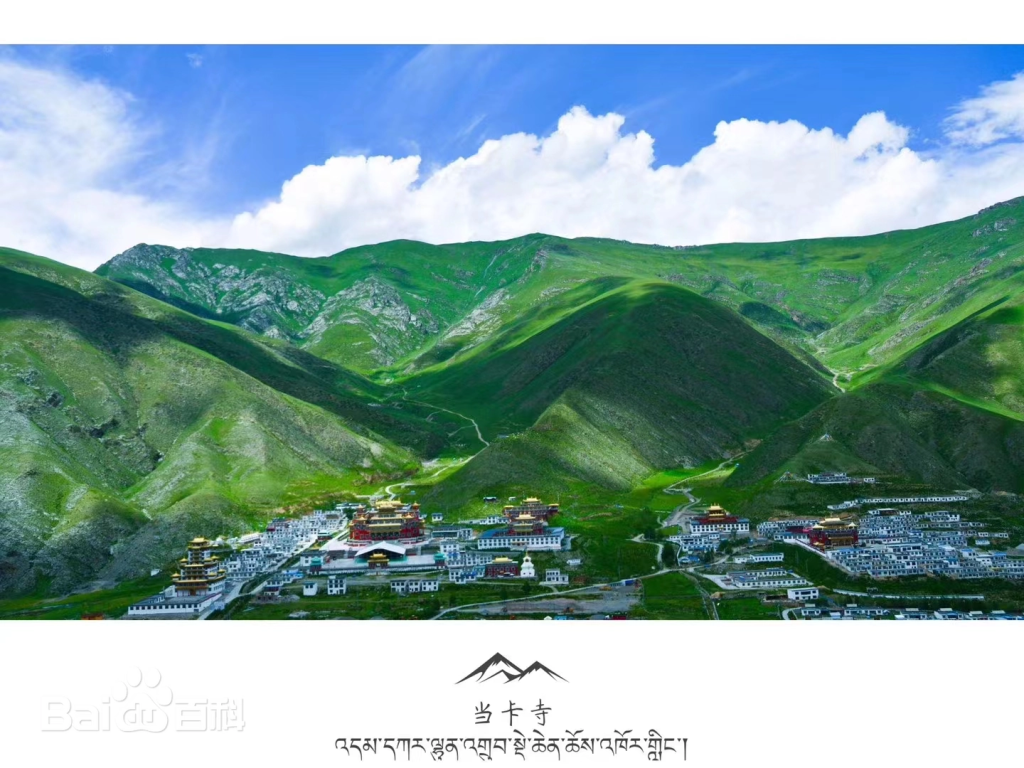
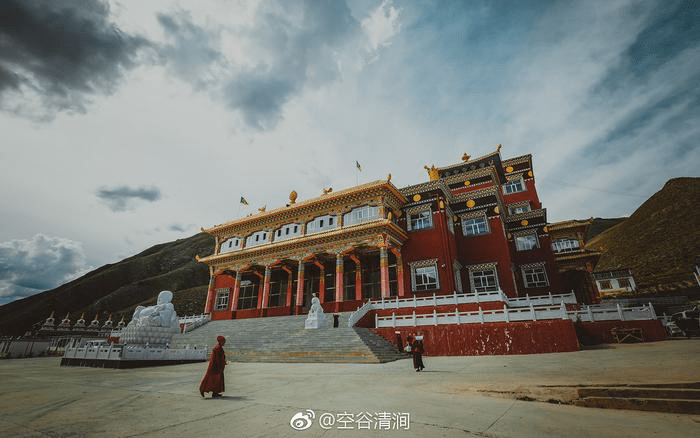
Dangkar Monastery: A Sacred Jewel in the Mountains of Yushu

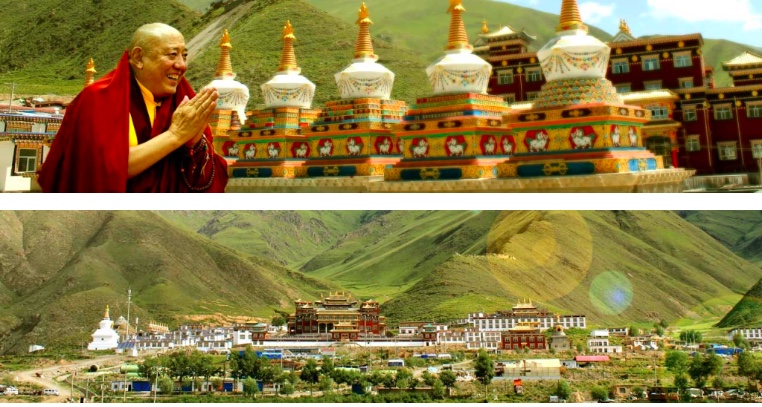
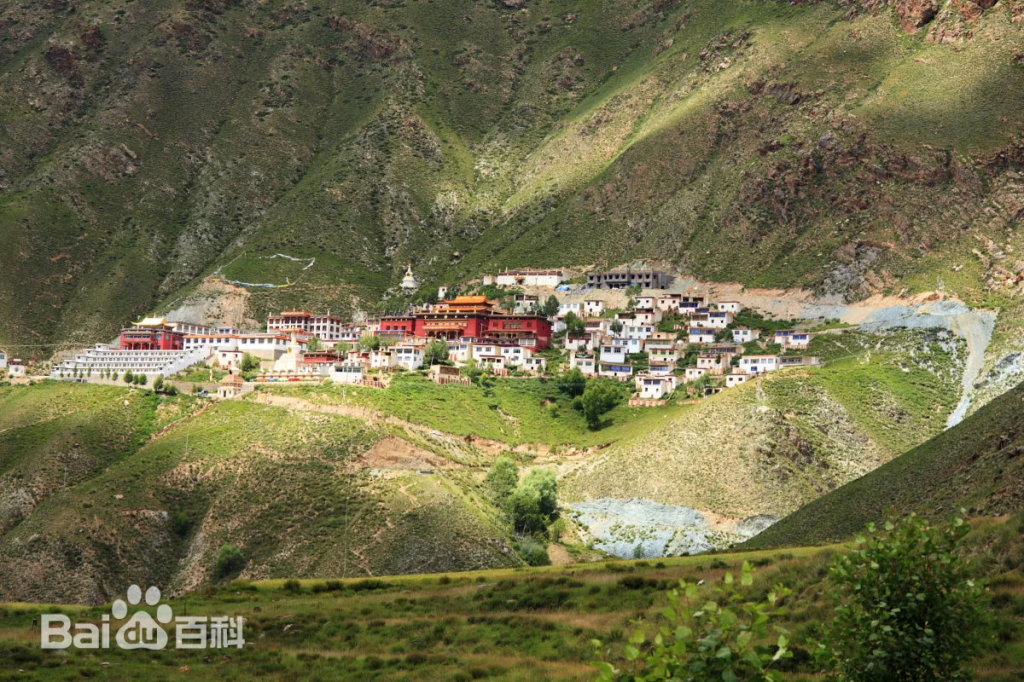
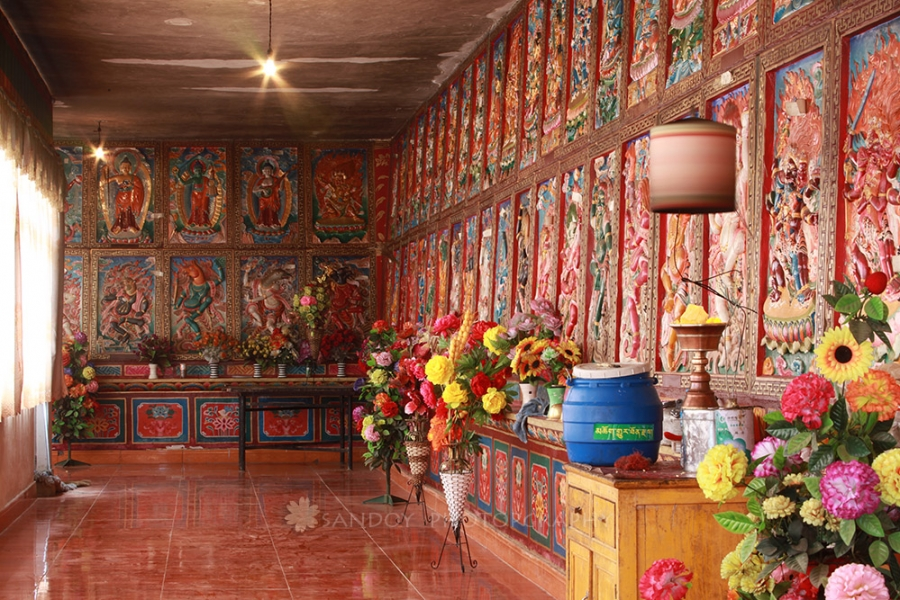
Nestled in the serene mountains of Qinghai Province, Dangkar Monastery stands as a sacred sanctuary of Tibetan Buddhism. Located in Qianjin Village, Jiegu Subdistrict, Yushu City, this revered monastery traces its origins back over 800 years to its founder, Bacha Daodai (the First Tumuchuje). As a spiritual stronghold of the Karma Kagyu lineage, it has long been a place of devotion, practice, and enlightenment.

A Monastery Born from Divine Signs

Dangkar Monastery is perched along the slopes of Zhazeng Dasa Mountain, its architectural design harmonizing with the natural landscape. The monastery’s structure is said to resemble Avalokiteshvara in a state of serene repose, with the lower part forming the mystical image of eight dragons coiling beneath, signifying divine protection and spiritual power.

The monastery’s foundation is deeply intertwined with auspicious omens. Following the guidance of his master, Dusum Khyenpa, Bacha Daodai ventured to the Gyeri mountains in Kham, where he meditated in the sacred Godtsang Karmo Cave. During the search for a suitable site to build the monastery, several miraculous signs emerged. One such event remains legendary—faced with a lack of water, Bacha Daodai plunged his staff into the earth, and from that very spot, a pure spring gushed forth. To this day, this sacred water source continues to flow, known as the nectar spring of Dangkar Monastery.

Trials of Destruction and the Path to Revival

The monastery has faced its share of hardships. Between 1958 and the Cultural Revolution, Dangkar Monastery suffered severe destruction, with all its buildings reduced to ruins. But in 1981, the 18th Dumu Quji Rinpoche embarked on a mission to restore this sacred site. The early days of reconstruction were fraught with difficulties—there was no funding, no infrastructure, and no resources. To finance the project, Rinpoche sold his sisters’ personal offerings, including dzi beads and coral, using the proceeds to procure wood from Suman Township, a region abundant in timber.

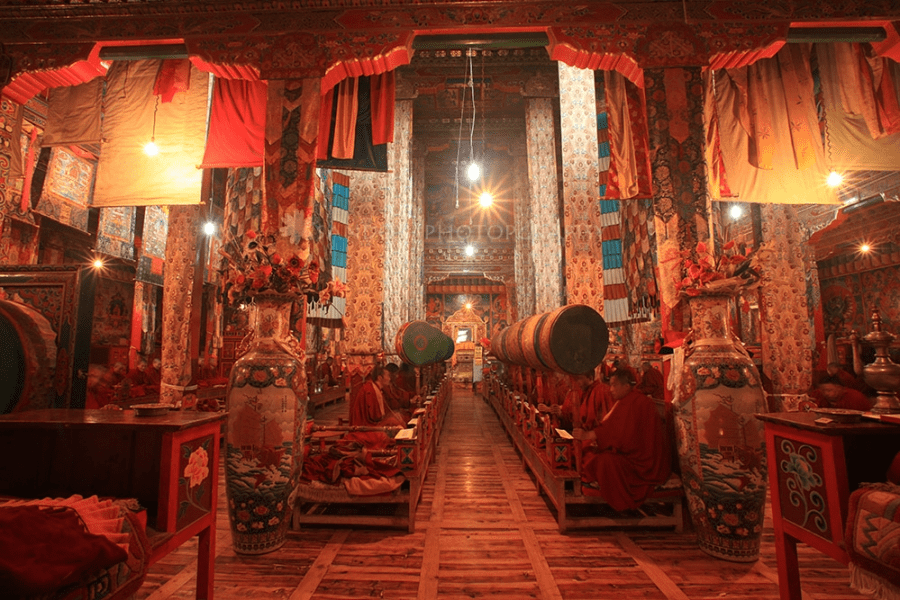
Transporting materials was an arduous journey, plagued by treacherous roads and unpredictable weather. Vehicles often became trapped in deep mud, forcing monks and workers to spend nights in the wilderness without food. When the timber finally arrived, another challenge arose—there was no accessible road to the monastery. Everything had to be manually carried up the mountain, plank by plank, through sheer human perseverance. After years of relentless effort, the first rebuilt assembly hall was completed. (Notably, the 17-pillared hall that stands today was built entirely by hand, using timber painstakingly transported from Suman Township.)

A Legacy of Spiritual Dedication

Despite financial constraints, Dumu Quji Rinpoche’s vow to serve sentient beings never wavered. Over the years, he oversaw the construction of essential facilities, including the Lama Institute, the Dharma Protector Hall, and two retreat centers. These retreat centers remain vital spaces for deep meditation—one dedicated to the Six Yogas of Naropa (Mahamudra) and the other to Dzogchen teachings, each accommodating up to 30 lamas.

In 1994, responding to an invitation from the Hong Kong Karma Kagyu Center, Rinpoche traveled to Hong Kong to spread the Dharma. His teachings soon reached disciples across Hong Kong, Xiamen, Shenzhen, Guangzhou, Huizhou, and Shanghai, drawing practitioners from all over China’s southern coastal regions.

A Thriving Spiritual Community

Over the past two decades, Dangkar Monastery has risen from the ashes of destruction to become a flourishing center of Buddhist practice. Under the compassionate guidance of Dumu Quji Rinpoche, the monastic community has grown to include approximately 200 lamas, making it one of the largest Karma Kagyu monasteries in the Yushu region.

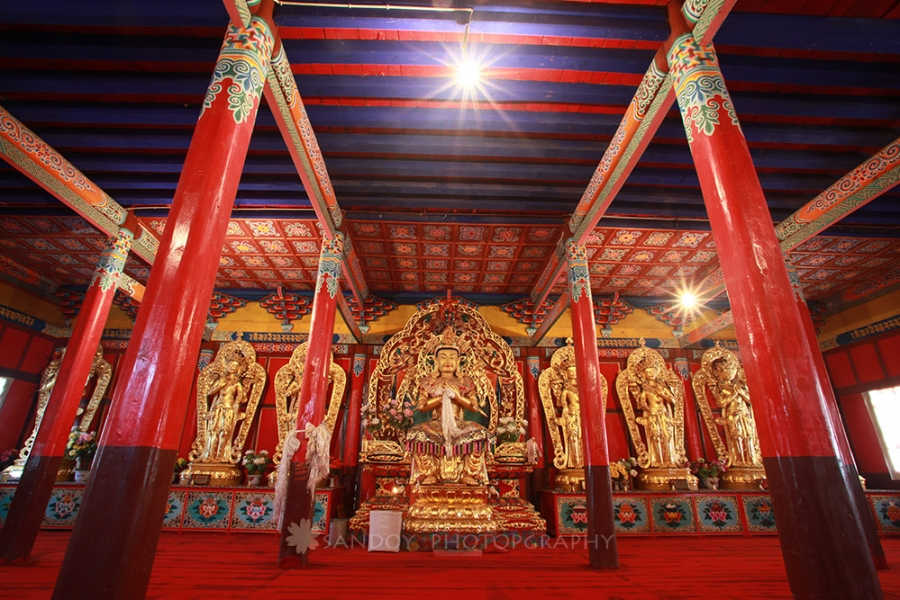
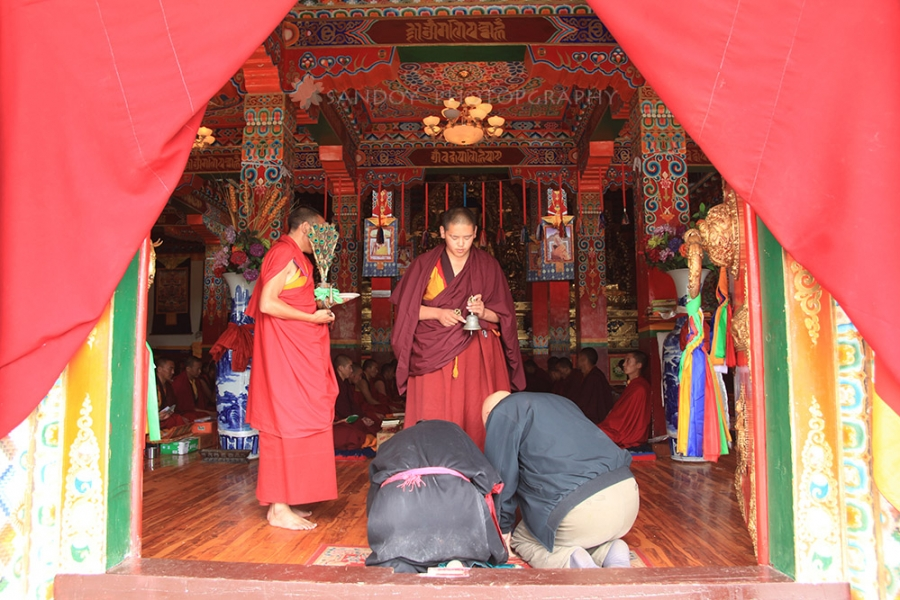
Stepping into the grand assembly hall, visitors are greeted by majestic Buddha statues and the resonant echoes of sacred chants that purify the soul. The atmosphere exudes an aura of deep serenity and divine presence, inspiring all who enter to contemplate the path to enlightenment.

Link:https://peacelilysite.com/2025/01/30/dangkar-monastery-a-sacred-jewel-in-the-mountains-of-yushu/

Source: photos from http://www.wtrgd.com/case/showimg.php?lang=cn&id=63

YIDAM-DHARMA INITIATION MASTER OF THE 17TH KARMAPA: H.E. DHARMA KING GONGBAO DUMU QUJI

H.E. Dharma King Dumu Quji was conferred the title of “Buddha-Dharma National Master” by an emperor in the Ming Dynasty. The meaning of “Quji” is Dharma King. H.E. Dharma King Gongbao Dumu Quji XVIII is the Vajra Master of H.H. the 17 th Karmapa Great Jewel Dharma King. He performed the yidam dharma initiation for the 17 th Karmapa Great Jewel Dharma King. He is the only one of great holiness and virtue who cleansed through a ritual bathing the 17 th Karmapa and formally put the Great Jewel Dharma King robes onto the 17 th Karmapa. He did so at the respectful request of H.E. Tai Situ Rinpoche, who is one of the four great Dharma Princes. During the time H.H. Dharma King Gongbao Dumu Quji XVIII performed initiations for the Karmapa, he saw in a supernatural state the ancient, primordial Buddha—Dorje Chang Buddha—bless the Karmapa. That ancient Buddha manifested as H.H. Dorje Chang Buddha III. H.H. Dharma King Gongbao Dumu Quji XVIII wrote the following about this real experience: “H.H. Dorje Chang Buddha III is the highest refuge countless living beings can rely upon to attain liberation. I prostrate to H.H. Dorje Chang Buddha III.”

AFFIRMATION AND CONGRATULATIONS

With boundless gratitude, I prostrate to H.H. Dorje Chang Buddha III!

In this lifetime, I formally put the Great Jewel Dharma King robes on to the 17th Karmapa, Urgyen Trinley Dorje, and performed the yidam dharma initiation for him, which included transmitting dharma to him. A few days before I did that, I saw in a supernatural state the Buddha Vajradhara appear over the head of the Karmapa. The Buddha Vajradhara was radiating light that empowered the Karmapa. Very soon after that, the Buddha Vajradhara metamorphosed into one who was sitting down. He was wearing a yellow robe. His long hair was at shoulder level, and He looked dignified and imposing. Behind Him were high stones, a pool, rooms, red flowers, and green pines. Below Him was a wooden deck. At that time, I knew Dorje Chang Buddha had come to this world, but I did not see His exact whereabouts. During all these many years, I have constantly kept that scene in mind and have reviewed it.

I recently received the book H.H.  Dorje Chang Buddha III. This was probably the result of being blessed by the twenty-one Taras. When I turned to page twenty-one and saw that holy image of H.H.  Dorje Chang Buddha III, I was totally shocked. It was the exact image of Dorje Chang Buddha that I saw in that supernatural state. There was not the slightest difference between the two, including the setting that surrounded H.H. Dorje Chang Buddha III.

I now solemnly affirm and offer congratulations for the following: The karmic conditions of living beings to encounter dharma have matured, for they can now benefit from the brilliant wisdom of the Buddha as they had wished. H.H. Dorje Chang Buddha III is a precious book of true Buddha-dharma, a treasury that incorporates 84,000 dharma methods. It demonstrates accomplishments in the Five Vidyas unprecedented in the history of Buddhism. H.H. Dorje Chang Buddha III is the highest refuge countless living beings can rely upon to attain liberation.I prostrate to H.H. Dorje Chang Buddha III!

Gongbao Dumu Quji

February 28, 2010

Brief Introduction of H.E. Dharma King Dumu Quji

In the Tibetan region of Kham, the renowned 18th Do Mu Choktrul Rinpoche is a household name, widely revered for his immense compassion and kindness. Do Mu Rinpoche was born in 1945 in Palwug Village, near Babang Monastery in present-day Dege County, Sichuan Province, historically part of the Dege royal domain. His father, Chodro Yeshe Gyatso, was a prominent member of the Lukra Tsang family within the Dege royal lineage, and his mother, Genkyu Chudron, was the daughter of a key minister from the esteemed Lujang family of the Dege kingdom.

Before Rinpoche’s birth, his mother experienced an extraordinary vision: a bird appeared before her and presented her with a wisdom sword associated with Manjushri Bodhisattva. At the time of his birth, the household was bathed in an extraordinary radiance and auspicious energy. Remarkably, a bucket of milk in the home transformed into butter, and flowers bloomed profusely on the ground outside—a truly miraculous event.

At the age of three, the reincarnation search team from Dhonka Monastery identified him as the reincarnation of the previous Do Mu Choktrul Rinpoche. This recognition was later confirmed by the 16th Gyalwa Karmapa, Rangjung Dorje, who bestowed upon him the name Karma Shedrup Trinley Tenzin Palzangpo and granted him the empowerments of Amitayus and other teachings.

That same year, Rinpoche was ceremonially enthroned at Dhonka Monastery in a grand ceremony presided over by the 9th Sangye Nyenpa Rinpoche and the 8th Traleg Kyabgon Rinpoche. Following his enthronement, he began rigorous and specialized training under the guidance of dedicated spiritual masters.

In 1980, following the restoration of religious freedoms in China, Buddhist activities were officially permitted to resume.

In 1981, under Rinpoche’s leadership, Dhonka Monastery embarked on its reconstruction. Despite numerous challenges, the monastery was gradually restored to its former glory. Rinpoche personally led meditation retreats, upheld strict monastic discipline, delivered Dharma teachings, performed empowerments, and presided over Buddhist assemblies. His boundless compassion and tireless efforts brought immeasurable benefit to countless beings.

Throughout his life, Rinpoche’s Dharma activities remained uninterrupted, regardless of war or societal changes. Guided by profound wisdom and deep compassion, he tirelessly propagated the Buddha’s teachings across the Tibetan regions. Responding to requests from devotees in various areas, he traveled to remote mountain regions, often under arduous conditions, to conduct ordination ceremonies and share the Dharma. His footprints spanned the entirety of Kham and Tibet.

In recent years, auspicious connections enabled Han Chinese disciples to learn from Rinpoche as well. Cities such as Hong Kong, Beijing, Shanghai, Xiamen, Guangzhou, Shenzhen, and Huizhou became destinations for a steady stream of seekers coming to receive his teachings. Through his tireless efforts, Rinpoche brought the nectar of Dharma to both Han and Tibetan communities, profoundly benefiting countless beings.

Rinpoche exemplified the principle, “The Dharma exists in the world to awaken beings within it.” His compassionate wisdom was evident in numerous achievements, including the completion of Dhonka Monastery’s reconstruction, the establishment of retreat centers, the founding of Buddhist academies, the opening of nunneries, the initiation of charitable organizations, and the creation of the Karma Kagyu Research Institute. These efforts expanded the reach of Buddhism, integrating it into all aspects of life.

In addition to his spiritual leadership, Rinpoche also served as a government official, promoting the dissemination and practical application of Humanistic Buddhism. Through his work, he ensured that the teachings of the Dharma became an integral part of daily life, guiding people to treat one another with compassion, wisdom, and kindness.

Link:https://peacelilysite.com/2025/01/24/yidam-dharma-initiation-master-of-the-17th-karmapa-h-h-dharma-king-gongbao-dumu-quji/