In the intricate tapestry of human beliefs, the concept of reincarnation has woven itself through the fabric of traditional Asian cultures for centuries. However, this idea finds little resonance in Western cultures and often faces skepticism from the scientific community. Amidst this cultural and scientific dichotomy, a pioneering exploration is unfolding at the prestigious University of Virginia School of Medicine, led by Dr. Jim B. Tucker, a child psychiatrist with a unique perspective on life after death.
Born and raised in the southern United States, Dr. Tucker’s early life was immersed in the traditional beliefs of the American South. As he embarked on his academic journey, obtaining an undergraduate degree in psychology and specializing in child psychiatry, he encountered the notion of reincarnation with a healthy dose of skepticism. The clash between cultural beliefs, scientific inquiry, and personal skepticism set the stage for Dr. Tucker’s intriguing exploration into the mysteries of existence.
The documentary, highlighted on the Discovery Channel, explores the extensive and worldwide research conducted by Dr. Tucker. The film encapsulates the core of his studies, presenting interviews, case studies, and the profound implications of his findings. Through this visual medium, viewers are welcomed to observe the intersection of traditional beliefs, modern skepticism, and scientific exploration—all in the quest to unravel the mysteries of human existence.
Buddhism holds that life undergoes reincarnation through the six realms. After a person dies, if the karmic conditions accumulated in their past life mature, they may be reborn into the heavenly realm as a deity, or into the realm of asuras, or they may be reincarnated in the human realm. If negative karma, such as killing, deception, or greed, comes to fruition, the individual will inevitably fall into the hell realm and suffer, or they may be reborn in the realms of hungry ghosts or animals to endure suffering.
As for which realm one will be reborn into among the six, it depends on the karmic conditions of their virtuous and non-virtuous actions. Why does reincarnation occur? The fundamental reason lies in the attachment of sentient beings. Attachment gives rise to the confusion of karma, and from this confusion arises ignorance. Due to the endless causes and effects generated by ignorance, various positive and negative karmic forces are produced. It is these karmic forces that determine which realm of existence one will be reborn into.
Once upon a time, it is said that the Buddha resided in Shravasti, within the Jeta Grove, situated in the garden of the Benefactor of Orphans and the Solitary. Accompanying him were a congregation of twelve hundred fifty great Bhiksus, all esteemed arhats whom the assembly recognized, including Elders Sariputra, Mahamaudgalyayana, Mahakasyapa, Hahakatyayana, Mahakaushtila, Revata, Suddhipanthaka, Nanda, Ananda, Rahula, Gavampati, Pindolabharadvaja, Kalodayin, Mahakaphina, Vaddujla, Aniruddha, and others. Additionally, numerous Bodhisattvas and celestial beings, including Ajita Bodhisattva, Gandhastin Bodhisattva, Nityodyukta Bodhisattva, and the chief of gods, Shakra, were present, along with countless beings from various heavens.
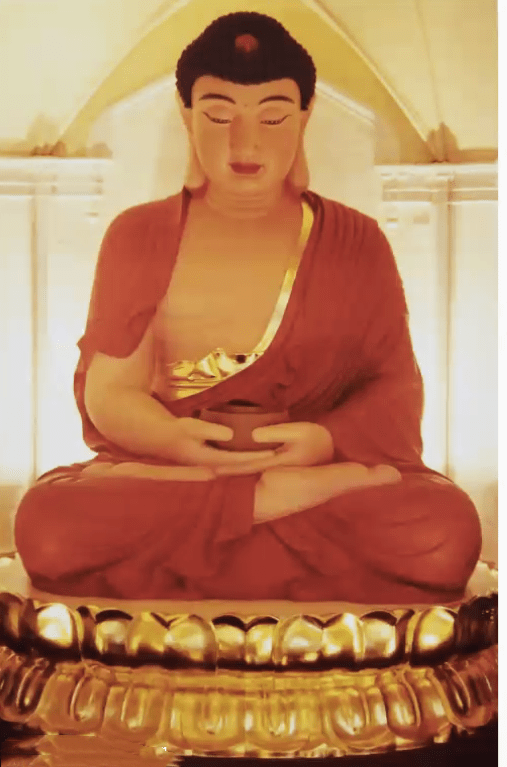
During that time, the Buddha addressed Elder Sariputra, saying, “Travel westward across hundreds of thousands of millions of Buddhalands, and you will reach a realm known as Ultimate Bliss. In this land, a Buddha named Amitabha currently imparts the teachings.”
“Sariputra, why is it called Ultimate Bliss? Because every being in this country is free from suffering and enjoys unbounded bliss, hence the name Ultimate Bliss.”
Furthermore, Sariputra, the land of Ultimate Bliss is enclosed by seven tiers of railing, crafted from the four treasures, thus earning its name. Pools of the seven jewels, filled with the eight waters of merit and virtue, grace this land. The pools boast pure bottoms covered in golden sand, with stairs of gold, silver, lapis lazuli, and crystal on each side. Raised pavilions, adorned with precious materials like gold, silver, lapis lazuli, crystal, mother-of-pearl, red pearls, and carnelian, grace the surroundings. Within these pools, lotuses with hues resembling carriage wheels bloom, emitting subtle, wonderfully fragrant, and pure scents.
“The realization of the land of Ultimate Bliss is thus adorned with merit,” Sariputra, the Buddha continued.
Moreover, in this Buddhaland, harmonious heavenly music perpetually resonates, and the ground is composed of yellow gold. During the six periods of day and night, a rain of mandarava flowers descends, and each morning, the inhabitants of this land offer myriad wonderful flowers to countless Buddhas in all directions. After their meals, they leisurely stroll through their homeland.
Sariputra, the land of Ultimate Bliss is abundantly adorned in this way.
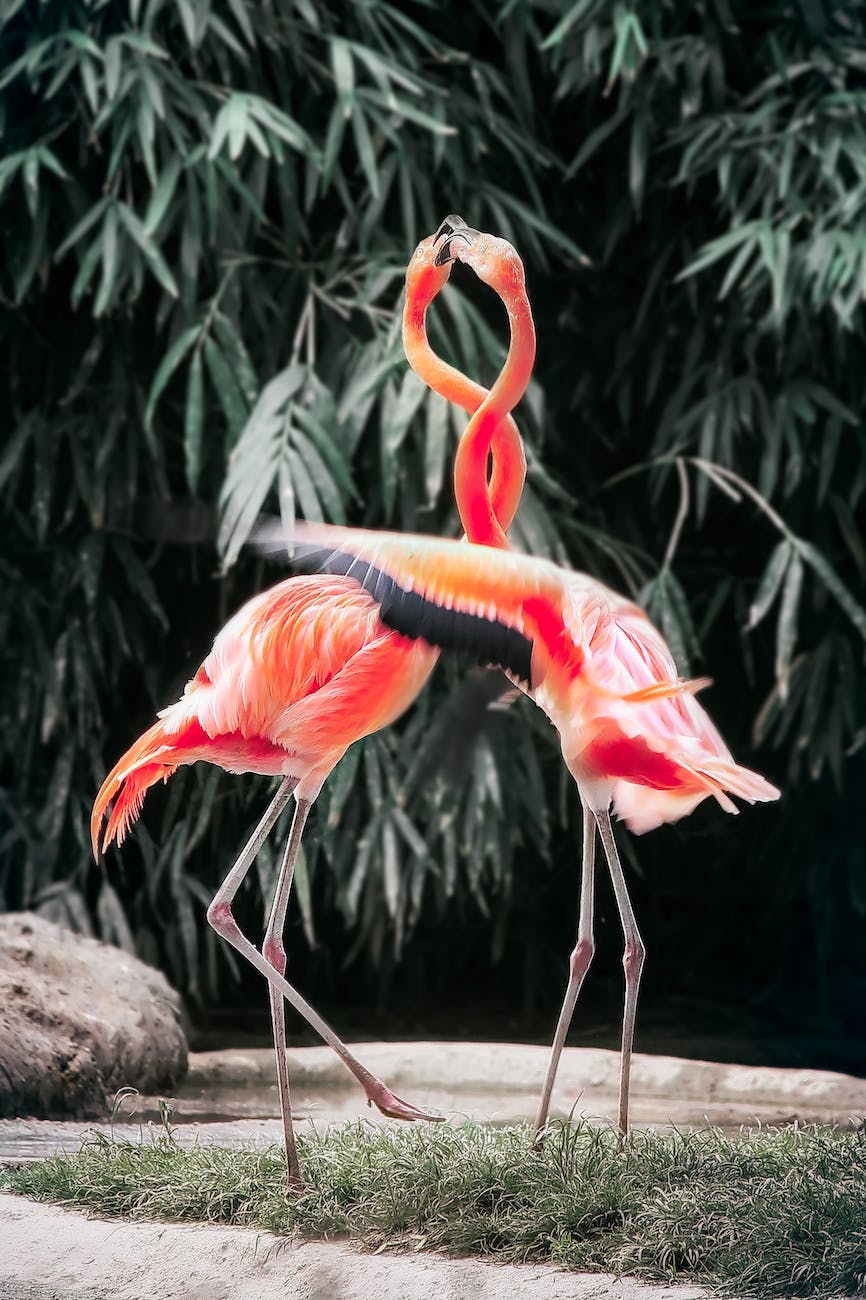
Furthermore, rare and exquisite varicolored birds, including white cranes, peacocks, parrots, egrets, kalavinkas, and two-headed birds, inhabit this land. In the six periods of the day and night, these flocks produce melodious and elegant sounds, proclaiming profound teachings such as the five roots, the five powers, the seven Bodhi shares, and the eight sagely way shares. When the inhabitants hear these sounds, they become mindful of the Buddha, the Dharma, and the Sangha.“Sariputra, do not assume these birds are karmic retribution. In this Buddhaland, there are no three evil ways of rebirth; in fact, not even the names of these ways exist. Amitabha Buddha, desiring to widely spread the Dharma sound, created this multitude of birds through transformation.”
The Buddha continued to describe the enchanting features of the land of Ultimate Bliss, its jeweled trees producing subtle and wonderful sounds when the soft wind blows. As these descriptions unfolded, Sariputra listened attentively, absorbing the profound beauty of this Buddhaland.
After detailing the splendors of the land, the Buddha turned to Sariputra and asked, “Why do you think this Buddha is called Amitabha?”
“The brilliance of Amitabha Buddha’s light is immeasurable, illuminating the lands of the ten directions without hindrance. He is called Amitabha for this reason. Furthermore, the lifespan of Amitabha Buddha and his people extends for countless kalpas, making him worthy of the name ‘Amitabha.’ Ten kalpas have passed since Amitabha attained Buddhahood.”
As the Buddha spoke, Sariputra gained deeper insights into the infinite virtues of Amitabha Buddha and the extraordinary qualities of the land of Ultimate Bliss.
The text continues to explore the presence and teachings of other Buddhas in different directions, emphasizing their encouragement for all living beings to believe, praise, and hold in reverence the inconceivable merit and virtue of the sutra.
Finally, the Buddha urged Sariputra and all present to have faith and make the vow to be born in Amitabha’s country, emphasizing the profound benefits and the irreversible attainment of anuttara-samyak-sambodhi for those who make this vow.
Upon concluding his teachings, the Buddha witnessed Sariputra, the bhiksus, gods, humans, and other celestial beings joyously receiving his words. The assembly, filled with reverence, bowed and withdrew, having absorbed the wisdom imparted by the Buddha.
The abbess of Hua Zang Si is Venerable Ruo Hui RuZun (Golden Button Stage I). She is a disciple of H.H. Dorje Chang Buddha III. She is deeply and broadly proficient in the sutras, abides by the precepts with pure cultivation, upholds correct views, and possesses high and profound virtue and conduct.
Driven by her endowed wisdom and firm aspiration, Venerable Ruo Hui RuZun started learning Buddhism since her childhood. While she was a young person facing a splendid future, Venerable Ruo Hui RuZun decided without hesitation to abandon worldly life to become a monastic practitioner. She respectfully quested for the practice of Buddhism, studied the sutras deeply, and cherished the goal of benefiting living beings in her cultivation and practice. Additionally, she demonstrated outstanding virtue and talent in her diligent study and research in the academic arena and received a Master’s degree from the Department of Philosophy of Taiwan University. She made a vow to dedicate her life to grandly propagating Buddha-dharma and broadly saving living beings. She served as the dean of the Chien Fo Shan Girl Buddhist College in Taiwan in her early years and have been continuously making contributions to the education of Buddhist monastics. However, Venerable Ruo Hui RuZun was deeply aware of the widely prevalent chaotic phenomena in the current Buddhist world, such as confusing views, non-unified sects and schools advocating their own tenets, miscellaneous teachings that are complex but incomplete, and promoting false doctrines as authentic Buddhism. Consequently, pious Buddhist disciples are searching and questing in vain and still unable to learn the true dharma of the Tathagata. Their lifetimes are thus wasted! Therefore, Venerable Ruo Hui RuZun was continuously concerned about this situation day and night and eagerly beseeched to find the genuine lineage from the Buddha that transmits the true teachings of the Tathagata.
In 1996, Ruo Hui RuZun had the good fortune to listen respectfully to the recorded dharma discourses expounded by H.H. Dorje Chang Buddha III. At that time, she sensed strongly and received the bright manifestation of the supremely and perfectly enlightening Buddha-dharma from His Holiness the Buddha! Later, guided by the karmic affinity to true Buddha-dharma, she fulfilled her wish to become a disciple of H.H. Dorje Chang Buddha III. Since then, she eagerly and respectfully listened to the recorded dharma discourses expounded by His Holiness the Buddha day and night. Through studying deeply with reference to the sutras, she eventually became enlightened by the teaching! She also received a holy inner-tantric initiation from the Buddha Master, which enabled her to personally realize the absolute truth of Buddha-dharma as if seeing the blue sky after pushing the blocking dark clouds aside. Since then, Ruo Hui RuZun abided by the teachings to benefit living beings with loving compassion in cultivation and practice. Shortly after that, she was delighted to learn that the Buddha Master was grandly publicizing and propagating the true dharma of the Tathagata in the Western world. After deep thinking and careful pondering, Ruo Hui RuZun decided to resign from the duty of the Dean of the Buddhist College to take up the mission to serve living beings. She traveled across the ocean to the United States to follow her Buddha Master, H.H. Dorje Chang Buddha III. She piously and deeply cultivated in the authentic lineage of Buddhism and engaged in the undertaking of propagating the true dharma of the Tathagata to benefit living beings.
Through the many years, Ruo Hui RuZun received true Buddha-dharma transmitted by H.H. Dorje Chang Buddha III in person and realized the key attainment of the dharma. In the dharma mandala, she manifested deeply cultivated power and superior state of realization. Once, she fortunately attended a grand and magnificent Vajra obstruction-removing dharma assembly. At that time, dharma masters and abbots of many monasteries and rinpoches were present. When stepping forward to receive empowerment, almost all of them were subdued by the power of the Buddha-dharma to show a suffering appearance and unable to support themselves by their power of concentration. Only Ruo Hui RuZun remained firmly unperturbed and successfully went through the holy power of Samadhi. She handled the situation magnificently and perfectly by calm without even any change in her facial expression. For that, she was praised by H.H. Dorje Chang Buddha III! Additionally, Ruo Hui RuZun also received a dharma of state practice transmitted by the Buddha Master in person and attained the accomplishment of crown-opening within two hours.
Since the grand opening of Hua Zang Si in December 2004 to now, Ruo Hui RuZun has served at the positions of prior (warden), deputy abbess, and abbess at this temple, which is the first temple of true dharma of Buddhism established in the Western world by H.H. Dorje Chang Buddha III. Since the temple’s establishment, her responsibilities cover a wide range of the temple’s dharma affairs and operations including various dharma assemblies, training and education of the monastic personnel, defining the system and rules to manage the temple, and so on.
With her abundant and solid knowledge in the theory of Buddhism and the teaching of practicing in silence, experience in managing and operating a temple, as well as deeply cultivated power in meditative concentration, she continuously serves since the beginning as the karma monastic master in awarding the complete set of grand precepts through three dharma assemblies and the professor/teacher of various courses in precepts, rituals, meditation, group practice, education of monastics and others at the Academy of Exoteric Buddhism of Hua Zang Si. She also conducted teaching and training at Buddhist institutions in the United States and overseas. Many of the disciples she taught have now become dharma masters or monastic practitioners. Actually, quite a number of them have even become excellent managerial personnel at some temples in different countries.
Ruo Hui RuZun consistently maintains a low-key demeanor in her cultivation and practice, exemplifying patience in the pursuit of her significant mission. She remains humble and modest, avoiding self-promotion or publicity. Through her words and actions, she serves as an exemplary teacher for Buddhist disciples, embodying the principles of loving compassion. Devoting herself quietly to the welfare and joy of sentient beings, she seeks enlightenment for both herself and others.
Adhering to the teachings and true dharma of H.H. Dorje Chang Buddha III, Ruo Hui RuZun upholds principles, follows rules rigorously, and engages in concrete cultivation to guide disciples on the path of accomplishment and liberation. She is an accomplished and eminent Buddhist monk whose example we should emulate and learn from.
Since September 2015, Ruo Hui RuZun has officially served as the abbess of Hua Zang Si. Recognizing the immense responsibility entrusted to her, especially given that Hua Zang Si is not an ordinary temple but a true dharma temple established in the Western world by H.H. Dorje Chang Buddha III, her Buddha Master, she is acutely aware of the need for unwavering commitment. Determined to lead the monastics and lay followers, she strives to transform Hua Zang Si into a temple faithfully practicing the teachings of H.H. Dorje Chang Buddha III and Sakyamuni Buddha, benefitting and nurturing sentient beings. In pursuing this mission, Hua Zang Si aims to contribute tangibly to compassion, happiness, peace, and joy in America and worldwide, fostering the perfect good fortune and wisdom, liberation, and accomplishment of living beings. The temple is committed to meeting the high expectations of Buddhas, Bodhisattvas, and sentient beings alike.
I have followed this Buddha – H.H. Dorje Chang Buddha III, before I even knew He was a Buddha, because I wanted to learn the Buddha-dharma of Shakyamuni Buddha; the dharma that can enlighten and enable one to attain liberation from samsara. I am grateful to all the other teachers who helped me on this path, but I have come to know that H.H. Dorje Chang Buddha III is truly a holy being and has the Buddha-dharma that can enable us to become Bodhisattvas and eventually Buddhas. I don’t see that anywhere else, but I do see a lot of erroneous and even evil practices that do not provide the power of the dharma that Shakyamuni Buddha brought to this world. I am alarmed at the secularization of Buddhism that has occurred in the West. It would seem that much of what is presented as Buddhism today is mainly a form of mindfulness that is a method to develop concentration, reduce stress, and achieve serenity. These are all worthy by-products and useful, but fall far short of the wonders and marvelous existence taught by Shakyamuni Buddha. People do not believe in the power of the Buddha-dharma, because they have never experienced or seen it.
I would like to share two true stories about my wonderful Buddha Master, H.H. Dorje Chang Buddha III:
Some time ago my Buddha Master, asked me to practice the Modesty and Patience Dharma taught by Shakyamuni Buddha. The Buddha Master taught me how to respect persons lower than myself and told me to prostrate to those who were lower than me in their cultivation. To tell you the truth this bothered me. How could I possibly prostrate to them? The Buddha Master told me that in His past lives Shakyamuni Buddha prostrated to everyone. Shakyamuni Buddha practiced in this way to cut off self-attachment and practice forbearance.
One night at Hua Zang Si, a rinpoche attempted the Hidden Mani Stone Selection Dharma. After finding the first stone, he tried for a long time and was never able to locate the second stone that we had hidden. However, I was able at that time to see them. Because he found one of the mani stones, the temple arranged for me to prostrate to him at the end of the Dharma Assembly. To tell you the truth, my first reaction was resentment—I was almost even angry. Based on my own practice, how could I prostrate to this person who had not been able to successfully complete the test, when I could have easily done so? When this thought just appeared, I saw my Buddha Master teaching me forbearance again and I was very ashamed. However, several days passed, but I was still bothered by this, so I went to see my Buddha Master and asked: “How can I prostrate to a person who doesn’t have my vajra power in front of so many people?” My Buddha Master asked me, “Did you forget the true story I told you about Shakyamuni Buddha? Putting yourself as low as possible is the true way to true cultivation.” At the same time I saw that my Buddha Master had the best understanding in all of esoteric and exoteric Buddhism and had complete mastery of all five of the vidyas. My Buddha Master is a great Dharma King. At that time His identity as a Buddha had not yet been announced to the public, but we already knew that He was a great Dharma King. How could I not listen to His teachings?
I thought for some time, just which great Bodhisattva is my Buddha Master? Then I had a shocking experience that I have not shared publicly before. I actually saw my Dharma King Master drastically change His appearance in a very short period of time. Even though my Buddha Master had predicted that He would on such and such a day take on the negative karma of others and would not be available to meet the public, I was not prepared for what I saw. He appeared on the predicted day looking very ugly and old—His face was bloodied as if He had just been severely beaten. His eyes were swollen and half closed! There were many people standing around, but they seemed to be accepting of this condition. I had been thinking that, because of His accomplishments in both exoteric Buddhism and esoteric Buddhism and the Five Vidyas, my Master must be a Buddha, but how could this be true when He looks so old and decrepit? I could barely stand looking at my beloved Dharma King Master when He was like this. Remember, at that time we did not know that our Dharma King Master was a Buddha. In less than an hour, I looked again, and my Buddha Master had changed to a beautiful young man. I was shocked. Oh, my God. How could this be? My Master is a Buddha! What I was thinking is true! He is not just a Bodhisattva, but a Buddha. I looked around, but no one else was shocked or showing any reaction at all to what had just happened. I looked again at my Master and He just smiled. He put His finger to His mouth and quietly said “shhh” and I realized that no one else had seen this transformation, but I knew this fact about the Buddha.
These photos were true records of the holy miracle Buddha Dharma, they are now displayed at Hua Zang Si, at San Francisco
The Angulimala Sutta, a captivating narrative from Buddhist scriptures, recounts the remarkable transformation of a blood-thirsty murderer into a compassionate monk under the profound influence of the Buddha. Angulimala, notorious for his brutal killings and a garland of severed fingers, terrorized the realm of King Pasenadi. The tale unfolds during a time when the Buddha, with unwavering compassion, confronted the darkness that shrouded Angulimala’s soul.
Angulimala’s notoriety as a ruthless killer, leaving villages and towns in a state of fear, paints a grim picture of his violent nature. His garland of fingers serves as a gruesome testament to the lives he had taken, making him a symbol of terror and malevolence.
Undeterred by Angulimala’s fearsome reputation, the Buddha ventured into the region where the murderer roamed freely. Despite warnings from locals about the dangers posed by Angulimala, the Buddha calmly continued his journey, determined to confront the source of darkness.
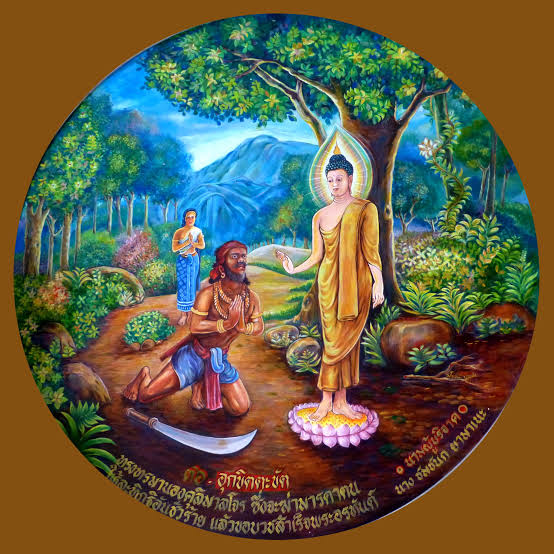
As the Buddha walked towards Angulimala’s lair, the air thick with tension, he encountered the menacing killer. Rather than responding with fear, the Buddha skillfully engaged Angulimala in a dialogue that would alter the course of his life. The Buddha’s words, laden with wisdom and compassion, began to unravel the tightly woven fabric of Angulimala’s violent identity.
In a pivotal moment, as Angulimala sought to chase down the Buddha with murderous intent, the Buddha employed a feat of psychic power. Despite running at full speed, Angulimala found himself unable to catch up with the Buddha walking at a normal pace. This display of supernatural ability left Angulimala astonished and created a space for the transformative dialogue that followed.
Angulimala urgently called out, “Stop, contemplative! Stop!” The Buddha calmly replied, “I have stopped, Angulimala. You stop.”
Perplexed, Angulimala asked, “While walking, contemplative, you say, ‘I have stopped.’ But when I have stopped, you say I haven’t. I ask you the meaning of this: How have you stopped? How haven’t I?”
The Buddha responded, “I have stopped, Angulimala, once and for all, having cast off violence toward all living beings. You, though, are unrestrained toward beings. That’s how I’ve stopped and you haven’t.”
Baffled by the Buddha’s profound words, Angulimala sought clarity on the apparent contradiction. The Buddha’s response not only clarified the cessation of violence within his own heart but also illuminated the unrestrained nature of Angulimala’s actions. This insightful exchange marked the beginning of a transformative journey within Angulimala, planting the seeds of change in his consciousness.
With a heart now inclined towards virtue, Angulimala, in an impromptu moment, requested ordination from the Buddha. The Buddha, recognizing the sincerity of Angulimala’s transformation, granted his request, welcoming him into the community of monks adorned with saffron robes and shaven heads.
Even as Angulimala embraced the monastic life, local villagers, fearing his past atrocities, sought protection from King Pasenadi. The king, in response, assembled an army and approached the monastery. Despite the villagers’ pleas to “stamp him out,” the Buddha’s wisdom paved the way for an unexpected resolution.
When questioned by the Buddha about how he would treat Angulimala if he had truly renounced violence, King Pasenadi underwent a profound transformation. The Buddha’s teachings on discernment and compassion prompted the king to reconsider his stance. Witnessing Angulimala’s monkhood, the king shifted from disbelief to acceptance, vowing to support him on his path to redemption.
The Angulimala Sutta not only narrates the personal transformation of a notorious murderer but also highlights the transformative power of compassion and wisdom. The Buddha’s fearlessness, compassion, and skillful means shattered the shackles of violence that bound Angulimala. Moreover, the sutta portrays the ripple effect of transformation, as even King Pasenadi undergoes a change of heart. This timeless tale serves as an enduring testament to the potential for redemption, forgiveness, and the profound impact of the Buddha’s teachings on even the most deeply entrenched patterns of suffering.
Albert Einstein and Charlie Chaplin were two of the most iconic figures of the 20th century, known for entirely different reasons. A memorable exchange from early in their friendship perfectly and humorously illustrates these differences.
Einstein once expressed his admiration for Chaplin’s art, saying, “What I most admire about your art is its universality. You don’t say a word, yet the whole world understands you!”
Chaplin’s response, delivered with impeccable comedic timing, was, “True. But your glory is even greater! The whole world admires you, even though they don’t understand a word of what you say.”
I find myself in agreement with Chaplin. While I may not grasp the intricacies of Einstein’s scientific achievements, I admire him as a profound thinker who grappled with life’s deepest questions. His reflections on the universe and our place within it have been particularly inspiring to me since my youth.
Einstein’s curiosity and search for meaning are traits that many of us can relate to. He once expressed a desire to ask God about the origins of the universe, believing that such knowledge would lead to a deeper understanding of life’s purpose. He said, “I used to think that if I could ask God one question, it would be about how the universe began, because then all the rest would be just equations. But as I got older, I became less concerned with how the universe began. Instead, I would want to know why he started the universe. If I knew that, then I would know the purpose of my own life.”
Furthermore, Einstein pondered the nature of the universe and our perception of it, stating, “The most important decision we make is whether we believe we live in a friendly or hostile universe.” This quote underscores the power of our beliefs and attitudes in shaping our experiences and interactions with the world around us. A friendly universe is one where we see opportunities for growth and connection, while a hostile universe may lead to fear and isolation.
The Einstein quote that resonates with me the most is, “A human being is a part of the whole, called by us ‘Universe,’ a part limited in time and space. He experiences himself, his thoughts and feelings as something separated from the rest, a kind of optical delusion of his consciousness. This delusion is a kind of prison for us, restricting us to our personal desires and to affection for a few persons nearest to us. Our task must be to free ourselves from this prison by widening our circle of compassion to embrace all living creatures and the whole of nature in its beauty. Nobody is able to achieve this completely, but the striving for such achievement is in itself a part of the liberation and a foundation for inner security.” In this quote, Einstein alludes to the Buddhist concept of interconnectedness and the illusion of separateness. However, Einstein likely only grasped the theoretical concept and did not experience the oneness with the universe. The Buddha, on the other hand, has seen the truth, experienced the oneness, and achieved inner realization.
Over two thousand five hundred years ago, Shakyamuni crossed the Nairanjana River and sat under a Bodhi tree, where he was immersed in deep inner contemplation. At that time, he was tormented by worldly desires, hunger, craving for sleep, and fear and doubt. But he triumphed over these internal demons and continued his inner quest.
Then, like a limitless, penetrating beam of light, Shakyamuni experienced a moment of clarity in which he gained profound insight that life is eternal and one with the vast cosmos. He became a Buddha—a person awakened to the supreme truth of the Law of life.
The Buddha, Siddhartha Gautama, achieved enlightenment under the Bodhi tree, and the first words he spoke were: “How amazing, how amazing, all sentient beings possess the wisdom and virtue of the Tathagata. However, due to delusions and attachments, they cannot realize it. “
In the eyes of the Buddha, all sentient beings inherently possess the wisdom, the characteristics, and the blessings of the Tathagata within their minds that are troubled by afflictions, defilements, and the cycle of birth and death. Through this teaching, we know that Buddha-nature is inherently present in all sentient beings.
Einstein’s words resonate with the teachings of Buddha, who attained enlightenment and taught that all beings are interconnected. Buddha’s teachings emphasize compassion and understanding for all living beings, recognizing that we are all part of the same universe. Unlike Einstein, who believed that complete compassion was unattainable, Buddha demonstrated that it is possible to embrace all living beings and the universe in its entirety with love and kindness.
However, Buddhism is much deeper and vaster than just these concepts. All Buddhas possess three bodies and four wisdoms. The Mahāyāna theory of the three bodies—the dharma-body, the reward-body, and the response-body—is most common. The dharma body (法身) is considered to be the eternal, indestructible true principle, the Buddha’s original body. The response body (應身) is considered to be the Buddha’s manifest body, but in Mahāyāna Buddhism, it is regarded as the personification body, which manifests from the true principle according to the temperaments and abilities of sentient beings in order to save them.
The reward body (報身) is manifested as a combination of the other two and is therefore not simply the eternal true principle, nor simply an impermanent personality. Rather, it is an ideal body possessed by those who have awakened to the true principle based on meritorious practice. It is the living form of the eternal principle, possessing individuality. This is a general explanation, and there have been many interpretations of the Buddha-body theory in the history of Buddhism, among which there are significant differences. The three bodies are not separate entities but three integral aspects of a single Buddha.
The four wisdoms of Buddha are: Great Mirror Wisdom, which is still and void—motionless; Universal Wisdom, which is capable of facing mind-defilements without attaching to them through love or aversion; Wonderful Observing Wisdom, which has the ability to discriminate and discern the wide field of sensory impressions, while at the same time never experiencing unbridled and reactionary patterns of thought; and Perfecting Wisdom, which can direct all the sense faculties into observing phenomena without being constrained by dualism.
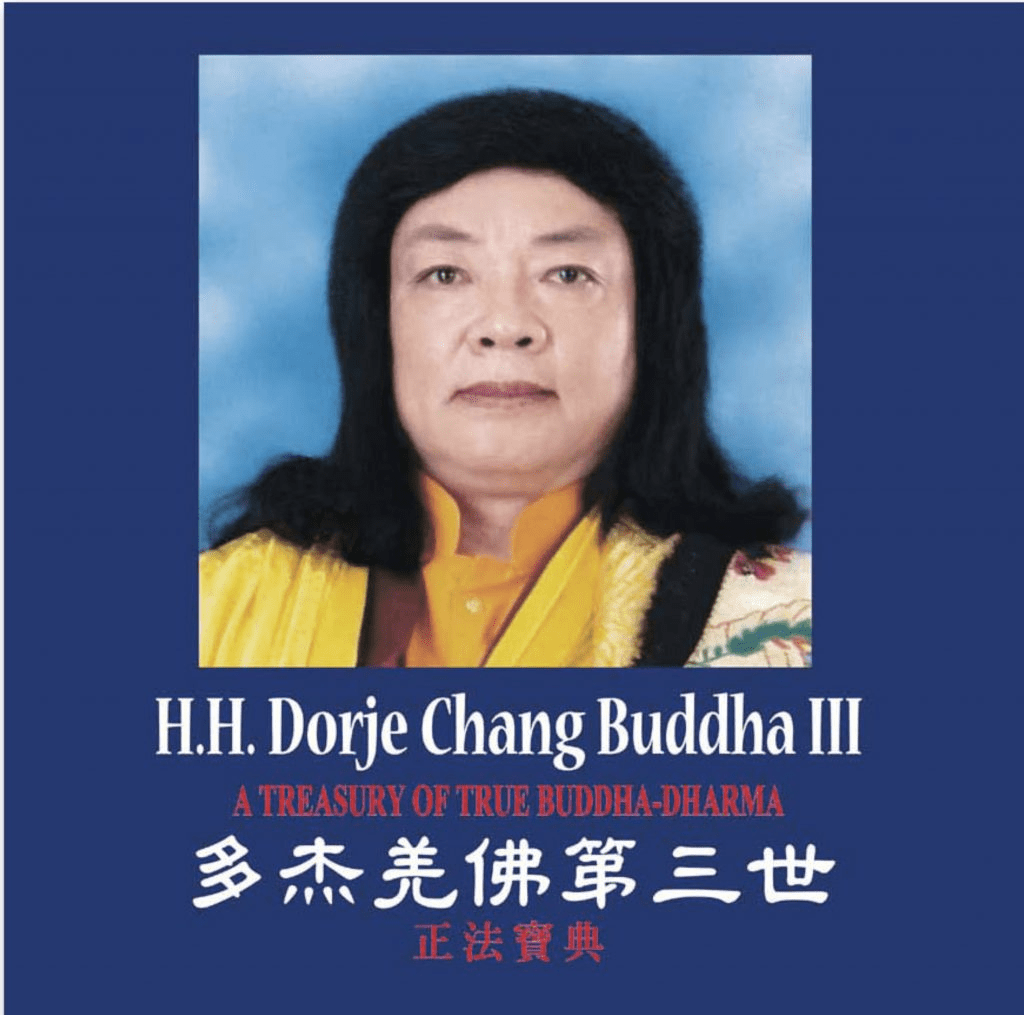
Buddha possesses vast knowledge, superb skills, magnificent supernormal power, and comprehensive wisdom of the universe. The treasure book, “H.H. Dorje Chang Buddha III,” stands as a testament to this statement. However, this book contains only a drop of water from the vast ocean of Buddha’s teachings and wisdom.
The video below showcases the boundless compassion and highlights the extraordinary accomplishments of H.H.Dorje Chang Buddha III. It was published by China Educational Channels TV and features interviews with Buddhist disciples from around the globe.
Discovering the Root of Buddhism, Propagating True Buddha Dharma(H.H. Dorje Chang Buddha III)
In 64 AD, Emperor Ming of the Eastern Han Dynasty sent Cai Yin and others on a mission to the Western Regions to retrieve Buddhist scriptures. The following year, in 65 AD, Cai Yin, Qin Jing, and others met the esteemed Indian monks She Moteng and Zhu Falan in Greater Yuezhi (present-day Afghanistan), where they were introduced to Buddhist scriptures and statues for the first time. In 67 AD, the Han envoy team returned to Luoyang with the high monks She Moteng, Zhu Falan, and the Buddhist scriptures and statues carried by a white horse. The two high monks were welcomed with a grand reception by Emperor Ming, who also commissioned the construction of China’s first temple, the White Horse Temple in Luoyang, especially for them.
White Horse Temple
On the first day of the first month in the fourteenth year of Yongping, Taoists from the Five Sacred Mountains submitted a petition requesting a competition with the Brahmin monks to determine the superiority of China’s native Taoism versus the foreign Buddhism. Emperor Ming granted the Taoists’ request. In 71 AD, a historic Buddhist-Taoist debate and contest unfolded in Chinese Buddhist history.
As the competition began, the Taoists said, “Let’s start with debating. You monks pride yourselves on eloquently explaining the Dharma, don’t you? So, let’s have a debate! If you can make one point, we will make two; if you raise one, we will counter with three. Go ahead and present your profound arguments!”
She Moteng slowly lifted one foot and raised it towards the sky, smiling, and said, “Amitabha, I have raised one, now it’s your turn to raise three!”
The Taoists looked at each other, stumped, and couldn’t think of a way to counter for a long time. They then changed the subject: “Let’s compare theories. You Buddhists call yourselves ‘Inner Learning,’ while you call us ‘Heterodox.’ But throughout history, when discussing inner and outer, inner has always been smaller than outer. So, your Inner Learning is small, and cannot compare to our great Heterodox!”
She Moteng brought his palms together in a gesture of respect and slowly explained: “The emperor resides in the inner palace, while the common people live in the outer city; although the inner palace is small, the emperor is great. The heart is inside the body, while the hands and feet are outside, the activity of the heart is boundless, while the movements of the hands and feet are limited. This is another example of how the inner is superior to the outer. Think carefully, the Inner Learning of Buddhism is much greater than the Heterodox!”
The Taoists, unable to win the debate, finally said, “Let’s compare magical powers!” How to compare? By placing the scriptures spoken by the Buddha and the scriptures spoken by the Taoist tradition together and burning them with fire. If one’s scriptures burn, then they are false; if one’s scriptures don’t burn, then they are true.
So, in the south of White Horse Temple, two high platforms were set up, one in the east and one in the west. The east platform held the Buddhist scriptures, images, and relics, while the west platform held the Taoist scriptures.
At that time, five hundred Taoist priests gathered the Taoist scriptures and magical texts together and prayed to the Supreme Lord Laozi, saying: “Oh, Taoist Virtuous Sage! Please show great divine power, and make our Taoist scriptures not burn, and let the Buddhist scriptures burn.”
Many of the Taoist priests at that time had supernatural powers – some could ride clouds and fog, some could fly in the sky and hide underground, and some could become invisible. Invisible means that you could see him right in front of you, and then suddenly he’s gone! There were Taoist priests with such abilities. They could use evasion techniques – Qimen Dunjia, to escape, and with Taoist spells and incantations, they had great supernatural powers.
But what happened when the fire was lit? The Buddhist scriptures did not burn; they emitted light! The Buddha’s relics also emitted a five-colored light, and the scriptures emitted light up into the sky, as if the sun was shining upon the world.
What about the Taoist scriptures? They caught fire as soon as they were burned and were completely destroyed by the fire. Those who could ride clouds and fog could no longer ride clouds or exhibit supernatural powers; those who could fly in the sky could no longer fly; those who could hide underground could no longer hide; those who could become invisible could no longer become invisible. Their spells and incantations also lost their effectiveness and had no power.
She Moteng and Zhu Falan, the two venerable monks, were responsible for overseeing this scripture contest, which was of great significance for the rise or fall of Buddhism. To strengthen the faith of the masses, She Moteng and Zhu Falan displayed eighteen divine transformations, levitating in the sky and reciting the following verses:
“The fox is not of the lion’s kind, a lamp is not as bright as the sun and moon; a pond cannot hold the vast sea, a hill cannot match the towering mountain. The Dharma cloud descends upon the world, the Dharma rain nourishes all beings. Supernatural powers are rare, manifesting everywhere to transform sentient beings.”
“The fox is not of the lion’s kind” means that, although the fox spirit is cunning and can change shape, it is far inferior to the lion. The fox and the lion cannot be compared; they are not of the same kind. This is saying that the breadth of Taoism is like the smallness of the fox, different from Buddhism, which has the grandeur of a lion.
“The lamp is not as bright as the sun and moon” refers to how the light of a lamp or a candle, which were small in the past, is far less bright than the light of the sun and moon. This means that the scriptures and teachings of Taoism are like the light of a lamp, while the Buddhist scriptures and teachings are like the light of the sun and moon, incomparable.
“A pond cannot hold the vast sea” means that a small pond has a limited capacity and can only hold a small amount of water, while the vast sea can accommodate many rivers. The pond and the sea cannot be spoken of in the same breath. This is a metaphor comparing the theories of Taoism to a small pond, while the teachings of Buddhism are like the vast and boundless sea.
“A hill cannot match the towering mountain” means that a small hill cannot compare to the grand and towering Mount Song, one of the Five Sacred Mountains of China. If the practice of Taoism is like a small hill, then the profound teachings of Buddhism are like the towering cliffs and deep ravines of ancient trees.
“The Dharma cloud descends upon the world, the Dharma rain nourishes all beings” means that when Buddhism spread to China, it was like a cloud of Dharma, like sweet dew, pervading the world and nourishing all beings.
“Supernatural powers are a rare thing” means that I have now shown supernatural powers, which is a rare and precious thing in the world.
“Everywhere transforming sentient beings” means that in reality, I did not want to show supernatural powers, and I did not want to compete with you. This is a last resort, for the purpose of guiding you and leading you to a brighter path, I am doing this as a convenient means.
After this contest, Buddhism took deep roots in China, not only producing a succession of talented individuals but also establishing a glorious foundation. White Horse Temple became the first and foremost temple in Chinese Buddhist history, and temples began to be built one after another. Ever since then the marvelous fruits and wondrous flowers of Chinese Buddhism have continued to flourish from generation to generation.
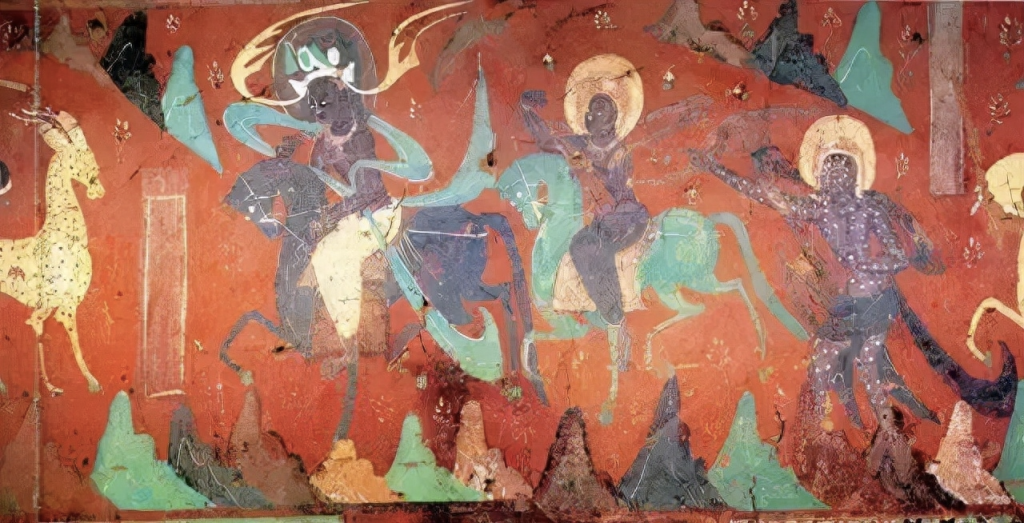
“The Story of the Nine-Colored Deer King” is the main theme of the murals in Cave 257 of the Mogao Caves. It unfolds in a long horizontal scroll, narrating many stories from the past life of the founder of Buddhism, Siddhartha Gautama.
Legend has it that long ago, on the banks of the Ganges River in India, there lived a beautiful and kind nine-colored deer king (the previous incarnation of Siddhartha Gautama)…
One day, as the nine-colored deer king was leisurely strolling by the river, he suddenly heard a pitiful cry from the water. Without hesitation, the brave nine-colored deer leaped into the river, risking its own safety, and rescued the drowning person. The saved individual, overwhelmed with gratitude for a second chance at life, repeatedly bowed in thanks to the nine-colored deer.
The nine-colored deer king said, “No need for thanks; just go on your way. My only request is that you do not reveal my whereabouts to anyone.” The drowning person solemnly swore, “Kind benefactor, rest assured. If I ever betray this promise, may my body be covered in sores and my mouth emit a foul odor.” With that, the person departed.
Before long, the queen of that country dreamt of a deer—one with nine colors and silver-like antlers. She told the king about her dream and requested that he order the capture of such a deer. She had a strong desire to use its colorful hide for clothing and its antlers for earrings. Consequently, the king issued a proclamation and offered a substantial reward.
Upon seeing the proclamation, the person who had been saved reported to the king, leading soldiers to the mountain to hunt down the nine-colored deer.
When the nine-colored deer was surrounded by the king’s troops… it spotted the person it had rescued from drowning, tears of sorrow welled up in its eyes…
The nine-colored deer leaped in front of the king and recounted the story of how it had saved the person from drowning and how that person had broken his promise. The king and the soldiers were deeply moved by the deer’s account. The king ordered the soldiers to clear a path, allowing the nine-colored deer to regain its freedom. He also issued a decree: “From now on, people are not allowed to shoot deer.”
As for the person who had broken his promise, in an instant, sores covered his body, and a foul odor emanated from his mouth. From that moment on, he was despised and reviled by the people.
The story of the nine-colored deer is vividly portrayed in Cave 257 of the Dunhuang Grottoes, which is what we now see as “The Story of the Nine-Colored Deer King.” While the mural is not particularly large in size, it holds significant importance in Chinese art history.
This artwork takes the form of a horizontal scroll with the story unfolding from both ends and converging in the middle. It consists of multiple scenes depicting various stages of the story, such as its origin, development, climax, and conclusion, all seamlessly connected to create a cohesive narrative.
“The Story of the Nine-Colored Deer King” is composed of nine panels, illustrating five key plot points: the person drowning, the nine-colored deer rescuing the drowning person, the drowning person expressing gratitude to the deer, the queen’s desire to capture the deer, the informant revealing the deer’s whereabouts to the king, and the confrontation between the king and the deer.
The story progresses from both ends of the mural towards the center, placing the pivotal conversation between the king and the deer in the middle. This unique composition style captures the essence of continuous horizontal scroll art from the Wei and Jin dynasties, showcasing the distinctive historical aesthetics of the era.
In the artwork, the depiction of mountains, rocks, and rivers occupies a significant portion. The rendering of the landscape primarily serves to fill the space and delineate the composition, providing a brief description of the specific environment, thereby enhancing the visual impact of the artwork and its storytelling function.
“The Story of the Nine-Colored Deer King” places the climax of the story—the moment when the nine-colored deer recounts the events—at the center of the composition. At the same time, both nine-colored deer on the left and right sides turn their bodies toward the center, serving as visual guides.
This is precisely the turning point in the storyline of the nine-colored deer, where the drowning person’s affliction receives its retribution. It places the Buddhist concept of rewarding goodness and punishing evil at the visual forefront, narrating the sequence of events step by step to gradually reveal the story’s progression to the viewer.
The entire process is rhythmic, marked by the ebb and flow of the narrative, skillfully aligning the chronological order with the spatial arrangement, showcasing the artist’s unique conceptualization of the composition.
In terms of color usage, “The Story of the Nine-Colored Deer King” appears to be very vibrant, but in reality, it uses a limited color palette, consisting of only six colors. The earthy red color dominates the entire painting, which is a prominent color characteristic of the Wei, Jin, Northern and Southern Dynasties period.
Complementing this are touches of stone blue and stone green, along with the harmonious blending of black, white, and gray. This blending softens the strong contrast between earthy red and stone green and blue, achieving a harmonious contrast of warm and cool tones. At the same time, it also accentuates the brightness of contrasting colors.
The introduction of Buddhism had a significant impact on the development of portraiture in China, introducing a set of strict conventions for Buddhist iconography. During the Northern Wei dynasty, the Dunhuang murals began to emphasize body proportions and adopted more attention to three-dimensionality after incorporating color shading techniques.
In “The Story of the Nine-Colored Deer King,” most of the figures on the canvas have slender bodies, with their clothing belts fluttering in the wind. Their gestures and movements exude a graceful dance-like elegance, evoking the style of figures that “float like wandering dragons and are delicate as startled swans.”
In the murals of the Northern Wei period in Dunhuang, Jataka stories are an important theme. Jataka stories refer to the countless events and experiences in the past lives of Siddhartha Gautama, who would later become the founder of Buddhism. In history, there are numerous Jataka stories related to Siddhartha Gautama.
Within Buddhist art themes, there are many Jataka story paintings, and “The Story of the Nine-Colored Deer King” is just one of them. Story paintings are used to promote the Buddhist concept of karmic retribution and to praise the spirit of self-sacrifice displayed by the Nine-Colored Deer King.
In reality, all Jataka paintings ultimately convey one message: that by performing good deeds, selflessly giving, and enduring hardships, one can achieve positive outcomes, whereas engaging in wrongful actions will lead to self-destruction.
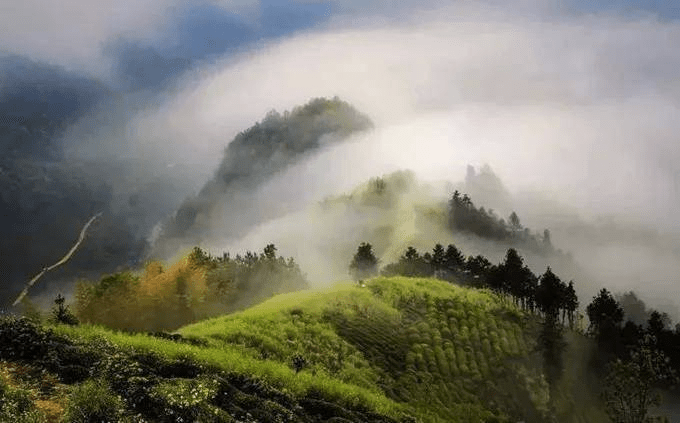
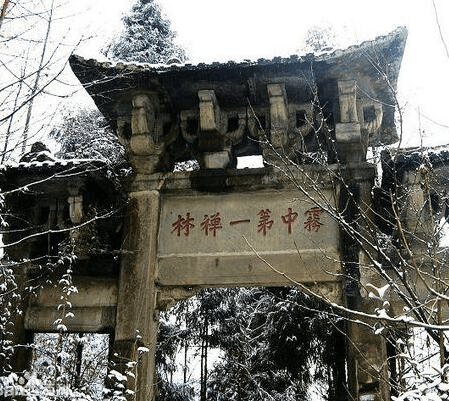
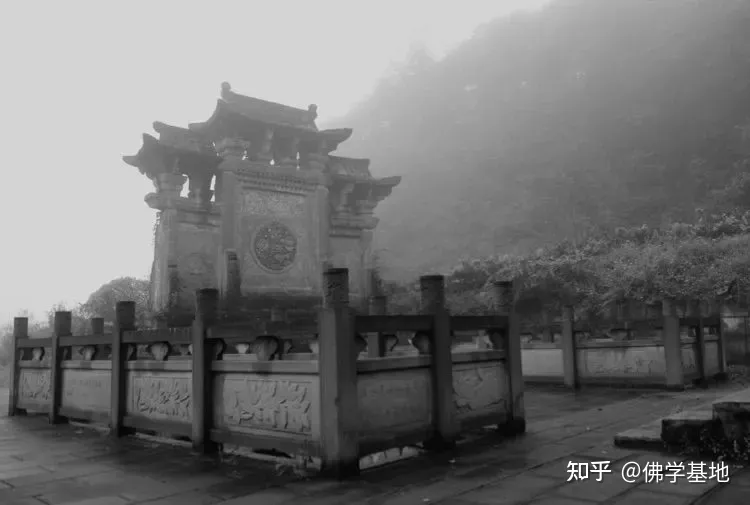
The Mount Wuzhong, also known as Misty Mountain and formerly referred to as Daguangming Mountain, Tiancheng Mountain, and Wushan, is a significant Buddhist pilgrimage site situated along the ancient Sichuan-to-India trade route, often referred to as the Southern Silk Road, within ancient China. It is located in Wushan Township, north of Dayi County, 25 kilometers from the county seat, and 80 kilometers from Chengdu. To its east lies Qinglong Mountain, to the south it connects with Daping, to the west it borders Wayao (also known as Baihushan), and to the north, it meets Longwo. The primary peak elevates to 1638 meters, with Jiulong Mountain and Jingang Mountain to the north and Hongyan Mountain to the west. Covering an expansive area of several square kilometers, it is aptly known as the “72 peaks” due to the constant presence of clouds and mist, hence earning its moniker as the “Misty Mountain.”
Historical records, such as the Ming Dynasty’s “Kaihuasi Stele Inscription” and the “Records of Misty Mountain,” reveal that as early as the Western Han Dynasty, Mount Wuzhong was renowned for its breathtaking natural beauty and mysterious wonders that left people in awe. It was described as a “land adorned in golden cloth and adorned with jade-like peaks, filled with endless wonders that inspired astonishment and amazement.” It was even considered “the place where the ancient Buddha Amitabha performed miracles.” In the 16th year of Emperor Ming of the Han Dynasty, responding to recommendations from the imperial court, Emperor Ming dispatched the courtier Fu Ying, accompanied by two distinguished monks from ancient India – the venerable monks Kashyapa Matanga and Zhu Falan – to establish a Buddhist temple on the mountain. Their mission was to propagate Buddhism and disseminate its teachings, thereby benefiting people far and wide with the nectar of Buddhist wisdom.
During the Ming Dynasty, Buddhism at Misty Mountain reached its zenith. The mountain boasted a total of seventy-two peaks, nine passes, and one hundred and eight winding paths, accommodating one hundred and eighty temples and forty-eight hermitages. According to the “Records of Misty Mountain,” it was described as a place “spanning dozens of square miles north of the two rivers and south of Longwo, with buildings scattered like black houses, without overcrowding.” “Monasteries and temples were as numerous as stars in the sky, surrounding the mountain from all sides, too numerous to count.” In modern terms, the total constructed area exceeded 400,000 square meters, equivalent to the size of a medium-sized city. During the Ming Zhengtong era, the emperor established the Dugang Institute at Misty Mountain, with the venerable monk Yuanxi serving as the official historian, overseeing all temple affairs. The temples at Misty Mountain were so prosperous and grand in scale during that period that a local saying emerged: “There are 25 thousand great monks, and the number of ordinary monks is beyond count.”
Eminent scholar Yang Sheng An, during his travels in Misty Mountain, inscribed a couplet on the “Heavenly Mountain” archway, proclaiming, “There is no match in the world; Misty Mountain is the number one.” With Yang Shen’s profound insight, he boldly asserted that Misty Mountain was unrivaled, and in the “Inscription of Kaihuasi temples at Misty Mountain,” he referred to this place as the “supreme stronghold of Chan (Zen) Buddhism.” This attests that during the Ming Dynasty, the prestige of Buddhism at Misty Mountain remained unmatched by other mountains in the region.
The Buddhist temple – KaihuaSi – established by the venerable monks Kashyapa Matanga and Zhu Falan was erected just six years after the White Horse Temple, often regarded as the first temple in Chinese Buddhist history. Therefore, it holds the distinction of being the second temple in the annals of Chinese Buddhism’s history and the first temple for the transmission of Buddhism from the south. Emperor Ming of the Han Dynasty bestowed upon it the name “Daguangming Puzhao Temple.”
KaiHuaSi Temple
Since the Han Dynasty, Mount Wuzhong has been home to renowned monks who have propagated and practiced the Buddhist teachings. During the Yonghe period of the Jin Dynasty, the esteemed Western monk Faxian revitalized Misty Mountain, renaming the temple as Tiancheng Mountain Xianying Temple. In the reign of Emperor Gaozong of the Tang Dynasty, two great masters, Sangha and Senghu, resided here and, by imperial decree, restored the original name of Daguangming Mountain Puzhao Temple. In the reign of Emperor Xiaozong of the Song Dynasty, Master Yuanze Laochang expanded and embellished the temple, bestowing it with splendor. During the reign of Emperor Xuanzong of the Ming Dynasty, Tibetan monks Pudashaye and Shigaba were once again appointed by imperial decree to rebuild the temple and requested the imperial name “KaiHuaSi at Misty Mountain.” This name has endured for the temple ever since.
Throughout its long history, Kaihuasi at Misty Mountain has withstood nearly two thousand years, bearing witness to the rise and fall of temple structures, yet it persists to this day. In this enduring history, one can discern the resilience of Buddhism, the steadfastness of human hearts, and the enduring nature of faith.
.
JiewangSi
In more recent times, two esteemed monks resided within the temples of Misty Mountain: Master PuGuan and Master Guozhang. Both were disciples of H.H. Dorje Chang Buddha III, receiving profound Dharma initiations from Him and achieving liberation. In 1998, Master Pu Guan passed away while in meditation, having attained mastery over his life and death. Remarkably, even eight years after his passing, his remains rest within a stupa, preserved in the meditation posture without any signs of decay.
Master Guozhang, a renowned Chinese Buddhist monk, embarked on his monastic journey at a young age on Mount Emei, one of China’s four famous Buddhist mountains. In his middle years, he ventured to Kangding in Tibet, where he received empowerment from the Supreme Vajradhara, H.H. Dorje Chang Buddha III, who became his fundamental guru. Subsequently, he served as the abbot of Jiulao Cave on Mount Emei. Master Guozhang was celebrated for his unwavering commitment to monastic precepts, profound spiritual realization, and his extraordinary ability to tame wild animals on the mountain. Legends even spoke of his capacity to hear conversations between heavenly beings and humans.
In 1992, both Master Puguan and Master Guozhang were appointed to key positions at Misty Mountain’s Kaihuasi Temple by the government of Dayi County. Master Puguan assumed the role of abbot and oversaw Buddhist affairs within the mountain, while Master Guozhang was entrusted with overseeing the temple. Later on, Master Guozhang became the abbot of Jiewangting temple, which also located in the Misty Mountain.
Master Guo Zhang once shared with his disciples a remarkable experience: he received the Great Dharma initiation from H.H. Dorje Chang Buddha III in Tibet when His Holiness was less than 5 years old.
In 2015, Master Guo Zhang passed away at the age of 108. Eleven days later, local government officials visited Jiewangting Temple and, doubting the profundity of the master’s practice, pierced his body with needles, causing blood to flow.
In China, there exists a saying that “famous temples produce famous tea since ancient times,” and the tea from Misty Mountain gained renown as early as the Tang and Song dynasties. Throughout history, the monks of Misty Mountain have often been involved in tea cultivation, using tea as sustenance, and blending Zen and tea culture. Within Misty Mountain’s expanse, ancient tea tree groves flourish, some so immense that it takes two people to encircle them. The tea leaves harvested from these trees emit a fragrant aroma and are considered the highest-quality Misty Mountain tea.
The fusion of Zen and tea culture embodies three virtues: “During Zen meditation, one stays awake all night, when one is full, tea aids in digestion, and tea is not consumed when not needed.” Tea serves to quench thirst, invigorate the senses, alleviate stress, purify the mind, nurture virtuous qualities, and has thus become an invaluable aid in Zen practice. The spiritual essence of Misty Mountain’s Zen and tea culture is encapsulated as “upright, pure, harmonious, and elegant,” with the purpose of “expressing gratitude, embracing inclusivity, sharing, and fostering connections.”
The belief in Bodhisattva Ksitigarbha is deeply rooted in Asian folk religions, offering a profound message of compassion and salvation. Ksitigarbha, also known as “Earth Treasury” or “Earth Store,” is revered for his extraordinary vows and his unwavering commitment to alleviating suffering, particularly in hellish realms. In China, alongside Manjusri, Samantabhadra, and Avalokiteshvara, Bodhisattva Ksitigarbha is honored as one of the “Four Great Bodhisattvas.”
The “Sutra of the Bodhisattva Ksitigarbha’s Fundamental Vows” is a sacred scripture, attributed to Shakyamuni Buddha himself, that highlights the remarkable vow power of Bodhisattva Ksitigarbha. In this sutra, Ksitigarbha’s magnificent vow is eloquently praised: “Until the hells are empty, I will not attain Buddhahood, and I will only achieve enlightenment after saving all beings.” The text also provides insights into Ksitigarbha’s exemplary actions and deeds along his spiritual path.
A Tale of Filial Piety and Redemption: In one of his past lives, Bodhisattva Ksitigarbha incarnated as a woman named Guangmu. She exemplified unparalleled filial devotion, but her mother’s disbelief in karma led to her descent into hell after death. Learning of her mother’s plight, Guangmu selflessly sacrificed her most cherished possessions to accumulate merits on her mother’s behalf. Before the Buddha, she made a solemn vow: to secure her mother’s permanent liberation from the three evil paths and, only then, seek her own enlightenment. Through Guangmu’s selfless acts and immense vow, her mother swiftly attained liberation and ultimately achieved Buddhahood.
People place their faith in Bodhisattva Ksitigarbha due to his profound aspiration: “To save all sentient beings and attain enlightenment; I will not achieve Buddhahood until hell is empty.” This resolute vow has made him a beacon of hope for those seeking liberation in the afterlife.
The holy birthday of Bodhisattva Ksitigarbha falls on the last day of July in the Chinese lunar calendar, which corresponds to September 14th this year. Buddhists worldwide come together to honor and memorialize Bodhisattva Ksitigarbha during special assemblies held in Buddhist temples. These gatherings serve not only to pray for the well-being of all living beings but also to beseech blessings for departed relatives and friends, hoping they will ascend to higher realms through the benevolent influence of Bodhisattva Ksitigarbha. This year, a special assembly was held at Hua Zang Si temple in San Francisco on September 10th.
Every year, my participation in the Ksitigarbha Dharma assembly evokes a mix of emotions. On one hand, I feel a deep sense of joy as I pray for the protection and blessings of the Buddhas and Bodhisattvas for all beings. On the other hand, a profound sadness envelops me as I witness my loved ones departing from this world one by one. The list of those to be transferred to a better realm, through prayers and rituals, continues to grow. This year, the passing of my uncle, the youngest brother of my father, added to the somber realization of life’s brevity and the swift nature of impermanence.
As I age, I keenly experience various illnesses, physical decline, and a slowing of my movements. These experiences have deepened my understanding of why H.H. Dorje Chang Buddha III continually reminds us to cultivate the awareness of impermanence. In “What is Cultivation?” and in many pre-recorded Dharma discourses, His Holiness emphasizes that being mindful of impermanence is the cornerstone of our spiritual development. Without this awareness, one cannot establish the sincere commitment required to practice Buddhist Dharma earnestly and break free from the cycle of life and death.
Life has presented me with numerous unpredictable natural disasters and personal sufferings. Unless I persistently dedicate myself to spiritual practice, the looming specter of death may catch me unprepared, leading to a fate that is both pitiable and terrifying.
I earnestly pray that all Buddhas and Bodhisattvas, with a special invocation to Bodhisattva Ksitigarbha, bless all living beings with the wisdom to grasp the impermanence of life. May we all diligently cultivate ourselves, seeking liberation in this lifetime and guiding the departed souls to higher realms, where they can encounter the profound teachings of Buddhism and ultimately break free from the cycle of birth and death.