Buddhist disciple Zhao Yusheng received a transmission of Buddha Dharma that is True and Real

I personally witnessed the special and wonderful passing of layman Zhao Yusheng

told by Ms Mao Meimei, September 2, 2017
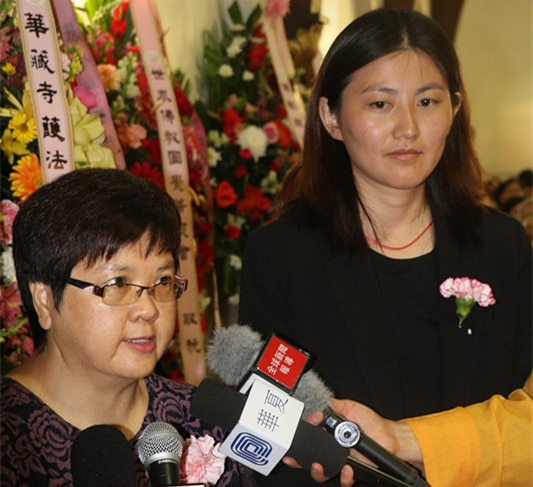
Ms. Moh and Zhao Yusheng’s daughter

Amitabha! Dharma masters, rinpoches, and kind virtuous ones, my name is Mei Mei Moh. I will now talk about the magnificent process occurred when Layperson Zhao Yusheng passed away perfectly. To avoid missing something when I talk, I wrote my speech down earlier.

Zhao Yusheng was a disciple of Chen Baosheng and had learned the evil teaching from Chen Baosheng before. Every day, he chanted “supreme vajra master” and that one’s accomplishment all depends on the master and relies on the joy and pleasure of the master. Zhao Yusheng said that he helped Chen Baosheng hide the truth and create false information while working at the tile company. That caused the company to lose more than 800,000 yuan just last year. He said, “I also helped him make false propaganda to deceive people. My situation became worse and worse as I was learning from Chen Baosheng. I am bounded by sin and bad karmas. My body now has cancer and is in great pain and suffering.” Zhao Yusheng realized that he had been harmed by Chen Baosheng’s demonic dharma. He was able to meet H.H.  Dorje Chang Buddha III after his cancer had reached the terminal stage. When Zhao Yusheng saw His Holiness, the Buddha, he piously repented before the Buddha Master. The Buddha Master said that repenting or not is not important and it is important that one should cultivate oneself well and truly correct the evil and pursue goodness to benefit society and living beings. Zhao Yusheng repented wholeheartedly. He no longer wanted to be a rinpoche and completely stopped learning the evil teaching. He did not fear death and only wished to be reborn in the Buddha-land. He made the greatest vow. H.H.  Dorje Chang Buddha III saw his sincerity and the maturing of his karmic condition and transmitted the dharma to him. Amitabha Buddha was invited to manifest in person to touch his head and transmit the dharma to him. Brother Zhao Yusheng was also able to see the main gate of the Western Paradise of Ultimate Bliss at that time. Amitabha Buddha told the Brother that Namo Kuan Shi Yin Bodhisattva would come to receive him to go to a place in the 5th lotus stage in the Pure Land. After receiving the dharma transmission from Amitabha Buddha and returning to San Francisco, the Brother practiced the dharma all the time every day and did not want to talk much. Sister Zhao Chen, who is the Brother’s daughter and I waited day by day. We did not know which day Namo Kuan Shi Yin Bodhisattva would come to receive the Brother. I have a company at Washington DC to run, but I also wanted to see the Brother attaining accomplishment. That created a contradiction in my mind. Well, a day spent was like a year to me! Eventually I had to call to beseech instructions from the Buddha Master. The Buddha Master said, “He will not be reborn there for the time being. For Zhao Yusheng’s physical condition, the decisions from the doctors and nurses should always be followed.”

On the day before Brother Zhao’s perfect passing away, he and I sat on a bench outside. He told me, “Chen Baosheng is a demonic devil, demonic evildoer, person of sin, criminal of fraud, and swindler. Kuan Shi Yin Bodhisattva wanted me to expose his sinful acts and said that He will come tomorrow to receive me. I was told to manifest the dharma to let people know when I am received to leave. However, I am worried that I may be drowsy and forget to expose him when Kuan Shi Yin Bodhisattva comes to receive me tomorrow.” I told the Brother, “Don’t worry. You don’t worry. Namo Kuan Shi Yin Bodhisattva will definitely come to receive you, and you will not be drowsy.”

At about 2:30pm in the afternoon on August 24 in American time, I was taking a nap at the time. After going outside to the restroom by himself, Brother Zhao came in to wake me up. He told us that he was about to leave and we should sincerely learn the dharma from the Buddha Master so we will meet again in the Western Paradise of Ultimate Bliss. He was going to take a bath. At that time, we felt quite sad. Is this person who is alive now truly going to leave? We help him take out the clothing prepared for him earlier. After putting on his clothing, we smelled a kind of special fragrant scent from Brother Zhao’s body. Then, the Brother said, “I will now use my freedom from birth and death to prove that the Buddha-dharma of H.H.  Dorje Chang Buddha III is the holiest. Chen Baosheng is a demonic devil and demonic evildoer! He is an evil master, big swindler, and a person of sin!” He also said, “The true dharma of the Tathagata is at where our great Buddha Master, H.H.  Dorje Chang Buddha III, is. Okay, okay, I will stop now. Namo Kuan Shi Yin Bodhisattva has come to receive me!” After finishing speaking, Brother Zhao emitted light from his entire body.

I saw the extremely tall and great Kuan Shi Yin Bodhisattva, radiating strong and intense white light everywhere from His body. Surrounded by five-colored light, Namo Kuan Shi Yin Bodhisattva was extremely solemn and majestic, standing above the top of Brother Zhao’s head. At that time, I saw that Brother Zhao’s spiritual consciousness rushed out from the top of his head toward Kuan Shi Yin Bodhisattva and left in the sky! While watching, I suddenly was unable to see Kuan Shi Yin Bodhisattva and Brother Zhao. I hurriedly ran into the courtyard. At this time, my phone rang. I raised my head and saw that Brother Zhao left in the sky while stepping on white clouds and following Kuan Shi Yin Bodhisattva. I also saw that fragrant nectar was coming down from the trees in the yard! Dharma masters from Hua Zang Si came right at that time. When they arrived, they also saw that nectar was descending from the trees. The dharma masters also recorded the scene by video. This nectar was strange. It disappeared before touching the ground. I was not the only one seeing the event. An elder lady who is 92 years old and from Malaysia also saw that Kuan Shi Yin Bodhisattva received Brother Zhao Yusheng and brought him away! This holy manifestation is difficult to hear even in millions of kalpas.

I am grateful to H.H.  Dorje Chang Buddha III.

I am grateful to Namo Amitabha Buddha.

I am grateful to Namo Kuan Shi Yin Bodhisattva.

Thank you all.
Link:https://peacelilysite.com/2025/03/14/buddhist-disciple-zhao-yusheng-received-a-transmission-of-buddha-dharma-that-is-true-and-real/

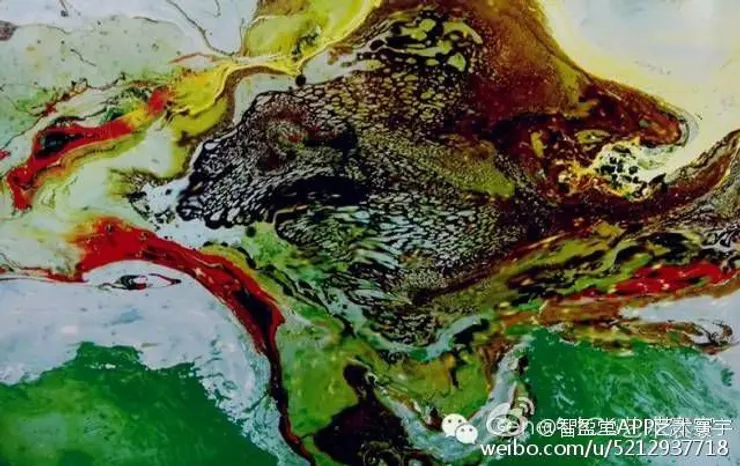
Beyond Form: The Pure Expression of Color in H.H. Dorje Chang Buddha III’s Art

H.H. Dorje Chang Buddha III‘s Abstract Color Paintings create a perfect world shaped entirely by color. Free from concrete worldly forms, this realm exists purely through the interplay of hues—defining, expressing, and embodying itself in vibrant harmony. Here, color is both form and essence, radiating a mesmerizing aura.

Under the masterful hand of H.H. Dorje Chang Buddha III, these colors seamlessly merge into a breathtakingly enchanting spectrum. The atmosphere is dynamic, with scenes that bloom like flowers and surge with the power of the roaring sea. Yet, upon closer reflection, they reveal delicate nuances, refined in their intricate details.

Flower of Life

This painting depicts a unique flower, with delicate white petals gently unfolding and a striking red pistil at its center. Growing irregularly against a dark background, it seems to challenge its surroundings. Though unusual in appearance, this flower carries a profound meaning of life, symbolizing resilience and beauty in adversity. It is not only a miracle of nature but also a representation of vitality, showcasing the brilliance and diversity of life. Each petal tells a story, drawing the viewer into the emotions and strength conveyed by the artwork.

Flower of Life (2)

In this painting, intricate patterns and clear details intertwine, portraying the harmonious growth of various living beings. Each element seems to narrate the origins of life, allowing viewers to deeply sense the evolutionary process of all things.

This artwork is not merely a depiction of nature but also a contemplation of the essence of life. It serves as a reminder that life is in a constant state of growth and transformation, just like our own journeys. Every challenge and breakthrough we experience is an essential part of our personal development.

Through this piece, we are invited to reflect on our own lives and feel a profound connection with nature.

You can discover a selection of the exceptionally charming paintings in the permanent exhibition at The International Art Museum of America, situated in downtown San Francisco.

How to Discern Authentic Dharma Teachings

You can receive the Dharma from many sources—through discourses given by Dharma Kings, Rinpoches, Lamas, or great Dharma teachers, as well as by reading their writings. You can also study exoteric and esoteric texts along with classic commentaries by fully realized masters. However, how can you determine whether these are authentic teachings? How do you know if the master or teacher is truly enlightened? And even if they are, how can you be sure that the translations you receive are accurate if the original text was not in English?

This issue applies even to the holy sutras and tantras, which have been transmitted through various traditions, cultures, and translations. Remember, it took centuries and the combined efforts of kings, emperors, and accomplished holy beings to complete these translations in China, Japan, Tibet, and other Buddhist countries. These translations were tested for their correctness by greatly realized beings. The authenticity of teachings must be verified by their efficacy—do they lead to full enlightenment?

Recognizing Accomplished Masters

How can you tell if someone is truly accomplished? A genuine master exhibits complete mastery of the sutras and tantras and demonstrates proficiency in all five vidyas. It is crucial to develop wisdom to discern true Dharma Kings or Rinpoches from those who are not. A reliable way to do this is by listening to the discourses and reading the books of H.H. Dorje Chang Buddha III. His Holiness teaches the correct Buddha-Dharma and has demonstrated mastery of all five vidyas.

Master Mipam Gyatso (1846-1912) of the Nyingma sect warned:

“…. As the sutras and tantras prophesy, there are many who, having abandoned the profound meaning through dry analysis, distribute quasi-doctrine for material gain, leading those of low merit and small intelligence onto a perverse path at this time of the Dharma-Ending Age….”

H.H. Dorje Chang Buddha III has stated that true Dharma teachings enlighten people, increase their good fortune, eliminate disasters, and help them attain the Bodhi state. The Buddha further emphasized that the Dharma must align with the Tripitaka and the commentaries of those who have attained enlightenment. It does not matter whether the teacher is a layperson or a monastic—if the teachings do not conform to the Tripitaka, tantras, or bodhichitta and are not given with compassion, they will contain errors. The Dharma must guide us toward happiness, liberation, and freedom from the cycle of reincarnation; otherwise, it holds no real value.

The Rarity of Listening to True Dharma

The opportunity to listen to the true Dharma is a rare and precious karmic condition. H.H. Dorje Chang Buddha III has said that listening to the true Dharma for one day can yield more progress than ten years—or even decades—of self-practice and meditation. The ability to hear the Dharma is a reward for accumulated merit. Without sufficient merit, one may not even have the opportunity to encounter it.

If you do not understand the principles of Buddhism, your cultivation may be in vain, as you may practice based on a confused understanding of the teachings. Listening to the discourses of H.H. Dorje Chang Buddha III and reading authentic Buddhist books is essential for proper cultivation.

The Proper Way to Listen to the Dharma

How you listen to the Dharma is just as important as receiving it. The analogy of the three pots is often used to illustrate this point. A pot can have three faults:

  1. It can be upside down, meaning it cannot receive water (Dharma cannot enter if one does not pay attention).
  2. It can be dirty, meaning the water is contaminated (Dharma is misunderstood or received with impure motivation).
  3. It can be full of holes, meaning it cannot retain water (Dharma is heard but not remembered or applied).

Even if you have the fortune to hear the Dharma, it will not benefit you if you do not pay attention, misunderstand the teachings, or fail to retain and practice them.

In ancient India and Tibet, practitioners had an extraordinary capacity for memorization. While modern individuals may lack this ability, we have the advantage of electronic recordings and printed texts. We should repeatedly listen to and reread the teachings until we thoroughly understand their principles and integrate them into daily practice—this is true understanding.

Applying the Dharma in Daily Life

It is not enough to merely listen, read, or even memorize the Dharma. True practice requires applying it in daily life. The Buddha’s teachings were meant to be lived, not just studied intellectually. Our actions, speech, and thoughts must align with the Dharma.

Dorje Pa Mu’s book, Dharma That Every Buddhist Must Follow, is an excellent guide, as are the books and discourses of H.H. Dorje Chang Buddha III. However, to truly recognize authentic Buddha-Dharma in the world today, one must read H.H. Dorje Chang Buddha III.

Guidelines for Evaluating Dharma Teachings

The sutras teach that when attending a Dharma lecture or listening to a teacher, one should focus on the teachings rather than the teacher’s personal attributes. Avoid distractions such as whether the teacher:

  • Has or has not violated precepts
  • Comes from a poor or wealthy background
  • Has a pleasant or unpleasant physical appearance
  • Has good diction or a speech impediment
  • Has a melodious or harsh voice

Instead, follow the Buddha’s four guidelines from the Catuhpratisarana and Samdhinirmocana Sutras:

  1. Rely upon the teaching, not the teacher.
  2. Rely upon the meaning, not the text.
  3. Rely upon the definitive meaning, not the provisional meaning.
  4. Rely upon prajna (wisdom), not consciousness.

By becoming familiar with the Tripitaka and tantras, you will be able to evaluate the authenticity of any teaching. Then, through practice, you will discover whether they truly lead to enlightenment. True Dharma will bring real transformation, guiding you toward liberation and awakening.

Link:https://peacelilysite.com/2025/02/28/how-to-discern-authentic-dharma-teachings/

Source: https://holyvajrasana.org/dharma-and-ritual/receiving-dharma

The Fusion of Technology and Art: A Stunning 3D Masterpiece

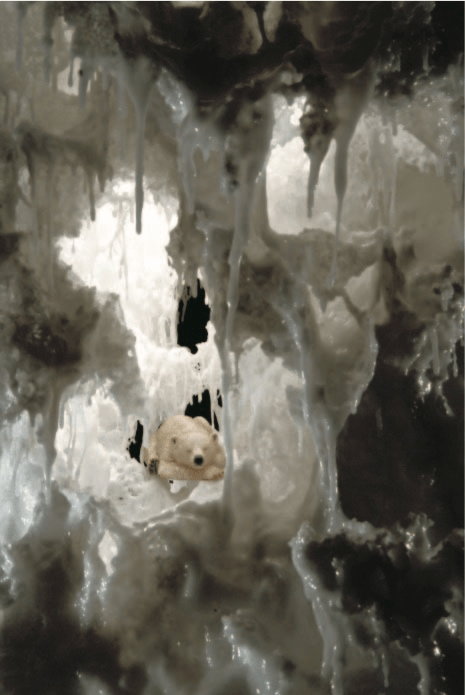
Polar Bear in an Ice Cave

Technology art is a new form of multidimensional creative expression that blends technology and art. By incorporating mechanical instruments, scientific data, and spatial elements such as light sources, temperature, and speed, it presents a unique visual experience. Imagine a three-dimensional painting on a flat sheet of paper, where the depth of space extends beyond the surface, and the imagery seems to leap out of the frame, resembling a real sculpture.

Among these art forms, glass painting is particularly breathtaking. With its transparent dual-sided effect akin to a celestial realm, it creates a mesmerizing and soothing atmosphere when paired with changing lights. Photography, on the other hand, captures emotionally stirring moments through the interplay of light, composition, and color. Whether depicting landscapes, people, or animals, it brings out a unique aesthetic through the lens.

At the convergence of these three artistic expressions, H.H. Dorje Chang Buddha III, skillfully integrates them to create stunning works of technology art. One such masterpiece, the 3D painting Polar Bear in an Ice Cave, vividly portrays the charming image of a polar bear, making viewers feel as if they are inside an icy Arctic cavern. Through the artwork, one can almost see the adorably clumsy bear sleeping soundly in the cold cave. The artist’s extraordinary craftsmanship is awe-inspiring, delivering an unparalleled visual experience.

H.H. Dorje Chang Buddha III composed a poem for this artwork. Translating it into English is incredibly challenging due to its profound meanings. However, here is a simple translation to offer a glimpse into the Buddha’s deep compassion for all beings:

The polar bear loves the cold the most,
Sleeping in ice caves through all seasons.
Do not take food from the water,
Instead, pick up the bones of wandering souls for a meal.

Not everyone understands the mysteries within the profound,
For Zen enlightenment dissolves the barriers of hunger.
The splendid affairs of the crystal palace are beyond full expression,
Within the cave, a guest drunkenly enjoys the company of an immortal.

Link:https://peacelilysite.com/2025/02/27/the-fusion-of-technology-and-art-a-stunning-3d-masterpiece/

Homage to H.H. Dorje Chang Buddha III Cultivators Should Become Buddhist Disciples in Holy Sense with Correct Faith and Real Cultivation

Many people say they have faith in Buddhism and therefore naturally regard themselves as Buddhists. However, these numerous Buddhists who regard themselves as having faith in Buddhism are at many levels and a mixture of true Buddhists and false ones and have all kinds of people in them. Among them, there are people who truly believe in Buddhism and have the correct faith, there are people who regard themselves as having the faith but really do not have the correct faith, some falsely claim to have the faith, and there are descendants of Mara Pipiyan who infiltrated into Buddhism to do damages. That is why the Buddhist world is full of chaos in this dharma-ending era. This situation requires true Buddhists and Buddhist disciples with the correct faith to open up their eyes to clearly distinguish what is true and what is false and determine what is right and what is wrong, in order to advance on the correct Bodhi path toward liberation and accomplishment without deviating aside.

Buddhist is a noun with broad meanings. Within the scope of this concept embodying a wide range of meanings, quite many people are really just “followers” or even “visitors paying the respect of burning incense.” Their knowledge about Buddhas and Bodhisattvas is just knowing the concept. They only have the so-called faith in Buddhism but have not taken refuge or made deep study or investigation. Basically, they are still invaded and corroded by the three poisons in their daily life, do things based on their own opinions, and do not cultivate or practice in accord with the Buddha’s teachings and warnings. When they go into temples to burn incense and pay respect, they beseech only rewards of good fortune in the current lifetime such as making big money in business, getting promotion or advancing to a position of power, happiness and harmony in family life, good health, and so on. Some of them cannot even tell the difference between Buddhism and Daoism and pay respect to deities and ghosts as well. That is absolutely a false faith in Buddhism without any understanding. Therefore, strictly speaking, such “Buddhist followers” really cannot be regarded as Buddhists.

There are also quite some Buddhists who, though having taken refuge in Buddhism, have not become clear about the approach of learning the absolute truth of Buddha-dharma and practice Buddha-dharma selectively as worldly ways. Some of them even have incorrect or evil knowledge and views. Their cultivation falls into superficiality and becomes a futile effort. They think that believing in Buddha’s existence and having taken refuge in Buddhism are the entirety of a Buddhist’s faith. Their faith in Buddhism is not a pure faith and is not an indestructibly firm faith. Their faith is a “faith that can be overpowered,” which can be easily shaken, overpowered, and abandoned. Their faith is an “intermittent faith.” They sometimes have faith and sometimes have doubt. A slight disturbance can cause them to generate doubt, enter into delusion, and lose confidence. Their faith has reversals and impediment and is not always clear and pure. This type of cause from such impure and contaminated faith definitely cannot bear wonderful fruit of accomplishment and liberation. This kind of faith has an extremely weak foundation and of course is not a true faith. Therefore, the refuge ceremony they have taken is just a formality and cannot represent a true faith in Buddhism.

One who does not have a true faith of course will not have a correct understanding and will not put the faith into action. Therefore, these people will not clearly believe in cause and effect and will not truly know impermanence, much less fear impermanence. Rather, they have deep and severe attachment to the self and always treat things related to them as important and having a higher priority than Buddhist work. They may even list conditions and offer deals to Buddhas and Bodhisattvas to ask Buddhas and Bodhisattvas to give them what they want first before doing Buddhist work. How can such cultivation and conduct receive protection and empowerment from Buddhas and Bodhisattvas? How can there be benefits and rewards from learning Buddhism to speak of? Thus, in today’s world, although countless people claim they have faith in Buddhism and cultivators of Buddhism are numerous and everywhere, very few of them can truly receive beneficial rewards. Instances of ending the cycle of birth and death are even rarer. Shouldn’t this situation cause the attention and vigilance of Buddhist disciples learning Buddhism?

The goal of believing in and learning Buddhism is for attaining liberation and accomplishment and becoming a holy one. Therefore, Buddhists questing for liberation and accomplishment should strive to plant and grow the cause of true faith to get the wonderful fruit of liberation and accomplishment and let themselves become veritable disciples of Buddhism with true faith and correct faith. Then, where does true and correct faith come from? Of course it comes from piously cultivating Buddhism through concrete steps. Buddhists with true and correct faith should believe in not only the Buddha’s real existence but also the Buddha’s teachings and precepts, develop strong power of vow from the inner mind to uphold, follow, and carry out the Buddha’s teaching, develop the power of determined faith to regard the principle of Buddha-dharma as the sole standard of selection and the guiding principle of conduct, and strictly and firmly act in accord with the teaching to generate the power of true faith from the inner mind. With such premise, we can establish the determination to cultivate Buddhism, clearly believe in cause and effect, diligently practice the ten actions of goodness and the four limited states of mind, and broadly cultivate the six paramitas through all acts. On the other hand, a person who is deeply plagued by heavy attachment to the self and only superficially obey Buddhas’ and Bodhisattvas’ teachings and precepts will never step onto the path of Bodhi toward liberation and accomplishment even after reading the Tripitaka exhaustively.

Therefore, disciples of Buddhism who truly intend to cultivate Buddhism to attain liberation and accomplishment have to become Buddhist disciples in the holy sense with true faith and real cultivation. Buddhist disciples in the holy sense are in true correspondence with the Buddha’s teaching and the purpose of learning Buddha-dharma and can thoroughly see the true such-ness of mind nature. Such is the meaning of the holy sense. To possess the status of the holy sense, Buddhist disciples must concurrently pursue progress in all three aspects of Buddhism. Only by advancing in all three aspects coherently as a whole can one be regarded as a Buddhist disciple in the holy sense. These three aspects are: the teaching of Buddhism, the study of Buddhism, and Buddha-dharma. Moreover, the three aspects must be combined perfectly to comprise one entity.

The teaching of Buddhism includes the Buddha’s teaching that has been transmitted through the time and historical facts about Buddhism. Among them, there are true events of the Buddha, historical backgrounds, records of the origin and propagation of Buddha-dharma, karmic conditions related to expounding specific dharmas, references and publications of the dharma expounded by the Buddha, rules of Buddhism, and so on. The study of Buddhism refers to Buddhist scriptures, the origin, development, and timeline of Buddhist sects and schools, and the principles and philosophy within Buddha-dharma; all are investigated theoretically using the method of academic research. Buddha-dharma is the special dharma gates transmitted from the Buddha that can enable cultivators transcend the mundane world and enter holiness, methods to lead one into the practice toward liberation and to break away from mundane attachments, including mantras, visualization, mudras, mandala, dharma instrument, the three secret practices of body, speech, and mind, and utilization of the power of siddhi (accomplishment) within the dharma sphere.

It is true that becoming a Buddhist disciple in the holy sense is not easy. However, that is the goal that every Buddhist disciple must pursue and also the only path of cultivating Buddhism toward liberation and accomplishment. Moreover, achieving that goal requires a pious devotion toward the Buddha, focusing the mind on goodness, and pure cultivation of one’s body, speech, and mind.

There is only one way to achieve that goal. That is, taking the dharmas of the Contemplating the Magnificence of Perfect Prerequisite Oceanic Mind Essence and the Most Magnificent Bodhi Dakini Oceanic Mind Essence in the Supreme and Unsurpassable Mahamudra of Liberation and What Is Cultivation expounded by H.H.  Dorje Chang Buddha III as the guiding compass for absolutely correct cultivation, earnestly learning from and studying the dharma Expounding the Absolute Truth through the Heart Sutra expounded by H.H. Dorje Chang Buddha III, and diligently listening to the recorded supreme dharma lessons expounded by H.H. Dorje Chang Buddha III.

Due to our rewards of good fortune accumulated through many lifetimes and eons, we live in this era with H.H.  Dorje Chang Buddha III’s presence. Additionally, we also have the magnificent karmic conditions that allow us to closely follow H.H.  Dorje Chang Buddha III in learning Buddhism. We can listen with our own ears the recorded dharma lessons expounded by H.H.  Dorje Chang Buddha III and respectfully beseech the treasure books with dharmas expounded by H.H. Dorje Chang Buddha III. Moreover, many Buddhist disciples among us have personally received initiations transmitted by H.H.  Dorje Chang Buddha III in person. How lucky and fortunate we are! What reason do we have for not diligently learning Buddhism and cultivating ourselves! We must make our vow to become a one-hundred-percent Buddhist cultivator with true faith and correct faith and strive to be Buddhist disciple in the holy sense with clear and pure cultivation. We must attain liberation and accomplishment in the current lifetime! Amitabha!

by   Zhengfa Hong

Link:https://peacelilysite.com/2025/02/27/homage-to-h-h-dorje-chang-buddha-iii-cultivators-should-become-buddhist-disciples-in-holy-sense-with-correct-faith-and-real-cultivation/

I have never  been aware of or seen anyone who surpassed the accomplishments of H.H. Dorje Chang Buddha III

By Zhaxi Zhuoma Rinpoche

H.H. Dorje Chang Buddha III Tonsuring Zhaxi Zhuoma

I follow  H.H. Dorje Chang Buddha III and have ever since I first encountered His writings in an unusual little book titled True Stories About a Holy Monk thirteen years ago. Prior to that I studied and practiced Zen Buddhism and the shamanic arts for over fifteen years.

Although I knew this was an extraordinary teacher and holy person, none of us who followed this holy being knew who He was until a draft manuscript of a book about His accomplishments in this life was published and distributed to many of the leading Buddhist living in the world at that time. This happened around 2007. Many of the most highest accomplished Buddhist (not all were the most well known) recognized that this was a very special incarnation and wrote letters stating that fact which were included in the final version of the book that was published and presented to the Library of Congress and the world in a grand ceremony in April, 2008. Later that year and the next, I and a group of monks, nuns, and laypeople voluntarily traveled to all 50 states presenting the book to governors, librarians, tribal chiefs, and others and giving a talk on just who H.H. Dorje Chang Buddha III is and why He had come to America. You can read more about all these events on this website.

Many of the current Buddhist sects hold that Dorje Chang Buddha or Vajradhara Buddha was the originator of Buddhism as such. This is especially true in the vajrayana traditions. You will see this dark blue Buddha at the top of their lineage trees. Dorje Chang Buddha was the first samboghakaya manifestation of the formless Dharmakaya Buddha and was the teacher of all dharma to all the other Buddhas in the ten directions including Shakyamuni Buddha. Only one other time did Dorje Chang Buddha incarnate in this world and that was at the time of Shakyamuni Buddha to help teach Shakyamuni Buddha’s disciples. That was as the great holy venerable one, Honorable Vimalakirti. At that time, Shakyamuni Buddha praised Honorable Vimalakirti in the Vimalakirti-Nirdesa Sutra, ”People who make offerings to this person should know that they are making offerings to a Buddha. One who transcribes and learns this sutra should know that a Tathagata is right with him in the same room.” This statement means that, in addition to Shakyamuni Buddha, there was another Tathagata in this world at that time. Shakyamuni Buddha was not the only Buddha. You can read the teachings of Ven. Vimalakirti in the well-known sutra bearing His name. However,  H.H. Dorje Chang Buddha III gave us this discourse, “The dharma I transmit is absolutely the dharma taught by the Buddha. However, I am not a Buddha. Neither am I a master. I am just a humble one propagating the true dharma of Tathagata, without distinguishing sects or schools. Any cultivator who has correct knowledge and views, even a very ordinary cultivator, is better than me. I should learn from them all. Therefore, my body, speech, and mind are just a humble structure.”

In 2008, I had the good fortune to have an interview in upstate New York with H.H. Penor Rinpoche, who had been the  third supreme leader of the Nyingma Sect. He was one of the leaders who recognized H.H. Dorje Chang Buddha III. He told me that this was a very high being, much higher than he (Penor) was and it was very good that such a being should incarnate at this time in these dharma ending days and that He should reveal many miracles so that people would believe that the dharma still existed in this world. He also said that Dorje Chang had never before incarnated in Tibet and other wonderful things.

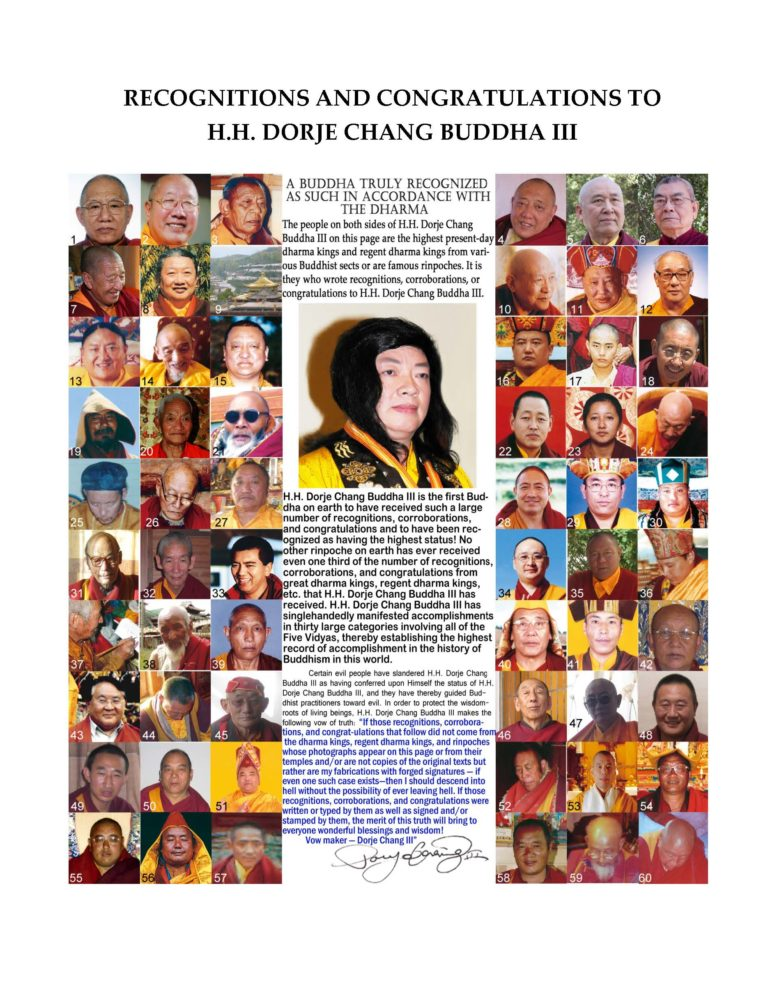
The fact is that H.H. Dorje Chang Buddha III’s mind practice is different from that of all other dharma kings, rinpoches, and dharma masters in the world. For example, He is truly completely proficient in exoteric and esoteric Buddhism and possesses perfect mastery of the five vidyas, while essentially no other people were able to accomplish that through history. More importantly, He is the only one who only benefits and helps all others and does not accept money or properties from other people. He has even announced that He would never accept offerings and would solely benefit others. Consequently, this fact causes other dharma kings, rinpoches, and great dharma masters of Buddhism to feel very embarrassed and depressed, because all these dharma kings, rinpoches, and dharma masters have to collect and accept offerings. Compared to H.H. Dorje Chang Buddha III’s deed of not accepting offerings, it became clear that they are at lower levels and are greedy for offerings from living beings. Therefore, they are very angry because H.H. Dorje Chang Buddha III ’s deed makes them unable to explain their acts.

H.H. Dorje Chang Buddha III did NOT proclaim himself to be a Buddha. However, He was recognized by many others as such and He did not deny the fact. H.H. Dorje Chang Buddha III has stated repeatedly that this is the era of Shakyamuni Buddha and that Shakyamuni Buddha is the supreme leader of Buddhism in the world today. H.H. Dorje Chang Buddha III only came to correct many of the mistranslations and erroneous views held by Buddhists and about Buddhism that exist in the world today. Please visit the website of the Office of H.H. Dorje Chang Buddha III  www.hhdcb3office.org, you will truly find out that H.H. Dorje Chang Buddha III is a truly great Buddha. He has demonstrated countless accomplishments in all five of the vidyas–the only way that a Buddha can be known. The five vidyas is an ancient concept that most Buddhist do not understand–I know I did not and it took me a long time to fully realize what was meant by the term.

Based on what I have seen and experienced, I do believe H.H. Dorje Chang Buddha III is a nirmanakaya Buddha.  Please allow me to make a statement from the bottom of my heart that bears my responsibility to the law of cause and effect: From what I have learned from books and what I have ever seen in my current lifetime, I have never  been aware of or seen anyone who surpassed the accomplishments of H.H. Dorje Chang Buddha III!

Link:https://peacelilysite.com/2025/02/21/i-have-never-been-aware-of-or-seen-anyone-who-surpassed-the-accomplishments-of-h-h-dorje-chang-buddha-iii/

Source: https://xuanfa.net/news/21448/

Crossing a Mountain, the Small Boat Enters the Canyon

Crossing a Mountain, the Small Boat Enters the Canyon is an awe-inspiring masterpiece of Yun sculpture. How did H.H. Dorje Chang Buddha III capture the shimmering reflections on the lake’s surface? And how was it possible to create such a vivid and lifelike scene using ordinary plastic steel materials? The majestic mountains, the gentle ripples of the lake, and the lifelike figures aboard the small boat—all elements that seem beyond the reach of ordinary people—were brought to life through the unparalleled artistry of H.H. Dorje Chang Buddha III.

This sculpture is not merely a visual creation—it possesses a soul. Every detail, from the rugged mountains and tranquil lake to the humble fishermen, seems to pulse with vitality. The artwork evokes a sense of harmony with nature, conveying a profound feeling of peace and joy that resonates deeply with viewers.

The Unique Art of Yun Sculpture:
Yun sculpture is a groundbreaking art form created by H.H. Dorje Chang Buddha III, with no precedent in history. Since the emergence of Yun sculpture, humanity has witnessed the birth of an art form that is truly non-reproducible. This genre is distinguished by several remarkable features:

  1. Multidimensional Spatiality: Yun sculptures possess an extraordinary sense of multidimensional space. Their intricate and delicate forms exhibit endless variations, captivating viewers from every angle.
  2. Vibrant, Dreamlike Colors: The colors of Yun sculptures are rich, radiant, and dreamlike—depicting scenes beyond the realm of this world. Their hues seem to emanate a light of their own, enchanting all who behold them.
  3. Sacred and Incomparable Depth: Many Yun sculptures possess a profound and sacred quality. For instance, Color Rhythm, displayed in the Holy Relics Room of H.H. Dorje Chang Buddha III Cultural Art Museum, measures only two to three feet in size. Yet, when viewed through its openings, one can perceive a vast inner depth that seems to extend far beyond the sculpture itself, leaving viewers awestruck by its unfathomable dimensionality.

Countless individuals who have had the privilege of witnessing H.H. Dorje Chang Buddha III’s Yun sculptures have expressed their wonder and reverence: “This is a treasure sent from the divine to humanity,” “A sacred gift from the Buddha,” and “So breathtakingly beautiful that it touches the soul.” Others have compared these masterpieces to the finest jade jewelry and the most magnificent stone sculptures, only to find that even the most exquisite human creations pale in comparison—like dim stars surrounding the brilliance of the moon.

Indeed, the advent of Yun sculpture has elevated the realm of art to an entirely new level, offering the world creations that are not only visually stunning but also spiritually profound, filling the hearts of all who witness them with a sense of wonder and inspiration.

Master Wan Ko Yee (H.H. Dorje Chang Buddha III) Has Made A Great Contribution To Art

Link: https://peacelilysite.com/2025/02/19/crossing-a-mountain-the-small-boat-enters-the-canyon/

A Sacred Experience Beyond Imagination

Determination by Holy Selection on the Regression or Progression on the Bodhi Path

The status of a Tai Zun is far superior to that of a Dharma King. A Tai Zun attains their position through genuine realization and holy verification, whereas the title of Dharma King is merely an empty name granted by ordinary people. Although a Tai Zun holds a higher status, I had never personally witnessed one perform a Dharma ritual—until yesterday, May 14th, when the conditions finally ripened.

This great Maha Sattva, a Five-Vajra Tai Zun, whom we also respectfully refer to as Sheng Zun (Holy Venerable), conducted a Dharma assembly at the World Buddhism Headquarters alongside us monastics. He publicly performed the profound “Determination by Holy Selection on the Regression or Progression on the Bodhi Path” for a devoted disciple engaged in Buddhist practices. This experience opened my eyes to the sacred realm—leaving me in utter astonishment, complete prostration, and deep repentance.

It turns out that the “Determination by Holy Selection on the Regression or Progression on the Bodhi Path” is truly the supreme Dharma among Dharmas. Namo Dorje Chang Buddha III said: “This is the Invincible Vajra Dharma to Enable Buddhist Practitioners to Achieve Accomplishment.” If an individual with such advanced cultivation conducts this Dharma successfully before the congregation, then this individual must be a Bodhisattva or a Buddha, a Tremendous Holy Guru. I had longed to attend such a Dharma assembly, and now, after countless lifetimes, I finally had the rare fortune to witness it. Knowing the preciousness of this opportunity, I cherished every second. Eager to observe the holy manifestation, I positioned myself about four feet away, keeping my eyes wide open to capture every detail.

All of us present fixed our gaze upon the disciple receiving the empowerment as she carefully counted and placed ten Bodhi pills into a porcelain cup. Sheng Zun, standing at a distance, never approached the cup throughout the ritual. Suddenly, as the Dharma was being performed, the cup began to emit a radiant glow, and a rare, enchanting fragrance filled the air. Then, with the striking of a bell—a sound unlike any ordinary chime, as if rolling through the waves of wind—the entire grand hall became immersed in an atmosphere of auspiciousness, deeply touching our souls.

At that moment, all I could see was the cup before me; the hall and the offerings seemed to vanish. I felt as if I were seated on soft, floating air, my body gently spinning, yet my gaze remained fixed on the cup. Then, in an eerie stillness, beyond all worldly distractions, an extraordinary event unfolded—the ten Bodhi pills inside the cup suddenly increased to thirteen. It was truly miraculous! Upon recounting, there was no doubt—the number had indeed grown.

The disciple’s sincerity had brought forth such an extraordinary blessing. From that moment on, the Bodhi pills she possessed would continue to multiply, allowing her to take one each day or month, ensuring longevity, perfect health, and boundless wisdom and merit, ultimately leading to enlightenment.

What is most admirable about Sheng Zun is that despite possessing such an extraordinary level of realization, he remains entirely free from ego and desire for fame. He told us:

“Once the Bodhi pills have been empowered, they are empowered. This is the blessing of the Buddhas and Bodhisattvas—it is not my doing. Do not mention me. If anyone brings up my Dharma name, you will not be allowed to attend any future Dharma assemblies I conduct. We are all disciples of the Buddha; what matters is cultivating ourselves in accordance with the Dharma, not using titles to show off.”

He then turned to the disciple and said:

“I will take one Bodhi pill and offer it to my revered teacher, Namo Dorje Chang Buddha III, as a blessing for tomorrow’s holy Buddha’s birthday—may auspiciousness and joy be eternal.”

Sheng Zun’s humility and detachment from worldly fame stand in stark contrast to the hollow titles of false Dharma Kings. His transcendent virtue is an unparalleled model for all practitioners and a wake-up call for my own self-reflection.

With profound repentance, I now make a solemn vow before the Buddhas of the ten directions—to cultivate the Dharma with utmost sincerity, to awaken myself and help others awaken.

A Repentant Buddhist Disciple,

Bhikshu Liao Zheng
May 15, 2021

Link:https://peacelilysite.com/2025/02/07/a-sacred-experience-beyond-imagination/

Feng shui and Fortune Telling cannot change Fortune and Fate

Reply to Inquiry No.20210103

Regarding the inquiry that a particular individual falsely claimed to have obtained permission from His Holiness the Buddha and declared to Buddhist practitioners that Feng shui and fortunetelling can change fortune and fate, the team of Holy Gurus of the World Buddhism Association Headquarters has respectfully submitted a verification petition to Namo Dorje Chang Buddha III. His Holiness the Buddha proclaims, “It is a vicious fallacy against causality and inherently an evil ideology. I have already elucidated the distinction between the righteous and evil of this kind. You are pitiful if you align with evil, and no one can save you.”

Namo Dorje Chang Buddha III expounds Dharma and cautions all Buddhist disciples: “The Law of Cause and Effect is a universal law underlying all phenomena in the universe. It is not an evil heresy of metamorphic feudal superstition, nor voodoo occult fallacies of yin-yang Fengshui and fortunetelling by religious charlatans or sorceress.” These are all fraudulent schemes. Namo Dorje Chang Buddha III has explicitly expounded in the 128 Evil and Erroneous Views that “Acknowledging it is acceptable not to have a clear belief in cause and effect yet have a superstitious belief in fortunetelling and luck. Not having a strong conviction in causality, not believing in causality, rejecting causality and believing in fortunetelling and luck are evil views. It is imperative to understand that all events and phenomena in the universe are based upon causality.” Hence, you reap what you sow. Feng shui and fortunetelling cannot change what you have done in the past. Feudal superstitions such as Feng shui, fortunetelling, physiognomy (face reading), heterodoxy or strange and heretically induced phenomena do not conform to Buddhism. Accordingly, believing these superstitions and spreading fallacies to deceive people are heretic non-Buddhist words and deeds. Regardless of any individual’s status, whoever accepts and practices them is not a genuine Buddhist.

Furthermore, any Buddhist who slightly threads the heterodox path cannot perceive the Tathagata and will not reap the fruits of fortune and wisdom. Evil heresy cannot change one’s fate and can turn any believer into a pathetic, evil person. Therefore, we must follow the Dharma expounded by Namo Dorje Chang Buddha III and the doctrines established by Namo Shakyamuni Buddha. We must turn away from all evildoings and do all good deeds, be compassionate and benefit humanity and all living beings. We should chant and pray for prosperity for all countries, robust and wholesome health for all people, abundant harvest of all crops and peace, auspiciousness and happiness for the world. That is the right path. Sowing the seeds of learning from Buddha and practicing Buddhist cultivation begets the fruits of fortune, wisdom, and, ultimately, perfect and complete liberation.

Inquiry Center, World Buddhism Association Headquarters

November 6, 2021

Link: https://peacelilysite.com/2025/02/01/feng-shui-and-fortune-telling-cannot-change-fortune-and-fate/

The Power of Flying and Whirling

Whirling Power and Infinite Artistry – A Masterpiece by H.H. Dorje Chang Buddha

At first glance, The Power of Flying and Whirling seems almost impossible to have been created with just a paintbrush. Its breathtaking composition and dynamic visual impact resemble digital artwork, as if only advanced computer graphics could achieve such a striking effect. Yet, the most astonishing fact is that this masterpiece was painted entirely by H.H. Dorje Chang Buddha using traditional techniques—without any digital assistance.

These impressionist paintings reach an extraordinary level of artistry. Each section of the painting, if isolated, could stand alone as a remarkable impressionist work, complete in its beauty and expression. The artwork conveys a dreamy, illusory state, where even the smallest fragment could be enlarged to reveal a mesmerizing, self-contained masterpiece.

By capturing movement with unparalleled skill, H.H. Dorje Chang Buddha has frozen the imagery in mid-air. This painting feels like a window to the heavenly realm, giving me a glimpse into the mysteries of paradise. The elegant arcs that sweep across the canvas pulse with energy, like a mighty tornado dispersing the shadows in our hearts. The swirling force in the painting seems to lift the viewer beyond the ordinary, reminding us of the limitless possibilities that exist when art and wisdom unite.

This painting is more than just a visual masterpiece—it is an invitation to embrace the unseen forces of inspiration, creativity, and transformation. It teaches us that true artistry is not bound by tools or techniques but flows from the depth of wisdom and an unshakable spirit.

May this extraordinary work inspire us to break through limitations, open our hearts to beauty, and find the power to uplift ourselves and others.

Link:https://peacelilysite.com/2025/01/31/the-power-of-flying-and-whirling/