The Fragility of Trust

“There are two things in this world one should never look at directly: the sun, and the human heart.” —Higashino Keigo

I recently came across this story online, and it deeply moved me. It reminded me that trust and kindness are fragile treasures—once broken, they are hard to mend. I would like to share this wisdom with everyone who reads my blog, especially in times when misunderstandings and suspicion can so easily damage the relationships we cherish most.

Once, there was a newly married couple deeply in love, inseparable and affectionate.
But the wife began to doubt her husband’s loyalty. Her suspicion grew stronger each day until she asked her best friend to “test” her husband’s faithfulness.

To her shock, the two fell in love with each other. What started as a test ended in betrayal.
In the end, the marriage was destroyed—not by infidelity itself, but by mistrust and the reckless act of testing love.

🧬 The Scientist Who Refused to Test

Finsen, the world-renowned Danish medical scientist and Nobel laureate, once chose a young man named Harry as his successor.

Some colleagues worried that Harry might not endure the long, tedious years of research. Finsen’s assistant suggested testing him by having a wealthy friend offer him a high-paying job to see whether Harry would stay or leave.

But Finsen firmly rejected the idea, saying:

“Never stand on a moral high ground to look down on others, and never test human nature.
Harry was born in poverty and naturally desires financial security. If we place him between an easy, well-paid job and the hardship of research but expect him to choose sacrifice, we are demanding him to be a saint. That would be unfair.”

Years later, Harry became one of Denmark’s most respected medical scientists. When he learned that Finsen had refused to test him, he wept and said:

“If my mentor had tested my integrity with a lucrative offer, I would likely have failed.
At that time, my mother was ill and my younger siblings depended on me for their schooling.
If Finsen had set that test for me, there would be no me as I am today.”

🌿 The Truth About Human Nature

Indeed, ordinary people are not saints—everyone has weaknesses. If we constantly test others—our spouse’s loyalty, our friends’ sincerity, or our coworkers’ honesty—we will often end up with disappointment and broken trust.

In the first story, had the wife trusted her husband instead of testing him, the marriage might have survived.

Finsen understood that human nature is fragile. True wisdom lies not in setting traps to measure others’ virtue, but in tolerating uncertainty with compassion.

Testing human nature is like striking a porcelain bowl—it will only reveal its fragility by breaking it.
Trust, on the other hand, is like holding that bowl gently in your hands—preserving its wholeness, beauty, and purpose.

In life, love, and friendship, may we learn to trust with kindness and lead with understanding.
After all, it is not the test that reveals the truth of a heart, but the grace with which we choose not to test it.

Link:https://peacelilysite.com/2025/11/06/the-fragility-of-trust/

To see the Love in all beings is to Awaken the Compassion in ourselves

The Tears of a Mother Fox

This is a true story, personally recounted by a monk.

He said that before he became a monk, he was a hunter, specializing in capturing foxes. One day, he caught a large fox as soon as he left home. After skinning it for its valuable fur, he left the animal—still barely alive—hidden in the grass.

By evening, when the hunter returned to retrieve the fox, it was gone. Looking more carefully, he noticed faint traces of blood on the ground, leading toward a small cave nearby.

Peering inside, he was stunned by what he saw: the fox, in excruciating pain and skinned alive, had struggled back to its den. Why?

When the hunter dragged out the now lifeless body, he discovered two tiny, blind cubs tightly suckling their dead mother’s withered breast.

The sight struck him to his very core. Never before had he realized that animals, too, share the same bonds of maternal love as humans. Even in her dying moments, the mother fox had thought only of feeding her children, afraid they would go hungry. At that realization, an overwhelming wave of grief, shame, and remorse consumed him. He was devastated, unable to forgive himself.

From that moment, he laid down his weapons, abandoned hunting, and chose the path of monastic life.

Many years later, whenever this monk recalled that experience, his eyes would still well up with tears.

The Selfless Leap: A Lesson from the Bharal

There are moments in life when a single experience reshapes the way we see the world forever. The extraordinary sacrifice of animals that opened a hunter’s heart and made him vow never again to take a life.

It happened during a hunt many years ago. Our party had driven a herd of more than sixty bharal—also known as blue sheep—to the edge of a cliff on Mount Bulang. The plan was cruel but simple: trap them on the precipice, and force them to fall to their deaths so we wouldn’t waste bullets.

The herd panicked, but then something astonishing happened. At the sound of a cry from a large male, the bharal divided themselves into two groups—young and old. Out of the elders stepped a weathered male, his horns broken, his face lined with age. He bleated once, and a half-grown bharal emerged from the younger group to join him.

Together they approached the cliff’s edge, then charged forward. The young one leapt first, soaring into the abyss, but it quickly began to fall. At that very moment, the old male followed, placing himself directly beneath the younger in midair. The youth’s hooves struck the elder’s back, using it as a springboard for a second leap. Miraculously, it landed safely on the opposite cliff.

The old one, having given all he had, plummeted to his death.

And then, pair after pair followed. The sky above the gorge was filled with arcs of courage—each elder laying down its life so a younger one might live. By the end, countless old bharal lay broken on the rocks, but the youth had crossed to safety.

I was stunned beyond words. At the edge of extinction, this herd had discovered a way to save itself—by sacrificing half to preserve half. But what shook me even more was not the strategy itself, but the spirit behind it. These elders did not resist, did not hesitate. They walked calmly toward death, offering their bodies so their children might have a future.

In that moment, my heart broke open. I realized that animals, too, embody wisdom, love, and a willingness to sacrifice that rivals, and perhaps even surpasses, our own. I could no longer see them as mere prey. That day, I made a vow: I would never again take life.

✨ The story of the bharal is more than just a tale of survival. It is a mirror for us as human beings. Would we, when faced with the survival of our families, communities, or world, have the courage to lay ourselves down for the next generation? Would we live not only for ourselves, but for those who come after us?

The bharal taught me that true strength is not in holding on, but in letting go—for love. And from that lesson, my heart turned toward compassion.

Link:https://peacelilysite.com/2025/09/12/to-see-the-love-in-all-beings-is-to-awaken-the-compassion-in-ourselves/

Finding the Rose Among the Thorns

In this unstable world, it sometimes feels as if my heart is on a rollercoaster whenever I turn on the TV or scroll through the news. Fear, anger, and uncertainty seem to dominate the headlines. Yet a few days ago, I came across a powerful teaching from Hopi Indian Chief White Eagle that lifted my spirit and gave me a new way of looking at things.

He said:

“This moment humanity is experiencing can be seen as a door or a hole. The decision to fall in the hole or walk through the door is up to you. If you consume the news 24 hours a day, with negative energy, constantly nervous, with pessimism, you will fall into this hole.

But if you take the opportunity to look at yourself, to rethink life and death, to take care of yourself and others, then you will walk through the portal.

Take care of your home, take care of your body. Connect with your spiritual home. When you take care of yourself, you take care of everyone at the same time.

…Resistance is resistance through joy! You have the right to be strong and positive. And there’s no other way to do it than to maintain a beautiful, happy, bright posture.

When we cross the threshold, we have a new worldview because we faced our fears and difficulties. This is all you can do now:

– Serenity in the storm

– Keep calm, pray everyday

– Make a habit of meeting the sacred everyday.

…Show resistance through art, joy, trust and love.”

These words made me pause and reflect. They reminded me that no matter how chaotic the outside world may appear, the choice of how we respond rests within us. We can drown in fear, or we can step through the door into growth, healing, and a deeper connection with life.

The truth is, this world is neither purely rosy nor entirely thorny. A rose, soft and fragrant, blooms on a stem covered with sharp thorns. The beauty does not erase the thorns, and the thorns do not diminish the rose. Both exist together.

An optimist may see only the rose, while a pessimist sees only the thorns. But a realist recognizes that life is always both—the blessings and the hardships, the joys and the sorrows. Wisdom is learning to admire the rose without being blinded by it, and respecting the thorns without being wounded by them.

Chief White Eagle’s message is a reminder that resilience comes not from denial or despair, but from balance—from facing reality with serenity, caring for ourselves and others, and finding joy even amid trials. When we do this, we not only endure the storm—we walk through the door into a brighter, more compassionate world.

Link: https://peacelilysite.com/2025/09/10/finding-the-rose-among-the-thorns/

Announcement No. 20180104: Put the Three Demon-Detecting Mirrors in Use

2018-09-28  HQ Announcementshqa2018

During recent years, we at the World Buddhism Association Headquarters have been continuously receiving inquiries regarding upright masters and evil masters, asking for replies in this regard. However, WBAH has given replies to such questions many times publicly through announcements. Furthermore, H.H. Dorje Chang Buddha III also clearly explained many times the distinctions between what is upright and what is evil and between what is true and what is false. Yet, many of you still act blindly and without a direction in the matter of recognizing and distinguishing whether a master is upright or evil and are unable to decide on whether to continue following your current master or to find and choose another excellent master. Simply speaking, if you do not make recognition according to the announcements and are satisfied with devolving, even all Buddhas in the ten directions are unable to save you!

Now, WBAH provides you with three demon-detecting mirrors, which can enable you to easily see the original forms of such evil persons, regardless of whether they are masters or disciples.

The First Demon-Detecting Mirror: An absolute criterion is to see whether a master makes a big effort to facilitate the disciples to study and broadly propagate the announcements, such as the “Important Replies from Holy Virtuous Ones and Eminent Monastics” from WBAH (the 35 questions with the answers), or not. Any master who does not take measure to enable the disciples to study the announcement well and, rather, only makes propaganda about his/her own articles, writings, books, or other types of undertaking that not only do not refer to the specifics of the announcements but also violate the stipulations in the announcements is definitely an evil master!!!

The Second Demon-Detecting Mirror: Regardless of what status or title the person you follow as your master has, as long as this master’s level obtained from the holy test is not a level within the ranks of holy virtuous persons and yet this master poses as a holy person or instructs the disciples to falsely brag or praise him/her as a holy person, this master is not a holy person. Since such a master imposes rules on the disciples to prevent them from doubting the master and to force them to correspond their three karmas to the master, this is absolutely an ordinary person and is a charlatan!!!

The Third Demon-Detecting Mirror: This is about how to recognize and distinguish holy persons. Holy persons of ancient times have long been known through historical records. Regarding holy persons of the current time, only those who attained the Gold Button levels from taking the written test and the holy exam are holy ones!!! On the other hand, those who did not attain a Gold Button level after taking the examination are not holy ones!!! Anyone who scored a high level of blue buttons can only be an eminent monastic or a great virtuous one.

All those who oppose or persecute holy persons will be included in a name list of malicious persons and will not be conferred an inner-tantric initiation in this entire lifetime!!! If you have already done things that harm holy persons under the instruction of an evil master, then the only way you have is to repent immediately and publicly expose the malicious and demonic evil person who instructed you to create the sin. Then your record will be deleted from the list of malicious persons and you can immediately return to your original status of a cultivator.

These three demon-detecting mirrors can correctly and accurately show the true faces of all evil, malicious, and demonic persons and swindlers!

World Buddhism Association Headquarters (Seal)

September 28, 2018

CLICK HERE for the source posting of this article

A Small Gift, A Big Dream: The Story Behind Temple University

Sometimes, the smallest gifts carry the greatest meaning—and plant the seeds for something extraordinary.

In the late 1800s in Philadelphia, a little girl named Hattie May Wiatt was heartbroken. She loved attending Sunday school at Grace Baptist Church, led by Reverend Russell H. Conwell, but the room was too small to hold all the children who wanted to come. Some Sundays, children were turned away for lack of space. Hattie dreamed of a bigger Sunday school where every child could learn and feel welcomed.

Determined to help, Hattie began saving what she could. Little by little, she set aside pennies, nickels, and dimes—eventually saving up 57 cents. It was a humble offering, but a heartfelt one. Sadly, Hattie became ill and passed away at just seven years old before she could see her dream come true.

After her passing, her mother brought the small purse of coins to Reverend Conwell, explaining Hattie’s wish. Deeply moved by the child’s devotion and generosity, Reverend Conwell shared Hattie’s story with his congregation. Her simple act of love touched hearts far and wide.

Inspired by her story, the congregation began to give. Donations poured in. That small sum of 57 cents became the spark that lit a fire. With the funds raised, Reverend Conwell purchased a house that would serve as the site for Sunday school classes. But the vision didn’t stop there.

That humble beginning became the foundation of Temple College, an institution built on the belief that education should be accessible to all. Over the years, it grew and evolved into Temple University, one of the leading public research universities in the United States today.

And it all began with one little girl and her 57 cents.


The Power of a Small Act

Hattie May Wiatt’s story is a powerful reminder that no contribution is too small when it comes from the heart. Her tiny savings became the cornerstone of an institution that has educated thousands and impacted countless lives. More than just a tale of generosity, it’s a lesson in faith, hope, and the incredible potential of selfless giving.

In a world where people often feel powerless to make a difference, Hattie’s story whispers a timeless truth: every effort matters. Every kind deed, no matter how small, can ripple outward and change the world.

Link:https://peacelilysite.com/2025/07/31/a-small-gift-a-big-dream-the-story-behind-temple-university/

The Pope of Buddhism His Holiness Dorje Chang Buddha III

The conferment of the Pope of Buddhism to His Holiness Dorje Chang Buddha III originated in January 2018 when the World Peace Prize Awarding Council and World Peace Prize Religious Leaders Title Awarding Council passed the resolution to confer to H.H. Dorje Chang Buddha III the title of Pope of Buddhism, the highest leader of Buddhism in this world. However, His Holiness the Buddha refused to accept the conferment.

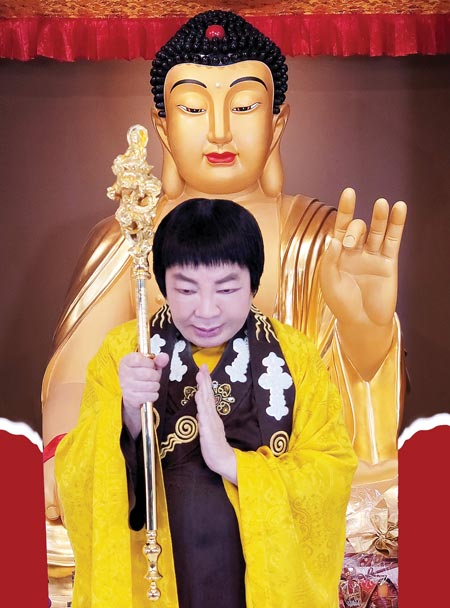
The Pope of Buddhism H.H. Dorje Chang Buddha III

For the sake of propagating Buddha Dharma and benefitting living beings, the World Buddhism Association Headquarters took the liberty to accept the conferment decree and the Pope of Buddhism Scepter. When the World Buddhism Association Headquarters respectfully presented the Pope of Buddhism Scepter and conferment decree to H.H. Dorje Chang Buddha III, His Holiness the Buddha III said: “I see that on top of this Scepter is the seated Shakyamuni Buddha, we should be respectful to Namo Shakyamuni Buddha.” His Holiness the Buddha then raised the Scepter above His head and made a symbolic closed palm gesture with one hand to express His respects. However, H.H. Dorje Chang Buddha III also expressed that He is just a humble cultivator and resolutely would not accept such a conferment. Hence, His Holiness the Buddha immediately returned the conferment decree and the Pope of Buddhism Scepter to the two Councils.

On September 23, 2020, the World Peace Prize Awarding Council and World Peace Prize Religious Leaders Title Awarding Council passed an ultimate joint resolution, determining that the return of the Pope of Buddhism Scepter and conferment decree by H.H. Dorje Chang Buddha III was not effectible. On September 24, the joint Chair of the World Peace Prize Awarding Council and World Peace Prize Religious Leaders Title Awarding Council Suzi Leggett made the ultimate announcement at the Holy Miracles Temple of the World Buddhism Association Headquarters: “Over the past several decades, the World Peace Prize Awarding Council has presented the World Peace Prize to presidents, spiritual leaders, and prime ministers of many nations, including President Ronald Reagan, Hon. Mahatma Gandhi, and H.E. Yitzhak Rabin. There has never been a precedence of an award being retracted or returned. All determinations made and implemented by our Councils are very solemn, serious, and absolutely cannot be changed. The return of the Pope of Buddhism Scepter and conferment decree by H.H. Dorje Chang Buddha III is deemed not effectible. The title, status, and authority of the Pope of Buddhism belong only to H.H. Dorje Chang Buddha III, and cannot be exercised by anyone else.” Chair Leggett once again requested that the World Buddhism Association Headquarters accept and present to H.H. Dorje Chang Buddha III the Pope of Buddhism Scepter and conferment decree that His Holiness the Buddha previously returned.

Representing the World Buddhism Association Headquarters, Venerable Mozhi Rinpoche accepted the conferment decree and Pope of Buddhism Scepter. He said during his speech, “The World Buddhism Association Headquarters considers that the decision made by the two Councils is remarkably proper and sagacious.

“Ever since Namo Shakyamuni Buddha entered parinirvāṇa, there has not been a supreme leader who has the authority to guide all Buddhists the same way that the Buddha did. However, the authoritative position of the Pope of Buddhism certainly is not a role that a leader of a single Buddhist sect would have the attributes to fulfill; rather, the Pope must be a leader who has authority over the entirety of Buddhism, namely, a Buddha.

“Namo H.H. Dorje Chang Buddha III holds the perfect teachings of Buddhism and meets the criteria used by all Buddhist sects to recognize a Buddha. His inherent nature is in accord with that of a Buddha. His unsurpassed, complete, and perfect enlightenment is in accord with that of a Buddha. Just based on the accomplishment of H.H. Dorje Chang Buddha III in Lifting the Pestle onto the Platform, surpassing His own base weight standard by 59 levels, no one else can possibly reach such a record.

“The state of virtue of H.H. Dorje Chang Buddha III is that of a Buddha. His Holiness the Buddha has perfect mastery of Exoteric and Esoteric Buddhism, perfect accomplishments in the Five Vidyas, and so forth, all of which accord with the unsurpassed, complete, and perfect enlightenment of a Buddha.

“In more than 2,000 years, there has not been a Buddhist Holy Guru in this world who possesses the same Buddha level qualities. Just by the facts that H.H. Dorje Chang Buddha III vowed and carries out the vow to benefit living beings purely on a voluntary basis and does not accept any offerings throughout His entire life, and that He possesses perfect wisdom and unimpeded accomplishments, no other Holy Guru can be of comparison. Only Namo H.H. Dorje Chang Buddha III can take on this immensely noble, holy, and heavy responsibility of the Pope of Buddhism, to properly guide Buddhists onto the correct path of learning Buddhism.

“Therefore, on behalf of Buddhists, the World Buddhism Association Headquarters thanks the World Peace Prize Awarding Council and the World Peace Prize Religious Leaders Title Awarding Council for having made the ultimate decision.”

H.H. Dorje Chang Buddha III is selfless and noble, and the first person in Buddhism to possess substantive holy realization power of a Buddha and perfectly flawless accomplishments at the pinnacle of the Five Vidyas. These are the qualities that no other eminent Buddhist monastic or virtuous person in this world has so perfectly attained. It is naturally a matter of course that H.H. Dorje Chang Buddha III is the veritable Pope of Buddhism.

Source: https://asianjournal.com/life-style/arts-culture/the-pope-of-buddhism-his-holiness-dorje-chang-buddha-iii/

The Mirror of the Heart: A Lesson from a Single Father

A single father had just lost his job. All day, he wandered the streets, clinging to the hope that he might find work. But as the sun set, he returned home empty-handed.

Defeated and exhausted, he stepped into a small tavern, spent his very last coin, and finally stumbled back to his modest home.

That evening, he discovered that his son’s grades had slipped. He didn’t say a word. Instead, he shot the boy a harsh glare before collapsing into bed without another thought.

The next morning, out of habit, he opened his diary and wrote:

March 7, Tuesday.
This is the worst day ever. Lost my job, out of money, no work to be found, and my son is a disappointment. A day of utter discouragement.

After his son left for school, he happened to notice the boy’s diary lying open on the table. Curious, he began to read:

March 6, Monday.
Today, on my way to school, I helped a blind man cross the street. I was so happy. My grades weren’t good this time. I told Dad, and he didn’t scold me. He looked at me with such deep affection. I felt so encouraged. I’m determined to study hard so I won’t let him down.

Affection? the father thought, bewildered. I was glaring at him in frustration. How could he have seen that as love?

He turned another page:

March 5, Sunday.
The old grandpa next door is playing the violin better and better. He’s so old but still practices so diligently. I really want to learn from him.

His heart sank as he flipped to his own entry from that same day:

March 5, Sunday.
That annoying old man next door is playing that wretched violin again. On my only day off, he won’t even let me sleep in peace. So hateful—I wish I could smash that stupid instrument.

In that moment, the father felt the weight of shame press him down onto the bed. He was in his fifties, yet his spirit had been broken by hardship—his mindset darker and more defeated than that of his young child.

He realized, with painful clarity, that he had been looking at life through a lens clouded by bitterness. And that lens had distorted everything.

Deeply remorseful, he resolved to learn from his son—to face every trial with acceptance and gratitude instead of resentment. He knew he could no longer wear the mask of anger while searching for work. No matter how difficult life became, he would choose a sunnier disposition.

And when your mindset changes, everything changes.

The very next day, he found a suitable job. He began to meet life’s challenges with a heart full of gratitude.

Life is like a mirror: when you smile at it, it smiles back. When you cry, it weeps with you.

The human heart is also a mirror, reflecting the world within us. It reveals whether we carry kindness or bitterness, whether we live in light or in darkness.

With a single thought, we can create heaven or hell. Everything depends on whether we imprison or liberate our own hearts.

In the end, we are the creators of our own destiny.

Link: https://peacelilysite.com/2025/06/27/the-mirror-of-the-heart-a-lesson-from-a-single-father/

Wealth Without Integrity: A Cautionary Tale from the Buddha

The Buddha once taught at the Jeta Grove in Anathapindika’s Park in the kingdom of Shravasti. At that time, there lived a wealthy elder whose fortune was immeasurable. He had five intelligent daughters but no sons. Upon his passing, the law dictated that if no male heir existed, the family estate would be seized by the state. However, the elder’s wife was pregnant. His daughters humbly petitioned the king to delay the confiscation until the child was born.

Not long after, a baby boy was born. Yet to everyone’s shock, the child was severely deformed—he had no eyes, ears, tongue, hands, or feet, only male genitals. Despite this, the king acknowledged him as the rightful heir, saving the family’s wealth. The boy was named Mantuipili.

Puzzled by this karmic outcome, an elder approached the Buddha and asked, “Why would a child be born into such wealth, yet with such tragic physical deformities?”

The Buddha then revealed a powerful story from a distant past:


In a previous life, there were two noble brothers: Dhanavasita, the elder, and Shilavasita, the younger. Dhanavasita was known for his honesty and generosity from a young age. He gave freely to the poor and upheld moral integrity. Because of his character, the king appointed him as a judge, and people trusted his word above all else. At that time, written debt contracts were unnecessary—a judge’s witness sufficed.

One day, a merchant preparing for a sea voyage borrowed a large sum from Shilavasita. Bringing his young son and the money, Shilavasita went to Dhanavasita and asked, “Brother, this merchant has borrowed money. Please bear witness. If anything happens to me, ensure my son receives what is owed.”

Dhanavasita agreed. Soon after, Shilavasita passed away. The merchant’s ship was wrecked in a storm, and he barely survived, returning empty-handed. Out of compassion, Shilavasita’s son decided not to demand repayment while the merchant was destitute.

Years later, the merchant sailed again and returned wealthy. Believing the boy had forgotten or was too kind to collect the debt, the merchant decided to test him. He paraded into the city riding a jeweled horse, dressed in luxurious robes. Seeing this, the boy sent someone to request the repayment.

The merchant, seeking to avoid repayment, schemed to silence the judge. He offered a precious gem worth 100,000 silver coins to Dhanavasita’s wife, asking her to persuade the judge not to testify. She warned, “My husband is a man of virtue, but I’ll try.”

That evening, she told the judge. Dhanavasita was unwavering: “I was made a judge because of my honesty. I cannot speak even a single false word.” She returned the gem.

The merchant returned with a gem worth 200,000 silver coins, and the wife—overcome by greed—accepted. That night, she again tried to persuade her husband. He refused once more, saying, “If I lie, I will lose all honor in this life and suffer in future lives.”

In desperation, the wife threatened, “If you don’t comply, I’ll kill our child and take my own life!” Dhanavasita was heartbroken. He agonized: “If I refuse, I lose my child. If I agree, I lose my integrity and invite endless suffering.”

Overwhelmed, he gave in.


The merchant, emboldened, paraded through the streets again—this time on a jewel-adorned elephant. The boy approached him: “It’s time to repay the debt.”

Feigning confusion, the merchant said, “What debt? Who witnessed this?”
The boy replied, “My father and I gave you the money, and my uncle, the judge, was the witness.”
The two went before the judge. The boy recounted the event.
To his shock, the judge responded, “I know nothing of this matter.”
The boy cried out, “Uncle! You saw it with your own eyes and agreed to witness it. How can you deny this?”
The judge replied coldly, “That never happened.”

In deep pain, the boy exclaimed, “You were trusted for your integrity and chosen to judge others. If you betray your own nephew, how many others have suffered injustice? The truth will be known in time.”


The Buddha then turned to the elder and said: “Do you know who that judge was? He is now the deformed child, Mantuipili. Because he uttered just one false word, he fell into the great hell realms and endured tremendous suffering. For five hundred lifetimes, he was born with severe deformities. Yet due to his past acts of generosity, he continued to be born into wealthy families.

This is the law of karma. Good and evil never cancel each other out—each brings its own result, no matter how long it takes.

Therefore, practice diligently. Guard your body, speech, and mind. Never create evil karma lightly.”


This profound tale offers a timeless lesson. A single dishonest act can result in unimaginable suffering, even over lifetimes. On the other hand, a heart inclined toward generosity continues to yield blessings, regardless of outer form.

Buddhism teaches us to live with integrity, mindfulness, and compassion—not only for the peace of this life, but for the well-being of lives to come.

link: https://peacelilysite.com/2025/06/25/wealth-without-integrity-a-cautionary-tale-from-the-buddha/

A Loaf of Bread and a Grateful Heart

During the Great Depression, a wealthy baker summoned the twenty poorest children in town and said to them,
“Until God brings better times, you may each come here every day and take a loaf of bread.”

Every morning, these hungry children would rush forward, crowding around the basket of bread, pushing and shouting, each one trying to grab the biggest loaf. After snatching their bread, they would dash off without even a word of thanks to the kind-hearted baker.

But there was one girl, a poorly dressed little girl named Gretchen, who stood out from the rest. She never pushed or shouted, nor did she fight for the largest loaf. Instead, she quietly waited at the side until all the other children had taken theirs. Then she would humbly pick up the smallest loaf left in the basket. Without fail, she would gently kiss the baker’s hand in gratitude before happily heading home with her bread.

One day, after the others had left, shy little Gretchen received a loaf even smaller than usual. Still, she kissed the baker’s hand and thanked him sincerely as always. When she returned home, her mother cut the bread open—and to their amazement, found several shiny silver coins hidden inside.

Her mother gasped, “Gretchen! Take the money back immediately. The baker must have accidentally dropped it into the dough while kneading. Hurry, return it and give it back to that kind man yourself!”

When Gretchen returned the coins, the baker gently told her,
“No, my child, this was no mistake. I placed the coins there on purpose. I wanted to teach you something: Those who are humble and considerate will be blessed by God. May you always keep a peaceful and grateful heart. Go home and tell your mother—this is God’s reward.”


A heart of humility is like the sky above, the sea upon the earth, and the valleys between the mountains—
Humble people are vast because they are tolerant, and powerful because they are generous.

Those who are eager to fight will find Heaven itself contending against them.
But those who yield and show humility will find that Heaven yields to them.

Link:https://peacelilysite.com/2025/06/16/a-loaf-of-bread-and-a-grateful-heart/

The Power of Small Good Deeds

Kindness Is Destiny

“Those who genuinely help others always end up helping themselves.”
This powerful truth was the headline of a Washington Post article recounting the inspiring life story of Carlos Gutierrez. From humble beginnings as a working-class youth, he rose to become one of the most respected figures in American business and government. His secret? A simple yet profound practice: doing one good deed a day.

Carlos Gutierrez is best remembered for saying:
“A person’s destiny is not necessarily shaped by a single great act. I believe that more often, it is shaped by small acts of kindness in everyday life.”

Born into a privileged family, Gutierrez’s early life was marked by comfort and stability. But everything changed after a revolution forced his family to flee their island home. They arrived in Miami with nothing. At the age of fifteen, to help support his family, Carlos took his first job as a waiter in a small seaside restaurant.

He was diligent, eager to learn, and even willing to work without pay. His commitment caught the eye of the restaurant owner, who invited him into his home and introduced him to his children to help Carlos improve his English.

Thanks to his strong work ethic and positive attitude, Gutierrez was soon recommended for a second job—this time as a salesman and delivery driver at a food company. Before he began, his father passed on a simple family principle: “Do one good deed a day.”
He explained that this habit had helped build their once-successful life, and urged Carlos to live by it.

Carlos took that lesson to heart. While delivering oatmeal to mom-and-pop shops around the city, he went out of his way to help others—carrying letters to nearby towns, giving children rides home from school, offering small kindnesses without ever expecting anything in return. He did this joyfully, for four years.

In his fifth year, the company recognized his contributions in a remarkable way. They promoted him to lead marketing operations for Latin America from their Mexico office. His performance review noted:
“This employee, over the past four years, has personally accounted for 40% of Florida’s total sales volume. He should be promoted.”

From there, his rise was meteoric. He took on leadership across Canada and the Asia-Pacific region, eventually becoming CEO of the company.

Later, as top American corporations like Coca-Cola and Colgate considered him for their CEO positions, President George W. Bush nominated him as Secretary of Commerce in the United States government.

Carlos Gutierrez’s story reflects a timeless truth found in Buddhist teachings. A Buddhist master once shared how, in the early days of his Dharma teaching, only a few rural housewives followed him. He taught them to practice kindness in the simplest way:
“Take a small coin from your grocery money—just a dime—and use it each day to do a good deed.”
At the end of the month, they would have performed thirty selfless acts from the heart. One good deed a day, and one’s merit grows.

The practice may seem simple, but when carried out with sincerity and perseverance, it awakens our inner awareness. Like a stream that flows quietly but never ceases, daily kindness trains the mind to stay rooted in goodness and deepens our spiritual cultivation—from surface-level thoughts to the very heart of intention.

Traditional Chinese culture also upholds the principle of “doing one good deed a day.” This value is deeply reflected in the classic text The Four Lessons of Liaofan, where Yuan Liaofan outlines a path of self-transformation through the active cultivation of virtue. By committing to perform a thousand good deeds, he not only benefited others but also profoundly changed his own destiny.

Even a single kind thought toward others is an act of goodness. A word that uplifts or benefits someone is a good deed. And a small action—no matter how minor—that helps another person is still a meaningful expression of kindness.

Whether through our thoughts, speech, or actions, if we put others first, we are cultivating virtue. That is the essence of being a good human being.

And importantly, we must remember: never withhold kindness just because it seems too small.
Do good whenever the opportunity arises. Act from the heart, with sincerity and joy—not for show, not for praise—but naturally and spontaneously, with the intention to benefit others.
This is the foundation of true bodhisattva conduct.

Goodness does not need an audience. “Virtue does not require recognition; Heaven always sees our good deeds.”
A seed of kindness, planted in silence, will one day bloom with beautiful results—often when we least expect it.

So let us each begin with just one small act of kindness a day. It may seem simple, but over time, it has the power to change not just our lives—but the world.

Link:https://peacelilysite.com/2025/06/05/the-power-of-small-good-deeds/