In this unstable world, it sometimes feels as if my heart is on a rollercoaster whenever I turn on the TV or scroll through the news. Fear, anger, and uncertainty seem to dominate the headlines. Yet a few days ago, I came across a powerful teaching from Hopi Indian Chief White Eagle that lifted my spirit and gave me a new way of looking at things.
He said:
“This moment humanity is experiencing can be seen as a door or a hole. The decision to fall in the hole or walk through the door is up to you. If you consume the news 24 hours a day, with negative energy, constantly nervous, with pessimism, you will fall into this hole.
But if you take the opportunity to look at yourself, to rethink life and death, to take care of yourself and others, then you will walk through the portal.
Take care of your home, take care of your body. Connect with your spiritual home. When you take care of yourself, you take care of everyone at the same time.
…Resistance is resistance through joy! You have the right to be strong and positive. And there’s no other way to do it than to maintain a beautiful, happy, bright posture.
When we cross the threshold, we have a new worldview because we faced our fears and difficulties. This is all you can do now:
– Serenity in the storm
– Keep calm, pray everyday
– Make a habit of meeting the sacred everyday.
…Show resistance through art, joy, trust and love.”
These words made me pause and reflect. They reminded me that no matter how chaotic the outside world may appear, the choice of how we respond rests within us. We can drown in fear, or we can step through the door into growth, healing, and a deeper connection with life.
The truth is, this world is neither purely rosy nor entirely thorny. A rose, soft and fragrant, blooms on a stem covered with sharp thorns. The beauty does not erase the thorns, and the thorns do not diminish the rose. Both exist together.
An optimist may see only the rose, while a pessimist sees only the thorns. But a realist recognizes that life is always both—the blessings and the hardships, the joys and the sorrows. Wisdom is learning to admire the rose without being blinded by it, and respecting the thorns without being wounded by them.
Chief White Eagle’s message is a reminder that resilience comes not from denial or despair, but from balance—from facing reality with serenity, caring for ourselves and others, and finding joy even amid trials. When we do this, we not only endure the storm—we walk through the door into a brighter, more compassionate world.
In the Mountain Tree chapter of the ancient Taoist classic Zhuangzi, there’s a simple yet profound story:
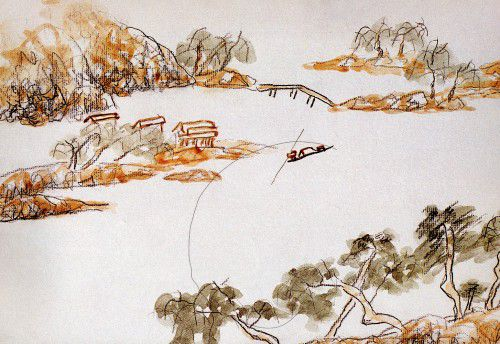
A man was crossing a river in a small boat when he noticed another boat drifting straight toward him. He shouted several times to warn the oncoming boat, but received no reply. Furious, he began cursing the other “reckless” person. But when the boats collided, he realized the other vessel was completely empty. In that moment, his anger vanished into thin air.
This story reveals a timeless truth: Often, what triggers our anger isn’t real harm but our judgment about the intention behind an event—our belief that someone shouldn’t have acted a certain way, or that people like that shouldn’t exist.
Imagine the same situation, but this time with a person steering the other boat. Most of us would react with outrage: “What’s wrong with you? Watch where you’re going!” A conflict would likely erupt. But when we know the boat is empty, we simply steer around it and move on.
This is beautifully explained in psychology by the ABC model:
A stands for the Activating event
B is our Belief about the event
C is the Consequence—our emotional response
It’s not the event itself that causes our reaction, but how we interpret it. Change your mindset, and your entire emotional response changes with it.
“The weak blame, the strong adjust, the wise let go.” How you choose to interpret the world shapes the emotional and spiritual life you live.
Zhuangzi’s parable invites us to practice a mental shift: what if we saw others as “empty boats”? When a coworker unintentionally bumps into you, instead of assuming hostility, think, “Maybe they were just distracted.” When a friend speaks harshly, perhaps they’re struggling with something you don’t know. Instead of reacting with pain or revenge, consider that it may not have been personal.
Seeing others as “empty boats” helps us release resentment, practice compassion, and expand our emotional resilience. It allows us to heal ourselves faster, without getting trapped in cycles of blame and victimhood.
German philosopher Arthur Schopenhauer once said:
“To be angry at someone’s behavior is as foolish as being angry at a rock blocking your path.” True wisdom lies in seeing through the illusion of control, and responding with tolerance rather than judgment.
When life doesn’t go our way, it’s easy to fall into the trap of self-pity: “Why is this happening to me?” But such thoughts only darken our mood and invite more misery.
The real shift happens when we stop blaming others and start examining our own mindset. By applying the “Empty Boat” perspective, we reduce conflict, soothe emotional storms, and gain a wider, calmer view of life. This isn’t just emotional regulation—it’s a deeper level of personal growth.
Zhuangzi also wrote:
“If a person can empty themselves and move through the world with humility, who can harm them?”
When we’re too attached to ego—too quick to feel offended, too focused on saving face—we inevitably clash with others. But if we release pride, prejudice, and the need to control, we become unshakable. No one can truly hurt us when we no longer take things personally.
Our mindset is the foundation of how we face adversity. Approach life with a peaceful, open heart, and life will respond in kind. Let go of the need for constant validation. Don’t let others’ words disturb your inner calm.
The journey of life is like sailing through mist—we never know what lies ahead. Complaining or getting angry doesn’t change reality; it only slows us down. But when we practice acceptance and face life with serenity, we go farther, and with greater ease.
Imagine all the unpleasant people or events in your life as “empty boats.” Let go of resentment and emotional baggage. You’ll find that forgiveness is not weakness, but a deep, penetrating wisdom. No longer a slave to your emotions, you become the true master of your mind.
May you carry an empty and serene heart, navigating life’s storms with grace, and holding on to peace amid the noise of the world.
Once upon a time in a small village, an old man spread a rumor that his neighbor was a thief. The accusation quickly circulated, and the young man was arrested. However, after a thorough investigation, the truth emerged—the young man was innocent. Though he was released, the damage had already been done. As he walked home, shame and humiliation clung to him like a heavy shadow. In pain and frustration, he took the old man to court for defamation.
In court, the old man defended himself, saying, “They were just comments. I didn’t mean any real harm.”
The judge paused and then said, “Before I pass judgment, I want you to do something. Write down everything you said about this young man on a piece of paper. Then cut the paper into small pieces, and on your way home, scatter them to the wind. Tomorrow, return for your sentence.”
The old man did as he was told. The next day, he stood before the judge once again.
“Before I deliver your sentence,” the judge said, “go out and gather every piece of paper you threw away yesterday.”
“But that’s impossible!” the old man protested. “The wind has carried them far and wide—I’ll never be able to get them all back.”
The judge nodded gravely. “Exactly. Just like those pieces of paper, your careless words have been scattered beyond recall. A few simple comments have the power to destroy a person’s honor and reputation—damage that can be nearly impossible to undo.”
The old man bowed his head in shame and asked for forgiveness.
This story speaks to a deep truth: our words, once spoken, can never be fully taken back.
Benjamin Franklin once said, “Fool’s hearts are in their mouths; wise men’s mouths are in their hearts.” These timeless words caution us against speaking recklessly. A wise person thinks carefully before they speak—choosing words with care, filtering emotion through understanding, and weighing their potential impact. Such restraint not only prevents misunderstandings and harm but also reflects emotional maturity and compassion.
Think more. Speak less.
In Buddhist teachings, this idea is beautifully echoed through the precepts on right speech. Practitioners are taught to be mindful of their word karma and to avoid four kinds of harmful speech:
Lying
Harsh speech
Divisive speech
Idle chatter
Each of these can sow seeds of suffering—for others and for ourselves.
Let’s remind ourselves daily: Be the master of your mouth, so you’re not a slave to your words.
Gossip can be more damaging than theft—it steals a person’s dignity, honor, and credibility, none of which are easy, or even possible, to restore. A wise saying puts it well: “When your feet slip, you can recover your balance. But when your tongue slips, you can never recover your words.”
Let us choose silence over harm, kindness over carelessness, and wisdom over impulse. Because our words, like our actions, carry the power to build—or break—the world around us.
After more than fifty years of experiencing life’s ups and downs, I have finally come to understand the profound importance of quieting down, reflecting, and learning how to truly love myself. It is only through self-love that we can genuinely love others.
“When I truly began to love myself, I started going to bed earlier and learned to enjoy exercise. I stopped getting lost in worries and anxieties. Instead, I became confident and pursued meaningful people and endeavors with passion. That was the moment my life truly began.”
Understanding another person is never easy. We must walk in their shoes, see the world through their eyes, and consider life from their perspective. Yet, this journey often brings sadness. But in that sadness, we discover clarity—we learn to focus on what truly matters.
Rather than wasting our time on trivial concerns and unfulfilling distractions, we should devote ourselves to nourishing pursuits: sleep, books, exercise, the beauty of nature, and, above all, the love we have for the world. When we consciously take control of our time, the tranquility of daily life emerges naturally, and anxiety fades away.
Kahlil Gibran once said, “If one day you stop searching for love and simply love; stop yearning for success and just do; stop pursuing empty growth and begin to cultivate your character, then your life will truly begin.” This wisdom reminds us that authentic living starts with our inner transformation.
Loving yourself means understanding that pain and emotional turmoil are often just reminders to live authentically. Unless it stems from physical illness, much of our suffering comes from misplaced values rather than objective reality. The things we cling to the most are often the very things that torment us, while those beyond our control are simply not worth our distress. True wisdom lies in knowing when to hold on and when to let go.
To be nurtured by others is a gift; to nurture others is an even greater act of cultivation.
May we have eyes that shine like stars, hearts as vast as the ocean, and lives that leave behind the fragrance of kindness wherever we go.
The Wisdom of Middle Age
Middle age teaches us the value of patience, restraint, and measured action. In our youth, we often equate eloquence with intelligence, only to later realize that true wisdom often lies in silence. As W. Somerset Maugham observed, “In a crowd, the quietest person is often the most powerful.”
In conversations, we should not rush to take center stage. Instead, we should listen more and speak less, exercising the grace of restraint. When others share, let us resist the urge to interrupt. When disagreements arise, let us not hastily refute. Instead of saying, “I think,” we can ask, “What do you think?” Instead of declaring, “You are wrong,” we can offer, “Perhaps there is another way to see this.” By replacing subjective judgment with open-minded awareness, we foster deeper understanding.
The world is not simply black and white. By speaking a beat slower and thinking a step faster, we cultivate clarity and wisdom in our lives.
In psychology, there is a concept called task separation: our emotions are our responsibility, while others’ reactions belong to them. The wisdom of softness lies in maintaining a gentle boundary between the two. It allows us to be vulnerable and to accept imperfection in ourselves and others. Harsh confrontation often leads to conflict, but a simple, “I understand your difficulties,” can resolve tensions effortlessly. As Alfred Adler wisely said, “True strength lies in the courage to expose one’s vulnerabilities.”
Try shifting from “I must win” to “We can solve this together.” Instead of “Why don’t you understand me?” consider, “Perhaps I need to express myself differently.” Softness is not weakness—it is a space that allows relationships to breathe and grow.
Kazuo Inamori once said, “What you hold in your heart is what you will encounter.” True generosity is not about calculated acts of kindness but instinctive goodwill. A small gesture—carrying a neighbor’s trash, offering a sincere compliment, or leaving a light on for a loved one—creates ripples that spread far beyond our immediate reach.
A generous heart does not tally whether kindness is repaid. As the Tao Te Ching states, “The more you give to others, the more you have yourself.” Every act of warmth we extend ultimately enriches our own lives.
As we journey through middle age, wisdom is cultivated through restraint. In youth, we may be like strong liquor—bold and fiery; with time, we become like fine tea—subtle yet deeply enriching. Speaking slowly allows us to reflect, gentleness fosters harmonious relationships, and generosity ensures lasting blessings.
These qualities of slow cultivation cannot be rushed or feigned. But with daily practice and yearly dedication, we will come to embody the depth of the old adage: “Still waters run deep.”
In a world of endless distractions and relentless challenges, Carl Jung’s reflections on life’s most essential lessons remain profoundly relevant. In his later years, Jung observed that accepting all aspects of life is not just important—it is the cornerstone of a meaningful existence. His insights offer a timeless guide for navigating the complexities of modern society.
Jung poignantly recalled how people often try to escape the realities that life presents, whether in the form of suffering, challenges, or existential questions. This avoidance, he argued, only deepens pain and confusion. By evading suffering and placing blame on external circumstances or personal shortcomings, individuals reject the price of truly living. Such resistance, rather than shielding us from discomfort, births an even greater torment: the isolation and repression of the human spirit.
In today’s fast-paced world, where instant gratification and superficial solutions abound, Jung’s warning is especially pertinent. Modern society often encourages us to numb our struggles—whether through technology, consumerism, or escapism—but this path leads not to fulfillment, but to emptiness.
The Value of Acceptance
Jung’s philosophy centers on the idea that life’s true value lies in accepting one’s destiny, no matter how daunting it may seem. He acknowledged the inevitability of suffering but believed that such pain should stem from our authentic choices and realities, not from a refusal to face life’s responsibilities. Staying true to oneself and living authentically, Jung suggested, is the most profound response to life. As he put it:
“I have always remained true to myself, doing everything I could to the best of my knowledge and ability. As for whether I was right or wrong, I cannot say.”
This philosophy calls on us to embrace the fullness of life, including its struggles, as a path to authenticity and wholeness.
One of Jung’s most profound insights is the intergenerational impact of avoiding one’s destiny. He reflected on the heavy psychological burdens he inherited from his parents, describing them as unfulfilled responsibilities that weighed on his life like a snail’s shell—inescapable and ever-present. Jung warned that when we refuse to confront our challenges, we inadvertently pass these unresolved burdens to the next generation.
In the modern era, this serves as a powerful reminder of the importance of addressing our inner conflicts. By facing our struggles head-on, we not only free ourselves but also spare our children from carrying the weight of our unfinished business.
Jung believed that avoiding life’s essence severs us from our inner selves. While it may seem that evading certain troubles brings temporary relief, such avoidance also cuts us off from the vitality and richness of life itself. Ultimately, the deepest regrets arise not from the joys we never experienced, but from the moments we failed to embrace.
This insight is especially relevant in an age where disconnection has become commonplace. Whether through the overuse of technology or the prioritization of material success over personal growth, many people find themselves estranged from their true selves. Jung’s call to embrace life fully offers a powerful antidote to this modern malaise.
A Path to Wholeness
Jung’s enduring wisdom reminds us that the worth of a human being lies in taking responsibility for their own debts. This is not merely a duty but a journey toward completeness. As he said:
“The worth of a human being lies in taking responsibility for their debts—not just as a duty but as a path to wholeness.”
This profound philosophy encourages us to accept life, embrace our true selves, and confront our challenges with courage and authenticity. In doing so, we reconnect with our inner selves and pave the way for a more meaningful existence.
Jung’s reflections offer a timeless guide for navigating the complexities of modern life. By rejecting avoidance, accepting life’s realities, and living authentically, we can overcome the spiritual isolation that plagues our era. His philosophy is a call to action for anyone seeking to live a life of depth, connection, and purpose.
As we face the uncertainties of today’s world, let us carry forward Jung’s legacy and strive to embrace all aspects of life. In doing so, we honor his profound insights and open the door to a richer, more fulfilling human experience.
Generosity is an altruistic intention that brings joy to sentient beings and delight to all Buddhas. It involves considering others and giving up one’s own body, life, and possessions, even extending to the giving of the Dharma. In the very act of giving, one not only eliminates the habitual tendency of stinginess but also helps others overcome their difficulties. At the same time, one attains joy and freedom through a pure, selfless mind.
In Buddhist practice, generosity is the first of the six Pāramitās (perfections) that guide practitioners on the path to enlightenment. The Buddha teaches that acts of giving bring five kinds of merits:
Longevity without misfortune.
A dignified and pleasant appearance.
Abundant energy and strength.
Joy and freedom from worries.
Wisdom and eloquence.
However, the intention behind giving is crucial. The thoughts and mindset of the giver determine the outcomes of their actions. The Buddha provided profound insight into this during a conversation with Venerable Sāriputta.
The Conversation Between the Buddha and Sāriputta
One time, Venerable Sāriputta asked Shakyamuni Buddha for clarification about the practice of generosity:
“Lord, is it possible that one person may give a gift of a certain kind, and it yields little fruit, while another gives the same kind of gift and yet it yields great fruit and benefit?”
The Blessed One replied, “Yes, Sāriputta, it is possible that a person may give a gift of a certain kind, and it does not bear great fruit, while another person gives the same kind of gift and it bears great fruit and benefit.”
“But Lord, what is the cause and reason for this difference? Why does one person’s gift bring small results while another’s yields much greater rewards, even when the gifts are of the same kind?”
The Blessed One explained, “Sāriputta, there are cases where a person gives a gift with a mind seeking personal profit, attached to the reward, hoping to enjoy it in the afterlife. Such a person may offer food, drink, clothing, vehicles, garlands, perfumes, ointments, bedding, shelter, or lamps to a contemplative or a brahmin. What do you think, Sāriputta? Could a person give a gift with such intentions?”
“Yes, Lord,” Sāriputta replied.
The Blessed One continued, “When such a person gives with a mind seeking personal gain, they may be reborn in the realm of the Four Great Kings. But after the results of that action are exhausted, they return to this world.
“However, there is another person who gives a gift not for personal profit, nor with a mind attached to the reward, but with the thought, ‘Giving is good.’ This person offers the same kinds of gifts to a contemplative or a brahmin. What do you think, Sāriputta? Could a person give in this way?”
“Yes, Lord,” Sāriputta affirmed.
“Such a person, on the break-up of the body after death, is reborn among the Devas of the Thirty-three. But once the result of that action has been exhausted, they, too, return to this world.
“Or a person may give with the thought, ‘This has been the custom of my family, handed down from my ancestors. I must uphold this tradition.’ When they pass away, they are reborn among the Devas of the Hours. Again, after the results of that action are exhausted, they return to this world.
“Alternatively, a person may give with the thought, ‘I am well-off, while others are not. It is only right that I share with those who have less.’ They are reborn among the Contented Devas, but eventually, they return to this world as well.
“Another person might give with the thought, ‘Just as the great sages of the past, such as Aṭṭhaka, Vāmaka, and others performed great sacrifices, so too will I distribute my gifts in this way.’ Upon death, they are reborn among the Devas who Delight in Creation, yet eventually return to this world.
“Or one may give a gift with the thought, ‘Giving brings serenity and joy to my mind.’ Such a person is reborn among the Devas Wielding Power over the Creations of Others. Still, after their merit is exhausted, they return.
“Finally, there is the person who gives not for future rewards, not out of custom, and not out of wealth or tradition, but with the thought, ‘This act of giving is an adornment and support for the mind.’ What do you think, Sāriputta? Could a person give in this way?”
“Yes, Lord,” Sāriputta answered.
The Blessed One said, “This person, upon the break-up of the body, is reborn among Brahmā’s Retinue. Having exhausted the results of their action, they do not return to this world but attain the state of non-return.
“This, Sāriputta, is the reason why one person’s gift may not bear great fruit, while another’s gift of the same kind may yield great fruit and benefit.”
The True Essence of Generosity
Generosity is not merely about the act of giving but also about the intention and mindset behind it. When one practices the virtue of giving with constant joy and unwavering determination, one cultivates all virtuous merits, attains pure samadhi, and gains clarity of insight. This clarity allows one to fully comprehend the origin of suffering, the cessation of suffering, and the path to liberation and happiness.
Therefore, one should always strive diligently and practice various virtuous deeds of giving, remembering that the purity of the heart and mind in the act of generosity determines its ultimate value and benefit—both for oneself and for the world.
Have you ever found yourself judging someone based on their flaws, only to realize later that you missed seeing their good qualities? In a world where we’re quick to notice shortcomings, Sima Yi (司馬懿), a brilliant statesman and military strategist of ancient China, offers a refreshing perspective:
“If one focuses on others’ shortcomings, there will be no one in the world worthy of association; but if one looks at their strengths, everyone can be a teacher.”
Sima Yi was a towering figure of the Three Kingdoms period in Chinese history. Known for his brilliance as a statesman and military strategist, he served under three generations of Wei rulers—Cao Cao, Cao Pi, and Cao Rui. His simple yet profound insight encourages us to shift our focus from criticism to appreciation—a practice that can transform not only our relationships but also our outlook on life.
How This Wisdom Applies to Us Today
Let’s face it, we all navigate relationships daily—whether at work, with friends, or within our families. And let’s be honest, people can be frustrating! A colleague might miss a deadline, a friend might cancel plans last minute, or a family member might nag you endlessly. It’s easy to dwell on these shortcomings. But what if, instead, we made a conscious effort to notice their strengths?
That colleague might be a creative genius, your friend might have a generous heart, and your family member might only want the best for you. This small shift in perspective can turn frustration into appreciation and conflict into connection.
I know someone who has mastered this mindset. He’s one of those people who can walk into a room full of strangers and leave with everyone feeling uplifted. Curious about how he does it, I once asked him his secret. His response was striking:
“If one focuses on others’ shortcomings, there will be no one in the world worthy of association. But if one looks at their strengths, everyone can be a teacher.”
This principle is at the core of how he interacts with people, and it shapes his approach to life:
Learning from those stronger than him: When he meets someone successful, he doesn’t feel intimidated or envious. Instead, he actively seeks to learn from them. Once, at a networking event, he struck up a conversation with a prominent entrepreneur. While most people kept their distance, he walked away with new insights and a potential mentor.
Finding harmony with equals: In competitive environments, he doesn’t see peers as threats but as partners. By yielding a little when disagreements arise, he often finds ways to collaborate that benefit everyone involved.
Helping those less capable: He’s quick to lend a hand to someone struggling. Whether it’s helping a colleague with a difficult task or mentoring a junior team member, his generosity earns him respect and trust.
Respecting elders: He genuinely values the wisdom of those who’ve walked life’s path before him, always showing them gratitude and deference.
This approach to life isn’t just about being a “nice person.” It’s about creating opportunities for growth, connection, and happiness. When we focus on others’ strengths instead of their flaws, we:
Build better relationships: People appreciate being valued for their good qualities.
Learn and grow: Everyone has something to teach us, from practical skills to life lessons.
Feel more positive: Seeing the good in others often helps us see the good in ourselves.
How to Practice Sima Yi’s Philosophy
Here’s how you can start applying this wisdom in your daily life:
Pause before judging: The next time someone irritates you, take a moment to think about their strengths. What do they bring to the table?
Ask questions: When you meet someone new, instead of focusing on surface-level impressions, ask about their experiences or skills. You might discover something inspiring.
Be generous: Whether it’s a compliment, advice, or a helping hand, giving a little can create a lot of goodwill.
Respect experience: Take time to listen to the stories of older generations. Their insights might surprise you.
Life is full of interactions, and every person you meet has a unique story, skill, or quality to offer. By shifting your perspective from criticism to appreciation, you’ll not only build stronger connections but also create a richer, more fulfilling life.
Sima Yi’s timeless wisdom reminds us that everyone we meet—whether a boss, a rival, or a stranger—can teach us something valuable. The next time you’re tempted to judge someone, ask yourself:
I want to love you without clutching, Appreciate you without judging, Join you without invading, Invite you without demanding, Leave you without guilt, Criticize you without blaming, And help you without insulting. If I can have the same from you, then we can truly meet and enrich each other.
Virginia Satir, a trailblazer in family therapy, is celebrated for her profound understanding of human emotions and relationships. Her timeless poem I Want to Love You encapsulates the essence of love in tender, insightful language. Satir invites us to redefine love as not merely an emotional bond but an intentional practice rooted in respect, understanding, and wisdom. (Photo from Wikimedia commons)
Satir emphasized the importance of nurturing love that is healthy, respectful, and boundaries. Her work reveals that true love fosters connection, trust, and mutual growth. This approach provides a blueprint for enriching relationships, particularly within families and marriages, where deep emotional bonds often coexist with challenges.
Love in Parent-Child Relationships
Satir’s therapeutic approach frequently emphasized parenting as a delicate balance of nurturing and letting go. One of her core principles was the importance of validating children’s emotions and individuality.
She often used metaphors to illustrate her points. For instance, she likened parenting to tending a garden: “You water the seeds, but you cannot decide how each flower will bloom.” This philosophy highlights the role of parents in providing unconditional support during early childhood while allowing space for independence as the child matures.
A famous anecdote from her work involved a mother who struggled with her teenage daughter’s rebellion. Satir encouraged the mother to write a letter expressing her love without judgment. This simple act fostered a renewed connection, demonstrating how acknowledgment and respect can rebuild bonds.
Parenting, as Satir taught, is about cultivating trust and allowing children to flourish as autonomous individuals, experiencing love as a source of empowerment rather than control.
Cultivating Love in Marital Bonds
Satir believed that love in marriage thrives on mutual respect, clear communication, and intentional effort. She often used her Family Sculpting technique to help couples visualize the dynamics of their relationship. By arranging family members to represent emotional closeness and distance, couples could see the need for adjustments in their behavior.
For instance, Satir once worked with a couple where the wife felt unheard. By “sculpting” the wife seated with her back to the husband, the couple visualized their emotional disconnection. This powerful exercise led to a heartfelt conversation where both partners committed to active listening and mutual validation.
In practice, Satir advocated for specific behaviors to nurture marital love:
A wife can replace nagging with encouragement and complaints with collaboration, creating a foundation of trust and partnership.
A husband can demonstrate responsibility through actions rather than words, replacing criticism with appreciation and patience.
These small, intentional changes can transform the atmosphere of a marriage, fostering harmony and mutual growth.
In all relationships—whether between parents and children or spouses—Satir emphasized equality, respect, and tolerance. She taught that love devoid of attachment, judgment, or control becomes a source of profound warmth and harmony.
Satir’s work inspires us to approach love as a life-affirming practice, one that enriches our connections and empowers personal growth. Whether through her transformative therapy sessions or the tender verses of her poetry, she reminds us that love is not just an emotion but a lifelong commitment to nurturing ourselves and those around us.
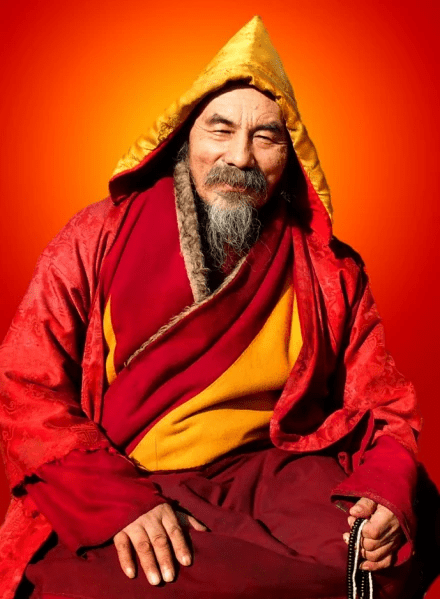
The most venerable H.E. Xiazhu Choying Rinpoche, also known as H.E. Xiazhu Qiuyang Rinpoche, is a highly accomplished Buddhist master from Guoluo, renowned for his spiritual achievements and mastery of Vajrayana teachings. Born in the winter of 1945, his birth was marked by extraordinary signs: thunder echoed across the sky, and colorful flowers blossomed spontaneously on the grasslands surrounding his birthplace. Many local herdsmen witnessed these rare and auspicious omens, heralding the arrival of an extraordinary being.
Renowned mantra master Regong, a revered monk, recognized the young child as the reincarnation of the venerable Chagailong Cichengdaji Rinpoche and the great master Naropa. From an early age, Rinpoche dedicated himself to the welfare of all sentient beings, living a life of simplicity and spiritual practice in the mountains. Throughout his life, H.E. Xiazhu Choying Rinpoche devoted himself to intense ascetic practice, receiving direct teachings from the supreme Vajrayogini and attaining profound realization. It is said that he could soar through the sky, using his monk robes as wings, a testament to his deep mastery of esoteric yoga.
At the age of fourteen, Rinpoche was ordained as a monk under the guidance of Xiari Huzuo Qintu Dannima. Over the years, he studied under more than 100 highly accomplished masters from all major Tibetan Buddhist schools, including:
H.H. the Tenth Panchen Lama and H.H. the Sixth Dharma King Gongtang Yongzeng from the Gelug sect.
H.H. Dodrupchen Rinpoche and Khenpo Mengse from the Nyingma sect.
Kanda Chiwa Gadan from the Sakya sect.
Lama Wangcai Kazhige from the Kagyu sect.
Jiana Bannan from the Jonang sect.
From these masters, H.E. Xiazhu Choying Rinpoche absorbed the essence of both exoteric and esoteric teachings. His spiritual journey led him to receive numerous secret mind-dharma teachings and unique empowerments, passed down without reservation, like water flowing freely from a vessel.
Rinpoche spent much of his life wandering through remote mountains and plains, sleeping in caves, eating cold rice and vegetables gathered from alms, and wearing discarded clothing. He lived humbly, indifferent to worldly praise or criticism, appearing at times like a wandering madman. For 25 years, he did not speak a single word, dedicating himself entirely to the practice of the Dharma, undisturbed by the distractions of the world. His rigorous practice took him to numerous sacred sites across Tibet, Qinghai, and India, where he engaged in solitary retreat, including seven years of intense meditation at a holy site in India.
Through these practices, Rinpoche achieved profound realization in the Dakini Dharma, the Great Perfection (Dzogchen) teachings, Kalachakra Vajra Dharma, and Green Tara Dharma. His deep connection with Vajrayogini from a young age allowed him to access highly secret dakini teachings. Buddhist masters of great virtue have recognized H.E. Xiazhu Choying Rinpoche as the true reincarnation of the great master Naropa, revered as the “venerable leader of 100,000 dakinis.”
In a historic event, the International Buddhism Sangha Association conducted an unprecedented Drawing Lots From a Golden Vase Ceremony, drawing one lot from 120 sealed lots. This ceremony affirmed that H.E. Xiazhu Choying Rinpoche is indeed the reincarnation of Patriarch Naropa, a recognition that had been previously confirmed by H.H. Dorje Chang Buddha III.
H.E. Xiazhu Choying Rinpoche has been praised by numerous revered masters, including H.H. the Tenth Panchen Lama, H.H. Dharma King Yongzeng, and H.H. Dharma King Jigme Phuntsok. Xiaridong Rinpoche, a master of the Yamantaka Dharma, described him as “a truly great master of the Dakini Dharma,” while H.H. Dharma King Jigme Phuntsok hailed him as “an extremely rare master who has perfected the Four Initiations Dharma.”
Despite his vast accomplishments, H.E. Xiazhu Choying Rinpoche remains humble and approachable, freely exercising his supernatural powers without attachment. Known for miraculous feats such as flying, multiplying his body, walking underwater, understanding multiple languages, foreseeing disasters and blessings, and reading people’s minds, Rinpoche is revered as “the unhindered rinpoche.” Clothing and personal items that Rinpoche has worn or used are said to be imbued with miraculous blessings. Many Tibetans have reported turning disasters into blessings, surviving dangerous situations, or recovering from serious illnesses after wearing or ingesting a small piece of his monk’s robe.
H.E. Xiazhu Choying Rinpoche’s legendary life and accomplishments have been widely recorded, including in books such as Holy Cultivation and Its Marvelous Fruits and Biographies of Ten Major Disciples of Dharma Kings. In Tibet, particularly in the Amdo region, almost everyone knows of his miraculous deeds. His life stands as a beacon of inspiration and a model of Dharma practice in this world of five defilements.
Upon reading A Treasury of True Buddha-Dharma, H.E. Xiazhu Choying Rinpoche immediately recognized H.H. Wan Ko Yeshe Norbu as the primordial Dorje Chang Buddha, the highest Buddha in Buddhism. His realization corroborated the recognition of other great holy dharma kings. H.E. Xiazhu Choying Rinpoche offered his heartfelt congratulations in a respectful letter, further acknowledging the sacred truth.
To the Most Revered and Holiest Wish-Fulfilling Jewel Dharma King:
I have learned that A Treasury of True Buddha-Dharma, is a sacred text about His Holiness, the supreme and most honored H.H. Dorje Chang Buddha III, is soon to be distributed worldwide. This book contains the highest, authentic Dharma that brings immense benefit to all sentient beings.
Master Dodrupchen, who is universally recognized as the second Guru Padmasambhava and the highest holy being within Tibetan esoteric Buddhism, expressed his astonishment in his formal congratulations. He praised the accomplishments of the Holiest Wan Ko Wish-Fulfilling Jewel Dharma King as truly extraordinary—unimaginable and miraculous, transcending the ordinary. These achievements express both the describable and indescribable absolute truth of the Buddha-Dharma.
We shall proclaim and praise the accomplishments of His Holiness throughout the Dharma realm. We express our deepest gratitude to His Holiness, the ancient Buddha, for His boundless and great compassion in coming to this world once again to benefit all sentient beings!
Xiazhu Qiuyang Rinpoche May 1, 2007
▲Original congratulatory letter from Xiazhu Choying in Tibetan
Once upon a time, the Enlightenment Being was born in a merchant’s family in Benares, in northern India. He was given the name Wise. When he grew up, he began doing business with a man whose name just happened to be Verywise.
It came to pass that Wise and Verywise took a caravan of 500 bullock carts into the countryside. After selling all their goods they returned to Benares with their handsome profits.
When it came time to split their gains between them, Verywise said, “I should get twice as much profit as you.” “How come?” asked Wise. “Because you are Wise and I am Verywise. It is obvious that Wise should get only half as much as Verywise.”
Then Wise asked, “Didn’t we both invest equal amounts in this caravan trip? Why do you deserve twice as much profit as I?” Verywise replied, “Because of my quality of being Verywise.” In this way their quarrel went on with no end in sight.
Then Verywise thought, “I have a plan to win this argument.” So he went to his father and asked him to hide inside a huge hollow tree. He said, “When my partner and I come by and ask how to share our profits, then you should say, ‘Verywise deserves a double share.”‘
Verywise returned to Wise and said, ‘My friend, neither of us wants this quarrel. Let’s go to the old sacred tree and ask the tree spirit to settle it.”
When they went to the tree Verywise said solemnly, “My lord tree spirit, we have a problem. Kindly solve it for us.” Then his father, hidden inside the hollow tree, disguised his voice and asked, “What is your question?” The man’s cheating son said, “My lord tree spirit, this man is Wise and I am Verywise. We have done business together. Tell us how to share the profits.” Again disguising his voice, his father responded, “Wise deserves a single share and Verywise deserves a double share.”
Hearing this solution, Wise decided to find out if it really was a tree spirit speaking from inside the tree. So he threw some hay into it and set it on fire. Immediately Verywise’s father grabbed onto a branch, jumped out of the flames and fell on the ground. He said in his own voice, “Although his name is Verywise, my son is just a clever cheater. I’m lucky that the one named Wise really is so, and I’ve escaped only half toasted!”
Then Wise and Verywise shared their profits equally. Eventually they both died and were reborn as they deserved.
The moral is: A cheater may be clever but not wise.