The Compassionate Vows of the Medicine Buddha: A Path to Health, Harmony, and Happiness

Source: Luobenkun Art museum

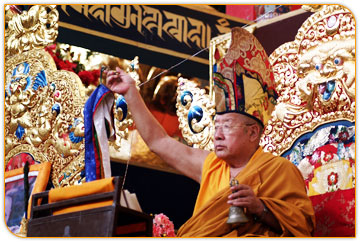
On the 29th day of the ninth lunar month, Buddhist disciples worldwide honor the birthday of Bhaisajyaguru Buddha, known as the Medicine Buddha or the Great Medicine King. He is also referred to as the Buddha of Twelve Great Vows, embodying deep compassion and healing. Presiding over the Pure Land of Lapis Lazuli Light in the East, the Medicine Buddha has inspired countless practitioners with his transformative teachings and boundless compassion.

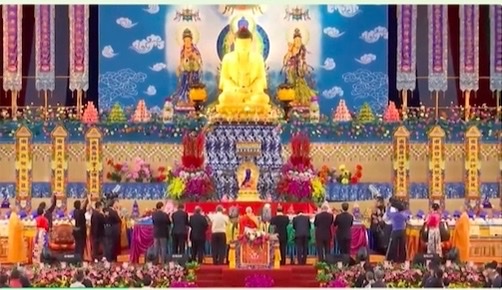
Buddhist communities celebrate this sacred day with ceremonies, reciting the Medicine Buddha Sutra, learning from his teachings, and making offerings. The Medicine Buddha Sutra recounts Shakyamuni Buddha’s dialogue with Manjusri Bodhisattva, where he reveals the profound virtues of the Medicine Buddha’s Pure Land and the twelve vows he made as a bodhisattva. These vows reflect his deep empathy for beings suffering from illness, poverty, and ignorance, and his wish to liberate them from these afflictions. This sutra is not only a sacred text but also a guide for overcoming life’s challenges, helping us gain inner peace, health, and happiness.
The sutra explains the Medicine Buddha’s teachings with a unique emphasis on relieving suffering in this life. By focusing on the here and now, the Buddha’s teachings encourage us to look at our lives with clarity, understand our challenges, and gain relief from worldly troubles. This practical orientation gives the Medicine Buddha Sutra a distinctive place in Buddhist practice, emphasizing the importance of compassionate action and wisdom in daily life.

The Twelve Great Vows of the Medicine Buddha

First:
I vow to assist those impoverished and tormented by constant struggles. Those who come across my name, sincerely honor it, and practice Dharma to build their merit will see their wishes come true.

Second:
I vow that my body shall shine as beams of brilliant light across this infinite, boundless world, freeing all beings from ignorance and worry through my teachings. May all beings attain a perfect state of character, integrity, and enlightenment, like the Buddha.

Third:
I vow that my body shall be like flawless crystal, radiating splendid light to all corners, enlightening beings with wisdom. Through the blessings of compassion, may all beings gain spiritual power and physical strength to achieve their aspirations on a virtuous path.

Fourth:
I vow to grant all beings the inexhaustible resources they need, freeing them from pain and guilt caused by material desires. While essentials such as clothing, food, shelter, and transport are needed, they should be wisely used. May they generously share these resources within the community to foster harmony.

Fifth:
I vow to lead those who have strayed back to the path of righteousness, guiding them toward enlightenment on the Buddha way.

Sixth:
I vow to enable all beings to uphold precepts of purity and morality. If they falter, they shall be guided to repent. Those who sincerely regret their wrongdoings and vow to change, with faith in the Buddha, shall be forgiven and regain purity.

Seventh:
I vow that all beings who are physically disabled or ill will be blessed with both physical and mental health. Those who faithfully honor the Buddha will receive these blessings.

Eighth:
I vow to alleviate the suffering of the poor and sick. May the ill be cured, the helpless supported, and the impoverished uplifted.

Ninth:
I vow to relieve the suffering of women seeking transformation. By hearing my name, paying homage, and praying, may their wishes be fulfilled, leading them ultimately to Buddhahood.

Tenth:
I vow to release all beings from harmful thoughts. I will guide them to righteousness and honor, so they may walk the Buddha way on a path of light.

Eleventh:
I vow to save those who have sincerely repented, including prisoners and victims of natural disasters. Those who are sincere will receive my blessings and be freed from suffering.

Twelfth:
I vow to relieve those facing starvation or committing crimes for survival. If they hear my name and hold it dear, I will lead them to the benefits of Dharma and favor them with the sustenance they need, helping them to lead peaceful, contented lives.

The Medicine Buddha’s great vows remind us of the healing power of compassion and inspire us to live with kindness and selflessness. Whether through reciting his name, chanting his mantras, or making offerings, we are encouraged to practice not only for our own relief but also for the welfare of all beings. By embodying the virtues outlined in the Medicine Buddha Sutra, we aim to carry forward the Buddha’s compassionate mission, helping ourselves and others find happiness, harmony, and well-being.

May we all find solace and empowerment through the compassionate vows of the Medicine Buddha and live our lives with health, joy, and a sense of unity with all beings.

Link:https://peacelilysite.com/2024/10/31/the-compassionate-vows-of-the-medicine-buddha-a-path-to-health-harmony-and-happiness/

Source: https://www.baromkagyu.org/medicine

Mindful Speech: How Verbal Karma Shapes Our Lives and Spiritual Growth

Understanding Verbal Karma through Chinese Traditional Culture and Buddhism

Language is one of the most powerful tools in human communication. It has the capacity to warm hearts, yet it can also deeply wound others. The ancient Chinese saying, “Illness enters through the mouth; misfortune comes out of the mouth,” serves as a profound reminder of the critical importance of our words. Another popular saying states, “A kind word can warm one for three winters, but a harsh word wounds deeply and is hard to forget.” Those who speak thoughtfully build strong relationships, while careless words often lead to unintended enmity or trouble. Indeed, many of life’s great misfortunes arise from verbal mistakes.

The Chinese ancients emphasized the principle of “cautious speech and careful actions,” which is not only a foundational aspect of personal conduct but also key to cultivating one’s character. In modern times, misunderstandings and conflicts often stem from believing rumors and passing on unverified information. This carelessness turns small issues into major problems, causing unnecessary harm. The impact of careless words can extend beyond personal relationships, disrupting families, friendships, and even society, sometimes escalating into widespread societal issues.

Buddhism’s Teachings on Verbal Karma: The Four Types of Harmful Speech

Buddhism profoundly explains the karmic consequences of speech. Among the “three karmas” — body, speech, and mind — verbal karma is especially critical. The Buddha taught that the consequences of verbal karma can be even more destructive than a raging fire because hurtful speech inflicts suffering on others. Buddhism identifies four types of harmful verbal karma:

  • Harsh Speech: Using cruel or aggressive words that directly harm someone’s spirit.
  • Slander: Spreading rumors or sowing discord, leading to broken relationships and disputes.
  • False Speech: Speaking untruthfully or deceiving others.
  • Frivolous Speech: Words that may seem pleasant but mislead or confuse others, distracting them from right mindfulness.

These forms of verbal karma not only harm relationships but also sow seeds of negative karma, inevitably leading to future suffering.

Chinese Buddhist texts record a story from the Song Dynasty: One day, Zen Master Guang XiaoAn observed two monks engaged in a discussion about the Dharma, during which they were surrounded and protected by heavenly beings. However, as soon as their conversation shifted to worldly topics, the deities departed, and evil spirits appeared, mocking the monks with vulgar language. This story serves as a reminder that even monks, when they deviate from righteous speech, will attract negative consequences.

In today’s world, the effects of verbal karma are even more pervasive. Carelessly spreading rumors, posting unverified information online, or making inflammatory remarks can cause lasting damage. Every harsh word is like a sharp blade, hurting not only others but also oneself.

Here is another powerful example that highlights the benefits of controlling one’s speech. At Mount Jiuhua, a sacred Buddhist site renowned for venerating Ksitigarbha Bodhisattva, there once lived a venerable nun. She was widely respected for her virtuous life and profound wisdom, embodying the transformative power of positive speech.

Even at the remarkable age of 136, she remained in good health, continuously reciting the mantra “Amitabha Buddha.” This practice not only reflected her spiritual merit but also her mastery of speech, and self-discipline.

The venerable nun understood the profound impact of verbal karma and strictly adhered to the principle of “cautious speech.” She refrained from gossip and focused her speech on chanting the Buddha’s name. In conversations about spiritual matters, she offered concise and clear guidance, leading people toward the right path. When topics were unrelated to spiritual practice, she chose silence. This self-discipline brought her immense merit, making her a role model for others. She often said, “For women, whether lay or ordained, if one can guard against verbal karma, one is halfway to becoming a Buddha.” Her words highlighted the critical role verbal karma plays in the spiritual path.

The venerable nun’s teachings emphasized the severe consequences of verbal karma. She made it clear that verbal karma is one of the greatest obstacles in spiritual practice and explained its multiple harmful effects:

  • Verbal Karma Obstructs Spiritual Progress: Every instance of harsh speech, slander, or frivolous talk not only harms others but also pollutes one’s mind, hindering spiritual purification.
  • Verbal Karma Leads to Lower Rebirths: Harsh speech is like a wildfire, burning away one’s merit and leading to severe karmic consequences.
  • Verbal Karma Disrupts Harmony: In families, communities, or society, harmful speech creates discord, making it difficult to maintain a peaceful environment for practice.
  • Verbal Karma Weakens Faith: Harsh and false words can cause others to lose faith in their spiritual path, even destroying their potential for future practice.

Her virtuous life and disciplined speech accumulated immeasurable merit. It is said that many patients with difficult illnesses were cured after receiving her blessings, a testament to the power of pure verbal karma.

Guarding Verbal Karma in Modern Life

In today’s world, controlling speech is more essential than ever. Here are some practical steps to guard against verbal karma:

  • Speak Cautiously: Think before you speak. Avoid spreading unverified information and refrain from gossiping or discussing others carelessly.
  • Control Emotions: When emotions are high, it’s easy to say things that cause harm. Cultivate a calm and peaceful mind to avoid saying hurtful things in the heat of the moment.
  • Cultivate Positive Speech: Use kind and uplifting words to resolve conflicts, build trust, and foster harmony in your relationships.

By understanding Buddhism’s teachings on verbal karma, we can become aware of the power of language and use it to bring peace and happiness to ourselves and others. Guarding speech is not only a sign of respect for others but also an essential aspect of personal spiritual practice.

Through mindful and compassionate speech, we can spread kindness, promote harmony, and enhance both the quality of our lives and the happiness of those around us. Let us strive together to use the wisdom of language to create more peace and happiness in our lives and in the lives of others.

Link:https://peacelilysite.com/2024/10/24/mindful-speech-how-verbal-karma-shapes-our-lives-and-spiritual-growth/

Holy Miracles Temple: A Sanctuary of Compassion and Healing Amid Global Turmoil

Holy Miracles Temple, located at 1730 N. Raymond Ave., Pasadena, CA, serves as a sanctuary dedicated to teaching the true Dharma of the Tathagata, as transmitted by Namo H.H. Dorje Chang Buddha III and Shakyamuni Buddha, guiding disciples on their path to liberation and spiritual accomplishment. Grounded in the Buddha’s teachings and fueled by boundless compassion, the temple’s core mission is to selflessly serve humanity. Its hope is for people in America and across the globe to embrace Buddha Dharma, cultivating love for their country, fellow people, and the world. Through mutual support, peace, kindness, and auspiciousness, the temple envisions a strong nation with thriving citizens and a world brimming with joy and happiness.

In these challenging times, when suffering and catastrophe touch so many, Buddhism’s compassionate spirit calls us to extend blessings to all sentient beings. On October 13, 2024, the Holy Miracles Temple held a Blessing and Peace Dharma Assembly, a response to the unprecedented hardships the world faces today. Devoted Buddhist disciples gathered to honor the teachings of Namo Dorje Chang Buddha III, coming together to send prayers for healing and hope to those affected by natural disasters, conflicts, and upheavals. This assembly reaffirmed the Buddhist commitment to easing the suffering of all.

The event featured a solemn chanting of the Universal Gate Chapter of the Lotus Sutra, dedicated to Avalokitesvara Bodhisattva, the embodiment of compassion. The gathering was led by Abbess Ruzun Ruohui from Hua Zang Si Temple, who guided attendees through the prayers.

This year has been marked by profound global calamities. In the United States, Hurricane Helene ravaged Texas and Louisiana in August, displacing thousands and flooding communities. Just weeks later, Hurricane Milton unleashed further destruction in Florida and Georgia. Recovery efforts faced tremendous challenges as these back-to-back disasters left homes shattered and lives in turmoil.

In Asia, Typhoon Dindo devastated the Philippines, causing severe flooding and landslides across Luzon in September. Thousands of people were forced to evacuate as the typhoon submerged entire neighborhoods. Nepal, too, was struck by tragedy when a powerful earthquake hit in June, resulting in widespread destruction and loss of life in remote regions.

The war in Ukraine, continuing its escalation throughout 2024, inflicted further suffering on cities like Kyiv and Mariupol, leaving behind a deepening humanitarian crisis. Meanwhile, renewed violence in Syria once again brought bloodshed to war-torn cities such as Aleppo and Damascus, compounding the plight of its weary people.

Europe was not spared from disaster either, as record-breaking floods struck in July. Torrential rains overwhelmed parts of Germany and Belgium, causing rivers to overflow and submerging entire towns. Meanwhile, the United States’ western regions grappled with annual wildfires of increasing magnitude, destroying homes and forests alike.

During the Dharma Assembly at Holy Miracles Temple, attendees united in spirit and purpose. As the sacred verses of the Universal Gate Chapter resonated through the temple, the prayers reached out to those suffering from this year’s tragedies, seeking to bring healing and relief. Prayers were offered for the displaced, the injured, and those who had lost everything. In the face of conflict and war, the community gathered to extend peace, comfort, and hope to all those impacted.

This powerful assembly embodied the compassionate essence of Avalokitesvara Bodhisattva, radiating light and healing to all beings affected by suffering. It was a profound reminder that through shared compassion and collective action, we can create a world where all beings may find peace, healing, and joy.

Link:https://peacelilysite.com/2024/10/18/holy-miracles-temple-a-sanctuary-of-compassion-and-healing-amid-global-turmoil/

Source: https://cagazette.com/insights-from-the-blessing-and-peace-dharma-assembly-at-the-holy-miracles-temple/?fbclid=IwY2xjawGADEJleHRuA2FlbQIxMAABHSOFxdL9Y7OJSnH14qBxTQoBYe2QSzdXAI_yk56BTajnwGdAXcnXxCa7bQ_aem__GWuVw6xxEGleMzpPI9e5A

The Extraordinary Life of H.E. Xiazhu Qiuyang Rinpoche: A Master of Boundless Compassion and Wisdom

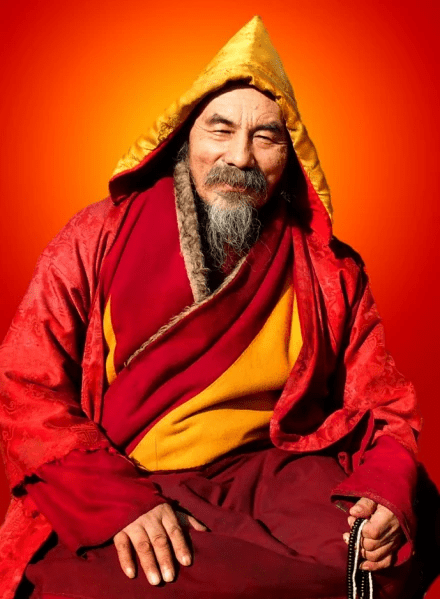
The most venerable H.E. Xiazhu Choying Rinpoche, also known as H.E. Xiazhu Qiuyang Rinpoche, is a highly accomplished Buddhist master from Guoluo, renowned for his spiritual achievements and mastery of Vajrayana teachings. Born in the winter of 1945, his birth was marked by extraordinary signs: thunder echoed across the sky, and colorful flowers blossomed spontaneously on the grasslands surrounding his birthplace. Many local herdsmen witnessed these rare and auspicious omens, heralding the arrival of an extraordinary being.

Renowned mantra master Regong, a revered monk, recognized the young child as the reincarnation of the venerable Chagailong Cichengdaji Rinpoche and the great master Naropa. From an early age, Rinpoche dedicated himself to the welfare of all sentient beings, living a life of simplicity and spiritual practice in the mountains. Throughout his life, H.E. Xiazhu Choying Rinpoche devoted himself to intense ascetic practice, receiving direct teachings from the supreme Vajrayogini and attaining profound realization. It is said that he could soar through the sky, using his monk robes as wings, a testament to his deep mastery of esoteric yoga.

At the age of fourteen, Rinpoche was ordained as a monk under the guidance of Xiari Huzuo Qintu Dannima. Over the years, he studied under more than 100 highly accomplished masters from all major Tibetan Buddhist schools, including:

  • H.H. the Tenth Panchen Lama and H.H. the Sixth Dharma King Gongtang Yongzeng from the Gelug sect.
  • H.H. Dodrupchen Rinpoche and Khenpo Mengse from the Nyingma sect.
  • Kanda Chiwa Gadan from the Sakya sect.
  • Lama Wangcai Kazhige from the Kagyu sect.
  • Jiana Bannan from the Jonang sect.

From these masters, H.E. Xiazhu Choying Rinpoche absorbed the essence of both exoteric and esoteric teachings. His spiritual journey led him to receive numerous secret mind-dharma teachings and unique empowerments, passed down without reservation, like water flowing freely from a vessel.

Rinpoche spent much of his life wandering through remote mountains and plains, sleeping in caves, eating cold rice and vegetables gathered from alms, and wearing discarded clothing. He lived humbly, indifferent to worldly praise or criticism, appearing at times like a wandering madman. For 25 years, he did not speak a single word, dedicating himself entirely to the practice of the Dharma, undisturbed by the distractions of the world. His rigorous practice took him to numerous sacred sites across Tibet, Qinghai, and India, where he engaged in solitary retreat, including seven years of intense meditation at a holy site in India.

Through these practices, Rinpoche achieved profound realization in the Dakini Dharma, the Great Perfection (Dzogchen) teachings, Kalachakra Vajra Dharma, and Green Tara Dharma. His deep connection with Vajrayogini from a young age allowed him to access highly secret dakini teachings. Buddhist masters of great virtue have recognized H.E. Xiazhu Choying Rinpoche as the true reincarnation of the great master Naropa, revered as the “venerable leader of 100,000 dakinis.”

In a historic event, the International Buddhism Sangha Association conducted an unprecedented Drawing Lots From a Golden Vase Ceremony, drawing one lot from 120 sealed lots. This ceremony affirmed that H.E. Xiazhu Choying Rinpoche is indeed the reincarnation of Patriarch Naropa, a recognition that had been previously confirmed by H.H. Dorje Chang Buddha III.

H.E. Xiazhu Choying Rinpoche has been praised by numerous revered masters, including H.H. the Tenth Panchen Lama, H.H. Dharma King Yongzeng, and H.H. Dharma King Jigme Phuntsok. Xiaridong Rinpoche, a master of the Yamantaka Dharma, described him as “a truly great master of the Dakini Dharma,” while H.H. Dharma King Jigme Phuntsok hailed him as “an extremely rare master who has perfected the Four Initiations Dharma.”

Despite his vast accomplishments, H.E. Xiazhu Choying Rinpoche remains humble and approachable, freely exercising his supernatural powers without attachment. Known for miraculous feats such as flying, multiplying his body, walking underwater, understanding multiple languages, foreseeing disasters and blessings, and reading people’s minds, Rinpoche is revered as “the unhindered rinpoche.” Clothing and personal items that Rinpoche has worn or used are said to be imbued with miraculous blessings. Many Tibetans have reported turning disasters into blessings, surviving dangerous situations, or recovering from serious illnesses after wearing or ingesting a small piece of his monk’s robe.

H.E. Xiazhu Choying Rinpoche’s legendary life and accomplishments have been widely recorded, including in books such as Holy Cultivation and Its Marvelous Fruits and Biographies of Ten Major Disciples of Dharma Kings. In Tibet, particularly in the Amdo region, almost everyone knows of his miraculous deeds. His life stands as a beacon of inspiration and a model of Dharma practice in this world of five defilements.

This image has an empty alt attribute; its file name is image-8.png

Upon reading A Treasury of True Buddha-Dharma, H.E. Xiazhu Choying Rinpoche immediately recognized H.H. Wan Ko Yeshe Norbu as the primordial Dorje Chang Buddha, the highest Buddha in Buddhism. His realization corroborated the recognition of other great holy dharma kings. H.E. Xiazhu Choying Rinpoche offered his heartfelt congratulations in a respectful letter, further acknowledging the sacred truth.

To the Most Revered and Holiest Wish-Fulfilling Jewel Dharma King:

I have learned that A Treasury of True Buddha-Dharma, is a sacred text about His Holiness, the supreme and most honored H.H. Dorje Chang Buddha III, is soon to be distributed worldwide. This book contains the highest, authentic Dharma that brings immense benefit to all sentient beings.

Master Dodrupchen, who is universally recognized as the second Guru Padmasambhava and the highest holy being within Tibetan esoteric Buddhism, expressed his astonishment in his formal congratulations. He praised the accomplishments of the Holiest Wan Ko Wish-Fulfilling Jewel Dharma King as truly extraordinary—unimaginable and miraculous, transcending the ordinary. These achievements express both the describable and indescribable absolute truth of the Buddha-Dharma.

We shall proclaim and praise the accomplishments of His Holiness throughout the Dharma realm. We express our deepest gratitude to His Holiness, the ancient Buddha, for His boundless and great compassion in coming to this world once again to benefit all sentient beings!

Xiazhu Qiuyang Rinpoche
May 1, 2007

▲那諾巴祖師轉世的夏珠秋楊敬賀第三世多杰羌佛成就之原函(楊宜翻攝自《多杰羌佛第三世》正法寶典)
▲Original congratulatory letter from Xiazhu Choying in Tibetan

#DorjeChangBuddhaIII #HHDorjeChangBuddhaIII  #MasterWanKoYee #Buddha#HuaZangSi#InternationalBuddhismSanghaAssociation#IBSA#WorldBuddhismPublishingLLC#WorldDharmaVoice #XiazhuQiuyangRinpoche #Tibetan #EsotericBuddhism

Link:https://peacelilysite.com/2024/10/16/the-extraordinary-life-of-h-e-xiazhu-qiuyang-rinpoche-a-master-of-boundless-compassion-and-wisdom/

Source: https://www.tpcdct.org/article/1327#detail

Hang Kung Yee: A Legacy of Art and Wisdom

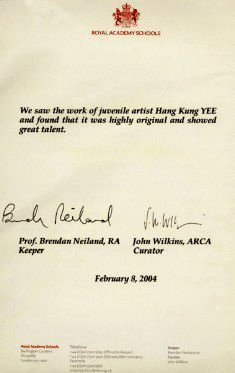
The President of the Royal Academy of Arts, Brendan Neiland (center), and the Vice President of the Royal Academy of Arts, John Wilkins (right), present the Young Artist Award to Hang Kung Yee (left)

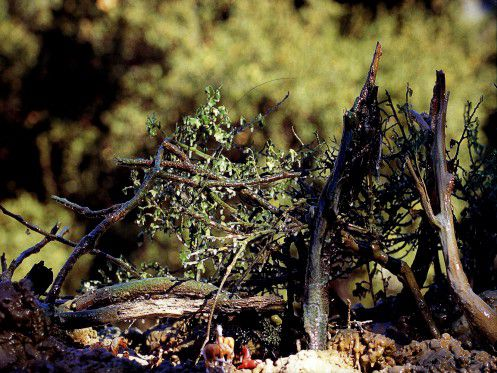
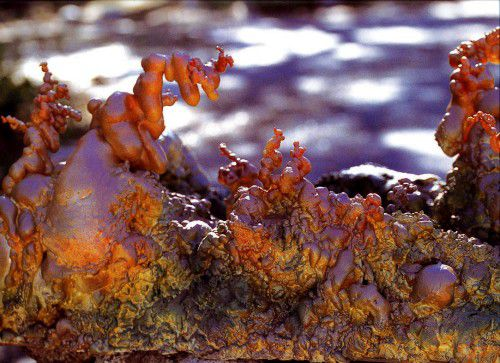
Landscape art appears as if naturally formed, truly indistinguishable from nature.
The young artist, guided by Buddhist teachings, displays remarkable creativity and talent

Born in February 1988 in Chengdu, China—familiarly known as the “Land of Abundance”—Hang Kung Yee comes from a family deeply rooted in tradition and intellect. His lineage is remarkable: his great-grandfather was one of the “Four Sages” in fishing, woodcutting, farming, and studying, honored as the Sage of Learning. His grandfather, Feng Chi, was a celebrated scholar in Sichuan, renowned for his deep knowledge of classical texts and the principles of medicine and the I Ching. Carrying forward this intellectual legacy, his father, Professor Yungao Yi(H.H. Dorje Chang Buddha III), is a world-renowned scholar, a grandmaster of prajna (wisdom), an acclaimed Chinese painter, and the founder of Yun sculpting. These extraordinary achievements have been recognized and certified by prestigious international organizations. His mother, Dr. Wang, Yuhua , is a distinguished professor at a top American university.

From a young age, Hang Kung Yee was immersed in an environment that cultivated both moral character and artistic appreciation. Influenced by his father’s teachings, he developed a passion for literature, calligraphy, and painting, particularly in the styles of the Song, Yuan, Ming, and Qing dynasties. He devoted himself to studying the works of great masters such as Bada Shanren, Shitao, Shen Zhou, and Nantian, as well as his father, Master Yun Gao Yi(H.H. Dorje Chang Buddha III). Despite his diligence, his early works lacked cohesion, but that changed when he sought his father’s guidance. Professor Yungao Yi(H.H. Dorje Chang Buddha III) imparted to him the profound teachings of Buddhist wisdom and prajna, unlocking a higher level of artistry within him.

Through these teachings, Hang Kung Yee’s wisdom flourished, and his artistic skill evolved rapidly. His brushwork soon embodied the refined charm of literati painting, infused with fresh, creative elements. In line with the insights of the artist Huang Binhong, who said, “Though the form may seem simple, the structure is strict; even if the form is not complete, the principle of the subject is always present,” Hang Kung’s work exemplifies precision beneath an effortless exterior.

His art reflects a unique duality: the intention is present, even when the brush has not yet touched the canvas; the spirit flows, even before the ink arrives. His strokes are casual yet deeply profound, imbued with a childlike purity and a profound sense of wonder. Modesty defines him—he never flaunts his talents, choosing instead to remain humble and continually learn. Even after moving to the United States, he kept his artistic abilities concealed, even from his peers.

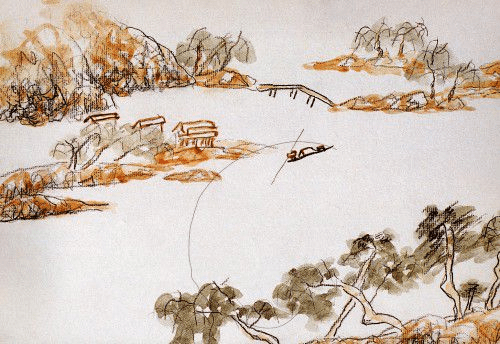
Chinese Ink painting: Western Lake

Chinese Ink Painting: Deep in the Mountains

Hang Kung Yee’s true mastery shines in his landscape art and sculptures. His creations blend natural elements with refined craftsmanship, producing works that are indistinguishable from nature itself. His landscapes, though rooted in real life, transcend it, evoking a dreamlike quality as if imbued with the mystical winds of a far-off fairyland. When photographing his sculpted landscapes, one would easily mistake them for real scenery. Even the most discerning artists would struggle to differentiate between his works and actual nature captured in photographs. At the young age of fifteen, the young artist Hang Kung Yee published his first hardcover collection of landscape art. His artistic achievements were recognized by the highest authorities in the global art world, with the President and Artistic Director of the Royal Academy of Arts signing an evaluation document on February 8, 2004. The document stated, ‘The young artist Hang Kung Yee is extremely creative, showcasing exceptional talent.’ The news sent shockwaves through the international art community.

Landscape Art: The Lush Spring of Xishuangbanna
Landscape Art: “Dreamscape Melody of Lake and Sky”
Landscape Art: Mysterious Dream Lake
Mirror-like Lake

The Bond Between Humans and Animals in the Snowy Village of Banna

Rainbow Under the Morning Sun
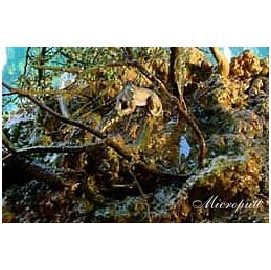
The Lion in the Swamp Forest
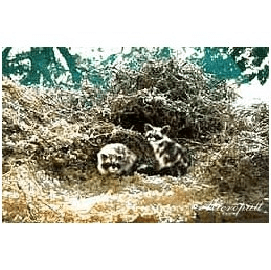
The Flower Marten in the Snow and Ice

Hang Kung Yee’s vision is to offer eternal beauty to humanity. His name, meaning “Eternity for the Public,” reflects this deep desire to share his creations with the world, hence his title “Hang Kung.” Ever humble, he downplays his expertise in art, attributing his rapid ascent into the higher realms of artistic mastery to his father’s guidance. He also speaks of his 12-year-old sister, Jinba Rinpoche, who, although not yet versed in art, will soon receive their father’s wisdom teachings, propelling her to artistic mastery in a matter of months.

For Hang Kung Yee, gratitude is central. He acknowledges the profound influence of his father, the support of fellow artists, the inspiration of nature, and the guidance of teachers and family members in shaping his artistic journey. Without these sources, he admits, he would never have reached his current artistic heights. As he continues to evolve, Hang Kung believes that art, much like his name, is boundless. “Yee” symbolizes the universal principles, while “Hang Kung” stands for “eternity for the public.” His aspiration is simple yet profound: to bring beauty, joy, and inspiration to all living beings through his art.

Link:https://peacelilysite.com/2024/09/27/hang-kung-yee-a-legacy-of-art-and-wisdom/

The Seven Treasures of True Wealth

In this world, which sentient being does not desire great wealth? Which of us does not seek blessings and fortune? But what truly defines wealth? Most people measure it by the amount of money they have, the assets they own—be it real estate, cars, or stocks. These tangible things may seem like wealth, but they are easy to lose.

Money and jewels cannot provide lasting security—they can be stolen by thieves.
Reputation and status cannot guarantee stability—enemies can destroy them.
Family and friends are not unshakable—they can change as people’s hearts do.
Illness, aging, and death remind us that the body itself is fragile and impermanent.
Fate and fortune cannot be relied upon—karma follows us, shaping our circumstances.

So, what is the true wealth that we can hold onto in this fleeting lifetime?

Over 2,500 years ago, Shakyamuni Buddha illuminated the path to real wealth—wealth that transcends the material and leads to lasting peace and wisdom. He shared the Seven Treasures of Life, invaluable treasures that guide us to inner fulfillment and enlightenment. These treasures cannot be stored in vaults or spent like gold and jewels. They are the true treasures that nurture the soul.

The Seven Treasures:

  1. The Treasure of Faith
    This is the deep trust a disciple places in the Buddha’s awakening. It is unwavering confidence in the truth of the Buddha’s enlightenment and teachings. Faith is the compass that keeps a person on the path of liberation, a guiding light through life’s trials.
  2. The Treasure of Integrity
    Integrity means living in alignment with one’s highest principles. It manifests as abstaining from harmful actions—whether through speech, thought, or deed. A person with integrity refrains from violence, stealing, falsehood, and indulgence in intoxicants. Integrity is the treasure of a life well-lived with honesty, respect, and compassion for all beings.
  3. The Treasure of Self-Respect
    This treasure is found in the heart of those who uphold their dignity and honor. Self-respect means feeling shame at the thought of misconduct and avoiding actions that degrade one’s character. A person who treasures self-respect lives with a deep sense of morality and avoids causing suffering.
  4. The Treasure of Responsibility
    This treasure reflects an understanding of the consequences of one’s actions. It is a profound sense of accountability for one’s choices, knowing that every action—whether good or bad—impacts oneself and others. Responsibility is driven by a genuine concern for well-being, not out of fear, but from love and care.
  5. The Treasure of Learning
    Learning is the treasure of an eager and inquisitive mind. It is the pursuit of wisdom through listening, reflecting, and studying the teachings. A disciple who treasures learning delves into the Dharma, growing in understanding, and cultivating insight that transforms their perception of life.
  6. The Treasure of Generosity
    This treasure resides in an open and giving heart. It is the joy of sharing wealth, time, and kindness without clinging to material things. A generous person delights in helping others and is always ready to support those in need. Generosity brings happiness both to the giver and the receiver, and it enriches the soul beyond measure.
  7. The Treasure of Wisdom
    Wisdom is the crown jewel of all treasures. It is the deep understanding of life’s impermanence and the realization that clinging to fleeting things leads only to suffering. With wisdom, one sees the world as it truly is, cultivating peace, detachment, and the ability to make decisions that lead to lasting happiness.

True Wealth Beyond Material Possessions

Shakyamuni Buddha shared these seven treasures with his disciples, emphasizing that true wealth is not measured by material abundance but by these inner riches. Whether man or woman, young or old, those who possess these treasures are truly wealthy. Their lives are meaningful, filled with purpose, and unshaken by the ups and downs of worldly fortunes.

So, what can we learn from these timeless teachings?

Cultivate faith and integrity,
Grow in generosity and wisdom,
Walk the path with responsibility and learning,
Always remembering the teachings of the Buddhas,
for they are the guideposts to inner peace, fulfillment, and the truest wealth.

Link:https://peacelilysite.com/2024/09/26/the-seven-treasures-of-true-wealth/

Source: https://wisdomtea.org/2024/09/13/treasure/

The Old Boat and the Journey Within: Lessons from the Buddha on Cultivation and Liberation

During the Buddha’s lifetime, there was a time when he was teaching on the far side of a river. Eager to hear his wisdom, many monks wished to cross the river, but there was only one boat available. The boatman warned them, “My boat is very old, and with so many of you on board, it could be dangerous!” Yet, in their eagerness to reach the Buddha, the monks ignored the boatman’s caution and all climbed aboard. Reluctantly, the boatman set sail.

As they reached the middle of the river, the monks noticed water seeping into the bottom of the boat, and panic began to spread. The boatman calmly said, “I told you this boat is old, but you didn’t listen. Now, if you can’t stay calm, the boat will sink even faster.”

Upon hearing this, the monks stilled themselves and did not dare move. Thankfully, the boatman’s experience guided them safely to the other shore.

When the monks arrived and recounted the incident to the Buddha, he offered this teaching: “When you were in the boat, you feared for your safety. But in daily life, you fail to realize that danger is ever-present. Many people worry about the uncertainty of the future, yet neglect the most important thing — being mindful of the present moment. Focus on this life, this moment. Pay attention to your thoughts and purify your mind of the five poisons: greed, anger, ignorance, pride, and doubt.”

The Buddha continued, “Our bodies are like that old, leaky boat. We must reduce its burden, and the heaviest load is the weight of greed, anger, ignorance, pride, and doubt. Just like in the boat, if we don’t repair our minds and lighten our burdens, we risk sinking. Only by addressing these burdens can we safely reach the other shore.”

“Do not be preoccupied with the thought of being reborn in the Western Pure Land in your next life. Instead, focus on your present condition. Are you free from afflictions in this very moment? Do you act with an open heart? Can you humble yourself in the eyes of others? These are the true questions we must face in life.”

The contemporary Buddha H.H. Dorje Chang Buddha III  has also imparted timeless wisdom on cultivation. His Holiness teaches that true cultivation stems from the depths of your heart, from your bodhicitta — the awakened mind of compassion. Be genuinely friendly and loving to your spouse, your brothers, and your sisters. Foster harmony with your friends, act cooperatively with others, and extend care and help to all sentient beings. Apply the Four Limitless States of Mind — loving-kindness, compassion, joy, and equanimity — and cultivate bodhicitta in every action. Constantly reflect on yourself: How do you treat others with your words? With your thoughts? With your actions?

The conduct of Buddhas and great Bodhisattvas is marked by complete disregard for personal gain. When interests conflict, they give way to others, willingly taking fewer benefits or even none. You must remind yourself, “When others harm or slander me, I will not be disturbed. Even to those who harm me, I will wish them well, sincerely hoping for their happiness. Furthermore, I will take practical steps to help them, even offering financial aid — without letting them know that I am doing so.”

By living in accordance with these teachings, we become holy ones at the causal stage. Without a doubt, such cultivation leads to the perfection of wisdom and virtue. Achieving liberation and accomplishment becomes as simple as turning over one’s hand!

Link:https://peacelilysite.com/2024/09/19/the-old-boat-and-the-journey-within-lessons-from-the-buddha-on-cultivation-and-liberation/

#HHDorjeChangBuddhaIII #DorjeChangBuddhaIII #DorjeChangBuddha #ShakymuniBuddha

#WhatisCultivation #Compassion #Kindness #Liberation

A True Friend

Once, in a quiet monastery nestled in the hills, the Buddha sat before his disciples. The evening sun painted the sky in hues of gold and crimson, and the air was filled with a profound stillness, broken only by the occasional rustling of leaves in the gentle breeze. The monks, eager for wisdom, sat in reverence as the Buddha began to speak.

“Monks,” the Buddha said, “in this world, there are many who come and go in our lives. Some pass by like the wind, leaving no trace, while others remain, their presence felt deeply in our hearts. Among those who remain, there is a rare kind of person, a true friend, who is like a shelter from life’s storms, a beacon of light in the darkest of times. Such a friend is endowed with seven precious qualities, and these qualities are worth cultivating, for a friend like this is rare indeed.”

The monks listened attentively as the Buddha continued, “Which seven qualities are these? First, a true friend gives what is hard to give. He does not withhold generosity, even when it is difficult. Whether it be his time, his effort, or his possessions, he offers them freely, without hesitation. This kind of giving is rare, for many are willing to give when it is convenient, but few give when it costs them something.”

The Buddha paused, letting his words sink in, then added, “Second, he does what is hard to do. A true friend will go beyond his comfort zone for the sake of his companion. He will stand by you when others shy away, face challenges with you, and make sacrifices when needed, not for his own gain, but for the sake of friendship.”

The monks reflected on this as the Buddha continued, “Third, he endures what is hard to endure. Life is not always easy. There are times of joy, but also times of suffering and hardship. A true friend remains steadfast during the difficult times. He does not flee when the winds of adversity blow; instead, he endures alongside you, bearing the weight of the struggle as if it were his own.”

Then, the Buddha smiled softly and said, “Fourth, he reveals his secrets to you. Trust is the foundation of true friendship. A true friend does not hide behind a mask or shield himself with falsehoods. He shares his heart with you, revealing his vulnerabilities, knowing that in doing so, the bond of trust between you will grow ever stronger.”

“Fifth,” the Buddha continued, “he keeps your secrets. Just as he trusts you with his, so too does he honor your trust. He safeguards what you confide in him, never betraying your confidence, never allowing the winds of gossip to carry away what you have entrusted to him.”

The Buddha’s voice softened as he spoke of the sixth quality. “When misfortunes strike, he doesn’t abandon you. Life is unpredictable, and at times, suffering may come upon you like a sudden storm. A true friend does not turn his back on you in these moments. He stands beside you, offering support, comfort, and strength. He is like a tree with deep roots, unshaken by the winds of fate.”

Finally, the Buddha said, “The seventh quality is this: When you’re down and out, he doesn’t look down on you. In times of failure or disgrace, when the world seems to turn its back on you, a true friend remains by your side, never judging, never scorning. He sees you not for your misfortune, but for who you truly are. His respect for you does not waver, even when you are at your lowest.”

The monks, inspired by these words, bowed their heads in gratitude as the Buddha’s voice grew gentle. “Such a friend, endowed with these seven qualities, is a rare and precious gift. He gives what is beautiful yet hard to give, does what is hard to do, and endures the bitter words that life may bring. His heart is open to you, and he protects your heart in turn. In the darkest of times, he will not leave you, and even when you falter, his love for you does not falter.”

The Buddha paused for a moment, letting the weight of his words fill the air before continuing, “To cultivate such a friendship is a blessing for both parties. A friend like this is not just a companion but a guide, a mirror that reflects your virtues and helps you grow. Such a bond nurtures the spirit and brings peace to the heart. Therefore, monks, seek to be such a friend. Cultivate these seven qualities within yourself, and you will draw others of similar virtue to your side.”

The monks looked at one another with renewed purpose, understanding now that friendship was not a simple matter of convenience or shared interests but a profound practice of giving, endurance, and trust. The Buddha’s words had opened their hearts to the deeper meaning of companionship, and they resolved to embody the qualities of a true friend in their own lives.

And so, as the evening deepened and the stars began to appear in the sky, the monks rose, filled with a sense of peace. They knew that in cultivating these seven qualities, they would not only find true friends but would become true friends themselves—vessels of compassion and wisdom in a world often marked by fleeting connections.

The Buddha smiled as he watched them depart, knowing that the seeds of his teaching had taken root in their hearts, and that in time, they would bear the fruits of deep and enduring friendships, blessed with the seven qualities of a true friend.

Link: https://wisdomtea.org/2024/09/05/a-friend/

The Life and Legacy of His Holiness Penor Rinpoche

Within the six major Nyingma monasteries, the Palyul lineage stands as the largest, with over 400 branch monasteries and Buddhist centers spread across the globe. One of its most revered figures is His Holiness the Third Drubwang Pema Norbu Rinpoche, also known as Penor Rinpoche, who is recognized as the reincarnation of the Indian Mahapandita Vimalamitra. Born in December 1932, during the Water Monkey Year of the Tibetan calendar, he came into this world in Powo, Eastern Tibet, in the historical region of Kham (also known as Pome or Powo). Remarkably, despite the cold and dry winter that usually stifles any growth, fragrant flowers bloomed when Rinpoche was born, an auspicious sign that heralded his extraordinary life. His reincarnation was prophesied and recognized by the Fifth Dzogchen Rinpoche and Kathok Khenchen Yagga Rinpoche.

At just five years old, Penor Rinpoche was brought to the Palyul mother monastery in Kham, where he was officially enthroned as the 11th throne holder of the Palyul lineage. This ceremony, conducted by his previous incarnation’s spiritual teacher, Tulku Tuktendawa, and the 10th Karma Kuchen Rinpoche, Karma Thekchok Nyingpo, marked the beginning of a life dedicated to preserving and spreading the Dharma.

Palyul Temple at Ganzhi, SiChuan, China. Photo from: http://www.palyul-center.org.tw/palyul_d1.asp

Penor Rinpoche’s early years were spent in the monasteries of Palyul and Dakhor, where he received teachings and guidance from the 10th throne holder, Karma Thekchok Nyingpo, and other precious masters. These teachings laid the foundation for his future role as a lineage holder.

Even as a child, Penor Rinpoche exhibited extraordinary signs. On one occasion, while playing with a precious vajra, he accidentally dropped it, breaking it into two. With childlike innocence, he used his saliva to mend it, and astonishingly, the vajra became stronger than before. In another instance, during a ritual, he accidentally dropped a vajra bell on a stone floor. To everyone’s amazement, the bell remained intact and sounded even clearer than before.

As a young boy, Rinpoche’s spiritual prowess became evident when an elderly man approached him, requesting the Phowa (transference of consciousness) ritual. Innocently, Rinpoche performed the ritual, and the man peacefully passed away. However, realizing the man had died, Rinpoche performed another ritual to revive him. When the man regained consciousness, he exclaimed, “Oh my! Why did you bring me back, Rinpoche? I was already in Amitabha’s Pure Land!”

Throughout his life, Penor Rinpoche received numerous profound teachings and empowerments from great masters. These included the Namcho lineage’s Great Perfection teachings, the Eight Herukas, the Great Treasury of Terma, and many more. With unwavering dedication, he practiced these teachings and achieved realization. Penor Rinpoche also engaged in long retreats with his teacher Tulku Tuktendawa, delving deeply into the Great Perfection practices and realizing his true nature.

Despite his high status, few Rinpoches endured the hardships that Penor Rinpoche faced. During the construction of Namdroling Monastery in Mysore, South India, Rinpoche worked tirelessly alongside monks and workers, carrying stones and mud under the scorching sun. His hands bled and ached, yet he persevered. The absence of running water and paved roads made construction even more challenging, but Rinpoche personally fetched water from distant locations.

One day, while working under the blazing sun, a man approached Rinpoche, expressing his desire to meet him. Unaware that the person he was speaking to was Penor Rinpoche himself, the man asked if he could see the great master. Rinpoche humbly replied, “Oh, of course! No problem,” and led him to his simple room. The man was both surprised and embarrassed to realize that the great Rinpoche was not the grand figure he had imagined, but a humble, down-to-earth monk. Indeed, Penor Rinpoche was a true wish-fulfilling jewel, tirelessly working to benefit others.

Year after year, Penor Rinpoche’s unwavering dedication, energy, and great aspiration propelled him forward despite countless obstacles. His efforts bore fruit, and today, Namdroling Monastery in Mysore, South India, stands as the largest Nyingma monastery in the world, home to over 3,000 monks. He re-established the monastic discipline, reinstated the traditional summer retreat, and instituted annual pujas, including the One Thousand Offerings to the Hundred Peaceful and Wrathful Deities, the Vajrakilaya Puja, and the Medicine Buddha Puja. These ceremonies were often accompanied by auspicious signs, such as rainbows and the overflowing of amrita from skull cups.

Penor Rinpoche’s compassion extended far beyond his monasteries. He built bridges, roads, and a comprehensive hospital offering both Western and Tibetan medicine. In Tibet and India, he became renowned for his prayers that brought timely rain during droughts, earning him the affectionate nickname “Rain Lama” from the local Indian people.

As a fully ordained monk, Penor Rinpoche ordained over 2,500 monks. Day after day, from morning until night, he selflessly benefited the living, the dying, and the deceased.

In 1993, during the Nyingma Monlam Chenmo for World Peace held at the Vajra Seat in Bodh Gaya, India, Nyingma lamas and monks from around the world unanimously appointed Penor Rinpoche as the Supreme Head of the Nyingma lineage.

This honor was well-deserved, as Rinpoche embodied the wisdom of Manjushri, the compassion of Avalokiteshvara, and the strength of Vajrapani in his tireless efforts to benefit the Dharma and all sentient beings.

In August 2007, when Penor Rinpoche encountered the A Treasury True Buddha Dharma by the H.H. Dorje Chang Buddha III, he was deeply moved, believing the book would greatly benefit all beings. In response, he sent a congratulatory letter to the Rinpoches:

Honorable Rinpoches,

The True Dharma Treasures, a text recognized by many great masters and high lamas as the work of the Third Dorje Chang Buddha, Yongey Mingyur Dorje, has been published at the request of Buddhist followers across the nation.

This publication ensures that the Buddha Dharma will remain in the world forever, serving as a cause for sentient beings to attain immediate happiness, freedom from worldly suffering, and ultimately, the supreme enlightenment.

Palyul Rinpoche Pema Norbu
August 11, 2007

Link:https://peacelilysite.com/2024/09/06/the-life-and-legacy-of-his-holiness-penor-rinpoche/

Source: http://www.palyul-center.org.tw/palyul_d1.asp, http://www.palyultp.org/tp02.html

Illuminate Others, Illuminate Yourself

On a pitch-black night, a wandering ascetic on a journey to seek the Buddha arrived in a remote village. The dark streets were bustling with villagers coming and going.

The ascetic walked into a narrow alley and noticed a faint yellow light shining from deep within the quiet alleyway. A villager remarked, “The blind man is coming.”

“Blind man?” The ascetic was puzzled. He asked another villager beside him, “Is the person carrying the lamp really blind?”

The answer was affirmative. The ascetic couldn’t understand.

A blind man, who has no concept of day and night, who cannot see mountains or rivers, or the vibrant world of peach blossoms and green willows—he doesn’t even know what light looks like. Isn’t it ridiculous for him to carry a lamp?

The lamp gradually drew closer, and the faint yellow light moved slowly from the depths of the alley to the ascetic’s feet.

Still perplexed, the ascetic asked, “May I ask, are you truly blind?”

The blind man carrying the lamp replied, “Yes, I have lived in darkness ever since I entered this world.”

The ascetic asked, “Since you can’t see anything, why are you carrying a lamp?”

The blind man said, “Is it night now? I heard that in the dark, without the light of a lamp, no one can see anything, just like me. So I lit a lamp.”

The ascetic, beginning to understand, said, “Oh, so you are carrying the lamp to light the way for others?”

But the blind man replied, “No, it’s for myself.”

“For yourself?” The ascetic was stunned.

The blind man slowly explained, “Have you ever been bumped into by other travelers because of the darkness?”

The ascetic said, “Yes, just a moment ago, I wasn’t paying attention and was bumped by two people.”

The blind man then said thoughtfully, “But I haven’t been. Though I am blind and cannot see anything, by carrying this lamp, I not only light the way for others but also allow them to see me. This way, they won’t bump into me because they can’t see.”

Hearing this, the ascetic suddenly realized.

He looked up and sighed, “I’ve been traveling far and wide to find the Buddha, but little did I know that the Buddha was right beside me all along.”

It turns out that Buddha nature is like a lamp. As long as I light it, even if I cannot see the Buddha, the Buddha will be able to see me.

The story is simple, yet it seems to ignite a light within the darkest corners of our hearts.

The Merchant’s Compassion: A Tale of Kindness and Divine Protection

In the past, there was a merchant from Anhui Province named Wang Zhiren. He was over forty years old and, though successful in business with some savings, his only regret was that he had no son.

One day, while out on a business trip, he was walking alone by the riverside when he suddenly saw a young woman, dressed as a village wife, holding a baby and jumping into the river. He was shocked and wanted to jump in to rescue them, but he lamented that he couldn’t swim and was unable to save them. In that critical moment, he looked up and saw several fishing boats in the distance on the river. He raised his hand and shouted for help, but when his first few calls went unanswered, he ran and shouted that he would offer twenty taels of gold to anyone who saved them.

Only then did the fishermen rush over, and they finally pulled the young woman and the baby out of the water. Wang Zhiren handed over the twenty taels of gold to the fishermen and then asked the young woman why she had jumped into the river with the baby. The woman tearfully explained, “My husband works as a laborer elsewhere, and we kept a pig at home, planning to sell it to pay the rent. Yesterday, a pig trader came by, and I sold the pig, but after he left, I discovered that the money I received was all counterfeit. My husband has a very violent temper. If he finds out, he’ll certainly beat me severely. We are so poor that we can barely survive, so I decided to drown myself and my baby in the river.”

Hearing this, Wang Zhiren was filled with compassion. He asked how much the pig had been worth and gave her twice that amount in real silver. The young woman, encountering such a kind and compassionate person, was overwhelmed with indescribable joy and gratitude. She expressed her heartfelt thanks and blessings to Wang Zhiren and, to ensure she could repay his kindness in the future, she carefully asked for his name, birthplace, and residence. She then returned home with her baby, feeling consoled.

When she arrived home, her husband had already returned. The young woman recounted in detail how she had received counterfeit money for the pig, her fear of being beaten, her attempted suicide with the baby, and how a kind man had saved them and given her real silver.

Her husband was deeply moved upon hearing about Wang Zhiren’s compassion and decided to accompany his wife to Wang’s lodging to express their gratitude.

When Wang Zhiren, still in bed, heard them knocking at the door, he got up and went outside. As he stepped out, there was a sudden loud crash from inside the room, startling all three of them. They turned to see that the wall of the room had collapsed due to damage from several days of heavy rain, and the bricks, tiles, and beams had fallen, crushing the bed where Wang had been sleeping.

Wang Zhiren exclaimed, “Oh my! That was so dangerous! If you two hadn’t knocked on my door and called me out, I would have been crushed to death by the falling wall and bricks!”

The couple replied in unison, “This is the will of Heaven. A kind-hearted person like you, Mr. Wang, should not suffer such a calamity.”

Later, Wang Zhiren’s wife gave birth to several sons, and Wang Zhiren lived to the ripe old age of ninety-six, passing away peacefully without illness.


Link:https://peacelilysite.com/2024/08/30/illuminate-others-illuminate-yourself/

Source: https://www.fsm.gov.mo/cht/healthcare/ContextDetail.aspx?Context=91, http://www.muni-buddha.com.tw/buddhism/book/yahoo/0364.htm#a01