In the Guanyin Spiritual Inspiration Records, there is a story about karmic retribution.
During the Qing Dynasty, a merchant from Anhui named Cheng Bolin was a devout believer in Guanyin Bodhisattva. He had settled with his family in Yangzhou, Jiangsu. At that time, war and conflict were common. When Cheng Bolin heard that marauding soldiers were approaching Yangzhou, he prayed earnestly to Guanyin Bodhisattva for protection.
Guanyin appeared to him in a dream and said, “There are seventeen people in your household. Sixteen will be spared from harm, but you have a fixed karma that cannot be avoided, and you will not escape this disaster.” When Cheng awoke, he was very anxious. He prayed again, asking, “Oh, I cannot avoid this fate. Bodhisattva, is there any way out?”
Out of great compassion, Guanyin once again appeared in his dream and told him, “Among the approaching soldiers, there is a man named Wang Mazi. In your past life, you struck him twenty-six times and caused his death. In this life, he has come to take his revenge. Have your family take shelter in the eastern wing, while you wait in the main room. Do not involve them.”
Although Guanyin did not offer a direct means of escape, the dream subtly revealed the karmic connection from Cheng’s past life, and Cheng believed it wholeheartedly.
Five days later, the soldiers arrived and began pounding on the door of Cheng’s house. Calmly sitting in the main hall, Cheng spoke, “Stop knocking. Who among you is Wang Mazi? Let him come forward.” Wang Mazi, fierce and angry, approached. As they met, they both felt a deep hatred flare up. Wang Mazi was astonished and asked, “How do you know my name?” Cheng replied, “I am a devotee of Guanyin Bodhisattva. She came to me in a dream and told me that in my previous life, I struck you twenty-six times and took your life. Now I have no regrets. You may strike me twenty-six times in return.”
Suddenly, Wang Mazi’s conscience awakened, and he sighed, “In our past lives, you struck me twenty-six times, which led me to come seek revenge in this life. But if I now strike you twenty-six times, then in the next life, you will come back and strike me again. When will this cycle ever end?”
Wang Mazi then said, “Since Guanyin Bodhisattva told you that you owe me twenty-six strikes, turn around!”
He picked up his knife, but instead of using the blade, he struck Cheng Bolin twenty-six times with the back of the knife and said, “Since you struck me twenty-six times in the past, now I have struck you twenty-six times. With this, our karma is settled!”
There is a saying that encourages people to strive for self-improvement: “You reap what you sow.” Everything has a cause. The law of cause and effect is all-encompassing and ever-present, even in our thoughts and intentions. For instance, when we see someone doing a good deed and feel joy in our hearts, seeing the good deed is the cause, and feeling joy is the effect. That joyful feeling then becomes a new cause, and by planting this seed of good karma through positive thoughts, we will eventually reap good results.
Similarly, when others treat us poorly, it may be because we owed them something from a previous encounter. If we can endure this mistreatment with patience, without resentment or blame, and even forgive the other person, it is possible to resolve and dissolve the karmic debt. Otherwise, the cycle of revenge and retribution will continue endlessly.
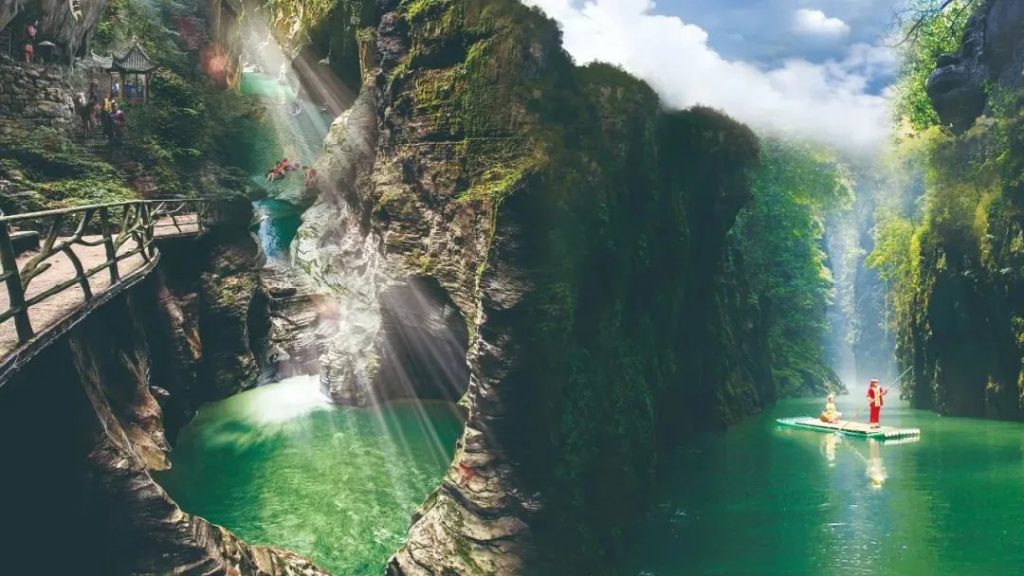
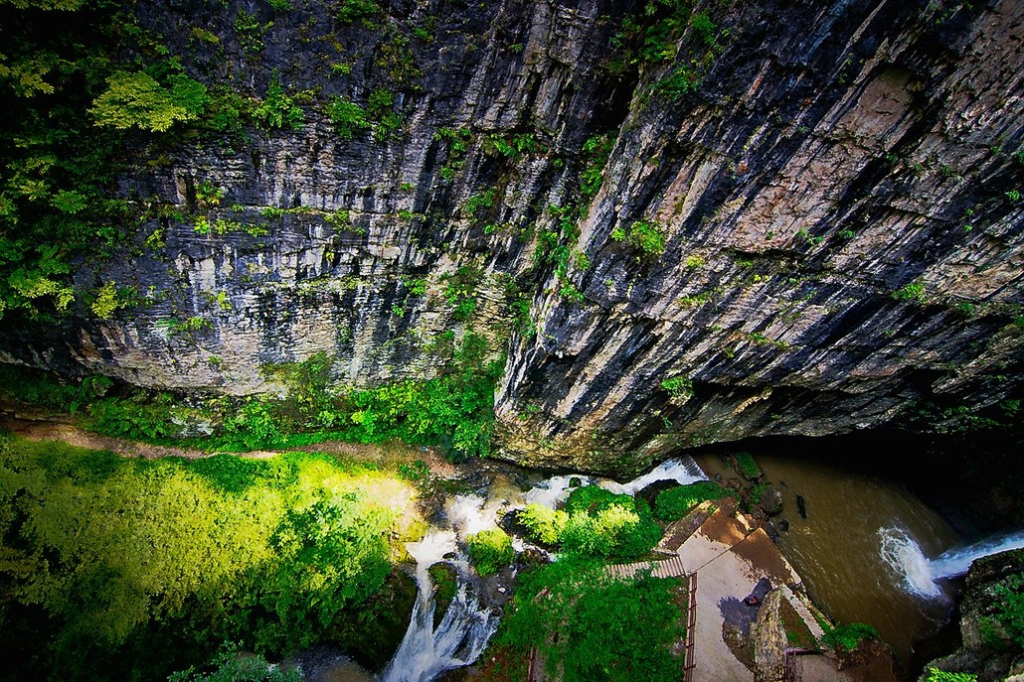
Nestled between Hunan Province, Chongqing Municipality, and Hubei Province, the Grand Canyon Scenic Spot in Enshi, China, is the most picturesque stretch of the Qingjiang River Basin and is often hailed as one of the world’s most beautiful canyons. With its dramatic 10,000-meter cliff gallery, plunging waterfalls, soaring peaks, and a ravine stretching for miles, the canyon rivals even the grandeur of the Colorado Grand Canyon in the USA. Two key areas within the canyon, Qixing Village and Yunlong Ground Fissure, cover an expanse of 35.2 square kilometers and are open to the public. These areas are renowned for their diverse limestone karst formations, such as tiankeng (sinkholes), ground fissures, cliffs, fengcong (peak clusters), limestone pillars, caves, and underground rivers, making it a natural museum of geological wonders and a world-class tourist destination.
The Qixing Village Scenic Spot, considered the highlight of the Qingjiang Grand Fissure, includes the Small Pass, Medium Pass, and Large Pass. Along its 8.5-kilometer-long boardwalk, visitors can marvel at several famous landmarks, including the Peaks of Small Mountain Pass, Longmen Stone Forest, Yixiantian (a thin strip of sky), Precipice Corridor, Cloud Torch, Greeting Pine, Yizhuxiang (a stick of incense), Twin Towers, Yubi Peak, Yunv Peak, and Yuping Peak.
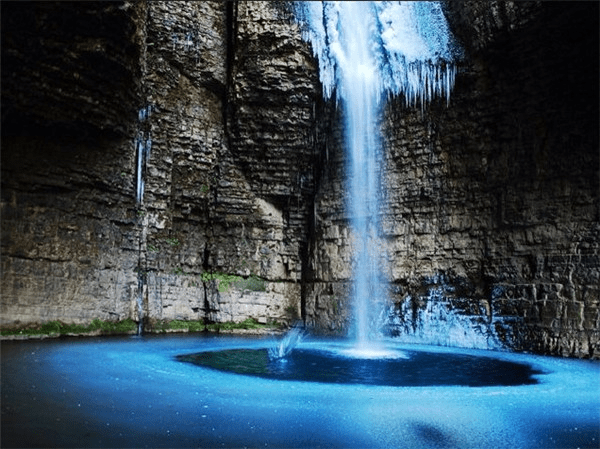
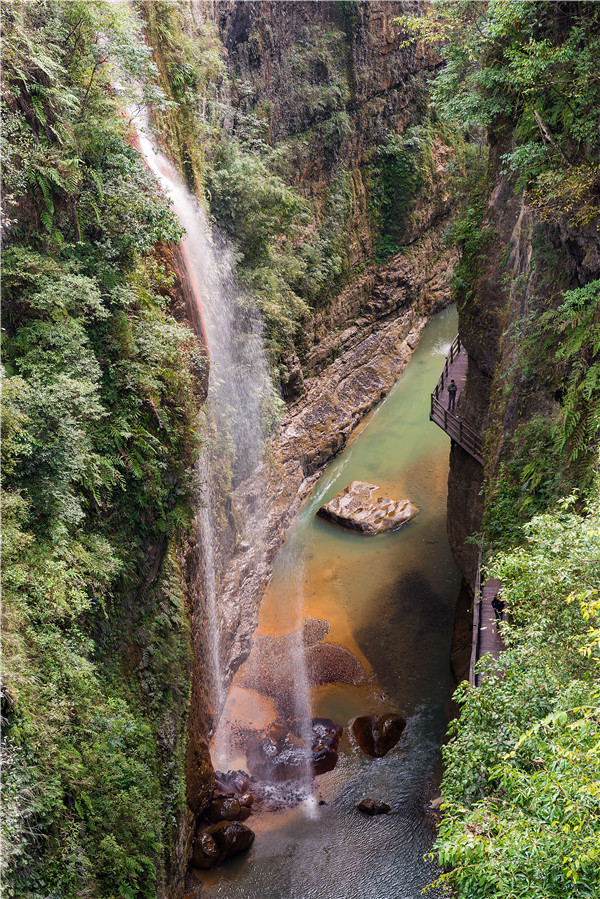
The U-shaped Yunlong Fissure, stretching 3,600 meters long and averaging 75 meters deep, is a stunning and unique karst formation. Within the fissure, waterfalls cascade dramatically down vertical drops, while outside, the fissure is surrounded by towering peaks and diverse landscapes. Notable waterfalls include Colorful Yellow Dragon Waterfall, Rainbow Waterfall, Yulong Waterfall, Ice Waterfall, and Mufu Waterfall.
Though the mysterious and steep Enshi Grand Canyon was not discovered until 2004 by a joint Sino-French expedition, it quickly captured global attention. In April 2012, U.S. explorer Dean Potter set a world record by walking a 41-meter-long slackline without assistance at Yizhuxiang, further showcasing the awe-inspiring wonders of the Enshi Grand Canyon.
White clouds rise from the Qingjiang River, twisting and turning like a dragon soaring into the sky. The sight of these clouds drifting for miles, smooth and majestic, is truly a feast for the eyes.
The canyon is also home to a striking combination of precipices and peak clusters, a geological feature unique to this region. Peaks seem to rise out of cliffs or soar above them, creating a landscape that is unmatched anywhere else in the world.
Over 200 caves of various sizes dot the canyon and are connected by natural bridges. The interplay of water and sky creates a fantastical atmosphere, as if you have stepped into another world.
The Yunlong River Fissure is lined with rock formations and ancient greenery, with numerous waterfalls and streams cascading down either side. The sheer beauty of this natural wonder is both breathtaking and unforgettable.
Tiankengs, or sinkholes, accompany the canyon’s underground river, which spans 50 kilometers, making it the longest underground river in the world. Along the river, 108 cenotes (natural sinkholes) create a truly spectacular sight.
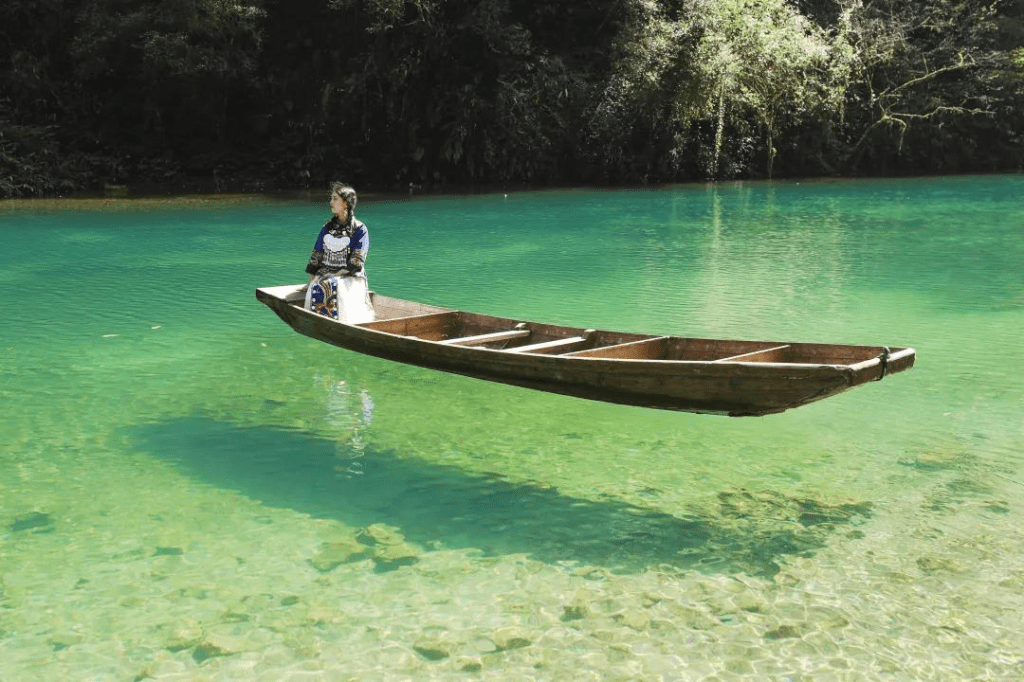
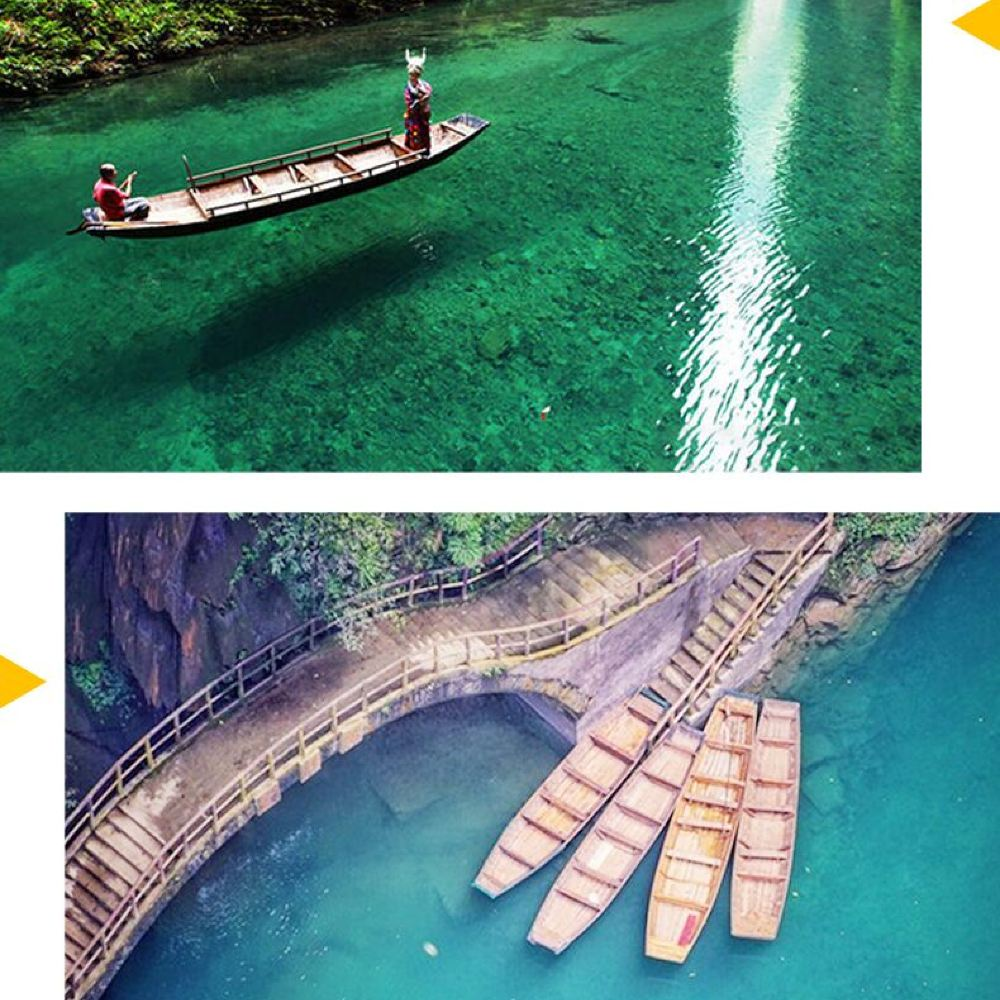
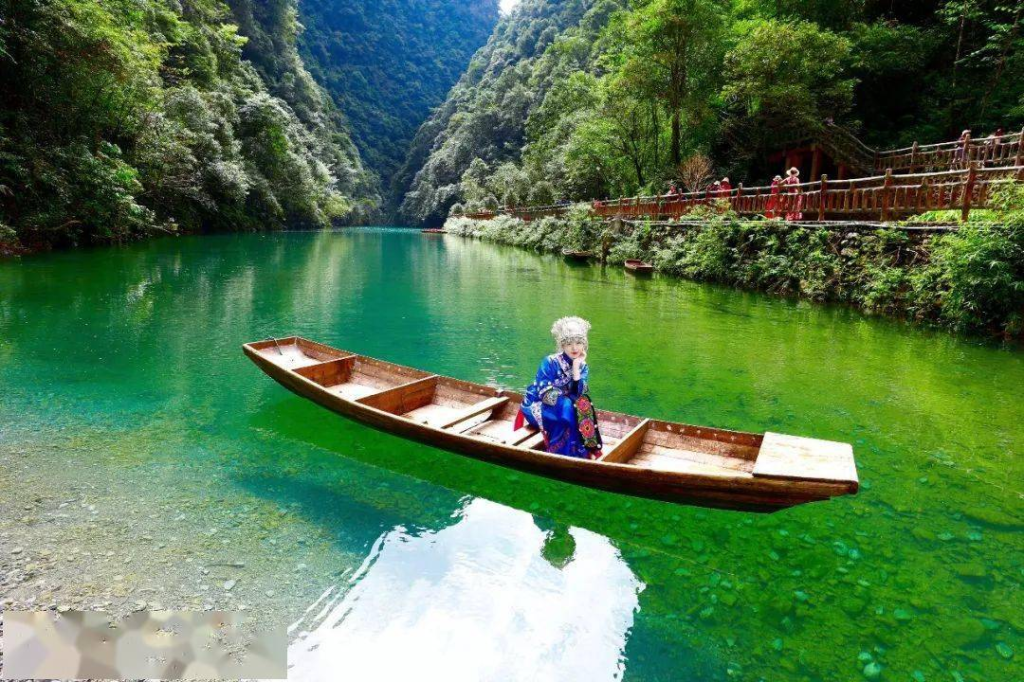
The waters of Pingshan Canyon are crystal clear, so clear they look drinkable. The boat seems to float in mid-air. As you ride in a small wooden boat and experience the sensation of floating, you see towering cliffs above and crystal-clear streams surrounding you below. Passing through narrow passages like “Yixiantian” (A Thread of Sky) and Moon Bridge, the only sounds are the gentle rush of water and the singing of birds. Gazing up at the sky from beneath these cliffs, there’s a deep sense of tranquility, as though you’re cut off from the world. The beauty of Pingshan Canyon is best captured by the lines: “Drunk, I know not whether the sky is in the water, but my boat is filled with clear dreams, pressing against the Milky Way.” To truly appreciate the splendor of Pingshan Canyon, you must come and experience it for yourself.
The Enshi Grand Canyon and its surrounding area are home to the vibrant Tujia Girls’ Festival, one of China’s most distinctive regional celebrations. This festival, unique to the Tujia people of Enshi, is more than just a marketplace gathering; it is a time-honored tradition where young women seek love on their own terms, often through the spirited exchange of songs in an antiphonal style. Dubbed the “Eastern Valentine’s Day,” it is a festival that symbolizes freedom and the pursuit of love.
Another fascinating cultural treasure rooted in Tujia heritage is Western Rancap, known as the “Flower of Tujia.” This beautiful craft reflects the ingenuity and artistic skill of the Tujia people, with its striking use of contrasting colors and intricate patterns that blend realism with abstraction. Historically, Tujia girls would weave these colorful bedrolls—often referred to as “Tujia Colorful Bedrolls”—on a loom as part of their wedding preparations, a tradition steeped in love and artistry.
Enshi is not just a region rich in cultural festivals but also a town alive with the arts, particularly in song and dance. The Tujia and Miao minorities express their joyful spirit through various performances, including the dragon boat song, hand-swinging folk dance, nuo opera, lantern drama, and the lively Tujia daliuz. The Dragon Boat Song, originating in Enshi Prefecture, is a love song that reflects the character and customs of the Tujia people. Recognized by UNESCO as one of the world’s 25 most remarkable folk songs, it embodies the heart and soul of Tujia culture. Renowned Miao singer Song Zuying has performed this song at prestigious venues like the Golden Hall of Vienna and Lincoln Center for the Performing Arts, sparking global interest in the music of Enshi.
The Enshi Grand Canyon Theatre brings this vibrant culture to life through large-scale real-life performances set against the stunning backdrop of mountains and rivers. The stage, illuminated by the natural light of the sun or moon, captures the simple and romantic spirit of Tujia love, creating an unforgettable experience for the audience.
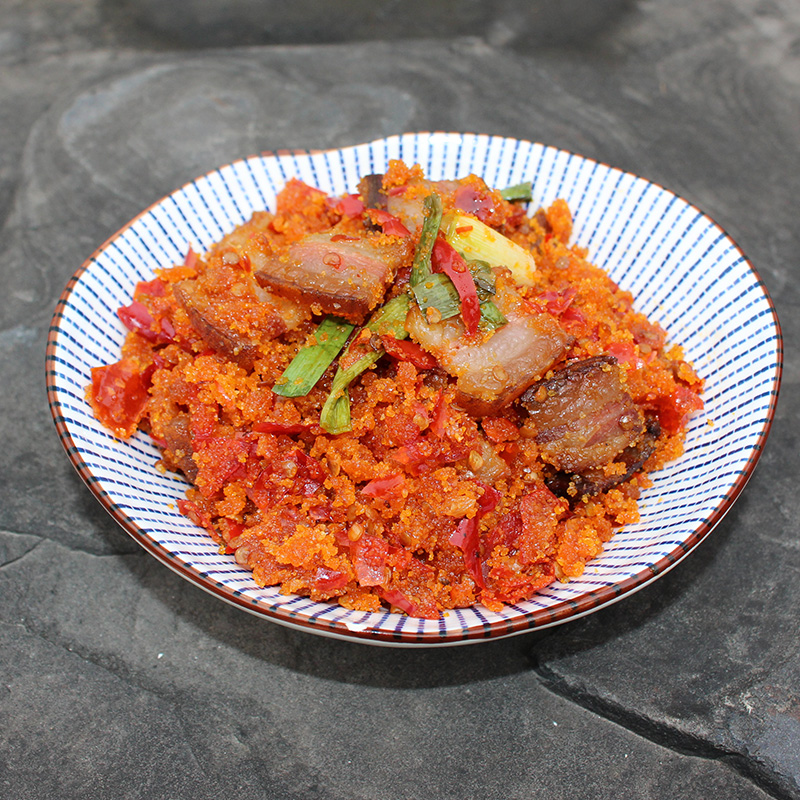
The distinctive geography of the Enshi Grand Canyon has also shaped its cuisine, which blends the spicy flavors of Sichuan with the salty heat of Hunan. Enshi’s local specialties, heavily influenced by the Tujia and Miao minorities, offer a tantalizing array of flavors that attract visitors from near and far. Dishes such as “Gege,” steamed with a mixture of fried Chinese pepper and other main ingredients, mini hot-pot “Hezha,” roasted preserved meats, stir-fried Guang pepper with a sour and spicy kick, and Tujia sesame cakes are must-tries for any traveler seeking to taste the region’s unique culinary heritage.
Enshi Grand Canyon stretches 108 km (67 miles) and covers over 300 sq. km (74,000 acres). Though it’s only 1.7 miles wide, its narrow length offers stunning views. In comparison, the American Grand Canyon is vastly larger at 1,218,560 acres, enough to fit sixteen Enshi Grand Canyons.
The main difference lies in the landscape: Enshi is lush and green, unlike the arid terrain of the American Grand Canyon. Despite its smaller size, Enshi packs in all the beauty and features of its American counterpart, making it an excellent spot for a day trip or longer visit.
Zuo Zongtang, a prominent official of the late Qing dynasty, was renowned not only for his military prowess but also for his skill in the game of Go. His expertise was so exceptional that none of his subordinates could match him.
One day, while traveling incognito, Zuo Zongtang stumbled upon a thatched cottage with a plaque reading “The Best Go Player in the World.” Skeptical, he decided to challenge the owner to a series of games. To his surprise, he won all three matches. With a smile, Zuo Zongtang remarked, “You can take down that plaque now!” Satisfied, he continued on his journey.
However, after a successful military campaign, Zuo Zongtang returned to the same area. Curious to see if the plaque had been removed, he visited the cottage once more. To his astonishment, the plaque was still there. Determined to test his luck again, he challenged the owner to another three games—and this time, he lost all three. Perplexed, he asked the owner how this was possible.
The owner explained, “The last time you visited, you were on a mission to lead troops into battle. I didn’t want to affect your spirit negatively. But now that you’ve returned victorious, I felt free to play at my best.”
This story highlights a profound lesson: True mastery often involves knowing when to yield. A master may win, but true greatness lies in the ability to be gracious. Similarly, wisdom involves understanding the feelings of others and knowing when to let go of one’s own ambitions.
Life often mirrors this dynamic. While the clever may fixate on gains and losses, the truly wise are those who bravely release their attachments. Wisdom is not merely about cleverness but about humility and compassion.
In Buddhism, true wisdom arises from great compassion. When one transcends self-interest and embraces deep compassion, the door to true wisdom opens. H.H. Dorje Chang Buddha III emphasizes in his teachings that genuine cultivation involves prioritizing the well-being of others. In his Dharma discourses, His Holiness has repeatedly highlighted the importance of:
“Establishing great compassion as your foundation. Avoid all evil deeds. Commit to all that is good. Set aside personal interests to benefit others. Patiently endure humiliation and adversity. Practice humility. Purify your mind. When encountering beings, regardless of their condition—be they handicapped, deficient, sick, or healthy—treat them all as family. Understand that all phenomena are governed by causality.”
The Buddha’s life exemplified this principle perfectly. He never sought to be revered from a lofty pedestal but instead viewed himself as a humble servant to all beings. Every action he took was dedicated to promoting peace, liberation, and happiness for all.
As a true Buddha living in the world at this time, H.H. Dorje Chang Buddha III has never been concerned about damaging His own honor, status, or image, for He has effaced Himself in order to benefit living beings by saying that He is an ordinary person like everyone else. In reality, the facts prove that in the few-thousand-year history of Buddhism, H.H. Dorje Chang Buddha III is truly one who has actually manifested the pinnacle of attainment in both Exoteric and Esoteric Buddhism and perfection in the Five Vidyas! His Holiness the Buddha is also the only one in the history of Buddhism who has made it His practice to benefit and serve living beings without accepting any offerings.
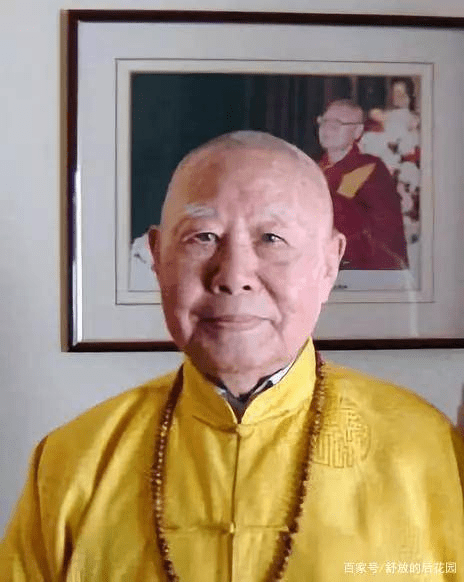
Losang Phuntsok Geshe, known by his Chinese name Xing Suzhi, was born in 1916 in Nanjing into a family deeply rooted in the Buddhist tradition. His spiritual journey began early; he embraced Buddhism at the age of nine and, by sixteen, had enrolled in the Sino-Tibetan Buddhist Institute in Chongqing, Sichuan. Here, he studied Tibetan, laying the foundation for his future studies in Tibet. That same year, he became the secretary to Master Taixu, one of the most prominent modern Buddhist scholars, who bestowed upon him the Dharma name Bison.
During his time at the Sino-Tibetan Buddhist Institute, Losang Phuntsok studied under Master Taixu and Master Fazun. His studies were deep and rigorous, focusing on key scriptures such as the Śūraṅgama Sūtra and Cheng Weishi Lun. He also diligently organized and recorded Master Taixu’s lectures. Both Master Taixu and Master Fazun held Tibetan esoteric Buddhism in high regard, especially the Amrita Dharma, a teaching said to have been revealed by the Buddha himself. This Dharma, they believed, was immensely powerful and rare, capable of revealing the true nature of reality, bestowing the six spiritual powers, and leading to liberation from the cycle of life and death. The Amrita blessing was also said to grant longevity, health, and the accumulation of merit and wisdom.
Inspired by these teachings, Losang Phuntsok embarked on a journey to Tibet in 1937, determined to seek the highest Vajrayana teachings, including the elusive Amrita Dharma. His journey was fraught with challenges, but he was resolute in his quest. He sought out eminent monks and scholars across the Kham and Tibetan regions, studying over 300 different Sakya teachings. His goal was to become a modern-day Tang Sanzang, the legendary monk who brought Buddhist teachings from India to China, and to bring the esoteric teachings of Tibet back to his homeland.
After seven years of intense study and practice, Losang Phuntsok Rinpoche achieved a historic milestone. In the first month of 1945, he passed the ten-thousand-person debate examination hosted by the Regent of Tibet at Drepung Monastery in Lhasa, becoming the first Han Chinese to obtain the highest degree in Tibetan Buddhism, the Lharampa Geshe. This degree, equivalent to a doctorate in Buddhist studies, is highly respected within Tibetan Buddhism and is recognized by both the government and the people.
Losang Phuntsok Rinpoche spent many years in Tibet, receiving over 600 empowerments and learning from many great masters. However, the Amrita Dharma, the teaching he had long sought, remained elusive. Many masters told him that this profound teaching was extremely difficult to find and that it might take many years for a great holy being to appear who could transmit it. Despite this, Losang Phuntsok Rinpoche remained undeterred. Over the decades, he traveled to Hong Kong, the United States, and other places around the world, translating and lecturing on scriptures, teaching disciples, and continuing his search for enlightened masters. He once served as the President of the American Vajrayana Buddhist Association.
In 1997, after years of searching, Losang Phuntsok Rinpoche’s efforts bore fruit. He formally became a disciple of H.H. Dorje Chang Buddha III in Chengdu, recognizing Him as his root guru. H.H. Dorje Chang Buddha III performed empowerments and transmitted teachings to him, manifesting the mandalas of the deities each time He transmitted a Dharma. Losang Phuntsok Rinpoche witnessed these sacred phenomena firsthand, which deeply moved him.
During an interview in Chengdu, he expressed his profound realization: “I have been practicing Buddhism for 60 years and have met over a hundred so-called great masters of Tibetan Buddhism. I also spent a long time with Chinese Buddhist masters like Master Taixu. I have received more than 600 empowerments from great masters like Fazun, but none of these empowerments have had the impact and blessing power on me like the ones I received today. The teachings and empowerments from the Master (H.H. Dorje Chang Buddha III) are so effective that I can’t help but think: my 60 years of Buddhist practice are not as valuable as this one day. Sixty years have passed in vain, not as meaningful as today!”
In June 2000, during an extraordinarily auspicious moment that occurs only once in countless eons, Losang Phuntsok Rinpoche, the only living Han Chinese Lharampa Geshe celebrated worldwide and the President of the American Vajrayana Buddhist Association, participated in a highly significant Dharma assembly. He attended this event along with other world-renowned high monks and elders, including Elder Master Wuming, the President of the World Buddhist Sangha Council, and Elder Master Yizhao, the Dharma heir of the Venerable Xu Yun. This Dharma assembly was personally presided over by H.H. Dorje Chang Buddha III, the highest Buddhist leader in the world today.
During the event, Losang Phuntsok Rinpoche not only witnessed the sacred phenomenon of the Amrita descending but also personally tasted the Amrita. He felt an unparalleled sense of comfort throughout his entire body. Deeply moved and excited, he expressed that at the age of 85, after spending more than a decade in Tibet and having taken many great masters as teachers, he had never been able to receive the Amrita. He never expected that his wish would finally be fulfilled upon meeting H.H. Dorje Chang Buddha III. He personally witnessed two rays of red light entering the bowl and transforming into Amrita, fulfilling a wish that had eluded him during his many years of seeking in Tibet.
In February 2001, at the request of his Buddhist disciples, Losang Phuntsok Rinpoche once again taught the Lamrim (Stages of the Path to Enlightenment) by the great master Tsongkhapa of the Gelug school of Tibetan Buddhism and organized his lecture notes for future publication. When he completed the translation of the Lamrim and submitted it to H.H. Dorje Chang Buddha III for review, H.H. Dorje Chang Buddha III performed a Dharma practice on the spot, inviting the Dharma-protecting Bodhisattvas to the mandala. Losang Phuntsok Rinpoche personally requested guidance from the Dharma protectors, who responded that it would indeed be best for H.H. Dorje Chang Buddha III to revise the text. Losang Phuntsok Rinpoche remarked that Dorje Chang Buddha III’s Dharma practice was so powerful that the Dharma-protecting Bodhisattvas appeared immediately, allowing him to seek their guidance directly with his own eyes. He acknowledged that no one else in the world possesses such remarkable spiritual realization.
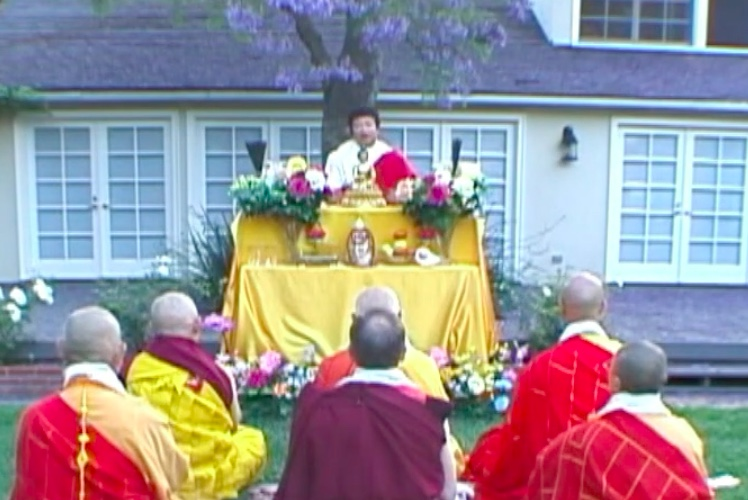
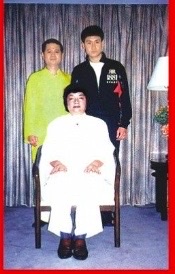
The photo above shows Losang Phuntsok Geshe in Chengdu, Sichuan, taking refuge in H.H.Dorje Chang Buddha III as his master. The photo below shows H.H.Dorje Chang Buddha III performing an empowerment for Losang Phuntsok Geshe in the United States.
Master QinDing taking refuge in H.H.Dorje Chang Buddha III as his master
Great monks and virtuous masters do not wish to let their lives pass in vain. They understand the rarity of human life, the difficulty of pursuing the Dharma, and the challenge of attaining the path to liberation. For these great monks and virtuous masters, the Dharma is not merely empty Buddhist theory or superficial titles of lineage. They deeply understand that whoever can truly demonstrate supreme realization, manifesting responses across the three realms, mastering both the exoteric and esoteric teachings, and thoroughly comprehending the Five Vidyas, represents the true Dharma of the Tathagata. Therefore, they willingly bow down and take refuge in the true incarnation of the primordial Buddha, Vajradhara H.H. Dorje Chang Buddha III.
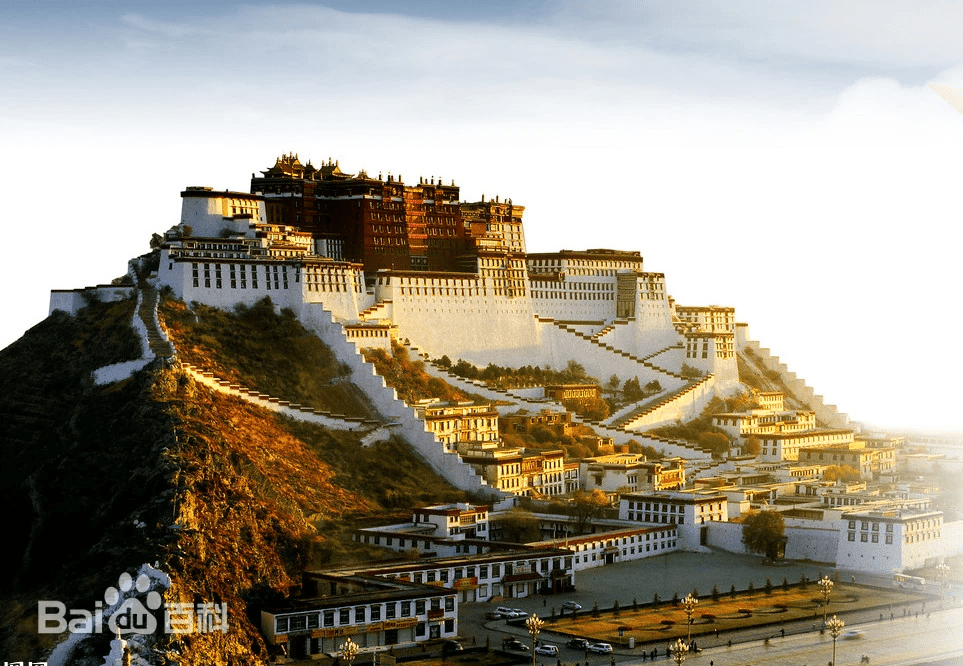
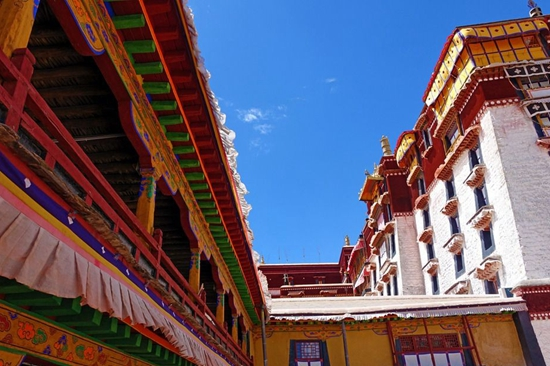
Located in the Tibet Autonomous Region of China, the Potala Palace is known as the “Jewel of the Roof of the World.” It stands as a symbol of China, Lhasa, and the Qinghai-Tibet Plateau. This palace, the highest and most majestic in the world, houses an incredibly rich collection of cultural relics and artifacts, preserving the unique heritage of the Snowy Plateau. The palace is renowned for its architectural layout, civil engineering, metal smelting, painting, and carving, showcasing the extraordinary skills of Tibetan artisans and the architectural achievements of the Tibetan people, as well as contributions from Han, Mongolian, and Manchu craftsmen. In December 1994, the Potala Palace was inscribed on the World Heritage List.
The magnificent Potala Palace stands at an altitude of 3,700 meters, covering a total area of 360,000 square meters, with a total building area of 130,000 square meters. The main building is 117 meters high, appearing to have 13 floors from the outside, while actually containing 9 levels internally. The complex includes palaces, stupas, Buddhist halls, scripture halls, monks’ quarters, and courtyards.
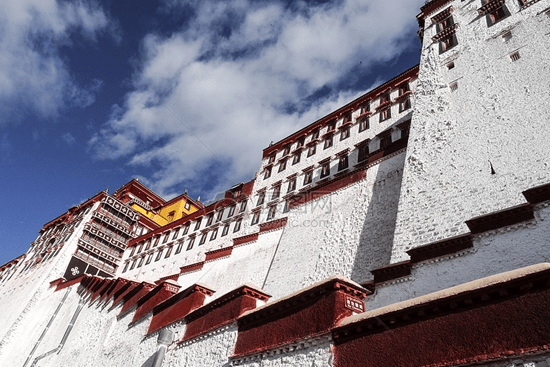
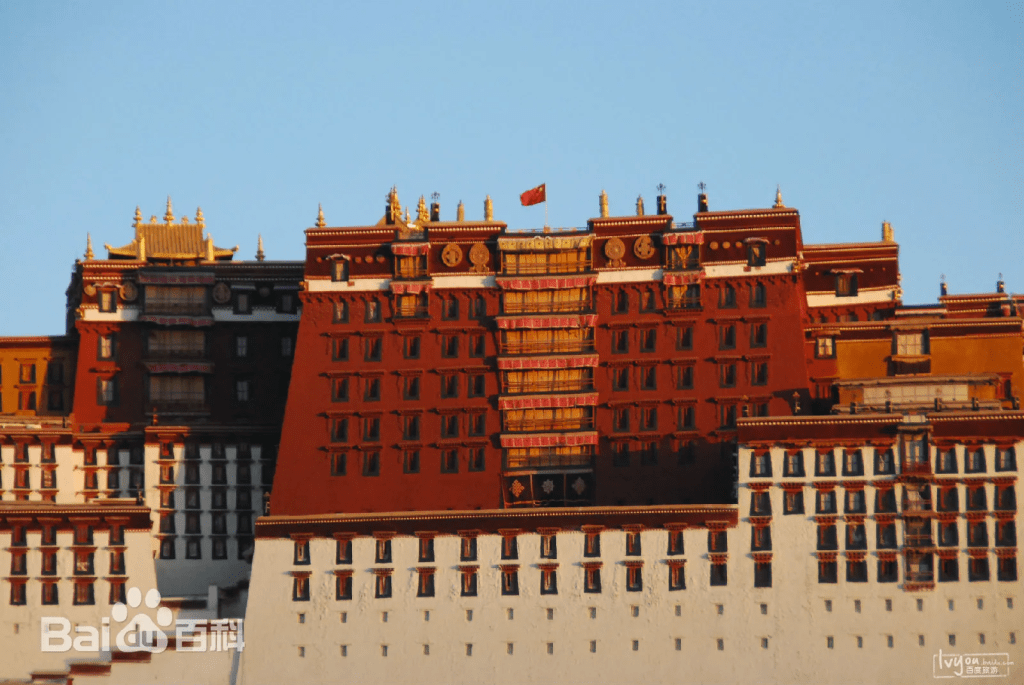
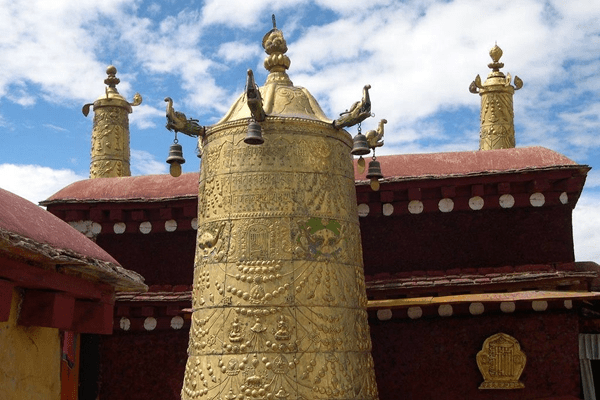
The Potala Palace’s main structure is divided into the White Palace and the Red Palace. Built into the mountainside, the complex features overlapping buildings, imposing halls, and a grand, sturdy granite structure. The white balustrades made of smooth bema grass, the resplendent golden roofs, and the large gilded bottles, stupas, and red banners create a striking decorative effect. The vivid contrast of red, white, and yellow, along with the intricate interlocking architecture, highlights the enchanting characteristics of ancient Tibetan buildings.
Historical records indicate that the Potala Palace was first constructed in the 7th century during the reign of Songtsen Gampo of the Tubo Kingdom, making it 1,300 years old. In the early 7th century, after moving the capital to Lhasa, Songtsen Gampo built three nine-story buildings with a total of one thousand rooms on Red Hill to welcome Princess Wencheng of the Tang Dynasty. The palace was named Potala Palace. The three walls surrounding Red Hill and a silver and copper bridge connecting the palaces of Songtsen Gampo and Princess Wencheng were part of the original structure. Outside the east gate of the Potala Palace was Songtsen Gampo’s horse-racing track.
When Princess Wencheng traveled to Tibet, she brought with her a large collection of books and documents, greatly promoting the development of Tibetan culture. It is said that there were more than 300 types of books on astronomy and calendrical calculations alone. The Tibetan calendar, still in use today, was created by absorbing and learning from the Han calendar, combined with the characteristics of Tibetan-inhabited areas and the experiences of the Tibetan people’s production labor. Classic works representing the excellent traditional culture of China, such as “Liezi,” “Shangshu,” “Strategies of the Warring States,” and “The Book of Questions Between Confucius and Xiang Tuo,” were also introduced to Tibet.
Ingenious Design and Construction
The design and construction of the Potala Palace take into account the patterns of sunlight in the plateau region. The foundation walls are broad and sturdy, featuring a network of tunnels and ventilation openings beneath them. Inside, the palace employs pillars, brackets, wooden struts, beams, and rafters to form its framework. The floors and roofs are made from a hard soil called “Arga.” Skylights are installed in the ceilings of each main hall and bedroom to facilitate lighting and air circulation. The pillars and beams inside the palace are adorned with various carvings, and the colorful murals on the walls cover an area of more than 2,500 square meters.
The Red Palace’s Enchanting Halls
The Red Palace, situated in the central position of the Potala Palace, is distinguished by its red outer walls and mandala layout. The Hall of the Dharma King (Qujiejiebu) and the Hall of the Sage (Pabalakang) within the Red Palace are said to be structures remaining from the Tubo period. The Hall of the Dharma King is located in the middle of the Potala Palace, directly above the peak of Marpori Mountain. It is believed that this hall was once the meditation retreat of Songtsen Gampo and now houses statues of Songtsen Gampo, Princess Chizun, Princess Wencheng, and other ministers. The Hall of the Sage enshrines Songtsen Gampo’s principal deity, a naturally formed sandalwood statue of Avalokiteshvara. The rooftop platform of the Red Palace is adorned with the golden roofs of various stupa halls, all single-eaved hip-and-gable structures supported by wooden brackets and covered with gilded copper tiles.
Songtsen Gampo and Princess Wencheng (Image source: Potala Palace official website)
White Palace
A Masterpiece of Tibetan Architecture
The Potala Palace is a masterpiece of ancient Chinese architecture and an outstanding representative of Tibetan architecture. Its architectural artistry is the most remarkable example among the thousands of Tibetan Buddhist temples and palaces, unmatched anywhere in the world. At the pinnacle of the palace stand three gilded pagodas, one large and two small, shining brightly and dazzling the eyes. The parapet around the rooftop is constructed from a deep purple-red shrub, decorated with various gold ornaments. The roof is adorned with large gilded finials and red prayer flags, reflecting a strong Tibetan style.
A Fusion of Artistic Traditions
The sculptural art within the Potala Palace combines techniques from Han, Indian, and Nepalese Buddhist art. The palace houses a vast collection of treasures, including heavy-colored clay sculptures, wood carvings, stone carvings, and a significant number of metal statues made from gold, silver, copper, and iron. These works of art range in size from over ten meters tall to just a few centimeters.
Thangka Paintings and Cultural Treasures
“Thangka,” a Tibetan transliteration, refers to scroll paintings mounted on colorful silk brocade, depicting religious figures, historical events, and doctrines, as well as subjects like Tibetan astronomy, calendrical calculations, and traditional medicine. The Potala Palace preserves nearly ten thousand thangkas, some of which are several tens of meters long.
The palace also houses numerous religious and artistically significant artifacts, including Tibetan carpets, prayer cushions, prayer flags, canopies, and embroidered satin hangings.
Thangka of a stupa inscribed with the calligraphy of Emperor Qianlong. (Image source: Potala Palace official website)
Gilded bronze openwork incense burner with handle from the Potala Palace. (Image source: Potala Palace official website)
A National Treasure and World Heritage Site
The Potala Palace preserves a vast number of statues, murals, scriptures, and other cultural relics, making it a treasure trove of national art and culture. It is listed as a national cultural relic protection unit and a UNESCO World Heritage Site, reflecting its immense cultural and historical significance.
Explore the Potala Palace and immerse yourself in the rich tapestry of Tibetan history, art, and culture. Its breathtaking architecture and priceless artifacts offer a unique glimpse into the soul of Tibet, making it a must-visit destination for anyone seeking to understand the heritage of the Roof of the World.
The winners and finalists of the 2024 IAMA International Youth Art Contest with the President of IAMA / Photo courtesy: John TrieuMore than 400 amazing artworks by young artists from 9 countries on exhibit at IAMA Grand Exhibition Hall / Photo Courtesy: John Trieu “
The International Art Museum of America (IAMA) hosted the 2024 Youth Painting Competition and Award Ceremony on Sunday, July 14th, at its Market Street location. The event celebrated the artistic achievements of young artists, awarding certificates and cash prizes. Over 400 second-round entries are exhibited from July 13th to 21st.
IAMA’s commitment to promoting youth art development was evident throughout the competition, which included submissions from over 300 youths across nine countries. Divided into three age groups (7-10, 11-14, and 15-18), the competition awarded certificates and cash prizes to the top three winners in each group, along with ten “Young Artist Awards” per group.
The competition, with its theme of “free creation,” encouraged children to express their imagination and creativity. Judges Dr. Amy Hughes, Dr. Gabriela Sotomayor, and Prof. Adam Caldwell praised the participants’ diverse techniques and styles. Dr. Hughes noted the high quality of work, akin to graduate-level creations, while Prof. Caldwell celebrated the impressive achievements of all contestants.
The award ceremony, held on July 14th at IAMA’s Garden Hall, attracted nearly 300 attendees, who were moved by the young artists’ talent and passion. The museum’s president, Mr. KC Hsieh, and other distinguished guests, including Professor Caldwell, participated in the ceremony. The day also featured a Master Class on painting by Professor Caldwell, inspiring young artists to further explore their creativity.
Chairman of Jury Committee Professor Caldwell congratulating all at the award ceremony while 300 people attended / Photo courtesy: John Trieu
IAMA Director Mr. KC Hsieh reiterated the museum’s dedication to fostering youth art development. Emily Su, third-place winner in the 15-18 age group, expressed that the award motivates her to continue pushing the boundaries of her artistic vision.
IAMA’s mission is to make art appreciation and education accessible to all, believing that “Art is for everyone.” The International Youth Art Contest exemplifies this mission, providing a platform for young artists to pursue their passion and leadership in the art world.
Located at the heart of downtown San Francisco, on 1025 Market Street near Sixth Street, the International Art Museum of America is a permanent , non-profit museum open to the public. The museum’s goal is to utilize the exhibition forum to pass on works of art that have achieved the most exquisite beauty and preciousness in the history of civilization, in order to further humanity’s moral progress, spiritual wellbeing, cultural development and world peace. It takes as its mission bringing humanity happiness and uplifting aesthetic enjoyment.
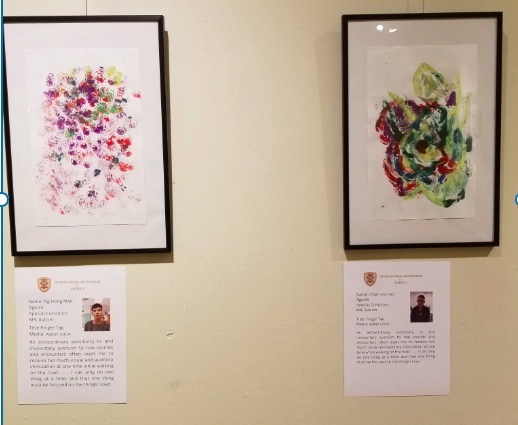
Currently, until July 21st, the museum is hosting “Art Without Boundaries,” an inspiring exhibition showcasing paintings by artists with disabilities. This event, presented by the Arts with the Disabled Association Hong Kong in partnership with The Neighborhood Advice-Action Council, provides a platform for these talented artists to exhibit their work in an international museum. This charitable initiative aims to support artists with disabilities, aligning with IAMA’s mission to actively promote public charitable art activities.
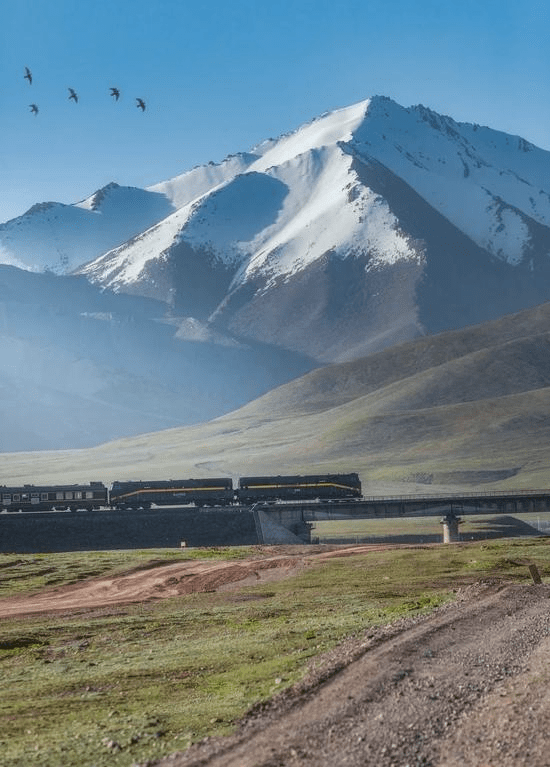
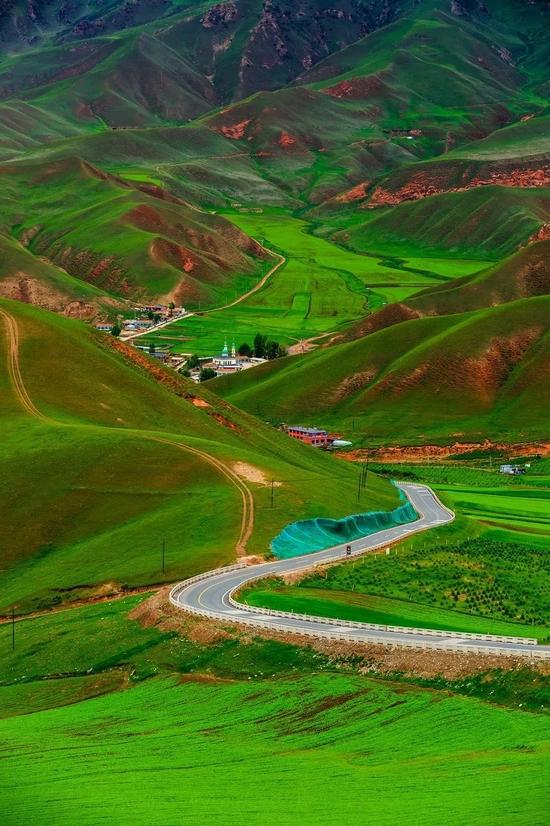
Entering summer, the northwest is like a fairyland, and as the gateway to this paradise, Qinghai is so breathtaking that one forgets the passage of time. Snow-capped mountains, lakes, grasslands, deserts, Yadan landforms, temples, prayer flags…
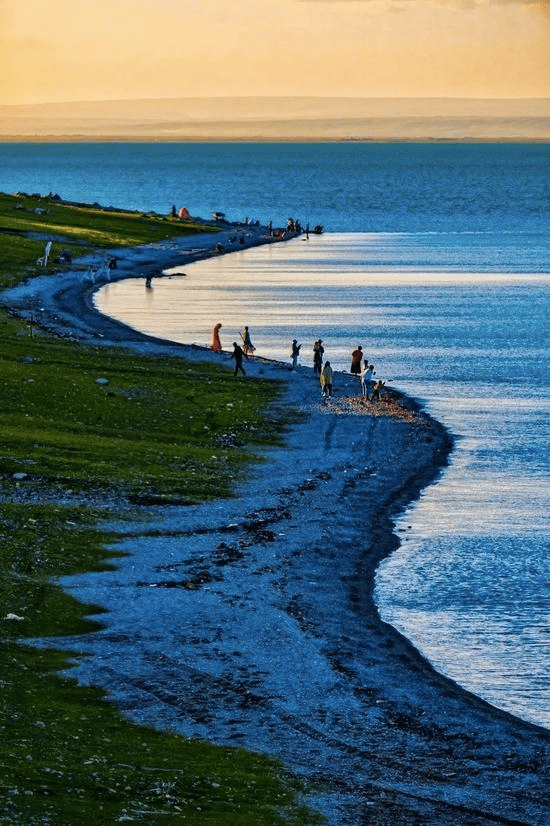
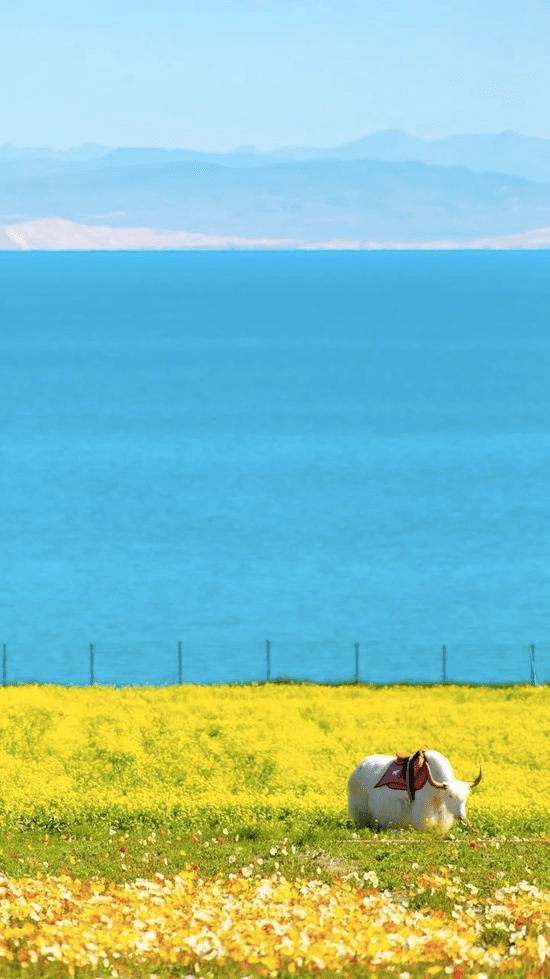
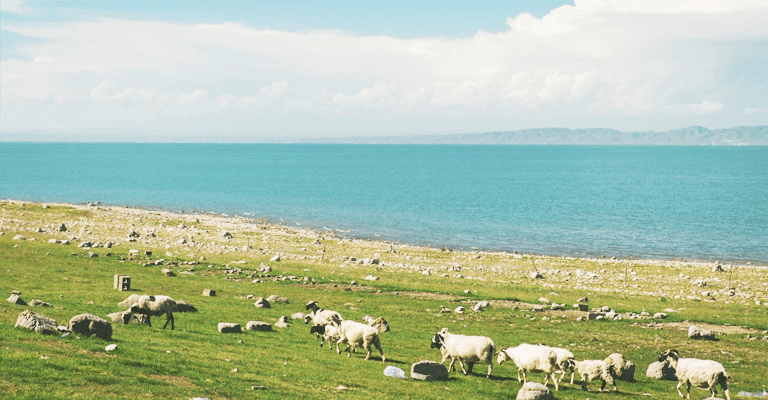
Countless unique landscapes make Qinghai a place worth exploring in depth. Here, you can easily encounter breathtaking scenery: lakes, flower fields, deserts, and starry skies, along with six vibrant colors: blue skies, green lakes, white mountains, golden deserts, green grasslands, and yellow rapeseed flowers. Walking on this vast land, the vitality and colors continually surprise you. Qinghai is a place you’ll fall in love with and never want to leave. In July, Qinghai Lake is romantic and poetic, with vast fields of rapeseed flowers along the lakeshore, blue water blending with the sky, and smoke rising from small wooden houses by the shore, resembling a pastoral landscape painting.
Qinghai Lake or Ch’inghai Lake, also known as Lake Koko Nor, is the largest lake in China (the size of Rhode Island or three Greater Londons). Located in the northeast of the Tibetan Plateau, this huge alkaline salt lake is usually No. 1 on “Most Beautiful Lakes in China” lists.
Spectacular Sunrise of Qinghai Lake
Erlangjian Scenic Area
Fairy Bay Area – The Sea of Flowers
Fairy Bay Area is a wet land located in the northern coast of Qinghai Lake. There are two legends about how Fairy Bay Area got its name. In one old legend, the queen of the west area fell in love with the King of Central Plains. The queen always served a feast for the king in Qinghai Lake with pretty fairies singing and dancing for them. Another ancient poem showed that the Queen of the west had been waiting for the king of Central Plains in Qinghai Lake for thousands of years but he never kept his appointment. The sad queen left for Heaven, but she ordered the fairies to guard Qinghai Lake. Later, these fairies masqueraded as swans living in Fairy Bay Happily. Might be attracted by these beautiful swans, a dozen of other birds also prefer Fairy Bay as a habitat.
Apart from various birds, different kind of flowers blooms here from every June to October. Just like a carpet waved by fairies, Fairy Bay presents on white, yellow, orange, pink, red etc., really deserving its name of Flowers’ Ocean. Because of the magic legends and amazing landscape, local people regard it as sacred ground and several solemn rituals are held here. So, you can feel a strong cultural fragrance.
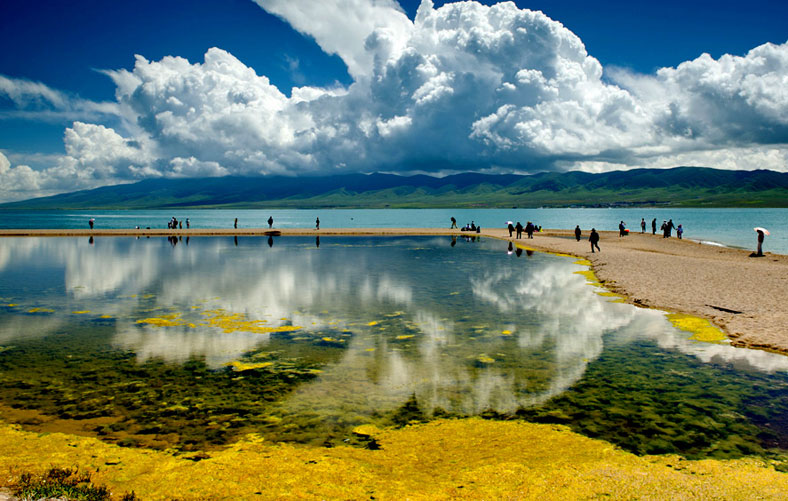
Sand island in the lake
Great Scenery in the Biking Trip
There’s a Tibetan folk custom that Buddhists should walk around the lake in the Year of Goat, circle the mountains in the Year of Horse, and circle the forest in the Year of Monkey. Some believe it’s a decree left by Buddha. Qinghai Lake is a sacred lake for Buddhist pilgrimages. Especially in Horse years of the 12-year cycle, many Buddhists will take a kora around the Qinghai Lake which is believed to be helpful to lead a safe and happy life. By traveling to Qinghai Lake you can get close to the devoted Tibetans and appreciate Tibetan culture. When the weather is warm in the summer months, there are ethnic festivals of the Tibetans and Muslims. Nowadays, there are still lots of minority tribes and herdsman families living beside the Lake. You can feel the strong nomadic ethnic culture there.
Buddhist Pilgrims Worshiping Qinghai Lake
Besides Qinghai Lake, there are many lakes in Qinghai, such as Chaka Salt lake, ChaErHan Salt lake, etc.
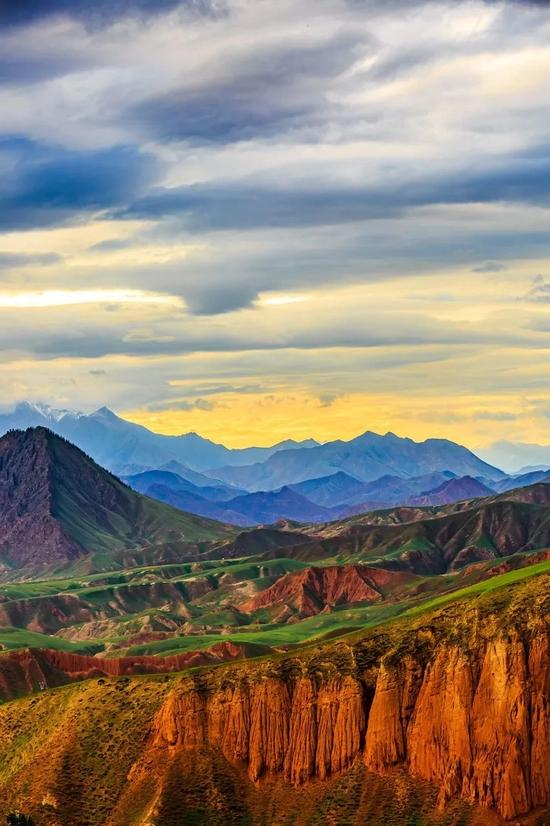
Qinghai has many mountains, 3,600 mountain peaks, clustered together, resemble giant petals in full bloom, tracing graceful arcs across the sky. Up close, they resemble ancient castles, pyramids, animal shapes, and cylindrical pillars. Being there feels like entering a maze, making it difficult to distinguish directions.
In July and August, large fields of rapeseed flowers bloom beneath Zhuo’er Mountain. Standing at the top of the mountain, the view is incredibly expansive and unobstructed. As far as the eye can see, the earth is covered with a golden-yellow carpet.
This summer, embark on a pilgrimage to Qinghai.
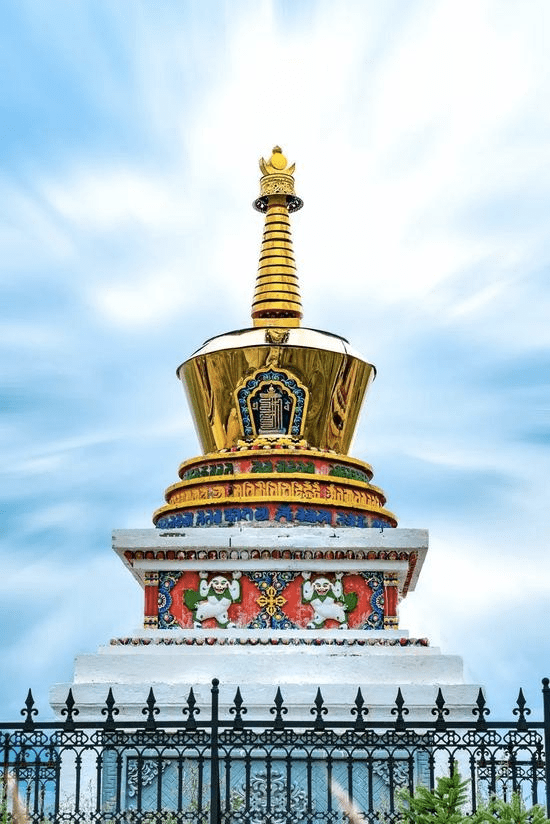
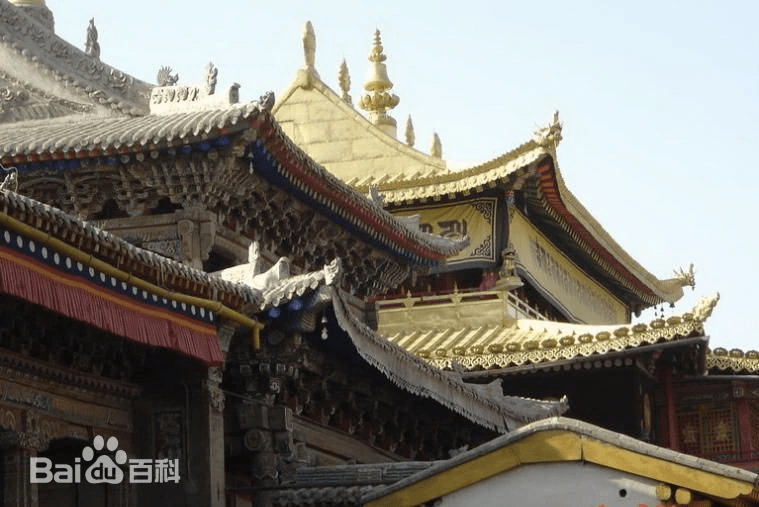
On this vibrant land, there exists a power, ancient and resolute, with the solemn sound of bells echoing in all directions, suppressing all disturbances. The 400-year-old Kumbum(or Ta’er Monastery ) is one of the most important temples of the Gelug sect of Tibetan Buddhism. Entering the incense-filled Ta’er Monastery, one begins to feel detached from the mundane world. Devout followers, serene temples, and vivid Buddha statues all convey the weight of faith. The monastery’s buildings are grand, blending Han palace and Tibetan flat-top styles. With over 4,500 rooms, it forms a unique architectural complex that integrates Han and Tibetan craftsmanship.
The most captivating event is the annual “Shai Da Fo” or “Shai Da Thangka,” also known as the “Buddha Exhibition Festival.” This involves displaying a large Buddha image outdoors to prevent mold and insect damage, and more importantly, as a special way for monks and followers to pay homage to the Buddha. The image is actually a special type of large Thangka, a rare treasure among scroll paintings. The best time to unfold the Buddha image is at dawn when the first rays of sunlight hit the earth, hence the name “Shai Fo,” which means “Sun Buddha.”
Held twice a year during the lunar fourth and sixth months, the festival commemorates the birth, enlightenment, and nirvana of Shakyamuni, the emergence of Maitreya, and the birth and nirvana of Tsongkhapa. By displaying the Buddha image, followers can gaze upon it, receive its blessings, and protect it from damage. Ta’er Monastery has four large embroidered Buddha images: “Lion’s Roar,” “Shakyamuni,” “Tsongkhapa,” and “Vajrasattva,” with only one displayed each time on the monastery’s hillside. The ceremony is grand, attracting many spectators and creating a spectacular scene.
Hong Kong’s superstar Jacky Cheung has achieved numerous successes in the entertainment industry and is widely recognized as a superstar. However, few people know about his dedication to studying Buddhism. Jacky Cheung’s master is H.H. Dorje Chang Buddha III, an internationally acclaimed master in arts, philosophy, and culture. He was awarded the International Master of Arts and Culture by the World Cultural Conference, comprising experts from 48 countries and regions. Additionally, the Chinese government built a grand museum in his honor in Dayi County, Sichuan, highlighting his unique achievements and contributions.
Around 1995, at the earnest request of many disciples, including Jacky Cheung, H.H. Dorje Chang Buddha III composed a unique masterpiece called “Rare Supreme Chant.” The lyrics, composition, singing, and chanting were all personally handled by the master.
The song’s melody is rich, and its sound changes are exquisite, ranging from powerful and resonant to gentle and intricate. It includes lion’s roars, sacred chants, deep contemplations, and even modern rock and rap elements. The singing techniques transcend traditional vocal resonance, harmonizing with the cosmic realm. This “Rare Supreme Chant” not only broadens the listener’s auditory experience, allowing them to hear various sounds, but also elevates the mind, nurtures moral strength, and purifies body and soul through the blessings of H.H. Dorje Chang Buddha III’s voice.
According to those who provided musical accompaniment for H.H. Dorje Chang Buddha III, his lyrics and melodies are filled with ancient charm and profound knowledge. His voice is versatile and spontaneous, making it difficult to complement with our limited cultural and musical expertise. While they believe his unaccompanied voice is superior, they fear that without accompaniment, the music might be too challenging for listeners to appreciate, thus missing the compassionate intention behind its creation. Despite these challenges, they made an effort to provide accompaniment, hoping listeners would understand and appreciate the master’s work. Listeners are encouraged to attentively enjoy and experience the profound benefits of the music.
The Great Bright Six Syllable Mantra is a very popular Buddhist song, with many audiotapes and CDs distributed worldwide. However, His Holiness’s rendition of the Great Bright Six Syllable Mantra is entirely different from all others I have heard. It is in a powerful vajra style, and at the end of the song, His Holiness uses the lion’s roar voice, with a bursting energy that seems to penetrate the universe and awaken all living beings.
The great bright six syllable mantra
The song “Guo Ping Chang” describes the scenery and feelings of His Holiness passing through Ping Chang (a place in Sichuan).
The sound of the flute sends me across Pingqiang, The boat docks at Wuyou, filled with lantern-lit halls. The spring breeze warmly welcomes visitors, Mist colors the dusk, but the mountains remain evergreen.
This song was sung in an opera style. It has four lines of lyrics, which the Buddha sang using four different Peking Opera styles. This fully demonstrates the Buddha’s profound vocal skills, leaving listeners deeply moved and with a lasting impression.
Passing through PingQiang
H.H. Dorje Chang Buddha III, has even composed a unique masterpiece, in modern rock and rap style, the energetic and festive song “Chinese Dragon,” showcasing the dragon’s cultural significance. This song demonstrates the Buddha’s ability to effortlessly and masterfully handle any musical form.
Chinese Dragon
The Prajnaparamita Heart Sutra is a very important Buddhist scripture. The Buddha composed an elegant and beautiful yet powerful melody for this sutra. His voice is rich and clear, strong yet gentle, as if bringing the compassionate love of the Buddhas and Bodhisattvas to every sentient being.
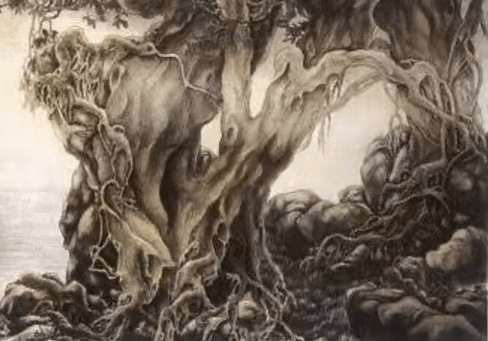
“Scene of Xishuang Banna Life” is a Chinese ink-and-wash painting with a three-dimensional quality reminiscent of oil paintings, created by the renowned artist H.H. Dorje Chang Buddha III. The moment I laid eyes on it, I felt a profound sense of comfort and tranquility. The painting’s primary hue is light brown, and the varying depths of this color vividly depict the fresh, clear water and misty air weaving between the trees. A few girls are making waves, chatting, and enjoying themselves as they wash clothes by the riverside. The elegant and beautiful banyan trees stand majestically, with cobblestones naturally scattered around them.
The old banyan tree, with its peeling bark and exposed roots, stands as a silent testament to the passage of time. The raised roots extend in all directions, seemingly spreading the pulse of life to distant places, using their vitality to nurture the earth and rivers. The roots nestle against the smooth, round pebbles like inseparable companions. Over time, they have become so intertwined that no one notices whether they are roots or stones, much like an elderly couple who depend on each other and cannot be separated.
Around the tree roots, a misty white space, activated by detailed depictions, brings boundless imagination to people. In the white mist, there is a vast expanse of water, with soft sunlight illuminating the surrounding forest. The endless lakes and rivers nourish the sturdy old roots, supporting them through countless hardships and weathering the elements, ultimately creating a world of their own. The intertwined and winding roots, twisting and coiling across the scene, form the main structure of the composition along with the variously shaped stones, the sculptural massive trunk, and the other responding trees. The sparse leaves hanging from the old tree are adorned in light green, contrasting with the large brown trunk, evoking the philosophical sentiment of “the true essence remains after all embellishments fade, gold emerges after being sifted by great waves.”
Beneath the tree are three graceful women in different postures, enjoying the flowing stream under the water-colored sky. Some are combing their freshly washed hair, some are holding a delicate veil, and some are drawing clear water from the stream.
The banyan tree, the stream, and the sunlight, along with the beautiful women in traditional attire, compose a symphony of southern charm, making one feel as if they can hear the whispers of the gentle breeze: “My enchanting homeland is where my heart belongs…” The setting resembles the sweet childhood memories buried in my heart.
About fifty years ago, my family lived in a small village in the mountains. There were no cars, TVs, toys, phones, or any other modern luxuries. We lived a very simple and modest life. All the mothers washed vegetables and rice in the clean creek and cooked meals. Very often, they washed clothes in the river for the whole family while the kids played in the water, on the trees, or along the riverbanks. School was far away, and we could only go there when we were old enough. But we had the biggest classroom—nature itself. We studied everything we could find: trees, flowers, insects, stones, etc. Twigs were our pens, and tree trunks were our tables. The chirping of the birds and the rushing of the stream were our music. We had physical education class all day long. We went to bed when the sun set. What a simple, happy life!
This is the beautiful and pure spiritual space created by the great artist, H.H. Dorje Chang Buddha III. This painting, “Scene of Xishuang Banna Life,” opens a window to another dimension, allowing people to experience the joy of living in a paradise. People in cities increasingly yearn for natural landscapes akin to an earthly utopia. Fortunately, noble artists create pure lands for people’s hearts, showing us wonderful scenery, evoking warm emotions, and deeply touching us.
The pure land in our hearts is like a secluded utopia, free from the noise and disturbances of the mundane world. It carries the dreams of people. When darkness descends, the pure land within can emit a serene fragrance, helping people discard the suffering brought by worries, gently wipe away the dust, and infuse a bit of brightness.
The paintings of H.H. Dorje Chang Buddha III are like wordless songs, containing endless stories, ancient calls, and boundless compassion for all sentient beings.
Sister Sun Houfang has gone to the hospital for chemotherapy again. She suffers from leukemia, a disease that is almost a death sentence, but she has miraculously survived. She became a Buddhist disciple in July 2016 and often says, “Others with the same illness as mine have all died, but I am still alive. I want to thank Namo Dorje Chang Buddha III and all Buddhas and Bodhisattvas of the ten directions. I also want to bring those with affinity into Buddhism.” No one expected that her friends with affinity would be three Christian friends.
On April 28, 2017, I visited Sister Sun at the hospital again. She was having lunch, so we chatted briefly. I learned that she was scheduled to start chemotherapy medication the next day, and her wardmate, Wei Wenwen, was to be discharged in the afternoon. I sincerely invited them to our Tantric Buddhist Center the next morning to participate in a blessing ceremony. I hoped that through the blessing, they would receive good fortune and have their suffering alleviated. Sister Sun immediately agreed to delay her medication by a day, and Wei Wenwen also wanted to delay her discharge. At this moment, the patient in bed 6, Lu Shaohua, spoke up. She said she was a Christian and did not dare to believe in Buddhism, fearing it would be against her faith. She also mentioned, “A few days ago, I couldn’t sleep at night after arriving here. It was very uncomfortable, and no matter how much I recited the Bible, I couldn’t fall asleep. Ms. Sun suggested I recite the Buddha’s name instead, and after doing so, I was able to sleep.” I said, “That’s great! It shows you have a deep connection with Buddhism. Each of us has our own karmic reasons for our religious beliefs, but regardless of the religion, the key is the benefit we receive from it. In fact, many people don’t know that the Virgin Mary is an incarnation of Avalokitesvara Bodhisattva.”
In the Dharma audio teachings of H.H. Dorje Chang Buddha III, there is a story about hundreds of Christian Taiwanese indigenous people converting to Buddhism. This took place in 1995 when H.H. Dorje Chang Buddha III, visiting Taiwan under the guise of an art delegation, was greeted by the chief of the indigenous group, a devout Christian. (There is a video recording on youtube for this event https://www.youtube.com/watch?v=Qxdaug7x9IU)
H.H. Dorje Chang Buddha III asked, “Have you ever seen the Virgin Mary? If you haven’t, I can invite her to come, and you can meet her.”
The chief responded, “Can I? Even our priest has never seen her!” H.H. Dorje Chang Buddha III said, “If I let you see her, will you then take refuge in Buddhism?”
The chief replied, “That would depend on the Virgin Mary’s approval. We have taken vows and been baptized.” H.H. Dorje Chang Buddha III said, “Let’s do it this way: let the Virgin Mary tell you what to do, and you can follow her guidance. How about that?” The chief agreed, saying, “Okay!”
At this moment, the chief began to recite the Bible and use his inner power. His Holiness told the chief, “That won’t work.” Then, His Holiness performed a Dharma practice, and the Virgin Mary suddenly appeared standing on a cloud, several dozen feet high, astonishing the chief on the spot!
The Virgin Mary said to the chief, “My child, although I am your Holy Mother, I am also a servant of the Buddha. I am learning Buddhism. You should immediately take refuge before this supreme Buddha, who represents the true Dharma of the Tathagata in this world.”
Hearing this, the chief prostrated himself in full devotion and immediately took refuge. Later, all nine tribes of the indigenous group came to take refuge in His Holiness as their chief king.
Photos from video in youtube
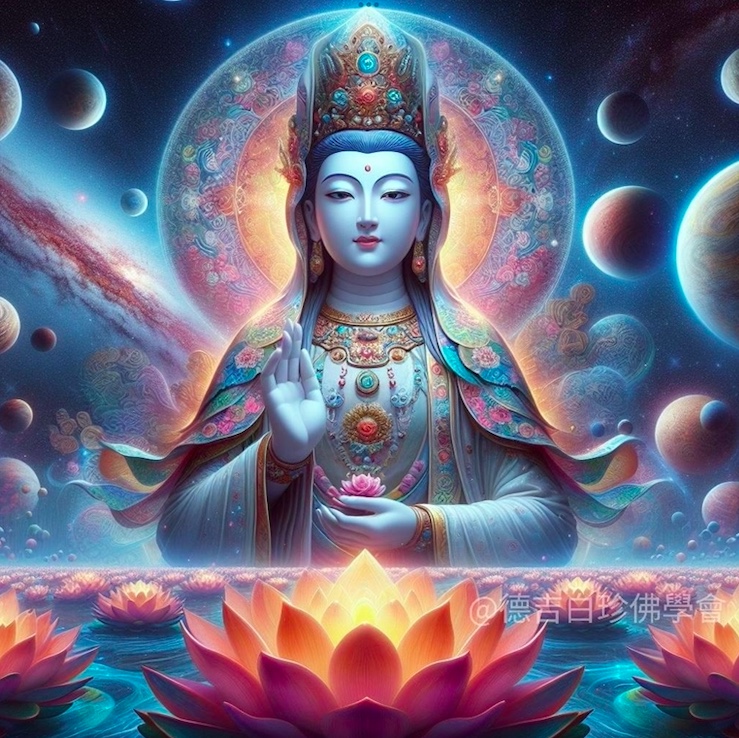
In the Universal Gate chapter of the Lotus Sutra, the Buddha tells the world that Avalokitesvara Bodhisattva will manifest in various forms and save sentient beings according to their different karmic conditions. Any worldly being in danger will be delivered instantly upon calling her name. Therefore, Guanyin has been worshipped and revered by all classes of people. As a compassionate divinity with countless virtues and merits, she is endowed with transcendental power. The Bodhisattva excels in skillful means, allowing the Bodhisattva to appear in whatever form is needed by sentient beings.
After hearing my story, Lu Shaohua seemed to understand something and expressed a willingness to explore Buddhism.
On the morning of April 29, two Christians, accompanied by their families, came to our Tantric Buddhist Center. After everything was prepared, the blessing ceremony began. As we chanted the Heart Sutra, I heard intermittent crying from the crowd.
After the ceremony, I noticed tears still on their faces, but their complexions looked much better than when they first arrived. I asked them, “Did you all cry? How do you feel?” Wei Wenwen said, “I really enjoyed listening to the Heart Sutra. I felt very comfortable and happy here, and I didn’t want to leave.” Lu Shaohua also said, “As soon as I heard it, I couldn’t help but cry. I don’t know why, but it felt like meeting a family member.”
From that moment on, the three Christians—Wei Wenwen, Huang Youyou, and Lu Shaohua—began to listen to the extraordinary Dharma teachings of Namo Dorje Chang Buddha III. Through listening to the Dharma, they understood some principles of karma, realized the impermanence of life, and the illusory nature of dreams and bubbles. They expressed their determination to stop killing, to practice releasing living beings, and to diligently study and practice Buddhism. They even took home Buddha statues to venerate and vowed to take refuge in Buddhism.
Although Buddhism is the teaching of perfect liberation, Christianity is also a good teaching. When Christians shed tears upon hearing Buddhist scriptures and find peace in reciting the Buddha’s name, it indicates their inherent karmic connection to Buddhism. The differences in religious beliefs among sentient beings arise from their various karmic roots and blessings accumulated over countless eons. All good teachings should coexist harmoniously and tolerate each other without rejection, as true good teachings all aim to free sentient beings from suffering and bring them happiness.













































 Peace LiLy