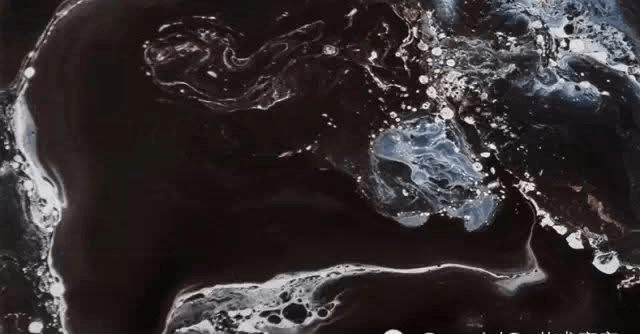
Through his brushwork, H.H. Dorje Chang Buddha III renders the subtle life cycle of a water bubble—its emergence, transformation, and eventual dissolution—with remarkable vitality. Though the medium is static, the painting evokes a striking sense of movement and immediacy. One almost senses the gentle drifting of bubbles across the surface, and even imagines the delicate sound that might accompany the instant when a bubble touches the ground and quietly disappears.
Beyond its visual beauty, the work carries a deeper contemplative resonance. In the fleeting rhythm of the bubbles, one cannot help but see a metaphor for the human condition. The trajectory of a bubble—from its brief formation to its silent vanishing—mirrors the arc of human life: birth, growth, aging, and departure. Life itself unfolds within the span of a breath, fragile and transient, reminding us of the importance of awareness and presence in each passing moment.
From an artistic perspective, the painting also demonstrates a remarkable command of impressionistic expression. The composition operates not only as a unified whole but also as a constellation of smaller visual worlds. Any isolated fragment of the canvas could stand independently as an exquisite impressionist study, rich in color, light, and atmosphere. This structural richness gives the work a dreamlike, almost illusory quality—where forms appear to emerge and dissolve within layers of color and movement.
In this way, the painting invites the viewer to linger, not merely to observe, but to reflect. It transforms a simple natural phenomenon into a meditation on impermanence, perception, and the delicate beauty of existence.
Click here to Wikitia page on H.H. Dorje Chang Buddha III that list major accomplishments and teachings with links.
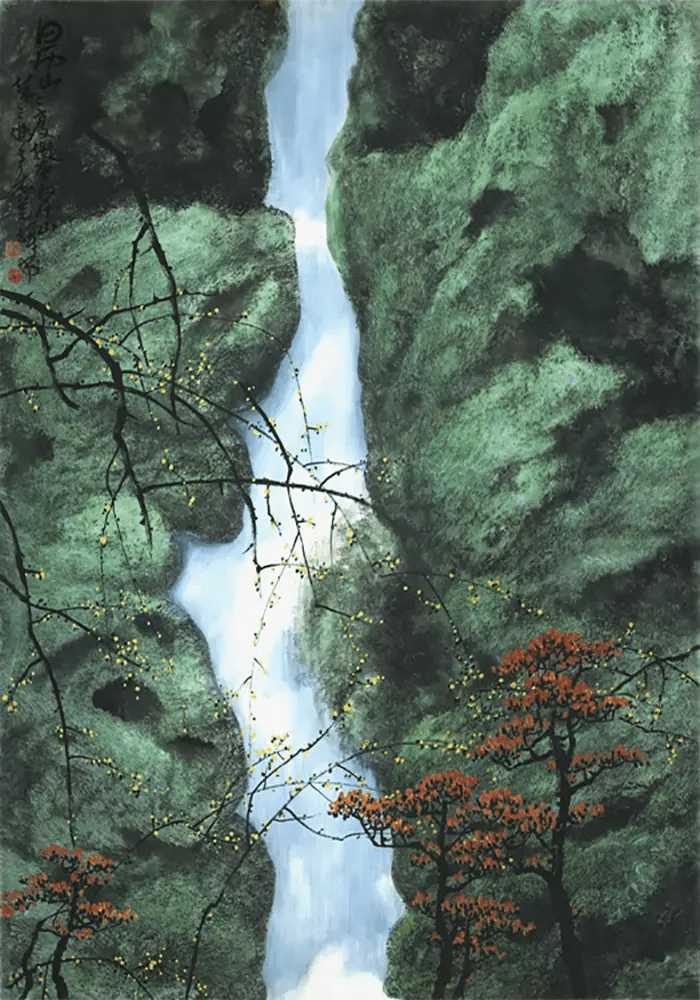
Created in 1993, Xing Garden at Mount Rili stands as a masterful expression of the artist’s profound understanding of nature and brushwork. The painting presents a dramatic world of steep cliffs and cascading water, inviting the viewer into a landscape that feels both monumental and intimate.
Dominated by vibrant greens, the work vividly captures moss and grasses spreading freely across rocky surfaces. These lush tones breathe life into the cliffs, softening their ruggedness while emphasizing the quiet vitality that thrives within seemingly harsh terrain. Nature here is not static; it pulses with energy and renewal.
The painting employs the refined “Miaoxie” (妙写) technique—a style that reveals its true depth through careful observation. At first glance, the composition appears fluid and effortless. Yet upon closer inspection, the brushstrokes intertwine like delicate wires, layered and interwoven with extraordinary precision. These subtle lines create constant movement and variation, generating emotional richness and visual intrigue through their complexity.
One of the most captivating aspects of this work lies in its masterful use of illusory watery ink, where solidity and transparency coexist. Ink seems to flow and dissolve at the same time, offering a boundless sense of depth and atmosphere. Whether viewed from afar or examined up close, the painting reveals a bottomless waterfall, rendered with meticulous detail yet infused with powerful momentum.
What is especially striking is the contrast between refinement and strength. From a distance, the scene appears serene and orderly; yet when the viewer studies the brushwork closely, the strokes reveal unexpected vigor and boldness. Within apparent emptiness, there is substance; within seeming chaos, there is profound order. This balance embodies the highest level of artistic cultivation.
Through free yet disciplined brushwork, the artist transforms a simple natural motif—a waterfall between two cliffs—into a scene of extraordinary aesthetic depth. The power of each stroke carries both physical strength and spiritual presence, allowing the painting to transcend mere representation and enter the realm of lived experience.
Xing Garden at Mount Rili is more than a landscape painting. It is a quiet dialogue between nature and the artist’s inner world, revealing how true mastery lies not in excess, but in the ability to uncover profound beauty within simplicity.
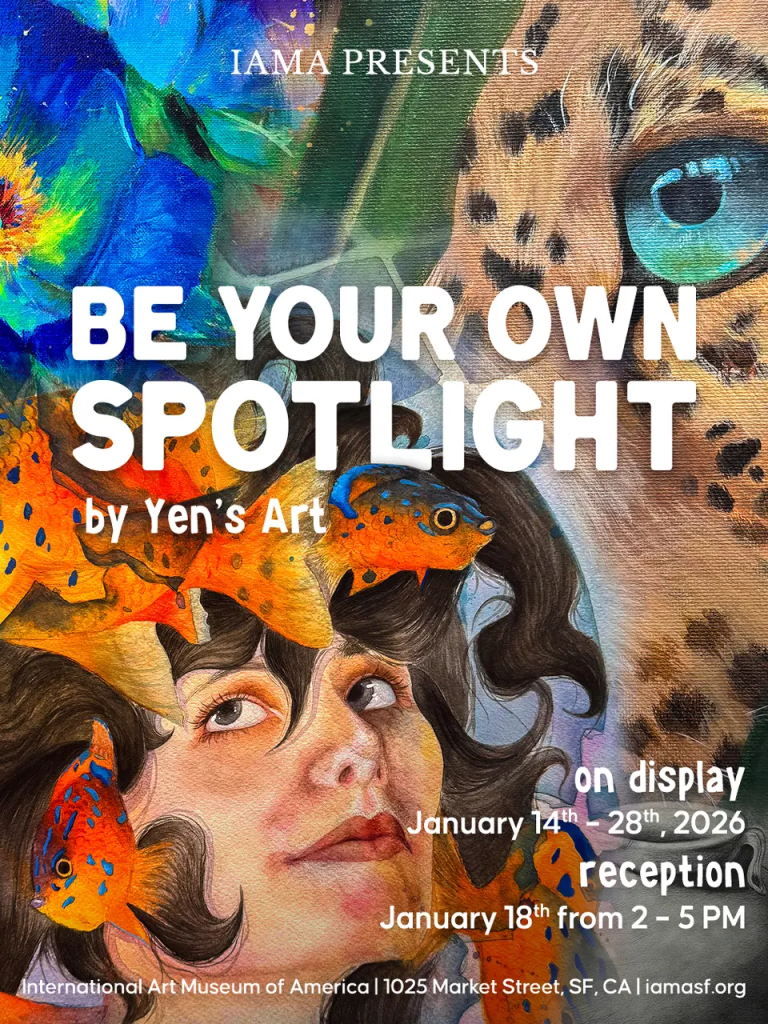
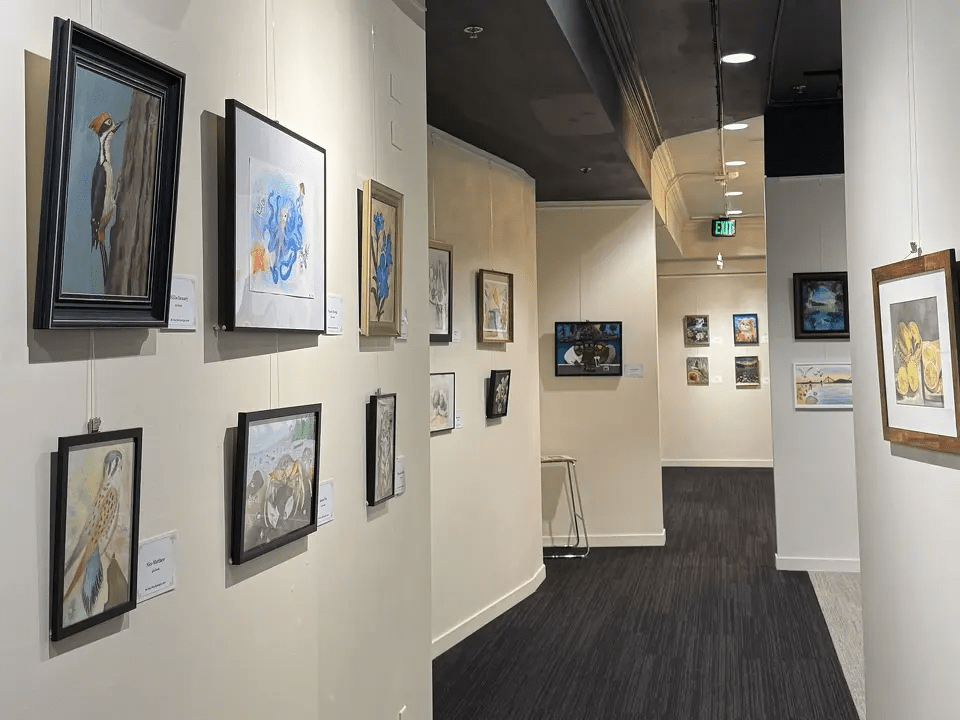
IAMA presents Be Your Own Spotlight by Yen’s Art Studio
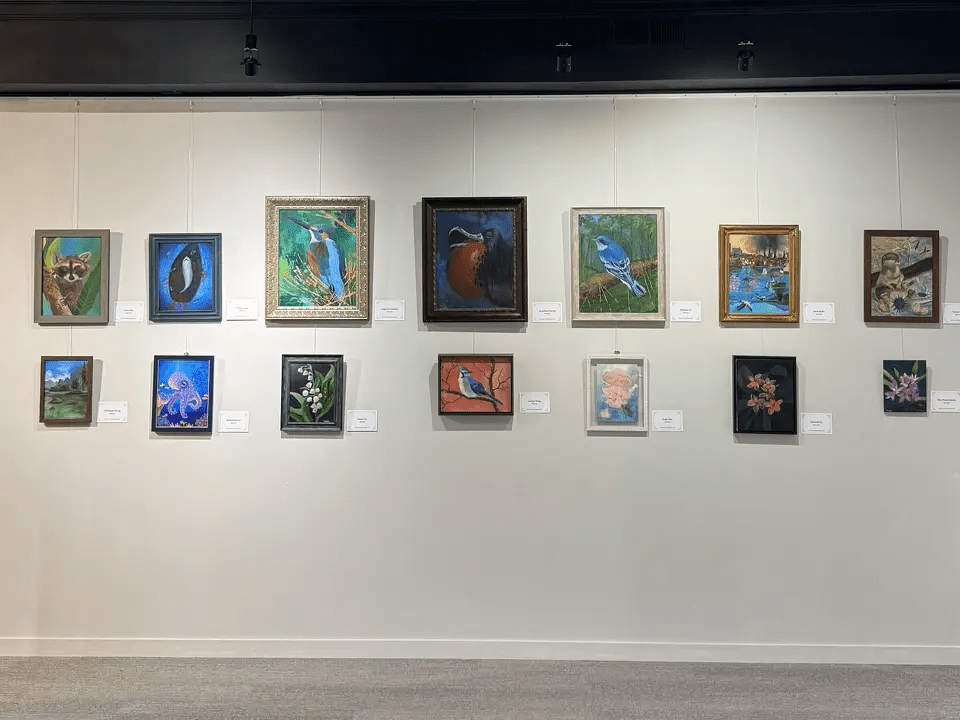
Walking into Be Your Own Spotlight, presented by Yen’s Art Studio, at IAMA (The international Art Museum of America), I didn’t feel like I was entering a typical student art exhibition. Instead, it felt more like stepping into 150 honest conversations—each one visual, brave, and deeply personal.
The exhibition features 150 outstanding works by young students, created across a wide range of mediums—acrylic, watercolor, pencil, and mixed media. But what moved me most was not the variety of techniques; it was the sense that every piece quietly declared: this is who I am right now.
These students are not just learning how to paint or draw. They are learning how to trust their voices, how to take up space, and how to stand behind what they create. Their works reflect growth, self-discovery, and the joy—and sometimes uncertainty—of becoming. Whether you are a parent, an educator, a collector, or simply someone searching for inspiration, this exhibition offers something meaningful to feel, not just something pleasant to see.
As I moved through the gallery, I was delighted by the sheer range of imagination: striking portraits, fantastical worlds, playful animals in sunglasses, thoughtful reflections on global issues, and moments of pure joy. The diversity of themes reminded me of a beautiful truth that Yen’s Art Studio expresses so well: “In the world of art, there are no boundaries of age or race. Children’s artwork can reach—and sometimes surpass—the technical ability and creative understanding typically associated with adults.”
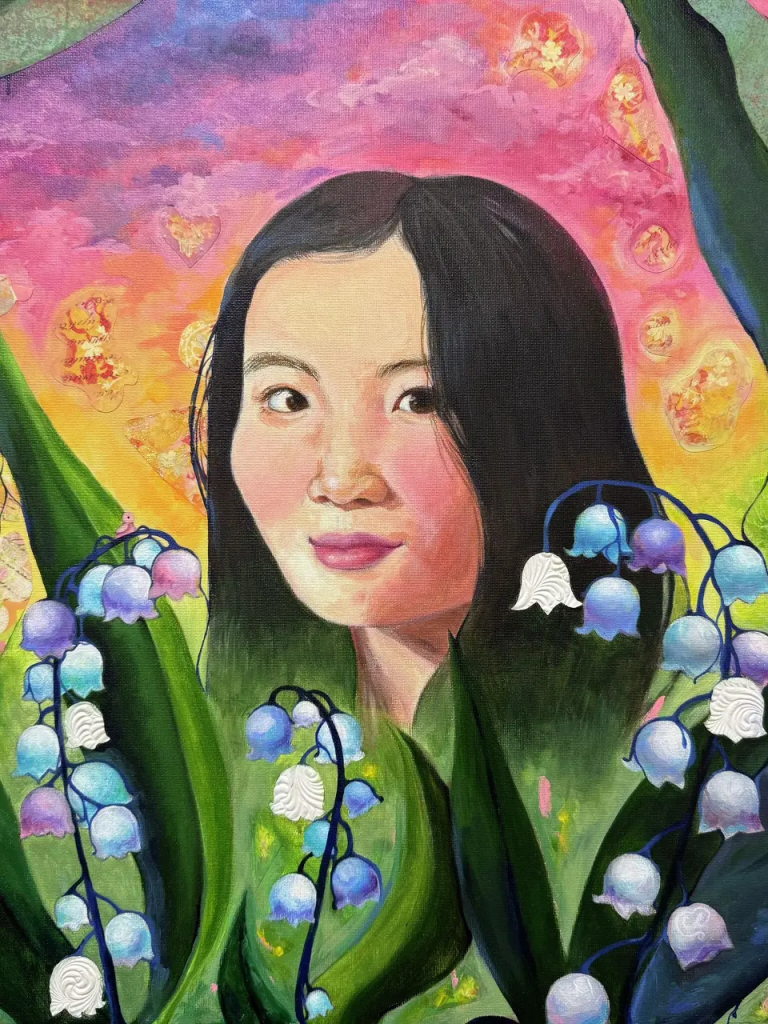
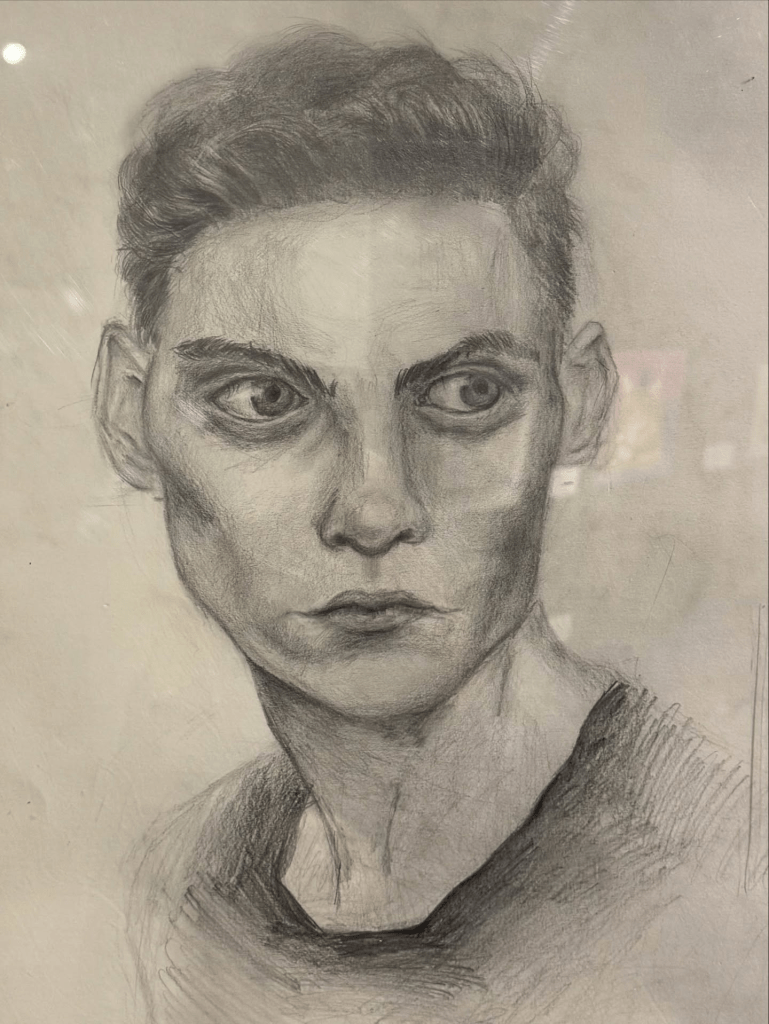
One piece that stayed with me was a self-portrait by 8th-grade student Cynthia Liu. It stood out not only for its technical sensitivity, but for its emotional depth. Cynthia is known for her perfectionist nature, something many of us—artists or not—can relate to. Her work quietly reflects a universal truth: no artwork is ever truly finished. Without a clear endpoint, a piece can be revised endlessly, sometimes at the cost of the original vision.
Self-Portrait by Cynthia Liu, 8th grade Yen’s Art Studio
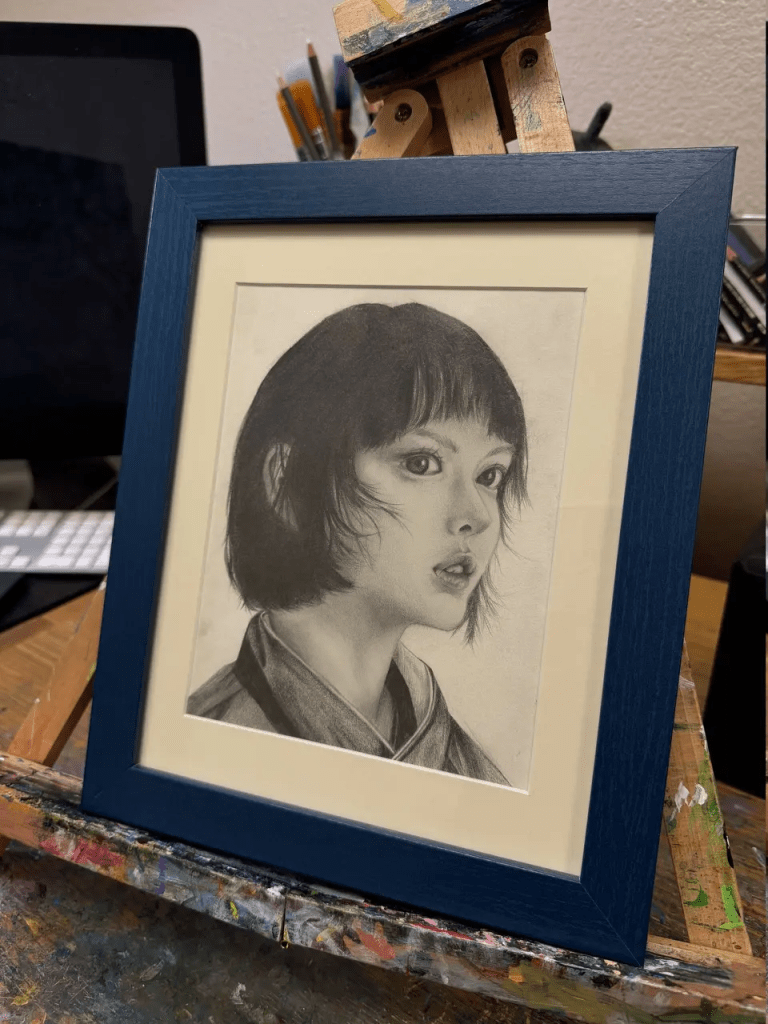
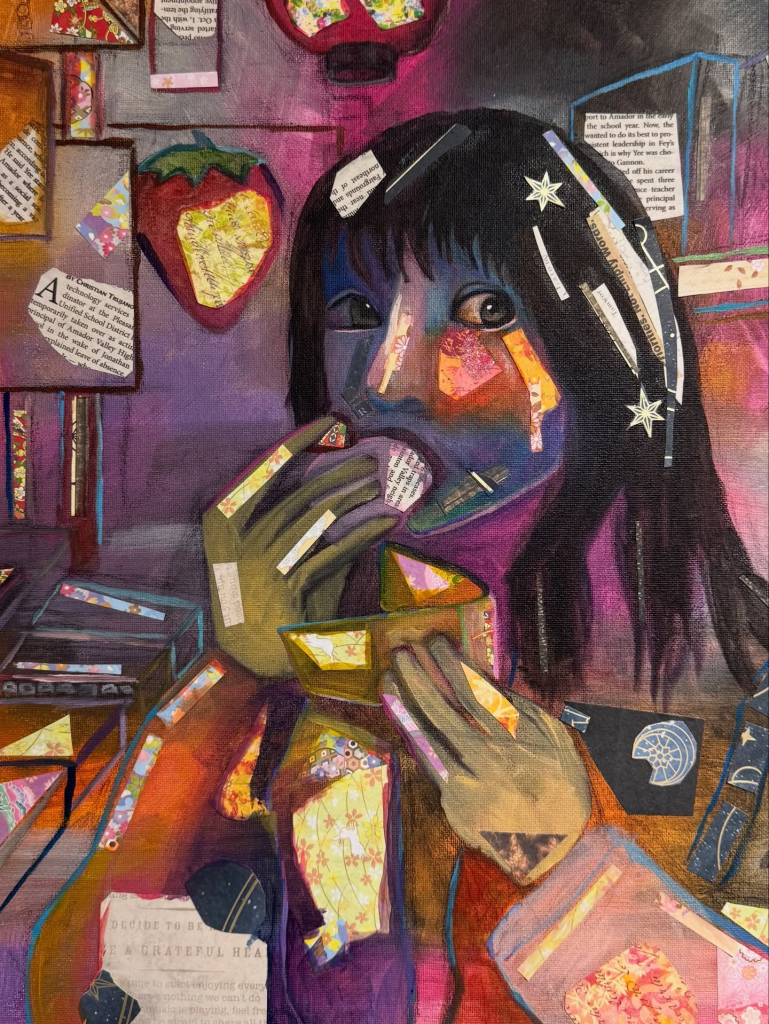
Hanni from Newjeans by Sophie Sun, 9th grade. Yen’s Art Studio
Another story that deeply touched me was Sophie’s. Once a shy student who nearly gave up on art altogether, she found her way back through the creative process at the studio. Through painting, Sophie rediscovered calmness, confidence, and inner strength—one of the most meaningful transformations I learned about in this exhibition. Her journey reflects the studio’s commitment not only to technical excellence, but to nurturing the inner lives of its students.
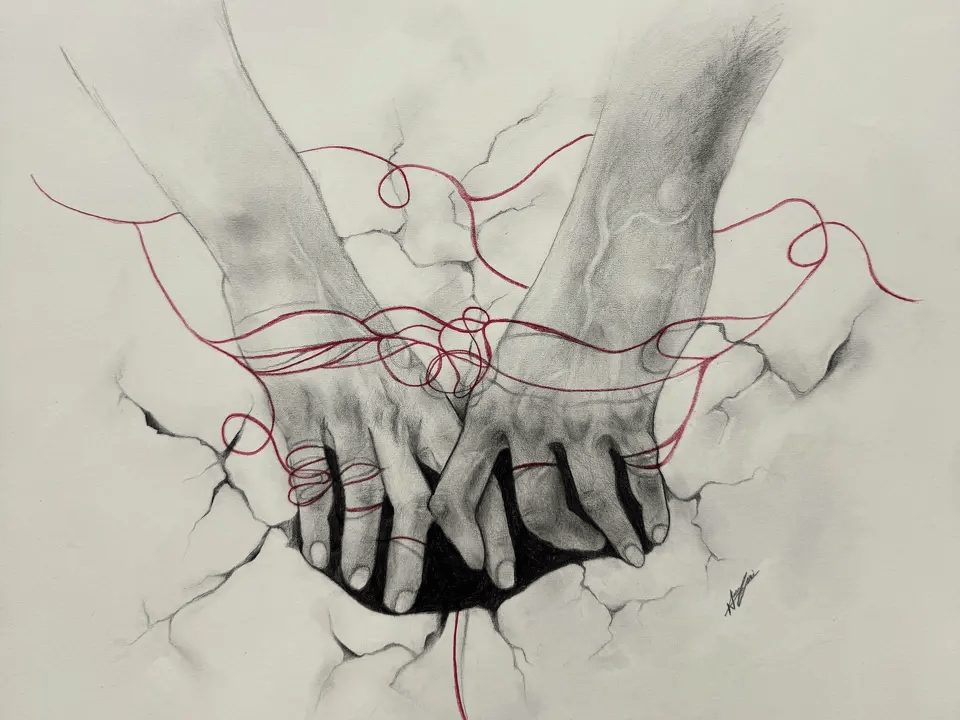
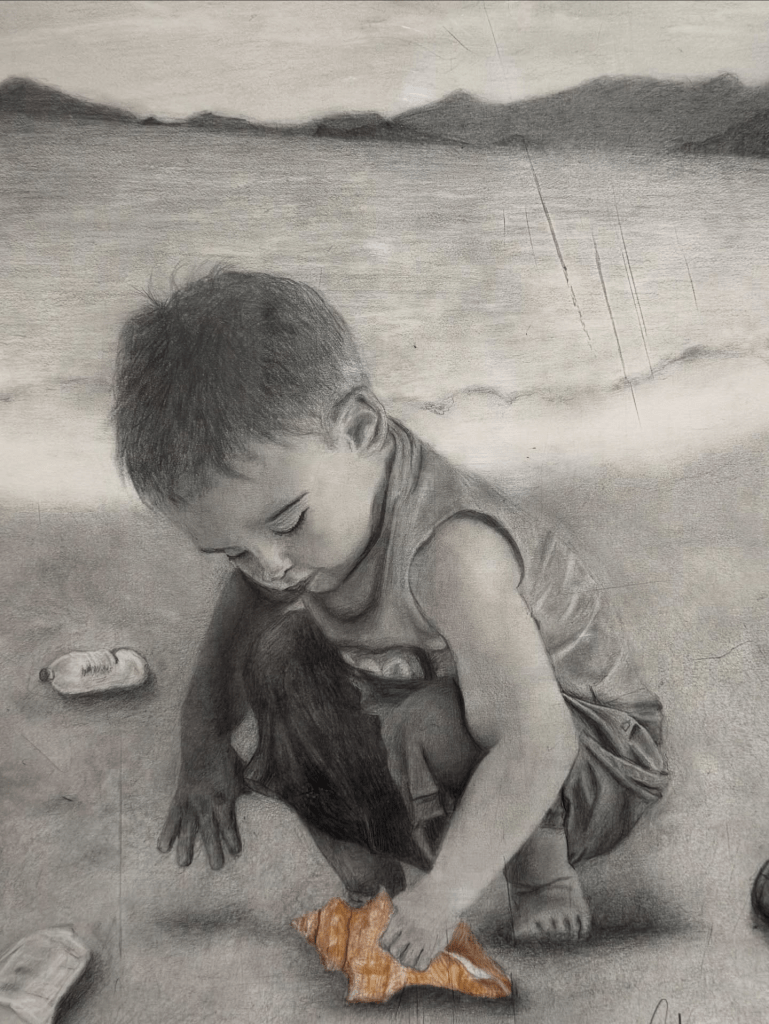
Lovers by Nova Cui, 9th grade Yen’s Art Studio
Among the more than 150 works, one painting stood out to me for its quiet presence rather than immediate visual impact. Created by Nova, a student dedicated to becoming a professional ballet dancer, the piece carries a sense of discipline, restraint, and inner resolve. Acknowledging the intensity of her dance training, her art education focused less on technical display and more on observation, sensitivity, and emotional understanding.
Her painting reveals genuine emotion and determination, qualities she will undoubtedly carry into her future as a dancer, where movement and art meet as a shared language of expression.
Be Your Own Spotlight is ultimately not just about showcasing talent. It is about honoring courage—especially the quiet kind. It reminds us that every young artist is learning not only how to create, but how to believe in themselves. And as viewers, we are fortunate to witness these moments of bravery, growth, and becoming.
Don’t miss the museum’s permanent exhibition, where world-class artworks offer far more than visual beauty. Here, art becomes a quiet refuge—inviting tranquility, reflection, and a subtle elevation of the spirit. Especially moving are the paintings by H.H. Dorje Chang Buddha III, whose works gently awaken the mind, soothe the heart, and leave the soul deeply inspired long after you depart.
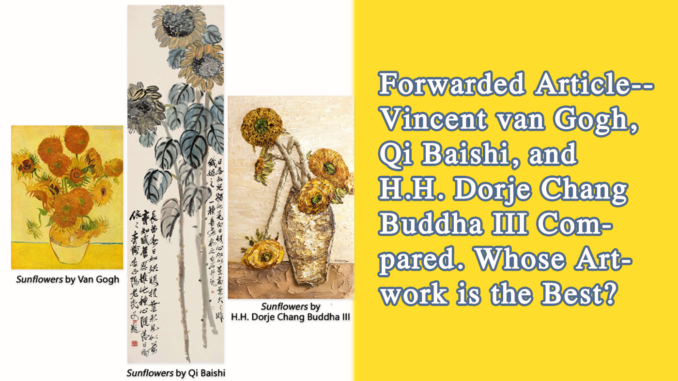
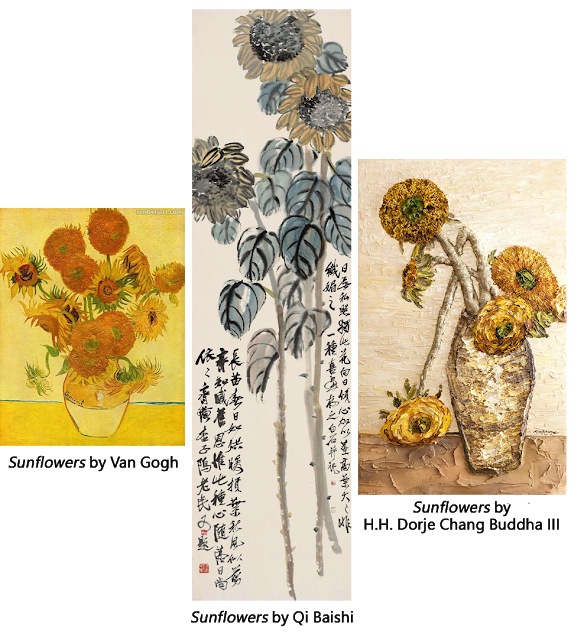
Please see below the answer of whose work is the best amongVincent van Gogh, Qi Baishi, and H.H. Dorje Chang Buddha III
I have spent more than 60 years of my professional life in the field of painting. During the many decades of practice and experiences, I have come to know many famous painters. That is especially the case since I became the Head Consultant for authenticating paintings and calligraphy at the National Museum of China in Beijing. As an appraiser and authentication officer of paintings and calligraphy, the bulk of my work is to verify the authenticity of Eastern and Western paintings. I have reviewed tens of thousands of famous paintings, especially the rare and precious works of the maestro Vincent van Gogh of the Netherlands, and those of the champion of Eastern paintings, Qi Baishi of China.
Both Van Gogh and Qi Baishi were great world-renowned masters in art. One represented the apex of Western art and the other was a master of an extreme class in the field of Eastern paintings. Both artists had drawn from the essence of the classical traditions of their respective cultures. They created new styles of art and new ways of seeing the universe. They broke new grounds and became pioneers of new eras, each becoming a creative guru of his time, developing a distinct style of his own and leading new trends that inspired later generations. Their works reflect the different essences of the Eastern and Western traditions. To what extent can their works influence the artistic civilization of the world? What kind of artistry did they achieve that made them upright monuments in art history and admired by so many people?
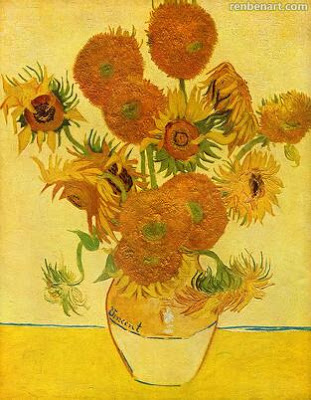
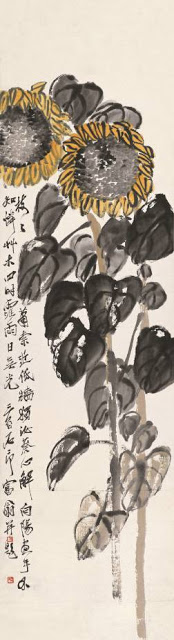
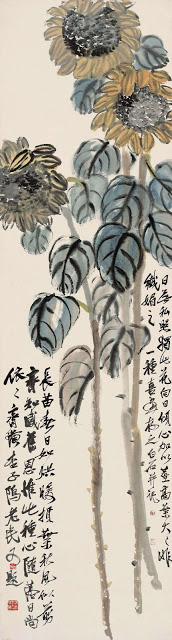
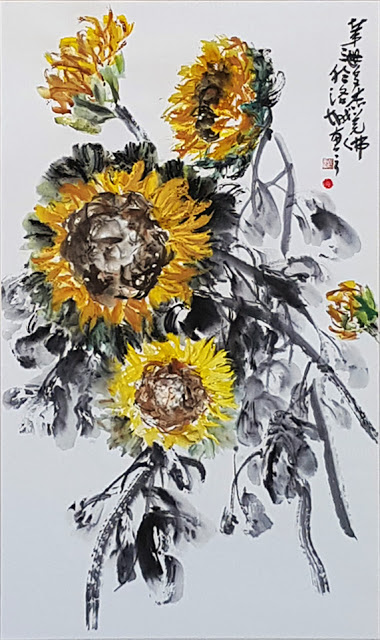
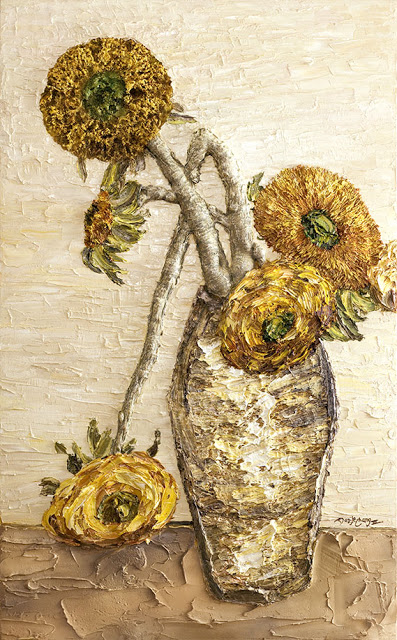
Some art critics compared the works of Van Gogh and Qi Baishi to see which of them reached a higher level of accomplishment. They concluded that both have their own merit, both are undefeated champions in the art and both reached the pinnacle of artistry. Recently, some art critics also brought up the oil painting Sunflowers and the ink-wash painting Sunflowers, both created by H.H. Dorje Chang Buddha III, and gave them rave reviews. They went on to compare the works by Vincent van Gogh and Qi Baishi with the works by H.H. Dorje Chang Buddha III, trying to establish which of the three artists is the champion of the champions. The result of comparing the works by Van Gogh, Qi Baishi and H.H Dorje Chang Buddha III is tremendously inspiring.
Ever since the Renaissance, Western artists had placed emphases on rational analysis and the realist portrayal of forms. They used light, texture and details to present the realistic, three-dimensional perspective. A few centuries later, Van Gogh rejected the monotony of such use of light and shadow and the realistic portrayal of figures. He pioneered the movement of impressionism that suited him well by applying a mix of colorful, brilliant, splendid and vigorous brushstrokes. He became a great master of his time and his name was forever etched onto the monument of Western civilization and art.
Whenever people think of Van Gogh, they think of his unique character, the sparkles in his eyes that emit lightning, his vigor and his incessant pursuit of inspiration in art without any regard to external hardships. Van Gogh was an artist by birth. He was of exceptional confidence and was somewhat neurotic. Having such traits, he pursued the art that he loved without any reservation or hesitation. He loved his works and regarded everything else with disdain. He preferred to be a loner in the world and did not care to make acquaintance of other painters of his time. His works are full of luminous colors, the brushstrokes are like rising winds and racing clouds in the sky. In his art, he depicted pasture, figures, flowers and other subject matters with brisk colors. Every brushstroke was transformed from his inner emotions. Such emotions were fully and colorfully captured in his Self-Portrait as well as in the transcendental Sunflowers that he painted. These works contain an animated spirit that is deeply moving.
From Van Gogh’s artistic spirit and intent, we can detect that he was profoundly knowledgeable about Chinese ink-wash paintings. Precisely because of this, while depicting forms and applying colors, he employed the skills of using the center tip of the brush and parallel brushstrokes. His Still Life with Bible was created with parallel brushstrokes. In his Self-Portrait, he portrayed his face filled with lines and plaques that are extraordinary. It is not hard for us to discover that he drew inspirations from the substance and essence of Chinese painting in those brushstrokes. That is why Van Gogh is such a distinguished, unparalleled artist of his time and his works are superior to those by the other Western oil painters such as Cezanne, Gauguin or Picasso of the same era.
Van Gogh’s artistic style was closely linked not only to Chinese civilization in the East, but also to the classical Renaissance art, Pointillism, German Expressionism, and Impressionism in the West. Toward the end of his life, he came into oneness with the universe and immersed himself in a carefree state of mind to “follow wherever nature might lead.” As such, he was no longer aware of his own existence. In his mind, there was only the art and the universe. “Following where the nature may lead” is the essence of the ideology of the Chinese philosopher Laozi. Van Gogh cut off his ear with a knife. He lost himself completely in painting. That was his unspoken resentment and rejection of the unfair treatment imposed on him by the society.
Qi Baishi was profoundly knowledgeable about impressionist, fauvist, and realist paintings. By adopting the essence of Western painting and incorporating the traditional spirit of Eastern art, he developed his unique style and became the master of Chinese painting of the twentieth century. His brushstrokes were solid and poised, evincing a sense of power that went all the way through the paper. Using sheep-hair brushes, he elicited calligraphic skills to create his paintings. Qi Baishi’s lines are bold and robust, embodying a forceful spirit that can move mountains. At the same time, these lines are flexible, sturdy and round, with similar qualities to the lines of wire-drawing. His compositions emerged naturally from the spontaneous movement of the brushes. Such compositions are accompanied by vigorous calligraphy resembling the strength, power and fluidity of stone inscriptions.
The artistic concept of spontaneously “following where nature may lead” is precisely derived from Laozi’s philosophy and the artistic civilization of the Chinese ethnicity. Qi Baishi favored the use of white space in his paintings. The white space in black-and-white Chinese ink-wash paintings is considered a solid color. Ink can be differentiated in nine shades (or five shades according to ancient Chinese text.) That is to say, the white of the paper per se and the black of the ink are all considered as colors. There is a sense of meticulous precision in the artworks by Qi Baishi. He depicted insects such as grasshoppers, mantises and butterflies in meticulous and vividly colorful ways. In some of his artworks, the artist was able to express his ideas by putting down just a few brushstrokes without any conscious intent, while arriving at a state of oblivion of his own existence. Anything depicted by his brushes was vivid and vibrant, with the subject matter coming alive on the paper. There is an aura that moves our heart and soul. All in all, Qi Baishi’s paintings were executed with a confident brushwork that naturally achieved a kind of childlike charm.
Recently, some people compared the works by Van Gogh and Qi Baishi with the works by H.H. Dorje Chang Buddha III to see whose works are more superior and outstanding, or will have a broader and more far-reaching influence on later generations. I have viewed quite a lot of the artworks by Van Gogh, Qi Baishi and H.H. Dorje Chang Buddha III. I started the study and appreciation of the paintings by Qi Baishi under the enlightening guidance of my teacher when I was 9, and when I was 14, I began to study and appreciate the works by Van Gogh. It has since been several decades!
At the same time, since I have admired the art of H.H. Dorje Chang Buddha III for a long time, to satisfy my desire and wishes I flew from New York to San Francisco to visit the International Art Museum of America, and to Los Angeles to visit the H.H. Dorje Chang Buddha III Cultural and Art Museum in order to see their collections. I was profoundly impressed by the architecture of both museums which is grand and dignified. Both museums have a collection of the authentic works by H.H. Dorje Chang Buddha III. There are various artworks that are created with different kinds of material. Some are bold and forthright, some are charmingly meticulous and astounding. The oeuvre is not made up of just one single style.
Yet, the only artwork that was not available for viewing is the Sunflowers painted by H.H Dorje Chang Buddha III. When I hear that some art critics are comparing the works by Van Gogh and Qi Baishi with the works by H.H. Dorje Chang Buddha III, I naturally feel, from my experience of having studied the works by Van Gogh and Qi Baishi for a number of decades, that although their artistry are similar in levels, it is possible to say who is the best if we are just to compare the sunflowers painted by the three artists, when we include in the compositions, colors, brushwork, lines, vitality, spirit and so on. With all these elements in consideration, it is possible to do the comparison and conclude who painted the best, or in other words, whose works can bring the most joy and delight to people, or whose art will be most influential to the philosophy, artistic concept and entire civilization of this world.
Therefore, without any ambiguity, we concluded. In terms of character and morality, Van Gogh would be the last of the three. In terms of level of skills, Qi Baishi would also be ahead of Van Gogh, who is, however, already the cream of the crop in western civilization. Being the Buddha living in the current century,H.H. Dorje Chang Buddha III saves living beings with great loving compassion. He is not embodied in an ordinary being. Needless to say, the level of cultivation of the Buddha is superior to that of Van Gogh and Qi Baishi. In terms of creativity and painting skills, how can any ordinary being even hold a candle to the Buddha? In this way, the comparison result is immediately determined.
When those art critics carried out the detailed research of the Sunflowers by Van Gogh and Qi Baishi as well as H.H. Dorje Chang Buddha III, they copied the artworks by all three artists. After copying the works by Van Gogh and Qi Baishi, they felt deeply that through hands-on practice, they indeed gained more understanding of their works. It would not be easy but not so difficult either for one to really reach their artistic level. As for the Sunflowers by H.H. Dorje Chang Buddha III, they found it rather difficult to copy. Even though they tried many times, they had a hard time just copying the form, let alone the spirit.
The Sunflowers by H.H. Dorje Chang Buddha III clearly show the artist’s solid foundation and prolific skills in the Eastern and Western painting traditions. They comprise the essences in both traditions and display a brushwork, sentiment and colors that are one of a kind. The color tones and brushstrokes are rich, dense, soothing and elegant. Lively brushwork paints an animated charm that is whole, evincing a miraculous and expansive spirit and aura as well as a strong vitality. As for the Sunflowers oil painting in which H.H. Dorje Chang Buddha III depicted some flowers inside a vase, the artistry is extraordinary and full of variations; the composition is simple yet abstruse. The flowers are natural and gracious, such that they give an impression of unpredictability, reaching a state of oneness with the universe and emanating a sharp animated spirit.
The ink-wash painting Sunflowers by H.H. Dorje Chang Buddha III has an uninhibited, natural, and spontaneous brushwork that is dense, bold, and robust, but also elegant and agile. It exhibits a charm that is like stone and bronze inscriptions. Overall, the whole painting manifests a harmonious and moving imagery, naturally emanating a lively vivaciousness and a carefree, spirited aura.
In comparing the works by Van Gogh of the Western civilization, Qi Baishi of the Eastern culture, and H.H. Dorje Chang Buddha III, we can see the artists are distinguished in their unique own ways owing to their different cultures. However, only the artist who can continue to influence the world two to three hundred years from now will be the everlasting monument. There is a saying, “Talents emerge in every era and they all will each have 500 years of fame!” For people of the present day, the one whose work you like the best would be the one that is the most extraordinary!
Please see the contrast of six paintings below:
Sunflowers by Van Gogh (1)Sunflowers by Van Gogh (2)Sunflowers by Qi Baishi (1)Sunflowers by Qi Baishi (1)Ink-wash Painting Sunflowers by H.H. Dorje Chang Buddha IIIOil Painting Sunflowers by H.H. Dorje Chang Buddha III
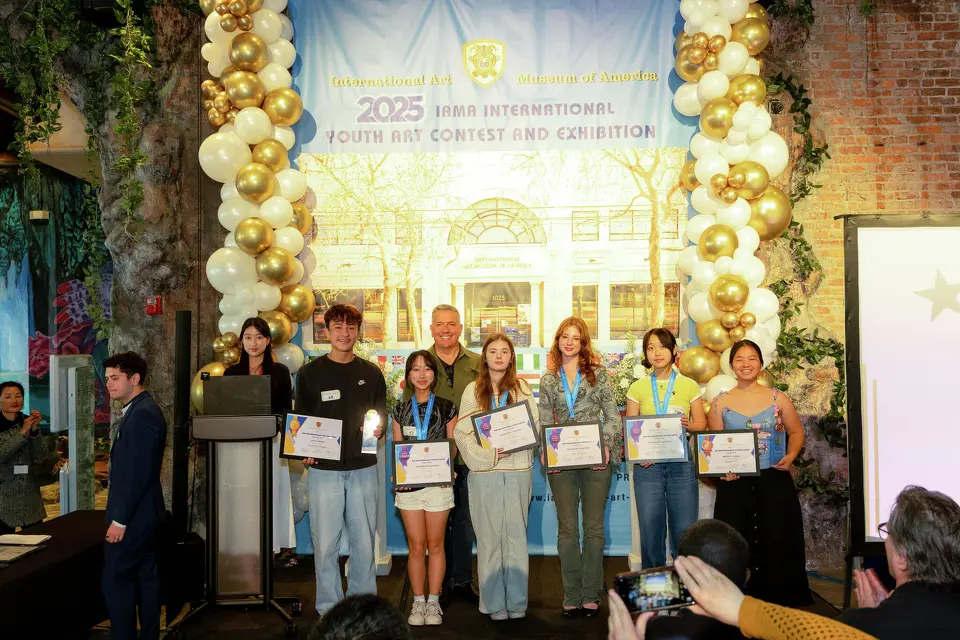
Award recipients from the youngest age group (five- to six-years-old) at the 2025 International Youth Art Contest, pictured with Mr. KC Hsieh, IAMA President.Photo by Johnny Trieu
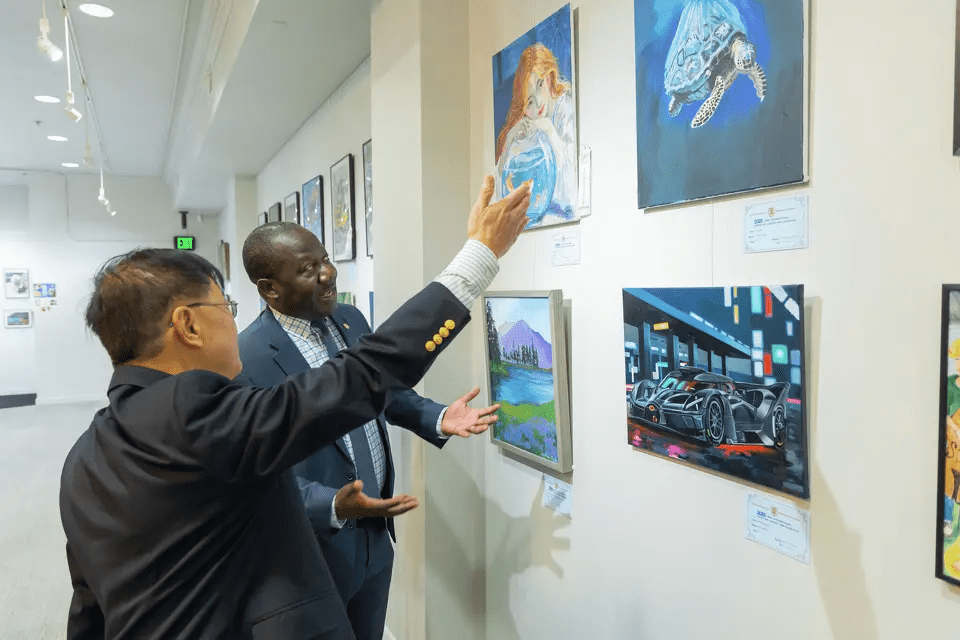
(Ad) On July 13th, 2025, San Francisco’s International Art Museum of America (IAMA) hosted the awards ceremony for the Second Annual International Youth Art Contest and Exhibition. The museum hosted nearly 400 attendees who were eager to see this year’s exhibition of youth artworks from around the world. Distinguished guests included Mr. Guy Djoken, Executive Director of UNESCO Center for Peace of Washington D.C.; San Francisco District Six Supervisor Matt Dorsey; and Professor Adam Caldwell, Chair of the Jury Committee and faculty member at the Academy of Art University, San Francisco. The ceremony spotlighted the creative achievements of young artists and underscored the museum’s role in fostering cultural exchange and youth artistic expression. Now, in its second year, the International Youth Art Contest and Exhibition continues to expand its reach and impact, advancing IAMA’s mission to champion emerging talent and foster intercultural connection through the arts.
This year, 1,600 youth participants submitted over 3,800 artworks to the Youth Art Contest. Artists from sixty-five countries across five continents competed within four age groups. After a rigorous selection process evaluating creativity, technical skill, and overall presentation, 477 young artists from seventeen countries were selected to exhibit a total of 616 outstanding works in IAMA’s Grand Exhibition Hall. The artistic caliber and thematic richness of the selected pieces left the jury in awe.
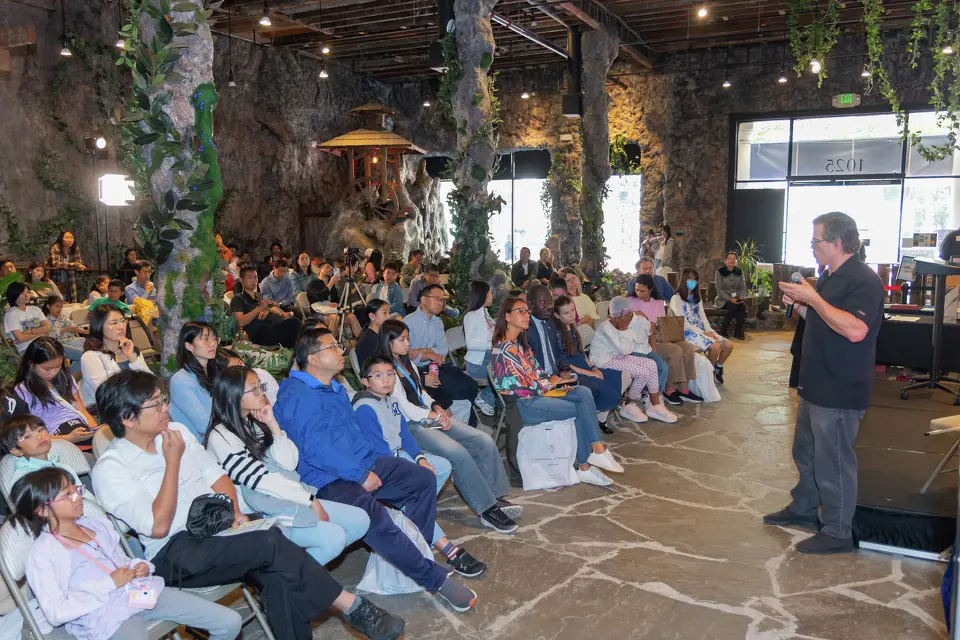
Attendees of the 2025 International Youth Art Contest viewing the installation in the Grand Exhibition Hall located at 1025 Market Street in San Francisco.Photo by Johnny Trieu
During his address at the awards ceremony, Mr. Guy Djoken offered high commendation for IAMA and its dedicated team, applauding their ongoing commitment to promoting international artistic exchange and cultivating a space where the public can find joy and renewed hope through art. Reflecting on the global turbulence and widespread uncertainty facing today’s global community, Mr. Djoken declared, “At a time when many live in fear—especially of war—just for us to be here at the museum, smiling and happy, and most importantly hopeful about the future—this is the best thing about this competition.” Mr. Djoken’s heartfelt message set a hopeful tone for the awards ceremony and attendees alike.
Executive Director of the UNESCO Center for Peace, Guy Djoken, was deeply impressed by the exceptional quality of the young artists’ work, finding both joy and hope for the future in their creativity.Photo by Johnny TrieuAward recipients in the eleven – fourteen age group at the 2025 IAMA International Youth Art Contest, joined by Mr. Guy Djoken, Executive Director of the UNESCO Center for Peace in Washington, D.C., who presented the honors during the ceremony.Photo by Johnny Trieu
Matt Dorsey, San Francisco’s District Six Supervisor, also addressed the audience, expressing his appreciation for the International Art Museum of America as a true hidden gem of San Francisco’s art landscape, and pledged his continued support for the museum’s mission and contributions to the community. Supervisor Dorsey offered words of encouragement to all participating youth artists, urging them to pursue their creative passions with perseverance—regardless of the outcome—and to never stop pursuing their artistic dreams.
Award recipients in the fifteen–eighteen age group of the contest were presented with their honors by San Francisco District Six Supervisor Matt Dorsey during the awards ceremony.Photo by Johnny Trieu
Professor Caldwell praised the range of themes and talent amongst all submissions and ages, which made selecting the winners of each age group challenging for the judges. Professor Caldwell noted the importance of international art exchange, stating “It’s a great way to bridge gaps between countries. The artistic community has always crossed political, social, and ethnic borders. Art and music are among the most universal forms of expression. They allow us to feel what others felt… Art brings people together across divides.” Professor Caldwell’s wise words perfectly captured the mission and outcome of the International Youth Art Contest.
Award recipients from the seven – eleven age group honored by Prof. Adam Caldwell—Chair of the Jury Committee, and faculty member at the Academy of Art University, San Francisco.Photo by Johnny Trieu
In this year’s contest, a newly introduced category for the youngest age group—participants ages five to six—garnered enthusiastic engagement from a remarkable number of budding artists. Through their sincere brushwork and vibrant imagination, these children demonstrated an extraordinary innate talent that captivated both audiences and judges alike.
Dr. Amy Hughes, Jury Committee Member and Director of Student Services at the New York Academy of Art, recognized the courageous creativity of the youth artists reflecting, “I was struck by the fearless creativity on display — the young artists did not shy away from complex themes, experimenting with materials, and expressing deeply personal narratives. Each piece felt authentic and fresh, demonstrating both technical skill, and emotional depth. The entries explored themes ranging from family, community, and environmental justice to dreams, culture, and identity—powerfully reflecting the younger generation’s keen insights and profound emotional connection to the world around them.
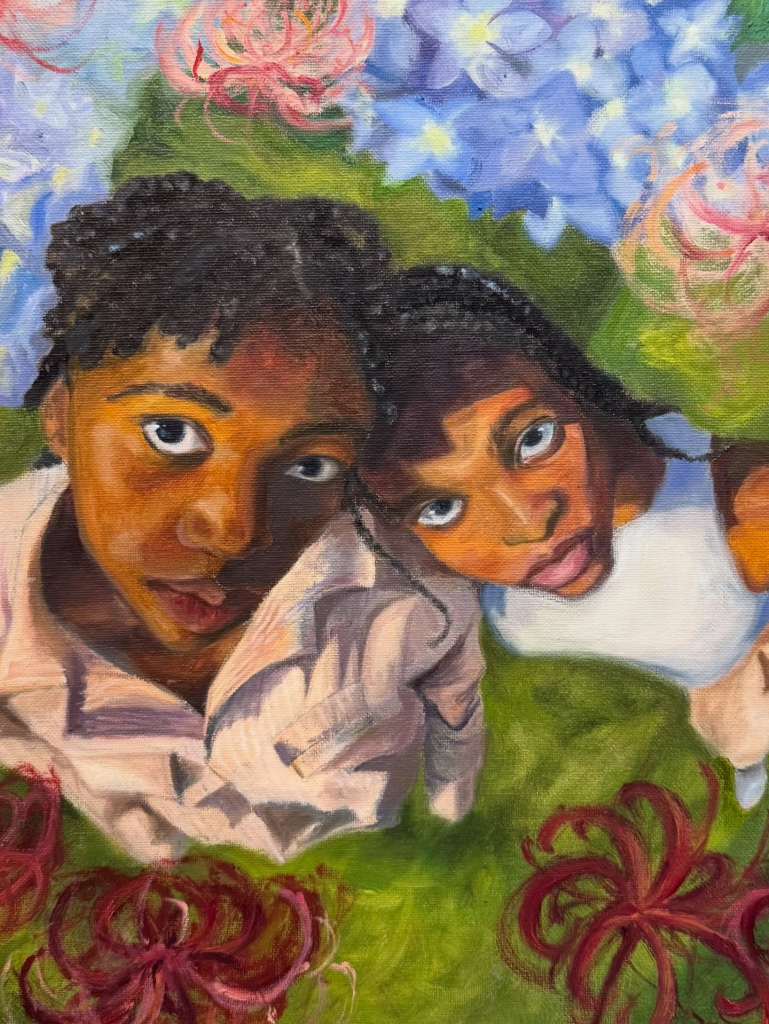
Charlotte Wu, third place award recipient in the five- to six-year-old age group, looks up at her winning painting, The Garden Where She Waits.Photo by Johnny Trieu
Lucas Shao, the first place winner of the five- to six-year-old age group, depicted himself joyfully swinging through the air in his painting, Wonderland. When asked about his hopes for his art, Lucas enthusiastically declared “I hope my art makes people happy, warm, big smiles just like me!”
Five-year-old Lucas Shao, winner of first place in the five- to six-year-old age group, stood proudly beside his painting Wonderland, depicting his happiness while swinging on the playground.Photo by Tong Shao
Third place winner of the five- to six-year-old age group, Kedarnath Kalidindi depicted a goldfish in a small fishtank in his painting, Freedom in Captivity, inspired by “finding inner freedom during incarceration.” The addition of this age group was an exciting component of this year’s event, and underscored the value of shining a spotlight on youth artwork, and garnering the wisdom of today’s youth.
Five-year-old Kedarnath Kalidindi, third-place winner in the five- to six-year-old age group, introduced his painting, Freedom in Captivity, to the audience.Photo by Johnny Trieu
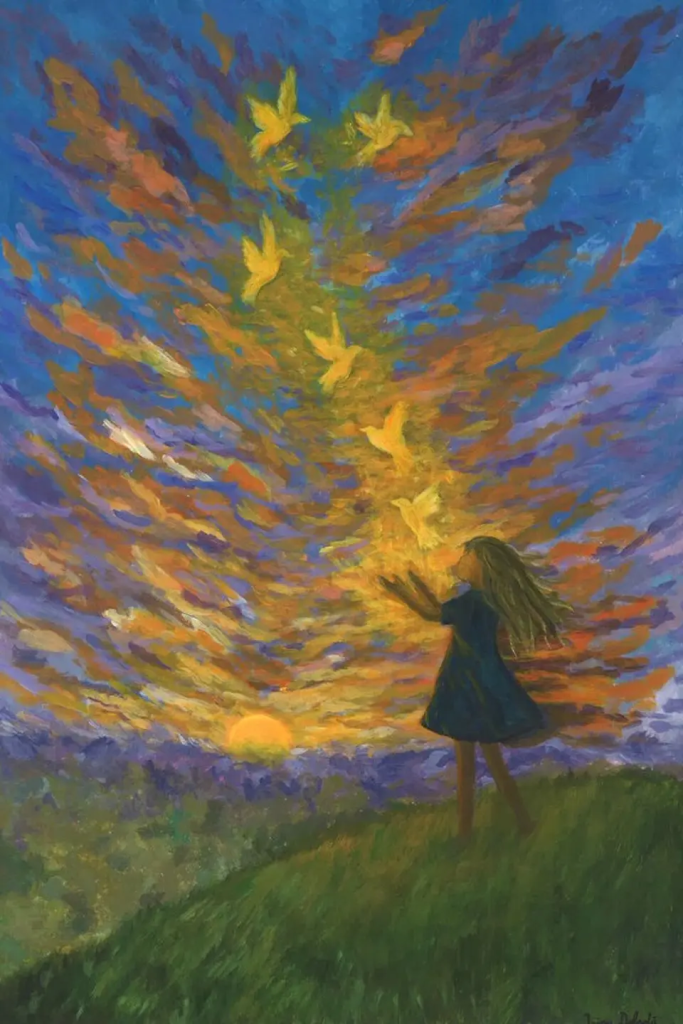
Ten-year-old Irina Elena Dobrota from Romania was honored with third place in the seven- to ten-year-old age group for her painting, Flight of Dreams, which was selected for the final exhibition at IAMA. Celebrated for its gentle spirit and imaginative vision, the piece radiates themes of kindness, freedom, and hope. Irina’s achievement brought pride and joy to her local community, and she hopes her work will inspire others to believe that every heartfelt wish can take flight—if we have the courage to let it soar.
Third place winner of the seven- to ten-year-old age group, Irina Elena Dobrota’s painting, Flight of Dreams.Photo by IAMA
Ashley Hein, second place winner of the fifteen-to-eighteen-year-old age group, impressed the jury with her painting, Animal Instinct, distinguished by its mature composition and outstanding execution. Professor Caldwell commented that he had shown several of the entries to his university art students, who were deeply moved and inspired by the technical skill and creativity on display.
Ashley Hein’s artwork, Animal Instinct, won second place in the fifteen- to eighteen-year-old age group.Photo by IAMA
Seventeen-year-old Kate Fieldhouse from South Africa received an honorable mention for her painting Between Worlds, which depicts a striking worldscape through an intense and creative exploration of breaking the canvas.
Seventeen-year-old Kate Fieldhouse from South Africa received an Honorable Mention for her painting Between Worlds.Photo by Johnny Trieu
Sixteen-year-old Polina Larina received an Honorable Mention Award for her painting Moscow Buns Evening. During her interview, Polina shared how she views her art as an opportunity to introduce people to Russian culture, and how the Youth Art Contest inspired her to continue to pursue her art dreams, “It was my first time participating in the IAMA competition. Participation in this competition helped me to feel recognized as an artist, and inspired to keep making art and put more effort into it.” Polina’s painting, inspired by a memorable walk with her grandparents, serves as a reminder to escape into nostalgia and childhood memories in trying times.
Sixteen-year-old Polina Larina (second from right, standing beside her mother) who received an Honorable Mention for her painting Moscow Buns Evening, in the Grand Exhibition Hall, joined by her parents and twin sister.Photo by Johnny Trieu
Following the ceremony, Professor Caldwell gave a masterclass for all participants, offering thoughtful insights on artistic growth, and encouraging continued exploration and confidence in their creative journeys. His masterclass focused on four elements: visual storytelling and composition, techniques and materials, the role of art in communication and expression, and advice for young artists. This is the second year Professor Caldwell has judged the artwork for the contest and delivered a masterclass for attendees of the contest.
Professor Caldwell delivered a knowledgeable and enlightening masterclass to attendees and participants. Photo by Johnny Trieu
About IAMA
Located in the heart of San Francisco, IAMA was voted the “Best Art Gallery” and was a finalist as the “Best Museum” in SFGate’s Best of Bay Area 2024. IAMA is dedicated to making world-class art accessible to all through exhibitions, education, and international contests. With a mission to foster peace and happiness through art—especially by nurturing the next generation—IAMA brings together works from around the globe, bridging East and West, classical and contemporary.
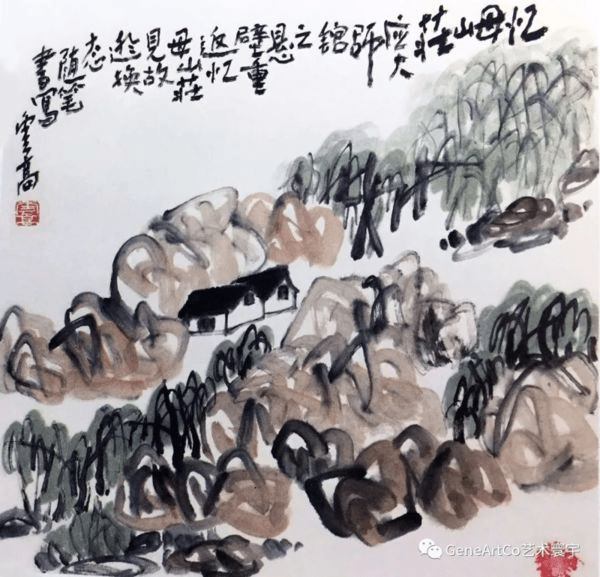
This is a deeply moving landscape painting by H.H.Dorje Chang Buddha III, marked by smooth, flowing brushwork and a natural rhythm. The undulating crimson cliffs seem to rise freely from the artist’s heart, while the vigorous lines brim with vitality and strength. Ink strokes form the skeletal structure of the mountains and rocks, while delicate willows hang softly across the scene, adding a quiet touch of green serenity. The overall palette is vivid but never garish, exuding a warm and nostalgic atmosphere.
In the painting, two thatched cottages nestle beside the mountains and water. Their deep-set doors and silent windows seem to hold untold, quiet stories. It was under these eaves, by these doors, that a loving mother once stood—sending her children off into the world with silent heartache, and waiting countless times in patient hope for their return. That wordless farewell, those tears of longing, have gently seeped into the fabric of time. Among all human emotions, none is greater than a mother’s love. Our memory of that love stirs an innate sense of gratitude—a sacred emotion that transcends the ordinary.
This work embodies the style known as the “Childlike Native School”, which embraces the beauty of rural life through the innocence of a child’s heart. Though the brushstrokes appear naïve and spontaneous, they conceal great depth and mastery. The painting style is free and unrestrained, exuding both boldness and tenderness. The soft, flowing lines connect seamlessly—like a mother’s love, endlessly enduring, gentle yet firm. Its simple composition holds rich emotional meaning and invites the viewer’s imagination to wander. The scene pulses with a childlike liveliness that fills the heart with joy.
The painting’s pure and innocent imagery evokes a return to the carefree days of childhood. No matter where you are, simply gazing at this piece can bring the scene and its emotions vividly before your eyes, awakening the deepest tenderness and longing in your soul.
In creating Mountain Village with Memories of Mother, the artist approached the work with the pure heart of a child, yet painted with the maturity and finesse of a seasoned master. The brush technique draws from traditional Chinese calligraphy—guided by the wrist, powered by the arm—each stroke flowing naturally with graceful spontaneity. This painting was not created for show or technical display, but as a sincere outpouring of emotion and inspiration. Every application of ink and color arises from genuine feeling.
What is art? At its essence, art is the ability to immediately evoke inner peace, comfort, joy, or spiritual fulfillment in the viewer. But where does this feeling come from? Is it merely the subject matter or visual beauty of the work? Certainly not. A painting does not become great simply because it looks pleasing.
In the context of Chinese painting, the true heart of art lies in a quality called “spiritual resonance” (shen yun). It is vivid, yet elusive—a mysterious charm and subtle power that cannot be described with words. It is born when the artist’s personal cultivation, emotional depth, and spiritual awareness infuse the work, allowing spirit and technique to merge. The result is an artistic vitality that transcends mere form.
Only when viewers are moved by this spiritual resonance do they begin to explore the painting’s formal elements—its composition, color palette, brush technique, balance between painting and calligraphy, and the portrayal of the subject in both spirit and form. While these aspects matter, they ultimately serve a deeper, more profound experience.
In Chinese art, the true value of a painting—its ability to soothe the soul—does not depend on technical skill alone. It lies in whether the work can touch the heart and stir the spirit. Mountain Village with Memories of Mother beautifully embodies this artistic spirit. Every brushstroke gently stirs the viewer’s emotions, evoking tender memories and inviting the soul to linger in its serene beauty.
This exceptional work is housed in the permanent collection of the International Art Museum of America, located in San Francisco—a fitting home for a piece that speaks a universal language of love, nostalgia, and spiritual beauty.
In the last post, I mentioned the treasured book H.H. Dorje Chang Buddha III: A Treasury of True Buddha-Dharma. It is a comprehensive and extensive read, which can feel overwhelming to some. I was recently asked if there is an easier-to-read book that also provides insight into the Buddha’s life and teachings.
In fact, on page 139 of A Treasury of True Buddha-Dharma, under Category 2: The Virtue of H.H. Dorje Chang Buddha III and Holy Occurrences, you’ll find inspiring stories and testimonies from disciples. Many readers may find these accounts both engaging and easy to read, making them a great starting point for those yearning to learn more.
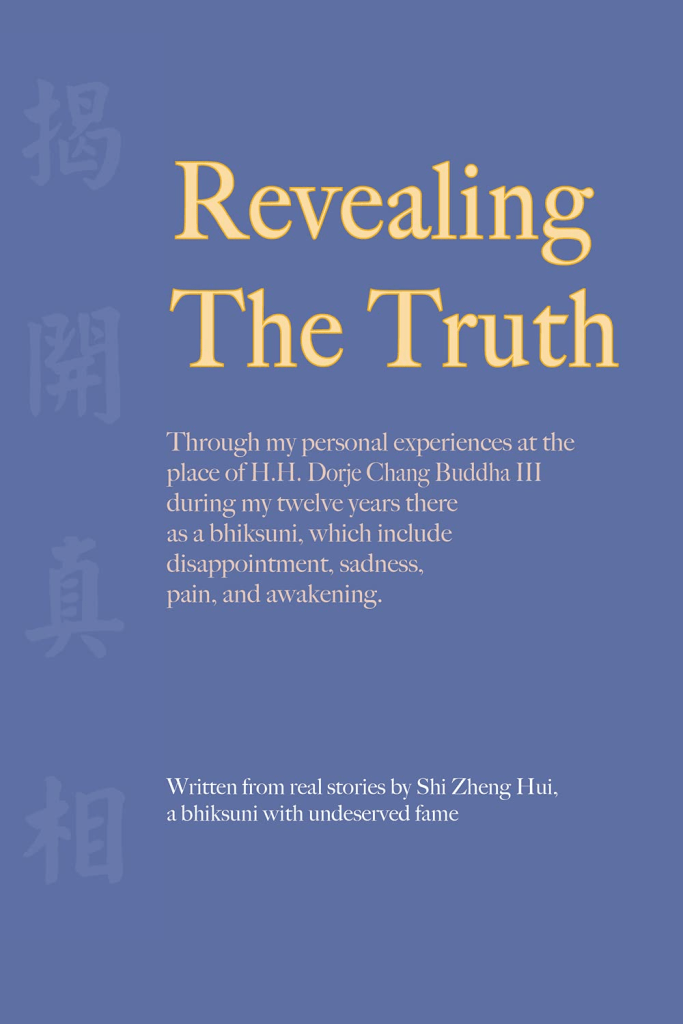
I sure can introduce another book that offers a glimpse into the Buddha’s daily life—Revealing the Truth. The paper copies of the book are available at Buddhist temples or can be purchased online at Amazon. It chronicles the personal experiences of a nun over 12 years (2001–2013) at the Buddha’s home base. As the cover describes, it explores moments of disappointment, sadness, pain, and ultimately, awakening.
A Buddhist Nun Tells the Extraordinary Story of Her Practice in America
Upon graduating law school, Shi Zheng Hui decided she could better penetrate and accomplish her life by entering a monastery in Taiwan as a Buddhist nun. In 2001, she was given a rare opportunity to study in America at the Temple and home base of H.H. Dorje Chang Buddha III where she received Buddhist training of the highest order. Her book, Revealing the Truth tells the story of her extraordinary experiences there, including being witness to miraculous manifestations during Holy Assemblies and on other occasions. Her story exemplifies the sometimes painful and sometimes exultant life of a deeply committed Buddhist cultivating herself through effort and self-reflection to emulate the actions, speech and thoughts of a Bodhisattva (a selfless being who lives to help others eliminate suffering and become enlightened.) After years of cultivation and refinement, Zheng Hui proves her worthiness to receive a very great Dharma practice and is transmitted the Xian Liang Great Perfection Dharma through which she actually accomplishes the rainbow body state.
H.H. Dorje Chang Buddha III, by virtue of His unprecedented accomplishments, has been recognized to be the incarnation of the Ancient Buddha by scores of high-level masters from Tibet and elsewhere. On September 10, 2008, the US House of Representatives confirmed these recognitions in H. Res. 1423. Prior to this recognition in 2008, His Holiness was known as the Great Dharma King Yangwo Wan Ko Yeshe Norbu and also as Master Wan Ko Yee.
H.H. Dorje Chang Buddha III is also famous in Asian Art circles for His paintings and sculptures. A recent painting, Ink Lotus, was sold by the Gianguan Auction House on March 11, 2015 for over 16 million dollars. One of the His Holiness’s widely viewed sculptures contains a mysterious mist that miraculously occupies a cavernous carving in a sculpted boulder. This otherworldly sculpture has been exhibited at the US Capitol’s Rayburn building in October 2003 and in Los Angeles and San Francisco, California.
Revealing the Truth is now in English translation from the original Mandarin language edition published in Taiwan in 2013.
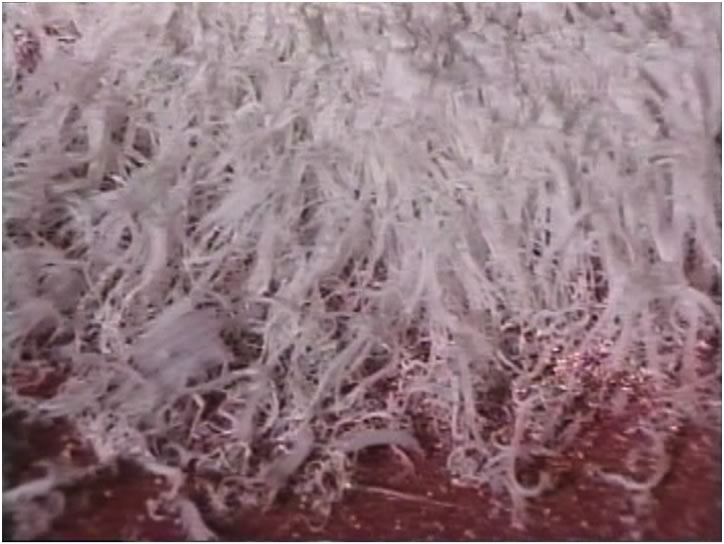
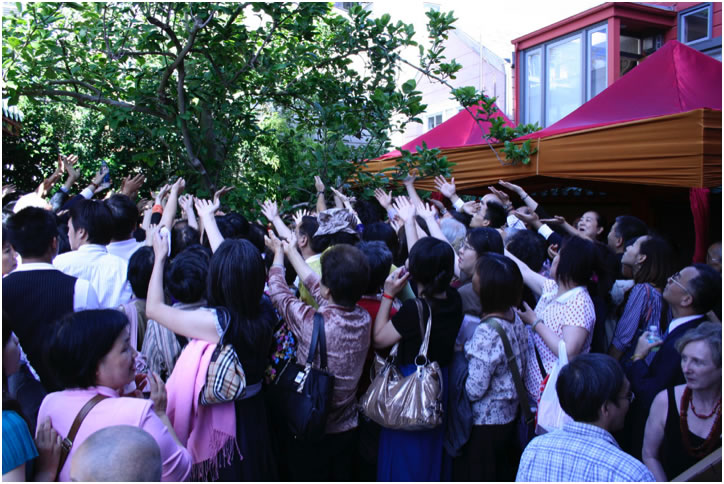
(Above) Genuine precious nectar bestowed by Amitabha Buddha during a Holy Buddha-dharma Assembly in California. From Revealing The Truth by Shi Zheng Hui
(Above) San Francisco June 21, 2008. The packed crowd under this holy tree at Hua Zang Si was happily reaching for the fragrant nectar descending from empty space. From Revealing The Truth by Shi Zheng Hui.
With its unexpected twists and turns and the author’s delightful sense of humor, this book presents personal stories that you will not find elsewhere. I am truly grateful for its existence, as it allows us to gain a more intimate understanding of a revered public figure such as the Buddha.
Pick up a copy and embark on a journey of spiritual discovery alongside Dharma Master Zheng Hui.
This exquisite painting, rendered in the unique “Banqi” style, captures a touching scene of children from mountain villages on their way to school. Unlike city children, these young students must trek across rugged terrain—climbing mountains, crossing ravines—day after day to pursue their education. Their journey is filled with challenges, yet their unwavering determination and thirst for knowledge shine through. This artwork serves as a tribute to their resilience, reminding us all of the value of education and the perseverance required to achieve greatness.
A Revolutionary Artistic Technique
What makes this painting extraordinary is its unconventional brushwork, which blends the bold energy of ink-wash painting with the refined precision of engraving. Every stroke, whether light or dark, delicate or bold, exudes an artistic charm that is both fluid and structured. The layering of ink and color creates depth, while the intricate texture gives the illusion of an engraved plate print, despite being entirely painted by hand. The brushwork is dynamic—lines seem to break and reconnect, mimicking the traditional elegance of carved stone seals. This interplay between spontaneity and meticulous control infuses the painting with life, movement, and a profound sense of authenticity.
What Is the “Banqi” Style?
The “Banqi” style is a rare and fascinating artistic approach that combines the visual impact of printmaking with the expressive freedom of brush painting. While these works resemble engravings at first glance, they are, in fact, purely ink-wash paintings—imbued with an effortless yet profound beauty that is both natural and lively. Beneath their structured appearance lies a deep, inexhaustible charm, where each stroke carries an essence of tradition, innovation, and artistic mastery.
Through this masterpiece, we witness not only a compelling story of perseverance but also a groundbreaking artistic vision—one that harmonizes the precision of engraving with the fluid grace of brush painting. It is a celebration of both form and spirit, a true testament to the boundless possibilities of art.
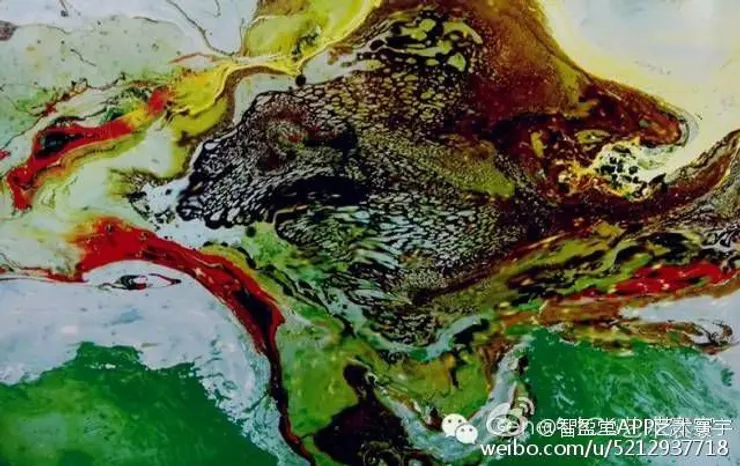
H.H. Dorje Chang Buddha III‘s Abstract Color Paintings create a perfect world shaped entirely by color. Free from concrete worldly forms, this realm exists purely through the interplay of hues—defining, expressing, and embodying itself in vibrant harmony. Here, color is both form and essence, radiating a mesmerizing aura.
Under the masterful hand of H.H. Dorje Chang Buddha III, these colors seamlessly merge into a breathtakingly enchanting spectrum. The atmosphere is dynamic, with scenes that bloom like flowers and surge with the power of the roaring sea. Yet, upon closer reflection, they reveal delicate nuances, refined in their intricate details.
Flower of Life
This painting depicts a unique flower, with delicate white petals gently unfolding and a striking red pistil at its center. Growing irregularly against a dark background, it seems to challenge its surroundings. Though unusual in appearance, this flower carries a profound meaning of life, symbolizing resilience and beauty in adversity. It is not only a miracle of nature but also a representation of vitality, showcasing the brilliance and diversity of life. Each petal tells a story, drawing the viewer into the emotions and strength conveyed by the artwork.
Flower of Life (2)
In this painting, intricate patterns and clear details intertwine, portraying the harmonious growth of various living beings. Each element seems to narrate the origins of life, allowing viewers to deeply sense the evolutionary process of all things.
This artwork is not merely a depiction of nature but also a contemplation of the essence of life. It serves as a reminder that life is in a constant state of growth and transformation, just like our own journeys. Every challenge and breakthrough we experience is an essential part of our personal development.
Through this piece, we are invited to reflect on our own lives and feel a profound connection with nature.
You can discover a selection of the exceptionally charming paintings in the permanent exhibition at The International Art Museum of America, situated in downtown San Francisco.
Technology art is a new form of multidimensional creative expression that blends technology and art. By incorporating mechanical instruments, scientific data, and spatial elements such as light sources, temperature, and speed, it presents a unique visual experience. Imagine a three-dimensional painting on a flat sheet of paper, where the depth of space extends beyond the surface, and the imagery seems to leap out of the frame, resembling a real sculpture.
Among these art forms, glass painting is particularly breathtaking. With its transparent dual-sided effect akin to a celestial realm, it creates a mesmerizing and soothing atmosphere when paired with changing lights. Photography, on the other hand, captures emotionally stirring moments through the interplay of light, composition, and color. Whether depicting landscapes, people, or animals, it brings out a unique aesthetic through the lens.
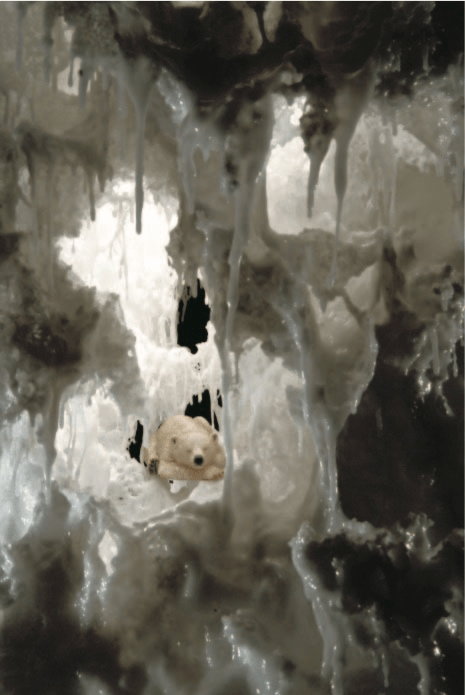
At the convergence of these three artistic expressions, H.H. Dorje Chang Buddha III, skillfully integrates them to create stunning works of technology art. One such masterpiece, the 3D painting Polar Bear in an Ice Cave, vividly portrays the charming image of a polar bear, making viewers feel as if they are inside an icy Arctic cavern. Through the artwork, one can almost see the adorably clumsy bear sleeping soundly in the cold cave. The artist’s extraordinary craftsmanship is awe-inspiring, delivering an unparalleled visual experience.
H.H. Dorje Chang Buddha III composed a poem for this artwork. Translating it into English is incredibly challenging due to its profound meanings. However, here is a simple translation to offer a glimpse into the Buddha’s deep compassion for all beings:
The polar bear loves the cold the most, Sleeping in ice caves through all seasons. Do not take food from the water, Instead, pick up the bones of wandering souls for a meal.
Not everyone understands the mysteries within the profound, For Zen enlightenment dissolves the barriers of hunger. The splendid affairs of the crystal palace are beyond full expression, Within the cave, a guest drunkenly enjoys the company of an immortal.












 Peace LiLy