When I was young, I often accompanied my grandfather to church for prayers.
One day, while my grandfather was bowing reverently in prayer, a few coins fell out of his coat pocket and landed on the floor with a faint clink. My grandfather, deeply engrossed in his prayers, didn’t notice the coins slipping out. However, a stranger nearby saw what had happened. Taking advantage of everyone’s closed eyes during prayer, he quickly picked up the coins and slipped them into his own pocket before retreating to a corner of the church.
I witnessed the entire incident but remained silent. After my grandfather finished his prayers, I quietly whispered to him what had just occurred. Upon hearing my account, his gentle smile turned calm and compassionate. He leaned down and softly said in my ear, “Dear child, please don’t tell anyone about this, and don’t tell me who took the coins—I don’t want to know. But I do hope you’ll remember who it was.”
I, still a child, protested, “Grandfather, your money was taken, and it happened in a church! That person is a thief! How can he still pray in the church?”
At that moment, my grandfather interrupted me, his expression growing serious. He said to me solemnly, “Child, try to see things from a different perspective. If someone does such a thing in a church, it must mean they are in a very difficult situation. Their heart may be suffering even more. We must not be quick to judge such a person. In the eyes of God, we are all children who make mistakes, but that doesn’t prevent us from becoming His children in the future. We must not allow a few coins to define God’s judgment of a person.”
In the days that followed, my grandfather instructed me to discreetly deliver packages of daily necessities to that person every month, without letting them know who the sender was. Over time, that person moved away from the small town.
Many years later, my grandfather passed away, and I grew up. The church that had been a part of my wonderful childhood became overgrown and dilapidated due to lack of funds for maintenance. Then one day, a businessman donated a large sum of money to expand and restore the church. The century-old church was revitalized, becoming even more majestic and sacred.
The people of the town were deeply grateful to the person who had made such a generous contribution. It wasn’t until the day of the church’s reopening that the donor revealed himself. I recognized him immediately—it was the man who had taken my grandfather’s coins, the very person we had helped all those years ago.
I stared in astonishment as he stood on the podium and told the congregation a story about those coins.
“At the most desperate time of my life, right here in this small town, a messenger of God offered me great help and spiritual comfort, helping me overcome my difficulties and despair. I am deeply grateful to that old man and the child whose kindness saved my life. Though that child recognized me at the time, they chose to keep my secret until today. It was the hardest time of my life. They not only helped me selflessly but also protected my dignity. I can never forget this kind town, nor can I forget this church. I want to leave the most beautiful church for everyone in this town.”
To honor his contribution, the townspeople inscribed his name in the most prominent place in the church. However, the name that was ultimately inscribed was that of my grandfather.
As it is written in James 4:17: “If anyone, then, knows the good they ought to do and doesn’t do it, it is sin for them.”
This story teaches us that kindness is a quality, a virtue, and a strength. It is like a light—you never know who will find their way out of darkness through your light. Please hold on to the kindness in your heart, for you never know who might find their way out of despair through your kindness. May each of us live like a light, radiating all of our goodness.
Zuo Zongtang, a prominent official of the late Qing dynasty, was renowned not only for his military prowess but also for his skill in the game of Go. His expertise was so exceptional that none of his subordinates could match him.
One day, while traveling incognito, Zuo Zongtang stumbled upon a thatched cottage with a plaque reading “The Best Go Player in the World.” Skeptical, he decided to challenge the owner to a series of games. To his surprise, he won all three matches. With a smile, Zuo Zongtang remarked, “You can take down that plaque now!” Satisfied, he continued on his journey.
However, after a successful military campaign, Zuo Zongtang returned to the same area. Curious to see if the plaque had been removed, he visited the cottage once more. To his astonishment, the plaque was still there. Determined to test his luck again, he challenged the owner to another three games—and this time, he lost all three. Perplexed, he asked the owner how this was possible.
The owner explained, “The last time you visited, you were on a mission to lead troops into battle. I didn’t want to affect your spirit negatively. But now that you’ve returned victorious, I felt free to play at my best.”
This story highlights a profound lesson: True mastery often involves knowing when to yield. A master may win, but true greatness lies in the ability to be gracious. Similarly, wisdom involves understanding the feelings of others and knowing when to let go of one’s own ambitions.
Life often mirrors this dynamic. While the clever may fixate on gains and losses, the truly wise are those who bravely release their attachments. Wisdom is not merely about cleverness but about humility and compassion.
In Buddhism, true wisdom arises from great compassion. When one transcends self-interest and embraces deep compassion, the door to true wisdom opens. H.H. Dorje Chang Buddha III emphasizes in his teachings that genuine cultivation involves prioritizing the well-being of others. In his Dharma discourses, His Holiness has repeatedly highlighted the importance of:
“Establishing great compassion as your foundation. Avoid all evil deeds. Commit to all that is good. Set aside personal interests to benefit others. Patiently endure humiliation and adversity. Practice humility. Purify your mind. When encountering beings, regardless of their condition—be they handicapped, deficient, sick, or healthy—treat them all as family. Understand that all phenomena are governed by causality.”
The Buddha’s life exemplified this principle perfectly. He never sought to be revered from a lofty pedestal but instead viewed himself as a humble servant to all beings. Every action he took was dedicated to promoting peace, liberation, and happiness for all.
As a true Buddha living in the world at this time, H.H. Dorje Chang Buddha III has never been concerned about damaging His own honor, status, or image, for He has effaced Himself in order to benefit living beings by saying that He is an ordinary person like everyone else. In reality, the facts prove that in the few-thousand-year history of Buddhism, H.H. Dorje Chang Buddha III is truly one who has actually manifested the pinnacle of attainment in both Exoteric and Esoteric Buddhism and perfection in the Five Vidyas! His Holiness the Buddha is also the only one in the history of Buddhism who has made it His practice to benefit and serve living beings without accepting any offerings.
“Monks, I will teach you about the nature of a person without integrity and a person with integrity. Listen carefully and pay close attention.”
“Yes, Lord,” the monks replied in unison.
The Blessed One began, “What defines a person without integrity? Such a person is ungrateful and unthankful. This ingratitude and lack of thankfulness are characteristics of rude individuals and belong entirely to those without integrity. These individuals fail to recognize and appreciate the good done to them by others. They are driven by selfish desires and a sense of entitlement, neglecting the virtue of gratitude, which is the foundation of a harmonious and compassionate society.
“In contrast, a person with integrity is grateful and thankful. This gratitude and thankfulness are traits of civilized individuals and belong entirely to those with integrity. They recognize the value of the kindness and support they receive from others and make it a point to express their appreciation. Such individuals foster positive relationships and contribute to a community where mutual respect and support flourish.
“Monks, there are two people who are difficult to repay. Who are they? Your mother and father. Even if you were to carry your mother on one shoulder and your father on the other for 100 years, attending to their needs by anointing, massaging, bathing, and rubbing their limbs, even if they were to defecate and urinate right there on your shoulders, you still would not have repaid them. If you were to establish them in absolute sovereignty over this great earth, filled with the seven treasures, you still would not have repaid them.
“Why is that? Because parents do much for their children. They care for them, nourish them, and introduce them to this world. From the moment of birth, parents make countless sacrifices, enduring sleepless nights and countless worries to ensure their child’s well-being. They provide food, shelter, education, and unconditional love, guiding their children through the complexities of life. These acts of love and devotion create a debt that is immeasurable.
“However, monks, the greatest way to repay one’s parents is not through material means or physical care alone. True repayment comes from leading them towards the path of virtue and wisdom. If someone inspires his unbelieving mother and father to have faith, guides his unvirtuous parents towards virtue, encourages his stingy parents to be generous, and leads his foolish parents to wisdom, then, to that extent, he has repaid his mother and father.
“Consider the transformative power of such actions. When you rouse your unbelieving parents to embrace faith, you open their hearts to a greater understanding of life’s purpose. By encouraging them to practice virtue, you help them cultivate qualities that bring inner peace and happiness. Inspiring them to be generous allows them to experience the joy of giving, and guiding them towards wisdom leads them to a deeper comprehension of the world and their place in it.
“Monks, remember that integrity and gratitude are the cornerstones of a meaningful life. By embodying these virtues and helping others, especially your parents, to do the same, you contribute to a legacy of compassion and understanding that extends beyond your lifetime. This is the true measure of repayment and the highest expression of filial piety.”
The monks, deeply moved by the Blessed One’s words, reflected on the profound teachings and resolved to cultivate integrity and gratitude in their own lives, vowing to honor and repay their parents in the most meaningful way.
Vesak honors the Buddha’s birth, enlightenment and passing. On May 23, 2024, in recognition of the occasion, President Biden issued the following official statement from the White House:
“Jill and I extend our warmest wishes to Buddhists in the United States and around the world as they celebrate Vesak. As we honor the birth, passing, and enlightenment of Buddha, we recognize the American Buddhists who contribute so much to our communities and our country. For over 2,500 years, those who adhere to the Buddha’s teachings have enriched and strengthened this world we share. Vesak is a time to reflect on the Buddha’s teachings, including the need to work for peace and justice, and cultivate humility and compassion as we work together towards a brighter future.”
Representing President Biden at the Vesak ceremony was Second Gentleman Doug Emhoff, husband of Vice President Kamala Harris, whose opening remarks highlighted the significance of the Buddhist holiday.
“It’s important that we all come together,” Emhoff said. “One, to express our interconnectedness, our faith, our joy, but also to combat hate. Because the one and best way to combat hate is to do it together. Because we know in this room that there’s so much more that unites us than divides us.”
Emhoff said that as the “first Jewish White House principal, I always talk about finding joy in my own faith, even in the face of hate and anti-semitism. As we celebrate this event and celebrate our cultures coming together, let’s just keep that joy at all times.”
The event was coordinated by Wangmo Dixey, President of the International Buddhist Association of America (IBAA) and the Executive Director of Dharma College in Berkeley through the offices of Shekar Narasimhan, President of the Dharma Into Action Foundation.
Dixey noted that there are about 3,000 Buddhist temples in the United States, each representing the Theravada, Mahayana and Vajrayana traditions that trace back to the time of the Buddha. Jodo Shinshu Buddhism is part of the Mahayana tradition.
“Many elders have journeyed here to America, enriching our nation with their profound truth of reality,” Dixey told the gathering. “At the heart of the Buddha-Dharma is the conveyance of the truth of reality. It teaches the Four Noble Truths that we should understand suffering and identify its cause, and so find a path to the cessation of suffering and the way of life that embodies that this fundamental teaching illuminates a universal truth that remains timeless and profoundly relevant to the challenges we face in modernity. Central to these teachings is the practice of the Eightfold Noble Path, a guide to living, wisdom, ethical conduct and mental discipline.”
Before Emhoff and the Buddhist dignitaries lit a butter lamp in honor of Vesak, Dixey spoke about the lamp’s symbolism to light the way to world peace.
“Let us reimagine this light as a beacon of hope, a possibility for each of us to manifest harmony and well-being within ourselves and ultimately to become ambassadors of world peace,” she said. “This message originating in this room can resonate around the world, as so many look to America to lead with its profound commitment to true internal freedom. Imagine the power within us to illuminate the world, showing that wisdom and compassion are the ways to lead humanity. Let us remember that we have such great figures like the Buddha to remind us that enlightenment is possible, even in this lifetime.”
Dixey said “each of us carry the inspiration and spirit of Vesak into our everyday lives. May we embrace the beautiful qualities that the Buddha has shown us to build a brighter and kinder future for all Americans guided by the timeless quality of love, compassion and mutual understanding. By lighting this lamp today, we send a message of peace and harmony that will resonate throughout the world.”
After Emhoff lit the lamp, representatives from the various Buddhist traditions took turns lighting the lamp and chanting sutras. Rev. Harada spoke as part of the Mahayana tradition.
“Mahayana literally means ‘large vehicle’ like a big bus that carries many people,” Rev. Harada said. “Buddhism uses the metaphor of a vehicle to illustrate how it is a teaching that carries us from a life of delusion, ignorance and suffering to a life of awakening, wisdom and liberation. This large vehicle carries anyone and everyone regardless of race, gender, social status or sexual orientation.
“Our world is in great need of the teachings to awaken us to our own greed, anger and ignorance that bring suffering not only for ourselves, but to others,” he continued. “We are in great need of the teachings that urges us to listen to the Dharma to listen to others, to listen to our own inner voice. We are in great need of the teachings that urges us to live a life of a bodhisattva to work with the enlightenment of all beings.”
After the Vesak ceremony, there was a Buddhist peace march around the Washington Monument the evening of May 23 with leaders from various Buddhist traditions. The event was held in partnership with the Tzu Chi Foundation and listed Dharma College as a key collaborator.
by Lachlan Brown | July 18, 2024, from GlobalEnglishEditing
There’s a significant contrast between simply aging and aging joyfully.
This difference often boils down to habits. While some folks let the years weigh them down, others seem to dance through their 70s and beyond with a smile on their face.
Those who age joyfully are not just lucky. They adopt certain daily habits that keep them buoyant and full of life.
I’ve noticed that there are some key habits that these joyful individuals share. And, if you’re anything like me, you’ll want to know what these habits are.
Ahead are nine daily habits typically adopted by those who stay joyful in their 70s and beyond.
1) They embrace change
When it comes to aging joyfully, adaptability is key.
Those in their 70s and beyond who continue to thrive are often those who have mastered the art of embracing change.
Whether it’s technology, changing family dynamics or shifts in their physical capabilities, they don’t resist. Instead, they adapt and learn.
It’s a simple concept, but not always easy to follow. Change can be daunting. It can be uncomfortable. But it’s also inevitable.
The trick to embracing change lies in shifting your perspective. Instead of viewing change as a threat, view it as an opportunity for growth and new experiences.
The secret? Stay open-minded, stay curious and never stop learning.
This simple daily habit of embracing change can make a world of difference in your outlook on life as you age. It keeps you stimulated, engaged and, most importantly, joyful.
One thing I’ve noticed about those who stay joyful in their later years is their capacity for gratitude.
Let me share a personal example. My grandmother, in her 80s, has a daily habit of expressing gratitude. Every morning, she sits by her window with a cup of tea and lists out loud the things she’s thankful for.
Sometimes it’s big things like family and health, sometimes it’s small things like a beautiful sunrise or the sound of birds chirping. The size of the blessing doesn’t matter; what matters is the act of acknowledging it.
I’ve seen how this simple practice has shaped her perspective on life. She focuses on the positive, and this focus radiates joy.
Practicing daily gratitude, I’ve learned from her, is an accessible habit anyone can adopt to age more joyfully.
3) They stay socially active
Contrary to the popular perception of aging as a lonely process, many who remain joyful in their later years do so by maintaining a vibrant social life.
Research in the field of gerontology suggests that social interactions play a crucial role in our mental health and overall well-being as we age.
Staying socially active doesn’t necessarily mean attending grand parties or being constantly on the move. It can be as simple as regular phone calls with a friend, participating in community events, or volunteering for a cause close to your heart.
The key is to stay connected with the world around you. This not only keeps you mentally stimulated but also provides a sense of belonging and purpose, all of which contribute to a joyful mindset.
Physical activity is another common habit among those who age joyfully.
They understand the value of keeping their bodies moving. It might be a daily walk around the neighborhood, a yoga class, or even gardening in the backyard. The type of activity doesn’t matter as much as the consistency of being active.
Staying physically active has multiple benefits. It keeps you fit, improves your mood by releasing endorphins (the ‘feel-good’ hormones), and can even enhance cognitive function.
So if you want to join the ranks of those aging joyfully, don’t underestimate the power of movement. Make it a point to stay active and your body, as well as your mind, will thank you for it.
5) They nurture their hobbies
Folks who age with joy tend to have a passion or hobby that they keep alive.
Be it painting, dancing, knitting, or even bird watching, they understand the importance of doing something that brings them genuine happiness. This isn’t about productivity or achievement; it’s about enjoyment.
Having a hobby provides a sense of purpose, keeps the mind engaged, and offers a great way to unwind and relax. It’s a personal space that brings contentment and fulfilment.
So, if there’s something you’ve always wanted to try or an old passion you’ve left behind, now might be the perfect time to pick it up again. It could become your key to aging joyfully.
6) They prioritize relationships
The golden years can be truly golden when filled with meaningful relationships. Those who age joyfully often prioritize their relationships, understanding the deep happiness and comfort that comes from loving and being loved. They make time for their family and friends, cherishing the shared laughs, stories, and even the quiet moments of companionship.
They know that life is filled with ups and downs, and having someone by your side through it all makes the journey more beautiful. These relationships provide emotional security, a sense of belonging, and help to keep loneliness at bay.
Remember, it’s not about having a large number of acquaintances but nurturing a few relationships that are close to your heart. As you age, these bonds can become your greatest source of joy.
7) They practice mindfulness
I’ve seen the power of mindfulness in action. My father, now in his late 70s, has a habit of spending a few minutes every day in quiet reflection.
This isn’t about religious beliefs or meditation practices; it’s about taking a moment to be present, to acknowledge and accept the way things are, without trying to change anything.
On particularly challenging days, he says these moments of mindfulness help him handle stress better, bring clarity to his thoughts, and cultivate a calm demeanor.
By being in the present moment, we can appreciate the beauty of life as it unfolds, even with its imperfections. This sense of acceptance and peace can be a powerful tool for staying joyful as we age.
8) They maintain a balanced diet
Food plays a critical role in our overall well-being, and this is especially true as we age. Those who age joyfully are often mindful of what they eat. They understand that a balanced diet is not just about maintaining physical health, but also about ensuring mental well-being.
They opt for nutritious foods that boost energy levels, enhance mood, and support cognitive function. This doesn’t mean they never indulge in their favorite treats; instead, they aim for a balance that serves both their health and their taste buds.
Eating right can help you feel your best and keep you energized, both of which contribute to a joyful outlook on life.
9) They keep a positive mindset
Above all, those who age joyfully understand the power of a positive mindset.They choose to focus on the good in their lives and in the world around them. They believe in the potential for happiness each new day brings, no matter what challenges it might also carry.
A positive mindset isn’t about ignoring life’s difficulties. It’s about choosing to see beyond them, to find hope and joy even in the hardest of times.
This habit, more than any other, shapes their experience of life as they age. It’s what keeps them resilient, hopeful, and most importantly, joyful.
At the heart of aging joyfully lies a fundamental choice we all have the power to make.
The choice to embrace change, to express gratitude, to stay socially and physically active. The choice to nurture hobbies, prioritize relationships, practice mindfulness, maintain a balanced diet and, above all, keep a positive mindset.
It’s these choices, these daily habits that shape our experience of life as we age. They are the threads that weave together the fabric of a joyful existence in our later years.
Once upon a time there was a rich man living in Bane’s, in northern India. He had a son who was intelligent, curious and eager to learn. Even though he was only seven years old, he was determined to find out what is really valuable.
One day the little boy asked his father, “What are the ways to gain the most valuable things in life?”
His father said, “Only worthy ways lead to worthwhile goals. These are the six worthy ways:
Keep yourself healthy and fit;
Be wholesome in every way;
Listen to those with more experience;
Learn from those with more knowledge;
Live according to Truth;
Act with sincerity, not just energy.”
The boy paid close attention to his father’s words. He tried hard to practice these ways from then on. As he grew up and became wise, he realized that the six worthy ways, and the most valuable things in life, could not be separated.
The moral is: “A serious question deserves a serious answer.”
Jeffrey Hopkins, a brilliant scholar, author, teacher, and translator who founded one of the largest Tibetan Buddhist Studies programs in the West, died on July 1 in Vancouver, Canada. He was 83.
For more than three decades, beginning in 1973, Hopkins was a leading light at the University of Virginia. He directed UVA’s Center for South Asian Studies for twelve years and taught Tibetan Buddhist studies and Tibetan language for thirty-two years, but his signature achievement was the Tibetan Buddhist studies doctoral program he established in 1975, which became the largest in North America. Among its graduates are some of the most esteemed academics in the field today, including Anne C. Klein of Rice University, Donald Lopez of the University of Michigan, Georges Dreyfus of Williams College, and Bryan Cuevas of Florida State University. Hopkins’s program, by placing Tibetan Buddhism (rather than Indian, Chinese, or Japanese Buddhism) at its center and bringing prominent Tibetan masters from India to Charlottesville to teach the classic texts of that tradition, “changed the way Buddhism is taught in the American academy,” Donald Lopez says.
Hopkins’s singular force was evident from the moment he arrived at UVA in 1973. Lopez, a senior when Hopkins joined the faculty, remembers:
Despite being a newly arrived assistant professor, he immediately gained a large following among the “Be Here Now” crowd. By the second semester, students were walking around campus wearing buttons that said, “Buddha’s Slogan: Dependent Arising.” In a men’s room on campus one day I noticed something written on a urinal. Assuming it said “R. Mutt” [as Marcel Duchamp had signed his urinal artwork, “The Fountain”], I went closer and saw that it was four words stamped in red letters: “DOES NOT INHERENTLY EXIST.” Inspired by such visions, I wrote my senior thesis, master’s thesis, and doctoral dissertation under Hopkins’s direction.
Convinced that scholars of Tibet must be able to both read classical Tibetan and speak modern Tibetan, Hopkins established the first Tibetan language program at UVA and coauthored a comprehensive language course, Fluent Tibetan: A Proficiency Oriented Learning System. He also compiled a 900-page Tibetan-Sanskrit-English dictionary of Buddhist terms that is posted online.
During his career, Hopkins also held visiting professorships at the University of Hawaii and the University of British Columbia. After he retired from UVA, he focused on translating. He was the founder and president of the UMA (Union of the Modern and Ancient) Institute for Tibetan Studies and from 2011 directed its Great Books Translation Project, set up to make Tibetan texts freely available.
Hopkins was also a peace and human rights activist and published The Art of Peace, edited from talks at a conference of Nobel laureates he organized in 1998 for UVA and the Institute for Asian Democracy, a Washington, D.C.-based non-profit that promoted self-governance in Asia, particularly in Burma. Hopkins was president of the institute from 1994 to 2000.
One of the most respected Tibetologists of his generation, Hopkins authored, edited, or translated more than fifty books. His extensive published work includes scholarly books on emptiness and tantra, as well as translations of works by such famed figures as Nagarjuna, Chandrakirti, and Tsongkhapa. His first and most influential work was his massive 1973 doctoral dissertation, Meditation on Emptiness, which provided the first detailed presentation of the Geluk synthesis of philosophy and practice. After circulating widely as a bound Xerox copy, it was published by Wisdom Publications in 1983. A fortieth-anniversary edition will be published next year. Much of Hopkins’s work was devoted to the Geluk founder Tsongkhapa, translating major sections of his massive exposition on tantra, Stages of the Path of Mantra. Later he turned to Tsongkhapa’s most beloved work among Geluk scholars, Essence of Eloquence, a text recited from memory by the monks of Ganden Monastery at his funeral in 1419. Although Tsongkhapa’s text is rather brief, Hopkins devoted three large volumes to it: Emptiness in the Mind-Only School, Reflections on Reality: The Three Natures and Non-Natures in the Mind-Only School, and Absorption in No External World.
In 1979, Hopkins was instrumental in arranging His Holiness the Dalai Lama’s first visit to the United States and served as his chief translator from 1979 to 1989 on tours of the US, Canada, Europe, Southeast Asia, and Australia. Hopkins translated and edited His Holiness’s teachings for sixteen books, including The Dalai Lama at Harvard, along with titles aimed at a general audience, such as Kindness, Clarity and Insight; How to See Yourself As You Really Are; How to Practice: The Way to a Meaningful Life, Mind of Clear Light, Mind of Clear Life: Advice on Living Well and Dying Consciously; How to Be Compassionate; and How to Expand Love: Widening the Circle of Loving Relationships.
Hopkins collaborated with the tulkus Lati Rinpoche and Denma Locho Rinpoche on Meditative States in Tibetan Buddhism, based on a text by the Geluk master Panchen Sonam Drakpa. With the Nyingma lama Khetsun Sangpo he published Tantric Practice in Nyingma, a translation of a famous work by Patrul Rinpoche that would later be translated as Words of My Perfect Teacher.
Born Paul Jeffrey Hopkins in 1940, he grew up in Barrington, Rhode Island. A rebellious youth, he was a member of what he later described as a “suburban gang . . . disgusted by the aims that were being presented to us: merely making money and so forth.” Hopkins was then sent to Pomfret, a prep school in Connecticut, where he thrived. During his freshman year at Harvard, he read Thoreau’s Walden and retreated to the woods of Vermont, where he lived in a one-room cabin, wrote poetry, and “began finding my own integrity,” he later told an interviewer. Further inspired by Herman Melville’s Typee and W. Somerset Maugham’s The Moon and Sixpence, he hopped a freighter to Tahiti. It was during this period that Hopkins began meditating—in a fashion.
Hopkins returned to Harvard after a year and a half, then between his junior and senior years, took off again. While floating down a river in Oklahoma, he saw a dead man propped up on a bank. It was a turning point. “I suddenly realized that his last perception in this lifetime would be no fuller than any of his other perceptions,” he recalled. “I began to recognize the ultimate futility of external activities and to turn my attention inward, to a light within. When I returned to Harvard in the fall of 1962, it was as if a coffin had been opened. I had been living my life in a coffin and had not recognized the presence of the sky.”
During Christmas vacation from college that year, a classmate drove Hopkins to Freewood Acres, New Jersey, to meet Geshe Wangyal, a Kalmyk Mongolian Tibetan Buddhist who had established a monastery there in 1958. In 1963, after graduating magna cum laude from Harvard—an English major, Hopkins won the Leverett House Poetry Prize for his translation of the Anglo-Saxon poem “The Wanderer”—Hopkins spent seven years studying with Geshe Wangyal in New Jersey. After a false start in graduate school at the University of Pennsylvania, he enrolled in the doctoral program at the University of Wisconsin-Madison.
Later, Hopkins called his time in the Buddhist Studies program at Wisconsin as “thrilling in many ways and . . . certainly a crucial choice for my career.” At Hopkins’s urging, Richard Robinson, the head of the Buddhist Studies program, hired Geshe Lhundup Sopa, a Geluk scholar who had been living at the Kalmyk monastery in New Jersey. He was instrumental in the hiring of renowned tantric master Kensur Ngawang Lekden, former abbot of the Tantric College of Lower Lhasa. Anne Klein, then a master’s candidate at Wisconsin, recalls that Hopkins, with Robinson, “founded Tibet House on a farm outside Madison, where Kensur, Jeffrey, and grad students could live, learn Tibetan, and share kitchen duties. Jeffrey served ice cream on small, flat plates, which, as Kensur demonstrated with delight, meant you could lick them clean.” Hopkins read with Kensur daily, Klein remembers, material that formed his dissertation, Meditation on Emptiness.
Throughout his career, Hopkins’s interest in Buddhist studies was broad, encompassing South Asia, Tibet, and East Asia. He was the recipient of three Fulbright fellowships and made twelve trips to India and five to Tibet for research.
As a translator, Hopkins had an approach unusual among his peers at the time: working closely with Tibetan scholars and regarding them not as “native informants” but as collaborative partners. “I thought it was . . . extremely important to treat every Tibetan scholar fairly, to give them credit for their part in producing any book,” he said. “If I couldn’t understand the text without somebody informing me of its meaning, then that person has played an equal role in its translation even if they don’t know English.”
In 1991, Hopkins suffered a debilitating, near-fatal case of Lyme disease that temporarily left him partially paralyzed with noticeable mental gaps. He recovered, but “I had to reconstruct my mind,” he later told Tibetan Buddhist nun Robina Courtin. “In any field, I had to consciously make a logical connection, and then once the connection had been made, that area was reopened.” What saved him, he ventured, was a habit formed in his years at the monastery in New Jersey: repeating the intelligence mantra of Manjushri, bodhisattva of wisdom, aimed at enhancing mental acuity: Om ah ra pa tsa na dhih. “I overheard Geshe Wangyal tell one Mongolian boy who was having trouble memorizing it, ‘Then do dhih dhih dhih . . . endlessly,’ ” he recalled.
I really enjoy animated movies for their humor and cheerfulness. What better way to relax than to watch Garfield shovel down 450 pounds of lasagna? However, beneath the appearance of levity and simple fun, animation has its own unique way of addressing serious and abstract philosophical questions. Pixar’s Inside Out is an outstanding work in this regard. It made me ponder what makes myself, well, myself.
Inside Out is a masterpiece of animation that presents human emotions—specifically Joy, Sadness, Anger, Disgust, and Fear—as protagonists, rather than focusing solely on Riley Anderson, the girl these emotions reside in. Writing in The Guardian, Julian Baggini muses that the film “. . . reflects some of the most important truths about what it means to be an individual person. The first of these is that there isn’t actually a single, unified you at all. . . . [your brain] is made up of various different, often competing impulses. You are simply how it all comes together, the sum of your psychic parts.”This film heralds a gradual opening of popular Western media and culture to the idea of the “three marks of existence” in Buddhism: impermanence (anitya), no-self (anatman), and suffering (duhkha). It is a completely new way of articulating (to children, no less) a richer, more complex understanding of the human person.
In this story, the five emotions work together to look after Riley and manage her reactions to external stimuli inside “HQ”—her head. HQ is visually located in the “sky” of her mind and overlooks a vast labyrinth called Long-term Memory, where memories in the form of orbs are stored. Orbs of core memories, or formative experiences of Riley’s life, are stored in a central hub within HQ itself. Most memories (including the core ones) are touched by Joy so that they are bright gold and happy. Other memories are touched by Sadness (blue), Disgust (green), Fear (light purple), and Anger (red).
Anger prepares to make Riley react angrily. From video.disney.com
The external narrative—the one that audiences usually see in a movie—is simple, almost boring. Riley struggles with moving from Minnesota to San Francisco, making new friends at school, and coming to terms with losing her old life. The real action goes on inside her head. To Joy’s dismay, Sadness, who feels like she serves no beneficial purpose to Riley (in contrast to emotions like Disgust, who protects Riley from broccoli, or Fear, who compiles copious notes on possible risks to Riley’s everyday activities), starts touching the Memory Orbs, turning more and more of Riley’s memories blue. Later on, it is revealed that Riley needs Sadness to express her inner difficulties and articulate her distress, therefore serving a vital purpose for her well-being, but none of the other emotions at this stage can understand why.
By several twists of misfortune after Joy tries to stop Sadness from touching the orbs, they get lost in Riley’s various mental spaces outside of HQ, such as Imagination Land (complete with an Imaginary-boyfriend Generator), the Abyss of the Subconscious, and Dream Productions. With Joy and Sadness missing, Anger, Fear, and Disgust do their best to help Riley cope with her increasingly unhappy life. For example, befitting his purpose and personality, Anger argues that the only way for Riley to be happy again is to run away from her parents back to Minnesota. However, they just end up making her react to the world with burgeoning anger, fear, and disgust.
A resolution is reached when Joy realizes that Sadness needs to touch more of the Memory Orbs. As much as Joy wants to see Riley happy, she can’t be the emotional driver of every event. But in gratitude for her newly acknowledged importance, Sadness also invites Joy to touch the memories she is holding, so that Riley can feel meaning and happiness in the process of grieving. By the end of the movie, Riley’s Memory Orbs are no longer a simple mix of five colors: each ball is variously touched by the emotions, resulting in a beautiful array of “mixed emotions” and marking the beginning of growing up.
This, however, is just the first crack at the myth of the enduring, unified self. What the film also shows is that each of these parts is impermanent. Riley’s personality is represented by a series of islands that reflect what matters most to her: friendship, honesty, family, goofiness, and hockey. But as life becomes difficult, each of these in turns threatens to crumble. And that is how it is in the real world: as we grow and change, some of the things that matter most to us will endure, others will fall away, and new ones will come in their place.
In competition … Sadness, Fear, Anger, Disgust and Joy. Photograph: Courtesy Ev/Rex Shutterstock
The third key element in understanding the self is that what keeps this all together is memory. At first, it seems like the film is going to over-simplify this, presenting memories as little movies, experiences that are captured, stored, and played back. But as it progresses, it gets more complicated. It becomes clear that not only do many memories simply get lost—even ones that were once most precious—but others change their character as we do. For memories to do their work, they need to be nurtured and understood.
What it all adds up to is a picture of the self as something which coheres into a single narrative but which has nothing permanent and unchanging at its core. We are forever in flux, always in the process of growing out of what we once were into what we are to become next.
Not surprisingly, this animated movie is the most sophisticated children’s film in recent memory and has been critically applauded in many reviews. It turns traditional storytelling on its head: instead of telling us what the protagonist feels, it tells us what the emotions are making the protagonist feel. Of course, our brains aren’t populated by anthropomorphic or Platonic representations of concepts such as Joy or Sadness. Nevertheless, this children’s film is an example of meta-storytelling, in which the motivations for the narrative (usually the protagonist’s emotions or conflicts) are abstracted into their own story (the emotions’ adventures inside Riley’s head).
Baggini, like many other critics, observes that by being “made up” of the five emotions, the traditional fictional character has become a composite construction of various mental components, just like we are in the real world. He also notes that apart from deconstructing the myth of the unified self, Inside Out also presents these components as impermanent. HQ overlooks five islands attached to Long-term Memory that reflect fundamental aspects of Riley’s personality: friendship, honesty, family, goofiness, and hockey. But as the emotions struggle to manage Riley’s inner world, these islands crumble and fall away (for example, Friendship Island collapses after Anger makes Riley react furiously to her Minnesota friend’s apparent happiness despite her departure). However, by the end, new islands are formed: for example, the new Friendship Island now has a “friendly argument section,” indicating a collaboration between Joy and Anger.
Just as we see in real life, some of the things that “characterize” who we think ourselves to be endure—but others fall away, hopefully to be replaced by new, more complex and enriching “islands.” Baggini concludes: “What it all adds up to is a picture of the self as something which coheres into a single narrative but which has nothing permanent and unchanging at its core.” Our no-selves are forever in flux, engaged in a never-ending process of shedding what we once were and reforming into a new identity.
The ideas of no-self and cognitive impermanence should open up new avenues into exploring how a contemporary story (be it through the medium of live action or animation) can be told. There are no antagonists in Inside Out—the conflict (or the reason for the story to exist) all happens within, inside Riley’s head. The fundamental problems of the world, according to Buddhism, are also within, not “out there.” Nevertheless, understandably, there are philosophical differences between a Pixar film and 2,500 years of insight. The Buddhist explanation for the world’s unhappiness is much more complex. In Buddhist phenomenology, sentient beings are made up of the five skandhas, or aggregates (mind and matter being considered inseparable, unlike in Cartesian thought): form (rupa), sensation (vedana), perception (samjna), mental formations (samskara), and consciousness (vijnana). These aggregates become the subject of expanded commentary in the Abhidhamma literature of early Buddhism and the Mahayana and Vajrayana traditions. If Riley’s happiness depends on the interplay of her emotions, Buddhist liberation depends on the Buddhist insight of understanding the “empty” nature of the aggregates: that they are impermanent, composite, and interdependent.
I think the reason this can be conveyed in a children’s film is that, in many ways, kids are more receptive to this message than adults. Children change so rapidly that they might be able to understand the idea of impermanence more readily than adults, whose self-conception has often ossified. Kids have no problem imagining that they might grow up to be quite different, while adults assume they are stuck being the person they have turned out to be.
The best children’s films often serve a dual purpose. They help kids to grow up but they also remind adults of what they have lost by doing so. Inside Out succeeds brilliantly on both counts.
If there were any “villains” to be scripted in a Buddhist version of Inside Out, it would be the “three poisons” of greed, hatred, and delusion—the factors inhibiting our well-being and blocking our path to enlightenment. For now, it’s too big a question to ask how such concepts might be brought into an animated film, but the high stakes and existential conflict in the Buddhist teachings would make for a children’s story that is both immersive and educational.
Like Pinocchio, everyone sometimes tells a lie. Most people don’t lie often, science finds. But research shows that even small lies can take a toll on your brain. MALERAPASO / GETTY IMAGES
Most of us have told a lie at one time or another. Some lies are harmful. Others, like small fibs to avoid hurting someone’s feelings, are mostly harmless. Some lies are even intended to protect others. But no matter the type of lie, it takes a surprising amount of brainpower to pull it off, which can be costly.
Lying requires significant mental effort. Imagine you’re late to class and decide to lie about why. You might say, “I had to stop by the library and pick up a book.” When your teacher asks, “The book I assigned last week?” you must quickly decide how to respond. You may say, “No, it was a different book,” and now you have to be ready with another title. This constant mental juggling uses up brainpower that could be spent on more important tasks.
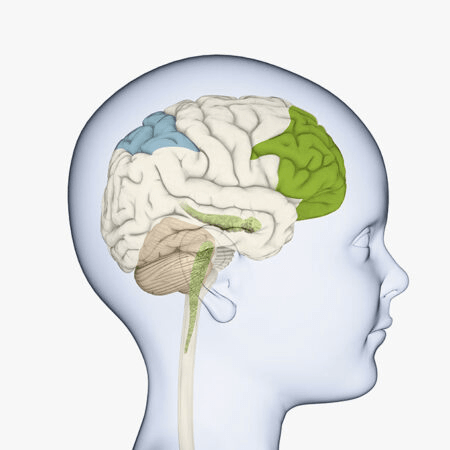
A lot of this mental work is done in the prefrontal cortex, the part of the brain responsible for working memory, planning, problem-solving, and self-control. Using these resources for lying means they are not available for other tasks, like solving math problems or remembering important facts.
Lying also has social consequences. People generally value honesty and don’t like liars. If people view you as untrustworthy, it can damage your relationships. Even well-intended lies, such as insincere compliments, can backfire. If your friends realize they can’t trust your compliments, those compliments become meaningless.
Most people don’t lie very much, says Timothy Levine, a psychologist at the University of Alabama at Birmingham who studies deception. His research shows that almost three-quarters of people rarely lie, and 90 percent of the lies they tell are “white lies.” However, Levine’s research also shows that while most people don’t lie often, a few lie a lot. The top one percent of liars, according to Levine, tell more than 15 lies per day. Some chronic liars are insecure. Others may lie about their accomplishments because they’re conceited or overly impressed with themselves. Still others lie to take advantage of people — perhaps even to cheat them or to steal from them.
The brain’s prefrontal cortex, behind the forehead (shown right, in darker green) isn’t fully mature until we are in our 20s. That’s a problem for adolescents. This part of the brain helps us understand risk. It’s also in charge of a lot of our higher-level thinking, such as planning and self-control.
DORLING KINDERSLEY/GETTY IMAGES PLUS
Lying is especially hard for young people because their prefrontal cortex is not fully developed until around age 25. This part of the brain helps with higher-level thinking, such as planning and self-control. When it’s busy with tasks related to lying, it has a harder time doing other important tasks.
Some lies never stop, like those told by spies or people hiding a difficult home life. Pretending to be something you’re not almost every hour of every day is mentally draining and can have long-lasting effects. Over time, this kind of lying uses up the brain resources needed for thinking and planning.
Most people value honesty, and research shows that honest people build social capital, or goodwill, within their communities. Trust is essential for healthy relationships and a well-functioning society.
Lying may seem easier in the short term, but it has significant cognitive and social costs. By striving to be honest, we can save mental energy and build stronger, more trusting relationships.
Neil Garrett, a neuroscientist at the University of East Anglia in Norwich, England, has studied how emotions affect our willingness to be dishonest. He points to a study where students were given a beta blocker, a medicine that dampens emotions. These students were more likely to cheat on an exam than those who didn’t receive the medicine, possibly because they felt less fear or anxiety about being dishonest.
Garrett and his team also examined the relationship between lying and activity in the amygdala, the part of the brain that processes emotions. They conducted an experiment where volunteers played a game to make money by lying to a partner. Brain scans showed that the amygdala was very active when participants first lied. However, as they continued to lie, activity in the amygdala decreased, and the participants lied even more. These findings were reported in Nature Neuroscience.
In one study, students were more likely to cheat on exams when they’d taken a drug that mutes emotions. ANDY SACKS/THE IMAGE BANK/GETTY IMAGES PLUS
Garrett suggests this brain effect might be similar to how our sense of smell adapts to strong odors. Initially, a strong smell is overwhelming, but after a while, we barely notice it. Emotions might work similarly; the more you lie, the less you feel the uncomfortable emotions like fear or guilt. In other words, lying becomes easier the more you do it.
Nearly all cultures value honesty, notes Victoria Talwar, a psychologist at McGill University in Montreal, Quebec. She suggests that creating a culture that reinforces the value of honesty can help. One strategy is to support friends while still being truthful. “When people’s friends are truthful with them,” she says, “it creates a culture of honesty among them,” which builds stronger friendships.
Jennifer Vendemia, a neuroscientist at the University of South Carolina, emphasizes that lying lessens when there are consequences for dishonesty. However, she adds that rewarding truth-telling is more effective than punishing lying. This is especially important when people share significant truths about themselves. “Being able to tell the truth to a friend is rewarding,” she says. “It feels good.”
Most people know that lying is generally bad and can have serious consequences. Science is now revealing how dishonesty impacts the brain and undermines the trust essential for strong relationships.
When we were young, our parents and elders all taught us not to lie. Many stories and fairy tales illustrate the consequences of lying, such as a child being eaten by a wolf or having a long nose like Pinocchio. Different cultures and religions praise honesty and disapprove of liars. However, most of us have told a lie at one time or another, often to gain an immediate benefit, without realizing that the long-term consequences of lying can be very costly. In Buddhism, one of the ten precepts is to abstain from lying.
There is a recorded story in a Buddhist sutra about Shakyamuni Buddha teaching his son to refrain from lying.
The Buddha’s son, Rahula, was quite mischievous in his youth. He often enjoyed playing pranks on others, using deceptive words to tease people. For instance, when someone came to see the Buddha, Rahula, knowing that the Buddha was not present, would intentionally mislead them about the Buddha’s whereabouts, causing them to search in vain for amusement.
When the Buddha learned of this, he asked Rahula to bring him some water to wash his feet. After washing his feet, the Buddha pointed to the water and asked Rahula, “Can this water be drunk?”
Rahula replied, “The water is dirty from washing feet; it cannot be drunk.”
The Buddha then asked, “Can this basin, used for washing feet, be used to hold food?”
Rahula replied, “No, it cannot. The basin is dirty and cannot be used to hold food.”
The Buddha sternly said, “You are like this water. The water was originally very clean, just as you were originally a prince, able to renounce the false glories of the world and become a monk. But if you do not diligently pursue the path, do not purify your body and mind, and do not speak carefully, the impurities of the three poisons will fill your heart, just like the clean water being soiled by washing dirty feet. You are like this basin. Although you have become a monk, if you do not practice precepts, concentration, and wisdom, and do not purify your body, speech, and mind, how can the food of the Great Path fill your heart?” After speaking, the Buddha kicked the basin, causing it to roll. Rahula was very frightened. The Buddha asked, “Are you afraid the basin will break?”
Rahula replied, “No, the basin is a coarse utensil; it doesn’t matter if it breaks.”
The Buddha said, “Rahula, you don’t cherish this basin, just as people will not cherish you. As a monk, if you do not uphold dignity and discipline, and speak deceitfully, the consequence is that no one will care for you or value you. When your life ends, you will not attain enlightenment, but will only increase your delusion.”
From then on, Rahula changed his mischievous ways, strictly observed the precepts, and diligently practiced the path.
According to the teachings of the Buddhist sutras, we should take a long-term view and consider the consequences of lying for both this life and future lives.
In this life, if we frequently lie, deceive, or slander others, we will inevitably face retaliation from those we have wronged. In the mundane world, most people are naturally inclined to protect themselves and have a tendency for “an eye for an eye” revenge, unless they are saints who have subdued their own minds. If we deceive others, the victims, unwilling to be deceived, will expose our misdeeds among people. As word spreads from one to ten and from ten to a hundred, our bad reputation will quickly become widespread. Our credibility will be utterly destroyed, and our trustworthiness will plummet. From then on, even if we speak the truth, it will be seen as a lie, and people will be wary of us to avoid being deceived. No one will trust us. In such a predicament, we will constantly feel the pain of isolation and helplessness. Our lives will shrink, and our careers will suffer as a result.
In future lives, under the influence of the dark karma of lying, one will inevitably fall into the three lower realms. When the bad karma diminishes and one is reborn as a human, the residual effects of lying will manifest in various speech-related congenital obstacles in both body and mind. These may include having an impaired tongue root, stuttering, or unclear speech. Additionally, there will be a habitual tendency to lie, and sometimes, even when one wishes to speak the truth, it will come out as a lie involuntarily. In interactions with others, one will frequently be slandered and deceived. Even when speaking the truth, people will not believe it. Moreover, even when preaching the true Dharma, others will be unwilling to listen.




















 Peace LiLy