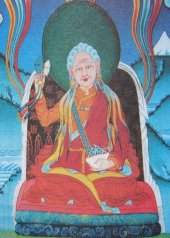
In the rich tapestry of Tibetan Buddhism, there are extraordinary practitioners whose lives themselves become teachings. Among them, Ayu Khandro (阿玉康卓) — also known by her Dharma name Dorje Peldron — stands as one of the most inspiring yoginis of the Nyingma tradition. Her life is not merely a story; it is a living example of devotion, perseverance, and profound realization.
Born in 1839 in the remote region of Kham, eastern Tibet, Ayu Khandro began her spiritual journey at a young age. She received teachings from many of the greatest masters of her time, including Jamyang Khyentse Wangpo, Jamgon Kongtrul, Chokgyur Lingpa, Nyala Pema Dundul, Adzom Drukpa, and Togden Rangrig — figures who were central to the non-sectarian Rimé movement in Tibetan Buddhism.
Unlike many who seek comfort or recognition, Ayu Khandro chose a life of renunciation and yogic discipline. She wandered widely across Tibet, lived in caves and hermitages, and devoted herself to decades of intense meditation. She spent more than fifty years in retreat, including prolonged periods of dark retreat, known in Tibetan as Yangti Nagpo — an advanced Dzogchen practice where the meditator withdraws from external light to focus inwardly on the nature of mind.
Dzogchen — The Great Perfection
Ayu Khandro’s life was profoundly rooted in Dzogchen (Great Perfection) — a teaching that points directly to the intrinsic, luminous nature of consciousness. Rather than seeking external accomplishments, she focused entirely on direct inner realization.
She was recognized as a terton — a revealer of hidden teachings — and was particularly known for transmitting sacred practices and giving initiations to practitioners, including the renowned master Chogyal Namkhai Norbu Rinpoche, who later wrote her biography based on her own oral account.
Ayu Khandro lived to the remarkable age of 115. In 1953, near the end of her life, she received visitors, gave away her precious possessions, and continued to teach and encourage those around her. After she passed away, it is reported in Tibetan Buddhist biography that her body remained in meditation posture for about two weeks before any signs of physical change occurred. By the end of this period, her body had shrunk to a fraction of its original size — an occurrence some traditions associate with deep spiritual attainment in Dzogchen practice, where the physical elements dissolve into subtler states.
This remarkable account, while extraordinary, is part of how her life has been transmitted in spiritual biographies — not as a spectacle, but as a sign of the depth and authenticity of her practice.
What makes Ayu Khandro’s life especially compelling is not just her longevity or her meditative achievements, but her steadfast devotion to the Dharma. She never sought fame or comfort. Instead, she walked the rugged paths of realization, teaching through action rather than words, presence rather than proclamation. Her retreats, pilgrimages, and meditation practices were not about escape, but about coming fully home to the true nature of mind.
Although few of us will ever undertake decades of meditation in darkness or faraway hermitages, Ayu Khandro’s life still speaks directly to modern seekers. In an era filled with distraction and ambition, her example invites us to ask:
What is true commitment?
How deeply can we trust the path we walk?
Can we place inner understanding above outer achievement?
Her life encourages us to remember that spiritual depth is not measured by loud accomplishments, but by quiet fidelity to practice.
Ayu Khandro remains a powerful reminder that liberation is not found on the surface of life, but in its quiet depths. Her unwavering dedication, her silent courage, and her embrace of the path offer inspiration — not as myth, but as a living reminder of what is humanly possible when devotion meets discipline.
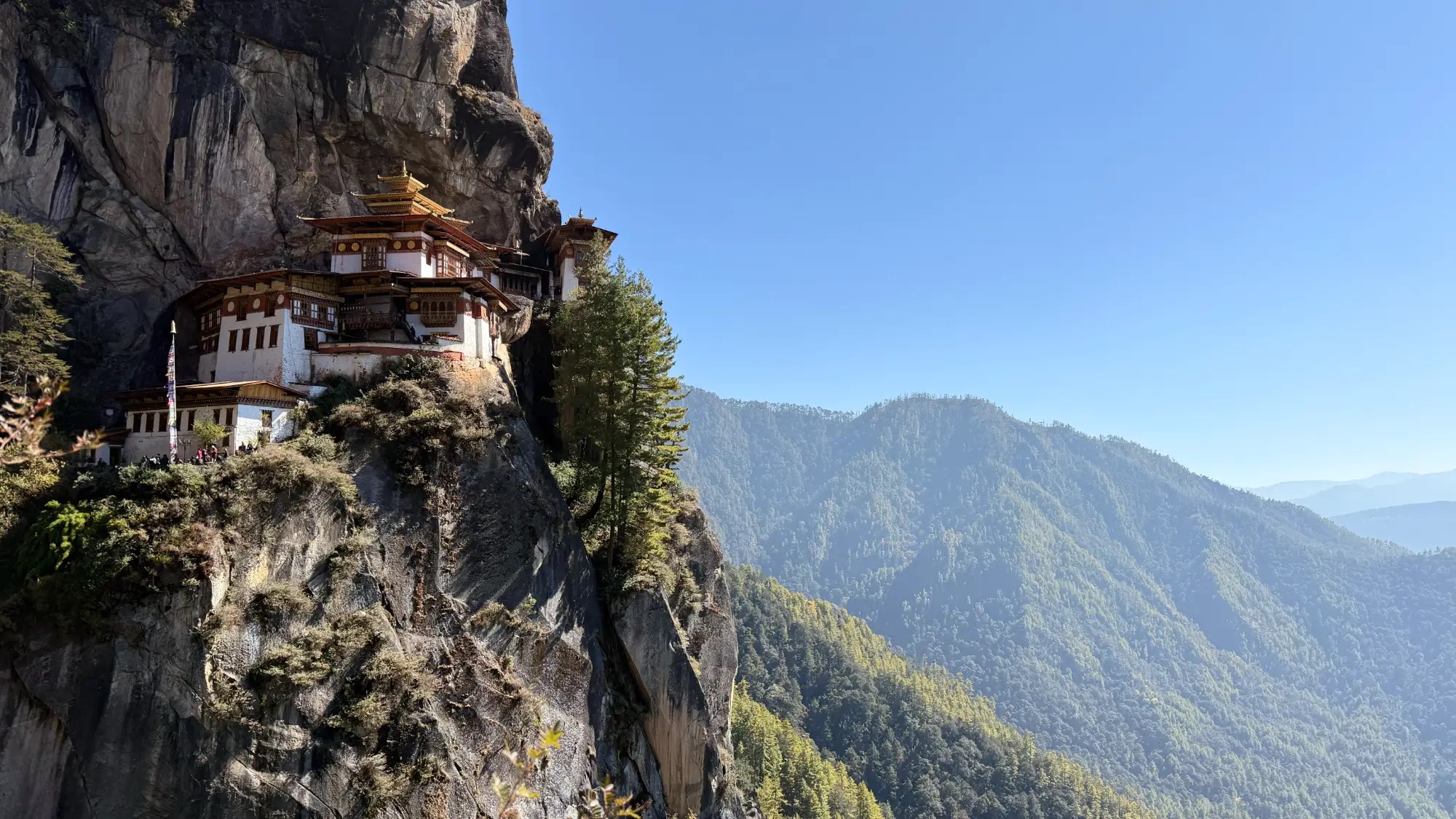
The goal of the ascent in sight: Taktsang Monastery is perched high on the steep cliff face
On a pilgrimage to holy places, one rarely follows a rigid plan. Rather, one engages with a flow of events. Our last days in Bhutan reminded us how valuable it is to let go of expectations. We learned that special doors often open exactly when one is ready to leave the original path.
Change of Plans in Punakha: Trusting the Flow of Things
The sixth day showed us this very clearly. Actually, we had a fixed plan: We wanted to drive from Punakha back to Paro. There, we had donated 3,000 butter lamps which we wanted to light ceremonially in a temple.
But then we received news on short notice that an audience with His Holiness the Je Khenpo, the highest religious head of the country, would be possible. Such an opportunity is a great blessing. However, there was a restriction: Our entire travel group was simply too large for this spontaneous audience.
So we had to split up in Punakha. One part of the group drove directly on to Paro, while the other part drove to Thimphu, where His Holiness the Je Khenpo was staying at the time. I traveled with this group.
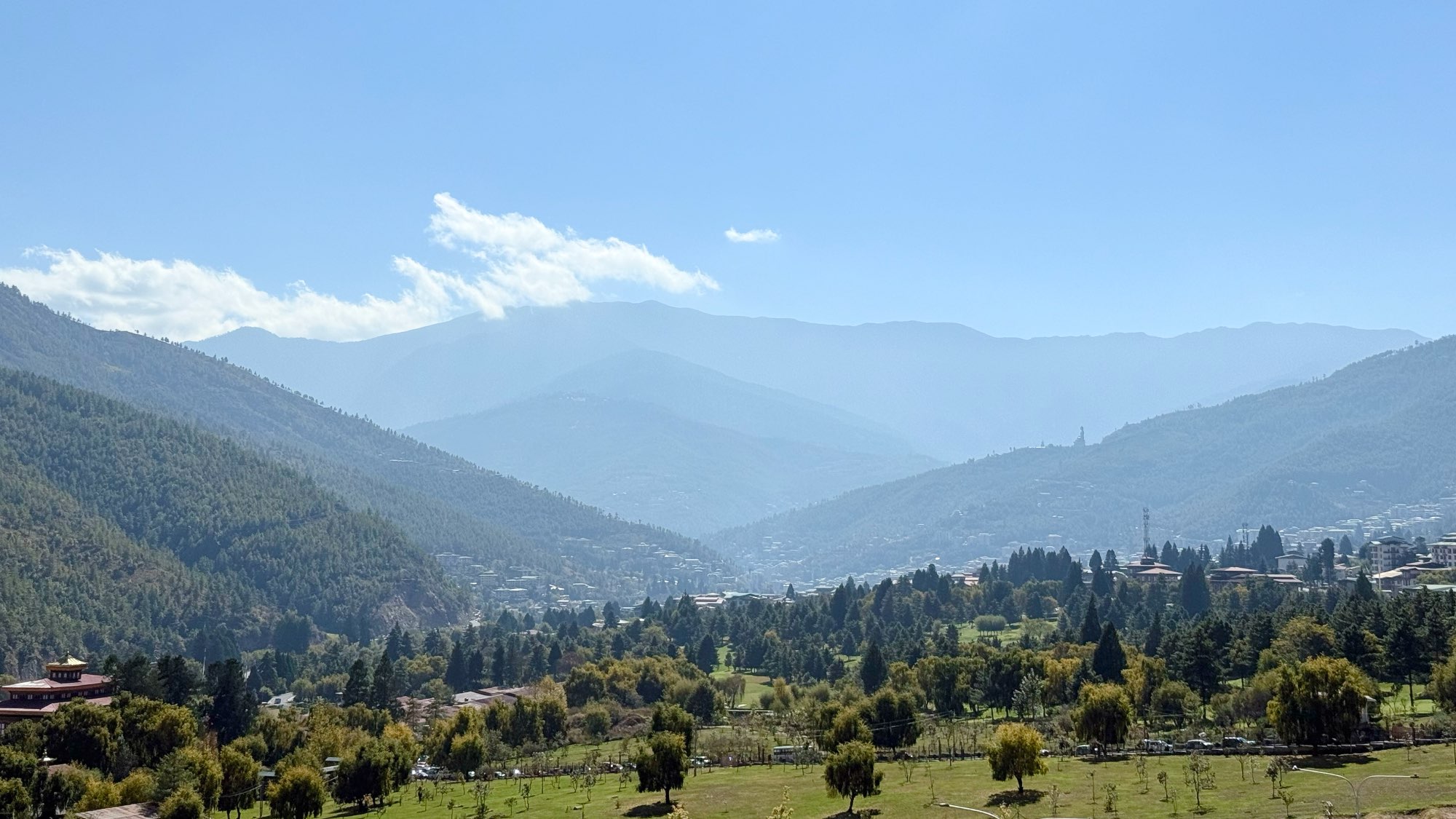
View of Thimphu with the Buddha Dordenma statue in the background
Thangton Dewachen Nunnery: Legacy of the Iron Bridge Monk
Arriving in Thimphu, we still had some time before the appointment. We visited the Thangton Dewachen Duthop Nunnery. It is the only one of its kind in the capital and goes back to the legendary Thangtong Gyalpo. He was a fascinating personality: A great Mahasiddha and at the same time an ingenious engineer who lived in the 15th century. He is famous as the “Iron Bridge Monk,” as he built dozens of suspension bridges made of iron chains throughout the Himalayas to allow pilgrims and travelers to cross raging rivers. Many of his constructions withstood the centuries. We were welcomed very warmly at this place: We were served tea in the courtyard of the monastery, and we could enjoy the peaceful atmosphere for a moment before we had to leave.
Visiting the Thangton Dewachen Duthop Nunnery
Kalachakra Initiation: Encounter with H.H. the Je Khenpo
After lunch, we made our way to the stadium. There, H.H. the Je Khenpo was leading the conclusion of the Kalachakra initiation. The crowds were immense. The stadium itself was packed to capacity, but that was far from enough. Countless people had also gathered on the grounds outside to partake in the event. It was a very impressive image. The ceremony was also being broadcast live on Bhutanese television. We initially had to wait before the gates until we were allowed into the stadium.
After some time, we were able to enter and were led to a separate waiting area inside the stadium. During this time, a chance but wonderful encounter occurred. We met the young Vairochana Rinpoche (Ngawang Jigme Jigten Wangchuk). He is a highly revered Tulku and the son of Her Royal Highness Princess Sonam Dechan Wangchuk. He is revered as the reincarnation of the great translator Vairochana from the 8th century, one of the most important disciples of Guru Padmasambhava.
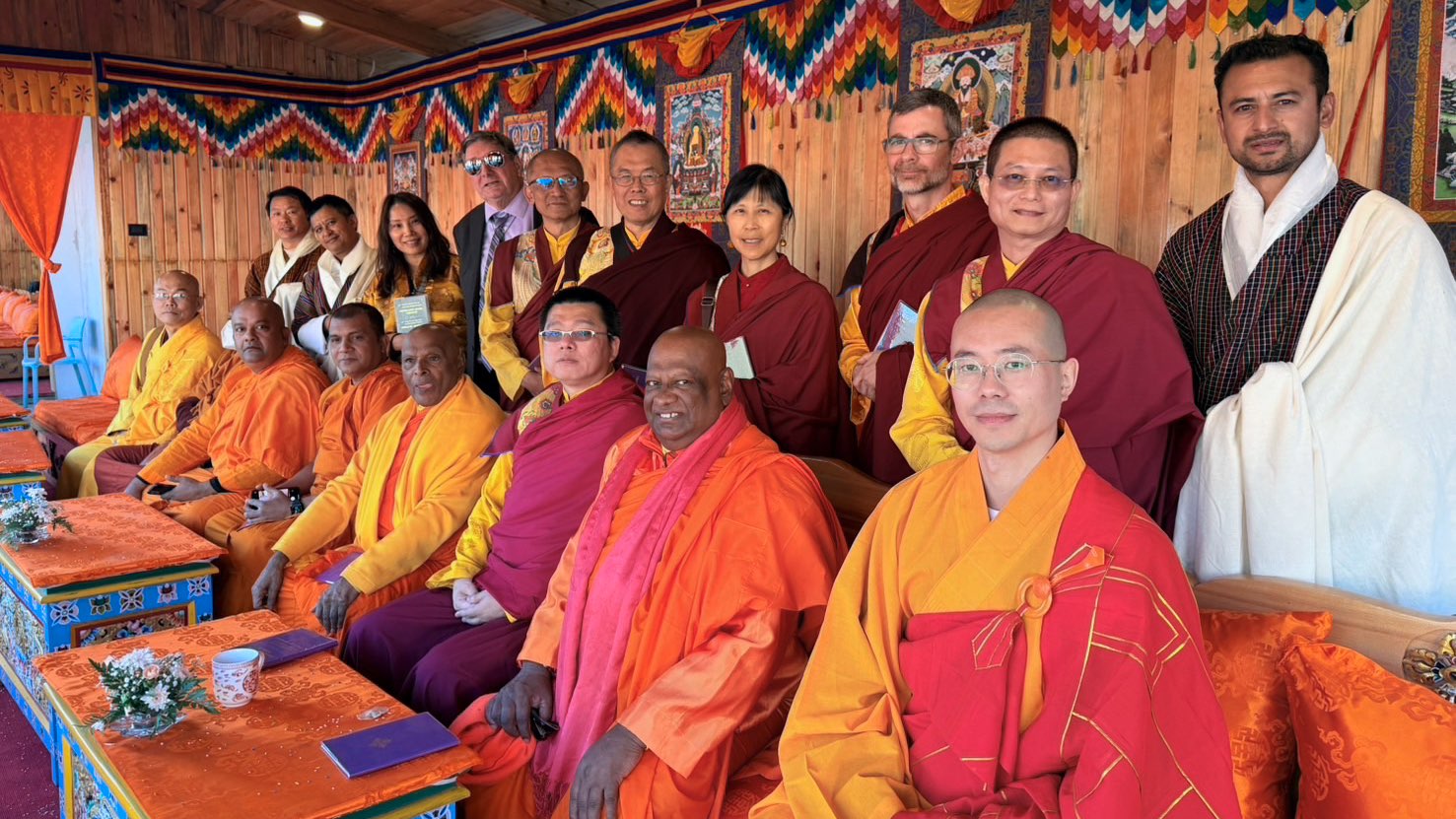
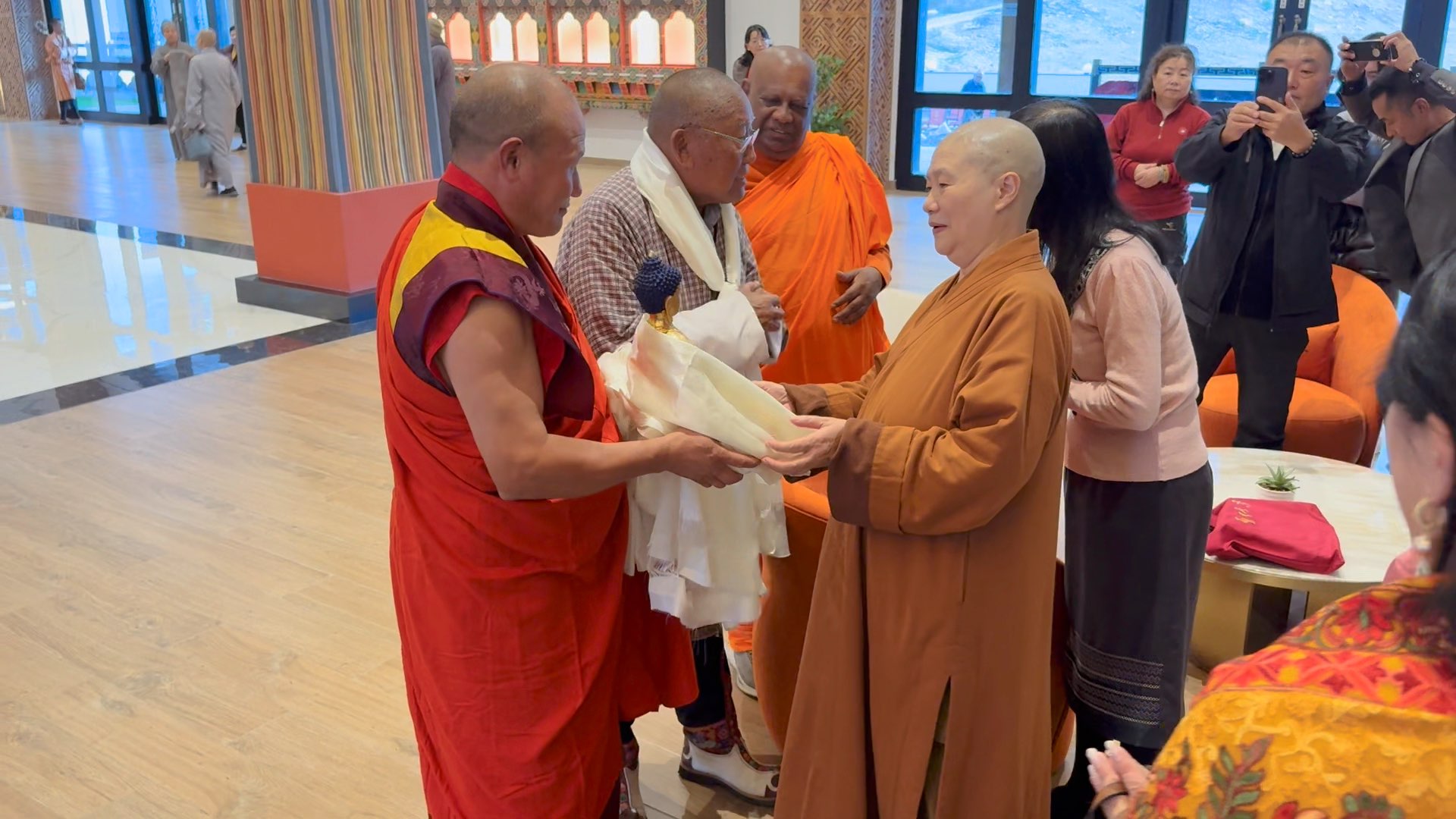
Following this, we were granted an audience with H.H. the Je Khenpo. Filled with gratitude, we presented him with a Khata (white scarf) as a token of our deep respect. In this special setting, we also had the opportunity to present His Holiness with information regarding the ‘Holy Heavenly Lake Buddhist Town’ project. Each of us then received a personal blessing, and upon our departure, he presented us with a text of the Amitabha Sadhana for our own practice.
Our group after the audience with H.H. the Je Khenpo
After the meeting with the Je Khenpo, a further great honor was completely unexpectedly offered to us: Actually, we were supposed to meet the young Vairochana Rinpoche and the Queen Mother for an official audience afterwards. But when the Kalachakra initiation ended, thousands of people streamed out of the stadium at the same time. Traffic in Thimphu came to a complete standstill. There was no getting through, and we could not reach the agreed location in time. Such are the karmic conditions sometimes. But we did not quarrel with fate: After everything we had experienced that day and the blessing we were allowed to receive, we felt richly gifted.
The Tiger’s Nest: Ascent to Guru Rinpoche’s Cave
On the last day of our trip, November 15th, the arguably most famous landmark of Bhutan was on the agenda: Paro Taktsang, widely known as the Tiger’s Nest. It is not only architecturally deeply impressive, but one of the holiest sites in the entire Himalayas.
Paro Taktsang Monastery (Tiger’s Nest)
We set off very early to reach the base camp, the parking lot at 2,300 meters. From there, it is about 800 vertical meters up to the monastery, which sits at 3,120 meters. For visitors who do not quite trust themselves with the steep climb, there is generally the option to be carried by a horse or mule for the first part of the route. Our group, however, decided to cover the entire path on foot under our own power.
The ascent took just under three hours. The path is beautiful, but also demanding. It leads through a dense pine forest where rhododendrons grow and the trees are draped with moss. Again and again, prayer flags flutter in the wind. Halfway up, we took a short rest at a café. From there, you already have a first, breathtaking view of the monastery, which literally clings to the steep rock.
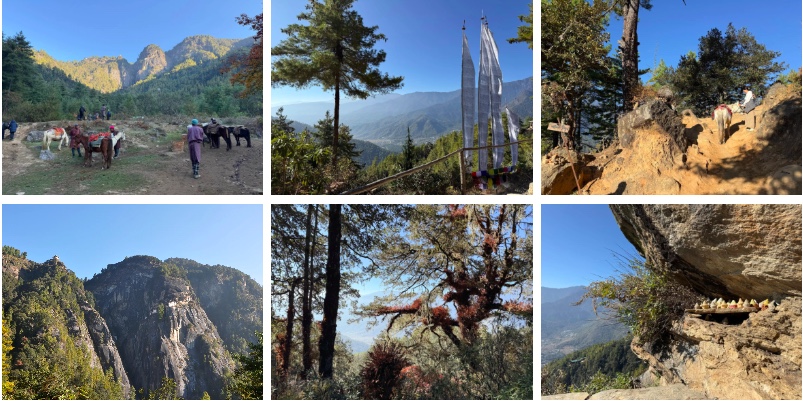
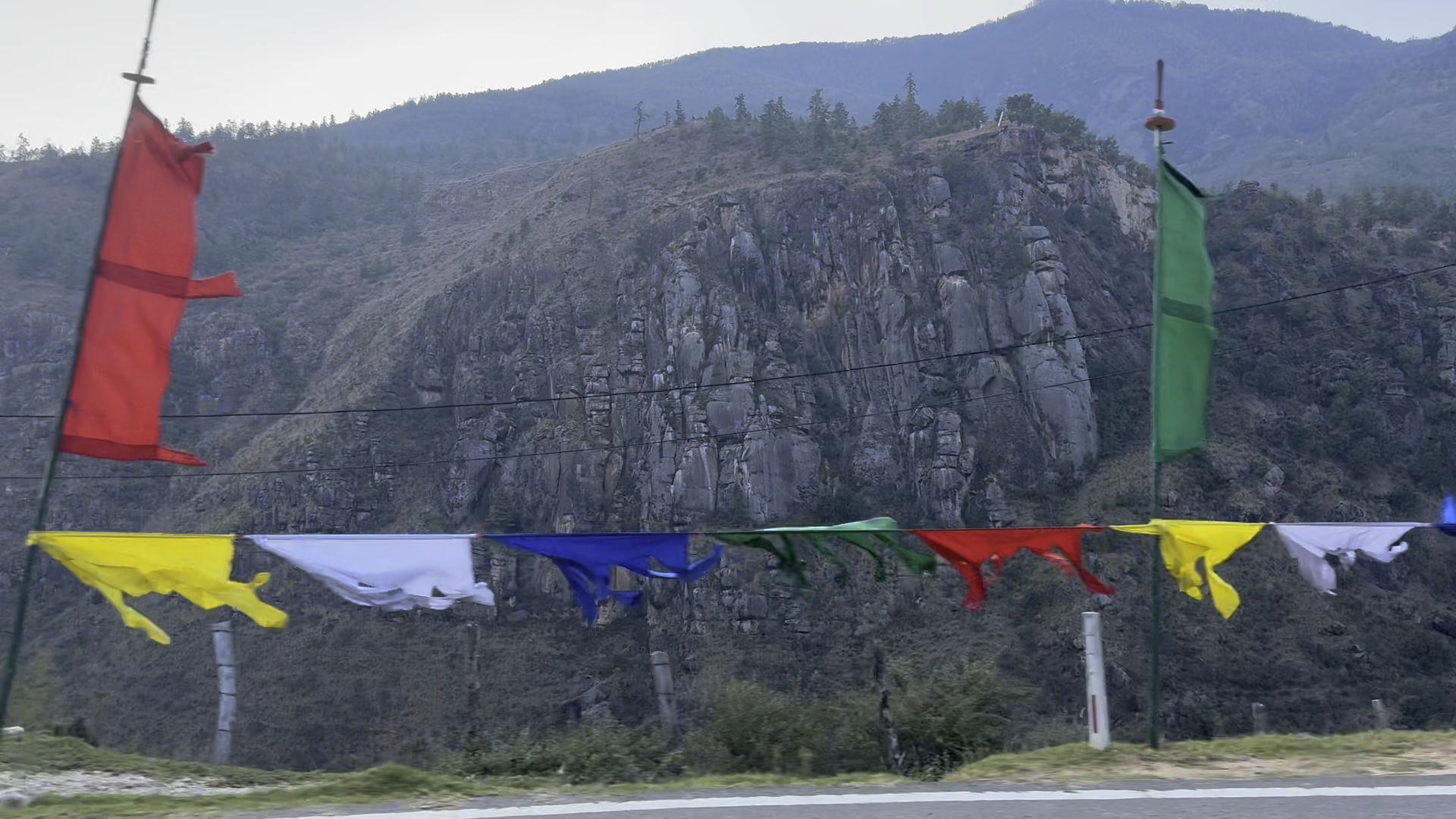
Impressions (in order): Resting horses at the starting point, fluttering prayer flags against the mountain backdrop, pack animals on the dusty trail, the first distant view of the cliffside monastery, the moss-covered mountain forest, and Tsa-Tsa offerings in a rock niche.
The history of this place is closely connected to Guru Rinpoche, the great Master Padmasambhava. He is revered by the Bhutanese as the “Second Buddha,” as he brought and firmly established Tantric Buddhism, the Vajrayana, in Bhutan in the 8th century. He manifested his supernatural powers and flew to this very spot on the back of a tigress to subdue a demon. Some say that the tigress was his tantric consort Yeshe Tsogyal in a transformed state. In the cave known as Taktsang Senge Samdup, around which the monastery was later built, he then meditated for exactly three years, three months, three weeks, and three days.
Once at the top, we had to hand in our cameras and bags at the entrance, as photography inside is strictly forbidden. We visited several small temples within the complex. In a special room that is guarded around the clock, I lit a butter lamp. This is the only place in the monastery where open fire is still permitted after a devastating fire destroyed large parts of the complex in the past. In Buddhism, lighting these lamps is a meritorious central ritual.
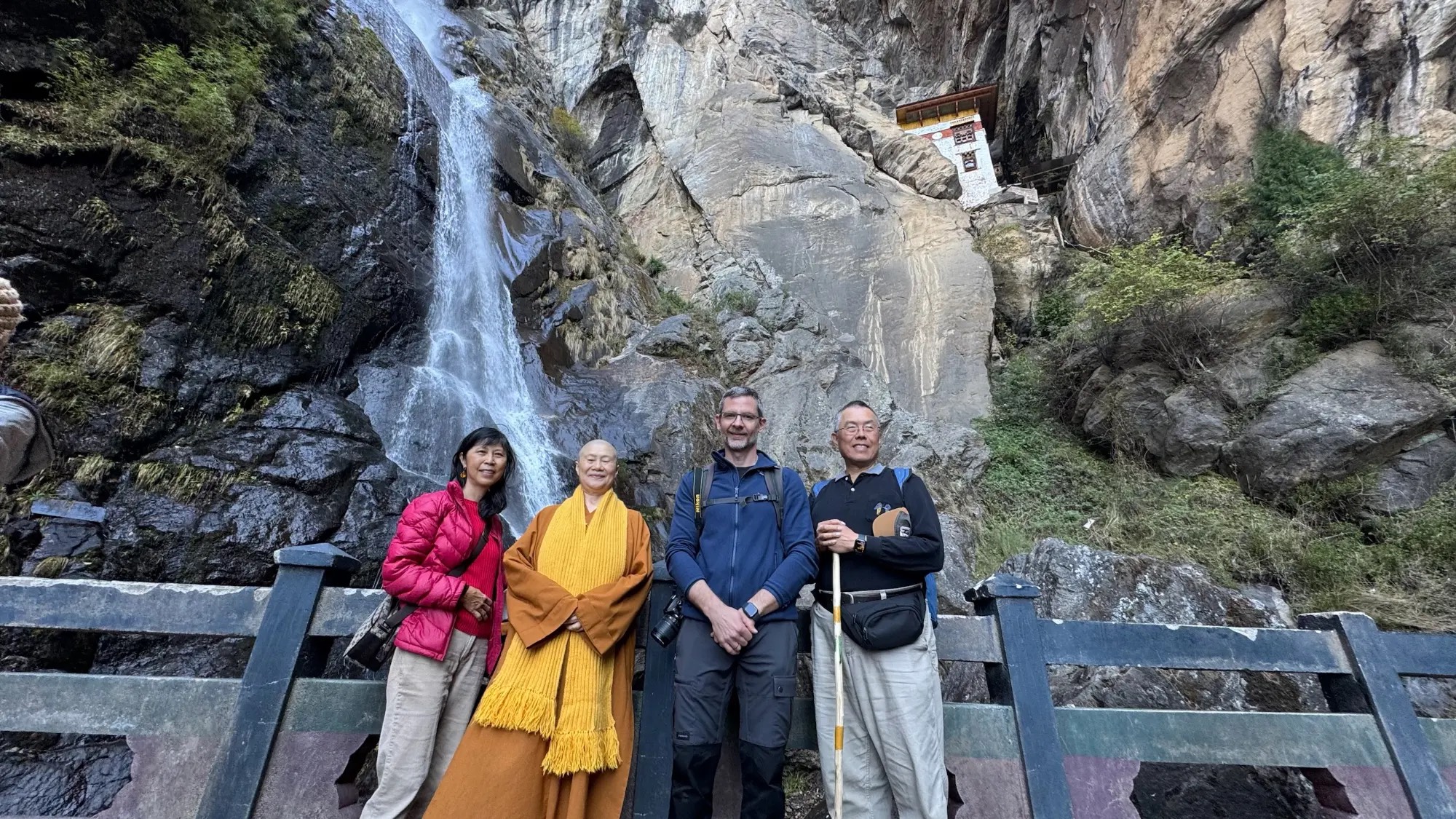
With Venerable Master Shi Zheng Da in front of the Taktsang Waterfall
Farewell in Paro: A Promise to Return
Back at the hotel in Paro, a special guest awaited us in the evening: Dasho Passang Dorji, the former Speaker of the National Assembly of Bhutan. He had been instrumental in organizing the official appointments and came by personally to apologize politely that the meeting with the King had not taken place due to the commotion. He promised us: “Next time I will arrange, this time the King and the Queen have been too busy.”
Exchange of gifts with Dasho Passang Dorji
In a very friendly atmosphere, an exchange of gifts took place. The Venerable Master Shi Zheng Da presented him with a special art object, a luminous three-dimensional picture of a Yun sculpture designed by H.H. Dorje Chang Buddha III. In return, he gave the Master a large golden Shakyamuni Buddha statue. It was a worthy moment of connection.
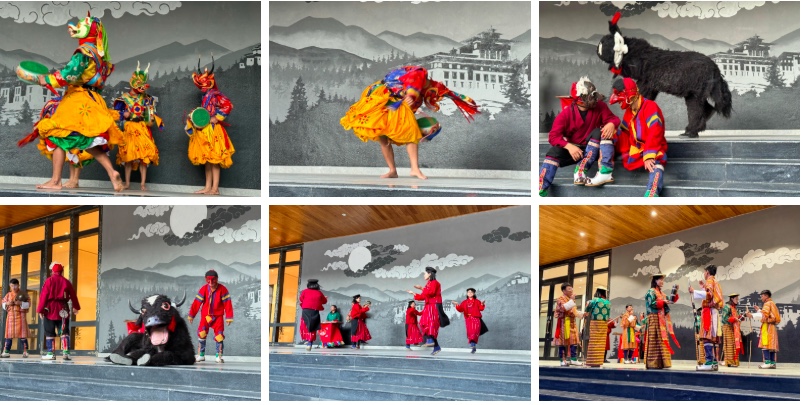
Scenes from the performance (in order): The famous Drametse Ngacham (Dance of the Drums), a solo dancer bowing deep, the performers of the yak scene, the humorous interaction of the yak with the audience, the women’s dance group in red garments, and finally a traditional performance with bows and arrows combining song and dance.
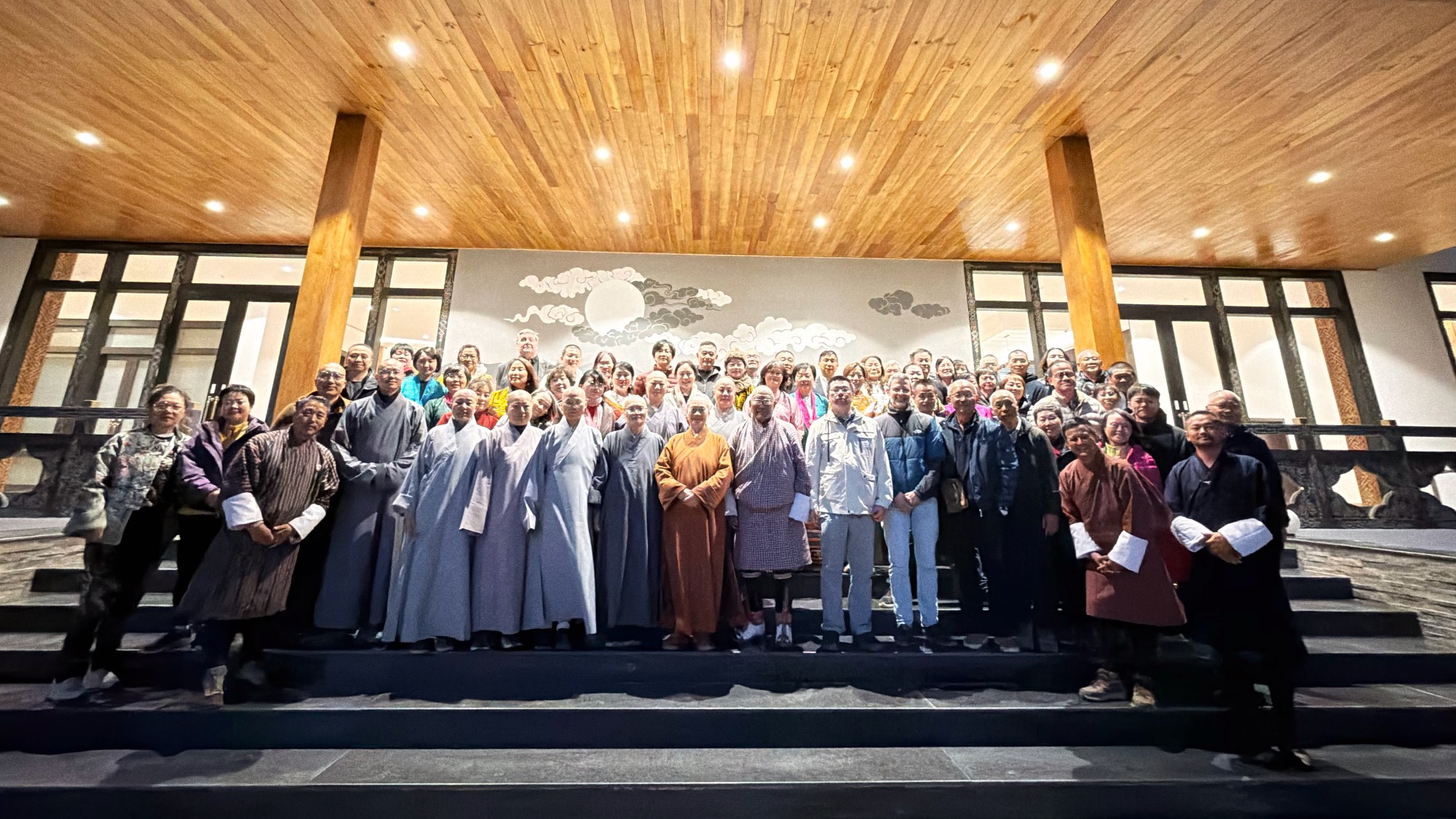
Afterwards, we watched a cultural performance together with Dasho Passang Dorji. There were traditional dances and songs whose gentle, flowing movements radiated great calm and peace. There were also humorous interludes, like the dance of a yak, where the performers visibly had fun. Even though I did not understand the language, the joy was contagious. After this show, we all gathered for a large group photo to capture this beautiful final evening.
Our entire group with Dasho Passang Dorji and our guides
The next morning, November 16th, it was time to say goodbye. From the hotel, we could look directly at the airport. We had arrived to make a contribution with our donation and our plans. But as I boarded the plane now, I felt that we ourselves were taking away far more than we had given. I took with me not only memories of the mighty mountains and venerable monasteries, but the feeling of a deep connection with our travel group and the people in Bhutan. I return with much inspiration and a heart full of gratitude for the blessing I was allowed to experience in this country.
The highest point of the leg: The Dochu La pass at 3,100 meters
By Gongjue Tuji
With many impressions from Thimphu and a feeling of gratitude, we continued our pilgrimage. Before leaving the busy capital behind for good to drive deeper into the mountains, however, we spent another day in its surroundings. After all, Bhutan is not only defined by its holy temples and deeply rooted Buddhism. The landscape itself also holds enormous power. We were looking forward to traveling to places where the country’s history and the powerful nature form a very special unity.
Semtokha Dzong: The Palace of Secret Mantras
On the third day, our path first led us about six kilometers south of Thimphu to Semtokha Dzong. This place also bears the meaningful name “Sangak Zabdhon Phodrang,” which translates to “Palace of the Profound Meaning of Secret Mantras.”
Semtokha Dzong
Historically, this is a milestone: The Dzong was built between 1629 and 1632 by Shabdrung Ngawang Namgyal, the legendary unifier of Bhutan. He introduced something completely new here, namely the combination of a monastery and an administrative center under one roof. This innovative concept worked so well that it later became the model for all other major fortresses in the country, such as in Paro or Punakha. This historical significance mixed with a very present joy on the day of our visit. Since the entire country was honoring the fourth King’s birthday, a particularly festive mood could be felt everywhere.
But something else left a deep impression on me. In the temple rooms, the distinct scent of butter lamps hung in the air. It is a very unique smell that we would encounter again and again at other places, and which for me is now inseparably linked to the atmosphere of these holy sites.
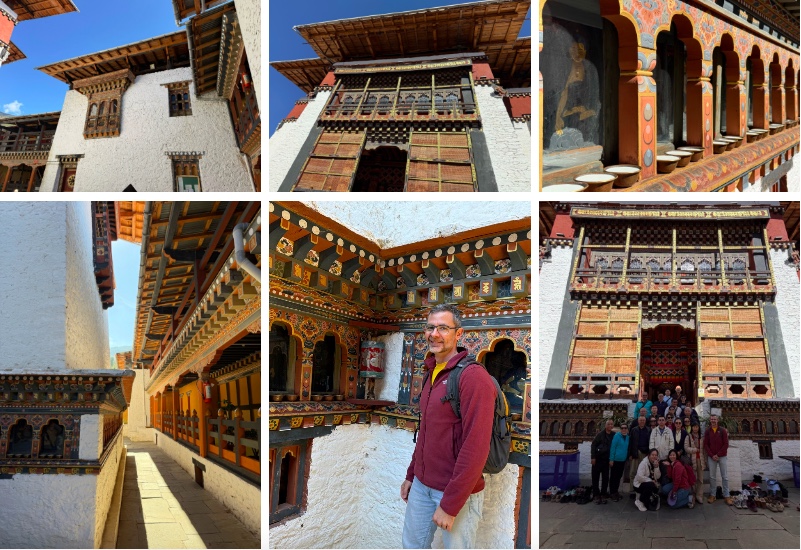
Impressions (in order): View into the courtyard, the magnificent entrance area, water bowls as offerings, the corridor with prayer wheels, myself inside, and our group on the entrance stairs.
Takin Preserve: The Creation of Drukpa Kunley
Bhutan is deeply rooted in its spiritual traditions, where the power of the Dharma also manifests in nature. We visited the Royal Preserve to see the national animal: the Takin. It is a fascinating creature, unique to the Himalayas, with an appearance that resembles a cross between a cow and a goat.
Its existence traces directly back to the miraculous activity of Drukpa Kunley, also known as the “Divine Madman.” In the 15th century, people asked him to perform a miracle to prove his realization. He requested to be served a cow and a goat. After consuming both, he placed the goat’s head upon the cow’s skeleton. With his supernatural powers, he brought this new being to life. This event stands as a powerful testament to the Master’s unconventional teaching methods and his ability to act beyond ordinary concepts.
Impressions (in order): The spacious forest area of the preserve, a resting Takin in the shade, and an animal by the stream.
Dochu La: Commemoration at the 108 Chortens
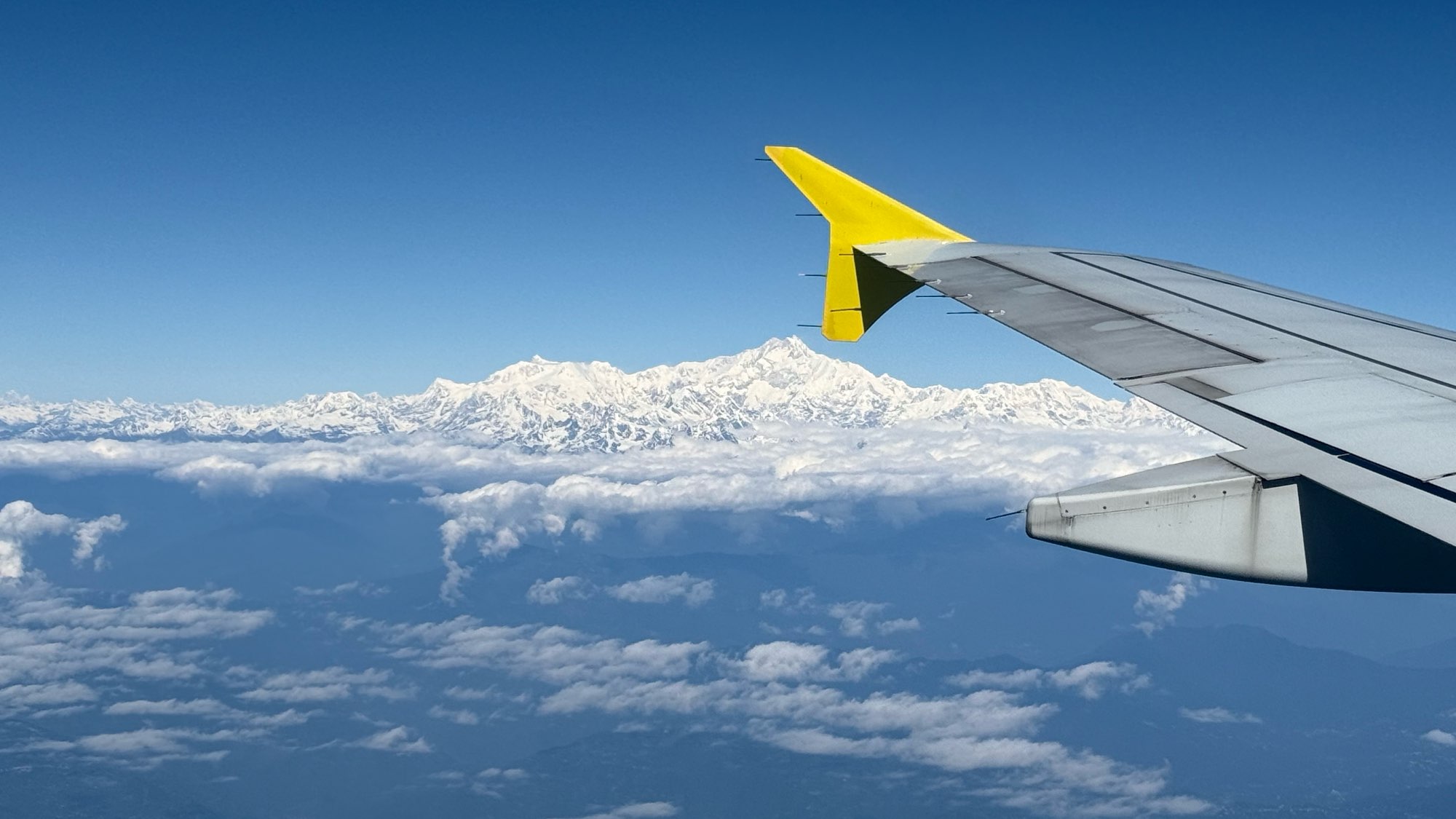
On the fourth day, we left the capital heading towards Punakha. The road led us over the Dochu La, a pass at an altitude of about 3,100 meters. Although a few clouds obscured the view of the very big ice giants of the Himalayas, gaps opened up again and again, through which we could see the snow-covered peaks.
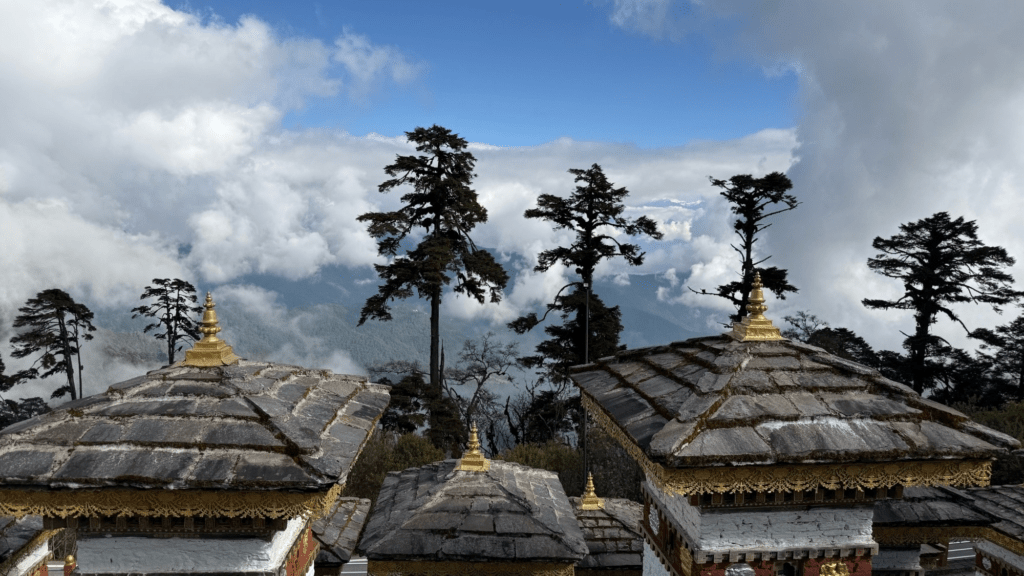
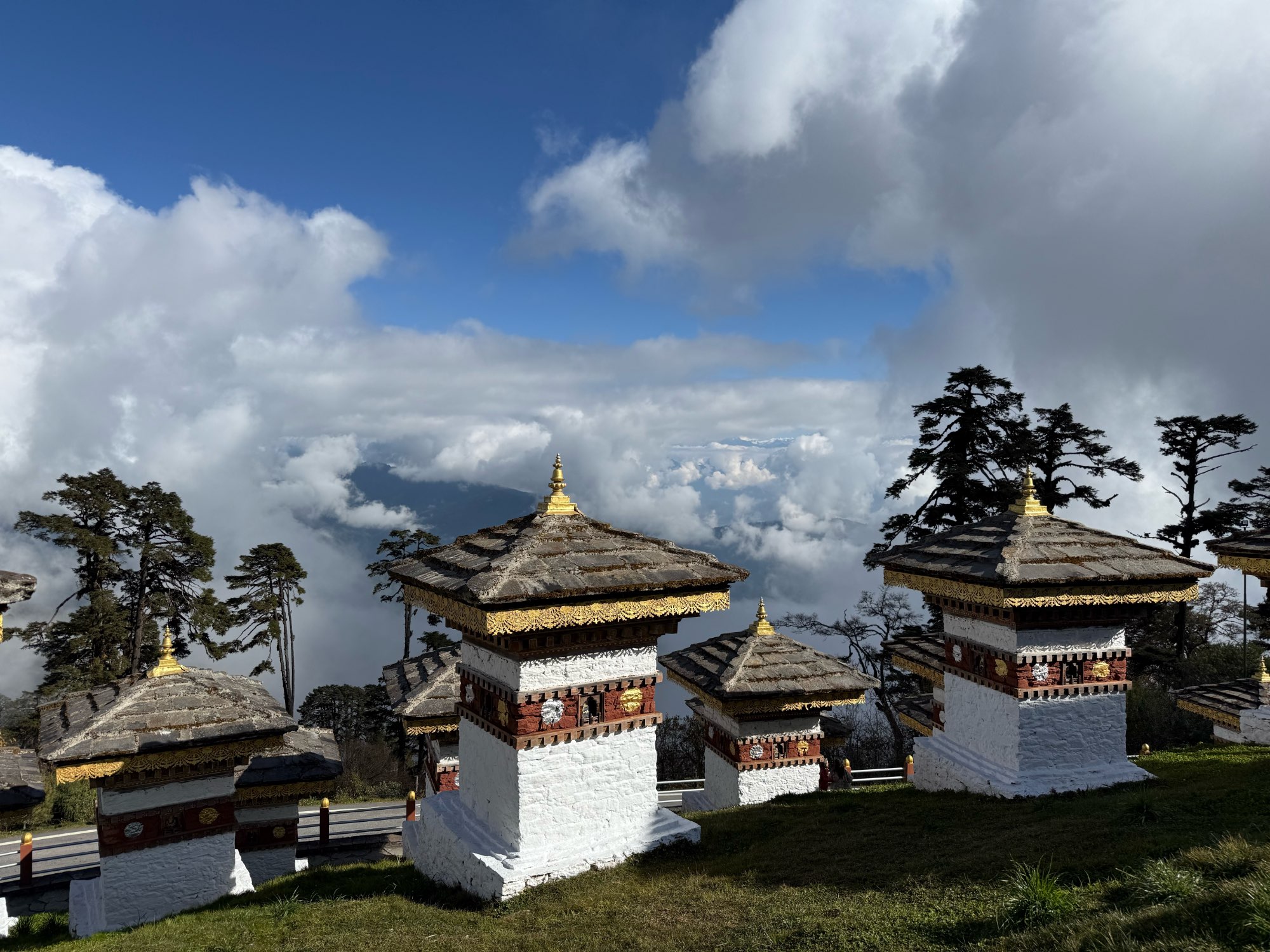
The 108 Druk Wangyal Chortens against the backdrop of the Himalayas
Up on the pass stand the 108 Druk Wangyal Chortens. They are an important place of remembrance. They were not built to celebrate a military victory in 2003, but to commemorate the fallen. It is characteristic of the culture here that triumph is not put in the foreground, but rather compassion and remembrance.
Chimi Lhakhang: The Legacy of Drukpa Kunley
In the Punakha district, the legacy of the “Divine Madman,” Drukpa Kunley, is ever-present. Even in the surrounding villages, we noticed the many houses painted with phallic symbols. What may initially seem unusual to foreign eyes is regarded here as a powerful symbol of protection.
View into the Punakha Valley
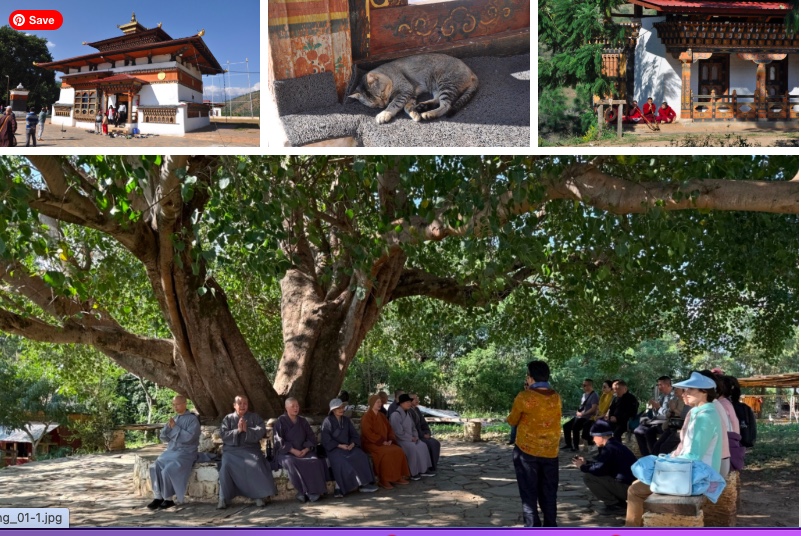
Our next destination was Chimi Lhakhang. The path there leads very picturesquely right through green rice fields. The temple itself stands exactly at the spot where the great master Drukpa Kunley manifested his power to subdue a demon that had taken the form of a dog. He did so with his “flaming thunderbolt of wisdom.” This also explains the paintings on the houses, as they represent this victorious thunderbolt. At the place of this subjugation, a small black stupa still stands today. Also, statues of the master can often be recognized by a dog lying at his feet. Today, the place is mainly known as the Temple of Fertility, to which couples from all over the world make pilgrimages. We used the peaceful atmosphere there to chant together under a large Bodhi tree in front of the temple.
Impressionen (der Reihe nach): Der Chimi Lhakhang Tempel mit der schwarzen Stupa, eine schlafende Tempelkatze, junge Mönche beim Üben der Dharma-Instrumente und unsere Gruppe beim gemeinsamen Chanten unter dem großen Bodhi-Baum.
Punakha Dzong: Palace of Great Bliss
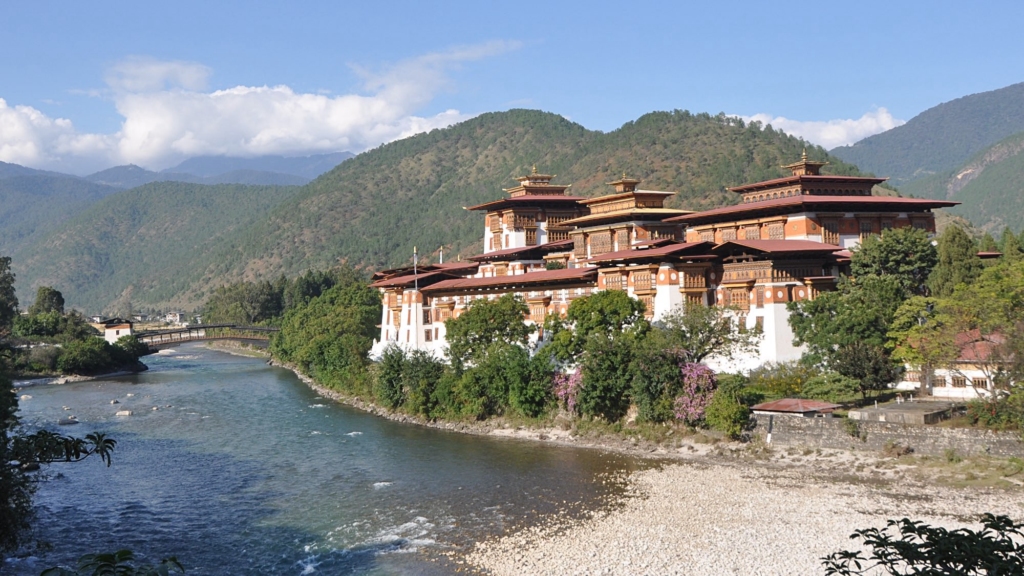
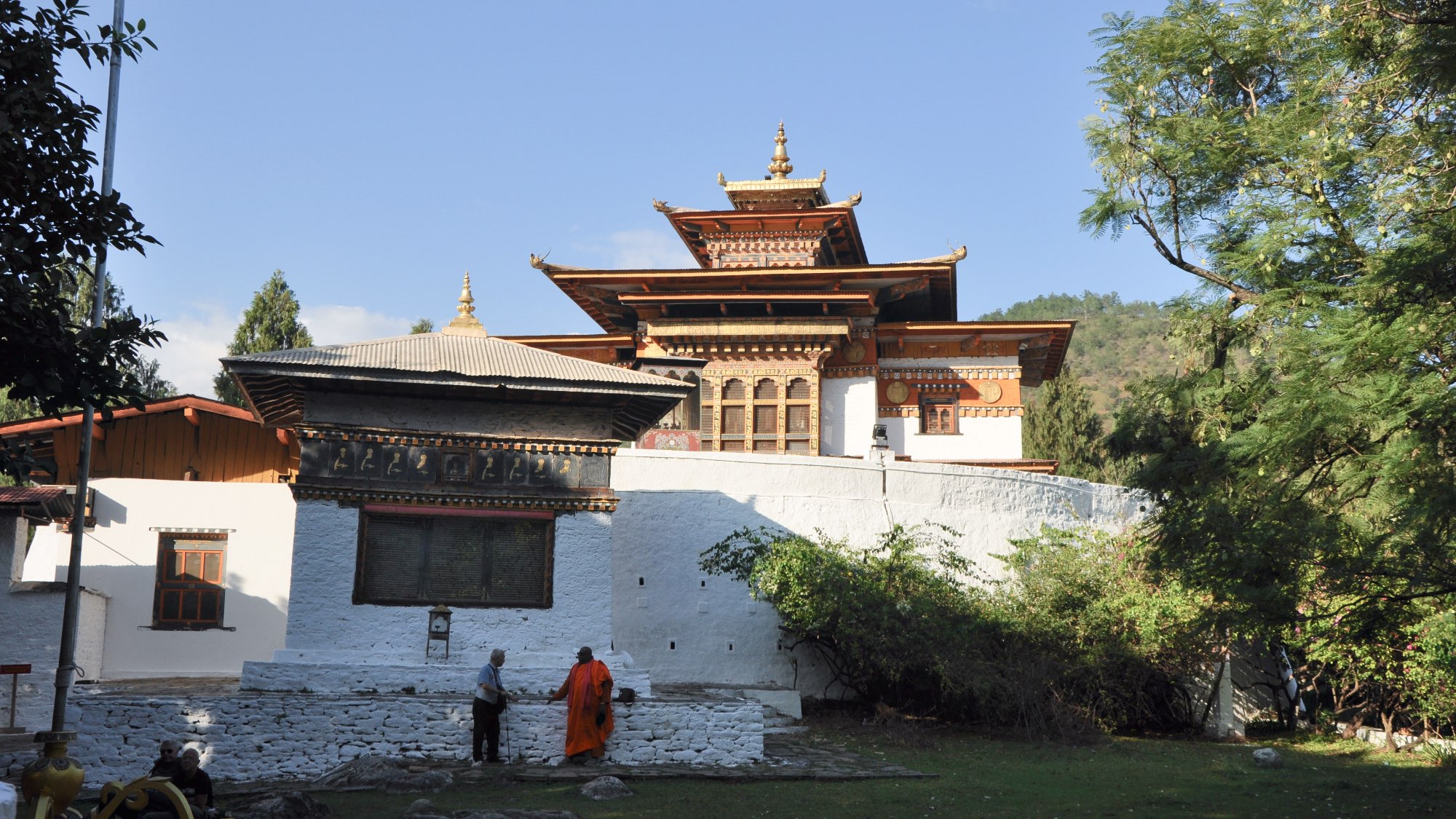
Afterwards, we continued to Punakha Dzong. It is situated very picturesquely right where the Pho Chhu (Father River) and the Mo Chhu (Mother River) meet. Its full name is Pungtang Dechen Photrang Dzong, which translates to “Palace of Great Happiness.” The building is not only huge but also historically of enormous importance. It was built as early as 1637 and for a long time formed the center of the then winter capital Punakha.
Punakha Dzong
Even today, the monastic community moves here during the cold months. Moreover, it is a historic place for the monarchy, as the first King of Bhutan was crowned here in 1907. Inside rest the mortal remains of the state founder Shabdrung Ngawang Namgyal. However, this area is strictly protected. Only the King and the Je Khenpo, as well as two guardian lamas, are allowed to enter the room with the relics.
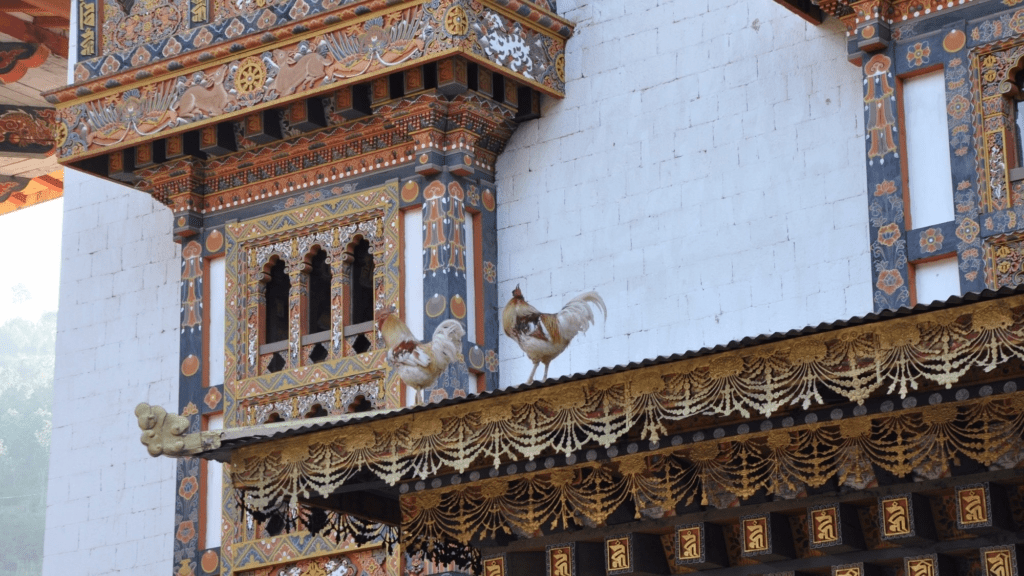
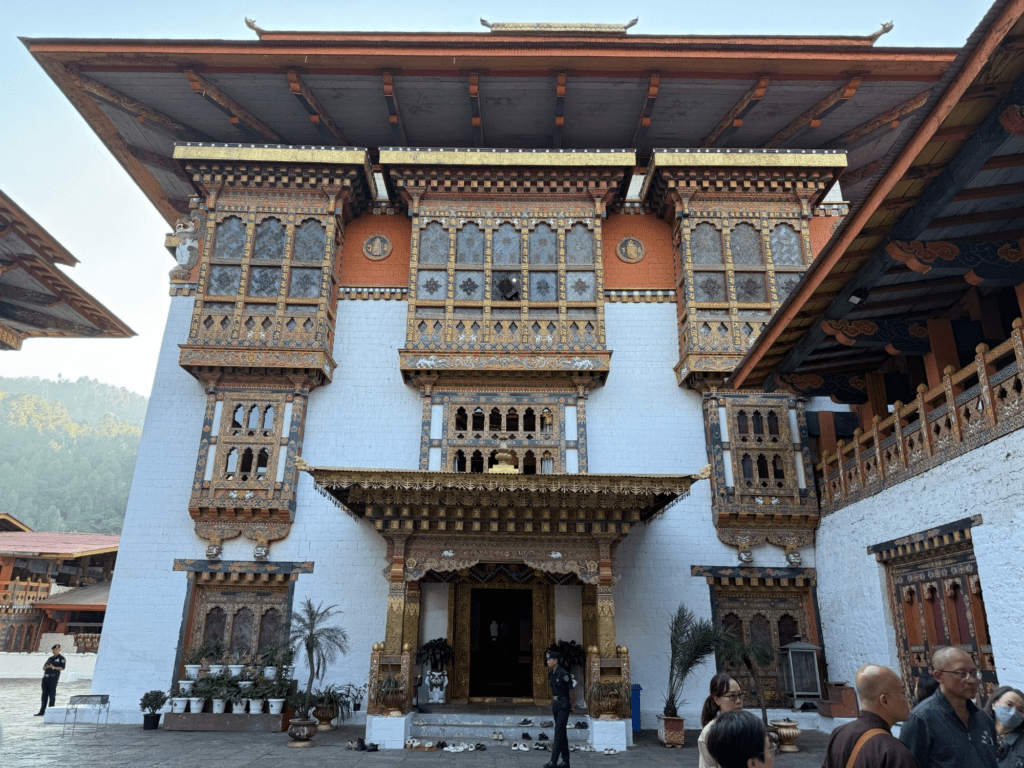
Impressions (in order): Conversations in front of white walls, roosters on the intricate roof ledge, and the entrance to the sacred temple area (Machen Lhakhang), where the relics of the state founder are kept.
Wangdue Phodrang: Rebuilding a Landmark
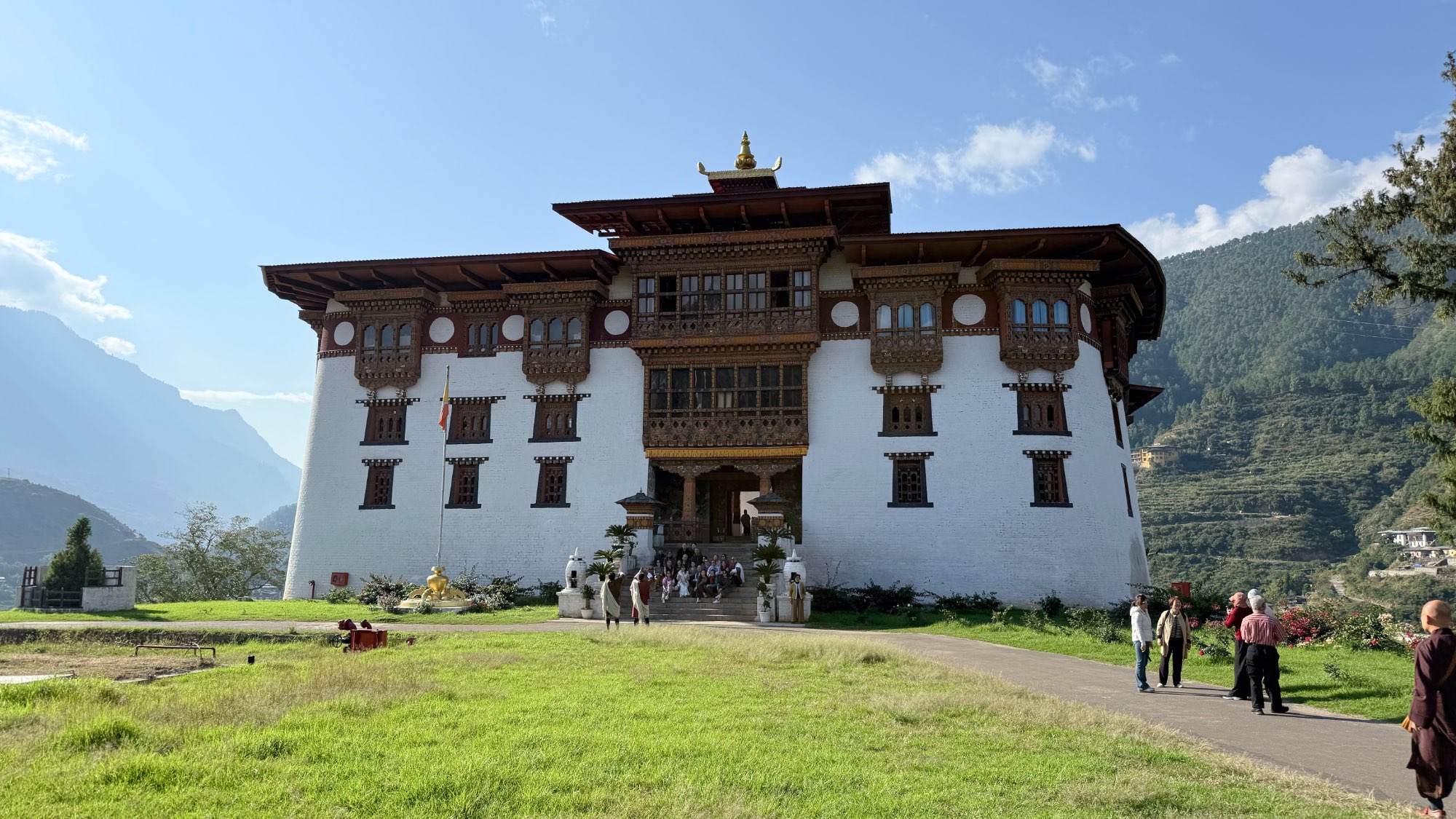
In the morning of the next day, we stopped at Wangdue Phodrang Dzong. This place has a moving history. It was founded in 1638 by Shabdrung Ngawang Namgyal under the auspicious name “Palace of the Four Cardinal Directions.” It sits strategically on a ridge that resembles a sleeping elephant and overlooks the confluence of two rivers.
Wangdue Phodrang Dzong
For a long time, it was considered the only Dzong that had never fallen victim to a fire in its almost 400-year history. But on June 24, 2012, fate struck: A technical defect triggered a fire in the early morning, and fueled by strong winds, the proud fortress burned out completely within a few hours.
But what we saw was not a place of mourning, but of hope. The reconstruction, which began in 2014, is an impressive testament to Bhutanese unity, but also to the deep friendship with neighboring India. Through close cooperation and generous support from India, this massive project could be realized. It wonderfully shows how modern engineering and cross-border solidarity are used not only to preserve traditional culture but to literally let it rise anew from the ashes.
Impressions (in order): Intricate carvings at the portal, colorful wall murals of guardian deities, the spacious courtyard, a monk at the staircase, and our group photo in front of the Dzong.
Drive through the Black Mountains
With this image of a new beginning in mind, we continued our journey towards the Phobjikha Valley. The drive was scenically very impressive. Our bus wound its way up the Black Mountains curve after curve. We had perfect weather. The sun was shining and allowed us a clear view that reached further with every meter of altitude. The road snaked along the partly steep mountain slopes in tight serpentines until we crossed the pass and finally drove down into the valley.
Phobjikha Valley: Winter Home of the Black-Necked Cranes
The Phobjikha Valley is a very special retreat. It serves as the wintering ground for the rare Black-necked Cranes from Tibet. There is a nice observation about this. When the birds arrive, they circle the local Gangtey Monastery three times. And apparently, they do the same when they leave again. Even the animals seem to have a connection to the Dharma here. We were lucky and some of us saw the first cranes that had already arrived.
Phobjikha-Tal
Our lunch was organized for us in an open field right in front of Khewang Lhakhang. We enjoyed it with a wide view into the valley. Afterwards, we visited the temple itself. Inside are still the original statues, which at a good 500 years old are as ancient as the building itself. One of these statues is particularly well-known, as it is said to have spoken twice already.
Khewang Lhakhang
I especially remember the story that’s connected to this place: A demon had taken the form of a young woman to deceive a young man. When the man died, the demon wanted to bring the body into the temple. But the Buddha statue spoke and denied him entry. The demon had to move on and was finally defeated by the deceased’s real girlfriend. A small stupa still stands at this spot today. Such events are not just fairy tales here; they are part of the living spiritual landscape.
Gangtey Goenpa: Spiritual Center of the Nyingmapa
The crowning conclusion of this day was Gangtey Goenpa. It sits on a ridge above the valley and is far more than just a beautiful building. It is the largest and most important Nyingmapa monastery in western central Bhutan and is considered the spiritual heart of the entire region.
The history of this place goes back a long way and begins with a vision. The great “Treasure Finder” (Terton) Pema Lingpa visited the valley in the late 15th century. He looked at the ridge and prophesied that one of his descendants would build a monastery there one day. This prophecy was fulfilled in 1613 when his grandson Rigdzin Pema Thinley founded the monastery.
Gangtey Goenpa
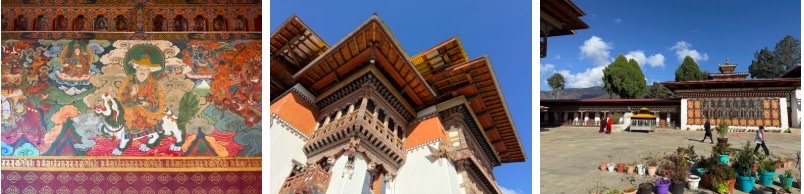
Architecturally, it is fascinating. At first glance, it looks like a Dzong, meaning one of the mighty fortresses we had seen before. But if you look closely, you notice a crucial difference. The military elements are missing. There are no arrow slits and no defensive walls. It was designed purely as a place of peace and practice. I was particularly impressed by the elaborate wood carvings visible everywhere, testifying to the high level of craftsmanship.
Impressions (in order): Wall mural of Dharmapala Gyalpo Pehar in the entrance area, the view up to the intricate wooden architecture, and the sunny courtyard.
Today, the monastery is a very lively place and acts as the seat of the Pema Lingpa tradition as well as the seat of the master’s ninth reincarnation. About 140 monks live here. Together with the nearby Shedra, the Buddhist college, they ensure that the teaching is not only preserved here but actively studied and lived.
I had a special experience inside the temple. We had gone in to pay our respects to the Buddhas and chant together. Scarcely had we entered the hall when the power went out and it became pitch dark instantly. In the light of our phones, we looked for a place to sit. For about ten minutes, we chanted in this darkness, illuminated only by the faint flickering of a few butter lamps. That created a very unique mood. Suddenly the light came back on. Only at that moment did I see what was directly on the wall opposite me. My gaze fell on a beautiful mural of the 21 Taras. That was an unexpected and deeply moving moment for me.
Actually, we had a specific hope in our hearts for our return to Thimphu and Paro: We wanted to try to get an audience with the King. But as so often in life, plans do not always go in a straight line. Karmic conditions had intended another encounter for us, which we had not expected in this way.
I will tell you about that and our ascent to the famous Tiger’s Nest in the next part.
About Author: Gongjue Tuji
As a committed Buddhist and initiator of the Xuanfa Dharmazentrum, Gongjue Tuji has made it his mission to help other people integrate the teachings of Buddhism into their daily lives. In this blog, he regularly provides insights into his experiences, current news and highlights fascinating aspects of the Buddha-Dharma.
In November 2025, I went on a very special trip. Together with 66 Dharma brothers and sisters, I set off for Bhutan. Being the only German in this group from the USA, China, Taiwan, and Sri Lanka, I felt at home right away. We were a wonderful mix of monks, nuns, Rinpoches, and lay Buddhists. We all met in Thailand first to travel on to Paro together.
Our goal was more than just a visit. We came to honor the holy sites of this country and to dive into Bhutan’s deep-rooted Buddhist tradition. Of course, we were also excited to get to know the land and its people. Dedicated members of our group took care of the entire organization. Thanks to their excellent planning and the great local guides, everything ran smoothly. We also owe the fact that this trip was possible in this special way to the Venerable Dr. Chandima from Sri Lanka. Through his personal connections to the Kingdom of Bhutan, doors opened for us that might otherwise have remained closed. Having the Venerable Master Shi Zheng Da with us was also especially valuable.
We brought two matters close to our hearts with us. First, it was important to us not to arrive empty-handed. We had collected donations within the group to directly support the hospital in Thimphu and the expectant mothers there. Second, it was our spiritual mission to represent the Buddha Dharma as we learned it from H.H. Dorje Chang Buddha III. Connected to this was the wish to share news of the “Holy Heavenly Lake Buddhist Town” project, which is planned to provide space for over 30 Buddhist centers from all over the world.
Arrival in Paro & the Journey to Thimphu
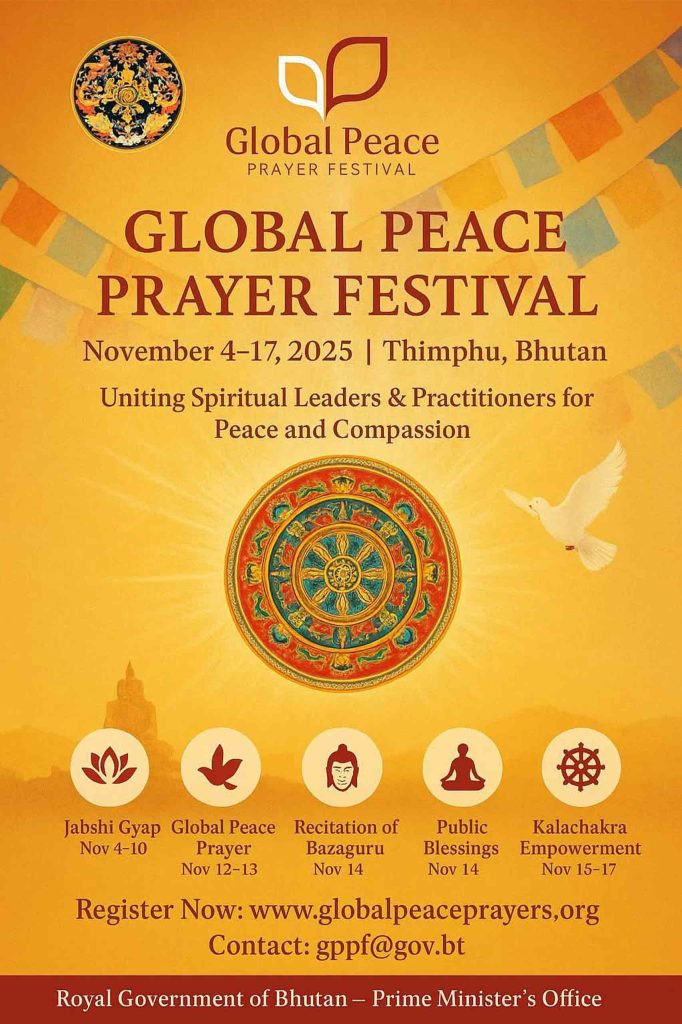
We landed in Paro on November 9th. From there, we took a bus about 40 kilometers through the valley to Thimphu. What I noticed immediately was that the entire road was decorated with five-colored banners. Our guide told us that this was the welcome greeting for the international guests of the “Global Peace Prayer Festival.”
Five-colored flags and pennants along the route
Thimphu itself was incredibly busy. Several events were happening at once: alongside the festival and the King’s upcoming birthday, Indian Prime Minister Narendra Modi was also expected for a state visit. You have to know that Thimphu is the only capital city in the world without traffic lights. Despite the crowds and the resulting traffic chaos, everyone remained calm. No one pushed, and people were patient and respectful. This relaxed attitude really impressed me.
National Memorial Chorten: The Spiritual Heart of Thimphu
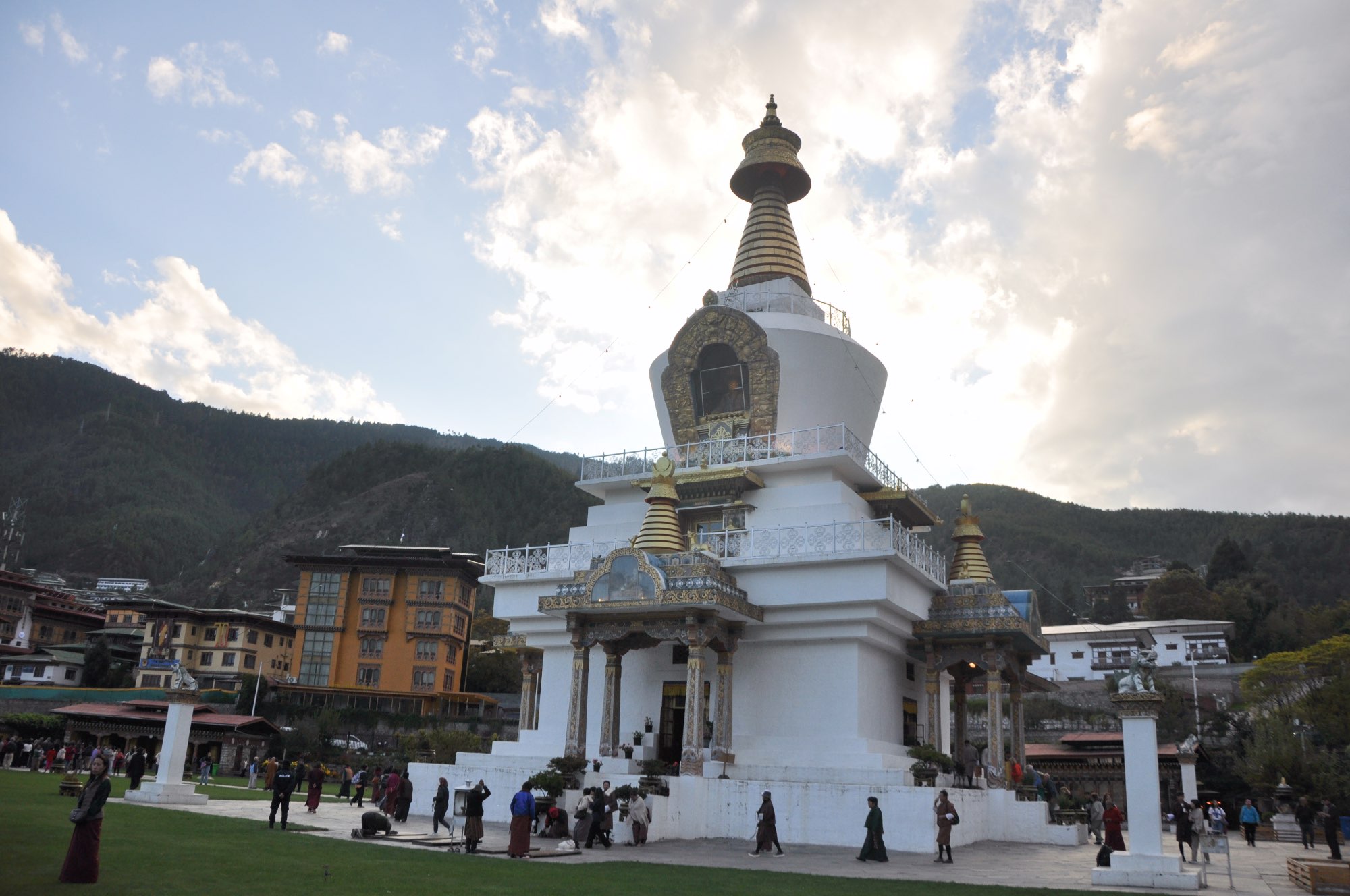
After checking into our first hotel, we visited the National Memorial Chorten. This is a large, white stupa in the middle of the city, built in 1974 for the third King. For the locals, this is an important place in everyday life. Many go there to walk around the stupa and spin the prayer wheels.
As at all holy sites, photography is not allowed inside. A simple rule applies: as soon as the shoes come off, the camera stays off. This allowed us to soak in the atmosphere without any distractions. The interior houses larger-than-life statues of wrathful deities in Yab-Yum posture and murals of Guru Rinpoche (Padmasambhava), Shakyamuni Buddha, and Ngawang Namgyal, the unifier of Bhutan. Colorful sculptures stand in all four directions. There are also mandalas, shrines for the third King, and images of Vajrakilaya.
Impressions (in order): The white Memorial Chorten, pilgrims at the prayer wheels, the sea of lights from the butter lamps, believers performing prostrations, and our group in front of the stupa.
Our group took the opportunity to chant on the square in front of the stupa, led by the Venerable Master Shi Zheng Da. It was a beautiful experience to do this at such a place.
Authentic Bhutanese Crafts Bazaar: Traditional Arts and Crafts
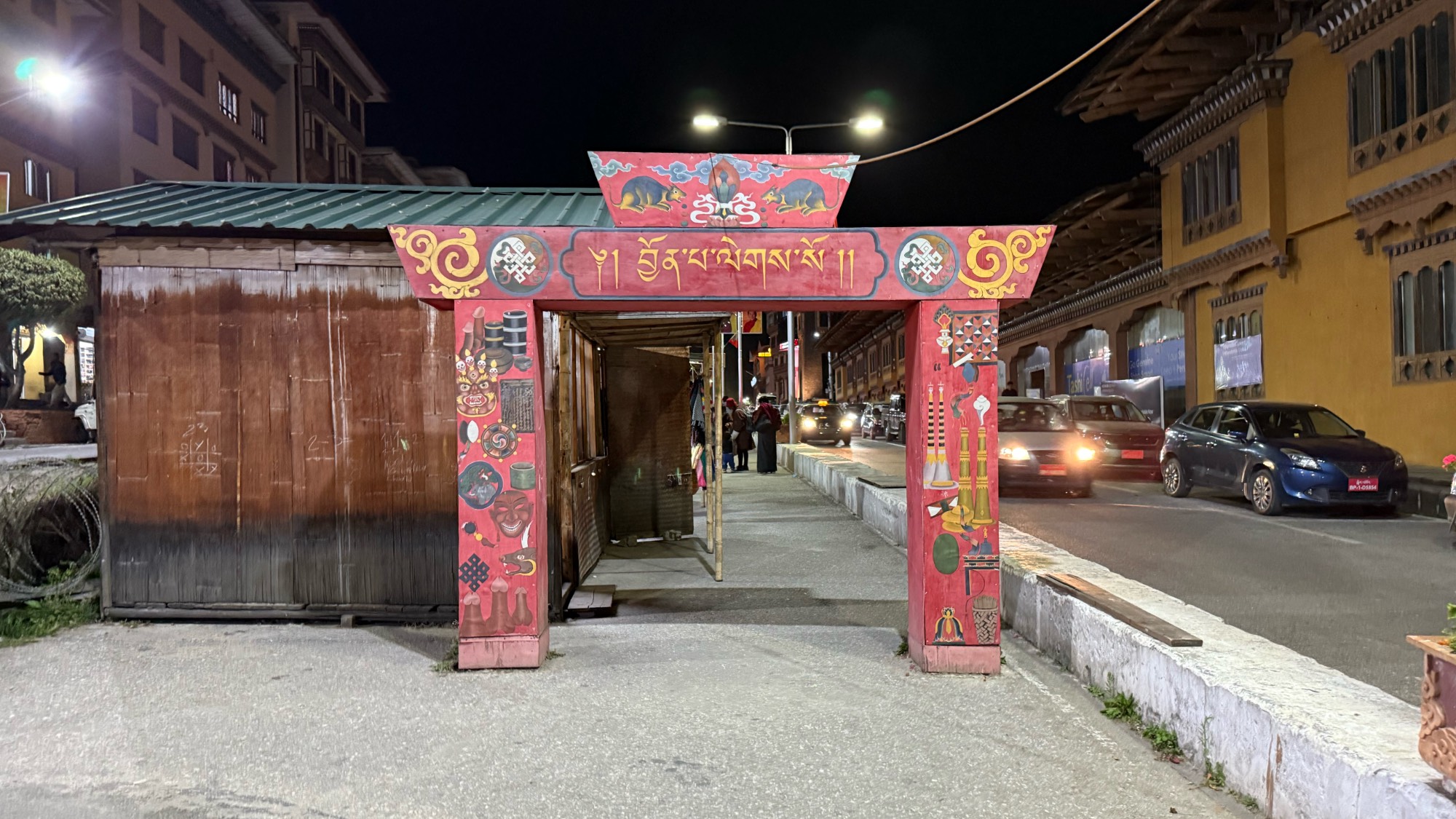
In the evening, I took the chance to stroll along Norzin Lam. That is where the Authentic Bhutanese Crafts Bazaar is located, which you enter through a distinct red gate. Behind it, many small huts are lined up where local artisans display their goods. There was really a lot to discover. Besides handmade textiles, jewelry, wood carvings, and thangkas, you can also find nice souvenirs to remember the trip by.
Entrance to the Authentic Bhutanese Crafts Bazaar
Global Peace Prayer Festival: Shared Prayers for Peace
November 10th was all about the Global Peace Prayer Festival. Since the stadium was within walking distance of our hotel, we went there on foot. Even on the street, we could feel how many people were flocking to this event. Once inside the stadium, we showed our respect through prostrations before the Venerables present. Afterwards, we were given a spot on the side where we could join in the peace prayers.
From there, we watched the program on the main stage, where various Buddhist traditions took turns with their recitations. Between the prayer sessions, there were traditional dances and songs. I was deeply impressed by how many people came together there peacefully. It was simply a good feeling to be right there among them.
Buddha Dordenma: The Golden Statue Above the Valley
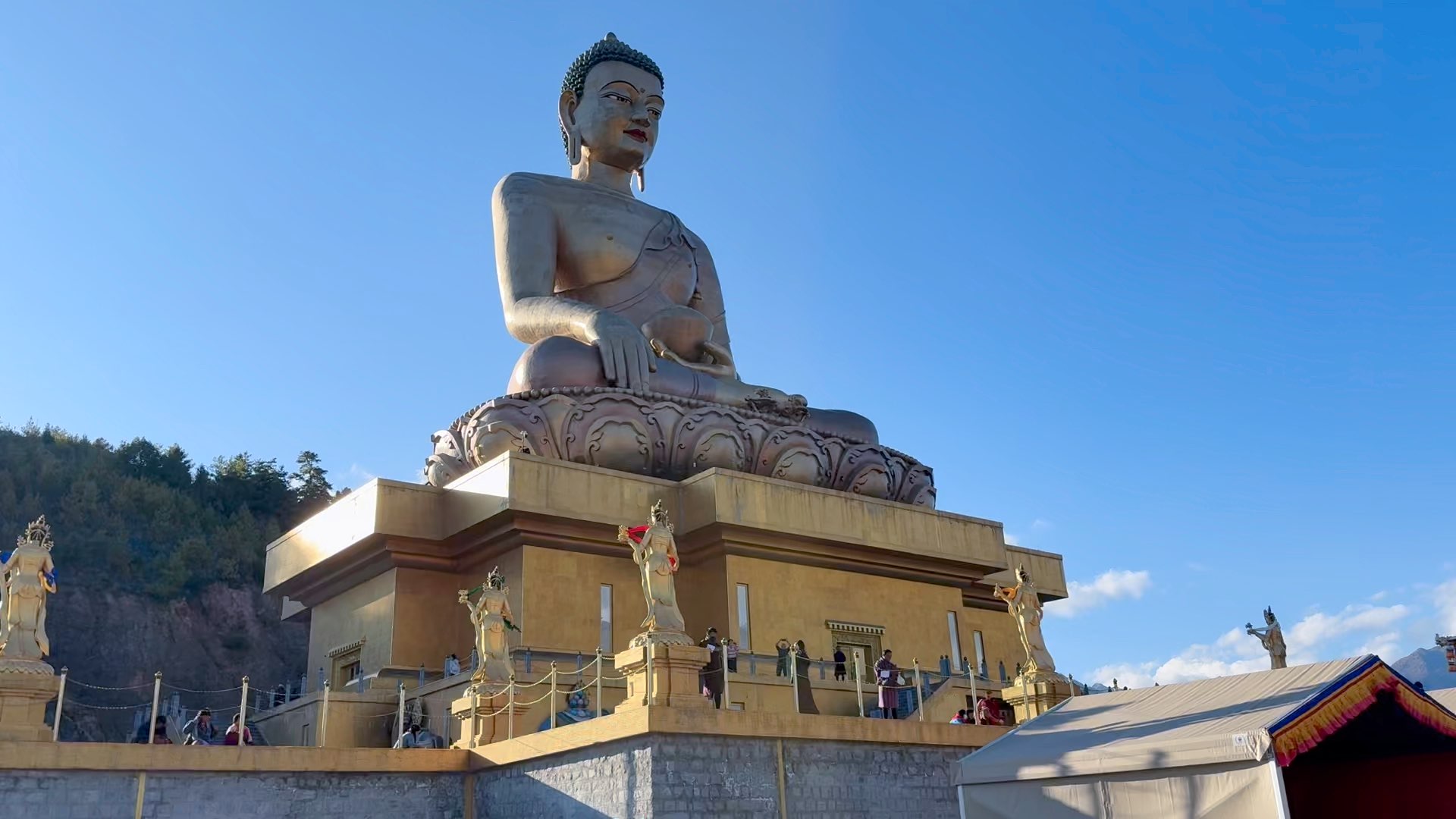
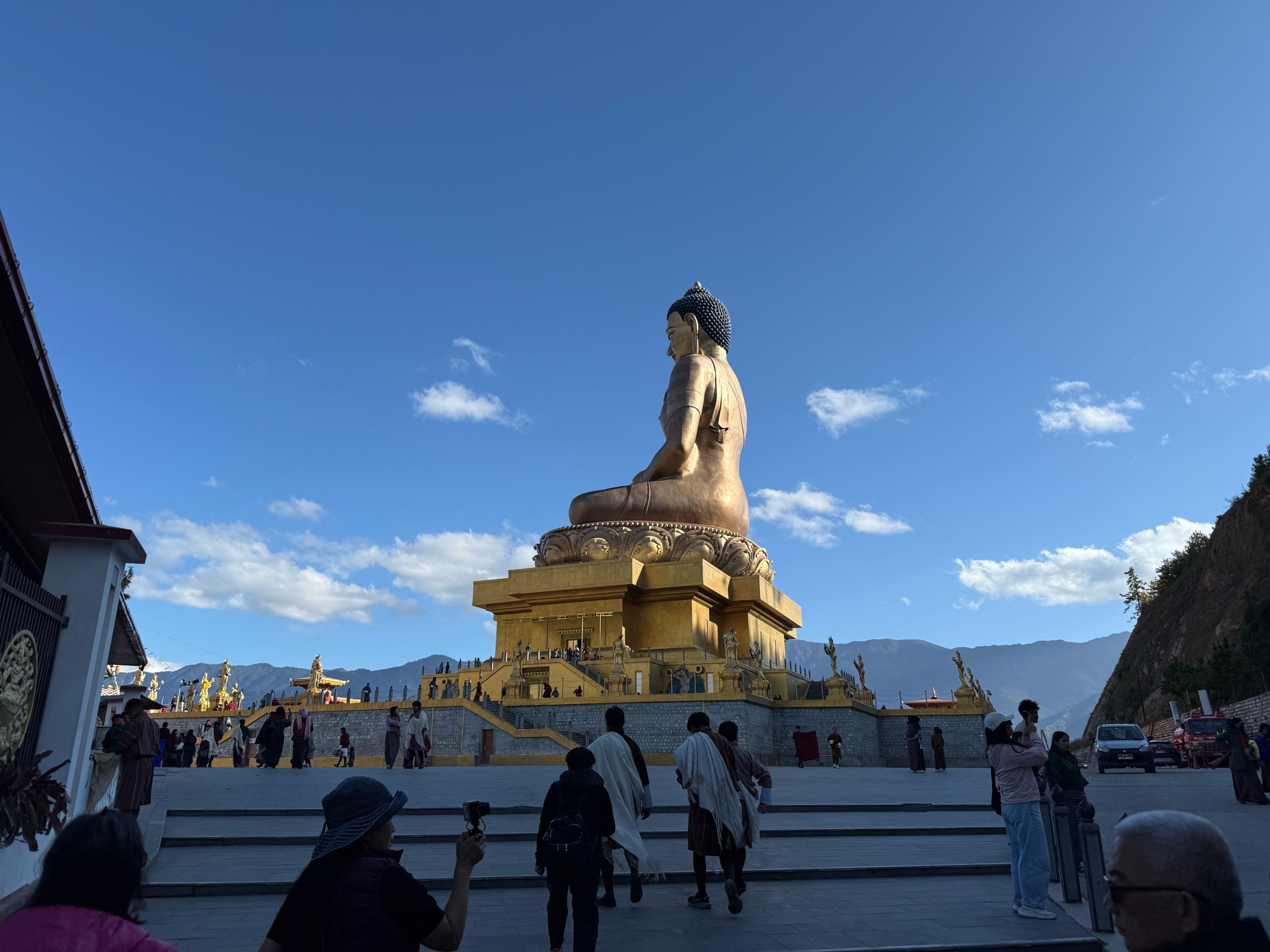
After noon, we continued to the Buddha Dordenma statue in Kuensel Phodrang Nature Park. This is an impressive, 51-meter-high statue of the seated Shakyamuni Buddha. It is made of bronze and completely gilded. By the way, it was built to celebrate the 60th birthday of the fourth King, Jigme Singye Wangchuck.
Buddha Dordenma Statue
Inside the building beneath the statue, there are over 100,000 small Buddhas, also made of bronze and gold. Every single one was donated. There is also a large meditation hall with many more beautiful Buddha statues. Various relics are kept in these rooms, which we were allowed to see during our visit.
Impressions of the Buddha Dordenma statue: The gigantic seated statue in side view, ritual structures featuring traditional thread crosses (Namkha/Mdos) on the plaza, the view up to the Buddha’s face, a relief of a blue elephant on the golden base, and the view over the square featuring golden Dakini statues.
What made this visit special was not just the statue itself. Right there, the conclusion of the Jabshi Gyap ritual was taking place. This is a major, multi-day ceremony intended to purify negative karma and bring healing. Thousands of devotees, monks, and Rinpoches were gathered. We learned that this ritual was done specifically for world peace. It was our good fortune that we could be there at exactly that moment.
A Matter of the Heart: Support for Expectant Mothers
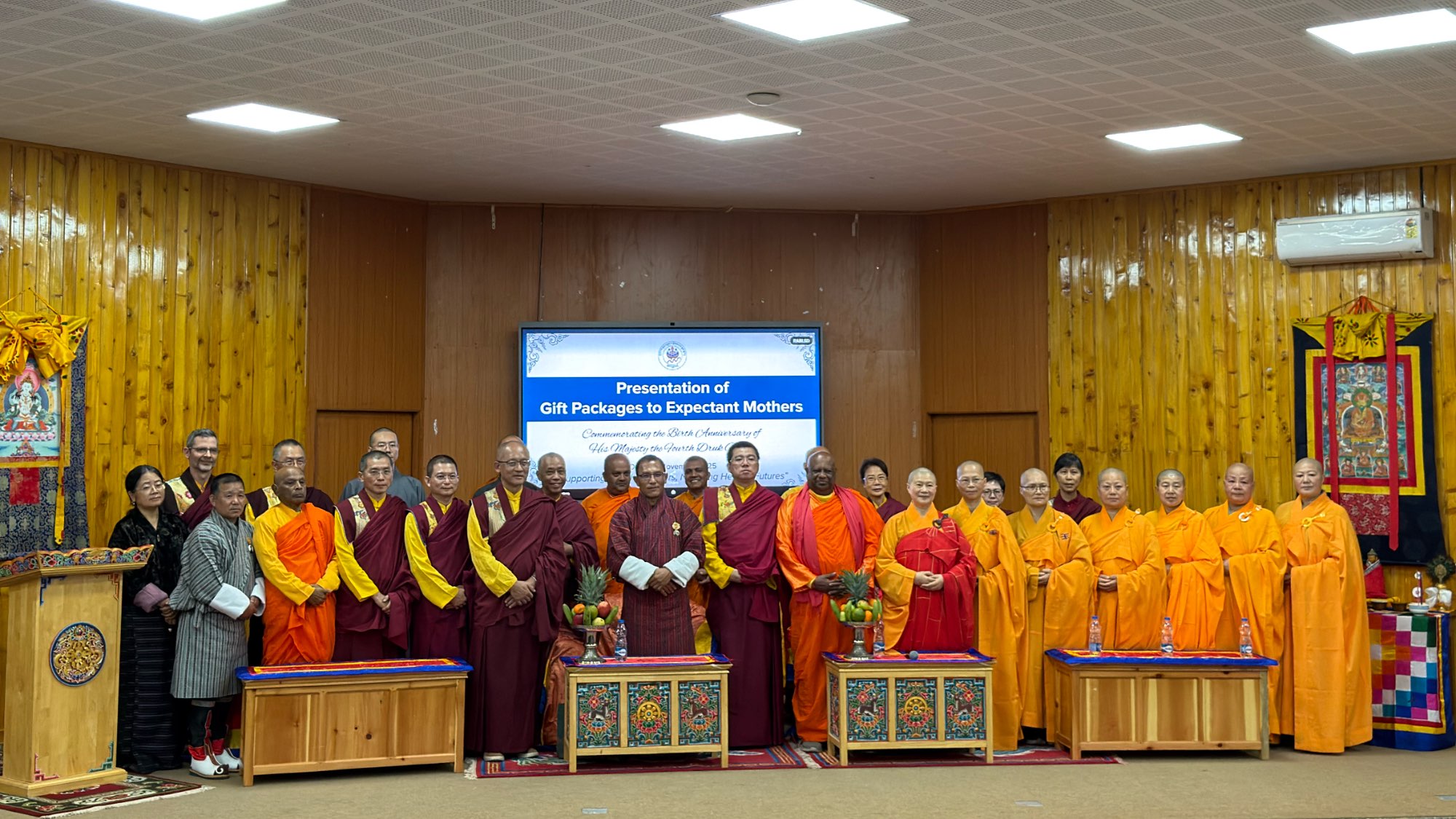
We had collected money in advance to support 500 expectant mothers with care packages. For this reason, we gathered at the end of the day for a ceremonial handover at the hospital in Thimphu.
Handing over the donation at the hospital
In addition to our travel group, hospital staff, the Secretary to the Health Minister, and some mothers also took part. We had the opportunity to personally hand over the first packages to the mothers present.
With that, the first days in the capital were over. Next, the journey would take us out of the city, to ancient Dzongs and into nature.
Recently, I watched a short video that stayed with me far longer than I expected.
The scene took place in a small shop in Pakistan. A robber walked in, grabbed money and a phone, and prepared to leave. Sitting beside the shop owner was a little girl. She looked at the robber calmly, without screaming or hiding, and gently offered him the lollipop she was holding.
For a brief moment, everything seemed to stop.
The robber froze. He looked at the child, then slowly put the money and phone back down. Before leaving, he leaned over and kissed her on the forehead.
I don’t know whether the girl acted out of fear, nervousness, or pure instinct. But her simple, innocent gesture touched something deeply human in him. Perhaps, in that fleeting moment, his life took a different turn.
What moved me most was this realization: Even those who appear hardened or dangerous may still carry a seed of kindness within them. And sometimes, it only takes the smallest act to awaken it.
A single lollipop opened a door in the human heart.
Lately, I’ve been noticing more and more of these quiet sparks of goodness appearing around the world.
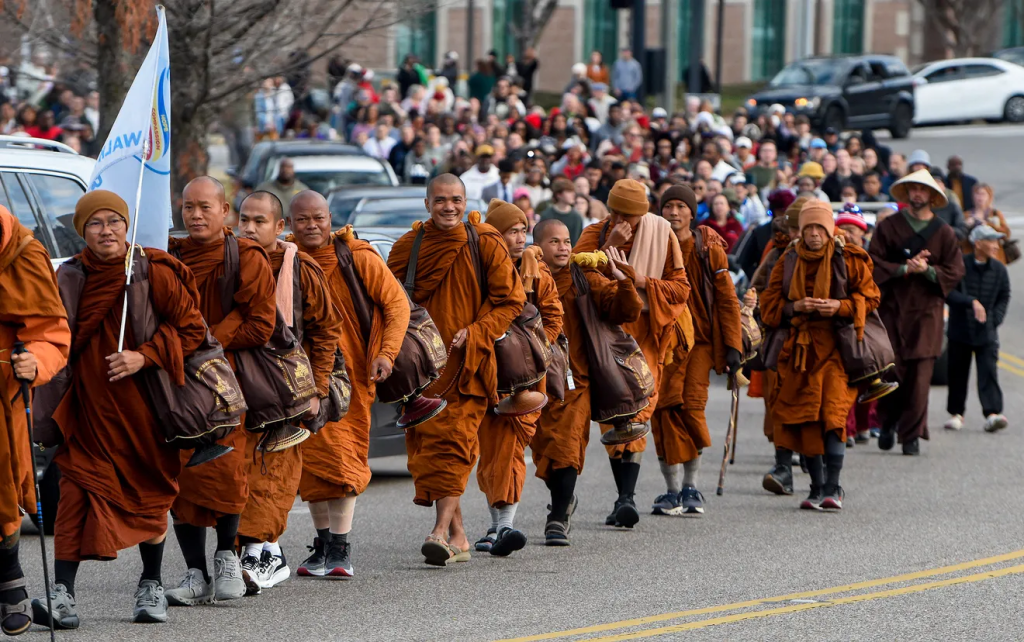
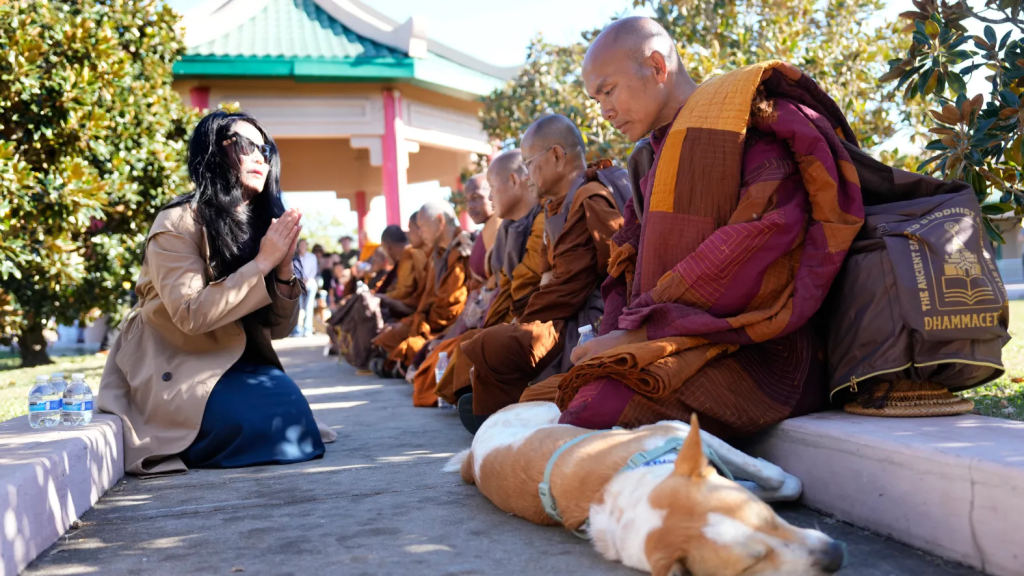
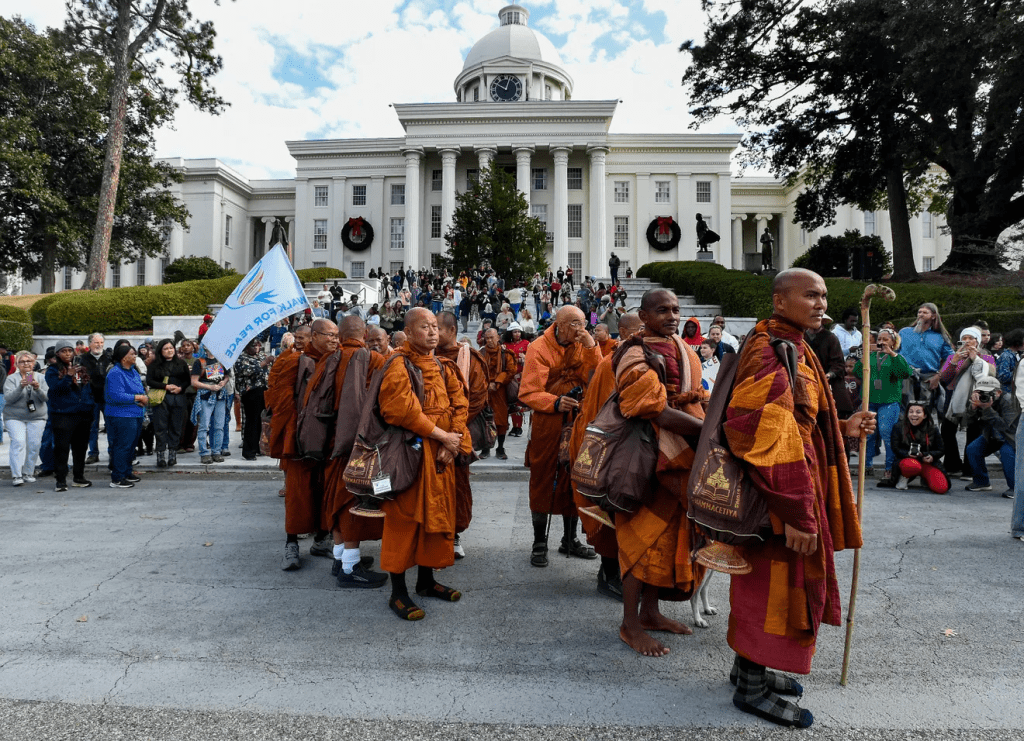
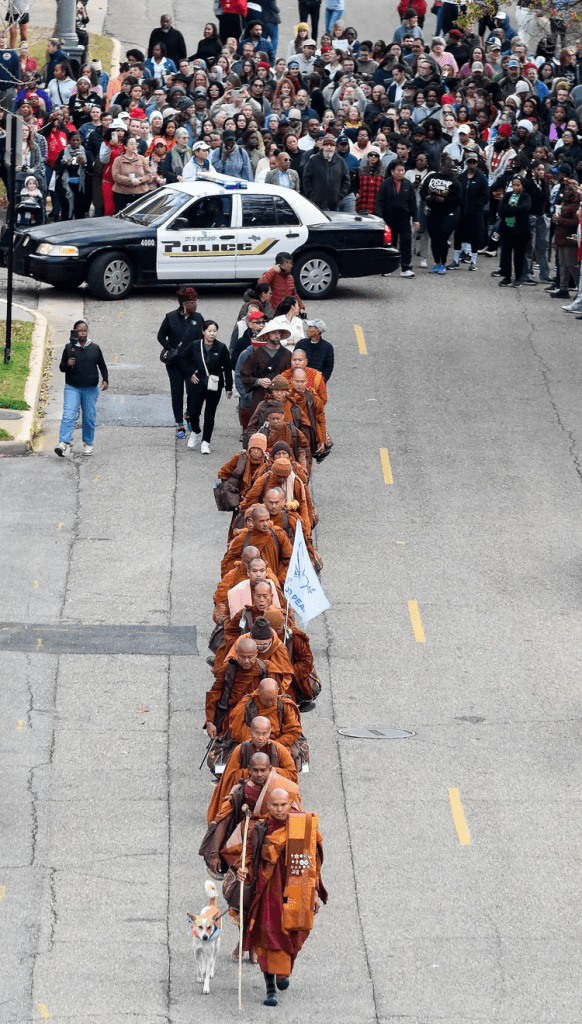
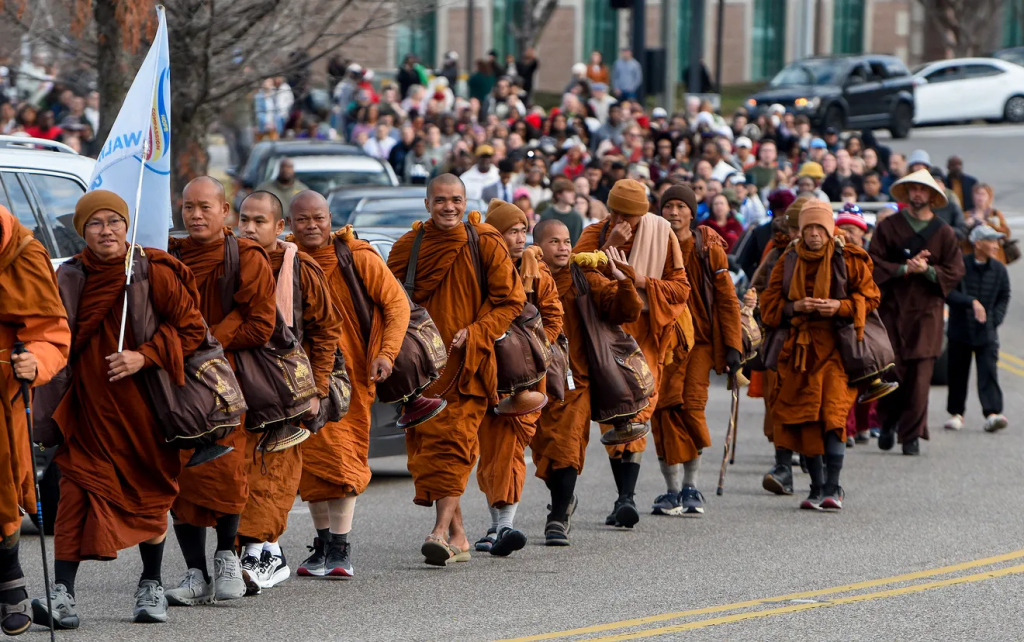
In the United States, a group of Buddhist monks has been walking on foot, praying for peace. Without slogans or confrontation, they offer presence, humility, and sincerity. Their journey has inspired many people to reflect on peace in a deeper way, and countless strangers have stepped forward to support them.
Guided by the teachings of Namo Dorje Chang Buddha III, and with deep respect for the great mercy and loving-kindness through which Buddhas and Bodhisattvas benefit all living beings, the World Buddhism Association Headquarters (W.B.A.H.), Holy Miracles Temple (at Pasadena CA) and Sanger Mission sincerely to carry out Charitable Acts to Benefit Our Community Together: 2026 Food and Goods Drive, to collectively plant goodness. All donations will be sent to support local food banks, homeless shelters, and animal shelters in the Los Angeles area.
I also read about Jon Stewart, who announced an extraordinary donation of $116 million to help address homelessness across the United States—providing housing and dignity to people who have long been forgotten by society. It was a reminder that compassion, when paired with courage, can bring real and lasting change.
And then there is the story that expanded my sense of hope even further.
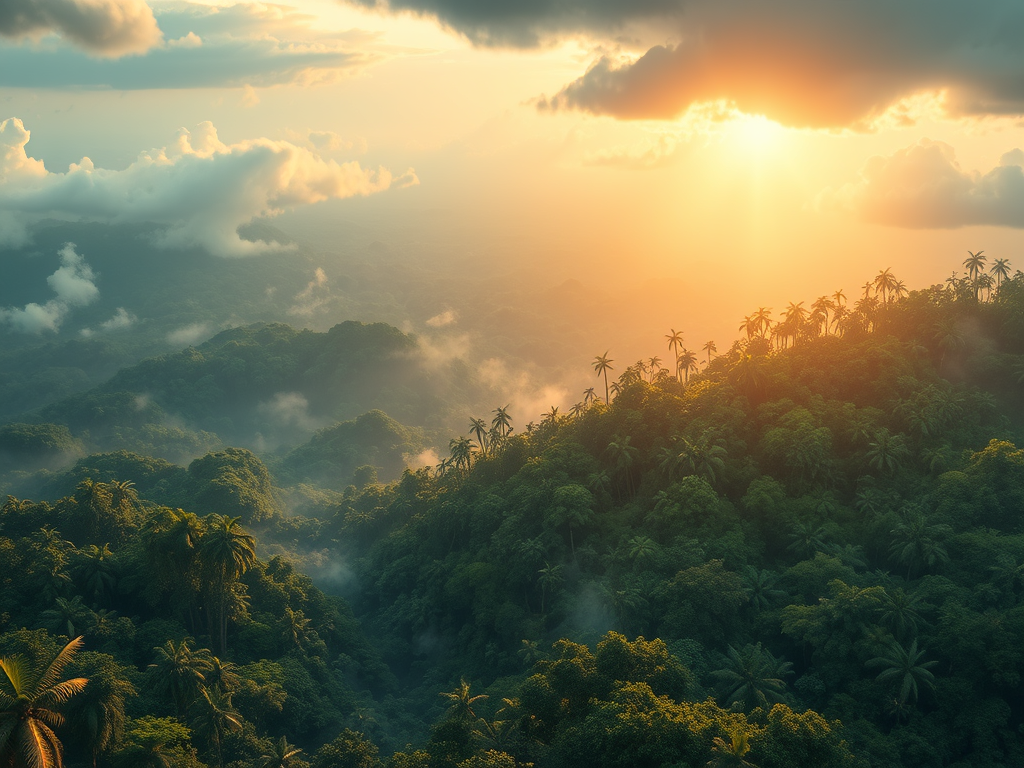
Johan Eliasch, a Swedish billionaire, acquired approximately 400,000 acres of the Amazon rainforest by purchasing the company that held its logging rights. Instead of continuing operations for profit, he immediately halted all logging activities.
Just like that, the chainsaws stopped.
That vast stretch of forest was allowed to remain intact—continuing to absorb carbon, protect biodiversity, and sustain one of the planet’s most vital ecosystems. His action demonstrated something profound: that private ownership, when guided by conscience, can become a powerful force for environmental protection.
This act of kindness may not be immediately seen by everyone, yet it will have a profound impact on the Earth’s ecological balance—and it is, in its own quiet way, safeguarding a future our children and grandchildren will still be able to breathe in.
From a child offering a lollipop… to a monk walking for peace… to a philanthropist sheltering the homeless… to a forest saved from destruction—
These acts may differ in scale, but they arise from the same source: the human longing to protect, to heal, and to do what is right.
In Buddhist teachings, compassion is not passive emotion—it is action. It is wisdom expressed through kindness.
As a new year begins, I sincerely hope we will witness more of these compassionate and righteous choices—choices that quietly warm the world.
May we walk together, letting kindness extinguish the fires of war, allowing love to dissolve hatred and conflict, and using compassion to heal sorrow, fear, and pain.
The world does not change all at once. But every gentle act—no matter how small—adds light.
And sometimes, that light begins with something as simple as a child’s open hand.
The Buddhist monks from the Huong Dao Vipassana Bhavana Center in Fort Worth, who are undertaking a 2,300 mile pilgrimage of Walk for Peace, arrive for a welcome ceremony at Hong Kong City Mall in Houston Friday, Nov. 14, 2025. Houston Chronicle/Hearst Newspapers via Getty Images
In a world that often feels rushed, divided, and relentlessly loud, there is something quietly revolutionary about the act of walking.
Recently, a group of Buddhist monks began a long, demanding pilgrimage across the United States. Their mission is simple yet profound: to promote peace. Their journey began in Fort Worth, Texas, on October 26. Since then, they have faced the literal “wear and tear” of the road, including a harrowing incident where two monks were injured after a truck struck their escort vehicle.
Yet, they did not stop.
With perseverance and a calm, unshakable resolve, the group of two dozen monks has reached Georgia. They are still moving, one step at a time, toward their final destination in Washington, D.C. Their pace is slow, deliberate, and intentional—and that may be exactly what our world needs right now.
Buddhism has a long history of “engaged mindfulness”—the idea that compassion isn’t just felt in meditation, but lived in the world. These monks are not just praying for peace; they are embodying it.
As they navigate highways and back roads, they offer a living reminder that peace isn’t a destination we reach once and for all. It is a practice. It is something we choose moment by moment, breath by breath, step by step.
Watching their progress brings me back to a book I read nearly 30 years ago: Peace Pilgrim.
I remember being deeply moved by her story—how she walked across countries carrying almost nothing, guided by the conviction that peace begins within the individual. At the time, I wished I could have met her in person, just to thank her for the way her simplicity and courage planted a seed in my heart.
Though she is gone, her spirit feels remarkably present today. I see her legacy in the orange robes of these monks as they crest the hills of the American South.
Monks rest at Hong Kong City Mall in Houston Friday, Nov. 14, 2025. Melissa Phillip/Houston Chronicle via Getty Images
Igniting Kindness, One Heart at a Time
There is something profoundly moving about a walking pilgrimage in the age of instant communication. There are no hashtags here. No viral outrage. Just human beings placing one foot in front of the other, trusting that their presence alone can soften the world.
And it works.
Along the way, the “ordinary” world reacts. Drivers slow down. Strangers stop to ask questions. People offer water, a meal, or a simple smile. In these small, unscripted exchanges, something gentle is awakened. We are reminded that beneath our political and social differences, we all share a basic human longing for safety, understanding, and harmony.
The monks may be the ones doing the walking, but the kindness they ignite along the way belongs to all of us. As they recently shared on their Facebook page:
“We do not walk alone. We walk together with every person whose heart has opened to peace, whose spirit has chosen kindness, whose daily life has become a garden where understanding grows.”
A group of Buddhist Monks and several hundred local community members take part in the Walk for Peace in Montgomery, Ala., on Tuesday December 23, 2025. The Monks are walking from Texas to Washington, D.C. to promote peace and compassion.
Most of us cannot drop everything to walk across a continent. But all of us can “walk for peace” in the geography of our own lives.
We can pause before we react in anger.
We can choose compassion over the reflex of judgment.
We can listen more deeply than we speak.
Watching these monks continue their journey despite injury and uncertainty reminds me that peace isn’t achieved through grand, sweeping gestures. It is built patiently through humility and love.
Step by step.
May their walk remind us to slow down, to soften our hearts, and to keep moving—together—toward a more peaceful world.
In the annals of spiritual history, few figures are as revolutionary as Huineng (慧能), the Sixth Patriarch of Zen (Chan) Buddhism. His life story is a profound testament to the idea that enlightenment is not reserved for the elite or the scholarly, but is the inherent birthright of every human being.
Known for the iconic verse you mentioned—“Bodhi originally has no tree”—Huineng transformed Zen from a complex Indian philosophy into the direct, spontaneous practice we recognize today.
Huineng’s journey did not begin in a monastery. He was born into a poor family in 7th-century China and worked as an illiterate woodcutter to support his widowed mother.
His life changed in an instant when he overheard a traveler reciting the Diamond Sutra. Upon hearing the line, “Depending upon nothing, the mind arises,” Huineng experienced a sudden moment of clarity. This “sudden awakening” became the hallmark of his future teachings.
Driven by this experience, he traveled to the Dongshan Monastery to seek guidance from the Fifth Patriarch, Hongren.
Huineng’s status as an illiterate outsider meant he was initially assigned to the kitchen to hull rice. When the time came for the Fifth Patriarch to choose a successor, he asked his disciples to write a “mind-verse” to demonstrate their understanding.
The lead disciple, Shenxiu, wrote a verse emphasizing constant, diligent practice:
“The body is the Bodhi tree; the mind is like a bright mirror on a stand. Take care to wipe it always, and let no dust collect.”
Huineng, hearing the verse, realized it missed the ultimate truth of emptiness. He dictated his now-famous response to be written on the wall:
“Bodhi originally has no tree.The bright mirror on a stand is also not real.From the beginning, not a single thing exists.Where, then, can dust collect?”
Hongren recognized Huineng’s superior realization and secretly passed him the robe and bowl—the symbols of the Patriarchy—in the middle of the night, instructing him to go into hiding until the time was right to teach.
Huineng eventually emerged from hiding and began teaching at Nanhua Temple. His impact on Buddhism was so immense that his teachings were recorded in the Platform Sutra of the Sixth Patriarch. This is the only Buddhist scripture not spoken by a Buddha to be officially granted the title of a “Sutra.”
His major achievements include:
The Southern School of Zen: He founded the “Southern School,” which emphasizes “Sudden Enlightenment” (Dunwu) over gradual study.
Democratizing Wisdom: He taught that the “Buddha-nature” is present in everyone, regardless of literacy or social status.
The Foundation of Zen: Nearly all surviving Zen lineages (including Japanese Zen and Korean Seon) trace their ancestry back to Huineng.
A Living Legacy: The Whole-Body Relic
Perhaps the most miraculous aspect of Huineng’s story is his physical departure from this world. In 713 AD, Huineng entered Nirvana, but his body did not decay.
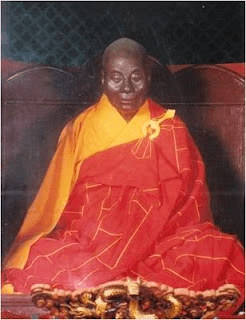
To this day, his whole-body relic (mummy) is enshrined and preserved at Nanhua Temple in Shaoguan, Guangdong Province. For over 1,300 years, devotees have traveled to the temple to pay respects to the Sixth Patriarch. His physical presence remains a powerful symbol of the “Diamond Body”—the incorruptible nature of a truly enlightened mind.
Huineng reminds us that we do not need to look outside ourselves for wisdom. As he famously taught, our original nature is pure, and enlightenment is simply the act of seeing through the “dust” to the emptiness that was there all along.
Xiaoxitian, originally known as Qianfo’an (The Hermitage of a Thousand Buddhas), was founded in the second year of the Chongzhen reign of the Ming Dynasty (1629). It stands atop Phoenix Mountain, about one kilometer west of Xixian County in Linfen, Shanxi Province.
Built entirely in harmony with the mountain, the temple unfolds in layers, as if it had grown naturally from the slope itself. Stone steps lead visitors upward, passing through courtyards divided by arched cave-like gateways. The upper, middle, and front courtyards are connected yet distinct, creating a spatial rhythm that is winding, intimate, and quietly profound. As one walks through the complex, footsteps instinctively slow, and time itself seems to soften.
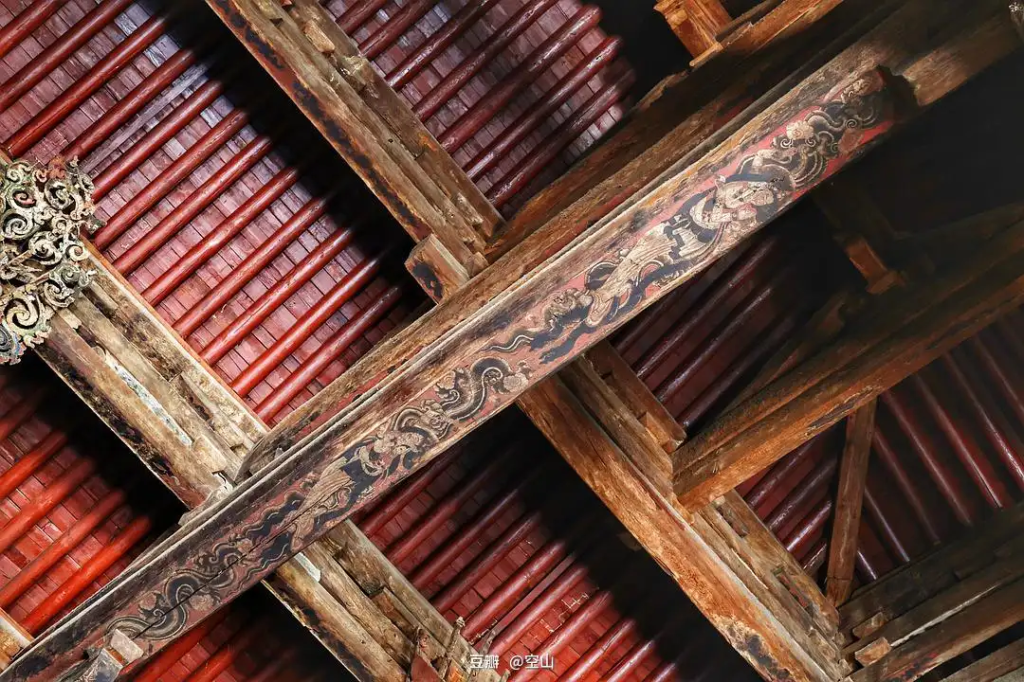
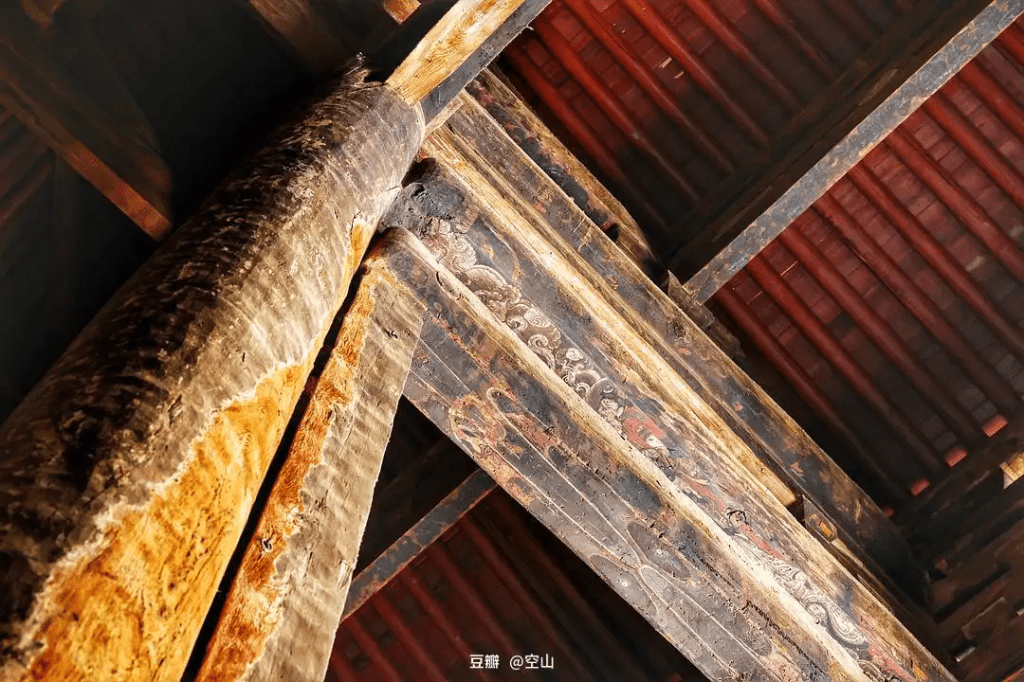
The architecture of Xiaoxitian is restrained rather than ostentatious, yet its mastery reveals itself everywhere. Painted beams are elegant and dignified, and many of the halls are ingeniously built as two-story structures, creating a rich sense of vertical space within the limited mountain terrain. The bell and drum towers stand in stillness, inviting the imagination to wander back to an age when morning bells and evening drums echoed through the valley.
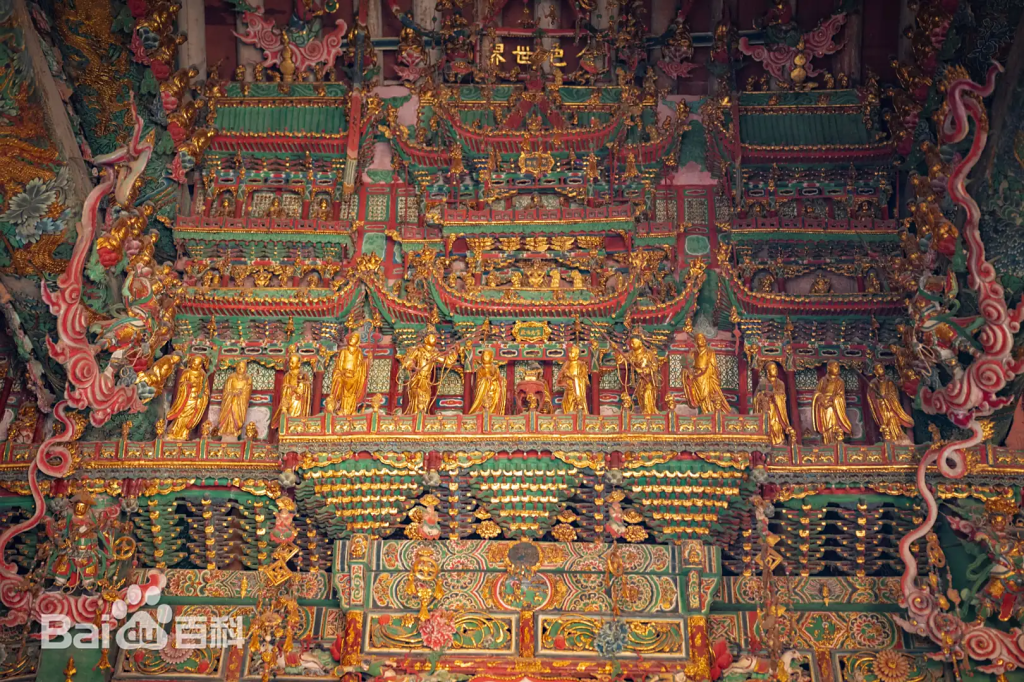
Stepping into the Mahavira Hall is a moment of sudden awe. Nearly the entire interior is filled with suspended polychrome sculptures—more than 1,900 figures, layered from floor to ceiling. From towering Buddhas over three meters high to figures no larger than a thumb, the sculptures are densely arranged yet never chaotic, solemn yet vibrantly alive. In that instant, one understands why Xiaoxitian is revered as the “Museum of Chinese Hanging Sculpture Art.”
Unlike many Buddhist temples that draw attention primarily to their principal Buddhas, the Mahavira Hall at Xiaoxitian is celebrated for the immersive world it creates as a whole. At its core stand the Medicine Buddha, Amitabha, Shakyamuni, Vairocana, and Maitreya, but surrounding them unfolds an entire celestial realm: the Ten Great Disciples, six young novices, the Ten Wisdom Kings, the Six Desire Heavens, and countless heavenly musicians dancing through the air.
Most unforgettable are the celestial musicians suspended within the tiered “sky pavilions” above the altars. Their figures are light and graceful, sleeves flowing as if caught in an eternal breeze, frozen in a moment of unending heavenly music. Some play the pipa, others hold flutes, while some seem to dance midair. One pipa-playing figure, leaning slightly forward with fingers poised on the strings, radiates such focus and elegance that one can almost hear the melody drifting across centuries.
Looking up toward the roof, the tri-colored glazed chiwen ornaments—yellow, green, and blue—gleam softly in the light. Their refined brilliance reflects the unmistakable aesthetic of the Ming Dynasty. Here, architecture, sculpture, and color merge seamlessly, and one forgets that this is a mountain temple at all. It feels instead like stepping into a floating Buddha realm, suspended between earth and sky.
That these sculptures have survived nearly four hundred years in such vivid detail inspires deep reverence. They represent not only the pinnacle of craftsmanship, but also a profound devotion—to faith, to beauty, and to a harmonious vision of the cosmos.
Perhaps what truly moves the heart at Xiaoxitian is not only the astonishing number of its hanging sculptures or the rare Ming Yongle Northern Buddhist Canon once preserved here, but something more enduring: a spiritual presence that has remained vibrant across centuries. It quietly reminds us that beyond the noise of the modern world, there still exists a place of serenity and dignity—carefully upheld by time itself.
Among China’s many vibrant ethnic cultures, few festivals shine as brilliantly as the Miao New Year — the most important and joyous celebration of the Miao people. It marks the end of a year’s hard work and the beginning of a season filled with gratitude, reunion, and hope.
Since ancient times, the Miao people have followed their own lunar calendar, considering the tenth month of the traditional Chinese lunar year as the beginning of a new year. In Leishan County of Guizhou Province, the Miao New Year usually falls on the Mao Day during the first half of the tenth lunar month, which is roughly equivalent to Chinese New Year’s Eve. The festivities typically last from three to nine days, turning the Miao villages into a sea of song, dance, and laughter.
The Miao New Year carries deep layers of meaning. It is not only a celebration of the harvest but also a time to honor their ancestors and deities, and to commemorate Chi You, the legendary ancestor of the Miao people who perished in tribal wars over five thousand years ago. Through ceremonies and offerings to nature — sacred trees, bamboo groves, rocks, and wells — the Miao express their respect and gratitude toward the forces that sustain life.
In the valleys of the Qingshui River and Duliu River in Guizhou, the Miao New Year is the highlight of the year. The Miao calendar differs from the Han Chinese lunar calendar, and the beginning of the Miao year is determined through communal discussions so that different villages celebrate at different times. This ensures that every year, one village becomes the center of a grand regional celebration, while neighboring communities come to join in.
After the autumn harvest and the completion of farm work, the Miao New Year marks both an ending and a joyful beginning. During the festival, villagers visit relatives and friends, slaughter pigs, make sticky rice cakes, worship their ancestors, share reunion feasts, and exchange cups of homemade rice wine.
Traditional activities include bullfighting, bird fighting, and singing contests, each bringing a unique charm to the celebration. One village’s festivities flow seamlessly into another’s, creating a continuous wave of joy that sometimes lasts until the early spring “Drum-Turning Festival” in February.
The Grand Parade and Thrilling Bullfights
The opening day of the Miao New Year is marked by a spectacular parade. People from the eight main Miao branches put on their most elaborate traditional attire — shimmering silver headdresses, embroidered costumes, and ornaments that glisten in the sun. Through music and dance, they showcase their unique local traditions and the living heritage of Miao culture, offering visitors from across China and beyond an unforgettable feast of color and rhythm.
Among the most popular events is the bullfighting competition, a traditional custom symbolizing courage and vitality. Two strong water buffaloes face off, locking horns in a contest of strength and spirit. Thousands gather around the arena to cheer, and the air is electric with excitement. With generous prizes for the winners, the event attracts participants and spectators from far and wide, adding a thrilling edge to the festive atmosphere.
The Long Table Banquet: Sharing Joy, Building Connection
If there’s one experience that perfectly embodies the hospitality of the Miao people, it’s the Long Table Banquet. This grand feast, dating back to ancient times, is more than just a meal — it’s a powerful symbol of unity, friendship, and celebration.
In Danzhai County’s Wanda Town, whenever guests arrive from afar, locals line the streets with long tables stretching as far as the eye can see. Each table is filled with Miao specialties such as smoked pork, sour fish soup, and sticky rice. Hundreds of people sit together, strangers becoming friends over shared food, laughter, and conversation.
The air fills with the tangy aroma of sour soup and the joyful clinking of cups. Everyone, regardless of origin or language, becomes part of one big family — a living expression of the Miao New Year’s spirit: warmth, generosity, and togetherness.
The Miao New Year is far more than a festive occasion — it is a heartfelt tribute to life, nature, and ancestry. Through its rituals, music, and communal joy, it reflects the Miao people’s enduring gratitude for the land, their reverence for their roots, and their love of harmony.
As the lush hills echo with the sound of lusheng flutes and the silver ornaments sparkle under the sun, one realizes that the Miao New Year is not only the celebration of a people — it is a celebration of humanity itself, reminding us all of the beauty of connection, gratitude, and joy.
Hidden in the quiet county of Yixian in northern China, Fengguo Temple has stood for over a thousand years as a living testament to ancient Chinese wisdom and spiritual devotion. Its magnificent Mahavira Hall, the largest single-story wooden structure of its time, houses seven colossal clay Buddhas that have miraculously survived the centuries. This temple is not only an architectural marvel but also a sacred symbol of harmony, resilience, and faith that continues to inspire all who visit.
A Thousand Years of Faith and Architecture
Beyond the Shanhai Pass, in the northern part of Jinzhou City, Liaoning Province, stands the quiet county of Yixian, home to one of China’s most magnificent ancient temples — Fengguo Temple. This remarkable site, founded over a millennium ago, is not only a masterpiece of Liao Dynasty Buddhist architecture but also a living testament to the extraordinary ingenuity of ancient Chinese builders and the enduring power of faith.
In 2020, Fengguo Temple celebrated its thousandth anniversary. Through a thousand years of wind, snow, wars, and earthquakes, its grand Mahavira Hall still stands tall — a miracle in both architecture and spirituality.
The Majestic Great Hall
The heart of Fengguo Temple is its Mahavira Hall (Great Buddha Hall), one of the Eight Great Structures of the Liao Dynasty. Built in 1020 CE, it measures 49.5 meters wide, 26.6 meters deep, and 19.9 meters high, covering an area of 1,317 square meters. Standing on a 3.2-meter-high platform, the hall is the largest single-story wooden structure of ancient China — magnificent, solemn, and breathtaking.
Ingeniously designed, the hall uses a “reduced-column” method to maximize interior space while maintaining perfect stability. Ancient builders applied advanced techniques known as “side-foot” and “rising beam”, ensuring the building’s balance and graceful proportions. The massive bracket sets under the eaves are bold yet refined, exuding strength and elegance.
Thanks to its precise structural mechanics, the Great Hall has remained perfectly upright for a thousand years, without any sign of warping or tilting — an unparalleled achievement in the history of wooden architecture.
The Seven Buddhas: Eternal Clay Sculptures
Inside the Great Hall, seven colossal clay Buddha statues, each about nine meters tall, sit side by side upon a brick platform. From east to west, they are: Kashyapa Buddha, Krakucchanda Buddha, Sikhin Buddha, Vipashyin Buddha, Visvabhu Buddha, Kanakamuni Buddha, and Shakyamuni Buddha.
These are the “Seven Buddhas of the Past” mentioned in Buddhist scriptures, symbolizing the eternal cycle of enlightenment in our world. Each Buddha exudes solemn dignity, with serene expressions and graceful postures, reflecting the Liao Dynasty’s continuation of Tang-style Buddhist artistry. Two bodhisattvas stand beside each Buddha, adding vitality and compassion to this sacred tableau.
This magnificent ensemble is the oldest and largest group of colored clay Buddha statues in the world. Despite being made of fragile clay, they have miraculously survived for over a thousand years, their colors still soft and luminous. This endurance is nothing short of a miracle — a union of artistic mastery and the blessings of faith.
The Legend of the Buddha Catching a Shell
During the Liaoshen Campaign in the late 1940s, Yixian became a battlefield. Amid the chaos, a shell pierced through the roof of the Great Hall and fell directly into the right hand of the Shakyamuni Buddha statue. Miraculously, the shell did not explode.
Locals still tell this story as “The Buddha Caught the Shell with His Hand.” Whether fact or legend, it adds an aura of mystery and divine protection to the temple’s long history — as if the Buddhas themselves were silently safeguarding their sacred home.
The Flying Devas of Liao
The beams and rafters inside the Great Hall are adorned with over 4,000 square meters of original Liao Dynasty murals. Among them, the heavenly maidens — the Flying Devas — are the most enchanting. With radiant faces and flowing ribbons, they drift gracefully through clouds, offering flowers and fruits to the Seven Buddhas below.
Their movement contrasts beautifully with the Buddhas’ stillness, creating a breathtaking scene of divine harmony and devotion. The surrounding walls also preserve Yuan and Ming dynasty murals depicting ten Buddhas, eight Bodhisattvas, and the Eleven-Faced Avalokiteshvara, adding even more layers of spiritual and artistic richness to this timeless sanctuary.
A Thousand Years of Wonder
Standing before this majestic hall — a wooden structure that has endured a millennium — and gazing upon the clay Buddhas whose serene faces have survived a thousand winters, one cannot help but wonder:
How can a wooden palace withstand ten centuries of storms and wars? How can clay sculptures remain whole and radiant after a thousand years?
Is it the wisdom of the ancients? The strength of art? Or the blessing of the Dharma itself?
Perhaps the answer lies within every beam, every brushstroke, and every tranquil smile of the Buddhas.
May the Buddhas and Bodhisattvas bless all beings with peace, compassion, and happiness. Namo Amitabha.












 Peace LiLy