Inheriting Traditional Painting Techniques and Pioneering Modern Artistic Styles

Chinese Landscape Paintings by H.H. Dorje Chang Buddha III

Painting is the artist’s pursuit of passion, and the artist’s spiritual realm and artistic insight determine the quality of the work. H.H. Dorje Chang Buddha III once said, “Every artist must tread the path of learning from the past while innovating for the future. Learning from the past embodies tradition, while innovation demands the fusion of Eastern and Western art, philosophy, aesthetics, and literature into a unified whole. This entails grasping the true essence, understanding the inner and outer spirit of the subject, navigating the transitions between the internal and external, the virtual and the real, and infusing rhythm into one’s creations. The result is a work that flows freely, exudes power, and embodies both familiarity and uniqueness. It conceals craftsmanship while remaining wild yet disciplined, possessing a distinct personality and charm. Upon reaching this stage, one can embark on the pursuit of egolessness and the true essence of emptiness and colorlessness. This journey leads to a profound, rich, elevated, and vibrant artistic realm that offers people the joy of beauty. With such mastery, Chinese painting can take a significant leap forward and ultimately stand as a world-class masterpiece.”

Let’s appreciate two masterpieces painted by H.H. Dorje Chang Buddha III and gain deep insights into innovation rooted in tradition.

Ancient Style Emergence

The landscape painting “Ancient Style Emergence” captivates viewers at first sight with its unique style and transcendent meaning. The simple and unadorned lines depict rugged cliffs, hills, forests, and cottages. Layers of ink washes render the rocks thick and the mountain mists hazy. The clustering mountains and overlapping peaks evoke the ancient charm of Yuan dynasty landscape paintings while also embodying a contemporary innocence. Beneath the moistened ink, clouds flicker and smoke swirls. The tree crowns, mountain shadows, and distant peaks are rendered in a nearly pale ink-like gray-green hue, creating a rich and deep landscape. The sunlit sides of the hills and rocks are lightly tinted with a bright ochre, resembling vermillion, which contrasts vividly with the large areas of gray-green, lending the painting a magnificent and ancient beauty.

The pristine and dust-free atmosphere depicted in the painting stands in stark contrast to the noisy scenes of the mundane world, perhaps serving as a reminder for viewers to awaken to the beauty of life.

The brushstrokes in the painting are highly calligraphic, lively, and modern, diverging significantly from traditional landscape depictions. It represents a landscape of the heart, created purely through brush and ink.

While lacking the specific forms of traditional paintings that one can wander and inhabit, it possesses a more authentic and dynamic charm of modern art, particularly evident in its abstract qualities, which resonate deeply with contemporary audiences.

This landscape painting is created by H.H. Dorje Chang Buddha III, characterized by its straightforward and lively brushwork, as well as its modern sensibility.

Setting Sail to the East
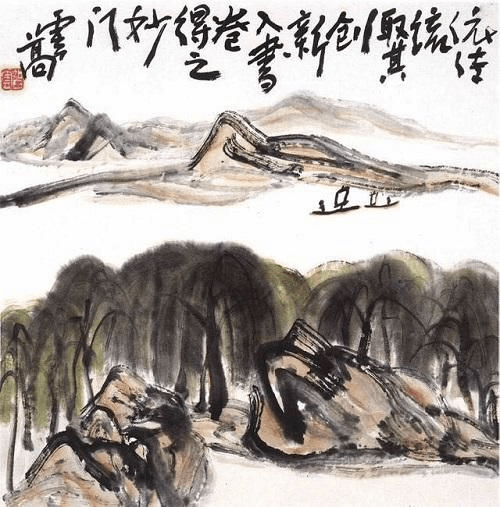
“Setting Sail to the East,” this painting employs thirsty brush and light ink, with free and bold strokes, abandoning the meticulousness of carving. Horizontal and vertical brushstrokes appear to be dragging mud and water, yet they possess the strength to carry a heavy weight. The brushwork is seasoned and heavy, yet balanced between reality and illusion.

In the foreground, there is a poetic dense willow forest, where two stubborn rocks seem to be “nodding” to each other, engaged in intimate conversation, perhaps narrating the endless past and future of the mundane world. In the middle ground, there are two simple small boats, leisurely passing through the river, seemingly minimalist yet imbuing the scene with a rich humanistic atmosphere. In the distance, distant mountains are depicted with dry brush and thirsty ink, subtly rendered with a watery light ochre, evoking the elegant beauty of classical Chinese paintings, reminiscent of the dry autumn wind and the moist spring rain, yet with a strong modern painting atmosphere.

This is a masterpiece of landscape painting with profound underlying themes and innovative imagery. Its lofty style, deep meaning, grand momentum, and charming spirit all stem from H.H. Dorje Chang Buddha III’s profound philosophical thoughts and masterful brushwork. The inscription on the painting reads: “Drawing on tradition for innovation, entering the wonderful realm of the written scroll.” The brushwork is arranged in a skillful and coherent manner, serving as the backbone of the painting and the soul of the entire composition.

The term “vivid charm” embodies the artistic realm of the calligrapher and painter. H.H. Dorje Chang Buddha III‘s landscape painting art transcends the ordinary and mundane, achieving a level of artistry that is beyond compare, with a spiritual realm that has become a benchmark in contemporary painting art.

Chinese Landscape Paintings by H.H. Dorje Chang Buddha III

Link:https://peacelilysite.com/2024/03/27/inheriting-traditional-painting-techniques-and-pioneering-modern-artistic-styles/

#DorjeChangBuddhaIII#HHDorjeChangBuddhaIII#Art #ChinesePaintings

A Beautiful Love Story Carved in the Dunhuang Grotto China

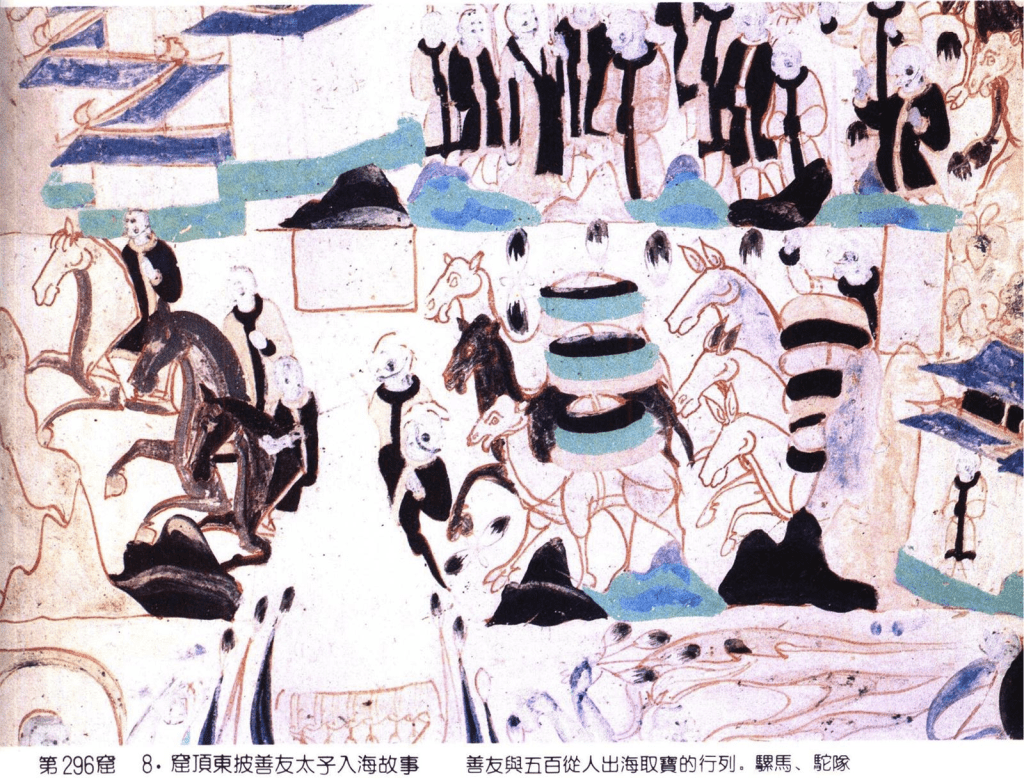
Prince Sunwoo ventured into the sea in search of treasures

In the ancient Dunhuang Grottoes of China, a mesmerizing love story unfolds, delicately captured in murals that have withstood the test of time. Let us immerse ourselves in this enchanting tale of kindness, courage, and wisdom.

Once upon a time, in the Kingdom of Polo, a joyous occasion marked the birth of a prince named Sunwoo. Born to the noble king and queen after twelve years of fervent prayers, the young prince brought immense happiness to the royal family.

As Sunwoo grew, so did his wisdom and kindness. His presence was a beacon of light, radiating love and compassion. However, alongside him was a stepbrother, an evil friend, whose heart harbored jealousy and resentment towards the virtuous prince.

The tale takes an unexpected turn when Sunwoo, driven by a desire to alleviate the suffering of his people, embarks on a perilous journey to seek treasures from the sea. His selflessness touches the hearts of many, but it also ignites the envy of his malevolent stepbrother.

Prince Sunwoo accompanied by 500 volunteers to search for treasur

Guided by an elderly instructor and accompanied by 500 volunteers, Sunwoo reaches Haizhou Jumbo Island. As he ventures further, facing challenges and loss, he encounters the benevolent Dragon King, who grants him the priceless Ruyi pearl.

Prince Sunwoo and his team sailed across the ocean

Meanwhile, back in the Kingdom of Polo, Sunwoo’s absence is keenly felt. His parents, yearning for his return, send a white goose as a messenger. The devoted goose delivers a letter revealing the Prince’s dire circumstances.

As Sunwoo’s journey unfolds, his evil stepbrother, fearing Sunwoo’s increased popularity upon return, decides to sabotage him. The malicious act blinds Sunwoo, leaving him vulnerable and alone.

In his darkest hour, a compassionate cowherd boy comes to Sunwoo’s aid. Unaware of his royal identity, the boy rescues Sunwoo and becomes his loyal companion, leading him back to the kingdom.

The love story takes an unexpected twist when the blind Sunwoo, reduced to a beggar, meets a kind princess during his wanderings. The princess was very touched by Sunwoo’s music. Her genuine affection and determination to marry him, despite societal norms, lead to a grand wedding.

In a poignant moment, the princess, deeply in love, makes a solemn vow. She promises to restore Sunwoo’s sight if her love is true and vows to take away her own eyes if she ever betrays him. Miraculously, her unwavering love restores one of Sunwoo’s eyes.

The narrative weaves through twists and turns, revealing the complex interplay of good and evil, karma, and ultimate redemption. Sunwoo’s evil stepbrother, realizing the consequences of his actions, repents and reveals the hidden Ruyi pearl.

In a grand reunion, Sunwoo’s parents regain their sight, and the entire kingdom is bathed in prosperity. The murals in Dunhuang and Kaihua Temple immortalize this timeless love story, showcasing not only the artistic brilliance of ancient China but also the enduring power of kindness and virtue.

As we reflect on this captivating tale, may it inspire us to embrace compassion, navigate life’s challenges with wisdom, and believe in the transformative power of love and redemption. The Dunhuang Grottoes stand as a testament to the rich tapestry of human stories etched in history, inviting us to cherish the enduring lessons embedded in their ancient walls.

Link:https://peacelilysite.com/2024/02/08/a-beautiful-love-story-carved-in-the-dunhuang-grotto-china/

#DunhuangGrottes #Murals #AcientArts

Source: photos from http://m.news.cctv.com/2020/08/09/ARTIoQSmgcAEjtx5j0cLVoos200809.shtml, https://www.sohu.com/a/334453850_120259260#google_vignette

Journey to Tranquility: Exploring the Wonders of Usnisa Palace at Niushoushan

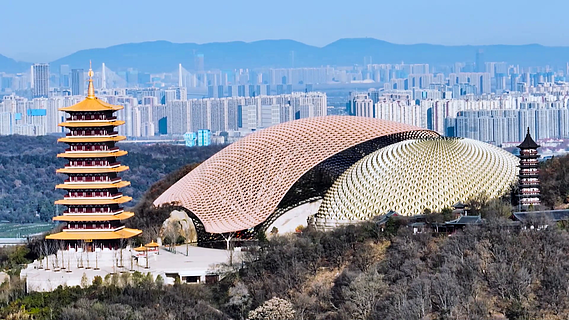
The Usnisa Palace, also known as Foding Palace, is situated in the Niushoushan Cultural Tourism Zone, Jiangning District, Nanjing City. This architectural marvel, characterized by its deep pit structure, serves as the long-term sanctuary for the Foding relic bone. Spanning 220 meters in length, 160 meters in width, and towering at an overall height of 89.3 meters, with a total building area of approximately 136,000 square meters, the palace is a testament to grandeur. The external space is subdivided into three components: the large dome, small dome, and Foding cliff. Internally, it comprises nine layers – three above ground and six underground – housing the Zen Grand View, Relic Hall, and Relic Treasury. Foding Palace not only serves as the primary repository for the Buddha’s crown relic bones and a place of worship for believers but also functions as a cultural exhibition space showcasing relic culture and global Buddhist culture through various artistic mediums.

Niushoushan stands as one of China’s renowned Buddhist mountains and is the birthplace of Niutou Zen Buddhism, a significant sect of Chinese Zen Buddhism. It houses the world’s only Buddha’s Parietal Relic – the skull of Shakyamuni. This complete skull, with a circumference of 35 cm and a diameter of 10 cm, is adorned with yellow-and-black hues and features clear hair holes distributed throughout.

The Buddha’s Parietal Relic was unearthed in the Ashoka Pagoda within the underground palace of Bao’en Temple in Qinhuai District, Nanjing. It stands as the sole surviving true parietal relic of the Buddha globally.

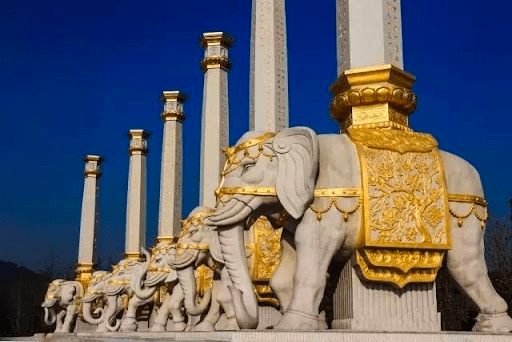
The external space is ingeniously divided into three sections: the large dome, small dome, and Buddha Grottoes. The large dome, shaped like a Buddha’s cassock and stretching 120 meters in length, covers the small dome palace, symbolizing the boundless blessings of the Buddha. The small dome, resembling the Buddha’s hair bun, is composed of thousands of small units, representing the offerings made by thousands of believers. The base of the small dome takes the form of a lotus throne, featuring 56 flying Bodhi gates symbolizing Buddha’s infinite wisdom and 56 cloud gate wishful pillars symbolizing good luck and fortune.

Usnisa Palace : Large Dome and Small Dome

Within Foding Palace, the design deviates from a singular dome to an atrium-style space connecting upper and lower levels directly. The central reclining statue of the Buddha in Nirvana is a captivating focal point, visible from various angles. Using the four sights of birth, old age, sickness, and death, the Buddha imparts guidance and enlightenment to sentient beings. In Buddhism, “Nirvana” signifies a state of eternal and serene tranquility without birth or death. As the Buddha speaks, heavenly beings scatter flowers. Tradition holds that in the Buddha’s pure land, day and night witness the auspicious occurrence of raining flowers. During the Buddha’s Nirvana, offerings such as incense, flowers, and precious banners are made.

Upon entering Foding Palace, visitors traverse a long corridor adorned with paintings depicting sacred scenes. Four small palaces within the passage illustrate wonders of the four natural elements: earth, fire, water, and wind. The journey provides an opportunity to contemplate the painted stories of the Buddha’s eightfold path to enlightenment, featuring extraordinary phenomena related to earth and fire, such as thousands of small Buddha niches and a thousand heart lamps.

To approach Foding Palace, one ascends using a water elevator, marking the third wonder – the purification of the three realms through water. Depicting these natural phenomena through a meditative design, the top floor of Foding Palace awaits, featuring a towering space and exquisite dome. The celestial ambiance, with stars seemingly within reach, fosters a sense of unity between heaven and earth. This intentional design aims to allow individuals to grasp Buddhist stories and appreciate nature’s wonders before encountering the Buddha’s relic. This preparatory “journey” facilitates entry into Foding Palace with a tranquil and peaceful mindset, reminiscent of a meditative experience.

The internal space encompasses nine floors – three above ground and six underground – housing the Zen Grand View, Relic Hall, and Relic Palace.

Relic Hall

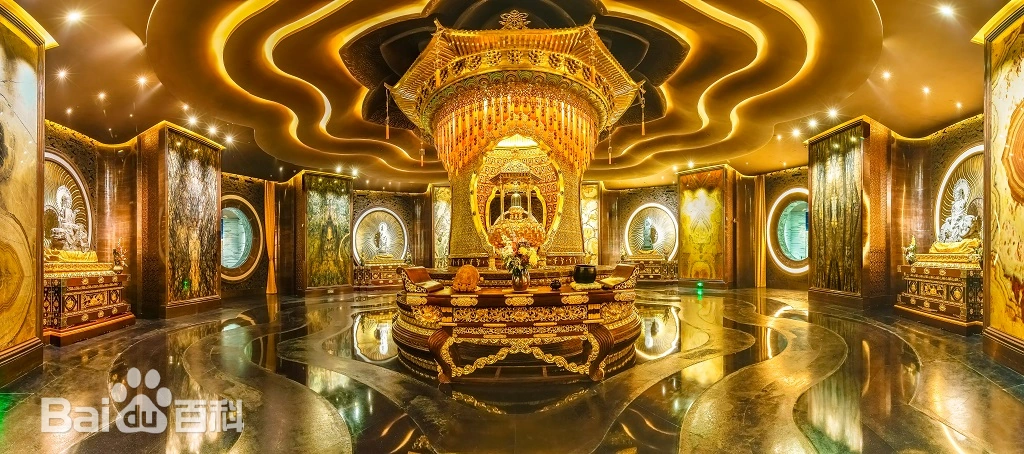
The Relic Hall comprises the Thousands Buddhas Hall and the Ten Thousands Buddha Corridor. The Thousand Buddhas Hall, adorned in red, yellow, and dark gold, features a vault-shaped layout corresponding to the Hua Zang Buddhist World. The central focus is the 21.8-meter-high Relic Pagoda, imitating the Ashoka Pagoda where the Buddha’s Parietal Relic was found. The Ten Thousands Buddha Corridor spans the 3rd, 4th, and 5th underground floors, showcasing Chinese Buddhism culture, seven-sided lacquer paintings depicting Indian Buddhist teachings, and Buddha’s relic and relic culture, including videos, porcelain paintings, ancient pagodas, and historical relics.
Thousand Buddha Hall
Ten Thousands Buddha Corridor

Relic Palace

Also known as the Buddha’s Treasure Palace, the Relic Palace exudes a solemn and mysterious atmosphere with its dark color scheme. It serves as a sacred space for housing the Buddha’s Parietal Relic and a place for Buddhist worship and meditation. At its center is the 7-meter-high Relic Treasure Pagoda adorned with exquisite golden decoration. Inside the pagoda is a hexagonal and intricate lotus stupa, housing the sealed glass box containing the Buddha’s Parietal Relic. The pagoda is equipped with fireproof and explosion-proof features, along with a constant temperature and humidity system to ensure the optimal environment for the relic. Surrounding the relic pagoda are eight unparalleled marble mosaics depicting the life of the Buddha.

Corridor of the Relic Palace
Relic Palace

Zen Grand View

The Zen Grand View spans 112 meters from north to south and 62 meters from east to west, with a total height of 46.5 meters. Its oval shape encompasses an area exceeding 6000 square meters, with a core focus on Zen culture. Comprising Buddha’s Birth, Buddha’s Enlightenment, and the Lotus Theater in the middle, the Zen Grand View narrates the life story of the Buddha.

Lotus Buddha Theatre – Not-to-miss Visual Feast

The Lotus Buddha Theatre hosts a daily “Song of the Lotus Buddha” Zen Buddhism culture ceremony and stage multimedia show from 10:00 to 11:30 in the morning and from 13:30 to 15:00 in the afternoon. This 30-minute visual feast combines ceremonial performance with burning lamps, praying, offering flowers to the Buddha, large-scale dancing, and more. During the performance, the Sleeping Buddha descends slowly from the air, accompanied by a rising stage, actors, and 16-meter-high lotus petals. The Sleeping Buddha, a copper statue of Sakyamuni, with a length of 7.5 meters and a surface made of white marble, can rotate 360 degrees, expressing the Buddha’s peaceful moment of Nirvana.

Lotus Buddha Theatre

Journey to Tranquility: Exploring the Wonders of Usnisa Palace at Niushoushan

Link:https://peacelilysite.com/2024/01/19/journey-to-tranquility-exploring-the-wonders-of-usnisa-palace-at-niushoushan/

#UsnisaPalace #Buddha #Travel #Nanjing #TravelChina #Lotus #BuddhaRelic #ZenBuddhism

Source: https://www.chinadiscovery.com/jiangsu/nanjing/niushoushan.html, https://baike.baidu.com/item/%E4%BD%9B%E9%A1%B6%E5%AE%AB/18723834

Dazu Rock Carvings – The Last Monumental Works in the History of World Grotto Art

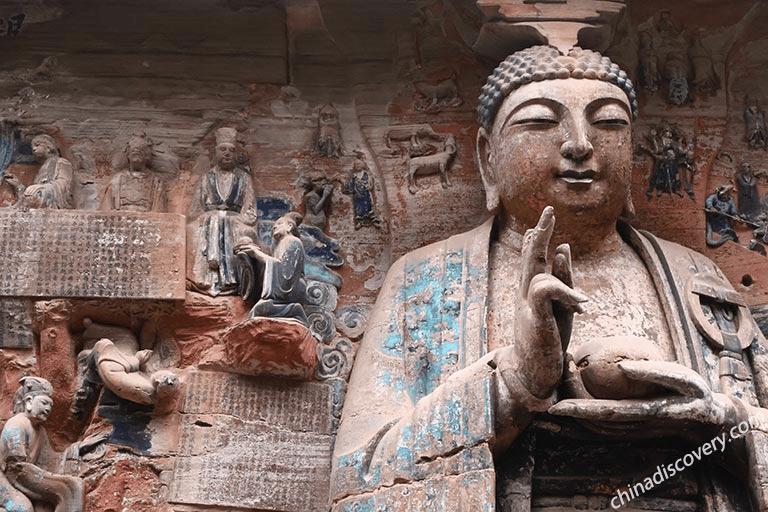
Detail of reclining Buddha, Parinirvana of Shakyamuni attended by bodhisattvas, Mt. Baoding, Southern Song Dynasty, Dazu, China, 102′ long (photo: Mulligan Stu, CC BY 2.0)

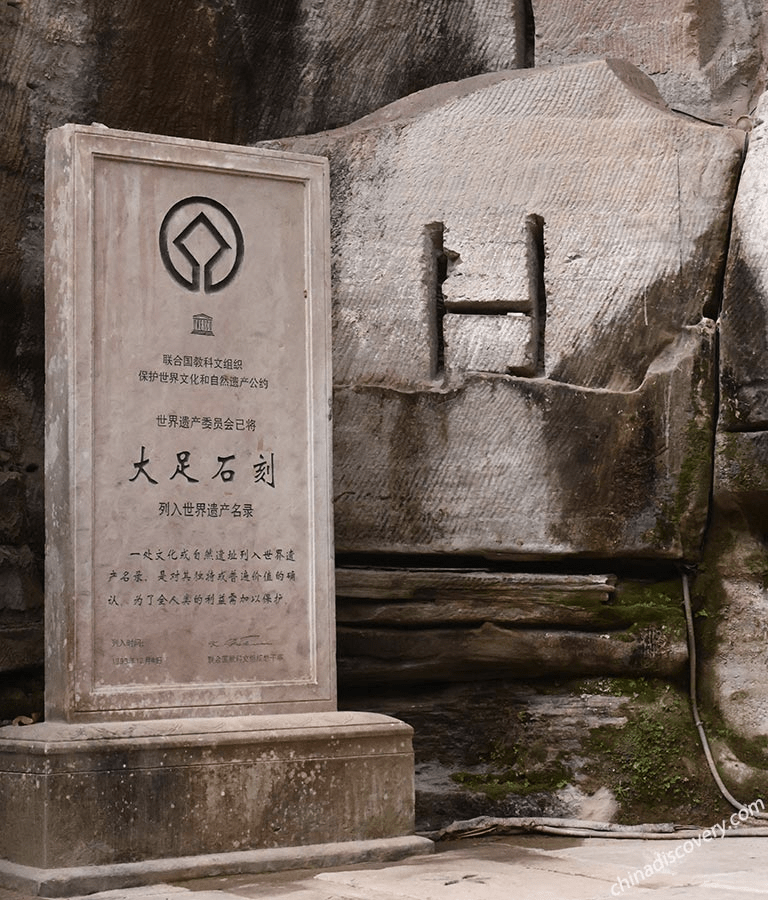
With a history spanning over 1,300 years, the Dazu Rock Carvings represents the pinnacle of grotto art worldwide from the ninth to the thirteenth century. The exquisite and varied cliff-side sculptures at Dazu caves provide outstanding proof of the harmonious fusion of Buddhism, Taoism, and Confucianism in civil. In 1999, the Dazu Rock Carvings was inscribed on the World Heritage List by UNESCO.
Enjoying a comparable reputation with the top four grottoes in China (Mogao Grottoes, Yungang Grottoes, Longmen Grottoes, and Maijishan Grottoes) and being rated as one of the eight grottoes in the world, the Dazu Rock Carvings (“大足石刻” in Chinese), also known as Dazu Caves or Dazu Grottoes, located 167km from the city center of Chongqing. It is the one and only UNESCO World Cultural Heritage Site in Chongqing municipality. The Dazu Rock Carvings consists of 75 cave temple sites, including more than 50,000 statues, being protected for their historical, artistic, and scientific values at different levels, representing the pinnacle of Chinese cave temple art between the 9th and 13th centuries. Among them, rock carvings of Baodingshan (宝顶山), Beishan (北山), Nanshan (南山), Shimenshan (石门山), and Shizhuanshan (石篆山) are exquisitely sculpted with the most distinctive style.

The Dazu Rock Carvings started in the early Tang Dynasty, went through the late Tang Dynasty and the Five Dynasties, and then experienced its golden time in the Northern and Southern Song Dynasty. At the time when cave art in northern China fell into decay, the Dazu Rock Carvings undoubtedly created another peak in the history of Chinese cave art, extending the history of Chinese cave art for more than 400 years. Since then, there have been no such large-scale rock carving events in China or even in the world. Therefore, the Dazu Rock Carvings are also known as the last monument and swan song in the history of the world’s grotto art.

UNESCO Stele of the Dazu Rock Carvings

Differing from famous royal grottoes in the north, the religious cliff inscriptions in Dazu show distinctive features of nationalization, secularization, and everyday life, reflecting the remarkable development and changes in folk religious beliefs. Thus, the Dazu caves have the irreplaceable historical, artistic, scientific, and connoisseurship values of grottoes of the previous generations. Another highlight that has to be mentioned is that the statues there provide outstanding evidence of the harmonious synthesis of Tantric Buddhism, Taoism, and Confucianism. Visitors can see separate stone carvings as well as the unity caves reflecting the three religions’ confluence and ruling together. Moreover, thanks to the southern hinterland location of the Dazu Rock Carvings, this cultural heritage stays far away from man-made sabotage, retaining the integrity of the statues, the original characteristics and values of the period when the carvings were created.

Rock carvings in Dazu are mainly located across five mountains, each containing distinct sets of grottoes, among which the cliff-side sculptures on Baodingshan and Beishan are best known and considered to be the model of the late Chinese grottoes statue art. The pictures of the Dazu rock carvings that we commonly find online were mostly taken at the Baodingshan Scenic Area, which is also the must-visit site for a Dazu Rock Carvings tour.

Baodingshan Rock Carvings (Baodingshan Scenic Area)

Fifteen kilometers northeast from Dazu center, Baodingshan Rock Carvings was constructed by the famous monk Zhao Zhifeng in the Song Dynasty for more than 70 years. As one of the most famous Tantric Buddhist shrines in China, there is an old saying that goes like “Go North, climb the Emei Mountain; Go South, reach the Baoding Mountain.” The centerpiece of the Baodingshan rock carvings is the U-shaped Grant Buddha Bay, also known as Dafowan (“大佛湾” in Chinese). Nearly ten thousand statues are carved along the east, north, and south cliffs, which are approximately 500 meters in length and 8-25 meters high. Like a picture scroll with endless photographs, the content of Baodingshan rock carvings is mainly Buddhist scripture stories, each niche related to the other but not identical.

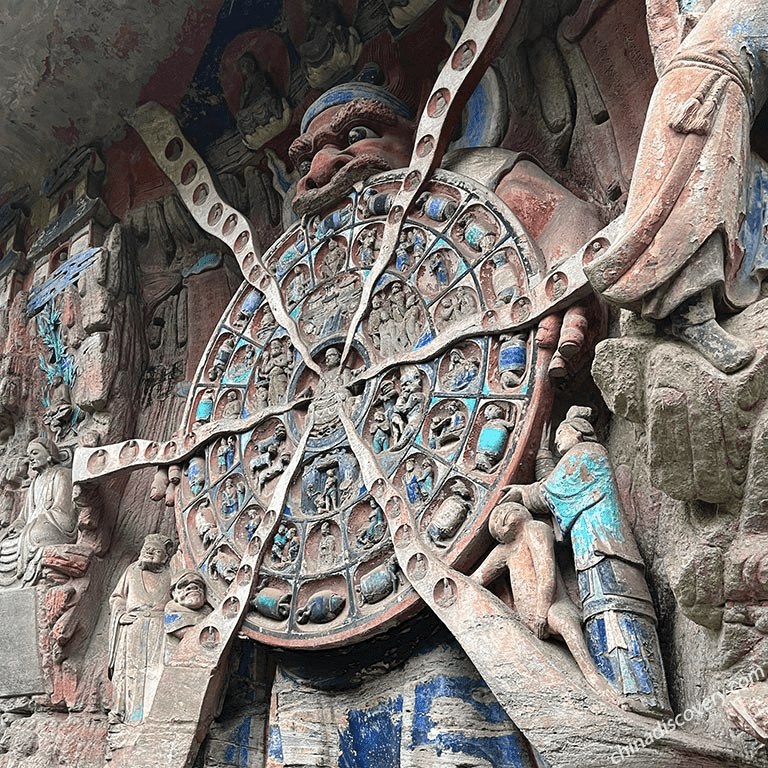
Dazu Rock Carvings – Buddhist Wheel of Life

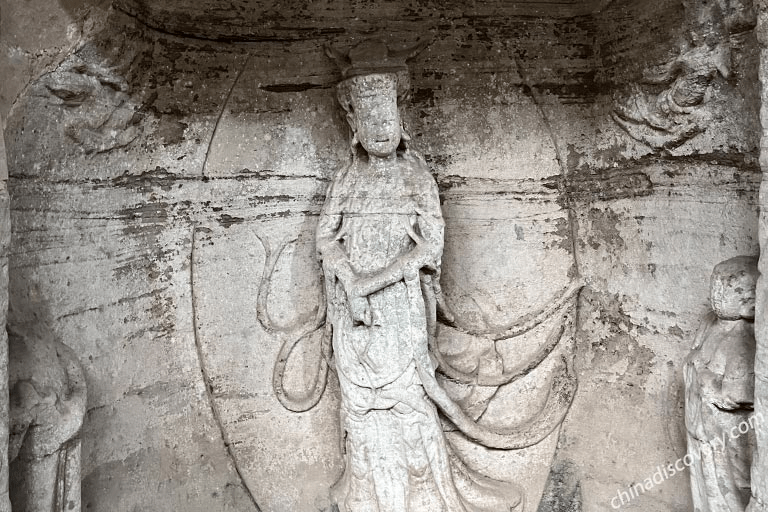
Avalokitesvara with Thousand Hands

The Buddha statues at Baodingshan are novel in conception, skillful in carving, and rich in secular characters. Religious treasures come one after another, including the representative work – Niche of Sakyamuni Entering Nirvana, one of the wonders of Buddhist art in the world – Avalokitesvara with Thousand Hands, striking image of Buddhist Wheel of Life, scientific designs of Three Saints of Huayan School of Buddhism and Cave of Full Enlightment showed craftsmans’ ingenuity.

In addition, niche content and their expression approach are striving to visualize reality. For instance, Niche of Parental Love Sutra contains ten groups of carvings, including scenes like begging for a son, carrying a child, and going into labor, etc., depicting parental love in bringing up children with plots linking to each other as a picture-book. These carvings are vivid and impressive. They were the outcome after Buddhism had been localized in China.

The ox herding story

Located at the eastern end of the Great Buddha Bend, the ox herding tableau, shows a herdsman taming a disobedient ox—a traditional metaphor for the path to self-enlightenment and a popular theme among Ch’an Buddhist monks and painters in the Song Dynasty. The tableau is made up of eleven vignettes arranged horizontally along a 27-meter cliff wall.

Ox herding story (scene 1–2), Niche 30, Dafowan, Mt. Baoding, Dazu. Southern Song Dynasty (photos: G41rn8, CC BY-SA 4.0)

The first three vignettes each depict a lively interaction between a herdsman and an ox in a landscape setting. The herdsman represents the Buddhist practitioner while the ox refers to the practitioner’s potential to become a Buddha. As the ox turns its body away, the stocky herdsman uses force, grass, and a stick to tame the ox. The verses accompanying the scenes further recount these struggles. 

Herdsmen embracing in the ox herding story (scene 5), Niche 30, Dafowan, Mt. Baoding, Dazu. Southern Song Dynasty (photos: G41rn8, CC BY-SA 4.0)

In the fourth and fifth vignettes, the ox is finally brought under control. The herdsman, featuring a wide, joyful smile, wraps his arms around his fellow herdsman while holding on to the ox with the rope in his hands.

In addition to the uncanny quality of grottoes’ masterpieces at Grant Buddha Bay (Dafowan), there are also many highlights you can’t miss while visiting Baodingshan Scenic Area:

  • Watch a 4K film with English subtitles to learn about the history and development of Dazu rock carvings, and enjoy an 8D view of spectacular grottos at the dome theater
  • Take a leisure stroll at Dazu Rock Carvings Museum (大足石刻博物馆) to gain insights into the whole thread of world cave temple art and the basic characteristics of Dazu Rock Carvings
  • Visit Shengshou Temple (圣寿寺) to admire the exquisite temple architecture, which was rebuilt at the Ming and Qing Dynasties.
Shengshou Temple & Dazu Rock Carvings Museum

Beishan Rock Carvings

1.5km north to Longgang Town of Dazu, with an altitude of 545.5m, Beishan is also called Longgang Mountain in the past. Beishan Rock Carvings is the initial of Dazu Rock Carvings. They were first created by Wei Junjing, prefect of Changzhou, in 892 A.D. of the late Tang Dynasty. Until 1162 A.D. of the Southern Song Dynasty, the existing scale of Beishan Rock Carvings was formed, and it centered around Fowan. The rock carvings are numbered and divided into two sections: No.1 ~ No.100 are in the south section, while No.101 ~ No. 290 are in the north section. There are over 5,000 statues on a 500m long cliff, with a height of 7 to 10 meters. The grottoes are very dense, just like a hive, and all of them are delicate and carved with high sculpture skills.

Avalokitesvara with a Rosary

The crowning jewels of Beishan rock carvings are the statues of Avalokitesvara. They are ornamental and artistic, with diverse looks and postures. The most emblematic ones are the Avalokitesvara with a RosaryAvalokitesvara Watching the Moon Reflection in the Water, and Thousand-armed and Thousand-eyed Avalokitesvara, etc.

Beishan rock carvings can be visited both during the day and at night. An additional visual experience is provided by the scenic spot’s usage of colored light to illuminate the stone statues. Besides, if you have enough time and stamina, don’t forget to follow the downhill trail to visit the Duobao Pagoda (多宝塔) to see the giant cliff statues of Beishan, the Two Buddhas of the North Pagoda.

Dazu Rock Carvings – The Last Monumental Works in the History of World Grotto Art

Link:https://peacelilysite.com/2024/01/04/dazu-rock-carvings-the-last-monumental-works-in-the-history-of-world-grotto-art/

#AvalokitesvarawithThousandHands #Shakymunibuddha #DazuRockCarvings #History #WorldGrottoArt #Buddhism #BuddhistArt #BuddhaStatue#Cave#TravelChina #ChineseCulture

Source:https://www.chinadiscovery.com/chongqing/dazu-rock-carvings.html, https://smarthistory.org/mt-baoding-dazu-rock-carvings/

Eternal Smiles: Unveiling the Serenity of China’s Buddhist Sculptures

DunHuang MoGao Caves

A Journey Along the Silk Road: Unraveling the Tapestry of Buddhism in China

When we think of iconic sculptures, the Discobolus, Michelangelo’s Moses, and the Laocoon and his Sons likely come to mind—captivating masterpieces that freeze moments in time with gripping intensity. However, the realm of Buddhist sculptures in ancient China offers a different narrative, one of profound serenity and peace that sets it apart from Western art.

CGTN’s latest film, Eternal Smiles, invites you to embark on a mesmerizing 60-minute exploration of China’s Buddhist sculptures. As you delve into the most renowned grottoes, you’ll witness a unique facet of statuary art that transcends time and space, offering a glimpse into a continuous eternity. The film provides a rare opportunity to experience the tranquility and harmony exuded by Buddhas and Bodhisattvas in these ancient works.

Guiding you along the Silk Road, Eternal Smiles unravels the fascinating journey of Buddhism to China. The film takes you to famous grottoes, temples, and historical sites, immersing you in a rich tapestry of stories that satisfy your curiosity about history, art, natural scenery, culture, and more.

Unlike the dramatic and intense narratives often found in Western sculptures, China’s Buddhist sculptures are a testament to serenity and peace. The film beautifully captures the essence of these timeless works of art, inviting viewers to appreciate the subtleties and spiritual depth embodied by Buddhas and Bodhisattvas.

Eternal Smiles is not merely a documentary; it’s a cinematic symphony that seamlessly weaves together history, art, and culture. Through stunning visuals and insightful narratives, the film offers a holistic experience that transcends the screen, transporting viewers to the heart of China’s Buddhist legacy.

Whether you’re a history buff, an art enthusiast, or someone seeking a peaceful escape, Eternal Smiles promises to be a visual feast for the curious soul. Join us on this cinematic journey to discover the beauty, serenity, and eternal smiles hidden within China’s Buddhist sculptures.

Eternal Smiles: Unveiling the Serenity of China’s Buddhist Sculptures

Link:https://peacelilysite.com/2023/12/29/eternal-smiles-unveiling-the-serenity-of-chinas-buddhist-sculptures/

#Buddhist #BuddhistSculptures #SilkRoad #Caves #DunhuangMogaoCaves

Harmony in Brushstrokes: Exploring the Subtleties of H.H. Dorje Chang Buddha III’s ‘Old Tree’

H.H.  Dorje Chang Buddha III ‘s traditional Chinese painting, “Old Tree,” stands as a masterpiece adorned with vibrant red plum blossoms. The depiction of a weathered old plum tree in a sea of ink unfolds a narrative of transformations—dense, light, dry, wet—unveiling the radiant beauty of its once youthful charm. The myriad red plum blossoms, seemingly engaged in a dance, cluster and clamor upon the branches, invoking an immediate sense of lively springtime. This painting is a testament to the profound artistic prowess encapsulated in H.H.  Dorje Chang Buddha III ‘s work.

Embedded within the Chinese cultural tradition is the notion of the common origin of calligraphy and painting. H.H.  Dorje Chang Buddha III  seamlessly incorporates calligraphic brushstrokes into painting, preserving the interconnected signs of brush and ink on the canvas. This approach transforms the expressive painting into a visual symphony, akin to calligraphy music. The technique of “flying white” in calligraphy, where white spaces delicately appear amidst smooth brushstrokes, takes on a purposeful role in painting. Originating as an imprint left by the speed of the brush, “flying white” becomes a unique brush and ink technique through profound aesthetic reflections.

“Flying white” becomes a vivid recorder of authentic emotions during the writing process. The brush swiftly glides over the paper, conveying passion and resonating with the engraving sensation found in seal carving. The depiction of the main trunk of the old plum tree in “Old Tree” superbly utilizes this technique. The contrast between subdued flying white and rich ink creates a musical and vivid rhythm of black, white, and gray within the composition.

The essence of a good painting lies in its “subtlety,” an intricate quality that goes beyond precision or meticulousness. For H.H.  Dorje Chang Buddha III , the process of painting is akin to flowing clouds and water—an expression of natural improvisation and delicate arrangement. As the ancients wisely said, “Add a little to Pan An’s beauty, and it becomes more; subtract a little, and it becomes less.” The subtle artistry in “Old Tree” showcases the artist’s profound insight into the delicate nuances of expression.

The quality of a work is deeply intertwined with the artist’s inherent cultivation, reaching a high realm based on the principle of “selflessness.” This term, often misunderstood, refers to losing oneself entirely in the painting process—where both mind and hand are forgotten. Artworks created in this state possess a power that transcends philosophical texts, offering a simple and clear depiction of inherent reality.

In real life, each person has unique perceptions and emotions, yet lacking rationality makes it challenging to transform these into creativity. True masters of art, exemplified by H.H.  Dorje Chang Buddha III , possess not only a sublime inner world and rationality but also the ability to keenly grasp fleeting sensations and transform them into robust vitality. Their ability to endure solitude, maintain genuine nobility, and leave traces of distinctive qualities results in the creation of genuinely original works of art. The great art masters, with a spiritual realm surpassing ordinary individuals, exhibit an otherworldly and extraordinary noble quality that defines their artistic genius. In “Old Tree,” we witness not just a painting but a symphony of artistry, capturing the essence of H.H.  Dorje Chang Buddha III ‘s profound mastery.

Harmony in Brushstrokes: Exploring the Subtleties of H.H. Dorje Chang Buddha III’s ‘Old Tree’

Link:https://peacelilysite.com/2023/12/29/harmony-in-brushstrokes-exploring-the-subtleties-of-h-h-dorje-chang-buddha-iiis-old-tree/

#DorjeChangBuddhaIII #HHDorjeChangBuddhaIII#DorjeChangBuddha#Art #ChinesePainting #InkPainting

Maijishan Grottoes – Buddhist Treasure Well-preserved on Maiji Mountain Cliff

Maijishan Grottoes, also known as Maiji Mountain Grottoes or Maijishan Caves, is situated in Maiji District, Tianshui City, Gansu Province, in northwest China. Alongside the Longmen Grottoes, Yungang Grottoes, and Dunhuang Grottoes, it holds the esteemed title of being one of the “Four Greatest Grottoes in China.”

If the Mogao Caves are likened to a vast mural museum, the Maijishan Caves undoubtedly resemble an expansive sculpture museum. Boasting 10,632 clay sculptures, Maijishan is hailed as “the Oriental Sculpture Art Exhibition Hall.”

Much like the Parthenon temple in ancient Greece, the stone and clay carvings at Maijishan have been remarkably preserved since ancient times, earning it the moniker of “China’s Parthenon Temple.”

In contrast to the exotic sculptures found in the Mogao Caves, the sculptures in Maijishan are characterized by a more secular, human, and distinctly Chinese quality.

Unlike the exotic sculptures in Mogao Caves, the sculptures in Maijishan Caves are more secularized, human, and more Chinese

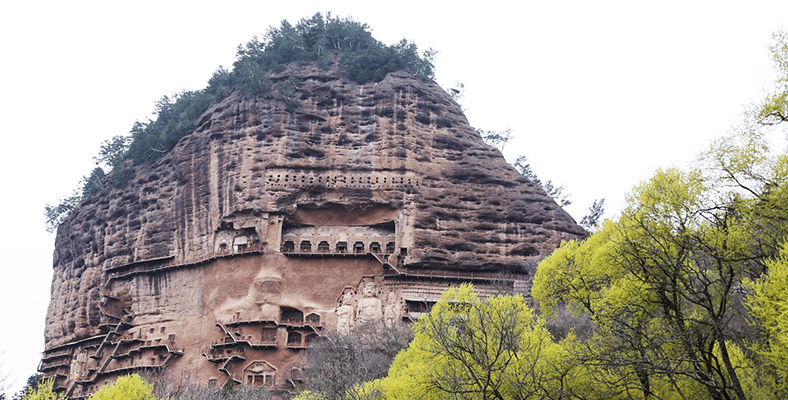
The name Maiji in Chinese translates to “piled sheaves of wheat,” reflecting the mountain’s appearance and the origin of its name. The Maijishan Grottoes were initially constructed in A.D. 384-417 and underwent subsequent expansions in dynasties such as Northern Zhou (A.D. 557-581) and Tang (A.D. 618-907). The site currently comprises 221 caves, 10,632 clay sculptures, and over 1300 square meters of murals, earning global acclaim for its exquisite clay sculpture art and recognition as the “Oriental Sculpture Art Exhibition Hall.”

While Maijishan Grottoes may not be as renowned as the other three great grottoes, it stands out as the best-preserved among them. Carved into the steep cliff of the mountain, the caves were not easily accessible, thus escaping much of the destruction that plagued other sites throughout tumultuous periods in history. Today, visitors can marvel at Buddha sculptures and murals along a narrow path clinging to the cliff’s edge.

Marsman Rom, Wikimediia Commons

Shizao, Wikimedia Commons

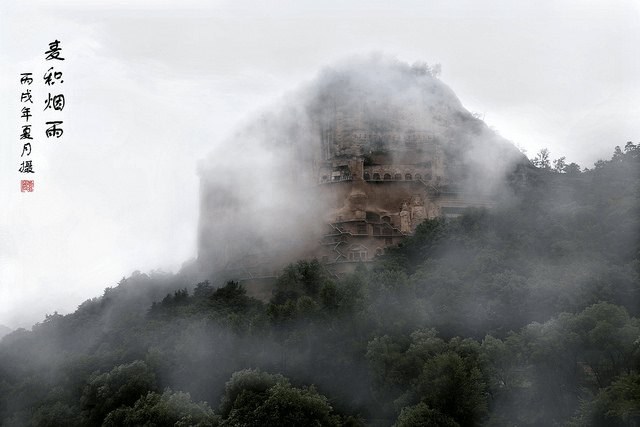
Maijishan in a sea of fog. ©Maijishan Grotto Art Institute and Global Heritage Fund

Located just a few miles south of the main road connecting China and Central Asia, Maijishan emerged as a hub of cross-cultural exchange, drawing hundreds of thousands of itinerants and serving as a historical canvas reflecting the art of 12 distinct dynasties. Indians, Mongols, Huns, Sogdians, Tibetans, Chinese, and others traversed its halls, leaving enduring imprints of their cultures in the form of art.

The mountain’s 194 grottoes stand as tangible evidence of this diverse influence, showcasing seven architectural variations, housing over 7,000 statues, and adorned with more than 100 square meters of murals. Everything within reflects a dedication to Buddhism, from depictions of Siddhartha’s birth to bodhisattvas engaged in meditation and scenes of new devotees arriving. While Maijishan’s physical features initially garnered attention, it is the heritage inscribed, painted, and sculpted onto the soft golden stone that solidified its place in the globalized consciousness of Buddhism, akin to Mount Sumeru, the sacred Buddhist mountain often considered the “mythical axis of the universe.”

The history of Maijishan, like the tales along ancient trade routes, commences with a journey. One account tells of the priest Hsüan-kao meditating at Maijishan, later joined by the shaman T’an-Hung. Together, they founded the mountain’s first monastic community, growing to nearly 300 people before their departure, marking a departure filled with religious fervor, and in T’an-Hung’s case, a morbidly poetic self-immolation in Cochin.

This semi-mythical origin, whether entirely factual or not, undeniably solidified Maijishan as a significant religious site for Chinese rulers. In the Fang-yü sheng-lan, a Sung Dynasty-era book, it is noted that Yao Hsing transformed the mountains, carving 1,000 cliffs and 10,000 images, transforming the cliffs into halls. A stele from 1222 attests to the site’s prominence, with 10,000 people praying there, empires granting land for farming, and seven kingdoms continuously contributing to its maintenance. Subsequent imperial decrees bestowed various names, including “Ching-nien ssu,” “Ying-chien kan ssu,” and “Jui-ying ssu,” before settling on the name Maijishan.

Examples of how brilliantly these works of art were once colored. Shizao, Wikimedia Commons

Differences between Maijishan’s Grottoes and Mogao’s

The Maijishan Grottoes and the Mogao Grottoes, both situated in Gansu Province along the Silk Road, offer distinct experiences, prompting consideration for visitors on a Silk Road journey. Despite being grottoes, they differ significantly, making a visit to both a worthwhile endeavor.

  1. The Maijishan Grottoes are renowned for their clay sculptures, whereas the Mogao Grottoes impress with expansive and beautiful murals. The arid climate in Dunhuang aids mural preservation, while the Maiji Mountain area, with more rainfall and looser mountain rock (clay), is conducive to sculpture carving.
  2. Sculptures in the Maijishan Caves are primarily plain clay pieces, while in the Mogao Caves, they are predominantly painted sculptures integrated with murals. Buddha statues in Maijishan exhibit a more secularized and daily-life-oriented character.
  3. The surrounding natural landscapes vary. Maijishan Caves, located in the Maiji Mountain Reserve area, offer a summer retreat with lush trees and springs, providing opportunities to explore diverse wildlife. In contrast, the Mogao Grottoes are situated in the Gobi Desert, surrounded by wild desert scenery.
  4. The Maiji Grottoes were carved into a steep 100-meter-high cliff face, requiring travelers to ascend the “floating plank road” for a more adventurous experience. In comparison, the Mogao Grottoes were carved into a 30-meter-high sandstone outcrop distributed over four floors.

The breathtaking Maiji Caves, carved into the steep cliffs of Maiji Mountain, stand about 100 meters (330 feet) above the ground, divided into East and West Cliffs. These caves, resembling honeycombs in hives, are interconnected by plank walkways suspended in the air from the cliff face.

Have you ever pondered how this feat was accomplished over a thousand years ago without modern machinery?

Legend has it that the Maijishan Grottoes were excavated at the expense of clearing all the woods near Maiji Mountain. Ancient people built wooden scaffolds from the mountain’s foot to the top, serving as precursors to the later generations’ “plank roads.”

During the Tang Dynasty (618–907), an earthquake divided Maiji Mountain into two cliffs, east and west. Over subsequent dynasties — Song, Yuan, Ming, and Qing — the Maijishan Grottoes underwent development, evolving into the cohesive complex seen today.

The Maijishan Caves stand as a testament to human wisdom and art along the Silk Road, embodying profound respect for Buddhism and an unending yearning for a better life.

Part of the Maiji Mountain Scenic Reserve area (including Xianren (‘Fairy’) Cliff, Shimen, Quxi, and Jieting Hot Spring), the Maijishan Grottoes boast diverse forests and a rich array of plants and animals.

While the Maijishan Grottoes can be visited year-round, the best time to explore the Maiji Mountain Scenic Reserve area is from July to October when the mountain, adorned with dense foliage, provides an ideal summer getaway.

Maijishan Grottoes – Buddhist Treasure Well-preserved on Maiji Mountain Cliff

Link:https://peacelilysite.com/2023/12/15/maijishan-grottoes-buddhist-treasure-well-preserved-on-maiji-mountain-cliff/

#MaijishanGrottoes #BuddhistTreasure #MaijiMountainCliff #Travel #China#Art#TravelChina

Source: https://globalheritagefund.org/2018/02/13/inside-the-lost-grottoes-of-maijishan/, https://www.chinadiscovery.com/gansu/maijishan-grottoes.html, https://www.chinahighlights.com/tianshui/attraction/mount-maiji-grottoes.htm

Yun Sculpture: Unparalleled Craftsmanship in Human History

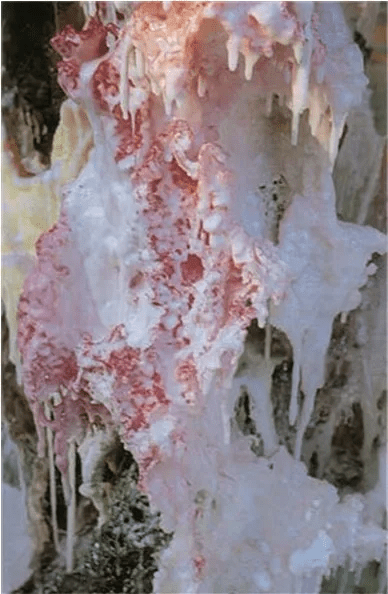
Yun Sculpture, a groundbreaking form of art devised by H.H. Dorje Chang Buddha III for the global audience, stands unmatched in the annals of history. Since its inception, the world has borne witness to an artistic phenomenon that defies replication. Observers, captivated by the works of H.H. Dorje Chang Buddha III, often find themselves in awe, expressing sentiments from the depths of their hearts: “This is a treasure bestowed upon the world by a divine force,” “Sacred artifacts from the Buddha’s Pure Land,” “Captivating the soul with its unparalleled beauty,” and “Since the advent of Yun Sculpture, humanity’s jewelry pales in comparison, like stars around the bright moon—dim and lackluster.” Indeed, when contrasted with the most finely carved jade and opulent stone sculptures, the latter suddenly lose their luster and grandeur, revealing an insurmountable gap.

Yun Sculpture boasts several distinctive characteristics:

Firstly, these sculptures exude a multidimensional sense of space, intricately crafted with unparalleled complexity, displaying endless variations.

Secondly, Yun Sculptures burst forth in rich and vibrant colors, presenting scenes so dreamlike and fantastical that they remain unseen in this world.

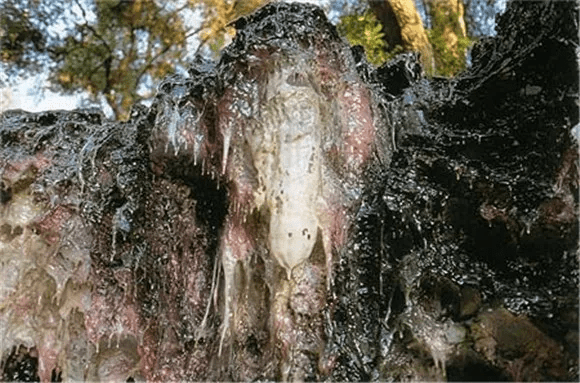
Thirdly, many Yun Sculptures possess a sacred and mysterious quality that transcends ordinary comprehension, exemplified by pieces such as “Mysterious Boulder with Mist.” In these sculptures, a mysterious mist gracefully floats among intricately carved, seemingly shifting, and intriguingly interconnected hanging rock formations. Why are such pieces referred to as sculptures containing mysterious mist? The answer lies in the enigmatic and beautiful scenes depicted within these sculptures—a dance of auspicious mist swirling amid hanging rock formations, creating an ethereal ambiance.

Mysterious Boulder with Mist

These miraculous works can be seen and touched. However, they cannot be created by anyone who is not a being of the highest holiness.

Precious Place

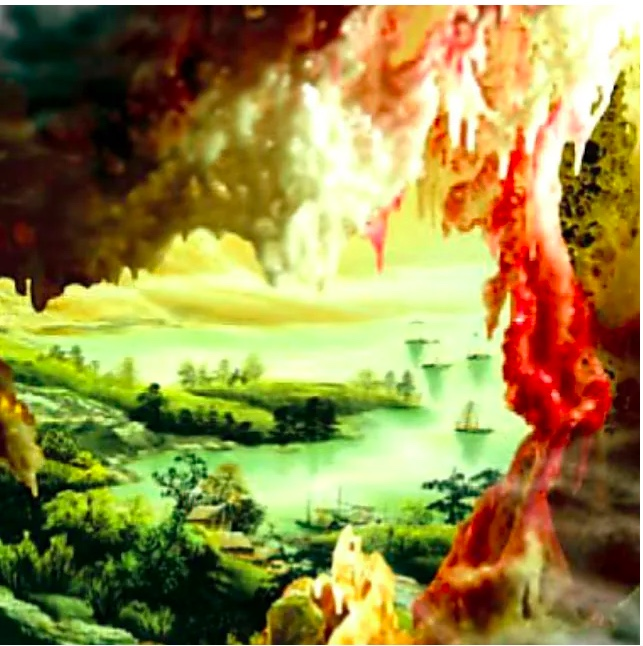
Stepping into this precious place, Surveying the treasures hanging on all four walls, Pure white, inky green, brownish-yellow… A multitude of vibrant colors. Is this the magic of nature? No, it’s the crystallization of wisdom!

The Grand Entrance of Elegance

The grand entrance, adorned with intricate golden lace, Built upon a foundation of gemstones, Various wonders on display, Gleaming with dazzling radiance. The densely woven textures and folds, Alive with vivid details, Eagerly beckon one to step inside, And behold the magical scenes within the hall.

Dawn

This Yun Sculpture masterpiece interprets the natural landscape of dawn with a strong sense of color contrast and intricate contours. The magic of this artwork lies in the seamless transition between night and day, appearing remarkably natural without any artificiality. It is not just a unique Yun Sculpture piece but also a transmission of positive energy.

The shift from darkness to light is not merely a natural phenomenon but also signifies the awakening and transformation of human thought and consciousness. By sincerely experiencing this Yun Sculpture piece inspired by the dawn, you will feel the powerful energy embedded within.

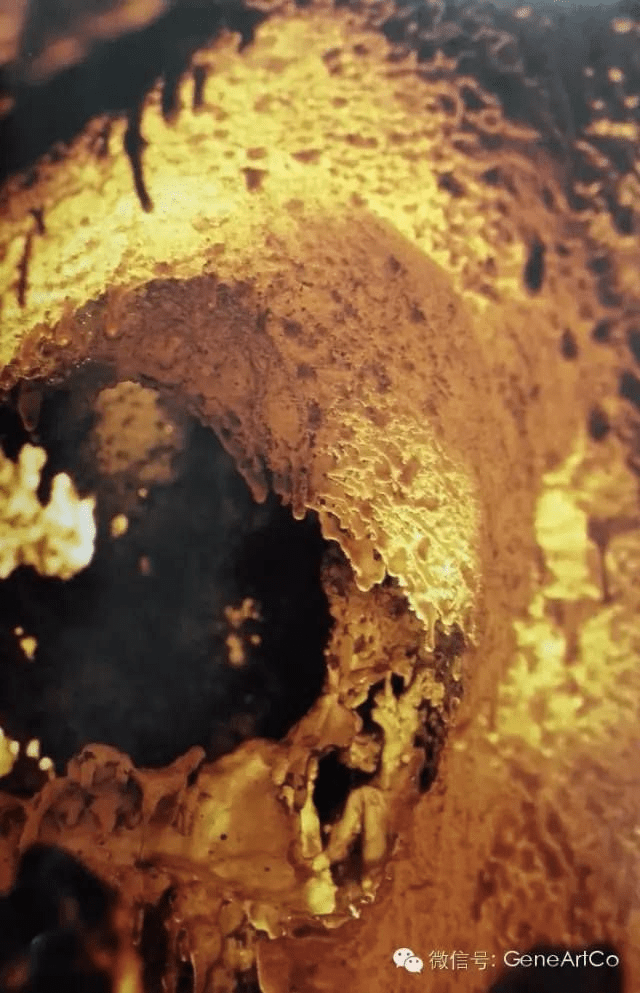
This Yun Sculpture piece resembles an ancient tree hollow, exuding a sense of mystery. Looking into the cave from its entrance, it appears bottomless, much like the human heart—profound and unfathomable.

Therefore, the term “tree hollow” now symbolizes the secrets hidden deep within. Psychologists propose that people need to learn to confide, to release their emotions. This artwork provides us with a window to express the unspeakable depths of our hearts, offering a means to alleviate stress through sharing.

A Rock of Horizontal Charm

Endless changes of spirit and feelings unfold
Mysterious motions envelop wonders untold
Only in heaven is such a presence found
No handiwork of artisan earthly bound

The sculpture A Rock of Horizontal Charm is a masterpiece of Yun Sculpture, embodying the spirit of an art surpassing the beauty of nature, created by H.H. Dorje Chang Buddha III for humankind. Derived from an art form created by H.H. Dorje Chang Buddha III that possesses beauty beyond nature’s, it has attained a realm –never before seen in human history – of artistry transcending nature, originating an art form in this world that is irreplicable by any craftsman or high technology. This amazing beautiful sculpture is currently displayed in H.H. Dorje Chang Buddha III Cultural And Art Museum.

Coral from Heaven

This Yun Sculpture piece exudes a mysterious yet astonishing feeling. The meticulous handling of the subtle details precisely embodies the essence of this artwork. Dubbing it “Coral Descending from Heaven” aptly confirms its precious and distinctive qualities. It’s challenging to fathom how the artist applied colors, especially in certain tiny areas where ordinary individuals would be unable to do so. It is precisely because of such a mysterious, astonishing, and unique piece that it deserves this name.

Unusual Music from Beyond Heaven

Art of the Little Autumn
Hanging Withered Vines Embrace Ancient Stones
Loveliness
Deep Feeling: Vistas Beyond the Tranquil Valley

Discover a captivating array of Yun Sculptures at the permanent exhibition housed at The International Art Museum of America, located in downtown San Francisco. Additionally, immerse yourself in the extraordinary collection at the H.H. Dorje Chang Buddha III Cultural And Art Museum in West Covina, a treasure nestled in the vibrant cultural landscape of the greater Los Angeles area.

Link: https://peacelilysite.com/2023/12/15/yun-sculpture-unparalleled-craftsmanship-in-human-history/

#DorjeChangBuddhaIII #HHDorjeChangBuddhaIII#DorjeChangBuddha#IAMA#InternationalArtMuseumofAmerica#H.H.DorjeChangBuddhaIIICulturalAndArtMuseum#YunSculpture #Craftsmanship

Bridging Realms: Dr. Jim B. Tucker Explores Reincarnation

Bridging Realms: Dr. Jim B. Tucker Explores Reincarnation

In the intricate tapestry of human beliefs, the concept of reincarnation has woven itself through the fabric of traditional Asian cultures for centuries. However, this idea finds little resonance in Western cultures and often faces skepticism from the scientific community. Amidst this cultural and scientific dichotomy, a pioneering exploration is unfolding at the prestigious University of Virginia School of Medicine, led by Dr. Jim B. Tucker, a child psychiatrist with a unique perspective on life after death.

Born and raised in the southern United States, Dr. Tucker’s early life was immersed in the traditional beliefs of the American South. As he embarked on his academic journey, obtaining an undergraduate degree in psychology and specializing in child psychiatry, he encountered the notion of reincarnation with a healthy dose of skepticism. The clash between cultural beliefs, scientific inquiry, and personal skepticism set the stage for Dr. Tucker’s intriguing exploration into the mysteries of existence.

The documentary, highlighted on the Discovery Channel, explores the extensive and worldwide research conducted by Dr. Tucker. The film encapsulates the core of his studies, presenting interviews, case studies, and the profound implications of his findings. Through this visual medium, viewers are welcomed to observe the intersection of traditional beliefs, modern skepticism, and scientific exploration—all in the quest to unravel the mysteries of human existence.

Buddhism holds that life undergoes reincarnation through the six realms. After a person dies, if the karmic conditions accumulated in their past life mature, they may be reborn into the heavenly realm as a deity, or into the realm of asuras, or they may be reincarnated in the human realm. If negative karma, such as killing, deception, or greed, comes to fruition, the individual will inevitably fall into the hell realm and suffer, or they may be reborn in the realms of hungry ghosts or animals to endure suffering.

As for which realm one will be reborn into among the six, it depends on the karmic conditions of their virtuous and non-virtuous actions. Why does reincarnation occur? The fundamental reason lies in the attachment of sentient beings. Attachment gives rise to the confusion of karma, and from this confusion arises ignorance. Due to the endless causes and effects generated by ignorance, various positive and negative karmic forces are produced. It is these karmic forces that determine which realm of existence one will be reborn into.

Bridging Realms: Dr. Jim B. Tucker Explores Reincarnation

Link: https://peacelilysite.com/2023/12/08/bridging-realms-dr-jim-b-tucker-explores-reincarnation/

#Buddhism #KarmicCondition #SixRealm#Reincarnation

Remembering Charlie Munger: A Beacon of Wisdom in the Investment World

Charlie Munger, the Philosopher of the Investment World

The investment realm bids farewell to its philosopher, the golden partner of Warren Buffett, Charlie Munger, who passed away on November 28th this year, at the age of 99. Munger’s life was a testament to generosity, kindness, rationality, humility, and a low-key demeanor. Renowned for his honesty, integrity, lack of complaints, and absence of hindsight bias, Munger earned global admiration and respect. His impactful literary work, “Poor Charlie’s Almanack,” reflects his profound humanity.

Among Munger’s profound teachings, five sentences stand out, resonating deeply with individuals and serving as timeless nuggets of wisdom. Deserving Success, Value Investing Strategy, Success and Surroundings, Magic of Compound Interest, Probabilities Over Luck.

“The best way to obtain something is to make oneself deserving of it” reflects classic wisdom upon contemplation. Unlike typical words of wisdom that merely offer principles without practical methods, Munger’s comprehensive approach in “Poor Charlie’s Almanack” reveals a value investing strategy intertwined with life philosophy.

Charlie Munger’s love for books was profound. Often referred to as a “bookshelf with two legs,” Munger’s voracious reading habit extended beyond the realms of finance. He explored diverse genres, not just for knowledge acquisition but to open his mind to different angles and views. His extensive reading shaped him into a profound thinker, and his eclectic taste in literature reflected in his unique perspectives. Munger’s commitment to continuous learning and intellectual curiosity made him an embodiment of wisdom.

Photo by Pixabay on Pexels.com

Munger’s belief in value investments extended beyond finance to personal development. He advocated assessing the value of a business before evaluating its stock, discarding speculative opportunities, and overlooking short-term factors. The enduring factor for a stock’s reliability, according to Munger, is whether it truly deserves its current price. This principle, he argued, holds true for personal growth, embodied in the saying, “The essential reason for a person’s success is that those around him wish for his success.”

Throughout his illustrious investment career, Munger adhered to the traditional values of the American West — diligence, focus, sincerity, thrift, and future investment. These principles earned him the trust of many collaborators. Notably, Munger’s initial million came from a real estate investment while he was still a lawyer. Recognizing the potential for real estate development in a property left by a client’s ancestors, Munger, through the client’s trust, achieved tremendous success.

Munger’s philosophy that making oneself valuable attracts potential collaborators is the most reliable investment method. This philosophy aligns with renowned stock guru Warren Buffett’s simple yet effective secret to wealth: save, invest, continue saving, and continue investing. Munger’s teachings delve into the power of compound interest, demonstrated in a thought experiment within “Poor Charlie’s Almanack.”

The experiment presents two choices — receiving $1000 daily for 30 days or receiving an escalating amount starting with 1 cent, doubling each day for 30 days. The seemingly attractive first choice limits the total to $30,000, while the second, with the magic of compound interest, accumulates to an astonishing $5.37 million. Munger highlights the patience required for compound interest to exhibit its true power, a principle applicable to personal growth.

Economist Xiang Shuai’s intriguing experiment reinforces Munger’s teachings. Progressing a little every day, even by 1%, leads to significant advancement after a year, while regressing daily results in minimal talent advantage. Munger’s emphasis on the importance of daily learning and reading resonates with the ancient wisdom: “Accumulate small steps, and you will cover a thousand miles.” He advocates believing in probability over luck, emphasizing that probability theory aligns closely with the world’s functioning.

Munger’s views on setting goals underscore the importance of realistic expectations and avoiding fanaticism. He advises setting goals slightly beyond one’s capabilities, then striving wholeheartedly to achieve them. The rational and joyful life attitude Munger promotes hinges on believing in the magic of compound interest.

Despite initial misconceptions, “Poor Charlie’s Almanack” is hailed as a seriously underestimated gem, transcending the appearance of a self-help book. Patiently reading through Munger’s insights reveals a figure resembling a traditional Chinese sage, offering universal wisdom for living a fulfilled and prosperous life. His desire for everyone to master universal wisdom echoes in the statement, “I only pass my sword to those who can wield it.” Munger’s legacy serves as a guiding light, illuminating our paths to a brighter and more brilliant existence.

Remembering Charlie Munger: A Beacon of Wisdom in the Investment World

Link: https://peacelilysite.com/2023/12/07/remembering-charlie-munger-a-beacon-of-wisdom-in-the-investment-world/

#CharlieMunger #InvestmentWisdom #LegacyOfLearning #PoorCharlieAlmanack #Wisdom