In times when the world feels overwhelmed by conflict, division, and uncertainty, many people are searching for deeper answers about human consciousness and the true purpose of life. One thinker whose work has inspired millions to reflect on these questions is Gary Zukav, a writer and former physicist known for exploring the relationship between science, consciousness, and spiritual growth.
Zukav first gained recognition through his book The Dancing Wu Li Masters, which introduced complex ideas of modern physics to general readers. Later, his bestselling book The Seat of the Soul shifted the conversation toward a deeper exploration of human consciousness and spiritual evolution. In this work, Zukav proposes a powerful idea: humanity is undergoing a transformation from seeking external power to discovering authentic power—the power that arises from the soul.
His message can be summarized in three simple yet profound movements of the human spirit:
Humanity must move from fear to love
from control to compassion
from external power to inner wisdom
Although Zukav approached these ideas through the lens of psychology and consciousness, they resonate deeply with teachings that have existed for thousands of years within Buddhism.
In Buddhist teachings, the mind is the source of both suffering and liberation. According to Gautama Buddha, our thoughts, intentions, and actions shape our experience of the world. This principle is closely connected to the law of Karma, which teaches that every action—whether physical, verbal, or mental—creates corresponding results.
When people act from fear, anger, or greed, they plant seeds of suffering. When they act from compassion, generosity, and wisdom, they create causes for peace and happiness.
Seen in this light, Zukav’s idea of moving from external power to authentic power reflects a timeless Buddhist insight: true strength does not arise from domination or control, but from the transformation of the mind.
In the modern world, success is often measured by status, wealth, or influence. Yet Buddhism reminds us that these forms of external power are temporary and unstable.
The Buddha taught that genuine freedom comes from cultivating inner qualities such as:
compassion
mindfulness
wisdom
loving-kindness
When these qualities grow within us, our consciousness naturally changes. Instead of reacting with fear or anger, we begin to respond with understanding and care. This is the beginning of authentic power—the same inner power Zukav describes.
Zukav believes humanity is evolving toward a new level of awareness, where people become more conscious of their intentions and the effects of their actions. This idea echoes the Buddhist path of awakening, where individuals gradually develop greater awareness of their thoughts and emotions.
Each moment offers a choice: to act from fear or from love, from control or from compassion.
If enough people choose compassion, the collective consciousness of humanity can also change. In this sense, spiritual transformation is not only personal—it is also global.
A Gentle Reminder for Our Time
In a world often shaken by conflict and division, Zukav’s words serve as a gentle reminder that true change begins within the human heart.
Humanity must move from fear to love, from control to compassion, from external power to inner wisdom.
These movements are not only philosophical ideals; they are practical steps toward creating a more peaceful world. When we cultivate compassion and awareness in our own lives, we are already contributing to the transformation of human consciousness.
As the Buddha taught, peace in the world begins with peace in the mind. And when one heart awakens to compassion, it quietly lights the path for many others.
Modern scientists suggest there may be multidimensional spacetime. The world we perceive in our daily lives consists of three dimensions of space—length, width, and height—plus one dimension of time, forming what we call four-dimensional spacetime.
For most people, it is nearly impossible to imagine what multidimensional space could be like. Even scientists struggle to describe how such realms might appear.
Yet once, while I was reading a Buddhist sutra, I felt as though I glimpsed something of this mysterious idea.
In the Vimalakirti Sutra, it is recorded that Manjushri Bodhisattva led 8,000 bodhisattvas, five hundred arhats, and countless heavenly beings to visit the ailing lay master Vimalakirti.
Vimalakirti lived in a small chamber. He invited everyone to enter. Miraculously, they all went inside, but the room did not grow any larger. No one felt crowded or obstructed, and everyone saw Vimalakirti sitting directly before them.
Manjushri and Vimalakirti engaged in profound dialogue about the Dharma. Later, Vimalakirti displayed astonishing spiritual powers, bringing seats, exquisite foods, and treasures from distant worlds into that same room.
It was absolutely astonishing—like witnessing the seamless merging of multiple dimensions.
Throughout Buddhist history, many great masters have demonstrated abilities that seem to transcend space and time.
For example, there is the story of Milarepa, Tibet’s most renowned yogi. When he was welcoming his disciple Rechungpa back from India—where Rechungpa had traveled to collect scriptures—an incredible event took place.
Rechungpa carried the scriptures on his back as he crossed the vast grasslands. When he saw Milarepa waiting for him, he was overjoyed. Eagerly, he described how he had met the great master Tilopa. With visible pride, he declared:
“In the past, Tilopa did not transmit this Dharma to Master Marpa, but now he has passed it on to me!”
His words brimmed with arrogance.
As they walked together, Milarepa noticed a broken yak horn on the ground and asked Rechungpa to pick it up. Rechungpa couldn’t see the point and made excuses not to touch it. Silently, Milarepa bent down, picked it up himself, and carried it along.
Suddenly, the sky darkened. Thunder boomed, lightning flashed, and hailstones the size of eggs pounded them mercilessly. Rechungpa was battered and bruised.
When the storm finally ended, he looked around—Milarepa had vanished. Alarmed, he began calling out.
Then, Milarepa’s calm voice rose from the little yak horn at his feet:
“Why are you so flustered? Come in here and take shelter.”
Rechungpa stared in disbelief. The opening of the horn was barely larger than a fist. How could he possibly fit inside?
He bent down to look, and to his amazement, he saw an endless green meadow within—stretching as far as the eye could see. Milarepa sat serenely in meditation.
But no matter what he tried, Rechungpa could not enter.
In that instant, all his pride dissolved. Humility and awe took its place.
Milarepa finally emerged and said with a gentle smile, “Did you see? My little yak horn turned out to be quite useful after all.”
Even in our time, extraordinary manifestations still occur.
H.H. Dorje Chang Buddha III has demonstrated countless inconceivable displays of supreme Buddha Dharma.
Ruzun Ruo Hui, the abbess of Hua Zang Si (in San Francisco) shared one remarkable example in Interviews with Buddhist Disciples (Episode 78).
Around 1995, about a dozen people were gathered together in a room, respectfully listening to the recorded Dharma discourse Expounding the Absolute Truth through the Heart Sutra.
Halfway through, the entire house vanished. All the walls and structures simply disappeared, and everyone found themselves sitting under the open sky.
Above them, Avalokiteshvara Bodhisattva appeared, standing in the air, radiating boundless light while auspicious clouds billowed around.
For nearly an hour, Avalokiteshvara remained visible, bestowing blessings. No sounds of the street—no passing cars or footsteps—could be heard. The only sound was the voice of H.H. Dorje Chang Buddha III expounding the Dharma.
It was clear that everyone present had entered another dimension altogether.
Moments like these show us that the universe is far more profound than what our senses can grasp.
I believe Buddhism is deeply scientific—not superstition. Just because today’s scientists cannot yet explain these phenomena does not mean they are unscientific.
On the contrary, Buddhist wisdom offers an entirely different lens through which to explore reality. It can inspire modern science to uncover new methods and fresh insights to understand the universe’s deepest mysteries.
If we open our hearts and minds, perhaps Buddhist teachings will one day help humanity discover shortcuts to truths that today seem unimaginable.
The Enigma of Existence: Exploring Life After Death
The concept of life after death has intrigued humanity for centuries. Different cultures, philosophies, and religions have provided varying explanations, yet the mystery remains. Is there life after death, or does consciousness simply cease to exist when the body dies? In this article, we explore some of the most prominent beliefs and theories surrounding the enigma of existence after death, seeking to understand this profound question from multiple perspectives.
What Are the Most Common Beliefs About Life After Death?
Throughout history, many cultures and religions have proposed theories about life after death. Religious scholars suggest that the idea of an afterlife serves to give people comfort and meaning in the face of mortality. Christianity, Islam, Hinduism, and Buddhism all have distinct views on the afterlife, each offering unique insights into the question of what happens after death.
In Christianity, for example, life after death is often seen as either eternal life in heaven or eternal separation from God in hell. Researchers point out that many Christians believe that the soul lives on after the body dies, and that salvation or damnation is determined by one’s actions during their lifetime.
In Hinduism, the concept of reincarnation is central. According to this belief, the soul is reborn in a new body after death, and the circumstances of the new life are determined by the actions (karma) of the previous life. Philosophers argue that this cycle of death and rebirth is a form of spiritual evolution, with the ultimate goal being moksha, or liberation from the cycle of reincarnation.
Buddhism also supports the idea of reincarnation, but with an emphasis on achieving enlightenment to break free from the cycle of rebirth. Experts note that Buddhism teaches that attachment to the self is the source of suffering, and liberation occurs when one transcends the ego and achieves nirvana.
Scientific Views on Life After Death
From a scientific standpoint, the question of life after death is more complex. The majority of scientists assert that there is no empirical evidence to support the idea that consciousness survives after death. Neuroscientists argue that consciousness is a product of brain activity, and when the brain ceases to function, so does consciousness.
There are notable phenomena that have intrigued researchers. Medical professionals have documented instances of near-death experiences (NDEs), where individuals report vivid sensations, such as a sense of floating above their body, moving through a tunnel, or encountering deceased loved ones. While these experiences are often interpreted by some as evidence of life after death, psychologists suggest that they may be explained by the brain’s reaction to trauma, oxygen deprivation, or the release of chemicals like DMT.
While science cannot definitively answer the question of what happens after death, these experiences have raised questions about the nature of consciousness and whether it is entirely tied to the brain. The debate continues, and more research is needed to explore the mysteries of the human mind.
Near-Death Experiences: Are They Evidence of Life After Death?
Near-death experiences (NDEs) have become a focal point in discussions about life after death. People who have experienced NDEs often describe sensations of peace, floating outside their body, or meeting beings of light. Some researchers hypothesize that these experiences are the result of a brain in distress, attempting to make sense of its impending shutdown.
Many individuals who have experienced NDEs report feeling profound transformations in their lives afterward, including a greater sense of purpose or reduced fear of death. Experts in the field of psychology and consciousness studies suggest that these transformations could point to an experience beyond the physical brain, offering a glimpse into an afterlife.
The question remains: do these experiences represent glimpses into an afterlife, or are they simply a product of the brain’s complex workings during moments of trauma? The scientific community continues to study these occurrences, and while answers remain elusive, the personal testimonies of those who have undergone NDEs continue to fuel interest in the idea of life after death.
What Philosophical Theories Are There About Life After Death?
In addition to religious and scientific perspectives, philosophical theories about life after death explore the nature of existence and consciousness. Philosophers have long debated whether consciousness is purely a physical phenomenon or if it could exist independently of the body.
One of the most famous theories comes from the philosopher René Descartes, who posited that the mind and body are separate entities. According to Descartes’ dualism, the mind (or soul) can exist independently of the body and could potentially continue after death. Modern philosophers who follow dualistic thinking often suggest that consciousness may not be confined to the brain and could persist beyond the body’s death.
On the other hand, materialist philosophers argue that consciousness is entirely dependent on the brain, and once the brain ceases to function, consciousness ceases as well. These contrasting viewpoints continue to shape the ongoing philosophical discussion on the nature of life after death.
Can Science and Religion Coexist in Understanding Life After Death?
While science and religion often present differing views on life after death, some thinkers suggest that they need not be mutually exclusive. Interdisciplinary experts argue that the two perspectives can coexist, offering a fuller understanding of the mystery. Religion provides spiritual and moral frameworks for understanding the afterlife, while science explores the empirical, physical aspects of life and death.
In recent years, there has been a growing interest in integrating scientific and spiritual perspectives on consciousness. Some researchers are exploring the idea that consciousness might exist beyond the brain, and that this may have implications for understanding life after death. Scholars in the field of consciousness studies have suggested that more research is needed to bridge the gap between spiritual and scientific explanations of existence after death.
The enigma of life after death remains unsolved. Whether through religious beliefs, scientific inquiry, or philosophical speculation, humanity continues to seek answers to this profound question, driven by the desire to understand what happens after we take our final breath.
I have always heard certain quotes attributed to Albert Einstein concerning what he believed about Buddhism including one that implied that if he were a religious man he would be a Buddhist. There does not seem to be any evidence that he said that, but I found the following to be useful. The first part is an article by Kang Na, Assistant Professor of Religion at Westminister College that provides context for the essay and additional quotes by Einstein.
Certainly no one in 1879 in Ulm, Germany, could have guessed that one of their own born that year would someday receive global praise for his undisputed genius, meriting recently the coveted title “person of the century” (Time magazine). Likewise, international fame was probably not what Albert Einstein himself anticipated in 1895 when he failed the entrance exam for the Federal Polytechnical Institute in Zurich, Switzerland. Even as he worked and was being promoted at the Swiss Patent Office in Bern, Switzerland (1902–08), Einstein was far from becoming a household name, let alone the most renowned Nobel Prize winner in physics, which he received in 1921 not for his special theory of relativity (of E=MC2 fame) that inaugurated the atomic age in 1905, but for his discovery of the photoelectric effect (the hypothesis he proposed also in 1905 that electromagnetic radiation interacts with matter as if the radiation had a granular structure or particles).
Shortly thereafter, when Einstein’s reputation in academia waxed toward worldwide celebrity, no one could have presaged that in 1952 the newly established state of Israel would offer him the presidency, which he declined. That invitation, however, points out that he was not only perpetually engaged in the subtle mysteries of the universe but also as outspoken in the political arena as a Zionist who detested the Nazis’ rise to power, as a prophet who insisted that Jews make peace with Arabs, and as a pacifist, who, in his famous letter to President Roosevelt (1939), warned against the potential abuses of atomic energy, despite his support for the development of the A-bomb. Even days before his death on April 18, 1955, he wrote his last signed letter to the philosopher Bertrand Russell expressing his intention to sign a joint manifesto insisting that all nations renounce nuclear weapons. By then his brilliant mark on human history was as unquestionable as his unkempt hair was uniquely recognizable.
It is this larger-than-life Einstein who wrote the following essay on the proper relationship between science and religion, part one in 1939 and part two in 1941. It is also here in the latter part of the essay that we find his often quoted dictum, “Science without religion is lame, religion without science is blind.” He wrote “Science and Religion” as a contribution to a symposium held in New York in 1941 on what roles science, philosophy, and religion played in the cause of American democracy. Thus, the essay recommends itself to the multi-disciplinary approach that Inquiry takes within the liberal arts program at Westminster.
Although Einstein read the Bible often, spoke quite freely about God, and was unapologetically religious, the essay discloses a religious disposition not quite like that of an ordinary religious person. He believed “in Spinoza’s God who reveals himself in the harmony of all that exists, but not in a God who concerns himself with the fate and actions of human beings” (Einstein Archive 33-272). Hence Einstein declared, “My religion consists of a humble admiration of the illimitable superior spirit who reveals himself in the slight details we are able to perceive with our frail and feeble minds. That deeply emotional conviction of the presence of a superior reasoning power, which is revealed in the incomprehensible universe, forms my idea of God” (quoted in the New York Times obituary, April 19, 1955). Furthermore, as the essay makes clear, Einstein’s emphasis on the moral and altruistic dimensions of religion was unequivocal: “Humanity has every reason to place the proclaimers of high moral standards and values above the discoverers of objective truth. What humanity owes to personalities like Buddha, Moses, and Jesus ranks for me higher than all the achievements of the inquiring constructive mind” (Dukas and Hoffmann, Albert Einstein, the Human Side, 70). Perhaps it is only ironically fitting that it is precisely the inquiring constructive mind of Einstein that destined him for the cover of Time and for an honored place among those rare spirits whose extraordinary genius and creativity punctuated and graced the progression of human history.
(Biographical information taken from Alice Calaprice’s The Quotable Einstein, 1996)
Essay on Science and Religion
Albert Einstein
PART I (1939)
During the last century, and part of the one before, it was widely held that there was an unreconcilable conflict between knowledge and belief. The opinion prevailed among advanced minds that it was time that belief should be replaced increasingly by knowledge; belief that did not itself rest on knowledge was superstition, and as such had to be opposed. According to this conception, the sole function of education was to open the way to thinking and knowing, and the school, as the outstanding organ for the people’s education, must serve that end exclusively.
One will probably find but rarely, if at all, the rationalistic standpoint expressed in such crass form; for any sensible man would see at once how one-sided is such a statement of the position. But it is just as well to state a thesis starkly and nakedly, if one wants to clear up one’s mind as to its nature.
It is true that convictions can best be supported with experience and clear thinking. On this point one must agree unreservedly with the extreme rationalist. The weak point of his conception is, however, this, that those convictions which are necessary and determinant for our conduct and judgments, cannot be found solely along this solid scientific way.
For the scientific method can teach us nothing else beyond how facts are related to, and conditioned by, each other. The aspiration toward such objective knowledge belongs to the highest of which man is capable, and you will certainly not suspect me of wishing to belittle the achievements and the heroic efforts of man in this sphere. Yet it is equally clear that knowledge of what is does not open the door directly to what should be. One can have the clearest and most complete knowledge of what is, and yet not be able to deduct from that what should be the goal of our human aspirations. Objective knowledge provides us with powerful instruments for the achievements of certain ends, but the ultimate goal itself and the longing to reach it must come from another source. And it is hardly necessary to argue for the view that our existence and our activity acquire meaning only by the setting up of such a goal and of corresponding values. The knowledge of truth as such is wonderful, but it is so little capable of acting as a guide that it cannot prove even the justification and the value of the aspiration towards that very knowledge of truth. Here we face, therefore, the limits of the purely rational conception of our existence.
But it must not be assumed that intelligent thinking can play no part in the formation of the goal and of ethical judgments. When someone realizes that for the achievement of an end certain means would be useful, the means itself becomes thereby an end. Intelligence makes clear to us the interrelation of means and ends. But mere thinking cannot give us a sense of the ultimate and fundamental ends. To make clear these fundamental ends and valuations, and to set them fast in the emotional life of the individual, seems to me precisely the most important function which religion has to perform in the social life of man. And if one asks whence derives the authority of such fundamental ends, since they cannot be stated and justified merely by reason, one can only answer: they exist in a healthy society as powerful traditions, which act upon the conduct and aspirations and judgments of the individuals; they are there, that is, as something living, without its being necessary to find justification for their existence. They come into being not through demonstration but through revelation, through the medium of powerful personalities. One must not attempt to justify them, but rather to sense their nature simply and clearly.
The highest principles for our aspirations and judgments are given to us in the Jewish- Christian religious tradition. It is a very high goal which, with our weak powers, we can reach only very inadequately, but which gives a sure foundation to our aspirations and valuations. If one were to take that goal out of its religious form and look merely at its purely human side, one might state it perhaps thus: free and responsible development of the individual, so that he may place his powers freely and gladly in the service of all mankind.
There is no room in this for the divinization of a nation, of a class, let alone of an individual. Are we not all children of one father, as it is said in religious language? Indeed, even the divinization of humanity, as an abstract totality, would not be in the spirit of that ideal. It is only to the individual that a soul is given. And the high destiny of the individual is to serve rather than to rule, or to impose himself in any other way.
If one looks at the substance rather than at the form, then one can take these words as expressing also the fundamental democratic position. The true democrat can worship his nation as little as can the man who is religious, in our sense of the term.
What, then, in all this, is the function of education and of the school? They should help the young person to grow up in such a spirit that these fundamental principles should be to him as the air which he breathes. Teaching alone cannot do that.
If one holds these high principles clearly before one’s eyes, and compares them with the life and spirit of our times, then it appears glaringly that civilized mankind finds itself at present in grave danger. In the totalitarian states it is the rulers themselves who strive actually to destroy that spirit of humanity. In less threatened parts it is nationalism and intolerance, as well as the oppression of the individuals by economic means, which threaten to choke these most precious traditions.
A realization of how great is the danger is spreading, however, among thinking people, and there is much search for means with which to meet the danger—means in the field of national and international politics, of legislation, of organization in general. Such efforts are, no doubt, greatly needed. Yet the ancients knew something which we seem to have forgotten. All means prove but a blunt instrument, if they have not behind them a living spirit. But if the longing for the achievement of the goal is powerfully alive within us, then shall we not lack the strength to find the means for reaching the goal and for translating it into deeds.
PART II (1941)
It would not be difficult to come to an agreement as to what we understand by science. Science is the century-old endeavor to bring together by means of systematic thought the perceptible phenomena of this world into as thorough-going an association as possible. To put it boldly, it is the attempt at the posterior reconstruction of existence by the process of conceptualization. But when asking myself what religion is I cannot think of the answer so easily. And even after finding an answer which may satisfy me at this particular moment I still remain convinced that I can never under any circumstances bring together, even to a slight extent, all those who have given this question serious consideration.
At first, then, instead of asking what religion is I should prefer to ask what characterizes the aspirations of a person who gives me the impression of being religious: A person who is religiously enlightened appears, to the best of his ability, liberated himself from the fetters of his selfish desires and is preoccupied with thoughts, feelings, and aspirations to which he clings because of their super-personal value. It seems to me that what is important is the force of this super-personal content and the depth of the conviction concerning its overpowering meaningfulness, regardless of whether any attempt is made to unite this content with a divine Being, for otherwise it would not be possible to count Buddha and Spinoza as religious personalities. Accordingly, a religious person is devout in the sense that he has no doubt of the significance and loftiness of those super-personal objects and goals which neither require nor are capable of rational foundation. They exist with the same necessity and matter-of- factness as he himself. In this sense religion is the age-old endeavor of mankind to become clearly and completely conscious of these values and goals and constantly to strengthen and extend their effect. If one conceives of religion and science according to these definitions then a conflict between them appears impossible. For science can only ascertain what is, but not what should be, and outside of its domain value judgments of all kinds remain necessary. Religion, on the other hand, deals only with evaluations of human thought and action: it cannot justifiably speak of facts and relationships between facts. According to this interpretation the well-known conflicts between religion and science in the past must all be ascribed to a misapprehension of the situation which has been described.
For example, a conflict arises when a religious community insists on the absolute truthfulness of all statements recorded in the Bible. This means an intervention on the part of religion into the sphere of science; this is where the struggle of the Church against the doctrines of Galileo and Darwin belongs. On the other hand, representatives of science have often made an attempt to arrive at fundamental judgments with respect to values and ends on the basis of scientific method, and in this way have set themselves in opposition to religion. These conflicts have all sprung from fatal errors.
Now, even though the realms of religion and science in themselves are clearly marked off from each other, nevertheless there exist between the two strong reciprocal relationships and dependencies. Though religion may be that which determines the goal, it has, nevertheless, learned from science, in the broadest sense, what means will contribute to the attainment of the goals it has set up. But science can only be created by those who are thoroughly imbued with the aspiration towards truth and understanding. This source of feeling, however, springs from the sphere of religion. To this there also belongs the faith in the possibility that the regulations valid for the world of existence are rational, that is, comprehensible to reason. I cannot conceive of a genuine scientist without that profound faith. The situation may be expressed by an image: Science without religion is lame, religion without science is blind.
Though I have asserted above that in truth a legitimate conflict between religion and science cannot exist I must nevertheless qualify this assertion once again on an essential point, with reference to the actual content of historical religions. This qualification has to do with the concept of God. During the youthful period of mankind’s spiritual evolution human fantasy created gods in man’s own image, who, by the operations of their will were supposed to determine, or at any rate to influence the phenomenal world. Man sought to alter the disposition of these gods in his own favor by means of magic and prayer. The idea of God in the religions taught at present is a sublimation of that old conception of the gods. Its anthropomorphic character is shown, for instance, by the fact that men appeal to the Divine Being in prayers and plead for the fulfillment of their wishes.
Nobody, certainly, will deny that the idea of the existence of an omnipotent, just and omnibeneficent personal God is able to accord man solace, help, and guidance; also, by virtue of its simplicity it is accessible to the most undeveloped mind. But, on the other hand, there are decisive weaknesses attached to this idea in itself, which have been painfully felt since the beginning of history. That is, if this being is omnipotent then every occurrence, including every human action, every human thought, and every human feeling and aspiration is also His work; how is it possible to think of holding men responsible for their deeds and thoughts before such an almighty Being? In giving out punishment and rewards He would to a certain extent be passing judgment on Himself. How can this be combined with the goodness and righteousness ascribed to Him?
The main source of the present-day conflicts between the spheres of religion and of science lies in this concept of a personal God. It is the aim of science to establish general rules which determine the reciprocal connection of objects and events in time and space. For these rules, or laws of nature, absolutely general validity is required—not proven. It is mainly a program, and faith in the possibility of its accomplishment in principle is only founded on partial successes. But hardly anyone could be found who would deny these partial successes and ascribe them to human self-deception. The fact that on the basis of such laws we are able to predict the temporal behavior of phenomena in certain domains with great precision and certainty is deeply embedded in the consciousness of the modern man, even though he may have grasped very little of the contents of those laws. He need only consider that planetary courses within the solar system may be calculated in advance with great exactitude on the basis of a limited number of simple laws. In a similar way, though not with the same precision, it is possible to calculate in advance the mode of operation of an electric motor, a transmission system, or of a wireless apparatus, even when dealing with a novel development.
To be sure, when the number of factors coming into play in a phenomenological complex is too large scientific method in most cases fails us. One need only think of the weather, in which case prediction even for a few days ahead is impossible. Nevertheless no one doubts that we are confronted with a causal connection whose causal components are in the main known to us. Occurrences in this domain are beyond the reach of exact prediction because of the variety of factors in operation, not because of any lack of order in nature.
We have penetrated far less deeply into the regularities obtaining within the realm of living things, but deeply enough nevertheless to sense at least the rule of fixed necessity. One need only think of the systematic order in heredity, and in the effect of poisons, as for instance alcohol, on the behavior of organic beings. What is still lacking here is a grasp of connections of profound generality, but not a knowledge of order in itself.
The more a man is imbued with the ordered regularity of all events the firmer becomes his conviction that there is no room left by the side of this ordered regularity for causes of a different nature. For him neither the rule of human nor the rule of divine will exists as an independent cause of natural events. To be sure, the doctrine of a personal God interfering with natural events could never be refuted, in the real sense, by science, for this doctrine can always take refuge in those domains in which scientific knowledge has not yet been able to set foot.
But I am persuaded that such behavior on the part of the representatives of religion would not only be unworthy but also fatal. For a doctrine which is able to maintain itself not in clear light but only in the dark, will of necessity lose its effect on mankind, with incalculable harm to human progress. In their struggle for the ethical good, teachers of religion must have the stature to give up the doctrine of a personal God, that is, give up that source of fear and hope which in the past placed such vast power in the hands of priests. In their labors they will have to avail themselves of those forces which are capable of cultivating the Good, the True, and the Beautiful in humanity itself. This is, to be sure, a more difficult but an incomparably more worthy task. After religious teachers accomplish the refining process indicated they will surely recognize with joy that true religion has been ennobled and made more profound by scientific knowledge.
If it is one of the goals of religion to liberate mankind as far as possible from the bondage of egocentric cravings, desires, and fears, scientific reasoning can aid religion in yet another sense. Although it is true that it is the goal of science to discover rules which permit the association and foretelling of facts, this is not its only aim. It also seeks to reduce the connections discovered to the smallest possible number of mutually independent conceptual elements. It is in this striving after the rational unification of the manifold that it encounters its greatest successes, even though it is precisely this attempt which causes it to run the greatest risk of falling a prey to illusions. But whoever has undergone the intense experience of successful advances made in this domain, is moved by profound reverence for the rationality made manifest in existence. By way of the understanding he achieves a far-reaching emancipation from the shackles of personal hopes and desires, and thereby attains that humble attitude of mind towards the grandeur of reason incarnate in existence, and which, in its profoundest depths, is inaccessible to man. This attitude, however, appears to me to be religious, in the highest sense of the word. And so it seems to me that science not only purifies the religious impulse of the dross of its anthropomorphism but also contributes to a religious spiritualization of our understanding of life.
The further the spiritual evolution of mankind advances, the more certain it seems to me that the path to genuine religiosity does not lie through the fear of life, and the fear of death, and blind faith, but through striving after rational knowledge. In this sense I believe that the priest must become a teacher if he wishes to do justice to his lofty educational mission.
Dr. Tiller, a professor emeritus of materials science and engineering at Stanford University, tells us that “the term Psychoenergetics[1] was coined by the Russians in the Soviet era or 1950-1970. This was done to provide a strongly materialistic flavor to the fields of parapsychology and spiritual-related phenomena in order to make research in these areas palatable to the communist party’s worldview.” Dr. Tiller started his work to find a rigorous framework for scientifically understanding this class of phenomena during this period and until the present time.
He expanded on Einstein’s revolutionary work in this area even expanding Einstein’s famous E=mc2 to incorporate the evolutionary concept of consciousness. He even devised formulae, based upon careful experimental research, that link “subtle energies” to those of mainstream science and which expand the present-day formation of quantum mechanics. He noted that there “…was a class of truly weird phenomena that had been visible for more than a century and was somehow related to various processes associated with the application of human consciousness in our world. On the other hand, there still exists today, a very long-held, underlying assumption of conventional science that ‘No human qualities of consciousness, intention, emotion, mind or spirit can significantly influence a well-designed target experiment in physical reality.’ Something is very wrong here!”
He noted that “…the first Copernican revolution of thought lifted humanity from an earth-centric, theocratic-inspired, model of our solar system, which was largely qualitative in terms of details, to a local solar system which was sun-centered.” This, in turn, with the contribution of Galileo, Newton, and others, expanded our world-view and provided the framework for the great technological advancements of our modern era. He also provided his intuitive hypothesis on the link of our physical reality within the context of our higher [or spiritual] dimensional nature”…that this new, second Copernican-type revolution will, in terms of scale, be at least as significant for the progress of humankind as the first one!”
Not all scientists are there yet, or even close, but this beginning is hopeful. Much of what he writes is vastly beyond my capacity to absorb and, frankly, my interest. However, I believe that it is very relevant to our practice and is consistent with the teachings of the Buddha, albeit in a different language and perspective and with a different goal although Dr. Tiller holds that the underlying principle of all is “love.” You may ask how I can talk of dragons and yidams and all sorts of strange things and still be interested in science? I know a very bright young man, who was brought up as a religion-scorning communist, who thought that monks were parasites of the people and begrudged the donations his pious mother gave them. After several business failures, he took some time off to reflect on what had gone wrong in his life and started reading books by some on his favorite scientists and mathematicians. At the end of one such work, a scientist whom he admired greatly, said something after explaining an evolved scientific finding, “Of course, the Buddha told us all of this over 2,500 years ago.” He then decided to reconsider the works of the Buddha and is now a great master as well as a successful scientist. I too believe that science will eventually catch up with the Buddha or at least come closer to explaining what is now unkown and mysterious and the world will be better for it. I also believe that like unlocking the power of the atom through the work of Einstein et al came with great risks and potential for disaster, likewise our research into consciousness and our higher natures must be based in the evolution of our character. Correct Cultivation is essential on so many levels.
[1] Psychoenergetic Science relates to the relationship between human consciousness and subtle energy.
This outstanding article by Brian Gallagher, published in Nautilus, provides deeper insight into Albert Einstein’s views on religion and science.
Not long ago, I heard an echo of Albert Einstein’s religious views in the words of Elon Musk. Asked, at the close of a conversation with Axios, whether he believed in God, the CEO of both SpaceX and Tesla paused, looked away from his interlocutors for a brief second, and then said, in that mild South African accent, “I believe there’s some explanation for this universe, which you might call God.”
Einstein did call it God. The German-Jewish physicist is famous for many things—his special and general theories of relativity, his burst of gray-white hair—including his esoteric remark, often intoned in discussions of the strange, probabilistic nature of quantum mechanics, that “God does not play dice.” A final or ultimate equation, describing the laws of nature and the origin of the cosmos, Einstein believed, could not involve chance intrinsically. Insofar as it did—it being the Copenhagen interpretation of quantum mechanics—it would be incomplete. (The consensus now among physicists is that he was wrong; God is indeterminate. ‘All the evidence points to him being an inveterate gambler,’ Stephen Hawking once said, ‘who throws the dice on every possible occasion.’)
But what was with Einstein’s God-language in the first place? The question may be considered anew, in light of an auction at Christie’s, in New York, of a 1954 letter Einstein wrote that a couple years ago unexpectedly sold for $2.9 million. For the occasion the Princeton Club hosted a panel discussion on the conflict, or lack thereof, between science and religion, which featured theoretical physicist Brian Greene, philosopher Rebecca Newberger Goldstein, cognitive psychologist Tania Lombrozo, and Rabbi Geoff Mitelman, founding director of Sinai and Synapses, an organization dedicated to fostering respectful dialogue about religion and science. The event was open to the public, and I was excited to attend. (Full disclosure: At the time I was a Sinai and Synapses fellow.) I believe Einstein can still offer some insight on how to think about religion and science.
“I believe in Spinoza’s God, who reveals himself in the lawful harmony of the world, not in a God who concerns himself with the fate and the doings of mankind.”
What Einstein said, in a note to the philosopher Eric Gutkind, whose book Choose Life: The Biblical Call to Revolt Einstein was reviewing, was nearly as scathing as any contemporary critique of religion you might hear from Richard Dawkins, Sam Harris, or Christopher Hitchens. ‘The word God is for me,’ Einstein wrote, ‘nothing more than the expression and product of human weakness, the Bible a collection of honorable, but still purely primitive, legends. No interpretation, no matter how subtle, can change this for me.’
It is no wonder why, for decades, Einstein’s views on religion became muddled in the popular imagination: The inconsistency is clear. Here, God means one thing; over there, another. Just going off his letter to Gutkind, Einstein appears to be an atheist. But read Einstein in other places and you find him directly declaring that he is not one. “I am not an Atheist,” he said in an interview published in 1930. ‘I do not know if I can define myself as a Pantheist. The problem involved is too vast for our limited minds.’ Einstein was asked whether he was a pantheist. The rest of his response is worth quoting in full:
“May I not reply with a parable? The human mind, no matter how highly trained, cannot grasp the universe. We are in the position of a little child, entering a huge library whose walls are covered to the ceiling with books in many different tongues. The child knows that someone must have written those books. It does not know who or how. It does not understand the languages in which they are written. The child notes a definite plan in the arrangement of the books, a mysterious order, which it does not comprehend, but only dimly suspects. That, it seems to me, is the attitude of the human mind, even the greatest and most cultured, toward God. We see a universe marvellously arranged, obeying certain laws, but we understand the laws only dimly. Our limited minds cannot grasp the mysterious force that sways the constellations. I am fascinated by Spinoza’s Pantheism. I admire even more his contributions to modern thought. Spinoza is the greatest of modern philosophers, because he is the first philosopher who deals with the soul and the body as one, not as two separate things.
Benedict Spinoza, the 17th century Jewish-Dutch philosopher, was also in his day confused for an atheist for writing things like this, from his treatise Ethics: ‘All things, I say, are in God, and everything which takes place takes place by the laws alone of the infinite nature of God, and follows (as I shall presently show) from the necessity of His essence.’
In 1929, Einstein received a telegram inquiring about his belief in God from a New York rabbi named Herbert Goldstein, who had heard a Boston cardinal say that the physicist’s theory of relativity implies “the ghastly apparition of atheism.’Einstein settled Goldstein down. “I believe in Spinoza’s God, who reveals himself in the lawful harmony of the world,’ he told him, ‘not in a God who concerns himself with the fate and the doings of mankind.’
What that amounted to for Einstein, according to a 2006 paper, was a ‘cosmic religious feeling’ that required no ‘anthropomorphic conception of God.’ He explained this view in the New York Times Magazine: ‘The religious geniuses of all ages have been distinguished by this kind of religious feeling, which knows no dogma and no God conceived in man’s image; so that there can be no church whose central teachings are based on it. Hence it is precisely among the heretics of every age that we find men who were filled with this highest kind of religious feeling and were in many cases regarded by their contemporaries as atheists, sometimes also as saints. Looked at in this light, men like Democritus, Francis of Assisi, and Spinoza are closely akin to one another.’
So, as Einstein would have it, there is no necessary conflict between science and religion—or between science and ‘religious feelings.’
Brian Gallagher is an associate editor at Nautilus. Follow him on Twitter @bsgallagher.
The German philosopher Karl Jaspers once said, “In science, half-understood knowledge leads one to abandon faith, while complete knowledge brings one back to faith.” This profound statement encapsulates the evolving relationship between scientific discovery and spiritual insight. Over the past century, science—particularly in the realm of quantum physics—has begun to reveal striking parallels with the teachings of Buddhism, suggesting that the boundary between scientific and spiritual understandings of reality is far more porous than once believed.
One of the most fascinating intersections between Buddhism and quantum physics lies in the concept of Emptiness (Śūnyatā). According to Buddhist philosophy, Emptiness is the fundamental nature of all phenomena—it is the limitless, dynamic potential from which everything arises and to which everything ultimately returns. This notion mirrors the scientific concept of the Quantum Field, the invisible yet omnipresent ground of pure potentiality that gives rise to all matter and energy in the universe.
Imagine a dream: within the dream, we experience vivid landscapes, emotions, and interactions. Yet, upon waking, we realize that none of it was truly real. However, the consciousness that enabled the dream was undeniably present. Similarly, in quantum physics, the Quantum Field remains unseen, yet it is the essential foundation from which all particles and forms emerge and dissolve. Nothing within the dream is independently real, just as in Buddhism, reality is understood through Pratītyasamutpāda, or dependent arising—the principle that all things exist in interdependence, without intrinsic self-existence.
Quantum mechanics further supports this view by demonstrating that particles do not exist as fixed entities but as probability waves, manifesting only when observed. This aligns with Buddhist teachings that emphasize the illusory nature of a solid, independent reality. Just as a wave transforms into a particle through observation, our perception shapes the world we experience.
The implications of these parallels are profound. If science and Buddhism are describing reality in similar ways, then understanding the universe may require not just empirical observation but also deep contemplation. As both disciplines continue to explore the mysteries of existence, they may converge on a deeper, unified truth—one that transcends dualities and reveals the interconnected nature of all things.
In this age of scientific breakthroughs and spiritual awakening, perhaps the most important lesson is that reality is far more mysterious than we ever imagined. Whether through the lens of quantum physics or the wisdom of Buddhism, we are invited to look beyond appearances and embrace the boundless potential that underlies all existence.
The Secret Connection Between Quantum Physics And Buddhism
In recent years, nutrigenomics—the scientific study of how genes influence our body’s response to food—has gained significant attention. As research in genetics and nutrition continues to advance, this field is paving the way for more personalized health strategies, particularly in the areas of diet and weight management. Understanding how genes affect our reactions to specific foods provides deeper insights into individual health needs, driving the development of personalized wellness approaches.
At the core of nutrigenomics lies the principle that our genetic makeup plays a crucial role in food metabolism. For instance, some individuals may be genetically predisposed to metabolize carbohydrates more efficiently, while others tend to store fat more easily. These insights empower health professionals to design customized dietary plans based on genetic testing rather than relying on generalized nutritional recommendations.
Recent studies have shown that genetic variations can influence how nutrients are absorbed, how efficiently the body burns calories, and even how hunger is experienced. For example, specific variations in the FTO gene have been linked to a higher risk of obesity, as some individuals gain weight more easily due to the way their bodies process food. Similarly, variations in genes like PPARG can impact fat metabolism, further emphasizing the potential of personalized nutrition strategies based on genetic data.
Nutrigenomics introduces a revolutionary approach to weight management. Traditional diets often follow a “one-size-fits-all” model, which may not be effective for everyone. By using genetic data, nutritionists and health experts can develop personalized dietary plans tailored to an individual’s metabolic needs, resulting in more effective weight management.
For example, genetic testing can reveal a person’s sensitivity to fats or carbohydrates, guiding the ideal macronutrient balance for their body. If someone’s genetic profile indicates a higher risk of insulin resistance, a low-glycemic diet may be recommended to help prevent blood sugar spikes and support weight loss. This tailored strategy often proves more effective than generic diets that overlook individual differences.
The Advantages of Personalized Diet Plans
Nutrigenomics brings a significant advantage to dietary planning: personalization. Rather than relying on generalized advice or fleeting diet trends, nutrigenomics empowers individuals to approach health management scientifically. By integrating genetic testing with dietary adjustments, people can achieve better health outcomes and a deeper understanding of their own bodies.
Key benefits of personalized diets include:
Improved Metabolic Health: Tailored diets help optimize the body’s ability to process food and maintain a healthy weight.
Precise Nutrient Recommendations: Instead of guessing which foods are most beneficial, personalized nutrition ensures individuals receive the nutrients their body specifically needs.
Sustainable Weight Management: Nutrigenomics-based diets promote long-term healthy habits by aligning with genetic predispositions rather than short-term trends.
Additionally, nutrigenomics may support preventive health strategies. Genetic testing can identify predispositions to conditions such as heart disease, diabetes, or nutrient deficiencies, allowing individuals to make proactive dietary changes for long-term wellness.
The future of health management is becoming increasingly personalized, with nutrigenomics at the forefront of this transformation. As the field continues to evolve, more health centers are likely to offer genetic testing services to help individuals create personalized nutrition and wellness plans. This data-driven approach reflects a broader trend where people are empowered to take greater control of their health through scientific insights.
While the potential of nutrigenomics is promising, it remains a developing science. Experts emphasize the need for further research to fully understand the complex relationship between genes and diet. Additionally, as the field matures, ethical considerations and privacy concerns must be carefully addressed to ensure individuals are fully informed and protected when sharing their genetic data.
Nutrigenomics represents a powerful fusion of genetic science and nutrition, offering the potential for health strategies tailored to individual genetic profiles. This emerging science can help design diets that promote optimal weight loss, improve metabolic health, and prevent chronic illnesses.
Though still in its early stages, nutrigenomics has the potential to revolutionize health management, making weight control and wellness strategies more effective and sustainable. As research continues to expand, genetic testing could become a key tool in unlocking healthier, more personalized lifestyles for everyone.
Like Pinocchio, everyone sometimes tells a lie. Most people don’t lie often, science finds. But research shows that even small lies can take a toll on your brain. MALERAPASO / GETTY IMAGES
Most of us have told a lie at one time or another. Some lies are harmful. Others, like small fibs to avoid hurting someone’s feelings, are mostly harmless. Some lies are even intended to protect others. But no matter the type of lie, it takes a surprising amount of brainpower to pull it off, which can be costly.
Lying requires significant mental effort. Imagine you’re late to class and decide to lie about why. You might say, “I had to stop by the library and pick up a book.” When your teacher asks, “The book I assigned last week?” you must quickly decide how to respond. You may say, “No, it was a different book,” and now you have to be ready with another title. This constant mental juggling uses up brainpower that could be spent on more important tasks.
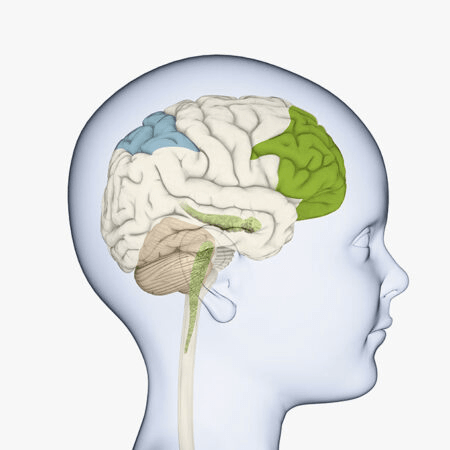
A lot of this mental work is done in the prefrontal cortex, the part of the brain responsible for working memory, planning, problem-solving, and self-control. Using these resources for lying means they are not available for other tasks, like solving math problems or remembering important facts.
Lying also has social consequences. People generally value honesty and don’t like liars. If people view you as untrustworthy, it can damage your relationships. Even well-intended lies, such as insincere compliments, can backfire. If your friends realize they can’t trust your compliments, those compliments become meaningless.
Most people don’t lie very much, says Timothy Levine, a psychologist at the University of Alabama at Birmingham who studies deception. His research shows that almost three-quarters of people rarely lie, and 90 percent of the lies they tell are “white lies.” However, Levine’s research also shows that while most people don’t lie often, a few lie a lot. The top one percent of liars, according to Levine, tell more than 15 lies per day. Some chronic liars are insecure. Others may lie about their accomplishments because they’re conceited or overly impressed with themselves. Still others lie to take advantage of people — perhaps even to cheat them or to steal from them.
The brain’s prefrontal cortex, behind the forehead (shown right, in darker green) isn’t fully mature until we are in our 20s. That’s a problem for adolescents. This part of the brain helps us understand risk. It’s also in charge of a lot of our higher-level thinking, such as planning and self-control.
DORLING KINDERSLEY/GETTY IMAGES PLUS
Lying is especially hard for young people because their prefrontal cortex is not fully developed until around age 25. This part of the brain helps with higher-level thinking, such as planning and self-control. When it’s busy with tasks related to lying, it has a harder time doing other important tasks.
Some lies never stop, like those told by spies or people hiding a difficult home life. Pretending to be something you’re not almost every hour of every day is mentally draining and can have long-lasting effects. Over time, this kind of lying uses up the brain resources needed for thinking and planning.
Most people value honesty, and research shows that honest people build social capital, or goodwill, within their communities. Trust is essential for healthy relationships and a well-functioning society.
Lying may seem easier in the short term, but it has significant cognitive and social costs. By striving to be honest, we can save mental energy and build stronger, more trusting relationships.
Neil Garrett, a neuroscientist at the University of East Anglia in Norwich, England, has studied how emotions affect our willingness to be dishonest. He points to a study where students were given a beta blocker, a medicine that dampens emotions. These students were more likely to cheat on an exam than those who didn’t receive the medicine, possibly because they felt less fear or anxiety about being dishonest.
Garrett and his team also examined the relationship between lying and activity in the amygdala, the part of the brain that processes emotions. They conducted an experiment where volunteers played a game to make money by lying to a partner. Brain scans showed that the amygdala was very active when participants first lied. However, as they continued to lie, activity in the amygdala decreased, and the participants lied even more. These findings were reported in Nature Neuroscience.
In one study, students were more likely to cheat on exams when they’d taken a drug that mutes emotions. ANDY SACKS/THE IMAGE BANK/GETTY IMAGES PLUS
Garrett suggests this brain effect might be similar to how our sense of smell adapts to strong odors. Initially, a strong smell is overwhelming, but after a while, we barely notice it. Emotions might work similarly; the more you lie, the less you feel the uncomfortable emotions like fear or guilt. In other words, lying becomes easier the more you do it.
Nearly all cultures value honesty, notes Victoria Talwar, a psychologist at McGill University in Montreal, Quebec. She suggests that creating a culture that reinforces the value of honesty can help. One strategy is to support friends while still being truthful. “When people’s friends are truthful with them,” she says, “it creates a culture of honesty among them,” which builds stronger friendships.
Jennifer Vendemia, a neuroscientist at the University of South Carolina, emphasizes that lying lessens when there are consequences for dishonesty. However, she adds that rewarding truth-telling is more effective than punishing lying. This is especially important when people share significant truths about themselves. “Being able to tell the truth to a friend is rewarding,” she says. “It feels good.”
Most people know that lying is generally bad and can have serious consequences. Science is now revealing how dishonesty impacts the brain and undermines the trust essential for strong relationships.
Hostility toward spiritual traditions may be hampering empirical inquiry. Science and religion seem to be getting ever more tribal in their mutual recriminations, at least among hard-line advocates. While fundamentalist faiths cast science as a misguided or even malicious source of information, polemicizing scientists argue that religion isn’t just wrong or meaningless but also dangerous.
I am no apologist for religion. As a psychologist, I believe that the scientific method provides the best tools with which to unlock the secrets of human nature. But after decades spent trying to understand how our minds work, I’ve begun to worry that the divide between religious and scientific communities might not only be stoking needless hostility; it might also be slowing the process of scientific discovery itself.
Religious traditions offer a rich store of ideas about what human beings are like and how they can satisfy their deepest moral and social needs. For thousands of years, people have turned to spiritual leaders and religious communities for guidance about how to conduct themselves, how to coexist with other people, how to live meaningful and fulfilled lives — and how to accomplish this in the face of the many obstacles to doing so. The biologist Richard Dawkins, a vocal critic of religion, has said that in listening to and debating theologians, he has “never heard them say anything of the smallest use.” Yet it is hubristic to assume that religious thinkers who have grappled for centuries with the workings of the human mind have never discovered anything of interest to scientists studying human behavior.
Just as ancient doesn’t always mean wise, it doesn’t always mean foolish. The only way to determine which is the case is to put an idea — a hypothesis — to an empirical test. In my own work, I have repeatedly done so. I have found that religious ideas about human behavior and how to influence it, though never worthy of blind embrace, are sometimes vindicated by scientific examination.
Consider the challenge of getting people to act in virtuous ways. Every religion has its tools for doing this. Meditation, for example, is a Buddhist technique created to reduce suffering and enhance ethical behavior. Research from my own and others’ labs confirms that it does just that, even when meditation is taught and performed in a completely secular context, leading research participants to exhibit greater compassion in the face of suffering and to forgo vengeance in the face of insult.
Another religious tool is ritual, often characterized by the rigid following of repetitive actions or by engagement with others in synchronous movement or song. Here, too, an emerging body of research shows that ritualistic actions, even when stripped from a religious context, produce effects on the mind ranging from increased self-control to greater feelings of affiliation and empathy.
Ritual can also play a part in strengthening beliefs. Research on cognitive dissonance has shown that publicly stating beliefs that we don’t initially endorse leads to a psychological tension that is often remedied by altering our beliefs and behaviors to match our public pronouncements. Thus the religious practice of repeatedly stating beliefs as part of prayers — as in the Catholic Mass — may enhance devotion to a creed.
What findings like these suggest is that religions offer techniques — or “spiritual technologies,” in the words of Krista Tippett, the host of the radio show “On Being” — that help people endure difficulties, change their views or move them toward action. These techniques seem to work by nudging our behavior subconsciously. Ms. Tippett stresses that the specific religious traditions from which such techniques are borrowed should be understood and honored on their own terms. But when I spoke with her recently, she also agreed that the techniques might work even when separated from their religious trappings, as meditation and elements of ritual have been shown to do.
If this view is right, religion can offer tools to bolster secular interventions of many types, such as combating addiction, increasing exercise, saving money and encouraging people to help those in need. This possibility dovetails with a parallel body of research showing that by cultivating traditional religious virtues such as gratitude and kindness, people can also improve their ability to reach personal goals like financial and educational success.
When I broached this body of research with the cognitive scientist and religious skeptic Steven Pinker, he emphasized that it was by no means a vindication of religion as a whole. He made a point to differentiate between what he called religious practices and cultural practices, with religious ones being those more likely to have doubtful supernatural rationales (like using prayer to contact a deity for favors) and cultural ones having more practical justifications (like using ritual to foster connection and self-control).
While I can see Professor Pinker’s point — and I agree with him that religion as a whole must be judged by its full set of positive and negative effects — the dividing line between cultural and religious can be blurry. The Jewish practice of Shabbat, for instance, stems from a divine command for a day of rest and includes ritualistic actions and prayers. But it’s also a cultural practice in which people take time out from the daily grind to focus on family, friends and other things that matter more than work.
My purpose here isn’t to argue that religion is inherently good or bad. As with most social institutions, its value depends on the intentions of those using it. But even in cases where religion has been used to foment intergroup conflict, to justify invidious social hierarchies or to encourage the maintenance of false beliefs, studying how it manages to leverage the mechanisms of the mind to accomplish those nefarious goals can offer insights about ourselves — insights that could be used to understand and then combat such abuses in the future, whether perpetrated by religious or secular powers.
Science and religion do not need each other to function, but that doesn’t imply that they can’t benefit from each other. Rabbi Geoffrey Mitelman, the founding director of Sinai and Synapses, an organization that seeks to bridge the scientific and religious worlds, told me recently that science can help clergy better aid those they counsel by showing which types of social and behavioral practices are empirically most likely to foster their emotional, moral and spiritual goals.
A yearning for a science-religion synergy is growing in some circles. Ms. Tippett cites as an example the Formation Project, an initiative designed by a group of millennials who are looking to cultivate their inner lives and form a community by combining ideas from psychology and neuroscience with practices from ancient spiritual traditions.
In doing this, she points out, these young people are not blindly accepting any doctrine. They are asking questions and choosing what works based on evidence. In short, they are doing exactly what I think the communities of scientists and clergy need to do in a more rigorous way and on a much larger scale.
Will it work? That’s an empirical question. But if we choose not to investigate it, we’ll never know. And I suspect we’ll be the poorer for it.



















 Peace LiLy