What if your thoughts and emotions were not just fleeting states of mind, but actual energy frequencies that shape your physical health and the world around you?
Dr. David R. Hawkins, a renowned American psychiatrist and spiritual teacher, spent decades studying human consciousness and developed a revolutionary model known as the Map of Consciousness. His work, presented in the best-selling books Power vs. Force and Letting Go, offers profound insight into how our energy levels—shaped by our emotions, beliefs, and spiritual awareness—directly impact our health and happiness.
🧠 The Energy Scale That Maps Our Inner World
Hawkins created a logarithmic scale of consciousness, ranging from 1 to 1000, where each level reflects a specific emotional and spiritual frequency. These levels are not abstract—they can be measured through kinesiology (muscle testing) and are believed to influence not only individual wellbeing but also global consciousness.
Here’s a simplified breakdown:
Level
Emotion/State
Effect on Health
20–100
Shame, Guilt, Apathy, Fear
Weakens body and immune system
200
Courage (Turning Point)
Threshold into empowering, healing energy
300–400
Willingness, Acceptance
Enhances emotional resilience and balance
500
Love, Compassion
Promotes deep healing and joy
600–700+
Peace, Enlightenment
Spiritual transcendence and lasting vitality
Hawkins emphasized that 200 is the critical dividing line. Below this threshold, people are ruled by fear, anger, or despair—states that are energetically draining and often linked to physical illness. Above 200, individuals begin to reclaim their personal power, align with truth, and tap into energies that support healing, vitality, and inner peace.
Dr. David R. Hawkins, stated that many people fall ill because they lack love and are filled only with pain and despair. When a person’s vibrational frequency is below 200, they are more prone to illness.
Dr. Hawkins, who interacted with many patients daily, said that he could tell why a person was sick just by looking at them—because he couldn’t find even a trace of love in them. Instead, their entire being was enveloped in pain and despair, living in a state dominated by negative thoughts.
According to Hawkins, many people fall ill not because of viruses or external factors alone, but because their emotional vibration is too low. When we live in fear, hold grudges, dwell in guilt, or resist life, our frequency drops—and the body, being energy-sensitive, responds with imbalance and dis-ease.
Chronic stress, suppressed anger, and emotional numbness are not just psychological burdens—they create an environment where illness can thrive.
If a person’s vibrational frequency is above 200, they are less likely to become ill. In contrast, emotions like anger, constantly blaming others, and harboring resentment consume a great deal of energy.
💖 Love, Faith, and Healing: The Power of High Frequency
Dr. David R. Hawkins observed that when Nobel Peace Prize laureate Mother Teresa appeared at the award ceremony, the atmosphere in the entire venue became remarkably elevated. The vibrational frequency of the space rose significantly, and her powerful presence allowed everyone there to tangibly feel her energy. In her presence, no one harbored negative thoughts.
According to Dr. Hawkins, when a person with a high vibrational frequency enters a space, they uplift everything around them—people, emotions, and even the environment itself. In contrast, someone who is filled with negative thoughts not only harms their own well-being but also disrupts the energetic field of their surroundings.
From a medical standpoint, Dr. Hawkins found the power of thought to be truly extraordinary. Through millions of tests and global surveys conducted across different races and cultures, he discovered that the impact of human consciousness was consistent and universal.
🌿 How to Raise Your Energy Level and Stay Healthy
You don’t need to be a spiritual master to benefit from Hawkins’ insights. Simple, daily practices can help you maintain a high vibrational state and support your health:
Practice Gratitude Start and end each day reflecting on what you are thankful for. Gratitude is a natural vibration lifter.
Choose Forgiveness Over Resentment Let go of past hurts. Forgiveness is not for others—it’s a gift you give yourself to release energetic baggage.
Meditate or Pray Daily Quieting the mind and focusing on divine compassion, love, or light raises your frequency significantly.
Speak with Kindness and Honesty Truthfulness and compassion are energetically aligned with the higher levels of consciousness.
Surround Yourself with Uplifting Influences Avoid negative media, toxic relationships, or environments that lower your energy. Choose art, nature, music, and people who inspire joy.
Invoke Higher Consciousness Repeating sacred names—such as “Amitabha Buddha,” “Guanyin,” or “Jesus Christ”—with pure faith has been shown to uplift energy and bring healing calm.
✨ The Ultimate Wellness Is a Shift in Consciousness
Dr. David Hawkins teaches us that wellness begins from within. By raising our consciousness, choosing love over fear, and aligning with truth and compassion, we can live not only healthier lives—but more joyful, meaningful ones.
Your mind is more powerful than you think. And your heart—when opened fully—has the power to heal not just your body, but the world around you.
“What you are looking for is what is looking.” — David R. Hawkins
A few years ago, I visited a well-known Chan (Zen) practice center and began what I thought would be a meaningful journey into Chan meditation as a lay Buddhist disciple. Alongside the physically demanding daily farm work, I occasionally joined meditation sessions—but instead of clarity or insight, they often left me feeling drowsy and disoriented. I also listened to recordings of teachings by an elderly monk, but they felt dry and uninspiring. At the time, I thought this was all Chan practice had to offer. Disappointment quietly took root in my heart.
As I spent more time at the center, I began to notice that some of the Buddhist nuns displayed strange and unsettling behavior. I was told that their mental disturbances had arisen during meditation and, without proper guidance or support, their conditions had never improved. The idea that meditation—supposedly a path to peace—could lead to such outcomes deeply frightened me. I couldn’t help but worry: Would I end up like them? My own practice was already filled with drowsiness and confusion. Each time I sat for meditation, their presence weighed heavily on me. What had gone wrong? Why did their practice lead to such distress?
One memory remains especially vivid. During a seven-day retreat, the presiding master criticized the decision to take the temple’s elderly abbot to the hospital when he fell critically ill. The master insisted that the abbot should have remained in the temple, reciting Amitabha Buddha’s name to seek rebirth in the Western Pure Land. He questioned why anyone would try to prolong life at the time of death, suggesting that doing so only prolonged suffering. Many attendees agreed, believing the abbot’s passing was natural and that emergency medical care was unnecessary. I was shocked. Something felt inherently wrong with that view. I wasn’t a monastic, just a lay practitioner, yet I couldn’t help but ask: When someone is in a coma, completely unconscious, can they still recite “Amitabha” with sincere intent? Can they truly attain rebirth in the Pure Land just by wishing so? Logically, this didn’t make sense to me.
Later, I heard of a monk who made a solemn vow to realize his true nature through three years of Chan meditation—and if he failed, he would return to lay life. Sadly, three years passed, and the result was heartbreaking. He had gained no realization.
After this string of disheartening events, I lost my passion for Buddhist practice. I felt lost, as if I’d reached a spiritual dead end. I even began questioning the purpose of monastic life: If there’s no true goal or path to liberation, what’s the point? Reluctantly, I considered giving up and returning to a mundane life.
But just when I stood at this crossroads, I encountered the Dharma discourses of H.H. Dorje Chang Buddha III. It was like a brilliant light breaking through the darkness—suddenly, all the disappointment, fear, and confusion that had weighed on me vanished. At that moment, I made a resolute decision to let go of my doubts and wholeheartedly follow the path illuminated by the Buddha’s true teachings. Eventually, my wish was fulfilled.
What I shared here are just my personal experiences—perhaps not yet the true path of Chan—but they reflect challenges that many practitioners face in their spiritual pursuit. Fortunately, I came across the book Concentration and Visualization—The Essence of the Right Path by Pamu, and the profound teachings of The Supreme Dharma of Chan imparted online by H.H. Dorje Chang Buddha III. For the first time, I received complete and correct teachings and truly understood what Chan meditation is meant to be.
Furthermore, through reading H.H. Dorje Chang Buddha III’sExpounding the Absolute Truth through the Heart Sutra (specifically page 216), I finally understood why those nuns had lost their way. Their mental disturbances stemmed from becoming attached to illusions produced by the manas consciousness, mistakenly believing those illusions were real. They had failed to comprehend the profound truth that all forms are illusory and false. Caught in delusion, they strayed into a demonic path.
The retreat master’s complaints about the abbot’s emergency care were also misguided. As stated in the article “Lay Buddhist Zhao Yusheng’s Transmission of the Dharma is Genuine, Not False”, if someone truly possesses the realization and power of H.H. Dorje Chang Buddha III—to the extent that the yidam Amitabha Buddha manifests and receives the deceased into the Pure Land—then yes, there would be no need for emergency treatment. But how many people have such realization? Did that master?
And what about the monk who gave up after three years? He didn’t know that there exists a supreme and ultimate Buddha Dharma—one so profound that it can open the crown chakra in just two hours. When opened, the space is vast and expansive like an eggshell, and consciousness can freely enter and exit the body, even engage in practice outside the body. With such realization, seeing one’s true nature is not a distant goal but a near certainty.
Looking back, I feel deep compassion for those nuns. They longed for true Dharma and liberation, but without authentic teachings or proper guidance, and weighed down by attachments and karmic hindrances, they couldn’t achieve realization. Tragedies like this still happen today. It’s heartbreaking.
The most authentic and supreme Buddha Dharma is that which comes from H.H. Dorje Chang Buddha III, yet many sentient beings remain unaware of it. Even those with karmic affinity who encounter the teachings may still fail to receive them due to karmic obstacles or worldly pressures—missing their rare chance to escape the endless cycle of birth and death.
All I can do is sigh deeply and reflect: The true Dharma of the Buddha is so rare, so precious—harder to encounter than one might in millions of kalpas. I am incredibly fortunate to have this karmic opportunity to respectfully listen to and study the Dharma discourses of H.H. Dorje Chang Buddha III.
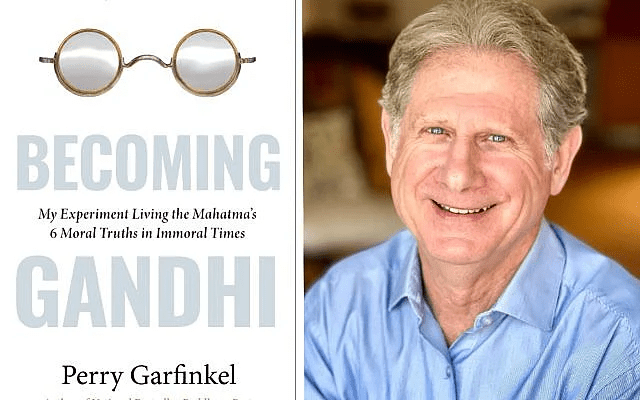
Perry Garfinkel embarks on a spiritual journey, blending Jewish roots with Gandhi’s transformative principles in ‘Becoming Gandhi.’
Perry Garfinkel, a longtime contributor to the New York Times and author of four books, has spent a lifetime seeking the deeper meaning of truth. In his latest book, Becoming Gandhi, he embarks on a spiritual journey to embody Gandhi’s principles. His unconventional path to this project bridges the values of his Jewish upbringing, his career in journalism, and his exploration of Gandhi’s teachings.
“What’s a nice Jewish boy doing writing about a Hindu icon?” Garfinkel joked during an interview. Beneath the humor, however, lies a profound question about faith, identity, and the search for common ground.
Born on Staten Island, a borough of NYC, but having lived briefly in Queens, Garfinkel has roots that trace back to a Jewish family from Queens, New York. He grew up in West Orange, New Jersey, and attended High Holy Day services with his grandfather, Moe Garfinkel, at the Queens Jewish Center in Queens Village. Religion was a pillar of his childhood, but something always felt missing.
“I never felt the heart of Judaism,” he said. “I wanted to taste it, but it felt out of reach.”
This sense of spiritual longing led Garfinkel beyond his roots. In his twenties, he traveled to India, where he encountered Hinduism and Buddhism. Garfinkel’s experiences sparked a fascination with spiritual practices that would shape his life.
“I’m a spiritual expeditionary,” he said. “I’ve always been searching for the truth—something that connects us all.”
His journey took a significant turn when his literary agent suggested he write about Gandhi. At the time, Garfinkel was coming off the success of Buddha or Bust, a national bestselling book documenting his exploration of Buddhism. The suggestion to focus on Gandhi intrigued him.
“I’ve been visiting India since 2003,” he explained. “Gandhi is everywhere—his quotes are on walls, his statues are in the streets. But I wanted to go deeper than the surface.”
The result was Becoming Gandhi, a book in which Garfinkel challenged himself to live by six of Gandhi’s core principles: truth, nonviolence, vegetarianism, simplicity, faith, and celibacy. Each principle posed unique challenges and taught him invaluable lessons.
“Truth was the hardest,” he admitted. “You look in the mirror and ask, ‘What is my truth?’ It’s like chasing mercury—you try to hold it, and it moves.”
Nonviolence tested him in different ways. In a world filled with conflict, war, and violence in entertainment, staying true to Gandhi’s vision of peace was no small task. “We’re bombarded by violence in so many forms,” he said. “How do we filter that out and choose something better?”
As he immersed himself in Gandhi’s teachings, Garfinkel found his thoughts returning to his Jewish identity. Gandhi himself had a deep interest in other religions, including Judaism. “He read the Old Testament, the New Testament, and the Quran,” Garfinkel said. “That openness inspired me to revisit my faith with fresh eyes.”
Perry Garfinkel interviews Ela Gandhi, granddaughter of Mahatma Gandhi and former member of Parliament in South Africa, in Durban.
Garfinkel had begun to re-identify his Jewish roots, working for about six years as media manager for the Jewish Community Federation of San Francisco. But through Gandhi, Garfinkel found a way to reinterpret Judaism’s role in his life. “Judaism gave me a foundation,” he explained. “But Gandhi provided new ways to think about it. He showed me that being rooted in your tradition doesn’t mean closing yourself to other perspectives. Instead, it can enrich your understanding.”
Perry Garfinkel interviews Ela Gandhi, granddaughter of Mahatma Gandhi and former member of Parliament in South Africa, in Durban.
Not all of Gandhi’s principles were easy for Garfinkel to adopt. Vegetarianism, for example, was particularly challenging for someone raised in a “meat and potatoes” family.
“I grew up on steak, corned beef, and other deli meats,” he said. “Giving that up wasn’t easy.” Eventually, he found a middle ground. “I call it tapering—gradually cutting back rather than going cold turkey. It’s about finding balance and making it sustainable.”
Beyond the personal challenges, Gandhi’s approach to global issues also led to deep reflection for Garfinkel. Gandhi’s decision to write letters to Adolf Hitler, addressing him as “Dear Friend,” struck many as naive or even offensive. Garfinkel, however, saw another perspective.
“Gandhi wasn’t trying to excuse Hitler’s actions,” he explained. “He attempted to model moral behavior, even when it seemed futile. His letters weren’t really for Hitler but for the rest of us. They were a reminder of what it means to stand for peace, even when the world is falling apart.”
For Garfinkel, the Holocaust added another layer to this complex discussion. His grandmother fled Poland before the worst atrocities, but many relatives were not so fortunate. “The Holocaust is personal for me,” he said. “It’s part of my identity as a Jew and a writer. Balancing that history with Gandhi’s message of forgiveness and nonviolence has been one of the hardest parts of this journey.”
Through his writing, Garfinkel bridges his Jewish heritage with his spiritual explorations, demonstrating that the two are not in opposition but in harmony. “Being Jewish and open to other traditions aren’t contradictory,” he said. “They’re complementary. They deepen your understanding of who you are.”
Today, Garfinkel continues to write and reflect, encouraging others to embark on their journeys of self-discovery. Gandhi’s message is simple but profound: “Be the change you want to see in the world.”
For Garfinkel, change begins with understanding—of oneself, one’s traditions, and the connections that bind us all. His work encourages others to reflect on their identity and potential by adopting some of Gandhi’s principles.
About the Author: Gregory Lyakhov is a sixteen-year-old high school student from New York with a passion for politics and law. He has been fascinated by government from an early age and aspires to be involved one day. Outside of politics, you’ll often find him running, swimming, or enjoying Pickleball and snowboarding. Join him on his journey of exploration!
Go placidly amid the noise and haste, and remember what peace there may be in silence. As far as possible without surrender be on good terms with all persons. Speak your truth quietly and clearly; and listen to others, even the dull and the ignorant; they too have their story.
Avoid loud and aggressive persons, they are vexations to the spirit. If you compare yourself with others, you may become vain and bitter; for always there will be greater and lesser persons than yourself. Enjoy your achievements as well as your plans.
Keep interested in your own career, however humble; it is a real possession in the changing fortunes of time. Exercise caution in your business affairs; for the world is full of trickery. But let this not blind you to what virtue there is; many persons strive for high ideals; and everywhere life is full of heroism.
Be yourself. Especially, do not feign affection. Neither be cynical about love; for in the face of all aridity and disenchantment it is as perennial as the grass.
Take kindly the counsel of the years, gracefully surrendering the things of youth. Nurture strength of spirit to shield you in sudden misfortune. But do not distress yourself with dark imaginings. Many fears are born of fatigue and loneliness. Beyond a wholesome discipline, be gentle with yourself.
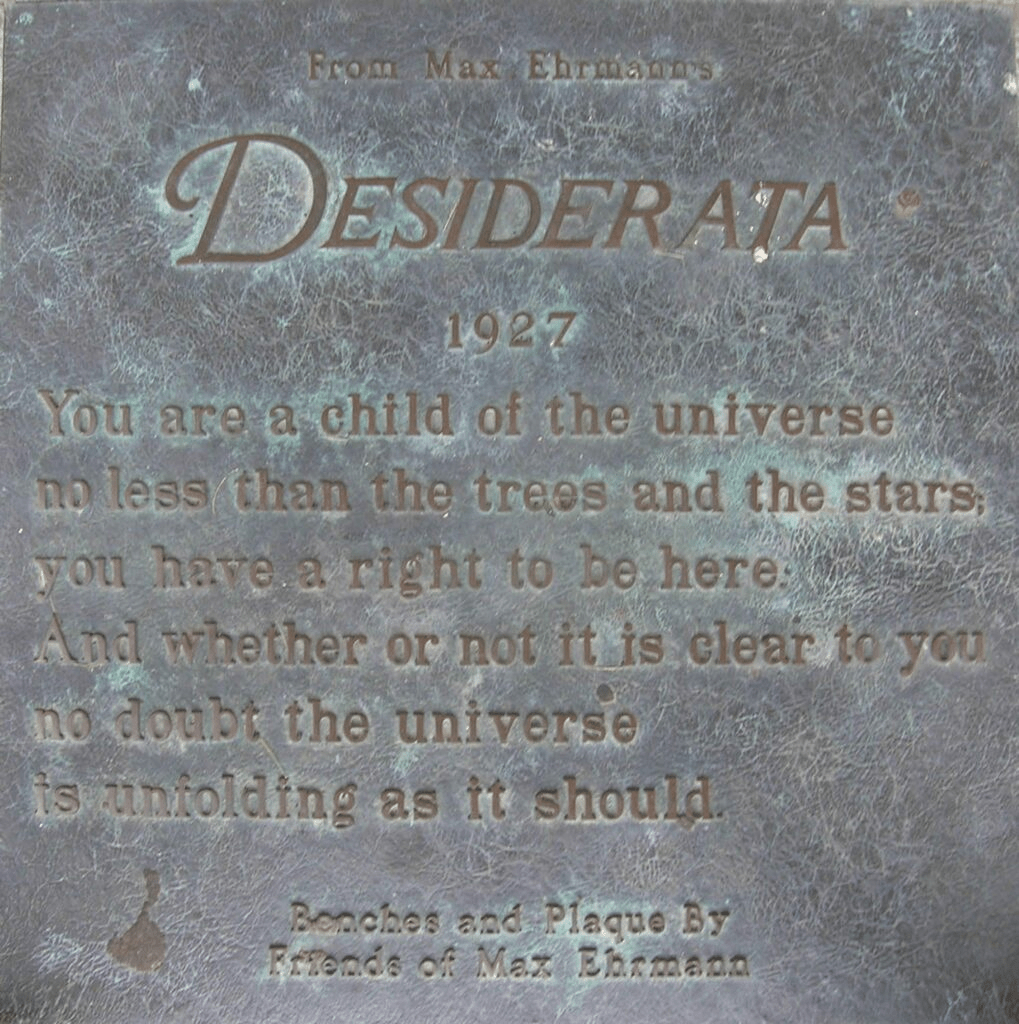
You are a child of the universe, no less than the trees and the stars; you have a right to be here. And whether or not it is clear to you, no doubt the universe is unfolding as it should.
Therefore be at peace with God, whatever you conceive Him to be, and whatever your labors and aspirations, in the noisy confusion of life keep peace with your soul.
With all its sham, drudgery, and broken dreams, it is still a beautiful world. Be cheerful. Strive to be happy.
Written in 1927 by American poet Max Ehrmann, Desiderata is a timeless poem that continues to inspire readers with its gentle, universal wisdom. The title, meaning “things desired” in Latin, perfectly reflects the poem’s themes of peace, authenticity, and compassion.
Ehrmann composed this prose poem to guide people in living a meaningful life. Though it gained widespread recognition only decades later, Desiderata resonates deeply with readers across generations. Its advice—such as staying calm amid chaos, embracing individuality, and showing kindness—feels especially relevant in today’s fast-paced world.
The poem also carries a spiritual undertone, encouraging acceptance of life’s challenges while celebrating its beauty. Its words remind us to live mindfully, cherish our unique paths, and find serenity in our connection to the larger universe.
In a world where noise and haste often dominate, Desiderata offers a calming presence and serves as a reminder to align our lives with values that bring lasting peace and joy. Whether you’re encountering it for the first time or revisiting its wisdom, this poem remains a meaningful touchstone for navigating modern life with grace.
Have you ever stumbled upon a book that instantly captivates your attention, drawing you into its pages with an irresistible allure? That’s precisely what happened to me when I discovered the Chinese version of “The Boy Who Saw True.” From the moment I started reading, I was completely enthralled.
At the heart of this remarkable book is a young boy from England, born into privilege yet endowed with an extraordinary gift. Raised in a family where literature was cherished, he inherited his father’s passion for reading, immersing himself in books far beyond his tender years. Despite his mother’s attempts to steer him away from certain subjects, his determination to explore the literary world only grew stronger, infusing his writings with a delightful blend of wit and charm that is uniquely his own.
But what truly sets this young boy apart is his “third eye” – an innate ability to see truths hidden from ordinary sight. In his diary, he meticulously chronicles the myriad of peculiar phenomena he encounters in the spiritual realm. From envisioning himself as a monk in a secluded cave, imparting ancient Buddhist teachings to his disciples, to glimpsing his past life as a revered priest in ancient Egypt, seduced by the allure of worldly power – each revelation is as astonishing as it is profound, offering profound insights into the mysteries of human nature and the cosmic order.
Despite facing skepticism and misunderstanding from those around him, the boy’s unwavering insight into the spiritual realm remains unquestionable. His experiences, both mysterious and mesmerizing, serve as a beacon of inspiration, igniting a fervent curiosity in readers eager to unlock the secrets of the universe.
The author’s integrity shines through every page, as he never seeks to exploit his psychic abilities for personal gain. It’s this steadfast commitment to truth and authenticity that makes his diary a rare and precious gem, entrusted to the world by the esteemed editor, Mr. Cyril Scott, after the author’s passing.
What makes “The Boy Who Saw True” truly exceptional is its exploration of the spiritual realm through the innocent eyes of a child. Unlike other metaphysical books, it eschews complex theories in favor of a refreshingly simple and humorous narrative style, making it accessible to readers of all ages.
As I delved deeper into its pages, I couldn’t help but feel a profound sense of wonder and enlightenment. This book is more than just a literary masterpiece – it’s a journey of self-discovery and spiritual awakening that transcends the boundaries of time and space.
In conclusion, “The Boy Who Saw True” invites readers to embark on a transformative voyage into the unknown, where the boundaries between reality and imagination blur, and the truth reveals itself in the most unexpected of places. It’s a reminder that our lives are but a small part of a vast and wondrous universe, waiting to be explored and embraced with open hearts and minds.
In the heart of Ming Dynasty China, a man named Yuan Liaofan emerged, leaving an indelible mark on history. Born in the picturesque Wujiang County, Jiangsu Province, China, Yuan Liaofan’s original name was Yuan Huang. With the courtesy name Kunyi and the alternative name Xuehai, he later adopted the name Liaofan, symbolizing a profound shift in his life’s trajectory. During his life, he underwent a precise fortune-telling by an adept in divination, which turned out to be accurate. However, Yuan Liaofan later transformed his own destiny.
Yuan Liaofan’s transformative journey began when he sought guidance from a revered monk, a master in the art of divination. The monk, through precise fortune-telling, revealed a predetermined path for Yuan Liaofan. Undeterred by this revelation, the monk imparted invaluable wisdom on how to change his fate.
The monk emphasized the importance of performing virtuous deeds and accumulating positive karma. He outlined a path that involved actively engaging in a thousand good deeds, actions that would not only benefit others but also bring about profound changes in Yuan Liaofan’s own destiny.
Embracing the monk’s teachings, Yuan Liaofan dedicated himself to a life of kindness, compassion, and generosity. He embarked on a mission to perform a thousand good deeds, each act carefully documented in a personal ledger. His deeds ranged from helping the needy and supporting the less fortunate to acts of kindness that reverberated through his community.
As Yuan Liaofan diligently pursued this virtuous path, the effects on his life were nothing short of remarkable. Contrary to the fortune-teller’s prediction that he would not have a son, Yuan Liaofan became a father, experiencing the joys of parenthood. His household, once devoid of the laughter of children, now echoed with the sounds of familial bliss.
Additionally, the diviner had foretold that Yuan Liaofan’s life would be limited to fifty-three years. However, Yuan Liaofan defied this prediction, living a full and fulfilling life until the age of seventy-four. The positive energy generated by his virtuous deeds not only defied fate but also led to a prolonged and healthy existence.
The transformative effects were not confined to his personal life alone. Yuan Liaofan’s career path witnessed an upward trajectory. Through his dedication, hard work, and the positive energy he exuded, he achieved professional success, earning promotions and garnering respect within his professional sphere.
“The Four Lessons of Liaofan,” penned by Yuan Liaofan himself, stands as a testament to his transformative experiences. It serves as a guiding light for all who aspire to harness the potential within themselves to cultivate positive change.
As we navigate the complexities of our modern existence, let Yuan Liaofan’s story inspire us to embark on a journey of goodwill. Embrace the opportunity to contribute to the well-being of others, and in doing so, witness the transformative effects it can bring to your own life.
May Yuan Liaofan’s tale be a beacon of encouragement for us all, urging us to embrace the inherent ability within ourselves to shape our destinies. After all, the power to create a life of abundance and health lies not in the stars, but within the choices we make each day.
Gesang Suolang Rinpoche, the founder and leader of the Xuanfa Utah Dharma Center in Salt Lake City, Utah
Gesang Suolang Rinpoche Shares Her Insight into the Dharma of H.H. Dorje Chang III & Why the West Needs It
Like many American Buddhists, I didn’t learn Buddhism in the family home. My interest in and later conversion to Buddhism began in the 1990s when my husband’s teacher, a Japanese Zen priest, stayed with us in our home in Virginia. My husband had studied with this teacher in the 1960s and 1970s when the teacher lived in America. The teacher had returned to Japan to raise his young family before I met my husband, so I didn’t meet him until 1990 when he began to travel to America again to pick up where he’d left off with his students. My husband had been his first student, and our house became a gathering place for the teacher’s students when he started coming to America again. My first exposure to the teachings of the Buddha was at our kitchen table where the teacher gave lectures on the Blue Cliff Record, a famous collection of koans from China. I didn’t understand the texts at all, but there was a scent of the profound and mysterious to them. And in curious contrast, there were earthy, often irreverent quips added to each koan by a later commentator to the collection, followed by transcendent poetry from yet another commentator. These texts sailed straight to the part of my mind that wants to know, wants to understand the depths of the universe. I was hooked. The teacher was at his best when translating and illuminating texts. He had a literary bent of mind, could read Chinese, and did beautiful English translations of Zen texts. He seemed most brilliant when dealing with the profound, the matters that could not be expressed in words. But as a teacher of human beings, his gifts were undeveloped. He was hard as nails, bristling with energy, and seemed to have some dharma powers. I initially thought he would help me understand the dharma, the universe, me, my life, but after a while I couldn’t see what kind of human being would be able to benefit from his unfeeling and bullying approach to students. I began to doubt him. And when those closest to him truly seemed to be suffering mental disorders and deep depression I decided to leave the group. I can’t say that I learned nothing from this experience. I did walk away with a love for the dharma, a deep faith that it was definitely my karma to be a Buddhist and a respect for the practice of patience under insult. Yet, I doubted that I had been presented with the true Buddha-dharma nor a model Buddhist teacher.
After a while, I was drawn to an American Zen teacher. I found him to be charismatic, very confident, and able to work with flawed human beings. He took a psychological approach to the dharma, which was in great contrast to my Japanese teacher who frequently declared that he “didn’t do therapy.” My American teacher talked a lot about becoming a better-functioning human being. His teachings emphasized exploring one’s accumulated psychological knots rather than sitting on one’s stuff. The idea seemed to be that if you became aware of the knots and hurts in your psyche and embraced them instead of burying them you could be free; and by understanding yourself more deeply you could also feel more compassion for others, recognizing that we’re all deluded in so many ways. I did this practice for a number of years and found it helpful and manageable, but I couldn’t stop feeling that something was missing. I couldn’t reconcile these teachings with the sutras or the other great texts of Buddhism. And again, the teacher and assistant teachers, who were often less than admirable models, raised doubt for me. There was a lot of talk about power and empowerment and a great deal of interest in this subject among students, especially about empowerment of the career-oriented type. We were supposed to know and embrace our hidden behavior patterns but there wasn’t much encouragement to simply be good, or to keep precepts. There was an implicit sense — and from some of the teachers an outright suggestion — that intentions and efforts to do good and be beneficial to others were tainted and suspect. I could somewhat appreciate this point of view — a bodhisattva doesn’t have to “do good” –but I felt this stance left us without tools for transformation, for training ourselves in new behaviors.
There was also little talk about becoming enlightened and even the suggestion that we did not need enlightenment, but should aim to become freely functioning human beings. It was as if, by becoming a better human being you needn’t bother becoming a bodhisattva. I think there was a lack of understanding among the teachers of this sangha about what a Bodhisattva would really be like.
I suspect much of Buddhism in the West is similar to this. The main points seem to be: stay in the present, be non-attached, be non-judgmental, don’t believe anything, fully experience your emotions, be ordinary, dharma powers — if not an outright myth, would be laughable to possess, also, Buddhism naturally changes when it enters a new culture. I had gotten the impression from Western-style Buddhism that when Shakyamuni said to “be a lamp unto oneself” he’d meant that we should decide for ourselves what was true or not – like the new-age dictum to “believe what resonates with you” rather than look inside and honestly evaluate oneself.
I had read some sutras, and the dharma talks I heard bore little relation to the teachings of the sutras. I’d had some deep experiences of emptiness so I knew there had to be more to Buddhism than just being a mentally and emotionally healthy person. I wondered about enlightenment, liberation from birth and death, prajna, becoming a Bodhisattva, acquiring the usages of emptiness? Why didn’t we hear about these age-old goals of Mahayana Buddhism in the lecture hall? I was deeply disappointed and felt adrift once again. I liked the community of people I was learning with, but found this psychological approach so limited. Yes, my Buddhist practice was about me, but it also had to be about the not me that had yet to appear. Once I acknowledged my disgruntlement, I could no longer give the benefit of the doubt to some of the things that my teachers said such as: “I’m agnostic about reincarnation,” “why believe that the Buddha’s enlightenment was anything special since we weren’t there,” “we can stand on the shoulders of the Buddha and go beyond the Buddha’s teachings,” and “Zen is a business.” I was doubting my teachers too much to continue with this group.
Then I met Zhaxi Zhuoma Rinpoche, an American teacher who was a close disciple of H.H. Dorje Chang Buddha III. She was touring all 50 U.S. states giving presentations about and distributing copies of a book about H.H. Dorje Chang Buddha III. She presented a copy to every governor’s office in every state. I had actually heard about H.H. Dorje Chang Buddha III a few years earlier, when he was known as Dharma King Wan Ko Yeshe Norbu. An acquaintance had shown me a video about the Dharma King’s artworks. One of these was a sculpture in which he had placed mist into a cavernous structure in the sculpture. To this day, the mist just stays there circulating in the sculpture year after year. No ordinary artist could create such a sculpture, I knew it had to be made by an extraordinary person. It was miraculous. It had been exhibited, along with other examples of his work, in Washington, DC in October 2003 at the Congressional House Office Building. The rock with mist is currently on view in The international Art Museum of America in San Francisco, CA.
The book that prompted this 50 state tour was about the wonderful accomplishments of H.H. Dorje Chang Buddha III. His artworks were only one of 30 categories of accomplishments written about in the book, many miracles were documented there as well.
The book also included photographs of recognition letters written by high-level, independent leaders of the esoteric schools of Buddhism. Some of these great masters said that they entered samadhi and personally saw that H.H. Wan Ko Yeshe Norbu is the true incarnation of Dorje Chang Buddha. Dharma King Omniscience Jamyang Langdok Gyaltsen (Lama Achuk), Urgyen Xirao Woxiu Lama, Dharma King Renzeng Nima* all wrote letters stating they had supernaturally seen the truth that H.H. Master Wan Ko Yeshe Norbu is the incarnation of Dorje Chang Buddha also known as Buddha Vajradhara. (Translations of the letters of these three masters can be found HERE..)
I felt some unease on learning that the Dharma King artist I had admired was now called a Buddha. I thought it would be easier tell other people about this great person if he was still called a Dharma King. Being recognized as a Buddha, I feared, would create an insurmountable barrier for people — that they would find the idea outlandish. Members of my Zen group reacted this way, almost to a person. And the thing is, H.H. Dorje Chang Buddha III really is so extraordinary and so outside the bounds of what is usual. However, we ordinary practitioners were just not equal in wisdom to these great masters of esoteric Buddhism, so who were we to do anything less than celebrate their recognition statements? Langdok Gyaltsen was the leader of one of the largest monasteries in Tibet. His main temple was Second Virtue Mountain Monastery where he provided teachings of the Great Perfection to tens of thousands of practitioners. Urgyen Xirao Woxiu Lama of the Nyingma school is a great terton (a discoverer of ancient texts or terma.) Renzeng Nima is a great dharma king of the Nyingma sect who has transcended the mundane world and has practiced almost his whole life in a secluded mountain valley. In fact, letters of recognition, congratulations and corroborating recognitions from many more Dharma Kings and Rinpoches are reproduced in the book.
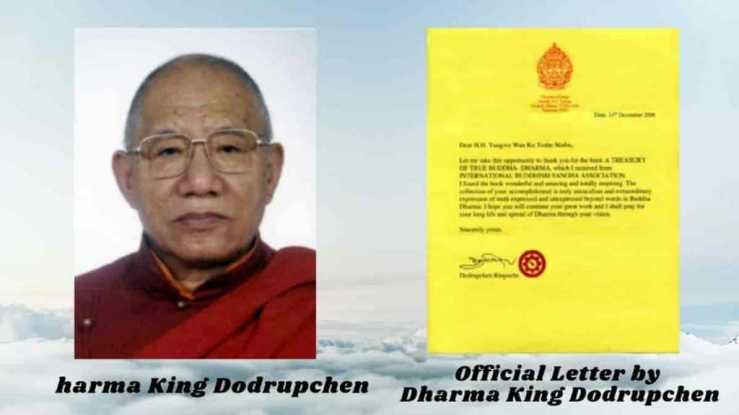
H.H. Dorje Chang Buddha III ‘s accomplishments are unprecedented. H.H. Dodrupchen Rinpoche, the greatest dharma king and master of the Nyingma sect congratulated H.H. Dorje Chang Buddha III with the following words, “The collection of your accomplishment is truly miraculous and extraordinary expression of truth expressed and unexpressed beyond words in Buddha Dharma.” Jigme Dorje, Supreme Dharma King of the Jonang Sect wrote: “Such superlative accomplishments are truly unprecedented in the past few thousand years, outshining the accomplishments of all others, both ancient and modern. His Holiness is a shining paragon among Buddhas.” Buddhist leaders cannot just toss off statements like these as if they were blurbs on the back cover of a book. The consequences of making ill-considered or casual statements about recognizing a Buddha would be enormous.
I can understand the impulse to be suspicious of things outside the normal and usual happenings, but I do sometimes think that our current times are not really all that normal. The natural world is in serious decline. There’s climate change and other troubles for life on the planet. We’re losing birds, insects, sea life, coral reefs and whole species. And there’s very great social change as we embrace the digital world, automation and artificial intelligence. Maybe it really is a time of extraordinary danger and a Buddha has come just in time to help all living beings on earth.
I’d like to say that Zhaxi Zhuoma Rinpoche’s tour of America was a roaring success, but the number of Westerners who follow His Holiness the Buddha is still quite small. After meeting Zhaxi Zhuoma Rinpoche, I traveled to many different places to be able to hear preliminary English translations of recorded discourses by H.H. Dorje Chang Buddha III. Though there are thousands of recordings in Chinese, not many have been translated into English. Of these, only one, The Dharma of Cultivation is completely approved as a translation and published as a book and also free online on multiple websites. Zhaxi Zhuoma Rinpoche’s Holy Vajrasana Temple website has a link to this text. Listening to the discourses, I felt I was hearing the true Buddha Dharma. They were brilliant, clear, informative and extremely practical. If you listen to these discourses, as many thousands of Chinese speakers do, you will know exactly how to transform yourself through cultivation into the causal state for becoming a bodhisattva — that is, one who corresponds with a bodhisattva’s actions of body, speech, and mind.
All my resources for learning and practicing Buddhism are magnificent now. From the Buddha Master’s discourses and dharma teachings I have learned things I never heard before and experienced things I never saw before. Many high-level disciples of His Holiness are shining examples of sincere cultivation and devoted practice. Many of His disciples can manifest dharma powers. Some of them can perform extraordinary rituals of esoteric Buddhism, so that manifestations of Buddha-dharma are being seen and experienced in America now that only used to happen in Tibet. Dharma rituals such as: Creating a Sand Mandala through a Stone Slab; various rituals of selection such as, Drawing Lots from a Golden Vase; high temperature displays of Tummo Concentration; the Vajra Fa Man Initiation in which grains of sand weave themselves into a crown above a portrait of a Buddha or Bodhisattva; Beseeching Nectar from the Buddhas in which nectar manifests in a bowl; Eight Winds in Samsara Battle Position in which masters are tested in the holy realm. My teacher, Zhaxi Zhuoma Rinpoche’s Holy Vajrasana Temple is a Bodhimandala empowered by H.H. Dorje Chang Buddha III where Dharma Protectors will sometimes shake vajra poles to the delight of devout visitors to the temple. It is all so wonderful. I have seen these vajra poles mysteriously, vigorously shake. I have seen and felt nectar from the Buddhas rain from cloudless blue skies. I participated in the Eight Winds in Samsara test. My experiences are everything I expected the true Buddha-dharma to be and I’m experiencing these things in the USA!
As a follower of H.H. Dorje Chang Buddha III, I feel that the dharma I’m receiving is the original, authentic, and very real thing. It is a great treasure that I would like others in the West to enjoy as well. I liken this true Dharma to the silver dimes and quarters we used to use in America. In 1964 the silver content of American coins that had been minted from 90% silver was drastically reduced to no silver at all. There was no loss in their use as currency, their purchasing power remained, but they had lost their intrinsic value. They weren’t real silver and did not have the true properties of silver. I feel that secular Buddhism is like these new coins, which are shiny and still useful, since they still function as currency, but they’re not silver. They have lost the essence of why silver was chosen for coinage in the first place; it reflects light purely and beautifully and can be fashioned into treasured objects. I don’t believe the secular brand of Buddhism with its focus on being the best me, or on therapy, or on succeeding at business and personal relationships has retained its original value and purpose of helping us leave samsara. Many other systems can accomplish these aims as well. And these aims are side effects of sincere practice anyway, so there’s no value at all in losing the treasured ultimate goal of Buddhism. For those of us who want more, who wish to become arhats or bodhisattvas or buddhas, who want to realize enlightenment, accomplish prajna, attain the four wisdoms, the three bodies, the usages of emptiness. For those who wish to be able to expound the dharma that can liberate living beings, they should know there is more to Buddhism than the usual American fare. There is a Buddha here now whose teachings will help them cultivate their three karmas into a causation state for becoming a bodhisattva and whose transmissions of dharma practices can activate true dharma abilities. Everyone please take notice.
Gesang Suolang Rinpoche Shares Her Insight into the Dharma of H.H. Dorje Chang III & Why the West Needs It













 Peace LiLy