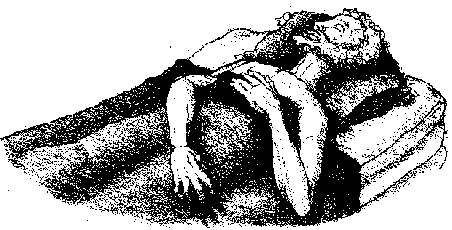
95. CLEAR-SIGHTED THE GREAT, KING OF THE WORLD [IMPERMANENCE]

95. CLEAR-SIGHTED THE GREAT, KING OF THE WORLD [IMPERMANENCE]

It is said that there are two ways to practice religion. One is to live apart from the ordinary everyday world as a monk, a nun or a holy one. Those who are sincere in this way have as their highest goal the direct experience of complete Truth — full Enlightenment.

The other way to practice religion is within the ordinary world. Those who are sincere in this way have as their highest goal the harmony of an undivided world, living peacefully under a perfectly wholesome ruler — a ‘King of the World’.

Once upon a time the Enlightenment Being was born and given the name ‘Clear-sighted’. As he grew up he developed ten rules of good government: absence of hidden ill will, absence of open hostility, harmlessness, self-control, patience, gentleness, charity, generosity, straightforwardness and goodness.

The people of the world began to notice the wholesomeness and fairness of Clear-sighted, who lived strictly according to these rules. Gradually those in his vicinity volunteered to live under his authority as king, rather than under the dishonest politicians of the time.

As his reputation spread, every king in the world came to Clear-sighted and said, “Come, oh lord, you are welcome, my kingdom is your kingdom, advise me how to rule in your name.”

Then Clear-sighted said, “Do not destroy life. Do not take what is not given. Do not behave wrongly in sexual desires. Do not speak falsely. Do not take alcohol that clouds the mind. My commands to the world are only these five. As long as these five are obeyed, my sixth rule is freedom for all to follow local customs and religions.”

After all the people on earth had come to live under his peaceful rule, he became known as Clear-sighted the Great, King of the World. His royal city, the capital of the whole world, was called Kusavati. It was a beautiful and prosperous city with four magnificent gates — one golden, one silver, one jade and one crystal.

Outside the gates, Kusavati was surrounded by seven rows of palm trees — a row with golden trunks and silver leaves and fruits; a row with silver trunks and golden leaves and fruits; a row with cat’s-eye trunks and crystal leaves and fruits; a row with crystal trunks and cat’s-eye leaves and fruits; a row with agate trunks and coral leaves and fruits; a row with coral trunks and agate leaves and fruits; and finally a row with trunks and leaves and fruits of every kind of jewel found in the world!

When breezes blew through these marvelous palms the sweet sounds of gentle music were heard throughout the city. This music was so enticing and pleasant that some of the citizens were enchanted into stopping their work and dancing for joy!

Clear-sighted the Great, King of the World, had a couch encrusted with jewels from the wonderful palms. After a long, righteous and peaceful reign, he lay on the rich couch for the last time. He knew that his end was near.

Of all his 84,000 queens, the one who loved him most was called, ‘Most-pleasant’. Sensing the state of his mind she said, “You rule over all the cities of the world, including this beautiful Kusavati with its four magnificent gates and seven rows of marvelous palms. Think about this and be happy!”

The King of the World said, “No, my dear queen don’t say that. Instead you should advise me to give up attachment to the cities of the world and all they contain.” Surprised she asked, “Why do you say this, my lord?” “Because today I will die,” he said.

Then Queen Most-pleasant started to cry, wiping away the tears as they flowed. And all the other 84,000 queens also broke into tears. And the king’s ministers and his whole court, both men and women, could not keep from weeping and sobbing. All eyes overflowed with tears.

But King Clear-sighted the Great said, “Your tears are useless. Be at peace.” Hearing this the wailing subsided and his subjects became silent. Then he said to Queen Most-pleasant, “Oh my queen, do not cry, do not lament. Anything that comes into being, whether it be a kingdom including the whole world, or just a tiny sesame seed — it cannot last forever. Anyone who comes into being, whether it be the King of the World, or the poorest petty thief — all must decay and die. Whatever is built up, falls apart. Whatever becomes, decays. The only true happiness is in the moment when becoming and decaying are not.”

In this way the Enlightenment Being got them to think about what most people don’t want to think about — that all things come to an end. He advised them to be generous and wholesome. Then the King of the World, like everyone else, died. He was reborn as a god in a heaven world, where in time, like everyone else, he died.

The moral is: “All good things come to an end.”

95. Clear-sighted the Great, King of the World [Impermanence]

Link: https://hhdorjechangbuddhaiiiinfo.com/2024/09/10/95-clear-sighted-the-great-king-of-the-world-impermanence/

#Buddhisttalesforyoungandold #Buddhiststories #storiesforkids #moralstories #Buddha #Jatakastories #PansiyaPanasJataka

Enshi Grand Canyon

An Enchanting Blend of Natural Beauty, Festivals, Art, and Cuisine

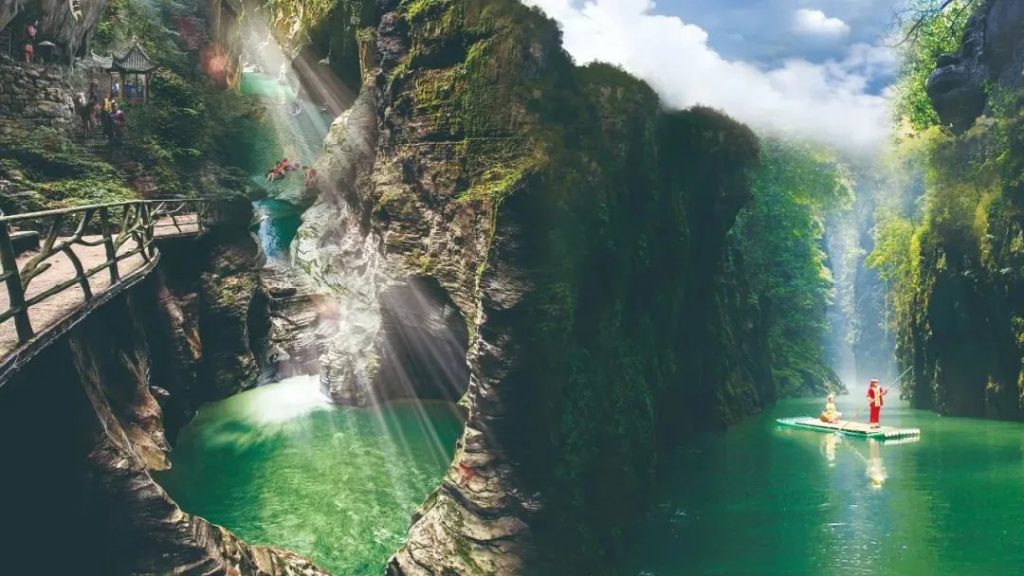
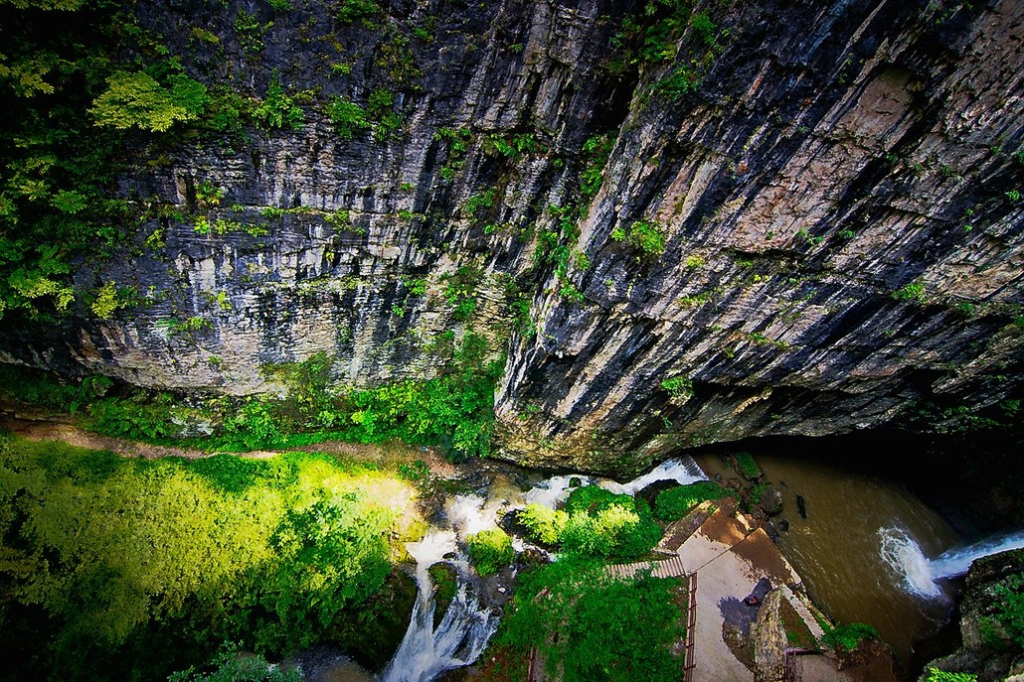
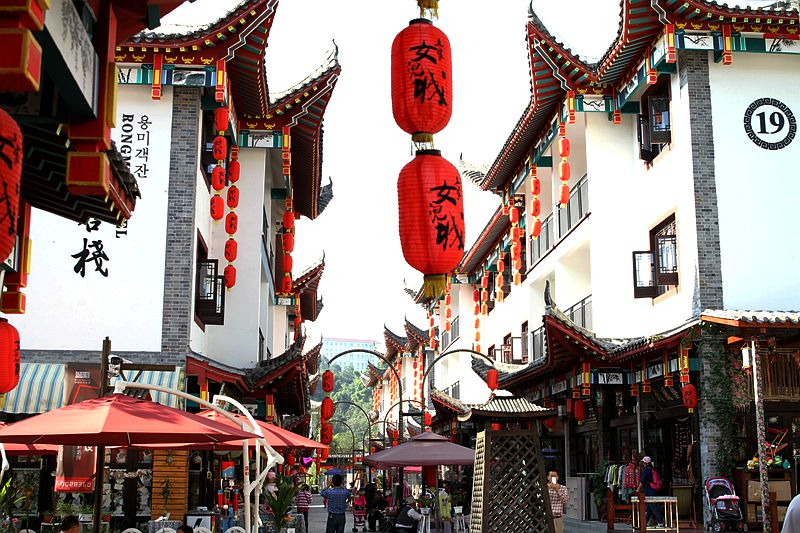
Nestled between Hunan Province, Chongqing Municipality, and Hubei Province, the Grand Canyon Scenic Spot in Enshi, China, is the most picturesque stretch of the Qingjiang River Basin and is often hailed as one of the world’s most beautiful canyons. With its dramatic 10,000-meter cliff gallery, plunging waterfalls, soaring peaks, and a ravine stretching for miles, the canyon rivals even the grandeur of the Colorado Grand Canyon in the USA. Two key areas within the canyon, Qixing Village and Yunlong Ground Fissure, cover an expanse of 35.2 square kilometers and are open to the public. These areas are renowned for their diverse limestone karst formations, such as tiankeng (sinkholes), ground fissures, cliffs, fengcong (peak clusters), limestone pillars, caves, and underground rivers, making it a natural museum of geological wonders and a world-class tourist destination.

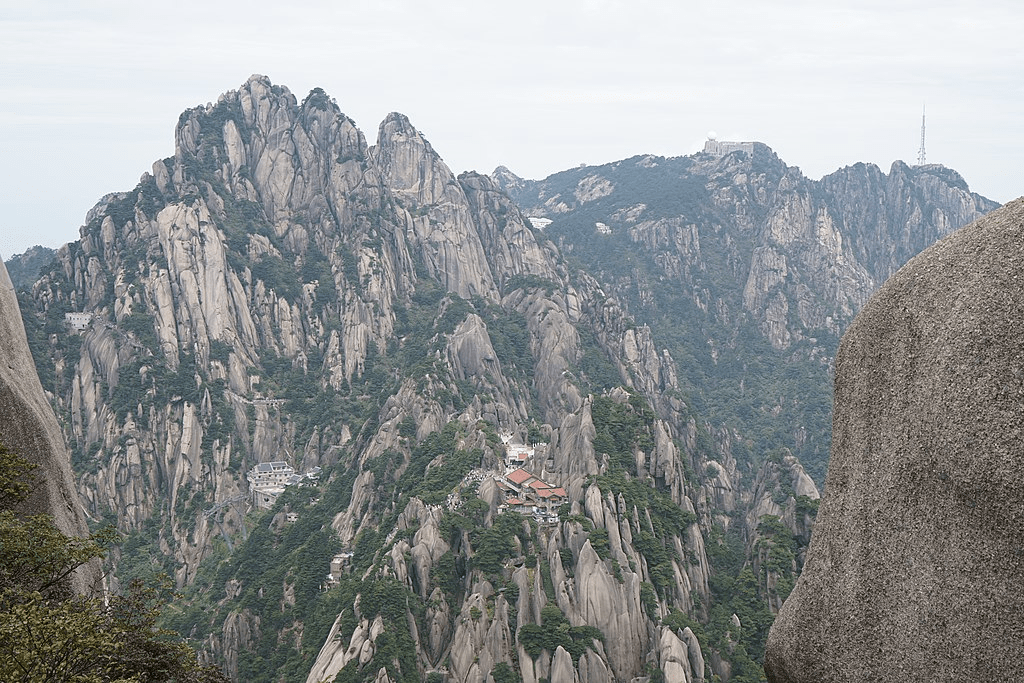
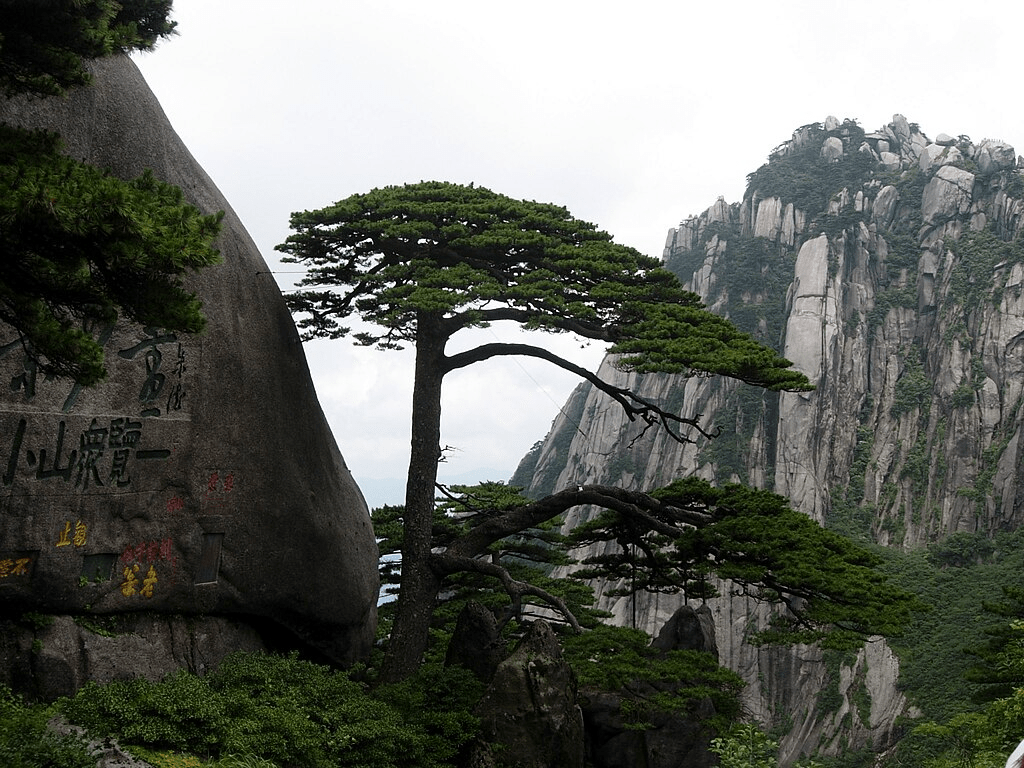
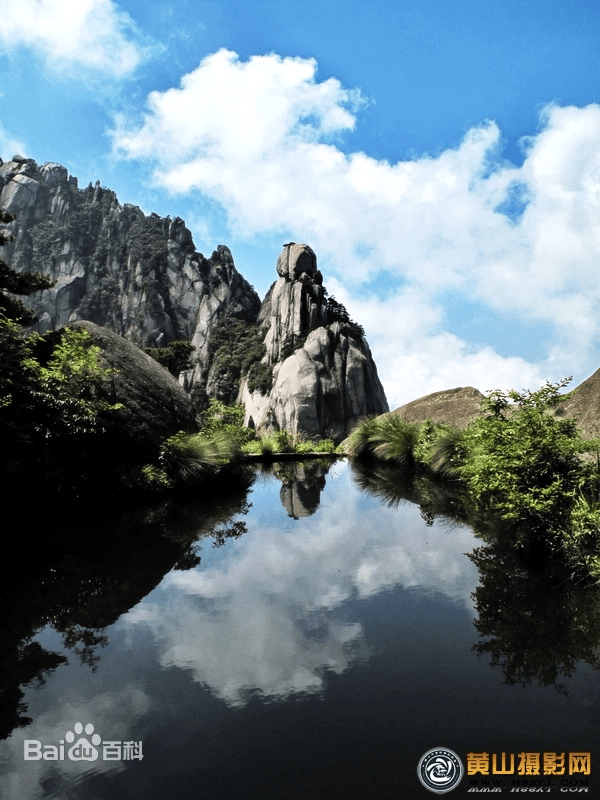
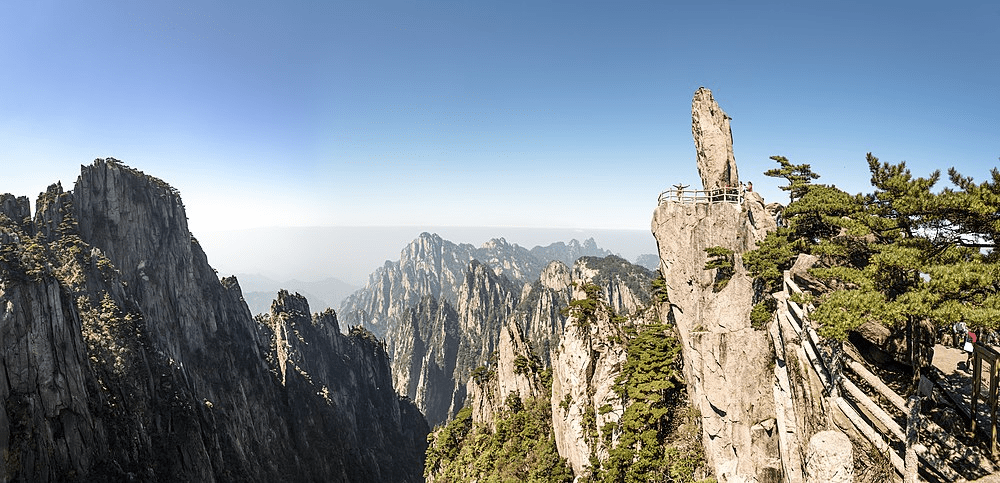
The Qixing Village Scenic Spot, considered the highlight of the Qingjiang Grand Fissure, includes the Small Pass, Medium Pass, and Large Pass. Along its 8.5-kilometer-long boardwalk, visitors can marvel at several famous landmarks, including the Peaks of Small Mountain Pass, Longmen Stone Forest, Yixiantian (a thin strip of sky), Precipice Corridor, Cloud Torch, Greeting Pine, Yizhuxiang (a stick of incense), Twin Towers, Yubi Peak, Yunv Peak, and Yuping Peak.

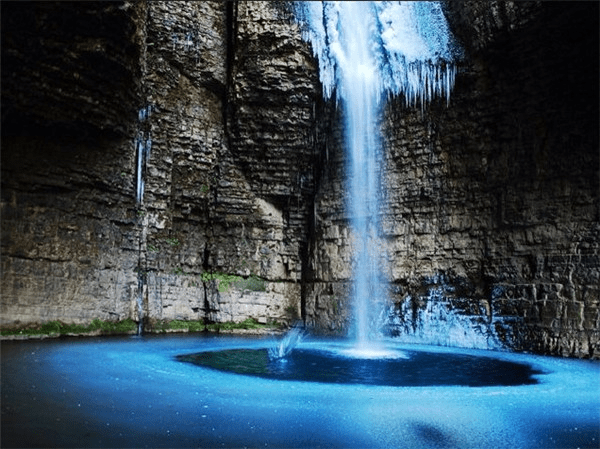
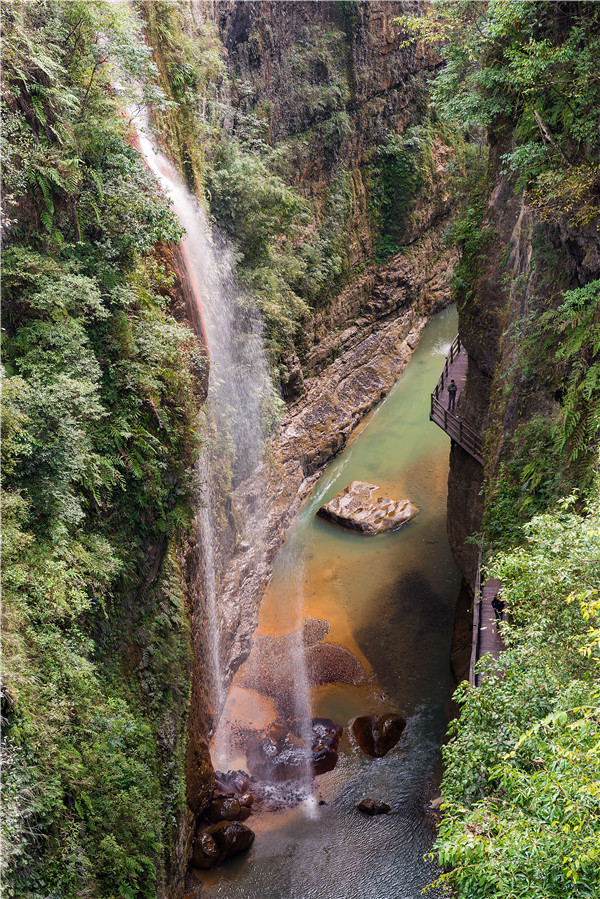
The U-shaped Yunlong Fissure, stretching 3,600 meters long and averaging 75 meters deep, is a stunning and unique karst formation. Within the fissure, waterfalls cascade dramatically down vertical drops, while outside, the fissure is surrounded by towering peaks and diverse landscapes. Notable waterfalls include Colorful Yellow Dragon Waterfall, Rainbow Waterfall, Yulong Waterfall, Ice Waterfall, and Mufu Waterfall.

Though the mysterious and steep Enshi Grand Canyon was not discovered until 2004 by a joint Sino-French expedition, it quickly captured global attention. In April 2012, U.S. explorer Dean Potter set a world record by walking a 41-meter-long slackline without assistance at Yizhuxiang, further showcasing the awe-inspiring wonders of the Enshi Grand Canyon.

White clouds rise from the Qingjiang River, twisting and turning like a dragon soaring into the sky. The sight of these clouds drifting for miles, smooth and majestic, is truly a feast for the eyes.

The canyon is also home to a striking combination of precipices and peak clusters, a geological feature unique to this region. Peaks seem to rise out of cliffs or soar above them, creating a landscape that is unmatched anywhere else in the world.

Over 200 caves of various sizes dot the canyon and are connected by natural bridges. The interplay of water and sky creates a fantastical atmosphere, as if you have stepped into another world.

The Yunlong River Fissure is lined with rock formations and ancient greenery, with numerous waterfalls and streams cascading down either side. The sheer beauty of this natural wonder is both breathtaking and unforgettable.

Tiankengs, or sinkholes, accompany the canyon’s underground river, which spans 50 kilometers, making it the longest underground river in the world. Along the river, 108 cenotes (natural sinkholes) create a truly spectacular sight.

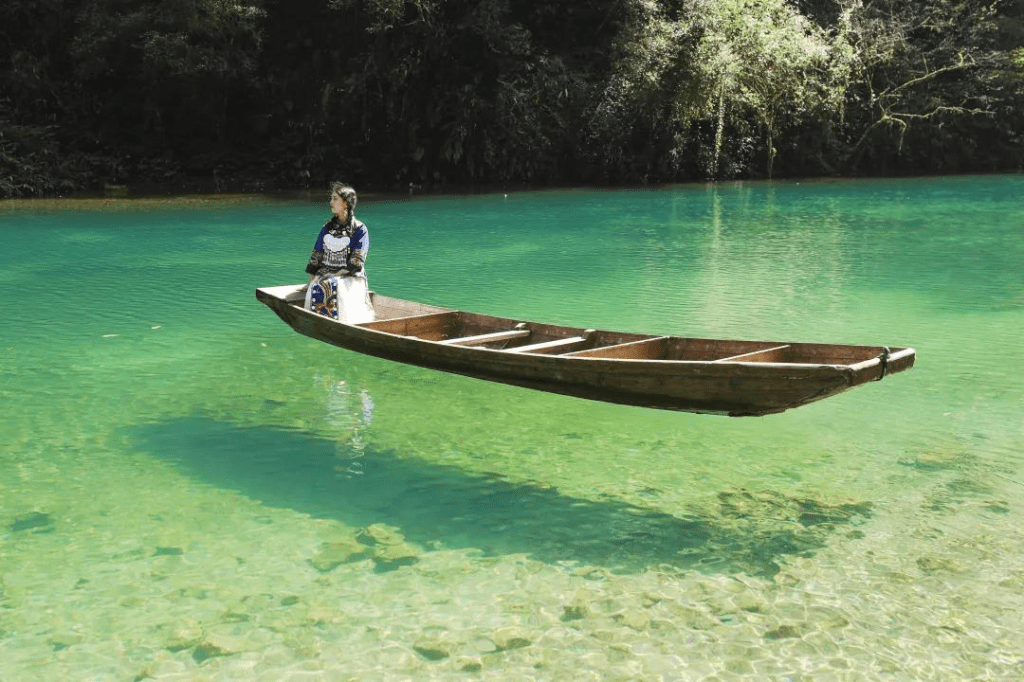
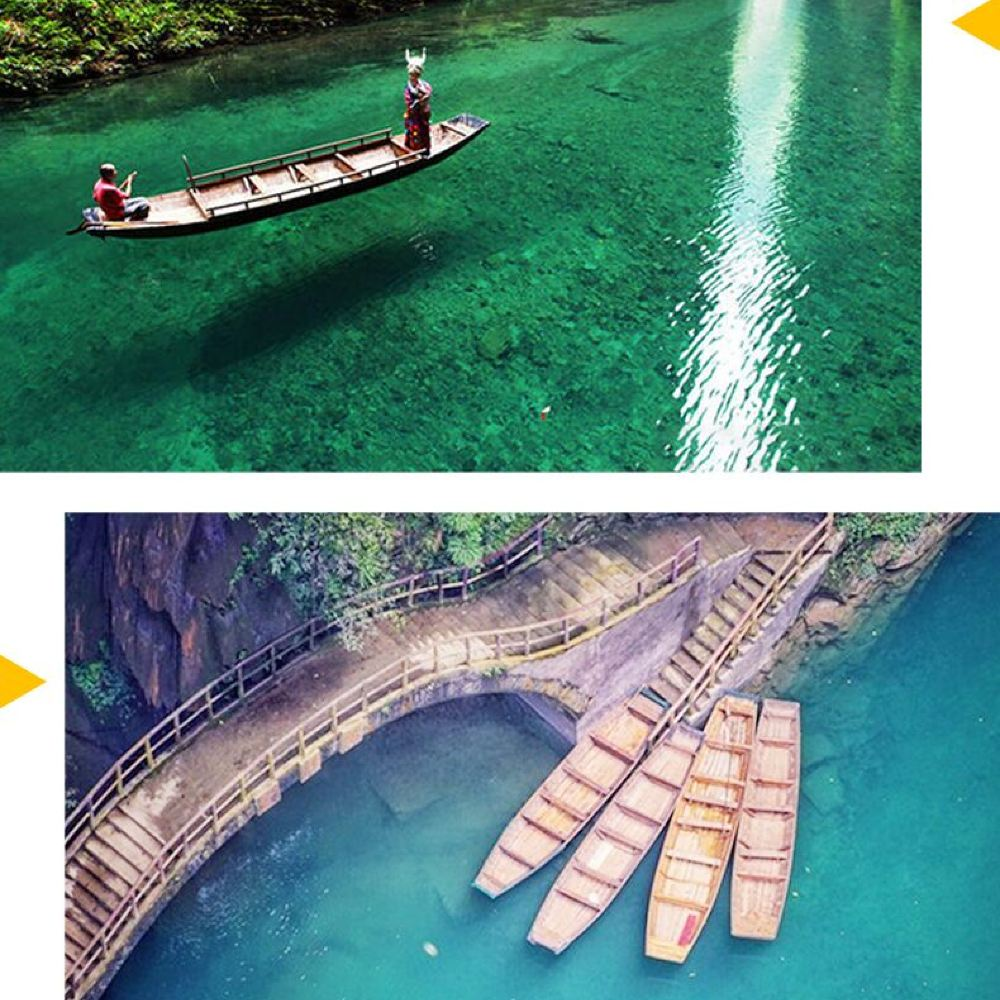
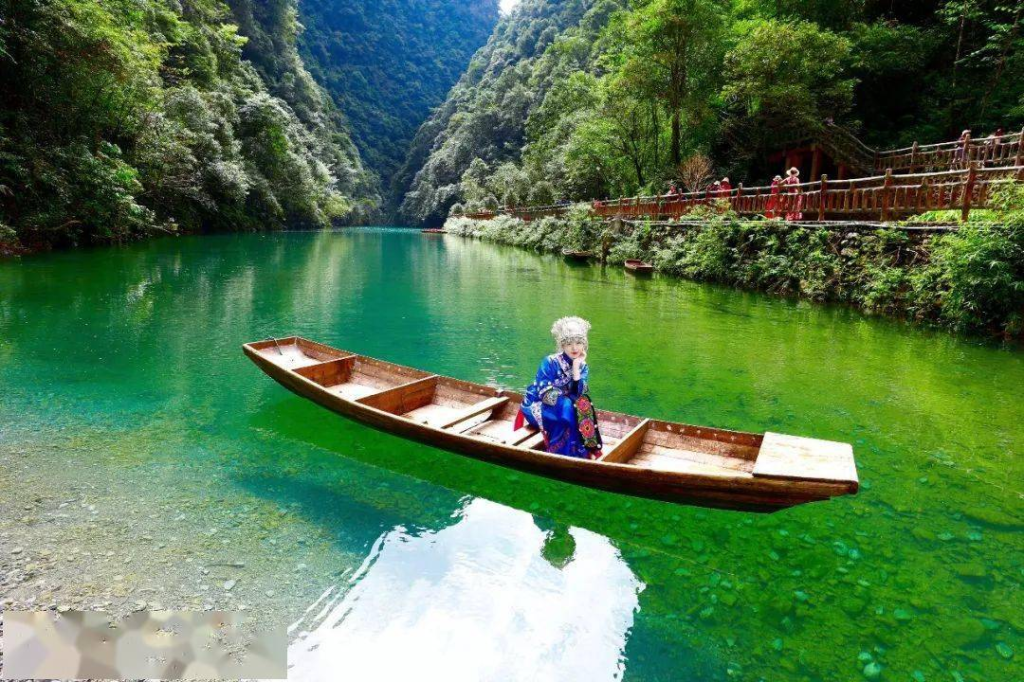
The waters of Pingshan Canyon are crystal clear, so clear they look drinkable. The boat seems to float in mid-air. As you ride in a small wooden boat and experience the sensation of floating, you see towering cliffs above and crystal-clear streams surrounding you below. Passing through narrow passages like “Yixiantian” (A Thread of Sky) and Moon Bridge, the only sounds are the gentle rush of water and the singing of birds. Gazing up at the sky from beneath these cliffs, there’s a deep sense of tranquility, as though you’re cut off from the world. The beauty of Pingshan Canyon is best captured by the lines: “Drunk, I know not whether the sky is in the water, but my boat is filled with clear dreams, pressing against the Milky Way.” To truly appreciate the splendor of Pingshan Canyon, you must come and experience it for yourself.

The Enshi Grand Canyon and its surrounding area are home to the vibrant Tujia Girls’ Festival, one of China’s most distinctive regional celebrations. This festival, unique to the Tujia people of Enshi, is more than just a marketplace gathering; it is a time-honored tradition where young women seek love on their own terms, often through the spirited exchange of songs in an antiphonal style. Dubbed the “Eastern Valentine’s Day,” it is a festival that symbolizes freedom and the pursuit of love.

Another fascinating cultural treasure rooted in Tujia heritage is Western Rancap, known as the “Flower of Tujia.” This beautiful craft reflects the ingenuity and artistic skill of the Tujia people, with its striking use of contrasting colors and intricate patterns that blend realism with abstraction. Historically, Tujia girls would weave these colorful bedrolls—often referred to as “Tujia Colorful Bedrolls”—on a loom as part of their wedding preparations, a tradition steeped in love and artistry.

Enshi is not just a region rich in cultural festivals but also a town alive with the arts, particularly in song and dance. The Tujia and Miao minorities express their joyful spirit through various performances, including the dragon boat song, hand-swinging folk dance, nuo opera, lantern drama, and the lively Tujia daliuz. The Dragon Boat Song, originating in Enshi Prefecture, is a love song that reflects the character and customs of the Tujia people. Recognized by UNESCO as one of the world’s 25 most remarkable folk songs, it embodies the heart and soul of Tujia culture. Renowned Miao singer Song Zuying has performed this song at prestigious venues like the Golden Hall of Vienna and Lincoln Center for the Performing Arts, sparking global interest in the music of Enshi.

The Enshi Grand Canyon Theatre brings this vibrant culture to life through large-scale real-life performances set against the stunning backdrop of mountains and rivers. The stage, illuminated by the natural light of the sun or moon, captures the simple and romantic spirit of Tujia love, creating an unforgettable experience for the audience.

The distinctive geography of the Enshi Grand Canyon has also shaped its cuisine, which blends the spicy flavors of Sichuan with the salty heat of Hunan. Enshi’s local specialties, heavily influenced by the Tujia and Miao minorities, offer a tantalizing array of flavors that attract visitors from near and far. Dishes such as “Gege,” steamed with a mixture of fried Chinese pepper and other main ingredients, mini hot-pot “Hezha,” roasted preserved meats, stir-fried Guang pepper with a sour and spicy kick, and Tujia sesame cakes are must-tries for any traveler seeking to taste the region’s unique culinary heritage.

Enshi Grand Canyon stretches 108 km (67 miles) and covers over 300 sq. km (74,000 acres). Though it’s only 1.7 miles wide, its narrow length offers stunning views. In comparison, the American Grand Canyon is vastly larger at 1,218,560 acres, enough to fit sixteen Enshi Grand Canyons.

The main difference lies in the landscape: Enshi is lush and green, unlike the arid terrain of the American Grand Canyon. Despite its smaller size, Enshi packs in all the beauty and features of its American counterpart, making it an excellent spot for a day trip or longer visit.

Link:https://peacelilysite.com/2024/08/16/enshi-grand-canyon/

Source: https://www.artisan.com.tw/blog/blog_article.aspx?article=587, https://www.esdaxiagu.com/en/scenicspot.html, http://www.hubei.gov.cn/jmct/jcms/lyjq/hbwajq/202208/t20220826_4282051.shtml

The Potala Palace: Jewel of the Roof of the World

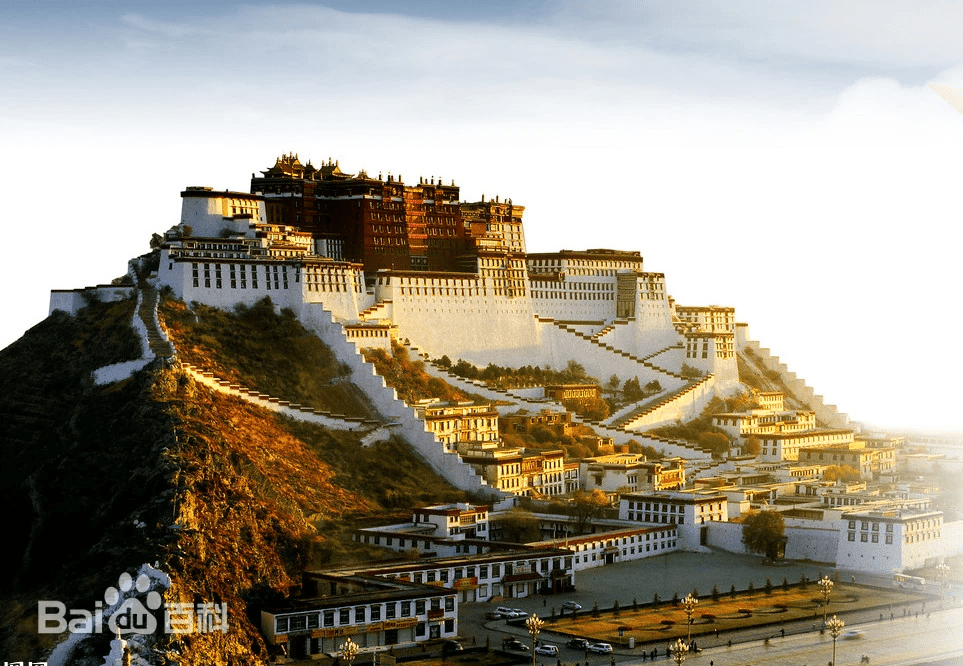
Located in the Tibet Autonomous Region of China, the Potala Palace is known as the “Jewel of the Roof of the World.” It stands as a symbol of China, Lhasa, and the Qinghai-Tibet Plateau. This palace, the highest and most majestic in the world, houses an incredibly rich collection of cultural relics and artifacts, preserving the unique heritage of the Snowy Plateau. The palace is renowned for its architectural layout, civil engineering, metal smelting, painting, and carving, showcasing the extraordinary skills of Tibetan artisans and the architectural achievements of the Tibetan people, as well as contributions from Han, Mongolian, and Manchu craftsmen. In December 1994, the Potala Palace was inscribed on the World Heritage List.

The magnificent Potala Palace stands at an altitude of 3,700 meters, covering a total area of 360,000 square meters, with a total building area of 130,000 square meters. The main building is 117 meters high, appearing to have 13 floors from the outside, while actually containing 9 levels internally. The complex includes palaces, stupas, Buddhist halls, scripture halls, monks’ quarters, and courtyards.

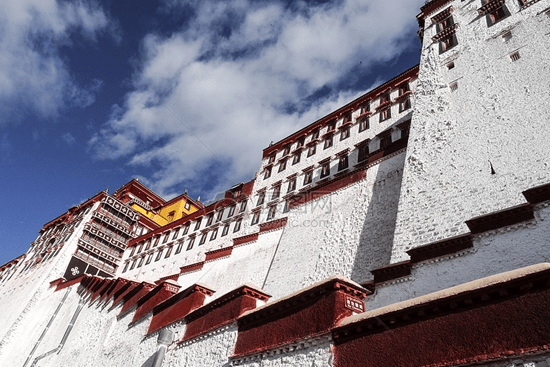
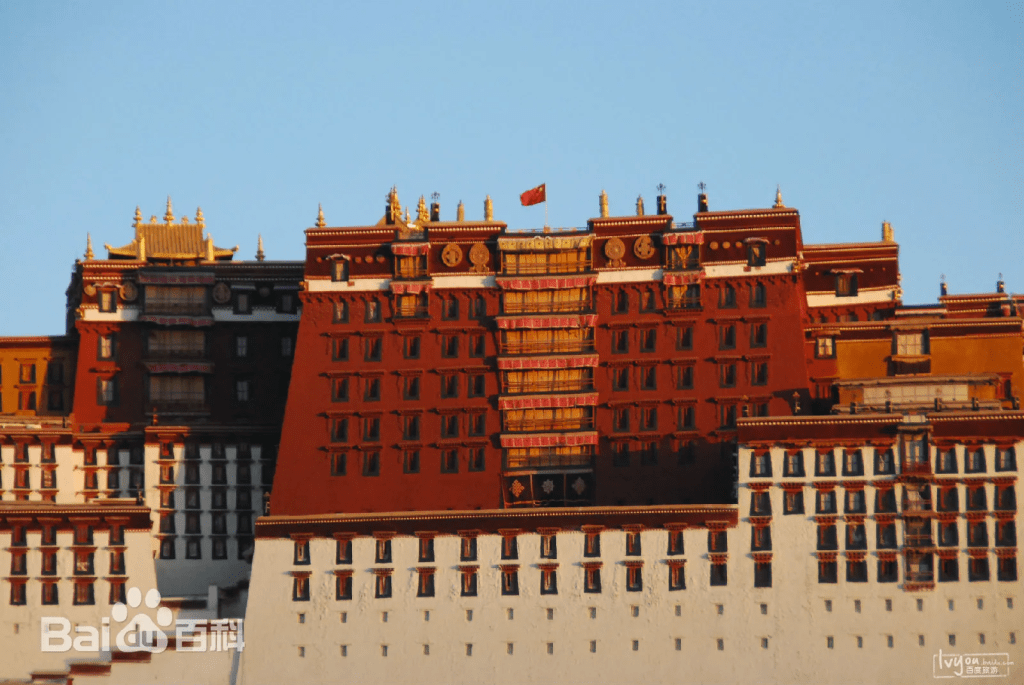
The Potala Palace’s main structure is divided into the White Palace and the Red Palace. Built into the mountainside, the complex features overlapping buildings, imposing halls, and a grand, sturdy granite structure. The white balustrades made of smooth bema grass, the resplendent golden roofs, and the large gilded bottles, stupas, and red banners create a striking decorative effect. The vivid contrast of red, white, and yellow, along with the intricate interlocking architecture, highlights the enchanting characteristics of ancient Tibetan buildings.

Historical records indicate that the Potala Palace was first constructed in the 7th century during the reign of Songtsen Gampo of the Tubo Kingdom, making it 1,300 years old. In the early 7th century, after moving the capital to Lhasa, Songtsen Gampo built three nine-story buildings with a total of one thousand rooms on Red Hill to welcome Princess Wencheng of the Tang Dynasty. The palace was named Potala Palace. The three walls surrounding Red Hill and a silver and copper bridge connecting the palaces of Songtsen Gampo and Princess Wencheng were part of the original structure. Outside the east gate of the Potala Palace was Songtsen Gampo’s horse-racing track.

When Princess Wencheng traveled to Tibet, she brought with her a large collection of books and documents, greatly promoting the development of Tibetan culture. It is said that there were more than 300 types of books on astronomy and calendrical calculations alone. The Tibetan calendar, still in use today, was created by absorbing and learning from the Han calendar, combined with the characteristics of Tibetan-inhabited areas and the experiences of the Tibetan people’s production labor. Classic works representing the excellent traditional culture of China, such as “Liezi,” “Shangshu,” “Strategies of the Warring States,” and “The Book of Questions Between Confucius and Xiang Tuo,” were also introduced to Tibet.

Ingenious Design and Construction

The design and construction of the Potala Palace take into account the patterns of sunlight in the plateau region. The foundation walls are broad and sturdy, featuring a network of tunnels and ventilation openings beneath them. Inside, the palace employs pillars, brackets, wooden struts, beams, and rafters to form its framework. The floors and roofs are made from a hard soil called “Arga.” Skylights are installed in the ceilings of each main hall and bedroom to facilitate lighting and air circulation. The pillars and beams inside the palace are adorned with various carvings, and the colorful murals on the walls cover an area of more than 2,500 square meters.

The Red Palace’s Enchanting Halls

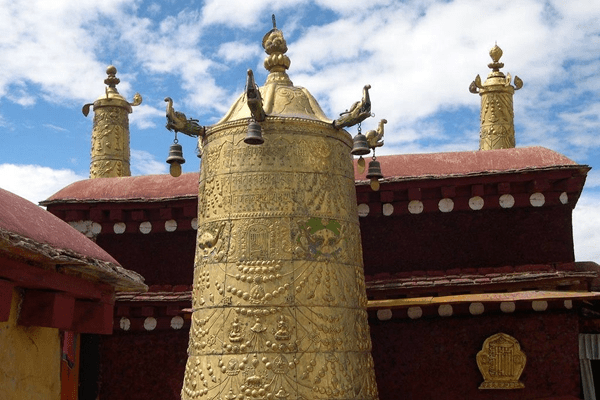
The Red Palace, situated in the central position of the Potala Palace, is distinguished by its red outer walls and mandala layout. The Hall of the Dharma King (Qujiejiebu) and the Hall of the Sage (Pabalakang) within the Red Palace are said to be structures remaining from the Tubo period. The Hall of the Dharma King is located in the middle of the Potala Palace, directly above the peak of Marpori Mountain. It is believed that this hall was once the meditation retreat of Songtsen Gampo and now houses statues of Songtsen Gampo, Princess Chizun, Princess Wencheng, and other ministers. The Hall of the Sage enshrines Songtsen Gampo’s principal deity, a naturally formed sandalwood statue of Avalokiteshvara. The rooftop platform of the Red Palace is adorned with the golden roofs of various stupa halls, all single-eaved hip-and-gable structures supported by wooden brackets and covered with gilded copper tiles.

Songtsen Gampo and Princess Wencheng (Image source: Potala Palace official website)
White Palace

A Masterpiece of Tibetan Architecture

The Potala Palace is a masterpiece of ancient Chinese architecture and an outstanding representative of Tibetan architecture. Its architectural artistry is the most remarkable example among the thousands of Tibetan Buddhist temples and palaces, unmatched anywhere in the world. At the pinnacle of the palace stand three gilded pagodas, one large and two small, shining brightly and dazzling the eyes. The parapet around the rooftop is constructed from a deep purple-red shrub, decorated with various gold ornaments. The roof is adorned with large gilded finials and red prayer flags, reflecting a strong Tibetan style.

A Fusion of Artistic Traditions

The sculptural art within the Potala Palace combines techniques from Han, Indian, and Nepalese Buddhist art. The palace houses a vast collection of treasures, including heavy-colored clay sculptures, wood carvings, stone carvings, and a significant number of metal statues made from gold, silver, copper, and iron. These works of art range in size from over ten meters tall to just a few centimeters.

Thangka Paintings and Cultural Treasures

“Thangka,” a Tibetan transliteration, refers to scroll paintings mounted on colorful silk brocade, depicting religious figures, historical events, and doctrines, as well as subjects like Tibetan astronomy, calendrical calculations, and traditional medicine. The Potala Palace preserves nearly ten thousand thangkas, some of which are several tens of meters long.

The palace also houses numerous religious and artistically significant artifacts, including Tibetan carpets, prayer cushions, prayer flags, canopies, and embroidered satin hangings.

Thangka of a stupa inscribed with the calligraphy of Emperor Qianlong. (Image source: Potala Palace official website)

Gilded bronze openwork incense burner with handle from the Potala Palace. (Image source: Potala Palace official website)

A National Treasure and World Heritage Site

The Potala Palace preserves a vast number of statues, murals, scriptures, and other cultural relics, making it a treasure trove of national art and culture. It is listed as a national cultural relic protection unit and a UNESCO World Heritage Site, reflecting its immense cultural and historical significance.


Explore the Potala Palace and immerse yourself in the rich tapestry of Tibetan history, art, and culture. Its breathtaking architecture and priceless artifacts offer a unique glimpse into the soul of Tibet, making it a must-visit destination for anyone seeking to understand the heritage of the Roof of the World.

Link:https://peacelilysite.com/2024/08/01/the-potala-palace-jewel-of-the-roof-of-the-world/

Source: https://www.brxuefo.com/2862.html,

White House Hosts Vesak Celebration

Vesak honors the Buddha’s birth, enlightenment and passing. On May 23, 2024, in recognition of the occasion, President Biden issued the following official statement from the White House:

“Jill and I extend our warmest wishes to Buddhists in the United States and around the world as they celebrate Vesak. As we honor the birth, passing, and enlightenment of Buddha, we recognize the American Buddhists who contribute so much to our communities and our country. For over 2,500 years, those who adhere to the Buddha’s teachings have enriched and strengthened this world we share. Vesak is a time to reflect on the Buddha’s teachings, including the need to work for peace and justice, and cultivate humility and compassion as we work together towards a brighter future.”

Representing President Biden at the Vesak ceremony was Second Gentleman Doug Emhoff, husband of Vice President Kamala Harris, whose opening remarks highlighted the significance of the Buddhist holiday. 

US President Joe Biden sent greetings to the Buddhist community on the occasion of Vesak, a day honoring the birth, enlightenment, and passing of the Buddha.

“It’s important that we all come together,” Emhoff said. “One, to express our interconnectedness, our faith, our joy, but also to combat hate. Because the one and best way to combat hate is to do it together. Because we know in this room that there’s so much more that unites us than divides us.”

Emhoff said that as the “first Jewish White House principal, I always talk about finding joy in my own faith, even in the face of hate and anti-semitism. As we celebrate this event and celebrate our cultures coming together, let’s just keep that joy at all times.”

The event was coordinated by Wangmo Dixey, President of the International Buddhist Association of America (IBAA) and the Executive Director of Dharma College in Berkeley through the offices of Shekar Narasimhan, President of the Dharma Into Action Foundation. 

Dixey noted that there are about 3,000 Buddhist temples in the United States, each representing the Theravada, Mahayana and Vajrayana traditions that trace back to the time of the Buddha. Jodo Shinshu Buddhism is part of the Mahayana tradition.

“Many elders have journeyed here to America, enriching our nation with their profound truth of reality,” Dixey told the gathering. “At the heart of the Buddha-Dharma is the conveyance of the truth of reality. It teaches the Four Noble Truths that we should understand suffering and identify its cause, and so find a path to the cessation of suffering and the way of life that embodies that this fundamental teaching illuminates a universal truth that remains timeless and profoundly relevant to the challenges we face in modernity. Central to these teachings is the practice of the Eightfold Noble Path, a guide to living, wisdom, ethical conduct and mental discipline.”

Before Emhoff and the Buddhist dignitaries lit a butter lamp in honor of Vesak, Dixey spoke about the lamp’s symbolism to light the way to world peace.

“Let us reimagine this light as a beacon of hope, a possibility for each of us to manifest harmony and well-being within ourselves and ultimately to become ambassadors of world peace,” she said. “This message originating in this room can resonate around the world, as so many look to America to lead with its profound commitment to true internal freedom. Imagine the power within us to illuminate the world, showing that wisdom and compassion are the ways to lead humanity. Let us remember that we have such great figures like the Buddha to remind us that enlightenment is possible, even in this lifetime.”

Dixey said “each of us carry the inspiration and spirit of Vesak into our everyday lives. May we embrace the beautiful qualities that the Buddha has shown us to build a brighter and kinder future for all Americans guided by the timeless quality of love, compassion and mutual understanding. By lighting this lamp today, we send a message of peace and harmony that will resonate throughout the world.”

After Emhoff lit the lamp, representatives from the various Buddhist traditions took turns lighting the lamp and chanting sutras. Rev. Harada spoke as part of the Mahayana tradition.

“Mahayana literally means ‘large vehicle’ like a big bus that carries many people,” Rev. Harada said. “Buddhism uses the metaphor of a vehicle to illustrate how it is a teaching that carries us from a life of delusion, ignorance and suffering to a life of awakening, wisdom and liberation. This large vehicle carries anyone and everyone regardless of race, gender, social status or sexual orientation. 

“Our world is in great need of the teachings to awaken us to our own greed, anger and ignorance that bring suffering not only for ourselves, but to others,” he continued. “We are in great need of the teachings that urges us to listen to the Dharma to listen to others, to listen to our own inner voice. We are in great need of the teachings that urges us to live a life of a bodhisattva to work with the enlightenment of all beings.” 

After the Vesak ceremony, there was a Buddhist peace march around the Washington Monument the evening of May 23 with leaders from various Buddhist traditions. The event was held in partnership with the Tzu Chi Foundation and listed Dharma College as a key collaborator.

Link: https://peacelilysite.com/2024/07/26/white-house-hosts-vesak-celebration/

Source: https://www.zhaxizhuoma.org/white-house-hosts-vesak-celebration/

Discover the Beauty of Qinghai This Summer

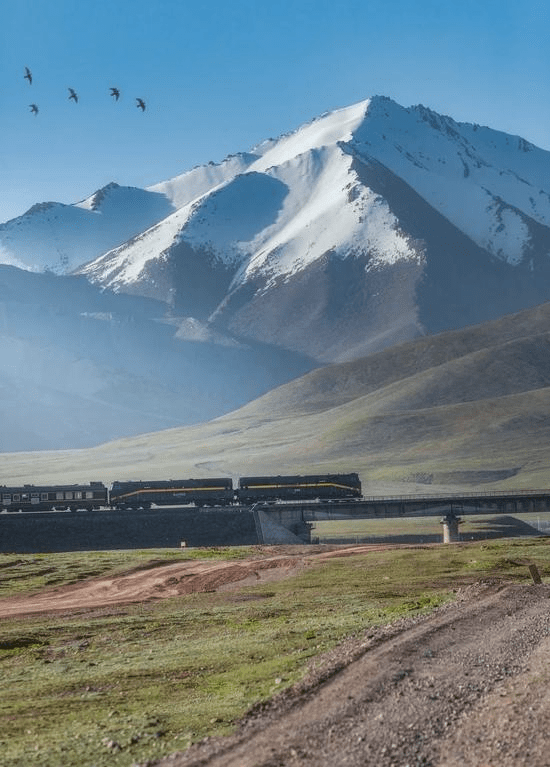
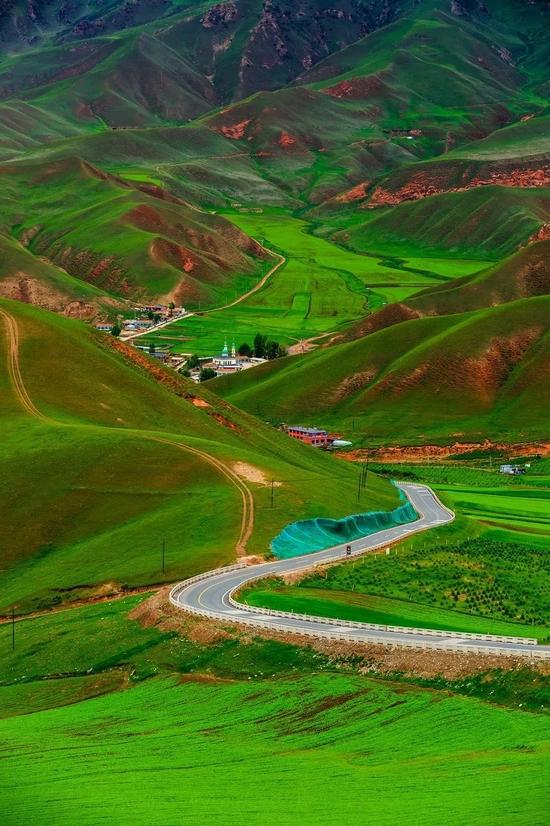
Entering summer, the northwest is like a fairyland, and as the gateway to this paradise, Qinghai is so breathtaking that one forgets the passage of time. Snow-capped mountains, lakes, grasslands, deserts, Yadan landforms, temples, prayer flags…

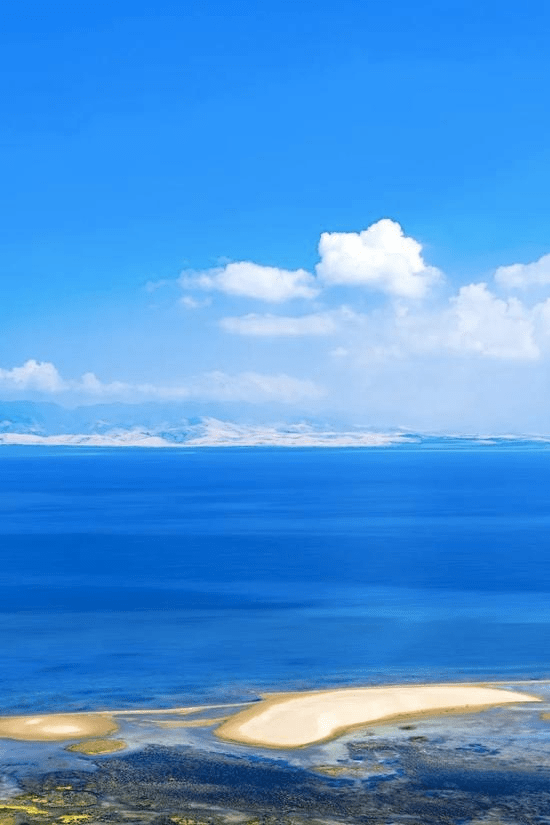
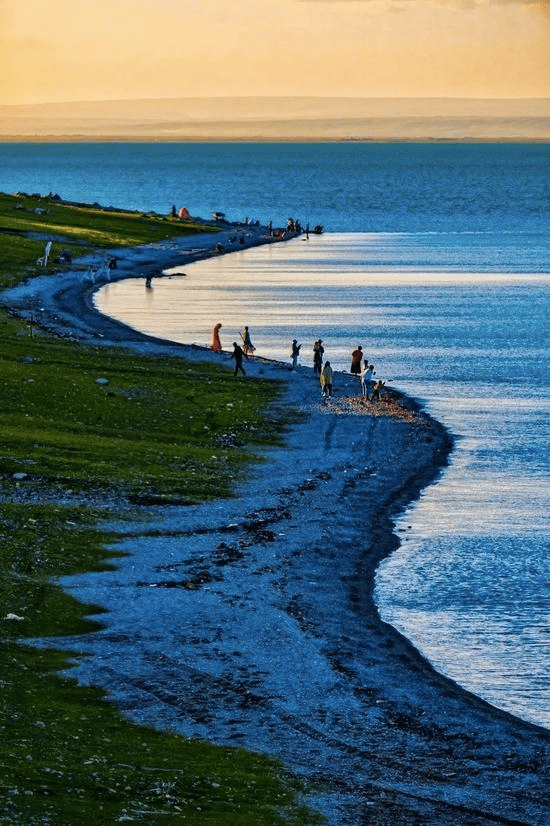
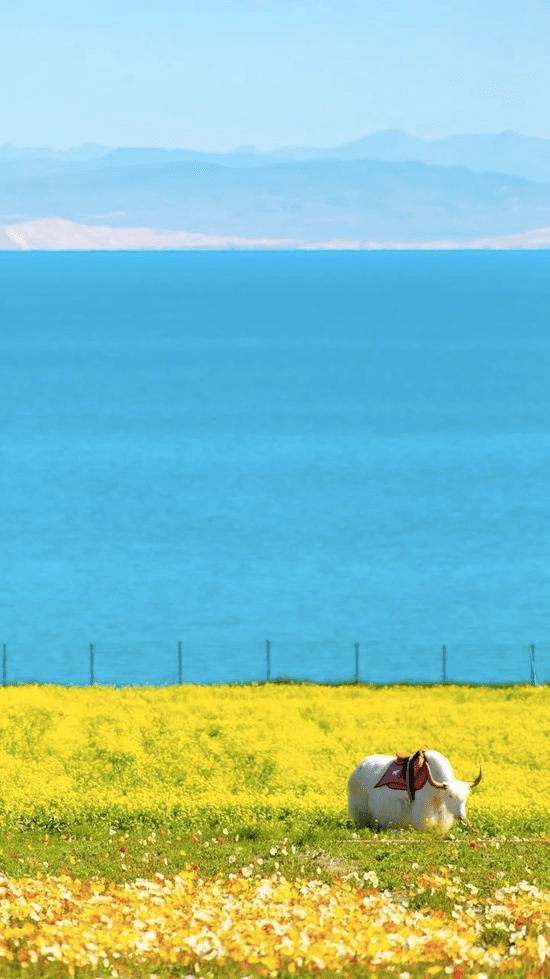
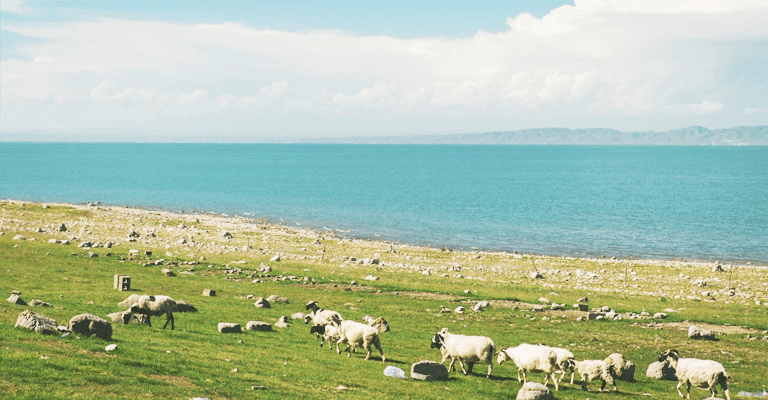
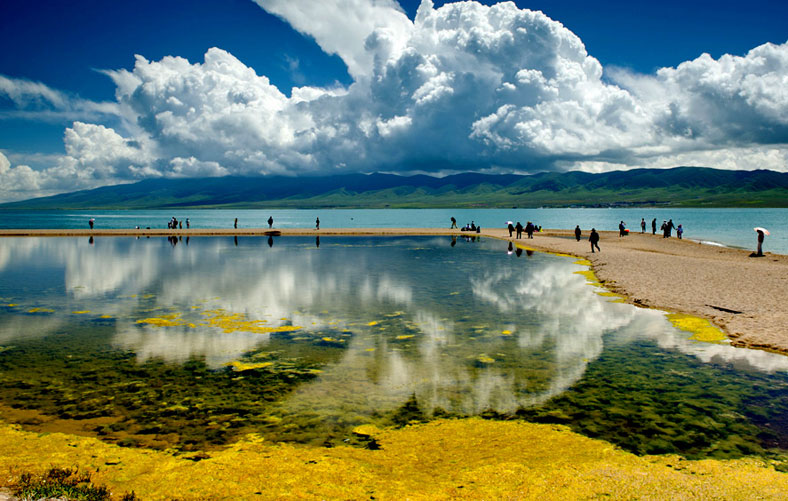
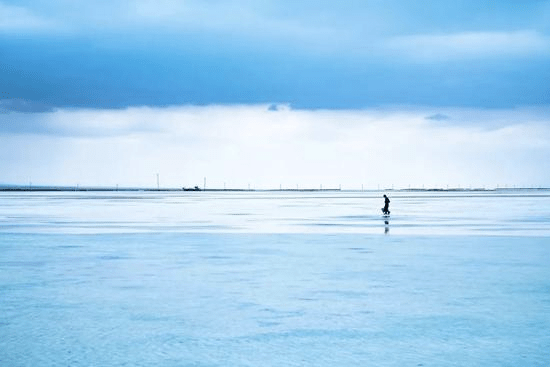
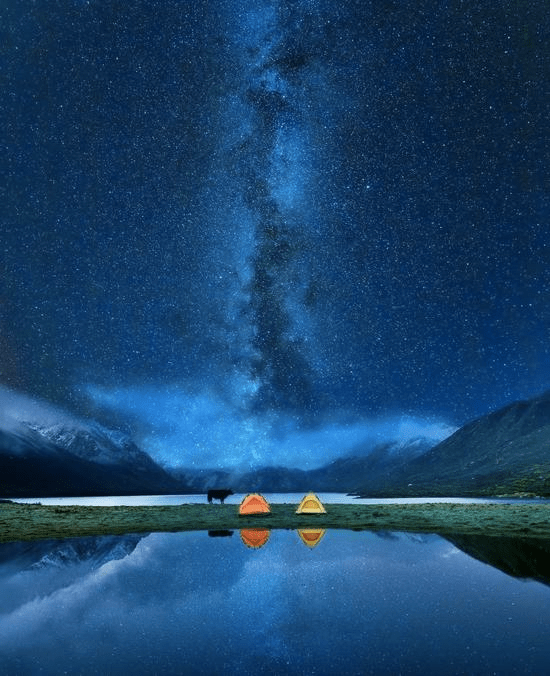
Countless unique landscapes make Qinghai a place worth exploring in depth. Here, you can easily encounter breathtaking scenery: lakes, flower fields, deserts, and starry skies, along with six vibrant colors: blue skies, green lakes, white mountains, golden deserts, green grasslands, and yellow rapeseed flowers. Walking on this vast land, the vitality and colors continually surprise you. Qinghai is a place you’ll fall in love with and never want to leave. In July, Qinghai Lake is romantic and poetic, with vast fields of rapeseed flowers along the lakeshore, blue water blending with the sky, and smoke rising from small wooden houses by the shore, resembling a pastoral landscape painting.

Qinghai Lake or Ch’inghai Lake, also known as Lake Koko Nor, is the largest lake in China (the size of Rhode Island or three Greater Londons). Located in the northeast of the Tibetan Plateau, this huge alkaline salt lake is usually No. 1 on “Most Beautiful Lakes in China” lists.

Spectacular Sunrise of Qinghai Lake

Erlangjian Scenic Area

Fairy Bay Area – The Sea of Flowers

Fairy Bay Area is a wet land located in the northern coast of Qinghai Lake. There are two legends about how Fairy Bay Area got its name. In one old legend, the queen of the west area fell in love with the King of Central Plains. The queen always served a feast for the king in Qinghai Lake with pretty fairies singing and dancing for them. Another ancient poem showed that the Queen of the west had been waiting for the king of Central Plains in Qinghai Lake for thousands of years but he never kept his appointment. The sad queen left for Heaven, but she ordered the fairies to guard Qinghai Lake. Later, these fairies masqueraded as swans living in Fairy Bay Happily. Might be attracted by these beautiful swans, a dozen of other birds also prefer Fairy Bay as a habitat.

Apart from various birds, different kind of flowers blooms here from every June to October. Just like a carpet waved by fairies, Fairy Bay presents on white, yellow, orange, pink, red etc., really deserving its name of Flowers’ Ocean. Because of the magic legends and amazing landscape, local people regard it as sacred ground and several solemn rituals are held here. So, you can feel a strong cultural fragrance.

Sand island in the lake

Great Scenery in the Biking Trip

There’s a Tibetan folk custom that Buddhists should walk around the lake in the Year of Goat, circle the mountains in the Year of Horse, and circle the forest in the Year of Monkey. Some believe it’s a decree left by Buddha. Qinghai Lake is a sacred lake for Buddhist pilgrimages. Especially in Horse years of the 12-year cycle, many Buddhists will take a kora around the Qinghai Lake which is believed to be helpful to lead a safe and happy life. By traveling to Qinghai Lake you can get close to the devoted Tibetans and appreciate Tibetan culture. When the weather is warm in the summer months, there are ethnic festivals of the Tibetans and Muslims. Nowadays, there are still lots of minority tribes and herdsman families living beside the Lake. You can feel the strong nomadic ethnic culture there.

Buddhist Pilgrims Worshiping Qinghai Lake

Besides Qinghai Lake, there are many lakes in Qinghai, such as Chaka Salt lake, ChaErHan Salt lake, etc.
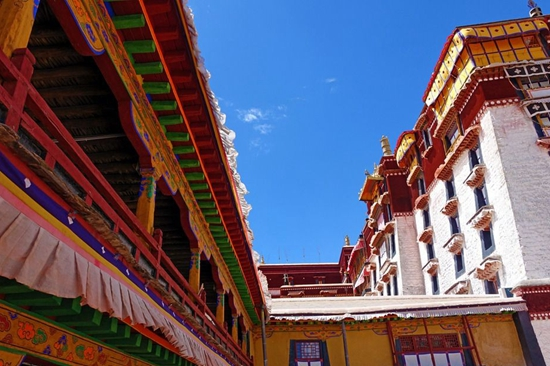
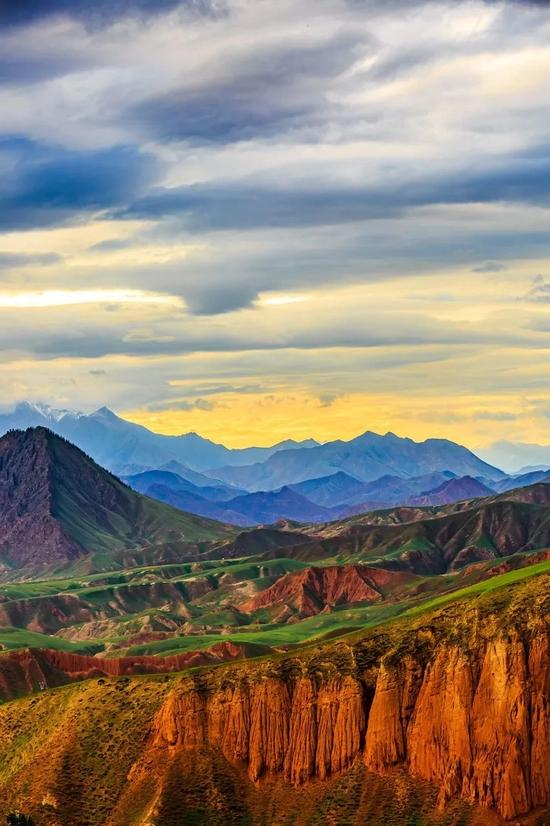
Qinghai has many mountains, 3,600 mountain peaks, clustered together, resemble giant petals in full bloom, tracing graceful arcs across the sky. Up close, they resemble ancient castles, pyramids, animal shapes, and cylindrical pillars. Being there feels like entering a maze, making it difficult to distinguish directions.

In July and August, large fields of rapeseed flowers bloom beneath Zhuo’er Mountain. Standing at the top of the mountain, the view is incredibly expansive and unobstructed. As far as the eye can see, the earth is covered with a golden-yellow carpet.
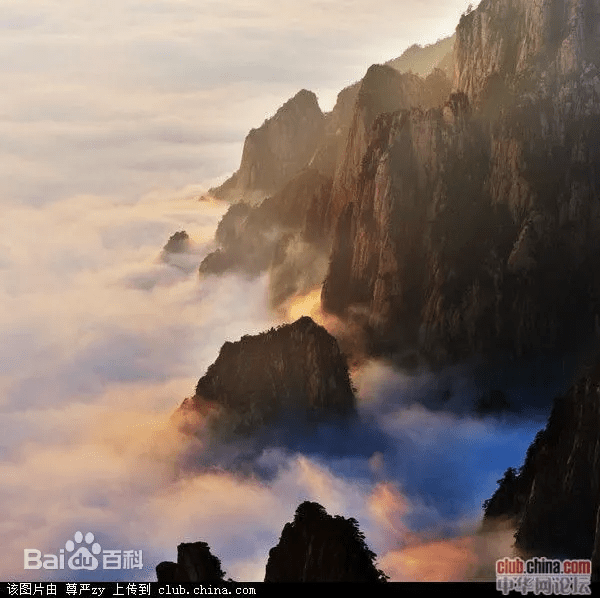
This summer, embark on a pilgrimage to Qinghai.

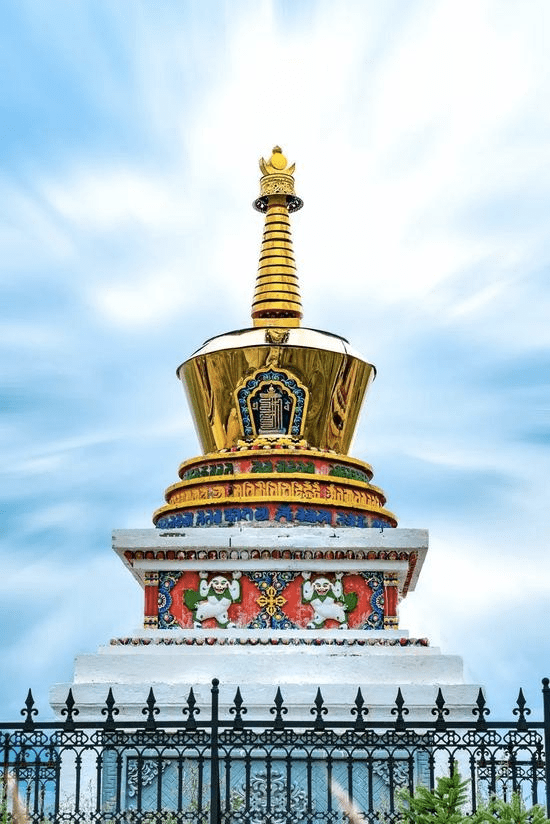
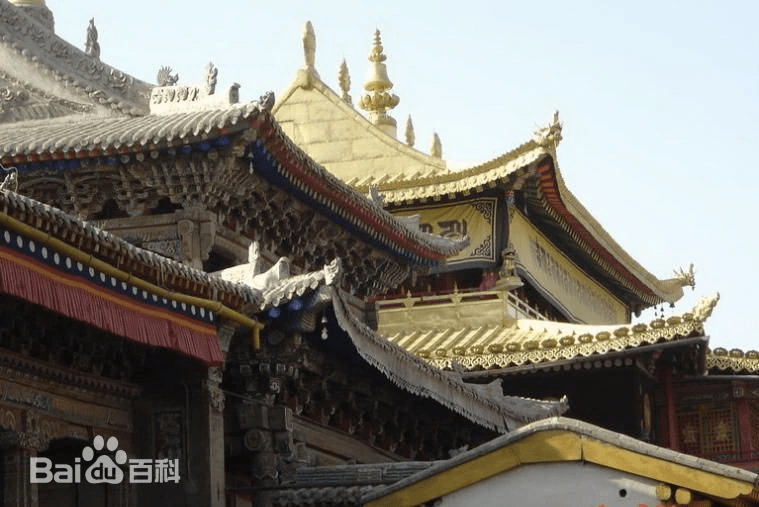
On this vibrant land, there exists a power, ancient and resolute, with the solemn sound of bells echoing in all directions, suppressing all disturbances. The 400-year-old Kumbum(or Ta’er Monastery ) is one of the most important temples of the Gelug sect of Tibetan Buddhism. Entering the incense-filled Ta’er Monastery, one begins to feel detached from the mundane world. Devout followers, serene temples, and vivid Buddha statues all convey the weight of faith. The monastery’s buildings are grand, blending Han palace and Tibetan flat-top styles. With over 4,500 rooms, it forms a unique architectural complex that integrates Han and Tibetan craftsmanship.

The most captivating event is the annual “Shai Da Fo” or “Shai Da Thangka,” also known as the “Buddha Exhibition Festival.” This involves displaying a large Buddha image outdoors to prevent mold and insect damage, and more importantly, as a special way for monks and followers to pay homage to the Buddha. The image is actually a special type of large Thangka, a rare treasure among scroll paintings. The best time to unfold the Buddha image is at dawn when the first rays of sunlight hit the earth, hence the name “Shai Fo,” which means “Sun Buddha.”

Held twice a year during the lunar fourth and sixth months, the festival commemorates the birth, enlightenment, and nirvana of Shakyamuni, the emergence of Maitreya, and the birth and nirvana of Tsongkhapa. By displaying the Buddha image, followers can gaze upon it, receive its blessings, and protect it from damage. Ta’er Monastery has four large embroidered Buddha images: “Lion’s Roar,” “Shakyamuni,” “Tsongkhapa,” and “Vajrasattva,” with only one displayed each time on the monastery’s hillside. The ceremony is grand, attracting many spectators and creating a spectacular scene.

Link:https://peacelilysite.com/2024/07/15/discover-the-beauty-of-qinghai-this-summer/

Source: https://www.chinahighlights.com/xining/attraction/qinghai-lake.htm, https://www.chinadiscovery.com/qinghai/xining/qinghai-lake.html, photos from https://fashion.sina.cn/l/ds/2022-07-06/detail-imizmscv0155077.d.html

The Consequences of Lying: A Lesson from Buddhist Teachings

When we were young, our parents and elders all taught us not to lie. Many stories and fairy tales illustrate the consequences of lying, such as a child being eaten by a wolf or having a long nose like Pinocchio. Different cultures and religions praise honesty and disapprove of liars. However, most of us have told a lie at one time or another, often to gain an immediate benefit, without realizing that the long-term consequences of lying can be very costly. In Buddhism, one of the ten precepts is to abstain from lying.

There is a recorded story in a Buddhist sutra about Shakyamuni Buddha teaching his son to refrain from lying.

The Buddha’s son, Rahula, was quite mischievous in his youth. He often enjoyed playing pranks on others, using deceptive words to tease people. For instance, when someone came to see the Buddha, Rahula, knowing that the Buddha was not present, would intentionally mislead them about the Buddha’s whereabouts, causing them to search in vain for amusement.

When the Buddha learned of this, he asked Rahula to bring him some water to wash his feet. After washing his feet, the Buddha pointed to the water and asked Rahula, “Can this water be drunk?”

Rahula replied, “The water is dirty from washing feet; it cannot be drunk.”

The Buddha then asked, “Can this basin, used for washing feet, be used to hold food?”

Rahula replied, “No, it cannot. The basin is dirty and cannot be used to hold food.”

The Buddha sternly said, “You are like this water. The water was originally very clean, just as you were originally a prince, able to renounce the false glories of the world and become a monk. But if you do not diligently pursue the path, do not purify your body and mind, and do not speak carefully, the impurities of the three poisons will fill your heart, just like the clean water being soiled by washing dirty feet. You are like this basin. Although you have become a monk, if you do not practice precepts, concentration, and wisdom, and do not purify your body, speech, and mind, how can the food of the Great Path fill your heart?” After speaking, the Buddha kicked the basin, causing it to roll. Rahula was very frightened. The Buddha asked, “Are you afraid the basin will break?”

Rahula replied, “No, the basin is a coarse utensil; it doesn’t matter if it breaks.”

The Buddha said, “Rahula, you don’t cherish this basin, just as people will not cherish you. As a monk, if you do not uphold dignity and discipline, and speak deceitfully, the consequence is that no one will care for you or value you. When your life ends, you will not attain enlightenment, but will only increase your delusion.”

From then on, Rahula changed his mischievous ways, strictly observed the precepts, and diligently practiced the path.

According to the teachings of the Buddhist sutras, we should take a long-term view and consider the consequences of lying for both this life and future lives.

In this life, if we frequently lie, deceive, or slander others, we will inevitably face retaliation from those we have wronged. In the mundane world, most people are naturally inclined to protect themselves and have a tendency for “an eye for an eye” revenge, unless they are saints who have subdued their own minds. If we deceive others, the victims, unwilling to be deceived, will expose our misdeeds among people. As word spreads from one to ten and from ten to a hundred, our bad reputation will quickly become widespread. Our credibility will be utterly destroyed, and our trustworthiness will plummet. From then on, even if we speak the truth, it will be seen as a lie, and people will be wary of us to avoid being deceived. No one will trust us. In such a predicament, we will constantly feel the pain of isolation and helplessness. Our lives will shrink, and our careers will suffer as a result.

In future lives, under the influence of the dark karma of lying, one will inevitably fall into the three lower realms. When the bad karma diminishes and one is reborn as a human, the residual effects of lying will manifest in various speech-related congenital obstacles in both body and mind. These may include having an impaired tongue root, stuttering, or unclear speech. Additionally, there will be a habitual tendency to lie, and sometimes, even when one wishes to speak the truth, it will come out as a lie involuntarily. In interactions with others, one will frequently be slandered and deceived. Even when speaking the truth, people will not believe it. Moreover, even when preaching the true Dharma, others will be unwilling to listen.

Link:https://peacelilysite.com/2024/06/13/the-consequences-of-lying-a-lesson-from-buddhist-teachings/

Source: https://fo.china.com/m/fostory/20001207/20231107/25809400.html

Masterful Artwork: Portraits of Namo Avalokitesvara Bodhisattva

In the history of painting in China, many renowned artists have used Namo Avalokitesvara Bodhisattva as a subject for their works. These artistic images are beloved by the people because the Bodhisattva is a symbol of compassion. These exalted artistic images subtly influence the inner world of generations, inspiring and shaping the soul of the nation.

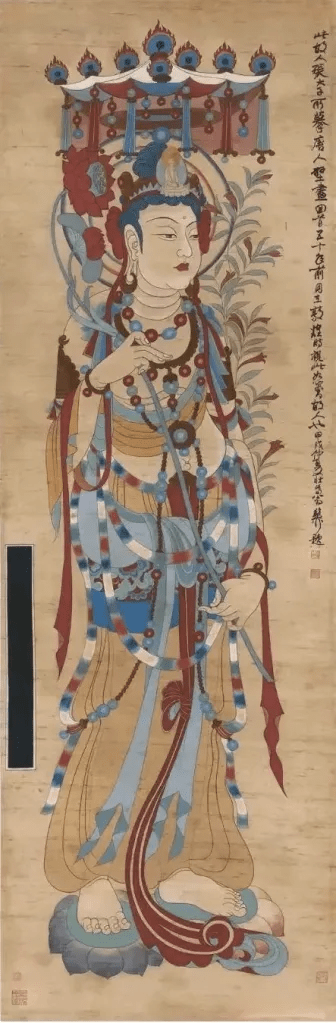
The Mogao Caves in Dunhuang are the largest and most well-preserved repository of Buddhist art in China and the world. Among the murals in the Mogao Caves, there are masterpieces of Namo Avalokitesvara Bodhisattva created by painters over the ages, including images of the Water-Moon Guanyin, the White-Robed Guanyin, and the Eleven-Faced Guanyin. It is said that this treasure trove of painting art contains works by masters like Gu Kaizhi and others from various dynasties.

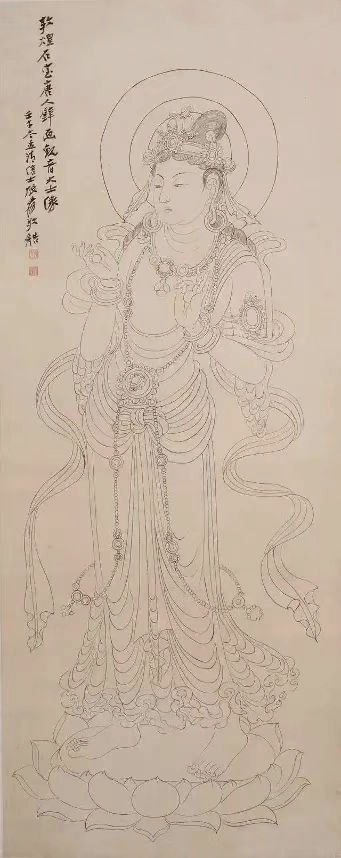
In 1940 Zhang Daqian led a group of artists to the caves of Mogao (莫高) and Yulin (榆林) for the purpose of copying their Buddhist wall paintings. The group completed over 200 paintings, and the experience left Zhang with a repository of religious imagery. He was so captivated by these unparalleled treasures that his original plan to stay for three months extended to two years, during which he dedicated himself to studying and copying the artworks. Today, his paintings of Avalokitesvara Bodhisattva are acclaimed as rare and invaluable masterpieces.

The early Tang Dynasty portrait copied by Zhang Daqian is a national first-class cultural relic
Tang Dynasty murals copied by Zhang Daqian
Mid-Tang Dynasty portrait in the Mogao Caves, copied by Zhang Daqian

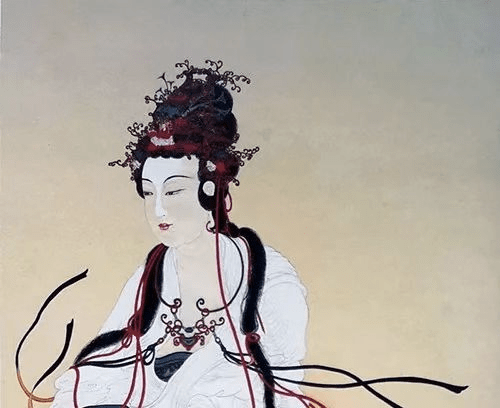
At  International Art Museum of America, there is a painting of Namo Guan Shi Yin Bodhisattva by H.H. Dorje Chang Buddha III that left a profound impression on me. The portrait is stunningly beautiful, executed with fine brush strokes characteristic of traditional Chinese painting. The artist used very fine and intricate strokes, rendering every detail vividly and perfectly. I could clearly see the hair, the crown, the intricate jewelry, and even the delicate patterns of the flowing ribbons. These details express the painter’s portrayal of Guan Shi Yin Bodhisattva’s meticulous compassion and love for all living beings. The entire portrait appears lifelike, exuding infinite grace, and showcasing the artist’s extraordinary skill, which is beyond perfection.

In this meticulous painting, Namo Avalokitesvara Bodhisattva is depicted wearing white garments, with a serene and compassionate expression, seemingly walking gracefully accompanied by heavenly music. The Bodhisattva’s face is as delicate as powdered jade, with elegant eyebrows and red lips, and eyes that are reserved yet radiate a light of compassion.

The Bodhisattva’s jewelry, including jade pendants, appears to emit a pleasant chime, and the pink and dark green lotus flowers beneath the feet exude a fragrant aroma. The colorful ribbons on the clothing flutter and dance in the gentle breeze. The entire painting exudes an extraordinary and majestic aura. For hundreds of years, the children of China have dreamed countless times of Namo Avalokitesvara Bodhisattva, as if the Bodhisattva is walking toward us from the vast universe.

Upon closer inspection, one can see that within the Bodhisattva’s hair, there is a small figure of Namo Amitabha Buddha, seated with a solemn and exquisite demeanor, wearing a red robe and sitting on a pink and white lotus platform.

The dark green lotus beneath the Bodhisattva’s left foot, the dark blue floral borders on the clothing, and the flowing black hair form a dynamic contrast with the light yellow-brown background and the white robe. The painting uses a large area of light yellow-brown as the background to highlight the pure and elegant clothing, with bright colors as decorative accents. This creates a composition that is both solemn and sacred, yet luxurious.

The Bodhisattva’s attire occupies a significant portion of the painting. If not handled well, it could make the painting appear empty and lifeless. However, the exceptional artist has seized this opportunity, infusing the clothing with a great amount of high-quality ink and brushwork while maintaining overall brightness. The lively and intricate lines are sometimes like flowing clouds and water, sometimes like gentle clouds, sometimes as soft as a summer breeze, and sometimes as powerful as a rushing waterfall. The interweaving lines, though densely packed, are orderly and harmonious. This extraordinary line drawing technique vividly captures the delicate texture of the gauzy fabric. Lines are the earliest form of language in the history of painting and the soul and framework of meticulous figure painting. As a vital expression in Chinese painting, “lines” have always been highly valued by painters throughout the ages.

H.H. Dorje Chang Buddha III‘s meticulous figure painting uses lines that are flexible and varied, not only vividly portraying the image of Namo Avalokitesvara Bodhisattva but also precisely conveying the Bodhisattva’s noble and pure spiritual essence. This technique of capturing the divine through form has been the artistic ideal that painters have longed for throughout history. Therefore, this great painting by Namo Qiang Buddha is destined to become a model for future generations to learn from and an immortal classic passed down through the ages.

This great artwork not only provides people with artistic enjoyment but also offers a profound spiritual experience. I stood in front of the painting for a long time, feeling as if I were leaving behind all worldly affairs and immersing myself in the Bodhisattva’s boundless compassion forever.

Link:https://peacelilysite.com/2024/05/31/masterful-artwork-portraits-of-namo-avalokitesvara-bodhisattva/

#GuanShiYinBodhisattva#MasterWanKoYee #DorjeChangBuddhaIII #HHDorjeChangBuddhaIII#DorjeChangBuddha#IAMA#InternationalArtMuseumofAmerica#AvalokitasvaraBodhisattva#ChinesePainting#Portrait#Art

Mount HuangShan

Mount Huangshan, often described as the “loveliest mountain of China,” has played a significant role in the history of Chinese art and literature since the Tang Dynasty around the 8th century. A legend from 747 AD recounts the discovery of the long-sought elixir of immortality on the mountain, which gave Mount Huangshan its name and cemented its place in Chinese history. This legend attracted hermits, poets, and landscape artists, drawn by the dramatic mountainous landscape featuring numerous granite peaks, many over 1,000 meters high, emerging through a perpetual sea of clouds. During the Ming Dynasty in the 16th century, the mountain’s unique rock formations and ancient gnarled trees inspired the influential Shanshui (“Mountain and Water”) school of landscape painting, which profoundly shaped the world’s perception of the oriental landscape.

Located in the humid subtropical monsoon climate zone of Anhui Province, Mount Huangshan covers an area of 16,060 hectares with a buffer zone of 49,000 hectares. It is noted for its botanical richness and the conservation of several locally or nationally endemic plant species, some threatened with extinction.

The cultural significance of Mount Huangshan’s scenic landscape was first recognized during the Tang Dynasty and has been revered ever since. Renamed Huangshan (Yellow Mountain) by imperial order in 747 AD, it became a popular destination for visitors who celebrated its inspiring scenery through painting and poetry, creating a rich body of art and literature of global importance. By the Yuan Dynasty (1271-1368), 64 temples had been constructed on the mountain. In 1606, the monk Pumen established the Fahai Meditation Temple. By the Ming Dynasty, Mount Huangshan had become a favorite theme of Chinese landscape painters, firmly establishing the Shanshui school of landscape painting. The interaction of man and nature in this scenic setting has inspired generations of Chinese artists and writers.

Mount Huangshan is renowned for its magnificent natural scenery, including massive granite boulders and ancient pine trees, often enhanced by cloud and mist effects. The dramatic landscape features natural stone pillars, grotesquely-shaped rocks, waterfalls, caves, lakes, and hot springs, formed by its complex geological history. The mountain range has many peaks, some over 1,000 meters high, with the three tallest and best-known being Lotus Peak (1,864 meters), Bright Peak (1,860 meters), and Celestial Peak (1,829 meters). The World Heritage Site covers a core area of 154 square kilometers and a buffer zone of 142 square kilometers. The mountains were formed in the Mesozoic era, approximately 100 million years ago, when an ancient sea disappeared due to uplift. Later, during the Quaternary Period, glaciers shaped the landscape.

Lotus Peak. By De-Shao Liu (Terry850324) – Own work, CC BY-SA 4.0, https://commons.wikimedia.org/w/index.php?curid=90823373
Celestial Peak By 江上清风1961, CC BY 3.0, https://commons.wikimedia.org/w/index.php?curid=53168150

Vegetation varies with elevation, with mesic forests below 1,100 meters, deciduous forests up to the tree line at 1,800 meters, and alpine grasslands above that. The area boasts diverse flora, with one-third of China’s bryophyte families and more than half of its fern families represented. The Huangshan pine (Pinus hwangshanensis), named after the mountain, is a symbol of vigor as it thrives by growing straight out of the rocks. Many pine trees in the area are over a hundred years old and have unique names, such as the Welcoming-Guests Pine, thought to be over 1,500 years old. The pines vary greatly in shape and size, with the most crooked trees considered the most attractive. Huangshan’s moist climate also supports the growth of tea leaves, and the mountain is renowned as one of China’s premier green tea-growing areas. Mao feng cha (“Fur Peak Tea”), a famous local variety, takes its name from the downy tips of tea leaves found in the region.

Tea Trees in the Cloud

Ying Ke Pine, literally welcome Pine By memes – Own work, CC BY-SA 3.0, https://commons.wikimedia.org/w/index.php?curid=950688

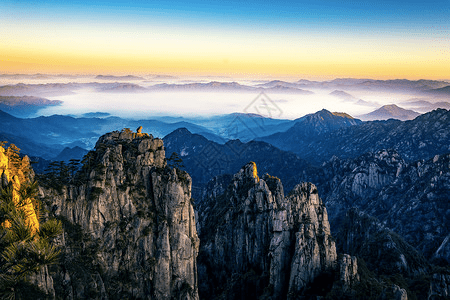
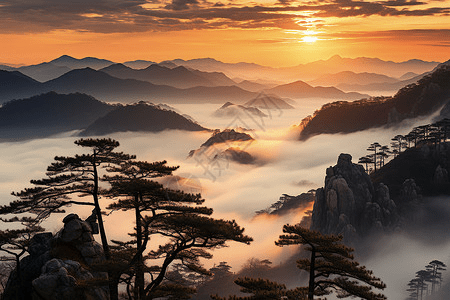
Mount Huangshan often offers views of the clouds from above, known as the Sea of Clouds (yúnhǎi) or “Huangshan Sea,” due to their resemblance to an ocean. Many vistas are named after these cloud formations, such as “North Sea” or “South Sea.” A writer once remarked that to enjoy the magnificence of a mountain, you usually look upwards, but to enjoy Mount Huangshan, you must look downward. The area is also known for notable light effects, such as the renowned sunrises and the phenomenon called Buddha’s Light (fóguāng), which appears only a few times per month.

Mount Huangshan is famous for its stone steps carved into the mountain, with over 60,000 steps throughout the area. The origin date of these steps is unknown, but they are believed to be more than 1,500 years old. Over the years, many scenic spots and physical features have been named, often with narratives behind them. For example, one legend tells of a skeptic who, upon visiting the mountains, was immediately convinced of their beauty. One of the peaks he visited was named Shixin (始信), meaning “start to believe.”

Carved steps to Tiandu Peak By Jakemete at English Wikipedia – Transferred from en.wikipedia to Commons by Wouterhagens using CommonsHelper., Public Domain, https://commons.wikimedia.org/w/index.php?curid=5810245

Shixin Peak By 江上清风1961, CC BY 3.0, https://commons.wikimedia.org/w/index.php?curid=53169922

Bijia Peak (Pen holder Peak), by 颐园新居 – Own work, CC BY-SA 4.0, https://commons.wikimedia.org/w/index.php?curid=36838268

FeiLai Peak by Carlos Adampol Galindo from DF, México – Ella me preguntó: ¿te gusta?; le contesté: De aquí soy., CC BY-SA 2.0, https://commons.wikimedia.org/w/index.php?curid=45070874

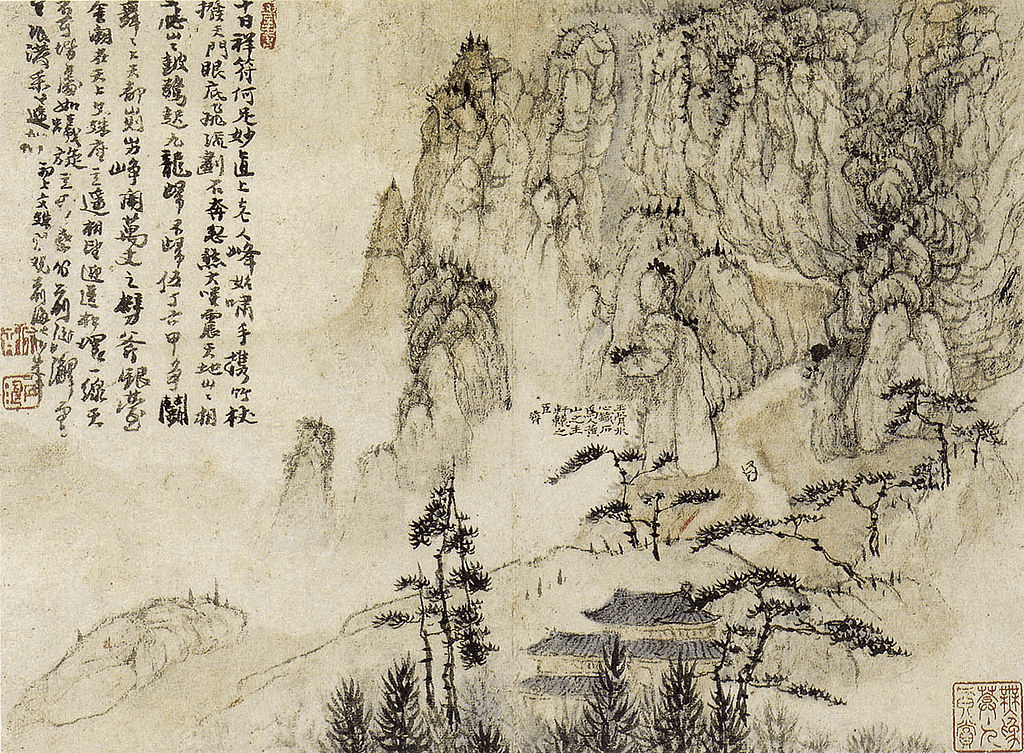
Much of Huangshan’s reputation stems from its significance in Chinese arts and literature. It has inspired poets such as Li Bai, and has been a frequent subject of poetry, Chinese ink painting, and, more recently, photography. From the Tang Dynasty to the end of the Qing Dynasty, over 20,000 poems were written about Huangshan, and a school of painting was named after it. The mountains have also appeared in modern works; director James Cameron cited Huangshan as one of his influences in designing the fictional world of his 2009 film Avatar, and the Chinese animated series Stitch & Ai, a spin-off of Disney’s Lilo & Stitch franchise, is set in the Huangshan mountains.

Ink painting depicting Huangshan by Shitao, 1670 Public Domain, https://commons.wikimedia.org/w/index.php?curid=838862

In 1982, Mount Huangshan was declared a “site of scenic beauty and historic interest” by the State Council of China. It was designated a UNESCO World Heritage Site in 1990 for its scenery and as a habitat for rare and threatened species. Later, it was certified as a National Geopark and subsequently as a regional geopark (Asia Pacific Geopark Network), before being admitted as a UNESCO Global Geopark in 2004.

Mount Huangshan is a habitat for several locally or nationally endemic plant species, many of which are globally threatened. Its flora includes one-third of China’s bryophytes and over half of its pteridophytes. Endemic species to Huangshan include 13 species of pteridophytes and 6 species of higher plants, with many other species endemic to the region or China. This rich flora is complemented by a diverse vertebrate fauna of over 300 species, including 48 mammals, 170 birds, 38 reptiles, 20 amphibians, and 24 fish. Thirteen species are under state protection, including the Clouded Leopard (Neofelis nebulosa, VU) and the Oriental Stork (Ciconia boyciana, EN).

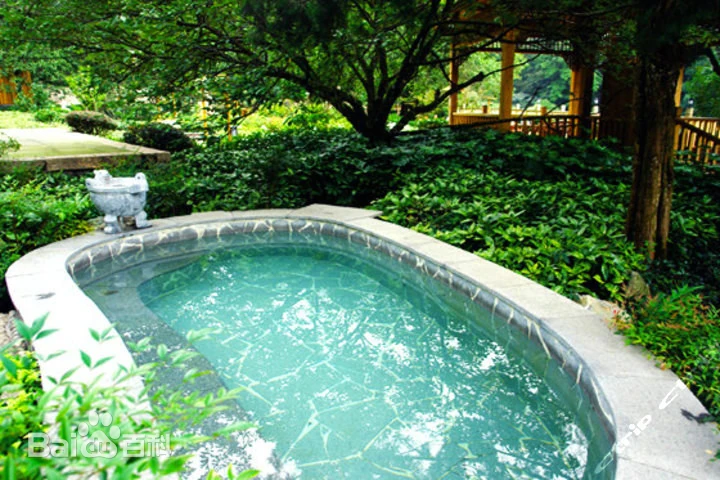
Additionally, Mount Huangshan has multiple hot springs, mainly located at the foot of Purple Cloud Peak. The water, maintaining a temperature of 42°C (107.6°F) year-round, is rich in carbonates and is said to help prevent skin, joint, and nerve illnesses.

The area has also been a site for scientific research due to its diverse flora and wildlife. In the early 20th century, both Chinese and foreign scientists studied the geology and vegetation of Huangshan. Research continues, such as a late 20th-century field study of Tibetan macaques, a local monkey species.

View from Stone Monkey Gazing at the Sea of Cloud By Nicolascornet – Own work, CC BY-SA 4.0, https://commons.wikimedia.org/w/index.php?curid=87551304

Artificial steps on the cliffs of Huangshan By Joe – IMGP1088.JPG, CC BY 3.0, https://commons.wikimedia.org/w/index.php?curid=16824799

Link:https://peacelilysite.com/2024/05/30/mount-huangshan/

Source: https://whc.unesco.org/en/list/547/https://en.wikipedia.org/wiki/Huangshanhttps://baike.baidu.com/item/%E9%BB%84%E5%B1%B1%E9%A3%8E%E6%99%AF%E5%8C%BA/1350521

The Monkey Trap: A Lesson in Letting Go

African indigenous hunters have a unique method for catching monkeys.

First, they find a hole just big enough for a monkey’s hand. They place food that monkeys like inside the hole. When a monkey passes by and sees the food, it reaches in to grab it. With its hand full of food, the monkey’s hand gets stuck in the hole. Most monkeys won’t let go of the food and instead try to pull it out from different angles.

When the hunters arrive, the monkey is still struggling and trapped, making it easy for the hunters to catch it.

Many people’s anxiety and suffering stem from holding on to too many things and being unwilling to let go, which prevents them from truly obtaining what they need.

In reality, letting go appropriately allows us to broaden our horizons, take time to adjust ourselves, and better engage in our current work.

The Young Man and the Zen Master: A Lesson in Detachment

Once upon a time, a young man visited a Zen temple to seek guidance from an old Zen master. On his way, he witnessed an interesting sight and decided to test the master. Upon arriving at the temple, he and the master chatted over tea. Suddenly, the young man asked, “What does ‘going round and round’ mean?”

“It’s because the rope hasn’t been cut,” the Zen master replied casually.

The young man was stunned and amazed. He said, “Master, I am surprised that you knew! Today, on my way here, I saw a cow tied to a tree. The cow wanted to go far to graze, but because the rope was through its nose, it kept going round and round, twisting itself without being able to break free. It was quite amusing. I thought that since you hadn’t seen it, you wouldn’t be able to answer. But you answered correctly right away.”

The Zen master laughed and said, “You asked about an event, and I answered with a principle. You asked about a cow tied by a rope and unable to break free; I answered about the mind being entangled by worldly matters and unable to find liberation. One principle can explain many situations.

“A kite, no matter how high it flies, cannot soar into the vast sky because it is tethered by a string. Similarly, what often binds us in life, preventing us from being free? A single win or loss can exhaust us; a gain or loss can cause us great anguish; an exam can keep us tossing and turning; a relationship can tie us in knots.

“For power and money, we run around in circles; for fame and desire, we are constantly entangled. Fame is a rope, desire is a rope, profit is a rope; the attachments and temptations of the world are all ropes. So the Zen master said, ‘All beings are like that cow, bound by many ropes of worries and sufferings, unable to achieve liberation throughout life and death.'”

The Wisdom of Living in the Present

A young monk once asked an old monk, “Master, what did you do when you were young?”

The master replied, “I chopped wood, fetched water, and cooked.”

The young monk asked, “And what do you do now that you’ve attained enlightenment?”

The master said, “I still fetch water, chop wood, and cook.”

The young monk, puzzled, asked, “What’s the difference? It seems like you haven’t made any progress in your entire life.”

The old monk explained, “You’re wrong. There is progress. When I was young, I would think about fetching water while chopping wood, and think about cooking while fetching water. Now that I am enlightened, when I chop wood, I chop wood; when I fetch water, I fetch water; and when I cook, I cook.”

Reflecting on myself, I often feel that I need to do something else while eating to avoid “wasting time.” So, I like to chat with others, watch TV, or think about other things while eating. No wonder I sometimes feel like “I don’t even know what I just ate.”

Enjoying the time spent eating and treating each bite with attention, I savor the sweetness of the rice, the freshness of the vegetables, and the richness of the soup. The world on my taste buds is indeed wonderful, bringing much joy to everyday life.

While walking, I now instinctively let my phone rest and focus on walking, feeling my feet propel my body, enjoying the natural comfort of the breeze, smelling the flowers, hearing the birds, and seeing the colorful flowers, green leaves, and various passersby. The scenery is infinitely beautiful, something I rarely appreciated before. Missing out and becoming numb was inevitable.

This series of practices has gradually cultivated the quality of “focus” in me. I increasingly embrace the concept of “living in the moment.” Of course, I know this is just the beginning; focus is a lifelong practice.

Link: https://peacelilysite.com/2024/05/30/the-monkey-trap-a-lesson-in-letting-go/

Source: https://gospelexpress.id/2023/01/20/%E6%9D%BE%E6%89%8B%E6%94%BE%E4%B8%8B/, http://his.newdu.com/m/view.php?aid=358718https://www.sohu.com/a/240312612_761892

Yuanmou Earth Forest

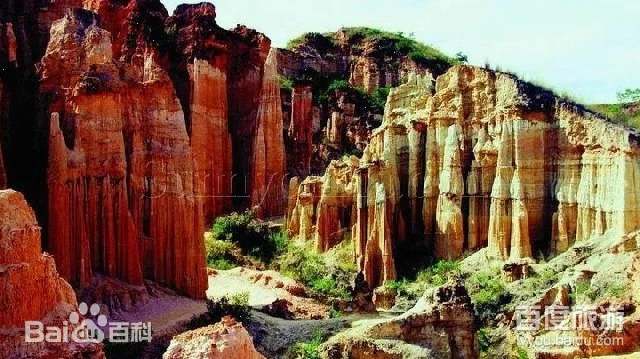
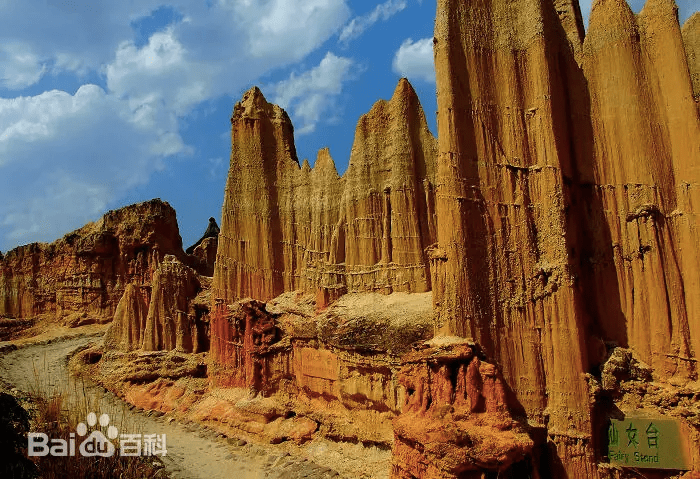
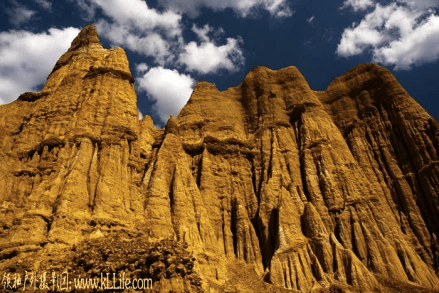
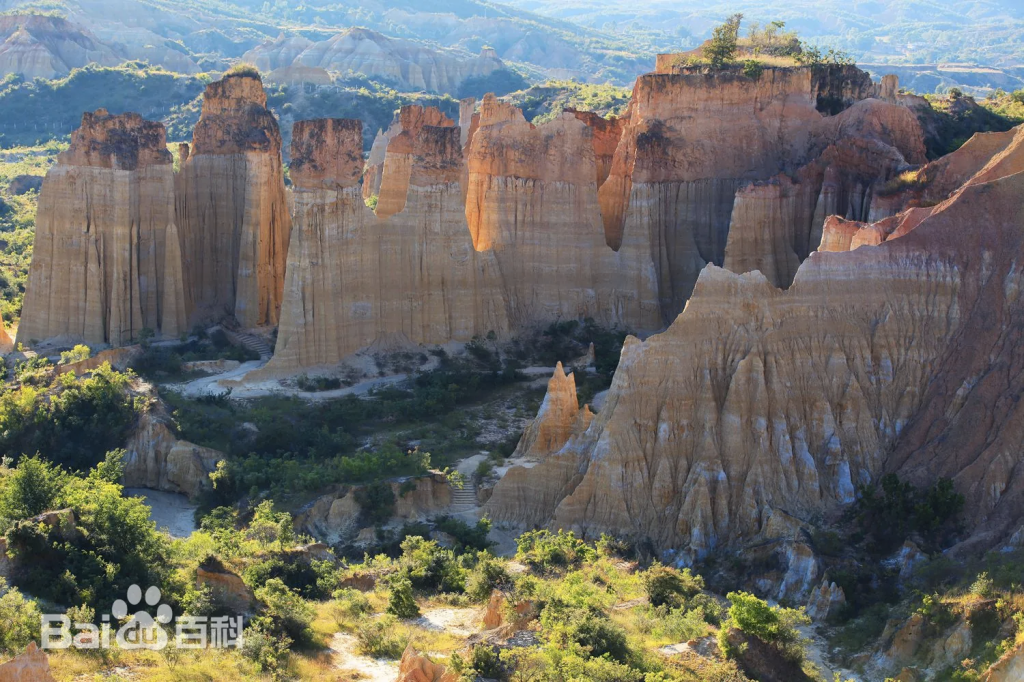
Yuanmou Earth Forest is a breathtaking area of clay formations that have developed over the past 1.5 million years. Located 210 km northwest of Kunming, this scenic wonderland features rocks composed of sand mixed with clay, giving them a distinctive yellow color and loose texture. These rocks have undergone extensive weathering, making their surface resemble earth, and they glisten like gold under the sunlight. Some are as large as castles, while others resemble pylons, all in various magnificent shapes. The earth forest covers a wide area in the Yuanmou Basin, with different regions exhibiting unique features based on the extent of weathering and erosion. Three notable scenic sites within the area are Tiger Leaping Sands, Ban Guo, and Xin Hua, each with its own distinct characteristics.

Tiger Leaping Sands is considered the most spectacular site within the Yuanmou Earth Forests. From a distance, the rocks resemble an ancient deserted castle. Tall, straight rock pillars appear as remnants of a shrine, and the rock walls resemble the enclosure of an ancient palace. What makes it truly unique is the three-color ‘roof’ on top of the ‘castle’ – red, brown, and black. This coloration is due to rain permeating the rock, causing ferrous and calcium substances to coagulate into an impermeable layer. As other parts eroded away, this layer naturally protruded and formed an ‘umbrella’ that preserved the rocks below.

Exploring this hidden world, you’ll be captivated by the abrupt clay formations that glisten like yellow crystals emerging from the ground. These formations vary in shapes, heights, and volumes, each resembling a piece of indescribable artwork.

Collectively, they create an intricate maze filled with mystery and sublime beauty. Some liken Yuanmou Earth Forest to a weathered golden monastery, a desolate Gothic church, or a giant shrine ravaged by fierce elements.

When illuminated by sunlight, these clay columns emit sparkling rays, a rare phenomenon likened to China’s clay version of the Parthenon. At twilight, their silhouettes resemble gothic structures, transforming the fairyland into a haunting terrain. It takes great courage to explore and walk among them.

To fully appreciate the beauty of Yuanmou Earth Forest, viewing from above is recommended. A bird’s-eye view reveals the meandering Longchuan River, a tributary of the Jinsha River (a major tributary of the Yangtze River), flowing like a silver ribbon alongside the attention-grabbing golden patchworks on its west bank, where you’ll find Earth Forests of Banguo, Tiger Leaping Shoal, Wanbao, Xiaoleizai, and Xinhua covering an area spanning over 5 square kilometers.

Photo taken on Nov. 17, 2021 shows the scenery of earth forest in Yuanmou County, southwest China’s Yunnan Province. The earth forest, which was formed by geological movement and soil erosion, is basically in color of yellow and the color varies in different parts. (Xinhua/Wang Guansen)

Yuanmou Earth Forest’s clay formations can be categorized into four styles based on shapes and formation processes: Earth Bud Style, Castle Style, Bamboo Shoot Style, and Mushroom Style. Earth Bud Style formations, though small, serve as precursors to other types, while Castle Style formations are larger, typically measuring 2 to 5 meters in height.

Earth Bud Style

Due to varying degrees of cementation and semi-cementation, sedimentary rocks have different water content in clay minerals and varying expansion coefficients after water absorption. Surface rock layers are subject to long-term weathering, resulting in a series of cracks. Surface runoff and rainwater initially erode along these cracks and soft rock layers, forming soil buds with heights and diameters less than 1 meter and relative heights less than 1 meter. This type serves as the embryonic form for developing other types of earth forests.

Castle Style

The continuous flow of water erodes and cuts into the base of soil buds, along vertical fissures, horizontal fissures, and other forms of cracks in the strata, as well as erosion and abrasion along the surfaces of soft and hard rock layers. This process forms shapes such as arches, platforms, and vertical shafts, creating an environment reminiscent of ancient castles.

These types of soil columns generally have a connected base, with a thick and rounded or serrated top, occupying a relatively large area and standing 2-5 meters in relative height. However, the flat tops and arches below these columns often collapse under the effects of flowing water and gravity, causing the columns to separate and evolve into other types of soil columns.

Bamboo Shoot Style

This type of earth forest is primarily composed of sand and clay, with loose consolidation and no hard covering layer at the top. As a result, it undergoes erosion and cutting by rainwater and surface runoff, forming conical soil columns. These earth pillars have sharp tops, resembling large bamboo shoots after rain or the pointed tip of a pagoda, with heights generally ranging from 5 to 10 meters.

Iron Cap Style

As a typical category of earth forest, it is the most widely distributed. Due to the leaching effect of surface water on iron, silica, and calcium in the strata, these elements gradually dissolve, penetrate, and filter to the interface of the impermeable layer, where they precipitate and accumulate, cementing the upper strata to form iron oxide caps or silica/calcium iron caps. Under the erosion and scouring action of water flow, these caps gradually expose themselves at the tops of columns, acting as natural “umbrellas” that protect the soil columns from direct erosion and scouring by flowing water and intense sunlight.

The “iron cap” above and the soil column below merge into one, forming a variety of unique landscapes within the earth forest. Some resemble old fishermen fishing, some resemble soldiers going to battle, some resemble standing cranes, and some resemble galloping wild horses, creating yet another extraordinary sight within the earth forest.

Link:https://peacelilysite.com/2024/04/24/yuanmou-earth-forest/

Source: http://www.news.cn/english/2021-11/18/c_1310317427.htm, https://www.westchinatour.com/kunming/attraction/yuanmou-clay-forest.htmlhttps://baike.baidu.com/item/%E5%85%83%E8%B0%8B%E5%9C%9F%E6%9E%97/3379396