The Yongle Bell: A 600-Year-Old Marvel of Chinese Civilization

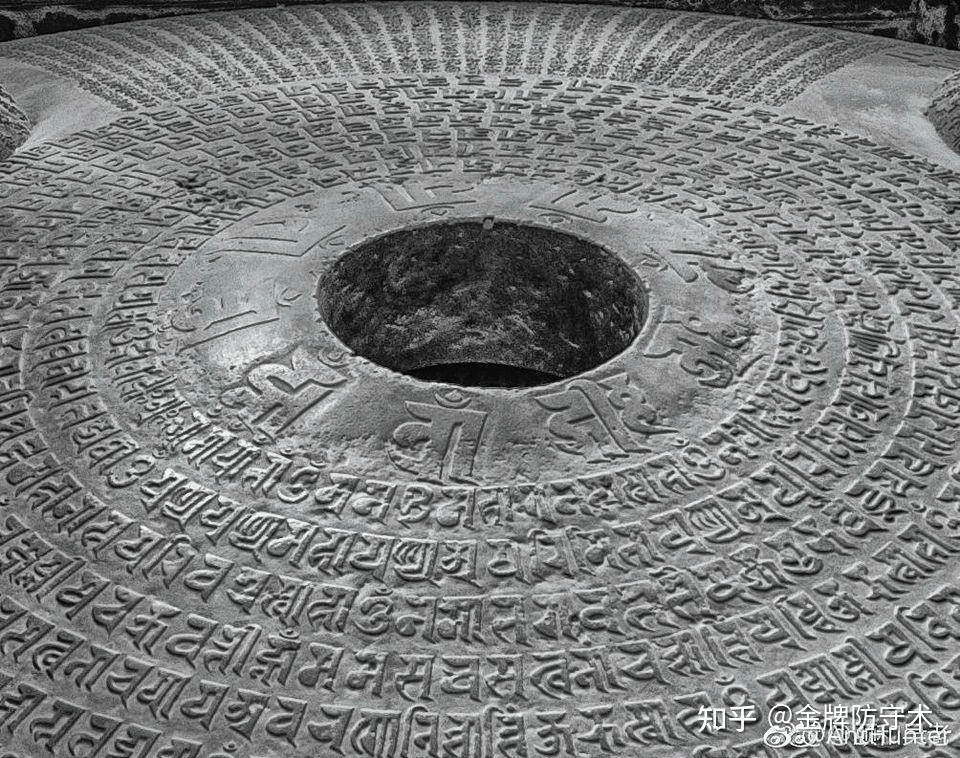
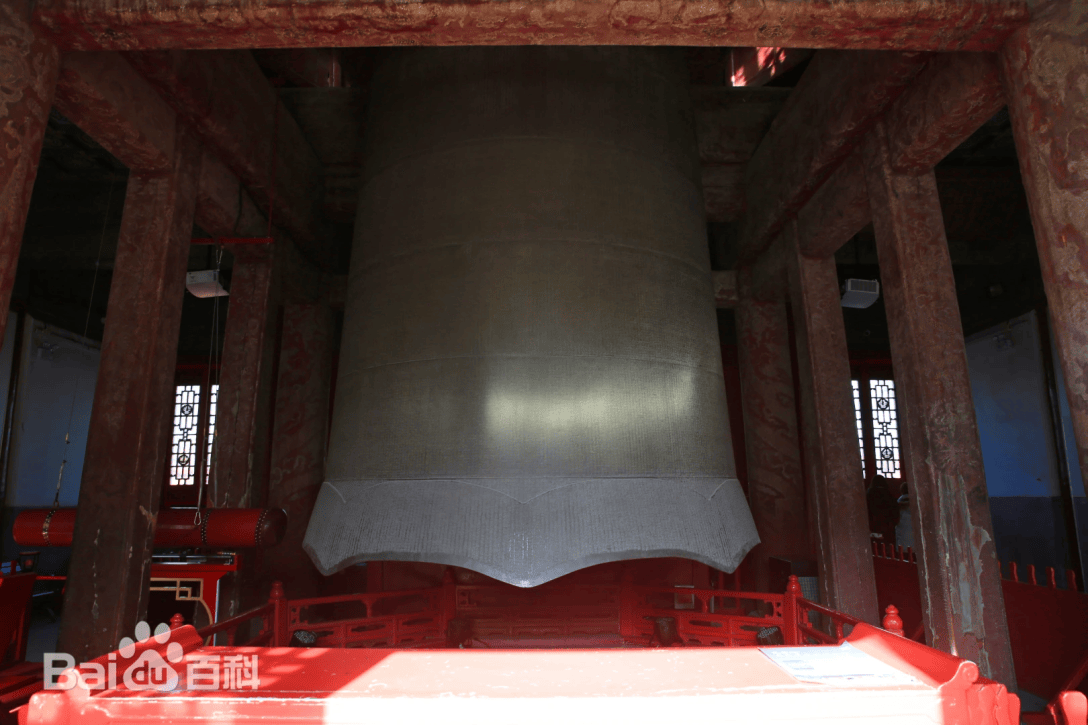
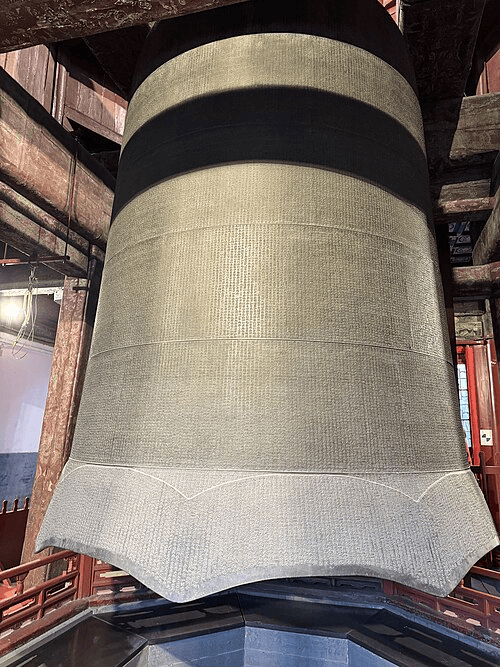
At the Ancient Bell Museum in Beijing stands one of China’s most remarkable national treasures—the Yongle Bell(永乐大钟).

Commissioned by the Yongle Emperor, Zhu Di (永乐皇帝朱棣), the bell is believed to have been designed and supervised by Yao Guangxiao(姚广孝), a highly respected Buddhist monk whose Dharma name was Daoyan(道衍). Yao Guangxiao was much more than a religious figure. He was also a scholar, strategist, and trusted adviser to Emperor Zhu Di.
Their relationship began before Zhu Di became emperor, when he was still the Prince of Yan. Yao Guangxiao became one of his trusted advisers and continued to serve him after Zhu Di ascended the throne. He was closely involved in major projects of the Yongle era, including the construction of Beijing and the compilation of the monumental Yongle Encyclopedia(永乐大典).

It is remarkable that one of the most ambitious Buddhist bells in Chinese history was connected to a monk who stood so close to the emperor and played such an important role in the cultural and political life of the Ming Dynasty.

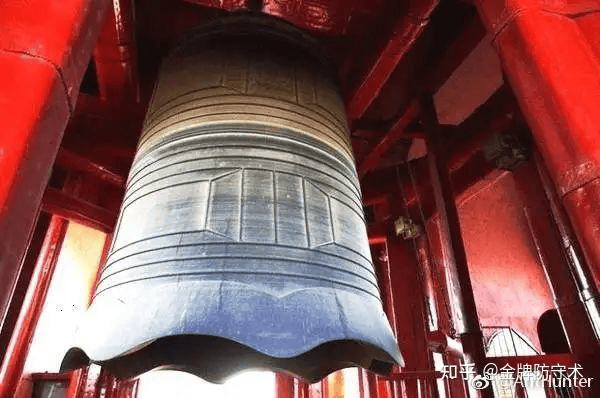
Cast during the Yongle era, around 1420, the Yongle Bell stands approximately 6.75 meters (22 feet) high and weighs about 46.5 metric tons (over 102,000 pounds).

More than six centuries later, it remains an extraordinary testament to the sophistication of ancient Chinese craftsmanship.

A Casting Technique That Seems Almost Impossible

How could ancient craftsmen have created such a gigantic bell more than 600 years ago?

The Yongle Bell was produced using a traditional Chinese technique known as the pit-mold ceramic casting method, or clay-mold method.

First, the craftsmen dug a massive casting pit several meters deep. Inside the pit, they constructed the bell’s inner mold using clay and other organic materials, while the outer ceramic mold was built up layer by layer.
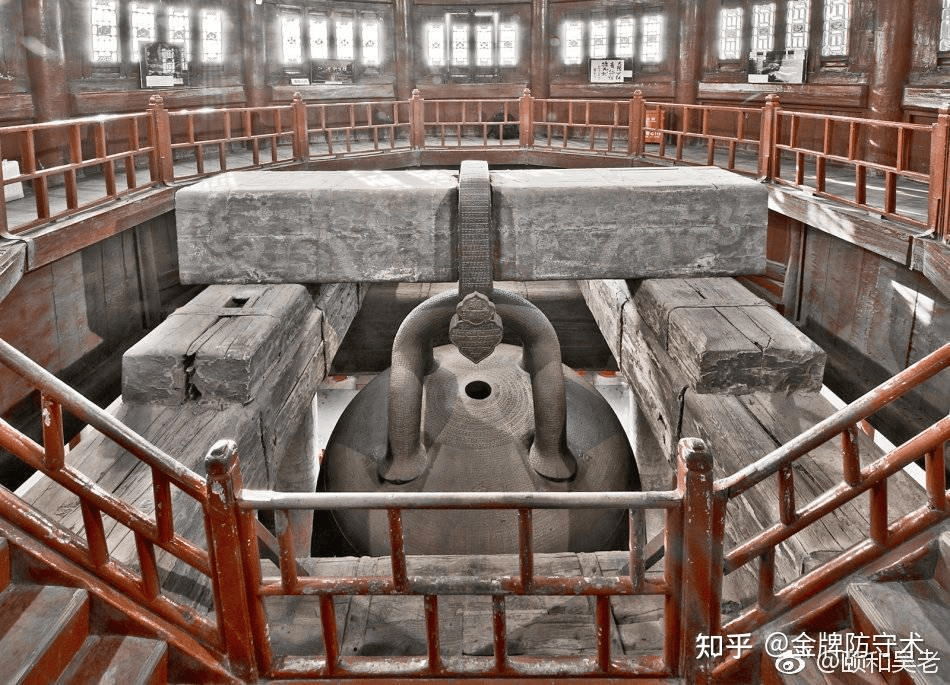
One of the most fascinating features is the Pulao-shaped bell knob at the top.

In Chinese mythology, Pulao is one of the nine legendary sons of the dragon. It was believed to have a powerful voice, which is why its image became associated with bells.

The Pulao knob of the Yongle Bell was reportedly cast separately using the lost-wax casting technique. It was then carefully incorporated into the casting mold so that it became an integral part of the finished bell.

Then came the most critical moment.
Dozens of furnaces were fired simultaneously. Molten bronze, glowing like rivers of fire, flowed through specially prepared channels and surged into the enormous mold.

The operation demanded extraordinary coordination. Temperature, the flow of molten metal, pouring time, and the structure of the molds all had to be carefully controlled.

A single major error could have ruined the entire project.

The successful casting of the Yongle Bell was therefore an extraordinary engineering and organizational achievement.

The bell’s achievement lies not only in its enormous size.

Scientific analysis shows that its alloy contains copper, tin, and lead as its principal metals, along with smaller amounts of elements including gold, silver, and nickel.

The carefully formulated alloy contributed to the bell’s strength, toughness, ductility, and acoustic properties.

A bell of this size must support its own enormous weight while withstanding repeated powerful impacts. If the metal were too brittle, cracks could develop; if the alloy composition were unsuitable, the bell’s resonance could also be affected.

Yet after more than 600 years, the Yongle Bell remains remarkably well preserved.

Its condition offers an impressive glimpse into the advanced metallurgical knowledge possessed by ancient Chinese craftsmen.

A “Bell of Scriptures”
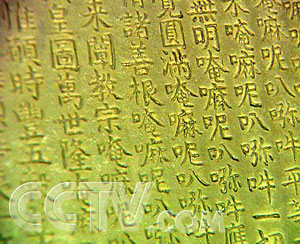
If the bell’s size is astonishing, its inscriptions are even more extraordinary.

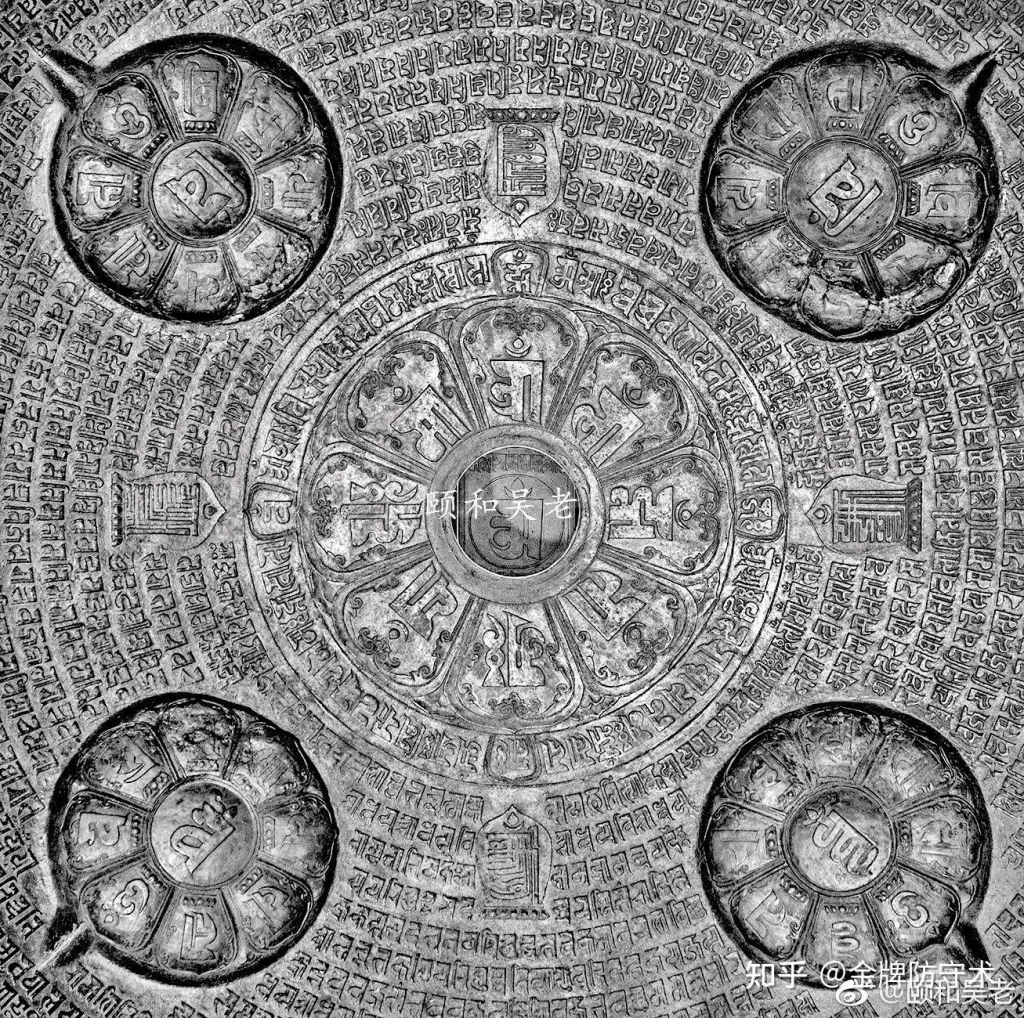
The inner and outer surfaces, as well as areas around the rim, are densely covered with Buddhist scriptures, sacred texts, and mantras.

According to historical descriptions, the bell contains more than 230,000 Chinese characters and Buddhist inscriptions.

Even more remarkable, these inscriptions were not carved onto the finished bell. They were incorporated directly into the casting process.

This meant that hundreds of thousands of characters had to be accurately prepared in the molds before the molten bronze was poured.

According to tradition, the inscriptions were associated with the celebrated Ming Dynasty calligrapher Shen Du. The characters display the dignified and elegant style associated with guan’ge ti, the formal calligraphic style favored by the imperial court.

To transform such delicate calligraphy into cast inscriptions, craftsmen had to reproduce the writing in the mold, creating corresponding recessed characters. After the molds were prepared and fired, molten bronze was poured into them, producing the raised inscriptions on the finished bell.

Imagine doing this without computers, laser engraving, digital typesetting, or modern precision machinery.

More than 230,000 characters had to be arranged across the curved surfaces of a gigantic bronze bell.
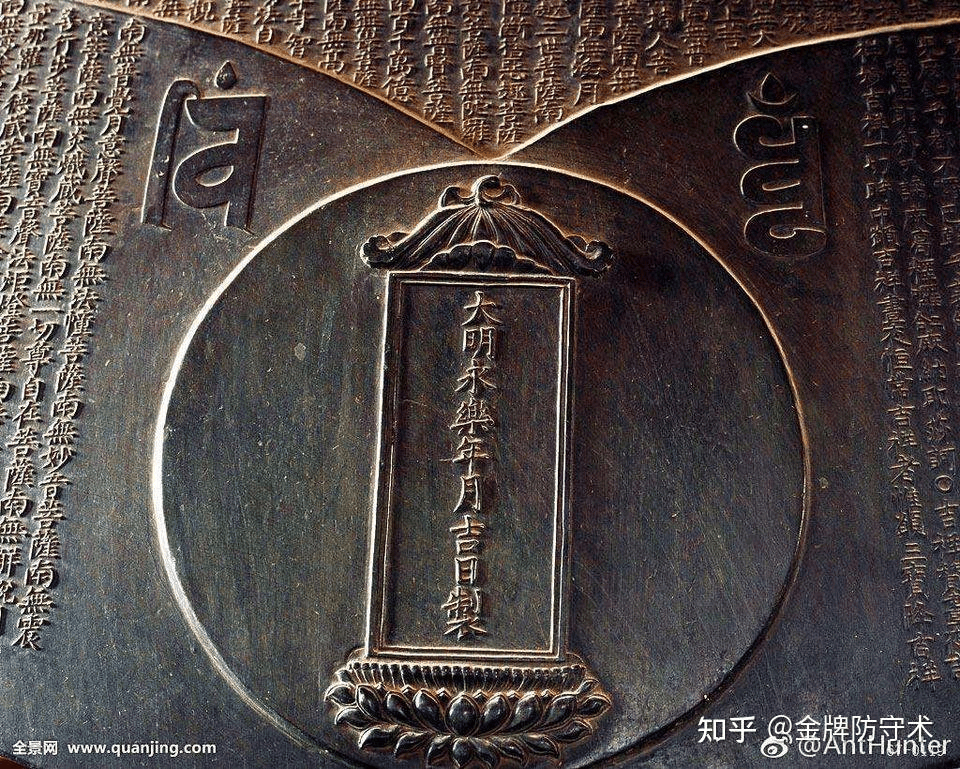
Every character had to be carefully formed and every line precisely positioned.

On one side was the art of the calligrapher.

On the other was the skill of the craftsman.

In the end, calligraphy, Buddhist scripture, and bronze became one.

The Yongle Bell is therefore not simply a gigantic bronze artifact.

It is almost like a Buddhist scripture cast in metal.

The Deep and Resonant Voice of the Bell

Perhaps the most captivating feature of the Yongle Bell is not what we see, but what we hear.

When struck by a massive bell striker, the thick bronze produces a deep, powerful, and extraordinarily sustained resonance.

According to accounts of its acoustic properties, under appropriate striking conditions, the resonance can continue for nearly three minutes. In the relatively quiet environment of ancient Beijing, its sound was reportedly capable of traveling for many kilometers.

Imagine Beijing more than six centuries ago.

At dawn, the first powerful note of the Yongle Bell rises into the air. Its deep, solemn sound travels beyond walls, streets, and fields, gradually fading into the distance.

The bell’s voice was not simply a means of marking time. It also carried religious meaning and occupied an important place in the spiritual culture of the period.

One Bell, Many Arts

The Yongle Bell brings together an extraordinary range of human skills.

Metallurgy transformed tons of raw materials into a strong and resilient bronze structure.

Casting technology made it possible to create an enormous bell with remarkable precision.

Calligraphy turned more than 230,000 characters into an intricate work of art.

Buddhist culture gave the inscriptions their profound spiritual meaning.

And acoustical craftsmanship gave the massive bronze its deep, sustained voice.

More than six centuries later, the Yongle Bell remains a remarkable achievement—not simply because of its size, but because of the extraordinary combination of engineering, artistry, religious culture, and craftsmanship embodied in a single object.

The Yongle Bell brings together the vision of an emperor, the knowledge of a scholar and Buddhist monk, the artistry of calligraphers, and the extraordinary skill of generations of craftsmen.

Standing before it today, one can see far more than a massive bronze bell.

One sees thousands of carefully formed characters, intricate craftsmanship, and the physical evidence of an ambitious undertaking carried out more than 600 years ago.

And then there is the sound.

A single strike can set this enormous bronze body into motion, allowing its resonance to linger long after the initial impact has disappeared.

The Yongle Bell is history cast in bronze, scripture transformed into art, and ancient craftsmanship given a voice.

It remains one of China’s extraordinary cultural treasures—and a remarkable achievement that deserves to be known and appreciated by people around the world.

Link:https://peacelilysite.com/2026/09/07/the-yongle-bell-a-600-year-old-marvel-of-chinese-civilization/

Source: https://zhuanlan.zhihu.com/p/547435529, https://wwj.beijing.gov.cn/bjww/wwjzzcslm/1737418/1738090/wwgs/325966413/index.html, https://news.cctv.com/program/tgkw/20040329/102069.shtml

What Makes the Human Brain So Unique? The Fascinating Genes Behind Our Brainpower

Glowing brain surrounded by a colorful DNA helix, stars, crystals, and laboratory bottles

Have you ever wondered what truly separates the human mind from the rest of the animal kingdom? While we share roughly 99% of our DNA with our closest primate relatives, that remaining 1% holds the secrets to our extraordinary cognitive abilities, complex language, and problem-solving skills.

Recent evolutionary genetics research reveals that a few specific “human-only” genes act as master architects of our minds.   

The Genetic Blueprint of Human Brainpower

Rather than building an entirely new brain from scratch, evolution used clever shortcuts—like gene duplications and tiny mutations—to supercharge human brain structure.   

  • ARHGAP11B (The Neocortex Expander): Around 5 million years ago, a partial gene duplication created ARHGAP11B. Later, a single point mutation enabled this gene to dramatically multiply neural stem cells. This change triggered the expansion and signature folding of the human neocortex—the region responsible for high-level reasoning and language.   
  • SRGAP2 (The Synapse Multiplier): This human-specific duplicated gene increases the number of connections (synapses) between neurons while slowing down their maturation. Prolonging this developmental window gives the brain years to build hyper-dense, complex neural networks.   
  • NOTCH2NL (The Stem Cell Booster): Found exclusively in humans, these genes delay the differentiation of stem cells into neurons, allowing the brain to produce a far larger pool of cortical neurons during early development.

One of the most surprising insights from recent research is the role of neoteny—the slowing down of brain development. While a mouse brain matures in weeks, the human brain takes decades to fully develop.

Human-specific genes like SRGAP2 prolong the development of both neurons and microglia (the brain’s circuit-sculpting immune cells). By keeping the brain in a adaptable, learning-ready state for years, nature gives us the long runway needed to absorb culture, acquire language, and master complex skills.

Our cognitive edge didn’t require a total overhaul of the genome. Instead, a few duplicated genes and subtle mutations allowed the human brain to grow larger, form denser networks, and remain adaptable over a prolonged childhood.

What aspect of human brain evolution do you find most surprising—the rapid expansion of brain size or our unusually long developmental timeline?

This video explores evolutionary genetics and how key genetic changes shaped the unique features and complexity of the human brain.

Link:https://peacelilysite.com/2026/09/04/what-makes-the-human-brain-so-unique-the-fascinating-genes-behind-our-brainpower/

Sources:

Source iconHuman-specific gene expansions contribute to brain evolution – PMCpmc.ncbi.nlm.nih.govOpens in a new windowSource iconHuman brain evolution: From gene discovery to phenotype … – PNASwww.pnas.orgOpens in a new windowSource iconEvolutionary key for a bigger brain | Max-Planck-Gesellschaftwww.mpg.deOpens in a new windowSource iconBrain Gene Tops the List for Making Humans, Humanwww.smithsonianmag.comOpens in a new windowSource iconScientists find a human-only gene that may help explain ourwww.sciencedaily.com

From Invisibility Spell to Enlightened Master: The Wild Life of Nagarjuna

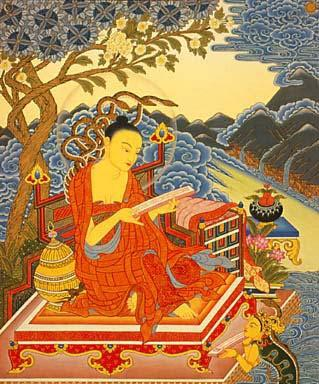
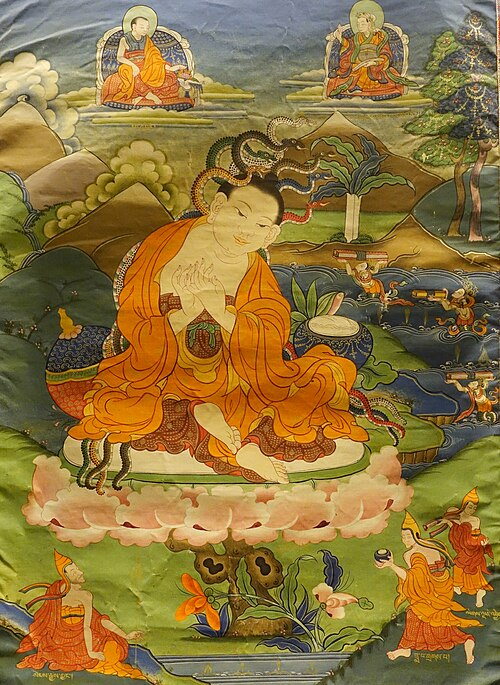
A Tibetan depiction of Nagarjuna; the snakes are depicted as protectors around Nagarjuna’s head and the nagas rising out of the water are offering Buddhist sutras

Throughout the two-thousand-year history of Buddhism, if one were to ask which master’s life was the most thrilling and dramatic, the answer would undeniably be Nagarjuna Bodhisattva.

He was not only the founder of the Madhyamaka (Middle Way) school and a foundational pillar of Mahayana Buddhism, but also an enlightened master whose incredible wisdom was matched only by his extraordinary life story. Revered by later generations as the “Ancestor of Eight Schools,” this legendary figure actually began his youth walking a path of extreme rebellion and reckless indulgence.

Nagarjuna was born into a noble Brahmin family in Southern India, displaying gifts from an early age that far exceeded ordinary human limits. As a child, he possessed a photographic memory—listening to the four sacred Vedas of Brahmanism just once before reciting them by heart with a complete grasp of their deepest meanings. By the time he reached his youth, he had transformed into a true polymath, mastering everything from astronomy and geography to divination, worldly arts, and various esoteric sciences.

Young scholar studying maps and arcane instruments in a candlelit library

However, genius without wisdom often becomes fuel for pride and unchecked desire. Believing he had already learned everything the worldly realm had to offer, the young Nagarjuna gathered with three like-minded friends to ponder a fateful question: “Life is short, and we have already mastered all human knowledge. What is left for us to pursue?” Their conclusion was as absurd as it was dangerous—to pursue ultimate pleasure and indulge in every sensory distraction.

Determined to indulge without restrictions, the four young men sought out a sorcerer and learned the art of invisibility. Armed with this miraculous power, they brazenly snuck into the royal palace, engaging in reckless escapades and chaotic antics for months while plunging the court into fear and suspicion. Realizing something unnatural was occurring, the King devised a clever trap by ordering fine sand scattered across the palace hallways and gates to track the invisible intruders’ footprints.

When the four entered the palace once more, soldiers surrounded their footprints and swung their swords wildly through the air. Nagarjuna’s three friends were unable to dodge the blades and were executed on the spot. Showing quick thinking under intense pressure, Nagarjuna saved his own life by pressing himself tightly against the King’s throne—knowing the soldiers would never dare swing their swords near the monarch’s seat.

Watching his closest companions cut down in a flash of blood and terror, Nagarjuna experienced a profound, shocking epiphany:

“Desire is the root of suffering, the source of all calamity. Misconduct and defilement know no greater depth than this!”

In that single, terrifying moment, he saw through the illusion and danger of worldly desires, resolving to abandon his past and walk the path of virtue.

Immediately after escaping the palace, Nagarjuna renounced the worldly life and took monastic vows. He fully mastered the entire Tripitaka—the Buddhist canon—in a mere nine months. Unsatisfied with basic mastery, he journeyed deep into the snow-capped mountains to seek out renowned masters and broaden his spiritual horizons.

According to tradition, sensing that the teachings available in the human realm were incomplete, Nagarjuna was guided by the Great Naga (Dragon) Bodhisattva to the underwater Dragon Palace. Inside its vast scriptural library, he discovered profound, high-level Mahayana sutras, including the Avatamsaka Sutra (Flower Garland Sutra), which he brought back to the human world to spread among spiritual seekers.

Upon his return, Nagarjuna authored countless seminal treatises that transformed Buddhist philosophy forever. He penned foundational texts such as the Mulamadhyamakakarika (Fundamental Verses on the Middle Way), the Twelve Door Treatise, and the Mahaprajnaparamita Upadesa (Commentary on the Great Perfection of Wisdom). Through these works, he formulated the profound doctrine of Dependent Origination and Emptiness (Pratītyasamutpāda and Śūnyatā), establishing the core philosophy of the Madhyamaka school while shattering the worldly attachments and misconceptions of his era.

Nagarjuna’s life is a remarkable journey from extreme pride and confusion to ultimate enlightenment. Through his own transformation, he proved to the world that delusion and awakening exist only a single thought apart. It was precisely that thrilling trial on the edge of life and death that forged his supreme wisdom to break all worldly attachments, ultimately creating one of the most revered spiritual grandmasters in human history.

Link:https://peacelilysite.com/2026/09/03/from-invisibility-spell-to-enlightened-master-the-wild-life-of-nagarjuna/

Why being “right” isn’t enough—and how true communication requires compassion, timing, and genuine benefit

Beyond the Truth: The Buddha’s Wisdom on Sacred Speech

In daily life, we frequently hear people defend sharp or hurtful remarks with a familiar defense: “I’m just speaking the truth.”

We often operate under the assumption that as long as our statements are factually accurate, we are justified in ignoring the timing, the setting, and the recipient’s emotional capacity. Yet in the Abhaya Sutta (Majjhima Nikaya 58) of the Pali Canon, the Buddha offers a radically different perspective on communication: the true value of speech extends far beyond mere factual accuracy.

The story begins with a trap. Nigantha Nataputta, leader of the Jains, sought to publicly corner the Buddha. He instructed Prince Abhaya to pose a carefully engineered dilemma:

“Would the Tathagata utter speech that is displeasing or disagreeable to others?”

It seemed like an inescapable box:

  • If the Buddha answered “Yes,” the prince would argue that he was no different from any ordinary person who hurls harsh words and causes distress.
  • If the Buddha answered “No,” the prince would counter by pointing to instances where the Buddha severely rebuked Devadatta—words that were undeniably painful for Devadatta to hear.

Confident in his trap, Nigantha Nataputta boasted that the question would stick in the Buddha’s throat like a barbed nut—impossible to swallow and impossible to spit out.

When Prince Abhaya hosted the Buddha for a meal the next day and posed the question, the Buddha quietly dismantled the binary trap: “There is no single, one-sided answer to this matter.”

The Buddha refused to play by a rigid, two-dimensional rule. Whether a Master speaks is never determined solely by whether the listener will find the words pleasant.

Having neutralized the debate tactic, the Buddha turned toward a young child sitting near the prince and offered a deeply human metaphor.

He asked the prince: “If this young child were to accidentally put a sharp piece of wood or a pebble into his mouth, what would you do?”

The prince replied without hesitation that he would immediately try to extract it. If necessary, he would hook his finger into the child’s mouth to drag it out—even if it meant causing pain or drawing blood—because the object had to come out.

When the Buddha asked why he would do such a thing, the prince’s answer was simple: “Because of compassion for the child.”

With this single image, the debate shifted entirely.

Some truths are uncomfortable to hear, much like removing a foreign object from a child’s mouth brings temporary pain. But the criterion for speaking is never immediate comfort; it is long-term welfare. A loving father reaches into his child’s mouth not to assert dominance, nor to punish, but because leaving the pebble inside causes far greater harm.

Through this parable, the Buddha established three essential checkpoints that every word must pass before it is spoken:

  • Truthfulness: Is it grounded in fact? Words that are false are never spoken.
  • Benefit: Is it genuinely useful? Even if a statement is 100% true, if it brings no constructive benefit to the listener, it remains unsaid.
  • Timeliness: Is this the right moment? Only when a statement is both true and beneficial will a wise speaker choose the appropriate time to speak it.

In the Buddha’s framework, truth is merely the entrance requirement. If a statement is factually correct but unhelpful, ill-timed, or purely divisive, silence is the highest wisdom.

Looking Inward: Winning vs. Healing

The contrast between the two parties in this sutta highlights two very different motivations for speaking:

  • The Debate Strategy: Designed to corner, crush, and silence the other person—driven by the desire to win.
  • The Buddha’s Response: Designed like a parent rescuing a child from danger—driven by the desire to heal.

This distinction invites us to examine our own hearts before we speak “harsh truths” or offer sharp criticism:

Are we speaking because we genuinely want to help the other person suffer less, or are we simply trying to prove ourselves right and dominate the conversation?

True goodwill allows for necessary firmness, but it must always rest upon the foundation of truth, benefit, and proper timing. Practicing the wisdom of Right Speech is not just about holding our tongue—it is about refining our intent, ensuring that every word we release carries gentle yet steadfast compassion.

Link:https://peacelilysite.com/2026/09/02/why-being-right-isnt-enough-and-how-true-communication-requires-compassion-timing-and-genuine-benefit/