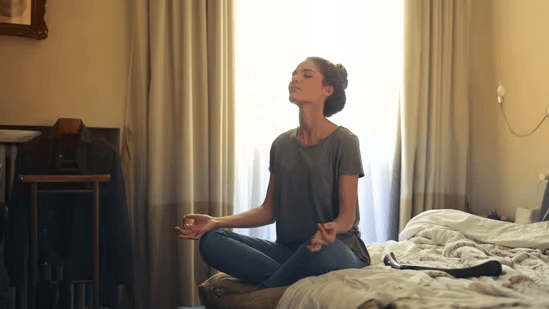
Mayo Clinic says you can practise mindfulness without meditating: Here’s how

Published on: Sep 27, 2026, 03:14:07 IST on Hindustan Times

By Soumi Pyne

In this article you will know how mindfulness can bring simple moments of your day, according to Mayo Clinic.

When you hear the word mindfulness, you may imagine sitting quietly with your eyes closed and focusing on your breath. But mindfulness does not always need a meditation cushion or a long period of silence.

In an article published on January 21, 2026, Mayo Clinic explains that you can bring mindfulness into simple moments of your day. You can practise it while eating, brushing your teeth, walking or simply paying attention to what happens around you.

Also Read Meditation and mindfulness are known for cognitive health benefits. But experts say they can have a difficult side

What is mindfulness?

Mindfulness simply means paying attention to the present moment without judging what you notice. You can observe your thoughts, feelings, body and surroundings as they are.

You do not need to push thoughts away or try to make your mind completely quiet. Mayo Clinic explains that mindfulness means becoming aware of your thoughts without getting caught up in them.

Also Read Mindfulness meditation can help you return to the present. Johns Hopkins explains how to break the autopilot habit

You can practise it during everyday tasks

You can start with something you already do every day.

When you brush your teeth, notice the movement of your hand, the taste of the toothpaste and the feeling of the brush. When you eat, slow down and notice the smell, taste and texture of your food.

The goal is simple. Give your full attention to what you are doing instead of rushing through it while thinking about the next task.

Try a mindful walk

Walking can also give you a simple way to practise mindfulness. You do not need a special place or a long walk.

As you walk, notice how your feet touch the ground. Pay attention to the sounds around you, the air on your skin and the sights you pass. Mayo Clinic says you can practise mindfulness while walking, sitting, standing or lying down.

This can help you step away from autopilot and notice the moment you are actually living.

You only need a few minutes

You do not have to set aside an hour for mindfulness. Mayo Clinic says even brief moments of mindful awareness during daily activities count. It also notes that you can start with a few minutes of practice.

You can pause for a few breaths between tasks. Look around you. Notice what you hear. Feel your feet on the floor. Then return to what you were doing.

Can mindfulness become part of your spiritual life?

For some people, mindfulness can create space for quiet reflection and self-awareness. You may use an ordinary moment to slow down and notice what you feel instead of moving through the day without thinking.

You do not have to follow a particular spiritual tradition to practise mindfulness. You can simply use it as a way to become more present in your own life.

Mayo Clinic says mindfulness can support focus, stress management, mood and a greater sense of awareness. Sometimes, being present does not require you to stop your life. You can simply learn to be fully there while you live it.

Disclaimer: This article is for informational purposes only and not for medical substitute. Reader’s discretion is advised.

Link:https://peacelilysite.com/2026/09/30/mayo-clinic-says-you-can-practise-mindfulness-without-meditating-heres-how/

Source: https://www.hindustantimes.com/lifestyle/spiritual/mayo-clinic-says-you-can-practise-mindfulness-without-meditating-here-s-how-101790458282318-amp.html?shem=aimgspe,

Under the Full Moon: The Beauty and Traditions of China’s Mid-Autumn Festival

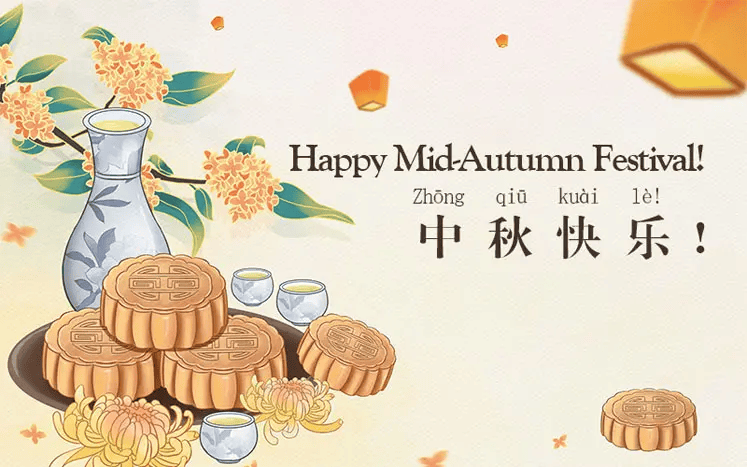
Every autumn, when the moon shines bright and round in the night sky, millions of people celebrate one of China’s most beloved traditional festivals—the Mid-Autumn Festival, or Zhongqiu Jie (中秋节), also known as the Moon Festival.

In 2026, the festival falls on September 25, the 15th day of the eighth month of the Chinese lunar calendar. It is celebrated in China and by Chinese communities around the world, including Singapore, Malaysia, and the United States.

More than a celebration of the moon, this festival is a time for family reunion, gratitude, and remembering the people we love.

A Festival of Reunion and Gratitude

The Mid-Autumn Festival has deep roots in Chinese agricultural traditions. It takes place during the autumn harvest season, when families gather to celebrate the fruits of their labor and give thanks for the abundance of the earth.

The full moon has a special meaning in Chinese culture. Its round shape symbolizes completeness, harmony, and family reunion. Even when family members live far apart, they can look up at the same moon and feel connected.

For many Chinese people, this festival is a little like Thanksgiving. Families prepare a special dinner, share stories, and express their love and appreciation for one another.

In Chinese, the word tuányuán (团圆) means reunion. During the Mid-Autumn Festival, it is one of the most cherished wishes: May the family be together, may everyone be safe, and may life be filled with peace and happiness.

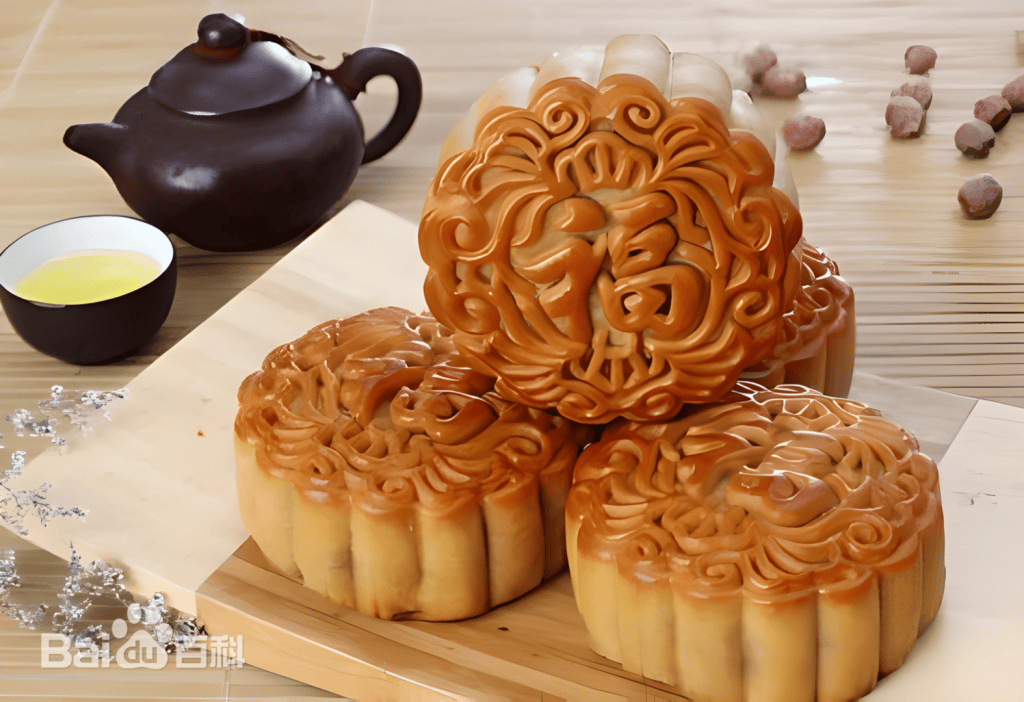
No Mid-Autumn Festival would feel complete without mooncakes.

These traditional pastries are usually round, representing the full moon and family unity. Their beautifully patterned surfaces often feature Chinese characters expressing good fortune, longevity, or harmony.

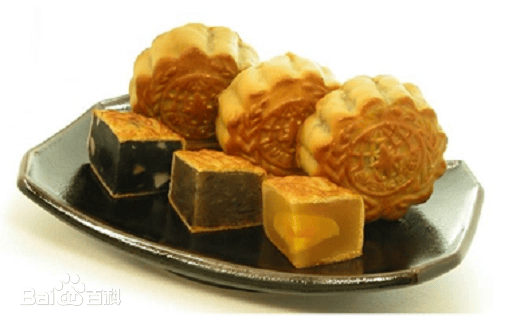
Traditional mooncakes come in many varieties. Some contain sweet lotus seed paste, red bean paste, or salted egg yolks. Others are filled with nuts, dried fruits, or savory ingredients. Different regions of China have developed their own styles and flavors.

Mooncakes are not only enjoyed at home but are also exchanged as gifts among relatives, friends, and colleagues. Sharing a mooncake is a way of expressing affection and sending good wishes.

Families often cut a mooncake into small pieces so everyone can share it together—a simple gesture that reflects the festival’s spirit of togetherness.

The Beauty of Traditional Chinese Costumes

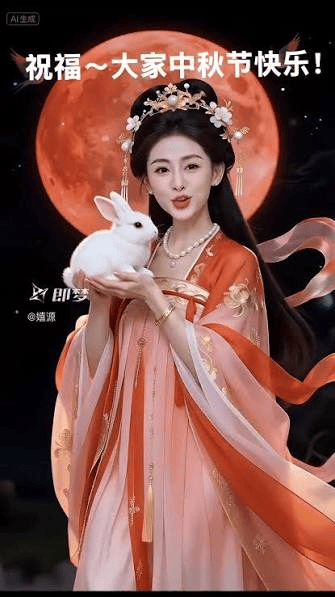
One of the most beautiful ways to experience Chinese culture is through its traditional clothing.

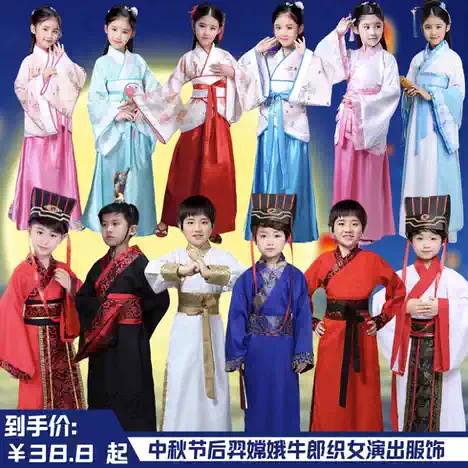
During cultural celebrations and festival events, people may wear Hanfu (汉服), traditional clothing associated with the Han Chinese and inspired by styles from different historical periods. Although most people today wear modern clothing in everyday life, Hanfu has become increasingly popular at cultural festivals, historical performances, and special photo events.

Hanfu is known for its graceful silhouettes, flowing sleeves, layered robes, and elegant fabrics. Depending on the historical style, an outfit may include a long robe, a wraparound skirt, a sash, or a decorative belt.

The colors are especially beautiful during the Mid-Autumn Festival. Soft ivory, pale blue, blush pink, and lavender can evoke the gentle beauty of moonlight. Deep red, emerald green, and gold create a more festive appearance. Embroidered flowers, clouds, or delicate patterns may add another layer of elegance.

Women may wear long skirts with flowing outer robes, while men may choose long robes with wide sleeves and traditional belts. Hair ornaments, jade accessories, and delicate fans can complete the look.

Some people choose styles inspired by the Tang or Song dynasties, while others prefer Ming-style clothing. Each period has its own distinctive shapes and details, making traditional Chinese clothing a fascinating expression of history and artistry.

It is important to remember that Hanfu is not one single costume. Chinese clothing changed across centuries, and different styles belong to different historical periods. Modern festival outfits may also combine historical inspiration with contemporary design.

When people wear these garments beneath the autumn moon, the experience becomes more than dressing beautifully. It is a way of connecting with cultural heritage, appreciating traditional craftsmanship, and allowing history to come alive.

Lanterns, Moonlight, and Ancient Legends

Another lovely tradition is carrying lanterns.

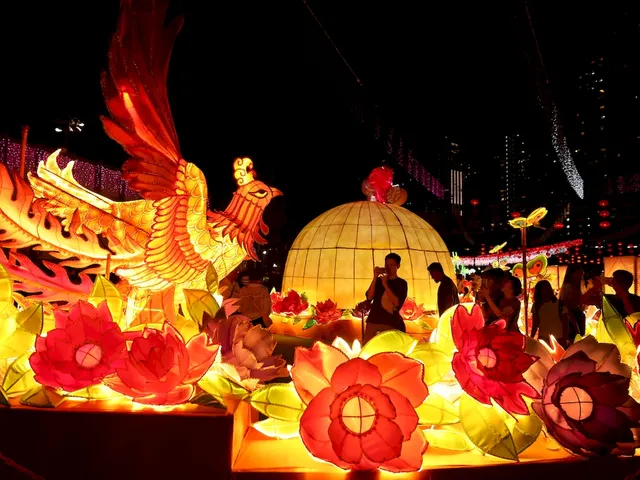
Children may walk with colorful lanterns shaped like rabbits, flowers, or animals. In some communities, lantern displays illuminate parks and streets, creating a magical atmosphere. Families may also enjoy solving lantern riddles together.

The rabbit lantern is especially meaningful because of the famous Chinese legend of Chang’e and the Moon.

According to one version of the story, Chang’e was the wife of the heroic archer Hou Yi. After taking an elixir of immortality, she ascended to the moon, where she became associated with the Moon Palace. Her companion is often depicted as the Jade Rabbit, who is said to prepare medicine for immortality.

The story has been told and retold for generations. Although versions differ, it has become one of the most recognizable legends associated with the festival.

On Mid-Autumn night, families may also place fruits, mooncakes, and other offerings on a table to appreciate the moon. These customs reflect older traditions of honoring the moon and expressing wishes for a good harvest and a happy life.

Today, some families continue these practices, while others simply enjoy moon-viewing together.

Woman gazing at a glowing full moon over terraced hills

Perhaps the most touching part of the Mid-Autumn Festival is the simple act of looking at the moon.

The moon reminds people that even when we are separated by distance, we share the same sky. A parent working in another city, a child studying abroad, or a friend living across the ocean can all look up at the same moon.

This feeling has inspired Chinese poets for centuries. The moon often appears in poetry as a symbol of longing, friendship, love, and the passage of time.

The festival also arrives when the sweet fragrance of osmanthus flowers fills the autumn air in many parts of China. Their delicate scent, the cool evening breeze, and the bright moon create a peaceful atmosphere that is difficult to forget.

For those who cannot return home, the moon may bring a little sadness. Yet it also offers comfort: the people we love remain part of our lives, even when we cannot be physically together.

The Mid-Autumn Festival reminds us that happiness does not always come from grand celebrations or expensive gifts.

Sometimes, it is found in sharing a simple meal, offering a piece of mooncake, watching children carry lanterns, or sitting quietly beneath the moon with someone we love.

In a busy modern world, this ancient festival invites us to slow down and appreciate what truly matters: family, friendship, gratitude, and the beauty of nature.

Whether we celebrate in China or thousands of miles away, the full moon connects us through a shared tradition that has endured for generations.

May the bright autumn moon bring peace to every home, warmth to every heart, and reunion to all those who long to be together.

Happy Mid-Autumn Festival! 中秋节快乐!

Link: https://peacelilysite.com/2026/09/25/under-the-full-moon-the-beauty-and-traditions-of-chinas-mid-autumn-festival/

We Spend So Much Time Trying to Live Longer—But Are We Learning How to Live Better?

Modern people are fascinated by longevity.

We study nutrition, exercise, sleep, supplements, medical treatments, and the latest science of aging. We count our steps, monitor our heart rate, change our diets, and search for new ways to add more years to our lives.

But there is another kind of nourishment that is easy to overlook: the nourishment of the heart and spirit.

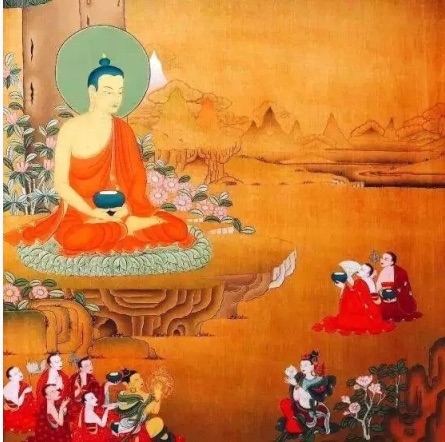
A Buddhist story from the Treasury of Miscellaneous Treasures (Za Bao Zang Jing) offers a beautiful perspective on this.

During the time of the Buddha, there was a wealthy elder whose young son was deeply loved.

According to the Buddhist scripture, when the child was about five or six years old, a fortune-teller examined him and said that the child had great blessings—but one serious weakness: his life would be short.

The father was devastated. He searched for ways to help his son live longer and eventually brought him to the Buddha.

The Buddha did not give him a special medicine or promise that death could simply be defeated.

Instead, the Buddha taught the child to cultivate humility, patience, and respect.

The child was instructed to respectfully bow to people entering and leaving the city.

One day, a being who had intended to take the child’s life appeared in the form of a Brahmin. When the child respectfully bowed to him, the being instinctively blessed him, saying, in essence, “May you have a long life.”

Because he had spoken those words, he could no longer go against them.

The scripture concludes that through the child’s humility, patience, and respectful conduct, his life was extended.

The story is recorded in Za Bao Zang Jing(杂宝藏经), Volume Four, in the story known as “The Elder’s Son Seeks Long Life from the Buddha.”

What If Longevity Is More Than Taking Care of the Body?

This ancient story makes me think about how differently we sometimes approach longevity today.

We are very concerned about what we put into our bodies, but perhaps we should also ask:

What are we putting into our hearts?

We carefully consider food, but what about anger?

We worry about toxins in the environment, but what about resentment?

We exercise our bodies, but do we exercise patience?

We try to strengthen our immune systems, but do we strengthen compassion?

We may spend years searching for ways to extend our physical lives while forgetting that the quality of those years also matters.

Many years ago, I heard an elderly Chinese doctor say something that stayed with me:

“Medicine nourishes the body, food nourishes the body better, movement nourishes it even more—but while nourishing the body, never forget to nourish the heart. Wherever you do good, there is nourishment.”

I have always loved the wisdom behind these simple words.

Taking care of our bodies is important. Eating well, exercising, sleeping properly, and receiving appropriate medical care all matter.

But perhaps taking care of the heart is another form of longevity practice.

What Are We Nourishing Every Day?

Every act leaves something behind in us.

When we constantly become angry, anger becomes easier.

When we hold on to resentment, resentment becomes heavier.

When we practice kindness, kindness becomes more natural.

When we help someone, we may discover that our own heart becomes lighter.

When we forgive, we release something that we have been carrying.

When we sincerely help others, perhaps we are not only giving something away—we are also nourishing something within ourselves.

This is one reason Buddhist teachings place such importance on compassion, generosity, patience, and wholesome actions.

The goal is not simply to have a longer life.

It is to cultivate a better life.

Of course, doing good should not be viewed as a transaction: “If I help others, I will definitely live longer.”

The deeper lesson is about how we live.

We can take care of our bodies while also taking care of our minds and hearts.

We can eat nutritious food and also “feed” ourselves with kindness.

We can exercise our bodies and also practice patience.

We can seek medical treatment when we are ill and, at the same time, work on releasing anger, jealousy, resentment, and fear.

Perhaps true wellness requires both.

Nourish the body, but do not forget to nourish the heart.

And perhaps the simplest nourishment is kindness.

What Kind of Life Are We Trying to Extend?

The Buddhist story of the young child does not tell us that we can control the length of our lives simply by doing good deeds. Life and death involve causes and conditions far beyond our understanding.

But the story reminds us of something important:

While we cannot completely control how long we live, we can pay attention to how we live.

Perhaps the question is not only:

“How can I live longer?”

but also:

“How can I make the years I have more compassionate, meaningful, and beneficial to others?”

Maybe that is another kind of longevity—one measured not only in years, but in the goodness we leave behind.

We spend so much time trying to add years to life.

Perhaps we should also spend some time adding life to our years.

Because sometimes, the best way to nourish ourselves is to nourish someone else.

Link:https://peacelilysite.com/2026/09/22/we-spend-so-much-time-trying-to-live-longer-but-are-we-learning-how-to-live-better/

He Came to China as a Teacher. He Stayed to Give Abandoned Children a Home

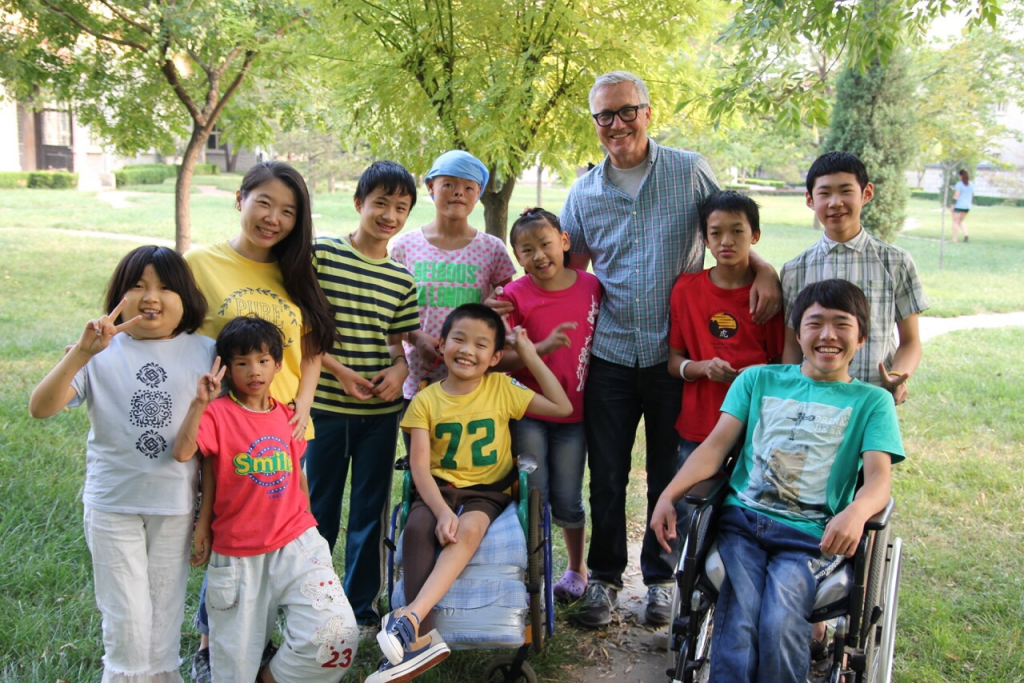
Tim Baker with one of the newly arrived orphans at the “children’s village” in Langfang, China.
Nancy Fraser

One American, One Yuan, and a Village Built on Compassion

Sometimes, a story comes along that quietly restores our faith in humanity.

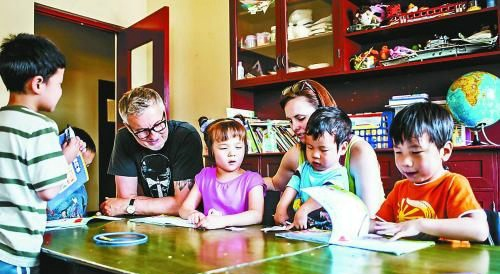
The story of Tim Baker, an American who devoted much of his life to caring for abandoned and disabled children in China, is one of those stories.

He first came to China as a teacher.

But in 1991, while volunteering at a children’s welfare institution, he encountered children who had been abandoned because of illness or disability. He and his wife, Pam, eventually adopted several Chinese children themselves.

They could have stopped there.

Instead, they chose to do more.

In 1995, Tim left his teaching position and founded the Philip Hayden Foundation in memory of his friend Philip Hayden. What began as a small effort gradually grew into a much larger mission to provide medical care, a home, and hope for children who had nowhere else to go.

A Piece of Land for One Yuan

As more children came into their care, Tim and Pam dreamed of building a permanent home where the children could grow up with dignity, safety, and a sense of family.

In 2002, the local government in Dawang Guzhuang, Tianjin, offered land for the project at the symbolic price of one yuan per mu. Reports describe the land as roughly 30–33 mu. Tim was reportedly so surprised that he asked more than once whether they really meant one yuan.

That land eventually became Shepherd’s Field Children’s Village, or “牧羊地儿童村.”

The name itself is beautiful.

Before the children’s village was built, the land had been used by local villagers as a place to graze sheep.

A former pasture would become a home for children who had been abandoned.

And the story did not stop with the land.

People began to help.

Companies donated materials. Professionals offered their skills. Others provided equipment, construction support, and financial assistance. What one family had started slowly became a community of compassion.

Perhaps the most touching part of Tim’s story is not the buildings or the numbers.

It is the children.

Tim once described how children often arrived with the sadness of abandonment written on their faces. But after receiving care and affection, something began to change.

Their eyes began to shine.

That simple image says so much.

Sometimes a child does not need someone to change the whole world.

They need someone to stay.

Someone to hold them.

Someone to feed them.

Someone to take them to the doctor.

Someone to tell them, through actions rather than words:

“You matter. You are not forgotten.”

In Buddhism, compassion—慈悲 (cí bēi)—is much more than feeling sorry for someone who is suffering.

Compassion begins when we recognize another being’s suffering and allow that suffering to touch our heart.

But true compassion does not stop with feeling.

It moves us toward action.

We ask:

“What can I do to help?”

This is why compassion is so closely connected with loving-kindness, wisdom, and action in Buddhist practice.

We may not be able to remove all suffering from the world. But we can lessen suffering where we are.

We can offer food to someone who is hungry.

Comfort someone who is lonely.

Care for a sick person.

Protect an animal.

Forgive instead of causing more hurt.

Or simply remain beside someone who is going through a difficult time.

Compassion does not always require extraordinary ability.

Sometimes it requires only that we do not turn away.

Tim was American.

The children were Chinese.

Their languages, cultures, and backgrounds were different.

But when a child is suffering, these differences become very small.

A hungry child does not ask where you were born.

A frightened child does not ask what language you speak.

A child simply needs love.

That is why stories like this are so important.

Our world often reminds us of everything that separates people.

But compassion reminds us of something deeper:

We are human before we are anything else.

What makes this story even more beautiful is that Tim and Pam did not do everything alone.

Their compassion inspired other people to participate.

One person donated.

Another volunteered.

Someone else offered professional skills.

Another opened a door.

Little by little, many small acts of kindness became something much larger.

This is how goodness spreads.

One person lights a candle, and another person uses that light to light another.

We may not be able to build a children’s village.

We may not be able to care for thousands of children.

But we can still participate in this chain of kindness.

We can help a neighbor.

Visit someone who is lonely.

Donate what we can.

Volunteer our time.

Care for an abandoned animal.

Speak gently when anger would be easier.

Notice someone who needs help instead of walking past.

These acts may seem small.

But we never know how far kindness will travel.

When I read stories like Tim Baker’s, I am reminded that there is still enormous goodness in this world.

There are people who quietly give without asking for recognition.

We do not have to change the whole world to make the world a better place.

We can begin with one person.

One child.

One animal.

One neighbor.

One act of kindness.

And perhaps that small light will reach someone else—and inspire them to pass it on.

Love does not become smaller when we give it away.

It becomes larger.

Perhaps this is what true compassion looks like—not asking, “What can I gain?” but quietly asking, “What can I do?”

May the kindness we receive become the kindness we give.

May compassion cross every border.

And may each of us, in our own small way, become a light for someone else.

Link:https://peacelilysite.com/2026/09/20/he-came-to-china-as-a-teacher-he-stayed-to-give-abandoned-children-a-home/

Source: https://chinasource.org/articles/wendy-blazes-a-trail/, https://www.npr.org/2003/09/11/1427329/a-village-for-chinese-orphans

There Is No Generation Gap—Am I the North Wind or the Sun?

I Chose to Be the Sun—and My Relationship With My Father Changed

There is a saying that has stayed with me:

“If you have never experienced what others have gone through, do not be quick to judge their faults. If you have never endured their suffering, do not be quick to tell them how they should behave. If you had suffered what I have suffered, you might not have done any better than I did.”

It sounds like such a simple truth. Yet for many years, I failed to truly understand it.

Growing up, my father was strict and authoritative. My relationship with my mother was completely different—we were close, comfortable, and deeply connected.

As I grew older, conflicts between my parents became more frequent. I instinctively took my mother’s side and rarely tried to understand my father’s perspective. Over time, my judgments about him became deeply rooted.

Even when I became seriously ill and my father cared for me tirelessly, without complaint, I still struggled to let go of my resentment. I continued to hold on to painful memories of the arguments between my parents.

I was looking at my father through the lens of the past.

After my mother passed away, my father was overwhelmed with grief. Yet he tried to remain strong for me, knowing that talking about my mother might make me sad.

Suddenly, there were only the two of us.

When we went for walks together, my father often talked about things that had happened many years ago. Instead of recognizing the loneliness behind his words, I became impatient. I corrected him, contradicted him, and sometimes lost my temper.

Eventually, he quietly said something that touched me deeply:

“If you don’t like talking to me, at least don’t lose your temper with me.”

His words made me stop and look at myself.

One day, I suddenly saw my own behavior clearly.

I realized that I had been holding on to the painful history of my parents’ marriage and using it to justify my inability to understand my father.

But how could I possibly know all the causes and conditions behind their relationship? How could I know everything my father had experienced, feared, endured, or carried silently in his heart?

I began asking myself a different question:

Instead of waiting for someone else to change, can I change myself first?

I decided that I could.

I wanted to become a more patient and understanding daughter. I wanted to listen instead of judge, to let go instead of cling to the past, and to practice filial love through my everyday actions.

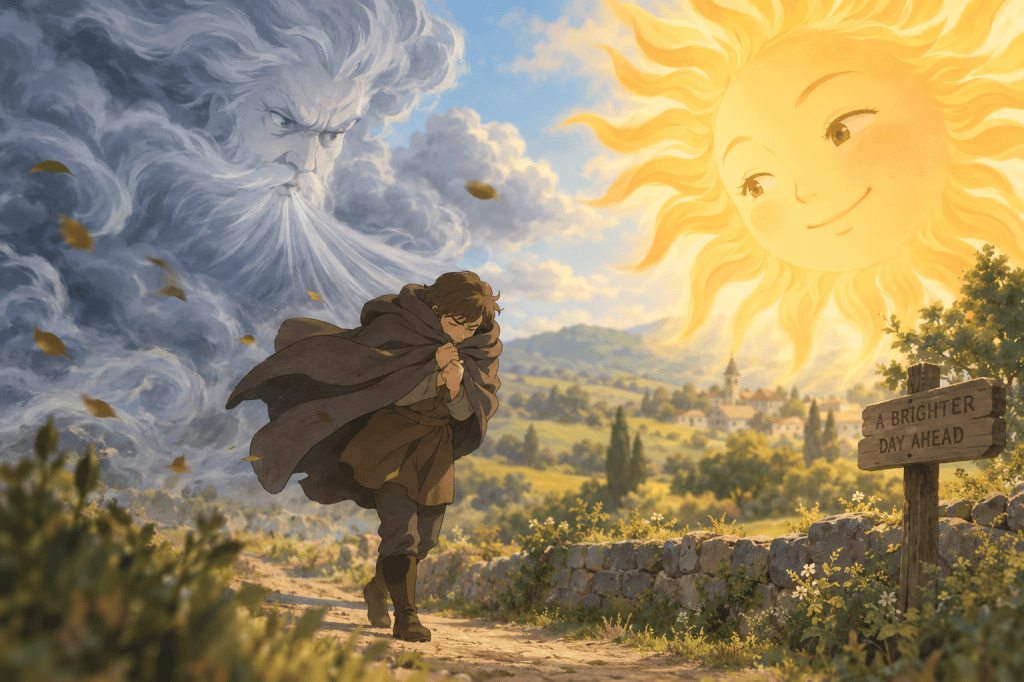
I remembered Aesop’s fable The North Wind and the Sun. The North Wind tried to force a traveler to remove his coat, but the Sun simply warmed him, and eventually the traveler took it off himself.

I decided that I wanted to be the sun.

Little by little, something changed.

When I was away from home, I began calling my father at the same time each day just to check on him. When I was with him, I made a conscious effort to sit down, listen, and talk rather than hurry away.

I did not change him.

I changed myself.

And as I changed, our relationship changed too.

The coldness between us gradually softened. The two people who had once struggled to communicate began sharing a much more peaceful and harmonious life.

Looking back, I realize that sometimes the distance between two people is not created by a lack of love. Sometimes it is created by old judgments, unresolved attachments, and our unwillingness to see beyond our own version of the past.

This transformation came through sincerely learning and practicing Buddhism, and through receiving guidance from the Dharma discourses of Namo H.H. Dorje Chang Buddha III.

I came to understand more deeply that Buddha Dharma is not separate from ordinary life. It is practiced in the way we speak to our parents, how we respond when someone frustrates us, and whether we can recognize our own faults before pointing out the faults of others.

We often wish that other people would become more patient, more understanding, or more compassionate.

But perhaps the first question should be:

Have I become the person I am asking others to be?

Every person carries a story we may never fully know. Before judging someone, perhaps we should remember that we have not walked in their shoes.

There may be painful knots in our relationships that seem impossible to untie. But sometimes the first knot begins to loosen when we stop asking, “Why doesn’t this person change?”

And instead ask:

“What can I change in myself?”

Sometimes, one small change in ourselves can bring warmth into an entire relationship.

And sometimes, becoming the sun is enough.

Link: https://myhappylifestyle.net/2026/09/08/there-is-no-generation-gap-am-i-the-north-wind-or-the-sun/

#DorjeChangBuddhaIII #Spirituality #Buddha #Buddhism

What Are You Training Your Mind to Become?

Person running on treadmill inside gym with brain activation and flow diagram

A Buddhist Lesson from a Horse That Forgot How to Run

There is a fascinating story in the Da Zhuangyan Lun Jing (Sutra of Great Adornment).

A king once raised many excellent horses, originally prepared for battle. Because neighboring countries knew he possessed such strong horses, they were afraid to attack.

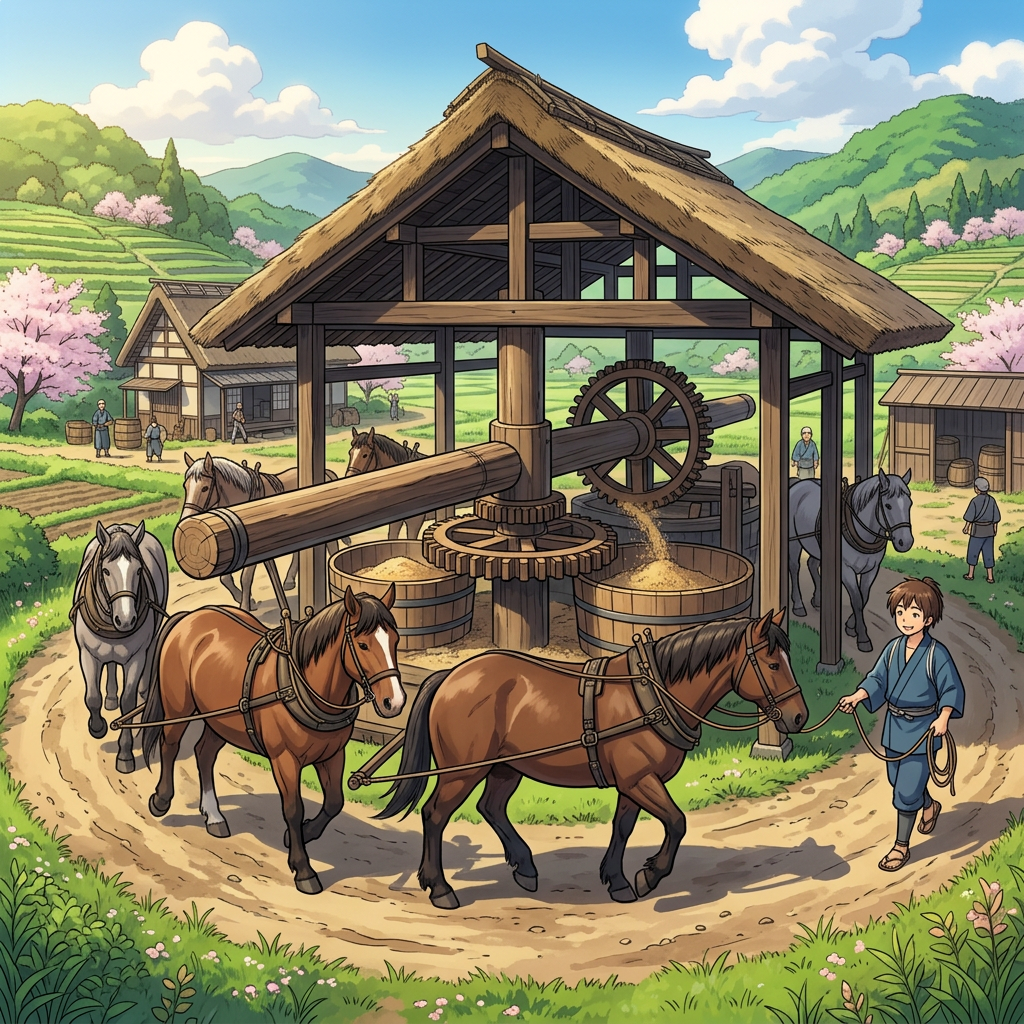
Horses powering a wooden grain mill in a spring mountain village

As the years passed without war, however, the horses were given to ordinary people for daily work. They were used to turn grinding mills. Day after day, year after year, the horses walked in circles around the mill.

Then one day, an enemy invaded.

The king quickly called the horses back and prepared them for battle. But when they reached the battlefield, something unexpected happened. Instead of charging forward, the horses continued walking in circles—the same movement they had practiced for years.

Even when the soldiers tried to drive them forward, the horses found it difficult to change.

The Da Zhuangyan Lun Jing uses this story to illustrate an important truth: what we repeatedly practice becomes our habit, and what becomes our habit can shape how we respond when it matters most.

The Circle We Walk Every Day

The most meaningful part of this story is that the horses did not suddenly learn to walk in circles on the battlefield.

They had practiced that circle for years.

Our minds can be like that too.

What do we do first when we wake up?

For many of us, we reach for our phones.

We check one message, then another. We watch one short video, then automatically swipe to the next. We see someone else’s life and begin comparing ourselves. We read a comment we dislike and immediately become irritated.

Each individual moment may seem insignificant.

But repeated thousands of times, these moments become habits.

And habits do more than organize our daily lives. They train our minds.

So perhaps an important question is not only:

“What did I do wrong today?”

but also:

“What am I teaching my mind to become?”

If we constantly train ourselves to seek the next notification, the next video, the next piece of stimulation, it should not surprise us when we later sit down to meditate, pray, or recite the Buddha’s name and find that our minds cannot remain still.

We may wonder, “Why is my mind so scattered?”

But the scattering did not begin when we sat down.

We simply became quiet enough to notice it.

We Are Always Practicing Something

This is where the Buddhist teaching of 熏习, xunxi—habitual conditioning or repeated imprinting becomes meaningful.

In Buddhist teachings, repeated actions of body, speech, and mind leave tendencies that influence what arises again in the future. In Yogācāra thought, the relationship between “seeds” and “manifestations” describes how repeated mental and behavioral patterns can strengthen similar tendencies.

If we repeatedly become angry, anger becomes an easier path to follow.

If we repeatedly compare ourselves with others, dissatisfaction and jealousy can become easier to generate.

If we constantly seek stimulation, restlessness can gradually become our normal state.

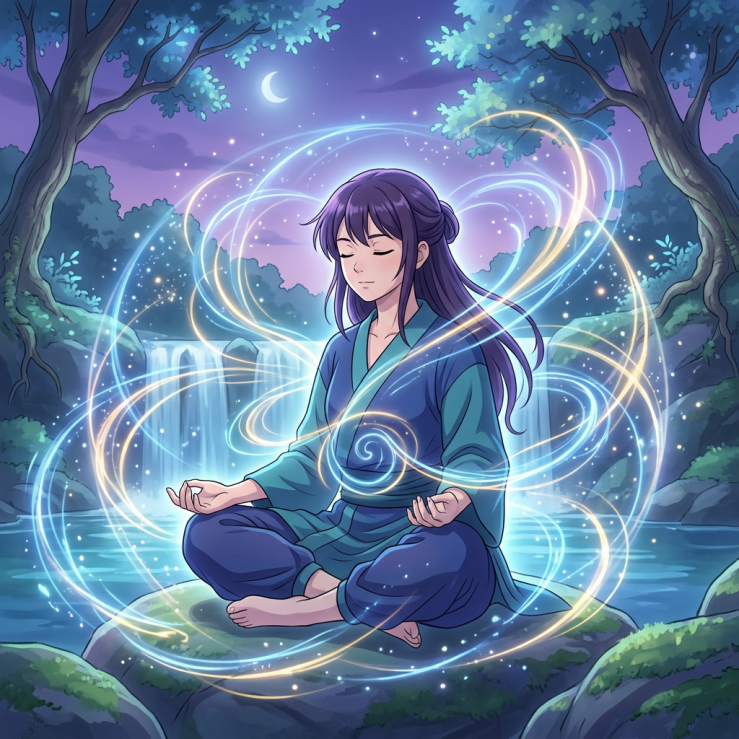
Person meditating cross-legged beside a river with magical energy swirls around

The same principle, however, can work in a wholesome direction.

If we repeatedly practice patience, patience becomes more familiar.

If we repeatedly practice gratitude, gratitude becomes easier to access.

If we repeatedly return our attention to the present moment, returning becomes easier.

If we repeatedly cultivate compassion, compassion can gradually become a more natural response.

This gives us a hopeful understanding of spiritual practice.

Every day, we are training the mind in one direction or another.

Practice is not simply about waiting until a difficult situation appears and then trying desperately to control ourselves.

It is about working with the mind before the battlefield arrives.

When someone says something unpleasant to us, can we pause before responding?

When anger arises, can we notice it before turning it into harsh words?

When we have a few empty minutes, must we immediately reach for the phone?

When disturbing thoughts appear, can we recognize them without automatically following them?

These small moments may seem ordinary.

But they are where practice actually happens.

We do not need to wait for a major crisis to practice Buddhism.

The battlefield is often hidden inside ordinary life.

Habits Are Not a Life Sentence

There is another important lesson here.

If our habits have been formed through repetition, does that mean we are trapped by them?

No.

If habits could never change, there would be no such thing as cultivation.

Old habits may be strong, but they can gradually be transformed through right understanding, mindfulness, and repeated practice of wholesome actions.

Perhaps yesterday we immediately reacted when someone upset us.

Today, we pause for three seconds.

Perhaps yesterday every moment of boredom led us to our phones.

Today, we put the phone down and sit quietly for five minutes.

Perhaps yesterday an unpleasant thought appeared and carried us away.

Today, we notice it and gently return to the Buddha’s name, a prayer, our breath, or the present moment.

These may seem like very small victories.

But they matter.

Every time we do not follow an old habit, we walk that old road a little less. Every time we return to mindfulness, we make a new road a little stronger.

What Are You Practicing Today?

The story of the horses teaches us something that is easy to forget.

The horses did not become accustomed to walking in circles overnight.

They simply repeated the same movement until it became natural.

Our lives can work the same way.

The way we speak, the things we watch, the thoughts we repeatedly entertain, the emotions we feed, and the actions we practice every day are quietly shaping who we are becoming.

This does not mean we must live perfectly.

It means we should become more conscious of what we practice.

Perhaps tonight, before going to sleep, we can ask ourselves:

What did I practice today?

Did I practice impatience or patience?

Comparison or gratitude?

Fear or compassion?

Distraction or awareness?

Anger or forgiveness?

We may not be able to change our entire life in one day.

But we can change one response.

And then another.

The old road became familiar because it was walked again and again.

A new road can become familiar in exactly the same way.

Perhaps this is one of the quietest and most practical forms of Buddhist wisdom:

Every ordinary moment is a moment of cultivation.

What we repeatedly do today may become the direction our mind naturally takes tomorrow.

Link: https://peacelilysite.com/2026/09/18/what-are-you-training-your-mind-to-become/
He Lost His Father at 8. What a 109-Year-Old Doctor Taught Us About Life

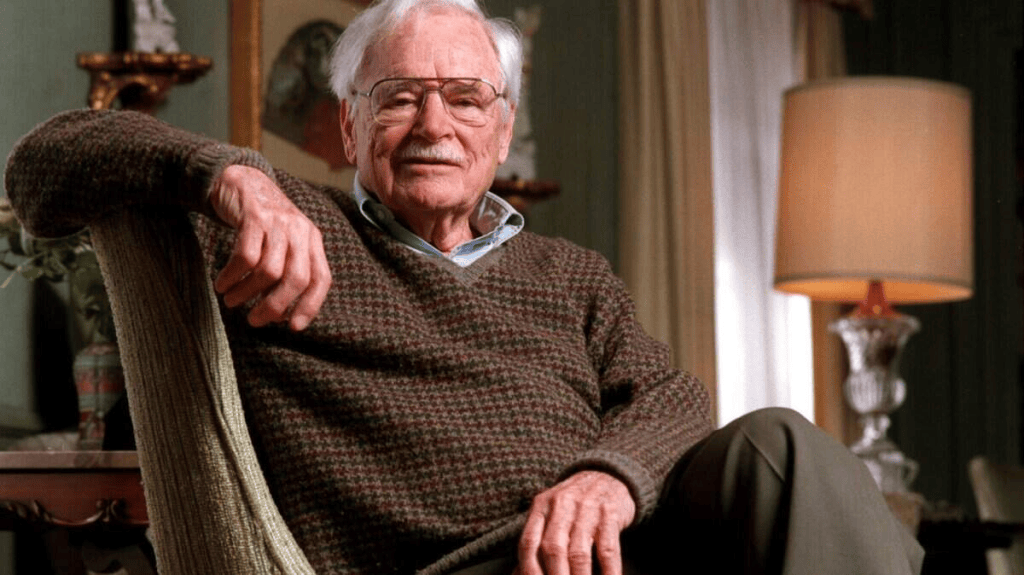
Charlie White was retired in 1997 when this photo was taken, but he still practiced medicine a bit, flying to Haiti on a medical mission. “It’s a doctor’s fundamental dedication to take care of people whether we get paid or not,” he told The Star at the time. Jeff Roberson The Kansas City Star


The remarkable story of Dr. Charlie White and the courage to keep moving forward

What does it take to live well—not simply to live a long life, but to remain hopeful, curious, and strong through difficult times?

Dr. Charlie White lived to be 109 years old. He experienced more than a century of enormous changes, but what fascinates me most about his life is not his age. It is how he faced adversity.

When Charlie was only eight years old, his father died suddenly in a tragic elevator accident. His father was just 42. Charlie’s mother was left a widow with five children and no job or obvious means of support. Charlie’s mother turned their home into a boardinghouse to make ends meet. She expected her children to help and gradually taught them to become independent and responsible for their own lives. Charlie later remembered that his mother had essentially put “the responsibility of life” on them. Because she believed they could manage, they learned to believe in themselves.

Something else important happened during those difficult years. Among the people who stayed in their home were medical missionaries. Meeting them helped inspire Charlie to become a doctor.

He did not allow the loss of his father to become the definition of his life.

Instead, he continued his education, entered medicine, and eventually built not one but two medical careers. He lived through the Great Depression, two world wars, enormous changes in medicine, personal losses, and many other challenges.

What strikes me most about Charlie’s story is that resilience did not mean that life stopped hurting. It meant that he continued to participate in life after the hurt.

He learned to adapt.

When medicine changed, he changed with it. When opportunities were lost, he looked for new ones. When he made mistakes, he did not seem to spend his life regretting them. He remained curious about what could come next. His biographer, David Von Drehle, described him not simply as a survivor, but as someone who learned how to thrive through change.

Sometimes we misunderstand resilience.

Being resilient does not mean that we never feel sad, afraid, or discouraged. It means that pain does not have to become the end of our story.

We may lose someone we love.

We may fail.

Our plans may suddenly change.

Someone may disappoint us.

Life may take us in a direction we never expected.

We cannot always choose the circumstances. But we can ask:

What can I do now?

That simple question can give us the strength to take the next step.

Adaptability Is a Form of Wisdom

Charlie lived through a world that changed almost beyond recognition.

Yet he continued to learn and adapt.

This is something we all need today.

The world changes quickly. Technology changes. Our circumstances change. Our bodies change. Relationships change. Sometimes even our dreams change.

Adaptability does not mean abandoning our values.

It means learning how to carry our values into new circumstances.

We can remain kind while adapting.

We can remain honest while adapting.

We can remain hopeful while adapting.

Charlie lived for 109 years, but longevity itself was not his greatest lesson.

A meaningful life is not measured only by the number of years we receive.

It is measured by how we use those years.

Can we continue learning?

Can we forgive?

Can we help others?

Can we remain curious?

Can we appreciate what we have?

Can we face uncertainty without giving up hope?

Charlie understood that life would never be perfect. Yet he continued to meet it with optimism and openness.

Perhaps that is why his story speaks to me.

When something painful happens, we can allow ourselves to grieve—but still move forward.

When circumstances change, we can adapt without losing ourselves.

Braided warrior with sword and lantern overlooking ruins beneath storm clouds; text: "None of us knows what the next chapter of life will bring. But we can choose how we meet it."

When we make mistakes, we can learn rather than remain trapped in regret.

When tomorrow is uncertain, we can still choose hope.

Dr. Charlie White could not choose what happened to him when he was eight years old.

But he could choose what he did with the life that followed.

And perhaps that is the deepest lesson of his 109 years:

We cannot always choose what happens to us.
But we can choose how we meet what happens.

Sometimes, that choice becomes the beginning of our greatest strength.

Link:https://peacelilysite.com/2026/09/16/he-lost-his-father-at-8-what-a-109-year-old-doctor-taught-us-about-life/
Source: https://www.kansascity.com/news/local/article275107916.html

Can a Cow Painted on a Wall Give Milk?

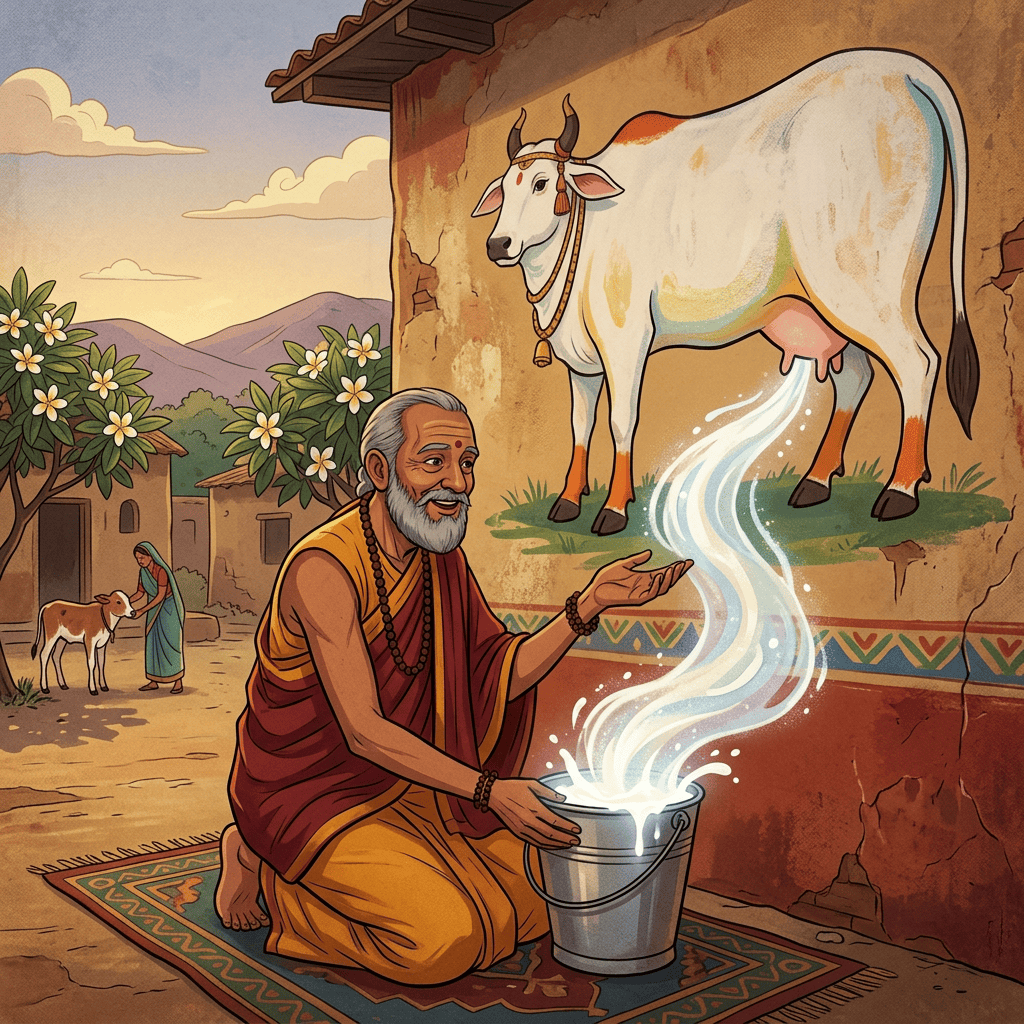
Indian monk milking a painted cow

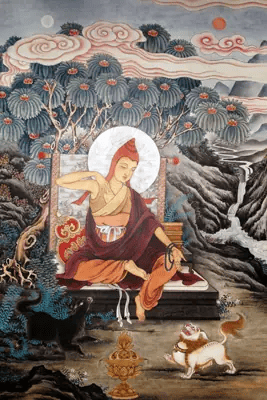
Bodhisattva Candrakīrti: Milking a Cow in a Painting

Recently, I came across a video about Bodhisattva Candrakīrti, one of the great Buddhist masters of ancient India.

The video told a remarkable story: according to Buddhist tradition, Candrakīrti was able to obtain milk from a cow that existed only in a painting.

When I first heard this, I was amazed.

How could a cow painted on a wall or in a picture possibly give milk?

Curious, I looked into the story and discovered that it is more than a fascinating Buddhist legend. Behind it stands a great master in the history of Buddhism and, more importantly, a profound teaching about emptiness.

Candrakīrti lived in India around the sixth or seventh century. He was one of the most important masters of the Madhyamaka, or Middle Way, school of Buddhist philosophy, and an important commentator on the teachings of Nagarjuna.

His best-known work, Madhyamakāvatāra (Introduction to the Middle Way), became an important text for the study of Madhyamaka philosophy.

Candrakīrti deeply explored a central Buddhist teaching:

All things arise in dependence upon causes and conditions. Nothing exists with an independent, permanent, unchanging essence.

This is one of the meanings of emptiness.

According to a story preserved in Buddhist tradition, Candrakīrti once lived and practiced at a monastery. Because some people did not understand his way of practicing, they misunderstood him.

Later, he was given responsibility for providing milk for the monastery. It is said that Candrakīrti released the cows into the forest, allowing them to roam freely.

Yet somehow, milk continued to appear at the monastery.

People were puzzled.

If the cows were far away in the forest, where was the milk coming from?

Some people secretly followed Candrakīrti.

According to the traditional story, they saw him approach a painting of a cow—and somehow draw milk from the painted cow.

It is an extraordinary story.

But perhaps the most important question is not whether the event sounds miraculous.

It is what the story invites us to think about.

We normally think:

A real cow can give milk.

A painted cow cannot.

That seems obvious.

Yet the story of the painted cow quietly asks us:

What exactly do we mean when we say something is “real”?

This question goes to the heart of Candrakīrti’s teachings on emptiness.

Emptiness does not mean that nothing exists.

Rather, it means that things do not exist independently, permanently, or entirely on their own. Everything depends upon causes, conditions, relationships, and the way we designate and understand it.

For example, someone is called a “teacher” because there are students. Someone is called a “parent” because there is a child. These identities arise through relationships and conditions.

When we look more deeply, we begin to see that many things we regard as fixed and permanent are actually dependent upon countless conditions.

What I find most meaningful about this story is that it encourages us not to be too quick to conclude:

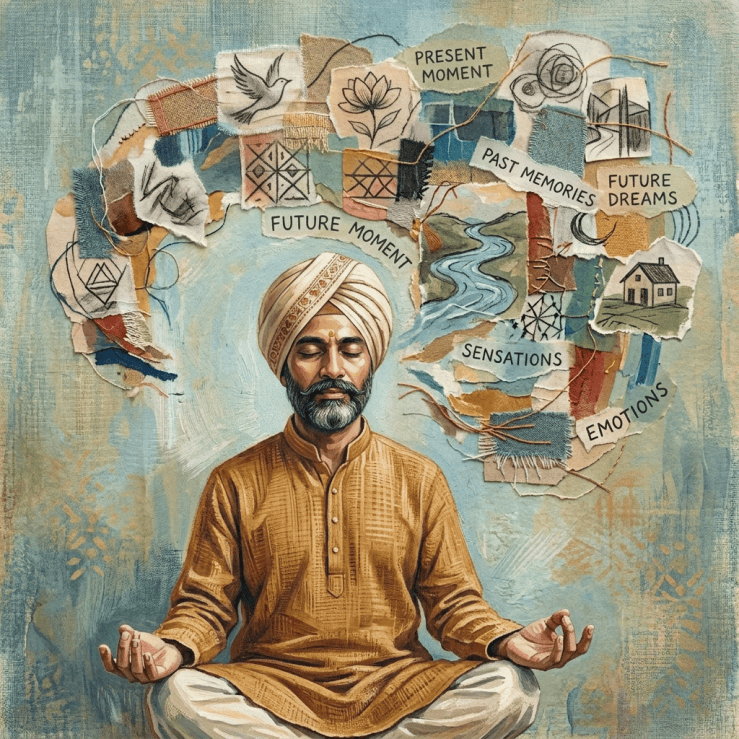
Person meditating with illustrated thoughts about present moment, past memories, future dreams, sensations, and emotions

“Things must always be this way.”

“That is absolutely impossible.”

“I already know the answer.”

Our understanding of the world is often shaped by our past experiences, habits, assumptions, and fixed ideas.

Buddhist practice encourages us to hold our views more lightly—to have less attachment, more observation; less prejudice, more humility.

When we loosen our attachment to the belief that “I must be right,” we may begin to see possibilities and truths that we could not see before.

So when I think about the story of Candrakīrti and the painted cow, I no longer see it simply as a miraculous tale.

To me, it feels more like a doorway.

A doorway inviting us to question our ideas about reality, to recognize our own attachments, and to explore the deeper wisdom of dependent origination and emptiness.

Perhaps the story was never meant simply to leave us amazed.

Perhaps it is inviting us to look more deeply.

Just when we think we have completely understood the world, there may still be much more for us to discover.

And perhaps that is one of the most beautiful lessons we can receive from the wisdom of Bodhisattva Candrakīrti.

Link: https://peacelilysite.com/2026/09/09/bodhisattva-candrakirti-milking-a-cow-in-a-painting/
Source: https://www.fjdh.cn/wumin/2009/04/06452346128.html?utm_source=chatgpt.com, https://tricycle.org/magazine/truth-about-truth/?utm_source=chatgpt.com, https://baike.baidu.com/item/%E6%9C%88%E7%A7%B0/9958686

When I Came to Understand the Pain Deep Within My Mother’s Heart

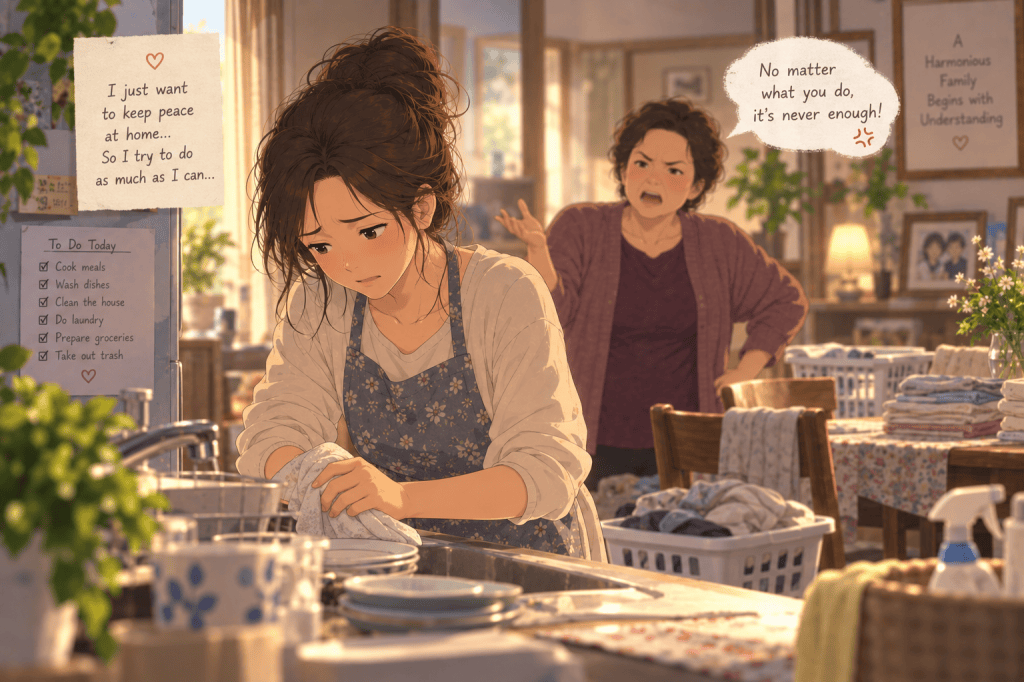
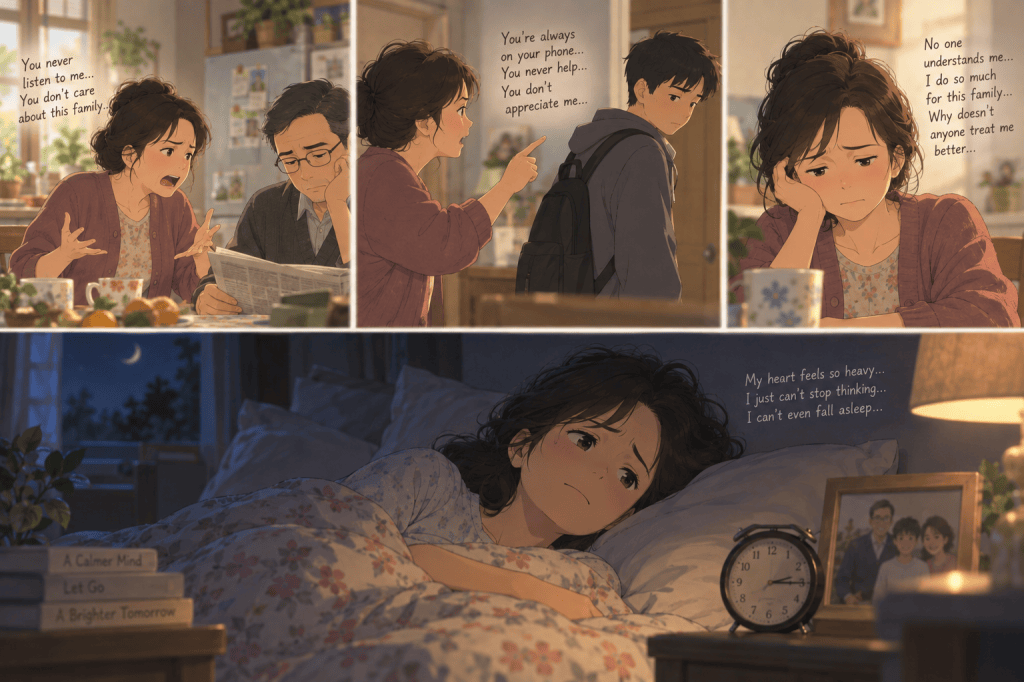
Through participating in group study, respectfully and deeply listening to the Dharma discourses expounded by my Buddha Master, Namo H.H. Dorje Chang Buddha III, and sharing what I had learned with others, I gradually came to understand and feel the pain deep within my mother’s heart.

For as long as I can remember, my parents were constantly arguing. During holidays and festivals in particular, our home would become filled with tension. After an argument, my mother would always wear a stern expression and remain silent, while my father would sigh repeatedly, not knowing what to do.

After encountering the Tathagata’s True Dharma taught by H.H. Dorje Chang Buddha III, I wanted to resolve a question that had puzzled me for a long time: My mother had everything she needed in terms of food and clothing and was free from serious illness or misfortune, so why did she complain every day? She would either say that my father did not treat her well or feel that my younger brother and his wife did not treat her well. She would become so upset that she sometimes could not sleep all night.

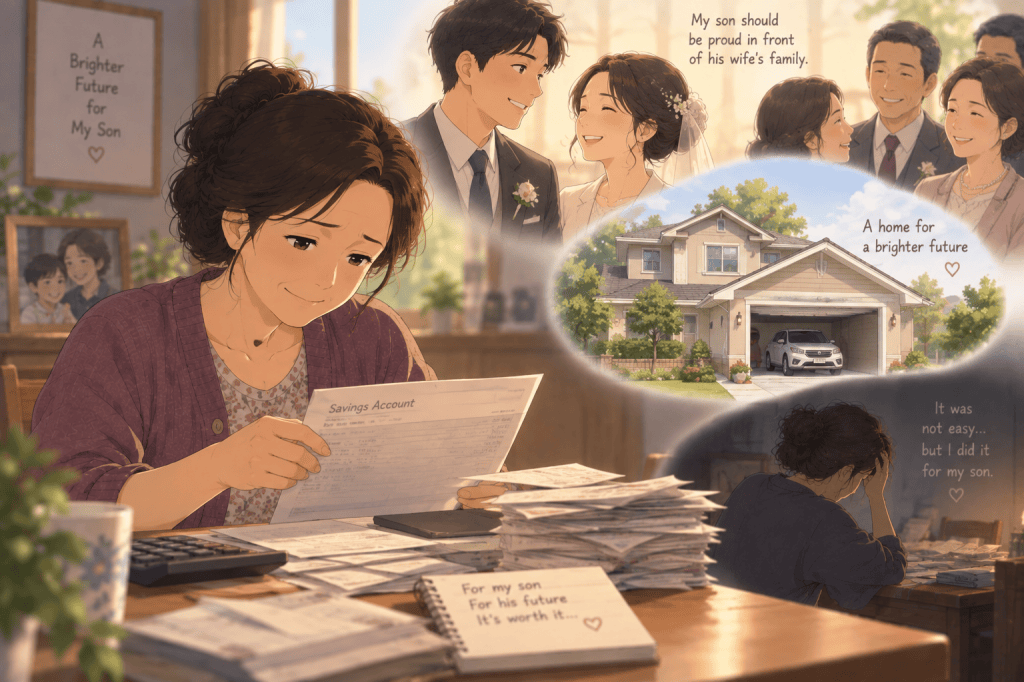
My mother cared greatly about maintaining appearances, even when doing so caused her hardship. She especially doted on my younger brother, whom she treasured dearly. To ensure that he could hold his head high in front of his wife’s family, my mother used almost all of her savings to buy them a home and a garage.

Whenever there was an important occasion or even a smaller matter involving my sister-in-law’s family, my mother always handled everything generously and properly. She would rather live frugally herself than allow my brother to lose face.

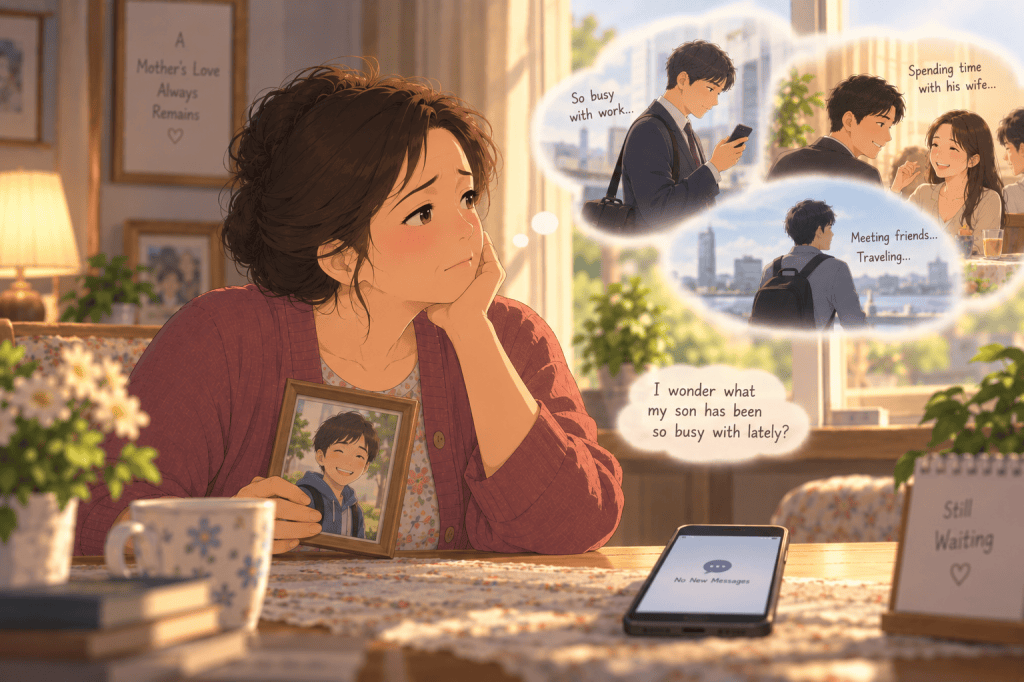
Yet despite all she had done, my brother seldom contacted her. Although they lived in the same city, he rarely checked in on her, much less came to see her. I could feel how deeply my mother missed her son. She would often ask me, “I wonder what your brother has been so busy with lately?”

To tell the truth, seeing my mother like this made my heart ache, and I also felt deeply concerned about my inability to help her. How I wished she could learn the true Dharma of the Tathagata with me! After all, it was through learning the true Dharma of H.H. Dorje Chang Buddha III and developing right understanding and right views that I myself had been able to free myself from the suffering caused by my divorce.

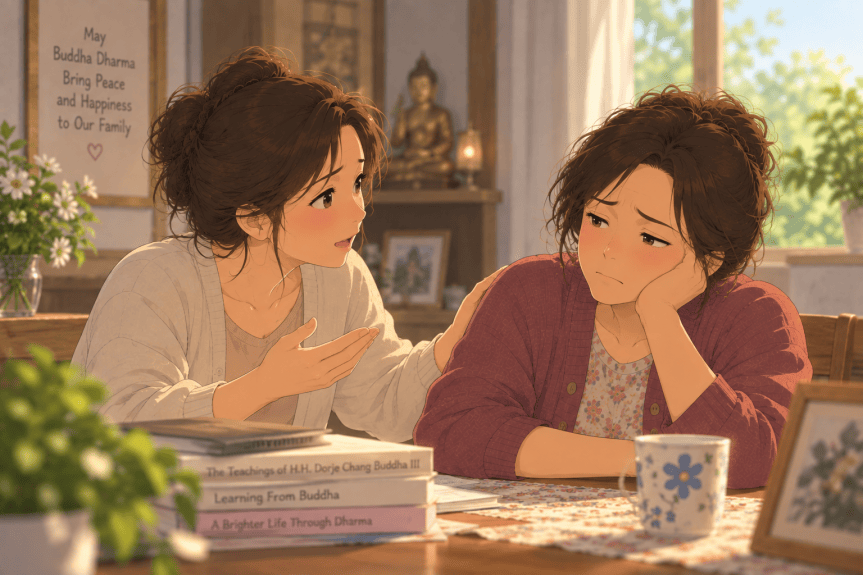
Having personally experienced the benefits of learning Buddhism and cultivating myself, I tried to persuade my mother not to dwell on the things that troubled her. I explained to her that these circumstances were the result of causes, conditions, and karmic forces planted in the past. But she did not agree with what I told her.

To avoid upsetting my mother, I tried to take care of nearly all the household chores myself so that she would have to do as little as possible for my single-parent household. Yet strangely, the more responsibilities I took upon myself, the more upset she seemed to become. No matter what I did, I could not seem to make her happy.

Back then, I lived very cautiously around her, afraid that something I said or did might cause her to become upset and silently resentful. I also tried communicating with her, but she would often remain silent and keep everything bottled up inside.

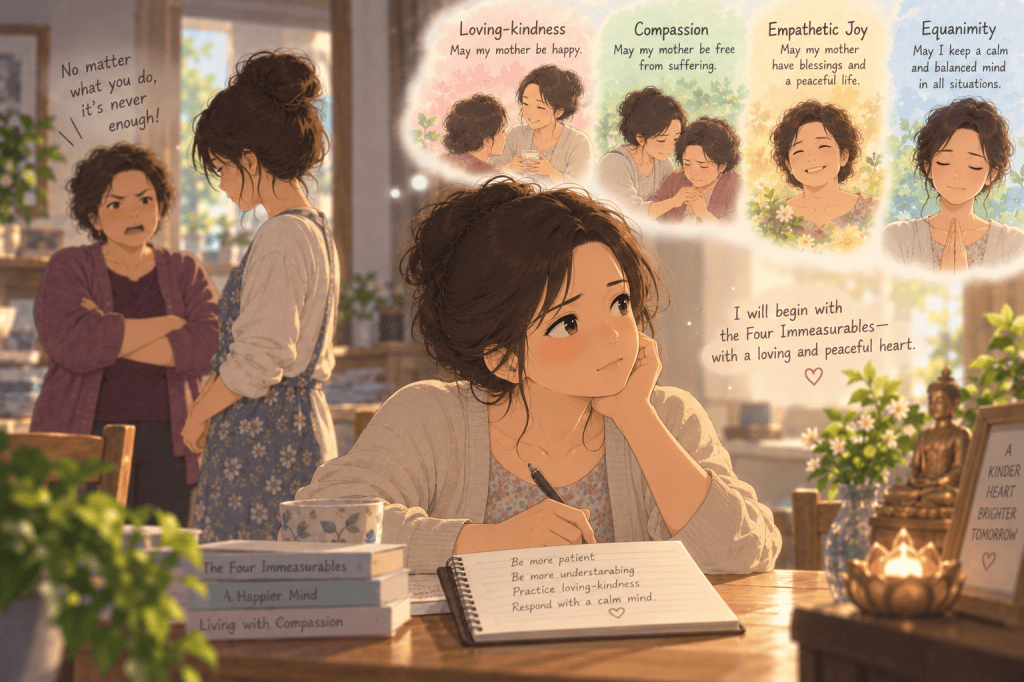
Through respectfully studying Expounding the Absolute Truth Through the Heart Sutra, I brought forth right mindfulness and finally came to understand how I should correctly practice the Four Immeasurables of loving-kindness, compassion, empathetic joy, and equanimity. I first needed to begin with equanimity and selfless giving—to be willing to devote my time to considering the needs of my family. Caring for them was not merely about making sure they had enough food, warm clothing, and money to spend. I also needed to learn to recognize and understand the suffering within their hearts.

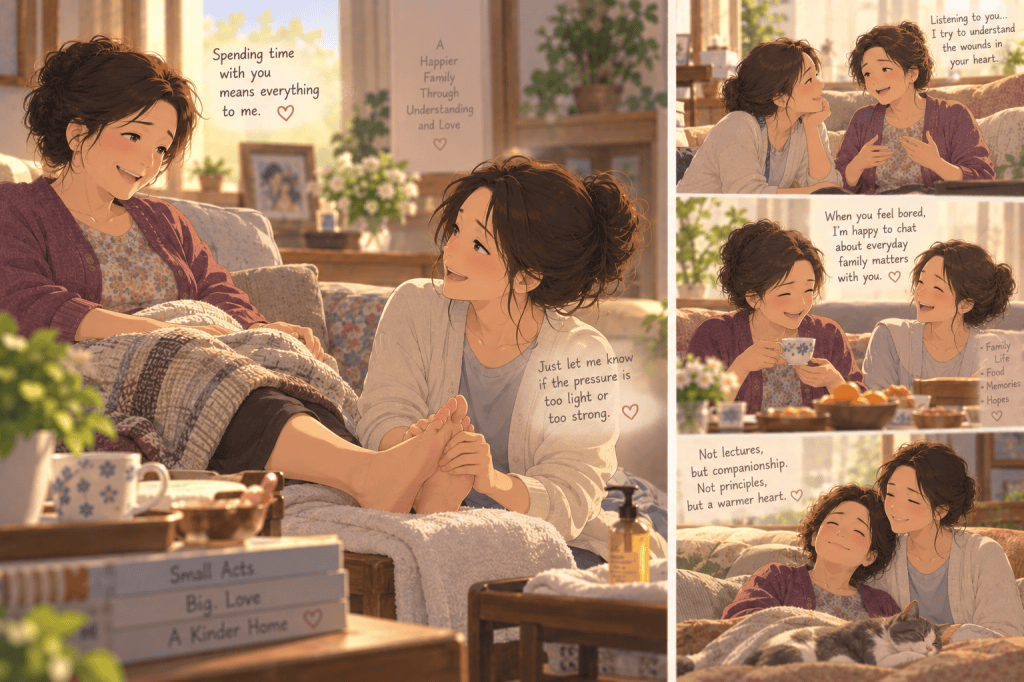
I began to sincerely spend time with my mother, and gradually I discovered that the ice within her heart was beginning to melt. Instead of telling her, “Don’t be angry anymore” or “Don’t hold on to resentment,” I began placing the responsibility upon myself: I needed to understand the pain within my mother’s heart, listen to what her heart was trying to tell me, help heal her emotional wounds, and help her establish right understanding and right views.

When my mother complained, I became willing to set aside my time and sit quietly beside her, listening attentively. I no longer used the principle of “cause and effect” to argue with her until she had nothing left to say.

When she felt physically tired, I would take the time to massage the acupressure points on her feet and ask her whether the pressure was too light or too strong. When she felt bored, I would willingly spend time with her and chat about everyday family matters instead of lecturing her about principles and doctrines.

The more I tried to understand the pain in my mother’s heart, the more she began saying things like, “Don’t waste your time on me. I don’t need you to keep me company. Go take care of the children. Once you’ve taken care of everything for them, go do whatever you need to do.”

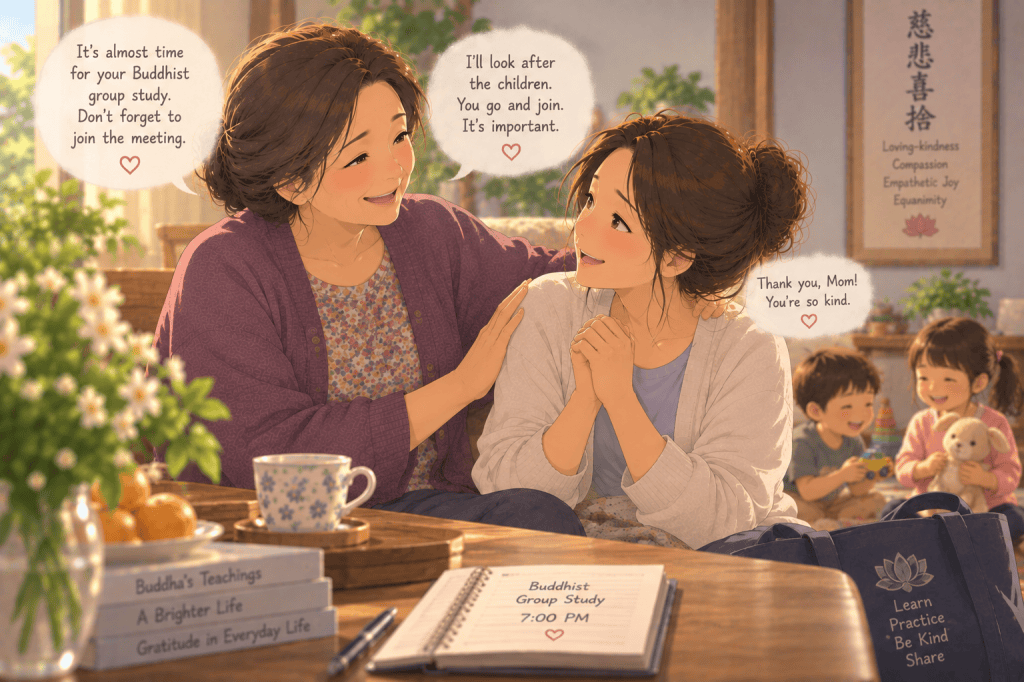
What surprised and delighted me even more was that my mother eventually began reminding me herself, “It’s almost time for your Buddhist group study. Don’t forget to join the meeting. I’ll help you look after the children.”

I had finally gained my mother’s support. And it happened simply because I had learned to recognize the pain within her heart and was willing to devote my time to sincerely being there for her.

This is exactly what the H.H. Dorje Chang Buddha III teaches in the Dharma discourses: we must put our cultivation into actual practice and cultivate ourselves with respect to the three karmas of body, speech, and mind. We must be sincere in our words and actions and in the way we interact with and treat others. Only by putting genuine effort into our conduct in everyday life can we truly touch the hearts of others.

Contributed by: Ji Cheng / Kui Xing

Link: https://myhappylifestyle.net/2026/09/06/dorjechangbuddhaiii-when-i-came-to-understand-the-pain-deep-within-my-mothers-heart/

How Did an Elderly Woman Who Had Been Hearing-Impaired for Years Regain Her Hearing?

How Did an Elderly Woman Who Had Been Hearing-Impaired for Years Regain Her Hearing?

This is yet another real-life example involving one of my relatives who experienced blessings through the Buddha Dharma.

Over the years that I have been learning the Buddha Dharma, I have introduced quite a few people to Buddhism. Regrettably, perhaps because my own cultivation has not been good enough, none of them ultimately continued. Yet there was always one wish in my heart: I wanted to bring my mother-in-law to listen to the Dharma.

I knew that she was sincere and genuine in the way she treated others. Although she had little formal education and was hearing-impaired, I felt certain that she might actually learn better than I did. However, because she was elderly and physically frail, and because the journey was rather long and transportation inconvenient, I kept the thought to myself for quite some time and did not dare bring it up with her.

In April 2025, after we had finished a life-release activity, I finally decided to ask her.

“Mom, it’s still early today. Why don’t you come with me to listen to the Dharma discourses of Namo H.H. Dorje Chang Buddha III?”

Afraid that she might refuse, I added, “Mom, the matter of birth and death is of the utmost importance, and impermanence comes swiftly. You are already in your seventies. You should quickly begin learning the true Tathagata Dharma and listening to the Dharma discourses of H.H. Dorje Chang Buddha III so that you can attain liberation from birth and death in this lifetime. You are such a kindhearted person. I’m sure you will learn even better than I do.”

After hearing this, she agreed, and we went to the Buddhist altar room in my home to respectfully listen to a Dharma discourse.

After she returned home, she called me and said that she could not understand it and wondered whether she should stop going. Perhaps because she was family, I spoke to her rather directly. Raising my voice so that she could hear me, I said, “Mom, if you don’t understand it now, you can learn gradually. There are many things I don’t understand either. But think about how much suffering there is in life. If we do not learn Buddhism, we will suffer even more as we continue to reincarnate within the six realms. The opportunity to encounter a Buddha in this world is exceedingly rare. Only by learning the true Tathagata Dharma taught by H.H. Dorje Chang Buddha III can we have hope of attaining accomplishment and liberation in this lifetime. Learning Buddhism requires a sincere heart and perseverance.”

Seeing that I was unhappy, she reluctantly replied, “All right, then.”

When she agreed to continue coming to listen to the Dharma, I was overjoyed. I thought it might be better to first show her videos about the true Buddha Dharma. They presented many extraordinary and inconceivable manifestations of the Buddha Dharma, which I hoped would strengthen her faith.

Sure enough, the videos sparked her interest. I then began having her listen to Dharma discourses, starting with the first lesson, The Unsurpassable, Supreme Dharma.

From then on, regardless of bitter cold, scorching heat, wind, or rain, she faithfully made the trip to my home every day, relying on others for transportation so that she could listen to the Dharma.  Later, I also brought her to our Dharma center to participate in group study and practice so that she could experience the atmosphere of learning Buddhism together with others.

She increasingly came to appreciate how wonderful and extraordinary learning Buddhism was. She has continued steadfastly ever since and has never again thought about giving up. She often feels filled with Dharma joy.

Although she has little formal education and is not very good at sharing her thoughts, she often expresses her feelings in her own simple and heartfelt way:

“Oh, what is being taught is truly wonderful!”

Her Hearing Recovered After More Than a Year of Learning the True Buddha Dharma

After persevering in respectfully listening to the Dharma discourses of H.H. Dorje Chang Buddha III for more than a year, she began experiencing significant changes in her physical condition.

At first, some of her hair began turning black again. Then the pain in her legs disappeared, and she became much more agile when walking.

Most astonishing of all was the change in her hearing. Because her hearing had been very poor for many years, she had always needed to wear hearing aids. One day in early July of this year, she told me that a large amount of pus had suddenly drained from her ear. I wondered whether this might be a response associated with receiving blessings.

I said to her, “Mom, you are so sincere and devout. Every day you travel such a long distance to come here and listen to the Dharma. The Buddhas and Bodhisattvas will surely bless you.”

Then, this morning, I received a phone call from her. In an excited voice, she told me:

“My ear is better! I can hear sounds even without my hearing aid now. This is wonderful! This is wonderful!”

I was so happy for her. For someone who had suffered severe hearing loss for so many years, being able to hear again without a hearing aid undoubtedly felt like being given a new life.

I said, “Mom, this is all due to the compassionate blessings of the Buddhas and Bodhisattvas. The sincerity you have devoted to learning the Dharma has touched the Buddhas and Bodhisattvas. The Buddha Dharma is truly magnificent and inconceivable!”

The changes she experienced have also strengthened my own confidence and determination to learn and practice the Buddha Dharma well.

When I reflect upon myself, I realize that I have sometimes allowed myself to become entangled in family matters and have not been nearly as diligent as she has. The Buddha Dharma is so real and true, and the Buddhas and Bodhisattvas are so greatly compassionate. What, then, is there that I cannot let go of?

Author: Cili

Learn more about H.H. Dorje Chang Buddha III

Link: https://hhdorjechangbuddhaiiidharma.com/2026/09/06/how-did-an-elderly-woman-who-had-been-hearing-impaired-for-years-regain-her-hearing/

#DorjeChangBuddhaIII #MasterWanKoYee #BuddhaDharma #BuddhistTeachings #DharmaDiscourses #BuddhistBlessings #LearningBuddhism #HearingRecovery #BuddhistTestimony #TrueBuddhaDharma