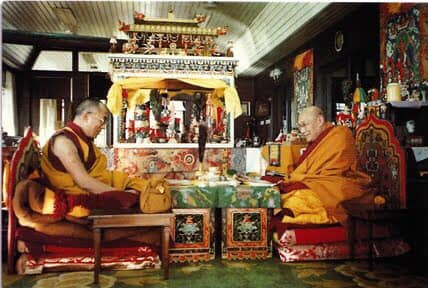
YIDAM-DHARMA INITIATION MASTER OF THE 17TH KARMAPA: H.E. DHARMA KING GONGBAO DUMU QUJI

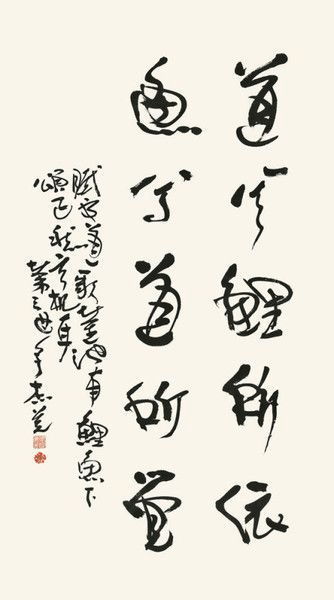
H.E. Dharma King Dumu Quji was conferred the title of “Buddha-Dharma National Master” by an emperor in the Ming Dynasty. The meaning of “Quji” is Dharma King. H.E. Dharma King Gongbao Dumu Quji XVIII is the Vajra Master of H.H. the 17 th Karmapa Great Jewel Dharma King. He performed the yidam dharma initiation for the 17 th Karmapa Great Jewel Dharma King. He is the only one of great holiness and virtue who cleansed through a ritual bathing the 17 th Karmapa and formally put the Great Jewel Dharma King robes onto the 17 th Karmapa. He did so at the respectful request of H.E. Tai Situ Rinpoche, who is one of the four great Dharma Princes. During the time H.H. Dharma King Gongbao Dumu Quji XVIII performed initiations for the Karmapa, he saw in a supernatural state the ancient, primordial Buddha—Dorje Chang Buddha—bless the Karmapa. That ancient Buddha manifested as H.H. Dorje Chang Buddha III. H.H. Dharma King Gongbao Dumu Quji XVIII wrote the following about this real experience: “H.H. Dorje Chang Buddha III is the highest refuge countless living beings can rely upon to attain liberation. I prostrate to H.H. Dorje Chang Buddha III.”

AFFIRMATION AND CONGRATULATIONS

With boundless gratitude, I prostrate to H.H. Dorje Chang Buddha III!

In this lifetime, I formally put the Great Jewel Dharma King robes on to the 17th Karmapa, Urgyen Trinley Dorje, and performed the yidam dharma initiation for him, which included transmitting dharma to him. A few days before I did that, I saw in a supernatural state the Buddha Vajradhara appear over the head of the Karmapa. The Buddha Vajradhara was radiating light that empowered the Karmapa. Very soon after that, the Buddha Vajradhara metamorphosed into one who was sitting down. He was wearing a yellow robe. His long hair was at shoulder level, and He looked dignified and imposing. Behind Him were high stones, a pool, rooms, red flowers, and green pines. Below Him was a wooden deck. At that time, I knew Dorje Chang Buddha had come to this world, but I did not see His exact whereabouts. During all these many years, I have constantly kept that scene in mind and have reviewed it.

I recently received the book H.H.  Dorje Chang Buddha III. This was probably the result of being blessed by the twenty-one Taras. When I turned to page twenty-one and saw that holy image of H.H.  Dorje Chang Buddha III, I was totally shocked. It was the exact image of Dorje Chang Buddha that I saw in that supernatural state. There was not the slightest difference between the two, including the setting that surrounded H.H. Dorje Chang Buddha III.

I now solemnly affirm and offer congratulations for the following: The karmic conditions of living beings to encounter dharma have matured, for they can now benefit from the brilliant wisdom of the Buddha as they had wished. H.H. Dorje Chang Buddha III is a precious book of true Buddha-dharma, a treasury that incorporates 84,000 dharma methods. It demonstrates accomplishments in the Five Vidyas unprecedented in the history of Buddhism. H.H. Dorje Chang Buddha III is the highest refuge countless living beings can rely upon to attain liberation.I prostrate to H.H. Dorje Chang Buddha III!

Gongbao Dumu Quji

February 28, 2010

Brief Introduction of H.E. Dharma King Dumu Quji

In the Tibetan region of Kham, the renowned 18th Do Mu Choktrul Rinpoche is a household name, widely revered for his immense compassion and kindness. Do Mu Rinpoche was born in 1945 in Palwug Village, near Babang Monastery in present-day Dege County, Sichuan Province, historically part of the Dege royal domain. His father, Chodro Yeshe Gyatso, was a prominent member of the Lukra Tsang family within the Dege royal lineage, and his mother, Genkyu Chudron, was the daughter of a key minister from the esteemed Lujang family of the Dege kingdom.

Before Rinpoche’s birth, his mother experienced an extraordinary vision: a bird appeared before her and presented her with a wisdom sword associated with Manjushri Bodhisattva. At the time of his birth, the household was bathed in an extraordinary radiance and auspicious energy. Remarkably, a bucket of milk in the home transformed into butter, and flowers bloomed profusely on the ground outside—a truly miraculous event.

At the age of three, the reincarnation search team from Dhonka Monastery identified him as the reincarnation of the previous Do Mu Choktrul Rinpoche. This recognition was later confirmed by the 16th Gyalwa Karmapa, Rangjung Dorje, who bestowed upon him the name Karma Shedrup Trinley Tenzin Palzangpo and granted him the empowerments of Amitayus and other teachings.

That same year, Rinpoche was ceremonially enthroned at Dhonka Monastery in a grand ceremony presided over by the 9th Sangye Nyenpa Rinpoche and the 8th Traleg Kyabgon Rinpoche. Following his enthronement, he began rigorous and specialized training under the guidance of dedicated spiritual masters.

In 1980, following the restoration of religious freedoms in China, Buddhist activities were officially permitted to resume.

In 1981, under Rinpoche’s leadership, Dhonka Monastery embarked on its reconstruction. Despite numerous challenges, the monastery was gradually restored to its former glory. Rinpoche personally led meditation retreats, upheld strict monastic discipline, delivered Dharma teachings, performed empowerments, and presided over Buddhist assemblies. His boundless compassion and tireless efforts brought immeasurable benefit to countless beings.

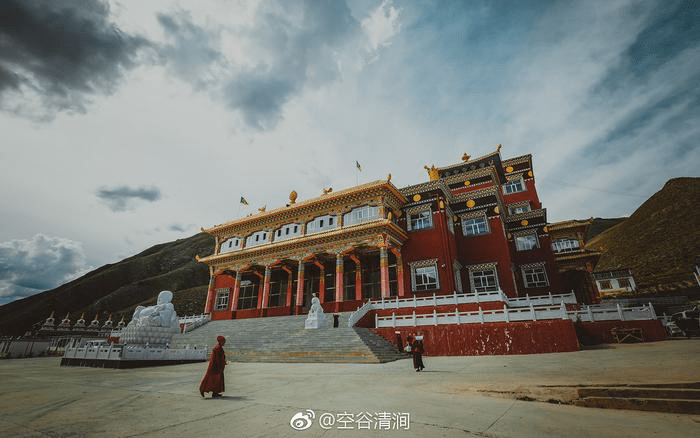
Throughout his life, Rinpoche’s Dharma activities remained uninterrupted, regardless of war or societal changes. Guided by profound wisdom and deep compassion, he tirelessly propagated the Buddha’s teachings across the Tibetan regions. Responding to requests from devotees in various areas, he traveled to remote mountain regions, often under arduous conditions, to conduct ordination ceremonies and share the Dharma. His footprints spanned the entirety of Kham and Tibet.

In recent years, auspicious connections enabled Han Chinese disciples to learn from Rinpoche as well. Cities such as Hong Kong, Beijing, Shanghai, Xiamen, Guangzhou, Shenzhen, and Huizhou became destinations for a steady stream of seekers coming to receive his teachings. Through his tireless efforts, Rinpoche brought the nectar of Dharma to both Han and Tibetan communities, profoundly benefiting countless beings.

Rinpoche exemplified the principle, “The Dharma exists in the world to awaken beings within it.” His compassionate wisdom was evident in numerous achievements, including the completion of Dhonka Monastery’s reconstruction, the establishment of retreat centers, the founding of Buddhist academies, the opening of nunneries, the initiation of charitable organizations, and the creation of the Karma Kagyu Research Institute. These efforts expanded the reach of Buddhism, integrating it into all aspects of life.

In addition to his spiritual leadership, Rinpoche also served as a government official, promoting the dissemination and practical application of Humanistic Buddhism. Through his work, he ensured that the teachings of the Dharma became an integral part of daily life, guiding people to treat one another with compassion, wisdom, and kindness.
Link:https://peacelilysite.com/2025/01/24/yidam-dharma-initiation-master-of-the-17th-karmapa-h-h-dharma-king-gongbao-dumu-quji/

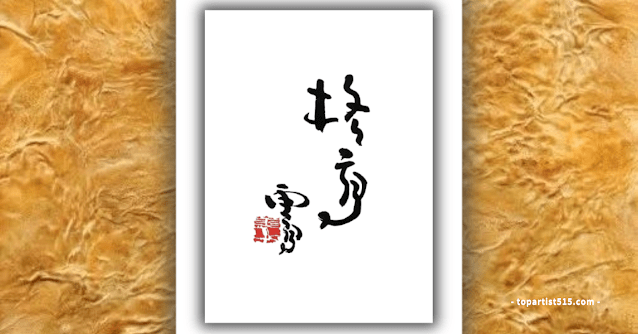
Calligraphy Artwork :《格高》Lofty Virtue

In the art of calligraphy, elegance and style are the two pillars that define a work’s greatness. Elegance (格) refers to the depth and quality of a piece, embodying its refinement and profoundness. Style (調), on the other hand, captures its unique rhythm, flavor, and aesthetic character. These two elements are inseparable, for elegance without style lacks charm, while style without elegance lacks depth and significance. Together, they form the soul of a calligraphic masterpiece.

Every artistic creation—whether it leans toward the refined or the mundane—reflects the inner cultivation and moral integrity of its creator. Particularly in calligraphy, the harmonious blend of elegance and style is a mirror of the artist’s breadth of knowledge and depth of character. A calligrapher’s scholarly cultivation and virtuous practice are indispensable, as they directly influence the work’s final presentation and enduring value.

The piece Lofty Virtue (格高) exemplifies this union of strength and grace. Its bold and vigorous brushstrokes radiate immense inner power while maintaining an outward lightness and agility. The work captures the grandeur of commanding mountains and rivers, coupled with the serene qualities of introspection and tranquility. Strength and flexibility coexist harmoniously, creating a presence that is both majestic and gracefully refined. Floating clouds seem to glide effortlessly, and cranes soar gracefully between pines. This is artistry at its zenith—a realm of understated brilliance, silent dignity, and profound essence.

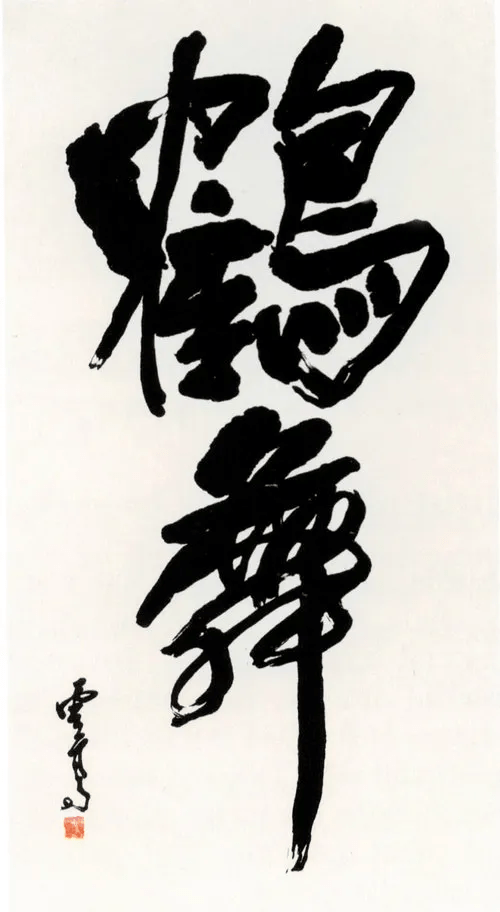
The calligraphy of H.H. Dorje Chang Buddha III transcends the boundaries of traditional artistry. Each work embodies the pinnacle of calligraphic achievement, uniting profound thought with unparalleled elegance. The pieces flow naturally, free of constraint, exuding majestic momentum and subtle charm. Their beauty is unadorned yet extraordinary, merging the strengths of various schools into a singular, masterful expression.

  • If one seeks the soaring of dragons and the dancing of phoenixes, it is present.
  • If one desires the piercing power to shatter gold and stone, it is evident.
  • If one yearns for the interplay of gentleness and strength, it is there.
  • If one wishes for the innocent spirit of a child within the heart of an elder, it is expressed.
  • If one demands a unique elegance and distinct charm, it is inherent.
Crane Dance 
Tiny (Xiao bu dian)
Holy (Sheng)

In summary, these works epitomize perfection, returning to simplicity and authenticity—the calligraphy of the Buddha!

A distinguishing feature of H.H. Dorje Chang Buddha III’s calligraphy is the extraordinary frame that accompanies the work Lofty Virtue. The frame is crafted from the artist’s “White Jade Ginkgo Root” sculptures. Beyond showcasing the natural patterns, colors, and textures of ginkgo roots, the frame possess the pure and crystalline qualities of genuine white jade. The harmonious union of art and sculpture elevates the calligraphy to an unparalleled realm of aesthetic and spiritual resonance.

The calligraphy of H.H. Dorje Chang Buddha III is more than art; it is a testament to the unity of profound thought, moral integrity, and artistic mastery. It invites us to experience the boundless elegance and style that can only emerge from a heart imbued with wisdom and compassion—a true reflection of the Buddha’s teachings. Visit the International Art Museum of America to immerse yourself in the extraordinary artworks of H.H. Dorje Chang Buddha III.

Link:https://peacelilysite.com/2025/01/21/calligraphy-artwork-%ef%bc%9a%e3%80%8a%e6%a0%bc%e9%ab%98%e3%80%8blofty-virtue/

The Benevolence Temple Celebrates the Renunciation of the Shakyamuni Buddha and the Anniversary of the Temple

Photo Courtesy: Benevolence Temple (The Benevolence Temple held a Dharma assembly to commemorate the Enlightenment Day of Shakyamuni Buddha. Jiaozun Zhengda, Vice President of the World Buddhism Association Headquarters presided over the Dharma assembly.)

The Benevolence Temple, located in Las Vegas, hosted a series of Dharma assemblies and retreats from January 2 to January 11 to commemorate the Enlightenment Day of Shakyamuni Buddha and the anniversary of the Temple. Jiaozun Zhengda, Vice President of the World Buddhism Association Headquarters, led the congregation in a group study of the teachings of H.H. Dorje Chang Buddha III, revered as the Pope of Buddhism. Hundreds of participants from around the world attended this significant event.

This ten-day celebration features a variety of Dharma assemblies and spiritual practices, including a group study of the teachings of H.H. Dorje Chang Buddha III, one-day Zen sessions, the Grand Diamond Gem Repentance Ceremony, and life release rituals. Each day’s program begins at 8:30 a.m. and concludes at 9:00 p.m., providing participants with an immersive experience of the Temple’s tranquility and a temporary escape from worldly concerns. Lay practitioners also participate in the Temple’s daily routines, such as morning and evening chanting and dining ceremonies, offering them a glimpse into the essence of temple life.

The special one-day Zen session took place on January 4, 2025. Prior to the session, all participants were required to study Announcement No. 40 of the Office of H.H. Dorje Chang Buddha III, which details the “Great Dharma of Zen Practice” taught by H.H. Dorje Chang Buddha III to a group of cultivators in March 2013. This Dharma provides a clear understanding of Zen’s standard and proper practice, addressing key questions such as: What is Zen used for? Why should one practice Zen? What is the ultimate goal of Zen practice? More than one hundred Venerables, Dharma Masters, Rinpoches, and lay practitioners from the United States, Canada, Germany, mainland China, Thailand, Taiwan, and other countries and regions participated in this transformative experience.

The event took place in the Mahavira Hall of the Temple and featured ten meditation sessions: five sitting and five walking meditation sessions. Each sitting meditation lasted thirty minutes and an hour, with walking meditation sessions interspersed to maintain balance and flow. This arrangement allowed practitioners to sustain a steady rhythm and deepen their daily mindfulness. Two key roles were essential to the success of the event: the host and the discipliners. The host guided participants through the schedule and explained Zen practices’ rules and key aspects. The discipliners, equipped with a disciplinary board, patrolled the venue to gently correct participants if they became drowsy, slouched, or caused unnecessary noise, ensuring the sanctity and focus of the practice were upheld.

Photo Courtesy: Benevolence Temple (The Benevolence Temple held one-day Zen sessions)

After attending the event, a university scholar shared that she traveled more than ten hours and took three flights to attend the blessing ceremony and participate in the grand event. Having never practiced group meditation before, she was initially worried that she would struggle to sit still for an extended period. However, the outcome was both unexpected and extraordinary.

Thanks to the supportive group atmosphere, nearly all participants completed all ten sessions, overcoming the physical discomfort of sore feet and backs. By the end of the day, many reported experiencing a profound sense of Dharma joy. Dharma Master Zheng Da expressed her delight with the positive feedback from attendees. She hinted that longer Zen retreats, ranging from three to seven days, may be organized to encourage deep meditation and personal growth.

Dharma Master Zheng Da also inspired the group with H.H. Dorje Chang Buddha III’s teachings: “No matter what Zen Dharma you practice, you cannot deviate from cultivation. That is why you must go online and learn Buddha Master’s teaching of ‘What Is Cultivation?’ Furthermore, you must carry out that teaching in your daily lives. Only then will your practice of Zen truly succeed.”

Photo Courtesy: Benevolence Temple (The walk session in the Benevolence Temple’s one-day Zen sessions)

In addition to the one-day Zen event, the group study of H.H. Dorje Chang Buddha III’s teachings offered clear guidance, helping disciples cultivate the correct views and understanding.
 
 
Published by Joseph T.

Soruce of the article : The Benevolence Temple Celebrates the Renunciation of the Shakyamuni Buddha and the Anniversary of the Temple

Embracing Life’s Truths: Carl Jung’s Wisdom for Modern Challenges

In a world of endless distractions and relentless challenges, Carl Jung’s reflections on life’s most essential lessons remain profoundly relevant. In his later years, Jung observed that accepting all aspects of life is not just important—it is the cornerstone of a meaningful existence. His insights offer a timeless guide for navigating the complexities of modern society.

Jung poignantly recalled how people often try to escape the realities that life presents, whether in the form of suffering, challenges, or existential questions. This avoidance, he argued, only deepens pain and confusion. By evading suffering and placing blame on external circumstances or personal shortcomings, individuals reject the price of truly living. Such resistance, rather than shielding us from discomfort, births an even greater torment: the isolation and repression of the human spirit.

In today’s fast-paced world, where instant gratification and superficial solutions abound, Jung’s warning is especially pertinent. Modern society often encourages us to numb our struggles—whether through technology, consumerism, or escapism—but this path leads not to fulfillment, but to emptiness.

The Value of Acceptance

Jung’s philosophy centers on the idea that life’s true value lies in accepting one’s destiny, no matter how daunting it may seem. He acknowledged the inevitability of suffering but believed that such pain should stem from our authentic choices and realities, not from a refusal to face life’s responsibilities. Staying true to oneself and living authentically, Jung suggested, is the most profound response to life. As he put it:

“I have always remained true to myself, doing everything I could to the best of my knowledge and ability. As for whether I was right or wrong, I cannot say.”

This philosophy calls on us to embrace the fullness of life, including its struggles, as a path to authenticity and wholeness.

One of Jung’s most profound insights is the intergenerational impact of avoiding one’s destiny. He reflected on the heavy psychological burdens he inherited from his parents, describing them as unfulfilled responsibilities that weighed on his life like a snail’s shell—inescapable and ever-present. Jung warned that when we refuse to confront our challenges, we inadvertently pass these unresolved burdens to the next generation.

In the modern era, this serves as a powerful reminder of the importance of addressing our inner conflicts. By facing our struggles head-on, we not only free ourselves but also spare our children from carrying the weight of our unfinished business.

Jung believed that avoiding life’s essence severs us from our inner selves. While it may seem that evading certain troubles brings temporary relief, such avoidance also cuts us off from the vitality and richness of life itself. Ultimately, the deepest regrets arise not from the joys we never experienced, but from the moments we failed to embrace.

This insight is especially relevant in an age where disconnection has become commonplace. Whether through the overuse of technology or the prioritization of material success over personal growth, many people find themselves estranged from their true selves. Jung’s call to embrace life fully offers a powerful antidote to this modern malaise.

A Path to Wholeness

Jung’s enduring wisdom reminds us that the worth of a human being lies in taking responsibility for their own debts. This is not merely a duty but a journey toward completeness. As he said:

“The worth of a human being lies in taking responsibility for their debts—not just as a duty but as a path to wholeness.”

This profound philosophy encourages us to accept life, embrace our true selves, and confront our challenges with courage and authenticity. In doing so, we reconnect with our inner selves and pave the way for a more meaningful existence.

Jung’s reflections offer a timeless guide for navigating the complexities of modern life. By rejecting avoidance, accepting life’s realities, and living authentically, we can overcome the spiritual isolation that plagues our era. His philosophy is a call to action for anyone seeking to live a life of depth, connection, and purpose.

As we face the uncertainties of today’s world, let us carry forward Jung’s legacy and strive to embrace all aspects of life. In doing so, we honor his profound insights and open the door to a richer, more fulfilling human experience.

Link:https://peacelilysite.com/2025/01/19/embracing-lifes-truths-carl-jungs-wisdom-for-modern-challenges/

The Mystical Cat: A Masterpiece of Chinese Ink Painting

Among the finest expressions of Chinese ink artistry stands the extraordinary masterpiece, The Mystical Cat. This enchanting work features a mystical cat rendered in soft gray tones, brought to life with just a few expressive strokes. Its piercing eyes radiate spirit and depth, while a mysterious, subtle smile lingers—captivating and thought-provoking.

The cat’s fur, depicted with delicate and fluid brushwork, dances between the forms of flowing water and drifting clouds. The texture appears so soft and inviting that one feels compelled to reach out and touch it. Yet, upon closer examination, the illusion reveals itself—those masterful brushstrokes are undeniably the cat’s fur. The intricate variations and richness of detail make this artwork a visual marvel, leaving one to wonder: What extraordinary technique could produce such brilliance?

In terms of artistic style, this piece is truly unparalleled, belonging to the “Fangfa School” style created by the esteemed master H.H. Dorje Chang Buddha III. The fluid strokes around the cat’s neck echo the elegance of cursive calligraphy, with each brushstroke flowing like clouds and water—graceful, yet powerful. Perched steadily on a tree trunk, the cat exudes a sense of calm and quiet dignity, drawing the viewer into a state of serene contemplation.

The tree trunk itself, rendered with bold, sweeping strokes and vibrant hues, pulses with energy and rhythm, reminiscent of the stirring notes of a cello performance—uplifting and profound. Behind the cat, two slender branches interlace gracefully, adorned with delicate flower buds. They seem to sway like young maidens dancing in spring, infusing the composition with poetic charm.

The most captivating feature, however, remains the cat’s eyes. With just two elegantly curved strokes, the artist has infused the cat’s gaze with a sense of life and spiritual depth. When meeting the cat’s eyes, one feels as though the feline is speaking directly to the soul, its wisdom and elegance unmistakable. It transcends the ordinary, radiating a sense of profound spirituality rarely captured in art.

This small yet profound piece not only showcases extraordinary technical mastery but also offers a transformative visual and spiritual experience. It transports the viewer beyond the material world, leaving an indelible impression on the heart and mind. Many are left to wonder—who could create such an extraordinary work of art?

The Mystical Cat is the work of the revered artistic master H.H. Dorje Chang Buddha III. Created in 1991, it belongs to the “Fangfa School” style, one of sixteen unique painting styles founded by the Buddha Himself. This technique, blending profound wisdom and artistic expression, remains unmatched in the art world. Apart from Him, no artist has been able to replicate such divine craftsmanship.

What sets this piece apart is its miraculous charm within a two-dimensional form—impossible to replicate through mere technical skill. The art emerges from a realm of wisdom and enlightenment, far surpassing the ordinary. The minimalistic background, created with a few well-placed strokes, echoes the elegance of ancient inscriptions while preserving a harmonious balance between form and spirit. It represents the pinnacle of ink conservation and calligraphic mastery—a true summit of artistic achievement.

The rarity of The Mystical Cat is beyond comparison. Since creating this piece, H.H. Dorje Chang Buddha III has sealed this divine style, ensuring that such masterpieces will not be produced again. This fact alone transforms the artwork into a priceless, limited edition treasure of the highest order.

The painting’s extraordinary value was confirmed at the Christie’s Chinese Treasures Christmas and New Year Auction hosted by the New York GianGuan International Auction Company on December 9, 2012. A reproduction of The Mystical Cat sold for an astonishing $253,000 USD, achieving the highest recorded price for a reproduction painting per square foot.

The Mystical Cat is not just a painting—it is a gateway to a realm where art, wisdom, and spiritual depth converge. A true testament to the artistic genius of H.H. Dorje Chang Buddha III, this masterpiece stands as an eternal symbol of artistic perfection and spiritual transcendence.

This beautiful artwork is part of the permanent exhibition at the International Art Museum of America, located in downtown San Francisco.

Link:https://peacelilysite.com/2025/01/17/the-mystical-lynx-a-masterpiece-of-chinese-ink-painting/

The Power of Karma: The Story of Princess Shanguang’s Virtuous Deeds

During the time of Shakyamuni Buddha, King Prasenajit and his queen were devoted disciples of the Buddha. They had a beloved daughter named Shanguang, who was compassionate, kind-hearted, graceful, intelligent, gentle, and exceptionally wise. Despite her royal status, Shanguang remained humble and approachable, never flaunting her nobility, which earned her the love and admiration of the entire kingdom. The king and queen cherished their beautiful daughter, treating her like a precious gem.

One day, while walking in the royal garden with her father, King Prasenajit said, “Shanguang, the blessings you enjoy today are because of me, your father, the king.”

Shanguang gently replied, “That is not true, Father. My blessings come from my own virtuous deeds and karmic causes, not because of your royal status.”

This exchange occurred three times, with Shanguang steadfast in her belief. Her conviction angered the king, who felt she was ungrateful. Determined to test her, he thought, “I will see if she can enjoy the blessings of a princess on her own!”

The king ordered his servants to find a beggar from the streets and betrothed Shanguang to him. Without complaint, Shanguang removed her fine silk robes and precious jewelry, dressed in coarse clothing, and left with the beggar.

The beggar, who had long lost both parents and wandered alone, was astonished that a princess would marry him. When they returned to his old home, the house was dilapidated, with collapsed walls and overgrown weeds, except for one small patch where no grass grew.

Shanguang instructed her husband to dig at the bare spot. To their amazement, they unearthed a vast treasure of gold and silver. Astonishingly, wherever Shanguang bought land, gold was discovered beneath it. Using these treasures, she built a palace as grand and magnificent as the royal palace itself.

After some time, the king’s anger subsided, and he began to miss his daughter. Curious to see how she was living, he visited her new home. To his astonishment, he saw a palace even more splendid than his own, with countless servants attending to her needs. He was left speechless.

Shanguang explained to her father, “The blessings I enjoy in this life are the result of my past virtuous deeds.”

Perplexed, the king sought answers from the Buddha, asking, “What virtuous deeds did Shanguang perform in her past that she was born into royalty, married a poor beggar, yet still enjoys such wealth and prosperity?”

The Buddha revealed, “Ninety-one eons ago, during the time of Vipashyin Buddha, a king built a stupa to enshrine the Buddha’s relics after His nirvana. The king’s queen made an offering of a magnificent pearl crown, placing it atop the stupa. The radiant jewels on the crown illuminated all directions. That queen was Shanguang in a past life.

Later, during the time of Kashyapa Buddha, Shanguang again performed virtuous deeds by preparing heavenly offerings and the finest food for the Buddha. However, her husband at the time tried to discourage her. Shanguang replied, ‘Please do not stop me. Allow me the opportunity to make offerings to Kashyapa Buddha so I may experience peace and happiness in both body and mind.’ Her sincerity moved her husband, and they made the offerings together.

The beggar she married in this life was that same husband from her past. Because he once tried to prevent Shanguang’s offerings, he faces poverty in this life. However, since he later supported her, he now shares in her accumulated blessings, enjoying prosperity through her merits.

This story illustrates the infallible law of cause and effect. Good and bad karmic actions bring precise results. The blessings one rightfully earns cannot be taken away by others, and blessings not belonging to you cannot be forced into your life. Even the most elaborate schemes can fail, as a single disaster can reduce one to poverty again. Therefore, cultivating virtue and performing good deeds is truly the most rewarding ‘investment’ one can make.

Link:https://peacelilysite.com/2025/01/16/the-power-of-karma-the-story-of-princess-shanguangs-virtuous-deeds/

BRIEF INTRODUCTION TO H.H. DHARMA KING TRULSHIK

H.H. Dharma King Kyabje Trulshik Chokyi Lodro is one of the most accomplished masters of the Nyingma sect in the present age. He is also one of the few remaining great masters of Tibetan Buddhism who has real and extensive knowledge, real training, and true cultivation. He is a lineage holder of many important dharma lineages. He is a great dharma king who does not distinguish among the various sects of Buddhism. H.H. Dharma King Trulshik and the most magnificent modern dharma kings of Buddhism, such as the H.H. Dudjom Dharma King and H.H. Dharma King Dilgo Khyentse, have been masters and disciples of one another. H.H. Dharma King Trulshik also taught the dharma of many lineages to the 16th Karmapa. He is a personal master of H.H. the Dalai Lama as well as a master of the most recent reincarnation of the H.H. Dudjom Dharma King, H.H. Dharma King Dilgo Khyentse, and H.E. Dharma King Tulku Ugyen.

Many Rinpoches had different views concerning which great Bodhisattva H.H. Dharma King Trulshik was the incarnation of. Thus, the International Buddhism Sangha Association held an unprecedented Drawing Lots From a Golden Vase Ceremony to affirm the true reincarnated identity of H.H. Dharma King Trulshik and others. There were ten possible identities recognized by various rinpoches. One lot was drawn from among 120 lots to affirm the true reincarnated identity of H.H. Dharma King Trulshik. That drawing affirmed that H.H. Dharma King Trulshik is the nirmanakaya of Maitreya Bodhisattva, which is the reincarnated identity that H.H. Dorje Chang Buddha III recognized before that lot was drawn.

In history, H.H. Dharma King Trulshik incarnated as Thonmi Sambhota, who created the Tibetan written language. Later, he incarnated as the great translation master Bairotsana, who was one of the twenty-five major disciples of Guru Padmasambhava. H.H. Dharma King Trulshik will be the next Buddha of this Good Eon (Bhadra-kalpa) of one thousand Buddhas. At that time, all of his disciples who heard him expound the Buddha-dharma will attain accomplishment in the dharma.

The dharma king was born on September 10, 1924, the year of the wooden rat, which was the exact birthday of Guru Padmasambhava. He was born in Wengre Cave, which is a holy place of cultivation in southern Tibet. Many auspicious phenomena appeared at the time of his birth. The father of the dharma king, Dianjin Queda, was a practitioner of yoga. His mother, Jiangyang Wangmu, was a descendent of Zhangba Jialei, who was the first Drukpa Dharma King and founder of the magnificent Drukpa lineage.

The dharma king was extraordinary ever since childhood, especially with respect to his deep self-cultivation. When he was four years old, his master, Zhachu Rinpoche (who was a disciple H.H. Dharma King Trulshik personally taught in his previous life as Trulshik Dongak Lingpa), invited him to the Zhalongpu Monastery in the Latuo Xueka District. At that time and place, memories of his prior life spontaneously welled up in the mind of the dharma king. He recounted in detail past events of that prior lifetime. Zhachu Rinpoche had personally witnessed those past events of his former master. Zhachu Rinpoche wept as he orally corroborated each of those events without exception. Zhachu Rinpoche was truly astonished by this and firmly believed that this boy must be the incarnation of Trulshik Dongak Lingpa. After the rinpoche practiced the Selection of Karmic Affinity Dharma, he affirmed that the boy was undoubtedly the incarnation of Trulshik Dongak Lingpa.

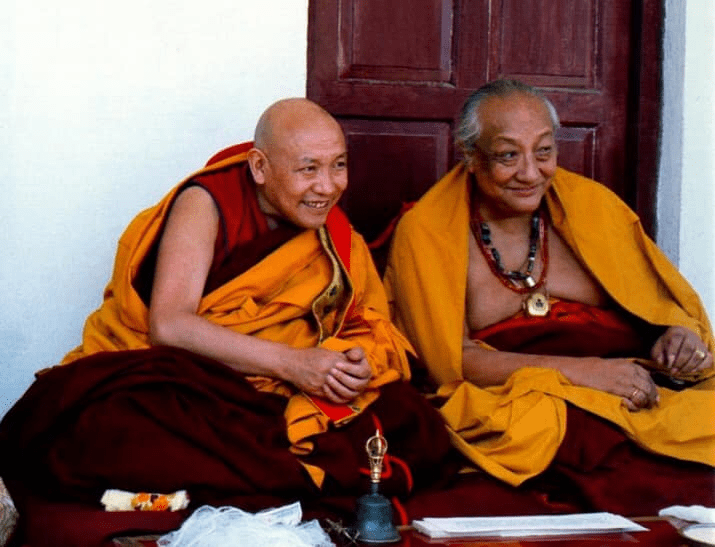
Dharma King Dilgo Khyentse Rinpoche (right) and his main Dharma heir, the Fifth Dharma King Trulshik Rinpoche (left)
The Gelug sect’s Dalai Lama invited the Nyingma sect’s Dharma King Trulshik to transmit the supreme Dharma

At the Mindrolling Monastery, the dharma king engaged in extensive learning. He received all of the monk precepts from his precept masters Cuikenqiong Rinpoche and Mindrolling Kenqian Khyentse Norbu according to the “Formal Pronouncement on Precepts” lineage passed down from Laqian Qianba Lasa. Present-day dharma kings unanimously agree that H.H. Dharma King Trulshik is one of the most important lineage-holders of this lineage. H.H. Dharma King Trulshik holds three types of precepts that are on different levels: the Pratimoksa precepts, the Bodhisattva precepts, and the precepts for tantric masters. The dharma king is one who truly wears a golden precept robe. Not only does he abide by the precepts for monks, he also completely abides by all of the Hinayana, Mahayana, and Vajrayana precepts. That is why he deserves to be called a “holder of the Vajra Three Secrets Vows.” H.H. Dharma King Trulshik is the main transmitter of the monastic vows within the Nyingma lineage.

The dharma king has received teachings on the sutras and tantras, as well as other teachings. He has visited famous masters in many places to learn Buddha-dharma, including over thirty famous masters who belong to ancient and modern sects of esoteric Buddhism. The dharma king has studied all of the dharma teachings of these important lineages and has put them into practice. He still learns assiduously even after he completed a strict three-year retreat. Accepting the request of Zhachu Rinpoche, the dharma king became the khenpo of the Zhalong Dongga Qielin Monastery, where he is responsible for upholding, protecting, and spreading the dharma.

Throughout his whole life, the dharma king has wholeheartedly cultivated himself in retreat. Every day he abstains from speaking until 10:00 in the morning. Each year the dharma king goes into retreat in his own temple for as much as nine months. All of the great Tibetan rinpoches acknowledge that as a master of masters, the dharma king has the greatest abilities and power to clearly point out the way leading to realization of one’s original nature. That is why extremely virtuous masters send their capable disciples to the dharma king in order to seek teachings and empowerment.

H.H. Dharma King Trulshik has vast and profound learning. His practice is solid and flawless. He is unassuming and amiable. No one in today’s world can match his profound experience, training, and realization. Many practitioners of the various sects regard him as a venerable Dharma King Master with limitless wisdom and vast supernatural powers. H.H. Dharma King Trulshik has recognized the identities of the person who is the incarnation of H.H. Dharma King Dilgo Khyentse, the person who is the incarnation of H.E. Dharma King Tulku Ugyen, and persons who are incarnations of other important rinpoches. He has also transmitted dharma to and performed initiations for such people. The dharma king is a magnificent practitioner of the Great Perfection Dharma and a magnificent accomplished one in our current age. He is a model master of this century with disciples spread all over the world.

After H.H. Dharma King Trulshik saw who His Holiness Dorje Chang Buddha III Wan Ko Yeshe Norbu is through the limitless omniscience displayed in A Treasury of True BuddhaDharma, he stated that His Holiness Wan Ko Yeshe Norbu has reached the highest state of Buddhahood in the few-thousand-year history of Buddhism, having truly attained complete. Dharma King Trulshik wrote a respectful congratulation letter.

RESPECTFUL CONGRATULATIONS
His Holiness Buddha Vajradhara (Dorje Chang Buddha) Yangwo Wan Ko Yeshe Norbu:
I recently learned that the book about you, A Treasury of True BuddhaDharma, was published a long time ago. The content of that book includes
the traditional Tibetan five major vidyas and five minor vidyas. In terms of modern branches of learning, the book involves more than thirty different branches of learning. Thus, I entered samadhi and visualized the Three Jewels the Buddha, the dharma, and the sangha. I pervasively spread bodhicitta and
wished that all living beings would realize the supreme, absolute truth and
Buddhahood. May the propagation of A Treasury of True Buddha-Dharma be
the karmic condition whereby living beings in the three spheres leave the sufferings of reincarnation and obtain the fruit of wonderful happiness. It will become the cause whereby each sentient being who has descended into the abyss of the six realms of reincarnation leaves suffering and attains happiness.
I hereby specially convey my respectful congratulations!


Buddhist monk Ngawang Chokyi Lodro,
having the undeserved name of Khenpo
Zhalong Trulshik Shatrul
Written on the auspicious day of June 28, 2007

Link:https://peacelilysite.com/2025/01/16/brief-introduction-toh-h-dharma-king-trulshik/

Source: H.H. Dorje Chang Buddha III A TREASURY OF TRUE BUDDHA – DHARMA

Street artist nominated for world’s best painting

Chloe Aslett, BBC News, Yorkshire

A Sheffield artist has been nominated for creating the world’s best street art in 2024.

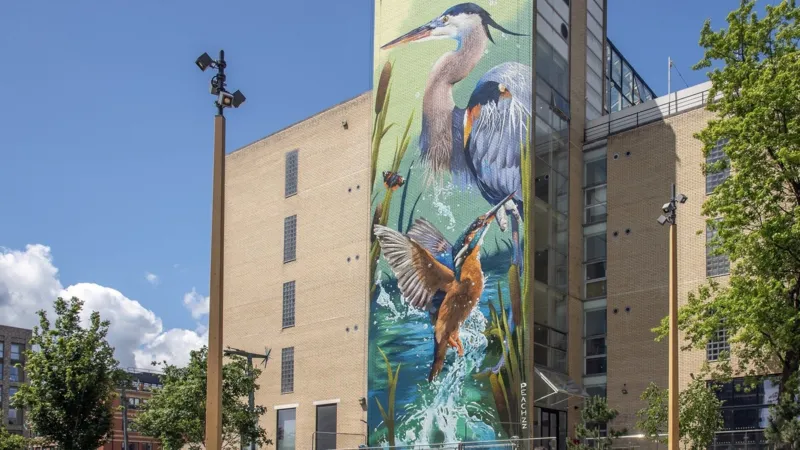
Megan Russell, who works under the name Peachzz, painted for up to 12 hours a day for 10 days in a row to create the 25-metre tall artwork in the city centre.

Reverie, depicting a heron and a kingfisher, has been nominated for “best mural in the world” in Street Art Cities’ best of 2024 awards.

She said working on the project, which overlooks Pounds Park, was the “biggest highlight of my career so far”.

“I had free reign to be as vibrant and bold as I wanted. It’s really refreshing when clients tell you that, it doesn’t happen often,” she said.

The wall, on the side of the Cubo building, overlooks Pounds Park

The piece, commissioned by Sheffield City Council, was voted the best of last June’s entries in Street Art Cities’ monthly competition.

“It’s just been crazy. When June’s votes came in, it blew my mind,” Megan said.

“It was an amazing feeling to have such support from Sheffield, and it also showed how much Sheffield is interested in street art.”

Now, it has been pooled with 50 other artworks, from countries including Argentina, Colombia, Russia, Spain and Denmark, for people to vote for the best of the year.

“Looking back 10 years ago, I would’ve never thought I could’ve reached this space where I am now,” she said.

‘An emotional January’

“I remember looking at those competitions and thinking I’d love to be nominated, and now I am. It’s unbelievable.”

The nomination came during “an emotional January” as Megan’s grandmother Iris Reynolds, who inspired her nickname, died on Tuesday.

“She was a super creative person and inspired me a lot into being an artist. She had an iPad and was following my artwork. She seemed really proud,” Megan said.

“She used to feed me tinned peaches and ice cream, and I ended up using Peachzz as an online pseudonym when I was young.

“I just never changed it, and people would call me it in person. It felt like it was a part of me.”

Megan started spray painting a decade ago in old industrial buildings in Sheffield and has been working professionally for about seven years.

Peachzz said her largest work to date – covering 225 square metres – took 10 consecutive days of painting to complete

This year, she is working on launching a street art festival, Lick Of Paint Fest, alongside fellow artist Alastair Flindall.

The graffiti and street art scene in Sheffield has “quietened down”, she said, so the festival hopes to give it a boost.

If Reverie comes in at, or near, the top in the Street Art Cities rankings, this would give the budding festival a platform, Megan said.

Voting takes place on Street Art Cities’ website and is open until the end of January.

“There are so many incredible artists that are up there. It’s an honour to be among such big names,” she added.

Source: https://www.bbc.com/news/articles/ckgxgq2n09go

8 After-Dinner Rituals That Can Help In Digestion And Prevent Bloating

By incorporating these simple post-meal rituals, you can support your digestive system, alleviate discomfort, and avoid the dreaded bloating that often follows a big meal. 

Written By Olivia Sarkar| Last Updated: Jan 06, 2025, 04:52 PM IST|Source: Bureau

After enjoying a hearty meal, it’s not uncommon to feel uncomfortable or sluggish. Digestive issues like bloating, indigestion, or an uneasy feeling can linger long after the last bite. Fortunately, there are simple after-dinner rituals that can support your digestion and help prevent bloating, leaving you feeling lighter and more at ease. Below are eight effective practices that can make a world of difference to your digestive health.

1. Take a Gentle Walk
After a meal, taking a light walk can be one of the most beneficial things for your digestive system. A short 10-15 minute stroll helps stimulate the digestive process by encouraging the stomach to empty more quickly, reducing bloating and discomfort. It also promotes the movement of food through the intestines, preventing constipation.

2. Sip Warm Water or Herbal Tea
Drinking warm water or herbal tea, such as peppermint, ginger, or chamomile, can greatly improve digestion. These teas have natural properties that soothe the stomach, reduce bloating, and promote the movement of food through your digestive system. Ginger, in particular, can help reduce nausea and gas, while chamomile works as a calming agent to relax your stomach muscles.

3. Avoid Lying Down Immediately
Though it might feel tempting to lounge on the couch after a large meal, lying down too soon can actually slow down the digestive process. Gravity helps food and acid stay in the stomach, and lying flat can increase the risk of acid reflux and bloating. Wait at least 30 minutes to an hour before reclining to allow your body time to process the food.

4. Practice Deep Breathing
After eating, try engaging in deep breathing exercises. This helps stimulate the parasympathetic nervous system (also known as the “rest and digest” system), encouraging optimal digestion. Deep breathing can also reduce stress, which can otherwise impair digestion and cause bloating or discomfort.

5. Massage Your Abdomen
Gentle self-massage can aid in digestion by stimulating the movement of food through the intestines. Use your fingertips to massage your stomach in a clockwise motion (the direction of digestion) for a few minutes. This simple act can help ease bloating, relieve gas, and promote digestion.

6. Incorporate Probiotics
Probiotics are beneficial bacteria that support gut health and digestion. After dinner, consider consuming foods rich in probiotics, such as yogurt, kefir, or fermented vegetables. Alternatively, a probiotic supplement may help maintain a healthy balance of gut bacteria, reducing bloating and improving overall digestion.

7. Stay Hydrated, But Avoid Over Drinking
Drinking water throughout the day aids digestion, but drinking too much water immediately after a meal can dilute stomach acid, impairing your body’s ability to break down food. Try sipping water in moderation after dinner, but avoid excessive consumption right away. This ensures proper digestive function without overwhelming your stomach.

8. Avoid Carbonated Drinks
Carbonated drinks, including sodas and sparkling water, introduce gas into your stomach, which can lead to bloating. After dinner, it’s best to skip the bubbles. Stick to still water or herbal teas, which are far more conducive to smooth digestion.

Fennel seeds are a natural remedy for boosting digestion. Try chewing some after your meal to see if they work for you. From taking a short walk to sipping herbal tea and massaging your abdomen, these habits can make a significant difference in how you feel after dinner. Your digestive health is a reflection of your lifestyle, so taking small, consistent steps can lead to long-term benefits, allowing you to enjoy your meals without the aftermath of discomfort.

Link:https://peacelilysite.com/2025/01/13/8-after-dinner-rituals-that-can-help-in-digestion-and-prevent-bloating/

Source: https://zeenews.india.com/lifestyle/8-after-dinner-rituals-that-can-help-in-digestion-and-prevent-bloating-2840271.html (This article is intended for your general information only. Zee News does not vouch for its accuracy or reliability.)

BRIEF INTRODUCTION TO THE SUPREME LEADEROF JONANG SECT H.H. DHARMA KING JIGME DORJE

Within Tibetan Buddhism, the Jonang sect has been known around the world for the true practice of its followers. There currently are two dharma kings who are in charge of the dharma teachings of the Jonang sect. One of them is the head of the Zangwa Monastery, H.H. Dharma King Jigme Dorje. The other is H.H. Dharma King Ngagwang Pedma Namgyal Palzangpo of the Longshijia Monastery. There is also a young future sect leader, Jianyang Lezhu Rinpoche, who is vice-head of the Zangwa Monastery.

When Shakyamuni Buddha lived in the world, H.H. Dharma King Jigme Dorje Rinpoche was already a great Bodhisattva in that lifetime. H.H. Dharma King Jigme Dorje was born in 1944 accompanied by various amazing auspicious signs that cannot be fully described. As a child, he never did anything to upset his parents, such as crying or acting in a common, childish way. He was very much different from other children. The masters of a monastery, as well as the monastics and laypersons in that monastery who handled monastery matters, all praised the child as being the incarnation of a wonderful Bodhisattva who had come back to this world voluntarily. Later, he went to the headquarters of the Jonang sect, the Zangwa Monastery in Rangtang, where he worshipped the Buddhas. His uncle, the Sai Rinpoche by the name of Awang Genga Phuntsok who lived at the Zangwa Monastery, saw that this child was the incarnation of a holy being. In accordance with the dharma, Awang Genga Phuntsok Rinpoche recognized that the child was the true reincarnation of a rinpoche who had been the head of the Zangwa Monastery. In accordance with the dharma rules, Lama Danba Daji from Xiayan, Lama Aguoba from Hongtu, and others practiced the dharma, entered holy supernatural states, and confirmed the accuracy of Awang Genga Phuntsok Rinpoche’s conclusion. They then made their formal pronouncements concerning the identity of H.H. Jigme Dorje. Moreover, the International Buddhism Sangha Association held an unprecedented Drawing Lots From a Golden Vase Ceremony to affirm the true reincarnated identity of H.H. Dharma King Jigme Dorje and others. There were ten possible identities recognized by various rinpoches. One lot was drawn from among 120 lots to affirm the true reincarnated identity of H.H. Dharma King Jigme Dorje. That drawing affirmed that H.H. Dharma King Jigme Dorje is the incarnation of Shambhala King Suchandra, which is the reincarnated identity that H.H. Dorje Chang Buddha III recognized before that lot was drawn.

After the formal enthronement ceremony for H.H. Jigme Dorje Rinpoche was performed at Saige Monastery in Aba County and the celebration of the enthronement ceremony was performed at Zhuoge Monastery, the rinpoche returned to Zangwa Monastery. The intelligence of the rinpoche is extraordinary. He was able to thoroughly learn and recite the scriptures, treatises, and rituals without having to exert himself. He later served as a disciple under his root master, Awang Gongqiu Daji, who was the Vajra Master of the Zangwa Dazang Monastery and the 44th Kalachakra Dharma King of the Jonang sect. Under H.H. Awang Gongqiu Daji, the rinpoche learned and practiced the five preliminary practices of the Jonang sect and the generation and completion stages of the Kalachakra Vajra the Six Yogas. He reached perfect merit in every dharma he practiced.

When the rinpoche was eight years old, he succeeded to the throne of the head of the Zangwa Monastery. However, at this time, his uncle, the Sai Rinpoche, and H.H. Dharma King Awang Gongqiu Daji predicted to H.H. Jigme Dorje Rinpoche that changes in the world situation would occur that would be disadvantageous to Buddhism. They told the rinpoche to go back to Aba County and that in the future, when the world situation stabilizes, he should return to the Zangwa Monastery and teach the dharma. Afterward, the Sai Rinpoche passed away and later H.H. Dharma King Awang Gongqiu Daji passed away as well. H.H. Jigme Dorje Rinpoche then went to Aba County, where he requested and received the complete precepts from Lama Tujihua of Sai. He later served as a disciple under another root master, Lama Kesang, who is the nirmanakaya of the Eleven-Faced Kuan Yin Bodhisattva. Under Lama Kesang, the rinpoche learned all of the initiation and lineage teachings. During this time period, he both herded goats and cultivated himself in caves, tree holes, and other places while traveling from mountain to mountain. He realized the state of viewing all phenomena as equal and the state where the mind is not affected by the situation one encounters. Thus, he became a free and unhindered person of great accomplishment in the dharma. He then lived in a cave, where he continued his practice of the dharma.

After the restraints on religion were slightly eased, the supreme leader of the Jonang sect, H.H. Dharma King Yundan Sangbu of the Zangwa Monastery in Rangtang, twice dispatched people to the cave at the Zilang Monastery in Aba County (that was the cave in which Maji Lazun practiced the Xiduan Dharma) where the rinpoche was staying. H.H. Dharma King Yundan Sangbu did so based upon the formal pronouncements of certain great masters of the past. When those dispatched arrived, they invited H.H. Jigme Dorje Rinpoche to go to the Zangwa Monastery and lead the teaching of the Buddha-dharma. There was a third visit when H.H. Dharma King Yundan Sangbu himself went to that cave at the Zilang Monastery, bringing with him a kharda (white silk scarf). When the two venerable ones met, they praised each other. H.H. Dharma King Yundan Sangbu repeatedly urged H.H. Jigme Dorje Rinpoche to follow the formal pronouncements of those great masters of the past by going to the Zangwa Dazang Monastery, by leading the teaching of the Buddha-dharma of the Jonang sect at that monastery, and by being the monastery’s retreat lineage Vajra Master. H.H. Jigme Dorje Rinpoche then gave his response to the formal pronouncements of those three masters of the past (H.H. Dharma King Gongqiu Daji, the Sai Rinpoche, and Lama Kesang) that he must go to the Zangwa Monastery in Rangtang. He respectfully said to H.H. Dharma King Yundan Sangbu, “Your merit and cultivation are like those of my father. You are my master. I will carry out your instructions well!”

After H.H. Jigme Dorje Rinpoche returned to the Zangwa Monastery at Rangtang, he helped H.H. Dharma King Yundan Sangbu restore the monastery and build Buddhist statues. The rinpoche performed initiations and dharma transmissions at regular intervals and guided those on retreat. He perpetuated the dharma teachings of the Jonang sect in this human world and propagated such teachings around the world.

In accordance with the rules handed down by the historical masters, H.H. Dharma King Yundan Sangbu personally handed over to H.H. Jigme Dorje Rinpoche in 1998 certain precious objects passed down through the generations by past masters, such as a vajra bell, a vajra, and the writing called “Guiding Text You Will Know Its Meaning When You See It.” He also formally conferred upon H.H. Jigme Dorje Rinpoche the positions of 47th dharma throne holder of the Jonang Kalachakra lineage and 11th Vajra Master of the Zangwa Dazang Monastery. After H.H. Dharma King Yundan Sangbu passed away, H.H. Dharma King Jigme Dorje became the supreme leader of the Jonang sect.

After H.H. Dharma King Jigme Dorje saw who His Holiness Dorje Chang Buddha III Wan Ko Yeshe Norbu is through the limitless omniscience displayed in A Treasury of True BuddhaDharma, he stated that His Holiness Wan Ko Yeshe Norbu has reached the highest state of Buddhahood in the few-thousand-year history of Buddhism, having truly attained complete.

CONGRATULATIONS
United International World Buddhism Association Headquarters:
On behalf of the Jonang sect, I hereby respectfully congratulate H.H. Dorje Chang Buddha III Wan Ko Yeshe Norbu for directly propagating in this world the teachings of Buddhism. Such teachings have benefited countless living beings in their practice of the dharma and have caused countless living beings to obtain deep blessings and wisdom. The book A Treasury of True Buddha-Dharma especially shows this Buddha’s complete proficiency in exoteric and esoteric Buddhism and perfect mastery of the Five Vidyas. Such superlative accomplishments are truly unprecedented in the past few thousand years, outshining the accomplishments of all others, both ancient and modern. His Holiness is a shining paragon among Buddhas. May this inexhaustibly mighty light and power of compassion continue so that His Holiness forever teaches the dharma and forever remains in the world. I place my palms together and respectfully praise His Holiness.

I respectfully prostrate to H.H. Dorje Chang Buddha III, Wan Ko Yeshe Norbu!
Supreme Dharma King of the Jonang Sect
Jigme Dorje
May 8, 2007

Link:https://peacelilysite.com/2025/01/10/brief-introduction-to-the-supreme-leaderof-jonang-sect-h-h-dharma-king-jigme-dorje/

Source: A Treasury of True Buddha Dharma