Chinese characters are more than just written symbols—they are small works of art shaped by thousands of years of history. Each character carries meaning, imagery, and often a quiet sense of poetry. A single word can evoke light, wind, mountains, or virtue. When these characters come together to form a person’s name, they become something even more meaningful: a reflection of family hopes, cultural heritage, and the beauty of language itself.
A name often carries the very first blessing from parents and the hopes a family places upon the future.
Imagine traveling back in time to ancient China. If you walked up to Liu Bei (刘备)and casually called him “Liu Bei,” he might pause in surprise—or even consider it somewhat impolite. In traditional Chinese culture, a name was never just a label. It was a symbol of lineage and family, a part of life’s rituals, and perhaps the first gentle poem parents wrote for their child.
A name may consist of only a few characters, yet within it often lies thousands of years of cultural tradition and human warmth.
Surnames and Clan Names: An Ancient Way of Asking “Who Am I?”
Today, we simply combine a surname and given name to form what we call a “full name.” But in ancient China, particularly before the Qin dynasty, “xing” (姓) and “shi” (氏) were two different concepts.
The surname (xing) was primarily used to distinguish marriage relations. The earliest Chinese surnames—such as Ji, Jiang, Si, and Ying—often contained the “female” radical in their characters. This reflected the legacy of a matrilineal society. The principle was simple: people with the same surname were considered to share blood ties, so marriage between them was forbidden.
The clan name (shi), on the other hand, represented social status. Only those who held land, titles, or significant achievements were granted a clan name. In other words, the surname represented lineage, while the clan name reflected rank and honor.
A fascinating example is the famous reformer Shang Yang (商殃) of the Warring States period. He was not originally called “Shang Yang.” His ancestral surname was Ji, and his clan name was Gongsun because he descended from the royal family of the State of Wei. Early in life he was known as Gongsun Yang. Later, after helping transform the State of Qin through sweeping reforms, he was granted the territory of Shang and the title “Lord of Shang.” From then on, people began calling him Shang Yang.
Looking back at history, one might smile at an interesting truth: In ancient times, many people changed their names not to hide who they were—but because life had elevated them to a new chapter.
The Courtesy Name: A Rite of Adulthood
In ancient China, a person often had more than one name. In addition to their given name (ming), they also received a courtesy name (zi).
The given name was mostly used within the family, especially by elders. The courtesy name, however, was the name used in society by peers and acquaintances.
Receiving a courtesy name meant that a person had reached adulthood and should be treated with respect.
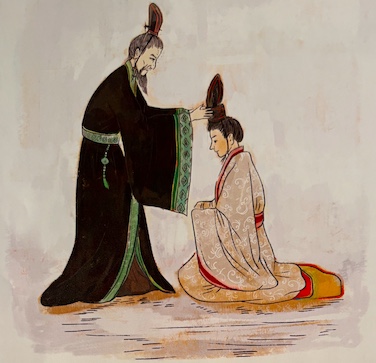
For men, this moment came at the age of twenty during the “capping ceremony” (冠礼). In this solemn ritual, elders placed a ceremonial cap on the young man and bestowed upon him his courtesy name. From that day forward, he was no longer the boy running through village fields with childhood nicknames like “Little Dog” or “Iron Egg,” but a recognized adult in society.
For women, adulthood was marked by the hairpin ceremony (笄礼) at around fifteen. After this ceremony, a young woman could wear her hair pinned up with a hairpin, signifying that she had reached marriageable age.
This is where the classical phrase “waiting in the boudoir for one’s courtesy name” (待字闺中) comes from—describing a young woman who has received her courtesy name and awaits the next chapter of life.
These rituals made the transition into adulthood both solemn and graceful.
Chinese culture often reveals its subtle wisdom in the relationship between a person’s given name and courtesy name.
The great strategist Zhuge Liang (诸葛亮)was known by the courtesy name Kongming(孔明). The character Liang means “bright,” and Ming also means “light” or “clarity.” Together they form a beautiful echo—brightness upon brightness.
The legendary general Zhao Yun (赵云)had the courtesy name Zilong(子龙). Ancient Chinese sayings describe the natural harmony between elements: “Clouds follow the dragon, and the wind follows the tiger.” With “cloud” in his given name and “dragon” in his courtesy name, the combination evokes an image of heroic power moving through the skies.
Then there is the great Song dynasty writer Su Shi(苏轼), whose courtesy name was Zizhan(子瞻). The character Shi refers to a horizontal bar at the front of an ancient carriage—something modest in appearance yet essential for support. Zhan means “to look forward into the distance.” One suggests quiet steadiness; the other, far-reaching vision. Together they reflect the balance of humility and aspiration in his life.
Through these pairings, we can glimpse the hopes of parents and elders, as well as the refined and poetic sensibilities of traditional Chinese culture.
Of course, not every ancient name was elegant or poetic. Some carried a touch of everyday humor.
The ruler Duke Cheng of Jin was said to have the name Heitun(黑臀), meaning “Black Hips,” supposedly because he had a dark birthmark on his body.
Another ruler, Duke Zhuang of Zheng, was named Wusheng(晤生), meaning “born with difficulty,” referring to a difficult birth.
If children today were given such names, they might have a few serious conversations with their parents!
On the other hand, some names sounded incredibly powerful. The king King Wu of Qin was named Ying Dang. In ancient Chinese, the character “Dang” suggested sweeping across lands and conquering territories—a name filled with ambition and authority.
Sometimes a name was lofty and ceremonial; sometimes it simply reflected the humor of daily life.
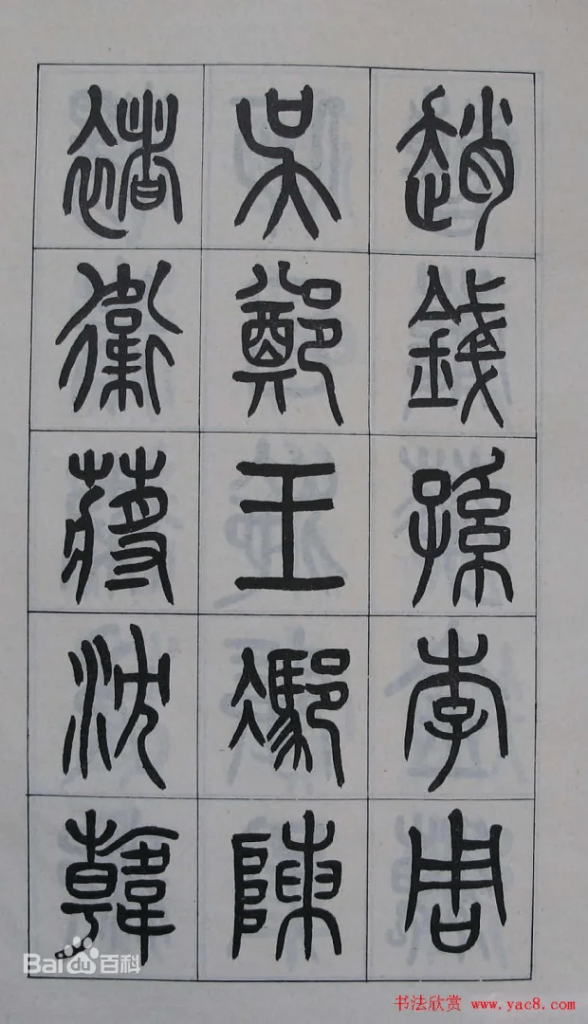
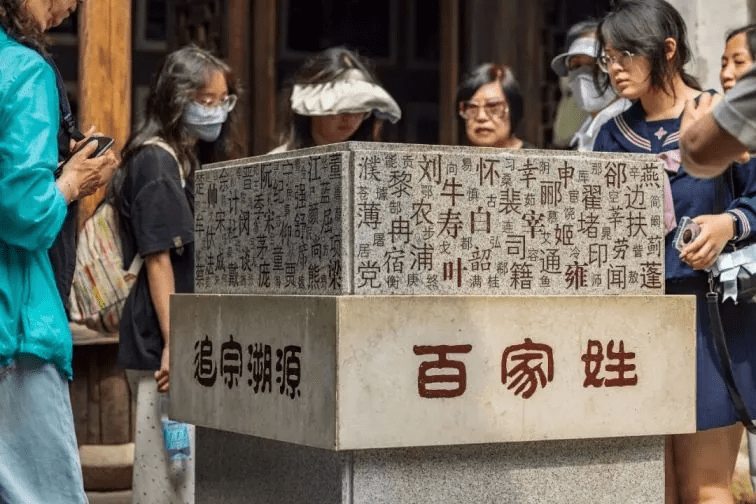
From ancient tribal totems to the familiar Hundred Family Surnames, Chinese names carry thousands of years of cultural memory.
Today, we no longer perform capping ceremonies or hairpin ceremonies, and few people receive courtesy names. Yet when a new child enters the world, parents still open dictionaries, carefully weighing every sound and every meaning before choosing a name.
In that moment, tradition quietly continues.
As an old Chinese poem says:
“A heart’s great aspirations may remain unopened, yet spring winds return again and again in dreams.”
A name may consist of only a few characters, but it carries a family’s blessing, the imprint of history, and the gentlest hopes for the future.
It is the very first gift a person receives in life.
Recently, I had the opportunity to visit the Triton Museum of Art, a cultural gem nestled in the heart of Santa Clara, California. Surrounded by a peaceful park, the museum offers a quiet and welcoming space where visitors can slow down, reflect, and experience the beauty and creativity of contemporary art.
Founded in 1965, the Triton Museum has long been dedicated to showcasing artists connected to California and beyond. What I appreciate most about this museum is its openness—it is free to the public, making art accessible to everyone in the community. Walking through the galleries, one can feel how art becomes a bridge connecting cultures, ideas, and human experiences.
Encountering the Art of Emanuel Harris‑Sintamarian
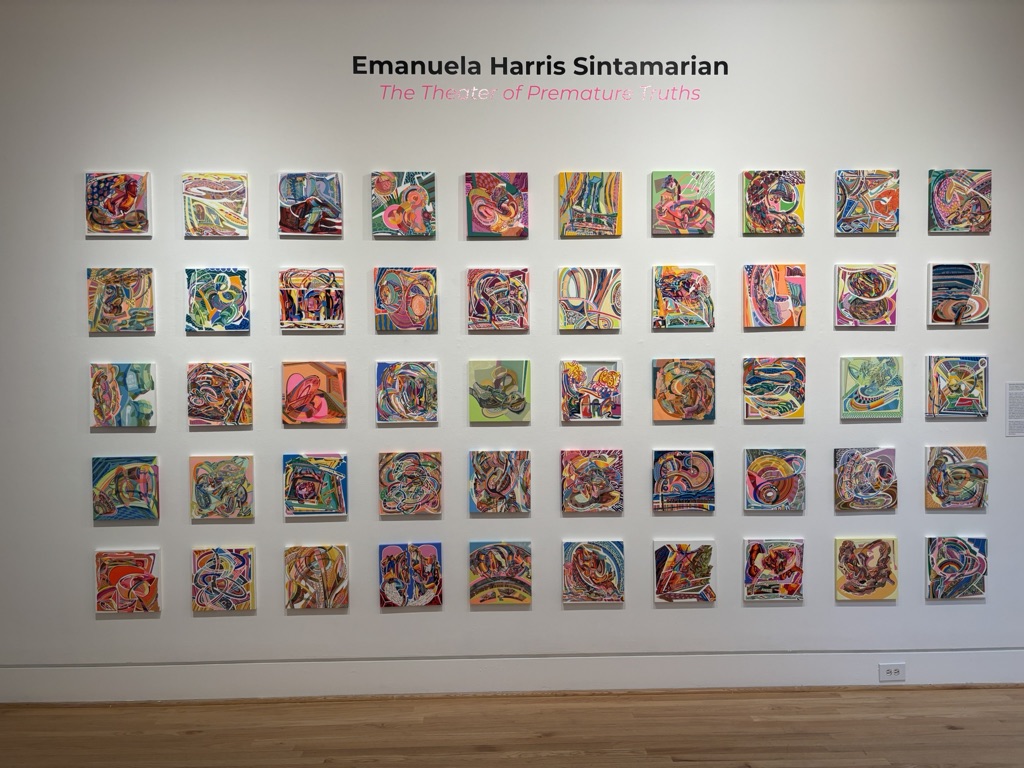
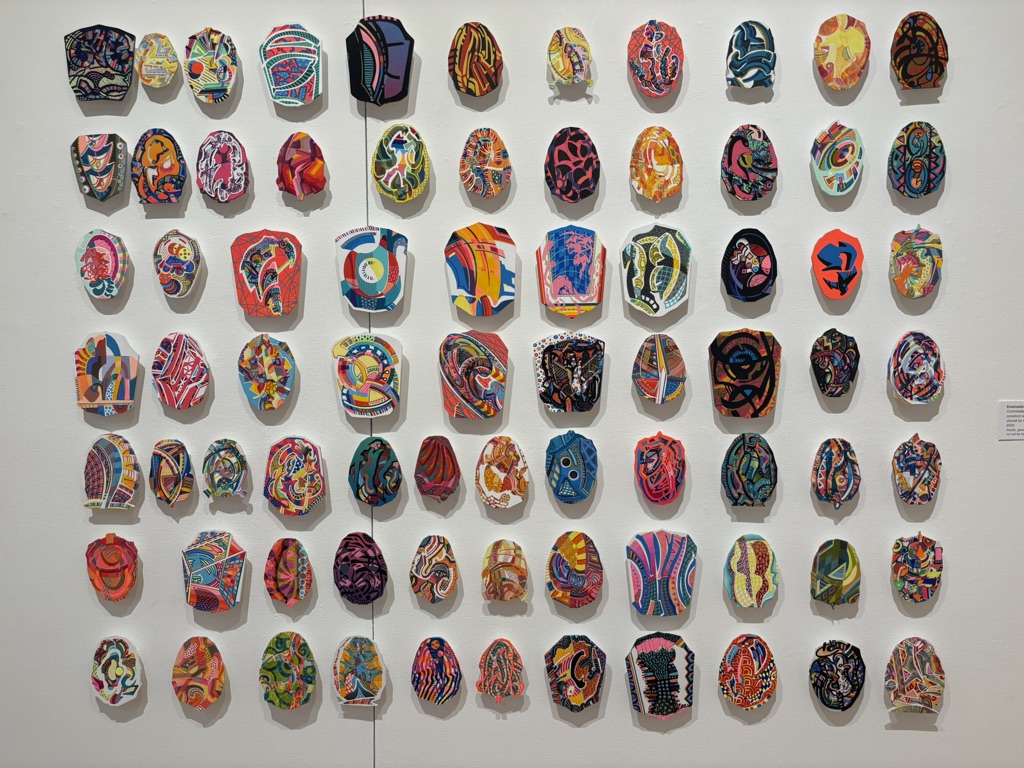
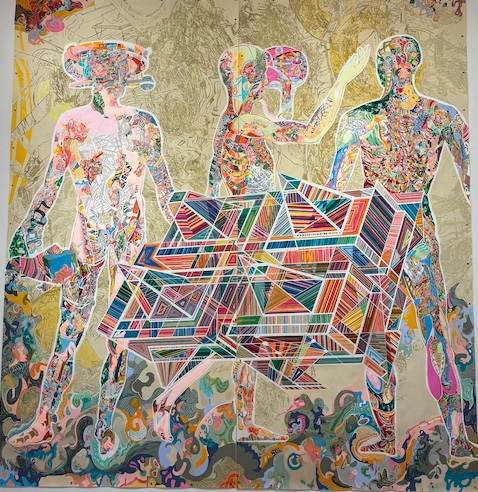
During my visit, one exhibition that particularly captured my attention featured the work of Romanian artist Emanuel Harris‑Sintamarian. His paintings immediately drew me in with their unique textures, layered compositions, and deeply expressive forms.
There is something both mysterious and meditative about his work. The colors and shapes seem to flow organically across the canvas, inviting viewers to pause and explore their own interpretations. Rather than presenting a straightforward image, his art feels like a visual journey—one that encourages contemplation and emotional reflection.
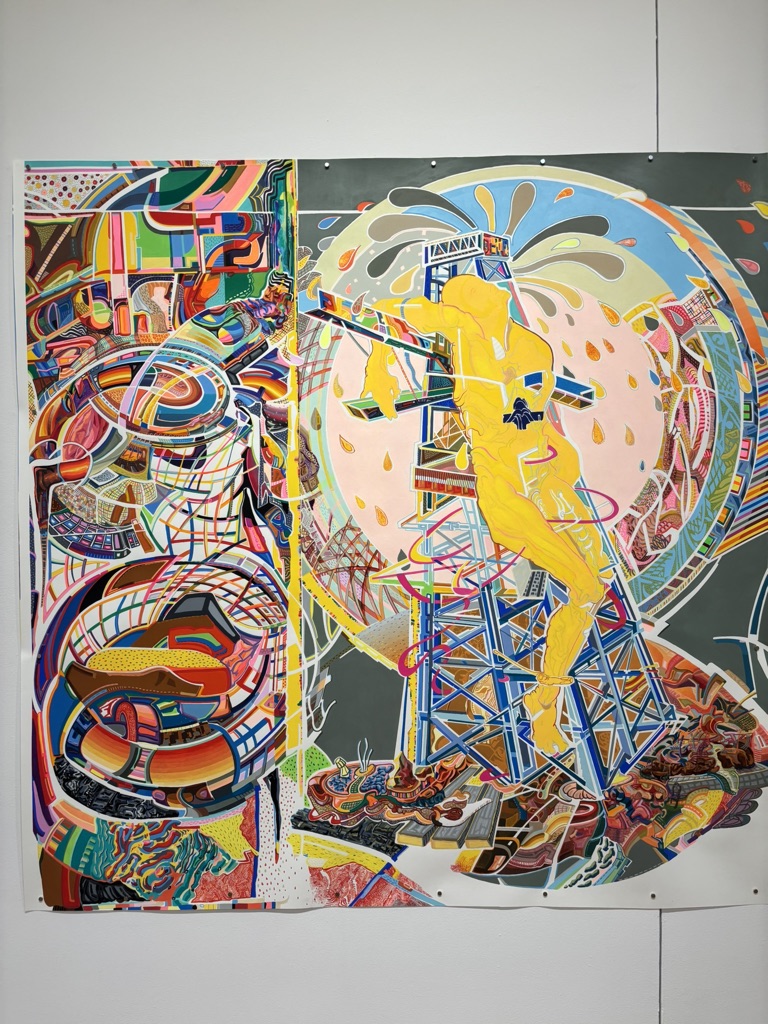
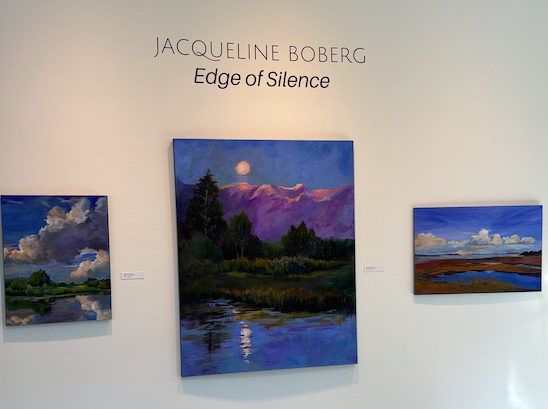
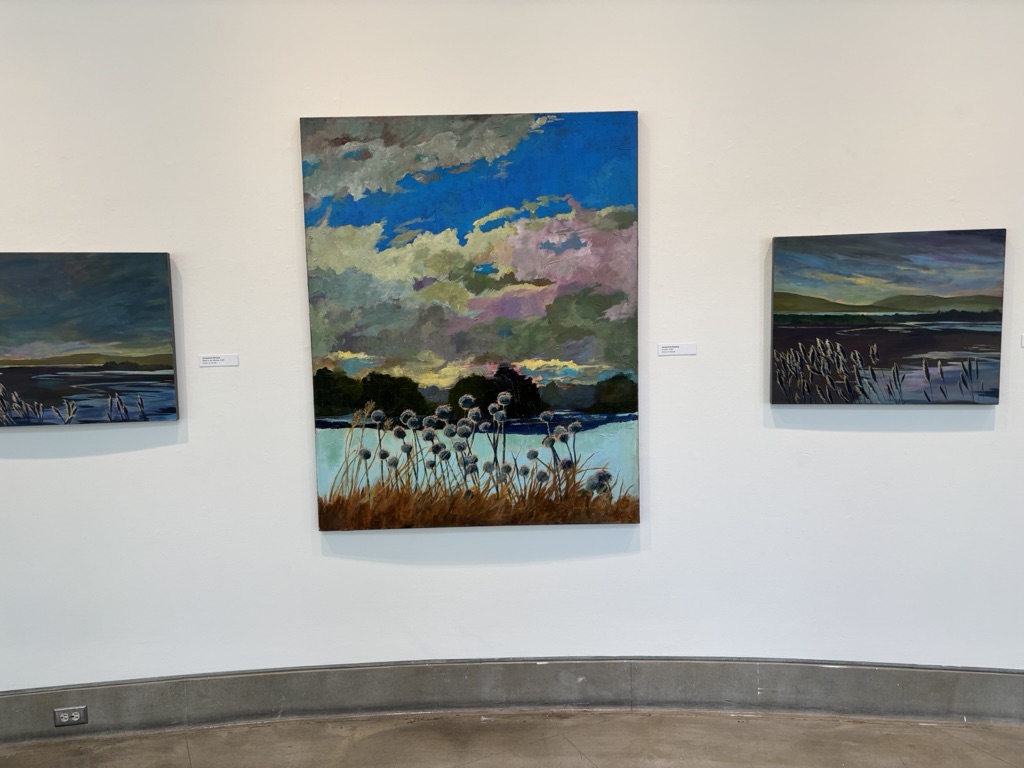
During my visit, I took several photos of the exhibition that I would like to share here. These images capture only a small glimpse of the atmosphere inside the gallery, but they reflect the creativity and thoughtful spirit of the artists on display.
Jesus, Popcorn and other details 2024 Acrylic, gouache on paper In Jesus, Popcorn and Other Details, I bring the sacred into direct contact with systems of spectacle, labor, and consumption. Jesus is not placed above the world, but embedded within it – caught in scaffolding, color, and movement – where belief collides with industry and visual excess. Popcorn becomes both image and metaphor, standing in for abundance, distraction, and the way meaning is consumed, repeated, and ritualized I intentionally built a dense, restless composition that resists hierarchy or stillness, reflecting how faith, entertainment, and production compete for attention in contemporary life. Rather than offering reverence or critique alone, the painting holds these tensions in place, asking the viewer to sit inside the noise and consider where meaning survives.
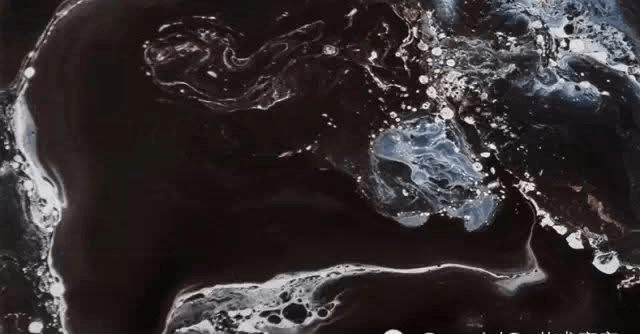
Through his brushwork, H.H. Dorje Chang Buddha III renders the subtle life cycle of a water bubble—its emergence, transformation, and eventual dissolution—with remarkable vitality. Though the medium is static, the painting evokes a striking sense of movement and immediacy. One almost senses the gentle drifting of bubbles across the surface, and even imagines the delicate sound that might accompany the instant when a bubble touches the ground and quietly disappears.
Beyond its visual beauty, the work carries a deeper contemplative resonance. In the fleeting rhythm of the bubbles, one cannot help but see a metaphor for the human condition. The trajectory of a bubble—from its brief formation to its silent vanishing—mirrors the arc of human life: birth, growth, aging, and departure. Life itself unfolds within the span of a breath, fragile and transient, reminding us of the importance of awareness and presence in each passing moment.
From an artistic perspective, the painting also demonstrates a remarkable command of impressionistic expression. The composition operates not only as a unified whole but also as a constellation of smaller visual worlds. Any isolated fragment of the canvas could stand independently as an exquisite impressionist study, rich in color, light, and atmosphere. This structural richness gives the work a dreamlike, almost illusory quality—where forms appear to emerge and dissolve within layers of color and movement.
In this way, the painting invites the viewer to linger, not merely to observe, but to reflect. It transforms a simple natural phenomenon into a meditation on impermanence, perception, and the delicate beauty of existence.
Click here to Wikitia page on H.H. Dorje Chang Buddha III that list major accomplishments and teachings with links.
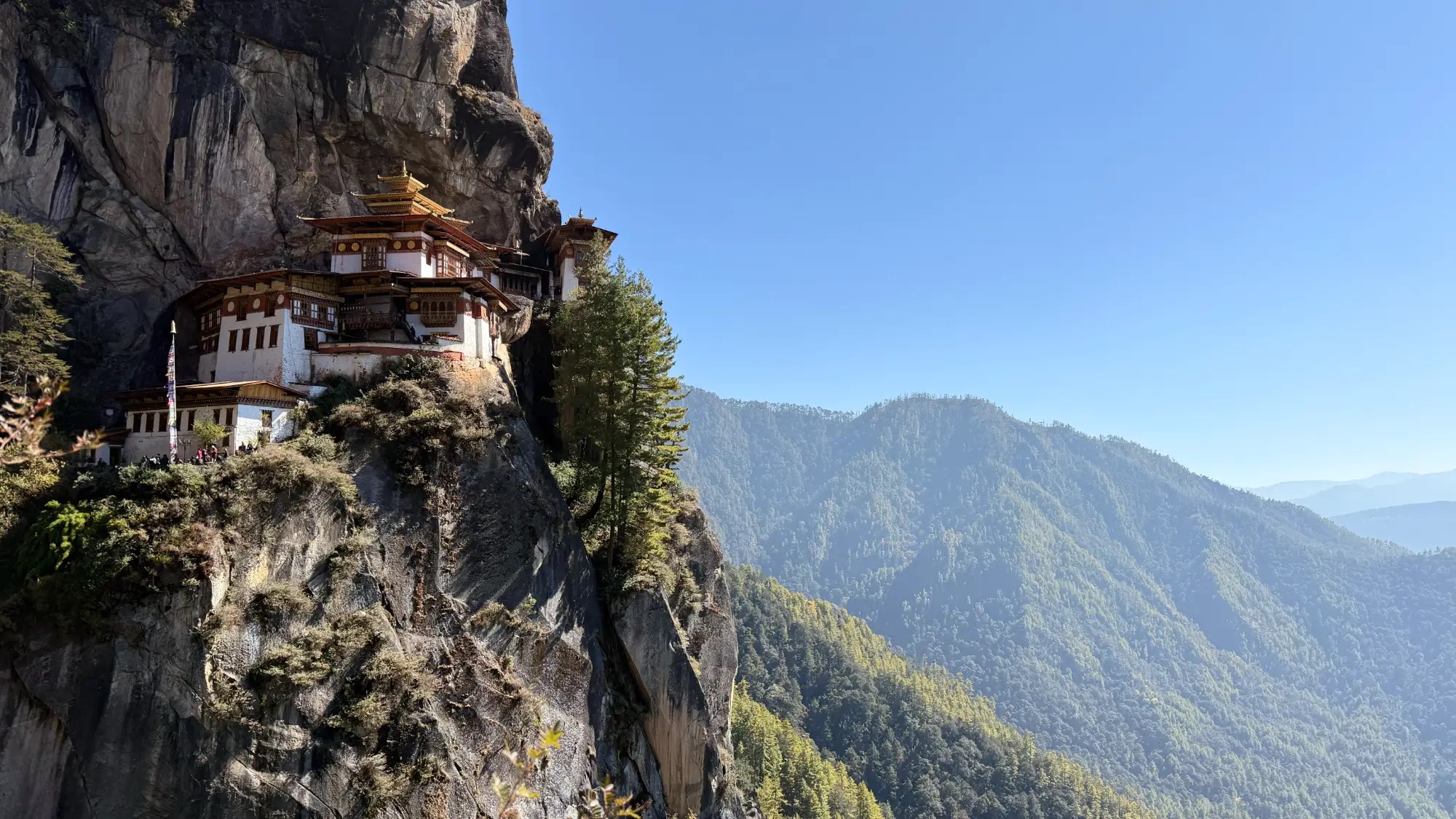
The goal of the ascent in sight: Taktsang Monastery is perched high on the steep cliff face
On a pilgrimage to holy places, one rarely follows a rigid plan. Rather, one engages with a flow of events. Our last days in Bhutan reminded us how valuable it is to let go of expectations. We learned that special doors often open exactly when one is ready to leave the original path.
Change of Plans in Punakha: Trusting the Flow of Things
The sixth day showed us this very clearly. Actually, we had a fixed plan: We wanted to drive from Punakha back to Paro. There, we had donated 3,000 butter lamps which we wanted to light ceremonially in a temple.
But then we received news on short notice that an audience with His Holiness the Je Khenpo, the highest religious head of the country, would be possible. Such an opportunity is a great blessing. However, there was a restriction: Our entire travel group was simply too large for this spontaneous audience.
So we had to split up in Punakha. One part of the group drove directly on to Paro, while the other part drove to Thimphu, where His Holiness the Je Khenpo was staying at the time. I traveled with this group.
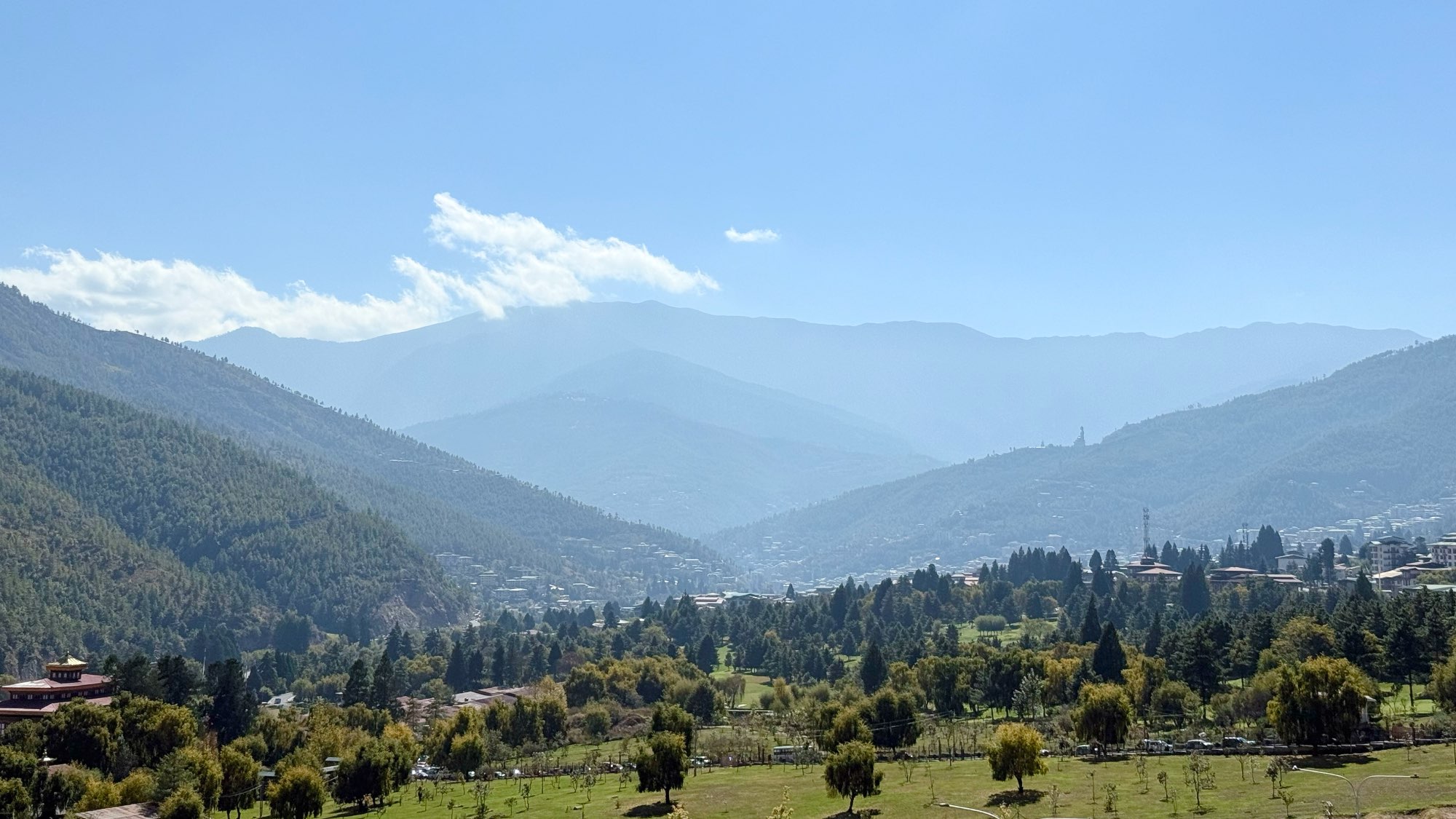
View of Thimphu with the Buddha Dordenma statue in the background
Thangton Dewachen Nunnery: Legacy of the Iron Bridge Monk
Arriving in Thimphu, we still had some time before the appointment. We visited the Thangton Dewachen Duthop Nunnery. It is the only one of its kind in the capital and goes back to the legendary Thangtong Gyalpo. He was a fascinating personality: A great Mahasiddha and at the same time an ingenious engineer who lived in the 15th century. He is famous as the “Iron Bridge Monk,” as he built dozens of suspension bridges made of iron chains throughout the Himalayas to allow pilgrims and travelers to cross raging rivers. Many of his constructions withstood the centuries. We were welcomed very warmly at this place: We were served tea in the courtyard of the monastery, and we could enjoy the peaceful atmosphere for a moment before we had to leave.
Visiting the Thangton Dewachen Duthop Nunnery
Kalachakra Initiation: Encounter with H.H. the Je Khenpo
After lunch, we made our way to the stadium. There, H.H. the Je Khenpo was leading the conclusion of the Kalachakra initiation. The crowds were immense. The stadium itself was packed to capacity, but that was far from enough. Countless people had also gathered on the grounds outside to partake in the event. It was a very impressive image. The ceremony was also being broadcast live on Bhutanese television. We initially had to wait before the gates until we were allowed into the stadium.
After some time, we were able to enter and were led to a separate waiting area inside the stadium. During this time, a chance but wonderful encounter occurred. We met the young Vairochana Rinpoche (Ngawang Jigme Jigten Wangchuk). He is a highly revered Tulku and the son of Her Royal Highness Princess Sonam Dechan Wangchuk. He is revered as the reincarnation of the great translator Vairochana from the 8th century, one of the most important disciples of Guru Padmasambhava.
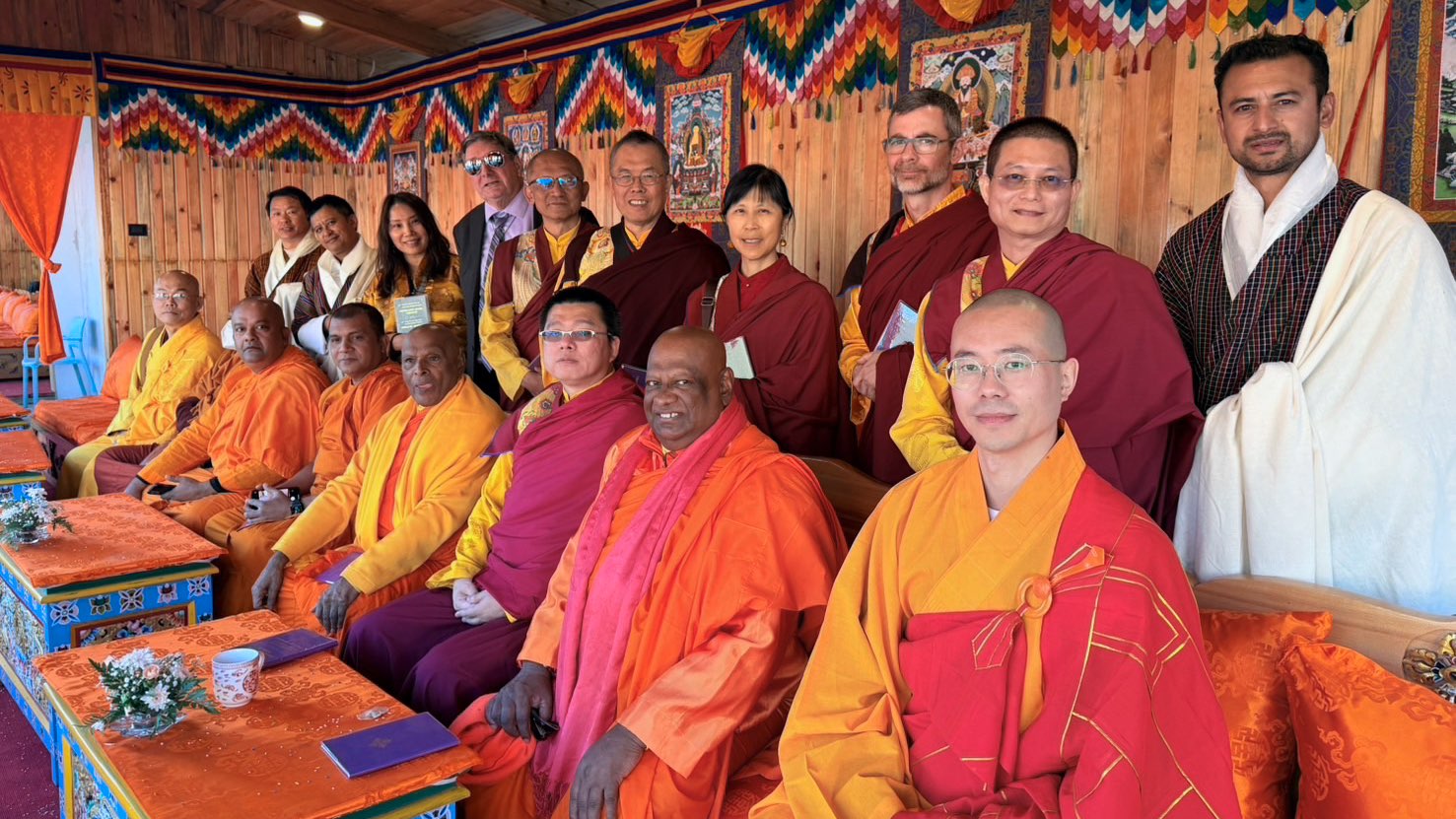
Following this, we were granted an audience with H.H. the Je Khenpo. Filled with gratitude, we presented him with a Khata (white scarf) as a token of our deep respect. In this special setting, we also had the opportunity to present His Holiness with information regarding the ‘Holy Heavenly Lake Buddhist Town’ project. Each of us then received a personal blessing, and upon our departure, he presented us with a text of the Amitabha Sadhana for our own practice.
Our group after the audience with H.H. the Je Khenpo
After the meeting with the Je Khenpo, a further great honor was completely unexpectedly offered to us: Actually, we were supposed to meet the young Vairochana Rinpoche and the Queen Mother for an official audience afterwards. But when the Kalachakra initiation ended, thousands of people streamed out of the stadium at the same time. Traffic in Thimphu came to a complete standstill. There was no getting through, and we could not reach the agreed location in time. Such are the karmic conditions sometimes. But we did not quarrel with fate: After everything we had experienced that day and the blessing we were allowed to receive, we felt richly gifted.
The Tiger’s Nest: Ascent to Guru Rinpoche’s Cave
On the last day of our trip, November 15th, the arguably most famous landmark of Bhutan was on the agenda: Paro Taktsang, widely known as the Tiger’s Nest. It is not only architecturally deeply impressive, but one of the holiest sites in the entire Himalayas.
Paro Taktsang Monastery (Tiger’s Nest)
We set off very early to reach the base camp, the parking lot at 2,300 meters. From there, it is about 800 vertical meters up to the monastery, which sits at 3,120 meters. For visitors who do not quite trust themselves with the steep climb, there is generally the option to be carried by a horse or mule for the first part of the route. Our group, however, decided to cover the entire path on foot under our own power.
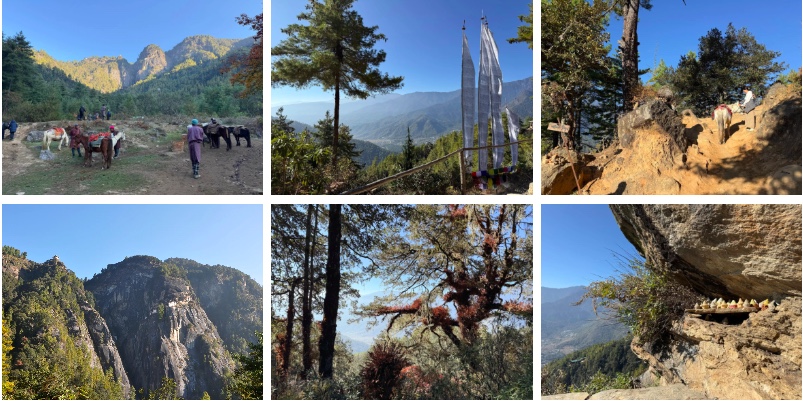
The ascent took just under three hours. The path is beautiful, but also demanding. It leads through a dense pine forest where rhododendrons grow and the trees are draped with moss. Again and again, prayer flags flutter in the wind. Halfway up, we took a short rest at a café. From there, you already have a first, breathtaking view of the monastery, which literally clings to the steep rock.
Impressions (in order): Resting horses at the starting point, fluttering prayer flags against the mountain backdrop, pack animals on the dusty trail, the first distant view of the cliffside monastery, the moss-covered mountain forest, and Tsa-Tsa offerings in a rock niche.
The history of this place is closely connected to Guru Rinpoche, the great Master Padmasambhava. He is revered by the Bhutanese as the “Second Buddha,” as he brought and firmly established Tantric Buddhism, the Vajrayana, in Bhutan in the 8th century. He manifested his supernatural powers and flew to this very spot on the back of a tigress to subdue a demon. Some say that the tigress was his tantric consort Yeshe Tsogyal in a transformed state. In the cave known as Taktsang Senge Samdup, around which the monastery was later built, he then meditated for exactly three years, three months, three weeks, and three days.
Once at the top, we had to hand in our cameras and bags at the entrance, as photography inside is strictly forbidden. We visited several small temples within the complex. In a special room that is guarded around the clock, I lit a butter lamp. This is the only place in the monastery where open fire is still permitted after a devastating fire destroyed large parts of the complex in the past. In Buddhism, lighting these lamps is a meritorious central ritual.
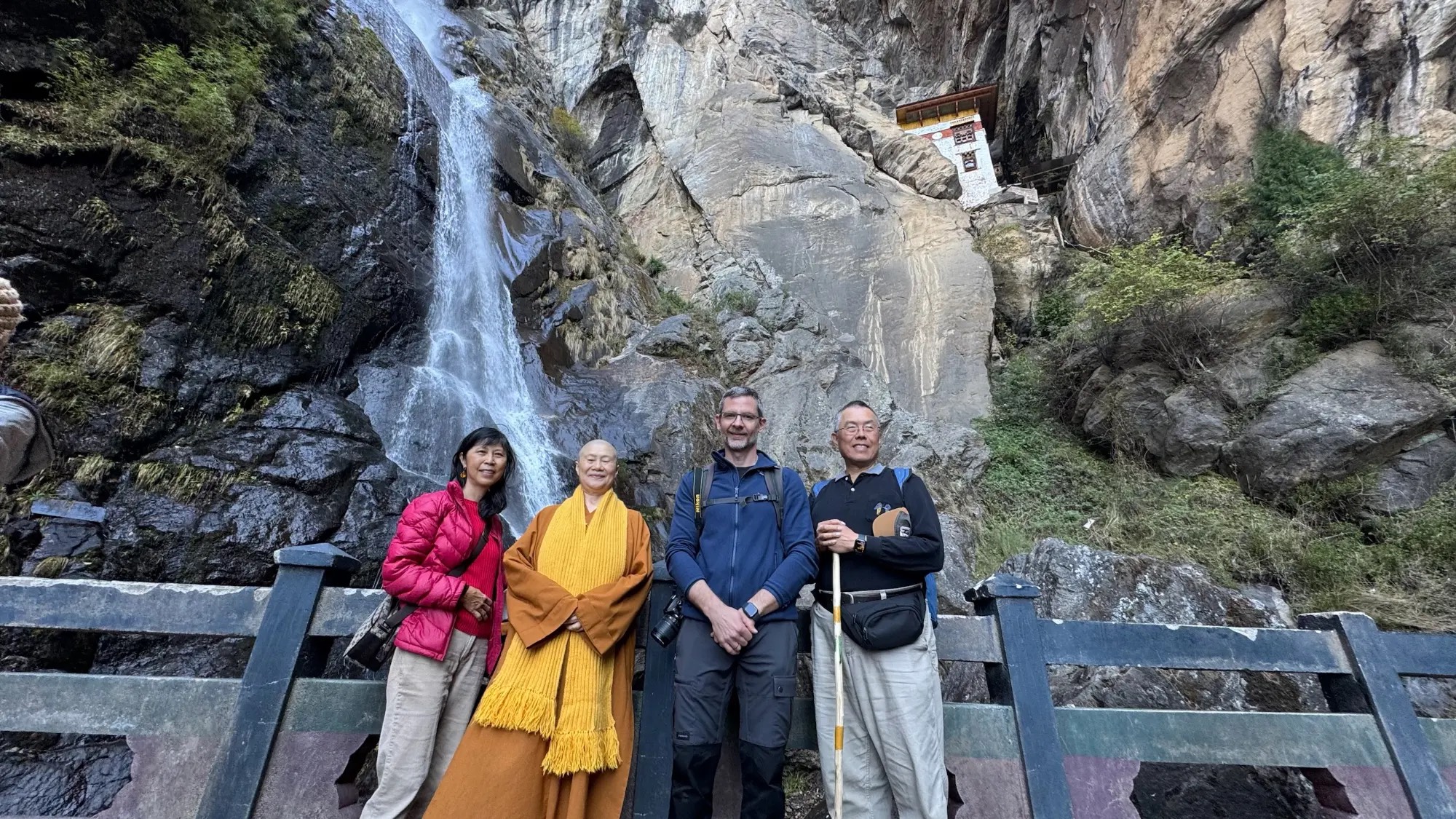
With Venerable Master Shi Zheng Da in front of the Taktsang Waterfall
Farewell in Paro: A Promise to Return
Back at the hotel in Paro, a special guest awaited us in the evening: Dasho Passang Dorji, the former Speaker of the National Assembly of Bhutan. He had been instrumental in organizing the official appointments and came by personally to apologize politely that the meeting with the King had not taken place due to the commotion. He promised us: “Next time I will arrange, this time the King and the Queen have been too busy.”
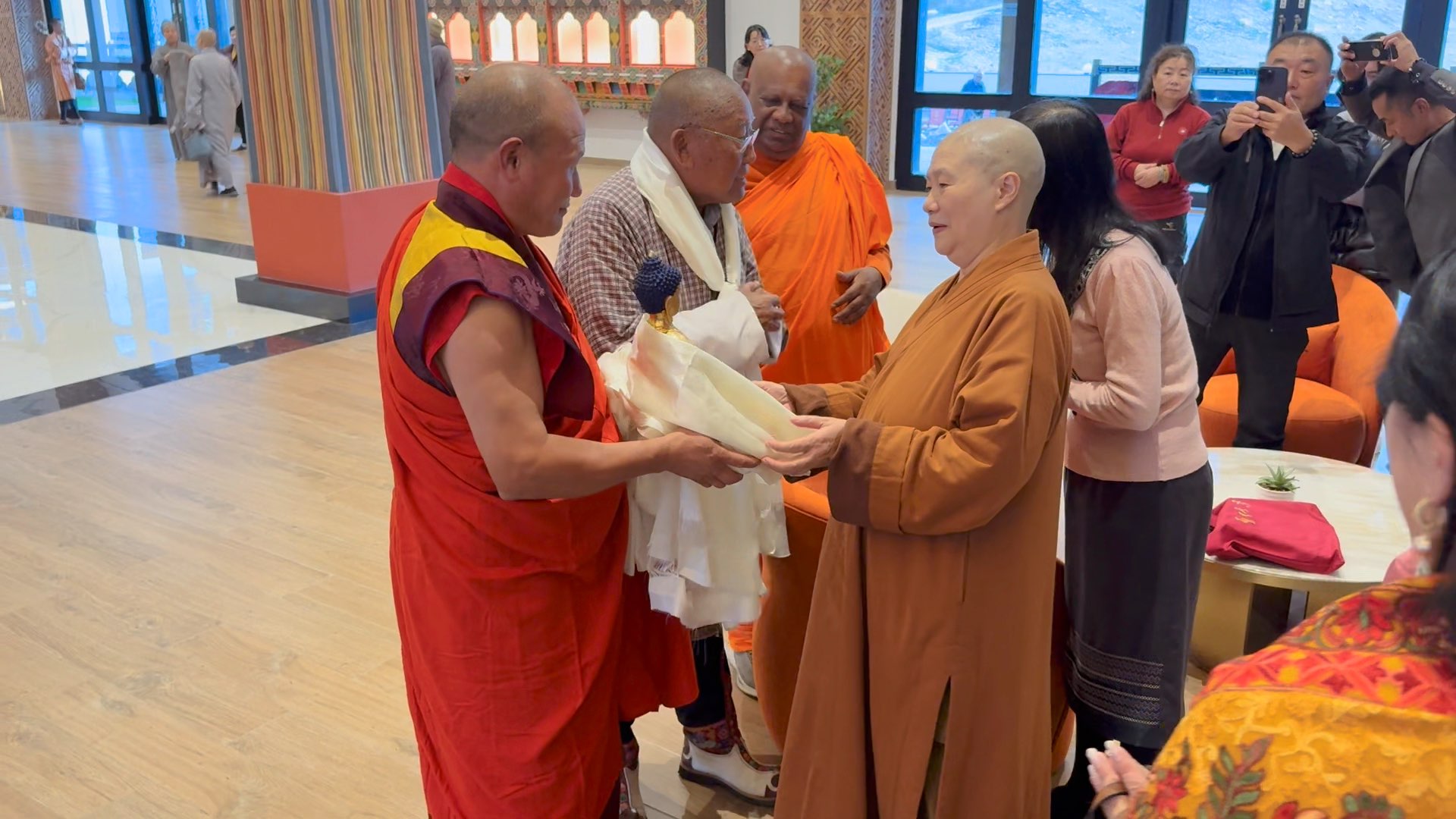
Exchange of gifts with Dasho Passang Dorji
In a very friendly atmosphere, an exchange of gifts took place. The Venerable Master Shi Zheng Da presented him with a special art object, a luminous three-dimensional picture of a Yun sculpture designed by H.H. Dorje Chang Buddha III. In return, he gave the Master a large golden Shakyamuni Buddha statue. It was a worthy moment of connection.
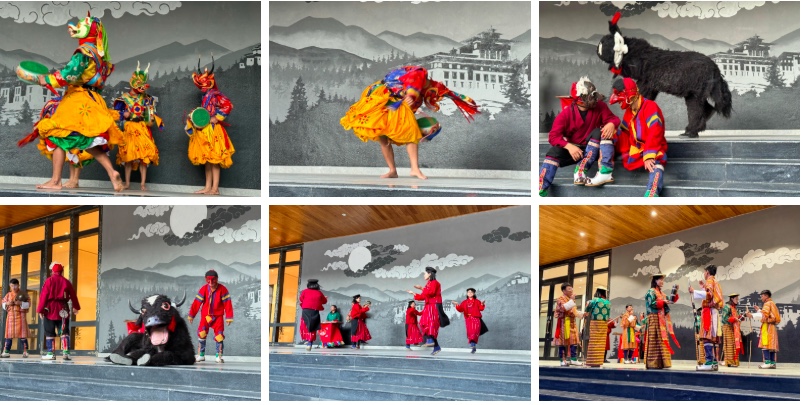
Scenes from the performance (in order): The famous Drametse Ngacham (Dance of the Drums), a solo dancer bowing deep, the performers of the yak scene, the humorous interaction of the yak with the audience, the women’s dance group in red garments, and finally a traditional performance with bows and arrows combining song and dance.
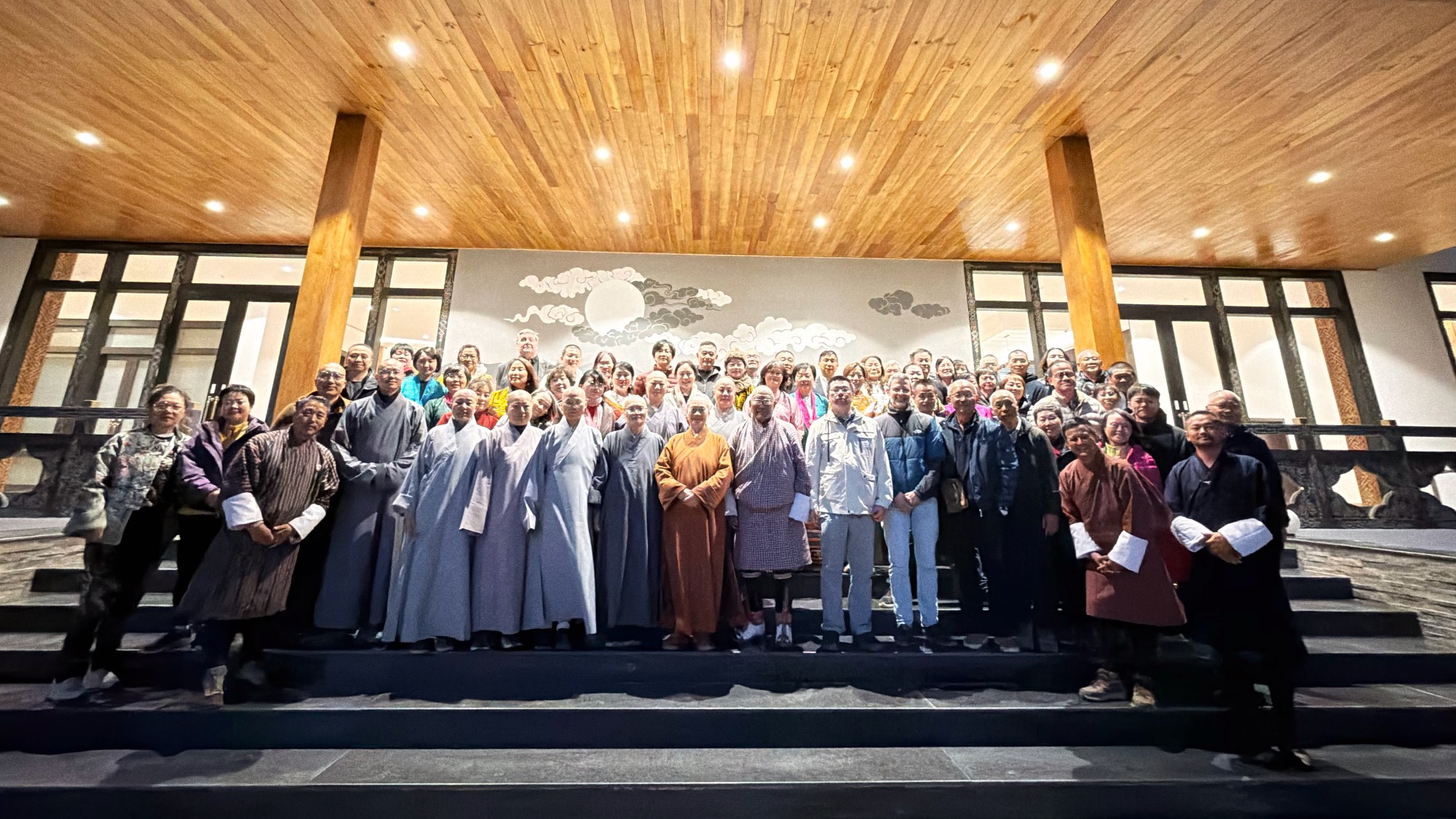
Afterwards, we watched a cultural performance together with Dasho Passang Dorji. There were traditional dances and songs whose gentle, flowing movements radiated great calm and peace. There were also humorous interludes, like the dance of a yak, where the performers visibly had fun. Even though I did not understand the language, the joy was contagious. After this show, we all gathered for a large group photo to capture this beautiful final evening.
Our entire group with Dasho Passang Dorji and our guides
The next morning, November 16th, it was time to say goodbye. From the hotel, we could look directly at the airport. We had arrived to make a contribution with our donation and our plans. But as I boarded the plane now, I felt that we ourselves were taking away far more than we had given. I took with me not only memories of the mighty mountains and venerable monasteries, but the feeling of a deep connection with our travel group and the people in Bhutan. I return with much inspiration and a heart full of gratitude for the blessing I was allowed to experience in this country.
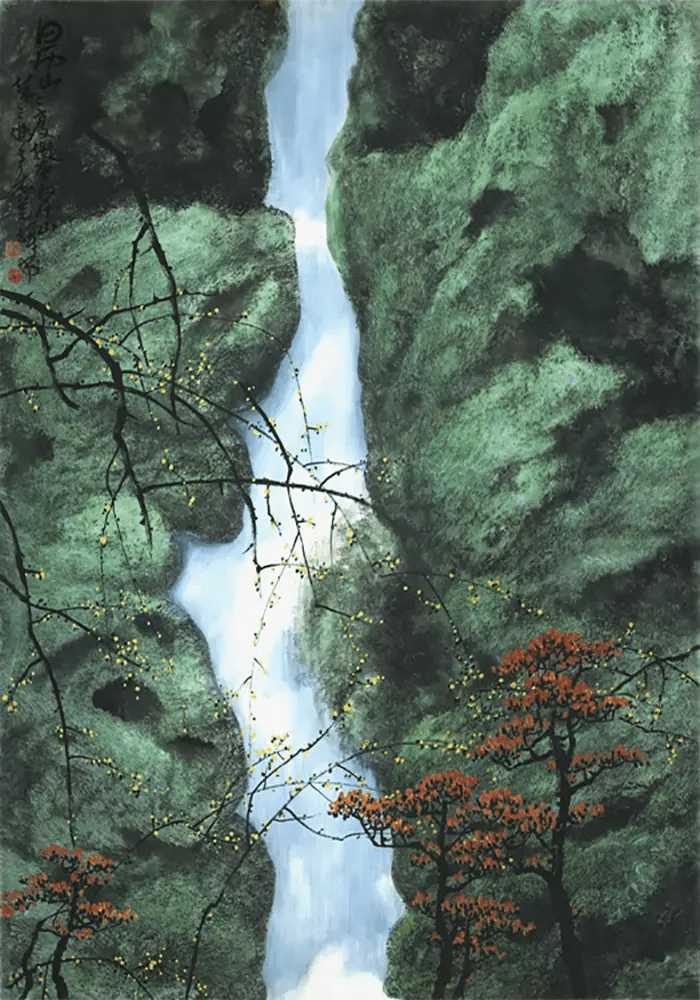
Created in 1993, Xing Garden at Mount Rili stands as a masterful expression of the artist’s profound understanding of nature and brushwork. The painting presents a dramatic world of steep cliffs and cascading water, inviting the viewer into a landscape that feels both monumental and intimate.
Dominated by vibrant greens, the work vividly captures moss and grasses spreading freely across rocky surfaces. These lush tones breathe life into the cliffs, softening their ruggedness while emphasizing the quiet vitality that thrives within seemingly harsh terrain. Nature here is not static; it pulses with energy and renewal.
The painting employs the refined “Miaoxie” (妙写) technique—a style that reveals its true depth through careful observation. At first glance, the composition appears fluid and effortless. Yet upon closer inspection, the brushstrokes intertwine like delicate wires, layered and interwoven with extraordinary precision. These subtle lines create constant movement and variation, generating emotional richness and visual intrigue through their complexity.
One of the most captivating aspects of this work lies in its masterful use of illusory watery ink, where solidity and transparency coexist. Ink seems to flow and dissolve at the same time, offering a boundless sense of depth and atmosphere. Whether viewed from afar or examined up close, the painting reveals a bottomless waterfall, rendered with meticulous detail yet infused with powerful momentum.
What is especially striking is the contrast between refinement and strength. From a distance, the scene appears serene and orderly; yet when the viewer studies the brushwork closely, the strokes reveal unexpected vigor and boldness. Within apparent emptiness, there is substance; within seeming chaos, there is profound order. This balance embodies the highest level of artistic cultivation.
Through free yet disciplined brushwork, the artist transforms a simple natural motif—a waterfall between two cliffs—into a scene of extraordinary aesthetic depth. The power of each stroke carries both physical strength and spiritual presence, allowing the painting to transcend mere representation and enter the realm of lived experience.
Xing Garden at Mount Rili is more than a landscape painting. It is a quiet dialogue between nature and the artist’s inner world, revealing how true mastery lies not in excess, but in the ability to uncover profound beauty within simplicity.
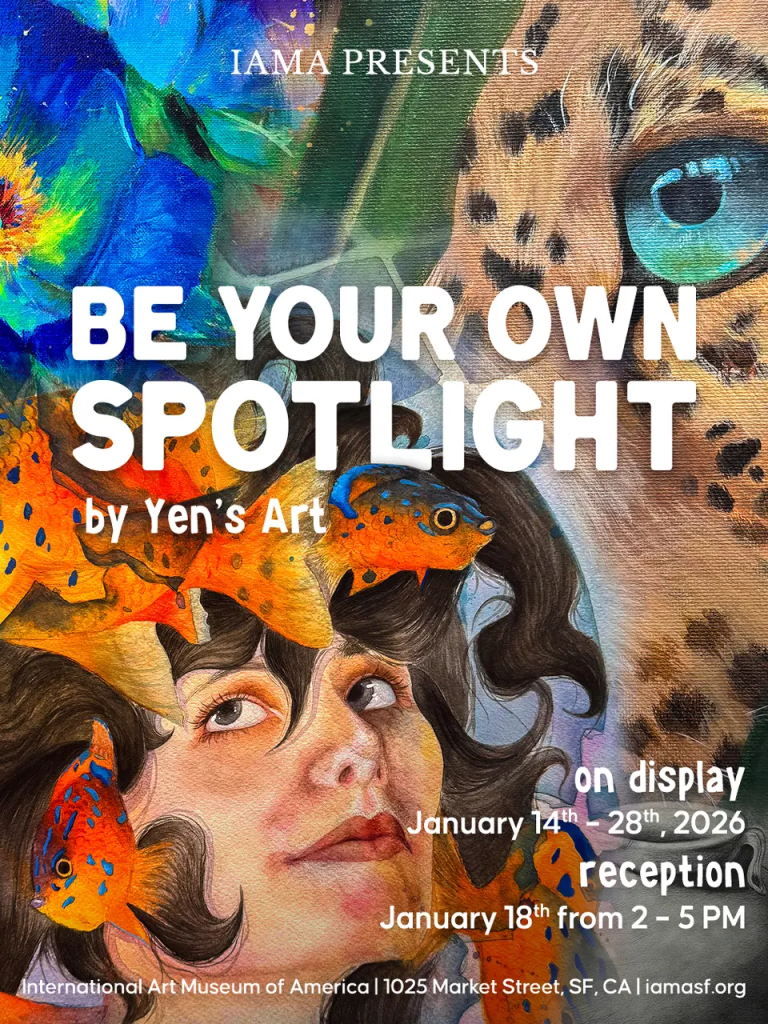
IAMA presents Be Your Own Spotlight by Yen’s Art Studio
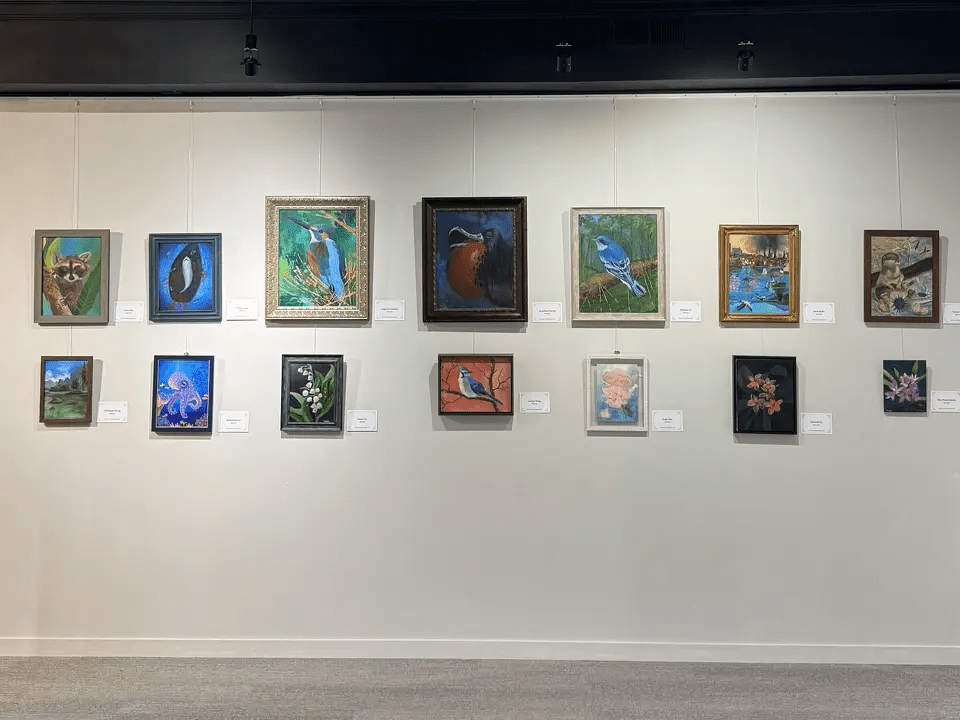
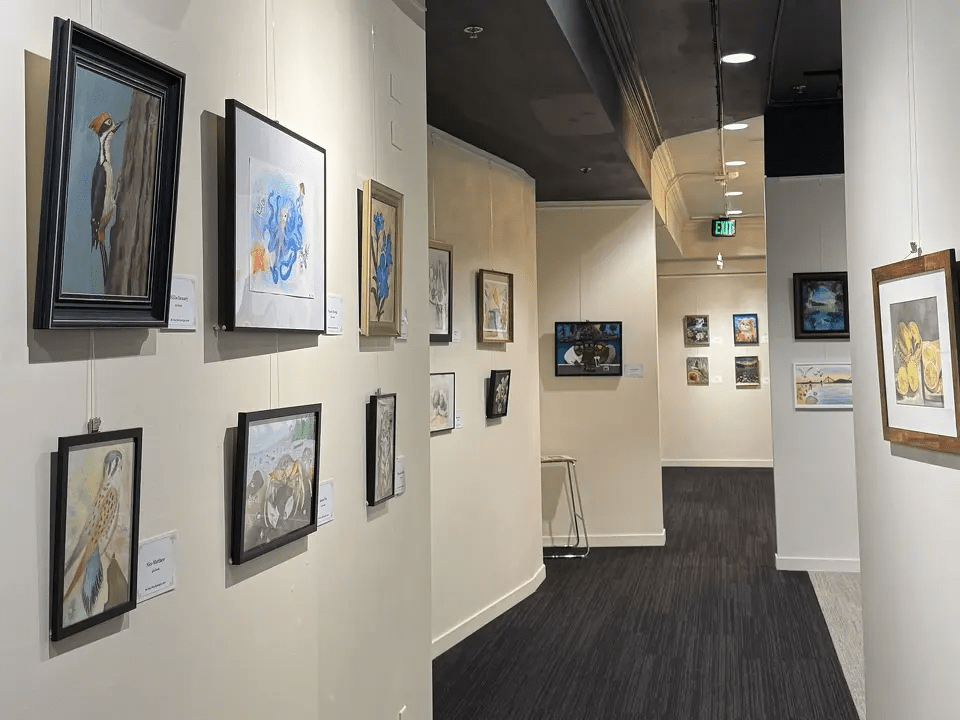
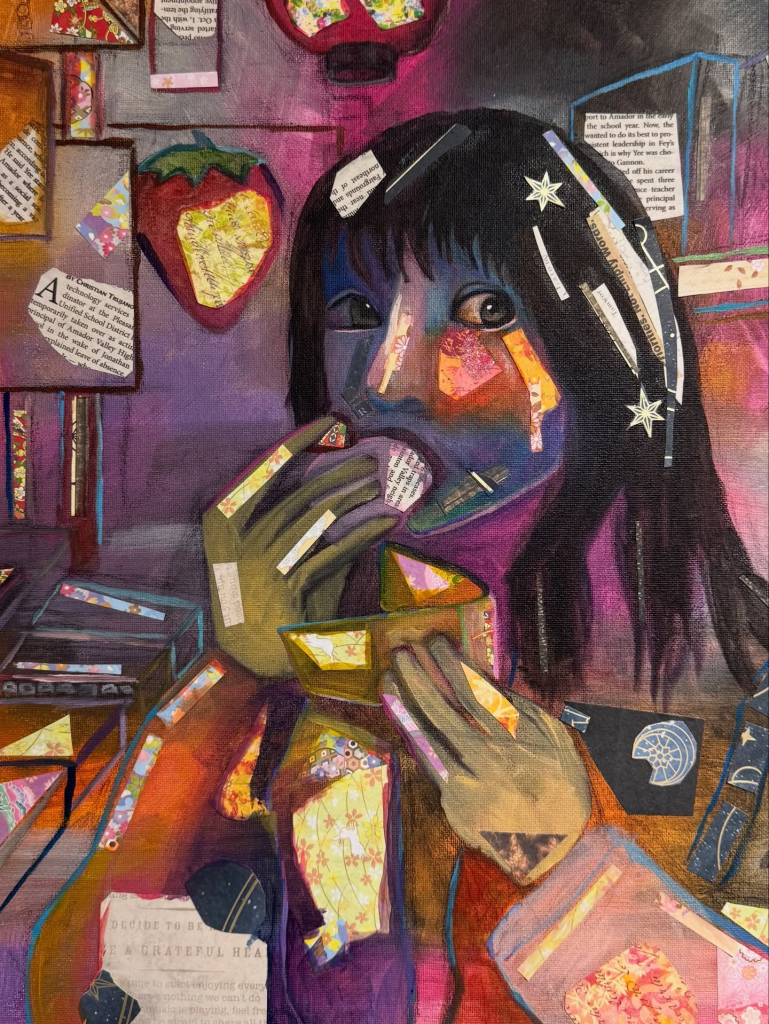
Walking into Be Your Own Spotlight, presented by Yen’s Art Studio, at IAMA (The international Art Museum of America), I didn’t feel like I was entering a typical student art exhibition. Instead, it felt more like stepping into 150 honest conversations—each one visual, brave, and deeply personal.
The exhibition features 150 outstanding works by young students, created across a wide range of mediums—acrylic, watercolor, pencil, and mixed media. But what moved me most was not the variety of techniques; it was the sense that every piece quietly declared: this is who I am right now.
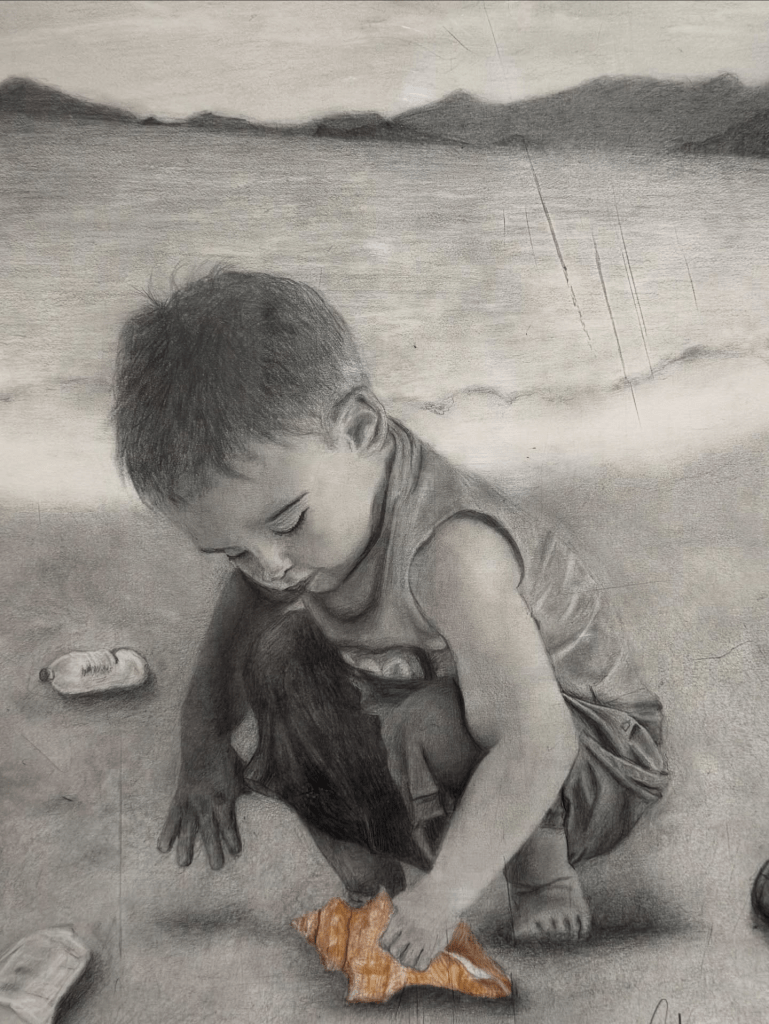
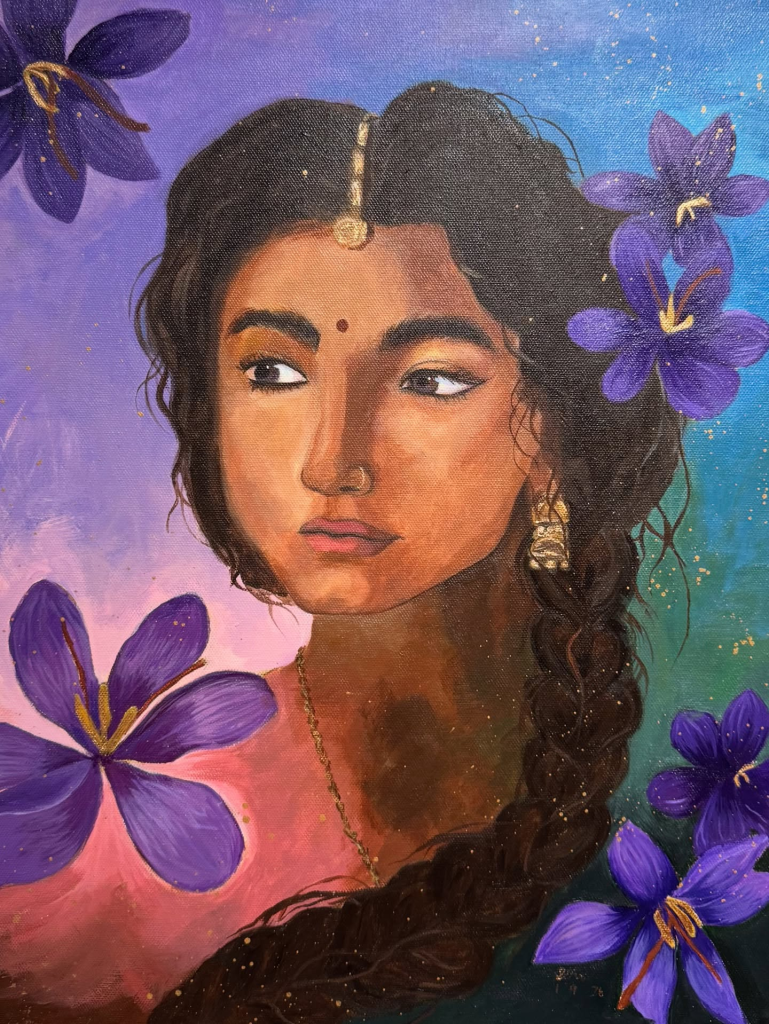
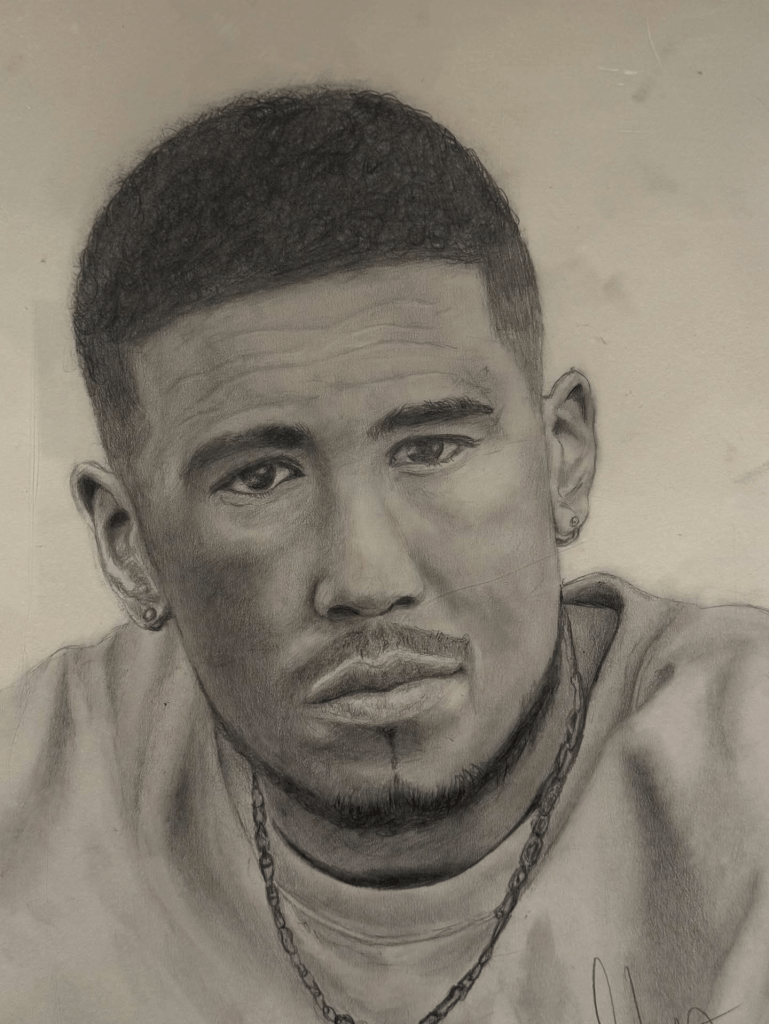
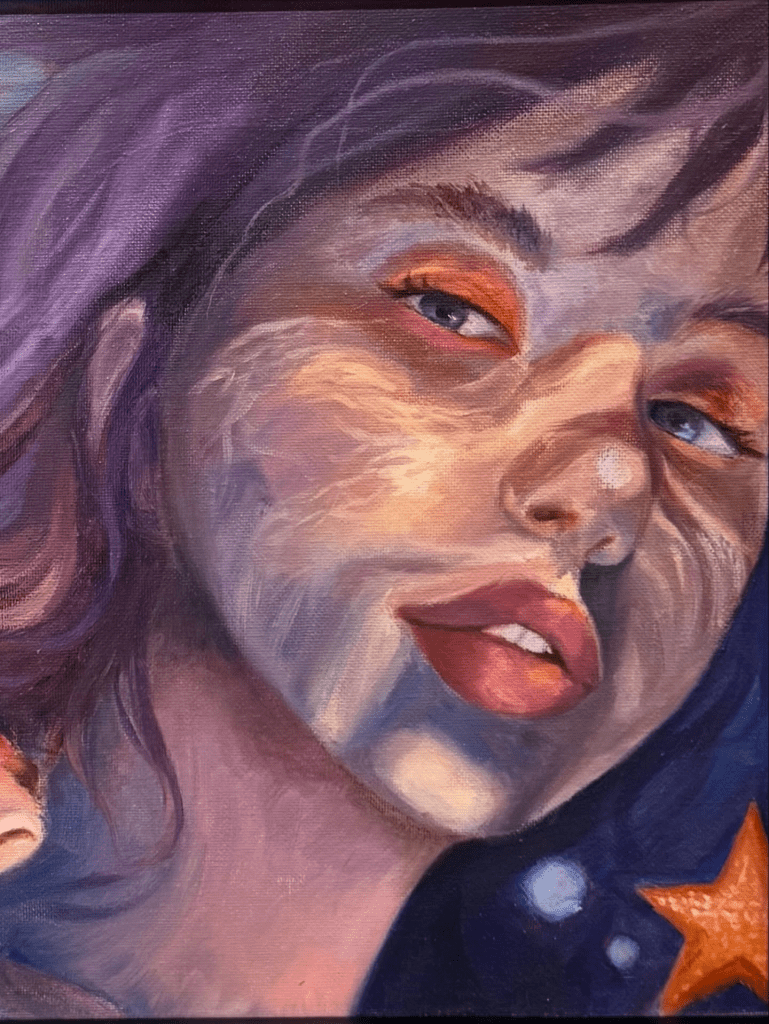
These students are not just learning how to paint or draw. They are learning how to trust their voices, how to take up space, and how to stand behind what they create. Their works reflect growth, self-discovery, and the joy—and sometimes uncertainty—of becoming. Whether you are a parent, an educator, a collector, or simply someone searching for inspiration, this exhibition offers something meaningful to feel, not just something pleasant to see.
As I moved through the gallery, I was delighted by the sheer range of imagination: striking portraits, fantastical worlds, playful animals in sunglasses, thoughtful reflections on global issues, and moments of pure joy. The diversity of themes reminded me of a beautiful truth that Yen’s Art Studio expresses so well: “In the world of art, there are no boundaries of age or race. Children’s artwork can reach—and sometimes surpass—the technical ability and creative understanding typically associated with adults.”
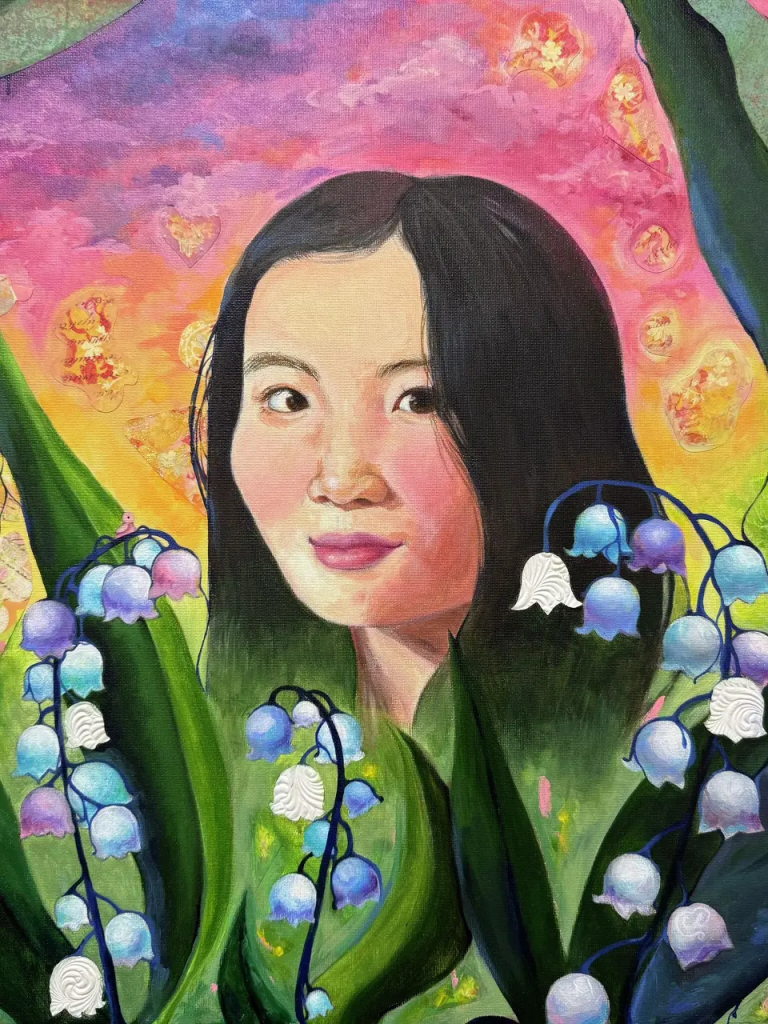
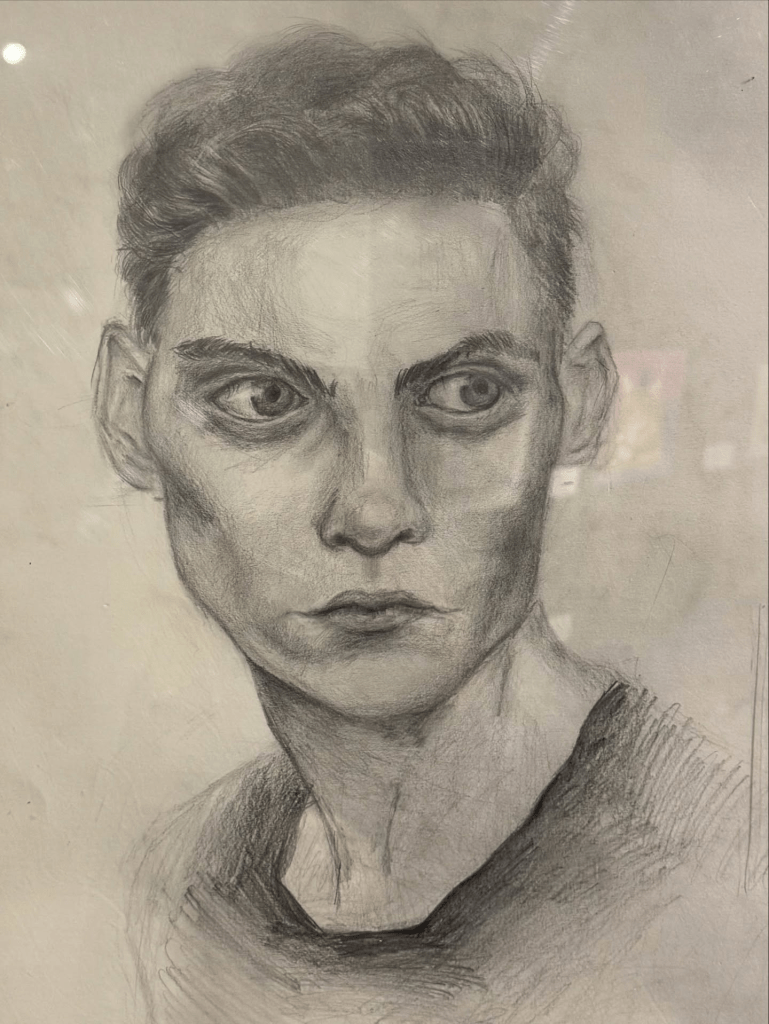
One piece that stayed with me was a self-portrait by 8th-grade student Cynthia Liu. It stood out not only for its technical sensitivity, but for its emotional depth. Cynthia is known for her perfectionist nature, something many of us—artists or not—can relate to. Her work quietly reflects a universal truth: no artwork is ever truly finished. Without a clear endpoint, a piece can be revised endlessly, sometimes at the cost of the original vision.
Self-Portrait by Cynthia Liu, 8th grade Yen’s Art Studio
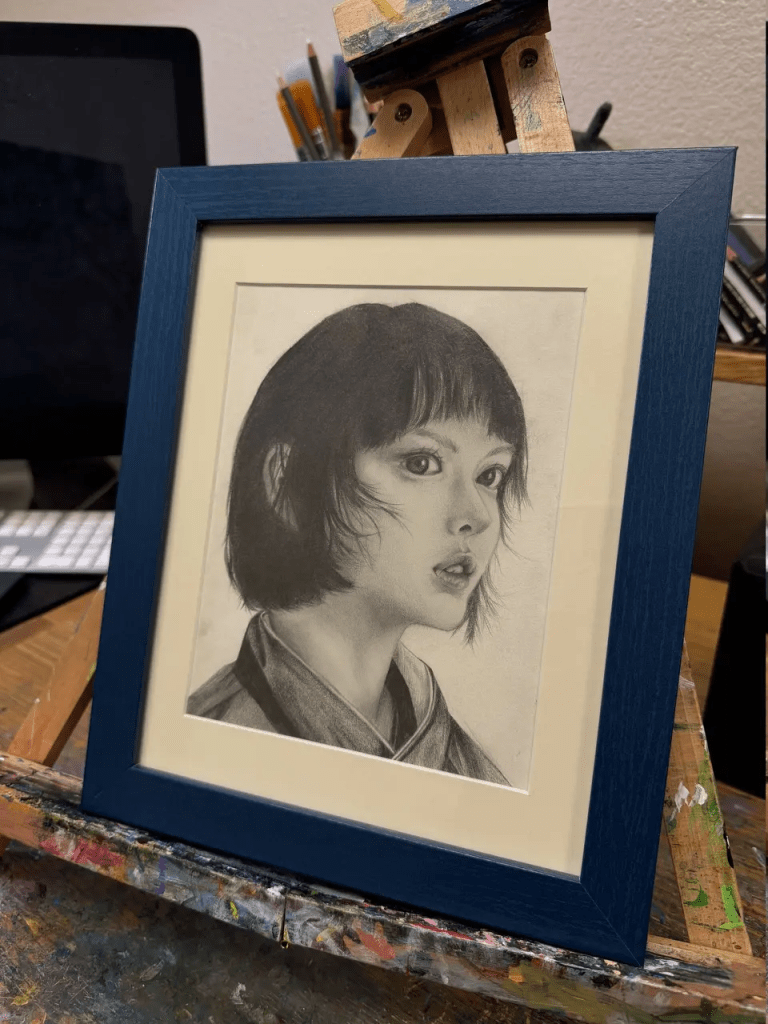
Hanni from Newjeans by Sophie Sun, 9th grade. Yen’s Art Studio
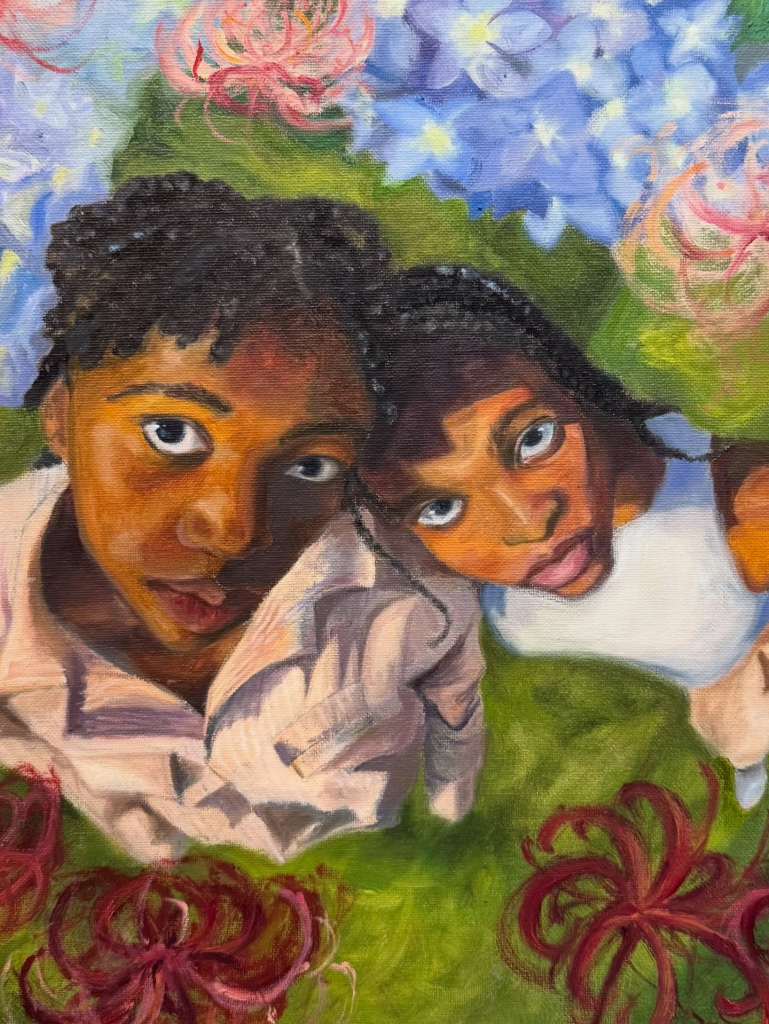
Another story that deeply touched me was Sophie’s. Once a shy student who nearly gave up on art altogether, she found her way back through the creative process at the studio. Through painting, Sophie rediscovered calmness, confidence, and inner strength—one of the most meaningful transformations I learned about in this exhibition. Her journey reflects the studio’s commitment not only to technical excellence, but to nurturing the inner lives of its students.
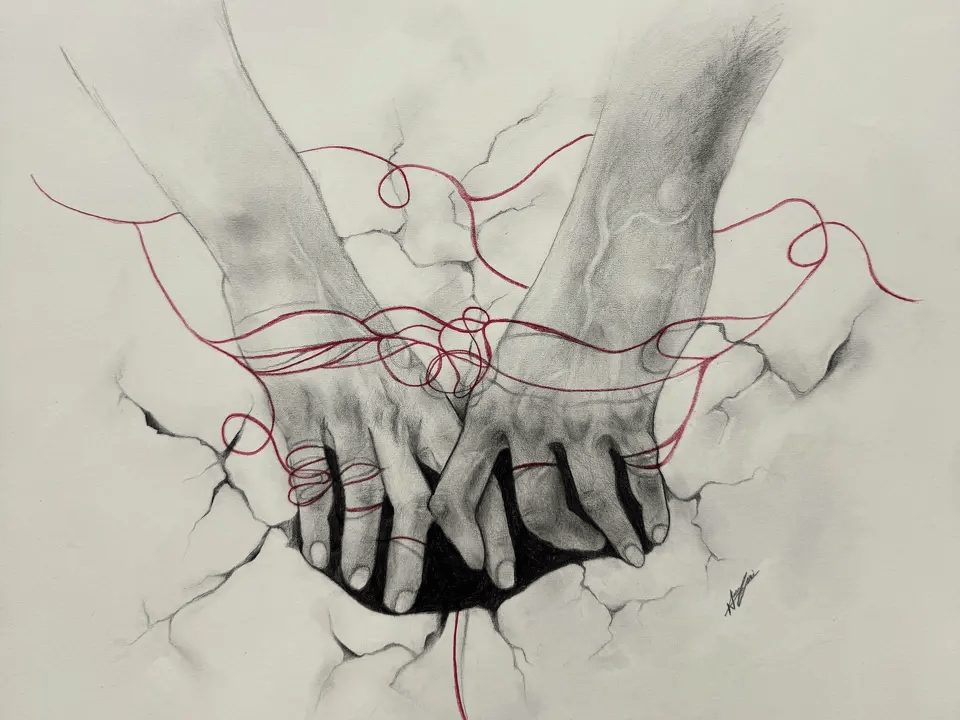
Lovers by Nova Cui, 9th grade Yen’s Art Studio
Among the more than 150 works, one painting stood out to me for its quiet presence rather than immediate visual impact. Created by Nova, a student dedicated to becoming a professional ballet dancer, the piece carries a sense of discipline, restraint, and inner resolve. Acknowledging the intensity of her dance training, her art education focused less on technical display and more on observation, sensitivity, and emotional understanding.
Her painting reveals genuine emotion and determination, qualities she will undoubtedly carry into her future as a dancer, where movement and art meet as a shared language of expression.
Be Your Own Spotlight is ultimately not just about showcasing talent. It is about honoring courage—especially the quiet kind. It reminds us that every young artist is learning not only how to create, but how to believe in themselves. And as viewers, we are fortunate to witness these moments of bravery, growth, and becoming.
Don’t miss the museum’s permanent exhibition, where world-class artworks offer far more than visual beauty. Here, art becomes a quiet refuge—inviting tranquility, reflection, and a subtle elevation of the spirit. Especially moving are the paintings by H.H. Dorje Chang Buddha III, whose works gently awaken the mind, soothe the heart, and leave the soul deeply inspired long after you depart.
In November 2025, I went on a very special trip. Together with 66 Dharma brothers and sisters, I set off for Bhutan. Being the only German in this group from the USA, China, Taiwan, and Sri Lanka, I felt at home right away. We were a wonderful mix of monks, nuns, Rinpoches, and lay Buddhists. We all met in Thailand first to travel on to Paro together.
Our goal was more than just a visit. We came to honor the holy sites of this country and to dive into Bhutan’s deep-rooted Buddhist tradition. Of course, we were also excited to get to know the land and its people. Dedicated members of our group took care of the entire organization. Thanks to their excellent planning and the great local guides, everything ran smoothly. We also owe the fact that this trip was possible in this special way to the Venerable Dr. Chandima from Sri Lanka. Through his personal connections to the Kingdom of Bhutan, doors opened for us that might otherwise have remained closed. Having the Venerable Master Shi Zheng Da with us was also especially valuable.
We brought two matters close to our hearts with us. First, it was important to us not to arrive empty-handed. We had collected donations within the group to directly support the hospital in Thimphu and the expectant mothers there. Second, it was our spiritual mission to represent the Buddha Dharma as we learned it from H.H. Dorje Chang Buddha III. Connected to this was the wish to share news of the “Holy Heavenly Lake Buddhist Town” project, which is planned to provide space for over 30 Buddhist centers from all over the world.
Arrival in Paro & the Journey to Thimphu
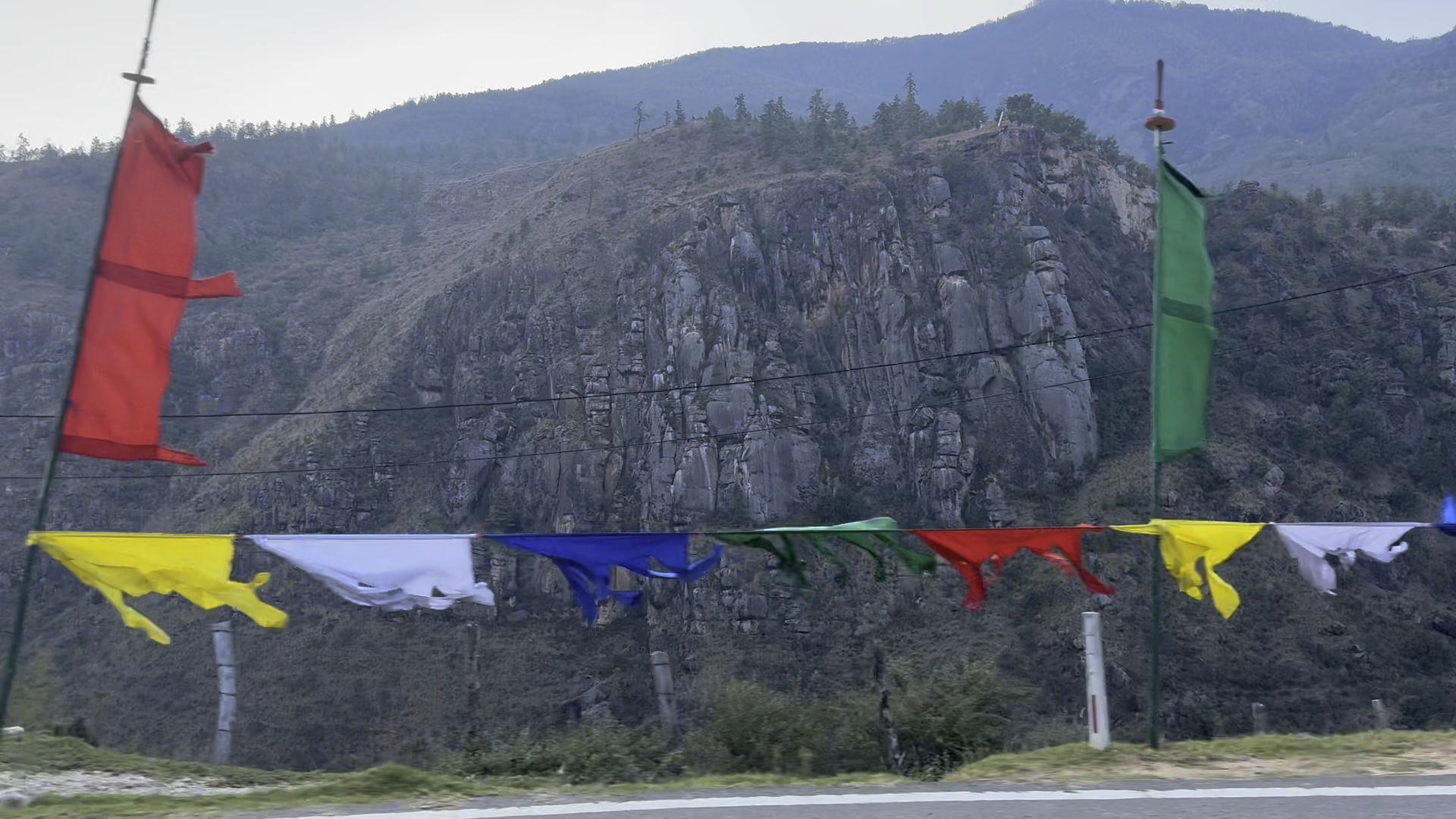
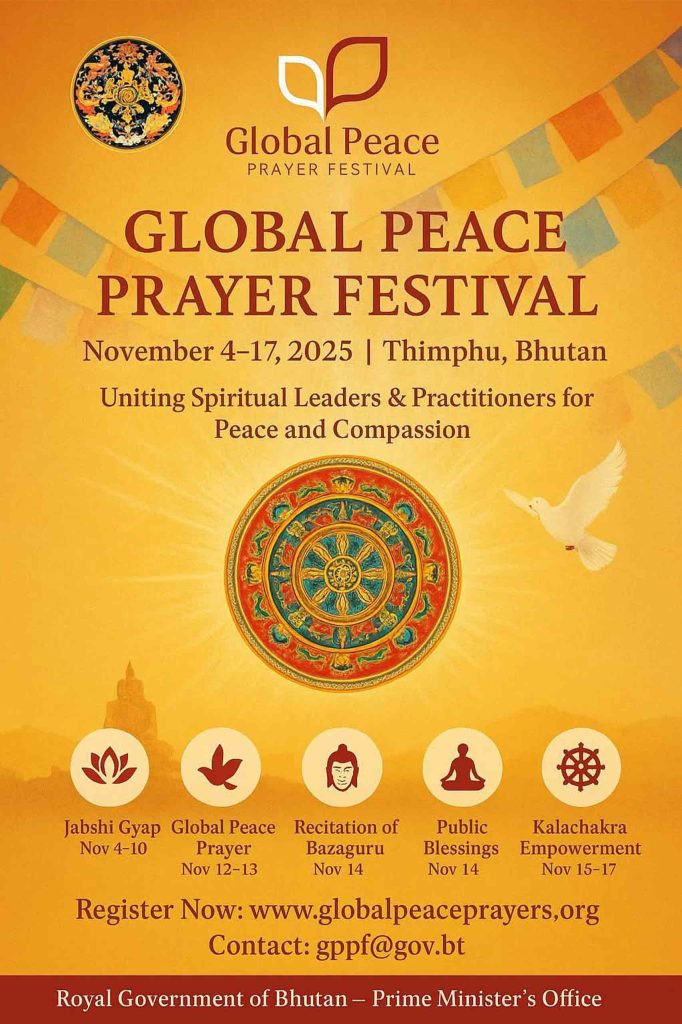
We landed in Paro on November 9th. From there, we took a bus about 40 kilometers through the valley to Thimphu. What I noticed immediately was that the entire road was decorated with five-colored banners. Our guide told us that this was the welcome greeting for the international guests of the “Global Peace Prayer Festival.”
Five-colored flags and pennants along the route
Thimphu itself was incredibly busy. Several events were happening at once: alongside the festival and the King’s upcoming birthday, Indian Prime Minister Narendra Modi was also expected for a state visit. You have to know that Thimphu is the only capital city in the world without traffic lights. Despite the crowds and the resulting traffic chaos, everyone remained calm. No one pushed, and people were patient and respectful. This relaxed attitude really impressed me.
National Memorial Chorten: The Spiritual Heart of Thimphu
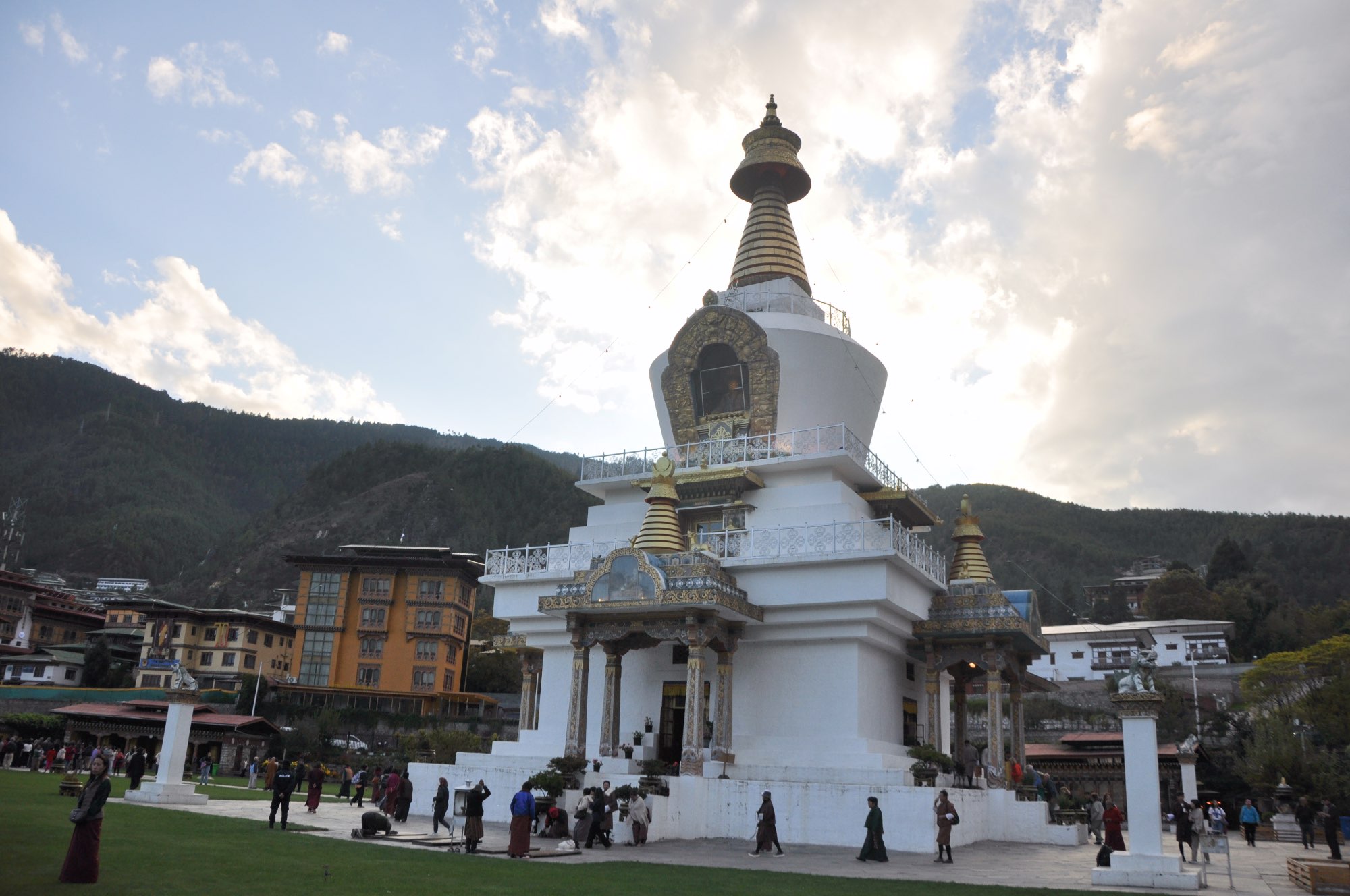
After checking into our first hotel, we visited the National Memorial Chorten. This is a large, white stupa in the middle of the city, built in 1974 for the third King. For the locals, this is an important place in everyday life. Many go there to walk around the stupa and spin the prayer wheels.
As at all holy sites, photography is not allowed inside. A simple rule applies: as soon as the shoes come off, the camera stays off. This allowed us to soak in the atmosphere without any distractions. The interior houses larger-than-life statues of wrathful deities in Yab-Yum posture and murals of Guru Rinpoche (Padmasambhava), Shakyamuni Buddha, and Ngawang Namgyal, the unifier of Bhutan. Colorful sculptures stand in all four directions. There are also mandalas, shrines for the third King, and images of Vajrakilaya.
Impressions (in order): The white Memorial Chorten, pilgrims at the prayer wheels, the sea of lights from the butter lamps, believers performing prostrations, and our group in front of the stupa.
Our group took the opportunity to chant on the square in front of the stupa, led by the Venerable Master Shi Zheng Da. It was a beautiful experience to do this at such a place.
Authentic Bhutanese Crafts Bazaar: Traditional Arts and Crafts
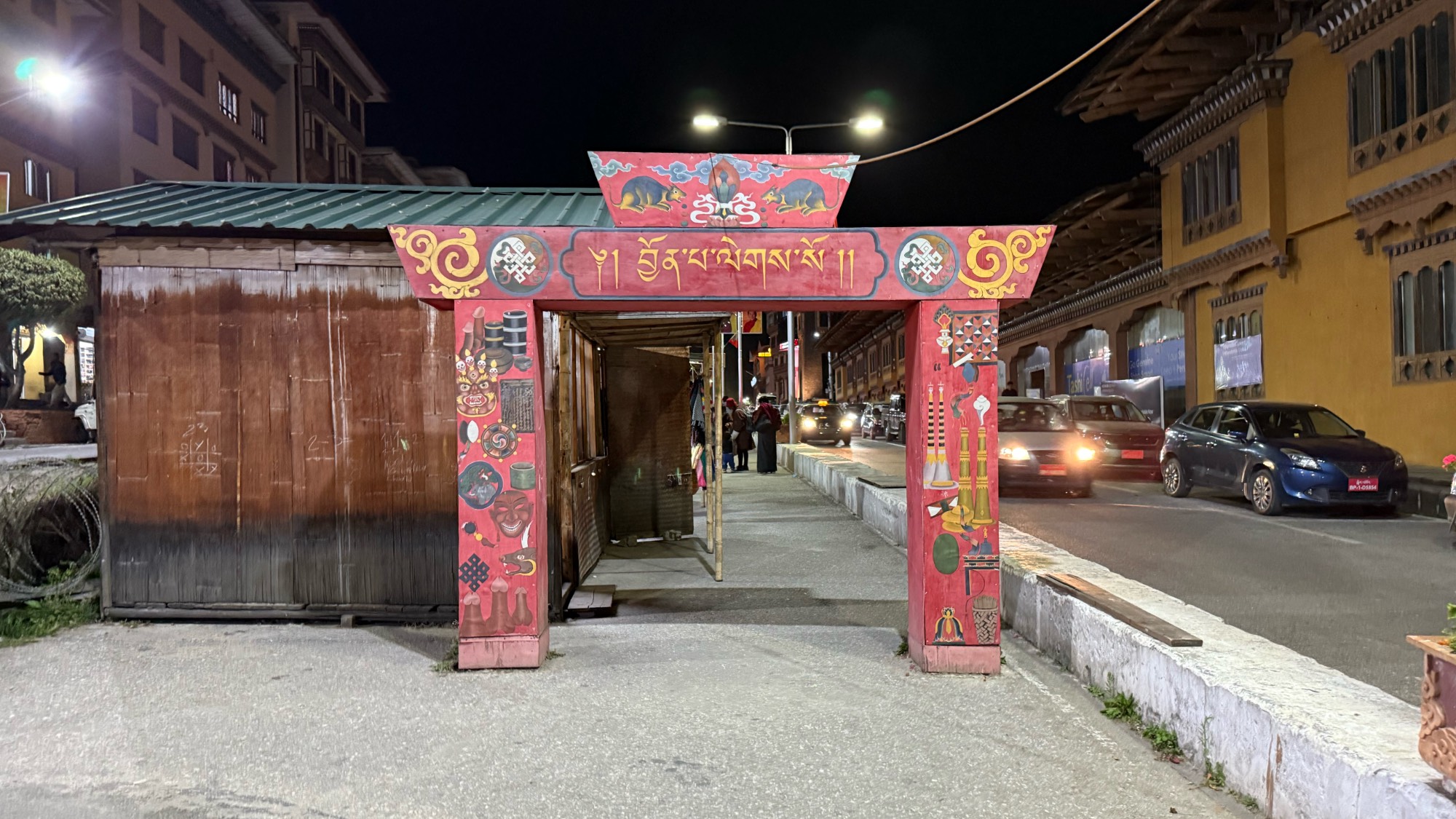
In the evening, I took the chance to stroll along Norzin Lam. That is where the Authentic Bhutanese Crafts Bazaar is located, which you enter through a distinct red gate. Behind it, many small huts are lined up where local artisans display their goods. There was really a lot to discover. Besides handmade textiles, jewelry, wood carvings, and thangkas, you can also find nice souvenirs to remember the trip by.
Entrance to the Authentic Bhutanese Crafts Bazaar
Global Peace Prayer Festival: Shared Prayers for Peace
November 10th was all about the Global Peace Prayer Festival. Since the stadium was within walking distance of our hotel, we went there on foot. Even on the street, we could feel how many people were flocking to this event. Once inside the stadium, we showed our respect through prostrations before the Venerables present. Afterwards, we were given a spot on the side where we could join in the peace prayers.
From there, we watched the program on the main stage, where various Buddhist traditions took turns with their recitations. Between the prayer sessions, there were traditional dances and songs. I was deeply impressed by how many people came together there peacefully. It was simply a good feeling to be right there among them.
Buddha Dordenma: The Golden Statue Above the Valley
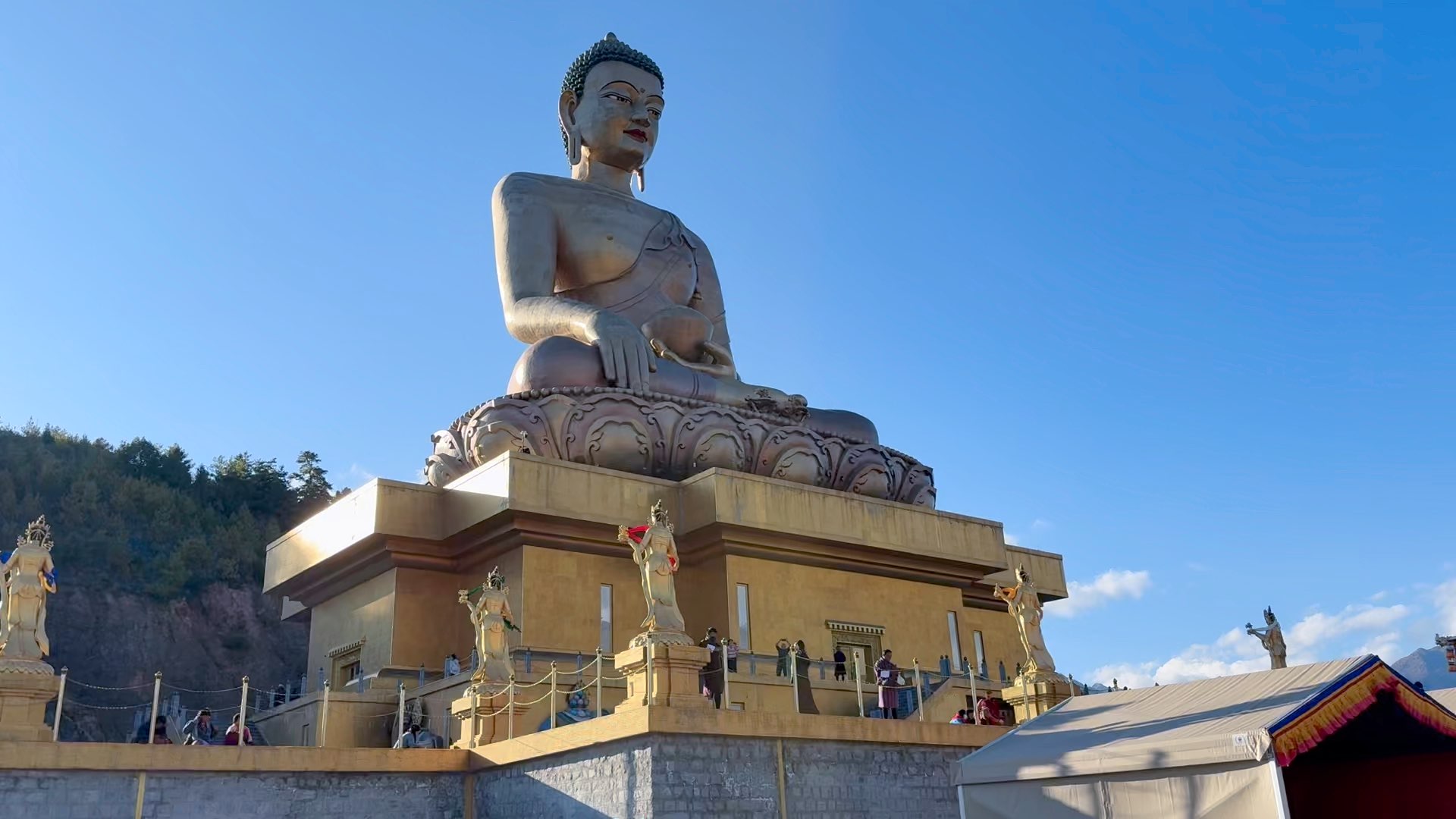
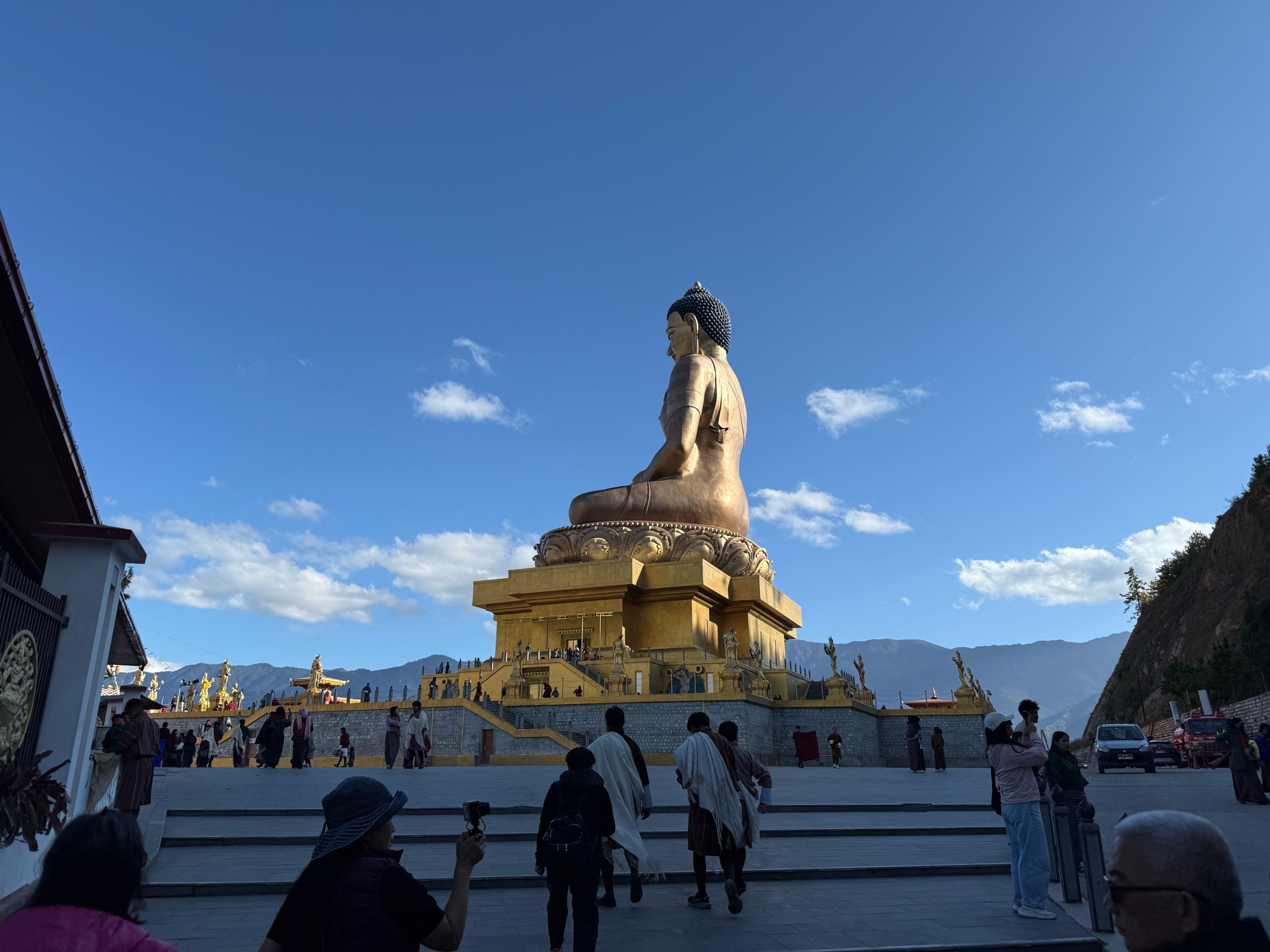
After noon, we continued to the Buddha Dordenma statue in Kuensel Phodrang Nature Park. This is an impressive, 51-meter-high statue of the seated Shakyamuni Buddha. It is made of bronze and completely gilded. By the way, it was built to celebrate the 60th birthday of the fourth King, Jigme Singye Wangchuck.
Buddha Dordenma Statue
Inside the building beneath the statue, there are over 100,000 small Buddhas, also made of bronze and gold. Every single one was donated. There is also a large meditation hall with many more beautiful Buddha statues. Various relics are kept in these rooms, which we were allowed to see during our visit.
Impressions of the Buddha Dordenma statue: The gigantic seated statue in side view, ritual structures featuring traditional thread crosses (Namkha/Mdos) on the plaza, the view up to the Buddha’s face, a relief of a blue elephant on the golden base, and the view over the square featuring golden Dakini statues.
What made this visit special was not just the statue itself. Right there, the conclusion of the Jabshi Gyap ritual was taking place. This is a major, multi-day ceremony intended to purify negative karma and bring healing. Thousands of devotees, monks, and Rinpoches were gathered. We learned that this ritual was done specifically for world peace. It was our good fortune that we could be there at exactly that moment.
A Matter of the Heart: Support for Expectant Mothers
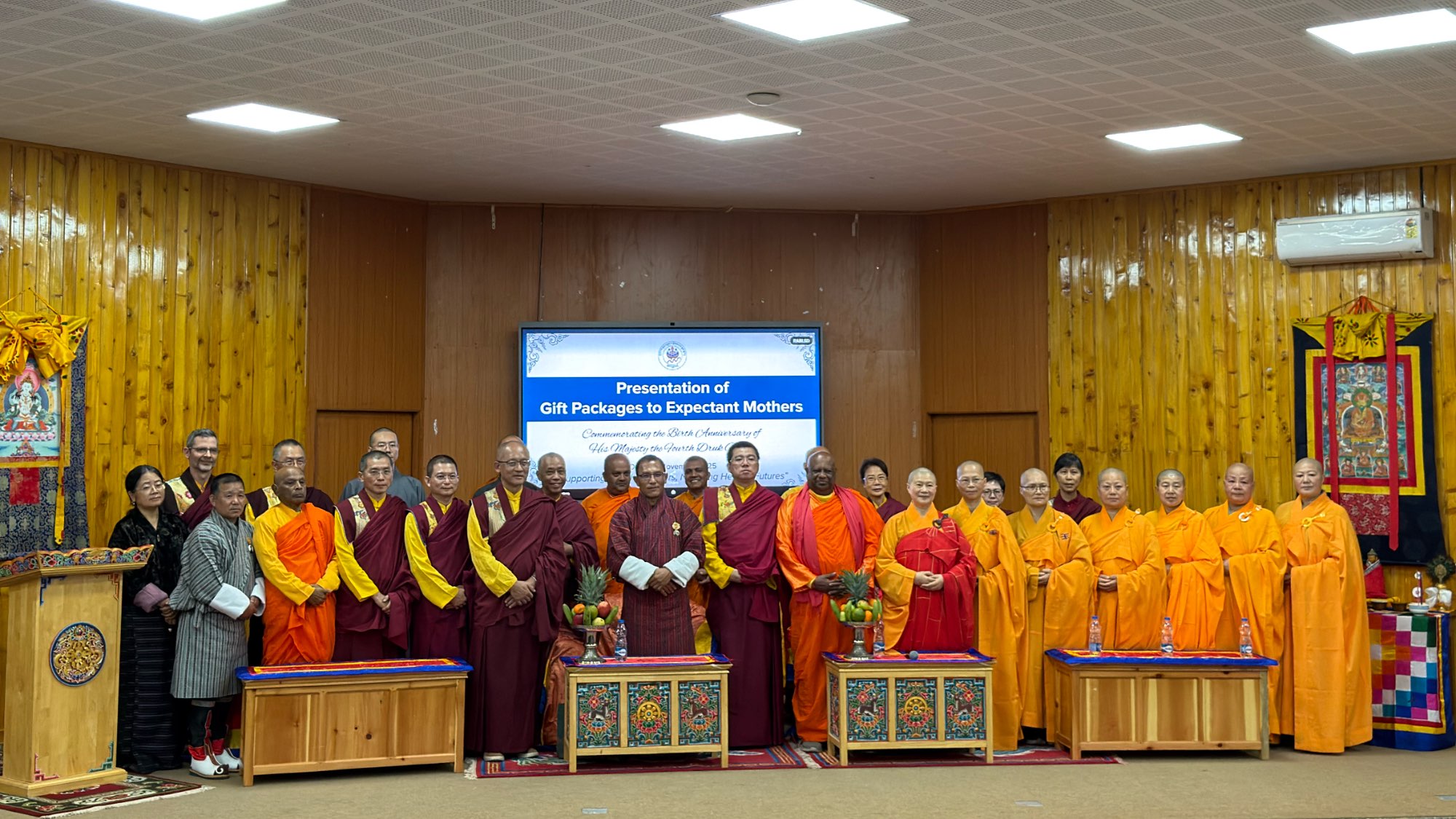
We had collected money in advance to support 500 expectant mothers with care packages. For this reason, we gathered at the end of the day for a ceremonial handover at the hospital in Thimphu.
Handing over the donation at the hospital
In addition to our travel group, hospital staff, the Secretary to the Health Minister, and some mothers also took part. We had the opportunity to personally hand over the first packages to the mothers present.
With that, the first days in the capital were over. Next, the journey would take us out of the city, to ancient Dzongs and into nature.
In the southwestern suburbs of Xining, where the air grows thin and the spirit grows light, stands one of the most significant sites in the Buddhist world: Kumbum Monastery.
Known in Tibetan as Kumbum Jampa Ling, meaning “A Supreme Temple of a Hundred Thousand Lion’s Roar Buddha Images,” this sprawling complex is far more than just a collection of buildings. It is a living monument to Lama Tsongkhapa, the revered founder of the Gelug (Yellow Hat) sect of Tibetan Buddhism.
The Legend of the Golden Tree
Unlike many temples built to house statues, Kumbum was built to house a pagoda.
Legend tells us that Tsongkhapa was born here in 1357. When his mother cut his umbilical cord, drops of blood fell to the earth, and from that spot grew a miraculous sandalwood tree—the “Tree of Great Merit.” It is said this tree had 100,000 leaves, each bearing a natural image of the Buddha.
Years later, when Tsongkhapa was studying in Tibet, his mother sent a letter begging him to return. He replied that he could not leave his studies, but sent a self-portrait and a “Lion’s Roar” image, instructing her to build a pagoda over his birthplace. “Seeing this pagoda,” he promised, “is the same as seeing me.” In 1379, the Julian Pagoda was built, forming the sacred heart of what would become Kumbum Monastery.
Kumbum is world-renowned for its harmonious blend of traditional Tibetan and Chinese Han architectural styles.
1. The Eight Pagodas of Buddha Shakyamuni
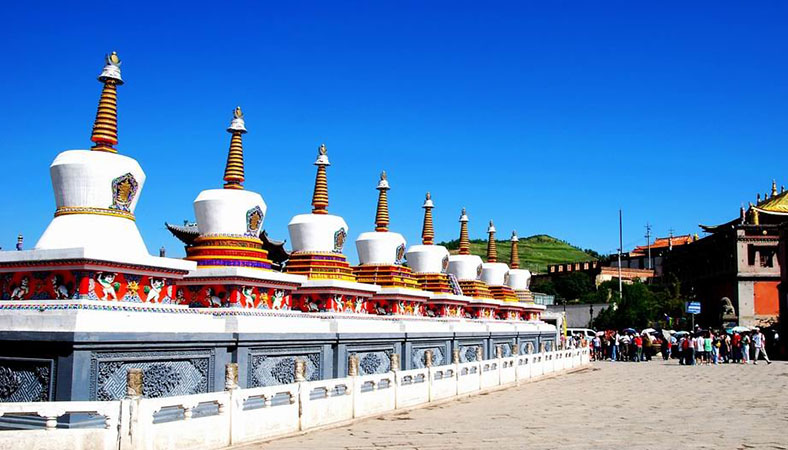
Greeting visitors in the front square are eight gleaming white pagodas. Built in 1776, they commemorate the eight great merits and virtues of Buddha Shakyamuni. Each stands 6.4 meters tall, decorated with delicate Sanskrit scriptures and guardian lions, serving as a powerful symbol of the monastery’s spiritual authority.
2. The Grand Golden Tiled Hall
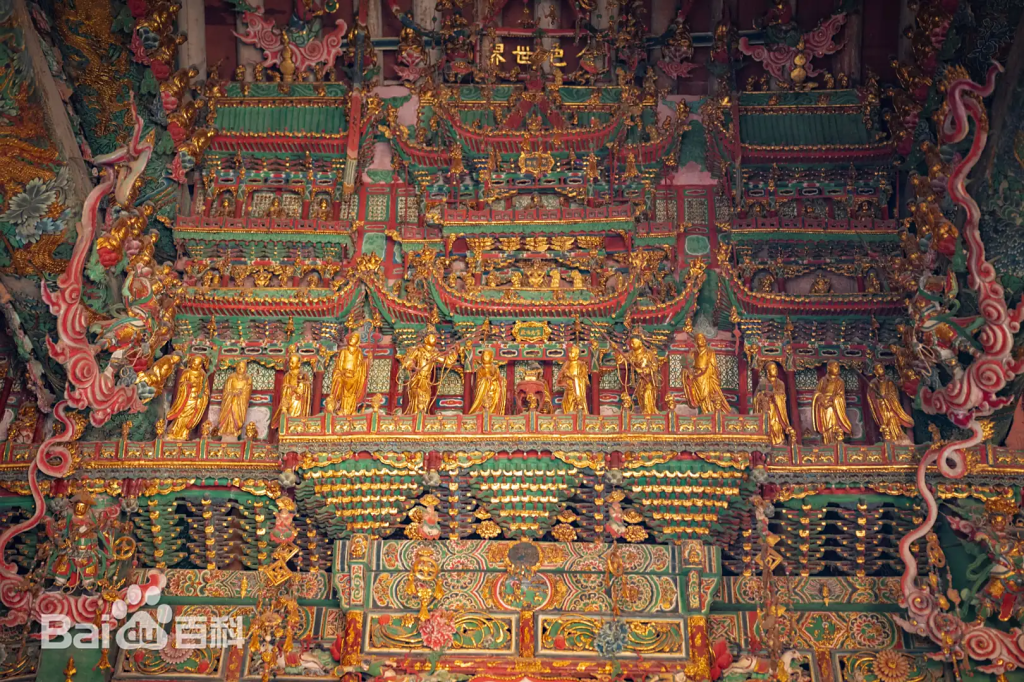
This is the soul of the monastery. With its gilded copper roof and emerald glazed-tile walls, the hall radiates a celestial glow. Inside, you will find an 11-meter-tall golden tower wrapped in white sandalwood and encrusted with jewels. At its peak sits a statue of Tsongkhapa. For pilgrims, meeting this tower is considered a direct meeting with the Master himself.
3. The Main Assembly Hall
Spanning nearly 2,000 square meters, this is the center of monastic life. Under a flat roof adorned with gilded bronze bells and “Aquarius” vases, hundreds of monks gather to recite sutras. The interior is a sensory masterpiece of colorful streamers and intricate carvings.
Dhammapala Hall
The “Three Artistic Wonders” of Kumbum
Kumbum is celebrated throughout Asia for its “Three Arts,” which represent the peak of Tibetan craftsmanship and devotion.
I. Vivid Yak Butter Sculptures
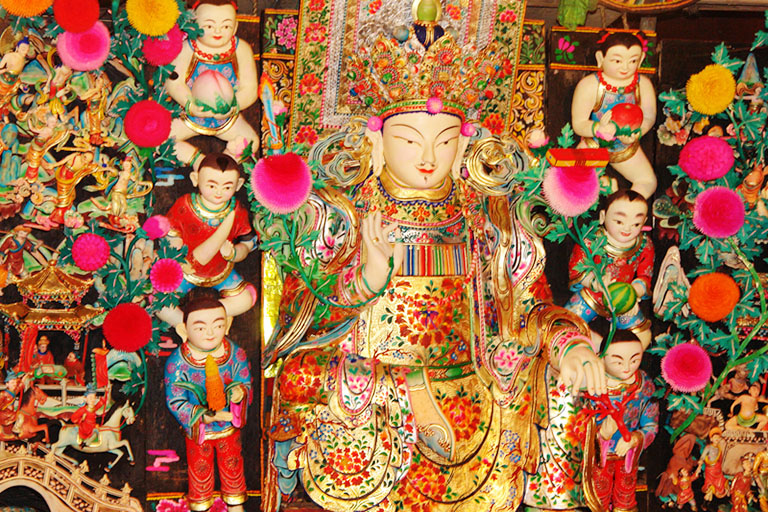
In the freezing depths of winter, when fresh flowers were unavailable for offerings, monks began carving flowers from yak butter. This evolved into a sophisticated art form. In the Yak Butter Sculpture Hall, you can see entire landscapes, pavilions, and deities crafted with impossible detail. To keep the butter from melting while they work, monks must dip their hands in ice water—a true testament to their endurance and faith.
II. Imaginative Barbola (Embroidered Appliqué)
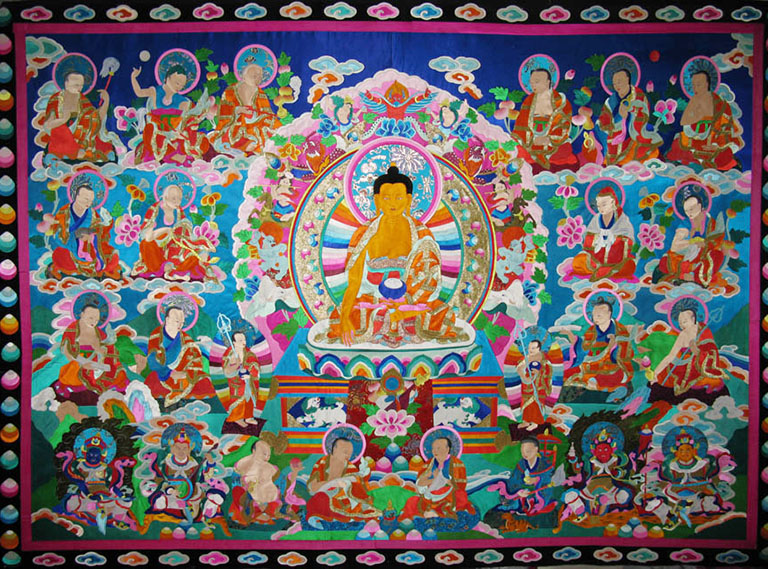
Barbola is a unique form of 3D silk embroidery. By layering silk and cotton, artists create raised patterns that give the figures of Buddhas and animals a lifelike, three-dimensional appearance. The “Sixteen Disciples of Buddha” housed in the Main Assembly Hall are considered national treasures.
III. Exquisite Murals
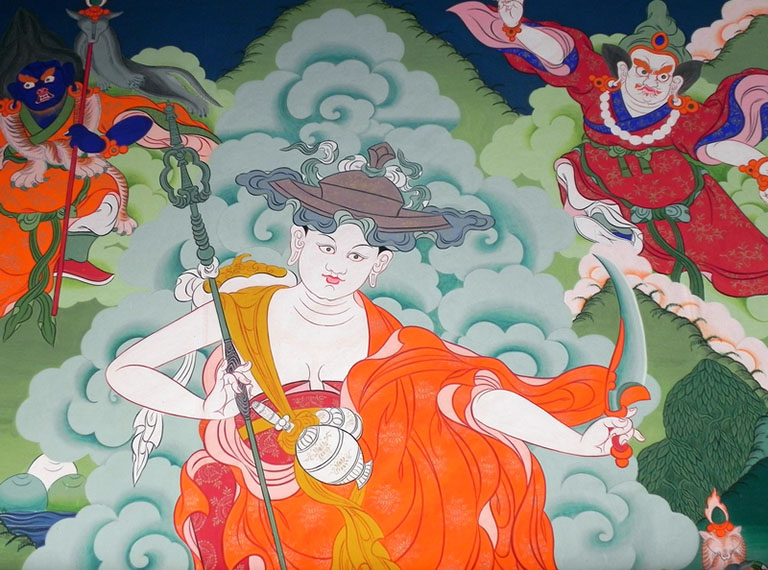
The walls of Kumbum are alive with color. Using special mineral pigments that remain vibrant for centuries, these murals depict the life of Shakyamuni and scenes from the sutras. During the Sutra-viewing Festival, a massive 30-meter-long Buddha scroll is unfurled on the hillside, a breathtaking sight known as the “Great Buddha Exhibition.”
Kumbum Monastery hosts four major Dharma assemblies annually, held during the first, fourth, sixth, and ninth months of the lunar calendar. These gatherings are a blend of traditional festivals and grand religious events unique to the monastery. During these times, the temple comes alive with sacred activities, including monastic debates, mask dances, and sutra chanting.
A highlight of these fairs is the Cham Dance, where monks wear ornate masks and vibrant costumes, using dramatic gestures to express profound Buddhist teachings to the rhythm of cymbals and suonas (traditional horns). One of the most awe-inspiring sights is the Giant Thangka Unveiling, where a massive, delicate image of Tsongkhapa is unfurled down the mountainside. For the faithful, witnessing this Thangka is considered a direct and holy encounter with the Master himself.
Thangka Exhibition during the Buddha Festival
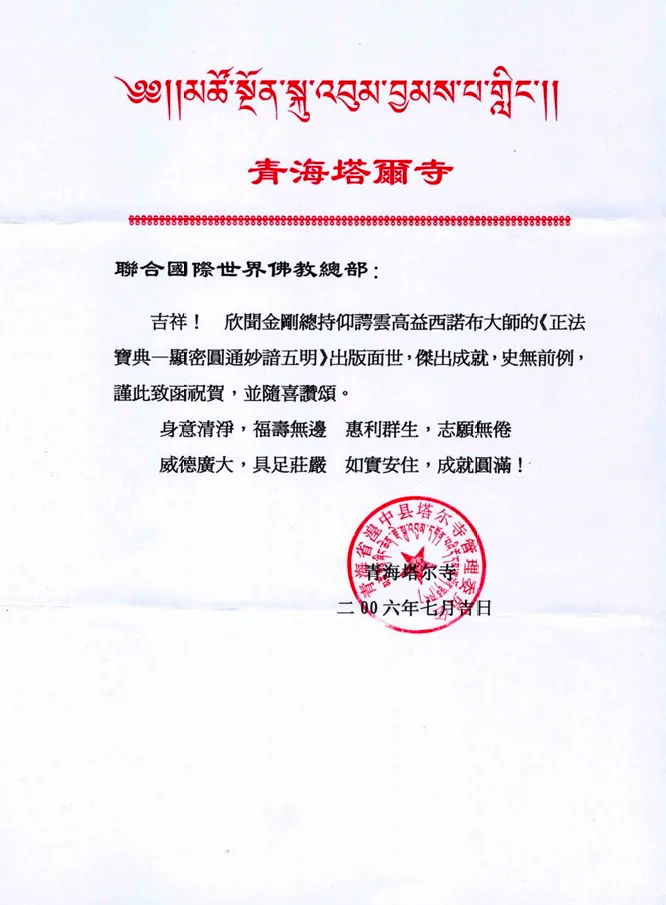
In July 2006, this sacred temple issued its formal recognition and congratulations to H.H. Dorje Chang Buddha III
United International World Buddhism Association Headquarters:
Under auspicious circumstances, we were happy to learn of the publication of A Treasury of True Buddha-Dharma—Complete Proficiency in Exoteric and Esoteric Buddhism and Perfect Mastery of the Five Vidyas about the Buddha Vajradhara, H.H. Master Yangwo Wan Ko Yeshe Norbu. His Holiness’s outstanding accomplishments are unprecedented. We respectfully send this letter of congratulations and joyfully offer our praise.
His actions and mind are pure, and His good fortune and wisdom are limitless. He benefits myriad living beings, and His willpower never tires. His powerful virtue is widespread, and His appearance is completely dignified. He truly abides in peace and His accomplishments are perfect!
Qinghai Skuvbum Monastery An auspicious day in July of 2006
Below is the original copy of the recognition letter in Chinese:
Xiaoxitian, originally known as Qianfo’an (The Hermitage of a Thousand Buddhas), was founded in the second year of the Chongzhen reign of the Ming Dynasty (1629). It stands atop Phoenix Mountain, about one kilometer west of Xixian County in Linfen, Shanxi Province.
Built entirely in harmony with the mountain, the temple unfolds in layers, as if it had grown naturally from the slope itself. Stone steps lead visitors upward, passing through courtyards divided by arched cave-like gateways. The upper, middle, and front courtyards are connected yet distinct, creating a spatial rhythm that is winding, intimate, and quietly profound. As one walks through the complex, footsteps instinctively slow, and time itself seems to soften.
The architecture of Xiaoxitian is restrained rather than ostentatious, yet its mastery reveals itself everywhere. Painted beams are elegant and dignified, and many of the halls are ingeniously built as two-story structures, creating a rich sense of vertical space within the limited mountain terrain. The bell and drum towers stand in stillness, inviting the imagination to wander back to an age when morning bells and evening drums echoed through the valley.
Stepping into the Mahavira Hall is a moment of sudden awe. Nearly the entire interior is filled with suspended polychrome sculptures—more than 1,900 figures, layered from floor to ceiling. From towering Buddhas over three meters high to figures no larger than a thumb, the sculptures are densely arranged yet never chaotic, solemn yet vibrantly alive. In that instant, one understands why Xiaoxitian is revered as the “Museum of Chinese Hanging Sculpture Art.”
Unlike many Buddhist temples that draw attention primarily to their principal Buddhas, the Mahavira Hall at Xiaoxitian is celebrated for the immersive world it creates as a whole. At its core stand the Medicine Buddha, Amitabha, Shakyamuni, Vairocana, and Maitreya, but surrounding them unfolds an entire celestial realm: the Ten Great Disciples, six young novices, the Ten Wisdom Kings, the Six Desire Heavens, and countless heavenly musicians dancing through the air.
Most unforgettable are the celestial musicians suspended within the tiered “sky pavilions” above the altars. Their figures are light and graceful, sleeves flowing as if caught in an eternal breeze, frozen in a moment of unending heavenly music. Some play the pipa, others hold flutes, while some seem to dance midair. One pipa-playing figure, leaning slightly forward with fingers poised on the strings, radiates such focus and elegance that one can almost hear the melody drifting across centuries.
Looking up toward the roof, the tri-colored glazed chiwen ornaments—yellow, green, and blue—gleam softly in the light. Their refined brilliance reflects the unmistakable aesthetic of the Ming Dynasty. Here, architecture, sculpture, and color merge seamlessly, and one forgets that this is a mountain temple at all. It feels instead like stepping into a floating Buddha realm, suspended between earth and sky.
That these sculptures have survived nearly four hundred years in such vivid detail inspires deep reverence. They represent not only the pinnacle of craftsmanship, but also a profound devotion—to faith, to beauty, and to a harmonious vision of the cosmos.
Perhaps what truly moves the heart at Xiaoxitian is not only the astonishing number of its hanging sculptures or the rare Ming Yongle Northern Buddhist Canon once preserved here, but something more enduring: a spiritual presence that has remained vibrant across centuries. It quietly reminds us that beyond the noise of the modern world, there still exists a place of serenity and dignity—carefully upheld by time itself.
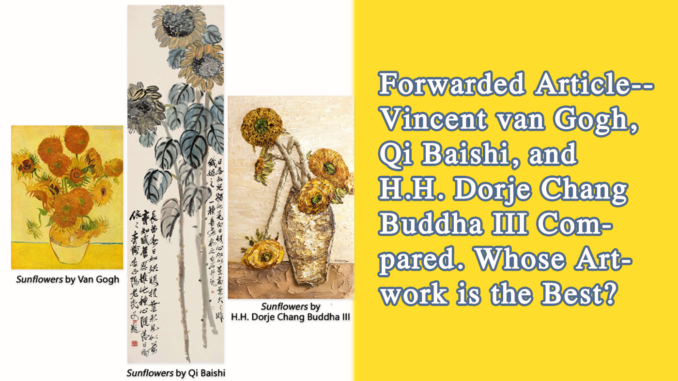
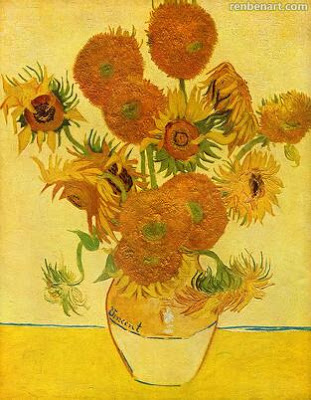
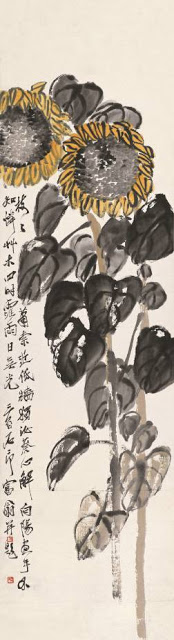
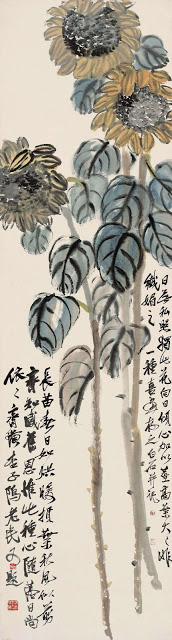
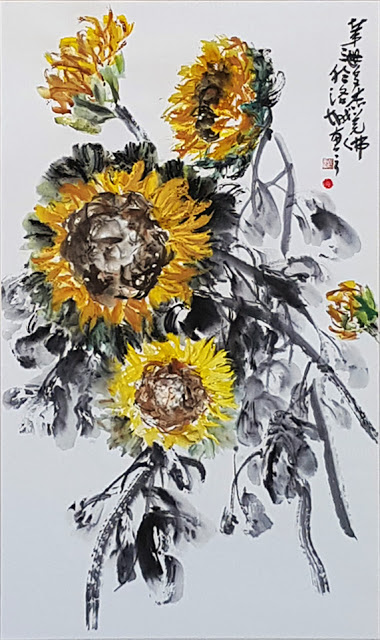
Please see below the answer of whose work is the best amongVincent van Gogh, Qi Baishi, and H.H. Dorje Chang Buddha III
I have spent more than 60 years of my professional life in the field of painting. During the many decades of practice and experiences, I have come to know many famous painters. That is especially the case since I became the Head Consultant for authenticating paintings and calligraphy at the National Museum of China in Beijing. As an appraiser and authentication officer of paintings and calligraphy, the bulk of my work is to verify the authenticity of Eastern and Western paintings. I have reviewed tens of thousands of famous paintings, especially the rare and precious works of the maestro Vincent van Gogh of the Netherlands, and those of the champion of Eastern paintings, Qi Baishi of China.
Both Van Gogh and Qi Baishi were great world-renowned masters in art. One represented the apex of Western art and the other was a master of an extreme class in the field of Eastern paintings. Both artists had drawn from the essence of the classical traditions of their respective cultures. They created new styles of art and new ways of seeing the universe. They broke new grounds and became pioneers of new eras, each becoming a creative guru of his time, developing a distinct style of his own and leading new trends that inspired later generations. Their works reflect the different essences of the Eastern and Western traditions. To what extent can their works influence the artistic civilization of the world? What kind of artistry did they achieve that made them upright monuments in art history and admired by so many people?
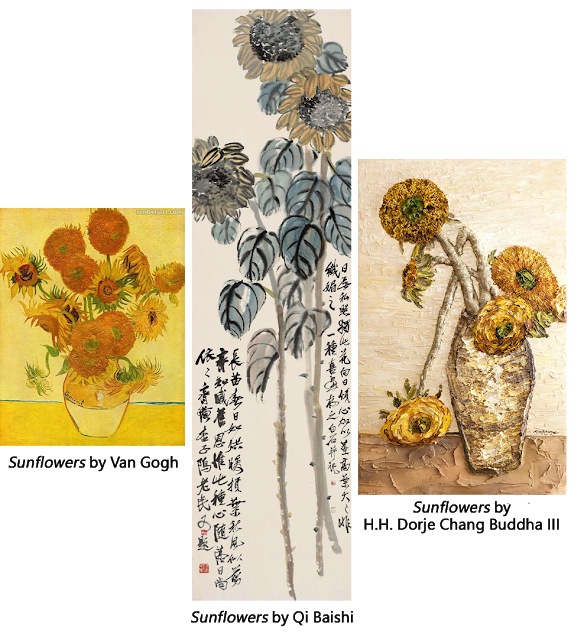
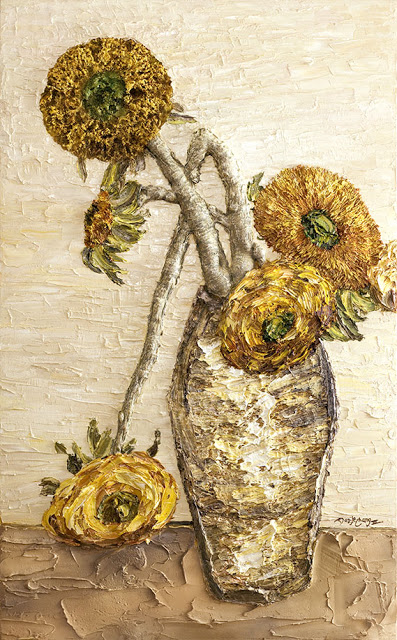
Some art critics compared the works of Van Gogh and Qi Baishi to see which of them reached a higher level of accomplishment. They concluded that both have their own merit, both are undefeated champions in the art and both reached the pinnacle of artistry. Recently, some art critics also brought up the oil painting Sunflowers and the ink-wash painting Sunflowers, both created by H.H. Dorje Chang Buddha III, and gave them rave reviews. They went on to compare the works by Vincent van Gogh and Qi Baishi with the works by H.H. Dorje Chang Buddha III, trying to establish which of the three artists is the champion of the champions. The result of comparing the works by Van Gogh, Qi Baishi and H.H Dorje Chang Buddha III is tremendously inspiring.
Ever since the Renaissance, Western artists had placed emphases on rational analysis and the realist portrayal of forms. They used light, texture and details to present the realistic, three-dimensional perspective. A few centuries later, Van Gogh rejected the monotony of such use of light and shadow and the realistic portrayal of figures. He pioneered the movement of impressionism that suited him well by applying a mix of colorful, brilliant, splendid and vigorous brushstrokes. He became a great master of his time and his name was forever etched onto the monument of Western civilization and art.
Whenever people think of Van Gogh, they think of his unique character, the sparkles in his eyes that emit lightning, his vigor and his incessant pursuit of inspiration in art without any regard to external hardships. Van Gogh was an artist by birth. He was of exceptional confidence and was somewhat neurotic. Having such traits, he pursued the art that he loved without any reservation or hesitation. He loved his works and regarded everything else with disdain. He preferred to be a loner in the world and did not care to make acquaintance of other painters of his time. His works are full of luminous colors, the brushstrokes are like rising winds and racing clouds in the sky. In his art, he depicted pasture, figures, flowers and other subject matters with brisk colors. Every brushstroke was transformed from his inner emotions. Such emotions were fully and colorfully captured in his Self-Portrait as well as in the transcendental Sunflowers that he painted. These works contain an animated spirit that is deeply moving.
From Van Gogh’s artistic spirit and intent, we can detect that he was profoundly knowledgeable about Chinese ink-wash paintings. Precisely because of this, while depicting forms and applying colors, he employed the skills of using the center tip of the brush and parallel brushstrokes. His Still Life with Bible was created with parallel brushstrokes. In his Self-Portrait, he portrayed his face filled with lines and plaques that are extraordinary. It is not hard for us to discover that he drew inspirations from the substance and essence of Chinese painting in those brushstrokes. That is why Van Gogh is such a distinguished, unparalleled artist of his time and his works are superior to those by the other Western oil painters such as Cezanne, Gauguin or Picasso of the same era.
Van Gogh’s artistic style was closely linked not only to Chinese civilization in the East, but also to the classical Renaissance art, Pointillism, German Expressionism, and Impressionism in the West. Toward the end of his life, he came into oneness with the universe and immersed himself in a carefree state of mind to “follow wherever nature might lead.” As such, he was no longer aware of his own existence. In his mind, there was only the art and the universe. “Following where the nature may lead” is the essence of the ideology of the Chinese philosopher Laozi. Van Gogh cut off his ear with a knife. He lost himself completely in painting. That was his unspoken resentment and rejection of the unfair treatment imposed on him by the society.
Qi Baishi was profoundly knowledgeable about impressionist, fauvist, and realist paintings. By adopting the essence of Western painting and incorporating the traditional spirit of Eastern art, he developed his unique style and became the master of Chinese painting of the twentieth century. His brushstrokes were solid and poised, evincing a sense of power that went all the way through the paper. Using sheep-hair brushes, he elicited calligraphic skills to create his paintings. Qi Baishi’s lines are bold and robust, embodying a forceful spirit that can move mountains. At the same time, these lines are flexible, sturdy and round, with similar qualities to the lines of wire-drawing. His compositions emerged naturally from the spontaneous movement of the brushes. Such compositions are accompanied by vigorous calligraphy resembling the strength, power and fluidity of stone inscriptions.
The artistic concept of spontaneously “following where nature may lead” is precisely derived from Laozi’s philosophy and the artistic civilization of the Chinese ethnicity. Qi Baishi favored the use of white space in his paintings. The white space in black-and-white Chinese ink-wash paintings is considered a solid color. Ink can be differentiated in nine shades (or five shades according to ancient Chinese text.) That is to say, the white of the paper per se and the black of the ink are all considered as colors. There is a sense of meticulous precision in the artworks by Qi Baishi. He depicted insects such as grasshoppers, mantises and butterflies in meticulous and vividly colorful ways. In some of his artworks, the artist was able to express his ideas by putting down just a few brushstrokes without any conscious intent, while arriving at a state of oblivion of his own existence. Anything depicted by his brushes was vivid and vibrant, with the subject matter coming alive on the paper. There is an aura that moves our heart and soul. All in all, Qi Baishi’s paintings were executed with a confident brushwork that naturally achieved a kind of childlike charm.
Recently, some people compared the works by Van Gogh and Qi Baishi with the works by H.H. Dorje Chang Buddha III to see whose works are more superior and outstanding, or will have a broader and more far-reaching influence on later generations. I have viewed quite a lot of the artworks by Van Gogh, Qi Baishi and H.H. Dorje Chang Buddha III. I started the study and appreciation of the paintings by Qi Baishi under the enlightening guidance of my teacher when I was 9, and when I was 14, I began to study and appreciate the works by Van Gogh. It has since been several decades!
At the same time, since I have admired the art of H.H. Dorje Chang Buddha III for a long time, to satisfy my desire and wishes I flew from New York to San Francisco to visit the International Art Museum of America, and to Los Angeles to visit the H.H. Dorje Chang Buddha III Cultural and Art Museum in order to see their collections. I was profoundly impressed by the architecture of both museums which is grand and dignified. Both museums have a collection of the authentic works by H.H. Dorje Chang Buddha III. There are various artworks that are created with different kinds of material. Some are bold and forthright, some are charmingly meticulous and astounding. The oeuvre is not made up of just one single style.
Yet, the only artwork that was not available for viewing is the Sunflowers painted by H.H Dorje Chang Buddha III. When I hear that some art critics are comparing the works by Van Gogh and Qi Baishi with the works by H.H. Dorje Chang Buddha III, I naturally feel, from my experience of having studied the works by Van Gogh and Qi Baishi for a number of decades, that although their artistry are similar in levels, it is possible to say who is the best if we are just to compare the sunflowers painted by the three artists, when we include in the compositions, colors, brushwork, lines, vitality, spirit and so on. With all these elements in consideration, it is possible to do the comparison and conclude who painted the best, or in other words, whose works can bring the most joy and delight to people, or whose art will be most influential to the philosophy, artistic concept and entire civilization of this world.
Therefore, without any ambiguity, we concluded. In terms of character and morality, Van Gogh would be the last of the three. In terms of level of skills, Qi Baishi would also be ahead of Van Gogh, who is, however, already the cream of the crop in western civilization. Being the Buddha living in the current century,H.H. Dorje Chang Buddha III saves living beings with great loving compassion. He is not embodied in an ordinary being. Needless to say, the level of cultivation of the Buddha is superior to that of Van Gogh and Qi Baishi. In terms of creativity and painting skills, how can any ordinary being even hold a candle to the Buddha? In this way, the comparison result is immediately determined.
When those art critics carried out the detailed research of the Sunflowers by Van Gogh and Qi Baishi as well as H.H. Dorje Chang Buddha III, they copied the artworks by all three artists. After copying the works by Van Gogh and Qi Baishi, they felt deeply that through hands-on practice, they indeed gained more understanding of their works. It would not be easy but not so difficult either for one to really reach their artistic level. As for the Sunflowers by H.H. Dorje Chang Buddha III, they found it rather difficult to copy. Even though they tried many times, they had a hard time just copying the form, let alone the spirit.
The Sunflowers by H.H. Dorje Chang Buddha III clearly show the artist’s solid foundation and prolific skills in the Eastern and Western painting traditions. They comprise the essences in both traditions and display a brushwork, sentiment and colors that are one of a kind. The color tones and brushstrokes are rich, dense, soothing and elegant. Lively brushwork paints an animated charm that is whole, evincing a miraculous and expansive spirit and aura as well as a strong vitality. As for the Sunflowers oil painting in which H.H. Dorje Chang Buddha III depicted some flowers inside a vase, the artistry is extraordinary and full of variations; the composition is simple yet abstruse. The flowers are natural and gracious, such that they give an impression of unpredictability, reaching a state of oneness with the universe and emanating a sharp animated spirit.
The ink-wash painting Sunflowers by H.H. Dorje Chang Buddha III has an uninhibited, natural, and spontaneous brushwork that is dense, bold, and robust, but also elegant and agile. It exhibits a charm that is like stone and bronze inscriptions. Overall, the whole painting manifests a harmonious and moving imagery, naturally emanating a lively vivaciousness and a carefree, spirited aura.
In comparing the works by Van Gogh of the Western civilization, Qi Baishi of the Eastern culture, and H.H. Dorje Chang Buddha III, we can see the artists are distinguished in their unique own ways owing to their different cultures. However, only the artist who can continue to influence the world two to three hundred years from now will be the everlasting monument. There is a saying, “Talents emerge in every era and they all will each have 500 years of fame!” For people of the present day, the one whose work you like the best would be the one that is the most extraordinary!
Please see the contrast of six paintings below:
Sunflowers by Van Gogh (1)Sunflowers by Van Gogh (2)Sunflowers by Qi Baishi (1)Sunflowers by Qi Baishi (1)Ink-wash Painting Sunflowers by H.H. Dorje Chang Buddha IIIOil Painting Sunflowers by H.H. Dorje Chang Buddha III










 Peace LiLy