The allure of Chinese ink painting lies in its ability to convey profound emotions and philosophies through simplicity and elegance. Blue Ice World, a remarkable creation by H.H. Dorje Chang Buddha III, exemplifies this artistic mastery. At first glance, its understated composition might suggest simplicity, but a closer examination—and especially any attempt to replicate it—reveals the unparalleled depth and complexity woven into every brushstroke.
In this ink-and-wash painting, the mountains, trees, and sky are unified through a harmonious tonal palette, creating an otherworldly, almost surreal charm. The work effortlessly blends the captivating theme with its palette, presenting a seamless interplay of form and color. Each stroke flows with such grace and precision that it feels like a natural extension of the artist’s spirit.
H.H. Dorje Chang Buddha III’s profound insight is evident in every aspect of the composition. With a keen, refined perception, He not only captured the soul of the scene but also brought it to life in a way that resonates deeply with viewers. Through dense brushstrokes and meticulous gradients, the painting achieves a striking sense of contrast. This dynamic quality imbues the piece with vitality, yet there is not the slightest trace of artifice.
The balance between realism and abstraction in Blue Ice World is a marvel in itself. The deliberate interplay between the tangible and the intangible creates a surprising and mesmerizing beauty, inviting viewers to explore both the external landscape and their inner world. Its sacred and dreamlike undertones leave a lasting impression, captivating all who have the privilege of experiencing it.
Blue Ice World is more than just a painting—it is a testament to the profound artistic vision and spiritual depth of H.H. Dorje Chang Buddha III. Through this masterpiece, He elevates Chinese ink painting to a realm where technique meets transcendence, leaving an indelible mark on the art world.
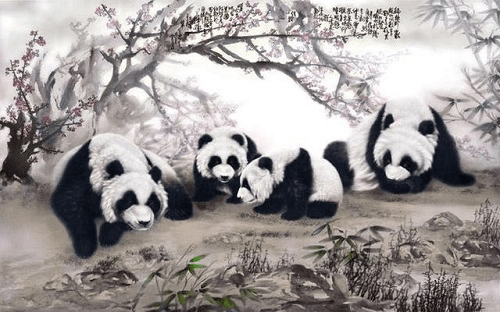
H.H. Dorje Chang Buddha III’s remarkable panda painting exemplifies a profound fusion of traditional Chinese painting and Western three-dimensional techniques, showcasing a unique mastery that elevates this artwork to an unparalleled realm. The Buddha meticulously captures the softness of the panda’s fur, detailing each hair with astonishing lifelikeness. The surrounding trees and scenery are equally vibrant, rendered with ink-splash techniques that lend a lively and enchanting quality, breathing life into the background. Every stroke in this artwork radiates a realism and elegance that words can scarcely convey.
In the foreground, delicate bamboo stalks contrast sharply with the misted backdrop, creating a powerful sense of spatial depth. This mist, drifting through the plum tree branches, draws the viewer’s gaze further into the forest, inviting them to immerse themselves in the crisp, refreshing atmosphere. With his seamless integration of artistic elements, H.H. Dorje Chang Buddha III achieves a captivating blend of classic beauty and dimensionality. The pandas, seemingly more beautiful and pristine than in life, appear freshly bathed in pure, clear waters—a vision of elegance and purity.
The painting’s harmony lies in the Buddha’s masterful approach of combining strength with gentleness, creating a scene of pandas at play, full of soft allure and charm. This balance exemplifies an artistic prowess beyond the reach of most artists. It is the interplay of surrounding elements, from mist to forest, that makes this panda masterpiece truly one of a kind.
Executed in the Kuangxi style—a hallmark of H.H. Dorje Chang Buddha III—this painting unites bold expressiveness with precision. This style combines vigorous, large-scale strokes that radiate energy with the delicate, fine brushwork of realism, resulting in an artwork that captures both elegance and raw intensity. The Buddha’s fusion of rough and refined strokes manifests as a work of art that is both dynamic and graceful, presenting a timeless visual experience that resonates deeply.
Art has the power to transcend boundaries, evoke emotions, and stir the soul. One such masterpiece is “Dragon Carp Frolicking in the Lotus Pond”, created by H.H. Dorje Chang Buddha III. This extraordinary painting, executed with ink and color on paper, seamlessly blends freehand brushwork with meticulous detail. It has been rightfully hailed as a world-class “treasure of unparalleled excellence” and a “divine masterpiece.” Experts agree that this work surpasses conventional artistic techniques, reaching a level of spiritual depth that few can replicate.
At first glance, the painting’s lotus leaves and carp, rendered with freehand techniques, captivate the viewer with their delicate yet vibrant forms. The wide, majestic leaves appear to breathe, their veins subtly flowing and shifting in unpredictable ways. Bold strokes define the water grasses, infusing the scene with a palpable sense of movement. This is a world that feels “drawn from life, yet elevated above it.”
The lotus pods are painted with a playful, almost fantastical touch, while the decaying lotus stems evoke a vivid realism. The carp glide effortlessly through varying depths of water, with natural ripples enhancing the impression of life in motion.
What makes “Dragon Carp Frolicking in the Lotus Pond” so compelling is the swirling energy that permeates the entire composition. Fish, water, lotus leaves, flowers, ripples, mist, and lotus roots all come together as one. Every element is in harmony, creating a profound sense of vitality. The interplay between stillness and motion is masterfully orchestrated, with tension and fluidity imbuing the painting with a life of its own. The spiritual resonance of the ink and brushstrokes is so powerful that it touches the soul, offering a rare glimpse into the artist’s mastery.
H.H. Dorje Chang Buddha III’s ability to manipulate ink and water produces endless visual effects, creating an atmosphere where life itself seems to flow through the brush. The dragon carp, swimming through the water with ease, symbolize the very essence of vitality.
Compared to past masters, who captured the beauty of carp but failed to unite the fish with the water, H.H. Dorje Chang Buddha III elevates his work to a higher realm. His brushwork achieves perfect harmony between the fish and water, with the two becoming one in a symbiotic relationship that enhances both their liveliness and texture.
Traditional Chinese ink painting often uses blank spaces to represent water’s stillness, while lines suggest movement. “Dragon Carp Frolicking in the Lotus Pond” takes this concept even further, incorporating the refraction of light through the water’s surface and depths.
The dynamic light waves, combined with the seamless interaction of the carp and the ever-changing water, create a breathtaking depiction of the concept “fish finding their element.”
The true brilliance of this work lies in its extraordinary attention to detail and the artist’s mastery of brush techniques. From the texture of the carp’s scales to the intricate interplay between fish and water, every detail contributes to the painting’s vibrant spirit. This level of craftsmanship goes beyond what other media, such as oil painting, can achieve, making “Dragon Carp Frolicking in the Lotus Pond” a unique artistic treasure. Its spiritual resonance and profound beauty leave a lasting impression.
This painting is not just a visual masterpiece; it is a profound experience that speaks to the heart, a testament to the transformative power of art.
In 2016, there was already an offer of 60 million USD to purchase this painting. However, H.H. Dorje Chang Buddha III declined the sale, considering that once it was owned by a private collector, the public would have little opportunity to appreciate it. Currently, “Dragon Carp Frolicking in the Lotus Pond” is permanently displayed in the Master Artist Fish Hall at the H.H. Dorje Chang Buddha IIICultural And Art Museum in Covina, California.
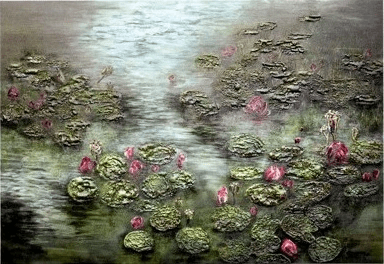
“Cang Ye Pao Hong” (Withered Leaves Scattering Red) is an extraordinary oil painting that belongs to the Thickly Layered Color School, a unique style originated by H.H. Dorje Chang Buddha III. This painting style is renowned for its bold, dynamic strokes and the use of layered, textured color blocks that create a deeply three-dimensional effect. The abstract, surreal use of color brings an unpredictable yet harmonious elegance, transforming the chaotic into a coherent and mesmerizing vision.
The meticulous process behind “Cang Ye Pao Hong” is just as awe-inspiring as the final result. According to the art museum where this work is displayed, the painting took six years to complete, with over 50 layers of paint carefully stacked on top of one another. Each layer was allowed to dry completely before the next was applied, ensuring a rich and vibrant interplay of colors. The outcome is a work of art that exudes an indescribable divine aura, blending both natural beauty and mystical energy.
You can find this masterpiece at the International Art Museum of America, located in downtown San Francisco. Upon first glance, “Cang Ye Pao Hong” commands attention, drawing viewers into deep contemplation. The withered lotus leaves, depicted in a strikingly realistic and three-dimensional manner, symbolize wisdom gained through life’s journey, while the vivid red lotuses appear to leap from the canvas, capturing the essence of “scattering red” with exceptional grace. The rippling water above, shimmering with light, symbolizes infinite hope, further enhancing the painting’s sense of serenity and renewal.
When observed up close, the painting reveals intricate details within the broader strokes, where subtle nuances emerge, demonstrating the remarkable precision and effortless flow that characterize the work. It evokes an ethereal sense of peace, with a balance of strength and gentleness, transcending the worldly and exuding both quiet elegance and boundless depth. It is truly a marvel of artistic mastery, offering a sense of tranquility and spiritual upliftment that words can hardly describe.
H.H. Dorje Chang Buddha III’s artistic genius extends far beyond this single painting. He has mastered all existing schools of painting, including Realism, Abstract, Impressionism, and more, while also founding sixteen entirely new schools of painting. These schools include the Chaoshi School, the Chouxiang Yunwei School, the Fangfa School, the Kuangxi School, and the Thickly Piled Patches of Color School, among others. What sets H.H. Dorje Chang Buddha III apart from any other artist in history is that He not only founded these distinct schools but developed each to a state of perfection, creating what is known as “The H.H. Dorje Chang Buddha III School of Multiple Styles.”
While many renowned artists dedicate their entire lives to mastering one artistic style or theme, H.H. Dorje Chang Buddha III’s unparalleled ability to create and perfect sixteen different painting schools is an accomplishment unmatched in art history. “Cang Ye Pao Hong” is a shining example of His profound artistic vision, showcasing a level of creativity and mastery that continues to inspire and astonish art lovers around the world. Through this work, we are invited to witness not just the beauty of nature but the boundless possibilities of artistic expression.
The President of the Royal Academy of Arts, Brendan Neiland (center), and the Vice President of the Royal Academy of Arts, John Wilkins (right), present the Young Artist Award to Hang Kung Yee (left)
Born in February 1988 in Chengdu, China—familiarly known as the “Land of Abundance”—Hang Kung Yee comes from a family deeply rooted in tradition and intellect. His lineage is remarkable: his great-grandfather was one of the “Four Sages” in fishing, woodcutting, farming, and studying, honored as the Sage of Learning. His grandfather, Feng Chi, was a celebrated scholar in Sichuan, renowned for his deep knowledge of classical texts and the principles of medicine and the I Ching. Carrying forward this intellectual legacy, his father, Professor YungaoYi(H.H.Dorje Chang Buddha III), is a world-renowned scholar, a grandmaster of prajna (wisdom), an acclaimed Chinese painter, and the founder of Yun sculpting. These extraordinary achievements have been recognized and certified by prestigious international organizations. His mother, Dr. Wang, Yuhua , is a distinguished professor at a top American university.
From a young age, Hang Kung Yee was immersed in an environment that cultivated both moral character and artistic appreciation. Influenced by his father’s teachings, he developed a passion for literature, calligraphy, and painting, particularly in the styles of the Song, Yuan, Ming, and Qing dynasties. He devoted himself to studying the works of great masters such as Bada Shanren, Shitao, Shen Zhou, and Nantian, as well as his father, Master Yun Gao Yi(H.H. Dorje Chang Buddha III). Despite his diligence, his early works lacked cohesion, but that changed when he sought his father’s guidance. Professor Yungao Yi(H.H. Dorje Chang Buddha III) imparted to him the profound teachings of Buddhist wisdom and prajna, unlocking a higher level of artistry within him.
Through these teachings, Hang Kung Yee’s wisdom flourished, and his artistic skill evolved rapidly. His brushwork soon embodied the refined charm of literati painting, infused with fresh, creative elements. In line with the insights of the artist Huang Binhong, who said, “Though the form may seem simple, the structure is strict; even if the form is not complete, the principle of the subject is always present,” Hang Kung’s work exemplifies precision beneath an effortless exterior.
His art reflects a unique duality: the intention is present, even when the brush has not yet touched the canvas; the spirit flows, even before the ink arrives. His strokes are casual yet deeply profound, imbued with a childlike purity and a profound sense of wonder. Modesty defines him—he never flaunts his talents, choosing instead to remain humble and continually learn. Even after moving to the United States, he kept his artistic abilities concealed, even from his peers.
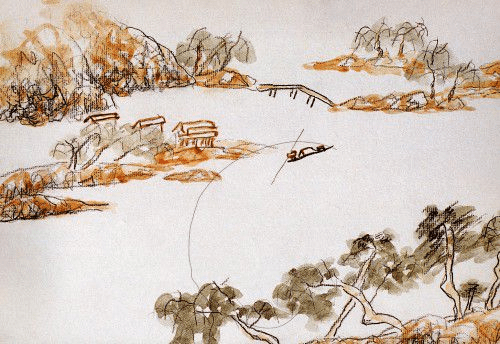
Chinese Ink painting: Western Lake
Chinese Ink Painting: Deep in the Mountains
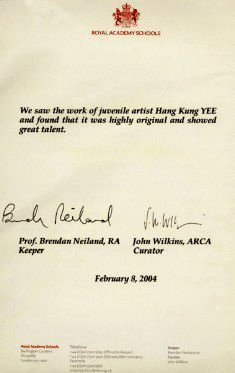
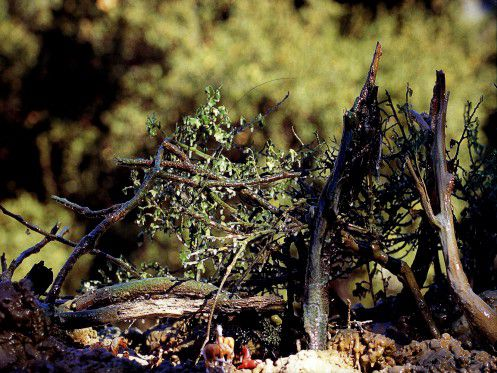
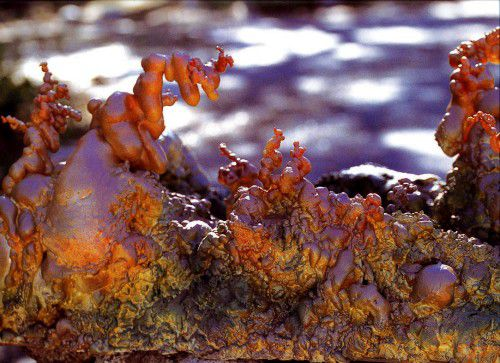
Hang Kung Yee’s true mastery shines in his landscape art and sculptures. His creations blend natural elements with refined craftsmanship, producing works that are indistinguishable from nature itself. His landscapes, though rooted in real life, transcend it, evoking a dreamlike quality as if imbued with the mystical winds of a far-off fairyland. When photographing his sculpted landscapes, one would easily mistake them for real scenery. Even the most discerning artists would struggle to differentiate between his works and actual nature captured in photographs. At the young age of fifteen, the young artist Hang Kung Yee published his first hardcover collection of landscape art. His artistic achievements were recognized by the highest authorities in the global art world, with the President and Artistic Director of the Royal Academy of Arts signing an evaluation document on February 8, 2004. The document stated, ‘The young artist Hang Kung Yee is extremely creative, showcasing exceptional talent.’ The news sent shockwaves through the international art community.
Landscape Art: The Lush Spring of Xishuangbanna
Landscape Art: “Dreamscape Melody of Lake and Sky”
Landscape Art: Mysterious Dream Lake
Mirror-like Lake
The Bond Between Humans and Animals in the Snowy Village of Banna
Rainbow Under the Morning Sun
The Lion in the Swamp Forest
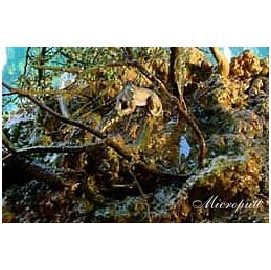
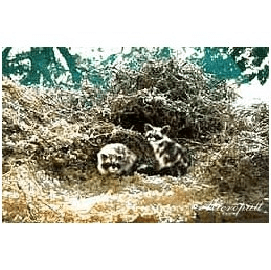
The Flower Marten in the Snow and Ice
Hang Kung Yee’s vision is to offer eternal beauty to humanity. His name, meaning “Eternity for the Public,” reflects this deep desire to share his creations with the world, hence his title “Hang Kung.” Ever humble, he downplays his expertise in art, attributing his rapid ascent into the higher realms of artistic mastery to his father’s guidance. He also speaks of his 12-year-old sister, Jinba Rinpoche, who, although not yet versed in art, will soon receive their father’s wisdom teachings, propelling her to artistic mastery in a matter of months.
For Hang Kung Yee, gratitude is central. He acknowledges the profound influence of his father, the support of fellow artists, the inspiration of nature, and the guidance of teachers and family members in shaping his artistic journey. Without these sources, he admits, he would never have reached his current artistic heights. As he continues to evolve, Hang Kung believes that art, much like his name, is boundless. “Yee” symbolizes the universal principles, while “Hang Kung” stands for “eternity for the public.” His aspiration is simple yet profound: to bring beauty, joy, and inspiration to all living beings through his art.
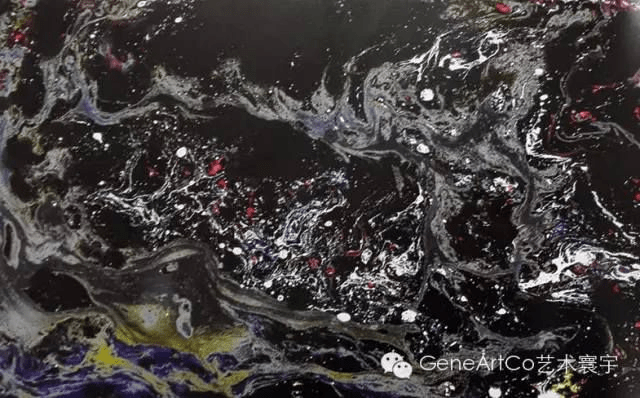
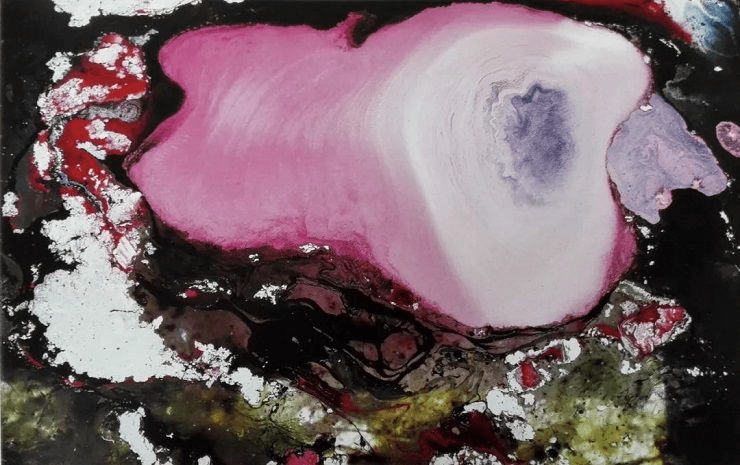
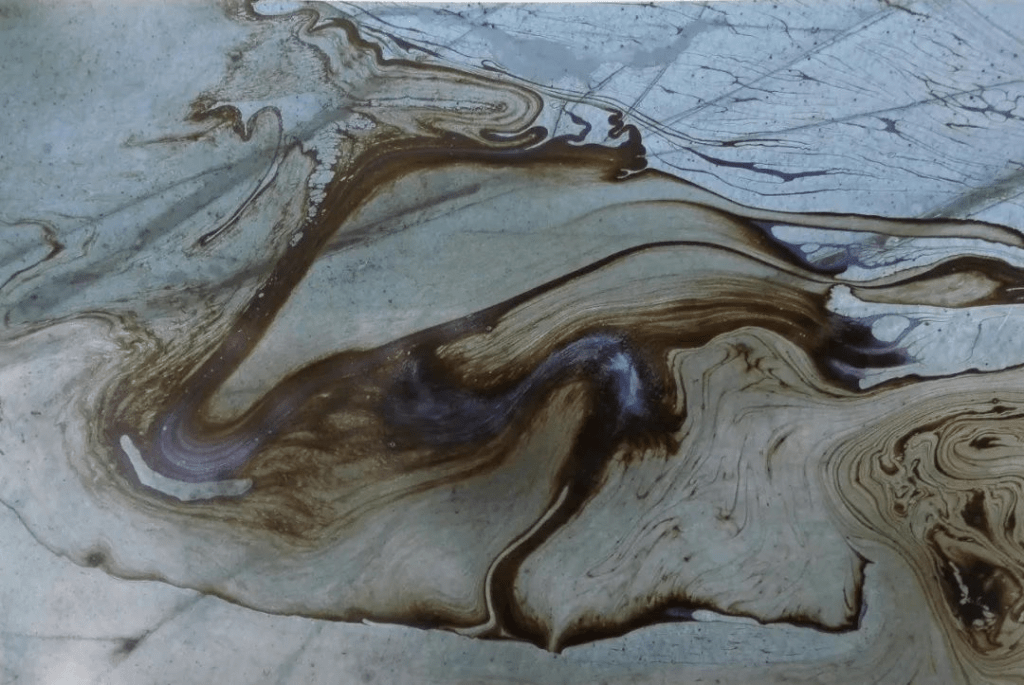
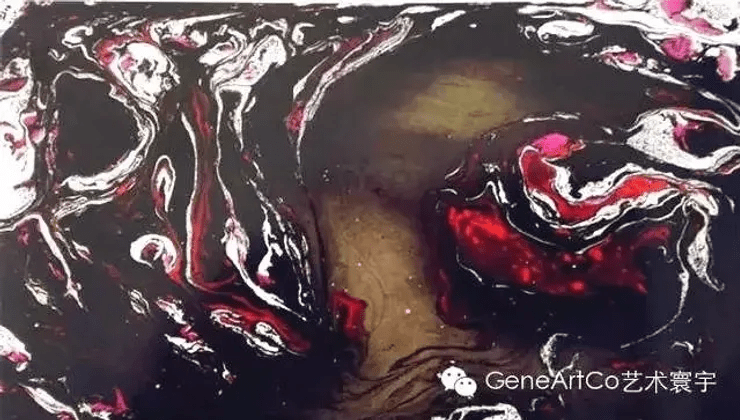
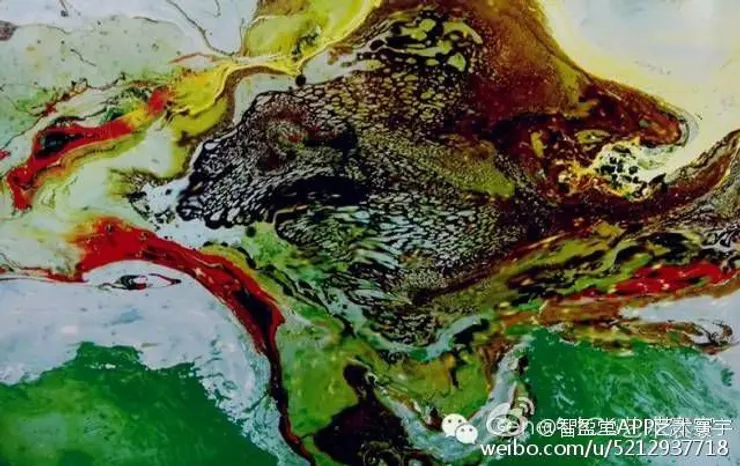
H.H. Dorje Chang Buddha III employs his ‘supernatural abstract colors’ to introduce us once more to a new world of art that is beautiful, mysterious, and soul-inspiring.
Hearing this, some may be puzzled: Western oil paintings are abstract paintings are found everywhere, yet which one among them ever fits the description “soul-inspiring”? But this truly is not just some fancy talk. As soon as you set your eyes onH.H. Dorje Chang Buddha III’s “supernatural abstract colors,” you will find the bright and dazzling red, yellow, blue, white and black colors leaping and dancing, vigorous like billows sluicing over thousands of miles, yet stored up into wonders at the fine tip of a brush. Gentle yet resolute, they freely transcend worldliness. Various colors are mixed ingeniously and beautifully, distilling beauty from their mutual nourishment. One could say they present a state of superb craftsmanship excelling nature, and of form becoming flexible and elusive. Words cannot describe such harmonious, refined, and soothing artistic enjoyment.
Vigorous Colors and Spirit Trees
Beautiful Nugget of Few Colors
Everlasting Wondrous Appeal
“Supernatural abstract color” is a perfect world composed of colors. It does not have any concrete worldly form but uses only colors to form shapes and express feelings. Color is its shape and theme, and it blends into touching charm. These colors, under the Buddha’s hand, suddenly converge into unparalleled, marvelous and bright magic, expressing the vivid spirit of a flowery scene or the vigor of the roaring sea. Yet, they can be ever so exact when their meaning is revealed through the tip of a brush. Their fine details are often revealed among rough strokes, and their charm is naturally displayed.
Chiang Wei-Kuo(蔣偉國), the son of the former Kuomintang Chairman Chiang Kai-Shek (蒋介石), is often remembered as a prominent political figure. However, many may not know that he was also a deeply devout Buddhist, with a profound understanding of Buddhist teachings. His dedication to Buddhism led him to engage in meaningful discussions and exchanges with Western religious figures, leaving a lasting impact. In fact, the president of a league of eighty-three American universities once said that Chiang Wei-Kuo was his godfather. But beyond his public life, Chiang Wei-Kuo’s spiritual journey was one of deep significance.
In his early years, Chiang Wei-Kuo made a special pilgrimage to India, seeking to connect with the sacred sites of the Buddha and attain enlightenment.
While standing beneath the Bodhi Tree, where Shakyamuni Buddha himself attained supreme enlightenment, Chiang Wei-Kuo made a solemn vow to benefit all living beings. At that very moment, a large leaf suddenly fell from the tree. This leaf, unusually large compared to the others, seemed to be a sign. Deeply moved, Chiang Wei-Kuo took the leaf back home and showed it to his father, Chiang Kai-Shek. Touched by the story, Chiang Kai-Shek instructed his son to enshrine the leaf in the family’s ancestral hall. Since that day, the Bodhi leaf became a revered object of worship in the Chiang family’s ancestral hall.
Years later, in May 1995, Master Yi Yungao (H.H. Dorje Chang Buddha III) led a delegation of eight individuals to visit Taiwan. During this visit, Chiang Wei-Kuo, with deep reverence and devotion, requested to become a disciple of Master Yi Yungao. As part of his request, he presented the sacred Bodhi leaf as an offering. In a heartfelt gesture, Chiang Wei-Kuo personally inscribed the story of how he obtained the leaf in Bodhgaya, its significance to his family, and the profound spiritual connection it held. This offering symbolized his deep respect for the Buddha and his unwavering commitment to his spiritual path.
On November 13, 2008, the U.S. Congress hosted a special art exhibition featuring the works of Buddha Mother (Professor Yuhua Shou Zhiwang) at the Capitol Building in Washington, D.C. To ensure the safe transport of these precious artworks, a decision was made to rent an RV (Recreational Vehicle) and form a convoy with trucks carrying the pieces. Namo H.H. Dorje Chang Buddha III, along with Buddha Mother and their disciples, stayed in the RV throughout the journey, embarking on a spiritual pilgrimage across America.
The convoy, led by Namo H.H. Dorje Chang Buddha III and accompanied by several dozen disciples, departed from Los Angeles on October 25, 2008. Over the course of 33 days, they journeyed across more than 20 states, traveling from the west coast to the east coast. Despite the busy preparations for an exhibition in Washington, D.C., Namo H.H. Dorje Chang Buddha III delivered teachings to his disciples almost every evening. These teachings were later compiled into a 19-volume collection titled Teachings from the Eastward Journey.
Throughout the journey, numerous sacred signs appeared wherever Namo H.H. Dorje Chang Buddha III visited. One such miraculous event occurred when the Buddha and his disciples were resting under a Western Bodhi tree. As the Buddha was speaking to Venerable Tsemang and other disciples about Chiang Wei-Kuo’s offering of a Bodhi leaf years ago, a rustling sound suddenly came from above. With a distinct “thud,” a Western Bodhi leaf fell from the tree, astonishing everyone present.
Western Bodhi leaves typically have white veins with light pinkish veins on the back. However, this particular leaf was different. While it shared the same shape as other Bodhi leaves, its veins were strikingly red on both sides, without any trace of white veins.
Moreover, it was extraordinarily large, much larger than any other leaf on the tree. The timing of this event was miraculous, coinciding precisely with the Buddha’s recounting of how Chiang Wei-Kuo had obtained a large Bodhi leaf in India. This unique leaf falling from the Western Bodhi tree signified that wherever the true Dharma of the Tathagatas is spoken, profound responses occur.
Additionally, after the Eastward Journey ended and they returned to Los Angeles, Namo H.H. Dorje Chang Buddha III manifested amrita (nectar) at the Vajra Mandala in Pasadena. This further confirmed that the “Teachings from the Eastward Journey” are the pure and supreme authentic Dharma of the Buddha, a testament to the spiritual power and significance of the journey.
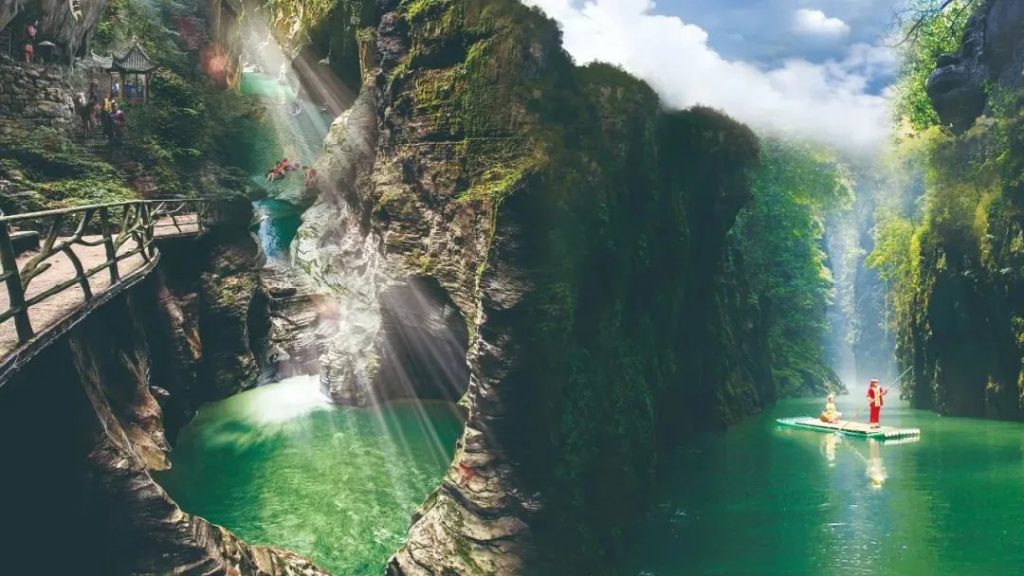
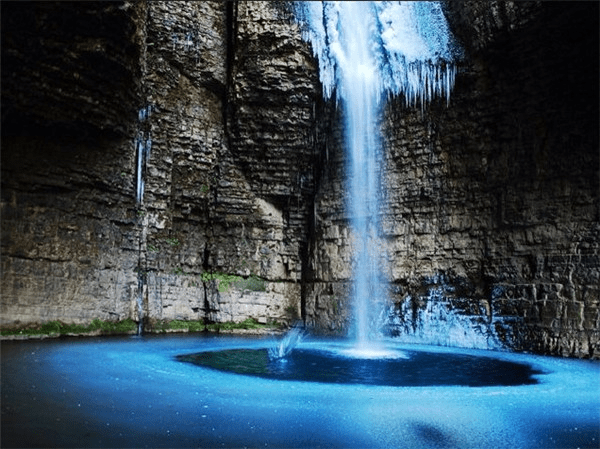
Nestled between Hunan Province, Chongqing Municipality, and Hubei Province, the Grand Canyon Scenic Spot in Enshi, China, is the most picturesque stretch of the Qingjiang River Basin and is often hailed as one of the world’s most beautiful canyons. With its dramatic 10,000-meter cliff gallery, plunging waterfalls, soaring peaks, and a ravine stretching for miles, the canyon rivals even the grandeur of the Colorado Grand Canyon in the USA. Two key areas within the canyon, Qixing Village and Yunlong Ground Fissure, cover an expanse of 35.2 square kilometers and are open to the public. These areas are renowned for their diverse limestone karst formations, such as tiankeng (sinkholes), ground fissures, cliffs, fengcong (peak clusters), limestone pillars, caves, and underground rivers, making it a natural museum of geological wonders and a world-class tourist destination.
The Qixing Village Scenic Spot, considered the highlight of the Qingjiang Grand Fissure, includes the Small Pass, Medium Pass, and Large Pass. Along its 8.5-kilometer-long boardwalk, visitors can marvel at several famous landmarks, including the Peaks of Small Mountain Pass, Longmen Stone Forest, Yixiantian (a thin strip of sky), Precipice Corridor, Cloud Torch, Greeting Pine, Yizhuxiang (a stick of incense), Twin Towers, Yubi Peak, Yunv Peak, and Yuping Peak.
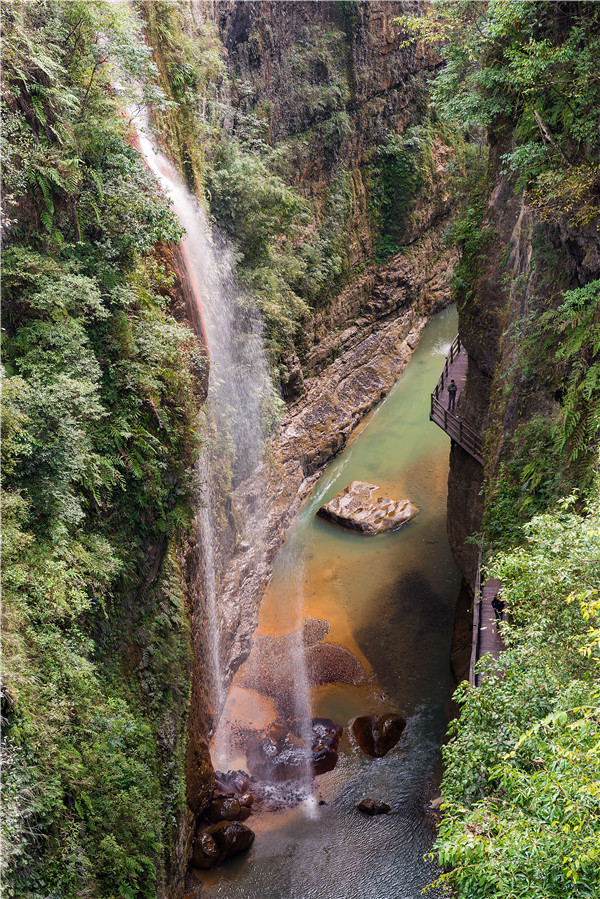
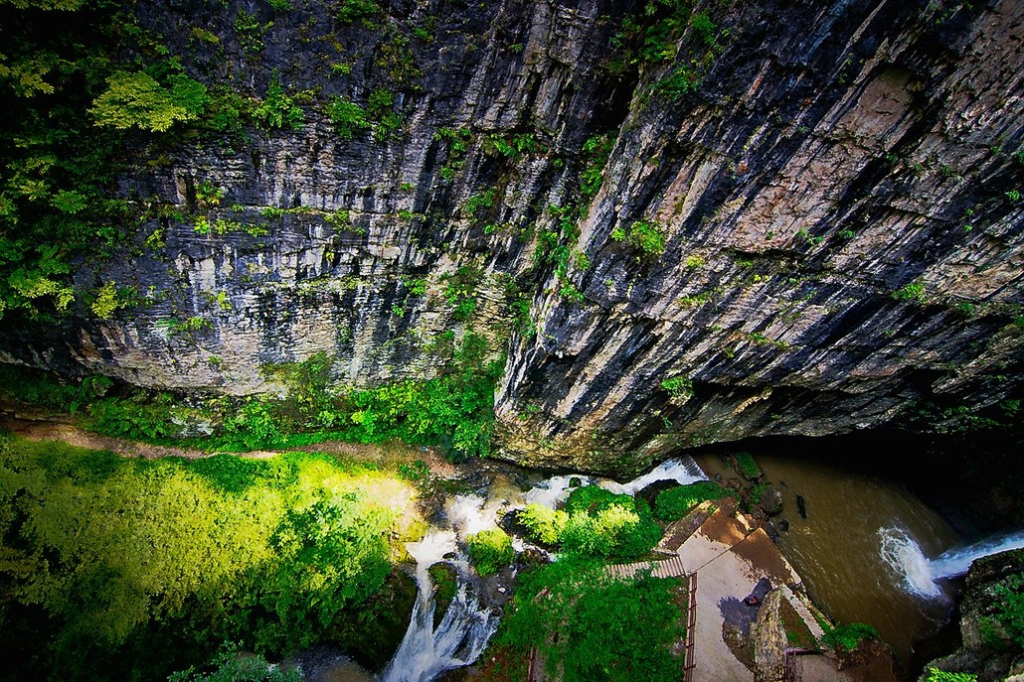
The U-shaped Yunlong Fissure, stretching 3,600 meters long and averaging 75 meters deep, is a stunning and unique karst formation. Within the fissure, waterfalls cascade dramatically down vertical drops, while outside, the fissure is surrounded by towering peaks and diverse landscapes. Notable waterfalls include Colorful Yellow Dragon Waterfall, Rainbow Waterfall, Yulong Waterfall, Ice Waterfall, and Mufu Waterfall.
Though the mysterious and steep Enshi Grand Canyon was not discovered until 2004 by a joint Sino-French expedition, it quickly captured global attention. In April 2012, U.S. explorer Dean Potter set a world record by walking a 41-meter-long slackline without assistance at Yizhuxiang, further showcasing the awe-inspiring wonders of the Enshi Grand Canyon.
White clouds rise from the Qingjiang River, twisting and turning like a dragon soaring into the sky. The sight of these clouds drifting for miles, smooth and majestic, is truly a feast for the eyes.
The canyon is also home to a striking combination of precipices and peak clusters, a geological feature unique to this region. Peaks seem to rise out of cliffs or soar above them, creating a landscape that is unmatched anywhere else in the world.
Over 200 caves of various sizes dot the canyon and are connected by natural bridges. The interplay of water and sky creates a fantastical atmosphere, as if you have stepped into another world.
The Yunlong River Fissure is lined with rock formations and ancient greenery, with numerous waterfalls and streams cascading down either side. The sheer beauty of this natural wonder is both breathtaking and unforgettable.
Tiankengs, or sinkholes, accompany the canyon’s underground river, which spans 50 kilometers, making it the longest underground river in the world. Along the river, 108 cenotes (natural sinkholes) create a truly spectacular sight.
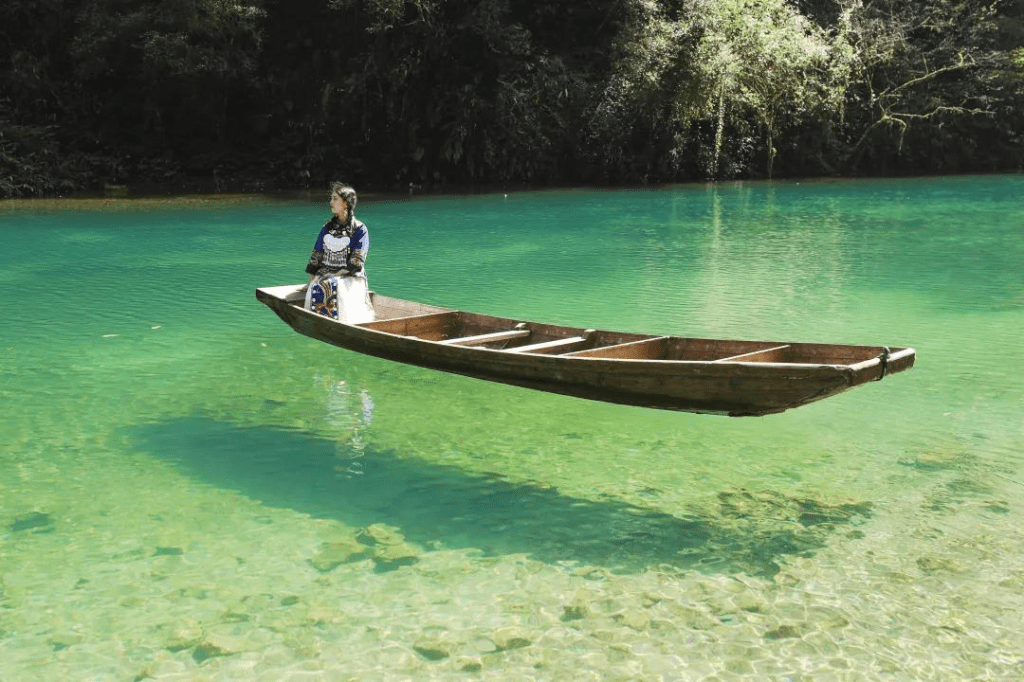
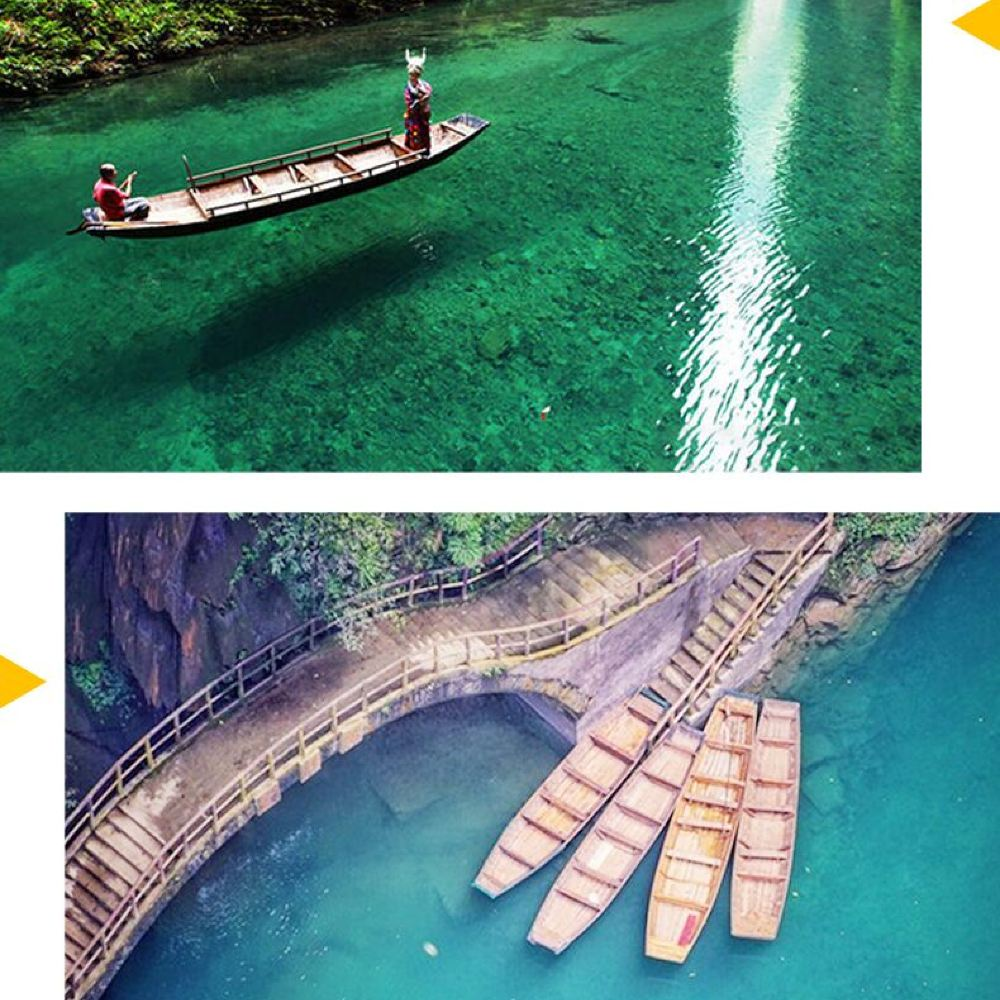
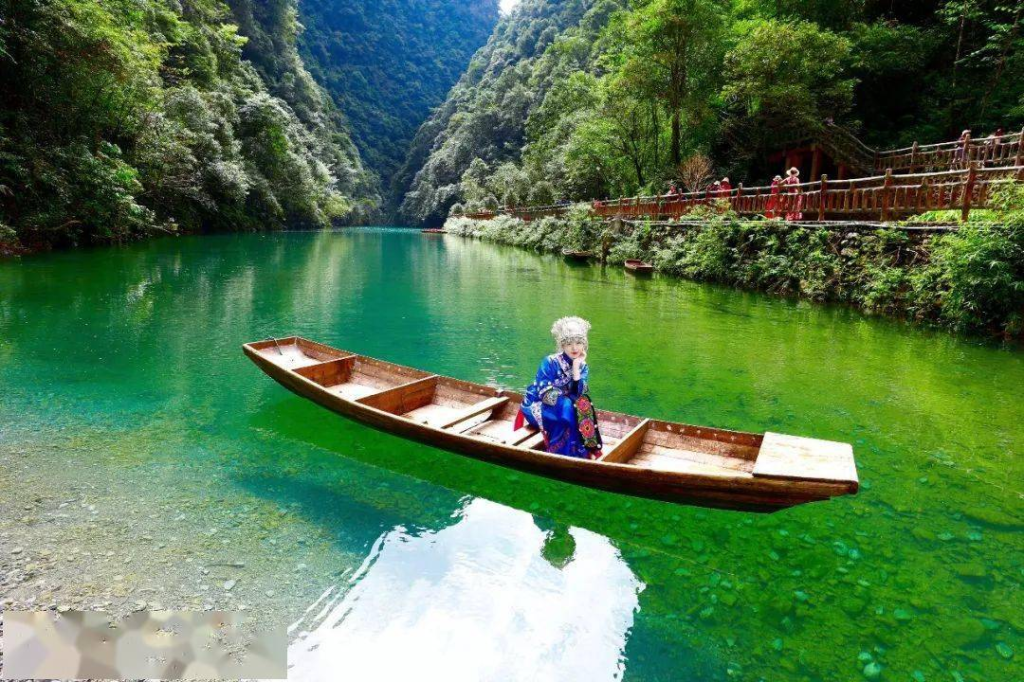
The waters of Pingshan Canyon are crystal clear, so clear they look drinkable. The boat seems to float in mid-air. As you ride in a small wooden boat and experience the sensation of floating, you see towering cliffs above and crystal-clear streams surrounding you below. Passing through narrow passages like “Yixiantian” (A Thread of Sky) and Moon Bridge, the only sounds are the gentle rush of water and the singing of birds. Gazing up at the sky from beneath these cliffs, there’s a deep sense of tranquility, as though you’re cut off from the world. The beauty of Pingshan Canyon is best captured by the lines: “Drunk, I know not whether the sky is in the water, but my boat is filled with clear dreams, pressing against the Milky Way.” To truly appreciate the splendor of Pingshan Canyon, you must come and experience it for yourself.
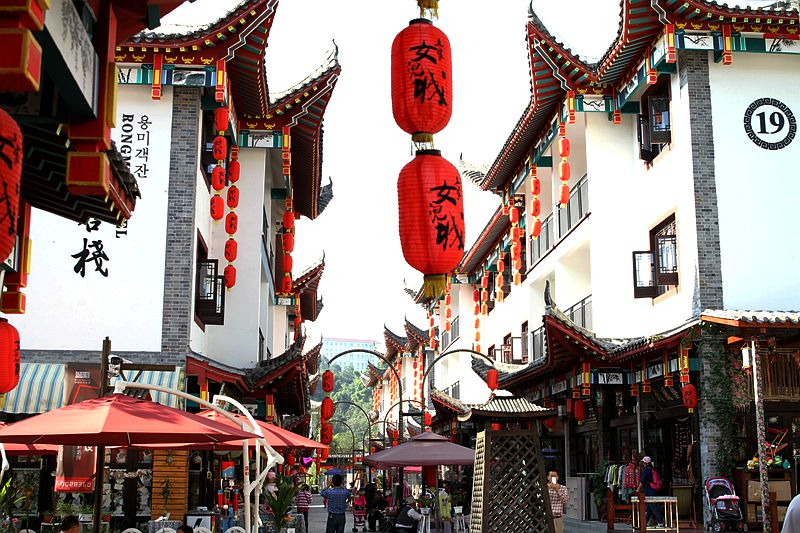
The Enshi Grand Canyon and its surrounding area are home to the vibrant Tujia Girls’ Festival, one of China’s most distinctive regional celebrations. This festival, unique to the Tujia people of Enshi, is more than just a marketplace gathering; it is a time-honored tradition where young women seek love on their own terms, often through the spirited exchange of songs in an antiphonal style. Dubbed the “Eastern Valentine’s Day,” it is a festival that symbolizes freedom and the pursuit of love.
Another fascinating cultural treasure rooted in Tujia heritage is Western Rancap, known as the “Flower of Tujia.” This beautiful craft reflects the ingenuity and artistic skill of the Tujia people, with its striking use of contrasting colors and intricate patterns that blend realism with abstraction. Historically, Tujia girls would weave these colorful bedrolls—often referred to as “Tujia Colorful Bedrolls”—on a loom as part of their wedding preparations, a tradition steeped in love and artistry.
Enshi is not just a region rich in cultural festivals but also a town alive with the arts, particularly in song and dance. The Tujia and Miao minorities express their joyful spirit through various performances, including the dragon boat song, hand-swinging folk dance, nuo opera, lantern drama, and the lively Tujia daliuz. The Dragon Boat Song, originating in Enshi Prefecture, is a love song that reflects the character and customs of the Tujia people. Recognized by UNESCO as one of the world’s 25 most remarkable folk songs, it embodies the heart and soul of Tujia culture. Renowned Miao singer Song Zuying has performed this song at prestigious venues like the Golden Hall of Vienna and Lincoln Center for the Performing Arts, sparking global interest in the music of Enshi.
The Enshi Grand Canyon Theatre brings this vibrant culture to life through large-scale real-life performances set against the stunning backdrop of mountains and rivers. The stage, illuminated by the natural light of the sun or moon, captures the simple and romantic spirit of Tujia love, creating an unforgettable experience for the audience.
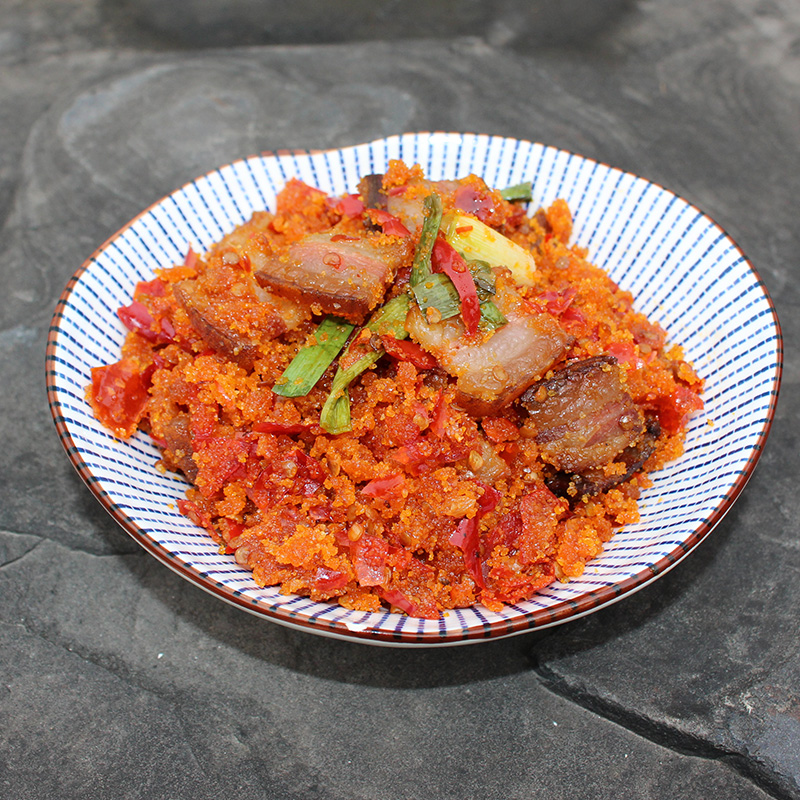
The distinctive geography of the Enshi Grand Canyon has also shaped its cuisine, which blends the spicy flavors of Sichuan with the salty heat of Hunan. Enshi’s local specialties, heavily influenced by the Tujia and Miao minorities, offer a tantalizing array of flavors that attract visitors from near and far. Dishes such as “Gege,” steamed with a mixture of fried Chinese pepper and other main ingredients, mini hot-pot “Hezha,” roasted preserved meats, stir-fried Guang pepper with a sour and spicy kick, and Tujia sesame cakes are must-tries for any traveler seeking to taste the region’s unique culinary heritage.
Enshi Grand Canyon stretches 108 km (67 miles) and covers over 300 sq. km (74,000 acres). Though it’s only 1.7 miles wide, its narrow length offers stunning views. In comparison, the American Grand Canyon is vastly larger at 1,218,560 acres, enough to fit sixteen Enshi Grand Canyons.
The main difference lies in the landscape: Enshi is lush and green, unlike the arid terrain of the American Grand Canyon. Despite its smaller size, Enshi packs in all the beauty and features of its American counterpart, making it an excellent spot for a day trip or longer visit.
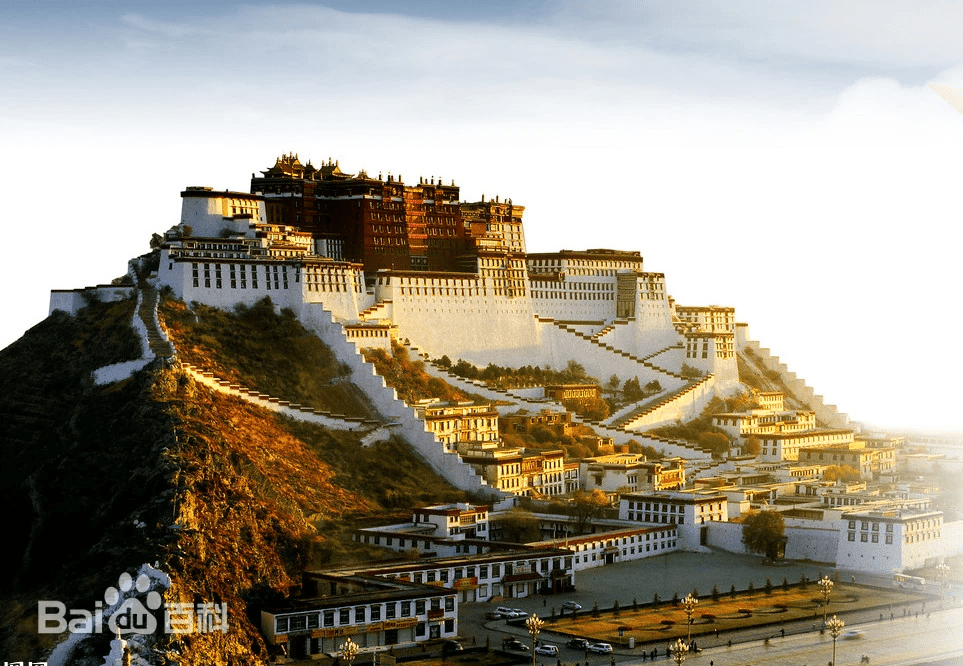
Located in the Tibet Autonomous Region of China, the Potala Palace is known as the “Jewel of the Roof of the World.” It stands as a symbol of China, Lhasa, and the Qinghai-Tibet Plateau. This palace, the highest and most majestic in the world, houses an incredibly rich collection of cultural relics and artifacts, preserving the unique heritage of the Snowy Plateau. The palace is renowned for its architectural layout, civil engineering, metal smelting, painting, and carving, showcasing the extraordinary skills of Tibetan artisans and the architectural achievements of the Tibetan people, as well as contributions from Han, Mongolian, and Manchu craftsmen. In December 1994, the Potala Palace was inscribed on the World Heritage List.
The magnificent Potala Palace stands at an altitude of 3,700 meters, covering a total area of 360,000 square meters, with a total building area of 130,000 square meters. The main building is 117 meters high, appearing to have 13 floors from the outside, while actually containing 9 levels internally. The complex includes palaces, stupas, Buddhist halls, scripture halls, monks’ quarters, and courtyards.
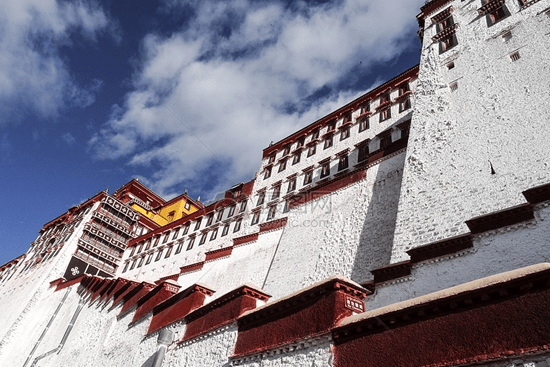
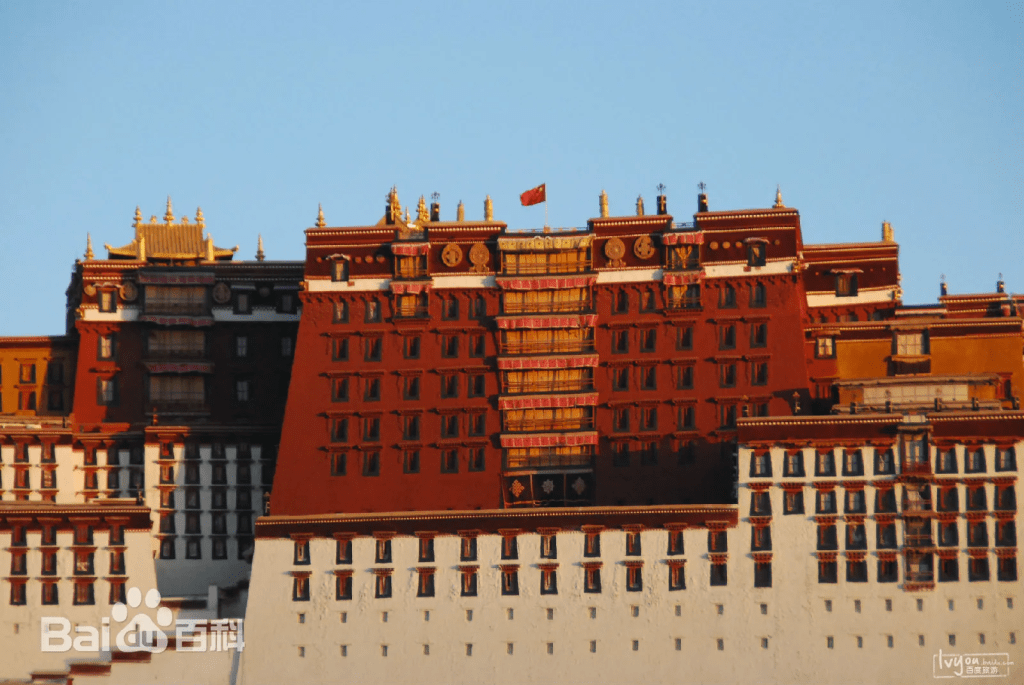
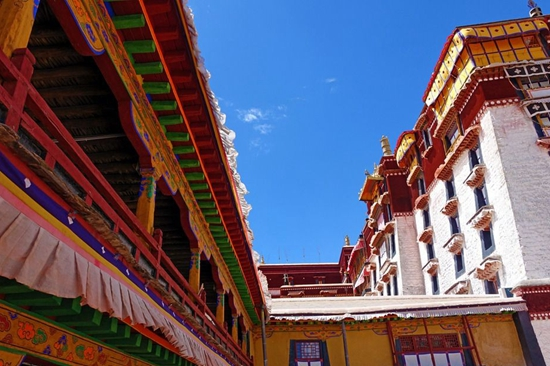
The Potala Palace’s main structure is divided into the White Palace and the Red Palace. Built into the mountainside, the complex features overlapping buildings, imposing halls, and a grand, sturdy granite structure. The white balustrades made of smooth bema grass, the resplendent golden roofs, and the large gilded bottles, stupas, and red banners create a striking decorative effect. The vivid contrast of red, white, and yellow, along with the intricate interlocking architecture, highlights the enchanting characteristics of ancient Tibetan buildings.
Historical records indicate that the Potala Palace was first constructed in the 7th century during the reign of Songtsen Gampo of the Tubo Kingdom, making it 1,300 years old. In the early 7th century, after moving the capital to Lhasa, Songtsen Gampo built three nine-story buildings with a total of one thousand rooms on Red Hill to welcome Princess Wencheng of the Tang Dynasty. The palace was named Potala Palace. The three walls surrounding Red Hill and a silver and copper bridge connecting the palaces of Songtsen Gampo and Princess Wencheng were part of the original structure. Outside the east gate of the Potala Palace was Songtsen Gampo’s horse-racing track.
When Princess Wencheng traveled to Tibet, she brought with her a large collection of books and documents, greatly promoting the development of Tibetan culture. It is said that there were more than 300 types of books on astronomy and calendrical calculations alone. The Tibetan calendar, still in use today, was created by absorbing and learning from the Han calendar, combined with the characteristics of Tibetan-inhabited areas and the experiences of the Tibetan people’s production labor. Classic works representing the excellent traditional culture of China, such as “Liezi,” “Shangshu,” “Strategies of the Warring States,” and “The Book of Questions Between Confucius and Xiang Tuo,” were also introduced to Tibet.
Ingenious Design and Construction
The design and construction of the Potala Palace take into account the patterns of sunlight in the plateau region. The foundation walls are broad and sturdy, featuring a network of tunnels and ventilation openings beneath them. Inside, the palace employs pillars, brackets, wooden struts, beams, and rafters to form its framework. The floors and roofs are made from a hard soil called “Arga.” Skylights are installed in the ceilings of each main hall and bedroom to facilitate lighting and air circulation. The pillars and beams inside the palace are adorned with various carvings, and the colorful murals on the walls cover an area of more than 2,500 square meters.
The Red Palace’s Enchanting Halls
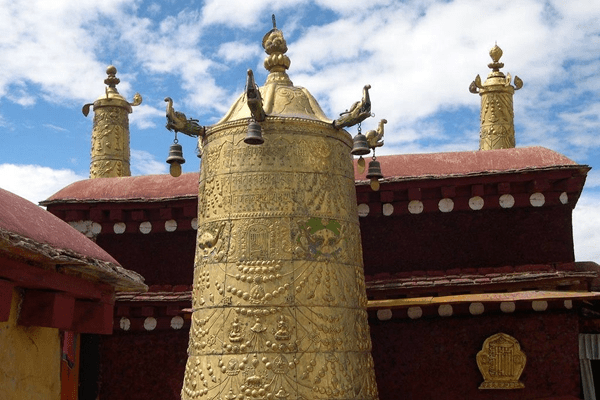
The Red Palace, situated in the central position of the Potala Palace, is distinguished by its red outer walls and mandala layout. The Hall of the Dharma King (Qujiejiebu) and the Hall of the Sage (Pabalakang) within the Red Palace are said to be structures remaining from the Tubo period. The Hall of the Dharma King is located in the middle of the Potala Palace, directly above the peak of Marpori Mountain. It is believed that this hall was once the meditation retreat of Songtsen Gampo and now houses statues of Songtsen Gampo, Princess Chizun, Princess Wencheng, and other ministers. The Hall of the Sage enshrines Songtsen Gampo’s principal deity, a naturally formed sandalwood statue of Avalokiteshvara. The rooftop platform of the Red Palace is adorned with the golden roofs of various stupa halls, all single-eaved hip-and-gable structures supported by wooden brackets and covered with gilded copper tiles.
Songtsen Gampo and Princess Wencheng (Image source: Potala Palace official website)
White Palace
A Masterpiece of Tibetan Architecture
The Potala Palace is a masterpiece of ancient Chinese architecture and an outstanding representative of Tibetan architecture. Its architectural artistry is the most remarkable example among the thousands of Tibetan Buddhist temples and palaces, unmatched anywhere in the world. At the pinnacle of the palace stand three gilded pagodas, one large and two small, shining brightly and dazzling the eyes. The parapet around the rooftop is constructed from a deep purple-red shrub, decorated with various gold ornaments. The roof is adorned with large gilded finials and red prayer flags, reflecting a strong Tibetan style.
A Fusion of Artistic Traditions
The sculptural art within the Potala Palace combines techniques from Han, Indian, and Nepalese Buddhist art. The palace houses a vast collection of treasures, including heavy-colored clay sculptures, wood carvings, stone carvings, and a significant number of metal statues made from gold, silver, copper, and iron. These works of art range in size from over ten meters tall to just a few centimeters.
Thangka Paintings and Cultural Treasures
“Thangka,” a Tibetan transliteration, refers to scroll paintings mounted on colorful silk brocade, depicting religious figures, historical events, and doctrines, as well as subjects like Tibetan astronomy, calendrical calculations, and traditional medicine. The Potala Palace preserves nearly ten thousand thangkas, some of which are several tens of meters long.
The palace also houses numerous religious and artistically significant artifacts, including Tibetan carpets, prayer cushions, prayer flags, canopies, and embroidered satin hangings.
Thangka of a stupa inscribed with the calligraphy of Emperor Qianlong. (Image source: Potala Palace official website)
Gilded bronze openwork incense burner with handle from the Potala Palace. (Image source: Potala Palace official website)
A National Treasure and World Heritage Site
The Potala Palace preserves a vast number of statues, murals, scriptures, and other cultural relics, making it a treasure trove of national art and culture. It is listed as a national cultural relic protection unit and a UNESCO World Heritage Site, reflecting its immense cultural and historical significance.
Explore the Potala Palace and immerse yourself in the rich tapestry of Tibetan history, art, and culture. Its breathtaking architecture and priceless artifacts offer a unique glimpse into the soul of Tibet, making it a must-visit destination for anyone seeking to understand the heritage of the Roof of the World.
Avalokiteshvara Bodhisattva, from beginningless eons, has been tirelessly saving countless sentient beings with his immense compassionate power. Despite his boundless efforts, he felt a sense of inadequacy. Thus, from the power of samadhi born of great compassion, he formed an immense compassionate force. This force, combined with the great compassionate power of Buddhas from the ten directions, resulted in a drop of green tear flowing from his eye, transforming into the infinitely majestic green female Bodhisattva, known as Green Tara. Due to this origin, Tara’s power to save is boundless and infinite.
Green Tara is revered as the Great Compassionate One and the Holy Savior Mother Buddha. The practice of the Green Tara ritual has a rich history that originated in India and later spread to China, Tibet, Japan, and beyond. The sacred roots of this practice trace back to Green Tara herself, who was initially the ancient Buddha Pravartaka and an incarnation of Avalokiteshvara Bodhisattva.
Chanting the Green Tara mantra even once, with focused contemplation of Tara’s sacred image, brings immense merit. Such merit is equivalent to chanting the names of seventy-two billion Buddhas and Bodhisattvas as numerous as the sands of the Ganges. Both the exoteric and esoteric traditions have extensive practices based on this ritual, and many practitioners have achieved great success and benefit from it.
Over time, the original texts and mandalas related to this profound practice have suffered from omissions and distortions in their transmission. For the past two hundred years, these deviations have increasingly moved away from the authentic regulations. In recent decades, the practice has nearly completely lost its true essence. Furthermore, the representations of Green Tara have deteriorated in form, lacking the dignity of the authentic appearance. This includes discrepancies in hand mudras, attire, and overall sacred depiction, resulting in a significant loss for the Buddhist community.
The Green Tara Perfect Practice Ritual and Thangka by H.H. Dorje Chang Buddha III
In response to these issues, H.H. Dorje Chang Buddha III transmitted the “Green Tara Perfect Practice Ritual” and personally supervised the creation of the Green Tara mandala thangka.
This three-dimensional thangka is not only lightweight and portable, making it easy to carry, but also presents the mandala clearly and vividly, ensuring that it remains etched in memory. Additionally, it possesses several extraordinary merits:
Authenticity and Compliance: The Green Tara mandala presented in the thangka fully complies with the regulations of the “Green Tara Perfect Practice Ritual.” This ensures that the practice remains true to its original form.
Historical and Miraculous Significance: Tara had already attained Buddhahood countless eons ago, her divine power is illustrious, and her sacred deeds are well-documented. Today, in the “Tara Hall” in Nethang, Tibet, the sacred statue of Tara once spoke to Atisha, instructing him, further propagating her holy name and Dharma power across China and Tibet. During the creation of this three-dimensional thangka, many miraculous occurrences were witnessed. For example, the sacred image of Tara, originally looking straight ahead, appeared differently in subsequent photographs taken from the same angle: one showed her looking up at the sky, while the other depicted her looking down at sentient beings. This clearly demonstrates Avalokiteshvara Bodhisattva’s extraordinary vow power: above, he shares the same compassionate force with all Buddhas and Bodhisattvas; below, he joins in compassionate aspiration with all sentient beings in the six realms. Additionally, when viewed from different angles, the main deity of Green Tara always faces the observer, and the seed syllables in the sky behind her follow her movement, appearing above her head. Furthermore, the colorful clouds, initially close to the sun and moon, seem to remain stationary while the sun and moon move vividly between the clouds from different perspectives.
Majestic and Unmatched Representation: The sacred image of Green Tara in the thangka is exceptionally majestic and perfect, unrivaled in both China and Tibet throughout history. The twenty Taras, each with different postures, exhibit supreme Dharma power, arranged behind the main deity, appearing and disappearing miraculously. Notably, standing in different positions reveals the Great Brahma Deva, the primary protector, initially as one, then suddenly as two, and then back to one again, a phenomenon unprecedented in history! Meanwhile, the Four Great Heavenly Kings and the Eight Dragon Kings remain unchanged. Additionally, Indra, the Four Great Heavenly Kings, and the retinue of the Eight Dragon Kings, wielding their divine weapons and instruments, surround and protect Tara with unmatched divine transformation. Visualizing this thangka makes the practice highly effective and rapidly fruitful.
Validation and Praise
Upon the completion of the “Green Tara Perfect Mandala Thangka,” Buddha Master specifically instructed disciples to bring all existing Green Tara statues of various materials from around the world to the Vajra Dharma Circle for public verification. They were to determine which one is the most orthodox and perfect thangka. The Vajra marbles immediately entered the mandala thangka, confirming that the Buddhas and Dharma protectors of the ten directions unanimously endorsed it.
Many of the seven classes of Buddhist disciples, upon practicing with this three-dimensional thangka, experienced unprecedented and unique realms. High monks, living Buddhas, and even Dharma Kings from around the world have all respectfully praised and recommended this rare and precious sacred image. In truth, among all the existing Green Tara images, none can compare to the perfection and majesty of this mandala thangka. Its blessing power is extraordinarily miraculous; a single glance imprints it deeply in the mind, leaving a lasting impression.
The Green Tara Perfect Practice Ritual and its accompanying thangka, as transmitted and supervised by H.H. Dorje Chang Buddha III, represent a revival of the authentic practice of Green Tara. This thangka not only restores the true essence of the practice but also enhances the spiritual experience for practitioners worldwide, offering unparalleled blessings and merits.





























 Peace LiLy