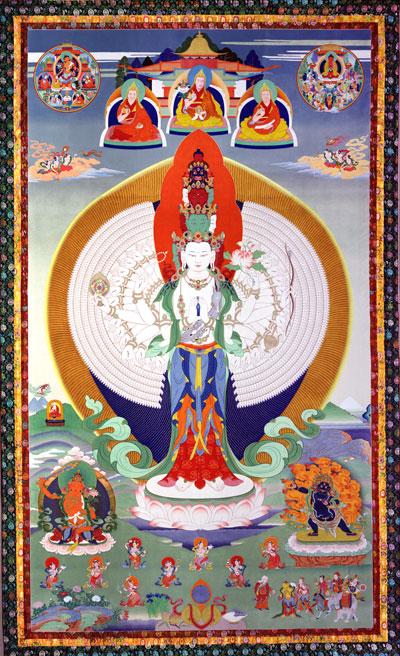
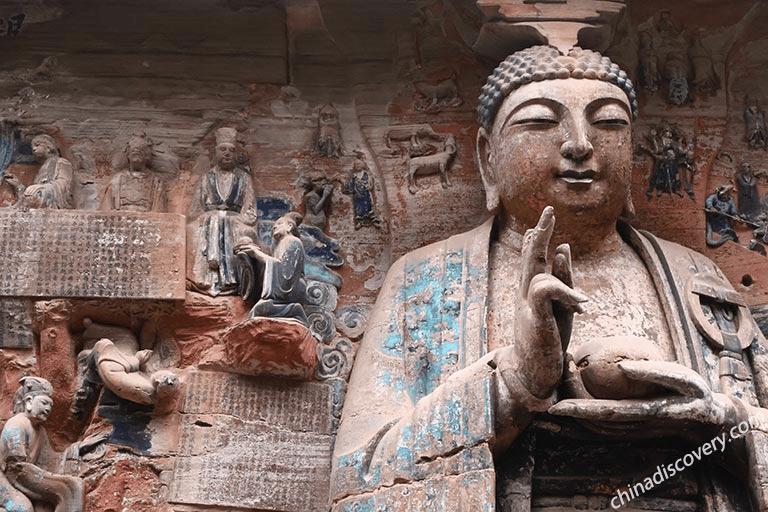
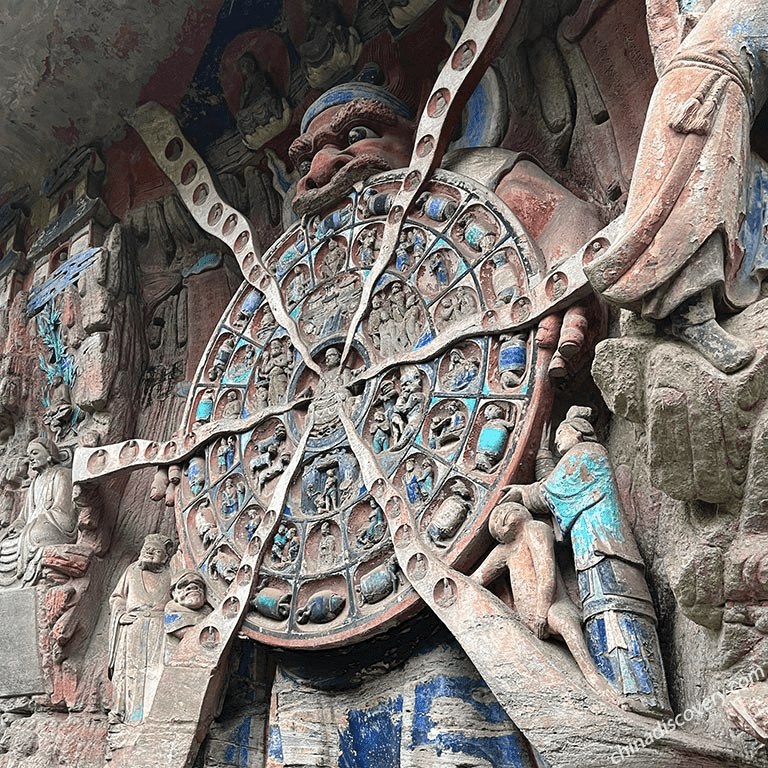
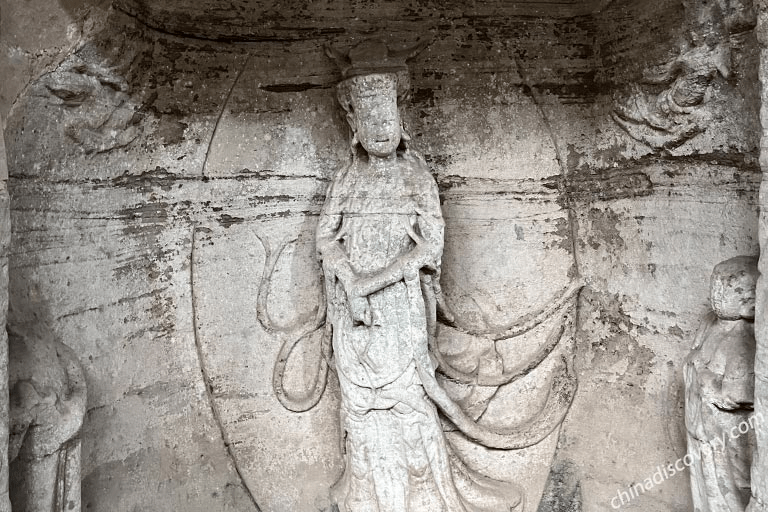
51. King Goodness the Great [Perseverance]

51. King Goodness the Great [Perseverance]

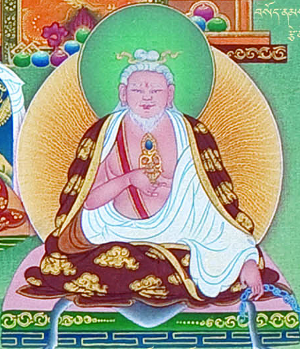
Once upon a time, in Benares in northern India, the Enlightenment Being was born into the royal family. When he became king he was called Goodness the Great. He had earned this title by trying to do good all the time, even when the results might not benefit him. For example, he spent much of the royal treasury on the building and running of six houses of charity. In these houses good and aid were given freely to all the poor and needy who came along, even to unknown travellers. Soon King Goodness the Great became famous for his patience, loving-kindness and compassion. It was said that he loved all beings just like a father loves his young children.

Of course King Goodness observed the holy days by not eating. And naturally he practiced the ‘Five Training Steps’, giving up the five unwholesome actions. These are: destroying life, taking what is not given, doing wrong in sexual ways, speaking falsely, and losing one’s mind from alcohol. So his gentle kindness became more and more pure.

Since he wished to harm no one, King Goodness the Great even refused to imprison or injure wrongdoers. Knowing this, one of his highest ministers tried to take advantage of him. He cooked up a scheme to cheat some of the women in the royal harem. Afterwards it became known by all and was reported to the king.

He called the bad minister before him and said, ‘I have investigated and found that you have done a criminal act. Word of it has spread and you have dishonoured yourself here in Benares. So it would be better for you to go and live somewhere else. You may take all your wealth and your family. Go wherever you like and live happily there. Learn from this lesson.’

Then the minister took his family and al his belongings to the city of Kosala. Since he was very clever indeed, he worked his way up and became a minister of the king. In time he became the most trusted adviser to the King of Kosala. One day he said, ‘My lord, I came here from Benares. The city of Benares is like a beehive where the bees have no stingers! The ruling king is very tender and weak. With only a very small army you can easily conquer the city and make it yours.’

The king doubted this, so he said, “You are my minister, but you talk like a spy who is leading me into a trap!’ He replied “No my lord. If you don’t believe me, send your best spies to examine what I say. I am not lying. When robbers are brought to the King of Benares, he gives them money, advises them not to take what is not given, and then lets them go free,”

The king decided to find out if this was true. So he sent some robbers to raid a remote border village belonging to Benares. The villagers caught the looters and brought them to King Goodness the Great. He asked them, “Why do you want to do this type of crime?”

The robbers answered, “Your worship, we are poor people. There is no way to live without money. As your kingdom has plenty of workers, there is no work for us to do. So we had to loot the country in order to survive.” Hearing this, the king gave them gifts of money, advised them to change their ways, and let them go free.

When the King of Kosala was told of this, he sent another gang of bandits to the streets of Benares itself. They too looted the shops and even killed some of the people. When they were captured and brought to king Goodness, he treated them just the same as the first robbers.

Learning of this, the King of Kosala began marching his troops and elephants towards Benares.

In those days the King of Benares had a mighty army which included very brave elephants. There were many ordinary soldiers, and also some that were as big as giants. It was known that they were capable of conquering all India.

The giant soldiers told King Goodness about the small invading army from Kosala. They asked permission to attack and kill them all.

But King Goodness the Great would not send them into battle. He said, “My children, do not fight just so I may remain king. If we destroy the lives of others we also destroy our own peace of mind. Why should we kill others? Let them have the kingdom if they want it so badly. I do not wish to fight.”

The royal ministers said, “Our Lord, we will fight them ourselves. Don’t worry yourself. Only give us the order.” But again he prevented them.

Meanwhile the King of Kosala sent him a warning, telling him to give up the kingdom or fight. King Goodness the Great sent this reply: “I do not want you to fight with me, and you do not want me to fight with you. If you want the country, you can have it. Why should we kill people just to decide the name of the king? What does it matter even the name of the country itself?”

Hearing this, the ministers came forward and pleaded, “Our Lord, let us go out with our mighty army. We will beat them with our weapons and capture them all. We are much stronger than they are. We would not have to kill any of them. And besides, if we surrender the city, the enemy army would surely kill us all!”

But King Goodness would not be moved. He refused to cause harm to anyone. He replied, “Even if you do not wish to kill, by fighting many will be injured. By accident some may die. No one knows the future – whether our attackers will kill us or not. But we do know whether our present actions are right or wrong. Therefore I will not harm, or cause others to harm, any living being!”

Then King Goodness ordered the city gates be opened up for the invaders. He took his ministers to the top floor of the palace and advised them, “Say nothing and try to remain calm.”

The King of Kosala entered the city of Benares and saw that no one was against him. So he and his soldiers entered and went up to the top floor. They capture the innocent King Goodness the Great. The soldiers tied the hands of the defeated king and all of his ministers.

Then they were taken to the cemetery outside the city. They were buried up to their necks, standing straight up, with only their heads above ground. But even while the dirt was being trampled down around his neck, the Great Being remained without anger in his mind and said nothing.

Their discipline and obedience to King Goodness were so great that not a single minister spoke a word against anyone. But the King of Kosala had no mercy. He said roughly, “Come night time, let the jackals do as they please!”

And so it came to pass that, at midnight, a large band of jackals wandered into the cemetery. They could smell a feast of human flesh waiting for them.

Seeing them coming, King Goodness and his ministers shouted all at once and scared the jackals away. Twice more this happened. Then the clever jackals realised, “These men must have been put here for us to kill and eat.” No longer afraid, they ignored the shouts. The jackal king walked right up to the face of King Goodness.

The king offered his throat to the beast. But before he could bite into him, the king grabbed the jackal’s chin with his teeth. No harming him, King Goodness gripped him tightly so the jackal king howled in fear. This frightened his followers and they all ran away.

Meanwhile the jackal king thrashed back and forth, trying madly to free himself from the might jaws of the human king. In so doing, he loosened the dirt packed around the king’s neck and shoulders. Then King Goodness released the screaming jackal. He was able to wiggle himself free from the loosened earth and pull himself up onto the ground. Then he freed all his frightened ministers.

Nearby there was a dead body. It just so happened that it was lying on the border of the territories claimed by two rival demons. They were arguing over the division of the body, insulting each other in ways that only demons can.

Then one demon said to the other, “Why should we continue quarrelling instead of eating? Right over there is King Goodness the Great of Benares. He is famous in all worlds for his righteousness. He will divide the dead body for us.

They dragged the body to the king and asked him to divide it between them fairly. He said, ‘My friends, I would be glad to divide this for you. But I am filthy and dirty, I must clean myself first.”

The two demons used their magic powers to bring scented water, perfume, clothing, ornaments and flowers from the king’s own palace in Benares. He bathed, perfumed himself, dressed, and covered himself with ornaments and flower garlands.

The demons asked King Goodness if there was anything else they could do. He replied that he was hungry. So, again by their magic powers, the demons brought the most delicious flavoured rice in a golden bowl and perfumed drinking water in a golden cup — also from the royal palace in Benders.

When he was satisfied, king Goodness asked them to bring him the sword of state from the pillow of the King of Kosala, who was sleeping in the palace in Benares. With magic that too was easily done. Then the king used the sword to cut the dead boy into two halves, right down the spine. He washed the sword of state and strapped it to his side.

The hungry demons happily gobbled up the fairly divided dead body. Then they gratefully said to King Goodness, “Now that our bellies are full, is there anything else we can do to please you?”

He replied, “By your magic, set me in my own bedroom in the palace next to the King of Kosala. In addition, put all these my ministers back in their homes.” Without a word, the demons did exactly as the king had asked.

At that moment the King of Kosala was fast asleep in the royal bedchamber. King Goodness the Great gently touched the belly of the sleeping king with the sword of state. The king awoke in great surprise. In the dim lamplight he was frightened to see King Goodness leaning over him with sword in hand. He had to rub his eyes to make sure he was not having a nightmare!”

Then he asked the great king, “My lord how did you come here in spite of all my guards? You were buried up to your neck in the cemetery — how is it you are spotlessly clean, sweet smelling, dressed in your own royal robes, and decorated with fine jewellery and the loveliest flowers?”

King Goodness told him the story of his escape from the band of jackals. He told of the two demons that came to him to settle their quarrel. And he told how they gratefully helped him with their magic powers.

On hearing this, the King of Kosala was overcome by his own shame. He bowed his head to King Goodness the Great and cried, “Oh great king, the stupid ferocious demons, who live by eating the flesh and drinking the blood of dead bodies — they recognised your supreme goodness. But I, who was lucky enough to be born as an intelligent and civilised human being — I have been too foolish to see how wonderful your pure goodness is.

“I promise never again to plot against you, my lord —- you who have gained such perfect harmlessness. And I promise to serve you forever as the truest of friends. Please forgive me, great king.” Then, as if he were a servant, the King of Kosala laid King Goodness the Great down on the royal bed, while he himself lay on a small couch.

The next day the King of Kosala called all his soldiers into the palace courtyard. There he publicly praised the king of Benares and asked his forgiveness once again. He gave back the kingdom and promised that he would always protect King Goodness. Then he punished his adviser, the criminal minister, and returned to Kosala with all his troops and elephants.

King Goodness the Great was sitting majestically on his golden throne, with its legs like those of a gazelle. He was shaded from the sun by the pure white royal umbrella. He taught his loyal subjects saying, “People of Benares wholesomeness begins with giving up the five unwholesome actions once and for all. The highest qualities of the good person, whether ruler or subject, are loving-kindness and compassion. Filled with these qualities, one cannot harm another —- no matter what the reason or the cost. No matter how dangerous the threat, one must persevere until the greatness of the good heart wins in the end.”

Throughout the rest of his reign, the people of Benares lived peacefully and happily. King Goodness the Great continued performing wholesome works. Eventually he died and was reborn as he deserved.

The moral is: Refusing to harm others, the good heart wins over all.

51. King Goodness the Great [Perseverance]

Link:https://hhdorjechangbuddhaiiiinfo.com/2023/08/15/king-goodness-the-great-perseverance/

#Buddhisttalesforyoungandold #Buddhiststories #storiesforkids #moralstories #Buddha #Jatakastories #PansiyaPanasJataka

The Crane and the Crab [Trickery]

Buddhist Tales for Young and Old, volume 1, Prince Goodspeaker, Stories 1-50


38. The Crane and the Crab [Trickery]

Once upon a time, there was a crane who lived near a small pond. Right next to the pond was a big tree with a fairy living in it. He learned by observing the various animals.

There were also many small fish living in the small pond. The crane was in the habit of picking up fish with his beak and eating them. Since there happened to be a drought in the area, the water level in the pond was becoming lower and lower. This made it easier for the crane to catch fish. In fact, he was even getting to be a little fat!

However, the crane discovered that no matter how easy it was to catch fish, and no matter how many he ate, he was never completely satisfied. But he did not learn from this. Instead, he decided that if he ate all the fish in the pond, then he would find true happiness. “The more the merrier!” he said to himself.

In order to catch all the fish in the pond, the crane thought up a clever plan. He would trick the fish, and deceive them into trusting him. Then when they trusted him the most, he would gobble them up. He was very pleased with himself for thinking up such a trick.

To begin with, the crane sat down on the shore. He remained quietly in one position, just like a holy man in the forest. This was intended to get the fish to trust him.

The fish came to him and asked. “Sir crane, what are you thinking?” The holy-looking crane answered, “Oh my dear fish, it makes me sad to think of your future. I am thinking about the coming miserable disaster.”

They said, “My lord, what disaster is coming to us?” To which the crane replied, “Look around you! There is very little water left in this pond. You are also running out of food to eat. This severe drought is very dangerous for you poor little ones.”

Then the fish asked, “Dear uncle crane, what can we do to save ourselves?” “My poor little children,” said the crane, “you must trust me and do as I say. If you allow me to pick you up in my beak, I will take you, one at a time to another pond. That pond is much bigger than this one. It is filled with water and covered with lovely lotuses. It will be like a paradise for you!”

When they heard the part about the beak, the fish became a little suspicious. They said, “Mr. Crane, how can we believe you? Since the beginning of the world, there has never been a crane who wanted to help fish. Cranes have put fish in their beaks only to eat them. This must be a trick. Or else you must be joking!”

The crane then raised his head and made himself look as dignified as possible. He said, “Please don’t think such a thing. Can’t you see that I am a very special crane? You should trust me. But if you don’t believe me, send one fish with me and I will show him the beautiful pond. Then when I bring him back here, you will know I can be trusted.”

The fish said to each other, “This crane looks so dignified. He sounds like an honest crane. But just in case it’s a trick, let us send with him a useless little troublemaker fish. This will be a test.” Then they found a young fish who was known for playing hooky from school. They pushed him towards the shore.

The crane bent his head and picked up the little one in his beak. Then he spread his wings and flew to a big tree on the shore of a beautiful big pond. Just as he had said, it was covered with lovely lotuses. The fish was amazed to see such a wonderful place. Then the crane carried him back to his poor old pond, just as he had promised.

Arriving home, the little fish described the wonders of the beautiful big pond. Hearing this, all the other fish became very excited and rushed to be the first to go.

The first lucky passenger was that same useless little troublemaker. Again the crane picked him up in his beak and flew to the big tree on the shore of the beautiful new pond. The little one was sure the helpful crane was about to drop him into the wonderful pond. But instead, the crane suddenly killed him, gobbled up his flesh, and let the bones fall to the ground.

The crane returned to the old pond, brought the next little fish to the same tree, and ate him in the same way. Likewise, one by one, he gobbled up every last fish!

He became so stuffed with fish meat that he had trouble flying back to the little pond. He saw that there were no more fish left for him to trick and eat. Then he noticed a lonely crab crawling along the muddy shore. And he realized that he was still not completely satisfied!

So he walked over to the crab and said, “My dear crab, I have kindly carried all the fish to a wonderful big pond not far from here. Why do you wish to remain here alone? If you simply do as the fish have done, and let me pick you up in my beak, I will gladly take you there. For your own good, please trust me.”

But the crab thought, “There is no doubt this over-stuffed crane has eaten all those fish. His belly is so full he can hardly stand up straight. He definitely cannot be trusted! If I can get him to carry me to a new pond and put me in it, so much the better. But if he tries to eat me, I will have to cut off his head with my sharp claws.”

Then the crab said, “My friend crane, I am afraid I am much too heavy for you to carry in your beak. You would surely drop me along the way. Instead, I will grab onto your neck with my eight legs, and then you can safely carry me to my new home.”

The crane was so used to playing tricks on others, that he did not imagine he would be in any danger — even though the crab would be grasping him by the throat. Instead he thought, “Excellent! This will give me a chance to eat the sweet meat of this foolish trusting crab.”

So the crane permitted the crab to grab onto his neck with all eight legs. In addition, he grasped the crane’s neck with his sharp claws. He said, “Now kindly take me to the new pond.”

The foolish crane, with his neck in the clutches of the crab, flew to the same big tree next to the new pond.

Then the crab said, “Hey you stupid crane, have you lost your way? You have not taken me to the pond. Why don’t you take me to the shore and put me in?”

The crane said, “Who are you calling stupid? I don’t have to take that from you. You’re not my relative. I suppose you thought you tricked me into giving you a free ride. But I’m the clever one. Just look at all those fish bones under this tree. I’ve eaten all the fish, and now I’m going to eat you too, you stupid crab!”

The crab replied, “Those fish were eaten because they were foolish enough to trust you. But no one would trust you now. Because you tricked the fish, you have become so conceited you think you can trick anyone. But you can’t fool me. I have you by the throat. So if one dies, we both die!”

Then the crane realized the danger he was in. He begged the crab, “Oh my lord crab, please release me. I have learned my lesson. You can trust me. I have no desire to eat such a handsome crab as you.”

Then he flew down to the shore and continued, “Now please release me. For your own good, please trust me.”

But this old crab had been around. He realized the crane could not be trusted no matter what he said. He knew that if he let go of the crane, he would be eaten for sure. So he cut through his neck with his claws, just like a knife through butter! And the crane’s head fell on the ground. Then the crab crawled safely into the wonderful pond.

Meanwhile, the inquisitive fairy had also come to the new pond and seen all that had happened. Sitting on the very top of the big tree, he said for all the gods to hear:

“The one who lived by tricks and lies,
No longer trusted now he dies.”

The moral is: The trickster who can’t be trusted, has played his last trick.

38. The Crane and the Crab [Trickery]

Link: https://hhdorjechangbuddhaiiiinfo.com/2022/10/04/the-crane-and-the-crab-trickery/

INTERPRETER’S INTRODUCTION – BUDDHIST TALES FOR YOUNG AND OLD, VOLUME 1, STORIES 1-50

#Buddhisttalesforyoungandold #Buddhiststories #storiesforkids #moralstories #Buddha #Jatakastories #PansiyaPanasJataka

Control Your Anger and Do not React

Many people struggle with the challenge of controlling their emotions. When faced with situations that contradict our feelings, desires, or goals, frustration and anger can easily overwhelm us, causing us to lose our temper and shift blame onto others. Unfortunately, such reactions often exacerbate the problem, leading to harm for ourselves and those around us. However, there are valuable lessons we can learn from a story that might inspire us to gain control over our anger and maintain peace and calm within our hearts.

The following story serves as a powerful reminder of the importance of non-reaction:

Once upon a time, there was a young man who was very interested in Zen Buddhism. He had read many books and articles about it, and he was eager to learn more. One day, he decided to visit a Zen master to ask him about the art of non-reaction.

The Zen master was a very old man with long white hair and a beard. He was sitting in the Lotus position on a cushion in his meditation room. The young man bowed respectfully and asked the Zen master to teach him about non-reaction.

The Zen master smiled and said, “Non-reaction is the ability to let go of your thoughts and emotions. It is the ability to see things as they are without judgment or attachment. When you can non-react, you are free from suffering.”

The young man was confused and asked, “How can I let go of my thoughts and emotions? They are a part of me.”

The Zen master replied, “Your thoughts and emotions are not a part of you. They are simply passing through you. You are the witness, not the actor. When you can see your thoughts and emotions for what they are, you will be free from them.”

The young man thought about this for a moment. He had never thought of his thoughts and emotions as being separate from him before, but the Zen master’s words made sense. “I will try to practice non-reaction,” he said.

The Zen master smiled and said, “Good, but remember, it is not something that can be forced. It comes with practice.”

The young man left the Zen master’s house and went on his way. He tried to practice non-reaction throughout the day, but it was difficult. Every time he thought about something that made him angry or upset, he would react. But the young man didn’t give up; he kept practicing, and slowly but surely, he began to get better at it.

He started to notice that when he didn’t react to his thoughts and emotions, they would eventually pass away on their own. One day, while walking down the street, he saw a man arguing with a woman. The man was yelling at the woman, and she was crying. The young man felt angry and upset, but he remembered what the Zen master had said. He took a deep breath and let go of his anger. He saw the man and the woman for what they were: two people caught up in their own suffering of karma. The young man walked away feeling peaceful and at ease. He had finally learned the art of non-reaction.

The young man continued to practice non-reaction throughout his life. He found that it was a powerful tool that helped him live a more peaceful and fulfilling life. He was able to let go of his anger, fear, and sadness, and he was able to see the world with a clear and open mind. The art of non-reaction is a powerful tool that can help us live happier and more fulfilling lives. It is not easy to master, but it is worth the effort.

Control Your Anger and Do not React

Link:https://peacelilysite.com/2023/07/27/control-your-anger-and-do-not-react/

#BuddhismTeaching #BuddhistTales #BuddhistStory #Non-reaction # ControlAnger #Peace#Calm #Innerpeace #Happiness

Source: https://www.youtube.com/watch?v=C8h36cFt6X8

Way to Find Your Inner Voice and Happiness

Once upon a time in a remote village, nestled between the mountains, there lived a wise old monk named Master Sean. He was renowned for his ability to guide people in finding their inner voice, a skill that had been passed down through generations of monks in his lineage.

One day, a young man named Kaito arrived at the monastery seeking guidance from Master Sean. He had heard tales of the wise monk and hoped to learn the secret of listening to his inner voice. Master Sean welcomed Kaito with a warm smile and led him to a quiet room overlooking the monastery’s lush gardens.

Before we begin,” said the wise monk, “I want you to spend some time in silence, observing the garden and the creatures that inhabited it.” Kaito sat by the window watching the birds flip from branch to branch, the squirrel scamper across the grass, and the butterflies dance in the breeze. As he observed the harmony of nature, he felt a sense of peace wash over him.

After some time, Master Sean returned and asked Kaito what he had learned from his observations. Kaito replied, “I saw how each creature has its own rhythm and purpose and how they all coexist in harmony.” Master Sean nodded, pleased with Kaito’s insight.

“Now let me tell you a story,” he said, settling into a comfortable chair. “Once there was a young monk who lived in a monastery high in the mountains. He was diligent in his studies and meditation, but he struggled to hear his inner voice. One day, his master took him to a nearby cave where they found a small clear pool of water.”

The master instructed the young monk to gaze into the pool and describe what he saw. The young monk peered into the water and saw his own reflection, along with the reflections of the cave walls and the flickering light of their torches. The master then asked the young monk to close his eyes and listen to the sounds around him.

The young monk heard the gentle dripping of water, the distant echo of their voices, and the soft rustling of the wind outside the cave. Finally, the master told the young monk to open his eyes and look into the pool once more. This time, the young monk saw something different beneath the surface of the water. He could see a world of shimmering fish darting among the rocks and plants.

The master explained that the pool was a metaphor for the young monk’s mind. The surface reflections represented his thoughts and emotions, while the hidden world beneath symbolized his inner voice. To hear that voice, the young monk needed to learn to look beyond the surface distractions and listen deeply to the quiet whispers within.

Kaito listened intently to Master Sean’s story, feeling a spark of understanding ignite within him. He asked, “How can I learn to look beyond the surface and hear my inner voice?” Master Sean smiled and replied, “You must practice mindfulness and cultivate stillness in your mind. Just as the pool’s surface becomes calm and undisturbed, so too will your mind reveal its hidden depths when you learn to quiet your thoughts and emotions.”

Over the following weeks, Kaito practiced meditation and mindfulness under Master Sean’s guidance. He learned to observe his thoughts without judgment, allowing them to pass like clouds in the sky. Gradually, he began to hear the whispers of his inner voice, guiding him with wisdom and clarity.

As the story of Kaito and Master Sean comes to a close, let us reflect on the nature of happiness. Happiness, like the inner voice, is often found in the depths of our being, beyond the surface distractions of our thoughts and emotions. It is not a fleeting sensation or a temporary state, but rather a profound sense of contentment and inner peace that arises from living in harmony with our true selves.

To cultivate happiness, we must learn to listen to our inner voice, allowing it to guide us on our journey through life. By embracing mindfulness and stillness, we can quiet the noise of our minds and tune into the wisdom that resides within us. In doing so, we discover that happiness is not something to be pursued or acquired, but rather a natural state of being that emerges when we align ourselves with our deepest values and aspirations.

In the words of the ancient philosopher Lao Tzu, “Happiness is the absence of the striving for happiness.” May we all find the courage to let go of our endless pursuit of external validation and material success, and instead turn inward, seeking the happiness that lies within our own hearts and minds.

Way to Find Your Inner Voice and Happiness

Link: https://peacelilysite.com/2023/07/21/way-to-find-your-inner-voice-and-happiness/

Source: https://www.youtube.com/watch?v=GvaXoS782sE

Six Powerful Habits That Will Change Your Life Forever

Once upon a time, a young man was very much troubled by his bad habits. His life was completely disturbed due to his bad habits. He did not value his time at all. He would just waste the whole day on useless things. He was also very lazy and drowsy. Whenever his family members asked him to do some work, he would try to avoid that work by making excuses. And for some reason, if he had to do that work, he would do it in haste without any interest. Whenever his parents tried to teach him something, he would argue with them without admitting his mistake. He would always postpone important tasks and decisions for tomorrow and try to avoid all kinds of responsibilities. Slowly and slowly, when all his friends started outdoing him, he began to realize that his bad habits are now causing him to lag. He tried many times to improve his bad habits, but every time he failed in it. Then one day, one of his friends told him that a monk is staying in a hut outside the village for a few days. He suggested him to meet the monk for his problem. Although the young man did not believe, he still reached the monk to meet him the next day.

When he reached there, the monk was meditating with his eyes closed. The young man went in front of him and bowed to him. The monk opened his eyes and with a smile on his face, he asked the young man to sit. The young man told his problem to the monk and told him how he wanted to change his habits but he failed every time. The monk listened to the young man patiently. Then he thought for a moment and said, “My friend, you want to change your habits in a few days, but you must know that just as it takes a long time to form habits, similarly, it will take a long time to change those habits. For this, you have to give time and change your bad habits with good habits. For example, if you want to leave the habit of lying, then you will have to adopt the habit of telling the truth first.” Then the monk became serious and said, “Son, today I will tell you about six such habits which will not only change your old habits but can also change your life.”

The first habit to adopt is reading books. Books contain answers to the questions that arise in your mind. Many people before you have had the same questions and have written down their answers in books. By reading books, you can gain knowledge and learn from the experiences of others.

It’s a way to discover your shortcomings and develop new and positive thoughts that will help you progress in life. Successful people often have the habit of reading books, so start reading today to bring about a miraculous change in your life.

The second habit recommended is writing. While reading books is a great way to gain knowledge, it’s easy to forget what you’ve learned. Writing down valuable information helps you retain and implement what you’ve learned. It also allows you to connect with your inner self, focus your mind, solidify your thoughts, and generate new ideas. Writing down your goals and keeping them visible can inspire you to work towards them.

The third habit is meditation, described as a solution for mental problems. Often, our troubles stem from dwelling on the past or worrying about the future. Meditation brings you to the present moment, reducing the flow of thoughts, calming your mind, and preventing overthinking. Regular meditation enhances your focus, reduces stress, and keeps your mind healthy.

Expressing gratitude for what you have is the fourth recommended habit. By focusing on what you have instead of what you lack, you can fill your life with happiness. Even during difficult times, taking a moment to appreciate what is going well can keep you content. Expressing gratitude reminds you of the abundance in your life and fosters a positive outlook.

The fifth habit is waking up early. This habit is common among successful individuals. Rising early makes you feel refreshed, happier, and more energetic. Mornings offer a peaceful environment with fewer distractions, enabling better concentration on work, studies, or activities such as yoga, meditation, exercise, or a morning walk. Waking up early reduces stress, anger, and fosters an optimistic and positive attitude.

The sixth habit is self-discipline. It involves creating a daily routine that promotes punctuality and hard work. Discipline contributes to present happiness and a promising future. It forms habits that shape your identity. Examples of disciplines include waking up early, consistent meditation, reading good books, consuming healthy food, avoiding junk food, exercising regularly, and practicing breathing exercises.

By adopting these six habits, your life can experience miraculous changes. Just as the young man who listened to the monk’s advice, make a promise to yourself to incorporate these habits into your life. If you want to bring positive change and progress towards your goals, start adopting these habits today. You will witness improvement and transformation in your life.

Six Powerful Habits That Will Change Your Life Forever

Link:https://peacelilysite.com/2023/07/14/six-powerful-habits-that-will-change-your-life-forever/

#Self-discipline #ReadingBooks#Meditation #Gratful #Writing #Monk #Buddhism #Gratitude

Source: https://www.youtube.com/watch?v=EUmL0zSV4Fw

Refrain from Harsh Words, Kind Speech Will Bring Wealth for Love

Photo by Sharath G. on Pexels.com

A Jataka Tale: The Ox Named Great Joy

The Buddha recounted this tale in response to a dispute between two monks, highlighting the destructive nature of harsh words. Gathering a large group in the monastery hall at Jetavana, he addressed them, saying:

“Monks and nuns, even animals suffer unhappiness due to harsh words. Allow me to share with you a story from ancient times, when bitter words caused a farmer to lose his fortune.”

Once, in a bygone era, the Future Buddha manifested as a bull and was gifted to a farmer. Overjoyed, the farmer named the young calf “Great Joy” and treated him like his own child. He provided the bull with the best rice and milk, fostering his growth. Great Joy flourished and became a mighty ox, black as the night sky and as radiant as the stars. Despite his immense strength, he remained gentle and obedient.

After years of tender care, Great Joy felt immense gratitude towards the farmer. He thought to himself, “The farmer has raised me with loving kindness and made great sacrifices for my well-being. He has even gone hungry at times to ensure I am well-fed. I must find a way to repay him for all his kindness!” The next morning, as the farmer brushed the bull, Great Joy spoke to him, saying, “Master, I have devised a plan to repay you for your many years of care.”

Pausing his brushing, the farmer gently placed his hand upon the bull’s large head and replied, “Great Joy, you already plow my fields, turn my well wheel, and carry heavy loads to and from the village. You work tirelessly, and there is no need for you to repay me. Do not trouble yourself with such matters.”

However, Great Joy was determined to execute his plan. “Master, please listen. I have a marvelous idea that will make you instantly wealthy. Journey to the town today and find a merchant who owns a vast herd of oxen. Make a bet with him for a thousand silver pieces, claiming that your bull is the mightiest in all of India. Wager that tomorrow morning, in the village square, your ox will draw a hundred carts overflowing with rocks, stones, and gravel!”

Skeptical, the farmer replied, “My dear friend, how could any ox in the world pull a hundred loaded carts? It has never been done before. The entire town will think I have gone mad.”

Unyielding, Great Joy persisted, “I possess the strength, and I will not let you down.”

“But what if you fail to pull such a heavy load? A thousand silver pieces comprise all I possess! If you lose, I will be left impoverished!”

Remaining steadfast, Great Joy reassured him, “I promise you, I will not let you down. I will not lose the wager, and you shall not lose your money.”

And so, the farmer followed the ox’s suggestion. He ventured to the village and positioned himself in the town square, where business transactions took place. Eventually, a wealthy merchant dressed in fine robes approached him. Seizing the opportunity, the farmer boldly proclaimed, “Did you know, gentlemen, that I am the owner of the strongest ox in the kingdom? I doubt there is a bull in all of India that can rival mine! In fact, my bull may be the largest and mightiest in the entire world!”

The crowd fell silent upon hearing his boast. All eyes turned towards the farmer. Finally, the wealthy merchant broke the silence and retorted, “It is widely known that I, sir, possess an entire herd of the world’s strongest oxen. What makes your single bull so exceptional?”

Photo by Ricky Esquivel on Pexels.com

Realizing he had found the ideal opponent, the farmer promptly replied, “I have a bull capable of effortlessly pulling a hundred fully loaded carts!”

Mockingly, the merchant responded, “And where might this extraordinary bull be found? In the land of fairies and dreams?”

“He resides at my home,” answered the farmer confidently.

“Well, if you hold him in such high regard, let us make it a wager,” challenged the merchant.

“Certainly,” agreed the farmer. “I will bet you a thousand silver pieces that my bull can move one hundred carts fully loaded with rocks, stones, and gravel. Prepare the carts and meet me here in the village square at sunrise tomorrow morning.” With a firm handshake, the deal was sealed, and both parties made their preparations.

The following morning, before daybreak, the farmer fed Great Joy sweet milk and hay, bathed him, and brushed his coat until it shone. Speaking gentle and soothing words, just as he did every day, the farmer adorned the ox’s neck with a garland of flowers.

Great Joy knew the moment had arrived to prove himself.

At dawn, the farmer led Great Joy to the village square. Excited onlookers, including men, women, and children, filled the streets, eager to witness the outcome of this seemingly impossible bet. The farmer was astounded by the sight that greeted him—an unprecedented number of carts, each loaded to the brim with rocks. If any doubts lingered in the farmer’s mind, they were quickly replaced by certainty that he had been foolish to believe a mere animal’s promise.

Photo by Karen Lau00e5rk Boshoff on Pexels.com

Nevertheless, Great Joy stood proudly at the head of the line of carts, awaiting his harnessing. Magnificent and towering, his shoulders surpassing any other ox, he captured the awe of the crowd. Two men struggled to secure the heavy yoke upon his broad back, and then they attached the carts in a long chain.

Anxious, the farmer anticipated his impending humiliation before the townsfolk. Clutching the leather goad tightly, he muttered to himself, “I cannot afford to lose this wager. The ox has made a promise, but I am his master. I must ensure that he pulls the carts without fail. Ailee! I have risked my life savings on the word of a mere beast!” With determination, the farmer raised his goad and struck Great Joy forcefully, shouting, “Now, you beast, pull the carts! Pull! Pull, you rascal!”

Great Joy was taken aback by this treatment. He thought, “I am not a rascal! I am not a beast! He has never spoken to me like this before or used a whip on me. I will not move an inch!” Ignoring the lashes of the whip and the harsh words from his friend, Great Joy planted his hooves firmly, like the roots of four Banyan trees, and remained immobile.

Instantly, the crowd erupted in laughter and mockery, witnessing the farmer’s stubborn ox refusing to obey. Once again, the farmer struck Great Joy with the goad and cursed him, but the ox gazed straight ahead, disregarding the goad, the farmer, and the jeering crowd. In no time, the crowd began pelting both the farmer and the ox with mud and dung. Overwhelmed with shame, the farmer hung his head low and reluctantly handed over his entire savings to the merchant.

Jingling the coins in his hands, the merchant chuckled and said, “Whenever you wish to make another wager, seek me out! What ox could possibly pull a hundred loaded carts?” he laughed.

Despondent and penniless, the farmer unharnessed Great Joy from the line of carts and led him back home. The villagers taunted them along the way, hurling insults, rotten fruit, and mud. The farmer tied the ox to a stake and retreated inside his home, overcome with grief. “I am a pauper! It took me twenty years to earn that silver!” he wailed and moaned.

Hearing the farmer’s pained sobs from outside, Great Joy approached the window and inquired what was wrong. “I have lost all my money because of you!” the farmer bitterly exclaimed. “You promised me you wouldn’t let me down!”

Great Joy replied, “Ah, but master, it was you who let me down! Throughout all the time I have lived under your care, have I ever harmed anyone? Have I ever been clumsy or broken a pot? No. I have carried children gently on my back, even allowing the smallest of them to lead me. I have always done exactly as you asked.”

“Yes, I suppose you are right,” sniffed the farmer.

“Well, then, go once more to the town and bet the merchant double the silver. We shall meet him again in the square tomorrow morning at sunrise. But remember, treat me kindly as you always have, and I will treat you as I always have!”

Hurriedly, the farmer returned to town, found the merchant, and presented him with a new offer. Laughing at the prospect of making even more money, the merchant agreed to another wager.

At dawn the next morning, the village square mirrored the scene from the previous day. One hundred carts stood in a long line, each loaded with rocks. Once again, the streets were filled with eager spectators. Great Joy, bathed and brushed with a fresh garland around his neck, walked proudly alongside the farmer to the front of the carts. However, people chatted and joked, not taking the two participants seriously.

The weighty wooden yoke was placed upon Great Joy’s back, and the ropes were securely fastened. The farmer stood beside his ox, gently stroking his powerful shoulders. After a while, he leaned over and spoke softly into the bull’s ear, “Now, my fine fellow, my friend, pull the carts forward!”

Upon hearing these words, Great Joy seemed to grow in size. His muscles tensed, and he leaned against the ropes with all his might, causing them to tighten, cart by cart, until reaching the hundredth. Great Joy strained and pulled, taking one step and then another, each accompanied by a surge of momentum. Step by step, with unwavering determination, Great Joy continued his effort until the final cart stood exactly where the first one had started.

Photo by Renjith Tomy Pkm on Pexels.com

It was a sight to behold! Cheers and applause filled the air as flowers and money rained down upon the bull and the farmer. Great Joy, glistening with sweat, stood nobly and proudly in his place.

The merchant shook his head in disbelief but paid the two thousand silver coins as agreed. Children reached out to stroke the mighty ox, marveling at his remarkable perseverance. There was much celebration. Before the morning came to an end, the farmer and his faithful companion, Great Joy, trotted down the dusty road back home, where they lived happily and prosperously ever after.

Thus, the Buddha finished his lesson with the monks and nuns, sayingagain that harsh words please no one. And he spoke this verse in conclusion:

Speak only kind words: never be unkind.

For he who speaks gently, the ox moves the whole earth,

And brings him wealth for love.

A Jataka Tale: The Ox Named Great Joy

Link:https://peacelilysite.com/2023/06/28/refrain-from-harsh-words-kind-speech-will-bring-wealth-for-love/

#Kindness # Buddha #BuddhistTales #JakataTales#GreatJoy #Ox

Source: Kindness A Treasury of Buddhist wisdom for Children and Parents By Sarah Conover Page 111-118

A Jataka Tale Depicted by Art

The complete Prince Mahasattva jataka tale mural. Mogao Cave 428. Northern Zhou, 557-581 CE. Dunhuang. Image courtesy of the Dunhuang Academy

Prince Mahasattva

Jataka tales are fascinating narratives that shed light on the past lives of the Buddha. These captivating stories unveil the incarnations preceding Prince Siddhartha Gautama’s birth and illustrate the ways in which he accumulated virtuous karma through selfless acts of sacrifice.

Before his existence as Prince Siddhartha Gautama, the Buddha’s soul had already amassed immense virtue from numerous previous lifetimes, embodying various selfless beings.

One remarkable representation of these Jataka tales can be found in a Dunhuang mural. Located on the eastern wall of Mogao Cave 428, this mural intricately portrays a renowned Jataka tale featuring Prince Mahasattva. The entire narrative is depicted across three registers, capturing the essence of the story within its captivating artwork.

Detail of the three princes paying their respects to the king and queen before they leave for the forest. First register, right section. Mogao Cave 428. Northern Zhou, 557-581 CE. Dunhuang. Image courtesy of the Dunhuang Academy.

The mural commences on the right-hand side of the first register, where a captivating scene unfolds. Three young men, their hands pressed together in a gesture of genuflection, kneel before a majestic blue pagoda. Inside the pagoda, two figures exuding regal aura can be identified as the king and queen, bidding a heartfelt farewell to their sons, the three young men.

As the story progresses, the mural transitions to subsequent scenes, unveiling the brothers’ journey into the forest for a hunting expedition. Within this vibrant forest setting, an array of deer and tigers roam, coexisting with the majestic presence of towering trees and majestic mountain ranges. The undulating mountains, adorned with a multitude of colors, gracefully assume a smaller scale compared to the trees, animals, and human figures, harmoniously framing each scene of the narrative.

Detail of the three princes hunting in the forest. First register, middle section. Mogao Cave 428. Northern Zhou, 557-581 CE. Dunhuang. Image courtesy of the Dunhuang Academy.

The story unfolds on the second register, commencing from the left-hand side. As the three brothers venture deeper into the forest, they eventually dismount from their horses, seeking respite at the foothills of towering mountains.

While taking a moment to rest, the brothers catch sight of a tigress accompanied by seven adorable cubs. The tigress is portrayed with her mouth agape, and her painted figure exudes a somber aura with limbs hanging low. Her gaze fixates upon the playful cubs frolicking around her, creating an illusion of impending maternal aggression, as if she were poised to devour her own offspring.

Detail of the starving tigress and her baby cubs. Second register, middle-left section. Mogao Cave 428. Northern Zhou, 557-581 CE. Dunhuang. Image courtesy of the Dunhuang Academy.

The brothers convene to discuss the matter of the tigress. Not wanting to watch a mother devour her own children, the brothers resolve to help her find food. However, there does not appear to be any food nearby.

Prince Mahasattva suddenly comes up with an idea. He keeps it to himself and tells his two brothers to leave the forest to find some food while he stays behind to watch over the tigers.

After his brothers leave, Prince Mahasattva strips off his clothes and lies down in front of the tigress, offering himself to the tigress. He decides to offer himself as food for the tigress so that she wouldn’t have to eat her own children. 

The tigress sniffs at his body but makes no move to harm him even though she is starving.

When we offer help to someone and they are unable to accept what is offered, it’s a chance for us to feel good about having attempted goodness without losing anything. We can think to ourselves, well, we tried to help. In the case of Prince Mahasattva, he understood that good intentions alone would not save a life. It would take determined and complete self-sacrifice to save the tigers.

Realizing that the tigers will not eat him alive, Prince Mahasattva climbs to the edge of a cliff, cuts open his neck and throws himself off the ledge. With his neck bleeding profusely, his body drops in front of the tigress and her cubs. At Prince Mahasattva’s second attempt to offer his body, the tigers devour him as nourishment.

Detail of the Prince Mahasattva’s sacrifices to the tigers. Second register, right section. Mogao Cave 428. Northern Zhou, 557-581 CE. Dunhuang. Image courtesy of the Dunhuang Academy.

Snaking across and down the three registers, the story continues on the third register by beginning on the right-hand side again. Prince Mahasattva’s brothers return and they understand what happened in their absence when they see the bones left behind by the tigress and her cubs.

The brothers’ bodies contort across the scene in shock, anguish, and grief in reaction to the death of their third sibling.

Detail of the grieving brothers and their return to the palace. Third register. Mogao Cave 428. Northern Zhou, 557-581 CE. Dunhuang. Image courtesy of the Dunhuang Academy.

The two brothers practically fly back to the palace on their horses to tell the king about what happened to Prince Mahasattva. 

The story actually ends on the topmost right corner of this image, returning to the place where the two princes found their brother’s corpse. After reporting to the king, the family builds a stupa over Prince Mahasattva’s bones and hair to commemorate his selfless actions.

Detail of the brothers building a stupa over Prince Mahasattva’s remains. Third register. Mogao Cave 428. Northern Zhou, 557-581 CE. Dunhuang. Image courtesy of the Dunhuang Academy.

Many of the Mogao caves at Dunhuang have central pillars that take after the stupa form.

Scholars have theorized that worshippers could have circumambulated these central pillars inside the Mogao caves at Dunhuang as one would do around stupas in the open air.

The central pillar in Mogao Cave 428. Northern Zhou dynasty. 557-581 CE. Dunhuang. Image courtesy of the Dunhuang Academy.

Prince Mahasattva

Link:https://peacelilysite.com/2023/06/09/a-jataka-tale-depicted-by-art/

#PrinceMahasattva #Mural #Dunhuang#MogaoCave #BuddhistTeaching #BuddhistSutra #BuddhistTales #moralstories #Buddha #Jatakastories #BuddhistWisdom #BuddhistWisdomforChildrenandParents #Jatakatales

Source: http://dunhuangfoundation.us/blog

The Broom Master

From Kindness A Treasury of Buddhist wisdom for Children and Parents By Sarah Conover

Long ago, during the time of the Buddha, lived a boy named Chundaka. Chunda-as he was fondly called–was a happy and good youngster, but unable to learn to read or write. In comparison, Chunda’s older brother became quite knowledgeable, with a keen interest in Buddhism. When the older brother decided to lead a monk’s life, Chunda followed along. He sought to live near his brother; but secretly, he also hoped to work alongside the monks and learn about Buddhism.

“Why don’t you ask the Buddha if you can become a monk, too?” his brother encouraged. But Chunda had no confidence. “Brother, how can I?” Chunda sadly replied. “I can’t memorize, and I can’t read or write. I have no knowledge of scriptures, and I won’t be able to learn them. A monk must be able to teach others many things.”
But his brother assured him that both riches and knowledge were meaningless to the Buddha.” He values only the compassion we have for one another and the ways to help all creatures suffer less. No one is as gentle and kind as he is. I know he will not disappoint you, Chunda. Go and hear for yourself,” prodded his brother hopefully.

So Chunda mustered all his courage. He bathed and purified himself. When he was certain he was quite ready, he approached the Buddha. The Buddha observed that this humble young man had an earnest and pure heart. He could see that Chunda would try his very best. The Buddha welcomed him as the newest monk in the community.
The next morning, Ananda, head of all the monks, gave Chunda a small scripture to memorize, just 6 lines long. It was the first of hundreds that each monk was expected to learn by heart. But a week later, having tried his hardest, poor Chunda could still not recite it from beginning to end. Completely disheartened, he went back to the Buddha and admitted his failure.

But the Buddha was not greatly disappointed; he had total faith in Chunda’s good intentions. The Buddha and Chunda sat thoughtfully together in silence. An idea suddenly occurred to the Buddha. “Chunda, are you a hard worker?” asked the Buddha.”Do you think you can sweep the temple and keep it spotlessly clean?” “Oh yes, Buddha I’m a good worker, and I’m very good at sweeping. I just cannot seem to learn scripture.”


So the Buddha gave Chunda the task of keeping the temple perfectly clean. He was to hold no other job but temple sweeper. The Buddha then requested that Chunda speak two lines while sweeping: remove all dust, remove all dirt. But as soon as poor Chunda attempted his task, the words completely vanished from his mind. Luckily, Ananda overheard the Buddha’s instructions and could help Chunda remember them over and over again.

At last, a month later, Chunda had it learned by heart.”Remove all dust,” the monks heard Chunda whisper with the sweep of the broom. “Remove all dirt, he murmured with the return sweep. Behind Chunda’s back, the other monks snickered at his memory problem. More than a few took some pride in the extent of their learning. Day and night Chunda poured his heart into his work, repeating those six words again and again. Eventually, however, over time every monk couldn’t help but admire Chunda’s perseverance. They had never witnessed such single-minded determination. In time, the few words that the Buddha had given him to memorize became more and more meaningful to Chunda. His chores became a meditation upon the words.


Chunda’s curiosity deepened, and he suspected that the Buddha knew all along that these words were not as simple as they first appeared. “Did my teacher want me to sweep outer dust and dirt or inner dust and dirt?” he wondered. “What is inner dirt? How would one go about cleaning inner dirt?” he asked himself many times.
Some months later, Chunda found the answers to these questions himself. While he worked, insight nudged its way into his heart. Once in awhile now, the monks saw Chunda thoughtfully pausing from his endless task, leaning against his broom and looking at the far off horizon.
At last a day came when Chunda felt ready to discuss his thoughts with the Buddha.
“Venerable sir” said Chundaka enthusiastically, “I think I finally understand the real meaning of the words you gave me.”
“Please tell me what you understand,” encouraged the Buddha.
“I believe that inner dust and dirt is a grasping, said Chunda. “If we don’t like something in our lives, we grasp for a different situation. But if we really like something that we have, then we also grasp because we don’t want it to change.” Chunda continued, “To look at life clearly, we must always see through this. We must sweep the dust and dirt away and keep our inner temple clean.” The Buddha smiled warmly at Chunda’s thoughtful words.

And so, as the years passed, Chunda swept and meditated and thought deeply. He found he did not have to memorize scriptures as the other monks did, for teachings seemed to arise from within. After a time, he became known as one of the wise and gentle teachers of Buddhism, affectionately called “Chundaka, the Broom Master.” He lived a long and happy life. And for many years people journeyed to the monastery from distant places, not just to hear from the learned monks, but to listen especially to Chundaka, the Broom Master. He was their favorite, loved for his very simple, yet very wise sayings.

The Broom Master

Link:https://peacelilysite.com/2023/06/07/the-broom-master-2/

#Buddhism #BuddhistWisdom #BuddhistStoryforChildren #Kindness #Broom #BroomMaster #Buddha #Sweeping #RemoveDust #RemoveDirt

Why Kumarajiva Swallowed Needles

Great Master Kumarajiva

Once, I had the privilege of listening to a pre-recorded dharma discourse by the esteemed H.H.  Dorje Chang Buddha III. During this enlightening session, His Holiness shared a captivating story that left a profound impact on my mind. It was the tale of Kumarajiva, a legendary figure who demonstrated his profound inner realization by consuming needles. Intrigued by this extraordinary account, I felt compelled to delve further into the remarkable life of Kumarajiva.

Kumārajīva was a Buddhist monk, scholar, missionary and translator from the Kingdom of Kucha (present-day Aksu Prefecture, Xinjiang, China). Kumārajīva is seen as one of the greatest translators of Chinese Buddhism. According to Lu Cheng, Kumarajiva’s translations are “unparalleled either in terms of translation technique or degree of fidelity”.

Kumārajīva settled in Chang’an during the Sixteen Kingdoms era. He is mostly remembered for the prolific translation of Buddhist texts written in Sanskrit to Chinese he carried out during his later life.

At Chang’an, Kumārajīva was immediately introduced to the emperor Yao Xing, the court, and the Buddhist leaders. He was hailed as a great master from the Western regions, and immediately took up a very high position in Chinese Buddhist circles of the time, being given the title of National Teacher. Yao Xing looked upon him as his own teacher, and many young and old Chinese Buddhists flocked to him, learning both from his direct teachings and through his translation bureau activities.

Kumārajīva appeared to have a major influence on Emperor Yao Xing’s actions later on, as he avoided actions that may lead to many deaths, while trying to act gently toward his enemies. At his request, Kumārajīva translated many sutras into Chinese. Yao Xing also built many towers and temples. 

Yao Hsing was so impressed with Kumarajiva’s political acumen, intellectual talent and spiritual depth that he was impelled to try a eugenic experiment. He insisted that Kumarajiva move out of the monastic community into a private house staffed by female attendants. Yao Hsing believed that the offspring of Kumarajiva and carefully selected maidens would be as brilliant and talented as their father. Although Kumarajiva was repelled by the experiment, he refused to jeopardize the welfare of the translation centre by refusing to obey his emperor. He complied with Yao Hsing’s orders but was concerned about the effect his actions might have on the monastic community. He likened himself to a lotus growing out of the mud and enjoined the monks to attend to the lotus and ignore the mud.

However, it is widely understood that monks are expected to adhere strictly to the rules and precepts, diligently purifying their bodies and minds while maintaining purity in their six senses. Deviating from these principles, particularly by engaging closely with women and disregarding the precepts, can hinder the attainment of positive outcomes. Consequently, doubts began to arise among the Sangha regarding Kumarajiva’s integrity, leading to a decline in the commitment of some disciples to uphold the essential Buddhist rules.

When Kumarajiva became aware of the troubling trend spreading among the monks, he could not afford to be complacent. In response, he summoned all his disciples to gather before him, determined to address the issue head-on.

Before the perplexed audience, Kumarajiva unveiled a bowl filled with silver needles, their sharpness and gleaming appearance catching everyone’s attention. The monks were left wondering about the purpose behind Kumarajiva’s display.

In a solemn tone, Kumarajiva addressed his disciples, saying, “Not every monk is qualified to enter into worldly attachments and establish households. If you can swallow these silver needles as I do, then I will consider granting you permission to marry and have children. However, if you are unable to do so, you must never attempt to follow in my footsteps.”

Having spoken these words, Kumarajiva proceeded to place each silver needle into his mouth, consuming the entire bowl with a composed ease. The supernatural power exhibited by Kumarajiva left the assembled monks awe-struck, their eyes widened in astonishment. In the end, they were all convinced by Kumarajiva’s demonstration, believing him to be the true successor endorsed by the Buddha.

With this act, Kumarajiva showcased the potency of the correct Buddha Dharma. Consequently, no one dared to criticize him from that point forward. Instead, they committed themselves to diligent practice, upholding the precepts, engaging in self-cultivation, and abandoning any fantasies of pursuing worldly desires.

The community perceived Kumarajiva’s actions as an exemplification of self-sacrifice in the pursuit of the Bodhisattva Ideal, despite the disappointment he experienced due to the children of Yao Hsing’s experiment falling short of his grand expectations.

Why Kumarajiva Swallowed Needles

Link: https://peacelilysite.com/2023/05/11/why-kumarajiva-swallowed-needles/

#DorjeChangBuddhaIII#HHDorjeChangBuddhaIII #Kumarajiva #Buddhist #BuddhaDharma #SwallowNeedles #ChangAnChina #YaoxingEmperor #KuchaKingdom #InnerRealization #BuddhistPower #Monk

Source: https://en.wikipedia.org/wiki/Kum%C4%81raj%C4%ABva, https://www.tsemrinpoche.com/tsem-tulku-rinpoche/great-lamas-masters/kumarajiva-the-great-translator-from-kucha.htmlhttps://khyentsefoundation.org/the-life-and-legacy-of-kumarajiva/https://japanesemythology.wordpress.com/study-notes-the-influence-of-kumaraju-kumarajiva-upon-japan/

Buddha Imparted a Parable Story to King Shengguang

In the “Buddha Imparts The Parables Sutra,” Sakyamuni Buddha explained a story to King Shengguang that conveyed the true meaning of life. The story goes like this: A thousand eons ago, there was a man wandering in the wilderness who was suddenly chased by a ferocious elephant. With no place to rely on, he ran in fear and came across an empty well with a large tree beside it. Desperate to escape, he followed the roots of the tree and hid in the well. However, the well was not a safe place either. There were two mice, one black and one white, constantly gnawing at the tree roots. And there were four poisonous snakes surrounding the well, ready to strike, and a poisonous dragon at the bottom of the well. The man was afraid of the snakes and the dragon, and also worried that the mice would eat away the tree roots. Just then, five drops of honey from a honeycomb on the tree fell into the man’s mouth, and he immediately forgot his fear and worries. But soon, bees from the honeycomb stung him due to the shaking of the tree, and a wildfire suddenly broke out and burned the tree.
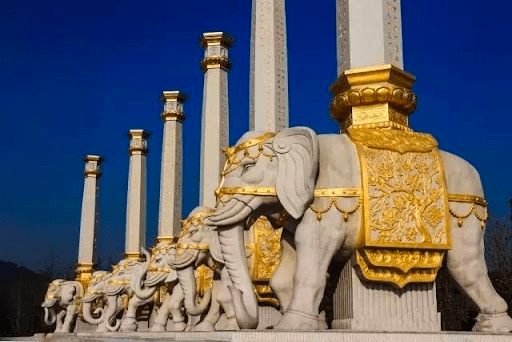
The Buddha told King Shengguang that the wilderness represents the long night of ignorance, the man represents all sentient beings, the elephant represents impermanence, the well represents life and death, the tree root represents life, and the black and white mice represent night and day. The four poisonous snakes symbolize the four elements of earth, water, fire, and wind; the honey represents the five desires of wealth, sex, fame, food, and sleep; the bees represent evil thoughts; the wildfire represents aging and disease; and the poisonous dragon represents death. The Buddha emphasized that birth, old age, sickness, and death are inevitable and frightening. One should always be vigilant and not be consumed by the desires for wealth, sex, fame, food, and sleep. Upon hearing the Buddha’s teachings on the parables of life and death, King Shengguang was deeply moved.

This story serves as a reminder for us as well. Have we become absorbed in the sweetness of “honey” in our lives, forgetting that the “black and white mice” are constantly nibbling away at our time? Life is like a fleeting dream, and it is empty. It is crucial for us to awaken from this dream of fleeting existence.

Buddha Imparted a Parable Story to King Shengguang

Link:https://peacelilysite.com/2023/04/13/buddha-imparted-a-parable-story-to-king-shengguang/

#SakyamuniBuddha #TheParablesSutra #Impermanence#LifeandDeath#Buddhism #BuddhistTeaching #BuddhistSutra #BuddhistTales