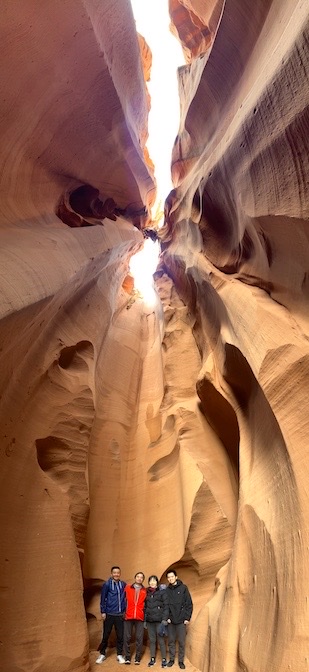
The third stop of our family winter break trip was the Ligai Canyon, and what an incredible experience it turned out to be. We had initially planned to visit Antelope Canyon, but all the tour tickets were sold out. Instead, the agent suggested we visit Ligai Canyon, a similar but lesser-known destination, the ticket is $70 per person, and we were pleasantly surprised by what we found.
Ligai Canyon is located on Navajo private property, and all the tour guides are from the same family. Our tour guide was knowledgeable and friendly, he shared a wealth of information about the Navajo culture and way of life. He told us about the significance of blue as a protective color and showed us his beautiful turquoise bracelet. He also shared details about the four sacred mountains, the use of native herbs for medicine, and the Navajo’s life on their huge ranch, which is 6 miles by 6 miles.
We had very small group, just 6 people, and the tour place was not crowded at all. The tour guide shared that when he was a child, the canyons were his playground, and he and his friends had parties in the upper Antelope Canyon during their high school years. He never imagined that people would pay theme park prices to visit these places that were once their playgrounds.
The Canyon truly captures the beauty and power of nature. It’s awe-inspiring to think about how the canyon was formed over millions of years by the forces of water and wind. The intricate patterns and shapes carved into the stone walls of the canyon are a testament to the sheer force of nature.
As you explore the canyon, you’ll be struck by the diversity of its features. From the heart-shaped carvings on the walls to the narrow pathways and towering cliffs, each aspect of the canyon offers something unique and breathtaking. The dynamic spiral shapes that wind their way up the walls are particularly mesmerizing, and add to the overall sense of movement and energy that permeates the canyon.
Another striking feature of the Ligai Canyon is its reddish hue. This rich, vibrant color is the result of the iron oxide in the rock, and adds an extra layer of beauty to an already stunning landscape. Whether you’re gazing up at the towering cliffs or admiring the intricate patterns on the walls, you’ll be awed by the sheer magnificence of this natural wonder.
At the end of the tour, our guide imparted some wise words to my two sons. He told them to learn from their grandparents and parents, and to hold onto their native language, as there is a wealth of wisdom and knowledge contained within it. My sons were deeply moved by his words, and I could see that they had taken his message to heart.
I hope that they will continue to pass down the Chinese culture to future generations, preserving its rich history and traditions. This was truly the highlight of the tour for me, and I am grateful for the guide’s insights and encouragement. By imparting these valuable lessons to my sons, he has given them a gift that they will carry with them for the rest of their lives.
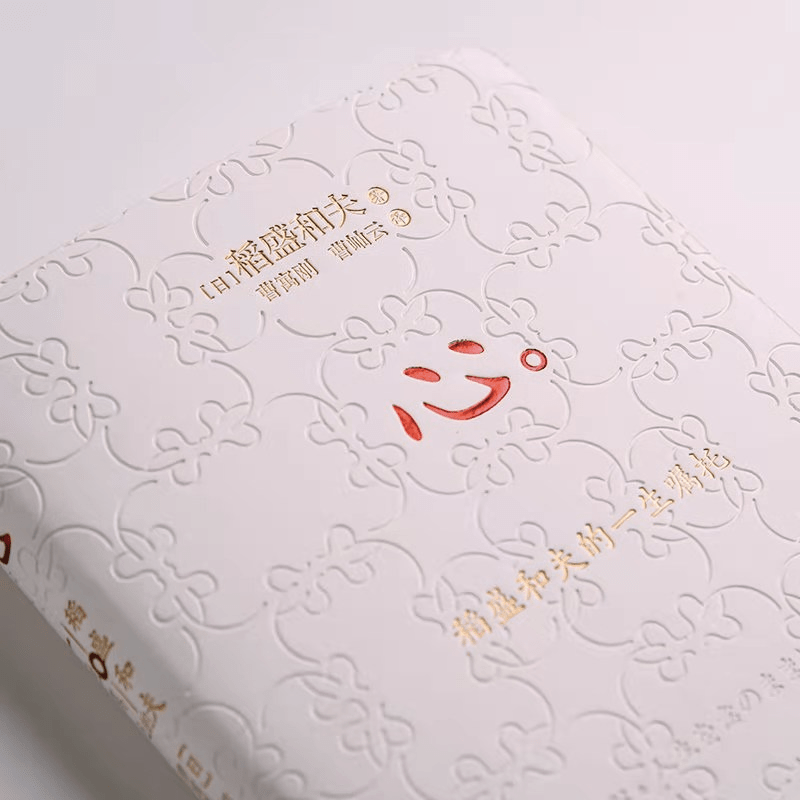
The book Heart: Lifetime Advice from Kazuo Inamori is a concise guide to practical philosophy that draws from Kazuo Inamori’s extensive experience and wisdom accumulated over 80 years. This timeless work offers insight into the elusive concept of the “heart”. Kazuo Inamori, as an entrepreneur, also shares his unique approach to business management in it. The book also serves as a valuable educational resource for children and families. Its teachings provide a strong foundation for personal and familial growth.
This book, Heart: Lifetime Advice from Kazuo Inamori, is the final literary masterpiece by Mr. Kazuo Inamori. Despite being close to 90 years of age at the time of writing, he still managed to create a valuable piece of work. His journey from being a rural boy to becoming a business icon is truly remarkable. The book provides an insightful perspective on his life and success, which is an inspiration to many. Everyone, regardless of their starting point, can relate to the book and use it as a guide to find their own path in life.
Mr. Kazuo Inamori had a humble background and his early life was marked by numerous setbacks and disappointments. In his book, he recounts his experiences, including failing the elementary school entrance exam twice, a bout of tuberculosis, and being unable to gain admission to college. Despite these obstacles, he went on to have a successful career.
Through reading this book, I came to understand the hierarchical wisdom it contains. The book speaks to readers on different levels and allows us to find our own place within its pages and be moved by the stories and lessons it shares.
Its message is inspiring, encouraging us to reach for the stars, even if we fall short, and reminding us that we can never be covered in mud while reaching for our dreams. This is why I never tire of reading “Heart” and find it so valuable.
One of my favorite experiences mentioned in the book about Mr. Kazuo Inamori is how his personal experiences have contributed to his successes. He has repeatedly used these experiences as inspiration and motivation for his continued success. This recurring theme is frequently mentioned throughout the book.
After graduating from college, when the job market was bleak, Mr. Kazuo Inamori struggled to find employment. Eventually, his teacher introduced him to a company where he could work, but the company was in dire straits, with partners quitting one by one until he was the only one left.
Most people would have been discouraged and defeated in such circumstances, but Mr. Kazuo Inamori made a different choice. He decided to completely change his mentality and work harder than ever. He was determined to give his best effort, no matter how challenging the environment was, and even went as far as to move into the laboratory to be closer to his work.
As he immersed himself in his work, he found that distractions such as the unfavorable social environment, company situation, and negative coworkers, faded away. Good ideas and new ways of thinking came to him naturally. Eventually, he developed a revolutionary new material that was ahead of its time.
The story of Mr. Kazuo Inamori and his company is truly remarkable, and he attributes his success not to improved abilities or favorable conditions, but to a change in his mindset. He realized that everything in life is a reflection of one’s heart, and that by changing his heart, he was able to change his life for the better. Through his experience, I learned that following one’s heart is not enough, but that it is important to continually refine and polish one’s heart, in order to live a happier and more fulfilling life.
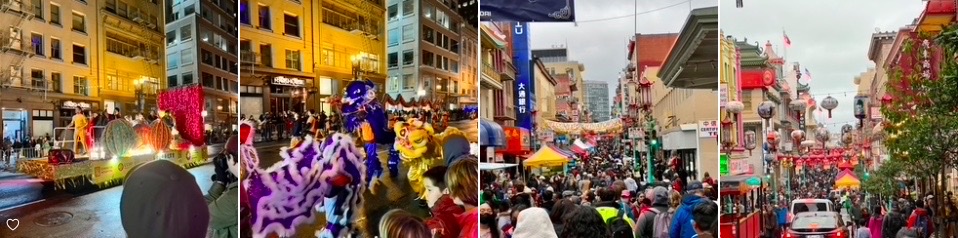
On Saturday, February 4th, the streets of San Francisco’s Chinatown were filled with the sounds and sights of the Chinese New Year parade. Thousands of people gathered to celebrate and enjoy the festivities.
The entire Chinatown was decorated in traditional Chinese style, adding to the already lively atmosphere. Street markets sold traditional Chinese goods and food, and the sounds of live music filled the air.
The parade, which started at 5 PM, was a highlight of the celebration. Floats, marching bands, and performers made their way through the crowded streets, bringing the excitement and energy to a whole new level. However, rain, showers and winds also joined the parade. That brought little bit uncomfortable to the crowds.
One of the highlights of the parade was the traditional lion and dragon dances, performed by skilled dancers dressed in colorful costumes. These dances are believed to bring good luck and prosperity for the new year, and the crowds were enthralled by the displays.
In addition to local performers, marching bands from Southern California and Oregon also made the journey to San Francisco to participate in the parade. The diversity of performers added to the already rich cultural atmosphere, and showcased the strong connection between the different Chinese communities across the United States. Despite the rain and showers, the spirit of the event was not dampened, and it was a beautiful tribute to the start of a new year.
As a proud Chinese, I was thrilled to participate in the Chinese New Year parade in San Francisco’s Chinatown. Living in the United States is a privilege, as this great nation has an open heart that accepts and embraces diverse cultures. I hope to see the US play a leading role in promoting peace and harmony globally.
Recently, I stumbled upon breathtaking plum blossoms while taking a walk. These delicate flowers evoked feelings of warmth and joy, reminding me of the arrival of spring. In Chinese culture, plum blossoms, beyond just being a physical flower, have become a symbol of perseverance and resilience in the face of harsh winter conditions. This significance was achieved through the extensive descriptions, sublimations, and chanting by literati and scholars over the ages. In ancient China, plum blossoms were considered a lucky symbol and were welcomed as a sign of the arrival of spring during the New Year.
When I was a child, my father taught me to recite the poem “Ode to the Plum Blossom” by Zedong Mao, reminding me to be fearless and strong like the plum blossom that blooms amidst harsh winter conditions. I really like the poem, and can still remember it.
Ode to the Plum Blossom
—to the tune of Bu Suan Zi
By Zedong Mao, December 1961
Wind and rain escorted Spring’s departure,
Flying snow welcomes Spring’s return.
On the ice-clad rock rising high and sheer
A flower blooms sweet and fair.
Sweet and fair, she craves not Spring for herself alone,
To be the harbinger of Spring she is content.
When the mountain flowers are in full bloom
She will smile mingling in their midst.
But after many years of struggles, I realized that bravery and strength aren’t always enough, especially in managing relationships and family. As a wife and mother, I learned the importance of being magnanimous, compassionate, forbearing, and not rigid. I have since embraced the peaceful and compassionate philosophy of Buddhism.
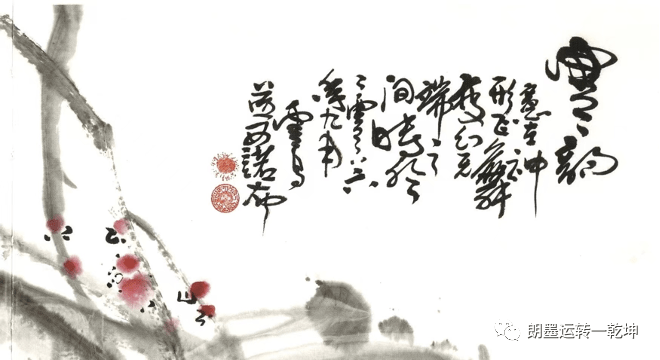
H.H. Dorje Chang Buddha III, the contemporary Buddha, wrote a poem “Plum Fragrance in the Holy Land.” He broke from traditional poetry styles, instead opting for surreal techniques to directly convey spiritual essence.
To the Tune of “Jiang Jun Song”
Plum Fragrance in the Holy Realm
Reveal her icy bearing and proud bones,
See how plum blossom commands the scene,
The crowd of beauties suddenly lacks color,
Seductive peach has lost its looks.
A few casual strokes,
So many eons of wind and dust.
The smoke and fire of the human world all disappears,
Leaving only a pure fragrance from the paper,
It wafts over me, awakening my mind.
The smile of the enchanted dream still remains,
Buddha Vajradhara has come
Three times to this world.
To this Buddha Land of merciful compassion
That great one has brought purity,
Feelings of the brush,
Traces of the brush,
One smile in the wind and dust,
Now the wind and dust,
So many eons of wind and dust.
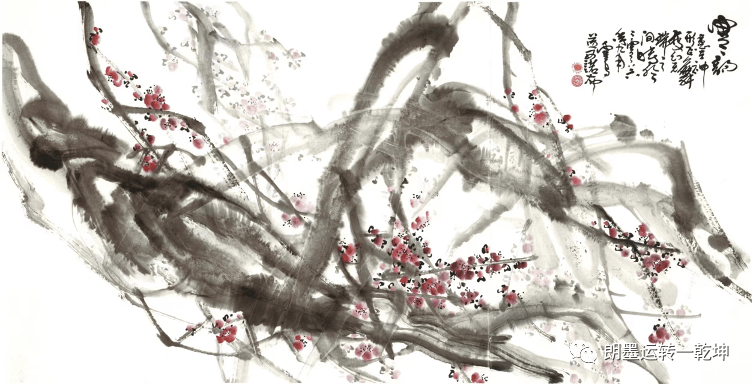
The Buddha also created an ink painting to accompany the poem. The poem delves deeper into the artist’s thoughts, while the painting provides a visual representation.
The plum blossoms depicted in the paintings symbolize the artist’s state of mind, embodying inner beauty refined from impurities. The brushwork, casually applied, was accomplished with an unfettered hand and detached mind, free of the slightest artificiality. It is a seemingly ever-changing work. Its charm, tone, transitions, and depictions represent the highest level of Eastern ink-and-wash paintings. A transparent layer of lighter ink on top of darker ink is clearly visible, imbuing the painting with a pure and fragrant air and providing the viewer with a feeling of comfort and ease.
The plum blossoms created by these skilled pens are eternal. While natural blooms may come and go, Buddha’s compassion remains steadfast.
January 1st in the Chinese lunar calendar, is chinese Spring festival, it is the biggest holiday in china. It is also the holy birthday of Maitreya Bodhisattva – the next Buddha in the saha world. This is a special and joyful holiday that is celebrated by many. Hua Zang Si in San Francisco held a Dharma Assembly to celebrate this important occasion. It was the first Dharma Assembly of the year and it was held on a beautiful sunny day. Many laypersons participated in the event.
At the entrance of the temple is an oversize marvelous statue representation of a jolly, laughing Buddha: Maitreya Bodhisattva (the next Buddha in this Saha world). It is such a warm welcoming sign. The big belly not only means jolly, it also means tolerating the intolerable things in the world. So when you look at the statue, you will start to feel that learning Buddhism is happy and kind.
The Dharma Assembly was an opportunity for people to come together and celebrate the teachings of Maitreya Bodhisattva. It was a time for reflection and meditation, as well as a chance to learn more about the teachings of Buddhism. The atmosphere was filled with positivity and joy, as people came together to celebrate this important holiday.
In Chinese culture, Maitreya Bodhisattva is seen as a symbol of joy and tolerance. As practitioners of Buddhism, we are encouraged to strive to be like the Buddhas and Bodhisattvas by cultivating a broad mind, open heart, and great tolerance.
One of the key principles of Buddhism is patience and forbearance, particularly under insult. This is seen as a key aspect of self-cultivation and it is important to remember that everything in the dharma realms can change from ordinary to holy. This means that even difficult situations can be transformed and overcome through the practice of patience and tolerance.
Patience and tolerance are not just passive qualities, but rather active ones that require effort and practice. We must actively cultivate them in our daily lives and strive to maintain them even in difficult situations. Through this practice, we can transform our own minds and hearts, becoming more like the Buddhas and Bodhisattvas that we strive to emulate.
At the Dharma Assembly, we chanted the Eighty-eight holy Buddha name jeweled repentance sutra, in hopes that the Buddhas will wash away all of our sins and negative karmas. After the chanting, we offered a meal to the Buddhas and Bodhisattvas. The event concluded with a dharma talk given by Dharma Master Ruohui.
During her talk, Dharma Master Ruohui emphasized the importance of faith, vows, and actions for disciples of Buddhism. She explained that faith is the foundation of our practice, and that with strong faith, we will have the determination to follow the Buddha’s teachings and put them into action in our lives.
The Dharma Assembly was a meaningful event where participants not only had the opportunity to reflect on their own spiritual growth but also to make an impact on the world around them. During the assembly, the participants returned the merit to all living beings, holding the hope that they shall be rid of suffering, obtain happiness, and have the opportunity to listen to authentic Buddha Dharma.
The act of returning merit is an important aspect of Buddhist practice as it is believed that by dedicating the positive energy generated through our spiritual practice to the benefit of others, we can help bring about peace and prosperity in the world. By returning merit to all living beings, participants were able to contribute to the collective well-being of the world and make a positive impact on the lives of others.
Furthermore, the participants also held the hope that by listening to authentic Buddha Dharma, they will be able to perfect their fortune and wisdom, leading to a more prosperous and peaceful world for all. This is the ultimate goal of Buddhism, to help all beings to find inner peace, happiness and liberation from suffering.
About 20 years ago, I participated in a retreat that focused on organic farming, nutrition, and spirituality, at Santa Barbara CA. While much of what I learned during the retreat has since slipped from my memory, one aspect of the experience has remained with me: my encounter with the beautiful soul known as Peace Pilgrim.
I never had the opportunity to meet Peace Pilgrim in person, but I was deeply moved by her book, “Peace Pilgrim: Step toward Inner Peace,” which I read in Chinese. I couldn’t believe that such an amazing and spiritual person existed. Peace Pilgrim’s journey across America to spread the message of peace, with nothing but the clothes on her back, was truly inspiring. The book left a lasting impression on me, and it actually started my spiritual journey.
Peace Pilgrim, born Mildred Lisette Norman, was a spiritual teacher and peace activist who walked across America several times in the 1950s and 1960s to spread the message of peace. She traveled on foot, carrying only a few possessions and wearing a tunic with the words “Peace Pilgrim” written on it.
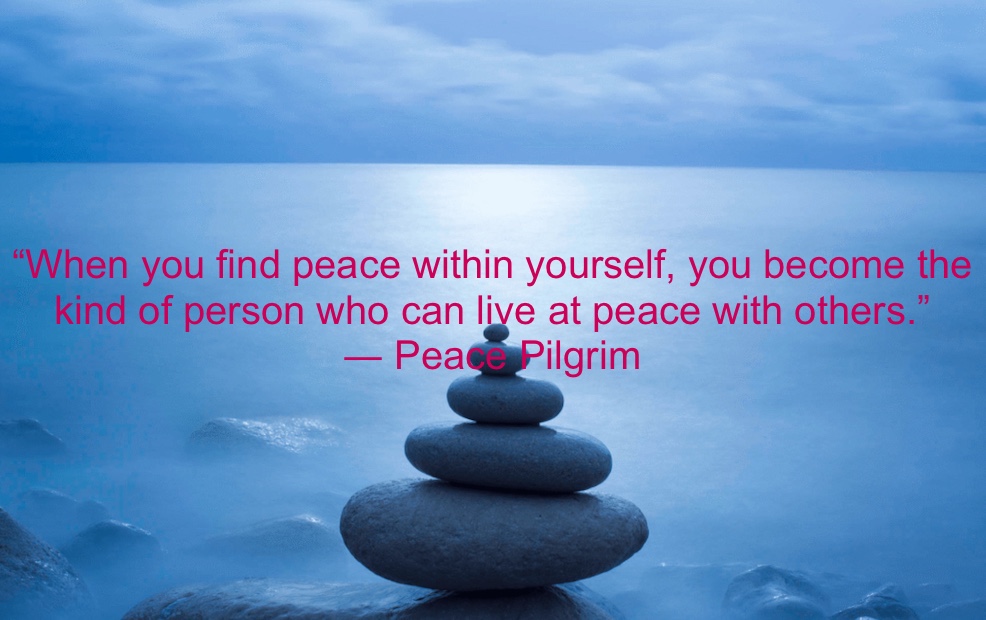
During her journey, Peace Pilgrim spoke to thousands of people about the importance of inner peace and the role it plays in creating a more peaceful world. She believed that true peace could only be achieved when individuals found inner peace within themselves, and that this inner peace would radiate outwards to create a more peaceful society.
Peace Pilgrim’s message resonated with many people, and her simple, yet powerful words inspired many to work towards peace in their own lives and in the world. She wrote several books, including “Peace Pilgrim: Her Life and Work in Her Own Words,” which chronicled her journey and the lessons she learned along the way.
In a time of great turmoil and uncertainty, the message of Peace Pilgrim is more relevant than ever. Her teachings remind us that true peace begins within, and that each of us has the power to make a difference in the world by finding inner peace and living a life of compassion and kindness. Her spirit and teachings continue to inspire and guide many people, and her message of peace will continue to resonate for years to come.
In this pandemic and tough time, her message of inner peace could be a guiding light for many people. World will have true peace until each one of us find our inner peace. Her teachings and stories are an inspiration for all of us to work on peace for the whole world. May her spirit and teachings continue to guide and inspire us all to work towards a more peaceful world.
Recently, my two college-aged sons have been expressing that they find life to be difficult. In an effort to provide them with guidance and support, I have been offering them spiritual advice and emotional support. While searching for resources to assist in this endeavor, I stumbled upon the profound and enlightening book, The Road Less Traveled, by Scott Peck. The insights and philosophy presented within the book have been incredibly inspiring and beneficial in helping me to support my sons in their journey.
The Road Less Traveled is a self-help book by American psychiatrist and author Scott Peck, first published in 1978. The book has had a significant impact, selling millions of copies and remaining on the New York Times bestseller list for more than ten years. One of the main themes of the book is the concept of the four disciplines: psychiatry, psychology, religion, and philosophy. Each discipline offers unique perspectives on how to navigate the challenges of life and achieve personal growth.
The book’s central message is that life is difficult, but that this difficulty can be transcended by understanding and accepting it. Peck argues that discipline is the basic tool we need to solve life’s problems, and that with enough discipline we can solve all problems. Additionally, the book explores themes of love, relationships, parenting, and self-discovery, as well as teaching about distinguishing dependency from love and how to become one’s true self.
Life is a series of problems. It is something that we all must face and deal with on a daily basis. Some of these problems may be small and easily solved, while others may be more complex and difficult to overcome. The question we must ask ourselves is: do we want to moan about these problems or do we want to solve them?
As adults, we have the power to choose how we react to life’s problems. We can choose to bemoan our difficulties and wallow in our troubles, or we can choose to take action and find solutions. The latter approach is far more productive and will ultimately lead to greater satisfaction and fulfillment in life.
In addition to making this choice for ourselves, it is also important to teach our children to solve problems in a similar manner. As parents, we have a responsibility to guide and teach our children, helping them to develop the skills and mindset needed to overcome the challenges that life will inevitably present to them.
One of the most important tools we have for solving life’s problems is discipline. Without discipline, we will not be able to effectively tackle the issues that we face. With only some discipline, we may be able to solve only some problems, but with total discipline, we can solve all problems. Discipline is the key to success in any endeavor. It allows us to focus our minds and efforts, to set goals and make plans, and to persist in the face of adversity.
It is important to note that problems do not go away on their own. They must be worked through and dealt with, otherwise they will remain forever, acting as a barrier to the growth and development of the spirit. It is essential that we learn to face and overcome problems, rather than avoiding or ignoring them.
One way to do this is by learning to Delay Gratification. By scheduling the pain and pleasure of life in a way that we deal with pain first and get it over with, it allows us to enhance the pleasure we gain from it. This is the only decent way to live. With discipline, we can solve most of the problems, and delay gratification is a process that can help us to get through the most difficult moments.
Peck also emphasizes the importance of Love and Community in personal growth. He argues that true love is not just an emotional state, but also an action, and that it requires a commitment to growth and self-discipline. He also stresses the importance of community, stating that “the love of community is the only true love.”
I have also found out in Buddhism, love has a deeper meaning that goes beyond romantic or familial feelings. It encompasses compassion and the belief in treating all beings as if they were our own relatives or parents. In What is Cultivation by H.H. Dorje Chang Buddha III, says: “Loving-kindness: At all times, through the actions of my three karmas, I am loving and kind toward all living beings, who have been my parents. I wish them a long life without illness, good fortune, good luck, and a happy life. ” This means that at all times, through all our actions, thoughts, and words, we should strive to be loving and kind towards all living beings, recognizing that they have been our parents in past lives. This belief is expressed through the wish for all beings to have a long life free from illness, good fortune, good luck, and happiness. This unconditional love can have a positive impact on individuals who are facing challenges and difficulties in their lives.
Everyone must face and deal with the challenges and difficulties in life. Moaning about them or solving them, it’s a choice we make, and the latter can lead to greater satisfaction and fulfillment in life. Teaching our children to solve problems in a similar manner and helping them to develop the discipline and tools needed, that could be in religions or philosophy or psychology, to succeed in life is an essential responsibility of parenthood.
In the National Geographic channel’s “The Power of Miracles” episode of “The Story of God with Morgan Freeman,” Freeman delves into the concept of miracles and the role they play in different cultures and religions around the world. Throughout the episode, Freeman explores the various stories and accounts of miracles that have been passed down through traditional cultures and religions. These stories often involve healing, protection, and other seemingly miraculous events.
One of the main focuses of the episode is the stories of miracle in Christianity. Freeman visits the site of a Catholic pilgrimage in Lourdes, France, where thousands of people travel each year to pray for healing. Freeman also visits the site of a Marian apparition in Medjugorje, Bosnia, where six children reported seeing the Virgin Mary in 1981. Freeman also meets with people who believe they were healed as a result of the apparition, which is still ongoing. Freeman also explores other religion’s records of miracles like the Jewish Kabbalah, and the Islamic Hadith.
While some people may be skeptical of these stories, Freeman makes it clear that they hold great significance for the people who believe in them. For many, these stories of miracles provide hope, inspiration, and a sense of connection to something greater than themselves. Freeman ultimately concludes that miracles are about the power of belief, and that the belief in something larger than ourselves can have a profound impact on our lives.
Watching this episode is a miracle for me. I explored so many beautiful places, cultures and religions. It’s a must watch for people with an interest in the intersection of faith and science, and in the power of belief to shape our lives.
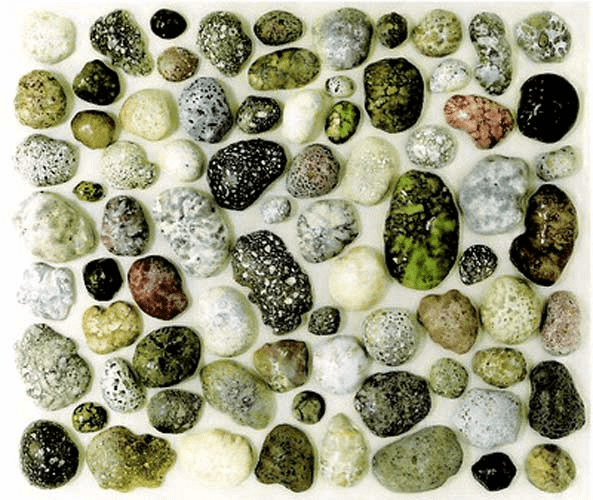
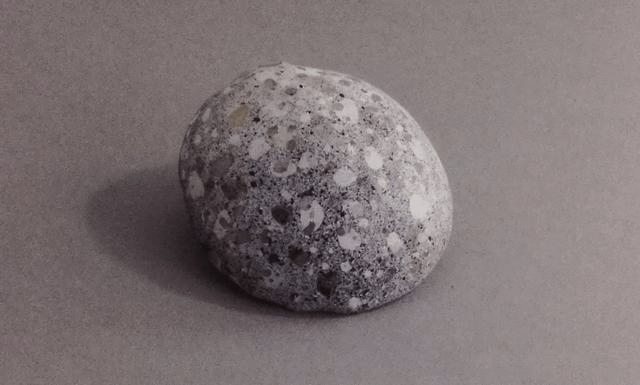
If you’re a fan of cobblestone streets and the charming, rustic aesthetic they bring to a neighborhood, you’ll love these hand painted cobblestones created by Professor Yuhua Shouzhi Wang. These cobblestones were painstakingly hand-sculpted from a light-weight material and then completed with fine, dedicated brushwork by the artist.
Although they may look like real cobblestones at first glance, these pieces are actually more beautiful than the real thing. They are precious works of art, not actual cobblestones. Upon closer examination, it is clear that the texture and color tones of these faux cobblestones are just as realistic as the real ones.
Professor Wang has spent many years sculpting these cobblestones from a light-weight material, and has then meticulously completed them with her fine brushwork. The result is a set of cobblestones that are not only beautiful, but also have the same texture and color tones as real ones. It’s hard to believe that these cobblestones are not the real thing when you look at them.
In The International Art Museum of America permanent exhibition, has a set of seventy seven these cobblestones in total. These cobblestones are more than just a pretty facade. They are truly works of art, and a testament to the dedication and talent of Professor Wang. Every pebble she creates is unique, with its own shape, texture, color, and degree of weathering and aging. And with each pebble being an independent fine brushwork painting, it’s clear to see the level of detail and craftsmanship that goes into each one.
In year 2019, New York Academy of Art has certified that Dr. Yuhua Shouzhi Wang is the international first-class artist in the world, who is ranked at the same level as Cezanne, Gaugain, Monet, and Van Gogh.
If you have the opportunity to see Professor Wang’s hand painted cobblestones in person, I highly recommend it. They are a sight to behold and a true work of art. You’ll be amazed at the level of detail and craftsmanship that has gone into creating these precious pieces. So don’t miss the chance to see these hand painted cobblestones at The International Art Museum of America in downtown San Francisco. Admission of the museum is free.
When I was respectfully on my knees and holding my palms together in front of my kind Buddha Master’s dharma seat for the first time, as soon as I raised my eyebrows to have my eyesight in a light contact with the loving, compassionate, and benevolent eyes of my Buddha Master, I immediately had the belief that my Master is a Buddha! However, my Buddha Master never stated to anyone what holy being he was in past lifetimes. Conversely, he always claimed to be a servant of everyone.
During the past ten years, I closely attended by the side of my Buddha Master and also carried out quite a number of Buddhist deeds following my Buddha Master. The holy states and holy realizations manifested by my Buddha Master such as proficient in both exoteric and esoteric Buddhism, perfect and deep mastery of the Five Vidyas, and great wisdom unrivaled by any human or holy beings are unprecedented in the history of both exoteric and esoteric Buddhism.
My firm belief of “My master is a Buddha” that I had in my mind for years was finally confirmed from the treasure book of H. H. Dorje Chang Buddha IIIthat was presented to the Congress of the United States by the International Buddhism Shanga Association on April 3, 2008. The identity of my Buddha Master, known by people in the world as Master Wan Ko Yee, was revealed through either meditation or practice of the dharma in a profound state of supernatural vision by the first-class great holy virtuous ones, who are incarnations of Buddhas and Bodhisattvas. They announced the background of H.H. Wan Ko Yeshe Norbu, who was long ago recognized by H.H. Great Dharma King Zunsheng (the manifestation of Mahavairocana Buddha) as Buddha Vajradhara. Through strict practice of the dharma and meditation these holy monastics deeply entered the dharma realm and supernaturally saw the true source. The result was they learned that this being of great virtue and holiness is the second incarnation of Vimalakirti and the third incarnation of Dorje Chang Buddha. They wrote down their certificates of recognition according to the rules of Buddhism in which they recognized that H.H. Master Wan Ko Yee is H.H. Dorje Chang Buddha III — the highest ancient Buddha in exoteric, esoteric, Mahayana, Hinayana, and Vajrayana Buddhism; the master of the Five Buddhas in the five directions; and the master of the great mahasattva Vajrasattva. That is, they recognized that H.H. Master Wan Ko Yee is the Holiest Tathagata Wan Ko Yeshe Norbu, the current greatest leader of Buddhism in the entire dharma realm!
Those eminent monks and dharma kings also wrote words praising H.H. Dorje Chang Buddha III as being the highest and greatest holy being and the only one in the history of Buddhism who has truly exhibited before living beings item after item of accomplishments in the Five Vidyas.
From that, I realized the truth behind what I experienced quite a few years ago when a huge and gigantic material, in less than two hours of time, became a piece of extremely finely carved and crafted miraculously wondrous holy Yun sculpture artwork. Such holy realization was just a manifestation of the craftsmanship vidya of the Five Vidyas by my magnificent Buddha Master, due to the affinity of living beings.
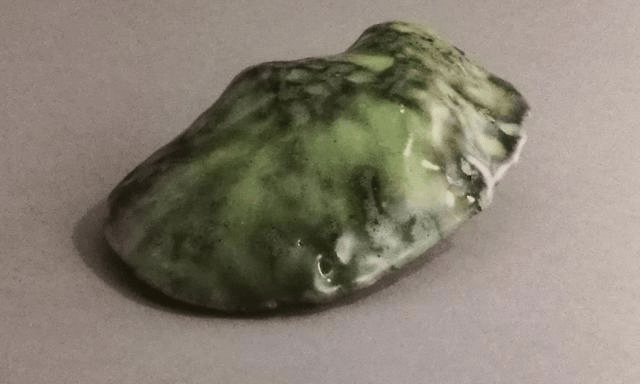
My Grand Master, H.H. Great Dharma King Zunsheng, stated in a formal pronouncement about my great and kind Buddha Master that the realization of any eminent monastic or person of great virtue in the world today cannot rival the realization of Holiest Tathagata Wan Ko Yeshe Norbu. H.H. Great Dharma King Zunsheng also made the following vow of truth: “If any person or holy being is able to duplicate the mysterious sculpted treasures created by H.H. Wan Ko Yeshe Norbu, then this formal pronouncement of Great Dharma King Zunsheng has deceived the public.” (The mysterious sculpted treasures are “Enchanting Colors of Utmost Mystery,” “Mysterious Boulder with Mist,” and certain other Yun sculptures with specific names.)
Yun Sculpture by H.H. Dorje Chang Buddha III
According to the system and rules of Buddhism in this world, there are only two beings of great holiness whose expositions of the dharma can be categorized as sutras. One of them is Sakyamuni Buddha. The other is the holy and venerable Vimalakirti. Besides those two, all other expositions of the dharma can only be called commentary rather than sutras. This is true no matter how great the Bodhisattva who has expounded the dharma is.
Some people say that Hui Neng (the sixth patriarch master of the Zen School) gave the Platform Sutra of the Sixth Patriarch. Actually, the word sutra was used due to exaggerated praise given to Hui Neng by people of the world who did not understand the system and rules of Buddhism. The rank of the sixth patriarch was even lower than that of many Bodhisattvas. For example, Maitreya Bodhisattva is the next Buddha, who will conduct the Dragon Flower Assembly. The position of Maitreya Bodhisattva is very much higher than that of Hui Neng. However, expositions of the dharma given by Maitreya Bodhisattva cannot be called sutras. They can only be accepted as commentary. An example of this is the Yogācāra-bhūmi-śāstra. (Discourse on the Stages of Concentration Practice)
The holy and venerable Vimalakirti descended into this world during the time of Sakyamuni Buddha. He is the only ancient Buddha who transformed into a layman to expound the dharma. Sakyamuni Buddha personally taught the four types of disciples. Among them were the 500 monks who were difficult to teach and who did not want to arouse Mahayana bodhicitta. A skillful means was used to teach all of the monastics and 8,000 Bodhisattvas. After the ancient Buddha Dorje Chang expounded dharma in Abhirati (World of Wonderful Joy), the Buddha responded to karmic conditions by transforming into the holy and venerable Vimalakirti to help the Buddha teach the sangha, Bodhisattvas, and other disciples. The goal was to protect and uphold the Buddha-dharma taught by Sakyamuni Buddha. The level of realization attained by the holy and venerable Vimalakirti was the same as that attained by Sakyamuni Buddha. However, He did not want to assume the status of another leader of the religion in the human realm, thereby causing sectarianism and adding to the self-centeredness of practitioners. Considering that Sakyamuni Buddha became a Buddha in this earthly World, the holy and venerable Vimalakirti acknowledged Sakyamuni as Buddha and chose to assist Sakyamuni Buddha by manifesting as a Bodhisattva.
Thus, the holy and venerable Vimalakirti acted in the same way that the ancient Buddha Zheng Fa Ming (True Dharma Brightness) Tathagata acted when the Buddha transformed into Kuan Shi Yin Bodhisattva and also acted in the same way as Manjushri Bodhisattva, the Master of seven Buddhas, did to play the role of a Bodhisattva to support Sakyamuni Buddha. All of this was done to benefit living beings. If two Buddhas of the same rank appeared at the same time, it would cause worldly divisions. It would hinder the development of Buddha-dharma and the saving of living beings. Actually, Buddhas do not care who emerges as the leader of Buddhism. The Buddhas appear in whatever form and manner that best benefit living beings. Everything is done for the benefit of living beings based upon bodhicitta.
Therefore, people in general have no way of discovering that the realization and enlightenment of the holy and venerable Vimalakirti were that high and that He was the incarnation of Dorje Chang Buddha, the foremost ancient Buddha who existed before Sakyamuni Buddha. However, the dharma discourses of the holy and venerable Vimalakirti are sutras, just as the dharma discourses of the Buddha, not commentaries. In the system of Buddhism, one such discourse is called Vilmalakirti-nirdesa Sutra (The Sutra of Vimalakirti). That sutra came into being during the same time period Sakyamuni Buddha was giving sutras. It is a very important Buddhist sutra. The Vimalakirti-nirdesa Sutra has been studied and followed in both Mahayana Buddhism and Hinayana Buddhism that was mostly propagated in Southern Asia.
When H.H. Dorje Chang Buddha III was born, the beating of drums suddenly sounded in the sky, and beautiful, heavenly music could be heard. Three rainbows approximately forty to fifty meters (131-164 feet) apart appeared simultaneously in the sky. The middle one was primarily blue, the right one primarily red, and the left one primarily white. At birth, the entire body of His Holiness was dark blue. No cries from His Holiness could be heard. Rather, His Holiness opened his mouth and very clearly stated, “I have entered this world. I am completely proficient in exoteric and esoteric Buddhism and will wondrously manifest the Five Vidyas. Compare and you will know.” After speaking such words, His Holiness remained silent and appeared just like an ordinary child. The parents of His Holiness thought that they had given birth to a mysterious and extraordinary human being but did not tell anyone about this. His Holiness did not speak again until He was three years old.
When His Holiness was three years old, H.H. Mahavairocana Dharma King Zunsheng guided His Holiness in learning the Tripitaka. At that time, His Holiness was taught to recite the heart mantra of Dorje Chang Buddha seven times. This little child suddenly laughed heartily and immediately manifested the Three Bodies and Four Wisdoms. H.H. Great Dharma King Zunsheng at once tested His Holiness’s knowledge of the Tripitaka and the esoteric scriptures. The Dharma Prince child explained such writings with great facility. There was nothing in them that His Holiness did not understand. His Holiness had realized all of the doctrines and principles of such teachings.
H.H. Mahavairocana Dharma King Zunsheng then gave the following formal pronouncement: “Dorje Chang Buddha has come to this world a third time. The holy and venerable Vimalakirti has descended from the skies a second time. He completely understands the scriptures on the dharma. His Four Wisdoms are wonderfully perfect. He is an ancient Buddha upon whom living beings can rely. No master is qualified to teach Him. His mysterious sculpted treasures will be spectacular and unique in the world. He will be able to take mist that will stay inside His sculptures. He will manifest His realization and consummate skills. No holy person in the world will be able to duplicate such works. If anyone will be able to duplicate such works without differing from the original at all, my words have deceived the world. Vimalakirti Wan Ko is Buddha Vajradhara. He will cause the Buddhas to bestow nectar that many will see descend from the sky. He is of utmost benefit to sentient beings. He has the compassion and wisdom of an ancient Buddha. I hereby reveal these words to prove the veracity of my formal pronouncement.” H.H. Mahavairocana Dharma King Zunsheng also gave His Holiness the dharma name Yangwo Yizhi Dharma Prince, which means Dharma Prince supreme leader of Buddhism with the highest wisdom.
H.H. Mahavairocana Zunsheng then said, “During the Dharma-Ending Age in the earthly world, there will be many evil teachers and demons who will claim to be genuine holy persons. In order to distinguish the genuine from the false, I now make a strict formal pronouncement that will serve as the testing standard. The pronouncement is as follows: There will not be a fourth incarnation of Dorje Chang Buddha in this earthly realm within the next 5,000 years. The third Dorje Chang Buddha will be the only such holy being, and there will not be an incarnation of another Dorje Chang Buddha in this earthly realm for 5,000 years. Based on causes and conditions that accord with the dharma, I now lay out tests to determine whether a person is that true Buddha if he claims to be the true incarnation of that Buddha. He must successfully invoke the Buddhas to bestow nectar. He must be able to perform the Golden Vase Selection of Karmic Affinity and predict the results of that ceremony beforehand. He must be able to eliminate karmic obstructions in a clearly visible manner. He must be able to replicate wondrous multicolored sculptures. He must be able to take mist, place it inside a hollowed out sculpted boulder, and have the mist stay there. If a person is able to do all five of these things without exception, then he is the true fourth Dorje Chang Buddha. No matter how great a holy terton may be, no matter if a person leaves concave imprints on rocks with his hands or feet, no matter how vast a person’s manifold supernatural powers may be, if he cannot do these five holy things, then he certainly is not the true incarnation of Dorje Chang Buddha. An ancient Buddha who descends to this earthly realm will have no difficulty meeting these five tests. I leave these five observable tests to guard against those in the future who make false claims.”
The Dharma Prince was acting as the holy and venerable Vimalakirti did when Vimalakirti received different teachings and knowledge, took on the appearance of an ordinary person, and learned things tirelessly. No one knows why the Dharma Prince did so. At the age of sixteen, the Dharma Prince wrote a work on the dharma called A Monk Expounds the Absolute Truth to a Layperson. After that writing was buried, great master Hui Yong unearthed it. Renqing Luozhu and Suolang Danbu respectfully offered that writing to H.H. Mahavairocana Zunsheng Yeshe Norbu to evaluate. H.H. Zunsheng Yeshe Norbu personally promulgated that dharma called A Monk Expounds the Absolute Truth to a Layperson in front of the four types of Buddhist disciples. After He finished promulgating that dharma, He personally led the four types of Buddhist disciples in kneeling down and facing that writing on the dharma. He then made the following formal pronouncement: “An ancient Buddha has arrived in the east.” He recognized that the Dharma Prince was H.H. Dorje Chang Buddha III, conferred upon His Holiness the title Yangwo Wan Ko Yeshe Norbu, and said that His Holiness is the Holiest Tathagata. He also called that dharma A Monk Expounds the Absolute Truth to a Layperson Sutra.
There are certain time periods relating to H.H. Dorje Chang Buddha III ’s propagating the dharma and benefiting living beings. Before the age of eleven was the period during which His Holiness was engaged in the Tripitaka of exoteric Buddhism. From the age of eleven to fifteen was the period during which His Holiness was engaged in the esoteric dharma of the Kagyu school. During that time, he was called Dusum Khenpa Lion’s Roar Dharma Prince. After the age of fifteen was the period during which His Holiness was engaged in the esoteric teachings of the Geluk school. His Holiness was at that time called the reincarnation of Master Tsongkhapa. That was also the time period during which His Holiness flawlessly propagated the tantric scriptures of the Sakya, Nyingma, and all of the other schools. At this time, His Holiness was called the embodiment of the body, speech, and mind of Guru Padmasambhava.
Because my Buddha Master is an ancient Buddha who has come to this world again, His Holiness upholds the principles of “making no distinction between exoteric and esoteric Buddhism or among all of the sects and schools; teaching living beings according to their particular circumstances; and pervasively propagating the teachings of the Buddhas to all.” Thus, His Holiness is the Buddha Vajradhara Great Dharma King of the “Buddha Sect” who pervasively saves all living beings. My Buddha Master has repeatedly admonished everyone with the following counsel: “There is no differentiation among the various schools and sects in my mind. There is only Buddhism. However, for a dharma king, rinpoche, or acharya of any school or sect, as long as he or she does not commit violations in the 128 evil and erroneous views, abides by the teachings of the Buddha, attains liberation, and then saves other living beings based on their particular karmic conditions, he or she is worthy of praise.” Of course, The Supreme and Unsurpassable Mahamudra of Liberation is the greatest dharma among supreme great dharmas for cultivators to receive and practice. That is why my Buddha Master is the only one in this world possessing the realization of opening up the Niwan Daoguo for all kinds people to enable them to attain heavenly and holy states.
[Please respectfully read in detail the treasure book of H. H. Dorje Chang Buddha III to acquire great wisdom, accomplishment and liberation. If you have the affinity to receive and practice the dharma of The Supreme and Unsurpassable Mahamudra of Liberation, you will be certain to get great wisdom and attain great accomplishment and liberation.]



















 Peace LiLy