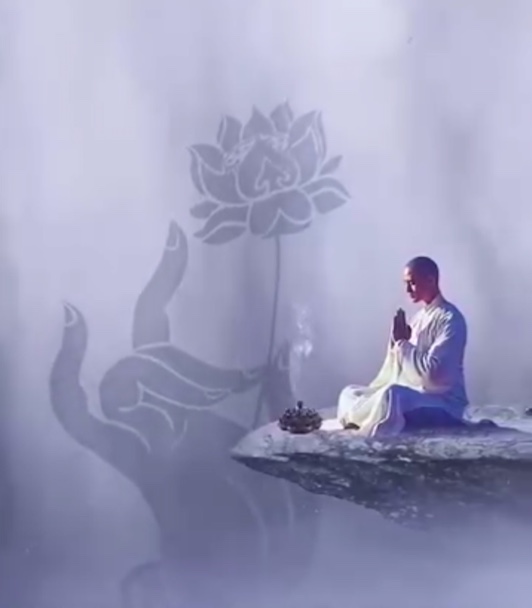
Holy Miracles Temple: A Sanctuary of Compassion and Healing Amid Global Turmoil

Holy Miracles Temple, located at 1730 N. Raymond Ave., Pasadena, CA, serves as a sanctuary dedicated to teaching the true Dharma of the Tathagata, as transmitted by Namo H.H. Dorje Chang Buddha III and Shakyamuni Buddha, guiding disciples on their path to liberation and spiritual accomplishment. Grounded in the Buddha’s teachings and fueled by boundless compassion, the temple’s core mission is to selflessly serve humanity. Its hope is for people in America and across the globe to embrace Buddha Dharma, cultivating love for their country, fellow people, and the world. Through mutual support, peace, kindness, and auspiciousness, the temple envisions a strong nation with thriving citizens and a world brimming with joy and happiness.

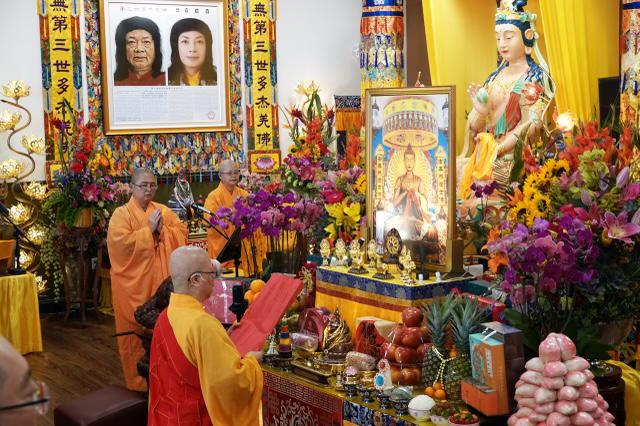
In these challenging times, when suffering and catastrophe touch so many, Buddhism’s compassionate spirit calls us to extend blessings to all sentient beings. On October 13, 2024, the Holy Miracles Temple held a Blessing and Peace Dharma Assembly, a response to the unprecedented hardships the world faces today. Devoted Buddhist disciples gathered to honor the teachings of Namo Dorje Chang Buddha III, coming together to send prayers for healing and hope to those affected by natural disasters, conflicts, and upheavals. This assembly reaffirmed the Buddhist commitment to easing the suffering of all.

The event featured a solemn chanting of the Universal Gate Chapter of the Lotus Sutra, dedicated to Avalokitesvara Bodhisattva, the embodiment of compassion. The gathering was led by Abbess Ruzun Ruohui from Hua Zang Si Temple, who guided attendees through the prayers.

This year has been marked by profound global calamities. In the United States, Hurricane Helene ravaged Texas and Louisiana in August, displacing thousands and flooding communities. Just weeks later, Hurricane Milton unleashed further destruction in Florida and Georgia. Recovery efforts faced tremendous challenges as these back-to-back disasters left homes shattered and lives in turmoil.

In Asia, Typhoon Dindo devastated the Philippines, causing severe flooding and landslides across Luzon in September. Thousands of people were forced to evacuate as the typhoon submerged entire neighborhoods. Nepal, too, was struck by tragedy when a powerful earthquake hit in June, resulting in widespread destruction and loss of life in remote regions.

The war in Ukraine, continuing its escalation throughout 2024, inflicted further suffering on cities like Kyiv and Mariupol, leaving behind a deepening humanitarian crisis. Meanwhile, renewed violence in Syria once again brought bloodshed to war-torn cities such as Aleppo and Damascus, compounding the plight of its weary people.

Europe was not spared from disaster either, as record-breaking floods struck in July. Torrential rains overwhelmed parts of Germany and Belgium, causing rivers to overflow and submerging entire towns. Meanwhile, the United States’ western regions grappled with annual wildfires of increasing magnitude, destroying homes and forests alike.

During the Dharma Assembly at Holy Miracles Temple, attendees united in spirit and purpose. As the sacred verses of the Universal Gate Chapter resonated through the temple, the prayers reached out to those suffering from this year’s tragedies, seeking to bring healing and relief. Prayers were offered for the displaced, the injured, and those who had lost everything. In the face of conflict and war, the community gathered to extend peace, comfort, and hope to all those impacted.

This powerful assembly embodied the compassionate essence of Avalokitesvara Bodhisattva, radiating light and healing to all beings affected by suffering. It was a profound reminder that through shared compassion and collective action, we can create a world where all beings may find peace, healing, and joy.

Link:https://peacelilysite.com/2024/10/18/holy-miracles-temple-a-sanctuary-of-compassion-and-healing-amid-global-turmoil/

Source: https://cagazette.com/insights-from-the-blessing-and-peace-dharma-assembly-at-the-holy-miracles-temple/?fbclid=IwY2xjawGADEJleHRuA2FlbQIxMAABHSOFxdL9Y7OJSnH14qBxTQoBYe2QSzdXAI_yk56BTajnwGdAXcnXxCa7bQ_aem__GWuVw6xxEGleMzpPI9e5A

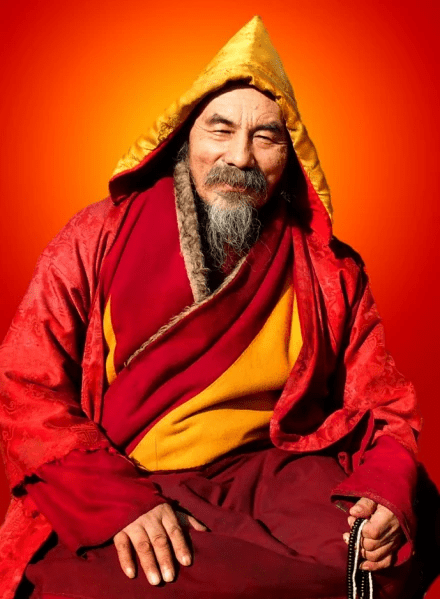
The Extraordinary Life of H.E. Xiazhu Qiuyang Rinpoche: A Master of Boundless Compassion and Wisdom

The most venerable H.E. Xiazhu Choying Rinpoche, also known as H.E. Xiazhu Qiuyang Rinpoche, is a highly accomplished Buddhist master from Guoluo, renowned for his spiritual achievements and mastery of Vajrayana teachings. Born in the winter of 1945, his birth was marked by extraordinary signs: thunder echoed across the sky, and colorful flowers blossomed spontaneously on the grasslands surrounding his birthplace. Many local herdsmen witnessed these rare and auspicious omens, heralding the arrival of an extraordinary being.

Renowned mantra master Regong, a revered monk, recognized the young child as the reincarnation of the venerable Chagailong Cichengdaji Rinpoche and the great master Naropa. From an early age, Rinpoche dedicated himself to the welfare of all sentient beings, living a life of simplicity and spiritual practice in the mountains. Throughout his life, H.E. Xiazhu Choying Rinpoche devoted himself to intense ascetic practice, receiving direct teachings from the supreme Vajrayogini and attaining profound realization. It is said that he could soar through the sky, using his monk robes as wings, a testament to his deep mastery of esoteric yoga.

At the age of fourteen, Rinpoche was ordained as a monk under the guidance of Xiari Huzuo Qintu Dannima. Over the years, he studied under more than 100 highly accomplished masters from all major Tibetan Buddhist schools, including:

  • H.H. the Tenth Panchen Lama and H.H. the Sixth Dharma King Gongtang Yongzeng from the Gelug sect.
  • H.H. Dodrupchen Rinpoche and Khenpo Mengse from the Nyingma sect.
  • Kanda Chiwa Gadan from the Sakya sect.
  • Lama Wangcai Kazhige from the Kagyu sect.
  • Jiana Bannan from the Jonang sect.

From these masters, H.E. Xiazhu Choying Rinpoche absorbed the essence of both exoteric and esoteric teachings. His spiritual journey led him to receive numerous secret mind-dharma teachings and unique empowerments, passed down without reservation, like water flowing freely from a vessel.

Rinpoche spent much of his life wandering through remote mountains and plains, sleeping in caves, eating cold rice and vegetables gathered from alms, and wearing discarded clothing. He lived humbly, indifferent to worldly praise or criticism, appearing at times like a wandering madman. For 25 years, he did not speak a single word, dedicating himself entirely to the practice of the Dharma, undisturbed by the distractions of the world. His rigorous practice took him to numerous sacred sites across Tibet, Qinghai, and India, where he engaged in solitary retreat, including seven years of intense meditation at a holy site in India.

Through these practices, Rinpoche achieved profound realization in the Dakini Dharma, the Great Perfection (Dzogchen) teachings, Kalachakra Vajra Dharma, and Green Tara Dharma. His deep connection with Vajrayogini from a young age allowed him to access highly secret dakini teachings. Buddhist masters of great virtue have recognized H.E. Xiazhu Choying Rinpoche as the true reincarnation of the great master Naropa, revered as the “venerable leader of 100,000 dakinis.”

In a historic event, the International Buddhism Sangha Association conducted an unprecedented Drawing Lots From a Golden Vase Ceremony, drawing one lot from 120 sealed lots. This ceremony affirmed that H.E. Xiazhu Choying Rinpoche is indeed the reincarnation of Patriarch Naropa, a recognition that had been previously confirmed by H.H. Dorje Chang Buddha III.

H.E. Xiazhu Choying Rinpoche has been praised by numerous revered masters, including H.H. the Tenth Panchen Lama, H.H. Dharma King Yongzeng, and H.H. Dharma King Jigme Phuntsok. Xiaridong Rinpoche, a master of the Yamantaka Dharma, described him as “a truly great master of the Dakini Dharma,” while H.H. Dharma King Jigme Phuntsok hailed him as “an extremely rare master who has perfected the Four Initiations Dharma.”

Despite his vast accomplishments, H.E. Xiazhu Choying Rinpoche remains humble and approachable, freely exercising his supernatural powers without attachment. Known for miraculous feats such as flying, multiplying his body, walking underwater, understanding multiple languages, foreseeing disasters and blessings, and reading people’s minds, Rinpoche is revered as “the unhindered rinpoche.” Clothing and personal items that Rinpoche has worn or used are said to be imbued with miraculous blessings. Many Tibetans have reported turning disasters into blessings, surviving dangerous situations, or recovering from serious illnesses after wearing or ingesting a small piece of his monk’s robe.

H.E. Xiazhu Choying Rinpoche’s legendary life and accomplishments have been widely recorded, including in books such as Holy Cultivation and Its Marvelous Fruits and Biographies of Ten Major Disciples of Dharma Kings. In Tibet, particularly in the Amdo region, almost everyone knows of his miraculous deeds. His life stands as a beacon of inspiration and a model of Dharma practice in this world of five defilements.

This image has an empty alt attribute; its file name is image-8.png

Upon reading A Treasury of True Buddha-Dharma, H.E. Xiazhu Choying Rinpoche immediately recognized H.H. Wan Ko Yeshe Norbu as the primordial Dorje Chang Buddha, the highest Buddha in Buddhism. His realization corroborated the recognition of other great holy dharma kings. H.E. Xiazhu Choying Rinpoche offered his heartfelt congratulations in a respectful letter, further acknowledging the sacred truth.

To the Most Revered and Holiest Wish-Fulfilling Jewel Dharma King:

I have learned that A Treasury of True Buddha-Dharma, is a sacred text about His Holiness, the supreme and most honored H.H. Dorje Chang Buddha III, is soon to be distributed worldwide. This book contains the highest, authentic Dharma that brings immense benefit to all sentient beings.

Master Dodrupchen, who is universally recognized as the second Guru Padmasambhava and the highest holy being within Tibetan esoteric Buddhism, expressed his astonishment in his formal congratulations. He praised the accomplishments of the Holiest Wan Ko Wish-Fulfilling Jewel Dharma King as truly extraordinary—unimaginable and miraculous, transcending the ordinary. These achievements express both the describable and indescribable absolute truth of the Buddha-Dharma.

We shall proclaim and praise the accomplishments of His Holiness throughout the Dharma realm. We express our deepest gratitude to His Holiness, the ancient Buddha, for His boundless and great compassion in coming to this world once again to benefit all sentient beings!

Xiazhu Qiuyang Rinpoche
May 1, 2007

▲那諾巴祖師轉世的夏珠秋楊敬賀第三世多杰羌佛成就之原函(楊宜翻攝自《多杰羌佛第三世》正法寶典)
▲Original congratulatory letter from Xiazhu Choying in Tibetan

#DorjeChangBuddhaIII #HHDorjeChangBuddhaIII  #MasterWanKoYee #Buddha#HuaZangSi#InternationalBuddhismSanghaAssociation#IBSA#WorldBuddhismPublishingLLC#WorldDharmaVoice #XiazhuQiuyangRinpoche #Tibetan #EsotericBuddhism

Link:https://peacelilysite.com/2024/10/16/the-extraordinary-life-of-h-e-xiazhu-qiuyang-rinpoche-a-master-of-boundless-compassion-and-wisdom/

Source: https://www.tpcdct.org/article/1327#detail

Mastering Emotions: The Path to Inner Peace

In ancient Tibet, there was a man named Aediba. Whenever he found himself angry or in the midst of an argument, he had a peculiar habit. He would immediately run home and circle his house and land three times before sitting down by the fields to catch his breath. As the years passed, Aediba worked tirelessly, and his house and land expanded significantly. But regardless of how large his property grew, he continued his practice—whenever he got upset, he would run three laps around it.

By the time Aediba had grown old, his property stretched far and wide. One day, after yet another argument, he grabbed his walking stick and, with great effort, completed his customary three laps. When he finally sat down to rest, the sun had already set. Concerned, his grandson approached him and said, “Grandpa, you’re too old to keep doing this. No one around here owns more land than you. You don’t need to run around your property anymore when you’re angry. Can you tell me why you’ve done this your whole life?”

Aediba smiled and replied, “When I was young, every time I got angry, I would run around my house and land. As I ran, I’d think to myself, ‘My house is so small, my land is so little—what right do I have to be angry or argue with anyone?’ That thought always calmed me down, and I would pour all my energy into working harder. Now, even though my house is large and my land vast, I walk around it and think, ‘I have so much—why should I waste my time quarreling with others?’ And once again, my anger fades.”

Just as every rose has its thorns, every person has traits that may frustrate us. The key to happiness is not trying to remove these “thorns,” but learning how to live with them, avoiding getting hurt.

This simple yet profound story teaches us a vital lesson about managing emotions. With family, there’s no need to argue to prove who’s right or wrong. Winning or losing a debate doesn’t matter—home is not a battlefield. We need to make sure our own thorns don’t harm those we love.

When interacting with others, especially those who may not see the world as we do, it’s wise to avoid unnecessary arguments. Not engaging in debates over who’s right shows maturity and emotional intelligence. In fact, most arguments are futile. The real strength lies in holding back, demonstrating grace, and knowing when to step away. Spiritual teachings from ancient times remind us, “When you open your mouth, your energy scatters; when your mind stirs, your internal strength cools.” Engaging in constant disputes not only wastes time but drains our energy.

On Mount Emei, there lived an old monk named Yongtong, who was over 100 years old. Someone once asked him, “Master, what is the secret to happiness?” Yongtong calmly replied, “Never argue.” The person asking wasn’t satisfied with this simple answer and said, “Master, I don’t quite agree with your idea that this is the secret.” Yongtong smiled and said, “Yes, you’re absolutely right…”

Life is full of challenges and difficulties, and none of us can avoid them. However, if we let every problem cause frustration or every small setback lead to anger, life will be full of turmoil. Truly strong individuals know how to control their emotions, step back, and manage problems calmly. Mastering our emotions isn’t about avoiding conflict entirely, but about learning to navigate it with wisdom and grace—leading to a life of peace and fulfillment.

Link:https://peacelilysite.com/2024/10/11/mastering-emotions-the-path-to-inner-peace/

“Dragon Carp Frolicking in the Lotus Pond”: A Masterpiece Beyond Time

Art has the power to transcend boundaries, evoke emotions, and stir the soul. One such masterpiece is “Dragon Carp Frolicking in the Lotus Pond”, created by H.H. Dorje Chang Buddha III. This extraordinary painting, executed with ink and color on paper, seamlessly blends freehand brushwork with meticulous detail. It has been rightfully hailed as a world-class “treasure of unparalleled excellence” and a “divine masterpiece.” Experts agree that this work surpasses conventional artistic techniques, reaching a level of spiritual depth that few can replicate.

At first glance, the painting’s lotus leaves and carp, rendered with freehand techniques, captivate the viewer with their delicate yet vibrant forms. The wide, majestic leaves appear to breathe, their veins subtly flowing and shifting in unpredictable ways. Bold strokes define the water grasses, infusing the scene with a palpable sense of movement. This is a world that feels “drawn from life, yet elevated above it.”

The lotus pods are painted with a playful, almost fantastical touch, while the decaying lotus stems evoke a vivid realism. The carp glide effortlessly through varying depths of water, with natural ripples enhancing the impression of life in motion.

What makes “Dragon Carp Frolicking in the Lotus Pond” so compelling is the swirling energy that permeates the entire composition. Fish, water, lotus leaves, flowers, ripples, mist, and lotus roots all come together as one. Every element is in harmony, creating a profound sense of vitality. The interplay between stillness and motion is masterfully orchestrated, with tension and fluidity imbuing the painting with a life of its own. The spiritual resonance of the ink and brushstrokes is so powerful that it touches the soul, offering a rare glimpse into the artist’s mastery.

H.H. Dorje Chang Buddha III’s ability to manipulate ink and water produces endless visual effects, creating an atmosphere where life itself seems to flow through the brush. The dragon carp, swimming through the water with ease, symbolize the very essence of vitality.

Compared to past masters, who captured the beauty of carp but failed to unite the fish with the water, H.H. Dorje Chang Buddha III elevates his work to a higher realm. His brushwork achieves perfect harmony between the fish and water, with the two becoming one in a symbiotic relationship that enhances both their liveliness and texture.

Traditional Chinese ink painting often uses blank spaces to represent water’s stillness, while lines suggest movement. “Dragon Carp Frolicking in the Lotus Pond” takes this concept even further, incorporating the refraction of light through the water’s surface and depths.

The dynamic light waves, combined with the seamless interaction of the carp and the ever-changing water, create a breathtaking depiction of the concept “fish finding their element.”

The true brilliance of this work lies in its extraordinary attention to detail and the artist’s mastery of brush techniques. From the texture of the carp’s scales to the intricate interplay between fish and water, every detail contributes to the painting’s vibrant spirit. This level of craftsmanship goes beyond what other media, such as oil painting, can achieve, making “Dragon Carp Frolicking in the Lotus Pond” a unique artistic treasure. Its spiritual resonance and profound beauty leave a lasting impression.

This painting is not just a visual masterpiece; it is a profound experience that speaks to the heart, a testament to the transformative power of art.

In 2016, there was already an offer of 60 million USD to purchase this painting. However, H.H. Dorje Chang Buddha III declined the sale, considering that once it was owned by a private collector, the public would have little opportunity to appreciate it. Currently, “Dragon Carp Frolicking in the Lotus Pond” is permanently displayed in the Master Artist Fish Hall at the  H.H. Dorje Chang Buddha III Cultural And Art Museum in Covina, California.

Link:https://peacelilysite.com/2024/10/10/dragon-carp-frolicking-in-the-lotus-pond-a-masterpiece-beyond-time/

#DorjeChangBuddhaIII # HHDorjeChangBuddhaIII#DorjeChangBuddha#Art# Artist #H.H.DorjeChangBuddhaIIICulturalAndArtMuseum#YunSculpture #Craftsmanship
#Dragon #Carp #Lotus

The Art of Graceful Living: Lessons from Yang Jiang on Simplicity and Inner Peace

Yang Jiang, my favorite contemporary female writer, lived a life intertwined with the turbulence of her times, yet she remained as pure and free as a cloud in the sky. Her works not only reveal the beauty of literature but also inspire us on how to maintain inner peace and composure amidst the chaos of the world.

Yang Jiang’s translation of the poem, “I compete with no one, and I disdain competing with anyone; I warm my hands by the fire of life, and when it dims, I am ready to go,” reflects her entire life. In her quiet dignity and grace, she transformed the hardships of life into something serene and beautiful, never letting bitterness take root.

Her unassuming nature is perhaps her most remarkable quality. While many chase after fame and recognition, Yang Jiang focused purely on her love for knowledge. Her reading, writing, and translation work were not for the sake of recognition, but for the joy of learning. In her essay “The Invisibility Cloak,” she explains that humility is the best protection in a complicated world. By not seeking heights, one doesn’t fear falling; by avoiding ambition, one retains a sense of innocence and inner calm. Yang Jiang embodied this wisdom throughout her life. During the Cultural Revolution, when she was assigned the humbling task of cleaning toilets, she used the opportunity to find freedom in adversity, relishing the quiet moments to read and reflect.

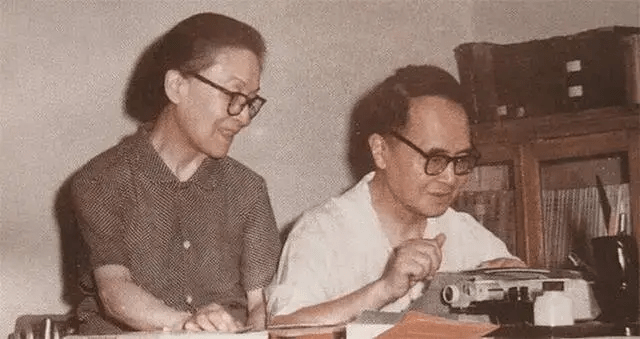
Yang Jiang and her husband Qian ZhongShu

“Simple living and a noble soul are the highest realms of life,” she once said. This was not just a belief but a guiding principle for Yang Jiang. She valued her time deeply, distancing herself from superficial socializing and instead focusing on self-cultivation. Together with her husband, Qian Zhongshu, they shared a simple, intellectual life, each respecting the other’s need for space and quiet to work. After her husband’s passing, Yang Jiang withdrew even further from the world, spending her days immersed in writing and editing.

At the age of 92, Yang Jiang published her essay collection We Three, which received widespread acclaim. Even at the age of 103, she was still active in compiling and publishing The Complete Works of Yang Jiang, a reflection of her lifelong dedication to literature.

It was her ability to remove herself from the distractions of life that allowed her to create works of such lasting value.

Her translation of the eight-volume Don Quixote, once the best-selling Chinese version, drew criticism at one point as a “negative example.” Many writers rushed to her defense, but Yang Jiang responded with characteristic humility: “I sincerely declare that I am a humble translator. I have revised my translation over and over, and still feel it’s not good enough. I hope the experts will offer their guidance.” Her modesty and openness to improvement reflect the calm confidence she carried throughout her life.

In her book Walking on the Edge of Life, she wrote, “We once yearned for the waves of fate, only to realize in the end that the most beautiful scenery in life is the inner calm and composure.” This sentence captures the essence of her wisdom. She knew that, amid the noise and complexity of the outside world, it is the peace we cultivate within that is the most precious.

Yang Jiang rarely wore makeup, preferring to show her natural face to the world. This was not just about simplicity in appearance but about a deeper confidence and acceptance of her true self. She believed that external beauty was far less important than the richness of one’s inner life. As she wisely said, “A woman’s greatest strength is not how beautifully she dresses, but the ability to make herself happy no matter what happens.”

Through her life, Yang Jiang has shown us that even in the face of life’s greatest challenges, it is possible to maintain elegance and beauty by nurturing simplicity and inner richness. Her wisdom and grace continue to inspire us to live with quiet strength, away from the distractions of the world, focused on what truly matters.

Link: https://peacelilysite.com/2024/10/03/the-art-of-graceful-living-lessons-from-yang-jiang-on-simplicity-and-inner-peace/

#YangJiang #QianZhongShu #WeThree #WalkingontheEdgeofLife #InnerPeace #Wisdom #Simplicity

Dharma Assembly Celebrates the Birthday of Namo Dipankara Buddha at The Holy Miracles Temple

On Sunday, September 22, 2024, The Holy Miracles Temple in Pasadena hosted the grand “Dharma Assembly to Welcome the Birthday of Namo Dipankara Buddha.” This auspicious event was co-organized by the World Buddhism Association Headquarters, The Holy Miracles Temple, and the Saint Grong Lecture Hall. The assembly was led by the abbot of Hua Zang Si, Venerable Ru Hui Ru Zun, a Holy Virtuous One of Gold Button Level 1, who presided over the sacred ceremonies.

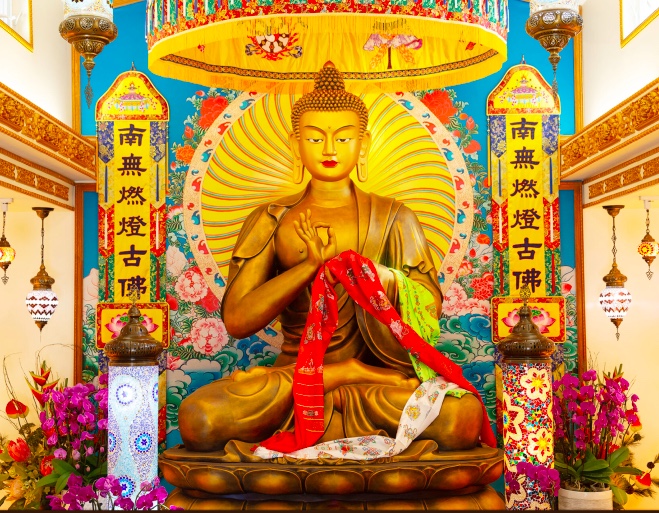
Namo Dipankara Buddha, a revered incarnation of Namo Dorje Chang Buddha, holds a special place in the hearts of Buddhist disciples. In ancient times, he prophesied that Shakyamuni Buddha would one day attain enlightenment and become a Buddha. The site of the “Dipankara Buddha Hall” at The Holy Miracles Temple is significant—it marks the location of the first-ever publication of The True Meaning of the Heart Sutra as Expounded by H.H. Dorje Chang Buddha III, where profound teachings of the Buddha were revealed.

A particularly memorable moment in this location occurred on March 7, 2014, during a Dharma assembly when a miraculous event unfolded. Buddha descended from the sky, manifesting in a divine form, blessing the gathering with three-colored nectar—a clear and undeniable testament to the authenticity of the teachings in Expounding the Absolute Truth through the Heart Sutra. Following this sacred event, the Dipankara Buddha Hall was constructed on this blessed site, where devotees from all directions come to light lamps and offer their reverence to the Buddha.

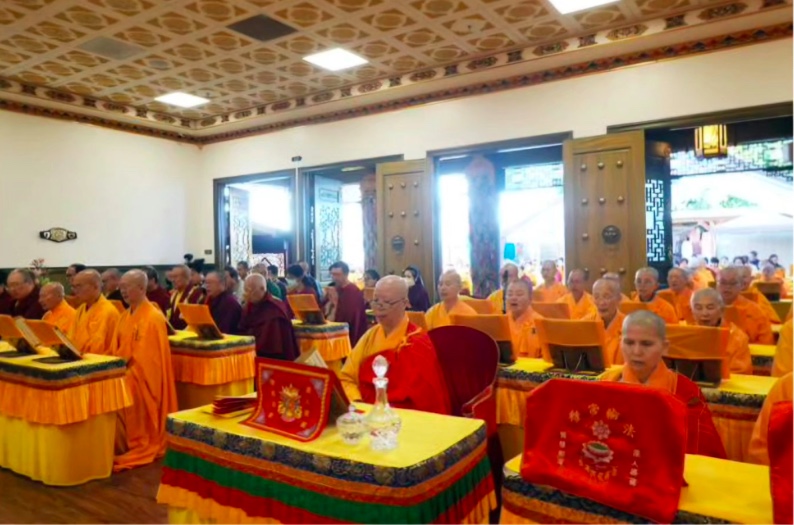
This year’s Dharma assembly began with great reverence in the Grand Hall, filled with the solemn chanting of Buddhist hymns. Under the guidance of Venerable Ru Hui Ru Zun and the monastic community, participants respectfully recited the Diamond Sutra, bowed to the Buddha, performed repentance, and conducted a grand offering before the Buddha. The assembly’s merits were dedicated to celebrating the Buddha’s birthday, with the intention to increase the blessings and wisdom of all beings, dispel ignorance and darkness, and bring forth prayers for world peace, national prosperity, and a harmonious society.

The Dharma assembly invited Venerable Ru Hui Ru Zun, the abbess of Hua Zang Si and a Holy Virtuous One, to preside over the ceremony

During an interview, Venerable Ru Hui Ru Zun shared the origin of the Buddha’s name: “The name ‘Namo Dipankara Buddha’ comes from the illumination that surrounded Him at birth, shining like a lamp. Today, we light lamps, chant scriptures, and offer prayers, hoping to bring the light of the Dharma to the world, and to bless humanity with peace and auspiciousness.”

The assembly also brought touching personal reflections. Ms. Tam, a long-time attendee, shared, “Every year, our family lights the annual offering lamp at the Dipankara Buddha Hall. It has brought us great blessings, and everything in our lives has been smooth and auspicious.” Benjamin Hong reflected on his family’s deeper connection to Buddhism: “When my uncle was diagnosed with cancer, our family sought ways to help him. This journey led us to encounter the true teachings of the Tathagata. Through the teachings of Namo Dorje Chang Buddha, we gained a profound understanding of what Buddhism truly is. It was this experience that helped our family through the toughest times and brought us to the path of Buddhism.”

At the conclusion of the Dharma assembly, Venerable Ru Hui Ru Zun blessed the congregation by sprinkling holy water for empowerment

This Dharma assembly beautifully honored the legacy of Namo Dipankara Buddha. It served as a living bridge between ancient wisdom and the contemporary aspirations of the Buddhist community, uniting all participants in a shared vision of enlightenment, peace, and harmony for the world.

Link:https://peacelilysite.com/2024/10/02/dharma-assembly-celebrates-the-birthday-of-namo-dipankara-buddha-at-the-holy-miracles-temple/

The Seven Treasures of True Wealth

In this world, which sentient being does not desire great wealth? Which of us does not seek blessings and fortune? But what truly defines wealth? Most people measure it by the amount of money they have, the assets they own—be it real estate, cars, or stocks. These tangible things may seem like wealth, but they are easy to lose.

Money and jewels cannot provide lasting security—they can be stolen by thieves.
Reputation and status cannot guarantee stability—enemies can destroy them.
Family and friends are not unshakable—they can change as people’s hearts do.
Illness, aging, and death remind us that the body itself is fragile and impermanent.
Fate and fortune cannot be relied upon—karma follows us, shaping our circumstances.

So, what is the true wealth that we can hold onto in this fleeting lifetime?

Over 2,500 years ago, Shakyamuni Buddha illuminated the path to real wealth—wealth that transcends the material and leads to lasting peace and wisdom. He shared the Seven Treasures of Life, invaluable treasures that guide us to inner fulfillment and enlightenment. These treasures cannot be stored in vaults or spent like gold and jewels. They are the true treasures that nurture the soul.

The Seven Treasures:

  1. The Treasure of Faith
    This is the deep trust a disciple places in the Buddha’s awakening. It is unwavering confidence in the truth of the Buddha’s enlightenment and teachings. Faith is the compass that keeps a person on the path of liberation, a guiding light through life’s trials.
  2. The Treasure of Integrity
    Integrity means living in alignment with one’s highest principles. It manifests as abstaining from harmful actions—whether through speech, thought, or deed. A person with integrity refrains from violence, stealing, falsehood, and indulgence in intoxicants. Integrity is the treasure of a life well-lived with honesty, respect, and compassion for all beings.
  3. The Treasure of Self-Respect
    This treasure is found in the heart of those who uphold their dignity and honor. Self-respect means feeling shame at the thought of misconduct and avoiding actions that degrade one’s character. A person who treasures self-respect lives with a deep sense of morality and avoids causing suffering.
  4. The Treasure of Responsibility
    This treasure reflects an understanding of the consequences of one’s actions. It is a profound sense of accountability for one’s choices, knowing that every action—whether good or bad—impacts oneself and others. Responsibility is driven by a genuine concern for well-being, not out of fear, but from love and care.
  5. The Treasure of Learning
    Learning is the treasure of an eager and inquisitive mind. It is the pursuit of wisdom through listening, reflecting, and studying the teachings. A disciple who treasures learning delves into the Dharma, growing in understanding, and cultivating insight that transforms their perception of life.
  6. The Treasure of Generosity
    This treasure resides in an open and giving heart. It is the joy of sharing wealth, time, and kindness without clinging to material things. A generous person delights in helping others and is always ready to support those in need. Generosity brings happiness both to the giver and the receiver, and it enriches the soul beyond measure.
  7. The Treasure of Wisdom
    Wisdom is the crown jewel of all treasures. It is the deep understanding of life’s impermanence and the realization that clinging to fleeting things leads only to suffering. With wisdom, one sees the world as it truly is, cultivating peace, detachment, and the ability to make decisions that lead to lasting happiness.

True Wealth Beyond Material Possessions

Shakyamuni Buddha shared these seven treasures with his disciples, emphasizing that true wealth is not measured by material abundance but by these inner riches. Whether man or woman, young or old, those who possess these treasures are truly wealthy. Their lives are meaningful, filled with purpose, and unshaken by the ups and downs of worldly fortunes.

So, what can we learn from these timeless teachings?

Cultivate faith and integrity,
Grow in generosity and wisdom,
Walk the path with responsibility and learning,
Always remembering the teachings of the Buddhas,
for they are the guideposts to inner peace, fulfillment, and the truest wealth.

Link:https://peacelilysite.com/2024/09/26/the-seven-treasures-of-true-wealth/

Source: https://wisdomtea.org/2024/09/13/treasure/

The Old Boat and the Journey Within: Lessons from the Buddha on Cultivation and Liberation

During the Buddha’s lifetime, there was a time when he was teaching on the far side of a river. Eager to hear his wisdom, many monks wished to cross the river, but there was only one boat available. The boatman warned them, “My boat is very old, and with so many of you on board, it could be dangerous!” Yet, in their eagerness to reach the Buddha, the monks ignored the boatman’s caution and all climbed aboard. Reluctantly, the boatman set sail.

As they reached the middle of the river, the monks noticed water seeping into the bottom of the boat, and panic began to spread. The boatman calmly said, “I told you this boat is old, but you didn’t listen. Now, if you can’t stay calm, the boat will sink even faster.”

Upon hearing this, the monks stilled themselves and did not dare move. Thankfully, the boatman’s experience guided them safely to the other shore.

When the monks arrived and recounted the incident to the Buddha, he offered this teaching: “When you were in the boat, you feared for your safety. But in daily life, you fail to realize that danger is ever-present. Many people worry about the uncertainty of the future, yet neglect the most important thing — being mindful of the present moment. Focus on this life, this moment. Pay attention to your thoughts and purify your mind of the five poisons: greed, anger, ignorance, pride, and doubt.”

The Buddha continued, “Our bodies are like that old, leaky boat. We must reduce its burden, and the heaviest load is the weight of greed, anger, ignorance, pride, and doubt. Just like in the boat, if we don’t repair our minds and lighten our burdens, we risk sinking. Only by addressing these burdens can we safely reach the other shore.”

“Do not be preoccupied with the thought of being reborn in the Western Pure Land in your next life. Instead, focus on your present condition. Are you free from afflictions in this very moment? Do you act with an open heart? Can you humble yourself in the eyes of others? These are the true questions we must face in life.”

The contemporary Buddha H.H. Dorje Chang Buddha III  has also imparted timeless wisdom on cultivation. His Holiness teaches that true cultivation stems from the depths of your heart, from your bodhicitta — the awakened mind of compassion. Be genuinely friendly and loving to your spouse, your brothers, and your sisters. Foster harmony with your friends, act cooperatively with others, and extend care and help to all sentient beings. Apply the Four Limitless States of Mind — loving-kindness, compassion, joy, and equanimity — and cultivate bodhicitta in every action. Constantly reflect on yourself: How do you treat others with your words? With your thoughts? With your actions?

The conduct of Buddhas and great Bodhisattvas is marked by complete disregard for personal gain. When interests conflict, they give way to others, willingly taking fewer benefits or even none. You must remind yourself, “When others harm or slander me, I will not be disturbed. Even to those who harm me, I will wish them well, sincerely hoping for their happiness. Furthermore, I will take practical steps to help them, even offering financial aid — without letting them know that I am doing so.”

By living in accordance with these teachings, we become holy ones at the causal stage. Without a doubt, such cultivation leads to the perfection of wisdom and virtue. Achieving liberation and accomplishment becomes as simple as turning over one’s hand!

Link:https://peacelilysite.com/2024/09/19/the-old-boat-and-the-journey-within-lessons-from-the-buddha-on-cultivation-and-liberation/

#HHDorjeChangBuddhaIII #DorjeChangBuddhaIII #DorjeChangBuddha #ShakymuniBuddha

#WhatisCultivation #Compassion #Kindness #Liberation

The Legacy of Dou Yanshan: A Story of Kindness, Virtue, and the Law of Cause and Effect

When I was a child, I read The Three Character Classic (三字经) and came across a verse: “Dou Yanshan, of righteous conduct, taught five sons, all became famous.” At the time, I didn’t realize how much meaning was packed into these simple lines. Later, I learned that they tell a profound story. Dou Yanshan’s life and deeds provide undeniable proof of the law of cause and effect, offering a timeless moral lesson for the world. I would like to share Dou Yanshan’s story with you.

Dou Yujun, also known as Yanshan due to his home in Youzhou (part of the Yan region), lived during the Later Jin period of the Five Dynasties. He lost his father at a young age, and was raised solely by his mother, to whom he showed deep filial respect, never daring to disobey her. At that time, most men married in their twenties, and by the age of thirty, if they had no children, they would worry about their lineage. Dou Yujun, still childless in his thirties, was deeply concerned about his future.

One night, Dou had a dream where his deceased grandfather appeared and said, “Yujun, your past life’s negative karma is heavy, which is why in this life, you are not only childless but also destined for a short life. My dear grandson, turn your heart toward goodness. Perform acts of kindness and help others. Perhaps by doing so, you may change your fate.” Upon waking, Dou remembered every word of his grandfather’s message. From that moment, he vowed to avoid all evil and pursue only good deeds.

One example of his kindness involved a servant who had stolen twenty thousand taels of silver. Fearing punishment, the servant wrote a bond stating that he was selling his young daughter to repay the debt and then fled. When Dou discovered this, instead of punishing the girl, he burned the bond and raised her as his own. When she grew up, he even arranged a marriage for her, providing a dowry.

On New Year’s Day, Dou went to Yanqing Temple to pray and found 200 taels of silver and 30 taels of gold near a meditation cushion. Believing it to be someone’s lost property, he waited in the temple for the owner to return. After some time, a man arrived, crying in distress. Dou asked him what was wrong, and the man explained, “My father has been captured by bandits, and after much effort, I gathered 200 taels of silver and 30 taels of gold to ransom him. But now I’ve lost everything!” Dou, realizing this man was the rightful owner, returned all the silver and gold and even gave him additional travel money. The man left, filled with gratitude.

Dou Yujun was known for his many acts of kindness. When friends or relatives couldn’t afford coffins for their deceased, he provided them. When children of poor families had no means to marry, he paid for their weddings. He lent money to those in need so they could start businesses, helping countless people survive. Despite his generosity, Dou lived a frugal life. Each year, after setting aside the necessary expenses for his family, he used the rest of his income to help others. He even established forty schools, collected thousands of books, and hired teachers of high moral character to educate the youth. He paid the tuition of poor students, helping cultivate many outstanding individuals.

One night, Dou had another dream in which his grandfather appeared again, saying, “You have done many good deeds. Because of your great virtue, Heaven has extended your life by thirty-six years and will bless you with five noble sons, all of whom will achieve great success. When your time comes, you will ascend to Heaven.” His grandfather added, “The law of cause and effect is absolute. The consequences of good and evil deeds may appear in this life, in the next, or in the lives of your descendants. Heaven’s justice is unerring.”

After this, Dou Yujun continued to cultivate virtue with even greater diligence. Eventually, he had five sons, and due to his strict and righteous upbringing, they were all disciplined, harmonious, and filial. All five sons passed the imperial examinations and achieved high positions: his eldest, Dou Yi, became a Minister of State; his second, Dou Yan, became a Hanlin Academician; his third, Dou Cheng, served as Deputy Prime Minister; his fourth, Dou Kan, was an Imperial Chronicler; and his youngest, Dou Xi, became Assistant to the Minister of the Left. Even his eight grandsons achieved prominence. To honor Dou’s achievements, the imperial official Feng Dao wrote a poem:
“Yanshan’s Dou family, with righteous teachings, raised five sons, all blossoming like red laurels.”

Dou himself lived to the age of eighty-two. He predicted the time of his passing, bid farewell to his friends, bathed, dressed in clean clothes, and passed away peacefully.

The law of cause and effect is undeniable. Whether the consequences of good deeds are seen in this life, in the lives of one’s descendants, or in future reincarnations, they are inevitable. Dou Yujun not only enjoyed a long life and wealth, but his descendants also prospered, and his peaceful death is a testament to the blessings awaiting him in his next life. His vast and profound kindness brought him blessings in this life, in the lives of his descendants, and in the afterlife.

The renowned Song Dynasty scholar, Fan Zhongyan, used Dou Yujun’s story to teach his own children about the importance of good deeds, leading to the prosperity of the Fan family. While many people knew about Dou Yujun’s deeds, few truly acted on them. It is like entering a treasure mountain and leaving empty-handed. What a missed opportunity that would be!

Link:

A Single Rose Can Change a Life

One day, a little girl, full of innocence and joy, picked some roses. As she wandered down the road, she saw a poor beggar lying by the roadside. She paused, glanced at the flowers in her hand, and gently placed the most beautiful rose beside the sleeping man. She smiled to herself, thinking, “When he wakes up, he’ll be so happy.” With that, she skipped away, her heart light and joyful.

The sweet fragrance of the rose stirred the beggar from his slumber. Groggily, he opened his eyes and saw the delicate flower in his hand. “Did someone really give this to me? Could something so wonderful happen to someone like me? It’s like the sun rising in the west,” he thought, bewildered. “The person who gave me this flower must be a truly kind and beautiful soul.”

Overcome with emotion, the beggar decided to return to his shabby home. He rummaged through a dusty corner and found an old, dirty bottle. Filling it with water, he placed the rose inside. For a moment, he admired the flower, but then something nagged at him. “Wait,” he thought, “This beautiful rose can’t be in such a filthy bottle.”

He carefully removed the flower, washed the bottle thoroughly, and then placed the rose back inside. But as he looked again, he noticed the dusty table beneath it. “How could such a clean flower sit on such a dirty table?” He set to work, cleaning the table until it gleamed.

As he stepped back to admire the scene, he suddenly realized: “How can this beautiful rose, in a clean bottle, on a spotless table, exist in such a cluttered, dirty room?” He made a bold decision then and there – he would clean the entire house! With renewed energy, he swept away the dust, arranged his belongings neatly, and cleared out all the trash.

With every corner he cleaned, the house became warmer, cozier. A sense of peace filled the room. It was then that he caught his reflection in the mirror – his disheveled hair, his dirty face, his ragged clothes.

“Is that really me?” he asked himself.

Without hesitation, he took a bath, put on his best (though still worn) clothes, shaved, and tidied himself up from head to toe. When he looked in the mirror again, he smiled. “Hmm, I don’t look so bad!”

“Why should I remain a beggar? Tomorrow, I will find work,” he resolved.

Unbothered by hard or dirty work, and unpicky about the job, he soon found employment.

“Someone gave me a flower, and it turns out I’m not worthless after all,” became his daily mantra. It motivated him to work diligently, and as the years passed, he found success. But more than that, he discovered a new purpose.

“A single flower changed my life,” he thought. “I must help others in the same way.” And so, whenever he encountered someone in need, he offered a helping hand. Over time, the number of people he helped grew, and within a few years, he became a respected philanthropist, known far and wide for his kindness.

The story doesn’t end here. Those he helped went on to spread kindness to others, creating a ripple effect that touched countless lives.

In truth, we all need a beautiful flower – a small act of kindness – to remind us of our worth. And that flower? It’s something we all possess and can give freely.

Isn’t it true?

  • In public, we can hold the door for someone behind us.
  • When we see someone feeling down, we can offer them a smile.
  • We can give a genuine compliment to brighten someone’s day.
  • On a rainy day, we can drive a little slower to avoid splashing water on pedestrians.
  • We can pick up a stray nail on the ground to prevent someone from getting hurt.
  • We can speak with kindness and warmth to everyone we meet.

These are simple actions, right? They require little effort, yet they have the power to transform lives. Just like that unnoticed rose changed the beggar’s life, our small acts of kindness can change the world, one person at a time.

In our daily lives, we often believe that once something is done, it’s over. Once words are spoken, they disappear. But in reality, it’s far from over. A kind word, a smile, a simple gesture – these can brighten someone’s day, create ripples of happiness, and leave a lasting impact.

Giving someone a rose, literal or figurative, not only leaves a lingering fragrance in their heart, but it also brings joy back into our own lives. Today, when we plant a seed of kindness, it may grow into a tree in ten years. In a hundred years, it could become a small forest. And in a thousand years, that forest may provide blessings to generations yet to come.

Nothing we do, say, or think ends at the moment. Whether good or bad, everything continues to spread, shaping the world around us.

Link: