Since the time of Shakyamuni Buddha, it has been a long-established tradition in Buddhism for disciples to make offerings to their masters or teachers from whom they receive the Dharma. This practice is clearly stipulated in Buddhist teachings and has been followed for over two thousand years across cultures and countries. Making offerings is regarded as both an expression of gratitude and a means of cultivating merit.
Yet, in striking contrast to this universal custom, H.H. Dorje Chang Buddha III made an extraordinary vow very early in His life: to never accept any offering from anyone.
Rather than receiving support, He has chosen to give unconditionally. Rather than being served, He serves others. H.H. Dorje Chang Buddha III has repeatedly said with humility, “I am a servant of living beings.”
This is not a symbolic statement—it is a lifelong practice.
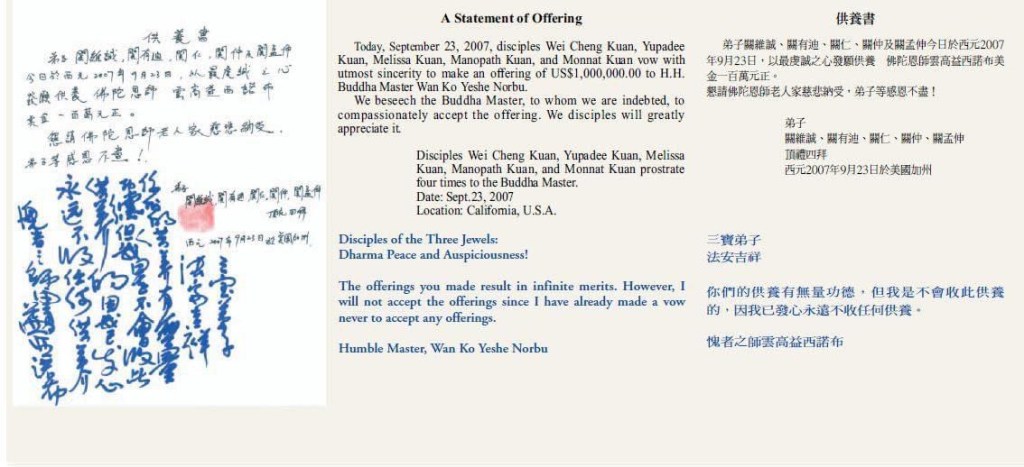
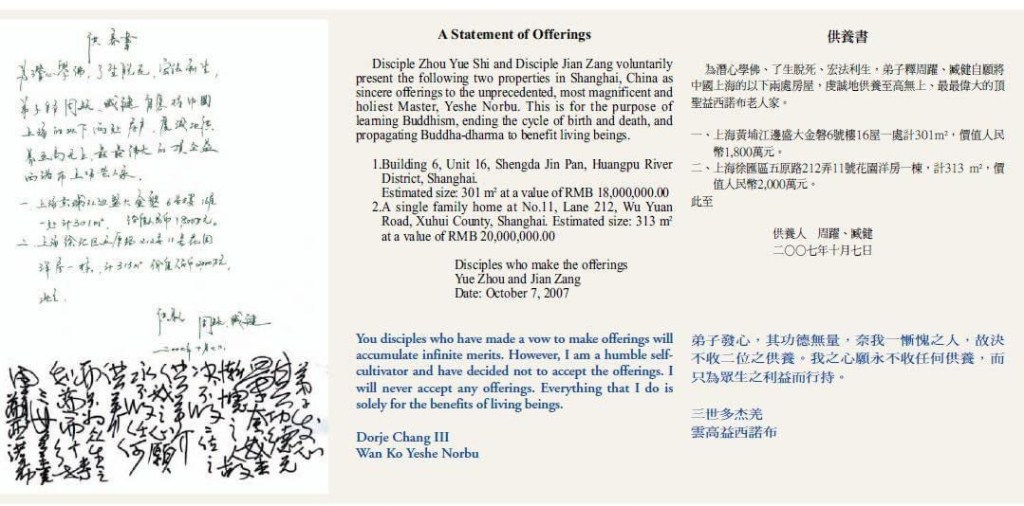
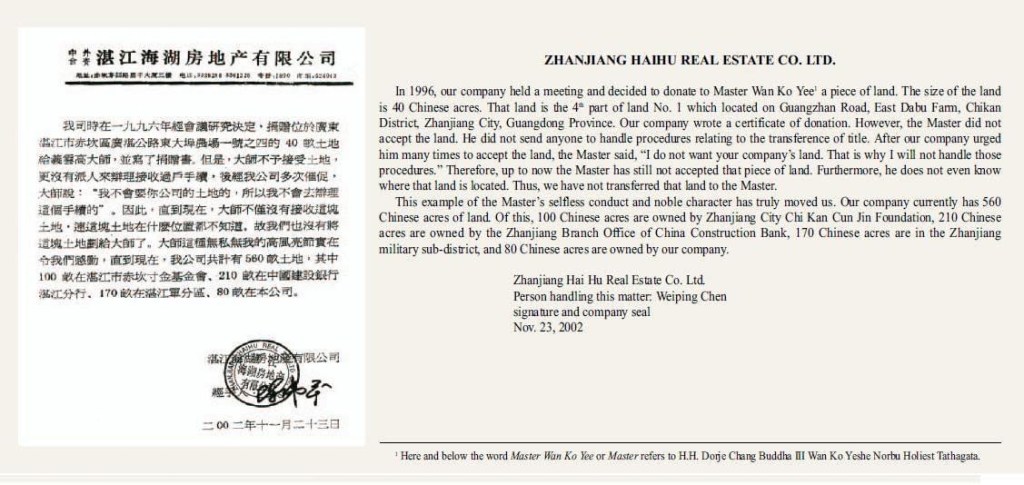
Throughout His life in China, and from the time He first settled in the United States to the present day, countless Buddhist disciples have sincerely attempted to make offerings to Him. These were not small gestures. Some offerings reached millions, even tens of millions of U.S. dollars, given voluntarily and without condition. Yet without exception, H.H. Dorje Chang Buddha III has steadfastly refused every offering, remaining absolutely faithful to His vow.
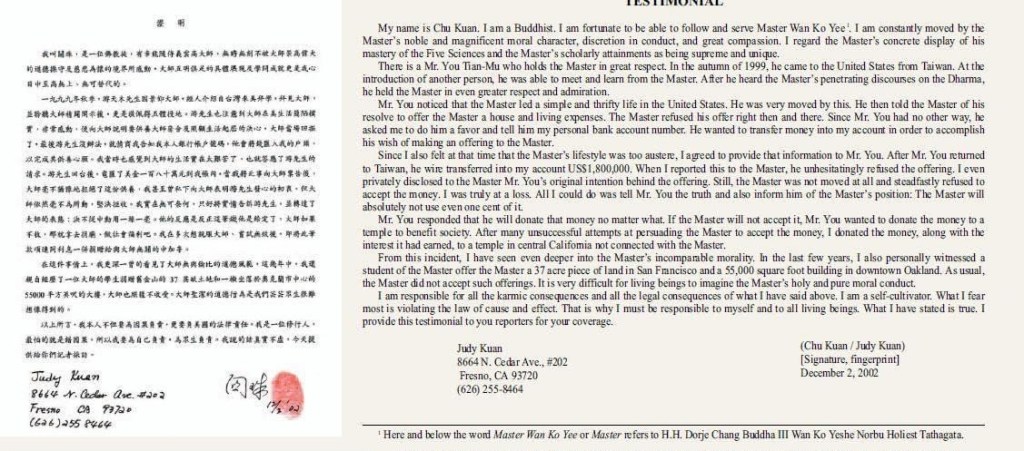
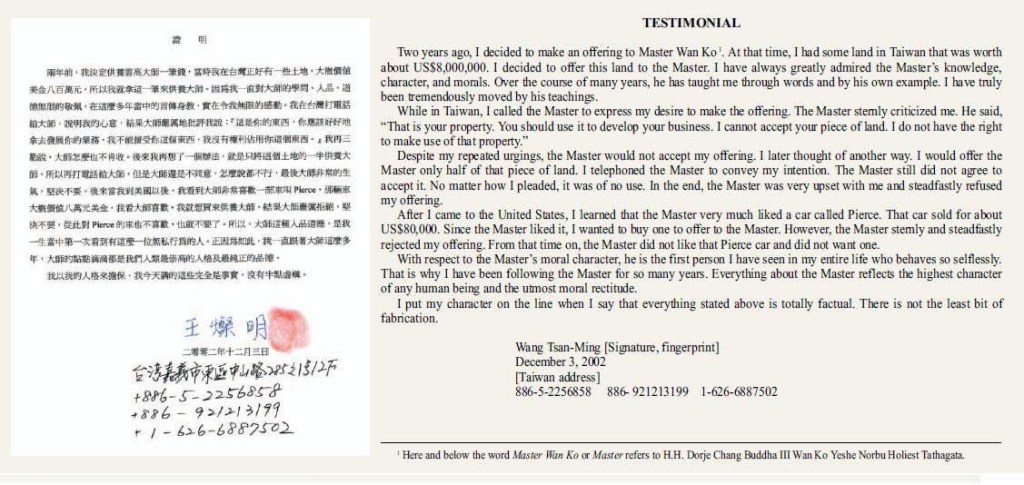
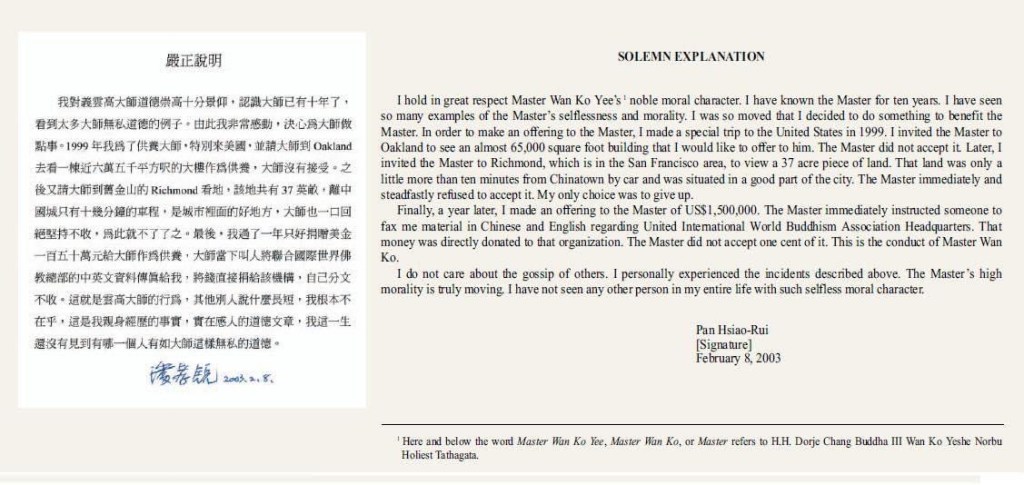
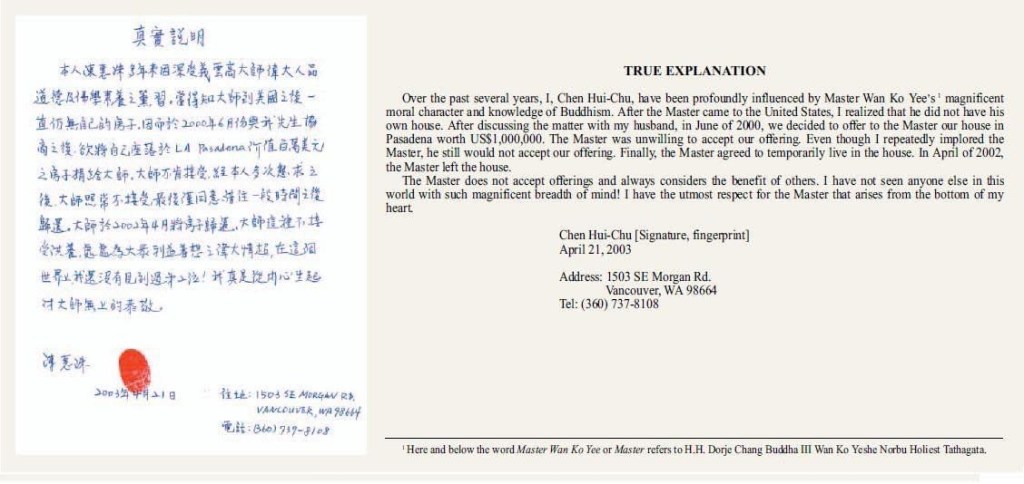
Many disciples, deeply moved by this experience, have written open and notarized testimonials describing how their offerings were respectfully but firmly declined. These accounts stand as living evidence of a level of integrity that is rare in any age.
In early 2018, at the Holy Miracles Temple, Ms. Judy Kuan—whose Dharma name is Dunzhu—solemnly made a public vow before Shakyamuni Buddha and Skanda Bodhisattva. Standing in the Grand Hall, she revealed a truth she had kept private for many years: her personal experience witnessing H.H. Dorje Chang Buddha III’s absolute refusal to accept offerings, regardless of their magnitude.
This invites us to pause and reflect. Imagine being faced with vast wealth—gold, land, and enormous sums of money—freely offered, unconditionally given, without demand or obligation. Could any ordinary person truly reject it all? Not a portion. Not even a single cent. And do so consistently, over decades, without wavering?
Could we remain completely untainted?
For many decades, H.H. Dorje Chang Buddha III has lived exactly in this way—helping others entirely on a voluntary basis, never seeking reward, recognition, or material gain. From early morning until late into the night—often two or three o’clock in the morning—He continues to work tirelessly to resolve the suffering of living beings, to address Dharma matters, and to guide others on the path of righteousness and compassion.
This is not occasional generosity. It is unceasing selflessness.
In a world where spiritual authority is too often entangled with wealth and power, the conduct of H.H. Dorje Chang Buddha III stands as a rare and powerful example. His life demonstrates that true cultivation is not spoken—it is lived. True compassion does not ask for return. And true realization naturally manifests as service to others.
Further supporting this truth, several Buddhist disciples have publicly released notarized letters, now translated into English, testifying that their offerings were refused. These documents exist not to persuade, but to allow people to see for themselves.
In the end, the question is not whether we admire such selflessness—but whether we allow it to awaken something within our own hearts.
For those who reflect deeply, the life of H.H. Dorje Chang Buddha III offers a quiet yet profound reminder: the highest virtue is to give without taking, to serve without asking, and to live entirely for the benefit of others.
Click here to Wikitia page on H.H. Dorje Chang Buddha III that list major accomplishments and teachings with links.
Click here for recognitions from Dharma Kings and Rinpoches
In the southwestern suburbs of Xining, where the air grows thin and the spirit grows light, stands one of the most significant sites in the Buddhist world: Kumbum Monastery.
Known in Tibetan as Kumbum Jampa Ling, meaning “A Supreme Temple of a Hundred Thousand Lion’s Roar Buddha Images,” this sprawling complex is far more than just a collection of buildings. It is a living monument to Lama Tsongkhapa, the revered founder of the Gelug (Yellow Hat) sect of Tibetan Buddhism.
The Legend of the Golden Tree
Unlike many temples built to house statues, Kumbum was built to house a pagoda.
Legend tells us that Tsongkhapa was born here in 1357. When his mother cut his umbilical cord, drops of blood fell to the earth, and from that spot grew a miraculous sandalwood tree—the “Tree of Great Merit.” It is said this tree had 100,000 leaves, each bearing a natural image of the Buddha.
Years later, when Tsongkhapa was studying in Tibet, his mother sent a letter begging him to return. He replied that he could not leave his studies, but sent a self-portrait and a “Lion’s Roar” image, instructing her to build a pagoda over his birthplace. “Seeing this pagoda,” he promised, “is the same as seeing me.” In 1379, the Julian Pagoda was built, forming the sacred heart of what would become Kumbum Monastery.
Kumbum is world-renowned for its harmonious blend of traditional Tibetan and Chinese Han architectural styles.
1. The Eight Pagodas of Buddha Shakyamuni
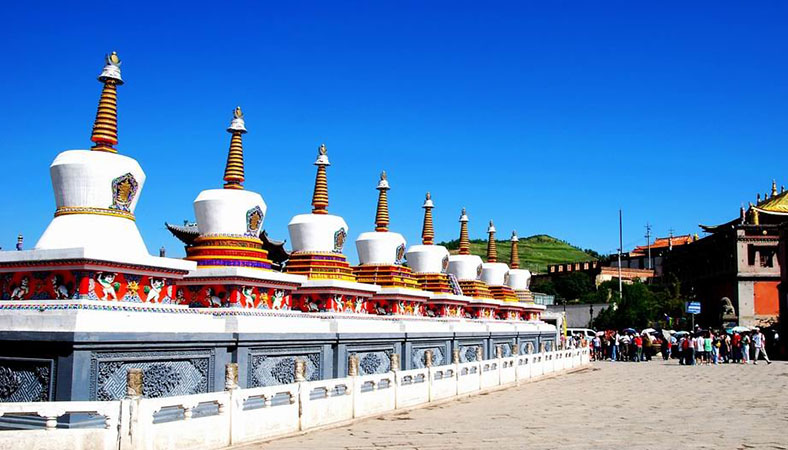
Greeting visitors in the front square are eight gleaming white pagodas. Built in 1776, they commemorate the eight great merits and virtues of Buddha Shakyamuni. Each stands 6.4 meters tall, decorated with delicate Sanskrit scriptures and guardian lions, serving as a powerful symbol of the monastery’s spiritual authority.
2. The Grand Golden Tiled Hall
This is the soul of the monastery. With its gilded copper roof and emerald glazed-tile walls, the hall radiates a celestial glow. Inside, you will find an 11-meter-tall golden tower wrapped in white sandalwood and encrusted with jewels. At its peak sits a statue of Tsongkhapa. For pilgrims, meeting this tower is considered a direct meeting with the Master himself.
3. The Main Assembly Hall
Spanning nearly 2,000 square meters, this is the center of monastic life. Under a flat roof adorned with gilded bronze bells and “Aquarius” vases, hundreds of monks gather to recite sutras. The interior is a sensory masterpiece of colorful streamers and intricate carvings.
Dhammapala Hall
The “Three Artistic Wonders” of Kumbum
Kumbum is celebrated throughout Asia for its “Three Arts,” which represent the peak of Tibetan craftsmanship and devotion.
I. Vivid Yak Butter Sculptures
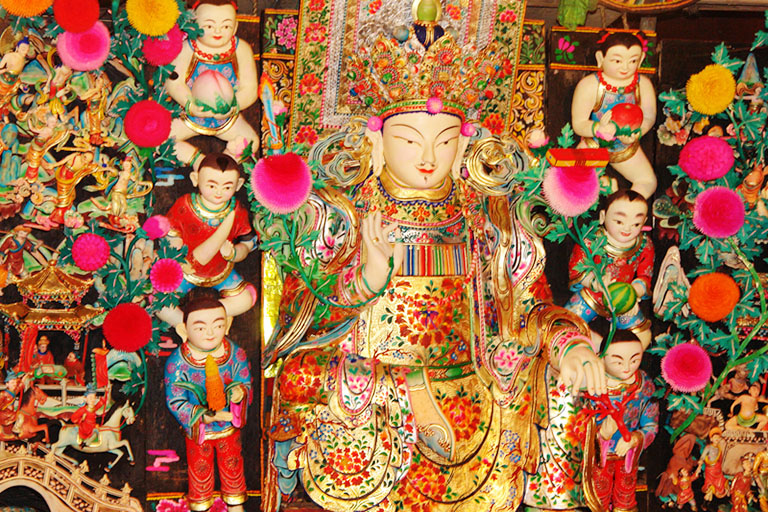
In the freezing depths of winter, when fresh flowers were unavailable for offerings, monks began carving flowers from yak butter. This evolved into a sophisticated art form. In the Yak Butter Sculpture Hall, you can see entire landscapes, pavilions, and deities crafted with impossible detail. To keep the butter from melting while they work, monks must dip their hands in ice water—a true testament to their endurance and faith.
II. Imaginative Barbola (Embroidered Appliqué)
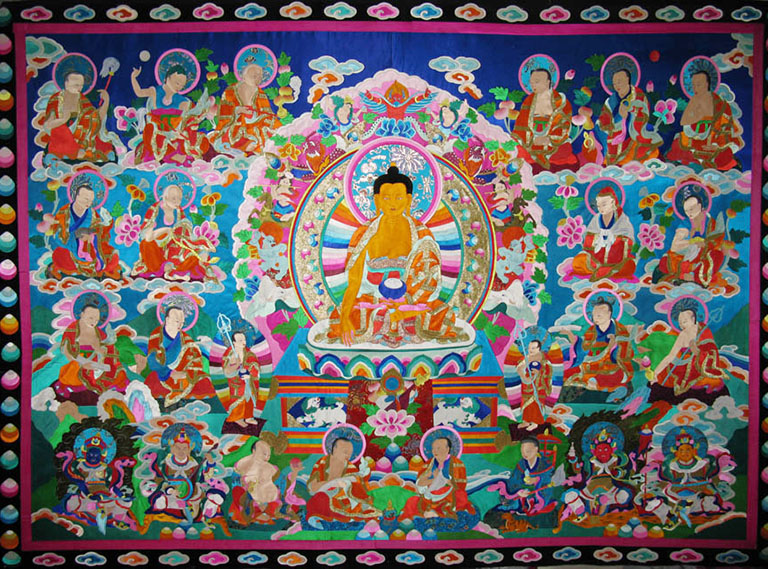
Barbola is a unique form of 3D silk embroidery. By layering silk and cotton, artists create raised patterns that give the figures of Buddhas and animals a lifelike, three-dimensional appearance. The “Sixteen Disciples of Buddha” housed in the Main Assembly Hall are considered national treasures.
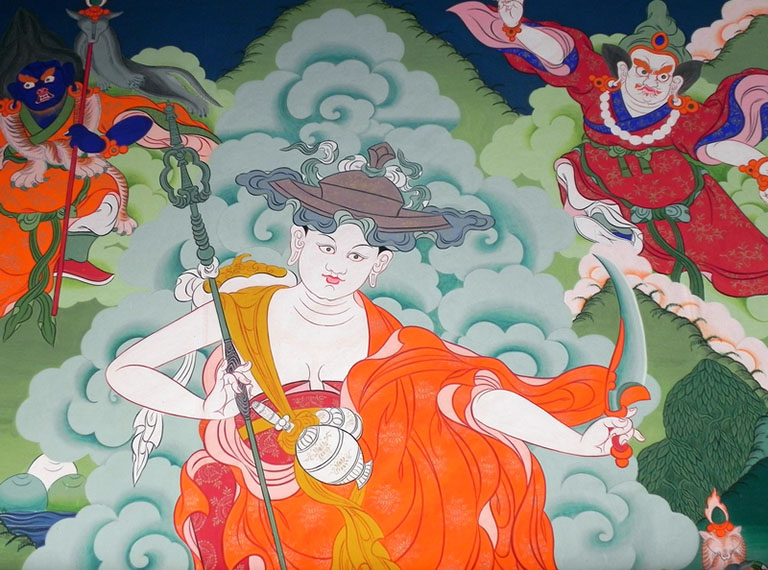
III. Exquisite Murals
The walls of Kumbum are alive with color. Using special mineral pigments that remain vibrant for centuries, these murals depict the life of Shakyamuni and scenes from the sutras. During the Sutra-viewing Festival, a massive 30-meter-long Buddha scroll is unfurled on the hillside, a breathtaking sight known as the “Great Buddha Exhibition.”
Kumbum Monastery hosts four major Dharma assemblies annually, held during the first, fourth, sixth, and ninth months of the lunar calendar. These gatherings are a blend of traditional festivals and grand religious events unique to the monastery. During these times, the temple comes alive with sacred activities, including monastic debates, mask dances, and sutra chanting.
A highlight of these fairs is the Cham Dance, where monks wear ornate masks and vibrant costumes, using dramatic gestures to express profound Buddhist teachings to the rhythm of cymbals and suonas (traditional horns). One of the most awe-inspiring sights is the Giant Thangka Unveiling, where a massive, delicate image of Tsongkhapa is unfurled down the mountainside. For the faithful, witnessing this Thangka is considered a direct and holy encounter with the Master himself.
Thangka Exhibition during the Buddha Festival
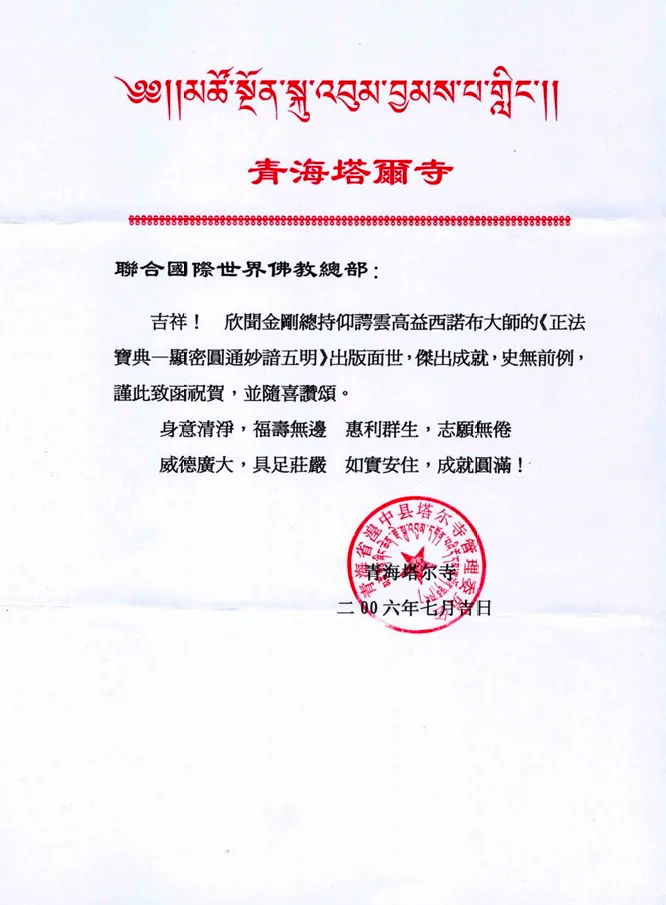
In July 2006, this sacred temple issued its formal recognition and congratulations to H.H. Dorje Chang Buddha III
United International World Buddhism Association Headquarters:
Under auspicious circumstances, we were happy to learn of the publication of A Treasury of True Buddha-Dharma—Complete Proficiency in Exoteric and Esoteric Buddhism and Perfect Mastery of the Five Vidyas about the Buddha Vajradhara, H.H. Master Yangwo Wan Ko Yeshe Norbu. His Holiness’s outstanding accomplishments are unprecedented. We respectfully send this letter of congratulations and joyfully offer our praise.
His actions and mind are pure, and His good fortune and wisdom are limitless. He benefits myriad living beings, and His willpower never tires. His powerful virtue is widespread, and His appearance is completely dignified. He truly abides in peace and His accomplishments are perfect!
Qinghai Skuvbum Monastery An auspicious day in July of 2006
Below is the original copy of the recognition letter in Chinese:
The moment I heard that I would be going with Venerable Dharma Teacher Long Hui to Los Angeles, unspeakable joy arose in my heart. On the way to Los Angeles, a rainbow suddenly emerged from the drizzling sky, emitting beautiful lights of various colors. A white celestial crane seen in the distance flew near and landed at the side of the freeway gazing at us, as if paying us respect. All of these signs expressed auspicious blessings. I strongly sensed that what I had wished for so long was about to come true.
A notice arrived in the afternoon of December 28th. From Venerable Dharma Teacher Long Hui’s somewhat tense facial expression, I could tell this must be the time for me to pay my respects and visit the Buddha Master. Just as expected, when we stepped into the mandala, I saw H.H. Dorje Chang Buddha III Wan Ko Yeshe Norbu Holiest Tathagata sitting upright on the dharma platform. His Holiness appeared so dignified and had an expression of loving-kindness. As I sincerely prostrated myself to H.H. Dorje Chang Buddha III, all I heard was the cordial voice of His Holiness telling everyone to come sit toward the front. I sat beside Venerable Dharma Teacher Long Hui. Dharma Teacher Jue Hui and Dharma Teacher Ruo Hui also sat with us.
Venerable Dharma Teacher Long Hui reported to the Buddha Master regarding the Buddhist chanting work that had taken place at Hua Zang Si over the past two months. Next, the Buddha Master called my name: “Fa Hai, proceed with what you want to say.” Without knowing why, my mind went totally blank. I felt that my entire body was soaking in a kind of freshness. I remained kneeling with a very straight back, as if I had entered a state of meditation. At this time, I only heard the Buddha Master say, “It is all right. Just speak directly!” Yet, I still could not speak and was silent for another eight or nine minutes. I could sense that the Buddha Master was patiently waiting. Finally, a sound floated out of my mouth: “My karmic affinity with the Buddha Master should have begun ten years ago. Because I could not come to America, I was not able to visit His Holiness. I finally got a visa last year. Only this year did I have the opportunity to visit Hua Zang Si, where I respectfully listened to recorded dharma teachings of the Buddha Master. For more than one straight month, I have listened to the recorded dharma discourses without the slightest sense of tiredness.
This has been the most beneficial and rewarding time of my entire life. The beneficial effects I have experienced can never be expressed in words. I bring my body, speech, and mind to respectfully visit the Buddha Master at this time. Today, I would like to specially request a great dharma from H.H. Dorje Chang Buddha III. I would not hesitate to leap into boiling water or walk on fire in order to obtain this great dharma. I am willing to undergo any test in order to obtain such dharma. I am even willing to sacrifice my own life. It might sound like I am exaggerating, but I truly can do such things.”
Perhaps because I was too nervous or focused, I unexpectedly was not able to express exactly what I meant to say. However, I silently told myself that the Buddha Master definitely understands what I am trying to express and what dharma I am requesting. I still remember that I fasted for a full 21 days in the Philippines in order to obtain this great dharma. This is because I am very aware that in this world only H.H. Dorje Chang Buddha III can accomplish this task and announce to the world this great dharma in order to demonstrate the brightness of Buddha and enable the correct dharma to exist in this world forever.
At first, the Buddha Master did not answer my request directly but gave us a profound and important discourse. Only afterward did I realize that this discourse was actually the beginning of His Holiness’s response to my question. His Holiness specifically pointed out the various kinds of confusion and mistakes that have appeared within Buddhism in this current Dharma Ending Age. Some Buddhist sutras contain serious mistakes. What is even more serious is that there are some so-called eminent monks and great virtuous beings who, due to their erroneous understanding and views, seriously misguide others when giving discourses on the dharma. What is even sadder is that believers who do not understand the truth still fanatically follow them and prostrate to them in worship. H.H. Dorje Chang Buddha III does all He can to correct these heretical ideas and views. However, being limited by the karma of living beings, H.H. Dorje Chang Buddha III feels that it is very difficult to change the current situation despite His wish to do so. The Buddha Master gave some examples of these heretical ways within both esoteric Buddhism and exoteric Buddhism. These very worrisome examples left me not knowing whether to laugh or cry.
After finishing the discourse, the Buddha Master said to me directly, “Fa Hai, you did not say what great dharma you want to request. Let me say it for you. The dharma you want to request is to film a movie of the Buddha. There really is no one else besides me who can do this because I completely understand the teachings of the Buddha. I can write the script. This movie must be filmed. The only thing is that the karmic conditions this year are not quite mature enough because the script needs to be written and actors need to be found, especially actors who are qualified. As for funding, as long as there is a script, there will be people who will sponsor and invest. Besides, the movie of the Buddha will not be filmed as one undivided whole but will be divided into a series of 100 parts or episodes. Perhaps this is really the right channel. After all, the influence of a book is limited as it reaches fewer people than a movie, which has much more of an international impact. In addition, when we do this, many problems might be solved. We might even be able to build several temples this way!” At this moment, I understood that the discourse just given by H.H. Wan Ko Yeshe Norbu Holiest Tathagata on the current chaotic situation within Buddhism illustrated that it is impossible for anyone else to write in a script the authentic doctrines of the Buddha.
Listening to this point, I was really shocked in my heart. I used to pay respect and visit many eminent monks and great virtuous beings. I requested from them great dharma. None of them knew what this great dharma in my mind was that I wanted to request. H.H. Dorje Chang Buddha III is truly magnificent. I did not reveal in the slightest what great dharma I wanted to request. Nonetheless, what His Holiness stated was the exact great dharma in my mind that I wanted to request.
His Holiness then said, “Fa Hai, when you come back from mainland China, I will transmit to you dharma according to the formal rituals of Tibetan esoteric Buddhism. You still have some negative karma. At that time, I will perform an initiation for you and eliminate your karmic hindrances. You will see.” I was totally engulfed in the joy of the dharma. The Buddha Master further said, “On your way here, the rainbow and the celestial crane you saw augured that your future undertakings will be bright. However, behind the brightness lurks darkness, and there are twists and turns on the path. We will soon face some attacks and slander, although those who commit the slander will all end up losing. When A Treasury of True Buddha-Dharma is published, no force can obstruct or destroy us because what is in that book are facts.” The Buddha Master finished by saying, “The movie of the Buddha definitely has to be filmed. You see, Fa Hai, your wishes have all been fulfilled. How fortunate you are!”
Actually, there are no words that can express my happiness. There are also no words that can express my gratitude toward H.H. Dorje Chang Buddha III.
I only want to respectfully offer to the Dorje Chang Buddha III my most beautiful spirit, my most beautiful melody, my most beautiful singing voice, and my best wishes. May all those who hear this beautiful melody and singing voice be happy.
I would like to express my special thanks to an anonymous person who ten years ago sent me an express mail package in which a yellow silk scarf was wrapped around the book The Fruits of Pious Devotion and CD’s that had a picture of H.H. Dorje Chang Buddha III on their covers. It is because of this present that seeds planted ten years ago have borne fruit in the form of my taking refuge in the His Holiness as my Buddha Master and in the form of my witnessing the magnificence of the Buddha-dharma.
Everything I described above is true. I am a Buddhist nun. I accept the karmic responsibility for my words. If what I have stated is false, I will descend into the Vajra Hell. If what I have stated is true, I would like to dedicate the resulting merit to all living beings in the dharma realm so that they will soon realize enlightenment.
Respectfully written by disciple Fa Hai Shi December 30, 2006
The above account was written by Fa Hai Shi. We three humble Buddhist nuns provide the following testimonials.
Encountering an Unusual Occurrence
Basically, whenever people pay their respects and visit H.H. Dorje Chang Buddha III Wan Ko Yeshe Norbu Holiest Tathagata, they make good use of their short meeting time by posing prepared questions or by requesting the transmission of dharma. Some groups have really made the best use of their time by requesting answers to problems that have arisen.
From left to right: Ruo Hui Shih, Long Hui Shih, and Jue Hui Shih
However, there was one particular occasion in the afternoon of December 28, 2006 when a dharma teacher from the Philippines, Fa Hai, came to the mandala from thousands of miles away. This was the first time she was granted an audience with H.H. Dorje Chang Buddha III. When H.H. Dorje Chang Buddha III asked her what question she had, I saw that Buddhist nun take a deep breath. She then unexpectedly remained silent as she stared at the Buddha Master with open eyes, sometimes lowering her head. Perhaps all of this was due to nervousness or other factors. At this time, the Buddha Master also did not speak. Seconds and then minutes passed by in silence. Then, that dharma teacher sighed once more and straightened her back, still looking at the Great Dharma King without uttering a sound. Strangely, Dorje Chang Buddha III also remained silent. A moment later, she sighed for the third time but still did not reply to the Buddha Master. The duration of this silence lasted more than eight minutes. This kind of situation had never happened before.
Finally, the dharma teacher spoke. She said she had come with a wish to request a great dharma. If her wish to obtain this great dharma were fulfilled, she said she would dedicate her life to the Buddha-dharma and living beings, even if it meant sacrificing her life. After uttering such words, she again fell into silence without mentioning what dharma she wished to request.
At this time, Dorje Chang Buddha III said, “Do not say anymore. I will give you a discourse.” The Buddha Master pointed out what request was in the mind of this Buddhist nun. That discourse not only enabled us disciples who were there to once again witness the supernatural powers of H.H. Dorje Chang Buddha III, it also enabled us to understand precious dharma principles.
Because I took Dharma Teacher Fa Hai to pay her respects to H.H. Wan Ko Yeshe Norbu Holiest Tathagata, I was there and personally witnessed everything that happened. Everything I described above is true. If what I have stated above contains false words, may I never become accomplished in the dharma. If what I have stated above is true, I dedicate the resulting merit to all living beings so that they may soon hear the correct dharma and soon attain liberation and accomplishment.
Buddhist disciple Long Hui Shih
I was present at the time. I hereby confirm that what is stated above is true. If what is stated above is false, I am willing to descend into hell and experience negative karmic retribution. If everything stated above is true, I dedicate the resulting merit to all living beings so that they may soon hear the correct dharma and soon realize enlightenment.
Buddhist disciple, Jue Hui Shih
Everything stated above is true. If what is stated above contains false words, I will not become accomplished in the dharma and will become impoverished and miserable. If what is stated above is true, I wish to dedicate the resulting merit to all living beings so that they may always see Buddha and attain liberation.
Buddhist disciple, Ruo Hui Shih
(This is a complete translation of the Chinese text that follows originally written and signed by Fa Hai Shih, Long Hui Shih, Jue Hui Shih, and Ruo Hui Shih.)
One recognition certificate from a sect can make the status of a rinpoche, while being recognized as the reincarnation of a Buddha requires confirmation from multiple Dharma kings of all different sects.
Generally, when a rinpoche reaches significant status, they are also recognized by more than one of the eminent monastics. H.H. Dorje Chang Buddha III, who has been recognized by over 100 Dharma kings, regent Dharma kings, great rinpoches, and top leaders of various Buddhist sects, is the first person in Buddhist history to receive this many recognitions.
It is the belief of all of these powerful individuals that H.H. Dorje Chang Buddha III is the true reincarnation of the Primordial Buddha, Dorje Chang Buddha. For over 1,000 years, this system has been used by numerous sects in order to recognize their reincarnated Buddhist practitioners.
Based on Buddhist principles, a “Buddha” has attained the supreme level of wisdom and enlightenment, and there is no one above a Buddha. So it goes without saying that a Buddha is the highest leader in the world when it comes to that religion and culture. That makes H.H. Dorje Chang Buddha III the highest leader of Buddhism in today’s world.
Building on the Foundation of Compassion
As H.H. Dorje Chang Buddha III works with others and makes his way in the world, he remains unaffected by awards and fame, and by those who would seek to slander him. His goal is only to contribute to the world, and to teach Buddhism to people, so the world can have more peace and happiness in it.
The cultivation of Buddha Dharma is what H.H. Dorje Chang Buddha III focuses on, rather than his standing and status as the reincarnation of a Buddha. Buddhist teachings are based on causality, peace, harmony, and compassion, and these are the main tenets that H.H. Dorje Chang Buddha III lives by. As he shares his compassion with others, he is able to change lives.
At the very beginning of the COVID-19 pandemic outbreak, His Holiness Dorje Chang Buddha III took the lead, donating equipment and materials for personal protection. This equipment for fighting the pandemic was donated to police departments, hospitals, and other public service institutions. His Holiness the Buddha also told people publicly:
“The emergence of the pandemic is a result from causality. Throughout the history of mankind and society, there have been occurrences of many pandemics of different types and forms. The COVID-19 pandemic is a type of contagious plaque, which is just infection through popular contact.
The symptoms would transform based on the changes in one’s physical conditions and the climate and spread to others. But people will also generate antibodies in response. However, this disease is not going to become extinct. Yet vaccines can provide very significant protecting effects to people.
Therefore, all of you should not be under pressure or become worried. Rather, all should follow the exhortation of the government and obey the government regulations.
Have yourself vaccinated. That will protect yourself and also others. Furthermore, the pandemic will not cause a closure to people. In the end, it will be opened up everywhere because our country will not allow closure to happen, and the world will not allow closure to happen.”
Living simply and focusing on humility rather than material rewards, he has never been concerned with his own well-being. He lives for the service and well-being of others, and to teach them the Buddha Dharma that will bring them enlightenment and liberation.
The more people who have this understanding, the more people will continue to show that understanding to others, to help others and to benefit society. This can cause a ripple effect of peace and harmony, which will spread far and wide through his teachings and the information he passes along to people around the globe.
Celebrated as a Scholar, an Artist, and a Healer
From a very early age, H.H. Dorje Chang Buddha III has been seen as extremely talented in a number of areas of life. Even as a child, he had wisdom beyond his years and talents that were strong and unexpected. Documentaries were made about his artistic abilities, and people came from far and wide to learn Buddha Dharma from him.
That occurred even before he was officially recognized as he is today. It is the belief of Buddhists that H.H. Dorje Chang Buddha III holds supreme knowledge of the universe.
Others have spent their entire lives seeking the wisdom and understanding H.H. Dorje Chang Buddha III has, but it seems as though he was born with it. His Holiness has taught many Buddhist leaders, holy gurus, Buddhist practitioners, and people from every walk of life who seek out his wisdom.
Whether people have questions about Buddhism, need mental or physical healing, or want a deeper understanding of life, H.H. Dorje Chang Buddha III will not turn them away. As the sutra said that a Buddha is the king of healing, he helped more than 300 people in one day during his time in China.
Born in China, he was quickly recognized there as having abilities well beyond his years. His artwork was exhibited in Taiwan, and he was named to the presidency of The Chinese Painting Research Association in Beijing in 1987. He has met with dignitaries from all over the world, including many in China before he moved to the United States.
When he visited Taiwan in 1995, it was not just dignitaries and important people he met with, but people from all over the area who lined up at his hotel to seek his help and guidance.
All throughout the day and night, the Buddha helped people without resting. H.H. Dorje Chang Buddha III does not turn any of them away from the help they were seeking and the guidance they wanted and needed from the Buddha.
He has remained selfless and compassionate, helping those who are distressed, elderly, poor, or sick and infirm, as well as any injured or stray animals he finds during his travels. No one and nothing are turned away from the Buddha’s help.
Subjected to Defamation and Injustice
Throughout his life, H.H. Dorje Chang Buddha III has been subjected to injustice, and had his name defamed and slandered. Two years after he came to the United States, the Guangdong Shenzhen Public Security Bureau in China made a case against him and charged him with defrauding someone during a property sale.
But even the person who was named in the case came forward and said that it had not happened. The Buddha also had no record of ever owning the property, or of anyone else transferring it to him.
The case lingered for years, even going so far as getting INTERPOL involved and asking that they issue Red Notices for the arrest of H.H. Dorje Chang Buddha III. After an investigation in China, thirteen legal experts came together and stated that the case was incorrect and fabricated, and that it was not accurate at all. INTERPOL’s investigation showed the same conclusion.
Eventually, China requested INTERPOL to withdraw the Red Notices against the Buddha, and in November 2009 INTERPOL wrote to His Holiness the Buddha that the Red Notices against him had been canceled. But all through the years when he was being defamed and investigated, he never said a word about it.
He made no public statement about the case, nor did he try to clear his name in any way. When he was asked to show the INTERPOL letter he received, he also chose not to do that.
The reason that Shenzhen Public Security Bureau made the case against the Buddha, is because Shenzhen Public Security Bureau illegally took more than 700 paintings from the house the Buddha resided in.
These were paintings that were created by him during past decades. But he never said anything. In order to keep these paintings, the public security agents still tried to slander the Buddha through the internet, and continued to make claims that he was guilty.
If they stated his innocence, they would have to acknowledge their own crimes, including the made-up case and the stolen paintings from the Buddha and his disciple.
Finally, in 2019, due to mounting requests from the Buddhist community and its leaders, H.H. Dorje Chang Buddha III agreed to make the INTERPOL letter public. The World Buddhism Association Headquarters made the letter public and issued a statement as well.
That allowed those who were faithful to Buddhism all around the world see the truth of the facts in the case, and put their fears and concerns to rest. During the entire time, H.H. Dorje Chang Buddha III never said anything negative about his accusers.
The Most Dignified Buddha Treats Himself As Humanity’s Servant
Ever since the founding of Buddhism, it has been common practice for Buddhist disciples to make offerings to their teachers and masters. But H.H. Dorje Chang Buddha III has vowed never to accept offerings, and to do everything out of love and compassion, without any requirements for compensation. He serves people only on a voluntary basis and will never take something in return for his services.
His compassion for the people who have helped him, those who have tried to harm him, and the world in general, seems to be unwavering. H.H. Dorje Chang Buddha III is committed to his teachings, and understands that the care and compassion he displays to the world is what matters.
From the art he creates to the people who come to him for healing, everything and everyone is treated with care. This is the way it has been done for more than 2,500 years, and H.H. Dorje Chang Buddha III carries on the tradition.
By focusing on the situations of other people, instead of his own, the Buddha is able to show that he values the world and everyone in it, and that other people should do the same. It is only through serving others and having compassion for them that people can truly reach an enlightened state of joy and happiness.
While not necessarily easy to do in modern society, H.H. Dorje Chang Buddha III has been focused on the value of this accomplishment since he came to this world, and remains committed to it today.
During his life in China, and now that he lives in the United States, he has frequently been offered millions and even tens of millions of dollars in offerings.
He has never taken even a dollar of it, and has always turned it away. Some disciples have written about how they have wanted to give offerings, but that the Buddha would not accept them. Although he is always modest and says that he is humanity’s servant, we know that he is the most dignified Buddha in the world.
Nowadays, some heretical individuals on the internet are spreading slander. They are fabricating lies such as claiming to be a living Buddha in order to exploit followers. Many people may begin to wonder: Is H.H. Dorje Chang Buddha III truly a Buddha?
The Purpose of a Buddha’s Appearance in the World
In reality, when a Buddha comes into this world, it is to let sentient beings hear the true dharma. The purpose is to liberate from samsara and attain great accomplishment — not to prove that they are a Buddha! If you believe in Him, He is a Buddha; if you do not believe in Him, He is still a Buddha. This is just like the ignorant people who sought evidence that Namo ShakyamuniBuddha was a Buddha — they spent their whole lives doubting. Meanwhile, Namo Shakyamuni Buddha’s disciples focused on listening to the teachings. They were practicing according to them. Each attained great supernatural powers and liberation. Those burdened with doubts, even until death, were still questioning, “Was He truly a Buddha?”
Since coming into this world, H.H. Dorje Chang Buddha III has manifested unparalleled Buddha wisdom. Even though H.H. Dorje Chang Buddha III knew that He was indeed Dorje Chang Buddha III, He always described Himself as a humble and ashamed person. He never once declared that He was a Buddha. This is evident from the many dharma discourses and audio teachings He has given and spread worldwide over the years. Only after He was formally recognized by the “Three Masters and Ten Witnesses” with written certifications and congratulatory endorsements did H.H. Dorje Chang Buddha III acknowledge this identity.
H.H. Dorje Chang Buddha III’s Teachings Are No Different from Shakyamuni Buddha’s Dharma
The teachings of Namo Shakyamuni Buddha and the teachings of H.H. Dorje Chang Buddha III are no different. They are in complete interpenetration without obstruction. Just as Namo Shakyamuni Buddha’s disciples in ancient times attained supernatural powers and great accomplishment, the holy achievements of disciples under H.H. Dorje Chang Buddha III are likewise numerous and undeniable.
Holy Accomplishments of Disciples Under H.H. Dorje Chang Buddha III
This is also why leaders of many sects have sought profound dharmas from H.H. Dorje Chang Buddha III, thereby attaining great accomplishment. To name a few well-known accomplished figures:
Elder Puguan of Kaihua Temple at Misty Mountain, the first station of Southern Transmission Buddhism in China, and 13th-generation Patriarch of Golden Summit, Mount Emei — his holy body remained incorrupt.
Elder Zhang Wangtingguo — attained accomplishment of freedom in life and death at age 109; eleven days after parinirvana, fresh blood still flowed from his body like that of a living person.
Elder Yinhai — after passing away, his holy body transformed into a vajra body as hard as stone, an unprecedented holy manifestation in Buddhist history.
Great Master Desi Rinpoche of the Sherpa lineage — attained rainbow body accomplishment.
Dharma Master Tonghui — accomplished the state of Golden Arhat, his holy body remaining incorrupt, now enshrined in gold.
Dharma Master Yongding — possessed vast supernatural powers, traversing freely through the Three Realms.
Elder Wuming — worldly spiritual leader of exoteric Buddhism — holy body remained incorrupt.
Elder Yizhao of Hong Kong’s Zhulin Chan Temple, Dharma heir of the Venerable Master Hsu Yun — also attained great accomplishment.
Additionally, Lobsang Zhenzhu, who mastered the Tripitaka and was champion of the entire Buddhist debate system, achieving the highest Lharampa Geshe degree, also studied dharma under H.H. Dorje Chang Buddha III.
In conclusion, no amount of slander or doubt can obscure the truth. The dharma teachings of H.H. Dorje Chang Buddha III, together with the undeniable holy accomplishments of His disciples, stand as living testimony to the authenticity of the Buddha-dharma. Just as Namo Shakyamuni Buddha was not confined to any sect but was the Buddha of all Buddhism, so too is H.H. Dorje Chang Buddha III universally recognized by Dharma Kings, Regent Dharma Kings, and eminent Rinpoches from every major sect. His Holiness has never sought to prove His own Buddhahood. Instead, He has selflessly devoted His life to guiding sentient beings toward liberation and accomplishment. For those with faith, the truth is luminous and undeniable: H.H. Dorje Chang Buddha III is indeed a true Buddha, manifesting in this world to bring sentient beings onto the path of liberation and enlightenment.
During recent years, we at the World Buddhism Association Headquarters have been continuously receiving inquiries regarding upright masters and evil masters, asking for replies in this regard. However, WBAH has given replies to such questions many times publicly through announcements. Furthermore, H.H. Dorje Chang Buddha III also clearly explained many times the distinctions between what is upright and what is evil and between what is true and what is false. Yet, many of you still act blindly and without a direction in the matter of recognizing and distinguishing whether a master is upright or evil and are unable to decide on whether to continue following your current master or to find and choose another excellent master. Simply speaking, if you do not make recognition according to the announcements and are satisfied with devolving, even all Buddhas in the ten directions are unable to save you!
Now, WBAH provides you with three demon-detecting mirrors, which can enable you to easily see the original forms of such evil persons, regardless of whether they are masters or disciples.
The First Demon-Detecting Mirror: An absolute criterion is to see whether a master makes a big effort to facilitate the disciples to study and broadly propagate the announcements, such as the “Important Replies from Holy Virtuous Ones and Eminent Monastics” from WBAH (the 35 questions with the answers), or not. Any master who does not take measure to enable the disciples to study the announcement well and, rather, only makes propaganda about his/her own articles, writings, books, or other types of undertaking that not only do not refer to the specifics of the announcements but also violate the stipulations in the announcements is definitely an evil master!!!
The Second Demon-Detecting Mirror: Regardless of what status or title the person you follow as your master has, as long as this master’s level obtained from the holy test is not a level within the ranks of holy virtuous persons and yet this master poses as a holy person or instructs the disciples to falsely brag or praise him/her as a holy person, this master is not a holy person. Since such a master imposes rules on the disciples to prevent them from doubting the master and to force them to correspond their three karmas to the master, this is absolutely an ordinary person and is a charlatan!!!
The Third Demon-Detecting Mirror: This is about how to recognize and distinguish holy persons. Holy persons of ancient times have long been known through historical records. Regarding holy persons of the current time, only those who attained the Gold Button levels from taking the written test and the holy exam are holy ones!!! On the other hand, those who did not attain a Gold Button level after taking the examination are not holy ones!!! Anyone who scored a high level of blue buttons can only be an eminent monastic or a great virtuous one.
All those who oppose or persecute holy persons will be included in a name list of malicious persons and will not be conferred an inner-tantric initiation in this entire lifetime!!! If you have already done things that harm holy persons under the instruction of an evil master, then the only way you have is to repent immediately and publicly expose the malicious and demonic evil person who instructed you to create the sin. Then your record will be deleted from the list of malicious persons and you can immediately return to your original status of a cultivator.
These three demon-detecting mirrors can correctly and accurately show the true faces of all evil, malicious, and demonic persons and swindlers!
The Holy Gurus of the World Buddhism Association Headquarters now address the three inquiries below and reply as follows:
1. Buddhist disciples beware! No temple can represent the Ancient Buddha Temple, the True Dharma Temple, or the Holy Miracles Temple. Any other temple can only speak for themselves. They cannot represent the three great temples: the Ancient Buddha Temple, the True Dharma Temple, and the Holy Miracles Temple! The Tremendous Holy Gurus and Great Holy Gurus at Bodhisattva levels officiate these three great temples with authentic Buddha Dharma.
Some people claimed that their temples were recognized by His Holiness Dorje Chang Buddha III and that His Holiness the Buddha had also named their temples. The fact that H.H. Dorje Chang Buddha III accedes to requests from Buddhists to name the temples that they have built or will build and bestow upon them calligraphic scripts of the names of those temples is entirely for the sake of encouraging Buddhist disciples to cultivate themselves truthfully following Buddhist teachings and rules.
H.H. Dorje Chang Buddha III once said that whenever a Buddhist temple or an academy for learning from Buddha is built, His Holiness the Buddha would have no hesitation writing a calligraphic script for the name of the temple or academy. However, it is not true that once a temple is given a calligraphic script penned by H.H. Dorje Chang Buddha III, such a temple is proven to be a temple with authentic Dharma or following the teachings of Buddha. This is because after a temple is built, changes could happen due to impermanence and the converging of different karmic factors. It is hard to foresee who will take the helm and whether they will mix up correct and evil teachings or practices because people interpret the teachings of Buddha in their own ways. Hence, the fate of these establishments cannot be predetermined.
For this reason, just having a calligraphic script of the temple’s name penned by H.H. Dorje Chang Buddha III is a conditioned phenomenon. How could this one conditioned phenomenon predetermine the fate of a temple? As a case in point, the Bodhi Tree under which Shakyamuni Buddha attained enlightenment was once a tremendously sacred site where humans and heavenly beings all went to pay homage to the Buddha. Who would have thought that the same site has now become a marketplace where horses and donkeys trample fallen leaves of the bodhi tree? Hence, all conditioned phenomena are dreams, illusions, bubbles, and shadows. How could any conditioned phenomena be unchanging even for a split second? Follow and practice the Buddha’s teachings immediately. Abandon all evil, and do all that is good. That is the correct way. That is how you can eliminate calamities and obtain good fortune.
However, you have to be aware that for any other temple, as long as the abbot, the leading monastic or the monastic at the helm, follows strictly the Buddhist rules and precepts, is proficient in Sutra, Vinaya, and Shastra, does not fake to be a holy person to deceive the public, then that is a temple officiated by one with conduct befitting of an eminent and greatly virtuous monastic. Such a temple is worthy of respect. On the contrary, if a temple is led by someone who claims to be a holy person, yet in essence, they have not attained the level of divine realization, then that is undoubtedly a temple officiated by an evil master and a cheater.
2. Another inquiry of yours was about two persons of Han Chinese ethnicity claiming to have received Geshe degrees from a Buddhist academy in Tibet and obtained accomplishment in the Five Vidyas upon passing a sutra debate. You asked if that followed Dharma rules and whether the Five Vidyas could be attained through a sutra debate.
First of all, this Headquarters does not know who these people are. These people are not limited to the two persons mentioned above but are everywhere. We now answer your question based on the examples you referred to. Currently, there are no Geshes of Han Chinese ethnicity. Even Tibetan Geshes are not necessarily Buddhist scholars in true essence. This is because the government no longer recognizes such an exam system for religion. To be recognized, one must be approved by the specific department of the government to obtain a certificate. Otherwise, their recognition has no standing. Saying someone has attained the Five Vidyas based on passing a sutra debate is nonsense. To say it bluntly yet factually, which of those who officiate sutra debates has the Five Vidyas themselves and could recognize the Five Vidyas in others? If there is such a person, please provide their name.
Moreover, even if someone has obtained a Geshe degree, it does not mean they possess authentic Buddha Dharma because a Geshe is merely a scholar of empty theories. The degree cannot represent the holder’s accomplishment in true realization power. Only the written exam of 100 questions on Sutra, Vinaya, and Sastra, and the most sacred and solemn Holy Exam, can be the ironclad proof of one’s actual knowledge and realization power. At the very least, even if one attains a Gold Button level through the holy exam, it has nothing to do with the Five Vidyas because the Five Vidyas cannot be achieved through sutra debates or scholarly discussions. The Five Vidyas are the results of true realization power; not a sliver of the true essence of the Five Vidyas can be obtained through empty debates. One must genuinely present results that can be seen. These results must be superior to the highest standards that worldly experts can achieve.
The true meaning of the Five Vidyas is generally misinterpreted in Buddhism. Amateurs who do not know consider the Five Vidyas to each represent one single discipline, classifying them into the five major vidyas and the five minor vidyas. For example, the five major vidyas would be 1. the study of arts and crafts, 2. the study of medicine, 3. the study of musicality, 4. the study of logic, and 5. religious study; and the Five Minor Vidyas would be: 1. Rhetoric, 2. Lexicology, 3. Phonology, 4. Dramatics, and 5. Astronomy. In truth, how could the Five Vidyas be limited to such pathetically simple matters?
Pay attention! The Five Vidyas must be understood based on the realization powers of Bodhisattvas. For example, Craftsmanship Vidya means the highest state of accomplishment in craftsmanship. That is brilliance. One’s achievement must surpass the levels of experts in the world. Five Vidyas encompass a broad perspective. Just take the Craftsmanship Vidya as an example. This Vidya is not just about being able to carve flowers out of frozen butter, draw face masks, make Thangkas, create oil paintings, ink paintings, watercolor paintings, pastel paintings, graphite sketches, wax crayon paintings, chalk paintings, spray paintings, or make sculptures. Having accomplishments in all these aspects and surpassing experts of national standing still cannot be considered as having the true Craftsmanship Vidya. There are infinite aspects to genuine Craftsmanship Vidya, which does not only include painting but also construction, architecture, sand sculpting, sculpture, decoration, landscaping, scenic landscaping, lighting design, the styling of clothes with shoes and hat, hair styling and ornamentation, wall hangings, curtains design and patterned decorative windows, interior furniture, and interior design, color decorations of pavilions, colorful gift wrappings, knotting and ribboning, and even one’s mannerism including how one carries oneself when one walks and sits, and how one keeps one’s dignified presence, etc. One must attain the level of an international expert in every single aspect. Simply speaking, only when one attains the highest level of enjoyment in all things of beauty in the universe can one be considered to have attained the Craftsmanship Vidya.
For another example, Healing Vidya is not just about curing human beings, animals, and birds of their illnesses. It also means optimizing the conditions of inanimate objects and restoring living beings to their healthy conditions. Only that can be considered Healing Vidya.
It is the same for the other three Vidyas. In particular, the Inner Realization Vidya summates the other four Vidyas. “Inner realization” means realizing holiness internally, while “Vidya” refers to the high-level manifestation of the internally realized holiness, such as the physical inner realization power, which one can show in one’s appearance and apply to external objects. One with an Inner Realization Vidya has transcended the ordinary to become holy and can communicate directly with Buddhas and Bodhisattvas. They are extraordinary, wondrous, and majestic to the utmost. We will not further discuss it here.
People with titles of Dharma kings, Venerable ones, Dharma masters, or Geshes cannot attain the true Five Vidyas. It requires the true power of realization and not just empty theories. Namo Shakyamuni Buddha holds everything in the universe within one palm. The Buddha excels in all aspects of the Five Vidyas and has superior abilities at the pinnacle of achievement in every professional field. Unfortunately, the accomplishments of the Buddha in the Five Vidyas have been damaged in the process of impermanence. In more than 2000 years of Buddhist history, besides Namo Shakyamuni Buddha and H.H. Dorje Chang Buddha III, nobody has ever attained perfection in the Five Vidyas, not even Holy Gurus at the patriarch or matriarch level. That’s why we could not find any such precedence. We cannot list the names of anyone who can show their accomplishment item by item to validate their Five Vidyas.
You must know that true Five Vidyas are neither hollow theories from books nor so-called five major vidyas or five minor vidyas. Five Vidyas refer to Buddhas and Bodhisattvas mastering the rules of change that govern all spiritual and physical existence of myriad phenomena in the universe. They turn evil into good, optimize the usefulness of what would be useless, are unimpeded in their debate, know the correlation between science and logic, understand what is mutually constructive or destructive, and turn afflictions into bodhi. They have attained liberation from death and rebirth and are at the pinnacle of transcending the mundane to become holy. They are incredibly enlightened and capable beings who have achieved accomplishment at the level of Equal Enlightenment Bodhisattvas, Marvelous Enlightenment Bodhisattvas, or Buddha.
Throughout history, none of the great Geshes indeed possessed the Five Vidyas, and as such, no one could show any accomplishment in these five major categories. Nowadays, people’s knowledge and realization power are shallow and minuscule. Those Geshes are truly shameless, claiming to possess the Five Vidyas. The falsity of these ordinary people is inconceivably absurd; they think they could open up the sky and swallow the ocean, yet they are far from the realm of the Five Vidyas. If anyone should challenge this, they could openly demonstrate their Five Vidyas to validate their claims. At that time, holy and ordinary beings would all be offering their respect.
3. Someone inquired if the International Buddhism Sangha Association Headquarters assigned people to officiate the Great Compassionate Avalokiteshvara Bodhisattva Empowerment Dharma Assembly. It is necessary to point out that all offerings received from the Great Compassionate Avalokiteshvara Bodhisattva Empowerment Dharma Assembly can only be used to release captured lives and benevolent deeds. Also, all the offerings must be used up within half a month. There is no such thing as a separate donation for releasing captured lives. Separately collecting a donation to release captured lives disobeys the Dharma. If those who have done such a thing do not repent and correct themselves, once the Headquarters has verified the facts, no matter who they are, we will openly criticize them by name.
Furthermore, it has been verified that the International Buddhism Sangha Association Headquarters has not even sent anybody anywhere to officiate a Great Compassionate Avalokiteshvara Bodhisattva Empowerment Dharma Assembly. If, according to your letter, someone said that the International Buddhism Sangha Association Headquarters sent people to officiate a Great Compassionate Avalokiteshvara Bodhisattva Empowerment Dharma Assembly, then these people were using the International Buddhism Sangha Association Headquarters as their front, what they did was an act of their own.
The Inquiry Center, World Buddhism Association Headquarters
December 1, 2019
CLICK HERE for the source posting of this article.
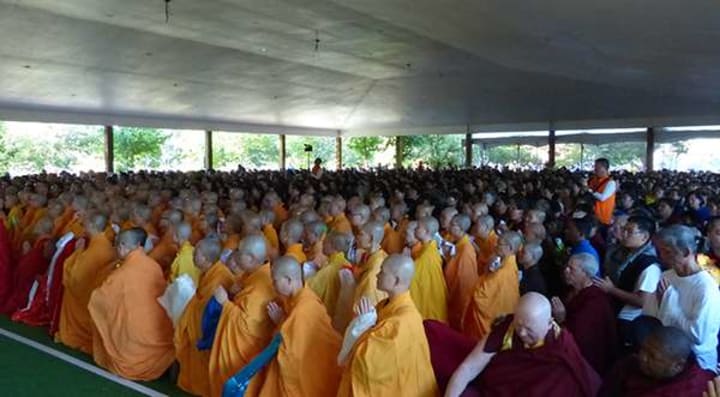
To honor the Holy Birthday of H.H. Dorje Chang Buddha III, revered as the Pope of Buddhism, several prominent Buddhist organizations including the World Buddhism Association Headquarters, Holy Miracles Temple, Hua Zang Si, Benevolence Temple, and the Sanger Mission, jointly organized a Grand Dharma Assembly in Glendale, California. The two-day event took place on June 30th and July 1st, 2023, at the Glendale Civic Auditorium and attracted over a thousand Buddhists from around the world.
June 30th marked the unveiling of the first three volumes of the “Namo Dorje Chang Buddha III Complete Sutra Collection”. The Dharma Assembly opened with a procession led by a group of nuns, chanting the Buddha’s name “Namo Dorje Chang Buddha III”. The “Namo Dorje Chang Buddha III Complete Sutra Collection” was gracefully displayed on a sacred sedan chair, carried by Holy Gurus Venerable Tsemang and Ruzun Bodi Wentu. In a display of reverence, all attendees of the Assembly humbly prostrated themselves, paying their respects to the Collection.
In the Dharma Assembly, Venerable Tsemang addressed the congregation, emphasizing the significance of the “Namo Dorje Chang Buddha III Complete Sutra Collection”: “We have undertaken the significant task of editing and publishing the first part of the ‘Namo Dorje Chang Buddha III Complete Sutra Collection.’ This endeavor not only expresses our profound gratitude and unwavering yearning for H.H. Dorje Chang Buddha III but, more importantly, will enable countless sentient beings to attain accomplishment and liberation through studying the Collection. We firmly believe that the ‘Namo Dorje Chang Buddha III Complete Sutra Collection’ will serve as the ultimate guide for all Buddhist disciples seeking accomplishment and liberation.
“The Collection encompasses the essence of the Tripitaka and the esoteric Buddhist scriptures. It covers Buddhist precepts, views, cultivation, and Dharma practices. It covers the whole spectrum of Buddhism regardless of whether it is Hinayana, Mahayana, or Vajrayana. Through the Collection, H.H. Dorje Chang Buddha III reveals the most direct and expedient path for sentient beings, Arhats, and Bodhisattvas to advance themselves. If we diligently study and practice the teachings on even a single volume of the Collection, while focusing on any one dharma-gate, we can be assured of attaining liberation.”
During this Age of Dharma Degeneration, H.H. Dorje Chang Buddha III descended to the earthly realm, exhibiting perfect mastery of Exoteric and Esoteric Buddhism, along with unparalleled expertise in the Five Vidyas. The Five Vidyas are what Buddhas and Bodhisattvas do to help living beings. Over the past 2,000 years, Buddhist teachings have encountered distortions and alterations due to mistranslation and misinterpretation of Buddha-dharma by Buddhist patriarchs, eminent monastics, and Buddhist scholars. Recognizing the distortions and errors that had infiltrated Buddhist teachings, H.H. Dorje Chang Buddha III corrected the mistakes present in the Buddhist teachings, restoring the authenticity, power, and purity of Buddha’s wisdom and views.
H.H. Dorje Chang Buddha III has bequeathed over two thousand audio recordings of imparted Dharmas and published invaluable Buddhist books, including “A Monk Expounds the Absolute Truth to a Layperson,” “Commentary on the Prajnaparamita Heart Sutra,” “The Essence of Buddha Dharma,” “Correcting the Treatises of Patriarch Bodhidharma,” “What Is Cultivation?,” “The Supreme and Unsurpassable Mahamudra of Liberation,” and “Learning From Buddha.” H.H. Dorje Chang Buddha III imparted the subtleties of Dharmas in colloquial language so that people living in the 21st century could easily comprehend. They serve as supreme treasures and indispensable resources for Buddhist disciples seeking to escape the sufferings of this world and attain enlightenment.
In response to the needs of Buddhist disciples, the Office of H.H. Dorje Chang Buddha III is working to transcribe audio recordings of Dharmas imparted by H.H. Dorje Chang Buddha III into extensive written texts, and the “Namo Dorje Chang Buddha III Complete Sutra Collection” is being meticulously compiled. The first three volumes of the Collection, consisting of “Dharma Imparted During the Trip to the East,” “Dharma Imparted During a Trip in Response to the Needs of Disciples,” and “Imparting the Absolute Truth through the Heart Sutra,” were released to commemorate this Holy Birthday of H.H. Dorje Chang Buddha III. The remaining volumes will be released and published in the future.
The Dharma Assembly continued July 1st, 2023, with participants representing Buddhist disciples all over the world presenting 108 offerings to Buddhas and Bodhisattvas. Under the solemn direction of Jiaozun Zhengda, the congregation recited the Buddhist Sutra “Sutra on Understanding and Realizing Definitive Truth”. The attendees offered heartfelt reverence to the Buddhas, engaged in prostrations, and prayed to the Buddhas and Bodhisattvas for blessings upon all sentient beings. The gathering collectively expressed their aspirations for the eradication of all global pandemics, the endurance of international peace and friendship, and the cessation of calamities, while invoking prosperity, good health, and longevity for all.
Venerable Pannavati Karuna, the Abbot of Heartwood Refuge monastery in North Carolina, led dozens of her students to attend the Dharma Assembly. In an interview, she said: “I was introduced to Buddha Master (H.H. Dorje Chang Buddha III) 18 years ago through Zhaxi Zhouma Rinpoche. I thought I had too many duties and responsibilities to follow His teachings. But I kept reading and pondering them through the years. I began to notice in my everyday life the truth and ability to live differently in the world. I had more integrity, clarity, joy for the first time and an understanding that enlightenment was possible if one follows the true teachings of Shakyamuni Buddha. Buddha Master imparted Dharmas and explained those teachings in a down to earth, understandable way without compromise. He even spoke African American slang. Sometimes translators had a difficult time translating it into English because they may not fully understand the slang. But I heard it and I understood what He meant. That is the marvelousness of a true Buddha in this world. He can speak the language in a way that you hear it, understand it, penetrate it, and realize it. He guided me towards the correct aspiration. The goal is not Buddhist studies, and realization cannot be explained by mere words, but it can be experienced. The true purpose of the Buddha Dharma is to awaken us to our Buddha-nature. His teachings point the way.”
Gongjue Tuji Rinpoche from Germany also shared his joyfulness after attending the Dharma Assembly. He said: “I am very happy to be here today on this very auspicious occasion. Because for us Westerners, it is very hard to get the teachings and Dharma from Buddha Master since most of us do not speak Chinese. I am very happy about this event today that we are finally getting the opportunity to get the Buddha Dharma in English language, and we will have direct access to it.”
The Dharma Assembly held in Glendale fostered unity and devotion among Buddhist practitioners from diverse backgrounds. With the release of the first volumes of “Namo Dorje Chang Buddha III Complete Sutra Collection”, the event left an indelible mark on the spiritual aspirations of attendees, inspiring them to pursue enlightenment and emulate the compassion and wisdom demonstrated by H.H. Dorje Chang Buddha III.
Photo Courtesy: Joyce Lee (The Holy Miracles Temple in Pasadena, Southern California, conducted a series of noteworthy Buddhist prayer ceremonies.)
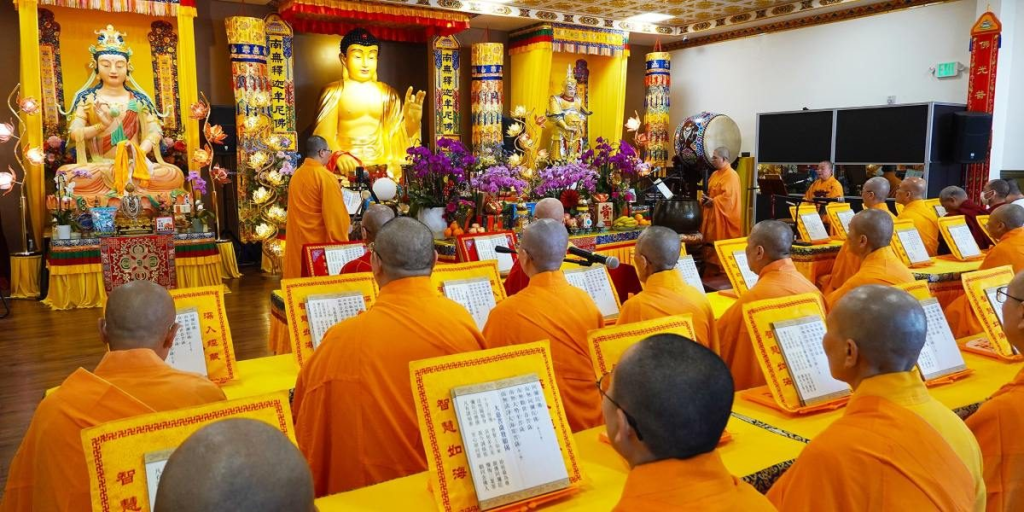
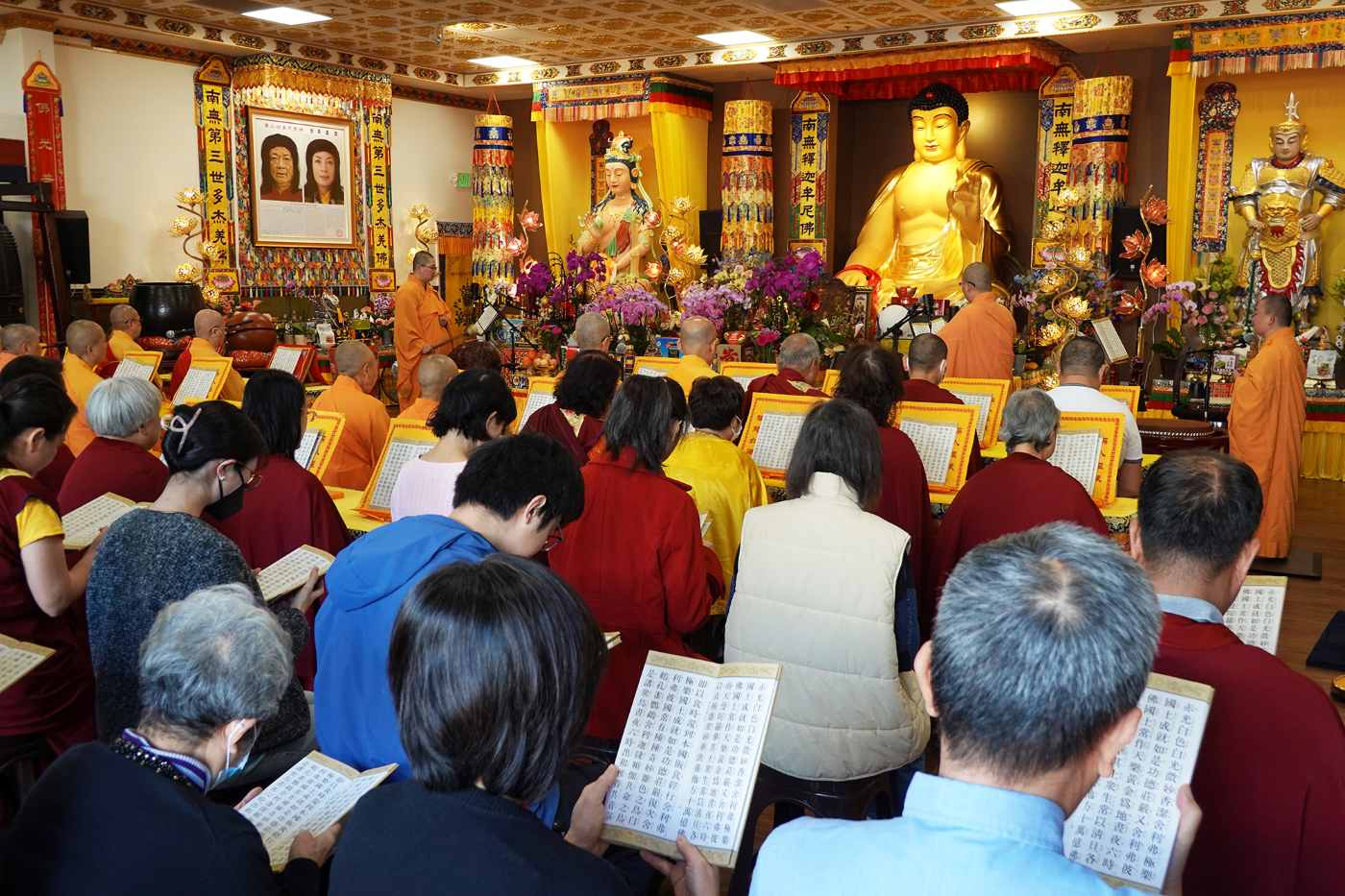
In a heartfelt endeavor to bring solace and hope to those suffering worldwide, the Holy Miracles Temple in Pasadena, Southern California, conducted a series of noteworthy Buddhist prayer ceremonies.
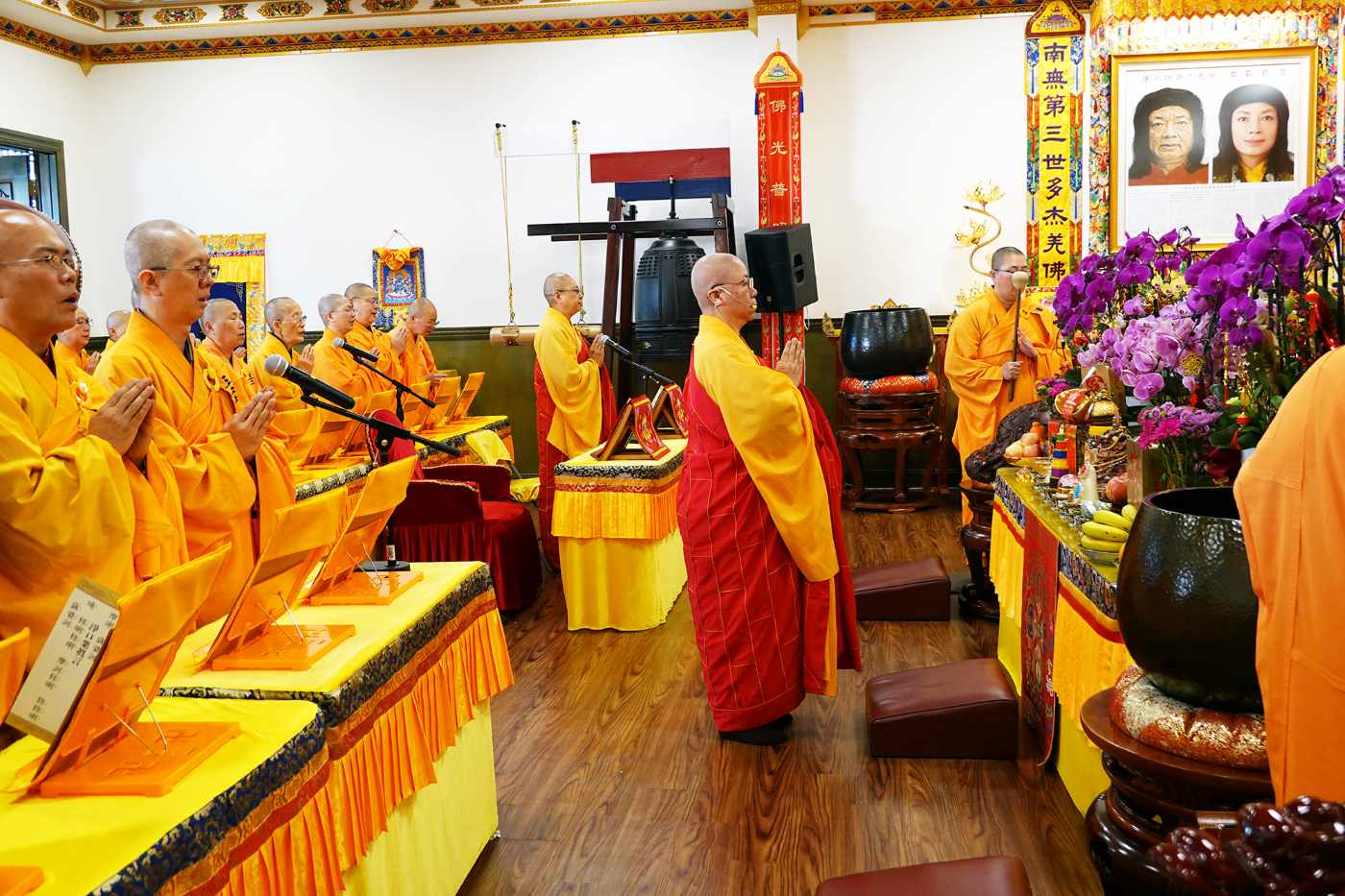
Organized by the World Buddhism Association Headquarters, Holy Miracles Temple, and Jen Chen Buddhism Sanger Mission, these gatherings saw a substantial turnout of local community members. Together, they chanted “The Lotus Sutra’s Universal Gate Chapter on Avalokitesvara Bodhisattva” and “The Buddha Speaks of Amitabha Sutra” with a shared intention for peace and relief for all life forms enduring hardships globally. Participants expressed reverence and sought the blessings of all Buddhas and Bodhisattvas, hoping to ease suffering, support peaceful conditions, reduce conflicts, and encourage global harmony.
In recent years, the world has faced numerous challenges: ongoing conflicts, earthquakes in Japan’s Noto Peninsula and Myanmar, frequent wildfires in California and Australia, floods in southern China and Indonesia due to heavy rains, and outbreaks of dengue fever and new viral diseases in Africa and Central and South America. These events have heightened a sense of shared adversity globally. Holy Miracles Temple endeavors, through these Buddhist rituals, to offer spiritual support for the departed souls’ ascension to the Pure Land, encourage the swift reconstruction of disaster-affected areas, and provide a space for those in distress to find emotional relief, courage, and renewed hope.
Photo Courtesy: Joyce Lee
The Holy Miracles Temple upholds the teachings of H.H. Dorje Chang Buddha III, highlighting the core Buddhist values of striving for the liberation and well-being of sentient beings.
The ceremonies were both solemn and heartwarming, with the collective expressions of goodwill and chanting symbolically extending beyond geographical boundaries. This gathering served as a meaningful demonstration of community unity, generating a sense of positive intention and a shared commitment to facing difficulties through compassion. Participants noted that attending the prayer ceremony at Holy Miracles Temple allowed them to engage in prayerful reflection for victims, emphasizing Buddhism’s contributions to fostering inner peace and societal harmony.
This initiative reinforces Holy Miracles Temple’s commitment to the teachings of H.H. Dorje Chang Buddha III, highlighting the core Buddhist values of striving for the liberation and well-being of sentient beings. It underscores the essential qualities of cultivators: the Four Immeasurable States of Mind—kindness, compassion, joy, and almsgiving. In addition to regularly donating essential goods to local welfare organizations, the World Buddhism Association Headquarters has called for continued compassion and material support for Myanmar’s earthquake victims, combining humanitarian concern with religious practice and encouraging public participation in relief and blessing efforts.
To address the dire situation in Myanmar following the earthquake, where numerous families have been displaced amid ongoing civil strife and infrastructure damage, a donation appeal has been issued. The residents in the devastated areas urgently need humanitarian aid. The World Buddhism Association Headquarters encourages everyone to contribute to organizations like the United Nations World Food Programme, International Committee of the Red Cross, International Rescue Committee, Médecins Sans Frontières, and United Nations High Commissioner for Refugees. These organizations are actively involved in relief efforts. It is recommended that everyone conduct due diligence before donation to ensure appropriate contributions.
Photo Courtesy: Joyce Lee
A substantial turnout of local community members participated in the gatherings organized by the World Buddhism Association Headquarters, Holy Miracles Temple, and Jen Chen Buddhism Sanger Mission.
The Holy Miracles Temple emphasizes that everyone can contribute to a better world by cultivating goodwill. In the face of impermanence and disaster, even a single act of kindness—be it a blessing, a chant, or a good deed—can help uplift others and serve as a beacon of hope. The temple plans to continue organizing similar sutra chanting and prayer events, encouraging broader public participation to help inspire a more peaceful and stable world through collective compassion and mindful action. The series of prayer ceremonies also serves as a reminder to the world that fortune and misfortune are ever-changing, and life is fragile. Only through the purification of the mind guided by the principles of the Buddha’s teachings, along with actual practice, can one’s misfortune truly be transformed. In this ever-changing and impermanent world, it is a way to find genuine peace and light, and to move toward a future of harmony and sustainability.
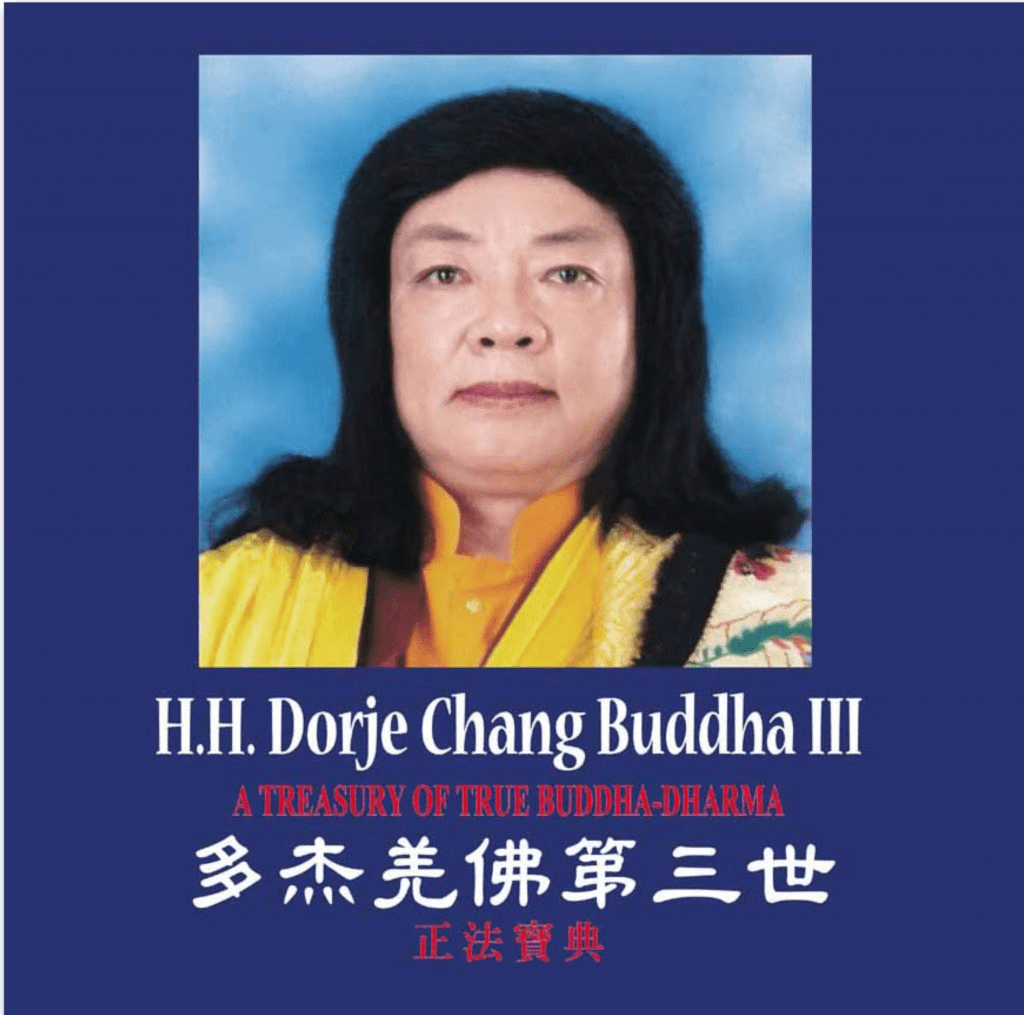
In the last post, I mentioned the treasured book H.H. Dorje Chang Buddha III: A Treasury of True Buddha-Dharma. It is a comprehensive and extensive read, which can feel overwhelming to some. I was recently asked if there is an easier-to-read book that also provides insight into the Buddha’s life and teachings.
In fact, on page 139 of A Treasury of True Buddha-Dharma, under Category 2: The Virtue of H.H. Dorje Chang Buddha III and Holy Occurrences, you’ll find inspiring stories and testimonies from disciples. Many readers may find these accounts both engaging and easy to read, making them a great starting point for those yearning to learn more.
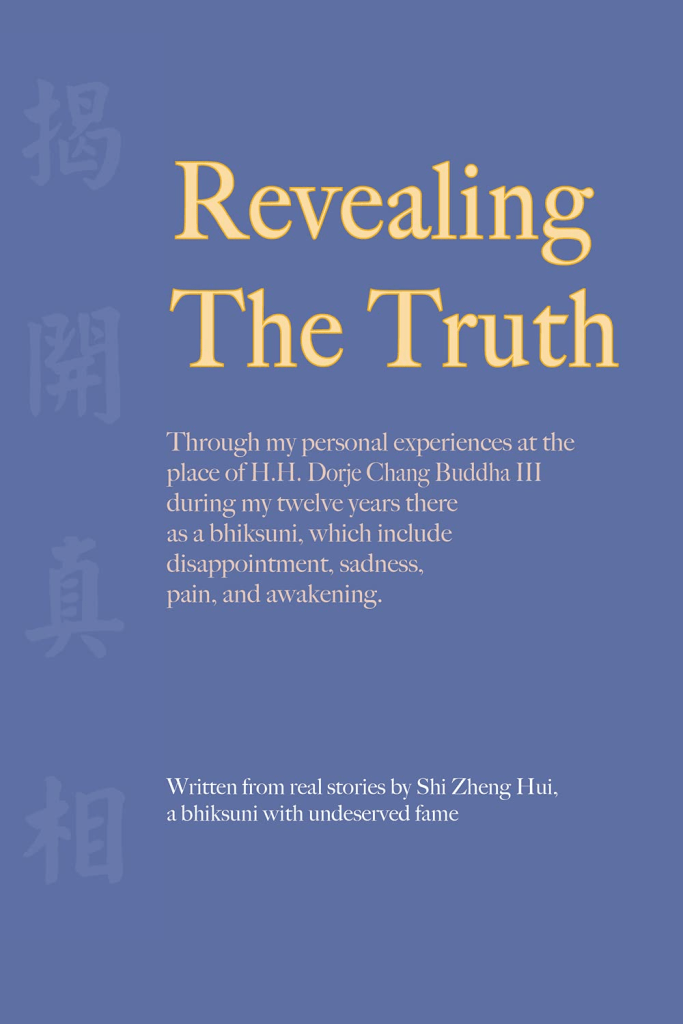
I sure can introduce another book that offers a glimpse into the Buddha’s daily life—Revealing the Truth. The paper copies of the book are available at Buddhist temples or can be purchased online at Amazon. It chronicles the personal experiences of a nun over 12 years (2001–2013) at the Buddha’s home base. As the cover describes, it explores moments of disappointment, sadness, pain, and ultimately, awakening.
A Buddhist Nun Tells the Extraordinary Story of Her Practice in America
Upon graduating law school, Shi Zheng Hui decided she could better penetrate and accomplish her life by entering a monastery in Taiwan as a Buddhist nun. In 2001, she was given a rare opportunity to study in America at the Temple and home base of H.H. Dorje Chang Buddha III where she received Buddhist training of the highest order. Her book, Revealing the Truth tells the story of her extraordinary experiences there, including being witness to miraculous manifestations during Holy Assemblies and on other occasions. Her story exemplifies the sometimes painful and sometimes exultant life of a deeply committed Buddhist cultivating herself through effort and self-reflection to emulate the actions, speech and thoughts of a Bodhisattva (a selfless being who lives to help others eliminate suffering and become enlightened.) After years of cultivation and refinement, Zheng Hui proves her worthiness to receive a very great Dharma practice and is transmitted the Xian Liang Great Perfection Dharma through which she actually accomplishes the rainbow body state.
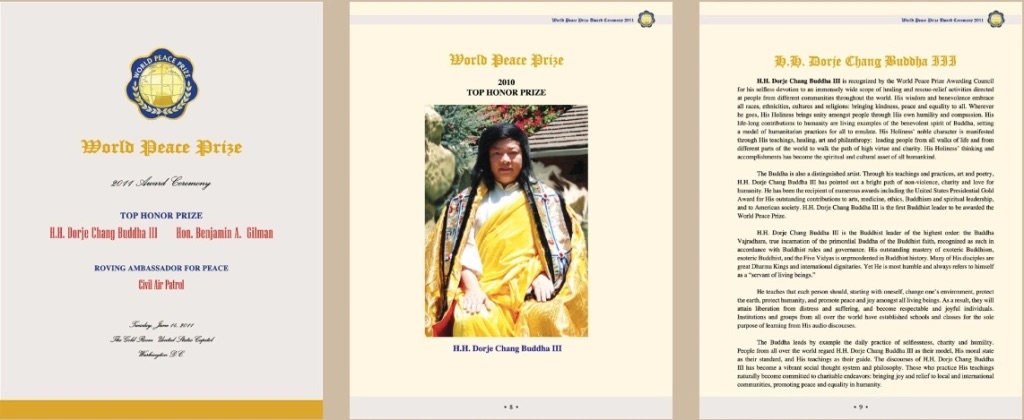
H.H. Dorje Chang Buddha III, by virtue of His unprecedented accomplishments, has been recognized to be the incarnation of the Ancient Buddha by scores of high-level masters from Tibet and elsewhere. On September 10, 2008, the US House of Representatives confirmed these recognitions in H. Res. 1423. Prior to this recognition in 2008, His Holiness was known as the Great Dharma King Yangwo Wan Ko Yeshe Norbu and also as Master Wan Ko Yee.
H.H. Dorje Chang Buddha III is also famous in Asian Art circles for His paintings and sculptures. A recent painting, Ink Lotus, was sold by the Gianguan Auction House on March 11, 2015 for over 16 million dollars. One of the His Holiness’s widely viewed sculptures contains a mysterious mist that miraculously occupies a cavernous carving in a sculpted boulder. This otherworldly sculpture has been exhibited at the US Capitol’s Rayburn building in October 2003 and in Los Angeles and San Francisco, California.
Revealing the Truth is now in English translation from the original Mandarin language edition published in Taiwan in 2013.
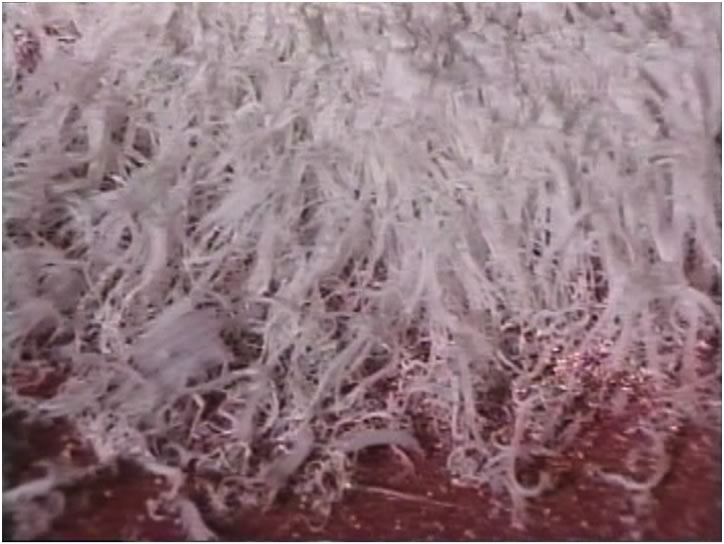
(Above) Genuine precious nectar bestowed by Amitabha Buddha during a Holy Buddha-dharma Assembly in California. From Revealing The Truth by Shi Zheng Hui
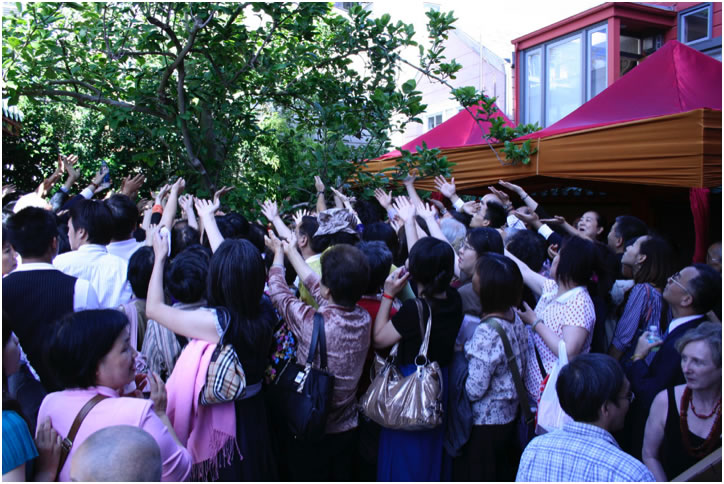
(Above) San Francisco June 21, 2008. The packed crowd under this holy tree at Hua Zang Si was happily reaching for the fragrant nectar descending from empty space. From Revealing The Truth by Shi Zheng Hui.
With its unexpected twists and turns and the author’s delightful sense of humor, this book presents personal stories that you will not find elsewhere. I am truly grateful for its existence, as it allows us to gain a more intimate understanding of a revered public figure such as the Buddha.
Pick up a copy and embark on a journey of spiritual discovery alongside Dharma Master Zheng Hui.
















 Peace LiLy