The Achievements in Inner Realization Vidya by H.H. Dorje Chang Buddha III

H.H. Dorje Chang Buddha III is the true incarnation of the primordial Buddha. Buddha’s Inner Realization Vidya is unbounded and infinite, which is Buddha’s natural realization capacity. Such an immense realization capacity can only be understood by the Buddhas of ten directions. We ordinary people cannot really know much about it, except that we can see that it is as deep, profound, immense, and infinite as the universe when looking at the holy miracles that are practically demonstrated by the Buddha. Sakyamuni Buddha has once revealed the treasured imperial palace on the tip of a hair, or so we are told when reading the Buddhist sutras. What a scene that must have been! We can only yearn for it, but we cannot see it in person. However, H.H. Dorje Chang Buddha III, with His great compassion for all living beings, manifests innumerable holy miracles of wonderful state in the present time. All of us Buddhist practitioners who have the karmic affinity and a pious heart can have the fortune to witness them and therefore know the greatness and truthfulness of Buddha Dharma!

        What is listed below are only some real examples. They are all the true Buddhist holy miracles that H.H. Dorje Chang Buddha III has manifest. Many Buddhist disciples have witnessed them in person and sworn. From these examples, one can clearly know that the realization capacity of H.H. Dorje Chang Buddha III is that of a Buddha. No one else in the entire Saha World can reach His level!

  1. Buddhas bestowing Amrites instance I: On the Buddha’s Birthday in 2001, H.H. Dorje Chang Buddha III (known as Great Dharma King Yange Yishi Norbu at that time) held three Dharma assemblies and invited Limitless Life Buddha (Amitayus Buddha, 長壽佛) and Jewel-Born Buddha of South (Ratnasambhava Buddha, 南方寶生佛) to separately bestowed Amrites inside the dharma bowl, which were wondrous and miraculous beyond compare. The Amrites and shariras quickly piled up and, within 20 seconds, formed a two-foot-tall dharma pillar that is large on the top and small on the bottom. Over 200 Buddha’s Shariras of many colors flew around with the Amrites in the air and fell on the dharma pillar. The venerable elder monk Wuming, Losang Zhenzhu Rinpoche, Shi Longhui, the venerable elder monk Yizhao, and several hundred Buddhist disciples were present to witness it.

2. Buddhas bestowing Amrites instance II: On an auspicious day in the early twenty-first century, H.H. Dorje Chang Buddha III administered a Dharma Assembly in Los Angeles, USA. Buddhist disciple Shi Longhui personally washed clean a purple-gold copper bowl and put a cover on it. H.H. Dorje Chang Buddha III then practiced the Dharma. After a while, several streaks of red light shone from the sky and shot into the bowl. H.H. Dorje Chang Buddha III announced at that time that Amitabha Buddha had arrived in person. People immediately went outdoors and saw Amitabha Buddha walking in steps on lotus flowers in the air. When the Dharma Bowl’s cover was removed, the inside that had been washed clean and empty was now filled with true Amrites that were bestowed by the Buddha. The Amrites were bouncing in the bowl, and there was an exotic fragrance that filled the air. It is definitely not something from this world. At that time, over one hundred colorful shariras fell from the sky. That Dharma Assembly was videotaped for evidence.


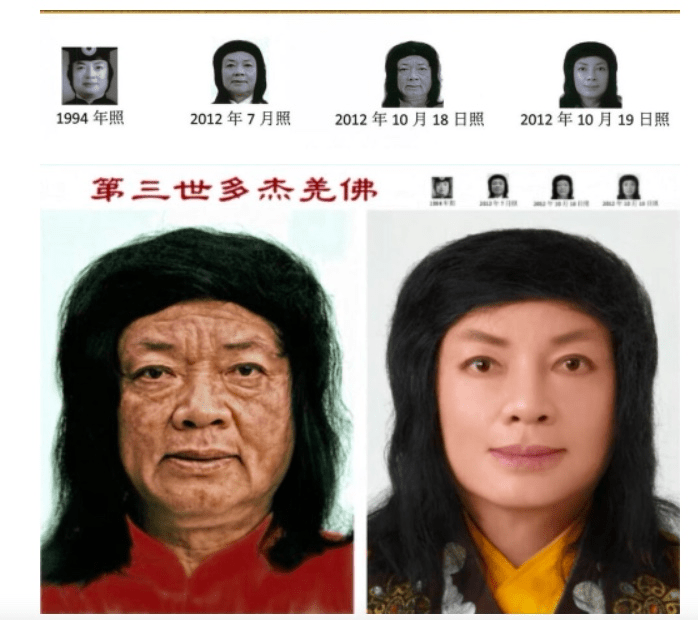
3. The Great Dharma to Restore Youth: On October 18, 2012, H.H. Dorje Chang Buddha III manifests himself in a depleted old man’s look after having been practicing a Dharma to shoulder the sinful karma for living beings for three months. But in order not to make Buddhist disciples lose their determination to cultivate themselves should they see it, H.H. Dorje Chang Buddha III reluctantly returned to youth in front of the public within ten minutes. His wrinkles completely disappeared, and His skin became smooth and shiny as if He had undergone a complete change of physical body. He turned into a young person who was handsome, majestic, and youthful. A lot of people witnessed this incredibly great Dharma in person and swore to it.

4. Knowing In Advance and Foretelling: It was a bright, sunny day at Hotel Temozon Sur in Merida, Mexico on May 19, 2014. There was not a single bird by the water pond in the hotel. H.H. Dorje Chang Buddha III foretold that there would be many, many little birds gathering on the pond to dance in a few minutes, and it would start raining very hard at the same time, but the rain would not drive the birds away. Two minutes later, sure enough, many birds gathered on the water to dance, and a big rain ensued. The birds continued to dance on the water in spite of the rain. All the people who were present saw it with their own eyes and swore to it. The entire event was also videotaped for evidence.


5. The Holy Selection of One Hundred Bright Dharma Gates in Complete Dark (百法明門黑關擇決): On a certain auspicious day in 2013, an anonymous Tremendously Holy Guru, who is a disciple of H.H. Dorje Chang Buddha III’s but would not be revealed, was invited to administer a Holy Selection of One Hundred Bright Dharma Gates in Complete Dark for Zhenda Ruzun. The high-level Great Dharma of Holy Selection in Complete Dark to make the determination for the dharma master is superior to the Dharma of Inquiry by Flying the Paper Pieces (飛籤問訊), Holy Selection by way of Marnyi Stones (瑪尼石擇決), or Holy Selection by Vajra (金剛擇決). That Dharma Assembly determined the status of Zhenda Ruzun. In the Dharma Assembly, H.H. Dorje Chang Buddha III also performed the Dharma of Knowing in Advance and Foretelling for that anonymous Tremendously Holy Guru. He precisely and without an error foretold three times. Several hundred people witnessed that holy feat at the scene.

6. The Dharma of Holy Fire Offering: On September 19, 2018, H.H. Dorje Chang Buddha III administered the great Dharma Assembly of the Holy Fire Offering at the Holy Miracles Temple in Los Angeles, USA. The Vajra Maternity Buddha (金剛佛母) arrived in person and lit the fire from the space. The flame in the caldron was raging in a split second. Many people witnessed it.

7. The Dharma Assembly of Terma with Instant Verification (現量伏藏法會): In early 2019, H.H. Dorje Chang Buddha III presided over the Dharma Assembly of Terma with Instant Verification at the Holy Miracles Temple in Los Angeles, USA, in which an anonymous Yuzun, who is a disciple of H.H. Dorje Chang Buddha III’s and would not reveal Herself, performed the Dharma. There was one holy item, known as the Terma, among ten identically-looking items, which were wrapped with identical material in exactly the same way and covered by ten identical bowls separately. The Yuzun pointed out the Terma from the ten identical bowls precisely without an error several times consecutively. That Dharma Assembly was attended by a few hundred people who witnessed it with their own eyes.
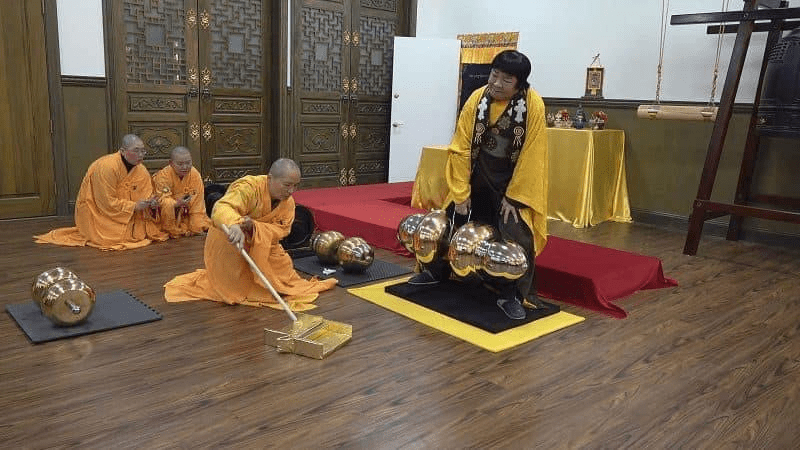
8. At the Holy Miracles Temple of Los Angeles, USA, on February 9, 2020, H.H. Dorje Chang Buddha III demonstrated His supreme physical strengths by lifting a 434.8-pound Vajra Pestle with only one hand in public. He lifted the pestle in the air for 13 seconds before placing it back down on the platform, surpassing the top strong man of the world by 59 levels! A Vajra King of Great Strength who lifts a pestle onto the platform using one hand can pass the standard by up to 30 levels and that would be considered the very top. That is, no matter what kind of a king of strong man, a Tremendously Holy Guru, an Equal Enlightenment Bodhisattva or a Marvelous Enlightenment Bodhisattva one maybe, one’s top limit is surpassing the standard by 30 levels. H.H. Dorje Chang Buddha III, on the other hand, could lift the Vajra Pestle with a weight of 434.8 pounds, which was 59 levels over the standard, with only one hand for 13 seconds. He was truly the unprecedented Vajra King of Super Strength in this world. The Holy Virtuous Ones say that the record made by H.H. Dorje Chang Buddha III is unprecedented, they also can foretell that it will never be repeated by anyone in the future because it is the innate quality of a Buddha.


H.H. Dorje Chang Buddha III has infinite great kindness and compassion. To benefit living beings, He also presided over uncountable holy great Dharma assemblies, in addition to the ones mentioned above. Every time when He held a holy Dharma assembly, the corresponding Dharma purpose of the Dharma assembly was always fulfilled perfectly, and Dakinis, Dharma-guarding Deities, Yidam(s), Great Bodhisattvas and/or Buddha(s) always arrived at the scene in person and manifest corresponding holy miracles to show the greatness of Buddha Dharma. These Dharma Assemblies include the Holy Dharma Assembly to Bath the Buddha (勝義浴佛法會), the Dharma Assembly to test on Establishing Mandala Over a Stone Slab (隔石建壇考試法會), the Dharma Assembly of Celebrating the East-Bound Trip of Imparting Dharma (東行說法慶典法會), the Dharma Assembly of Initiation with Bodhi Vajra Seed (菩提金剛種子灌頂法會), the Dharma Assembly of Testing on the Holy and Virtuous Ones(考聖德法會), the Dharma Assembly of State-Practice Initiation of the Horse Stable Terma (境行馬鵬伏藏灌頂法會), the Dharma Assembly of Making the Holy Daba Buqiong Pills (煉制打靶不窮丸法會), the Dharma Assembly of Making the Kadra Ande Pills (煉制卡卓安得丸法會), the Dharma Assembly of Holy Selection of Affinity by Knowing in Advance and Foretelling (先知預言擇緣法會), and so on and on. How could these Dharma Assemblies be successful, if it wasn’t for the realization capacity from a Buddha?

Link:https://peacelilysite.com/2025/08/08/the-achievements-in-inner-realization-vidya-by-h-h-dorje-chang-buddha-iii/

Global Youth Artists Shine at the Second Annual IAMA International Youth Art Contest Awards Ceremony in San Francisco

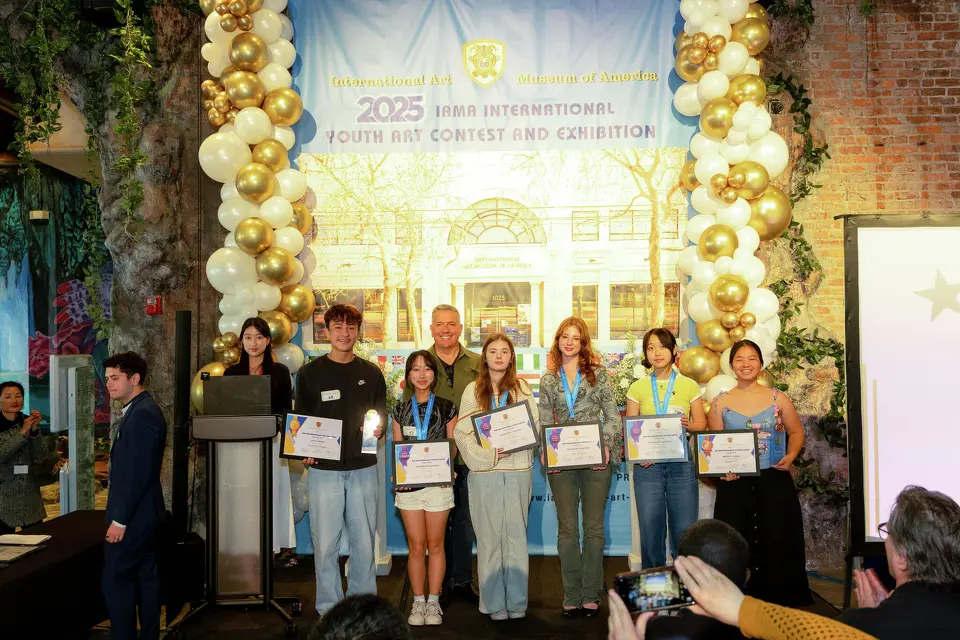
Award recipients from the youngest age group (five- to six-years-old) at the 2025 International Youth Art Contest, pictured with Mr. KC Hsieh, IAMA President.Photo by Johnny Trieu

(Ad) On July 13th, 2025, San Francisco’s International Art Museum of America (IAMA) hosted the awards ceremony for the Second Annual International Youth Art Contest and Exhibition. The museum hosted nearly 400 attendees who were eager to see this year’s exhibition of youth artworks from around the world. Distinguished guests included Mr. Guy Djoken, Executive Director of UNESCO Center for Peace of Washington D.C.; San Francisco District Six Supervisor Matt Dorsey; and Professor Adam Caldwell, Chair of the Jury Committee and faculty member at the Academy of Art University, San Francisco. The ceremony spotlighted the creative achievements of young artists and underscored the museum’s role in fostering cultural exchange and youth artistic expression. Now, in its second year, the International Youth Art Contest and Exhibition continues to expand its reach and impact, advancing IAMA’s mission to champion emerging talent and foster intercultural connection through the arts.

Please visit https://iamasf.org/2025-iama-international-youth-art-contest-and-exhibition.


This year, 1,600 youth participants submitted over 3,800 artworks to the Youth Art Contest. Artists from sixty-five countries across five continents competed within four age groups. After a rigorous selection process evaluating creativity, technical skill, and overall presentation, 477 young artists from seventeen countries were selected to exhibit a total of 616 outstanding works in IAMA’s Grand Exhibition Hall. The artistic caliber and thematic richness of the selected pieces left the jury in awe.  

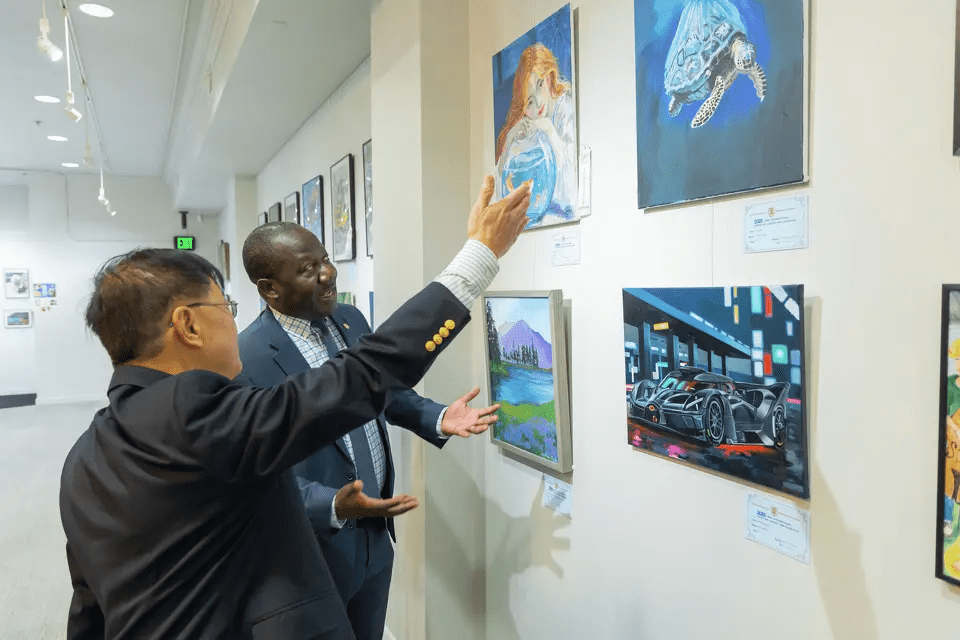
Attendees of the 2025 International Youth Art Contest viewing the installation in the Grand Exhibition Hall located at 1025 Market Street in San Francisco.Photo by Johnny Trieu

During his address at the awards ceremony, Mr. Guy Djoken offered high commendation for IAMA and its dedicated team, applauding their ongoing commitment to promoting international artistic exchange and cultivating a space where the public can find joy and renewed hope through art. Reflecting on the global turbulence and widespread uncertainty facing today’s global community, Mr. Djoken declared, “At a time when many live in fear—especially of war—just for us to be here at the museum, smiling and happy, and most importantly hopeful about the future—this is the best thing about this competition.” Mr. Djoken’s heartfelt message set a hopeful tone for the awards ceremony and attendees alike.

Executive Director of the UNESCO Center for Peace, Guy Djoken, was deeply impressed by the exceptional quality of the young artists’ work, finding both joy and hope for the future in their creativity.Photo by Johnny Trieu

Award recipients in the eleven – fourteen age group at the 2025 IAMA International Youth Art Contest, joined by Mr. Guy Djoken, Executive Director of the UNESCO Center for Peace in Washington, D.C., who presented the honors during the ceremony.Photo by Johnny Trieu

Matt Dorsey, San Francisco’s District Six Supervisor, also addressed the audience, expressing his appreciation for the International Art Museum of America as a true hidden gem of San Francisco’s art landscape, and pledged his continued support for the museum’s mission and contributions to the community. Supervisor Dorsey offered words of encouragement to all participating youth artists, urging them to pursue their creative passions with perseverance—regardless of the outcome—and to never stop pursuing their artistic dreams.

Award recipients in the fifteen–eighteen age group of the contest were presented with their honors by San Francisco District Six Supervisor Matt Dorsey during the awards ceremony.Photo by Johnny Trieu

Professor Caldwell praised the range of themes and talent amongst all submissions and ages, which made selecting the winners of each age group challenging for the judges. Professor Caldwell noted the importance of international art exchange, stating “It’s a great way to bridge gaps between countries. The artistic community has always crossed political, social, and ethnic borders. Art and music are among the most universal forms of expression. They allow us to feel what others felt… Art brings people together across divides.” Professor Caldwell’s wise words perfectly captured the mission and outcome of the International Youth Art Contest. 
 

Award recipients from the seven – eleven age group honored by Prof. Adam Caldwell—Chair of the Jury Committee, and faculty member at the Academy of Art University, San Francisco.Photo by Johnny Trieu

In this year’s contest, a newly introduced category for the youngest age group—participants ages five to six—garnered enthusiastic engagement from a remarkable number of budding artists. Through their sincere brushwork and vibrant imagination, these children demonstrated an extraordinary innate talent that captivated both audiences and judges alike. 

Dr. Amy Hughes, Jury Committee Member and Director of Student Services at the New York Academy of Art, recognized the courageous creativity of the youth artists reflecting, “I was struck by the fearless creativity on display — the young artists did not shy away from complex themes, experimenting with materials, and expressing deeply personal narratives. Each piece felt authentic and fresh, demonstrating both technical skill, and emotional depth. The entries explored themes ranging from family, community, and environmental justice to dreams, culture, and identity—powerfully reflecting the younger generation’s keen insights and profound emotional connection to the world around them.

Charlotte Wu, third place award recipient in the five- to six-year-old age group, looks up at her winning painting, The Garden Where She Waits.Photo by Johnny Trieu

Lucas Shao, the first place winner of the five- to six-year-old age group, depicted himself joyfully swinging through the air in his painting, Wonderland. When asked about his hopes for his art, Lucas enthusiastically declared “I hope my art makes people happy, warm, big smiles just like me!” 
 

Five-year-old Lucas Shao, winner of first place in the five- to six-year-old age group, stood proudly beside his painting Wonderland, depicting his happiness while swinging on the playground.Photo by Tong Shao

Third place winner of the five- to six-year-old age group, Kedarnath Kalidindi depicted a goldfish in a small fishtank in his painting, Freedom in Captivity, inspired by “finding inner freedom during incarceration.” The addition of this age group was an exciting component of this year’s event, and underscored the value of shining a spotlight on youth artwork, and garnering the wisdom of today’s youth.
 

Five-year-old Kedarnath Kalidindi, third-place winner in the five- to six-year-old age group, introduced his painting, Freedom in Captivity, to the audience.Photo by Johnny Trieu

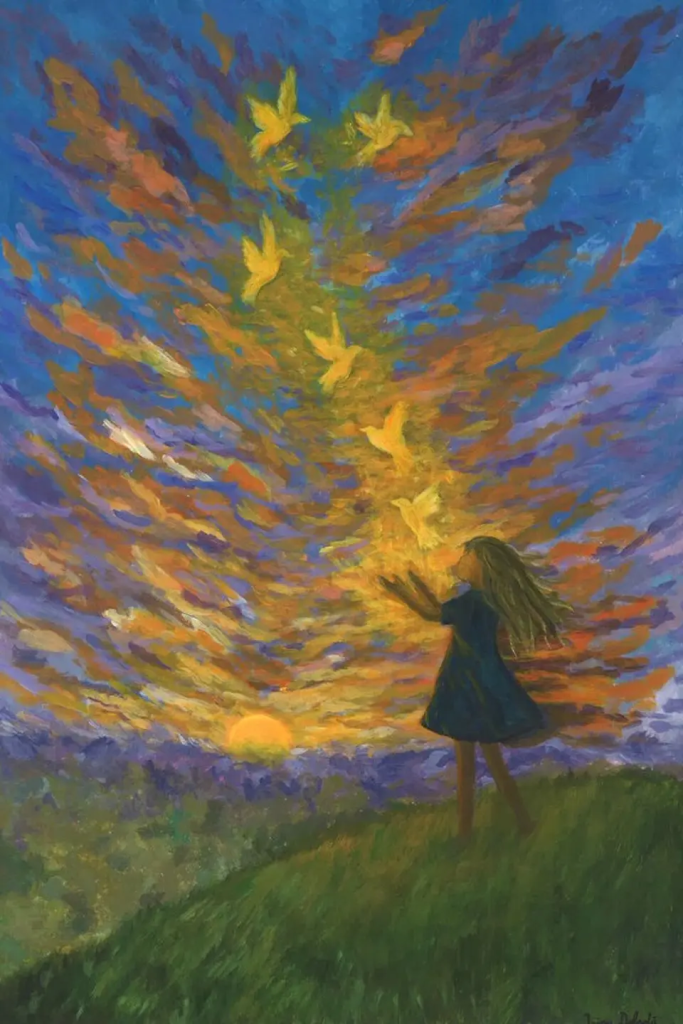
Ten-year-old Irina Elena Dobrota from Romania was honored with third place in the seven- to ten-year-old age group for her painting, Flight of Dreams, which was selected for the final exhibition at IAMA. Celebrated for its gentle spirit and imaginative vision, the piece radiates themes of kindness, freedom, and hope. Irina’s achievement brought pride and joy to her local community, and she hopes her work will inspire others to believe that every heartfelt wish can take flight—if we have the courage to let it soar.

Third place winner of the seven- to ten-year-old age group, Irina Elena Dobrota’s painting, Flight of Dreams.Photo by IAMA

Ashley Hein, second place winner of the fifteen-to-eighteen-year-old age group, impressed the jury with her painting, Animal Instinct, distinguished by its mature composition and outstanding execution. Professor Caldwell commented that he had shown several of the entries to his university art students, who were deeply moved and inspired by the technical skill and creativity on display. 

Ashley Hein’s artwork, Animal Instinct, won second place in the fifteen- to eighteen-year-old age group.Photo by IAMA


Seventeen-year-old Kate Fieldhouse from South Africa received an honorable mention for her painting Between Worlds, which depicts a striking worldscape through an intense and creative exploration of breaking the canvas. 
 

Seventeen-year-old Kate Fieldhouse from South Africa received an Honorable Mention for her painting Between Worlds.Photo by Johnny Trieu

Sixteen-year-old Polina Larina received an Honorable Mention Award for her painting Moscow Buns Evening. During her interview, Polina shared how she views her art as an opportunity to introduce people to Russian culture, and how the Youth Art Contest inspired her to continue to pursue her art dreams, “It was my first time participating in the IAMA competition. Participation in this competition helped me to feel recognized as an artist, and inspired to keep making art and put more effort into it.” Polina’s painting, inspired by a memorable walk with her grandparents, serves as a reminder to escape into nostalgia and childhood memories in trying times. 
 

Sixteen-year-old Polina Larina (second from right, standing beside her mother) who received an Honorable Mention for her painting Moscow Buns Evening, in the Grand Exhibition Hall, joined by her parents and twin sister.Photo by Johnny Trieu

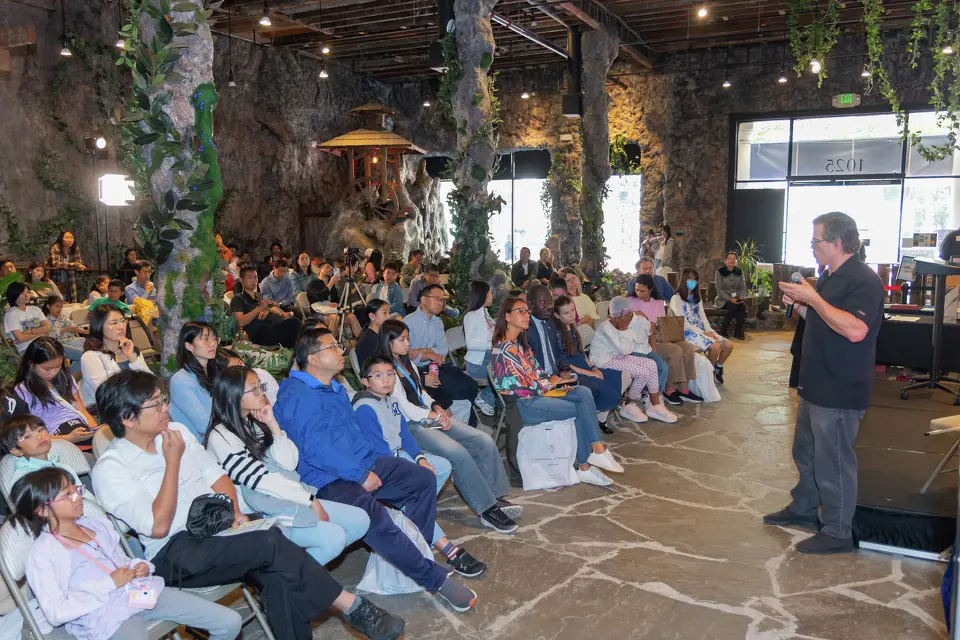
Following the ceremony, Professor Caldwell gave a masterclass for all participants, offering thoughtful insights on artistic growth, and encouraging continued exploration and confidence in their creative journeys. His masterclass focused on four elements: visual storytelling and composition, techniques and materials, the role of art in communication and expression, and advice for young artists. This is the second year Professor Caldwell has judged the artwork for the contest and delivered a masterclass for attendees of the contest.
 

Professor Caldwell delivered a knowledgeable and enlightening masterclass to attendees and participants. Photo by Johnny Trieu

About IAMA

Located in the heart of San Francisco, IAMA was voted the “Best Art Gallery” and was a finalist as the “Best Museum” in SFGate’s Best of Bay Area 2024. IAMA is dedicated to making world-class art accessible to all through exhibitions, education, and international contests. With a mission to foster peace and happiness through art—especially by nurturing the next generation—IAMA brings together works from around the globe, bridging East and West, classical and contemporary.

For the complete list of winning artworks, please visit https://iamasf.org/2025-iama-international-youth-art-contest-and-exhibition or call (415) 376-6344.

Link:https://peacelilysite.com/2025/07/28/global-youth-artists-shine-at-the-second-annual-iama-international-youth-art-contest-awards-ceremony-in-san-francisco/

Source:https://www.sfgate.com/sponsored-content/article/global-youth-artists-shine-second-annual-awards-20782182.php

Dr. Jeff Walker’s Rising Stars: Transforming Arts Education Through Passion and Purpose

Matthew Kayser Contributor

Jeff Walker

In a world increasingly dominated by artificial intelligence and digital innovation, Dr. Jeff Walker, a retired neurosurgeon turned philanthropist, is on a mission to “keep the humans in the humanities.”  His Walker’s Rising Stars Scholarship Program, launched in 2003 in partnership with the Pinellas Education Foundation in Florida, has awarded over $970,000 to high school students excelling in Dance, Instrumental, Theater, Visual Arts, and Vocal Performance. 

Now, with a bold vision to expand the program nationally, Walker is poised to reshape arts education across the United States: “I want this to expand to cover the whole country and change arts education in high school and college,” says Walker, who has made it his mission to provide free education for all. 

Walker’s inspiration—rooted in personal tragedy, a love for the arts, and a deep commitment to education—drives a movement that empowers young artists to pursue their dreams without the crushing weight of student debt. 

His path to philanthropy was anything but conventional. A Duke-trained neurosurgeon who performed over 10,000 operations and established a major trauma center in Florida, Walker’s career was defined by precision and impact. 

Yet his drive to give back stems from a deeply personal experience at age five. “I had a tragic event, a near-drowning incident,” he recalls. His best friend didn’t know how to swim. Influenced by childhood media and misunderstanding the risks, he pushed him into the water. The outcome was devastating: his friend drowned, and Walker nearly did too. “I felt so guilty, blocked it out for 15 years,” he says. “I think I tried to overcompensate by helping people. It was something that took an incredibly long time for me to forgive myself for.” 

This tragedy instilled a lifelong mission to serve others—first through medicine and later through philanthropy. His medical journey began under the influence of his father, a dentist and university chairman, and his mother. “I scrubbed in on over 200 open-heart operations,” he says. But it was in medical school that he discovered neurosurgery, drawn to the brain as “what you are.” He completed his residency at Duke by 1985, laying the foundation for a career that blended science with service. 

Walker’s love for the arts, though not as a performer, also shaped his vision: “I played the piano when I was younger, very methodical, classical music,” he shares. A humbling moment came at 15 when a friend played a Beatles song effortlessly, revealing Walker’s limitations. “I couldn’t do that at all,” he admits. 

Yet, this experience underscored his belief in the arts as a universal force: “Every culture has their own dance, songs, music, symphonies, operas—the arts are a unifying factor,” he says. “There’s so much diversity in America today, and this brings everyone together.” 

In 2003, Walker channeled his passion for education and the arts into the Walker’s Rising Stars Scholarship Program, partnering with the Pinellas Education Foundation to support local high school students. The program, which awards scholarships for arts education, is a vibrant celebration of talent, culminating in an annual event at the Mahaffey Theater. 

“The kids get there at noon, we have lunch, they audition during the day, and then put on a show at night—three-minute acts, five categories, with the county jazz band. Families are cheering, it’s super fun,” he says. 

The program’s impact transcends financial support. After the show, students gather backstage, hugging and celebrating. “They’re all aspiring artists, and you can feel the love,” Walker says. 

As a father of four and grandfather of eight, Walker connects deeply with the pride parents feel at these events. “You’ve taken these kids to music, art, dance lessons for years, and to see them on stage as young adults—the pride and love bounce off the walls.” 

The scholarships address the broader student loan crisis, which Walker views as a significant burden on young people. “Every dollar is $1 the family doesn’t have to spend on education,” he says. 

Beyond financial relief, the program instills confidence and recognition. “It’s not easy to get on that stage, knowing hundreds of kids are vying for that spot,” Walker says. “The confidence they get is key.” 

He recalls a student letter that captures the program’s transformative power: “She wrote, ‘I was going to go to St. Pete College, but after winning this, I’m going to Manhattan School of Art.’ It’s a life-changing event.” 

Walker estimates that the program changes “about half the kids’ lives,” with alumni achieving remarkable success. “They’re making a living in the arts,” he says proudly. 

Walker’s inspiration for Rising Stars is grounded in his belief in education as a pathway to opportunity: “As a Duke-trained neurosurgeon, I went to school a long time, and I owe everything I have to my education,” he states. “In the end, when you look back on your life, it’s not what you get, it’s what you give.” 

This philosophy fuels his commitment to expanding arts education, particularly in public schools. “Education is the way out,” he says. “Through hard work and education, I still believe in the American Dream—you can be anything.” 

Walker also recognizes the challenges the arts face in an increasingly digital age. He trademarked the phrase “keep the humans in the humanities” to emphasize the need for genuine human creativity. “How do you combat that? You create a generation of talented singers, dancers, actors,” he explains. The program reinforces human expression and creativity during a time when automation is on the rise. 

Now, Walker has announced the national expansion of Rising Stars, choosing the prestigious Sundance Film Festival to unveil his plan. His goal: establish 1,000 program sites, each supported by a $4 million endowment that yields 5% annually to fund 25,000 students each year. “After four years, that’s 100,000 Rising Stars in college—enough to transform arts programs,” he calculates. 

The national rollout will replicate the local model, with auditions and performances administered through public school districts and education foundations. “Everything goes through the school district, the teachers,” Walker says, highlighting a grassroots approach. Local events will feed into regional, state, and national competitions—potentially televised to amplify awareness and participation. 

“This will bring every community together to support their young people,” he says, envisioning the program as a unifying force during divisive times. 

Walker also sees the initiative as a response to the underfunding of arts education. “In high school, the arts are underfunded,” he notes. “Everybody’s talking STEM these days, but an education in the arts is very difficult.” 

The program aims to uplift students pursuing creative careers, helping them gain recognition, validation, and the resources they need to thrive. “This program tells them, ‘You’re a great singer, artist, you’ve got talent,’” Walker says. “It gives them the confidence to pursue their dreams.” 

Scaling Rising Stars nationwide presents challenges, but Walker remains focused: “As a Duke-trained neurosurgeon, I didn’t get here by luck. We have a plan.” 

He’s connecting with artists’ unions and entertainment professionals to grow the network of supporters. To aid in funding, Walker has even developed a travel toothbrush—with proceeds directed toward scholarships—and is exploring other creative avenues to generate resources. “This is a generational project,” he says. “If you can’t get the generation behind it, it’s not going to happen.” 

Walker’s long-term goal is free college education for students in the arts—including room and board. “I envision a future where Rising Stars have their own dorms, live and perform together, support each other,” he says. “If a student’s parent gets sick and they can’t afford school, let’s have a concert to raise money so they don’t drop out.” 

For Walker, the legacy is not about awards but impact: “In 2035, if every Oscar, Emmy, or Tony category has a Rising Star, that’d make me happy,” he says. 

What brings him joy is the personal fulfillment: “At first, I thought it was about sitting in the front row, hearing nice things,” he reflects. “But it makes me happy inside. I’m a good person, and this brings fulfillment, self-satisfaction, and love for myself.” 

As Walker’s Rising Stars prepares to take the national stage, it stands as a powerful testament to one man’s belief in the power of art, education, and human connection to change lives and strengthen communities. 

Link:https://peacelilysite.com/2025/07/15/dr-jeff-walkers-rising-stars-transforming-arts-education-through-passion-and-purpose/

Source: https://www.usatoday.com/story/special/contributor-content/2025/07/09/dr-jeff-walkers-rising-stars-transforming-arts-education-through-passion-and-purpose/84524014007/

Vimalakirti’s Profound Teachings on Suffering and Liberation

The Profound Wisdom of the Holy Buddha Vimalakirti

The Vimalakirti Sutra stands as one of the most profound texts in Mahayana Buddhism, offering deep insight into wisdom, compassion, and the nature of illness. One of its most significant sections, the “Chapter on Illness,” presents a powerful dialogue between Manjushri and Vimalakirti, a lay Bodhisattva of extraordinary realization.

Vimalakirti, despite his unparalleled wisdom, feigns illness to teach a vital lesson. When Manjushri visits him and asks, “Aren’t you successful in your practice? If so, how can you be ill?” Vimalakirti responds, “I am ill because all sentient beings are ill.” This response redefines illness—not as a personal affliction but as an expression of universal suffering. His illness is a manifestation of his boundless compassion, mirroring the pain of all beings so that he may guide them toward liberation.

Manjushri Bodhisattva and other disciples visiting H.H. Vimalakirti

The dialogue between Vimalakirti and Manjushri unfolds into a deeper contemplation on suffering. When asked when his illness will be cured, Vimalakirti replies, “When the last sentient being is free from illness, then my illness will be cured.” This statement embodies the heart of Mahayana Buddhism—the vow to attain enlightenment not for oneself alone but for all beings. His words resonate with the self-sacrificial love found in other spiritual traditions, such as Jesus Christ’s willingness to bear humanity’s suffering.

Vimalakirti further explains, “From ignorance comes love, and thus my illness arises.” He reveals that suffering stems from attachment—attachment to family, possessions, ambitions, and even spiritual practice. Such attachments cloud the mind, giving rise to suffering. True liberation, he teaches, comes from transcending these attachments through wisdom and compassion.

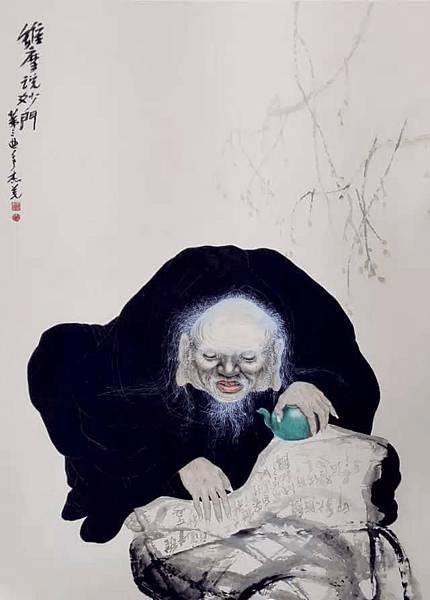
The holy and venerable Vimalakirti is unique in Buddhist history, as he was an ancient Buddha who chose to manifest as a layperson rather than an ordained monk. During the time of Shakyamuni Buddha, he played a crucial role in teaching monastics and Bodhisattvas who struggled to develop Mahayana bodhicitta. His unparalleled wisdom and skillful means helped bridge the gap between monastic and lay practitioners, proving that profound realization is not limited to those in monastic robes.

In reality, Vimalakirti was the incarnation of the supreme Buddha Dorje Chang (Vajradhara), the primordial Buddha and master of all Buddhas. Yet, instead of taking a leadership role that might have caused sectarian divisions, he humbly chose to serve as a Bodhisattva assisting Shakyamuni Buddha. His teachings, recorded in the Vimalakirti-nirdesa Sutra, are regarded as sutras in their own right, carrying the weight of authentic Buddha-dharma.

The depth of Vimalakirti’s wisdom was so vast that even the most accomplished Bodhisattvas hesitated to engage him in dialogue. When Shakyamuni Buddha asked Maitreya Bodhisattva to inquire about Vimalakirti’s health, Maitreya declined, admitting that Vimalakirti had once humbled him with his superior insight. Ultimately, only Manjushri, the ancient Buddha and master of the seven Buddhas, dared to engage Vimalakirti in discourse.

Chinese Ink painting Holy Master Vimalakirti by H.H. Dorje Chang Buddha III

Vimalakirti’s teachings were not limited to words alone—he also demonstrated his supreme realization through extraordinary miracles. In one instance, he used his boundless supernatural powers to bring the entire Buddha-land of Abhirati, including the Immovable Buddha (Aksobhya), into the human realm. Even the Immovable Buddha himself declared, “I did not do this; it was through the supernatural powers of Vimalakirti.” Such feats reveal that Vimalakirti’s realization surpassed that of all Bodhisattvas and was equal to that of Shakyamuni Buddha himself.

Shakyamuni Buddha himself affirmed the extraordinary status of Vimalakirti, stating, “One who makes offerings to that holy being should know that this is making offerings to the Buddhas. One who transcribes this sutra or keeps it in a room should know that the Tathagata exists in that room.” These words confirm that Vimalakirti was, in essence, a Buddha.

His teachings continue to inspire practitioners today, offering a profound perspective on suffering, wisdom, and compassion. His willingness to manifest illness as a teaching tool, his unparalleled debates with great Bodhisattvas, and his supernatural demonstrations all serve as timeless lessons in the path to enlightenment.

Link:https://peacelilysite.com/2025/03/28/vimalakirtis-profound-teachings-on-suffering-and-liberation/

The “Banqi” Style: A Masterpiece of Artistic Innovation

Going to a Faraway School in the Mountains
《山間遠學》


Artist: H.H. Dorje Chang Buddha III
H.H.第三世多杰羌佛
Style: Banqi(版氣派)

This exquisite painting, rendered in the unique “Banqi” style, captures a touching scene of children from mountain villages on their way to school. Unlike city children, these young students must trek across rugged terrain—climbing mountains, crossing ravines—day after day to pursue their education. Their journey is filled with challenges, yet their unwavering determination and thirst for knowledge shine through. This artwork serves as a tribute to their resilience, reminding us all of the value of education and the perseverance required to achieve greatness.

A Revolutionary Artistic Technique

What makes this painting extraordinary is its unconventional brushwork, which blends the bold energy of ink-wash painting with the refined precision of engraving. Every stroke, whether light or dark, delicate or bold, exudes an artistic charm that is both fluid and structured. The layering of ink and color creates depth, while the intricate texture gives the illusion of an engraved plate print, despite being entirely painted by hand. The brushwork is dynamic—lines seem to break and reconnect, mimicking the traditional elegance of carved stone seals. This interplay between spontaneity and meticulous control infuses the painting with life, movement, and a profound sense of authenticity.

What Is the “Banqi” Style?

The “Banqi” style is a rare and fascinating artistic approach that combines the visual impact of printmaking with the expressive freedom of brush painting. While these works resemble engravings at first glance, they are, in fact, purely ink-wash paintings—imbued with an effortless yet profound beauty that is both natural and lively. Beneath their structured appearance lies a deep, inexhaustible charm, where each stroke carries an essence of tradition, innovation, and artistic mastery.

Through this masterpiece, we witness not only a compelling story of perseverance but also a groundbreaking artistic vision—one that harmonizes the precision of engraving with the fluid grace of brush painting. It is a celebration of both form and spirit, a true testament to the boundless possibilities of art.

This beautiful artwork is part of the permanent exhibition at the International Art Museum of America, located in downtown San Francisco.

Link:https://peacelilysite.com/2025/03/21/the-banqi-style-a-masterpiece-of-artistic-innovation/

Beyond Form: The Pure Expression of Color in H.H. Dorje Chang Buddha III’s Art

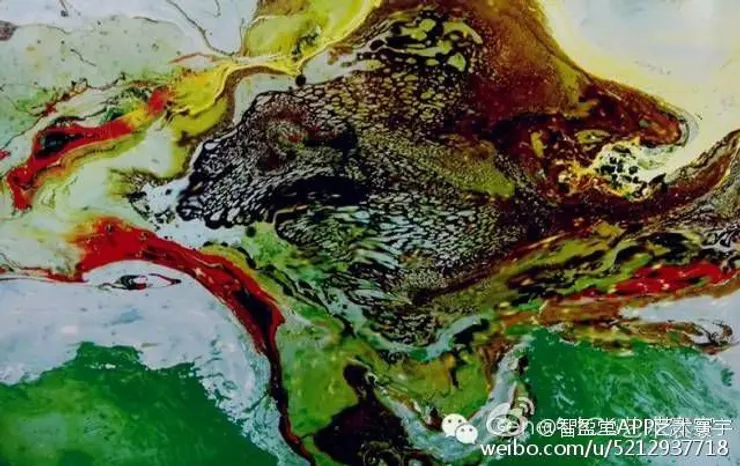
H.H. Dorje Chang Buddha III‘s Abstract Color Paintings create a perfect world shaped entirely by color. Free from concrete worldly forms, this realm exists purely through the interplay of hues—defining, expressing, and embodying itself in vibrant harmony. Here, color is both form and essence, radiating a mesmerizing aura.

Under the masterful hand of H.H. Dorje Chang Buddha III, these colors seamlessly merge into a breathtakingly enchanting spectrum. The atmosphere is dynamic, with scenes that bloom like flowers and surge with the power of the roaring sea. Yet, upon closer reflection, they reveal delicate nuances, refined in their intricate details.

Flower of Life

This painting depicts a unique flower, with delicate white petals gently unfolding and a striking red pistil at its center. Growing irregularly against a dark background, it seems to challenge its surroundings. Though unusual in appearance, this flower carries a profound meaning of life, symbolizing resilience and beauty in adversity. It is not only a miracle of nature but also a representation of vitality, showcasing the brilliance and diversity of life. Each petal tells a story, drawing the viewer into the emotions and strength conveyed by the artwork.

Flower of Life (2)

In this painting, intricate patterns and clear details intertwine, portraying the harmonious growth of various living beings. Each element seems to narrate the origins of life, allowing viewers to deeply sense the evolutionary process of all things.

This artwork is not merely a depiction of nature but also a contemplation of the essence of life. It serves as a reminder that life is in a constant state of growth and transformation, just like our own journeys. Every challenge and breakthrough we experience is an essential part of our personal development.

Through this piece, we are invited to reflect on our own lives and feel a profound connection with nature.

You can discover a selection of the exceptionally charming paintings in the permanent exhibition at The International Art Museum of America, situated in downtown San Francisco.

The Winners Of People Photography Awards: The Diverse Beauty Of Humanity In Photos

Photo by Hassan OUAJBIR on Pexels.com

By Cecilia Rodriguez

“People photography has a rich, captivating history, evolving alongside the development of the medium itself,” the organizers explain. “From capturing iconic figures to telling the stories of everyday individuals, it continues to fuel our profound curiosity about the human experience.”

This award sought to celebrate the most powerful and compelling images of people today, highlighting the diverse and meaningful narratives that shape our shared world.”

Crossing borders, spanning cultures and traversing the world’s most remote corners, the People Photography Award celebrates the diverse beauty of humanity.⁠

The People Photography awards were judged by prizewinning photographer Steve McCurry, one of the most celebrated voices in contemporary photography and author of a unique collection of work featuring some of the most famous images of our time — not least his iconic portrait of an Afghan Girl with piercing green eyes.

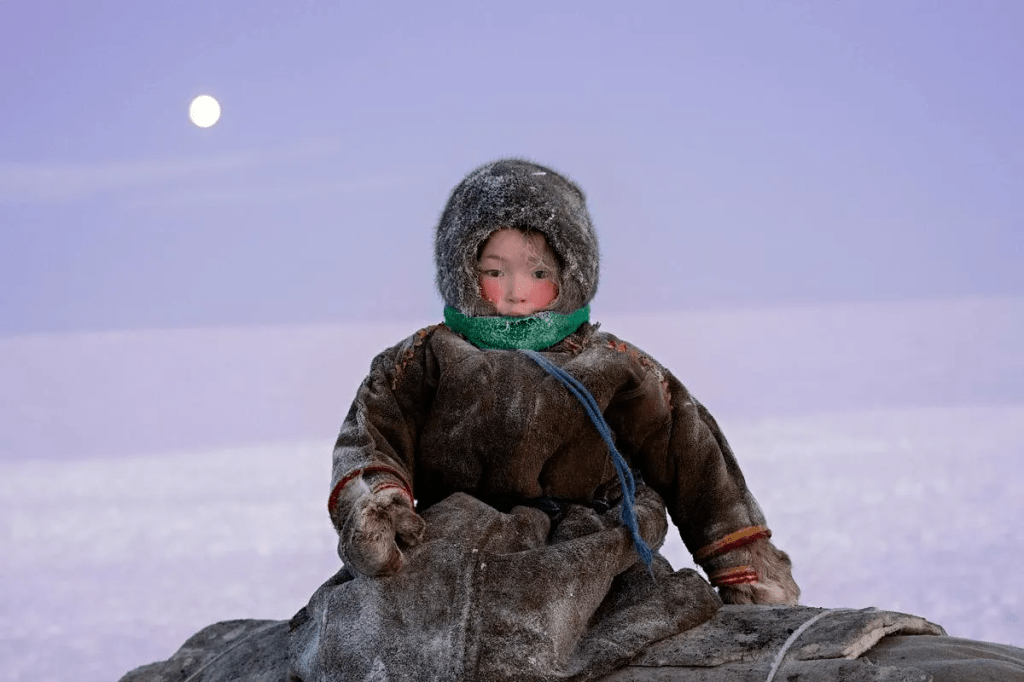
“Shades of white,” 3rd Prize, Yamal peninsula, Siberia, Northern Russia
 Nicola Ducati – People Photography Awards, The Independent Photographer

The photo above, winner of the third prize and $400, is one of the series “Shades of white” and was taken in the Yamal peninsula, Siberia, Northern Russia, where the air is thin and the polar day is very short.

For 4 1/2 hours, the light becomes magical and the colors of everything are perfect pastel against the artic sky, with delicate and unreal shades.

This land is inhabited by the Nenets people, nomadic reindeer herders who, guided by the seasonal cycles and the needs of their animals, migrate incessantly in an infinite circle of movements between ice, frozen rivers and incessant winds in search of new pastures in the most remote tundra. The hostile environment didn’t stop their innate adaptability and gave them prosperity for millennia.

“The soft polar light accentuates frosted textures and the child’s rosy cheeks, underscore both the harshness of the environment and the resilience of those who call it home,” the editors wrote. “It tells a powerful story of a people who have forged a life in one of the planet’s most unforgiving regions — but a people whose future remains uncertain.”

“Puzzled,” 2nd Prize, Western Mongolia
 Alessandra Manzotti – People Photography Awards, The Independent Photographer

A curious Kazakh nomad from Western Mongolia stops his truck to find out what a group of Westerners are doing walking in this remote and desolate stretch of land in the middle of a bitterly cold winter.

“This image captures the spirit of curiosity and resilience that defines life in remote Mongolia,” says McCurry. “The composition is powerful, with the truck and its vibrant blue color creating a striking contrast against the muted tones of the barren landscape. The candid expressions of both the nomad and the dog evoke a sense of warmth and connection, even in a harsh and unforgiving environment. The attention to detail, like the weathered texture of the truck and the distant herd in the background, adds depth to the story. It’s a beautiful balance of humanity and environment, which makes it a memorable piece.”

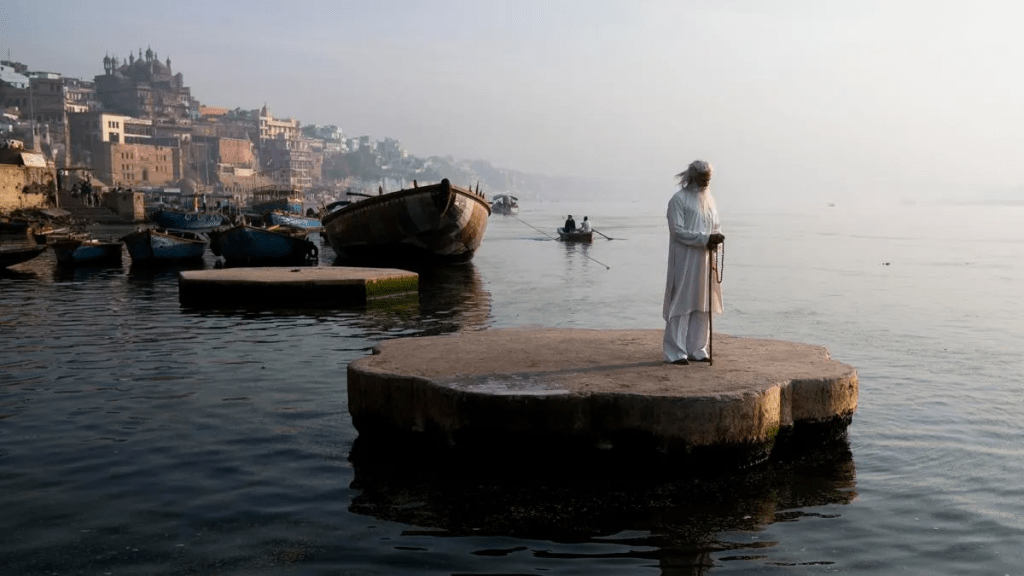
Contemplation, 1st Prize, Ganges River, Varanasi, India
Mohammad Kamal – People Photography Awards, The Independent Photographer

A lone Sadhu stands pensively at the edge of a platform in the Ganges River in Varanasi, India.
The image “Contemplation” , taken by photographer Mo Kamal in Varanasi, India, won first prize and $1,000.

“This image embodies a profound sense of stillness and spirituality, which perfectly captures the essence of Varanasi and the sacred Ganges,” said McCurry. “The man’s serene pose, framed against the soft morning light, evokes a sense of timelessness and introspection. The photograph is a poetic depiction of solitude and faith.”

“Andean Motherhood,” Finalist, Peruvian Andes
Jimmy Strouse – People Photography Awards, The Independent Photographer

In the Peruvian Andes, a mother carries her baby in a traditional bag. “The backdrop of rugged mountains just added to the beauty, giving a glimpse into the rich traditions of indigenous life,” Jimmy Strouse explains. “After showing her the photo on my camera, she nearly started crying, and it hit me: She probably doesn’t see many photos of herself, if ever.”

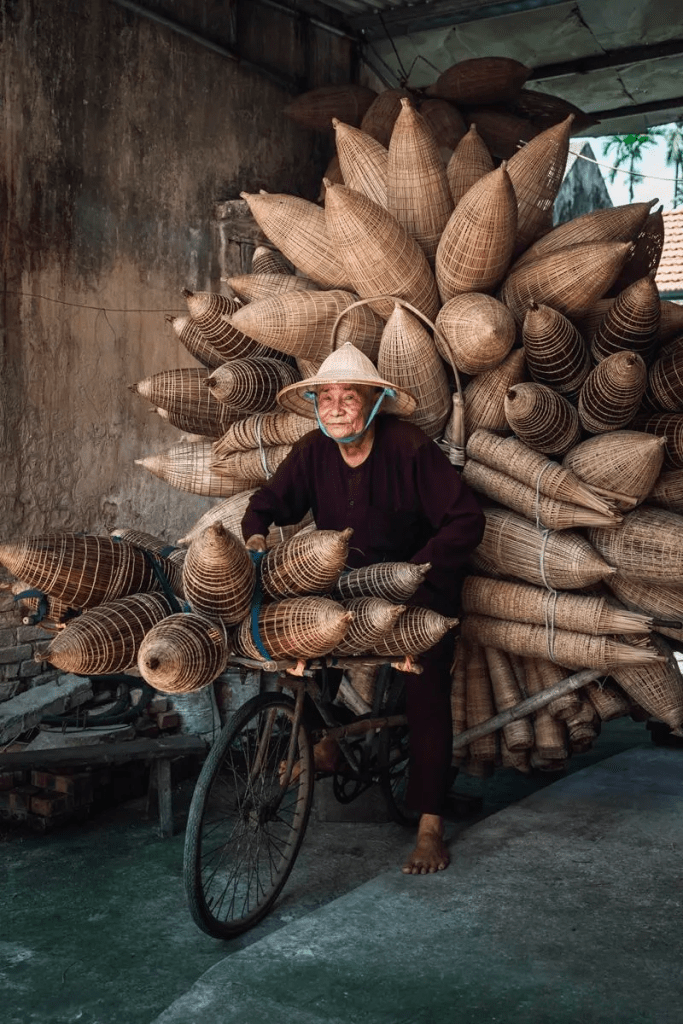
“The Art of Fish Traps,” Finalist, Thu Sy, Vietnam
 Vincenzo Avallone – People Photography Awards, The Independent Photographer

“During my journey, I had the opportunity to visit Thu Sy, a village in Vietnam known for its artisanal production of fish traps,” Vincenzo Avallone explains. “In this photo, I captured a local elderly man transporting an incredible number of fish traps on his bicycle.

“Villamar,” Finalist, Villamar, Bolivia
Michael Murray – People Photography Awards, The Independent Photographer

In a small settlement outside Villamar, Bolivia, a clothes maker pauses for a portrait.

“Shore Bound,” Finalist, Ladakh region, India
 Wasim Malik – People Photography Awards, The Independent Photographer

This is Lamo, a nomadic woman from the serene Changthang region in Ladakh, India, where the vast highlands meet a life of simplicity and resilience.

Link:https://peacelilysite.com/2025/03/07/the-winners-of-people-photography-awards-the-diverse-beauty-of-humanity-in-photos/

Source: https://www.forbes.com/sites/ceciliarodriguez/2025/01/17/the-diverse-beauty-of-humanity-in-photos-10-winners-of-people-photography-awards/

The Fusion of Technology and Art: A Stunning 3D Masterpiece

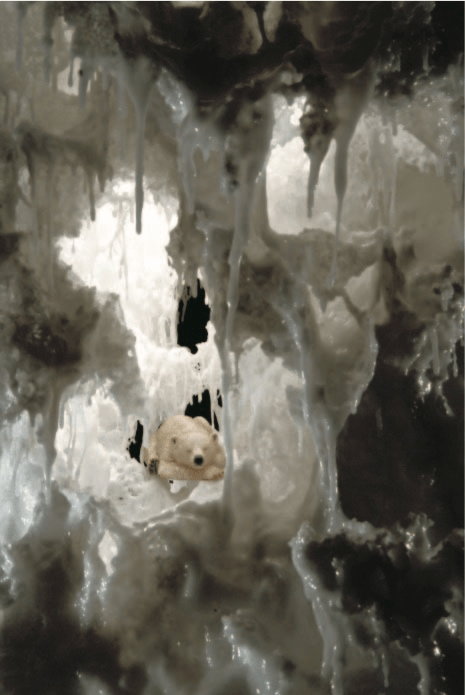
Polar Bear in an Ice Cave

Technology art is a new form of multidimensional creative expression that blends technology and art. By incorporating mechanical instruments, scientific data, and spatial elements such as light sources, temperature, and speed, it presents a unique visual experience. Imagine a three-dimensional painting on a flat sheet of paper, where the depth of space extends beyond the surface, and the imagery seems to leap out of the frame, resembling a real sculpture.

Among these art forms, glass painting is particularly breathtaking. With its transparent dual-sided effect akin to a celestial realm, it creates a mesmerizing and soothing atmosphere when paired with changing lights. Photography, on the other hand, captures emotionally stirring moments through the interplay of light, composition, and color. Whether depicting landscapes, people, or animals, it brings out a unique aesthetic through the lens.

At the convergence of these three artistic expressions, H.H. Dorje Chang Buddha III, skillfully integrates them to create stunning works of technology art. One such masterpiece, the 3D painting Polar Bear in an Ice Cave, vividly portrays the charming image of a polar bear, making viewers feel as if they are inside an icy Arctic cavern. Through the artwork, one can almost see the adorably clumsy bear sleeping soundly in the cold cave. The artist’s extraordinary craftsmanship is awe-inspiring, delivering an unparalleled visual experience.

H.H. Dorje Chang Buddha III composed a poem for this artwork. Translating it into English is incredibly challenging due to its profound meanings. However, here is a simple translation to offer a glimpse into the Buddha’s deep compassion for all beings:

The polar bear loves the cold the most,
Sleeping in ice caves through all seasons.
Do not take food from the water,
Instead, pick up the bones of wandering souls for a meal.

Not everyone understands the mysteries within the profound,
For Zen enlightenment dissolves the barriers of hunger.
The splendid affairs of the crystal palace are beyond full expression,
Within the cave, a guest drunkenly enjoys the company of an immortal.

Link:https://peacelilysite.com/2025/02/27/the-fusion-of-technology-and-art-a-stunning-3d-masterpiece/

Crossing a Mountain, the Small Boat Enters the Canyon

Crossing a Mountain, the Small Boat Enters the Canyon is an awe-inspiring masterpiece of Yun sculpture. How did H.H. Dorje Chang Buddha III capture the shimmering reflections on the lake’s surface? And how was it possible to create such a vivid and lifelike scene using ordinary plastic steel materials? The majestic mountains, the gentle ripples of the lake, and the lifelike figures aboard the small boat—all elements that seem beyond the reach of ordinary people—were brought to life through the unparalleled artistry of H.H. Dorje Chang Buddha III.

This sculpture is not merely a visual creation—it possesses a soul. Every detail, from the rugged mountains and tranquil lake to the humble fishermen, seems to pulse with vitality. The artwork evokes a sense of harmony with nature, conveying a profound feeling of peace and joy that resonates deeply with viewers.

The Unique Art of Yun Sculpture:
Yun sculpture is a groundbreaking art form created by H.H. Dorje Chang Buddha III, with no precedent in history. Since the emergence of Yun sculpture, humanity has witnessed the birth of an art form that is truly non-reproducible. This genre is distinguished by several remarkable features:

  1. Multidimensional Spatiality: Yun sculptures possess an extraordinary sense of multidimensional space. Their intricate and delicate forms exhibit endless variations, captivating viewers from every angle.
  2. Vibrant, Dreamlike Colors: The colors of Yun sculptures are rich, radiant, and dreamlike—depicting scenes beyond the realm of this world. Their hues seem to emanate a light of their own, enchanting all who behold them.
  3. Sacred and Incomparable Depth: Many Yun sculptures possess a profound and sacred quality. For instance, Color Rhythm, displayed in the Holy Relics Room of H.H. Dorje Chang Buddha III Cultural Art Museum, measures only two to three feet in size. Yet, when viewed through its openings, one can perceive a vast inner depth that seems to extend far beyond the sculpture itself, leaving viewers awestruck by its unfathomable dimensionality.

Countless individuals who have had the privilege of witnessing H.H. Dorje Chang Buddha III’s Yun sculptures have expressed their wonder and reverence: “This is a treasure sent from the divine to humanity,” “A sacred gift from the Buddha,” and “So breathtakingly beautiful that it touches the soul.” Others have compared these masterpieces to the finest jade jewelry and the most magnificent stone sculptures, only to find that even the most exquisite human creations pale in comparison—like dim stars surrounding the brilliance of the moon.

Indeed, the advent of Yun sculpture has elevated the realm of art to an entirely new level, offering the world creations that are not only visually stunning but also spiritually profound, filling the hearts of all who witness them with a sense of wonder and inspiration.

Master Wan Ko Yee (H.H. Dorje Chang Buddha III) Has Made A Great Contribution To Art

Link: https://peacelilysite.com/2025/02/19/crossing-a-mountain-the-small-boat-enters-the-canyon/

The Power of Flying and Whirling

Whirling Power and Infinite Artistry – A Masterpiece by H.H. Dorje Chang Buddha

At first glance, The Power of Flying and Whirling seems almost impossible to have been created with just a paintbrush. Its breathtaking composition and dynamic visual impact resemble digital artwork, as if only advanced computer graphics could achieve such a striking effect. Yet, the most astonishing fact is that this masterpiece was painted entirely by H.H. Dorje Chang Buddha using traditional techniques—without any digital assistance.

These impressionist paintings reach an extraordinary level of artistry. Each section of the painting, if isolated, could stand alone as a remarkable impressionist work, complete in its beauty and expression. The artwork conveys a dreamy, illusory state, where even the smallest fragment could be enlarged to reveal a mesmerizing, self-contained masterpiece.

By capturing movement with unparalleled skill, H.H. Dorje Chang Buddha has frozen the imagery in mid-air. This painting feels like a window to the heavenly realm, giving me a glimpse into the mysteries of paradise. The elegant arcs that sweep across the canvas pulse with energy, like a mighty tornado dispersing the shadows in our hearts. The swirling force in the painting seems to lift the viewer beyond the ordinary, reminding us of the limitless possibilities that exist when art and wisdom unite.

This painting is more than just a visual masterpiece—it is an invitation to embrace the unseen forces of inspiration, creativity, and transformation. It teaches us that true artistry is not bound by tools or techniques but flows from the depth of wisdom and an unshakable spirit.

May this extraordinary work inspire us to break through limitations, open our hearts to beauty, and find the power to uplift ourselves and others.

Link:https://peacelilysite.com/2025/01/31/the-power-of-flying-and-whirling/