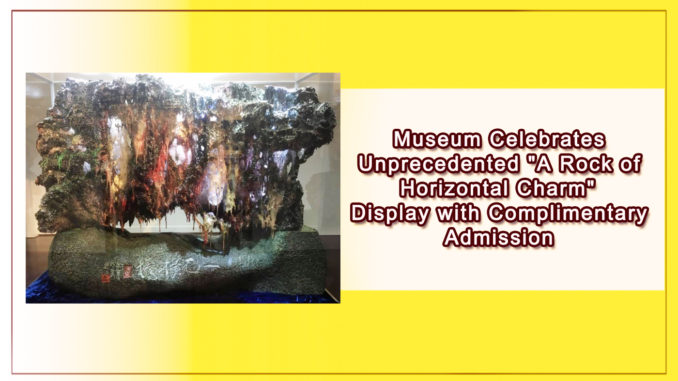
Museum Celebrates Unprecedented “A Rock of Horizontal Charm” Display with Complimentary Admission

West Covina, CA (PRWEB) June 01, 2017

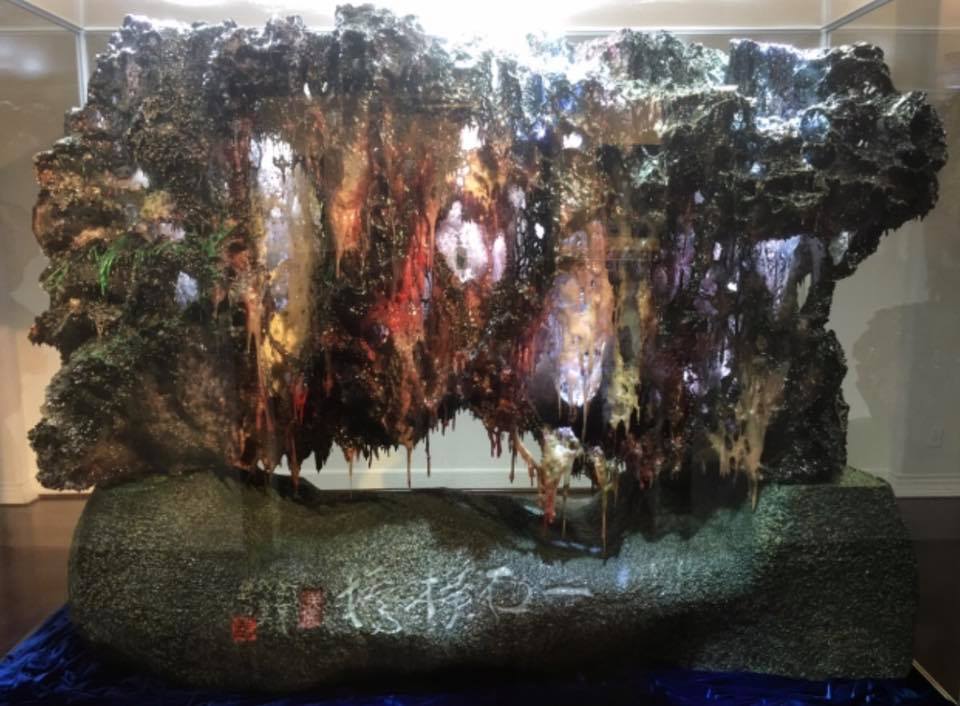
The H.H. Dorje Chang Buddha III Cultural and Art Museum is pleased to announce its exhibition of “A Rock of Horizontal Charm“, a masterpiece of Yun Sculpture that embodies the spirit of art in a truly dis-tinctive way. In honor of this extraordinary form of art, the museum is offering free admission to the public for a limited time.

“A Rock of Horizontal Charm” was created by the world-renowned and internationally-revered highest leader of Buddhism, H. H. Dorje Chang Buddha III. The Yun Sculpture is a piece of original artwork that expresses a unique set of qualities. Various art experts and professors who have viewed the sculpture art say it has surpassed natural beauty and represents a level of perfection that extends well beyond what can be described as superb craftsmanship or inspired artistry.
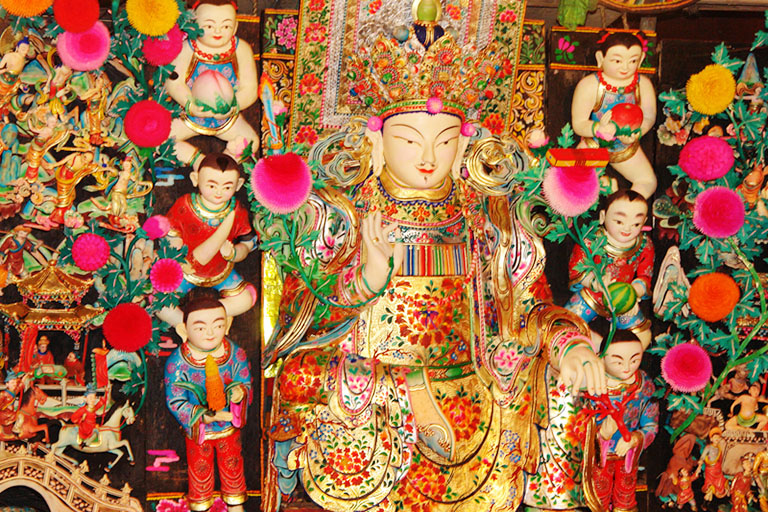
The H.H. Dorje Chang Buddha III Cultural and Art Museum is exhibiting A Rock of Horizontal Charm, an unparalleled masterpiece of Yun Sculpture. For a limited time, visitors can receive free admission to the museum and witness the unsurpassed natural beauty of the superb sculpture art first hand.

When viewed from different angles, the Yun Sculpture’s colors, structure, and atmosphere change completely, inexhaustibly transforming in unpredictable ways. Furthermore, it possesses multidimen-sional spatial structures that are complex yet delicate and intricate, and exquisite to the utmost. In addi-tion, its colors—kaleidoscopic and majestic, yet mature and assured—manifest a supernatural, visionary beauty. “A Rock of Horizontal Charm“, alone, is so endlessly variegated that it provides thousands of beautiful vistas.

The astounding beauty of this amazing sculpture art goes far beyond mere words. Therefore, it is no surprise that it has distinguished itself as the “emperor” of the four great Yun Sculptures. In fact, the creation of “A Rock of Horizontal Charm“ is considered to be a miracle in human history because no craftsman in the ancient or modern world—or even high technology—has been able to devise such ex-traordinary works of divine art. Consequently, this original artwork has been designated a “peerless treasure” that cannot be replicated, and the museum has named the room in which it is being displayed, Peerless Treasure.

“Even the “He Shi Bi (the Jade Disc of He) “, recorded in history as a treasure of monumental value, does not fit the title of ‘peerless treasure,’ since it is completely replicable—and if it can be replicated, it is not unique; if it is not unique, it is not peerless,” states the museum’s website. “In fact, any master sculptor’s magnum opus can be recreated; thus, only “A Rock of Horizontal Charm“ is the true peerless treasure.”

Despite an invitation to create an identical replica Yun Sculpture for a $50 million prize, no human sculpture master or technology has successfully duplicated “A Rock of Horizontal Charm“. From this, one can see how H.H. Dorje Chang Buddha lll’s artistic level has far exceeded the summit of sculptural art in human history.
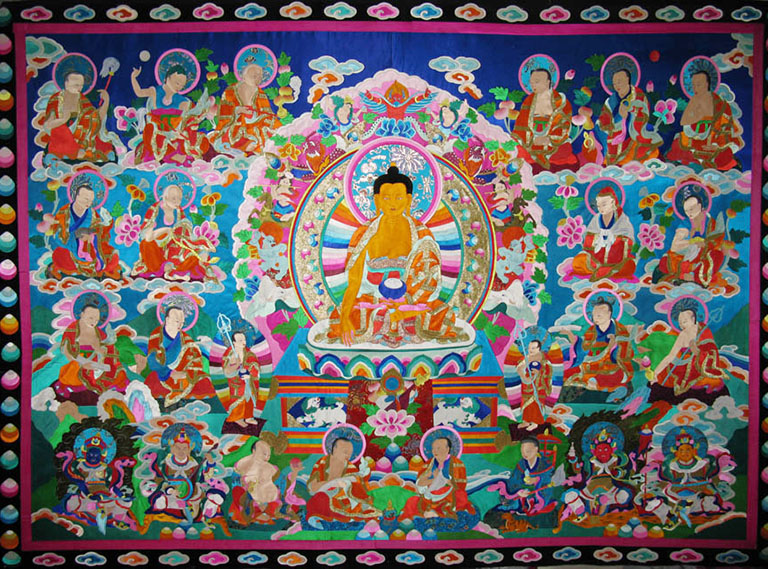
The exhibit featuring “A Rock of Horizontal Charm“ will allow visitors to experience the divine charm of H.H. Dorje Chang Buddha lll’s original artwork in person. The unreplicatable sculpture exudes an inex-plicable amalgamation of color, motion, energy and spirit. “A Rock of Horizontal Charm“ has transcend-ed the category of highest human sculptural attainment and entered into the enjoyments of a mystical world.

Located in Covina in East Los Angeles, the H.H. Dorje Chang Buddha III Cultural and Art Museum is housed in a building with a 117-year history. The structure was renovated in 2014 and transformed into the cultural and art museum that occupies the space today. Since then, the museum’s world-class, un-matched treasures have attracted a steady stream of culture and art lovers from around the globe.
The mission of the cultural and art museum is to promote the exceptional accomplishments of an Amer-ican with outstanding talent—H.H. Dorje Chang Buddha III—by displaying his achievements in culture, literature, philosophy, art, science, technology, and other fields. Visitors to the museum can learn about the noble ethics and morality of H.H. Dorje Chang Buddha III and the holy character of this magnificent, selfless Buddha who altruistically contributes to society through his vast achievements and who advances world peace as well as the happiness of people. In addition, visitors can be guided by the teachings of H.H. Dorje Chang Buddha III and model themselves after him to elevate their own moral character and benefit the public.

For more information about “A Rock of Horizontal Charm“ or the cultural and art museum, visithttp://www.hhdcb3cam.org or call (626) 281-6378.

About H.H. Dorje Chang Buddha III
H.H. Dorje Chang Buddha III has been recognized by the most highly realized practitioners of Buddhism as the third incarnation of the original Buddha, Dorje Chang Buddha. His accomplishments transcend religion, healing and art. As the first in history to manifest real accomplishments in the five vidyas, He meets the highest standard of Buddhism. He is recognized for his devotion to a wide scope of cultural and religious activities, which enrich the lives of people from communities throughout the world. His Holiness has mastered 16 unique painting styles or schools, representing an unprecedented pioneering achievement in the history of art. Additionally, He is the pioneer of a new class of artwork that cannot be duplicated by any living being: Yun Sculpture. Experts predict that His paintings and sculptures will become increasingly valuable.

For the original version on PRWeb visit: http://www.prweb.com/releases/2017/06/prweb14390138.htm 

Link: https://dharma-hhdorjechangbuddhaiii.org/museum-celebrates-unprecedented-a-rock-of-horizontal-charm-display-with-complimentary-admission/

#DorjeChangBuddhaIII #HHDorjeChangBuddhaIIICulturalandArtMuseum #YunSculpture #RockOfHorizontalCharm #Art #ArtExhibition #SpiritualSculpture #ArtMuseum #SacredArt #PeerlessTreasure

The Thousand-Year Wonder: Fengguo Temple and Its Eternal Great Hall

Hidden in the quiet county of Yixian in northern China, Fengguo Temple has stood for over a thousand years as a living testament to ancient Chinese wisdom and spiritual devotion. Its magnificent Mahavira Hall, the largest single-story wooden structure of its time, houses seven colossal clay Buddhas that have miraculously survived the centuries. This temple is not only an architectural marvel but also a sacred symbol of harmony, resilience, and faith that continues to inspire all who visit.

A Thousand Years of Faith and Architecture

Beyond the Shanhai Pass, in the northern part of Jinzhou City, Liaoning Province, stands the quiet county of Yixian, home to one of China’s most magnificent ancient temples — Fengguo Temple. This remarkable site, founded over a millennium ago, is not only a masterpiece of Liao Dynasty Buddhist architecture but also a living testament to the extraordinary ingenuity of ancient Chinese builders and the enduring power of faith.

In 2020, Fengguo Temple celebrated its thousandth anniversary. Through a thousand years of wind, snow, wars, and earthquakes, its grand Mahavira Hall still stands tall — a miracle in both architecture and spirituality.


The Majestic Great Hall

The heart of Fengguo Temple is its Mahavira Hall (Great Buddha Hall), one of the Eight Great Structures of the Liao Dynasty. Built in 1020 CE, it measures 49.5 meters wide, 26.6 meters deep, and 19.9 meters high, covering an area of 1,317 square meters. Standing on a 3.2-meter-high platform, the hall is the largest single-story wooden structure of ancient China — magnificent, solemn, and breathtaking.

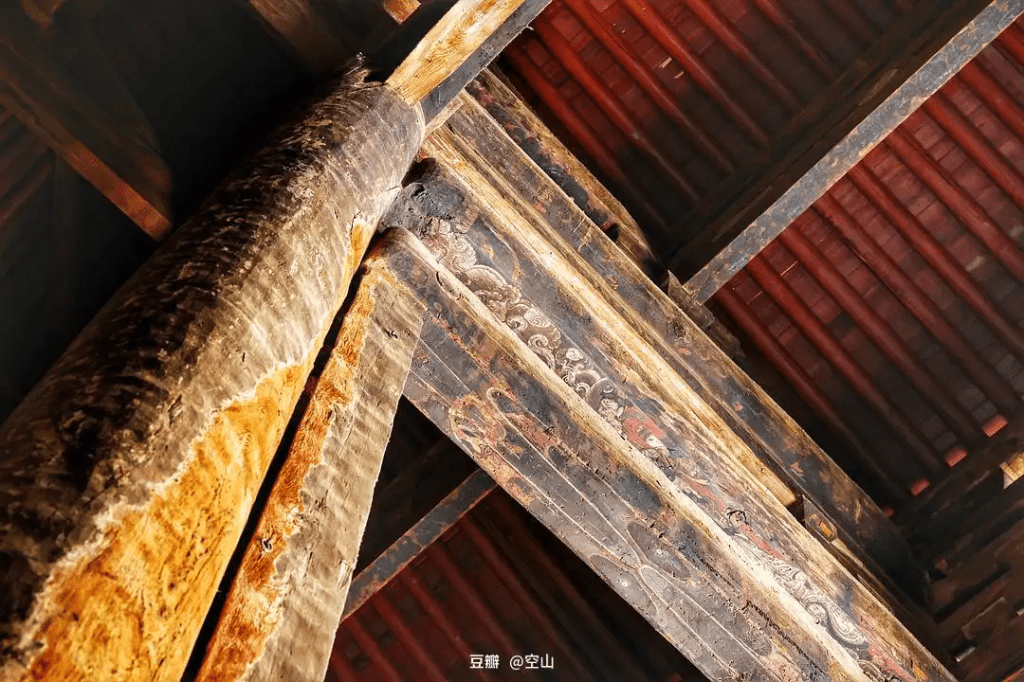
Ingeniously designed, the hall uses a “reduced-column” method to maximize interior space while maintaining perfect stability. Ancient builders applied advanced techniques known as “side-foot” and “rising beam”, ensuring the building’s balance and graceful proportions. The massive bracket sets under the eaves are bold yet refined, exuding strength and elegance.

Thanks to its precise structural mechanics, the Great Hall has remained perfectly upright for a thousand years, without any sign of warping or tilting — an unparalleled achievement in the history of wooden architecture.


The Seven Buddhas: Eternal Clay Sculptures

Inside the Great Hall, seven colossal clay Buddha statues, each about nine meters tall, sit side by side upon a brick platform. From east to west, they are:
Kashyapa Buddha, Krakucchanda Buddha, Sikhin Buddha, Vipashyin Buddha, Visvabhu Buddha, Kanakamuni Buddha, and Shakyamuni Buddha.

These are the “Seven Buddhas of the Past” mentioned in Buddhist scriptures, symbolizing the eternal cycle of enlightenment in our world. Each Buddha exudes solemn dignity, with serene expressions and graceful postures, reflecting the Liao Dynasty’s continuation of Tang-style Buddhist artistry. Two bodhisattvas stand beside each Buddha, adding vitality and compassion to this sacred tableau.

This magnificent ensemble is the oldest and largest group of colored clay Buddha statues in the world. Despite being made of fragile clay, they have miraculously survived for over a thousand years, their colors still soft and luminous. This endurance is nothing short of a miracle — a union of artistic mastery and the blessings of faith.

The Legend of the Buddha Catching a Shell

During the Liaoshen Campaign in the late 1940s, Yixian became a battlefield. Amid the chaos, a shell pierced through the roof of the Great Hall and fell directly into the right hand of the Shakyamuni Buddha statue. Miraculously, the shell did not explode.

Locals still tell this story as “The Buddha Caught the Shell with His Hand.” Whether fact or legend, it adds an aura of mystery and divine protection to the temple’s long history — as if the Buddhas themselves were silently safeguarding their sacred home.

The Flying Devas of Liao

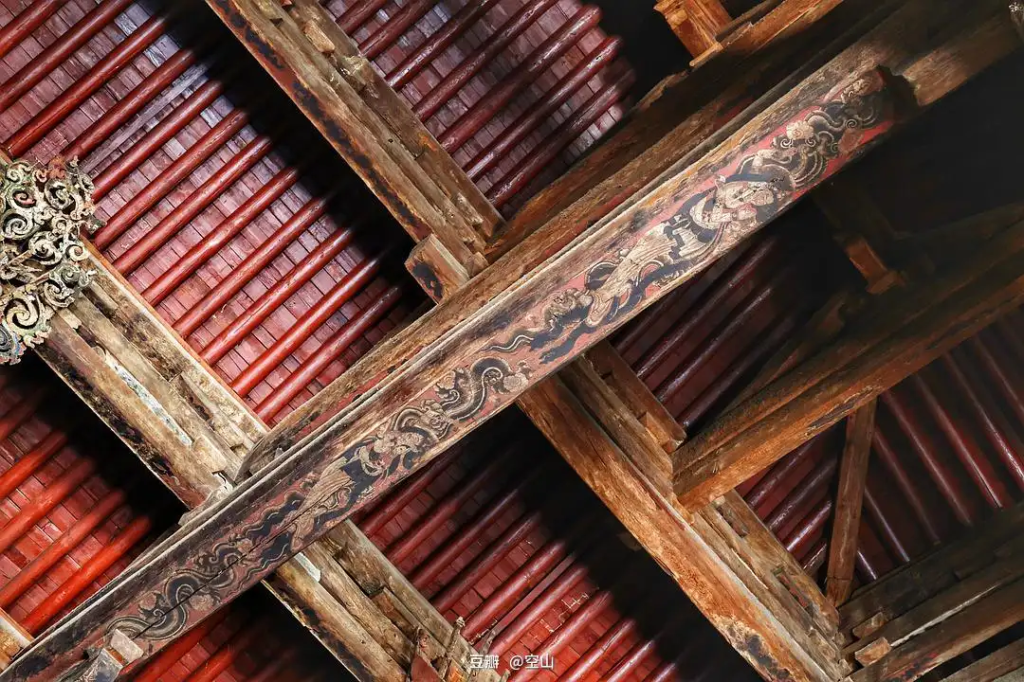
The beams and rafters inside the Great Hall are adorned with over 4,000 square meters of original Liao Dynasty murals. Among them, the heavenly maidens — the Flying Devas — are the most enchanting. With radiant faces and flowing ribbons, they drift gracefully through clouds, offering flowers and fruits to the Seven Buddhas below.

Their movement contrasts beautifully with the Buddhas’ stillness, creating a breathtaking scene of divine harmony and devotion. The surrounding walls also preserve Yuan and Ming dynasty murals depicting ten Buddhas, eight Bodhisattvas, and the Eleven-Faced Avalokiteshvara, adding even more layers of spiritual and artistic richness to this timeless sanctuary.


A Thousand Years of Wonder

Standing before this majestic hall — a wooden structure that has endured a millennium — and gazing upon the clay Buddhas whose serene faces have survived a thousand winters, one cannot help but wonder:

How can a wooden palace withstand ten centuries of storms and wars? How can clay sculptures remain whole and radiant after a thousand years?

Is it the wisdom of the ancients? The strength of art? Or the blessing of the Dharma itself?

Perhaps the answer lies within every beam, every brushstroke, and every tranquil smile of the Buddhas.

May the Buddhas and Bodhisattvas bless all beings with peace, compassion, and happiness.
Namo Amitabha.

Link:https://peacelilysite.com/2025/10/23/the-thousand-year-wonder-fengguo-temple-and-its-eternal-great-hall/

Source: https://www.hzfxy.net/detail_1020_10154.html, https://zhuanlan.zhihu.com/p/721178084

The World’s Largest Buddhist Temple: Borobudur, Indonesia

In the heart of Central Java’s fertile Kedu Valley, embraced by volcanic peaks and emerald landscapes, rises a monument unlike any other—Borobudur, the world’s largest Buddhist temple and a UNESCO World Heritage Site. Built more than 1,200 years ago, this colossal stone mountain is not just an architectural wonder, but a spiritual journey carved in stone.

A Monument Born of Devotion

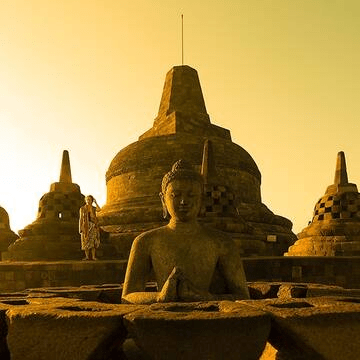
Borobudur was constructed in the 8th and 9th centuries under the Sailendra Dynasty. Without a drop of mortar, two million volcanic stone blocks were precisely interlocked like a massive puzzle, forming a structure that has endured centuries of nature’s tests. From above, its shape is breathtaking—a giant mandala, the sacred geometric symbol of the Buddhist cosmos.

The temple rises in three tiers, each representing one of the realms of Buddhist cosmology:

  • Kamadhatu – The Realm of Desire: The base, adorned with reliefs that portray the karmic law and the cycle of birth and death.
  • Rupadhatu – The Realm of Form: Five square terraces lined with intricate reliefs and 504 serene Buddha statues.
  • Arupadhatu – The Realm of Formlessness: Three circular platforms crowned with 72 bell-shaped stupas, each sheltering a meditating Buddha. At the summit stands the great central stupa, symbolizing ultimate enlightenment.

A Living Story in Stone

Walking through Borobudur is like entering a vast storybook. The temple’s bas-reliefs, stretching across 2,500 square meters, are the most complete ensemble of Buddhist reliefs in the world. They illustrate tales from the life of Shakyamuni Buddha, Jataka stories, and profound teachings, guiding pilgrims step by step upward—from worldly desires to spiritual liberation.

Buried, Forgotten, and Found Again

Despite its grandeur, Borobudur fell silent between the 10th and 14th centuries, likely due to political shifts and the spread of Islam in Java. Nature reclaimed it—volcanic ash and thick jungle hid the monument from the world’s eyes. For centuries, it slumbered, until 1814, when Sir Thomas Stamford Raffles, the British governor of Java, was informed of a “buried hill.” Excavations revealed not a hill, but a hidden treasure of human devotion.

From Restoration to Reverence

In the 20th century, Borobudur was painstakingly restored with UNESCO’s support, safeguarding its stones against further decay. In 1991, it was declared a World Heritage Site, recognized as both a cultural and spiritual masterpiece.

Today, Borobudur is not just a monument of the past—it is alive with faith. Each year, thousands of Buddhists from across Indonesia and beyond gather here for Vesak Day, celebrating the birth, enlightenment, and passing of the Buddha under the full moon. Lanterns rise into the night sky, echoing the timeless aspiration for wisdom and compassion.

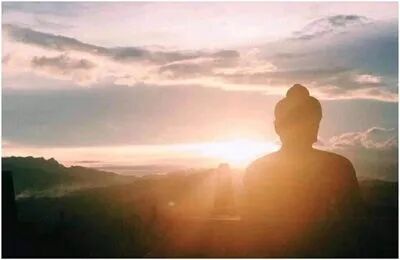
Borobudur is more than stone, stupas, and statues. It is a meditation frozen in time, a pilgrimage for both the feet and the heart. For travelers, standing atop Borobudur at sunrise—watching the mist lift from the valley as the first rays of light kiss the central stupa—is an experience beyond words.

This temple is not just Indonesia’s pride; it is humanity’s shared treasure, reminding us of the enduring power of faith, art, and the human spirit.

Travel Guide: Planning Your Visit

If Borobudur is on your travel list, here are some helpful tips:

📍 Location

  • Situated in Magelang, Central Java, about 25 miles (40 km) northwest of Yogyakarta.
  • Easily accessible by car, bus, or organized tour from Yogyakarta (1–1.5 hours).

🕰 Best Time to Visit

  • Sunrise tours are especially popular. Watching the first light illuminate the misty valley and stupas is unforgettable.
  • The dry season (April–October) offers clearer skies and comfortable weather.

🎟 Tickets

  • General admission is separate for local and international visitors.
  • Sunrise access often requires booking through official operators.
  • Combination tickets are available if you also wish to visit Prambanan Temple, another UNESCO site nearby.

👟 What to Bring

  • Comfortable walking shoes (you’ll be climbing many steps).
  • A hat, sunscreen, and water—the tropical sun can be intense.
  • A respectful outfit: shoulders and knees covered, as Borobudur is a sacred site.

🛕 Nearby Attractions

  • Prambanan Temple – A magnificent Hindu temple complex about an hour away.
  • Mendut Temple – A smaller Buddhist temple with a giant Buddha statue, often part of the Vesak procession.
  • Yogyakarta City – Known for its royal palace, batik art, and vibrant street food scene.

Link: https://peacelilysite.com/2025/09/12/the-worlds-largest-buddhist-temple-borobudur-indonesia/

Ancient Buddha relics returned to India

A joyous day for our cultural heritage! It would make every Indian proud that the sacred Piprahwa relics of Bhagwan Buddha have come home after 127 long years. These sacred relics highlight India’s close association with Bhagwan Buddha and his noble teachings. It also illustrates our commitment to preserving and protecting different aspects of our glorious culture. #VikasBhiVirasatBhi Source: https://x.com/narendramodi/status/1950483627323670760

The following article was published by the BBC News, Soutik Biswas, July 31, 2025:

Auction house Sotheby’s has returned a set of sacred jewels believed to be linked to the Buddha’s remains in India, after facing mounting pressure from the Indian government and global Buddhist leaders.

The Piprahwa Gems – described by archaeologists as one of the most astonishing finds of the modern era – were due to be auctioned in Hong Kong in May. But the sale was called off following diplomatic intervention and threats of legal action from Delhi.

The Mumbai-based conglomerate Godrej Industries Group has acquired the jewels, Sotheby’s said.

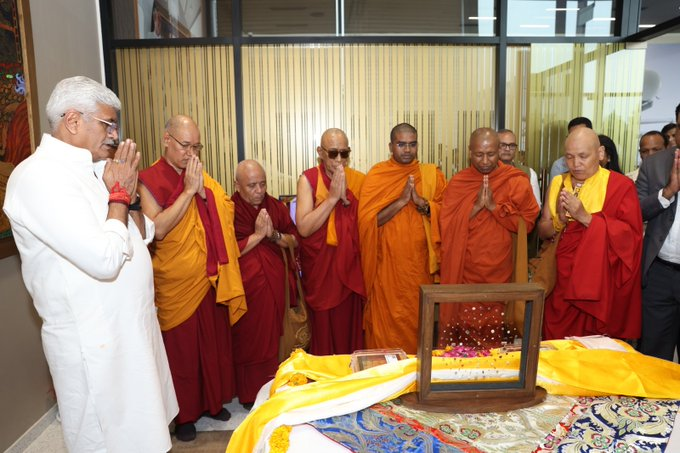
Sotheby’s said it was “delighted” to facilitate the return, following two months of negotiations involving the owner, the new buyer and the Indian government. The relics will now go on permanent public display in India, the auction house said.

Photo of William Claxton Peppé, an English estate manager, excavated the stupa and found the jewels. courtesy of the Peppé family.
William Claxton Peppé, an English estate manager, excavated the stupa and found the jewels. courtesy of the Peppé family.

Indian Prime Minister Narendra Modi announced the return on Wednesday, calling it a “proud and joyous moment” and a victory for the country’s cultural heritage. The relics, he said on X, were coming home after 127 years.

Godrej Industries Group, the buyer of the jewels, serves over 1.1 billion consumers worldwide across sectors including consumer goods, real estate, agriculture, finance, and chemicals, according to its website. Many of its products are household names in India.

“We are deeply honoured to contribute to this historic moment. The Piprahwa gems are not just artifacts – they are timeless symbols of peace, compassion, and the shared heritage of humanity,” Pirojsha Godrej, Executive Vice Chairperson of Godrej Industries Group, was quoted as saying in a government press statement.

Unearthed in 1898 by English estate manager William Claxton Peppé from a stupa in Piprahwa in northern India, near the Buddha’s birthplace, the cache included nearly 1,800 pearls, rubies, sapphires and gold sheets – buried alongside bone fragments identified by an inscribed urn as belonging to the Buddha himself.

Photo of The jewels were unearthed from this stupa in Piprahwa, northern India in 1898, Icon Films.
The jewels were unearthed from this stupa in Piprahwa, northern India in 1898, Icon Films.

Peppé eventually handed most of the gems, relics and reliquaries to the colonial Indian government: the bone relics went to the Buddhist King of Siam (Rama V). Five relic urns, a stone chest and most other relics were sent to the Indian Museum in Kolkata – then the Imperial Museum of Calcutta.

Photo of Four containers made of steatite (a type of stone) and one made of rock crystal were found inside a sandstone box at the Piprahwa stupa, courtesy of Peppe family.
Four containers made of steatite (a type of stone) and one made of rock crystal were found inside a sandstone box at the Piprahwa stupa, courtesy of Peppe family.

For over a century, the rest of the dazzling jewels remained largely hidden in a British private collection.

A set of 300 gems held by the Peppé family was publicly displayed at Sotheby’s Hong Kong in February and May. Over the past six years, the gems have appeared in major exhibitions, including The Met in 2023. The family has also launched a website to share their research.

Historians consider the relics the shared heritage of the Buddha’s Sakya clan and Buddhists worldwide. The bone fragments have since been distributed to countries like Thailand, Sri Lanka, and Myanmar, where they remain objects of veneration.

Photo of The jewels are considered among the most extraordinary archaeological finds of all time, courtesy of Sotheby's.
The jewels are considered among the most extraordinary archaeological finds of all time, courtesy of Sotheby’s.

The planned sale of the Buddha relics by Sotheby’s in Hong Kong had sparked widespread ethical concerns, with scholars and Buddhist leaders questioning whether sacred objects – especially those linked to human remains – should be treated as commodities.

Critics challenged the seller’s authority to auction the relics, while defenders said a transparent sale was the fairest way to transfer custody. For many Buddhists, the jewels are inseparable from the sacred remains and meant to be venerated, not sold.

“Are the relics of the Buddha a commodity that can be treated like a work of art to be sold on the market?” Naman Ahuja, a Delhi-based art historian, had told the BBC in May. “And since they aren’t, how is the seller ethically authorised to auction them?

“Since the seller is termed the ‘custodian’, I would like to ask – custodian on whose behalf? Does custodianship permit them now to sell these relics?”

Chris Peppé, great-grandson of William, had told the BBC in May that the family looked into donating the relics, but all options presented problems and an auction seemed the “fairest and most transparent way to transfer these relics to Buddhists”.

He said that in all the monasteries he had visited “no Buddhists regard these as corporeal relics”.

“A few Buddhist academics at Western universities have recently offered a convoluted, fact-defying logic whereby they may be regarded as such. It’s an academic construct that is not shared by Buddhists in general who are familiar with the details of the find,” he said.

On 7 May, Sotheby’s postponed the auction of the jewels following media reports and concerns raised by the Indian government, citing the need for further discussions. A week later, it confirmed ongoing talks with India to find a mutually agreeable resolution.

This week, confirming the return of the jewels, Sotheby’s said it was “grateful to the Peppé family for having safeguarded the gems and for having worked with us – and with the Government of India – in good faith to achieve this historic outcome”.

Link:https://peacelilysite.com/2025/09/05/ancient-buddha-relics-returned-to-india/

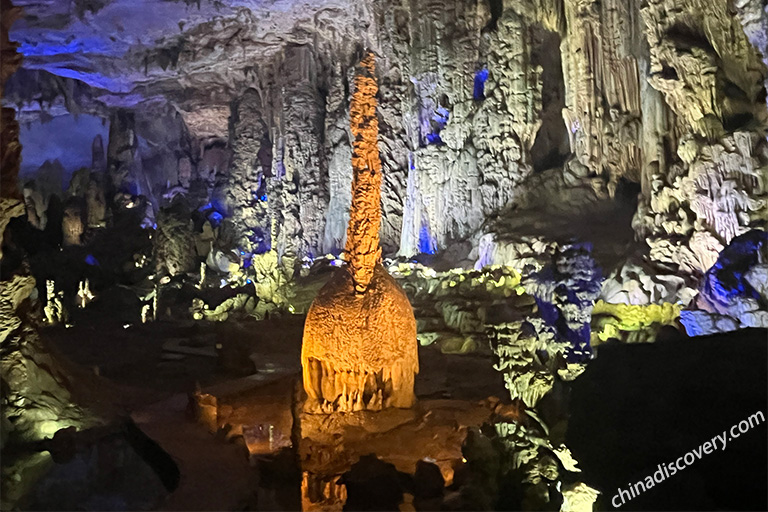
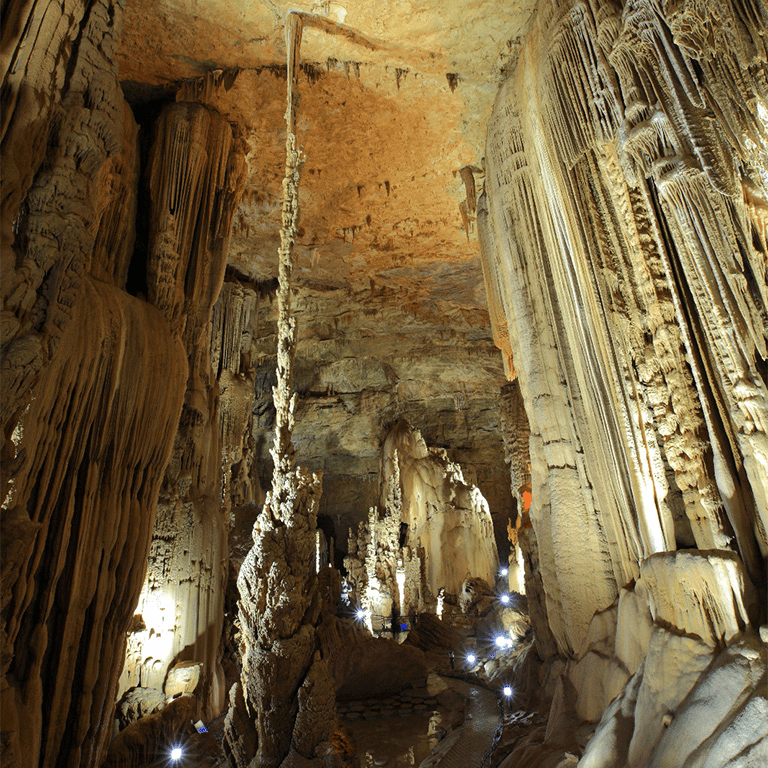
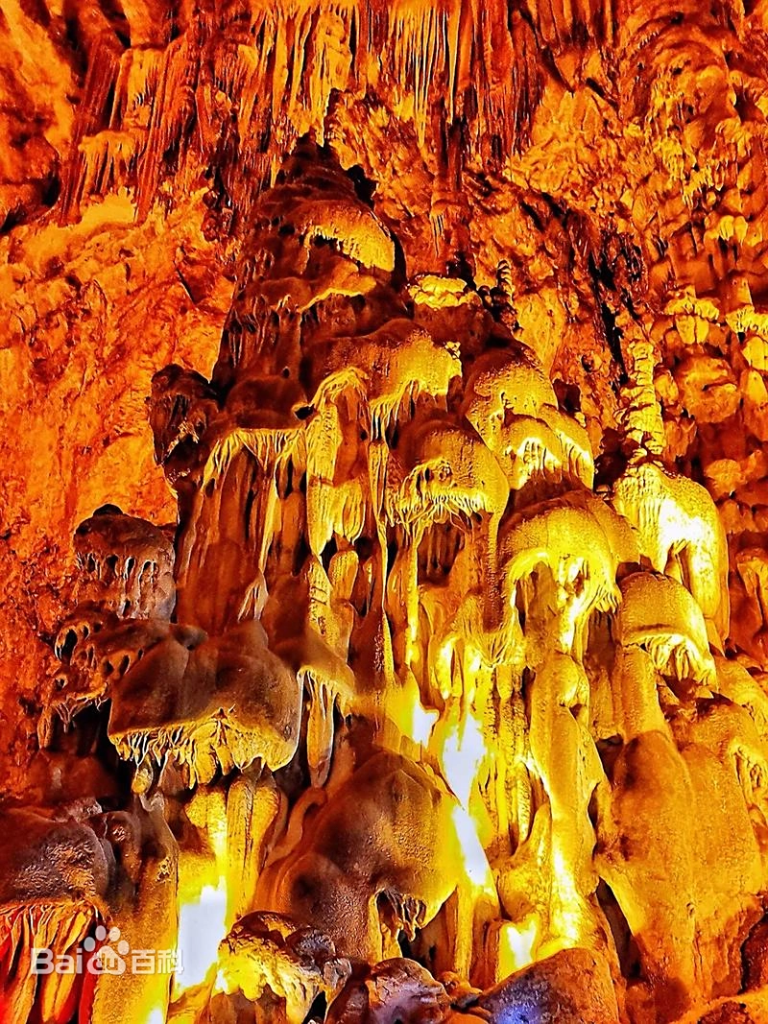
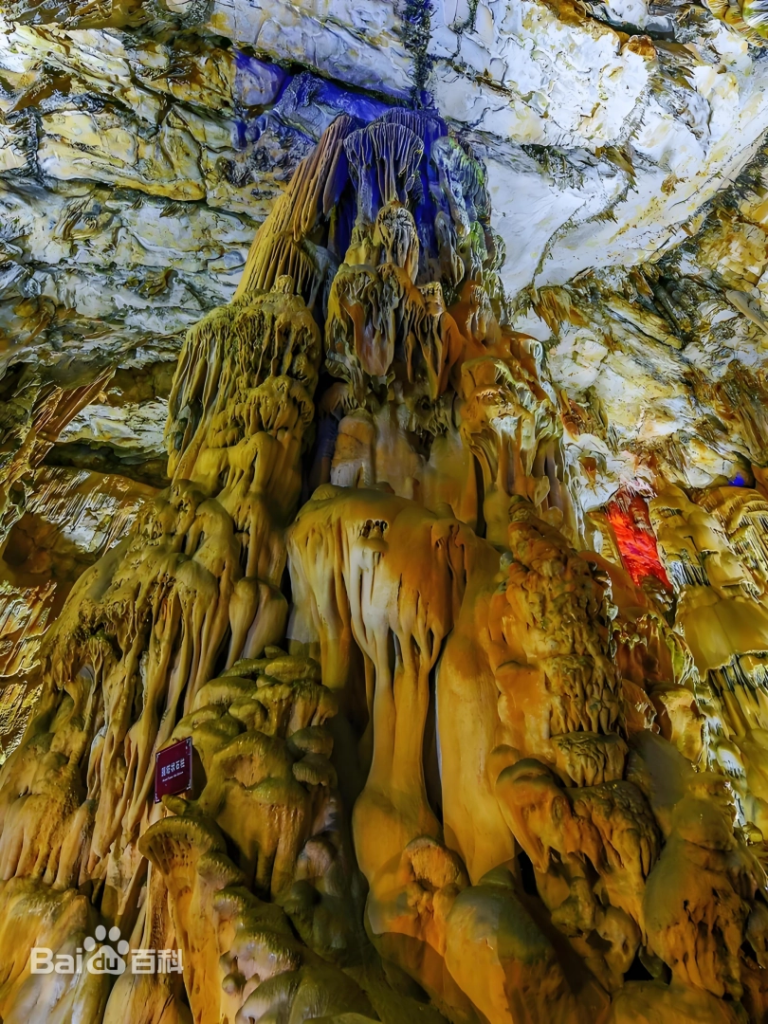
Zhijin Cave – The King of Karst Caves in China

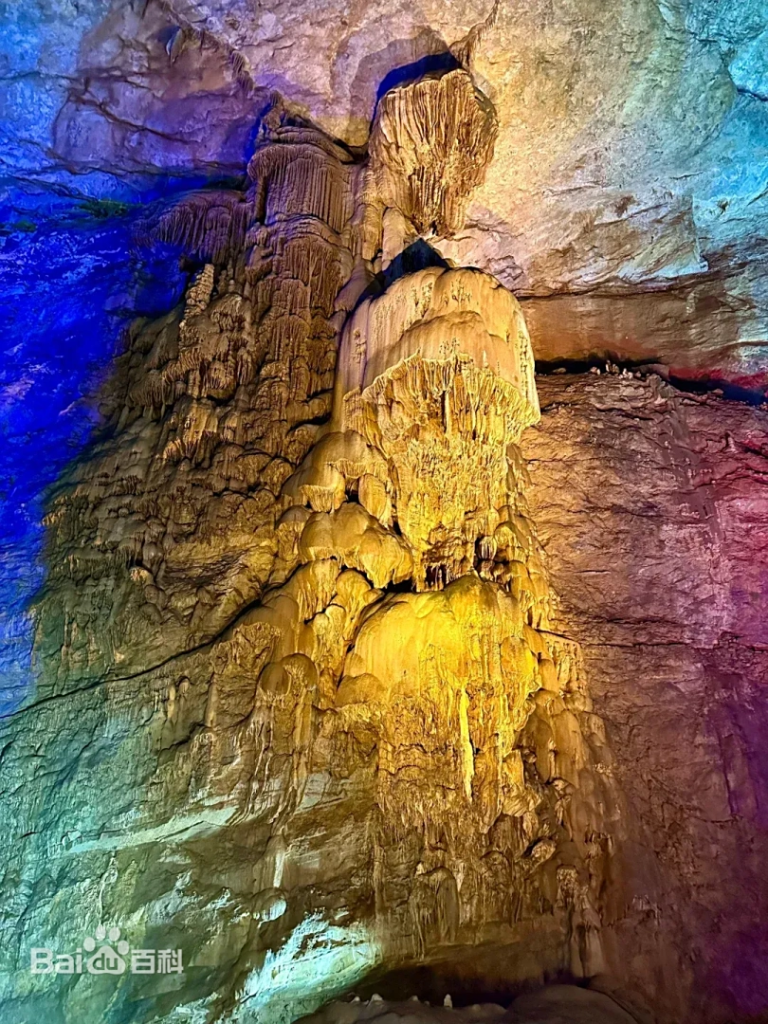
Zhijin Cave, located in Zhijin County, Bijie City, Guizhou Province, is a high-altitude dry cave of great diversity, complexity, and scale. Inside, the karst formations are unique, vast, majestic, and breathtakingly exquisite, making it a dream destination for countless visitors.

Zhijin Cave, renowned as the “King of Karst Caves,” stands out among other famous karst caves such as Zhangjiajie’s Yellow Dragon Cave (about 100,000 sqm), Chongqing’s Furong Cave (about 37,000 sqm), and Guilin’s Reed Flute Cave (about 14,900 sqm) due to its unparalleled size and grandeur. Spanning over 700,000 square meters, Zhijin Cave is the largest of its kind, featuring 12 grand halls and 47 chambers, each adorned with unique and breathtaking formations. The cave’s largest chamber reaches an impressive width of 175 meters, while six of its halls exceed 10,000 square meters in area, highlighting its monumental scale.

The cave is adorned with a wide variety of karst formations, including stalactites, stalagmites, stone pillars, flowstones, and stone curtains. These formations come in unique shapes, resembling pagodas, plants, animals, and even mythical creatures, showcasing nature’s artistic craftsmanship.

Among its countless highlights, several are especially unforgettable:

  • The Overlord’s Helmet (“Ba Wang Kui”) – A 17-meter-tall stalagmite shaped like a warrior’s helmet, known as the crown jewel of Zhijin Cave. Lit by orange light and reflected in the pool below, it appears both majestic and lifelike, as if the legendary warlord Xiang Yu himself had left his helmet behind.
  • The Pillar of Heaven (“Qian Ceng Bao Ta”) – At the junction of the North and South Gates stands a towering stone column that seems to prop up the sky. Called the “Mainstay of the River,” it symbolizes strength, resilience, and the ability to stand tall in times of trial.
  • Mother-in-law and Daughter-in-law (“Po Xi Qing Shen”) – Two pine-shaped stalagmites, one stooped like an old woman and the other upright like her filial daughter-in-law massaging her back. The scene is tender, lifelike, and moving, embodying the Chinese virtue of filial piety.
  • The Lingxiao Palace – A stunning stone waterfall, one of the largest yet discovered, cascading magnificently from the ceiling. Around it stand stone banners, draperies, and a majestic hall of “stalagmite soldiers,” as if a grand palace had opened its doors for a celestial council.

  • Snow Pressing on the Green Pine (“Xue Ya Qing Song”) – A 20-meter-tall stalagmite shaped like a pine tree blanketed in snow, one of the cave’s signature sights. Its upright strength recalls Marshal Chen Yi’s famous poem: “Though snow weighs heavily on the pine, the pine stands tall and straight.” It symbolizes resilience, dignity, and unyielding spirit.

The spectacular karst landscapes of Zhijin Cave embody grandeur, vastness, and beauty beyond imagination. A tour through its endless halls, lasting over two hours, is an ever-unfolding journey of wonder—each chamber a new astonishment, each formation a marvel of nature.

It’s no surprise that Zhijin Cave is honored as the “King of Caves.” As the saying goes: “After Huangshan, no other mountains; beyond Zhijin Cave, no other caves.” The reputation is well deserved.

Practical Tips to Visit Zhijin Cave

Zhijin Cave is located in Guanzhai Miao Ethnic Village, Zhijin County, Bijie City, Guizhou Province. The cave is approximately 120 kilometers (75 miles) from Guiyang, the capital of Guizhou Province.

Bijie City has a total of 9 railway stations and 1 airport. 2 stations are located in Zhijin County, only serving normal trains. The closest high-speed rail station to Zhijin Cave is Qianxi Railway Station, about 45 km away.

Footwear: The cave has stairs and a small section of uneven paths, and the ground can be wet and slippery. Anti-slip footwear is recommended for safety and comfort.

Clothing: The cave maintains a constant temperature of 16°C (61°F). However, the humidity and cool air can make it feel chilly, so it’s best to carry a light jacket.

Food and Drinks: There are no dining options or shops within the cave, so it’s a good idea to bring your own snacks and drinks to stay energized during your visit. If you forget to bring snacks, there is a convenience store at the cave exit where you can purchase refreshments.

Link:https://peacelilysite.com/2025/08/28/zhijin-cave-the-king-of-karst-caves-in-china/

Source: https://www.chinadiscovery.com/guizhou/zhijin-cave.html

Guangsheng Temple — The Hidden Gem of Shanxi’s Ancient Treasures

Shanxi is often called the cradle of Chinese civilization, a province with one of the richest collections of cultural and historical relics. Guangsheng Temple is part of that story. First built during the Eastern Han Dynasty (25–220 CE), it is one of the earliest Buddhist temples in China. Over the centuries, it has endured wars, fires, and devastating earthquakes, yet it still stands, its beauty renewed through reconstructions in the Yuan (1271–1368) and Ming (1368–1644) dynasties.

The temple complex is composed of three main parts:

  • The Upper Monastery — home to its most famous landmark, the glazed pagoda.
  • The Lower Monastery — housing grand halls and statues.
  • The Water God Temple — known for its remarkable Yuan Dynasty murals.

Rising in the upper monastery is the Flying Rainbow Pagoda (Feihongta), an octagonal, 13-story glazed brick tower reaching 47.31 meters high. Built in 1527 during the Ming Dynasty, it’s an explosion of color in the sunlight. The walls and roofs are covered in multi-colored glazed tiles — deep emerald, golden yellow, sapphire blue, and rich purples — that glisten like jewels, casting rainbow-like reflections on sunny days.

Every tier of the pagoda is adorned with intricate glazed reliefs — Buddhas in serene meditation, fierce guardian kings, bodhisattvas in flowing robes, mythical beasts, and dragons coiled in eternal motion. Inside, the foundation hall houses a five-meter-tall bronze statue of Sakyamuni Buddha, radiating quiet majesty.

This pagoda is not only beautiful — it’s a survivor. It withstood the catastrophic 1556 Shaanxi earthquake and the 1695 Pingyang earthquake, both exceeding magnitude 8.0. Its resilience is as awe-inspiring as its artistry. In 2018, it was recognized by the London-based World Record Certification as the tallest multicolored glazed pagoda in the world.

Murals of the Yuan Dynasty — Life Painted in Color

The temple’s murals are a vivid window into the Yuan Dynasty. In the Water God Temple, nearly 200 square meters of wall space is alive with color: scenes of divine processions, farmers at work, musicians playing, and children at play. One remarkable panel shows “Cuíwán” (捶丸) — a sport similar to golf — offering a glimpse into pastimes of the Yuan era.

The mural on the gable wall of the Great Hall of Sakyamuni Buddha in the lower monastery is equally stunning, painted with an expressive style that blends religious devotion with snapshots of daily life. Researchers prize these works for their artistry and for the wealth of cultural detail they reveal — clothing, architecture, social customs — all preserved in pigment for more than 700 years.

The Zhaocheng Buddhist Canon — A Literary Treasure

In 1930, during restoration work, the temple revealed another extraordinary surprise—a cache of ancient relics now preserved in the Shanxi Museum. These included Buddhist scriptures, statues, and ritual objects, some dating back hundreds of years earlier. Printed during the Yuan Dynasty, this monumental project took 24 years and the collaboration of countless monks and artisans to engrave the wooden printing blocks. The texts preserve Buddhist thought, philosophy, and art from centuries ago, making them one of China’s most precious Buddhist literary relics.

The discovery deepened Guangsheng Temple’s reputation as one of the great guardians of China’s Buddhist heritage.

Today, whether you approach as a pilgrim, an art lover, or simply a traveler drawn by curiosity, the moment you first see the rainbow-like shimmer of the Glazed Pagoda through the mountain mist is unforgettable. It is not merely a structure—it is a bridge between centuries, a beacon of faith, and a reminder that beauty, once created with devotion, can endure against time itself.

Link: https://peacelilysite.com/2025/08/15/guangsheng-temple-the-hidden-gem-of-shanxis-ancient-treasures/

Source: http://shanxi.chinadaily.com.cn/2022-05/06/c_748899.htm?utm_source=chatgpt.com

Discover Longxing Temple: A Timeless Treasure of Chinese Buddhism

Longxing Temple, also known as the Great Buddha Temple, is one of China’s oldest, largest, and best-preserved Buddhist temples. This extraordinary complex is not only a sacred site but also a magnificent testament to the architectural genius and spiritual devotion of ancient China.

Located at No. 109 Zhongshan East Road in Zhengding County, Shijiazhuang, Hebei Province, Longxing Temple sprawls across an impressive 82,500 square meters.

Originally established in 586 CE during the Sui Dynasty under the name Longcang Temple, it was later renamed Longxing Temple during the Tang Dynasty. In 971 CE, Emperor Taizu of the Northern Song Dynasty issued an edict to cast an enormous bronze Thousand-Armed Avalokiteshvara Bodhisattva and build the splendid Hall of Great Compassion to house it.

This marked the beginning of large-scale expansion, culminating in a grand Song Dynasty architectural complex centered on the hall. Through the Jin, Yuan, and Ming Dynasties, the temple saw continued renovation and growth. In the Qing Dynasty, both Kangxi and Qianlong Emperors decreed extensive rebuilding, shaping the temple’s current layout:

  • The eastern section served as monks’ quarters
  • The central axis hosted Buddhist ceremonies
  • The western area functioned as the imperial palace quarters

In 1710, Emperor Kangxi personally inscribed the name “Longxing Temple,” an honor that reflects its enduring importance.

Today, visitors can trace a north–south axis that passes through a series of majestic structures: the Hall of Heavenly Kings, Mani Hall, the Ordination Altar, the Revolving Sutra Library, and more than a dozen other halls and pavilions. The complex is celebrated as a textbook example of ancient Chinese Buddhist temple design.

Recognized among China’s ten most famous temples, Longxing Temple was declared a Major National Historical and Cultural Site in 1961 and later designated a National AAAA Tourist Attraction.


Highlights Not to Miss

Hall of Heavenly Kings

First built in the Northern Song Dynasty, this is the oldest surviving structure of its kind within the temple. Even after a major renovation in 1780, its main timber frame remains original.

Above the entrance, plaques bearing the calligraphy of the Kangxi Emperor read:

“Imperially Established Longxing Temple”
“Hall of Heavenly Kings”

Inside stands the famous Big-Bellied Maitreya Buddha, a Jin Dynasty wood carving over 800 years old. Thoroughly localized in Chinese style, this smiling figure derives from the legendary monk Qici, known for his benevolence and laughter.

On either side stand the Four Great Heavenly Kings, each symbolizing auspicious natural forces:

  • Wind (Southern King, with a sword)
  • Harmony (Eastern King, with a lute)
  • Rain (Northern King, with a precious umbrella)
  • Compliance (Western King, with a coiled snake)

Together, they express the blessing of abundant harvests and national peace.


Mani Hall

Built in 1052, Mani Hall has an unusual cross-shaped floor plan created by four gabled annexes extending from its square central chamber.

Inside, five golden clay Buddha statues preside over the altar, with Shakyamuni Buddha at the center.

The hall’s north wall showcases a breathtaking polychrome relief nearly 16 meters long, depicting swirling clouds, celestial beings, and Avalokiteshvara stepping onto a lotus—symbolizing the entrance to the Western Pure Land.

At the heart of this scene sits the Backward-Facing Avalokiteshvara, so named because she faces north instead of south. Far from a supernatural image, this Avalokiteshvara appears as a serene, youthful woman with an expression so vivid and gentle it moves all who gaze upon her.

Visitors often remark:

“How beautiful—how extraordinary! She sits so naturally, one leg casually crossed, her eyes meeting yours wherever you stand. Her smile is as enigmatic as the Mona Lisa—truly ‘The Most Beautiful Avalokiteshvara.’”


Ordination Altar

Reserved for the most important temples, the Ordination Altar was where monks received their vows.

Inside the altar stands a unique double-sided bronze Buddha statue. Facing south is Amitabha Buddha, and facing north is Medicine Buddha. The two figures share a single body, seated back to back in lotus posture.

The statues are depicted in full lotus position, wearing five-leaf crowns, with round, gentle faces. Their necks are adorned with necklaces and their arms with bangles, while flowing sashes drape gracefully from their shoulders. Amitabha’s hands form the meditation mudra, while Medicine Buddha’s hands display the gesture of compassion.

Their expressions are serene and tranquil, exuding a quiet dignity and solemn beauty in their elegant simplicity.

Longteng Garden

To the northeast lies Longteng Garden, a Ming and Qing–style garden combining cultural heritage and tranquil scenery.

Here you’ll find:

  • Northern Dynasties stone statues
  • A Jin Dynasty scripture pillar
  • A Yuan Dynasty mural tomb
  • The Ming Dynasty Longquan Well Pavilion
  • The “Three Generations of Vice Ministers” stone archway

Meandering through its pavilions, terraces, and lush paths feels like stepping into a living scroll of history.


Cultural Traditions

Imperial Buddhist Ceremony Performance

Zhengding’s Longxing Temple is an imperial temple that was visited and funded for repairs by emperors over many dynasties. According to The Chronicles of Longxing Temple, in the 49th year of Emperor Kangxi’s reign (1710 CE), the emperor ordered funds to be allocated from the national treasury to restore Longxing Temple. After the renovations were completed, Emperor Kangxi personally came to pay homage and bestowed 19 inscribed plaques, including one reading “Longxing Temple Constructed by Imperial Decree,” all handwritten by himself.

At the end of 2011, drawing on historical records, the Cultural Heritage Office re-created the Grand Imperial Buddhist Ceremony, reenacting the scene of Emperor Kangxi’s arrival at Longxing Temple, the local officials welcoming the imperial entourage, and the emperor bestowing plaques, offering incense, and performing rituals to honor the Buddha.

Thousand-Armed Avalokiteshvara Performance

Inside the Great Compassion Pavilion of Zhengding’s Longxing Temple stands a bronze statue of the Thousand-Armed, Thousand-Eyed Avalokiteshvara, measuring 21.3 meters in height. Cast in the 4th year of the Kaibao era of the Northern Song Dynasty (971 CE), this towering bronze figure is remarkable both for its immense size and its exquisite craftsmanship.

It is the tallest and oldest ancient bronze Buddha statue of its kind in the world. It is not only a symbol of Longxing Temple but also an emblem of the ancient city of Zhengding.

The Thousand-Armed Avalokiteshvara Performance features graceful melodies and captivating dance that vividly convey the divine presence and compassion of the bodhisattva.


Longxing Temple is more than a historical monument—it is a living symbol of Chinese Buddhist art, architecture, and spirituality. Whether you come for quiet reflection, cultural discovery, or simply to stand before centuries of devotion, this magnificent temple will leave a lasting impression on your heart.

Link:https://peacelilysite.com/2025/07/04/discover-longxing-temple-a-timeless-treasure-of-chinese-buddhism/

Discover the Enchanting Ice and Snow World of Harbin, China

As winter blankets the northern regions of China, the city of Harbin transforms into a breathtaking wonderland, captivating visitors with its stunning ice and snow sculptures. Known as the “Ice City,” Harbin hosts the annual Harbin International Ice and Snow Festival, one of the largest and most spectacular winter festivals in the world.

Every year, from early January to late February, Harbin comes alive with vibrant ice and snow displays that showcase the incredible artistry and creativity of sculptors from around the globe. The festival features massive ice castles, intricate sculptures, and dazzling light displays that create a fairy-tale atmosphere. The main venue, the Harbin Ice and Snow World, spans over 600,000 square meters and is filled with stunning structures made entirely of ice blocks harvested from the nearby Songhua River.

Marvel at the Sculptures

Walking through the festival is like stepping into a dream. You’ll find life-sized replicas of famous landmarks, such as the Eiffel Tower and St. Basil’s Cathedral, all crafted from glistening ice. The attention to detail is astounding, with artists using colored lights to enhance the beauty of their creations. Each year, the sculptures reflect a different theme, ensuring that no two festivals are alike.

Engage in Winter Activities

Beyond the awe-inspiring sculptures, Harbin offers a plethora of winter activities to keep visitors entertained. Ice skating, snow tubing, and even ice swimming are just a few of the thrilling experiences you can enjoy. For those seeking a more leisurely pace, horse-drawn sleigh rides through the snow-covered landscape provide a charming way to soak in the winter scenery.

Cultural Experiences

Harbin is not just about ice and snow; it’s also a city rich in history and culture. The influence of Russian architecture is evident throughout the city, particularly in the stunning St. Sophia Cathedral. Take the time to explore the local cuisine as well, with hearty dishes like dumplings and hot pot that are perfect for warming up after a day in the cold.

If you’re considering a trip to Harbin, be sure to dress warmly! Temperatures can drop well below freezing, so layers, thermal clothing, and insulated boots are essential. The best time to visit is during the festival, but the beauty of Harbin’s winter landscape can be enjoyed throughout the snowy season.

Link:https://peacelilysite.com/2025/02/04/discover-the-enchanting-ice-and-snow-world-of-harbin-china/

San Francisco Hua Zang Si Temple Celebrates 20th Anniversary with Charity Event: “Love Without Limits” Donation Drive


San Francisco Hua Zang Si Temple Celebrates 20th Anniversary with Charity Event: “Love Without Limits” Donation Drive Photo Courtesy: Joyce Lee (The Hua Zang Si Temple held a Dharma Assembly to celebrate the Holy Birthday of Amitabha Buddha)

The San Francisco Hua Zang Si Temple, inaugurated on December 26, 2004, upholds and promotes the genuine teachings of H.H. Dorje Chang Buddha III, the incarnation of the primordial Buddha, and the World-Honored Shakyamuni Buddha, extending boundless compassion and kindness to all beings. 

Guided by the teachings of H.H. Dorje Chang Buddha III, Hua Zang Si Temple has actively participated in various charitable activities for many years, including organizing New Year entertainment events in nursing homes, assisting with hospital relocations, providing food relief to disaster-affected areas, and holding garage sales, with all proceeds donated to vulnerable groups. The temple expressed their hope that this spirit of helping others will continue to flourish: “In acts of kindness, seeds of virtue grow, a family that sows goodness finds happiness in full flow.”

San Francisco Hua Zang Si Temple Celebrates 20th Anniversary with Charity Event: "Love Without Limits” Donation Drive
Photo Courtesy: Natty Kao (Nuns from Hua Zang Si Temple and volunteers from the Dharma-Protecting Fellowship of Hua Zang Si donated items to San Francisco Marin Food Bank.)

To commemorate its 20th anniversary, Hua Zang Si launched a month-long charity drive titled “Love Without Limits” in November, supporting animal rescue centers, homeless and low-income families, and local food banks. On the morning of December 15, a Dharma Assembly was held to celebrate the Holy Birthday of Amitabha Buddha, praying for world peace and the well-being of all people. The afternoon featured a 20th-anniversary performance and raffle, attended by nearly 300 people.

By December, Hua Zang Si had collected a total of 812 items, categorized into three main types: 241 animal supplies, including dog collars, walking harnesses, pet carriers, and disposable puppy pads; 211 baby and cookware items, including baby bottle drying racks, baby bodysuits, air fryers, and cookware sets; and a total of 2,265 pounds of food, including rice, pasta, and other food items. On December 11, nuns from Hua Zang Si Temple and volunteers from the Dharma-Protecting Fellowship of Hua Zang Si delivered these items to Muttville Senior Dog Rescue, the Homeless Prenatal Program (HPP), and the San Francisco Marin Food Bank.

San Francisco Hua Zang Si Temple Celebrates 20th Anniversary with Charity Event: "Love Without Limits” Donation Drive
Photo Courtesy: Joyce Lee 
(The abbess of Hua Zang Si Temple awarded 20 years’ service awards to volunteers.)
Photo Courtesy: Joyce Lee (The abbess of Hua Zang Si Temple awarded 20 years’ service awards to volunteers.)

As the first cage-free rescue organization in the U.S. and California’s first nonprofit dedicated to rescuing senior dogs, Muttville has rescued nearly 13,000 senior dogs over the past 17 years, providing support for about 100 senior dogs each month. The generous donations from Hua Zang Si were gratefully received, greatly aiding in the care and rehoming efforts for these senior dogs.

The San Francisco Marin Food Bank, a nonprofit organization dedicated to addressing hunger in San Francisco and Marin counties, distributed over 60 million pounds of food this year, thanks in part to Hua Zang Si’s year-end support. In these regions, one in five people faces food insecurity, and the temple’s contributions have significantly bolstered the food bank’s efforts. The donated food from the temple will be utilized in various community programs, including after-school programs, Boy and Girl Scouts, ensuring that nutritious meals reach those in need.

San Francisco Hua Zang Si Temple Celebrates 20th Anniversary with Charity Event: "Love Without Limits” Donation Drive
Photo Courtesy: Joyce Lee
(The abbess of Hua Zang Si Temple awarded 10 years’ service awards to volunteers.)

The Homeless Prenatal Program (HPP), a renowned family support center in the U.S, serves over 4,000 vulnerable families each year, particularly aiding mothers seeking assistance during pregnancy and parenting. The temple’s donations have significantly enhanced HPP’s ability to support mothers and children facing life challenges.

On the afternoon of December 15, the 20th-anniversary celebration was held in the main shrine of Hua Zang Si, featuring live performances of several classic philosophical songs with lyrics written by H.H. Dorje Chang Buddha III, cello performances of various songs, a mesmerizing Tibetan dance, and an exciting raffle with numerous prizes. The event provided a visual and auditory feast for nearly 300 attendees. The celebration concluded with a heartfelt group sing-along of “Buddha Holding My Hand,” bringing the 20th-anniversary festivities to a perfect close.

Looking ahead, Hua Zang Si will continue to serve as a beacon of love and care within the community. They hope more people will join in these acts of kindness, creating a warm, loving, and harmonious society together.


The above article is from the World Reporter, December 23, 2024.

Link:https://peacelilysite.com/2025/01/08/san-francisco-hua-zang-si-temple-celebrates-20th-anniversary-with-charity-event-love-without-limits-donation-drive/

The Majestic Ginkgo Tree: A Symbol of Beauty and Spiritual Significance

Autumn is often called “Golden Autumn,” a name inspired by the vibrant yellow hues of trees and plants that adorn the season. Among them, the ginkgo tree stands out, its radiant golden leaves creating a spectacle often described as “magnificent” and “resplendent.” This season marks the peak of the ginkgo tree’s beauty, transforming landscapes into breathtaking golden vistas.

A Living Fossil of Resilience

The ginkgo tree, also known as Ginkgo biloba or the “maidenhair tree,” is a living fossil, dating back over 150 million years. It is the sole survivor of an ancient plant lineage, standing tall as a testament to nature’s endurance. With its unique fan-shaped, two-lobed leaves that turn brilliant yellow in fall, the ginkgo has earned its place as a symbol of both beauty and longevity.

This ancient tree boasts remarkable regenerative powers. Mature ginkgo trees often give rise to thriving saplings, symbolizing vitality and the continuation of life. In Chinese culture, this resilience is likened to familial prosperity, embodying aspirations for blessings and generational success.

Medicinal Value and Modern Research

Beyond its aesthetic appeal, the ginkgo has significant medicinal properties. Traditional Chinese Medicine (TCM) uses its leaves and seeds for various remedies. Today, modern science highlights ginkgo leaf extract for its rich antioxidant content and potential benefits for brain function, circulation, and overall well-being.

A Sacred Symbol in Buddhism

In Chinese tradition, the ginkgo tree holds deep cultural and spiritual meaning. It symbolizes purity, endurance, and good fortune. Within Buddhism, the ginkgo is revered as the “Buddha tree,” representing enlightenment and spiritual resilience. Its longevity and abundant fruit make it a substitute for the sacred Bodhi tree in many temples.

During autumn, the ginkgo’s golden canopy creates a serene atmosphere in temple grounds, harmonizing with the red walls and golden roofs. This visual splendor evokes reverence and awe, inspiring mindfulness and devotion among practitioners.

ws.cc/zh-my/travel/3jqb9gy.html

Ginkgo Tree at Xi’an’s Guanyin Zen Temple: A 1,400-Year-Old Beauty

The Thousand-Year-Old Ginkgo Tree at Tanzhe Temple, titled the “Emperor Tree” by Emperor Qianlong of the Qing Dynasty, is an extraordinary natural treasure. Standing over 24 meters tall with a trunk diameter exceeding 4 meters, it takes six or seven people joining hands to encircle its massive base. The tree’s canopy spans an area of more than 600 square meters, providing ample shade. Estimated to be over 1,300 years old, this tree is a testament to resilience and history.

Ginkgo Tree at Tanzhe Temple

Dinghui Temple, a favorite spot for Suzhou residents to photograph ginkgo trees, is home to two towering, century-old ginkgo trees standing prominently in front of the main hall. In autumn, their golden leaves cascade to the ground, creating a dazzling and picturesque scene. (photos from https://news.qq.com/rain/a/20231105A07FBH00)

Suzhou City: DingHui Temple

At the ancient Huiji Temple, Nanjing City, three venerable ginkgo trees, each over 1,500 years old, grace the temple grounds. As autumn arrives, their golden leaves blanket the treetops, creating a breathtaking contrast against the temple’s white walls and dark-tiled roofs. The scene resembles a magnificent ink-wash painting, captivating visitors with its timeless beauty. (photos from https://news.qq.com/rain/a/20231105A07FBH00)

Artistic and Symbolic Significance

The ginkgo tree’s durable and fine-grained wood is prized for carving Buddha statues, earning it the moniker “Buddha’s fingernail.” Its leaves, resembling flames, symbolize light and warmth. In Buddhist tradition, the golden hue of ginkgo leaves reflects the nobility and purity of the Buddha’s body, which represents eternal light and wisdom.

The Buddha’s golden body, seen as untainted and impervious to worldly suffering, mirrors the ginkgo’s enduring nature. Similarly, the Buddha’s radiance is believed to dispel darkness, illuminate ignorance, and guide all beings toward compassion and enlightenment.

A Tree of Light and Legacy

The ginkgo tree, with its awe-inspiring beauty and profound cultural significance, is more than just a tree—it is a symbol of life, hope, and spiritual awakening. Its golden leaves remind us of the light within, inspiring resilience and reverence for nature’s timeless wisdom.

As we marvel at the ginkgo tree’s breathtaking beauty and the profound symbolism it holds, let it also serve as a gentle reminder of our responsibility to protect the natural world. These ancient trees, along with the countless wonders of nature, depend on our collective efforts to preserve their existence. By cherishing and safeguarding our planet, we ensure that future generations can continue to experience and draw inspiration from the harmonious balance and enduring wisdom of nature.

Link:https://peacelilysite.com/2024/11/20/the-majestic-ginkgo-tree-a-symbol-of-beauty-and-spiritual-significance/

Source:https://fo.china.com/fostory/20001207/20231214/25824463.html